Spandidos Publications Logo
  • About
    • About Spandidos
    • Aims and Scopes
    • Abstracting and Indexing
    • Editorial Policies
    • Reprints and Permissions
    • Job Opportunities
    • Terms and Conditions
    • Contact
  • Journals
    • All Journals
    • Oncology Letters
      • Oncology Letters
      • Information for Authors
      • Editorial Policies
      • Editorial Board
      • Aims and Scope
      • Abstracting and Indexing
      • Bibliographic Information
      • Archive
    • International Journal of Oncology
      • International Journal of Oncology
      • Information for Authors
      • Editorial Policies
      • Editorial Board
      • Aims and Scope
      • Abstracting and Indexing
      • Bibliographic Information
      • Archive
    • Molecular and Clinical Oncology
      • Molecular and Clinical Oncology
      • Information for Authors
      • Editorial Policies
      • Editorial Board
      • Aims and Scope
      • Abstracting and Indexing
      • Bibliographic Information
      • Archive
    • Experimental and Therapeutic Medicine
      • Experimental and Therapeutic Medicine
      • Information for Authors
      • Editorial Policies
      • Editorial Board
      • Aims and Scope
      • Abstracting and Indexing
      • Bibliographic Information
      • Archive
    • International Journal of Molecular Medicine
      • International Journal of Molecular Medicine
      • Information for Authors
      • Editorial Policies
      • Editorial Board
      • Aims and Scope
      • Abstracting and Indexing
      • Bibliographic Information
      • Archive
    • Biomedical Reports
      • Biomedical Reports
      • Information for Authors
      • Editorial Policies
      • Editorial Board
      • Aims and Scope
      • Abstracting and Indexing
      • Bibliographic Information
      • Archive
    • Oncology Reports
      • Oncology Reports
      • Information for Authors
      • Editorial Policies
      • Editorial Board
      • Aims and Scope
      • Abstracting and Indexing
      • Bibliographic Information
      • Archive
    • Molecular Medicine Reports
      • Molecular Medicine Reports
      • Information for Authors
      • Editorial Policies
      • Editorial Board
      • Aims and Scope
      • Abstracting and Indexing
      • Bibliographic Information
      • Archive
    • World Academy of Sciences Journal
      • World Academy of Sciences Journal
      • Information for Authors
      • Editorial Policies
      • Editorial Board
      • Aims and Scope
      • Abstracting and Indexing
      • Bibliographic Information
      • Archive
    • International Journal of Functional Nutrition
      • International Journal of Functional Nutrition
      • Information for Authors
      • Editorial Policies
      • Editorial Board
      • Aims and Scope
      • Abstracting and Indexing
      • Bibliographic Information
      • Archive
    • International Journal of Epigenetics
      • International Journal of Epigenetics
      • Information for Authors
      • Editorial Policies
      • Editorial Board
      • Aims and Scope
      • Abstracting and Indexing
      • Bibliographic Information
      • Archive
    • Medicine International
      • Medicine International
      • Information for Authors
      • Editorial Policies
      • Editorial Board
      • Aims and Scope
      • Abstracting and Indexing
      • Bibliographic Information
      • Archive
  • Articles
  • Information
    • Information for Authors
    • Information for Reviewers
    • Information for Librarians
    • Information for Advertisers
    • Conferences
  • Language Editing
Spandidos Publications Logo
  • About
    • About Spandidos
    • Aims and Scopes
    • Abstracting and Indexing
    • Editorial Policies
    • Reprints and Permissions
    • Job Opportunities
    • Terms and Conditions
    • Contact
  • Journals
    • All Journals
    • Biomedical Reports
      • Information for Authors
      • Editorial Policies
      • Editorial Board
      • Aims and Scope
      • Abstracting and Indexing
      • Bibliographic Information
      • Archive
    • Experimental and Therapeutic Medicine
      • Information for Authors
      • Editorial Policies
      • Editorial Board
      • Aims and Scope
      • Abstracting and Indexing
      • Bibliographic Information
      • Archive
    • International Journal of Epigenetics
      • Information for Authors
      • Editorial Policies
      • Editorial Board
      • Aims and Scope
      • Abstracting and Indexing
      • Bibliographic Information
      • Archive
    • International Journal of Functional Nutrition
      • Information for Authors
      • Editorial Policies
      • Editorial Board
      • Aims and Scope
      • Abstracting and Indexing
      • Bibliographic Information
      • Archive
    • International Journal of Molecular Medicine
      • Information for Authors
      • Editorial Policies
      • Editorial Board
      • Aims and Scope
      • Abstracting and Indexing
      • Bibliographic Information
      • Archive
    • International Journal of Oncology
      • Information for Authors
      • Editorial Policies
      • Editorial Board
      • Aims and Scope
      • Abstracting and Indexing
      • Bibliographic Information
      • Archive
    • Medicine International
      • Information for Authors
      • Editorial Policies
      • Editorial Board
      • Aims and Scope
      • Abstracting and Indexing
      • Bibliographic Information
      • Archive
    • Molecular and Clinical Oncology
      • Information for Authors
      • Editorial Policies
      • Editorial Board
      • Aims and Scope
      • Abstracting and Indexing
      • Bibliographic Information
      • Archive
    • Molecular Medicine Reports
      • Information for Authors
      • Editorial Policies
      • Editorial Board
      • Aims and Scope
      • Abstracting and Indexing
      • Bibliographic Information
      • Archive
    • Oncology Letters
      • Information for Authors
      • Editorial Policies
      • Editorial Board
      • Aims and Scope
      • Abstracting and Indexing
      • Bibliographic Information
      • Archive
    • Oncology Reports
      • Information for Authors
      • Editorial Policies
      • Editorial Board
      • Aims and Scope
      • Abstracting and Indexing
      • Bibliographic Information
      • Archive
    • World Academy of Sciences Journal
      • Information for Authors
      • Editorial Policies
      • Editorial Board
      • Aims and Scope
      • Abstracting and Indexing
      • Bibliographic Information
      • Archive
  • Articles
  • Information
    • For Authors
    • For Reviewers
    • For Librarians
    • For Advertisers
    • Conferences
  • Language Editing
Login Register Submit
  • This site uses cookies
  • You can change your cookie settings at any time by following the instructions in our Cookie Policy. To find out more, you may read our Privacy Policy.

    I agree
Search articles by DOI, keyword, author or affiliation
Search
Advanced Search
presentation
Molecular Medicine Reports
Join Editorial Board Propose a Special Issue
Print ISSN: 1791-2997 Online ISSN: 1791-3004
Journal Cover
March-2022 Volume 25 Issue 3

Full Size Image

Sign up for eToc alerts
Recommend to Library

Journals

International Journal of Molecular Medicine

International Journal of Molecular Medicine

International Journal of Molecular Medicine is an international journal devoted to molecular mechanisms of human disease.

International Journal of Oncology

International Journal of Oncology

International Journal of Oncology is an international journal devoted to oncology research and cancer treatment.

Molecular Medicine Reports

Molecular Medicine Reports

Covers molecular medicine topics such as pharmacology, pathology, genetics, neuroscience, infectious diseases, molecular cardiology, and molecular surgery.

Oncology Reports

Oncology Reports

Oncology Reports is an international journal devoted to fundamental and applied research in Oncology.

Experimental and Therapeutic Medicine

Experimental and Therapeutic Medicine

Experimental and Therapeutic Medicine is an international journal devoted to laboratory and clinical medicine.

Oncology Letters

Oncology Letters

Oncology Letters is an international journal devoted to Experimental and Clinical Oncology.

Biomedical Reports

Biomedical Reports

Explores a wide range of biological and medical fields, including pharmacology, genetics, microbiology, neuroscience, and molecular cardiology.

Molecular and Clinical Oncology

Molecular and Clinical Oncology

International journal addressing all aspects of oncology research, from tumorigenesis and oncogenes to chemotherapy and metastasis.

World Academy of Sciences Journal

World Academy of Sciences Journal

Multidisciplinary open-access journal spanning biochemistry, genetics, neuroscience, environmental health, and synthetic biology.

International Journal of Functional Nutrition

International Journal of Functional Nutrition

Open-access journal combining biochemistry, pharmacology, immunology, and genetics to advance health through functional nutrition.

International Journal of Epigenetics

International Journal of Epigenetics

Publishes open-access research on using epigenetics to advance understanding and treatment of human disease.

Medicine International

Medicine International

An International Open Access Journal Devoted to General Medicine.

Journal Cover
March-2022 Volume 25 Issue 3

Full Size Image

Sign up for eToc alerts
Recommend to Library

  • Article
  • Citations
    • Cite This Article
    • Download Citation
    • Create Citation Alert
    • Remove Citation Alert
    • Cited By
  • Similar Articles
    • Related Articles (in Spandidos Publications)
    • Similar Articles (Google Scholar)
    • Similar Articles (PubMed)
  • Download PDF
  • Download XML
  • View XML

  • Supplementary Files
    • Supplementary_Data.pdf
Article Open Access

Total glucosides of paeony ameliorates oxidative stress, apoptosis and inflammatory response by regulating the Smad7‑TGF‑β pathway in allergic rhinitis

  • Authors:
    • Yangzi Jin
    • Aichun Zhang
  • View Affiliations / Copyright

    Affiliations: Department of Otolaryngology, The First Affiliated Hospital of Zhejiang Chinese Medical University, Hangzhou, Zhejiang 310000, P.R. China
    Copyright: © Jin et al. This is an open access article distributed under the terms of Creative Commons Attribution License.
  • Article Number: 83
    |
    Published online on: January 13, 2022
       https://doi.org/10.3892/mmr.2022.12599
  • Expand metrics +
Metrics: Total Views: 0 (Spandidos Publications: | PMC Statistics: )
Metrics: Total PDF Downloads: 0 (Spandidos Publications: | PMC Statistics: )
Cited By (CrossRef): 0 citations Loading Articles...

This article is mentioned in:


Abstract

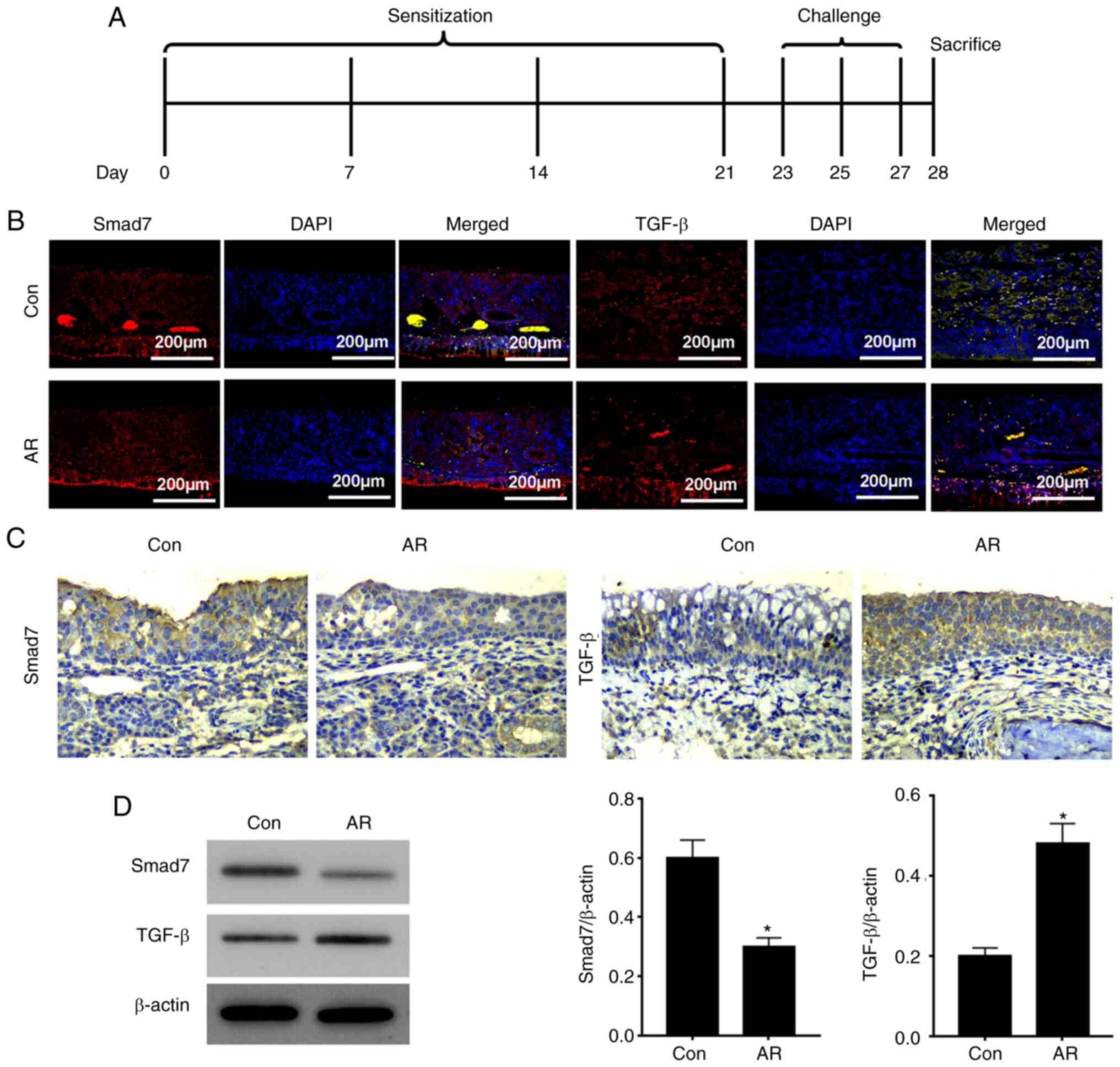
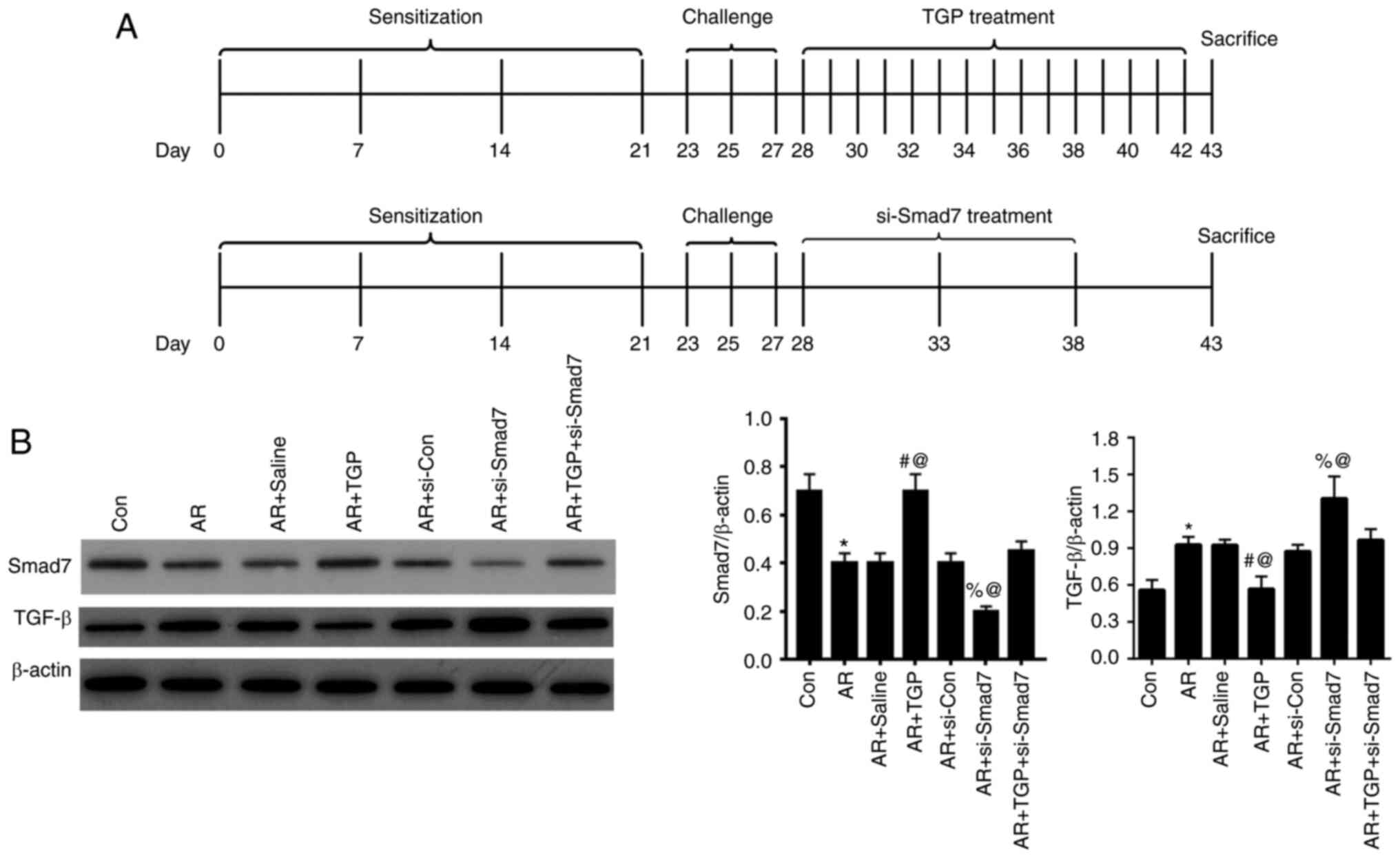
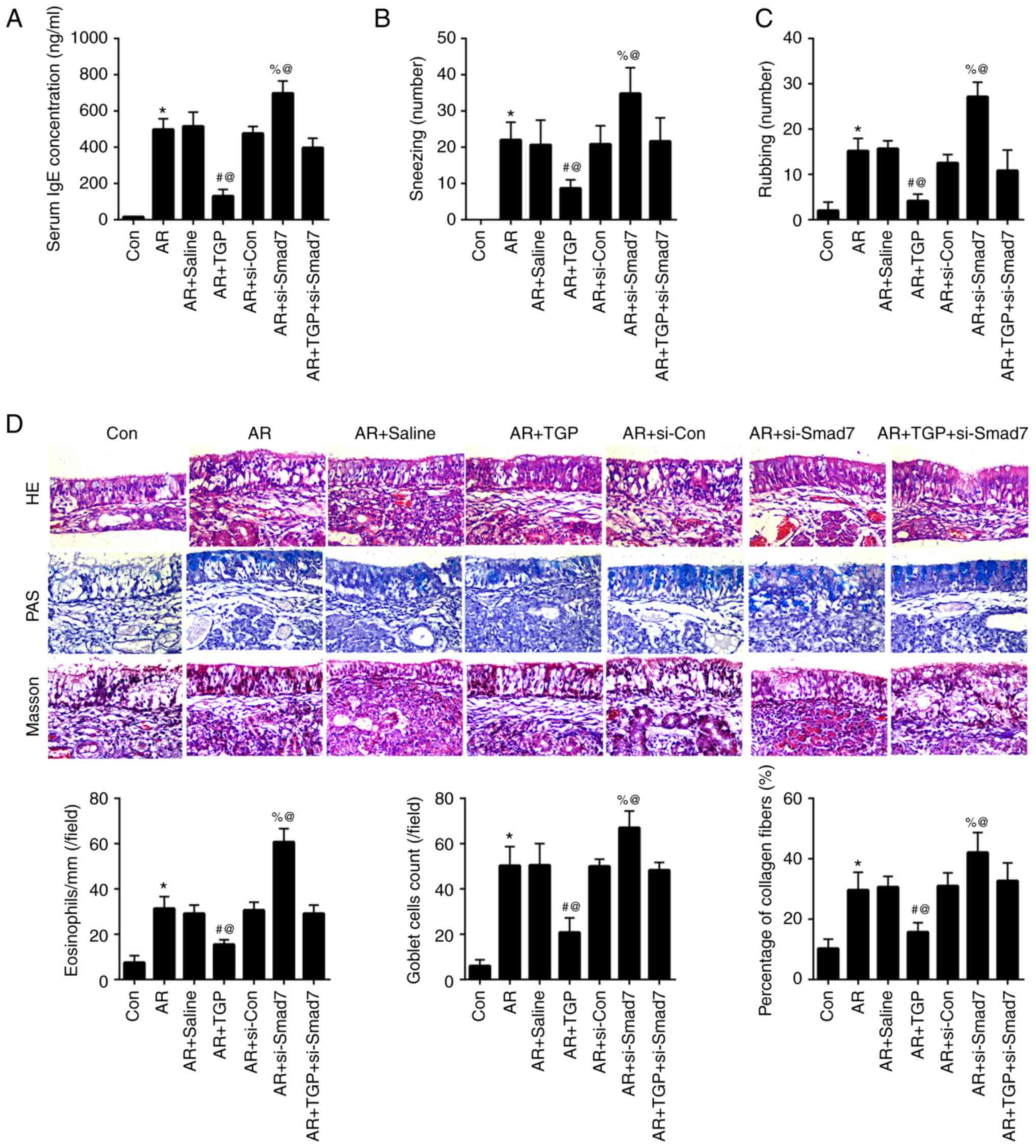
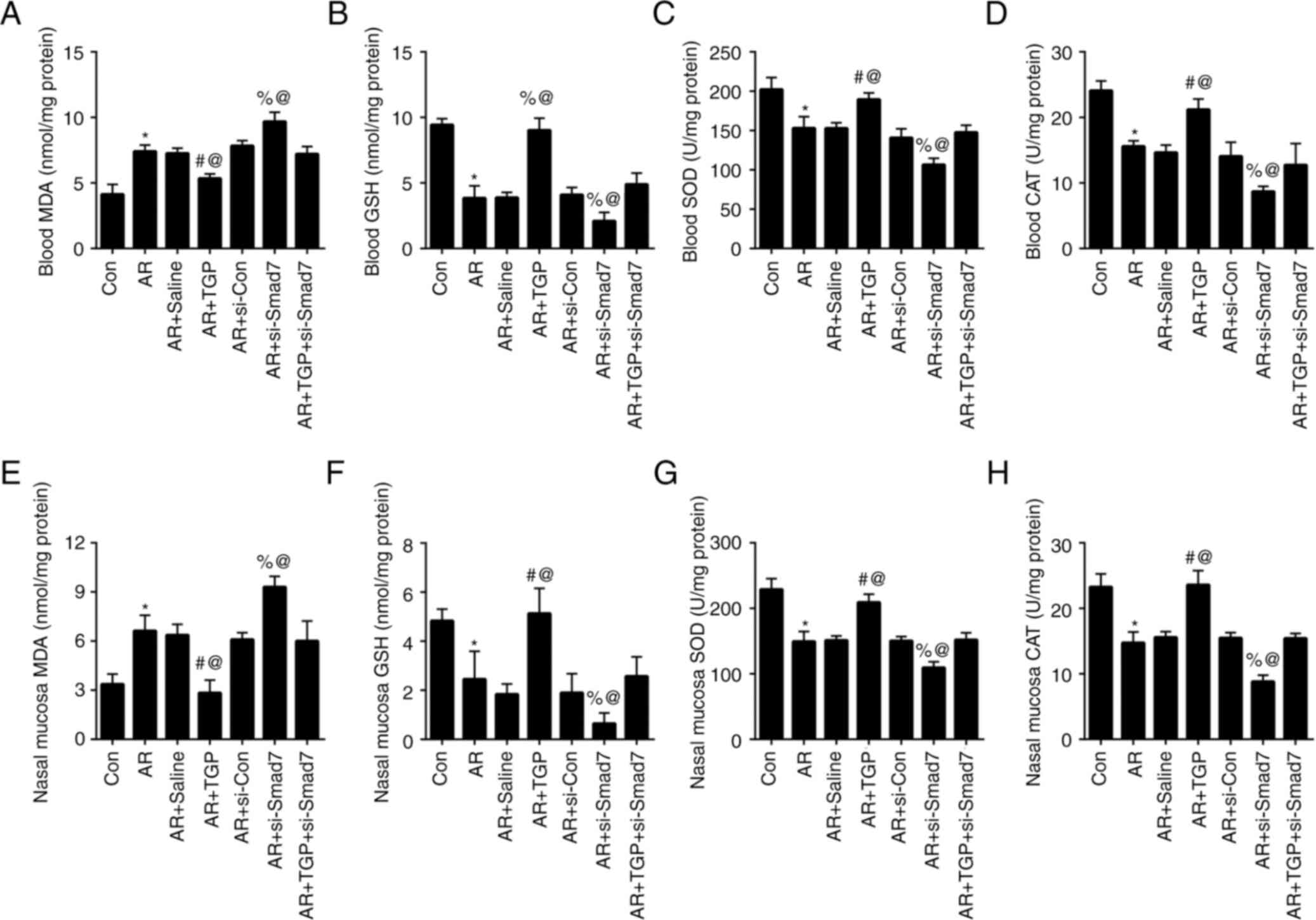
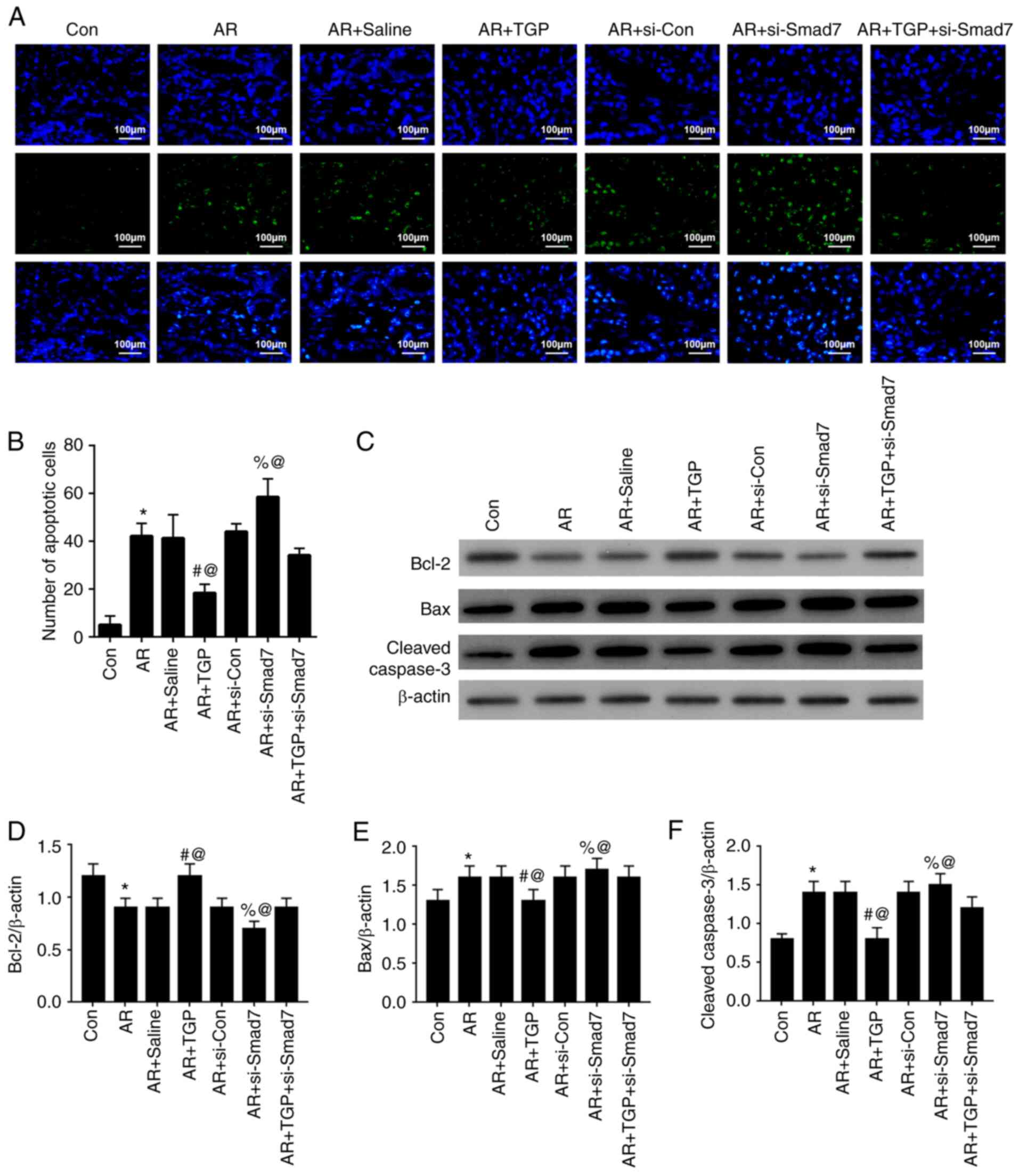
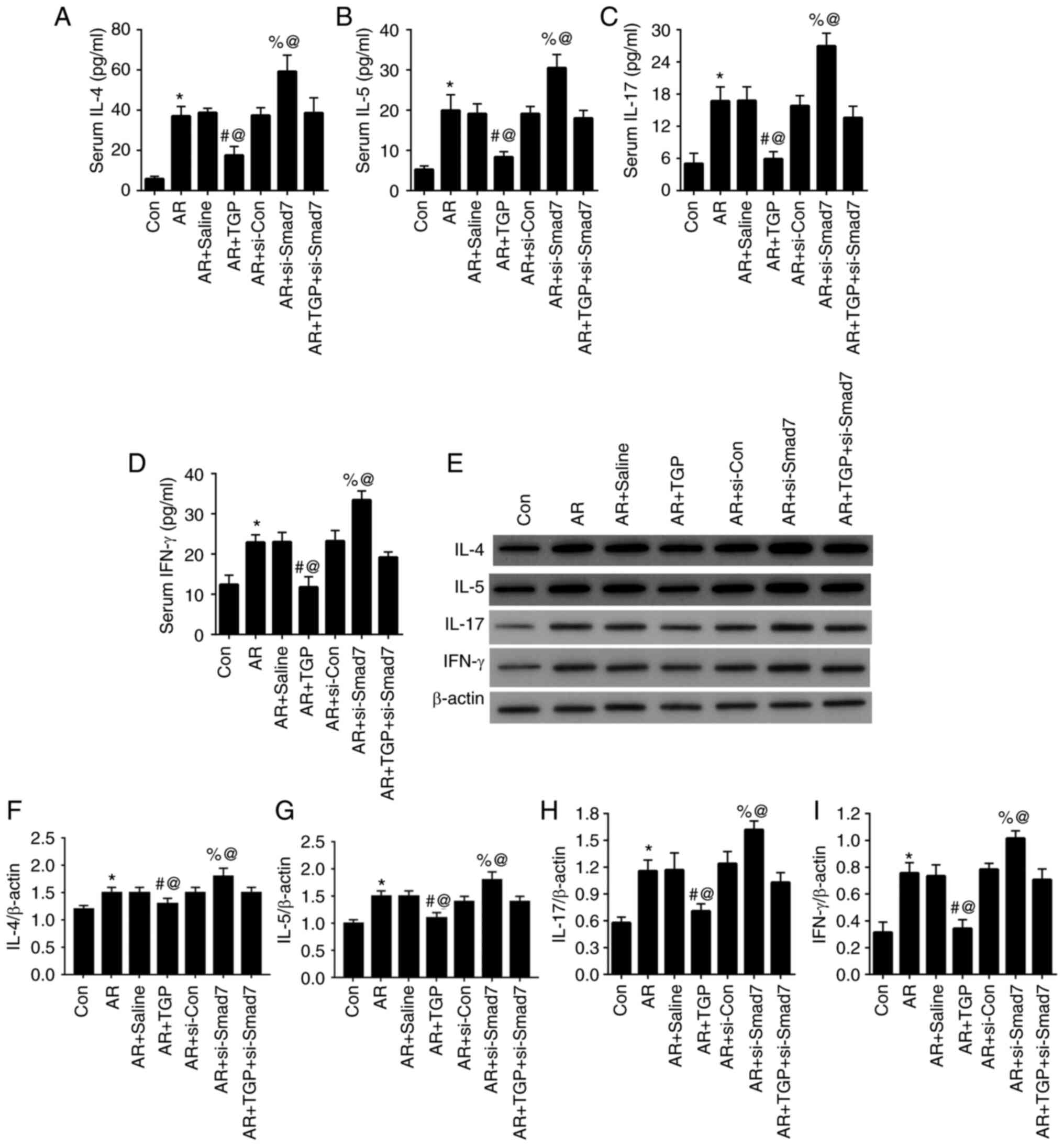
Total glucosides of paeony (TGP), an active ingredient extracted from the root of Paeonia alba, has been reported to display an anti‑inflammatory effect. However, the effect of TGP on allergic rhinitis (AR) is still unknown. The present study aimed to assess the role of TGP in an AR mouse model. An AR mouse model was established using the ovalbumin method. The expression levels of Smad7/TGF‑β pathway‑related prtoeins in nasal mucosa tissues were determined by immunofluorescence, immunohistochemistry and western blotting. The severity of nasal allergic symptoms was detected by recording the frequency of sneezing and nose rubbing motions in all mice for 20 min. The levels of IgE and inflammatory cytokines, including IL‑4, IL‑5, IL‑17 and IFN‑γ, in the serum were measured by conducting ELISAs. H&E staining, periodic acid‑Schiff staining and Masson staining were used to detected histopathological changes in mice. The concentrations of malondialdehyde and glutathione, and the activities of superoxide dismutase and catalase in tissue supernatant and serum were quantified using commercial assay kits. Apoptosis of nasal tissue cells was detected by performing TUNEL assays and western blotting. The expression of Smad7 was upregulated and that of TGF‑β was downregulated in the nasal tissue of AR mice. Additionally, TGP regulated the Smad7/TGF‑β pathway in the nasal tissue of AR mice. TGP alleviated serum IgE, nasal symptoms and histopathological changes in AR mice. Moreover, TGP ameliorated oxidative stress, cell apoptosis and inflammatory response. Smad7 small interfering RNA intervention aggravated the symptoms of AR mice via activation of the TGF‑β pathway and reversed the protective effect of TGP in AR mice. TGP ameliorated oxidative stress, apoptosis and inflammatory response via the Smad7/TGF‑β pathway in AR.
View Figures

Figure 1

Figure 2

Figure 3

Figure 4

Figure 5

Figure 6

View References

1 

Al Suleimani YM and Walker MJ: Allergic rhinitis and its pharmacology. Pharmacol Ther. 114:233–260. 2007. View Article : Google Scholar : PubMed/NCBI

2 

Cheng L, Chen J, Fu Q, He S, Li H, Liu Z, Tan G, Tao Z, Wang D, Wen W, et al: Chinese society of allergy guidelines for diagnosis and treatment of allergic rhinitis. Allergy Asthma Immunol Res. 10:300–353. 2018. View Article : Google Scholar : PubMed/NCBI

3 

Kakli HA and Riley TD: Allergic Rhinitis. Prim Care. 43:465–475. 2016. View Article : Google Scholar : PubMed/NCBI

4 

Zhang L, Han D, Huang D, Wu Y, Dong Z, Xu G, Kong W and Bachert C: Prevalence of self-reported allergic rhinitis in eleven major cities in China. Int Arch Allergy Immunol. 149:47–57. 2009. View Article : Google Scholar : PubMed/NCBI

5 

Bao Y, Chen J, Cheng L, Guo Y, Hong S, Kong W, Lai H, Li H, Li H, Li J, et al: Chinese Guideline on allergen immunotherapy for allergic rhinitis. J Thorac Dis. 9:4607–4650. 2017. View Article : Google Scholar : PubMed/NCBI

6 

Du K, Qing H, Zheng M, Wang X and Zhang L: Intranasal antihistamine is superior to oral H1 antihistamine as an add-on therapy to intranasal corticosteroid for treating allergic rhinitis. Ann Allergy Asthma Immunol. 125:589–596.e3. 2020. View Article : Google Scholar : PubMed/NCBI

7 

McColl A, Michlewska S, Dransfield I, Dransfield I and Rossi AG: Effects of glucocorticoids on apoptosis and clearance of apoptotic cells. ScientificWorldJournal. 7:1165–1181. 2007. View Article : Google Scholar : PubMed/NCBI

8 

Mims JW: Epidemiology of allergic rhinitis. Int Forum Allergy Rhinol. 4 (Suppl 2):S18–S20. 2014. View Article : Google Scholar : PubMed/NCBI

9 

Ahmadiafshar A and Ahmadiafshar S: Efficacy and safety of inhaled and intranasal corticosteroids. Antiinflamm Antiallergy Agents Med Chem. 13:83–87. 2014. View Article : Google Scholar : PubMed/NCBI

10 

Wheatley LM and Togias A: Clinical practice. Allergic rhinitis. N Engl J Med. 372:456–463. 2015. View Article : Google Scholar : PubMed/NCBI

11 

Hossenbaccus L, Linton S, Garvey S and Ellis AK: Towards definitive management of allergic rhinitis: Best use of new and established therapies. Allergy Asthma Clin Immunol. 16:392020. View Article : Google Scholar : PubMed/NCBI

12 

Jiang H, Li J, Wang L, Wang S, Nie X, Chen Y, Fu Q, Jiang M, Fu C and He Y: Total glucosides of paeony: A review of its phytochemistry, role in autoimmune diseases, and mechanisms of action. J Ethnopharmacol. 258:1129132020. View Article : Google Scholar : PubMed/NCBI

13 

Huang XT, Wang B, Zhang WH, Peng MQ and Lin D: Total glucosides of paeony suppresses experimental autoimmune uveitis in association with inhibition of Th1 and Th2 cell function in mice. Int J Immunopathol Pharmacol. 32:3946320177515472018.PubMed/NCBI

14 

Lin J, Xiao L, Ouyang G, Shen Y, Huo R, Zhou Z, Sun Y, Zhu X, Zhang J, Shen B and Li N: Total glucosides of paeony inhibits Th1/Th17 cells via decreasing dendritic cells activation in rheumatoid arthritis. Cell Immunol. 280:156–163. 2012. View Article : Google Scholar : PubMed/NCBI

15 

Zhou L, Cao T, Wang Y, Yao H, Du G, Tian Z and Tang G: Clinical observation on the treatment of oral lichen planus with total glucosides of paeony capsule combined with corticosteroids. Int Immunopharmacol. 36:106–110. 2016. View Article : Google Scholar : PubMed/NCBI

16 

Zhou Y, Jin L, Kong F, Zhang H, Fang X, Chen Z, Wang G and Li X and Li X: Clinical and immunological consequences of total glucosides of paeony treatment in Sjögren's syndrome: A randomized controlled pilot trial. Int Immunopharmacol. 39:314–319. 2016. View Article : Google Scholar : PubMed/NCBI

17 

Berker M, Frank LJ, Geßner AL, Grassl N, Holtermann AV, Höppner S, Kraef C, Leclaire MD, Maier P, Messerer DA, et al: Allergies-A T cells perspective in the era beyond the TH1/TH2 paradigm. Clin Immunol. 174:73–83. 2017. View Article : Google Scholar : PubMed/NCBI

18 

Eifan AO and Durham SR: Pathogenesis of rhinitis. Clin Exp Allergy. 46:1139–1151. 2016. View Article : Google Scholar : PubMed/NCBI

19 

Sporn MB and Roberts AB: Transforming growth factor-beta: Recent progress and new challenges. J Cell Biol. 119:1017–1021. 1992. View Article : Google Scholar : PubMed/NCBI

20 

Lawrence DA: Transforming growth factor-beta: A general review. Eur Cytokine Netw. 7:363–374. 1996.PubMed/NCBI

21 

Salib RJ, Kumar S, Wilson SJ and Howarth PH: Nasal mucosal immunoexpression of the mast cell chemoattractants TGF-beta, eotaxin, and stem cell factor and their receptors in allergic rhinitis. J Allergy Clin Immunol. 114:799–806. 2004. View Article : Google Scholar : PubMed/NCBI

22 

Xie L, Yu S, Yang K, Li C and Liang Y: Hydrogen sulfide inhibits autophagic neuronal cell death by reducing oxidative stress in spinal cord ischemia reperfusion injury. Oxid Med Cell Longev. 2017:86402842017. View Article : Google Scholar : PubMed/NCBI

23 

Chaudhury D, Walsh JJ, Friedman AK, Juarez B, Ku SM, Koo JW, Ferguson D, Tsai HC, Pomeranz L, Christoffel DJ, et al: Rapid regulation of depression-related behaviours by control of midbrain dopamine neurons. Nature. 493:532–536. 2013. View Article : Google Scholar : PubMed/NCBI

24 

Naclerio RM, Meier HL, Kagey-Sobotka A, Adkinson NF Jr, Meyers DA, Norman PS and Lichtenstein LM: Mediator release after nasal airway challenge with allergen. Am Rev Respir Dis. 128:597–602. 1983.PubMed/NCBI

25 

Zhang Y, Lan F and Zhang L: Advances and highlights in allergic rhinitis. Allergy. 76:3383–3389. 2021. View Article : Google Scholar : PubMed/NCBI

26 

Geng B, Dilley M and Anterasian C: Biologic therapies for allergic rhinitis and nasal polyposis. Curr Allergy Asthma Rep. 21:362021. View Article : Google Scholar : PubMed/NCBI

27 

Jiao C, Li L, Zhang P, Zhang L, Li K, Fang R, Yuan L, Shi K, Pan L, Guo Q, et al: REGү ablation impedes dedifferentiation of anaplastic thyroid carcinoma and accentuates radio-therapeutic response by regulating the Smad7-TGF-β pathway. Cell Death Differ. 27:497–508. 2020. View Article : Google Scholar : PubMed/NCBI

28 

Zhu Z, Xu Y, Zhao J, Liu Q, Feng W, Fan J and Wang P: MiR-367 promotes epithelial-to-mesenchymal transition and invasion of pancreatic ductal adenocarcinoma cells by targeting the Smad7-TGF-β signalling pathway. Br J Cancer. 112:1367–1375. 2015. View Article : Google Scholar : PubMed/NCBI

29 

Zhang L, Yu J, Wang C and Wei W: The effects of total glucosides of paeony (TGP) and paeoniflorin (Pae) on inflammatory-immune responses in rheumatoid arthritis (RA). Funct Plant Biol. 46:107–117. 2019. View Article : Google Scholar : PubMed/NCBI

30 

Liu G, Wang Z, Li X, Liu R, Li B, Huang L, Chen Y, Zhang C, Zhang H, Li Y, et al: Total glucosides of paeony (TGP) alleviates constipation and intestinal inflammation in mice induced by SjC6gren's syndrome. J Ethnopharmacol. 260:1130562020. View Article : Google Scholar : PubMed/NCBI

31 

Chen H, Wen Y, Pan T and Xu S: Total glucosides of paeony improve complete freund's adjuvant-induced rheumatoid arthritis in rats by inhibiting toll-like receptor 2-mediated tumor necrosis factor receptor-associated factor 6/nuclear factor-kappa B pathway activation. J Tradit Chin Med. 39:566–574. 2019.PubMed/NCBI

32 

Shen M, Men R, Fan X, Wang T, Huang C, Wang H, Ye T, Luo X and Yang L: Total glucosides of paeony decreases apoptosis of hepatocytes and inhibits maturation of dendritic cells in autoimmune hepatitis. Biomed Pharmacother. 124:1099112020. View Article : Google Scholar : PubMed/NCBI

33 

Sies H: Oxidative stress: A concept in redox biology and medicine. Redox Biol. 4:180–183. 2015. View Article : Google Scholar : PubMed/NCBI

34 

Hybertson BM, Gao B, Bose SK and McCord JM: Oxidative stress in health and disease: The therapeutic potential of Nrf2 activation. Mol Aspects Med. 32:234–246. 2011. View Article : Google Scholar : PubMed/NCBI

35 

Burton GJ and Jauniaux E: Oxidative stress. Best Pract Res Clin Obstet Gynaecol. 25:287–299. 2011. View Article : Google Scholar : PubMed/NCBI

36 

Sim CS, Lee JH, Kim SH, Han MW, Kim Y, Oh I, Yun SC and Lee JC: Oxidative stress in schoolchildren with allergic rhinitis: Propensity score matching case-control study. Ann Allergy Asthma Immunol. 115:391–395. 2015. View Article : Google Scholar : PubMed/NCBI

37 

Celik M, Tuncer A, Soyer OU, Sac'kesen C, Tanju Besler H and Kalayci O: Oxidative stress in the airways of children with asthma and allergic rhinitis. Pediatr Allergy Immunol. 23:556–561. 2012. View Article : Google Scholar : PubMed/NCBI

38 

Wei Choo CY, Yeh KW, Huang JL, Su KW, Tsai MH, Hua MC, Liao SL, Lai SH, Chen LC and Chiu CY: Oxidative stress is associated with atopic indices in relation to childhood rhinitis and asthma. J Microbiol Immunol Infect. 54:466–473. 2021. View Article : Google Scholar : PubMed/NCBI

39 

Xu X, Lai Y and Hua ZC: Apoptosis and apoptotic body: Disease message and therapeutic target potentials. Biosci Rep. 39:BSR201809922019. View Article : Google Scholar : PubMed/NCBI

40 

Du L, Meng Q, Chen Y and Wu P: Subcellular location prediction of apoptosis proteins using two novel feature extraction methods based on evolutionary information and LDA. BMC Bioinformatics. 21:2122020. View Article : Google Scholar : PubMed/NCBI

41 

Wang ZA and Tan F: The blockade of PD-1/PD-L1 pathway promotes the apoptosis of CD19+ CD25+ Bregs and suppresses the secretion of IL-10 in patients with allergic rhinitis. Scand J Immunol. 91:e128362020. View Article : Google Scholar : PubMed/NCBI

42 

Kim DK, Choi SA, Eun KM, Kim SK, Kim DW and Phi JH: Tumour necrosis factor alpha and interleukin-5 inhibit olfactory regeneration via apoptosis of olfactory sphere cells in mice models of allergic rhinitis. Clin Exp Allergy. 49:1139–1149. 2019.PubMed/NCBI

43 

Ventura MT, Bruno LM, Iacobelli A and Tursi A: Eosinophils in allergic diseases: Immunopharmacological regulation. Immunopharmacol Immunotoxicol. 19:405–423. 1997. View Article : Google Scholar : PubMed/NCBI

44 

Liu J, Jiang Y, Han M, Jiang L, Liang D, Li S, Xu Z, Wang L and Li N: MicroRNA-345-5p acts as an anti-inflammatory regulator in experimental allergic rhinitis via the TLR4/NF-κB pathway. Int Immunopharmacol. 86:1065222020. View Article : Google Scholar : PubMed/NCBI

45 

Wang L, Lv Q, Song X, Jiang K and Zhang J: ADRB2 suppresses IL-13-induced allergic rhinitis inflammatory cytokine regulated by miR-15a-5p. Hum Cell. 32:306–315. 2019. View Article : Google Scholar : PubMed/NCBI

46 

Lei H, Sun Y and Quan S: IL-37 relieves allergic inflammation by inhibiting the CCL11 signaling pathway in a mouse model of allergic rhinitis. Exp Ther Med. 20:3114–3121. 2020.PubMed/NCBI

47 

Xu W, Zhao Y, Qin Y, Ge B, Gong W, Wu Y, Li X, Zhao Y, Xu P and Xue M: Enhancement of exposure and reduction of elimination for paeoniflorin or albiflorin via co-administration with total peony glucosides and hypoxic pharmacokinetics comparison. Molecules. 21:8742016. View Article : Google Scholar : PubMed/NCBI

48 

Tabata K, Matsumoto K, Murakami Y and Watanabe H: Ameliorative effects of paeoniflorin, a major constituent of peony root, on adenosine A1 receptor-mediated impairment of passive avoidance performance and long-term potentiation in the hippocampus. Biol Pharm Bull. 24:496–500. 2001. View Article : Google Scholar : PubMed/NCBI

49 

Chen DM, Xiao L, Cai X, Zeng R and Zhu XZ: Involvement of multitargets in paeoniflorin-induced preconditioning. J Pharmacol Exp Ther. 319:165–180. 2006. View Article : Google Scholar : PubMed/NCBI

Related Articles

  • Abstract
  • View
  • Download
  • Twitter
Copy and paste a formatted citation
Spandidos Publications style
Jin Y and Zhang A: Total glucosides of paeony ameliorates oxidative stress, apoptosis and inflammatory response by regulating the Smad7‑TGF‑β pathway in allergic rhinitis. Mol Med Rep 25: 83, 2022.
APA
Jin, Y., & Zhang, A. (2022). Total glucosides of paeony ameliorates oxidative stress, apoptosis and inflammatory response by regulating the Smad7‑TGF‑β pathway in allergic rhinitis. Molecular Medicine Reports, 25, 83. https://doi.org/10.3892/mmr.2022.12599
MLA
Jin, Y., Zhang, A."Total glucosides of paeony ameliorates oxidative stress, apoptosis and inflammatory response by regulating the Smad7‑TGF‑β pathway in allergic rhinitis". Molecular Medicine Reports 25.3 (2022): 83.
Chicago
Jin, Y., Zhang, A."Total glucosides of paeony ameliorates oxidative stress, apoptosis and inflammatory response by regulating the Smad7‑TGF‑β pathway in allergic rhinitis". Molecular Medicine Reports 25, no. 3 (2022): 83. https://doi.org/10.3892/mmr.2022.12599
Copy and paste a formatted citation
x
Spandidos Publications style
Jin Y and Zhang A: Total glucosides of paeony ameliorates oxidative stress, apoptosis and inflammatory response by regulating the Smad7‑TGF‑β pathway in allergic rhinitis. Mol Med Rep 25: 83, 2022.
APA
Jin, Y., & Zhang, A. (2022). Total glucosides of paeony ameliorates oxidative stress, apoptosis and inflammatory response by regulating the Smad7‑TGF‑β pathway in allergic rhinitis. Molecular Medicine Reports, 25, 83. https://doi.org/10.3892/mmr.2022.12599
MLA
Jin, Y., Zhang, A."Total glucosides of paeony ameliorates oxidative stress, apoptosis and inflammatory response by regulating the Smad7‑TGF‑β pathway in allergic rhinitis". Molecular Medicine Reports 25.3 (2022): 83.
Chicago
Jin, Y., Zhang, A."Total glucosides of paeony ameliorates oxidative stress, apoptosis and inflammatory response by regulating the Smad7‑TGF‑β pathway in allergic rhinitis". Molecular Medicine Reports 25, no. 3 (2022): 83. https://doi.org/10.3892/mmr.2022.12599
Follow us
  • Twitter
  • LinkedIn
  • Facebook
About
  • Spandidos Publications
  • Careers
  • Cookie Policy
  • Privacy Policy
How can we help?
  • Help
  • Live Chat
  • Contact
  • Email to our Support Team