Spandidos Publications Logo
  • About
    • About Spandidos
    • Aims and Scopes
    • Abstracting and Indexing
    • Editorial Policies
    • Reprints and Permissions
    • Job Opportunities
    • Terms and Conditions
    • Contact
  • Journals
    • All Journals
    • Oncology Letters
      • Oncology Letters
      • Information for Authors
      • Editorial Policies
      • Editorial Board
      • Aims and Scope
      • Abstracting and Indexing
      • Bibliographic Information
      • Archive
    • International Journal of Oncology
      • International Journal of Oncology
      • Information for Authors
      • Editorial Policies
      • Editorial Board
      • Aims and Scope
      • Abstracting and Indexing
      • Bibliographic Information
      • Archive
    • Molecular and Clinical Oncology
      • Molecular and Clinical Oncology
      • Information for Authors
      • Editorial Policies
      • Editorial Board
      • Aims and Scope
      • Abstracting and Indexing
      • Bibliographic Information
      • Archive
    • Experimental and Therapeutic Medicine
      • Experimental and Therapeutic Medicine
      • Information for Authors
      • Editorial Policies
      • Editorial Board
      • Aims and Scope
      • Abstracting and Indexing
      • Bibliographic Information
      • Archive
    • International Journal of Molecular Medicine
      • International Journal of Molecular Medicine
      • Information for Authors
      • Editorial Policies
      • Editorial Board
      • Aims and Scope
      • Abstracting and Indexing
      • Bibliographic Information
      • Archive
    • Biomedical Reports
      • Biomedical Reports
      • Information for Authors
      • Editorial Policies
      • Editorial Board
      • Aims and Scope
      • Abstracting and Indexing
      • Bibliographic Information
      • Archive
    • Oncology Reports
      • Oncology Reports
      • Information for Authors
      • Editorial Policies
      • Editorial Board
      • Aims and Scope
      • Abstracting and Indexing
      • Bibliographic Information
      • Archive
    • Molecular Medicine Reports
      • Molecular Medicine Reports
      • Information for Authors
      • Editorial Policies
      • Editorial Board
      • Aims and Scope
      • Abstracting and Indexing
      • Bibliographic Information
      • Archive
    • World Academy of Sciences Journal
      • World Academy of Sciences Journal
      • Information for Authors
      • Editorial Policies
      • Editorial Board
      • Aims and Scope
      • Abstracting and Indexing
      • Bibliographic Information
      • Archive
    • International Journal of Functional Nutrition
      • International Journal of Functional Nutrition
      • Information for Authors
      • Editorial Policies
      • Editorial Board
      • Aims and Scope
      • Abstracting and Indexing
      • Bibliographic Information
      • Archive
    • International Journal of Epigenetics
      • International Journal of Epigenetics
      • Information for Authors
      • Editorial Policies
      • Editorial Board
      • Aims and Scope
      • Abstracting and Indexing
      • Bibliographic Information
      • Archive
    • Medicine International
      • Medicine International
      • Information for Authors
      • Editorial Policies
      • Editorial Board
      • Aims and Scope
      • Abstracting and Indexing
      • Bibliographic Information
      • Archive
  • Articles
  • Information
    • Information for Authors
    • Information for Reviewers
    • Information for Librarians
    • Information for Advertisers
    • Conferences
  • Language Editing
Spandidos Publications Logo
  • About
    • About Spandidos
    • Aims and Scopes
    • Abstracting and Indexing
    • Editorial Policies
    • Reprints and Permissions
    • Job Opportunities
    • Terms and Conditions
    • Contact
  • Journals
    • All Journals
    • Biomedical Reports
      • Information for Authors
      • Editorial Policies
      • Editorial Board
      • Aims and Scope
      • Abstracting and Indexing
      • Bibliographic Information
      • Archive
    • Experimental and Therapeutic Medicine
      • Information for Authors
      • Editorial Policies
      • Editorial Board
      • Aims and Scope
      • Abstracting and Indexing
      • Bibliographic Information
      • Archive
    • International Journal of Epigenetics
      • Information for Authors
      • Editorial Policies
      • Editorial Board
      • Aims and Scope
      • Abstracting and Indexing
      • Bibliographic Information
      • Archive
    • International Journal of Functional Nutrition
      • Information for Authors
      • Editorial Policies
      • Editorial Board
      • Aims and Scope
      • Abstracting and Indexing
      • Bibliographic Information
      • Archive
    • International Journal of Molecular Medicine
      • Information for Authors
      • Editorial Policies
      • Editorial Board
      • Aims and Scope
      • Abstracting and Indexing
      • Bibliographic Information
      • Archive
    • International Journal of Oncology
      • Information for Authors
      • Editorial Policies
      • Editorial Board
      • Aims and Scope
      • Abstracting and Indexing
      • Bibliographic Information
      • Archive
    • Medicine International
      • Information for Authors
      • Editorial Policies
      • Editorial Board
      • Aims and Scope
      • Abstracting and Indexing
      • Bibliographic Information
      • Archive
    • Molecular and Clinical Oncology
      • Information for Authors
      • Editorial Policies
      • Editorial Board
      • Aims and Scope
      • Abstracting and Indexing
      • Bibliographic Information
      • Archive
    • Molecular Medicine Reports
      • Information for Authors
      • Editorial Policies
      • Editorial Board
      • Aims and Scope
      • Abstracting and Indexing
      • Bibliographic Information
      • Archive
    • Oncology Letters
      • Information for Authors
      • Editorial Policies
      • Editorial Board
      • Aims and Scope
      • Abstracting and Indexing
      • Bibliographic Information
      • Archive
    • Oncology Reports
      • Information for Authors
      • Editorial Policies
      • Editorial Board
      • Aims and Scope
      • Abstracting and Indexing
      • Bibliographic Information
      • Archive
    • World Academy of Sciences Journal
      • Information for Authors
      • Editorial Policies
      • Editorial Board
      • Aims and Scope
      • Abstracting and Indexing
      • Bibliographic Information
      • Archive
  • Articles
  • Information
    • For Authors
    • For Reviewers
    • For Librarians
    • For Advertisers
    • Conferences
  • Language Editing
Login Register Submit
  • This site uses cookies
  • You can change your cookie settings at any time by following the instructions in our Cookie Policy. To find out more, you may read our Privacy Policy.

    I agree
Search articles by DOI, keyword, author or affiliation
Search
Advanced Search
presentation
Molecular Medicine Reports
Join Editorial Board Propose a Special Issue
Print ISSN: 1791-2997 Online ISSN: 1791-3004
Journal Cover
August-2022 Volume 26 Issue 2

Full Size Image

Sign up for eToc alerts
Recommend to Library

Journals

International Journal of Molecular Medicine

International Journal of Molecular Medicine

International Journal of Molecular Medicine is an international journal devoted to molecular mechanisms of human disease.

International Journal of Oncology

International Journal of Oncology

International Journal of Oncology is an international journal devoted to oncology research and cancer treatment.

Molecular Medicine Reports

Molecular Medicine Reports

Covers molecular medicine topics such as pharmacology, pathology, genetics, neuroscience, infectious diseases, molecular cardiology, and molecular surgery.

Oncology Reports

Oncology Reports

Oncology Reports is an international journal devoted to fundamental and applied research in Oncology.

Experimental and Therapeutic Medicine

Experimental and Therapeutic Medicine

Experimental and Therapeutic Medicine is an international journal devoted to laboratory and clinical medicine.

Oncology Letters

Oncology Letters

Oncology Letters is an international journal devoted to Experimental and Clinical Oncology.

Biomedical Reports

Biomedical Reports

Explores a wide range of biological and medical fields, including pharmacology, genetics, microbiology, neuroscience, and molecular cardiology.

Molecular and Clinical Oncology

Molecular and Clinical Oncology

International journal addressing all aspects of oncology research, from tumorigenesis and oncogenes to chemotherapy and metastasis.

World Academy of Sciences Journal

World Academy of Sciences Journal

Multidisciplinary open-access journal spanning biochemistry, genetics, neuroscience, environmental health, and synthetic biology.

International Journal of Functional Nutrition

International Journal of Functional Nutrition

Open-access journal combining biochemistry, pharmacology, immunology, and genetics to advance health through functional nutrition.

International Journal of Epigenetics

International Journal of Epigenetics

Publishes open-access research on using epigenetics to advance understanding and treatment of human disease.

Medicine International

Medicine International

An International Open Access Journal Devoted to General Medicine.

Journal Cover
August-2022 Volume 26 Issue 2

Full Size Image

Sign up for eToc alerts
Recommend to Library

  • Article
  • Citations
    • Cite This Article
    • Download Citation
    • Create Citation Alert
    • Remove Citation Alert
    • Cited By
  • Similar Articles
    • Related Articles (in Spandidos Publications)
    • Similar Articles (Google Scholar)
    • Similar Articles (PubMed)
  • Download PDF
  • Download XML
  • View XML

  • Supplementary Files
    • Supplementary_Data.pdf
Article Open Access

Lactate receptor HCAR1 regulates cell growth, metastasis and maintenance of cancer‑specific energy metabolism in breast cancer cells

  • Authors:
    • Lili Jin
    • Yanan Guo
    • Jiawen Chen
    • Zhenzhen Wen
    • Yibin Jiang
    • Jing Qian
  • View Affiliations / Copyright

    Affiliations: Huzhou Key Laboratory of Molecular Medicine, Huzhou Central Hospital, Huzhou Hospital Affiliated with Zhejiang University, Huzhou, Zhejiang 313000, P.R. China, Huzhou University Schools of Nursing and Medicine, Huzhou University, Huzhou, Zhejiang 313000, P.R. China
    Copyright: © Jin et al. This is an open access article distributed under the terms of Creative Commons Attribution License.
  • Article Number: 268
    |
    Published online on: June 28, 2022
       https://doi.org/10.3892/mmr.2022.12784
  • Expand metrics +
Metrics: Total Views: 0 (Spandidos Publications: | PMC Statistics: )
Metrics: Total PDF Downloads: 0 (Spandidos Publications: | PMC Statistics: )
Cited By (CrossRef): 0 citations Loading Articles...

This article is mentioned in:


Abstract

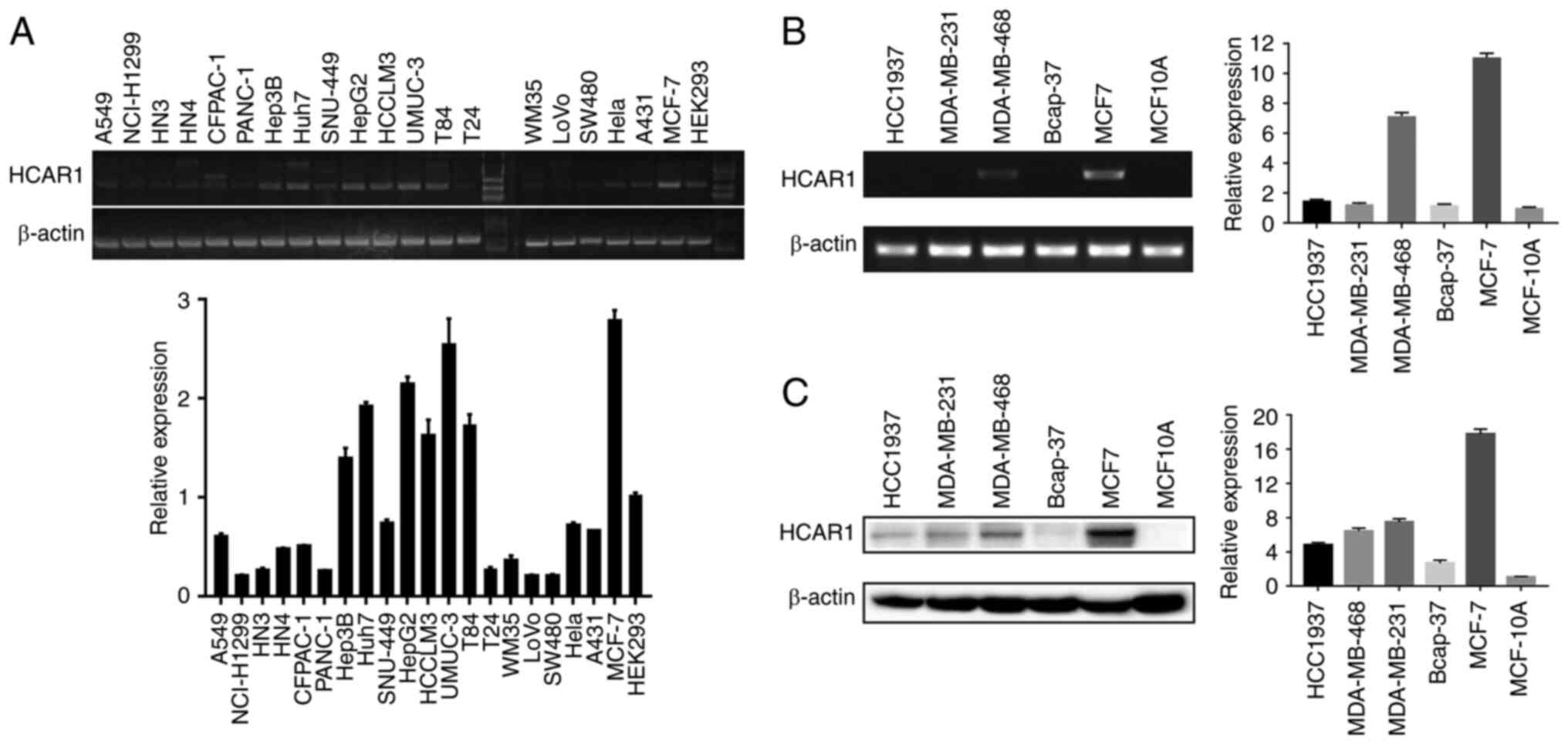
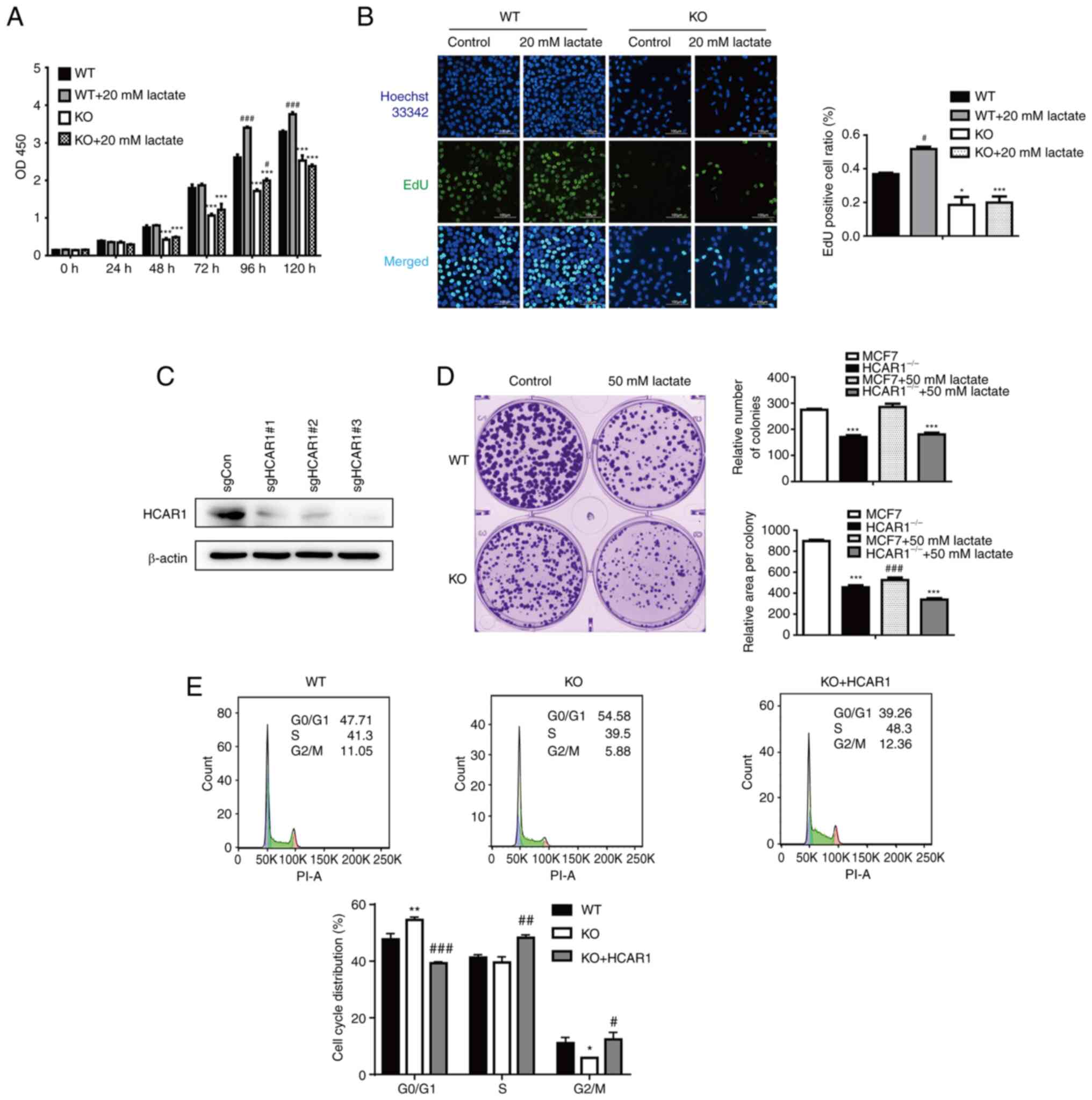
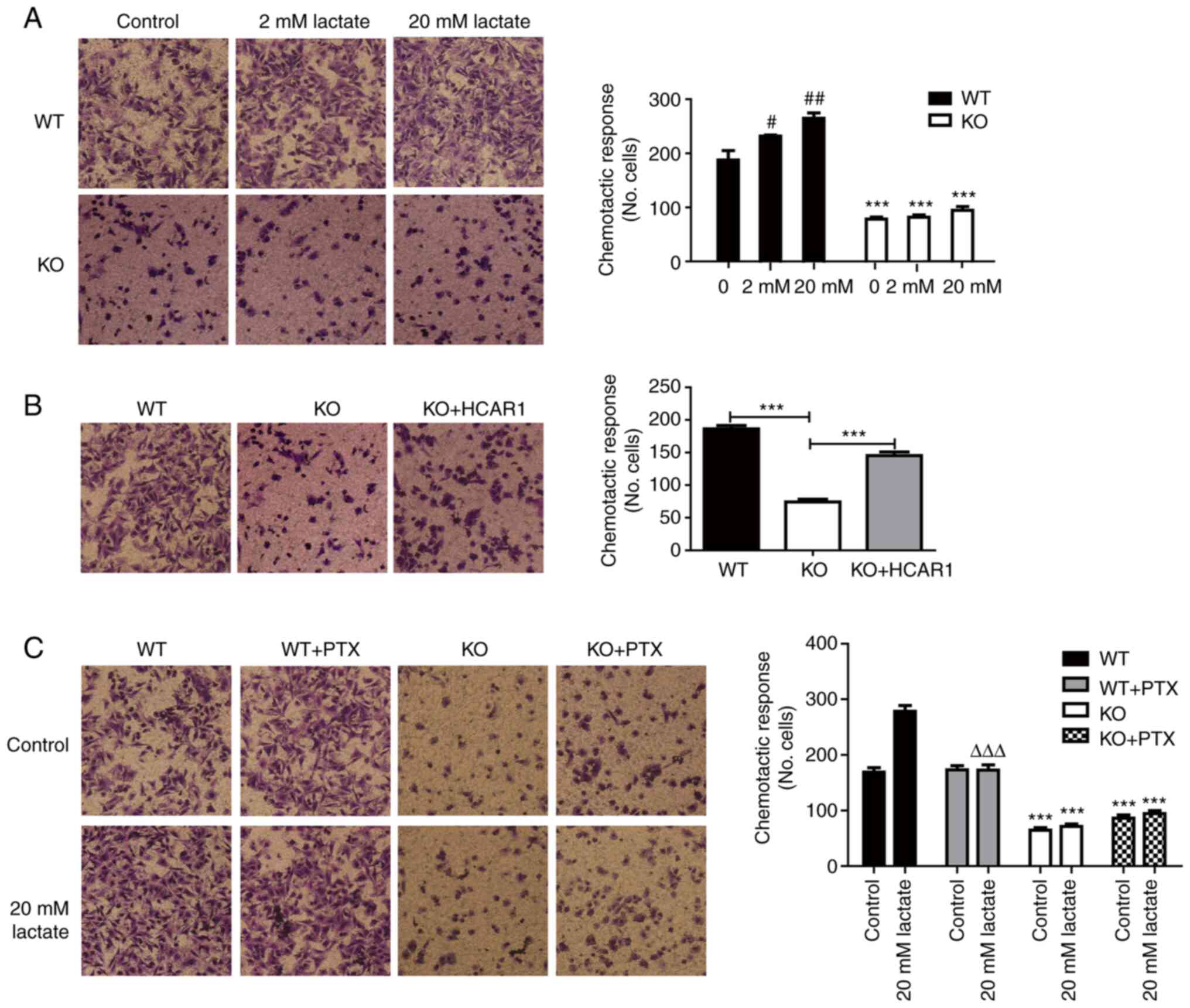
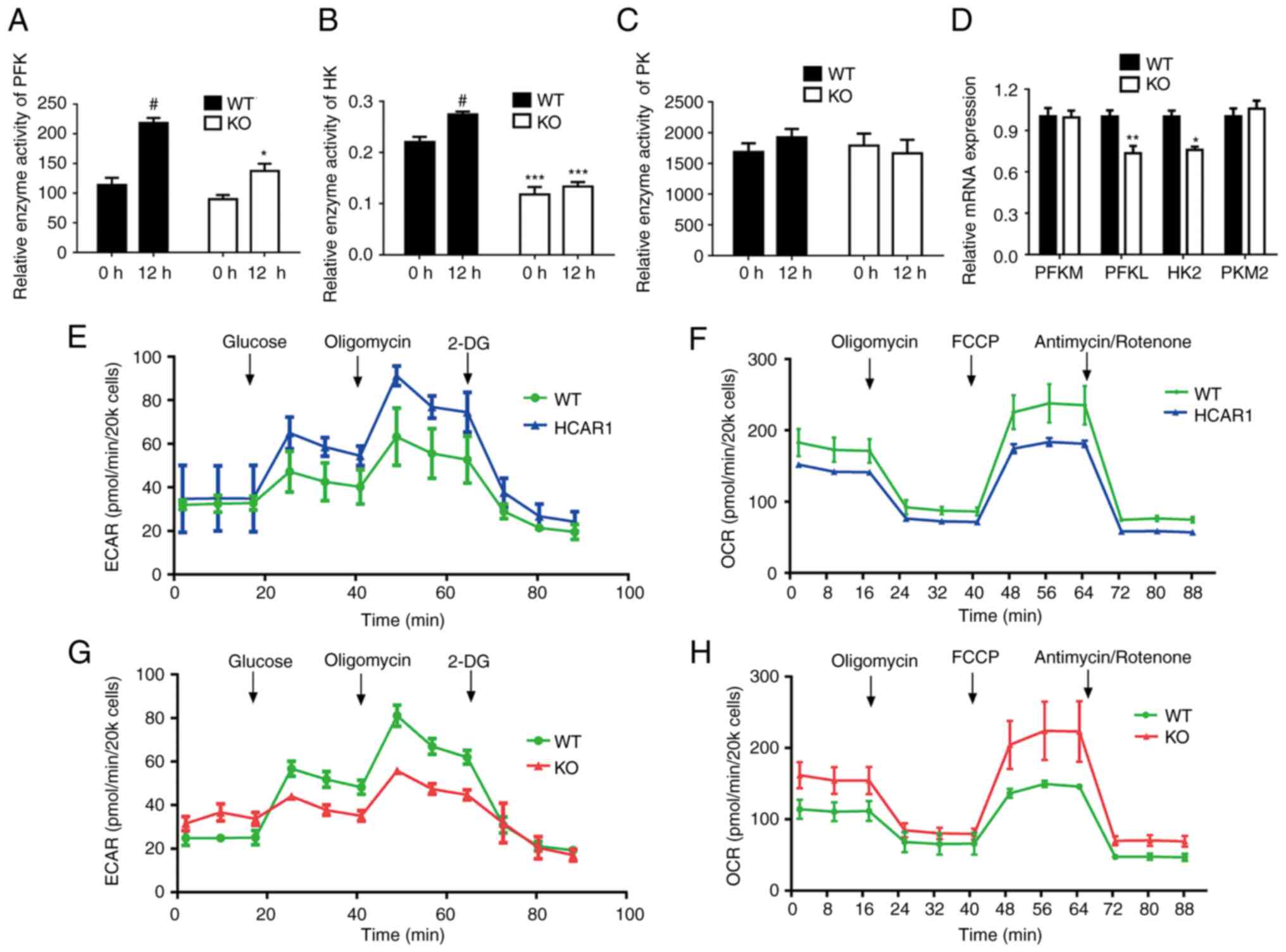
Under aerobic conditions, the preferential use of anaerobic glycolysis by tumour cells leads to a high level of lactate accumulation in tumour microenvironment. Lactate acts not only as a cellular energy source but also as a signalling molecule that regulates cancer cell growth, metastasis and metabolism. It has been reported that a G‑protein‑coupled receptor for lactate named hydroxycarboxylic acid receptor 1 (HCAR1) is highly expressed in numerous types of cancer, but the detailed mechanism remains unclear. In the present study, it was reported that HCAR1 is highly expressed in breast cancer cells. Genetic deletion of HCAR1 in MCF7 cells leads to reduced cell proliferation and migration. Moreover, it was observed that knockout (KO) of HCAR1 attenuated the expression and activity of phosphofructokinase and hexokinase, key rate‑limiting enzymes in glycolysis. Using an extracellular flux analyzer, it was showed that KO of HCAR1 promoted a metabolic shift towards a decreased glycolysis state, as evidenced by a decreased extracellular acidification rate and increased oxygen consumption rate in MCF7 cells. Taken together, our results suggested that lactate acts through HCAR1 as a metabolic regulator in breast cancer cells that may be therapeutically exploited.
View Figures

Figure 1

Figure 2

Figure 3

Figure 4

View References

1 

Heiden MGV, Cantley LC and Thompson CB: Understanding the Warburg effect: The metabolic requirements of cell proliferation. Science. 324:1029–1033. 2009. View Article : Google Scholar : PubMed/NCBI

2 

Cairns RA, Harris IS and Mak TW: Regulation of cancer cell metabolism. Nat Rev Cancer. 11:85–95. 2011. View Article : Google Scholar : PubMed/NCBI

3 

Brizel DM, Schroeder T, Scher RL, Walenta S, Clough RW, Dewhirst MW and Mueller-Klieser W: Elevated tumor lactate concentrations predict for an increased risk of metastases in head-and-neck cancer. Int J Radiat Oncol Biol Phys. 51:349–353. 2001. View Article : Google Scholar : PubMed/NCBI

4 

Walenta S and Mueller-Klieser WF: Lactate: Mirror and motor of tumor malignancy. Semin Radiat Oncol. 14:267–274. 2004. View Article : Google Scholar

5 

Walenta S, Schroeder T and Mueller-Klieser W: Lactate in solid malignant tumors: Potential basis of a metabolic classification in clinical oncology. Curr Med Chem. 11:2195–2204. 2004. View Article : Google Scholar : PubMed/NCBI

6 

Romero-Garcia S, Moreno-Altamirano MM, Prado-Garcia H and Sánchez-García FJ: Lactate contribution to the tumor microenvironment: mechanisms, effects on immune cells and therapeutic relevance. Front Immunol. 7:522016. View Article : Google Scholar

7 

Iñigo SM and Carcinogenesis BGAJ: Reexamining cancer metabolism: lactate production for carcinogenesis could be the purpose and explanation of the Warburg Effect. Carcinogenesis. 119:119–133. 2016.

8 

Feng J, Yang H, Zhang Y, Wei H, Zhu Z, Zhu B, Yang M, Cao W, Wang L and Wu Z: Tumor cell-derived lactate induces TAZ-dependent upregulation of PD-L1 through GPR81 in human lung cancer cells. Oncogene. 36:5829–5839. 2017. View Article : Google Scholar : PubMed/NCBI

9 

Dhup S, Dadhich RK, Porporato PE and Sonveaux P: Multiple biological activities of lactic acid in cancer: Influences on tumor growth, angiogenesis and metastasis. Curr Pharm Des. 18:1319–1330. 2012. View Article : Google Scholar : PubMed/NCBI

10 

Liu C, Wu J, Zhu J, Kuei C, Yu J, Shelton J, Sutton SW, Li X, Yun SJ, Mirzadegan T, et al: Lactate inhibits lipolysis in fat cells through activation of an orphan G-protein-coupled receptor, GPR81. J Biol Chem. 284:2811–2822. 2009. View Article : Google Scholar : PubMed/NCBI

11 

Liu C, Kuei C, Zhu J, Yu J, Zhang L, Shih A, Mirzadegan T, Shelton J, Sutton S, Connelly MA, et al: 3,5-Dihydroxybenzoic acid, a specific agonist for hydroxycarboxylic acid 1, inhibits lipolysis in adipocytes. J Pharmacol Exp Ther. 341:794–801. 2012. View Article : Google Scholar : PubMed/NCBI

12 

Ca TQ, Ren N, Jin L, Cheng K, Kash S, Chen R, Wright SD, Taggart AKP and Waters MG: Role of GPR81 in lactate-mediated reduction of adipose lipolysis. Biochem Biophy Res Commun. 377:987–991. 2008. View Article : Google Scholar

13 

Roland CL, Arumugam T, Deng D, Liu SH, Philip B, Gomez S, Burns WR, Ramachandran V, Wang H, Cruz-Monserrate Z and Logsdon CD: Cell surface lactate receptor GPR81 is crucial for cancer cell survival. Cancer Res. 74:5301–5310. 2014. View Article : Google Scholar : PubMed/NCBI

14 

Lee YJ, Shin KJ, Park SA, Park KS, Park S, Heo K, Seo YK, Noh DY, Ryu SH and Suh PG: G-protein-coupled receptor 81 promotes a malignant phenotype in breast cancer through angiogenic factor secretion. Oncotarget. 7:70898–70911. 2016. View Article : Google Scholar

15 

Offermanns S: Hydroxy-carboxylic acid receptor actions in metabolism. Trends Endocrinol Metab. 28:227–236. 2017. View Article : Google Scholar : PubMed/NCBI

16 

Stäubert C, Broom OJ and Nordström A: Hydroxycarboxylic acid receptors are essential for breast cancer cells to control their lipid/fatty acid metabolism. Oncotarget. 6:19706–19720. 2015. View Article : Google Scholar

17 

Lundø K, Trauelsen M, Pedersen SF and Schwartz TW: Why warburg works: Lactate controls immune evasion through GPR81. Cell Metab. 31:666–668. 2020. View Article : Google Scholar

18 

Brown TP, Bhattacharjee P, Ramachandran S, Sivaprakasam S, Ristic B, Sikder MOF and Ganapathy V: The lactate receptor GPR81 promotes breast cancer growth via a paracrine mechanism involving antigen-presenting cells in the tumor microenvironment. Oncogene. 39:3292–3304. 2020. View Article : Google Scholar : PubMed/NCBI

19 

Livak KJ and Schmittgen TD: Analysis of relative gene expression data using real-time quantitative PCR and the 2(−Delta Delta C(T)) method. Methods. 25:402–408. 2001. View Article : Google Scholar : PubMed/NCBI

20 

Jiang J, Huang D, Jiang Y, Hou J, Tian M, Li J, Sun L, Zhang Y, Zhang T, Li Z, et al: Lactate modulates cellular metabolism through histone lactylation-mediated gene expression in non-small cell lung cancer. Front Oncol. 11:6475592021. View Article : Google Scholar

21 

Salem A, Asselin MC, Reymen B, Jackson A, Lambin P, West CML, O'Connor JPB and Faivre-Finn C: Targeting hypoxia to improve non-small cell lung cancer outcome. J Natl Cancer Inst. 110:doi: 10.1093/jnci/djx160, 2018.

22 

Yu G, Yu W, Jin G, Xu D, Chen Y, Xia T, Yu A, Fang W, Zhang X, Li Z and Xie K: PKM2 regulates neural invasion of and predicts poor prognosis for human hilar cholangiocarcinoma. Mol Cancer. 14:1932015. View Article : Google Scholar : PubMed/NCBI

23 

Li Y, Wang Y, Liu Z, Guo X, Miao Z and Ma S: Atractylenolide I induces apoptosis and suppresses glycolysis by blocking the JAK2/STAT3 signaling pathway in colorectal cancer cells. Front Pharmacol. 11:2732020. View Article : Google Scholar

24 

Goodwin ML, Jin H, Straessler K, Smith-Fry K, Zhu JF, Monument MJ, Grossmann A, Randall RL, Capecchi MR and Jones KB: Modeling alveolar soft part sarcomagenesis in the mouse: A role for lactate in the tumor microenvironment. Cancer Cell. 26:851–862. 2014. View Article : Google Scholar

25 

Sakurai T, Davenport R, Stafford S, Grosse J, Ogawa K, Cameron J, Parton L, Sykes A, Mack S, Bousba S, et al: Identification of a novel GPR81-selective agonist that suppresses lipolysis in mice without cutaneous flushing. Eur J Pharmacol. 727:1–7. 2014. View Article : Google Scholar

26 

Ward C, Langdon SP, Mullen P, Harris AL, Harrison DJ, Supuran CT and Kunkler IH: New strategies for targeting the hypoxic tumour microenvironment in breast cancer. Cancer Treat Rev. 39:171–179. 2013. View Article : Google Scholar : PubMed/NCBI

27 

Wagner W, Ciszewski WM and Kania KD: L- and D-lactate enhance DNA repair and modulate the resistance of cervical carcinoma cells to anticancer drugs via histone deacetylase inhibition and hydroxycarboxylic acid receptor 1 activation. Cell Commun Signal. 13:362015. View Article : Google Scholar

28 

Xu B, Wilson BA and Lu L: Induction of human myeloblastic ML-1 cell G1 arrest by suppression of K+ channel activity. Am J Physiol. 271:C2037–C2044. 1996. View Article : Google Scholar

29 

Marakhova I, Domnina A, Shatrova A, Borodkina A, Burova E, Pugovkina N, Zemelko V and Nikolsky N: Proliferation-related changes in K(+) content in human mesenchymal stem cells. Sci Rep. 9:3462019. View Article : Google Scholar : PubMed/NCBI

30 

Tateyama M and Kubo Y: Gi/o-coupled muscarinic receptors co-localize with GIRK channel for efficient channel activation. PLoS One. 13:e02044472018. View Article : Google Scholar : PubMed/NCBI

31 

Days E, Kaufmann K, Romaine I, Niswender C, Lewis M, Utley T, Du Y, Sliwoski G, Morrison R, Dawson ES, et al: Discovery and Characterization of a Selective Activator of the G-Protein Activated Inward-Rectifying Potassium (GIRK) Channel. Probe Reports from the NIH Molecular Libraries Program [Internet]. National Center for Biotechnology Information (US); Bethesda, MD: 2010

32 

Dascal N and Kahanovitch U: The roles of Gβγ and Gα in gating and regulation of GIRK channels. Int Rev Neurobiol. 123:27–85. 2015. View Article : Google Scholar

33 

Park HJ, Lyons JC, Ohtsubo T and Song CW: Acidic environment causes apoptosis by increasing caspase activity. Br J Cancer. 80:1892–1897. 1999. View Article : Google Scholar : PubMed/NCBI

34 

Porporato PE, Dhup S, Dadhich RK, Copetti T and Sonveaux P: Anticancer targets in the glycolytic metabolism of tumors: A comprehensive review. Front Pharmacol. 2:492011. View Article : Google Scholar

35 

Shi Q, Abbruzzese JL, Huang SY, Fidler IJ, Xiong Q and Xie K: Constitutive and inducible interleukin 8 expression by hypoxia and acidosis renders human pancreatic cancer cells more tumorigenic and metastatic. Clin Cancer Res. 5:3711–3721. 1999.PubMed/NCBI

36 

Shi Q, Le X, Wang B, Abbruzzese JL, Xiong Q, He Y and Xie K: Regulation of vascular endothelial growth factor expression by acidosis in human cancer cells. Oncogene. 20:3751–3756. 2001. View Article : Google Scholar : PubMed/NCBI

37 

Rozhin J, Sameni M, Ziegler GH and Sloane BF: Pericellular pH affects distribution and secretion of cathepsin B in malignant cells. Cancer Res. 54:6517–6525. 1994.PubMed/NCBI

38 

Xie Q, Zhu Z, He Y, Zhang Z, Zhang Y, Wang Y, Luo J, Peng T, Cheng F, Gao J, et al: A lactate-induced Snail/STAT3 pathway drives GPR81 expression in lung cancer cells. Biochim Biophys Acta Mol Basis Dis. 1866:1655762020. View Article : Google Scholar : PubMed/NCBI

39 

Goetze K, Walenta S, Ksiazkiewicz M, Kunz-Schughart LA and Mueller-Klieser W: Lactate enhances motility of tumor cells and inhibits monocyte migration and cytokine release. Int J Oncol. 39:453–463. 2011.

40 

Dusaban SS, Purcell NH, Rockenstein E, Masliah E, Cho MK, Smrcka AV and Brown JH: Phospholipase Cε links G protein-coupled receptor activation to inflammatory astrocytic responses. Proc Natl Acad Sci USA. 110:3609–3614. 2013. View Article : Google Scholar : PubMed/NCBI

41 

Wang Y, Liao R, Chen X, Ying X, Chen G, Li M and Dong C: Twist-mediated PAR1 induction is required for breast cancer progression and metastasis by inhibiting Hippo pathway. Cell Death Dis. 11:5202020. View Article : Google Scholar : PubMed/NCBI

42 

Liberti MV and Locasale JW: The warburg effect: How does it benefit cancer cells? Trends Biochem Sci. 41:211–218. 2016. View Article : Google Scholar

43 

Warburg O: On the origin of cancer cells. Science. 123:309–314. 1956. View Article : Google Scholar : PubMed/NCBI

Related Articles

  • Abstract
  • View
  • Download
  • Twitter
Copy and paste a formatted citation
Spandidos Publications style
Jin L, Guo Y, Chen J, Wen Z, Jiang Y and Qian J: Lactate receptor HCAR1 regulates cell growth, metastasis and maintenance of cancer‑specific energy metabolism in breast cancer cells. Mol Med Rep 26: 268, 2022.
APA
Jin, L., Guo, Y., Chen, J., Wen, Z., Jiang, Y., & Qian, J. (2022). Lactate receptor HCAR1 regulates cell growth, metastasis and maintenance of cancer‑specific energy metabolism in breast cancer cells. Molecular Medicine Reports, 26, 268. https://doi.org/10.3892/mmr.2022.12784
MLA
Jin, L., Guo, Y., Chen, J., Wen, Z., Jiang, Y., Qian, J."Lactate receptor HCAR1 regulates cell growth, metastasis and maintenance of cancer‑specific energy metabolism in breast cancer cells". Molecular Medicine Reports 26.2 (2022): 268.
Chicago
Jin, L., Guo, Y., Chen, J., Wen, Z., Jiang, Y., Qian, J."Lactate receptor HCAR1 regulates cell growth, metastasis and maintenance of cancer‑specific energy metabolism in breast cancer cells". Molecular Medicine Reports 26, no. 2 (2022): 268. https://doi.org/10.3892/mmr.2022.12784
Copy and paste a formatted citation
x
Spandidos Publications style
Jin L, Guo Y, Chen J, Wen Z, Jiang Y and Qian J: Lactate receptor HCAR1 regulates cell growth, metastasis and maintenance of cancer‑specific energy metabolism in breast cancer cells. Mol Med Rep 26: 268, 2022.
APA
Jin, L., Guo, Y., Chen, J., Wen, Z., Jiang, Y., & Qian, J. (2022). Lactate receptor HCAR1 regulates cell growth, metastasis and maintenance of cancer‑specific energy metabolism in breast cancer cells. Molecular Medicine Reports, 26, 268. https://doi.org/10.3892/mmr.2022.12784
MLA
Jin, L., Guo, Y., Chen, J., Wen, Z., Jiang, Y., Qian, J."Lactate receptor HCAR1 regulates cell growth, metastasis and maintenance of cancer‑specific energy metabolism in breast cancer cells". Molecular Medicine Reports 26.2 (2022): 268.
Chicago
Jin, L., Guo, Y., Chen, J., Wen, Z., Jiang, Y., Qian, J."Lactate receptor HCAR1 regulates cell growth, metastasis and maintenance of cancer‑specific energy metabolism in breast cancer cells". Molecular Medicine Reports 26, no. 2 (2022): 268. https://doi.org/10.3892/mmr.2022.12784
Follow us
  • Twitter
  • LinkedIn
  • Facebook
About
  • Spandidos Publications
  • Careers
  • Cookie Policy
  • Privacy Policy
How can we help?
  • Help
  • Live Chat
  • Contact
  • Email to our Support Team