Spandidos Publications Logo
  • About
    • About Spandidos
    • Aims and Scopes
    • Abstracting and Indexing
    • Editorial Policies
    • Reprints and Permissions
    • Job Opportunities
    • Terms and Conditions
    • Contact
  • Journals
    • All Journals
    • Oncology Letters
      • Oncology Letters
      • Information for Authors
      • Editorial Policies
      • Editorial Board
      • Aims and Scope
      • Abstracting and Indexing
      • Bibliographic Information
      • Archive
    • International Journal of Oncology
      • International Journal of Oncology
      • Information for Authors
      • Editorial Policies
      • Editorial Board
      • Aims and Scope
      • Abstracting and Indexing
      • Bibliographic Information
      • Archive
    • Molecular and Clinical Oncology
      • Molecular and Clinical Oncology
      • Information for Authors
      • Editorial Policies
      • Editorial Board
      • Aims and Scope
      • Abstracting and Indexing
      • Bibliographic Information
      • Archive
    • Experimental and Therapeutic Medicine
      • Experimental and Therapeutic Medicine
      • Information for Authors
      • Editorial Policies
      • Editorial Board
      • Aims and Scope
      • Abstracting and Indexing
      • Bibliographic Information
      • Archive
    • International Journal of Molecular Medicine
      • International Journal of Molecular Medicine
      • Information for Authors
      • Editorial Policies
      • Editorial Board
      • Aims and Scope
      • Abstracting and Indexing
      • Bibliographic Information
      • Archive
    • Biomedical Reports
      • Biomedical Reports
      • Information for Authors
      • Editorial Policies
      • Editorial Board
      • Aims and Scope
      • Abstracting and Indexing
      • Bibliographic Information
      • Archive
    • Oncology Reports
      • Oncology Reports
      • Information for Authors
      • Editorial Policies
      • Editorial Board
      • Aims and Scope
      • Abstracting and Indexing
      • Bibliographic Information
      • Archive
    • Molecular Medicine Reports
      • Molecular Medicine Reports
      • Information for Authors
      • Editorial Policies
      • Editorial Board
      • Aims and Scope
      • Abstracting and Indexing
      • Bibliographic Information
      • Archive
    • World Academy of Sciences Journal
      • World Academy of Sciences Journal
      • Information for Authors
      • Editorial Policies
      • Editorial Board
      • Aims and Scope
      • Abstracting and Indexing
      • Bibliographic Information
      • Archive
    • International Journal of Functional Nutrition
      • International Journal of Functional Nutrition
      • Information for Authors
      • Editorial Policies
      • Editorial Board
      • Aims and Scope
      • Abstracting and Indexing
      • Bibliographic Information
      • Archive
    • International Journal of Epigenetics
      • International Journal of Epigenetics
      • Information for Authors
      • Editorial Policies
      • Editorial Board
      • Aims and Scope
      • Abstracting and Indexing
      • Bibliographic Information
      • Archive
    • Medicine International
      • Medicine International
      • Information for Authors
      • Editorial Policies
      • Editorial Board
      • Aims and Scope
      • Abstracting and Indexing
      • Bibliographic Information
      • Archive
  • Articles
  • Information
    • Information for Authors
    • Information for Reviewers
    • Information for Librarians
    • Information for Advertisers
    • Conferences
  • Language Editing
Spandidos Publications Logo
  • About
    • About Spandidos
    • Aims and Scopes
    • Abstracting and Indexing
    • Editorial Policies
    • Reprints and Permissions
    • Job Opportunities
    • Terms and Conditions
    • Contact
  • Journals
    • All Journals
    • Biomedical Reports
      • Information for Authors
      • Editorial Policies
      • Editorial Board
      • Aims and Scope
      • Abstracting and Indexing
      • Bibliographic Information
      • Archive
    • Experimental and Therapeutic Medicine
      • Information for Authors
      • Editorial Policies
      • Editorial Board
      • Aims and Scope
      • Abstracting and Indexing
      • Bibliographic Information
      • Archive
    • International Journal of Epigenetics
      • Information for Authors
      • Editorial Policies
      • Editorial Board
      • Aims and Scope
      • Abstracting and Indexing
      • Bibliographic Information
      • Archive
    • International Journal of Functional Nutrition
      • Information for Authors
      • Editorial Policies
      • Editorial Board
      • Aims and Scope
      • Abstracting and Indexing
      • Bibliographic Information
      • Archive
    • International Journal of Molecular Medicine
      • Information for Authors
      • Editorial Policies
      • Editorial Board
      • Aims and Scope
      • Abstracting and Indexing
      • Bibliographic Information
      • Archive
    • International Journal of Oncology
      • Information for Authors
      • Editorial Policies
      • Editorial Board
      • Aims and Scope
      • Abstracting and Indexing
      • Bibliographic Information
      • Archive
    • Medicine International
      • Information for Authors
      • Editorial Policies
      • Editorial Board
      • Aims and Scope
      • Abstracting and Indexing
      • Bibliographic Information
      • Archive
    • Molecular and Clinical Oncology
      • Information for Authors
      • Editorial Policies
      • Editorial Board
      • Aims and Scope
      • Abstracting and Indexing
      • Bibliographic Information
      • Archive
    • Molecular Medicine Reports
      • Information for Authors
      • Editorial Policies
      • Editorial Board
      • Aims and Scope
      • Abstracting and Indexing
      • Bibliographic Information
      • Archive
    • Oncology Letters
      • Information for Authors
      • Editorial Policies
      • Editorial Board
      • Aims and Scope
      • Abstracting and Indexing
      • Bibliographic Information
      • Archive
    • Oncology Reports
      • Information for Authors
      • Editorial Policies
      • Editorial Board
      • Aims and Scope
      • Abstracting and Indexing
      • Bibliographic Information
      • Archive
    • World Academy of Sciences Journal
      • Information for Authors
      • Editorial Policies
      • Editorial Board
      • Aims and Scope
      • Abstracting and Indexing
      • Bibliographic Information
      • Archive
  • Articles
  • Information
    • For Authors
    • For Reviewers
    • For Librarians
    • For Advertisers
    • Conferences
  • Language Editing
Login Register Submit
  • This site uses cookies
  • You can change your cookie settings at any time by following the instructions in our Cookie Policy. To find out more, you may read our Privacy Policy.

    I agree
Search articles by DOI, keyword, author or affiliation
Search
Advanced Search
presentation
Molecular Medicine Reports
Join Editorial Board Propose a Special Issue
Print ISSN: 1791-2997 Online ISSN: 1791-3004
Journal Cover
October-2022 Volume 26 Issue 4

Full Size Image

Sign up for eToc alerts
Recommend to Library

Journals

International Journal of Molecular Medicine

International Journal of Molecular Medicine

International Journal of Molecular Medicine is an international journal devoted to molecular mechanisms of human disease.

International Journal of Oncology

International Journal of Oncology

International Journal of Oncology is an international journal devoted to oncology research and cancer treatment.

Molecular Medicine Reports

Molecular Medicine Reports

Covers molecular medicine topics such as pharmacology, pathology, genetics, neuroscience, infectious diseases, molecular cardiology, and molecular surgery.

Oncology Reports

Oncology Reports

Oncology Reports is an international journal devoted to fundamental and applied research in Oncology.

Experimental and Therapeutic Medicine

Experimental and Therapeutic Medicine

Experimental and Therapeutic Medicine is an international journal devoted to laboratory and clinical medicine.

Oncology Letters

Oncology Letters

Oncology Letters is an international journal devoted to Experimental and Clinical Oncology.

Biomedical Reports

Biomedical Reports

Explores a wide range of biological and medical fields, including pharmacology, genetics, microbiology, neuroscience, and molecular cardiology.

Molecular and Clinical Oncology

Molecular and Clinical Oncology

International journal addressing all aspects of oncology research, from tumorigenesis and oncogenes to chemotherapy and metastasis.

World Academy of Sciences Journal

World Academy of Sciences Journal

Multidisciplinary open-access journal spanning biochemistry, genetics, neuroscience, environmental health, and synthetic biology.

International Journal of Functional Nutrition

International Journal of Functional Nutrition

Open-access journal combining biochemistry, pharmacology, immunology, and genetics to advance health through functional nutrition.

International Journal of Epigenetics

International Journal of Epigenetics

Publishes open-access research on using epigenetics to advance understanding and treatment of human disease.

Medicine International

Medicine International

An International Open Access Journal Devoted to General Medicine.

Journal Cover
October-2022 Volume 26 Issue 4

Full Size Image

Sign up for eToc alerts
Recommend to Library

  • Article
  • Citations
    • Cite This Article
    • Download Citation
    • Create Citation Alert
    • Remove Citation Alert
    • Cited By
  • Similar Articles
    • Related Articles (in Spandidos Publications)
    • Similar Articles (Google Scholar)
    • Similar Articles (PubMed)
  • Download PDF
  • Download XML
  • View XML
Article Open Access

SDF‑1α/CXCR4 signaling promotes capillary tube formation of human retinal vascular endothelial cells by activating ERK1/2 and PI3K pathways in vitro

  • Authors:
    • Xianbin Yuan
    • Hongya Wu
    • Xin Li
    • Lei Chen
    • Yanhui Xiao
    • Zhigang Chen
    • Gaoqin Liu
    • Peirong Lu
  • View Affiliations / Copyright

    Affiliations: Department of Ophthalmology, The First Affiliated Hospital of Soochow University, Suzhou, Jiangsu 215006, P.R. China, Jiangsu Key Laboratory of Clinical Immunology, The First Affiliated Hospital of Soochow University, Suzhou, Jiangsu 215006, P.R. China
    Copyright: © Yuan et al. This is an open access article distributed under the terms of Creative Commons Attribution License.
  • Article Number: 305
    |
    Published online on: August 9, 2022
       https://doi.org/10.3892/mmr.2022.12821
  • Expand metrics +
Metrics: Total Views: 0 (Spandidos Publications: | PMC Statistics: )
Metrics: Total PDF Downloads: 0 (Spandidos Publications: | PMC Statistics: )
Cited By (CrossRef): 0 citations Loading Articles...

This article is mentioned in:


Abstract

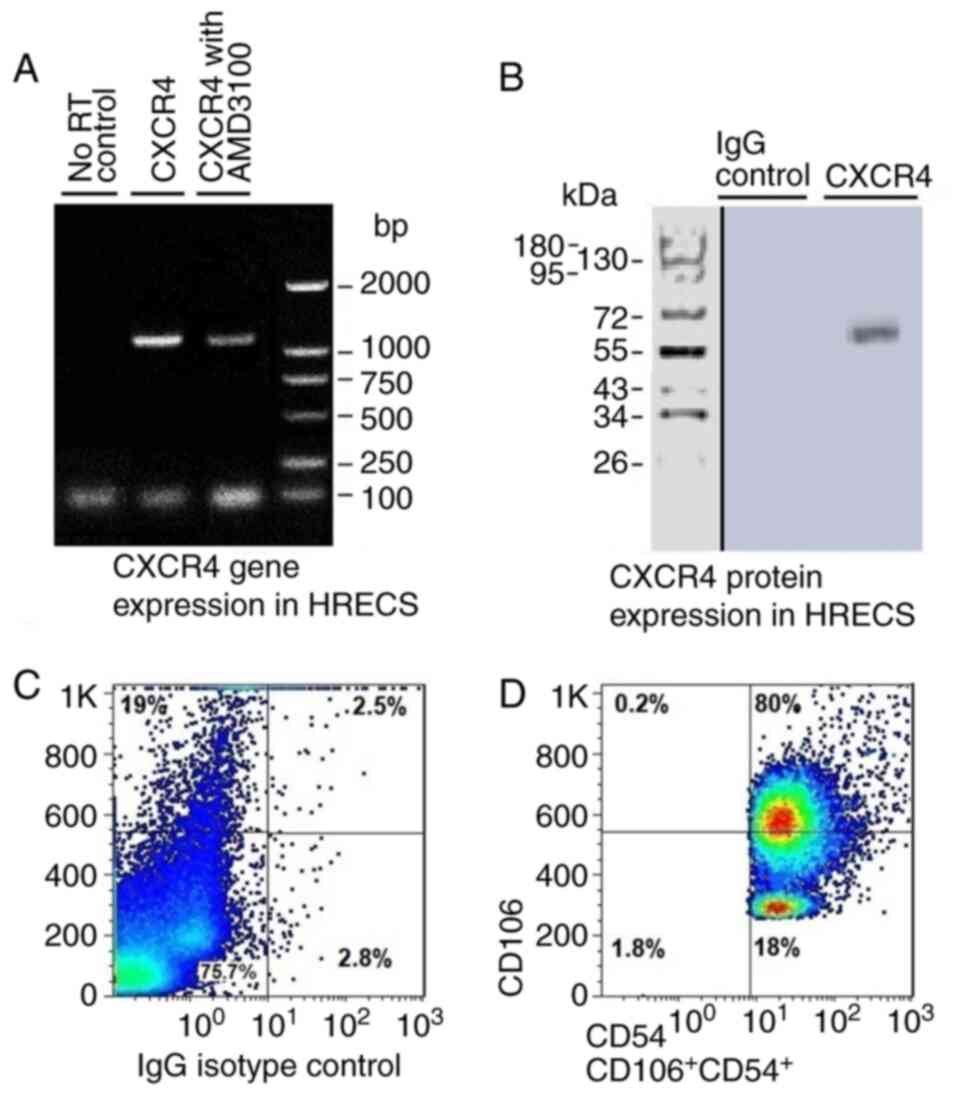
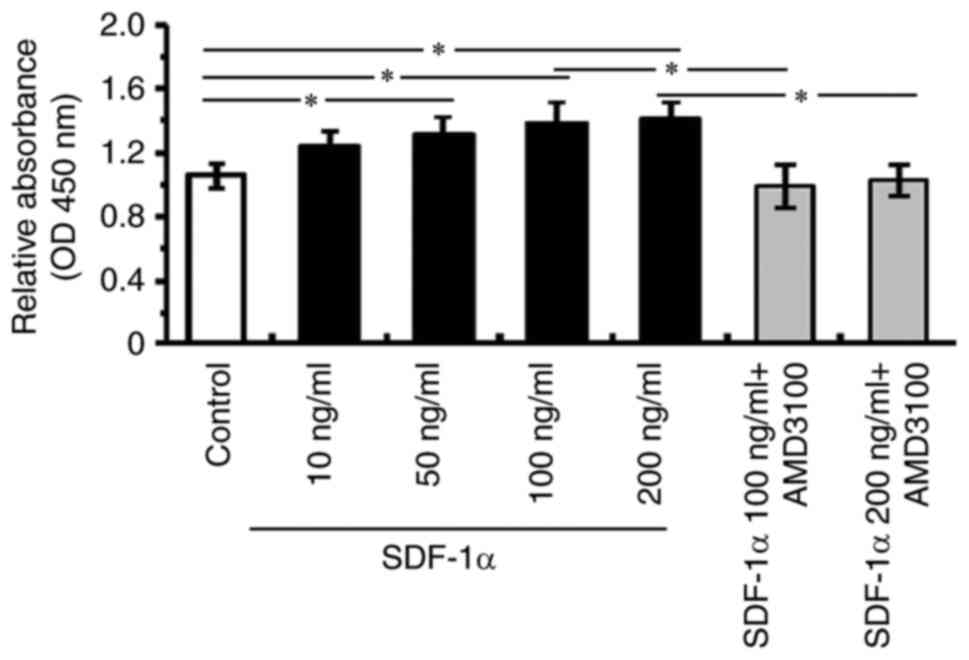
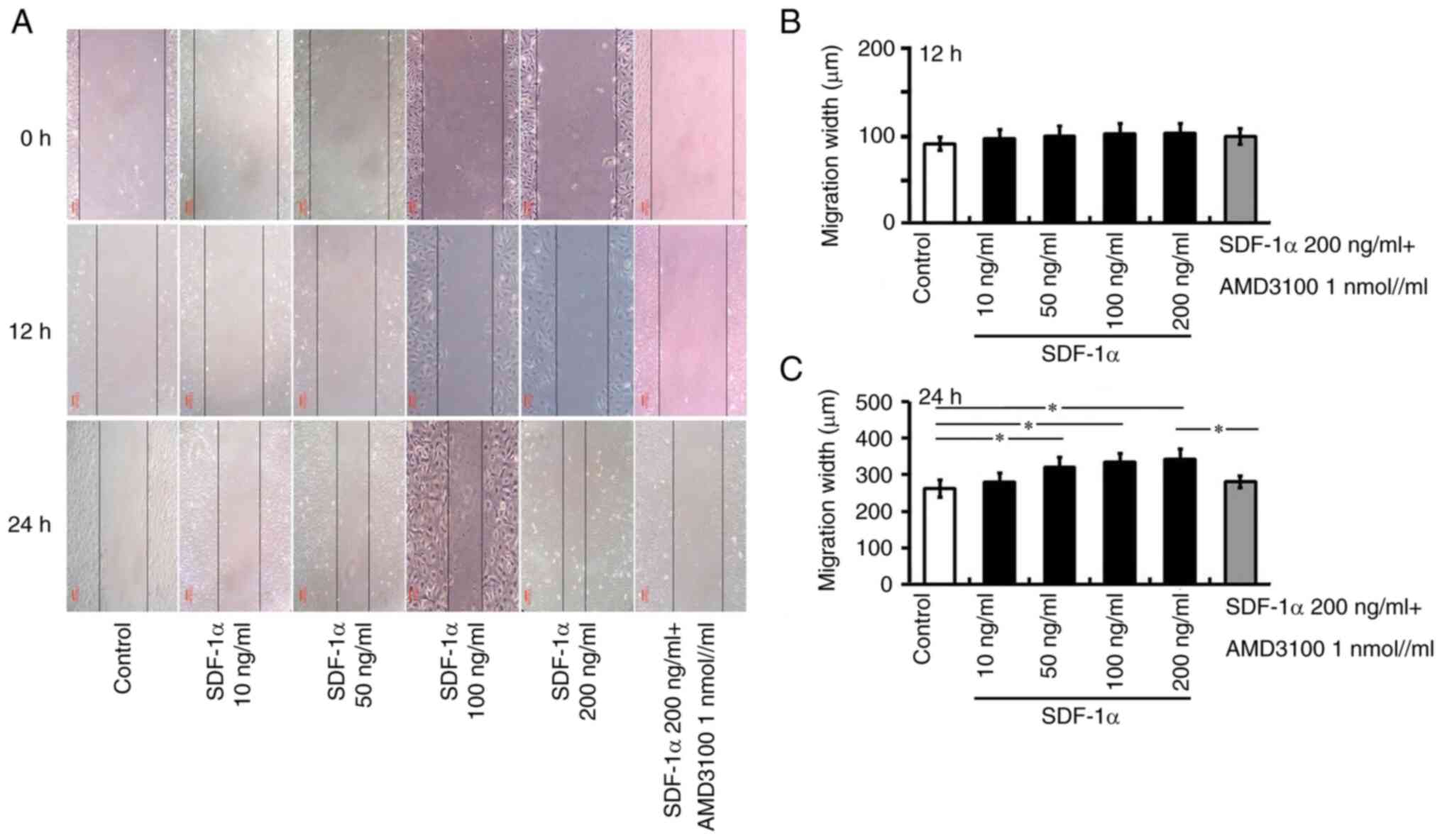
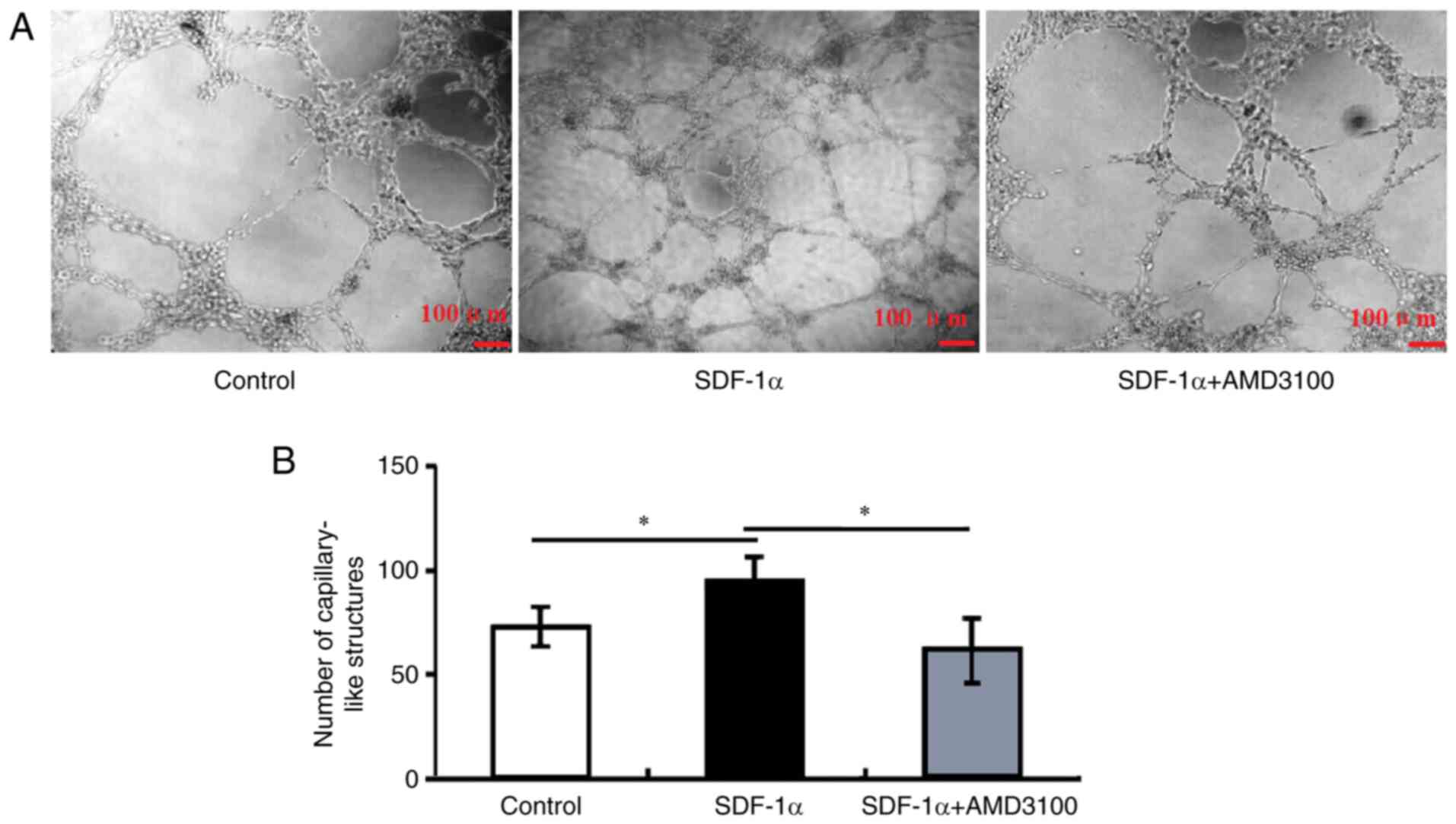
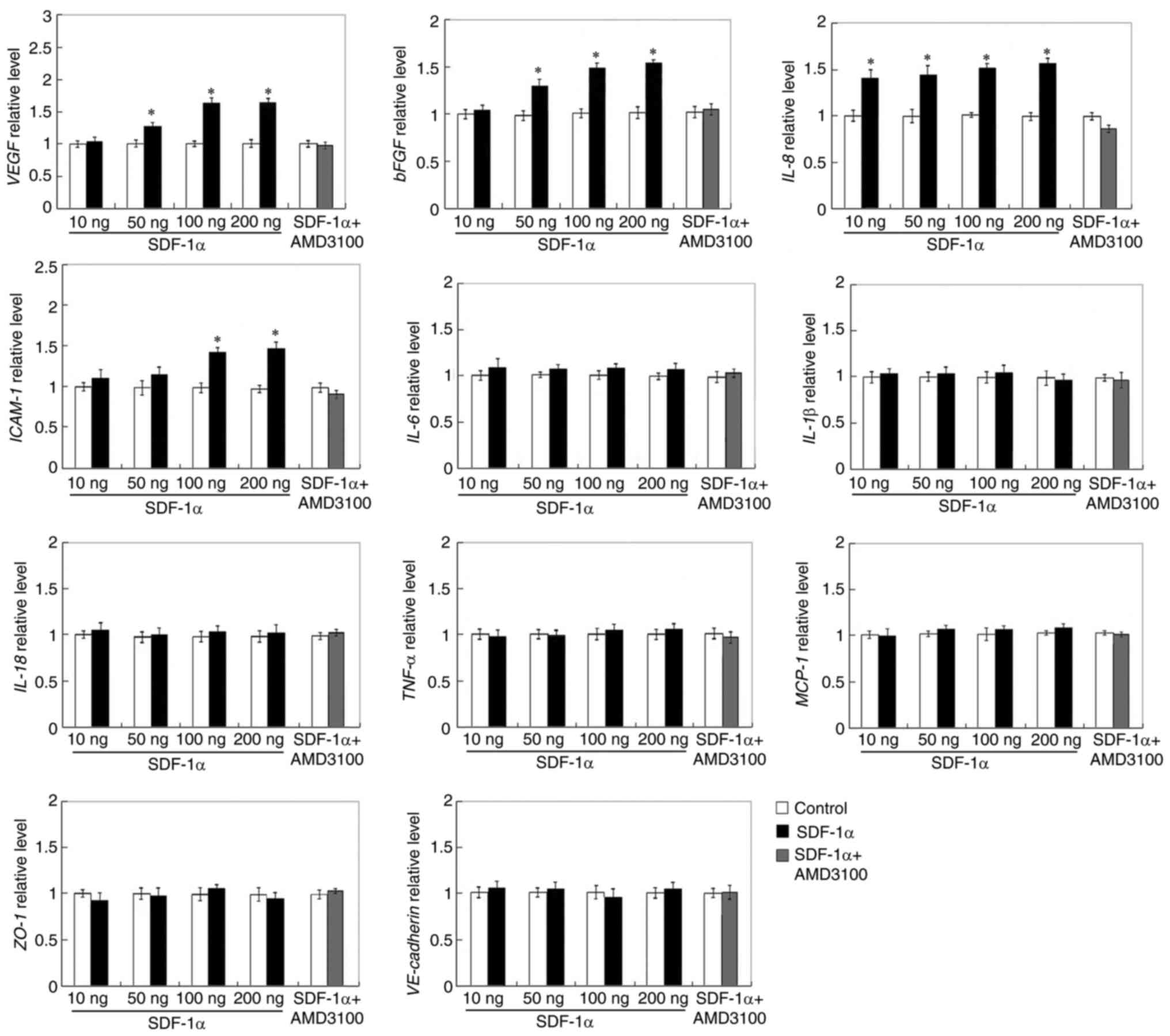
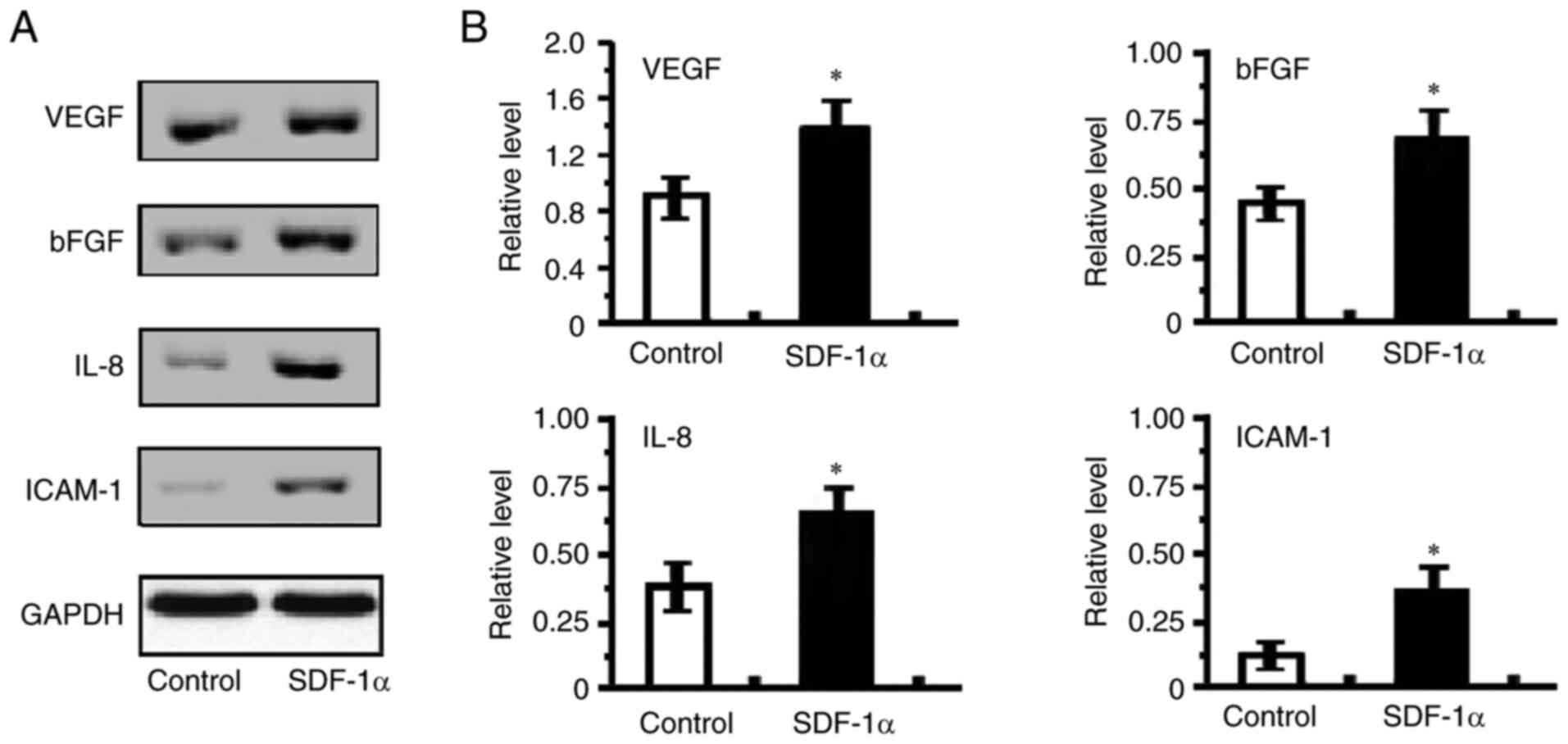
The purpose of this study is to address the effect and mechanism of stromal cell‑derived factor‑1 (SDF‑1)α/chemokine (C‑X‑C motif) receptor 4 (CXCR4) signaling on capillary tube formation of human retinal vascular endothelial cells (HRECs). The expression of CXCR4 in HRECs was quantified by reverse transcription (RT‑PCR) and western blotting. The effects of SDF‑1α/CXCR4 signaling in capillary tube formation and migration of HRECs was examined using three‑dimensional Matrigel assay and wound scratching assay respectively in vitro. Cell proliferation of HRECs was examined using cell counting kit (CCK)‑8 assay in the presence of different concentrations of SDF‑1α protein. The effect of SDF‑1α/CXCR4 signaling in HREC expression of VEGF, basic fibroblast growth factor (bFGF), IL‑8 and intercellular cell adhesion molecule (ICAM)‑1 was examined using RT‑PCR and western blotting. RT‑PCR and western blot analysis revealed CXCR4 was expressed in HRECs. The number of intact capillary tubes formed by HRECs in the presence of SDF‑1α was markedly more compared with a PBS treated control group. However, it was reduced with treatment with an CXCR4 antagonist. Wound scratching assay showed a significant increase in the number of migrated HRECs under SDF‑1α stimulation and the number was reduced with treatment with an CXCR4 antagonist. RT‑PCR and western blotting showed that SDF‑1α significantly promoted VEGF, bFGF, IL‑8 and ICAM‑1 expression in HRECs. The proliferation of HRECs in the presence of SDF‑1α was promoted in a dosage‑dependent manner. SDF‑1α/CXCR4 signaling can increase HREC capillary tube formation through promoting HREC migration, proliferation and expression of VEGF, bFGF, IL‑8 and ICAM‑1.
View Figures

Figure 1

Figure 2

Figure 3

Figure 4

Figure 5

Figure 6

Figure 7

View References

1 

Campochiaro PA: Ocular neovascularization. J Mol Med (Berl). 91:311–321. 2013. View Article : Google Scholar : PubMed/NCBI

2 

Lee YM, Lee YR, Kim CS, Jo K, Sohn E, Kim JS and Kim J: Cnidium officinale extract and butylidenephthalide inhibits retinal neovascularization in vitro and in vivo. BMC Complement Altern Med. 16:2312016. View Article : Google Scholar : PubMed/NCBI

3 

Multicenter trial of cryotherapy for retinopathy of prematurity, . 3 1/2-Year outcome-structure and function. Cryotherapy for retinopathy of prematurity cooperative group. Arch Ophthalmol. 111:339–344. 1993. View Article : Google Scholar : PubMed/NCBI

4 

Phelps DL: Retinopathy of prematurity. Pediatr Rev. 16:50–56. 1995. View Article : Google Scholar : PubMed/NCBI

5 

Tsilimbaris MK, Kontadakis GA, Tsika C, Papageorgiou D and Charoniti M: Effect of panretinal photocoagulation treatment on vision-related quality of life of patients with proliferative diabetic retinopathy. Retina. 33:756–761. 2013. View Article : Google Scholar : PubMed/NCBI

6 

Ameri H, Liu H, Liu R, Ha Y, Paulucci-Holthauzen AA, Hu S, Motamedi M, Godley BF, Tilton RG and Zhang W: TWEAK/Fn14 pathway is a novel mediator of retinal neovascularization. Invest Ophthalmol Vis Sci. 55:801–813. 2014. View Article : Google Scholar : PubMed/NCBI

7 

Witmer AN, Vrensen GF, Van Noorden CJ and Schlingemann RO: Vascular endothelial growth factors and angiogenesis in eye disease. Prog Retin Eye Res. 22:1–29. 2003. View Article : Google Scholar : PubMed/NCBI

8 

Yu W, Bai Y, Han N, Wang F, Zhao M, Huang L and Li X: Inhibition of pathological retinal neovascularization by semaphorin 3A. Mol Vis. 19:1397–1405. 2013.PubMed/NCBI

9 

Praidou A, Androudi S, Brazitikos P, Karakiulakis G, Papakonstantinou E and Dimitrakos S: Angiogenic growth factors and their inhibitors in diabetic retinopathy. Curr Diabetes Rev. 6:304–312. 2010. View Article : Google Scholar : PubMed/NCBI

10 

Risau W: Mechanisms of angiogenesis. Nature. 386:671–674. 1997. View Article : Google Scholar : PubMed/NCBI

11 

Gariano RF and Gardner TW: Retinal angiogenesis in development and disease. Nature. 438:960–966. 2005. View Article : Google Scholar : PubMed/NCBI

12 

Zhang SX and Ma JX: Ocular neovascularization: Implication of endogenous angiogenic inhibitors and potential therapy. Prog Retin Eye Res. 26:1–37. 2007. View Article : Google Scholar : PubMed/NCBI

13 

Fong GH: Mechanisms of adaptive angiogenesis to tissue hypoxia. Angiogenesis. 11:121–140. 2008. View Article : Google Scholar : PubMed/NCBI

14 

Liekens S, Schols D and Hatse S: CXCL12-CXCR4 axis in angiogenesis, metastasis and stem cell mobilization. Curr Pharm Des. 16:3903–3920. 2010. View Article : Google Scholar : PubMed/NCBI

15 

Federsppiel B, Melhado IG, Duncan AM, Delaney A, Schappert K, Clark-Lewis I and Jirik FR: Molecular cloning of the cDNA and chromosomal localization of the gene for a putative seven-transmembrane segment (7-TMS) receptor isolated from human spleen. Genomics. 16:707–712. 1993. View Article : Google Scholar : PubMed/NCBI

16 

Nomura H, Nielsen BW and Matsushima K: Molecular cloning of cDNAs encoding a LD78 receptor and putative leukocyte chemotactic peptide receptors. Int Immunol. 5:1239–1249. 1993. View Article : Google Scholar : PubMed/NCBI

17 

Aiuti A, Webb IJ, Bleul C, Springer T and Gutierrez-Ramos JC: The chemokine SDF-1 is a chemoattractant for human CD34+ hematopoietic progenitor cells and provides a new mechanism to explain the mobilization of CD34+ progenitors to peripheral blood. J Exp Med. 185:111–120. 1997. View Article : Google Scholar : PubMed/NCBI

18 

Jo DY, Rafii S, Hamada T and Moore MA: Chemotaxis of primitive hematopoietic cells in response to stromal cell-derived factor-1. J Clin Invest. 105:101–111. 2000. View Article : Google Scholar : PubMed/NCBI

19 

Bleul CC, Fuhlbrigge RC, Casasnovas JM, Aiuti A and Springer TA: A highly efficacious lymphocyte chemoattractant, stromal cell-derived factor 1 (SDF-1). J Exp Med. 184:1101–1109. 1996. View Article : Google Scholar : PubMed/NCBI

20 

Pablos JL, Amara A, Bouloc A, Santiago B, Caruz A, Galindo M, Delaunay T, Virelizier JL and Arenzana-Seisdedos F: Stromal-cell derived factor is expressed by dendritic cells and endothelium in human skin. Am J Pathol. 155:1577–1586. 1999. View Article : Google Scholar : PubMed/NCBI

21 

Jin DK, Shido K, Kopp HG, Petit I, Shmelkov SV, Young LM, Hooper AT, Amano H, Avecilla ST, Heissig B, et al: Cytokine-mediated deployment of SDF-1 induces revascularization through recruitment of CXCR4+ hemangiocytes. Nat Med. 12:557–567. 2006. View Article : Google Scholar : PubMed/NCBI

22 

Liu G, Lu P, Li L, Jin H, He X, Mukaida N and Zhang X: Critical role of SDF-1α-induced progenitor cell recruitment and macrophage VEGF production in the experimental corneal neovascularization. Mol Vis. 17:2129–2138. 2011.PubMed/NCBI

23 

Liu GQ, Lu PR, Li LB and Zhang XG: Inhibited experimental corneal neovascularization by neutralizing anti-SDF-1α antibody. Int J Ophthalmol. 5:7–12. 2012.PubMed/NCBI

24 

Sonmez K, Drenser KA, Capone A Jr and Trese MT: Vitreous levels of stromal cell-derived factor 1 and vascular endothelial growth factor in patients with retinopathy of prematurity. Ophthalmology. 115:1065–1070.e1. 2008. View Article : Google Scholar : PubMed/NCBI

25 

Butler JM, Guthrie SM, Koc M, Afzal A, Caballero S, Brooks HL, Mames RN, Segal MS, Grant MB and Scott EW: SDF-1 is both necessary and sufficient to promote proliferative retinopathy. J Clin Invest. 115:86–93. 2005. View Article : Google Scholar : PubMed/NCBI

26 

Bhutto IA, McLeod DS, Merges C, Hasegawa T and Lutty GA: Localisation of SDF-1 and its receptor CXCR4 in retina and choroid of aged human eyes and in eyes with age related macular degeneration. Br J Ophthalmol. 90:906–910. 2006. View Article : Google Scholar : PubMed/NCBI

27 

Lima e Silva R, Shen J, Hackett SF, Kachi S, Akiyama H, Kiuchi K, Yokoi K, Hatara MC, Lauer T, Aslam S, et al: The SDF-1/CXCR4 ligand/receptor pair is an important contributor to several types of ocular neovascularization. FASEB J. 21:3219–3230. 2007. View Article : Google Scholar : PubMed/NCBI

28 

Sengupta N, Afzal A, Caballero S, Chang KH, Shaw LC, Pang JJ, Bond VC, Bhutto I, Baba T, Lutty GA and Grant MB: Paracrine modulation of CXCR4 by IGF-1 and VEGF: Implications for choroidal neovascularization. Invest Ophthalmol Vis Sci. 51:2697–2704. 2010. View Article : Google Scholar : PubMed/NCBI

29 

Lee E and Rewolinski D: Evaluation of CXCR4 inhibition in the prevention and intervention model of laser-induced choroidal neovascularization. Invest Ophthalmol Vis Sci. 51:3666–3672. 2010. View Article : Google Scholar : PubMed/NCBI

30 

Chen Z, Liu G, Xiao Y and Lu P: Adrenomedullin22-52 suppresses high-glucose-induced migration, proliferation, and tube formation of human retinal endothelial cells. Mol Vis. 20:259–269. 2014.PubMed/NCBI

31 

Liu G, Zhang W, Xiao Y and Lu P: Critical Role of IP-10 on reducing experimental corneal neovascularization. Curr Eye Res. 40:891–901. 2015. View Article : Google Scholar : PubMed/NCBI

32 

Chao TI, Xiang S, Chen CS, Chin WC, Nelson AJ, Wang C and Lu J: Carbon nanotubes promote neuron differentiation from human embryonic stem cells. Biochem Biophys Res Commun. 384:426–430. 2009. View Article : Google Scholar : PubMed/NCBI

33 

Lu P, Li L, Liu G, van Rooijen N, Mukaida N and Zhang X: Opposite roles of CCR2 and CX3CR1 macrophages in alkali-induced corneal neovascularization. Cornea. 28:562–569. 2009. View Article : Google Scholar : PubMed/NCBI

34 

Livak KJ and Schmittgen TD: Analysis of relative gene expression data using real-time quantitative PCR and the 2(−Delta Delta C(T)) method. Methods. 25:402–408. 2001. View Article : Google Scholar : PubMed/NCBI

35 

Farnoodian M, Wang S, Dietz J, Nickells RW, Sorenson CM and Sheibani N: Negative regulators of angiogenesis: Important targets for treatment of exudative AMD. Clin Sci (Lond). 131:1763–1780. 2017. View Article : Google Scholar : PubMed/NCBI

36 

Mao L, Huang M, Chen SC, Li YN, Xia YP, He QW, Wang MD, Huang Y, Zheng L and Hu B: Endogenous endothelial progenitor cells participate in neovascularization via CXCR4/SDF-1 axis and improve outcome after stroke. CNS Neurosci Ther. 20:460–468. 2014. View Article : Google Scholar : PubMed/NCBI

37 

Li B, Bai W, Sun P, Zhou B, Hu B and Ying J: The effect of CXCL12 on endothelial progenitor cells: Potential target for angiogenesis in intracerebral hemorrhage. J Interferon Cytokine Res. 35:23–31. 2015. View Article : Google Scholar : PubMed/NCBI

38 

Tu TC, Nagano M, Yamashita T, Hamada H, Ohneda K, Kimura K and Ohneda O: A chemokine receptor, CXCR4, which is regulated by hypoxia-inducible factor 2α, is crucial for functional endothelial progenitor cells migration to ischemic tissue and wound repair. Stem Cells Dev. 25:266–276. 2016. View Article : Google Scholar : PubMed/NCBI

39 

Wang YB, Liu YF, Lu XT, Yan FF, Wang B, Bai WW and Zhao YX: Rehmannia glutinosa extract activates endothelial progenitor cells in a rat model of myocardial infarction through a SDF-1 α/CXCR4 cascade. PLoS One. 8:e543032013. View Article : Google Scholar : PubMed/NCBI

40 

Griffioen AW and Molema G: Angiogenesis: potentials for pharmacologic intervention in the treatment of cancer, cardiovascular diseases, and chronic inflammation. Pharmacol Rev. 52:237–268. 2000.PubMed/NCBI

41 

Hsu YP, Staton CA, Cross N and Buttle DJ: Anti-angiogenic properties of ADAMTS-4 in vitro. Int J Exp Pathol. 93:70–77. 2012. View Article : Google Scholar : PubMed/NCBI

42 

Lawler PR and Lawler J: Molecular basis for the regulation of angiogenesis by thrombospondin-1 and −2. Cold Spring Harb Perspect Med. 2:a0066272012. View Article : Google Scholar : PubMed/NCBI

43 

Kryczek I, Wei S, Keller E, Liu R and Zou W: Stroma-derived factor (SDF-1/CXCL12) and human tumor pathogenesis. Am J Physiol Cell Physiol. 292:C987–C995. 2007. View Article : Google Scholar : PubMed/NCBI

44 

Martínez A: A new family of angiogenic factors. Cancer Lett. 236:157–163. 2006. View Article : Google Scholar : PubMed/NCBI

45 

Uno K, Hayashi H, Kuroki M, Uchida H, Yamauchi Y, Kuroki M and Oshima K: Thrombospondin-1 accelerates wound healing of corneal epithelia. Biochem Biophys Res Commun. 315:928–934. 2004. View Article : Google Scholar : PubMed/NCBI

46 

Sakaguchi I, Ikeda N, Nakayama M, Kato Y, Yano I and Kaneda K: Trehalose 6,6′-dimycolate (Cord factor) enhances neovascularization through vascular endothelial growth factor production by neutrophils and macrophages. Infect Immun. 68:2043–2052. 2000. View Article : Google Scholar : PubMed/NCBI

47 

Edelman JL, Castro MR and Wen Y: Correlation of VEGF expression by leukocytes with the growth and regression of blood vessels in the rat cornea. Invest Ophthalmol Vis Sci. 40:1112–1123. 1999.PubMed/NCBI

48 

Lai CM, Spilsbury K, Brankov M, Zaknich T and Rakoczy PE: Inhibition of corneal neovascularization by recombinant adenovirus mediated antisense VEGF RNA. Exp Eye Res. 75:625–634. 2002. View Article : Google Scholar : PubMed/NCBI

49 

Newey SE, Tsaknakis G, Khoo CP, Athanassopoulos T, Camicia R, Zhang Y, Grabowska R, Harris AL, Roubelakis MG and Watt SM: The hematopoietic chemokine CXCL12 promotes integration of human endothelial colony forming cell-derived cells into immature vessel networks. Stem Cells Dev. 23:2730–2743. 2014. View Article : Google Scholar : PubMed/NCBI

50 

Smadja DM, Bièche I, Uzan G, Bompais H, Muller L, Boisson-Vidal C, Vidaud M, Aiach M and Gaussem P: PAR-1 activation on human late endothelial progenitor cells enhances angiogenesis in vitro with upregulation of the SDF-1/CXCR4 system. Arterioscler Thromb Vasc Biol. 25:2321–2327. 2005. View Article : Google Scholar : PubMed/NCBI

51 

Hamed S, Egozi D, Dawood H, Keren A, Kruchevsky D, Ben-Nun O, Gilhar A, Brenner B and Ullmann Y: The chemokine stromal cell-derived factor-1α promotes endothelial progenitor cell-mediated neovascularization of human transplanted fat tissue in diabetic immunocompromised mice. Plast Reconstr Surg. 132:239e–250e. 2013. View Article : Google Scholar : PubMed/NCBI

52 

Fernández JG, Rodríguez DA, Valenzuela M, Calderon C, Urzúa U, Munroe D, Rosas C, Lemus D, Díaz N, Wright MC, et al: Survivin expression promotes VEGF-induced tumor angiogenesis via PI3K/Akt enhanced β-catenin/Tcf-Lef dependent transcription. Mol Cancer. 13:2092014. View Article : Google Scholar : PubMed/NCBI

53 

Karar J and Maity A: PI3K/AKT/mTOR pathway in angiogenesis. Front Mol Neurosci. 4:512011. View Article : Google Scholar : PubMed/NCBI

54 

Barbero S, Bonavia R, Bajetto A, Porcile C, Pirani P, Ravetti JL, Zona GL, Spaziante R, Florio T and Schettini G: Stromal cell-derived factor 1alpha stimulates human glioblastoma cell growth through the activation of both extracellular signal-regulated kinases 1/2 and Akt. Cancer Res. 63:1969–1974. 2003.PubMed/NCBI

55 

Wu D, Guo X, Su J, Chen R, Berenzon D, Guthold M, Bonin K, Zhao W and Zhou X: CD138-negative myeloma cells regulate mechanical properties of bone marrow stromal cells through SDF-1/CXCR4/AKT signaling pathway. Biochim Biophys Acta. 1853:338–347. 2015. View Article : Google Scholar : PubMed/NCBI

56 

Lin ML, Lu YC, Chen HY, Lee CC, Chung JG and Chen SS: Suppressing the formation of lipid raft-associated Rac1/PI3K/Akt signaling complexes by curcumin inhibits SDF-1α-induced invasion of human esophageal carcinoma cells. Mol Carcinog. 53:360–379. 2014. View Article : Google Scholar : PubMed/NCBI

Related Articles

  • Abstract
  • View
  • Download
  • Twitter
Copy and paste a formatted citation
Spandidos Publications style
Yuan X, Wu H, Li X, Chen L, Xiao Y, Chen Z, Liu G and Lu P: SDF‑1α/CXCR4 signaling promotes capillary tube formation of human retinal vascular endothelial cells by activating ERK1/2 and PI3K pathways <em>in vitro</em>. Mol Med Rep 26: 305, 2022.
APA
Yuan, X., Wu, H., Li, X., Chen, L., Xiao, Y., Chen, Z. ... Lu, P. (2022). SDF‑1α/CXCR4 signaling promotes capillary tube formation of human retinal vascular endothelial cells by activating ERK1/2 and PI3K pathways <em>in vitro</em>. Molecular Medicine Reports, 26, 305. https://doi.org/10.3892/mmr.2022.12821
MLA
Yuan, X., Wu, H., Li, X., Chen, L., Xiao, Y., Chen, Z., Liu, G., Lu, P."SDF‑1α/CXCR4 signaling promotes capillary tube formation of human retinal vascular endothelial cells by activating ERK1/2 and PI3K pathways <em>in vitro</em>". Molecular Medicine Reports 26.4 (2022): 305.
Chicago
Yuan, X., Wu, H., Li, X., Chen, L., Xiao, Y., Chen, Z., Liu, G., Lu, P."SDF‑1α/CXCR4 signaling promotes capillary tube formation of human retinal vascular endothelial cells by activating ERK1/2 and PI3K pathways <em>in vitro</em>". Molecular Medicine Reports 26, no. 4 (2022): 305. https://doi.org/10.3892/mmr.2022.12821
Copy and paste a formatted citation
x
Spandidos Publications style
Yuan X, Wu H, Li X, Chen L, Xiao Y, Chen Z, Liu G and Lu P: SDF‑1α/CXCR4 signaling promotes capillary tube formation of human retinal vascular endothelial cells by activating ERK1/2 and PI3K pathways <em>in vitro</em>. Mol Med Rep 26: 305, 2022.
APA
Yuan, X., Wu, H., Li, X., Chen, L., Xiao, Y., Chen, Z. ... Lu, P. (2022). SDF‑1α/CXCR4 signaling promotes capillary tube formation of human retinal vascular endothelial cells by activating ERK1/2 and PI3K pathways <em>in vitro</em>. Molecular Medicine Reports, 26, 305. https://doi.org/10.3892/mmr.2022.12821
MLA
Yuan, X., Wu, H., Li, X., Chen, L., Xiao, Y., Chen, Z., Liu, G., Lu, P."SDF‑1α/CXCR4 signaling promotes capillary tube formation of human retinal vascular endothelial cells by activating ERK1/2 and PI3K pathways <em>in vitro</em>". Molecular Medicine Reports 26.4 (2022): 305.
Chicago
Yuan, X., Wu, H., Li, X., Chen, L., Xiao, Y., Chen, Z., Liu, G., Lu, P."SDF‑1α/CXCR4 signaling promotes capillary tube formation of human retinal vascular endothelial cells by activating ERK1/2 and PI3K pathways <em>in vitro</em>". Molecular Medicine Reports 26, no. 4 (2022): 305. https://doi.org/10.3892/mmr.2022.12821
Follow us
  • Twitter
  • LinkedIn
  • Facebook
About
  • Spandidos Publications
  • Careers
  • Cookie Policy
  • Privacy Policy
How can we help?
  • Help
  • Live Chat
  • Contact
  • Email to our Support Team