Spandidos Publications Logo
  • About
    • About Spandidos
    • Aims and Scopes
    • Abstracting and Indexing
    • Editorial Policies
    • Reprints and Permissions
    • Job Opportunities
    • Terms and Conditions
    • Contact
  • Journals
    • All Journals
    • Oncology Letters
      • Oncology Letters
      • Information for Authors
      • Editorial Policies
      • Editorial Board
      • Aims and Scope
      • Abstracting and Indexing
      • Bibliographic Information
      • Archive
    • International Journal of Oncology
      • International Journal of Oncology
      • Information for Authors
      • Editorial Policies
      • Editorial Board
      • Aims and Scope
      • Abstracting and Indexing
      • Bibliographic Information
      • Archive
    • Molecular and Clinical Oncology
      • Molecular and Clinical Oncology
      • Information for Authors
      • Editorial Policies
      • Editorial Board
      • Aims and Scope
      • Abstracting and Indexing
      • Bibliographic Information
      • Archive
    • Experimental and Therapeutic Medicine
      • Experimental and Therapeutic Medicine
      • Information for Authors
      • Editorial Policies
      • Editorial Board
      • Aims and Scope
      • Abstracting and Indexing
      • Bibliographic Information
      • Archive
    • International Journal of Molecular Medicine
      • International Journal of Molecular Medicine
      • Information for Authors
      • Editorial Policies
      • Editorial Board
      • Aims and Scope
      • Abstracting and Indexing
      • Bibliographic Information
      • Archive
    • Biomedical Reports
      • Biomedical Reports
      • Information for Authors
      • Editorial Policies
      • Editorial Board
      • Aims and Scope
      • Abstracting and Indexing
      • Bibliographic Information
      • Archive
    • Oncology Reports
      • Oncology Reports
      • Information for Authors
      • Editorial Policies
      • Editorial Board
      • Aims and Scope
      • Abstracting and Indexing
      • Bibliographic Information
      • Archive
    • Molecular Medicine Reports
      • Molecular Medicine Reports
      • Information for Authors
      • Editorial Policies
      • Editorial Board
      • Aims and Scope
      • Abstracting and Indexing
      • Bibliographic Information
      • Archive
    • World Academy of Sciences Journal
      • World Academy of Sciences Journal
      • Information for Authors
      • Editorial Policies
      • Editorial Board
      • Aims and Scope
      • Abstracting and Indexing
      • Bibliographic Information
      • Archive
    • International Journal of Functional Nutrition
      • International Journal of Functional Nutrition
      • Information for Authors
      • Editorial Policies
      • Editorial Board
      • Aims and Scope
      • Abstracting and Indexing
      • Bibliographic Information
      • Archive
    • International Journal of Epigenetics
      • International Journal of Epigenetics
      • Information for Authors
      • Editorial Policies
      • Editorial Board
      • Aims and Scope
      • Abstracting and Indexing
      • Bibliographic Information
      • Archive
    • Medicine International
      • Medicine International
      • Information for Authors
      • Editorial Policies
      • Editorial Board
      • Aims and Scope
      • Abstracting and Indexing
      • Bibliographic Information
      • Archive
  • Articles
  • Information
    • Information for Authors
    • Information for Reviewers
    • Information for Librarians
    • Information for Advertisers
    • Conferences
  • Language Editing
Spandidos Publications Logo
  • About
    • About Spandidos
    • Aims and Scopes
    • Abstracting and Indexing
    • Editorial Policies
    • Reprints and Permissions
    • Job Opportunities
    • Terms and Conditions
    • Contact
  • Journals
    • All Journals
    • Biomedical Reports
      • Information for Authors
      • Editorial Policies
      • Editorial Board
      • Aims and Scope
      • Abstracting and Indexing
      • Bibliographic Information
      • Archive
    • Experimental and Therapeutic Medicine
      • Information for Authors
      • Editorial Policies
      • Editorial Board
      • Aims and Scope
      • Abstracting and Indexing
      • Bibliographic Information
      • Archive
    • International Journal of Epigenetics
      • Information for Authors
      • Editorial Policies
      • Editorial Board
      • Aims and Scope
      • Abstracting and Indexing
      • Bibliographic Information
      • Archive
    • International Journal of Functional Nutrition
      • Information for Authors
      • Editorial Policies
      • Editorial Board
      • Aims and Scope
      • Abstracting and Indexing
      • Bibliographic Information
      • Archive
    • International Journal of Molecular Medicine
      • Information for Authors
      • Editorial Policies
      • Editorial Board
      • Aims and Scope
      • Abstracting and Indexing
      • Bibliographic Information
      • Archive
    • International Journal of Oncology
      • Information for Authors
      • Editorial Policies
      • Editorial Board
      • Aims and Scope
      • Abstracting and Indexing
      • Bibliographic Information
      • Archive
    • Medicine International
      • Information for Authors
      • Editorial Policies
      • Editorial Board
      • Aims and Scope
      • Abstracting and Indexing
      • Bibliographic Information
      • Archive
    • Molecular and Clinical Oncology
      • Information for Authors
      • Editorial Policies
      • Editorial Board
      • Aims and Scope
      • Abstracting and Indexing
      • Bibliographic Information
      • Archive
    • Molecular Medicine Reports
      • Information for Authors
      • Editorial Policies
      • Editorial Board
      • Aims and Scope
      • Abstracting and Indexing
      • Bibliographic Information
      • Archive
    • Oncology Letters
      • Information for Authors
      • Editorial Policies
      • Editorial Board
      • Aims and Scope
      • Abstracting and Indexing
      • Bibliographic Information
      • Archive
    • Oncology Reports
      • Information for Authors
      • Editorial Policies
      • Editorial Board
      • Aims and Scope
      • Abstracting and Indexing
      • Bibliographic Information
      • Archive
    • World Academy of Sciences Journal
      • Information for Authors
      • Editorial Policies
      • Editorial Board
      • Aims and Scope
      • Abstracting and Indexing
      • Bibliographic Information
      • Archive
  • Articles
  • Information
    • For Authors
    • For Reviewers
    • For Librarians
    • For Advertisers
    • Conferences
  • Language Editing
Login Register Submit
  • This site uses cookies
  • You can change your cookie settings at any time by following the instructions in our Cookie Policy. To find out more, you may read our Privacy Policy.

    I agree
Search articles by DOI, keyword, author or affiliation
Search
Advanced Search
presentation
Molecular Medicine Reports
Join Editorial Board Propose a Special Issue
Print ISSN: 1791-2997 Online ISSN: 1791-3004
Journal Cover
December-2024 Volume 30 Issue 6

Full Size Image

Sign up for eToc alerts
Recommend to Library

Journals

International Journal of Molecular Medicine

International Journal of Molecular Medicine

International Journal of Molecular Medicine is an international journal devoted to molecular mechanisms of human disease.

International Journal of Oncology

International Journal of Oncology

International Journal of Oncology is an international journal devoted to oncology research and cancer treatment.

Molecular Medicine Reports

Molecular Medicine Reports

Covers molecular medicine topics such as pharmacology, pathology, genetics, neuroscience, infectious diseases, molecular cardiology, and molecular surgery.

Oncology Reports

Oncology Reports

Oncology Reports is an international journal devoted to fundamental and applied research in Oncology.

Experimental and Therapeutic Medicine

Experimental and Therapeutic Medicine

Experimental and Therapeutic Medicine is an international journal devoted to laboratory and clinical medicine.

Oncology Letters

Oncology Letters

Oncology Letters is an international journal devoted to Experimental and Clinical Oncology.

Biomedical Reports

Biomedical Reports

Explores a wide range of biological and medical fields, including pharmacology, genetics, microbiology, neuroscience, and molecular cardiology.

Molecular and Clinical Oncology

Molecular and Clinical Oncology

International journal addressing all aspects of oncology research, from tumorigenesis and oncogenes to chemotherapy and metastasis.

World Academy of Sciences Journal

World Academy of Sciences Journal

Multidisciplinary open-access journal spanning biochemistry, genetics, neuroscience, environmental health, and synthetic biology.

International Journal of Functional Nutrition

International Journal of Functional Nutrition

Open-access journal combining biochemistry, pharmacology, immunology, and genetics to advance health through functional nutrition.

International Journal of Epigenetics

International Journal of Epigenetics

Publishes open-access research on using epigenetics to advance understanding and treatment of human disease.

Medicine International

Medicine International

An International Open Access Journal Devoted to General Medicine.

Journal Cover
December-2024 Volume 30 Issue 6

Full Size Image

Sign up for eToc alerts
Recommend to Library

  • Article
  • Citations
    • Cite This Article
    • Download Citation
    • Create Citation Alert
    • Remove Citation Alert
    • Cited By
  • Similar Articles
    • Related Articles (in Spandidos Publications)
    • Similar Articles (Google Scholar)
    • Similar Articles (PubMed)
  • Download PDF
  • Download XML
  • View XML

  • Supplementary Files
    • Supplementary_Data1.pdf
    • Supplementary_Data2.xlsx
    • Supplementary_Data3.xlsx
    • Supplementary_Data4.xlsx
    • Supplementary_Data5.xlsx
Article Open Access

Exosomal miR‑194 from adipose‑derived stem cells impedes hypertrophic scar formation through targeting TGF‑β1

  • Authors:
    • Zhishan Xu
    • Yuan Tian
    • Lijun Hao
  • View Affiliations / Copyright

    Affiliations: The Plastic and Cosmetic Center, The First Affiliated Hospital of Harbin Medical University, Harbin, Heilongjiang 150000, P.R. China
    Copyright: © Xu et al. This is an open access article distributed under the terms of Creative Commons Attribution License.
  • Article Number: 216
    |
    Published online on: September 26, 2024
       https://doi.org/10.3892/mmr.2024.13340
  • Expand metrics +
Metrics: Total Views: 0 (Spandidos Publications: | PMC Statistics: )
Metrics: Total PDF Downloads: 0 (Spandidos Publications: | PMC Statistics: )
Cited By (CrossRef): 0 citations Loading Articles...

This article is mentioned in:


Abstract

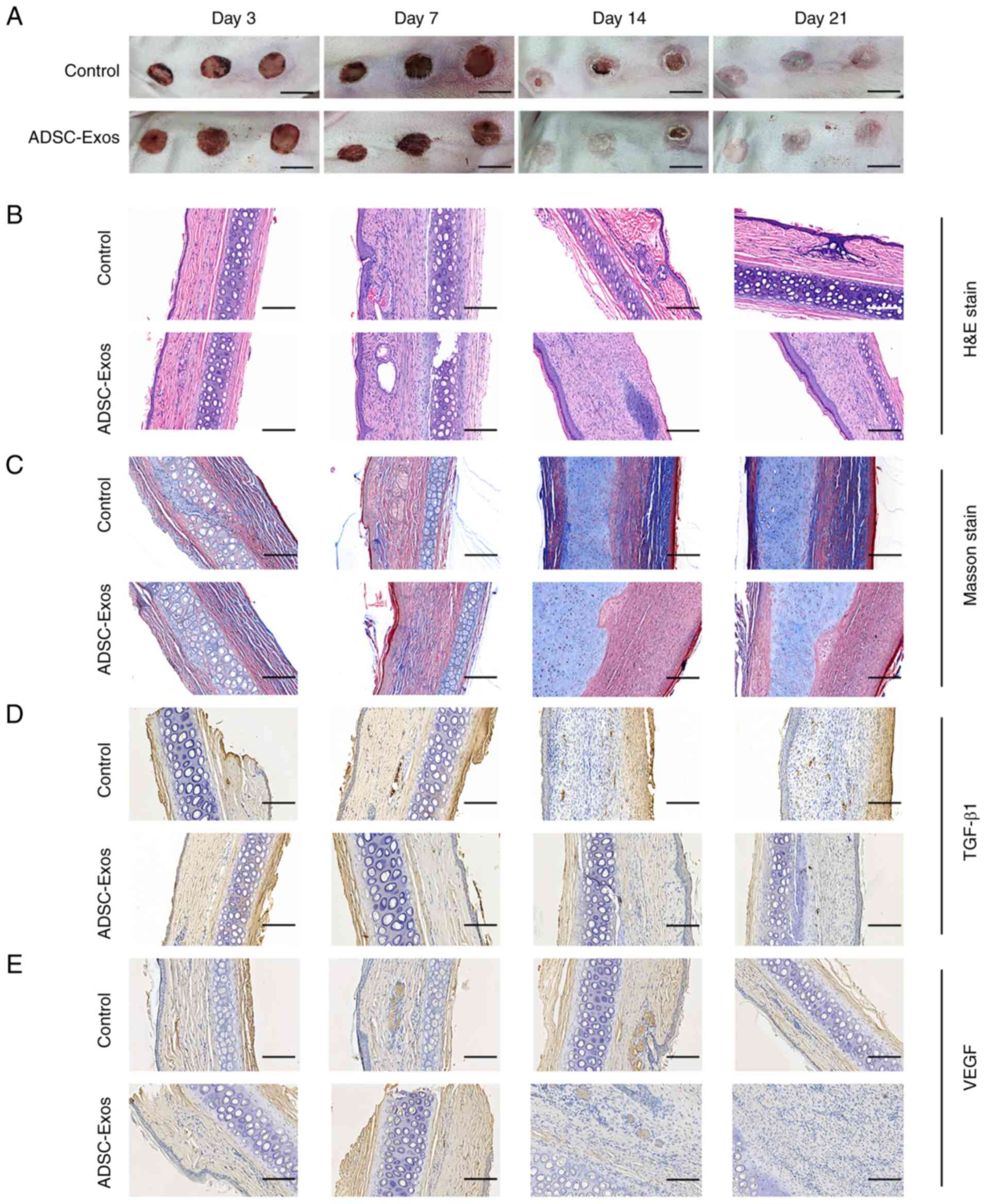
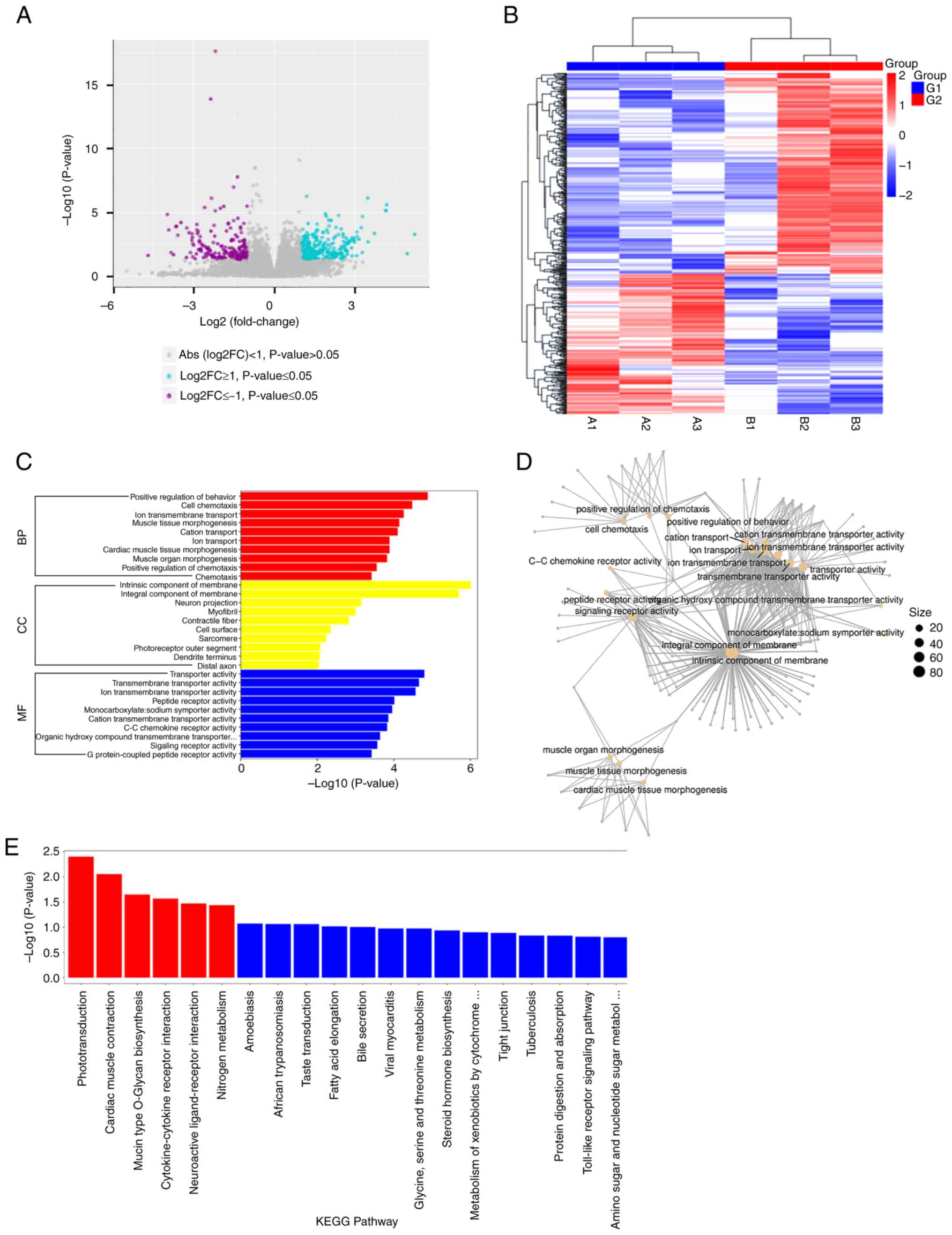
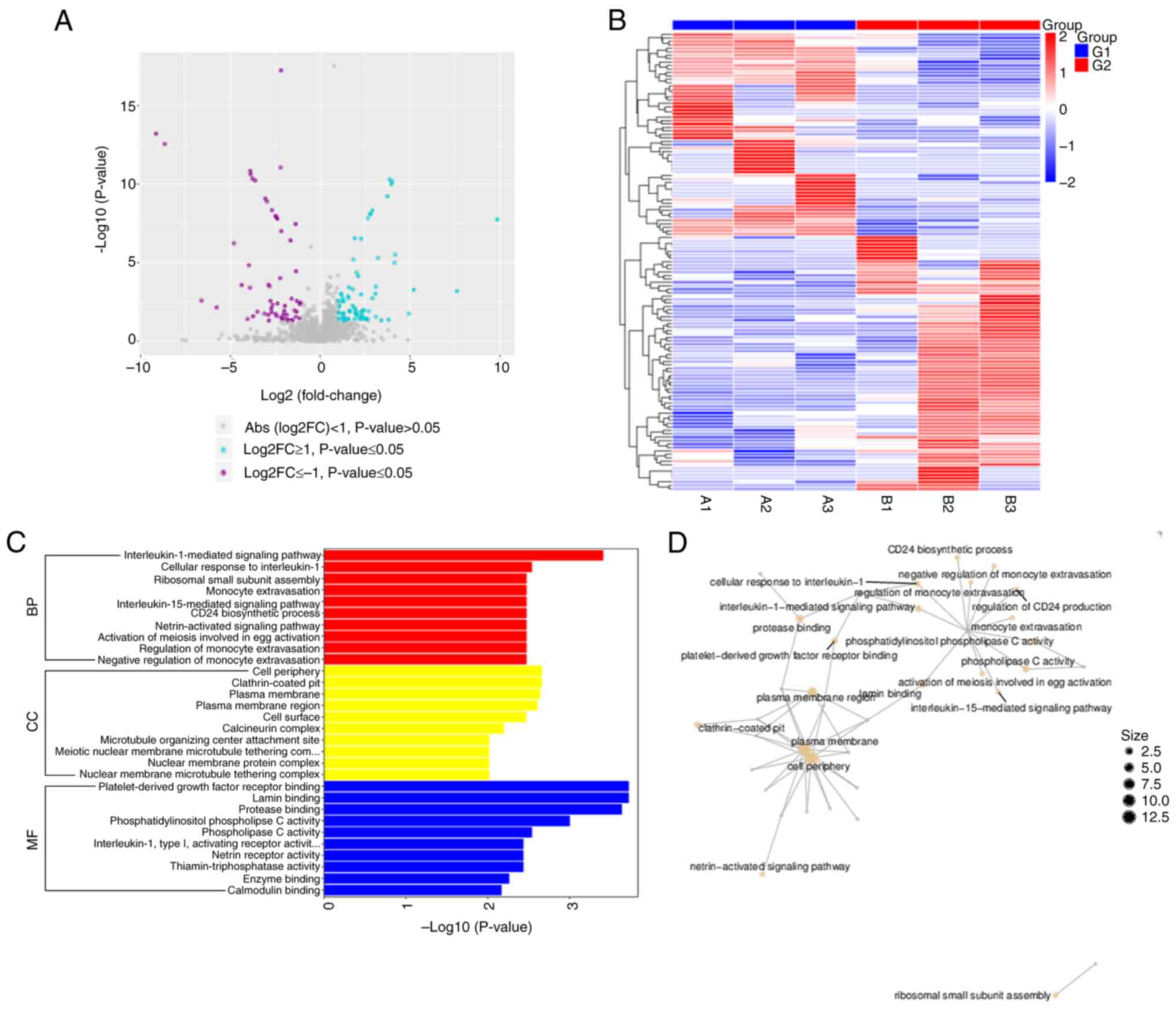
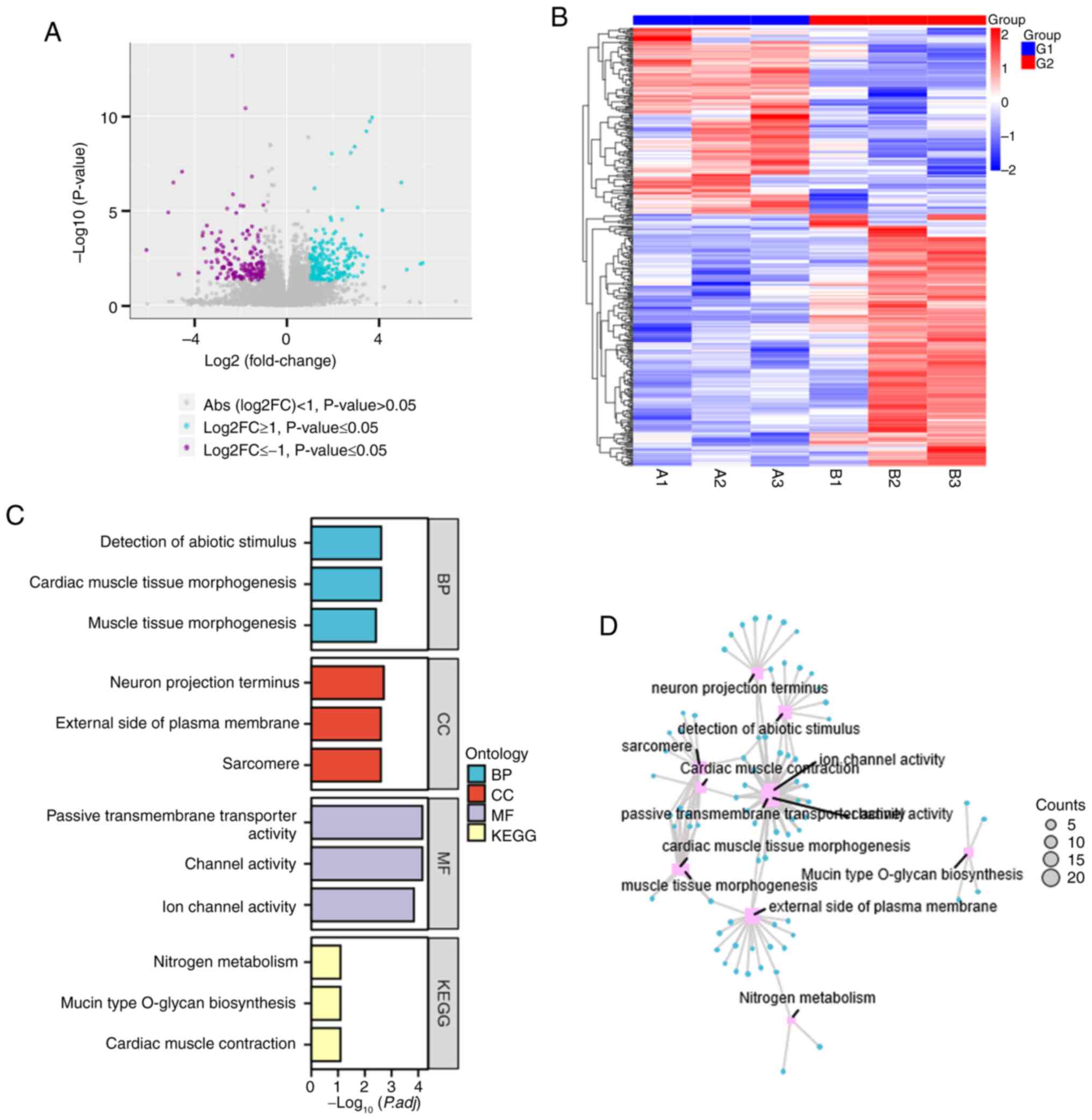
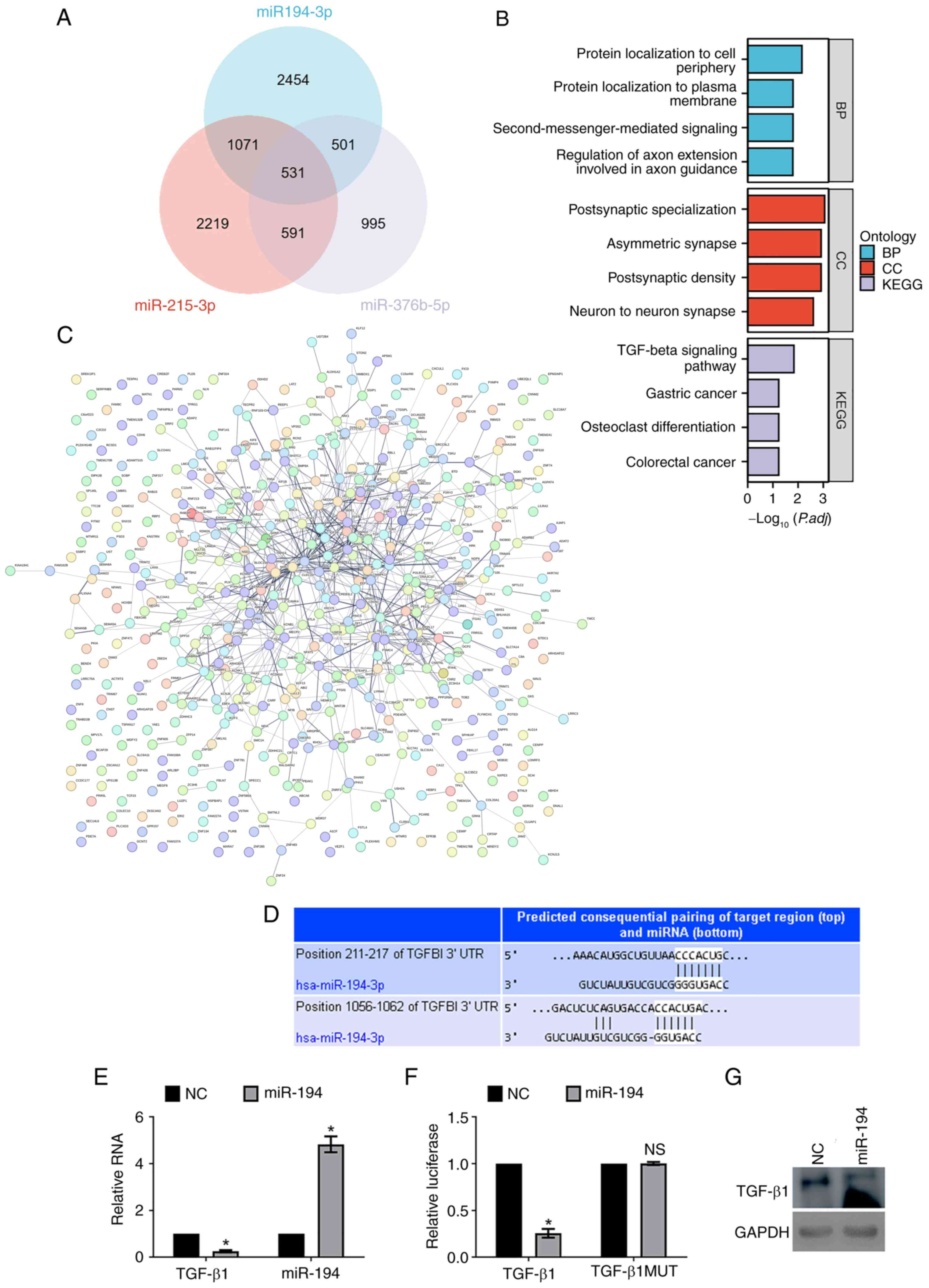
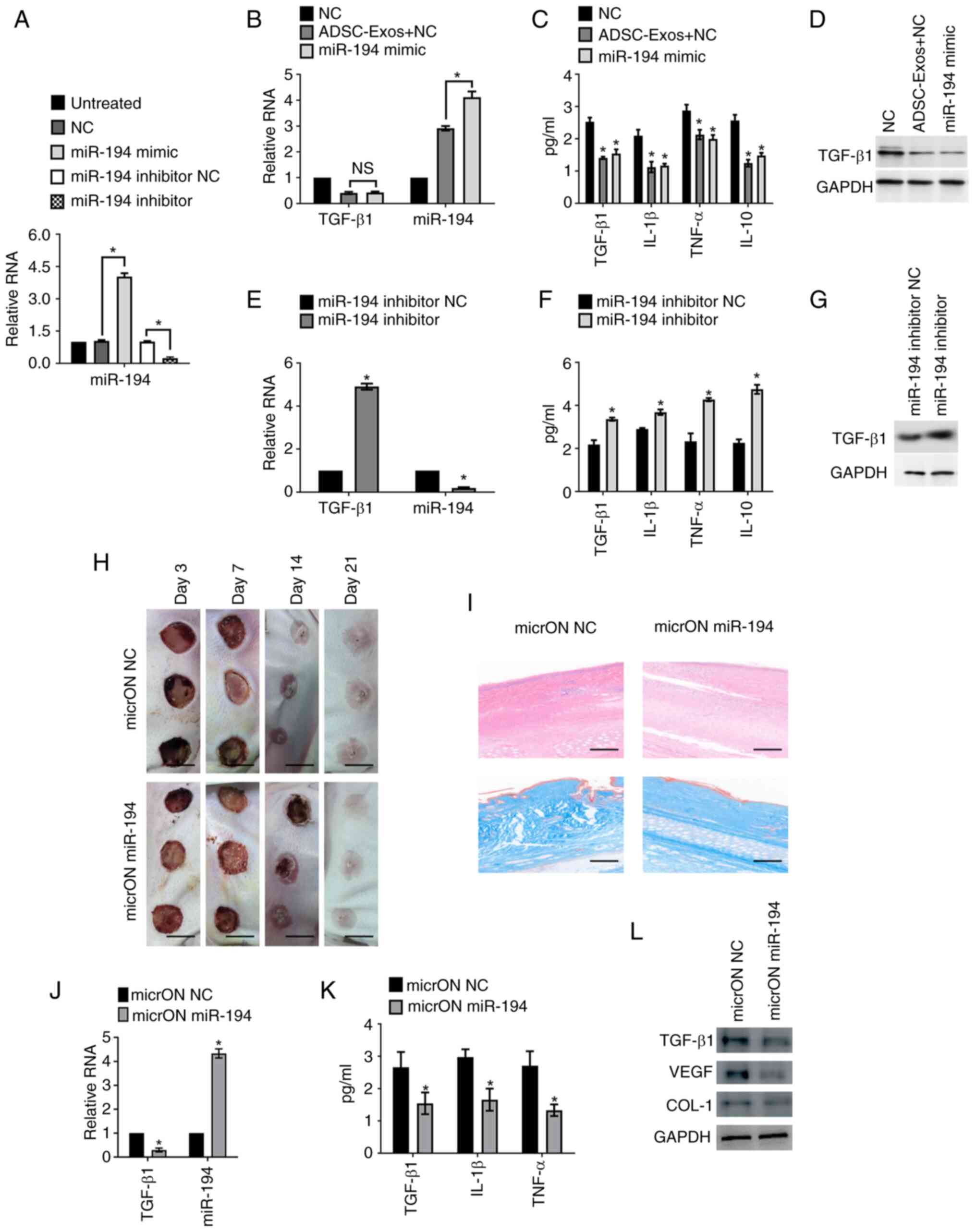
Hypertrophic scars, which result from aberrant fibrosis and disorganized collagen synthesis by skin fibroblasts, emerge due to disrupted wound healing processes. These scars present significant psychosocial and functional challenges to affected individuals. The current treatment limitations largely arise from an incomplete understanding of the underlying mechanisms of hypertrophic scar development. Recent studies, however, have shed light on the potential of exosomal non‑coding RNAs interventions to mitigate hypertrophic scar proliferation. The present study assessed the impact of exosomes derived from adipose‑derived stem cells (ADSCs‑Exos) on hypertrophic scar formation using a rabbit ear model. It employed hematoxylin and eosin staining, Masson's trichrome staining and immunohistochemical staining techniques to track scar progression. The comprehensive analysis of the present study encompassed the differential expression of non‑coding RNAs, enrichment analyses of functional pathways, protein‑protein interaction studies and micro (mi)RNA‑mRNA interaction investigations. The results revealed a marked alteration in the expression levels of long non‑coding RNAs and miRNAs following ADSCs‑Exos treatment, with little changes observed in circular RNAs. Notably, miRNA (miR)‑194 emerged as a critical regulator within the signaling pathways that govern hypertrophic scar formation. Dual‑luciferase assays indicated a significant reduction in the promoter activity of TGF‑β1 following miR‑194 overexpression. Reverse transcription‑quantitative PCR and immunoblotting assays further validated the decrease in TGF‑β1 expression in the treated samples. In addition, the treatment resulted in diminished levels of inflammatory markers IL‑1β, TNF‑α and IL‑10. In vivo evidence strongly supported the role of miR‑194 in attenuating hypertrophic scar formation through the suppression of TGF‑β1. The present study endorsed the strategic use of ADSCs‑Exos, particularly through miR‑194 modulation, as an effective strategy for reducing scar formation and lowering pro‑inflammatory and fibrotic indicators such as TGF‑β1. Therefore, the present study advocated the targeted application of ADSCs‑Exos, with an emphasis on miR‑194 modulation, as a promising approach to managing proliferative scarring.
View Figures

Figure 1

Figure 2

Figure 3

Figure 4

Figure 5

Figure 6

View References

1 

Barone N, Safran T, Vorstenbosch J, Davison PG, Cugno S and Murphy AM: Current advances in hypertrophic scar and keloid management. Semin Plast Surg. 35:145–152. 2021. View Article : Google Scholar : PubMed/NCBI

2 

Finnerty CC, Jeschke MG, Branski LK, Barret JP, Dziewulski P and Herndon DN: Hypertrophic scarring: The greatest unmet challenge after burn injury. Lancet. 388:1427–1436. 2016. View Article : Google Scholar : PubMed/NCBI

3 

Edwards J: Hypertrophic scar management. Br J Nurs. 31:S24–S31. 2022. View Article : Google Scholar : PubMed/NCBI

4 

Frech FS, Hernandez L, Urbonas R, Zaken GA, Dreyfuss I and Nouri K: Hypertrophic scars and keloids: Advances in treatment and review of established therapies. Am J Clin Dermatol. 24:225–245. 2023. View Article : Google Scholar : PubMed/NCBI

5 

Gauglitz GG, Korting HC, Pavicic T, Ruzicka T and Jeschke MG: Hypertrophic scarring and keloids: Pathomechanisms and current and emerging treatment strategies. Mol Med. 17:113–125. 2011. View Article : Google Scholar : PubMed/NCBI

6 

Schmieder SJ and Ferrer-Bruker SJ: Hypertrophic scarring. StatPearls [Internet]. StatPearls Publishing; Treasure Island, FL: 2024

7 

Su L and Han J: Non-coding RNAs in hypertrophic scars and keloids: Current research and clinical relevance: A review. Int J Biol Macromol. 256:1283342024. View Article : Google Scholar : PubMed/NCBI

8 

Jia Q, Zhao H, Wang Y, Cen Y and Zhang Z: Mechanisms and applications of adipose-derived stem cell-extracellular vesicles in the inflammation of wound healing. Front Immunol. 1:1214757 4. 2023.

9 

Romano IR, D'Angeli F, Vicario N, Russo C, Genovese C, Lo Furno D, Mannino G, Tamburino S, Parenti R and Giuffrida R: Adipose-derived mesenchymal stromal cells: A tool for bone and cartilage repair. Biomedicines. 11:17812023. View Article : Google Scholar : PubMed/NCBI

10 

Lopez-Yus M, García-Sobreviela MP, Del Moral-Bergos R and Arbones-Mainar JM: Gene therapy based on mesenchymal stem cells derived from adipose tissue for the treatment of obesity and its metabolic complications. Int J Mol Sci. 24:74682023. View Article : Google Scholar : PubMed/NCBI

11 

Lee JH, Won YJ, Kim H, Choi M, Lee E, Ryoou B, Lee SG and Cho BS: Adipose tissue-derived mesenchymal stem cell-derived exosomes promote wound healing and tissue regeneration. Int J Mol Sci. 24:104342023. View Article : Google Scholar : PubMed/NCBI

12 

Chen Y, Younis MR, He G, Zheng Z, Wang Y, Xue K, Sun J, Liu K, Huang P and Wang X: Oxidative stimuli-responsive ‘pollen-like’ exosomes from silver nanoflowers remodeling diabetic wound microenvironment for accelerating wound healing. Adv Healthc Mater. 12:e23004562023. View Article : Google Scholar : PubMed/NCBI

13 

Jing S, Li H and Xu H: Mesenchymal stem cell derived exosomes therapy in diabetic wound repair. Int J Nanomedicine. 18:2707–2720. 2023. View Article : Google Scholar : PubMed/NCBI

14 

Edis A, Lumbis RH and Hedley J: Nursing management of a rabbit undergoing a rhinostomy. Vet Nurse. 7:18–24. 2016. View Article : Google Scholar

15 

Feldman ER, Singh B, Mishkin NG, Lachenauer ER, Martin-Flores M and Daugherity EK: Effects of cisapride, buprenorphine, and their combination on gastrointestinal transit in New Zealand white rabbits. J Am Assoc Lab Anim Sci. 60:221–228. 2021. View Article : Google Scholar : PubMed/NCBI

16 

Askar R, Fredriksson E, Manell E, Hedeland M, Bondesson U, Bate S, Olsén L and Hedenqvist P: Bioavailability of subcutaneous and intramuscular administrated buprenorphine in New Zealand white rabbits. BMC Vet Res. 16:4362020. View Article : Google Scholar : PubMed/NCBI

17 

Leary S and Johnson C: AVMA guidelines for the euthanasia of animals: 2020 edition*. Members of the Panel on Euthanasia AVMA Staff Consultants; 2020

18 

Suvik A and Effendy A: The use of modified Masson's trichrome staining in collagen evaluation in wound healing study. Mal J Vet Res. 3:39–47. 2012.

19 

Yu G, Wang LG, Han Y and He QY: clusterProfiler: An R package for comparing biological themes among gene clusters. OMICS. 16:284–287. 2012. View Article : Google Scholar : PubMed/NCBI

20 

Shannon P, Markiel A, Ozier O, Baliga NS, Wang JT, Ramage D, Amin N, Schwikowski B and Ideker T: Cytoscape: A software environment for integrated models of biomolecular interaction networks. Genome Res. 13:2498–2504. 2003. View Article : Google Scholar : PubMed/NCBI

21 

Agarwal V, Bell GW, Nam JW and Bartel DP: Predicting effective microRNA target sites in mammalian mRNAs. eLife. 4:e050052015. View Article : Google Scholar : PubMed/NCBI

22 

Chen Y and Wang X: miRDB: An online database for prediction of functional microRNA targets. Nucleic Acids Res. 48(D1): D127–D131. 2020. View Article : Google Scholar : PubMed/NCBI

23 

Yang JH, Li JH, Shao P, Zhou H, Chen YQ and Qu LH: starBase: A database for exploring microRNA-mRNA interaction maps from Argonaute CLIP-Seq and Degradome-Seq data. Nucleic Acids Res. 39((Database Issue)): D202–D209. 2010.PubMed/NCBI

24 

Livak KJ and Schmittgen TD: Analysis of relative gene expression data using real-time quantitative PCR and the 2(−Delta Delta C(T)) method. Methods. 25:402–408. 2001. View Article : Google Scholar : PubMed/NCBI

25 

Xie S, Zhu Q, Qu W, Xu Z, Liu X, Li X, Li S, Ma W, Miao Y, Zhang L, et al: sRNAPrimerDB: Comprehensive primer design and search web service for small non-coding RNAs. Bioinformatics. 35:1566–1572. 2019. View Article : Google Scholar : PubMed/NCBI

26 

Zhu Z, Hou Q, Li M and Fu X: Molecular mechanism of myofibroblast formation and strategies for clinical drugs treatments in hypertrophic scars. J Cell Physiol. 235:4109–4119. 2020. View Article : Google Scholar : PubMed/NCBI

27 

Liu B, Lin L, Yu S, Xia R and Zheng L: Long non-coding RNA H19 acts as a microRNA-194 sponge to inhibit the apoptosis and promote the proliferation of hypertrophic scar fibroblasts. Can J Physiol Pharmacol. 99:1288–1297. 2021. View Article : Google Scholar : PubMed/NCBI

28 

Chen SH, Chen ZY, Lin YH, Chen SH, Chou PY, Kao HK and Lin FH: Extracellular vesicles of adipose-derived stem cells promote the healing of traumatized achilles tendons. Int J Mol Sci. 22:123732021. View Article : Google Scholar : PubMed/NCBI

29 

Liu Y and Holmes C: Tissue regeneration capacity of extracellular vesicles isolated from bone marrow-derived and adipose-derived mesenchymal stromal/stem cells. Front Cell Dev Biol. 9:6480982021. View Article : Google Scholar : PubMed/NCBI

30 

Liu Y, Li Y, Li N, Teng W, Wang M, Zhang Y and Xiao Z: TGF-β1 promotes scar fibroblasts proliferation and transdifferentiation via up-regulating MicroRNA-21. Sci Rep. 6:322312016. View Article : Google Scholar : PubMed/NCBI

31 

Liu SC, Bamodu OA, Kuo KT, Fong IH, Lin CC, Yeh CT and Chen SG: Adipose-derived stem cell induced-tissue repair or wound healing is mediated by the concomitant upregulation of miR-21 and miR-29b expression and activation of the AKT signaling pathway. Arch Biochem Biophys. 705:1088952021. View Article : Google Scholar : PubMed/NCBI

32 

Zhang S and Pan S: miR-124-3p targeting of TGF-β1 inhibits the proliferation of hypertrophic scar fibroblasts. Adv Clin Exp Med. 30:263–271. 2021. View Article : Google Scholar : PubMed/NCBI

33 

Yao W, Li Y, Han L, Ji X, Pan H, Liu Y, Yuan J, Yan W and Ni C: The CDR1as/miR-7/TGFBR2 axis modulates EMT in silica-induced pulmonary fibrosis. Toxicol Sci. 166:465–478. 2018. View Article : Google Scholar : PubMed/NCBI

34 

Firmansyah Y, Sidharta VM, Wijaya L and Tan ST: Unraveling the significance of growth factors (TGF-β, PDGF, KGF, FGF, Pro Collagen, VEGF) in the dynamic of wound healing. Asian J Med Health. 22:49–61. 2024. View Article : Google Scholar

35 

Qi J, Wu Y, Zhang H and Liu Y: LncRNA NORAD regulates scar hypertrophy via miRNA-26a mediating the regulation of TGFβR1/2. Adv Clin Exp Med. 30:395–403. 2021. View Article : Google Scholar : PubMed/NCBI

36 

Yu J, Zhang L, Zhang S, Xian G, Zhao Y and Bu X: MiR-29b inhibits hypertrophic scar tissue inflammation after burn through regulating TGF-β1/Smad signaling pathway. Ital J Dermatol Venerol. 156:251–252. 2021.PubMed/NCBI

37 

Qi X, Liu Y and Yang M: Circ_0057452 functions as a ceRNA in hypertrophic scar fibroblast proliferation and VEGF expression by regulating TGF-β2 expression and adsorbing miR-145-5p. Am J Transl Res. 13:6200–6210. 2021.PubMed/NCBI

38 

Xu S, Dong W and Shi Y: LncRNA PICSAR binds to miR-485-5p and activates TGF-β1/Smad to promote abnormal proliferation of hypertrophic scar fibroblasts (HSFs) and excessive deposition of extracellular matrix (ECM). Med Mol Morphol. 54:337–345. 2021. View Article : Google Scholar : PubMed/NCBI

39 

Pang J, Zhu L, Lv Y, Xu L, Li N, Guo P and Feng Q: miR-15a-5p up-regulates TLR4 and induces the formation of hypertrophic scars and keloids. Cell Mol Biol (Noisy-le-grand). 69:158–163. 2023. View Article : Google Scholar : PubMed/NCBI

40 

Lian N and Li T: Growth factor pathways in hypertrophic scars: Molecular pathogenesis and therapeutic implications. Biomed Pharmacother. 84:42–50. 2016. View Article : Google Scholar : PubMed/NCBI

41 

Zhou X, Lu J, Wu B and Guo Z: HOXA11-AS facilitates the proliferation, cell cycle process and migration of keloid fibroblasts through sponging miR-188-5p to regulate VEGFA. J Dermatol Sci. 106:111–118. 2022. View Article : Google Scholar : PubMed/NCBI

42 

Chen L, Zheng Q, Liu Y, Li L, Chen X and Wang L and Wang L: Adipose-derived stem cells promote diabetic wound healing via the recruitment and differentiation of endothelial progenitor cells into endothelial cells mediated by the VEGF-PLCγ-ERK pathway. Arch Biochem Biophys. 692:1085312020. View Article : Google Scholar : PubMed/NCBI

43 

Zhang YF, Li HZ, Wang XY, Ma HC, Wu Y, Yuan XH and Chu YH: Morphology of hypertrophic scar tissues and expressions of vascular endothelial growth factor and transforming growth factor beta activated kinase 1 in these tissues. Zhongguo Yi Xue Ke Xue Yuan Xue Bao. 37:446–450. 2015.(In Chinese). PubMed/NCBI

44 

Kinashi H, Ito Y, Mizuno M, Suzuki Y, Terabayashi T, Nagura F, Hattori R, Matsukawa Y, Mizuno T, Noda Y, et al: TGF-β1 promotes lymphangiogenesis during peritoneal fibrosis. J Am Soc Nephrol. 24:1627–1642. 2013. View Article : Google Scholar : PubMed/NCBI

45 

Komi DEA, Khomtchouk K and Santa Maria PL: A review of the contribution of mast cells in wound healing: Involved molecular and cellular mechanisms. Clin Rev Allergy Immunol. 58:298–312. 2019. View Article : Google Scholar : PubMed/NCBI

46 

Ohnuma K, Kasagi S, Uto K, Noguchi Y, Nakamachi Y, Saegusa J and Kawano S: MicroRNA-124 inhibits TNF-α- and IL-6-induced osteoclastogenesis. Rheumatol Int. 39:689–695. 2019. View Article : Google Scholar : PubMed/NCBI

47 

Ma Y, Liu Z, Miao L, Jiang X, Ruan H, Xuan R and Xu S: Mechanisms underlying pathological scarring by fibroblasts during wound healing. Int Wound J. 20:2190–2206. 2023. View Article : Google Scholar : PubMed/NCBI

48 

Eremenko EE, Kwan PO, Ding J, Ghosh S and Tredget EE: The effects of TGF-β1 and IFN-α2b on decorin, decorin isoforms and type I collagen in hypertrophic scar dermal fibroblasts. Wound Repair Regen. 32:135–145. 2024. View Article : Google Scholar : PubMed/NCBI

Related Articles

  • Abstract
  • View
  • Download
  • Twitter
Copy and paste a formatted citation
Spandidos Publications style
Xu Z, Tian Y and Hao L: Exosomal miR‑194 from adipose‑derived stem cells impedes hypertrophic scar formation through targeting TGF‑β1. Mol Med Rep 30: 216, 2024.
APA
Xu, Z., Tian, Y., & Hao, L. (2024). Exosomal miR‑194 from adipose‑derived stem cells impedes hypertrophic scar formation through targeting TGF‑β1. Molecular Medicine Reports, 30, 216. https://doi.org/10.3892/mmr.2024.13340
MLA
Xu, Z., Tian, Y., Hao, L."Exosomal miR‑194 from adipose‑derived stem cells impedes hypertrophic scar formation through targeting TGF‑β1". Molecular Medicine Reports 30.6 (2024): 216.
Chicago
Xu, Z., Tian, Y., Hao, L."Exosomal miR‑194 from adipose‑derived stem cells impedes hypertrophic scar formation through targeting TGF‑β1". Molecular Medicine Reports 30, no. 6 (2024): 216. https://doi.org/10.3892/mmr.2024.13340
Copy and paste a formatted citation
x
Spandidos Publications style
Xu Z, Tian Y and Hao L: Exosomal miR‑194 from adipose‑derived stem cells impedes hypertrophic scar formation through targeting TGF‑β1. Mol Med Rep 30: 216, 2024.
APA
Xu, Z., Tian, Y., & Hao, L. (2024). Exosomal miR‑194 from adipose‑derived stem cells impedes hypertrophic scar formation through targeting TGF‑β1. Molecular Medicine Reports, 30, 216. https://doi.org/10.3892/mmr.2024.13340
MLA
Xu, Z., Tian, Y., Hao, L."Exosomal miR‑194 from adipose‑derived stem cells impedes hypertrophic scar formation through targeting TGF‑β1". Molecular Medicine Reports 30.6 (2024): 216.
Chicago
Xu, Z., Tian, Y., Hao, L."Exosomal miR‑194 from adipose‑derived stem cells impedes hypertrophic scar formation through targeting TGF‑β1". Molecular Medicine Reports 30, no. 6 (2024): 216. https://doi.org/10.3892/mmr.2024.13340
Follow us
  • Twitter
  • LinkedIn
  • Facebook
About
  • Spandidos Publications
  • Careers
  • Cookie Policy
  • Privacy Policy
How can we help?
  • Help
  • Live Chat
  • Contact
  • Email to our Support Team