Spandidos Publications Logo
  • About
    • About Spandidos
    • Aims and Scopes
    • Abstracting and Indexing
    • Editorial Policies
    • Reprints and Permissions
    • Job Opportunities
    • Terms and Conditions
    • Contact
  • Journals
    • All Journals
    • Oncology Letters
      • Oncology Letters
      • Information for Authors
      • Editorial Policies
      • Editorial Board
      • Aims and Scope
      • Abstracting and Indexing
      • Bibliographic Information
      • Archive
    • International Journal of Oncology
      • International Journal of Oncology
      • Information for Authors
      • Editorial Policies
      • Editorial Board
      • Aims and Scope
      • Abstracting and Indexing
      • Bibliographic Information
      • Archive
    • Molecular and Clinical Oncology
      • Molecular and Clinical Oncology
      • Information for Authors
      • Editorial Policies
      • Editorial Board
      • Aims and Scope
      • Abstracting and Indexing
      • Bibliographic Information
      • Archive
    • Experimental and Therapeutic Medicine
      • Experimental and Therapeutic Medicine
      • Information for Authors
      • Editorial Policies
      • Editorial Board
      • Aims and Scope
      • Abstracting and Indexing
      • Bibliographic Information
      • Archive
    • International Journal of Molecular Medicine
      • International Journal of Molecular Medicine
      • Information for Authors
      • Editorial Policies
      • Editorial Board
      • Aims and Scope
      • Abstracting and Indexing
      • Bibliographic Information
      • Archive
    • Biomedical Reports
      • Biomedical Reports
      • Information for Authors
      • Editorial Policies
      • Editorial Board
      • Aims and Scope
      • Abstracting and Indexing
      • Bibliographic Information
      • Archive
    • Oncology Reports
      • Oncology Reports
      • Information for Authors
      • Editorial Policies
      • Editorial Board
      • Aims and Scope
      • Abstracting and Indexing
      • Bibliographic Information
      • Archive
    • Molecular Medicine Reports
      • Molecular Medicine Reports
      • Information for Authors
      • Editorial Policies
      • Editorial Board
      • Aims and Scope
      • Abstracting and Indexing
      • Bibliographic Information
      • Archive
    • World Academy of Sciences Journal
      • World Academy of Sciences Journal
      • Information for Authors
      • Editorial Policies
      • Editorial Board
      • Aims and Scope
      • Abstracting and Indexing
      • Bibliographic Information
      • Archive
    • International Journal of Functional Nutrition
      • International Journal of Functional Nutrition
      • Information for Authors
      • Editorial Policies
      • Editorial Board
      • Aims and Scope
      • Abstracting and Indexing
      • Bibliographic Information
      • Archive
    • International Journal of Epigenetics
      • International Journal of Epigenetics
      • Information for Authors
      • Editorial Policies
      • Editorial Board
      • Aims and Scope
      • Abstracting and Indexing
      • Bibliographic Information
      • Archive
    • Medicine International
      • Medicine International
      • Information for Authors
      • Editorial Policies
      • Editorial Board
      • Aims and Scope
      • Abstracting and Indexing
      • Bibliographic Information
      • Archive
  • Articles
  • Information
    • Information for Authors
    • Information for Reviewers
    • Information for Librarians
    • Information for Advertisers
    • Conferences
  • Language Editing
Spandidos Publications Logo
  • About
    • About Spandidos
    • Aims and Scopes
    • Abstracting and Indexing
    • Editorial Policies
    • Reprints and Permissions
    • Job Opportunities
    • Terms and Conditions
    • Contact
  • Journals
    • All Journals
    • Biomedical Reports
      • Information for Authors
      • Editorial Policies
      • Editorial Board
      • Aims and Scope
      • Abstracting and Indexing
      • Bibliographic Information
      • Archive
    • Experimental and Therapeutic Medicine
      • Information for Authors
      • Editorial Policies
      • Editorial Board
      • Aims and Scope
      • Abstracting and Indexing
      • Bibliographic Information
      • Archive
    • International Journal of Epigenetics
      • Information for Authors
      • Editorial Policies
      • Editorial Board
      • Aims and Scope
      • Abstracting and Indexing
      • Bibliographic Information
      • Archive
    • International Journal of Functional Nutrition
      • Information for Authors
      • Editorial Policies
      • Editorial Board
      • Aims and Scope
      • Abstracting and Indexing
      • Bibliographic Information
      • Archive
    • International Journal of Molecular Medicine
      • Information for Authors
      • Editorial Policies
      • Editorial Board
      • Aims and Scope
      • Abstracting and Indexing
      • Bibliographic Information
      • Archive
    • International Journal of Oncology
      • Information for Authors
      • Editorial Policies
      • Editorial Board
      • Aims and Scope
      • Abstracting and Indexing
      • Bibliographic Information
      • Archive
    • Medicine International
      • Information for Authors
      • Editorial Policies
      • Editorial Board
      • Aims and Scope
      • Abstracting and Indexing
      • Bibliographic Information
      • Archive
    • Molecular and Clinical Oncology
      • Information for Authors
      • Editorial Policies
      • Editorial Board
      • Aims and Scope
      • Abstracting and Indexing
      • Bibliographic Information
      • Archive
    • Molecular Medicine Reports
      • Information for Authors
      • Editorial Policies
      • Editorial Board
      • Aims and Scope
      • Abstracting and Indexing
      • Bibliographic Information
      • Archive
    • Oncology Letters
      • Information for Authors
      • Editorial Policies
      • Editorial Board
      • Aims and Scope
      • Abstracting and Indexing
      • Bibliographic Information
      • Archive
    • Oncology Reports
      • Information for Authors
      • Editorial Policies
      • Editorial Board
      • Aims and Scope
      • Abstracting and Indexing
      • Bibliographic Information
      • Archive
    • World Academy of Sciences Journal
      • Information for Authors
      • Editorial Policies
      • Editorial Board
      • Aims and Scope
      • Abstracting and Indexing
      • Bibliographic Information
      • Archive
  • Articles
  • Information
    • For Authors
    • For Reviewers
    • For Librarians
    • For Advertisers
    • Conferences
  • Language Editing
Login Register Submit
  • This site uses cookies
  • You can change your cookie settings at any time by following the instructions in our Cookie Policy. To find out more, you may read our Privacy Policy.

    I agree
Search articles by DOI, keyword, author or affiliation
Search
Advanced Search
presentation
Molecular Medicine Reports
Join Editorial Board Propose a Special Issue
Print ISSN: 1791-2997 Online ISSN: 1791-3004
Journal Cover
September-2025 Volume 32 Issue 3

Full Size Image

Sign up for eToc alerts
Recommend to Library

Journals

International Journal of Molecular Medicine

International Journal of Molecular Medicine

International Journal of Molecular Medicine is an international journal devoted to molecular mechanisms of human disease.

International Journal of Oncology

International Journal of Oncology

International Journal of Oncology is an international journal devoted to oncology research and cancer treatment.

Molecular Medicine Reports

Molecular Medicine Reports

Covers molecular medicine topics such as pharmacology, pathology, genetics, neuroscience, infectious diseases, molecular cardiology, and molecular surgery.

Oncology Reports

Oncology Reports

Oncology Reports is an international journal devoted to fundamental and applied research in Oncology.

Experimental and Therapeutic Medicine

Experimental and Therapeutic Medicine

Experimental and Therapeutic Medicine is an international journal devoted to laboratory and clinical medicine.

Oncology Letters

Oncology Letters

Oncology Letters is an international journal devoted to Experimental and Clinical Oncology.

Biomedical Reports

Biomedical Reports

Explores a wide range of biological and medical fields, including pharmacology, genetics, microbiology, neuroscience, and molecular cardiology.

Molecular and Clinical Oncology

Molecular and Clinical Oncology

International journal addressing all aspects of oncology research, from tumorigenesis and oncogenes to chemotherapy and metastasis.

World Academy of Sciences Journal

World Academy of Sciences Journal

Multidisciplinary open-access journal spanning biochemistry, genetics, neuroscience, environmental health, and synthetic biology.

International Journal of Functional Nutrition

International Journal of Functional Nutrition

Open-access journal combining biochemistry, pharmacology, immunology, and genetics to advance health through functional nutrition.

International Journal of Epigenetics

International Journal of Epigenetics

Publishes open-access research on using epigenetics to advance understanding and treatment of human disease.

Medicine International

Medicine International

An International Open Access Journal Devoted to General Medicine.

Journal Cover
September-2025 Volume 32 Issue 3

Full Size Image

Sign up for eToc alerts
Recommend to Library

  • Article
  • Citations
    • Cite This Article
    • Download Citation
    • Create Citation Alert
    • Remove Citation Alert
    • Cited By
  • Similar Articles
    • Related Articles (in Spandidos Publications)
    • Similar Articles (Google Scholar)
    • Similar Articles (PubMed)
  • Download PDF
  • Download XML
  • View XML
Article Open Access

Recombinant chromosome 6 open reading frame 120 protein promotes angiogenesis and endothelial‑to‑mesenchymal transition in human umbilical vein endothelial cells via the PI3K/Akt signaling pathway

  • Authors:
    • Yingying Lin
    • Xin Wang
    • Yanyan Li
    • Xinyu Cui
    • Na Zhu
    • Xin Li
  • View Affiliations / Copyright

    Affiliations: Department of Center of Integrated Traditional Chinese and Western Medicine, Peking University Ditan Teaching Hospital, Beijing 100015, P.R. China, Department of Center of Integrated Traditional Chinese and Western Medicine, Beijing Ditan Hospital, Capital Medical University, Beijing 100015, P.R. China
    Copyright: © Lin et al. This is an open access article distributed under the terms of Creative Commons Attribution License.
  • Article Number: 231
    |
    Published online on: June 17, 2025
       https://doi.org/10.3892/mmr.2025.13596
  • Expand metrics +
Metrics: Total Views: 0 (Spandidos Publications: | PMC Statistics: )
Metrics: Total PDF Downloads: 0 (Spandidos Publications: | PMC Statistics: )
Cited By (CrossRef): 0 citations Loading Articles...

This article is mentioned in:


Abstract

The vascular endothelium plays a pivotal role in modulating various physiological processes and its dysfunction is fundamental to the development of numerous vascular and non‑vascular diseases. Chromosome 6 open reading frame 120 (C6ORF120) has been implicated in cellular processes such as apoptosis, inflammation, immunomodulation and fibrosis. However, the specific effects of C6ORF120 on endothelial cell function remain unclear. The present study aimed to explore the potential role of C6ORF120 in endothelial dysfunction and its underlying molecular mechanisms. It synthesized recombinant C6ORF120 protein (rC6ORF120) and assessed its effects on human umbilical vein endothelial cells (HUVECs) through various functional assays, including the CCK‑8 assay for proliferation, scratch assay for migration and tube formation assay for angiogenesis. Additionally, immunofluorescence (IF) and western blotting (WB) were employed to evaluate endothelial‑mesenchymal transition (EndMT). The present study also quantified the expression of key proteins within the PI3K/Akt signaling pathway to elucidate its role in mediating the effects of rC6ORF120 on HUVECs. Treatment with rC6ORF120 significantly enhanced HUVEC proliferation (200 ng/ml vs. control at 72 h, 1.14±0.01 vs. 1.05±0.02; t=8.15; P<0.001) and induced phenotypic changes. In migration and angiogenesis assays, rC6ORF120‑treated HUVECs exhibited increased wound closure (37.69±2.74% vs. 66.16±6.13%; t=7.35; P=0.002) and angiogenesis assays showed significant improvements in tube formation parameters such as total tubule length (77,199.67±4,684.88 µm vs. 96,203.00±3,354.89 µm; t=5.71; P=0.002). WB and IF analyses both indicated that rC6ORF120 promotes EndMT in HUVECs. Furthermore, rC6ORF120 treatment increased PI3K/Akt phosphorylation significantly compared with controls (p‑PI3K; 1.57±0.18 vs. 1.00±0.00; t=5.64; P=0.005). LY294002 significantly reversed these effects on EndMT and angiogenesis (P<0.05), while the effect on cell migration was less pronounced (P=0.565). Our study highlights the critical role of C6ORF120 in HUVECs, promoting proliferation, migration, angiogenesis and EndMT, which are mediated, at least in part, by the PI3K/Akt pathway. 
View Figures

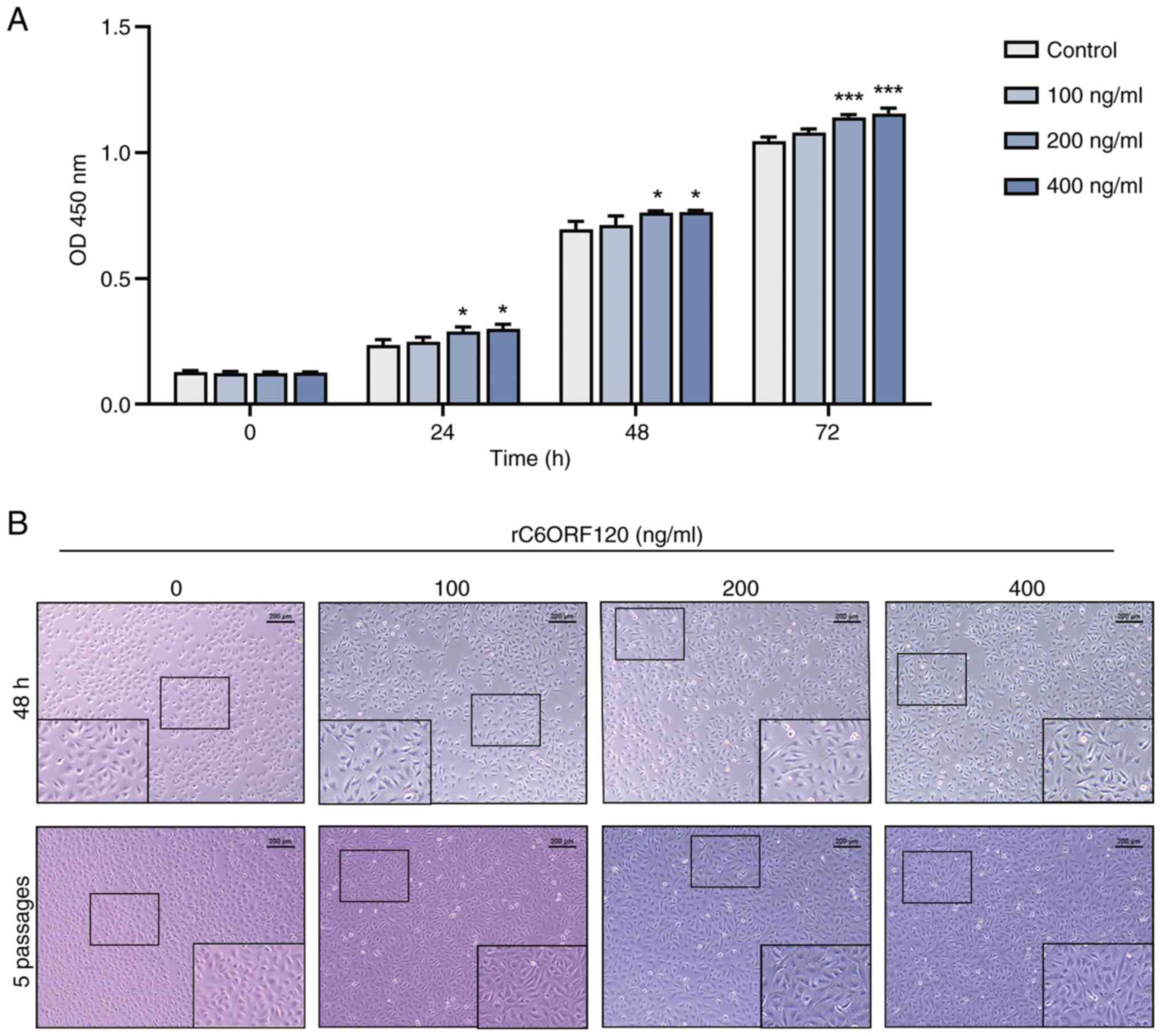
Figure 1

Effect of rC6ORF120 on HUVECs
viability and morphology. (A) CCK8 assay was used to determine the
viability of HUVECs at 24, 48 and 72 h after stimulation with
rC6ORF120 (0, 100, 200 and 400 ng/ml). (B) Morphological
alterations in HUVECs following 48-h exposure or five passages of
rC6ORF120 treatment. ns indicates no statistically significant
difference; *P<0.05; ***P<0.001. rC6ORF120, recombinant
C6ORF120 protein; HUVECs, human umbilical vein endothelial
cells.

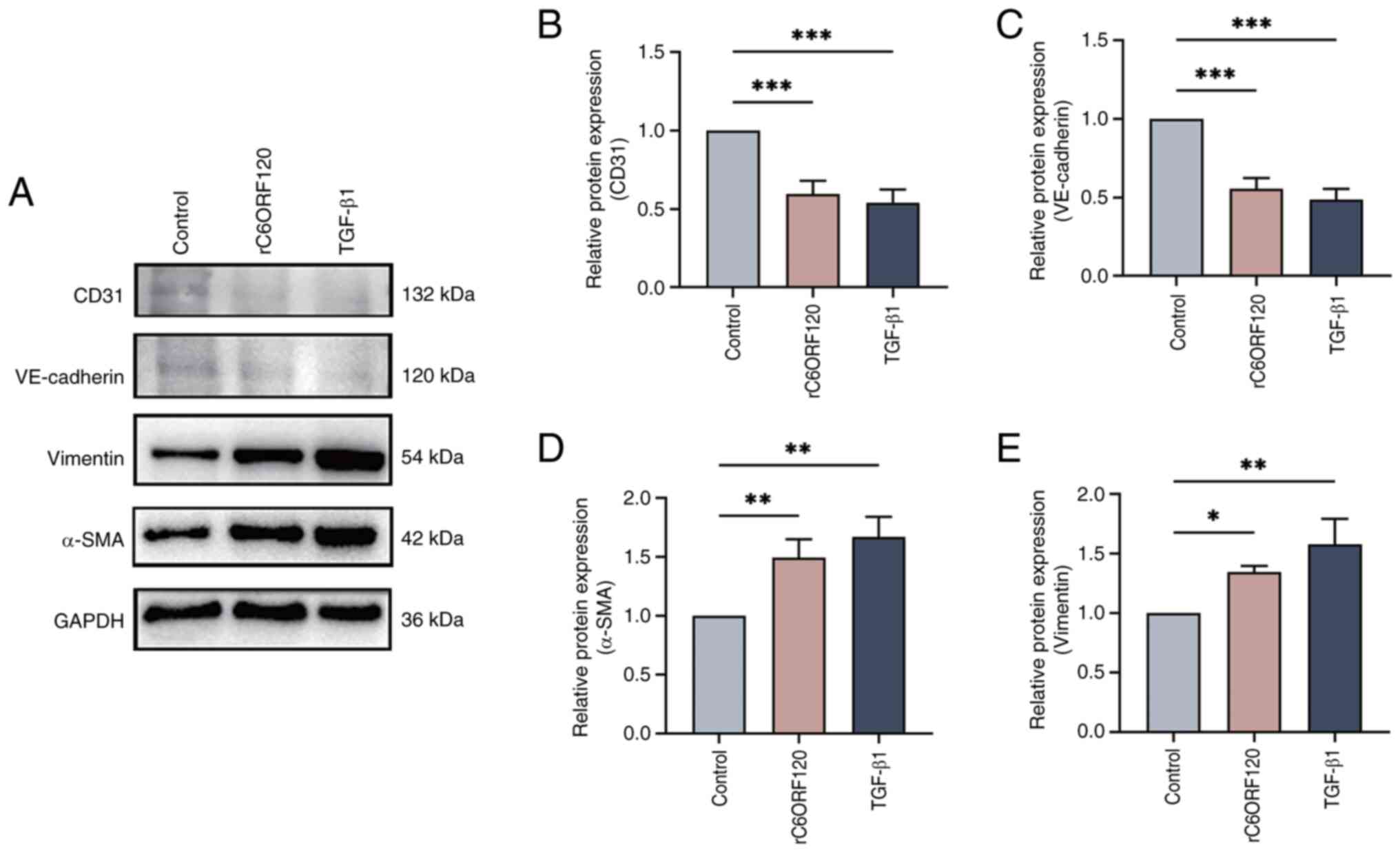
Figure 2

rC6ORF120 induced the EndMT in
HUVECs. (A) Representative western blot images of endothelial (CD31
and VE-cadherin) and mesenchymal (Vimentin and α-SMA) marker
proteins in HUVECs following treatment with rC6ORF120 and TGF-β1.
(B-E) Corresponding bar graph representing relative expression of
protein expression levels, normalized to GAPDH. *P<0.05;
**P<0.01; ***P<0.001. rC6ORF120, recombinant C6ORF120
protein; EndMT, endothelial-mesenchymal transition; HUVECs, human
umbilical vein endothelial cells; α-SMA, α-smooth muscle actin.

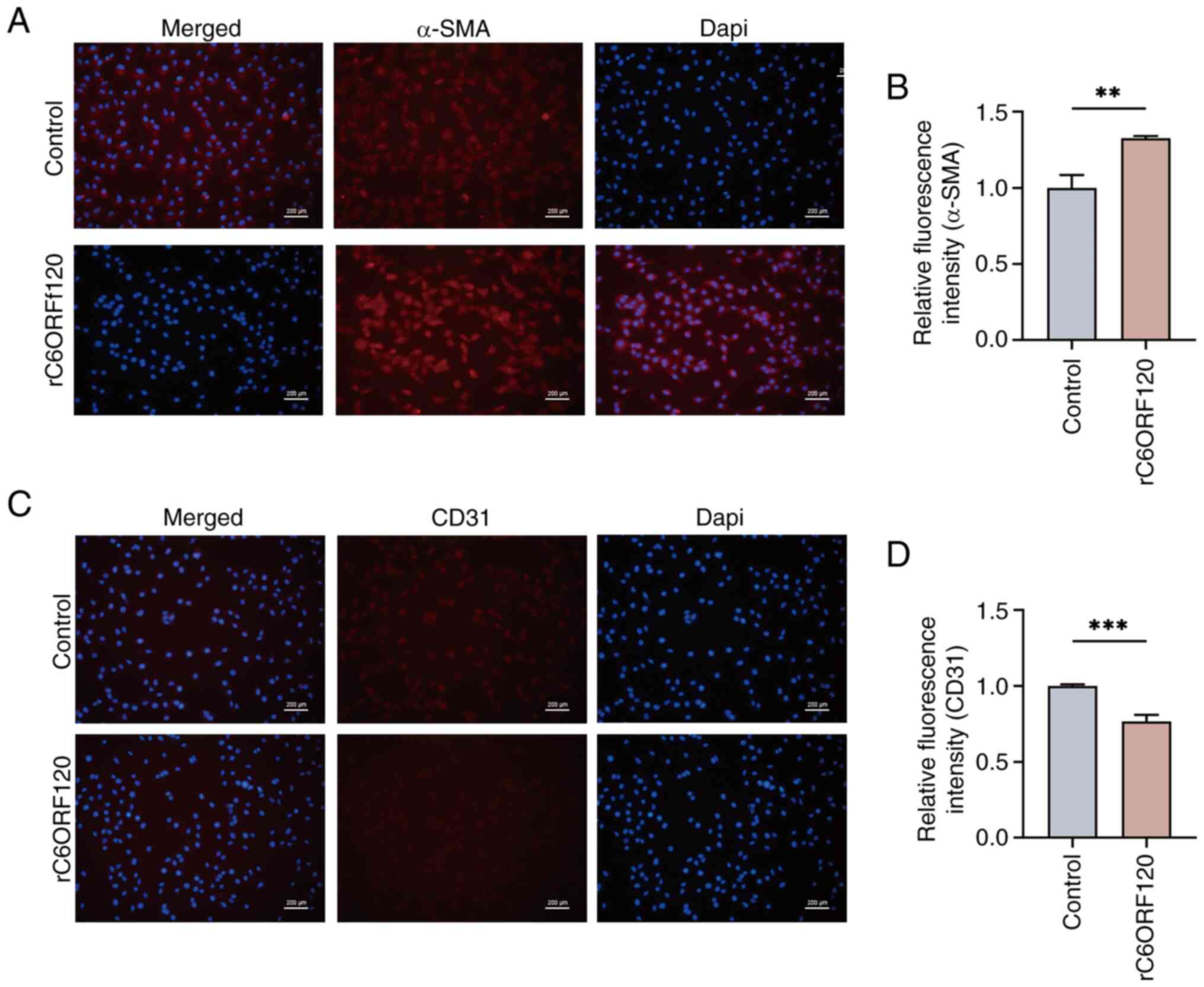
Figure 3

rC6ORF120 alters the fluorescence
intensity of EndMT markers. Immunocytofluorescence staining of (A)
α-SMA and (C) CD31 in HUVECs following rC6ORF120 treatment, with (B
and D) corresponding statistical analysis. **P<0.01;
***P<0.001. Scale bar, 200 µm. rC6ORF120, recombinant C6ORF120
protein; EndMT, endothelial-mesenchymal transition; HUVECs, human
umbilical vein endothelial cells.

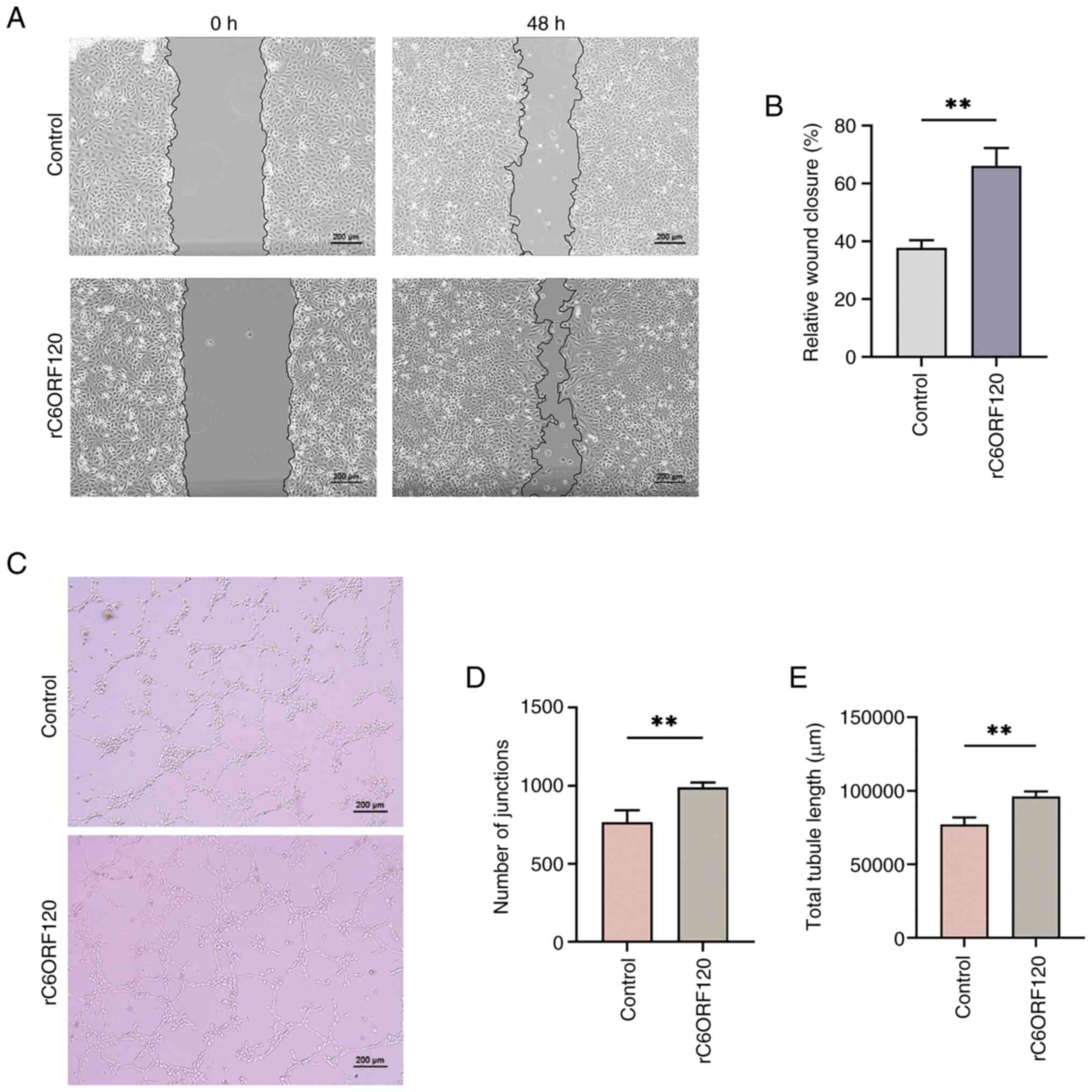
Figure 4

Effects of rC6ORF120 on the migration
and angiogenic capacity of HUVECs. (A) Comparison of wound closure
between the rC6ORF120-treated group and the control group after a
48-h incubation period. (B) Bar graph representing relative wound
closure. (C) The impact of rC6ORF120 on the tube-forming capacity
of HUVECs. Bar graph representing (D) number of junctions and (E)
total tubule length. **P<0.01. Scale bar, 200 µm. rC6ORF120,
recombinant C6ORF120 protein; HUVECs, human umbilical vein
endothelial cells.

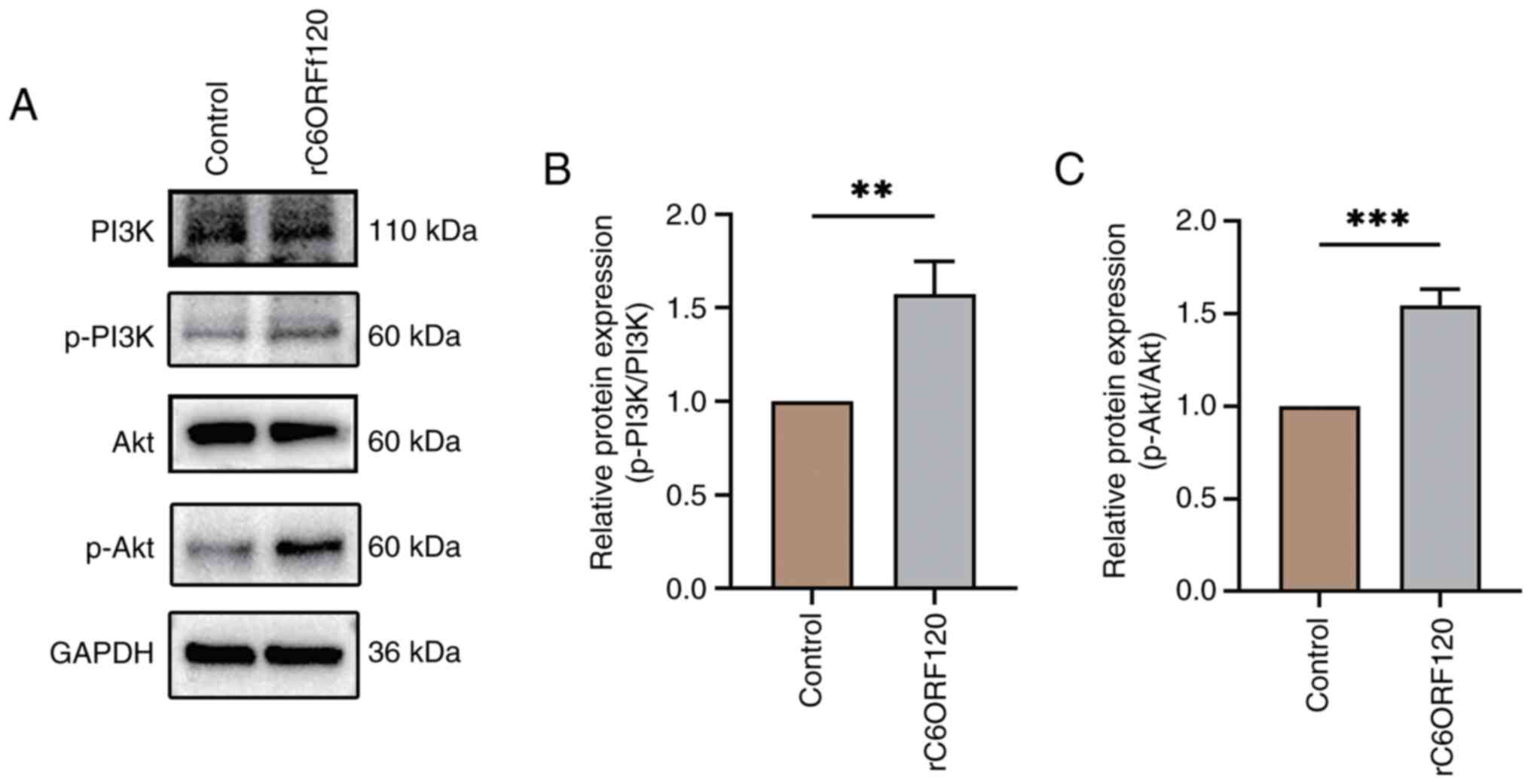
Figure 5

rC6ORF120 modulates the PI3K/Akt
signaling pathway in HUVECs (A) Western blot analysis of PISK,
p-PI3K, Akt and p-Akt in the HUVECs treated with rC6ORF120. Bar
graph representing relative expression of (B) p-PI3K/PI3K and (C)
p-Akt/Akt. **P<0.01; ***P<0.001. rC6ORF120, recombinant
C6ORF120 protein; HUVECs, human umbilical vein endothelial cells;
p-, phosphorylated.

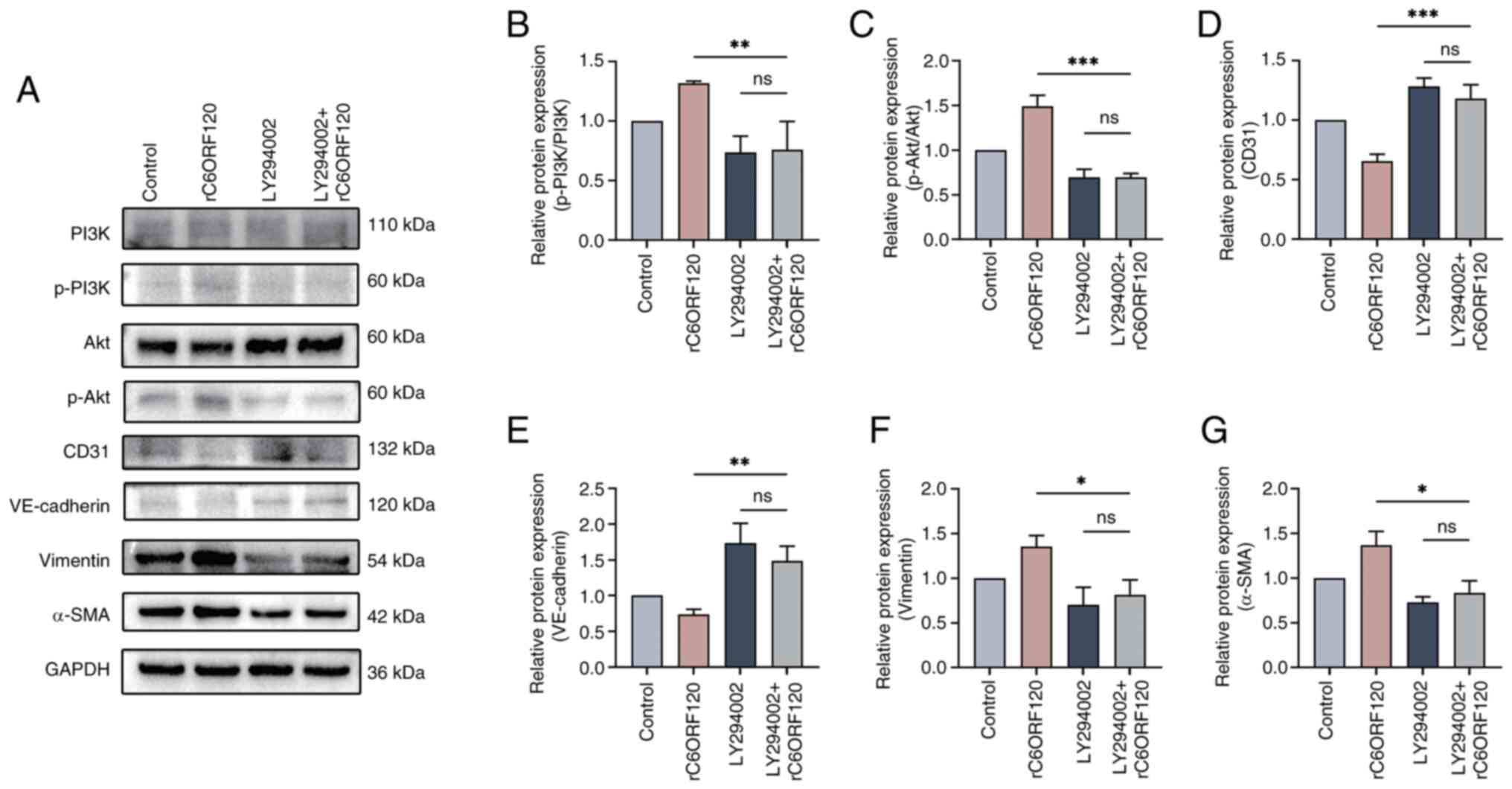
Figure 6

Involvement of the PI3K/Akt pathway
in rC6ORF120-induced EndMT in HUVECs. Cells were treated with
rC6ORF120, the PI3K inhibitor LY294002, or a combination of both.
(A) Representative blots depicting the PI3K/Akt signaling pathway
and proteins indicative of EndMT. (B-G) Quantitative assessment of
protein expression levels. ns indicates no statistically
significant difference; *P<0.05; **P<0.01; ***P<0.001.
rC6ORF120, recombinant C6ORF120 protein; EndMT,
endothelial-mesenchymal transition; HUVECs, human umbilical vein
endothelial cells; p-, phosphorylated.

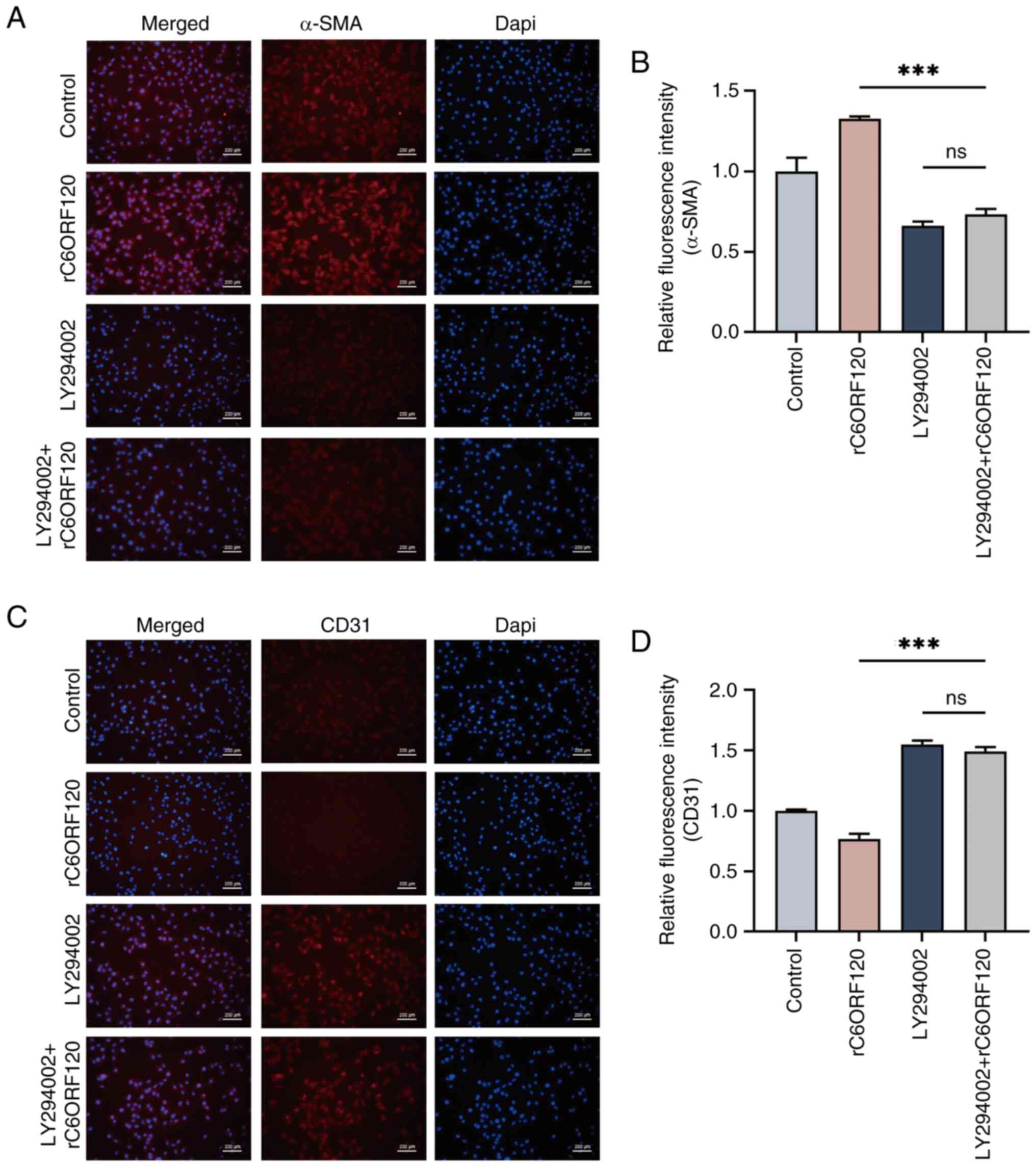
Figure 7

Inhibition of the PI3K/Akt pathway
reverses the induction of EndMT by rC6ORF120. Immunofluorescence
analysis of (A) α-SMA and (C) CD31. The bar graphs depict the
relative fluorescence intensity of (B) α-SMA and (D) CD31. ns
indicates no statistically significant difference; ***P<0.001.
Scale bar, 200 µm. EndMT, endothelial-mesenchymal transition;
rC6ORF120, recombinant C6ORF120 protein; α-SMA, α-smooth muscle
actin.

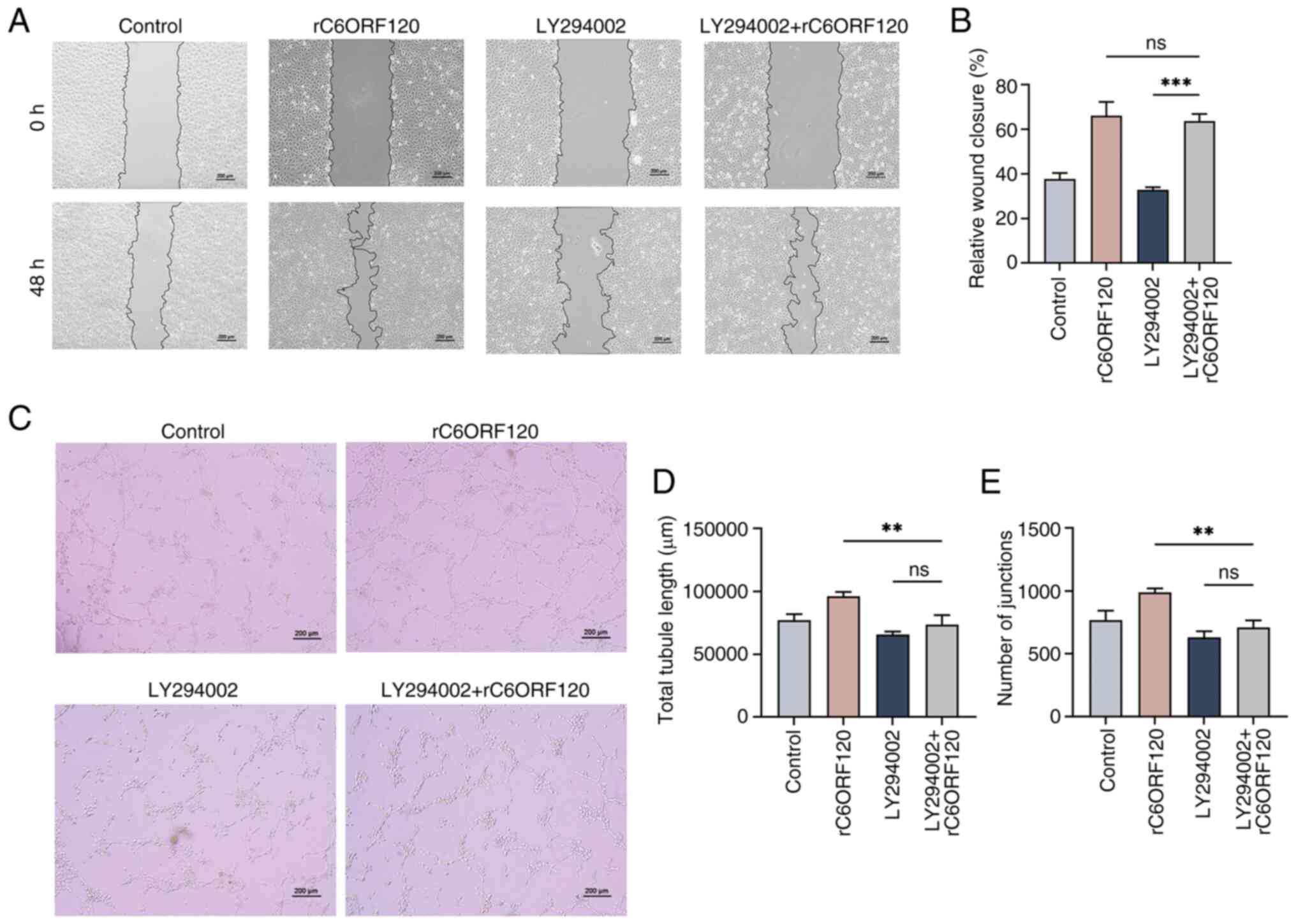
Figure 8

Effect of PI3K/Akt inhibition on
rC6ORF120-mediated effects on HUVEC migration and angiogenesis. (A)
Effect of rC6ORF120 on the migration of HUVECs after addition of
LY294002. (B) Bar graph representing relative wound closure. (C)
The reversing effect of LY294002 on rC6ORF120-induced angiogenic
activity in HUVECs. Bar graph representing (D) number of junctions
and (E) total tubule length. ns indicates no statistically
significant difference; **P<0.01; ***P<0.001. Scale bar, 200
µm. rC6ORF120, recombinant C6ORF120 protein; HUVECs, human
umbilical vein endothelial cells.
View References

1 

Xu Y and Kovacic JC: Endothelial to mesenchymal transition in health and disease. Annu Rev Physiol. 85:245–267. 2023. View Article : Google Scholar : PubMed/NCBI

2 

Zhang L, Wu X and Hong L: Endothelial reprogramming in atherosclerosis. Bioengineering (Basel). 11:3252024. View Article : Google Scholar : PubMed/NCBI

3 

Liu Y, Wu Z, Li Y, Chen Y, Zhao X, Wu M and Xia Y: Metabolic reprogramming and interventions in angiogenesis. J Adv Res. 70:323–338. 2024. View Article : Google Scholar : PubMed/NCBI

4 

Piera-Velazquez S and Jimenez SA: Endothelial to mesenchymal transition: Role in physiology and in the pathogenesis of human diseases. Physiol Rev. 99:1281–1324. 2019. View Article : Google Scholar : PubMed/NCBI

5 

Naderi-Meshkin H and Setyaningsih WAW: Endothelial cell dysfunction: Onset, progression, and consequences. Front Biosci (Landmark Ed). 29:2232024. View Article : Google Scholar : PubMed/NCBI

6 

Singh A, Bhatt KS, Nguyen HC, Frisbee JC and Singh KK: Endothelial-to-mesenchymal transition in cardiovascular pathophysiology. Int J Mol Sci. 25:61802024. View Article : Google Scholar : PubMed/NCBI

7 

Clere N, Renault S and Corre I: Endothelial-to-mesenchymal transition in cancer. Front Cell Dev Biol. 8:7472020. View Article : Google Scholar : PubMed/NCBI

8 

Poisson J, Lemoinne S, Boulanger C, Durand F, Moreau R, Valla D and Rautou PE: Liver sinusoidal endothelial cells: Physiology and role in liver diseases. J Hepatol. 66:212–227. 2017. View Article : Google Scholar : PubMed/NCBI

9 

Medici D and Kalluri R: Endothelial-mesenchymal transition and its contribution to the emergence of stem cell phenotype. Semin Cancer Biol. 22:379–384. 2012. View Article : Google Scholar : PubMed/NCBI

10 

Man S, Duffhues GS, Dijke PT and Baker D: The therapeutic potential of targeting the endothelial-to-mesenchymal transition. Angiogenesis. 22:3–13. 2019. View Article : Google Scholar : PubMed/NCBI

11 

Li X, Qiao Y, Chang LS, Xiao F, Lu LH, Hao XH, Zhang RW, Wu H and Wei HS: Role of C6ORF120, an N-glycosylated protein, is implicated in apoptosis of CD4+ T lymphocytes. Chin Med J (Engl). 124:3560–3567. 2011.PubMed/NCBI

12 

Bradfield JP, Qu HQ, Wang K, Zhang H, Sleiman PM, Kim CE, Mentch FD, Qiu H, Glessner JT, Thomas KA, et al: A genome-wide meta-analysis of six type 1 diabetes cohorts identifies multiple associated loci. PLoS Genet. 7:e10022932011. View Article : Google Scholar : PubMed/NCBI

13 

Wu Y, Zhang R, Song X, Han X, Zhang J and Li X: C6orf120 gene knockout in rats mitigates concanavalin A-induced autoimmune hepatitis via regulating NKT cells. Cell Immunol. 371:1044672022. View Article : Google Scholar : PubMed/NCBI

14 

Zhang M, Ma H, Zhang J, Song XC, Ye XH, Li YF, Zhang YF, He LL, Wei HS and Li X: Deletion of the C6orf120 gene with unknown function ameliorates autoimmune hepatitis induced by concanavalin A. Cell Immunol. 331:9–15. 2018. View Article : Google Scholar : PubMed/NCBI

15 

Liu H, Wang X, Wang P, Wang YQ, Yi YY and Li X: Novel protein C6ORF120 promotes apoptosis through mitochondria-dependent pathway in CD4 +T lymphocytes. Biomed Environ Sci. 36:639–643. 2023.PubMed/NCBI

16 

Wang X, Liu H, Wang Y, Wang P, Yi Y, Lin Y and Li X: Novel protein C6ORF120 promotes liver fibrosis by activating hepatic stellate cells through the PI3K/Akt/mTOR pathway. J Gastroenterol Hepatol. 39:1422–1430. 2024. View Article : Google Scholar : PubMed/NCBI

17 

Zhang J, Zhang M, Ma H, Song XC, Wu YN, Zhang R, He LL, Ye XH, Gao MX and Li X: C6orf120 gene deficiency may be vulnerable to carbon tetra-chloride induced acute hepatic injury in rats. Arch Med Sci. 18:1626–1637. 2020.PubMed/NCBI

18 

Jin X, Fu W, Zhou J, Shuai N, Yang Y and Wang B: Oxymatrine attenuates oxidized low-density lipoprotein-induced HUVEC injury by inhibiting NLRP3 inflammasome-mediated pyrop-tosis via the activation of the SIRT1/Nrf2 signaling pathway. Int J Mol Med. 48:1872021. View Article : Google Scholar : PubMed/NCBI

19 

Arakelian L, Lion J, Churlaud G, Bargui R, Thierry B, Mutabazi E, Bruneval P, Alberdi AJ, Doliger C, Veyssiere M, et al: 20-Endothelial CD34 expression and regulation of immune cell response in-vitro. Sci Rep. 13:135122023. View Article : Google Scholar : PubMed/NCBI

20 

Duranova H, Kuzelova L, Borotova P, Simora V and Fialkova V: Human umbilical vein endothelial cells as a versatile cellular model system in diverse experimental paradigms: An ultrastructural perspective. Microsc Microanal. 30:419–439. 2024. View Article : Google Scholar : PubMed/NCBI

21 

Gong L, Lei Y, Liu Y, Tan F, Li S, Wang X, Xu M, Cai W, Du B, Xu F, et al: Vaccarin prevents ox-LDL-induced HUVEC EndMT, inflammation and apoptosis by suppressing ROS/p38 MAPK signaling. Am J Transl Res. 11:2140–2154. 2019.PubMed/NCBI

22 

Zhang Y, Liu J, Zou T, Qi Y, Yi B, Dissanayaka WL and Zhang C: DPSCs treated by TGF-β1 regulate angiogenic sprouting of three-dimensionally co-cultured HUVECs and DPSCs through VEGF-Ang-Tie2 signaling. Stem Cell Res Ther. 12:2812021. View Article : Google Scholar : PubMed/NCBI

23 

Wu X, Pu L, Chen W, Zhao Q, Wu G, Li D and Zhu H: LY294002 attenuates inflammatory response in endotoxin-induced uveitis by downregulating JAK3 and inactivating the PI3K/Akt signaling. Immunopharmacol Immunotoxicol. 44:510–518. 2022. View Article : Google Scholar : PubMed/NCBI

24 

Eskiler GG and Ozturk M: Therapeutic potential of the PI3K inhibitor LY294002 and PARP inhibitor talazoparib combination in BRCA-deficient triple negative breast cancer cells. Cell Signal. 91:1102292022. View Article : Google Scholar : PubMed/NCBI

25 

Ma Q, Yang F, Huang B, Pan X, Li W, Yu T, Wang X, Ran L, Qian K, Li H, et al: CircARID1A binds to IGF2BP3 in gastric cancer and promotes cancer proliferation by forming a circARID1A-IGF2BP3-SLC7A5 RNA-protein ternary complex. J Exp Clin Cancer Res. 41:2512022. View Article : Google Scholar : PubMed/NCBI

26 

Zeng Z, Inoue K, Sun H, Leng T, Feng X, Zhu L and Xiong ZG: TRPM7 regulates vascular endothelial cell adhesion and tube formation. Am J Physiol Cell Physiol. 308:C308–C318. 2015. View Article : Google Scholar : PubMed/NCBI

27 

Wang W, Li Y and Zhang Y, Ye T, Wang K, Li S and Zhang Y: SIRT1 mediates the inhibitory ef-fect of Dapagliflozin on EndMT by inhibiting the acetylation of endothelium notch1. Cardiovasc Diabetol. 22:3312023. View Article : Google Scholar : PubMed/NCBI

28 

Zhang Z, Guo Q, Ma C, Zhao Z, Shi Q, Yu H, Rao L and Li M: USF1 transcriptionally activates USP14 to drive atherosclerosis by promoting EndMT through NLRC5/Smad2/3 axis. Mol Med. 30:322024. View Article : Google Scholar : PubMed/NCBI

29 

Xie X, Qu P, Wu H, Liu P, Luo J, Chi J, Liu X, Chen X and Xu C: Circulating exosomal miR-21 mediates HUVEC proliferation and migration through PTEN/PI3K/AKT in Crohn's disease. Ann Transl Med. 10:2582022. View Article : Google Scholar : PubMed/NCBI

30 

Wang W, Li H, Qian Y, Li M, Deng M, Bi D and Zou J: ALKBH5 regulates corneal neovascularization by Mediating FOXM1 M6A demethylation. Invest Ophthalmol Vis Sci. 65:342024. View Article : Google Scholar

31 

Sobierajska K, Wawro ME, Ciszewski WM and Niewiarowska J: Transforming growth Factor-β receptor internalization via caveolae is regulated by tubulin-β2 and tubulin-β3 during endothelial-mesenchymal transition. Am J Pathol. 189:2531–2546. 2019. View Article : Google Scholar : PubMed/NCBI

32 

Zhang L, Ge T and Cui J: FLI-1-driven regulation of endothelial cells in human diseases. J Transl Med. 22:7402024. View Article : Google Scholar : PubMed/NCBI

33 

Ciszewski WM, Woźniak LA and Sobierajska K: Diverse roles of SARS-CoV-2 spike and nucleocapsid proteins in EndMT stimulation through the TGF-β-MRTF axis inhibited by aspirin. Cell Commun Signal. 22:2962024. View Article : Google Scholar : PubMed/NCBI

34 

Wu X, Du X, Yang Y, Liu X, Liu X, Zhang N, Li Y, Jiang X, Jiang Y and Yang Z: Inhibition of miR-122 reduced atherosclerotic lesion formation by regulating NPAS3-mediated endothelial to mesenchymal transition. Life Sci. 265:1188162021. View Article : Google Scholar : PubMed/NCBI

35 

Hu Z, Wang J, Pan T, Li X, Tao C, Wu Y, Wang X, Zhang Z, Liu Y, Zhang W, et al: The exosome-transmitted lncRNA LOC100132249 induces endothelial dysfunction in diabetic retinopathy. Diabetes. 72:1307–1319. 2023. View Article : Google Scholar : PubMed/NCBI

36 

Bischoff J: Endothelial to mesenchymal transition-purposeful versus maladaptive differentiation. Circ Res. 124:1163–1165. 2019. View Article : Google Scholar : PubMed/NCBI

37 

Zhou WW, Dai C, Liu WZ, Zhang C, Zhang Y, Yang GS, Guo QH, Li S, Yang HX and Li AY: Gentianella acuta improves TAC-induced cardiac remodel-ling by regulating the notch and PI3K/Akt/FOXO1/3 pathways. Biomed Pharmacother. 154:1135642022. View Article : Google Scholar : PubMed/NCBI

38 

He Y, Dan Y, Gao X, Huang L, Lv H and Chen J: DNMT1-mediated lncRNA MEG3 methylation accelerates endothelial-mesenchymal transition in diabetic retinopathy through the PI3K/Akt/mTOR signaling pathway. Am J Physiol Endocrinol Metab. 320:E598–E608. 2021. View Article : Google Scholar : PubMed/NCBI

39 

La Mendola D, Trincavelli ML and Martini C: Angiogenesis in disease. Int J Mol Sci. 23:109622022. View Article : Google Scholar : PubMed/NCBI

40 

Gentile MT, Pastorino O, Bifulco M and Colucci-D'Amato L: HUVEC tube-formation assay to evaluate the impact of natural products on angiogenesis. J Vis Exp. 24:e585912019.

41 

Yang DR, Wang MY, Zhang CL and Wang Y: Endothelial dysfunction in vascular complications of diabetes: A comprehensive review of mechanisms and implications. Front Endocrinol (Lausanne). 15:13592552024. View Article : Google Scholar : PubMed/NCBI

42 

Hall IF, Kishta F, Xu Y, Baker AH and Kovacic JC: Endothelial to mesenchymal transition: At the axis of cardiovascular health and disease. Cardiovasc Res. 120:223–236. 2024. View Article : Google Scholar : PubMed/NCBI

43 

Romano E, Rosa I, Fioretto BS and Manetti M: The contribution of endothelial cells to tissue fibrosis. Curr Opin Rheumatol. 36:52–60. 2024. View Article : Google Scholar : PubMed/NCBI

44 

Ciszewski WM, Wawro ME, Sacewicz-Hofman I and Sobierajska K: Cytoskeleton reorganization in EndMT-the role in cancer and fibrotic diseases. Int J Mol Sci. 22:116072021. View Article : Google Scholar : PubMed/NCBI

45 

Song C, Wang Z, Cao J, Dong Y and Chen Y: Hesperetin alleviates aflatoxin B1 induced liver toxicity in mice: Modulating lipid peroxidation and ferritin autophagy. Ecotoxicol Environ Saf. 284:1168542024. View Article : Google Scholar : PubMed/NCBI

46 

Zhou K, Xiao S, Cao S, Zhao C, Zhang M and Fu Y: Improvement of glucolipid metabolism and oxidative stress via modulating PI3K/Akt pathway in insulin resistance HepG2 cells by chickpea flavonoids. Food Chem X. 23:1016302024. View Article : Google Scholar : PubMed/NCBI

47 

Cao Y: 34-Lack of basic rationale in epithelial-mesenchymal transition and its related concepts. Cell Biosci. 14:1042024. View Article : Google Scholar : PubMed/NCBI

48 

Hamm MJ, Kirchmaier BC and Herzog W: Sema3d controls collective endothelial cell migration by distinct mechanisms via Nrp1 and PlxnD1. J Cell Biol. 215:415–430. 2016. View Article : Google Scholar : PubMed/NCBI

Related Articles

  • Abstract
  • View
  • Download
  • Twitter
Copy and paste a formatted citation
Spandidos Publications style
Lin Y, Wang X, Li Y, Cui X, Zhu N and Li X: Recombinant chromosome 6 open reading frame 120 protein promotes angiogenesis and endothelial‑to‑mesenchymal transition in human umbilical vein endothelial cells via the PI3K/Akt signaling pathway. Mol Med Rep 32: 231, 2025.
APA
Lin, Y., Wang, X., Li, Y., Cui, X., Zhu, N., & Li, X. (2025). Recombinant chromosome 6 open reading frame 120 protein promotes angiogenesis and endothelial‑to‑mesenchymal transition in human umbilical vein endothelial cells via the PI3K/Akt signaling pathway. Molecular Medicine Reports, 32, 231. https://doi.org/10.3892/mmr.2025.13596
MLA
Lin, Y., Wang, X., Li, Y., Cui, X., Zhu, N., Li, X."Recombinant chromosome 6 open reading frame 120 protein promotes angiogenesis and endothelial‑to‑mesenchymal transition in human umbilical vein endothelial cells via the PI3K/Akt signaling pathway". Molecular Medicine Reports 32.3 (2025): 231.
Chicago
Lin, Y., Wang, X., Li, Y., Cui, X., Zhu, N., Li, X."Recombinant chromosome 6 open reading frame 120 protein promotes angiogenesis and endothelial‑to‑mesenchymal transition in human umbilical vein endothelial cells via the PI3K/Akt signaling pathway". Molecular Medicine Reports 32, no. 3 (2025): 231. https://doi.org/10.3892/mmr.2025.13596
Copy and paste a formatted citation
x
Spandidos Publications style
Lin Y, Wang X, Li Y, Cui X, Zhu N and Li X: Recombinant chromosome 6 open reading frame 120 protein promotes angiogenesis and endothelial‑to‑mesenchymal transition in human umbilical vein endothelial cells via the PI3K/Akt signaling pathway. Mol Med Rep 32: 231, 2025.
APA
Lin, Y., Wang, X., Li, Y., Cui, X., Zhu, N., & Li, X. (2025). Recombinant chromosome 6 open reading frame 120 protein promotes angiogenesis and endothelial‑to‑mesenchymal transition in human umbilical vein endothelial cells via the PI3K/Akt signaling pathway. Molecular Medicine Reports, 32, 231. https://doi.org/10.3892/mmr.2025.13596
MLA
Lin, Y., Wang, X., Li, Y., Cui, X., Zhu, N., Li, X."Recombinant chromosome 6 open reading frame 120 protein promotes angiogenesis and endothelial‑to‑mesenchymal transition in human umbilical vein endothelial cells via the PI3K/Akt signaling pathway". Molecular Medicine Reports 32.3 (2025): 231.
Chicago
Lin, Y., Wang, X., Li, Y., Cui, X., Zhu, N., Li, X."Recombinant chromosome 6 open reading frame 120 protein promotes angiogenesis and endothelial‑to‑mesenchymal transition in human umbilical vein endothelial cells via the PI3K/Akt signaling pathway". Molecular Medicine Reports 32, no. 3 (2025): 231. https://doi.org/10.3892/mmr.2025.13596
Follow us
  • Twitter
  • LinkedIn
  • Facebook
About
  • Spandidos Publications
  • Careers
  • Cookie Policy
  • Privacy Policy
How can we help?
  • Help
  • Live Chat
  • Contact
  • Email to our Support Team