Spandidos Publications Logo
  • About
    • About Spandidos
    • Aims and Scopes
    • Abstracting and Indexing
    • Editorial Policies
    • Reprints and Permissions
    • Job Opportunities
    • Terms and Conditions
    • Contact
  • Journals
    • All Journals
    • Oncology Letters
      • Oncology Letters
      • Information for Authors
      • Editorial Policies
      • Editorial Board
      • Aims and Scope
      • Abstracting and Indexing
      • Bibliographic Information
      • Archive
    • International Journal of Oncology
      • International Journal of Oncology
      • Information for Authors
      • Editorial Policies
      • Editorial Board
      • Aims and Scope
      • Abstracting and Indexing
      • Bibliographic Information
      • Archive
    • Molecular and Clinical Oncology
      • Molecular and Clinical Oncology
      • Information for Authors
      • Editorial Policies
      • Editorial Board
      • Aims and Scope
      • Abstracting and Indexing
      • Bibliographic Information
      • Archive
    • Experimental and Therapeutic Medicine
      • Experimental and Therapeutic Medicine
      • Information for Authors
      • Editorial Policies
      • Editorial Board
      • Aims and Scope
      • Abstracting and Indexing
      • Bibliographic Information
      • Archive
    • International Journal of Molecular Medicine
      • International Journal of Molecular Medicine
      • Information for Authors
      • Editorial Policies
      • Editorial Board
      • Aims and Scope
      • Abstracting and Indexing
      • Bibliographic Information
      • Archive
    • Biomedical Reports
      • Biomedical Reports
      • Information for Authors
      • Editorial Policies
      • Editorial Board
      • Aims and Scope
      • Abstracting and Indexing
      • Bibliographic Information
      • Archive
    • Oncology Reports
      • Oncology Reports
      • Information for Authors
      • Editorial Policies
      • Editorial Board
      • Aims and Scope
      • Abstracting and Indexing
      • Bibliographic Information
      • Archive
    • Molecular Medicine Reports
      • Molecular Medicine Reports
      • Information for Authors
      • Editorial Policies
      • Editorial Board
      • Aims and Scope
      • Abstracting and Indexing
      • Bibliographic Information
      • Archive
    • World Academy of Sciences Journal
      • World Academy of Sciences Journal
      • Information for Authors
      • Editorial Policies
      • Editorial Board
      • Aims and Scope
      • Abstracting and Indexing
      • Bibliographic Information
      • Archive
    • International Journal of Functional Nutrition
      • International Journal of Functional Nutrition
      • Information for Authors
      • Editorial Policies
      • Editorial Board
      • Aims and Scope
      • Abstracting and Indexing
      • Bibliographic Information
      • Archive
    • International Journal of Epigenetics
      • International Journal of Epigenetics
      • Information for Authors
      • Editorial Policies
      • Editorial Board
      • Aims and Scope
      • Abstracting and Indexing
      • Bibliographic Information
      • Archive
    • Medicine International
      • Medicine International
      • Information for Authors
      • Editorial Policies
      • Editorial Board
      • Aims and Scope
      • Abstracting and Indexing
      • Bibliographic Information
      • Archive
  • Articles
  • Information
    • Information for Authors
    • Information for Reviewers
    • Information for Librarians
    • Information for Advertisers
    • Conferences
  • Language Editing
Spandidos Publications Logo
  • About
    • About Spandidos
    • Aims and Scopes
    • Abstracting and Indexing
    • Editorial Policies
    • Reprints and Permissions
    • Job Opportunities
    • Terms and Conditions
    • Contact
  • Journals
    • All Journals
    • Biomedical Reports
      • Information for Authors
      • Editorial Policies
      • Editorial Board
      • Aims and Scope
      • Abstracting and Indexing
      • Bibliographic Information
      • Archive
    • Experimental and Therapeutic Medicine
      • Information for Authors
      • Editorial Policies
      • Editorial Board
      • Aims and Scope
      • Abstracting and Indexing
      • Bibliographic Information
      • Archive
    • International Journal of Epigenetics
      • Information for Authors
      • Editorial Policies
      • Editorial Board
      • Aims and Scope
      • Abstracting and Indexing
      • Bibliographic Information
      • Archive
    • International Journal of Functional Nutrition
      • Information for Authors
      • Editorial Policies
      • Editorial Board
      • Aims and Scope
      • Abstracting and Indexing
      • Bibliographic Information
      • Archive
    • International Journal of Molecular Medicine
      • Information for Authors
      • Editorial Policies
      • Editorial Board
      • Aims and Scope
      • Abstracting and Indexing
      • Bibliographic Information
      • Archive
    • International Journal of Oncology
      • Information for Authors
      • Editorial Policies
      • Editorial Board
      • Aims and Scope
      • Abstracting and Indexing
      • Bibliographic Information
      • Archive
    • Medicine International
      • Information for Authors
      • Editorial Policies
      • Editorial Board
      • Aims and Scope
      • Abstracting and Indexing
      • Bibliographic Information
      • Archive
    • Molecular and Clinical Oncology
      • Information for Authors
      • Editorial Policies
      • Editorial Board
      • Aims and Scope
      • Abstracting and Indexing
      • Bibliographic Information
      • Archive
    • Molecular Medicine Reports
      • Information for Authors
      • Editorial Policies
      • Editorial Board
      • Aims and Scope
      • Abstracting and Indexing
      • Bibliographic Information
      • Archive
    • Oncology Letters
      • Information for Authors
      • Editorial Policies
      • Editorial Board
      • Aims and Scope
      • Abstracting and Indexing
      • Bibliographic Information
      • Archive
    • Oncology Reports
      • Information for Authors
      • Editorial Policies
      • Editorial Board
      • Aims and Scope
      • Abstracting and Indexing
      • Bibliographic Information
      • Archive
    • World Academy of Sciences Journal
      • Information for Authors
      • Editorial Policies
      • Editorial Board
      • Aims and Scope
      • Abstracting and Indexing
      • Bibliographic Information
      • Archive
  • Articles
  • Information
    • For Authors
    • For Reviewers
    • For Librarians
    • For Advertisers
    • Conferences
  • Language Editing
Login Register Submit
  • This site uses cookies
  • You can change your cookie settings at any time by following the instructions in our Cookie Policy. To find out more, you may read our Privacy Policy.

    I agree
Search articles by DOI, keyword, author or affiliation
Search
Advanced Search
presentation
Molecular Medicine Reports
Join Editorial Board Propose a Special Issue
Print ISSN: 1791-2997 Online ISSN: 1791-3004
Journal Cover
September-2025 Volume 32 Issue 3

Full Size Image

Sign up for eToc alerts
Recommend to Library

Journals

International Journal of Molecular Medicine

International Journal of Molecular Medicine

International Journal of Molecular Medicine is an international journal devoted to molecular mechanisms of human disease.

International Journal of Oncology

International Journal of Oncology

International Journal of Oncology is an international journal devoted to oncology research and cancer treatment.

Molecular Medicine Reports

Molecular Medicine Reports

Covers molecular medicine topics such as pharmacology, pathology, genetics, neuroscience, infectious diseases, molecular cardiology, and molecular surgery.

Oncology Reports

Oncology Reports

Oncology Reports is an international journal devoted to fundamental and applied research in Oncology.

Experimental and Therapeutic Medicine

Experimental and Therapeutic Medicine

Experimental and Therapeutic Medicine is an international journal devoted to laboratory and clinical medicine.

Oncology Letters

Oncology Letters

Oncology Letters is an international journal devoted to Experimental and Clinical Oncology.

Biomedical Reports

Biomedical Reports

Explores a wide range of biological and medical fields, including pharmacology, genetics, microbiology, neuroscience, and molecular cardiology.

Molecular and Clinical Oncology

Molecular and Clinical Oncology

International journal addressing all aspects of oncology research, from tumorigenesis and oncogenes to chemotherapy and metastasis.

World Academy of Sciences Journal

World Academy of Sciences Journal

Multidisciplinary open-access journal spanning biochemistry, genetics, neuroscience, environmental health, and synthetic biology.

International Journal of Functional Nutrition

International Journal of Functional Nutrition

Open-access journal combining biochemistry, pharmacology, immunology, and genetics to advance health through functional nutrition.

International Journal of Epigenetics

International Journal of Epigenetics

Publishes open-access research on using epigenetics to advance understanding and treatment of human disease.

Medicine International

Medicine International

An International Open Access Journal Devoted to General Medicine.

Journal Cover
September-2025 Volume 32 Issue 3

Full Size Image

Sign up for eToc alerts
Recommend to Library

  • Article
  • Citations
    • Cite This Article
    • Download Citation
    • Create Citation Alert
    • Remove Citation Alert
    • Cited By
  • Similar Articles
    • Related Articles (in Spandidos Publications)
    • Similar Articles (Google Scholar)
    • Similar Articles (PubMed)
  • Download PDF
  • Download XML
  • View XML

  • Supplementary Files
    • Supplementary_Data.pdf
Article Open Access

SLC7A1, SGK1 and HMGB2 are overexpressed in cervical cancer tissues and the miR‑23b‑3p/HMGB2 axis regulates cell migration and invasion

  • Authors:
    • Gladys Wendy Valente‑Niño
    • Hilda Jiménez‑Wences
    • Manuel Joaquín Romero‑López
    • Judit Alarcón‑Millán
    • Miguel Ángel Mendoza‑Catalán
    • Oscar Peralta‑Zaragoza
    • Daniel Hernández‑Sotelo
    • Carlos Pérez‑Plasencia
    • Gloria Fernández‑Tilapa
  • View Affiliations / Copyright

    Affiliations: Infectious Diseases and Cancer Research Laboratory, Faculty of Biological Chemical Sciences, Autonomous University of Guerrero, Chilpancingo, Guerrero 39087, Mexico, Bioactives and Cancer Research Laboratory, Faculty of Chemical‑Biological Sciences, Autonomous University of Guerrero, Chilpancingo, Guerrero 39087, Mexico, Direction of Chronic Infections and Cancer, Research Center in Infection Diseases, National Institute of Public Health, Cuernavaca, Morelos 62100, Mexico, Cancer Epigenetics Laboratory, Faculty of Biological Chemical Sciences, Autonomous University of Guerrero, Chilpancingo, Guerrero 39087, Mexico, Genomics Laboratory, National Cancer Institute, Mexico City 14080, Mexico
    Copyright: © Valente‑Niño et al. This is an open access article distributed under the terms of Creative Commons Attribution License.
  • Article Number: 235
    |
    Published online on: June 20, 2025
       https://doi.org/10.3892/mmr.2025.13600
  • Expand metrics +
Metrics: Total Views: 0 (Spandidos Publications: | PMC Statistics: )
Metrics: Total PDF Downloads: 0 (Spandidos Publications: | PMC Statistics: )
Cited By (CrossRef): 0 citations Loading Articles...

This article is mentioned in:


Abstract

MicroRNA (miRNA/miR)‑124‑3p and miR‑23b‑3p are tumor suppressor miRNAs that are associated with advanced cervical cancer (CC), regulating proliferation, migration, invasion, apoptosis and metastasis; however, the identity and function of the various genes regulated by these miRNAs remain unknown. The present study predicted the specific and shared targets of miR‑124‑3p and miR‑23b‑3p, cellular processes and signaling pathways involving the predicted targets. SLC7A1 was found among the shared targets, SGK1 among the targets of miR‑124‑3p and HMGB2 as a target of miR‑23b‑3p. SLC7A1, SGK1 and HMGB2 mRNA expression was markedly increased in patients with cervical squamous cell carcinoma and endocervical adenocarcinoma (CESC) and levels of SGK1 and HMGB2 were associated with CC progression. SLC7A1, SGK1 and HMGB2 interact with proteins involved in cellular processes associated with cancer progression. Overexpression of miR‑124‑3p decreased mRNA of SLC7A1 in C‑33A cells, and of SGK1 in both cell lines. Ectopic expression of miR‑23b‑3p decreased HMGB2 levels in C‑33A and CaSki, and reduced cell migration and invasion. HMGB2 knockdown experiments revealed that HMGB2 modulates migration and invasion of CC cell lines. In conclusion, the results of the present study suggest that miR‑124‑3p and miR‑23b‑3p modulate processes associated with carcinogenesis and tumor progression through their individual and shared target mRNAs and that the miR‑23b‑3p/HMGB2 axis is among the mechanisms that modulate migration and invasion in CC.
View Figures

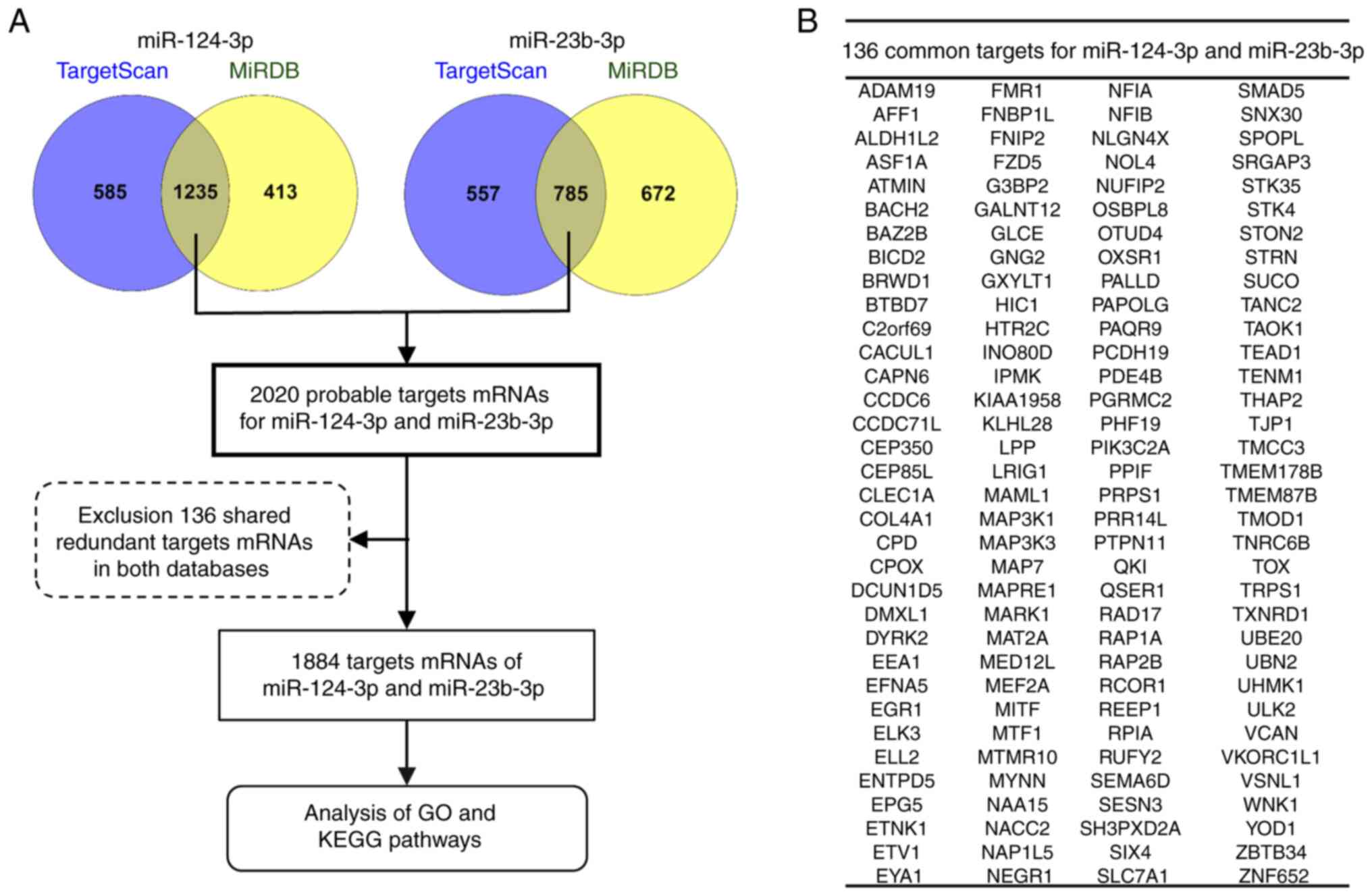
Figure 1

Target genes of miR-124-3p,
miR-23b-3p and shared by both miRNAs. (A) The Venn diagram shows
the target mRNAs of miR-124-3p and miR-23b-3p recorded in miRDB and
TargetScan. (B) The table shows the name of the 136 genes predicted
as targets shared by miR-124-3p and miR-23b-3p. miR, microRNA; GO,
Gene Ontology; KEGG, Kyoto Encyclopedia of Genes and Genomes.

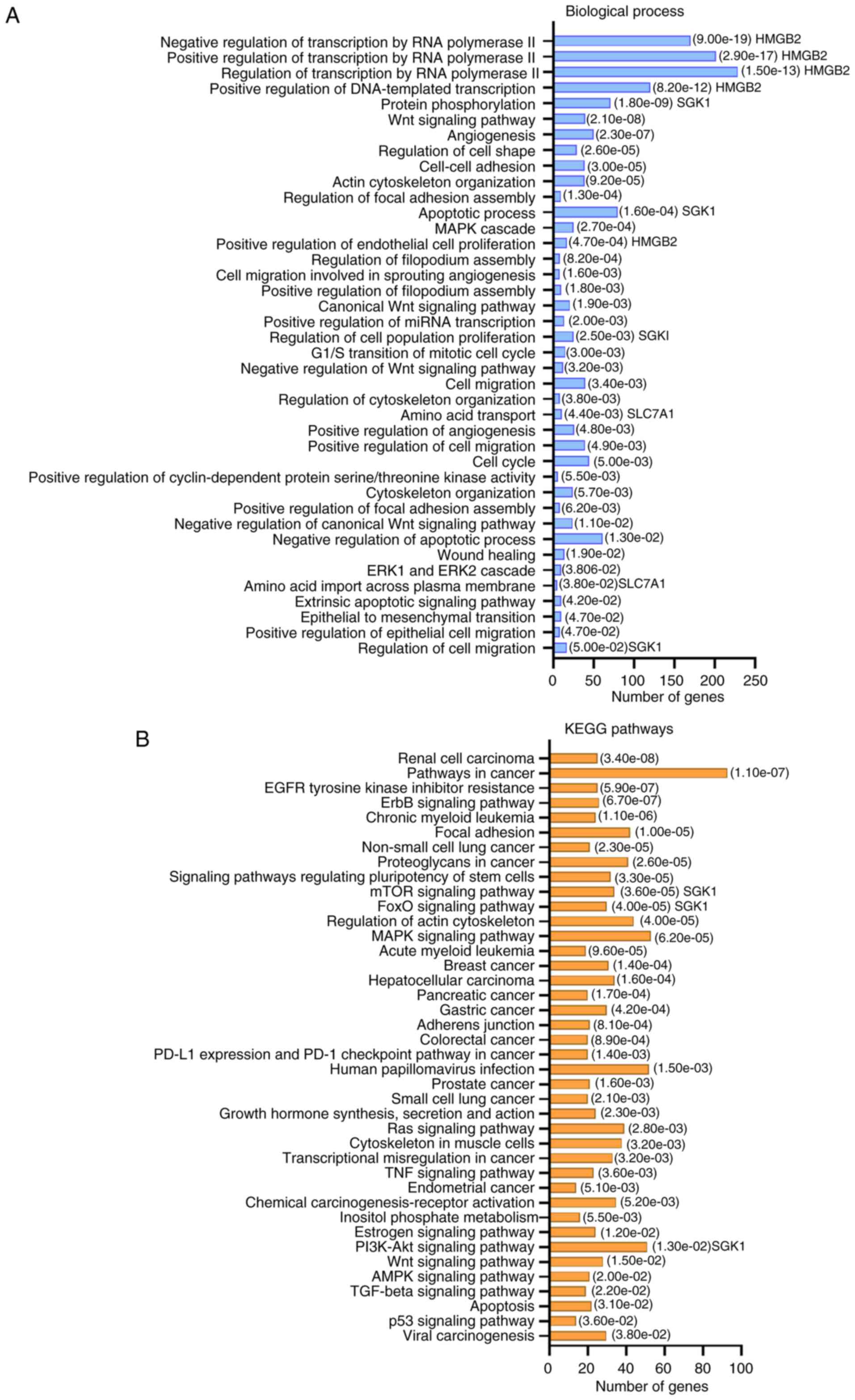
Figure 2

Functional analysis of miR-124-3p
and/or miR-23b-3p target mRNAs. (A) Biological processes and (B)
KEGG pathways enriched by genes included among the 1,884 target
transcripts of miR-124-3p and miR-23b-3p. Terms with P<0.05 were
considered statistically significant. miR, microRNA; KEGG, Kyoto
Encyclopedia of Genes and Genomes.

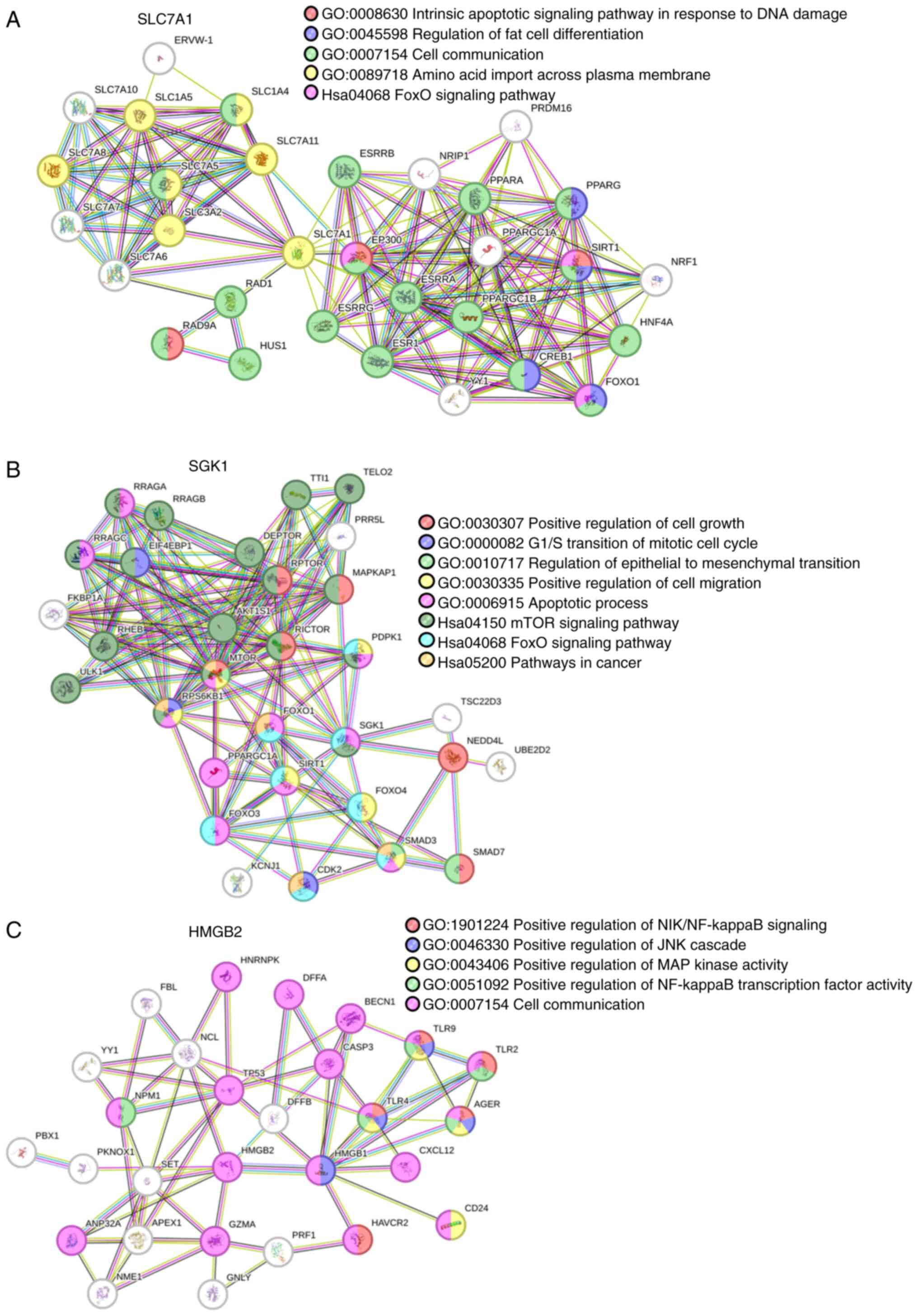
Figure 3

SLC7A1, SGK1 and HMGB2 are involved
in the regulation of biological processes and signaling pathways
involved in cancer progression. The PPI network represents physical
and functional interactions of (A) SLC7A1, (B) SGK1 or (C) HMGB2
with cellular proteins. Each node represents a protein and the
lines represent protein-protein interactions. The colors represent
the biological processes and signaling pathways in which the
interacting proteins participate. Blank nodes symbolize proteins
that are not involved in the aforementioned processes or pathways.
All interactions were statistically significant
(P<5.5×10⁻⁷). SLC7A1, cationic amino acid transporter
1; SGK1, serum- and glucocorticoid-induced kinase 1; HMGB2,
mobility group box 2 protein; PPI, protein-protein interaction.

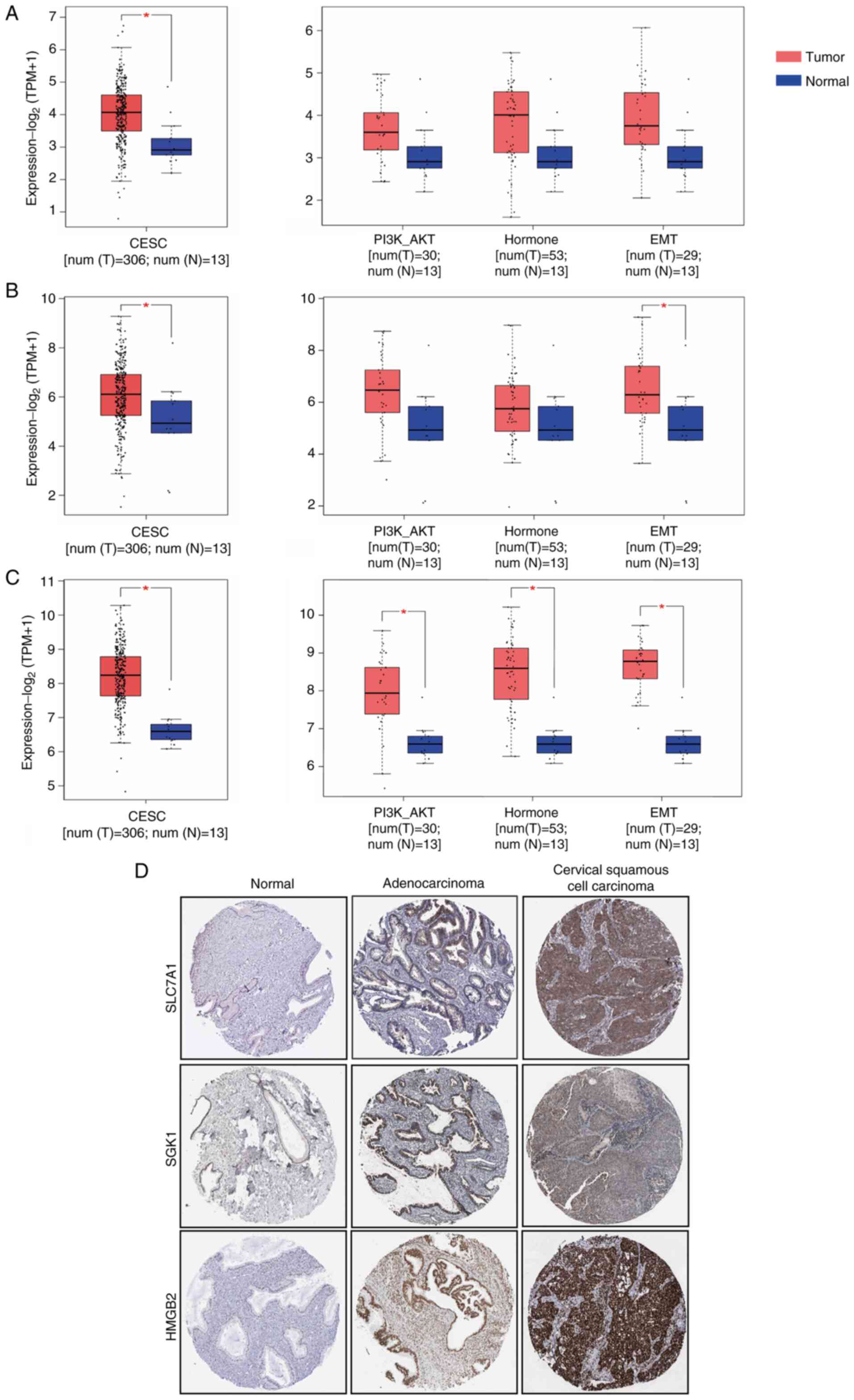
Figure 4

Expression of SLC7A1, SGK1 and HMGB2
in tissues with CESC or adenocarcinoma. (A) SLC7A1, (B) SGK1 and
(C) HMGB2 mRNA levels in tissues with CESC (red; n=306) and normal
(blue; n=13) recorded on the GEPIA platform (P<0.0.5. (D)
Expression of SLC7A1, SGK1 and HMGB2 proteins in HPA-included
tissues. Images of histological sections of normal tissue biopsies,
adenocarcinoma and CESC stained by immunohistochemistry are shown.
Staining intensity was classified as negative/weak, moderate or
strong, magnification, ×100. *P<0.05. SLC7A1, cationic amino
acid transporter 1; SGK1, serum- and glucocorticoid-induced kinase
1; HMGB2, mobility group box 2 protein; CESC, cervical squamous
cell carcinoma; HPA, Human Protein Atlas; EMT,
epithelial-mesenchymal transition.

Figure 5

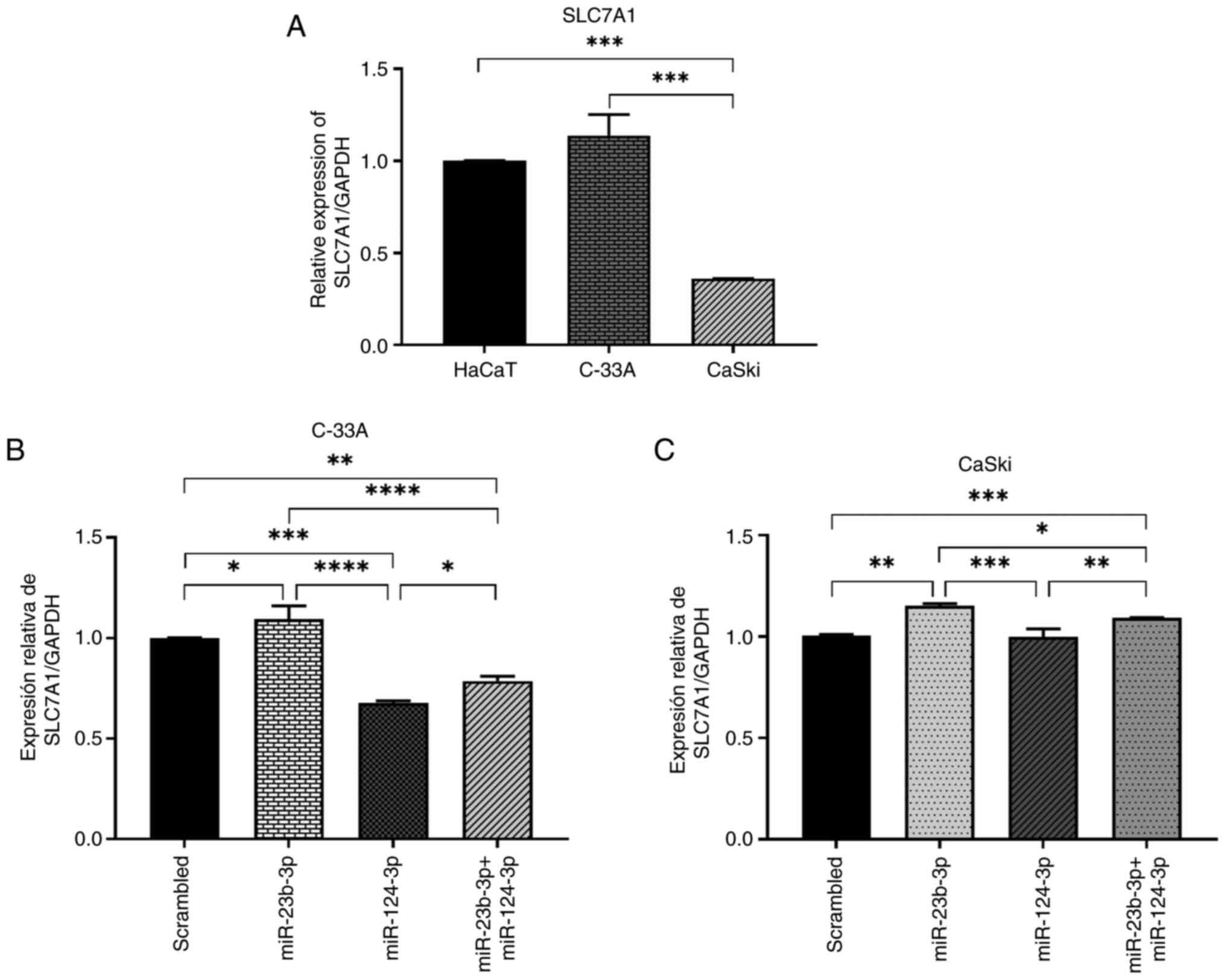
Relative expression of SLC7A1
in response to overexpression of miR-124-3p, miR-23b-3p or
miR-124-3p + miR-23b-3p. SLC7A1 expression levels in (A)
HaCaT, C-33A and CaSki cells without transfection; (B) C-33A and
(C) CaSki cells transfected with 100 nM of miR-124-3p, miR-23b-3p
or miR-124-3p + miR-23b-3p mimetic for 24 h. SLC7A1 mRNA
expression was normalized to GAPDH mRNA and calculated by the
2−ΔΔCq method. Data are presented as mean ± SD.
Statistical significance was determined by Welch's ANOVA
(Games-Howell test) *P<0.05; **P<0.001; ***P<0.0001;
****P<0.00001. SLC7A1, cationic amino acid transporter 1; miR,
microRNA.

Figure 6

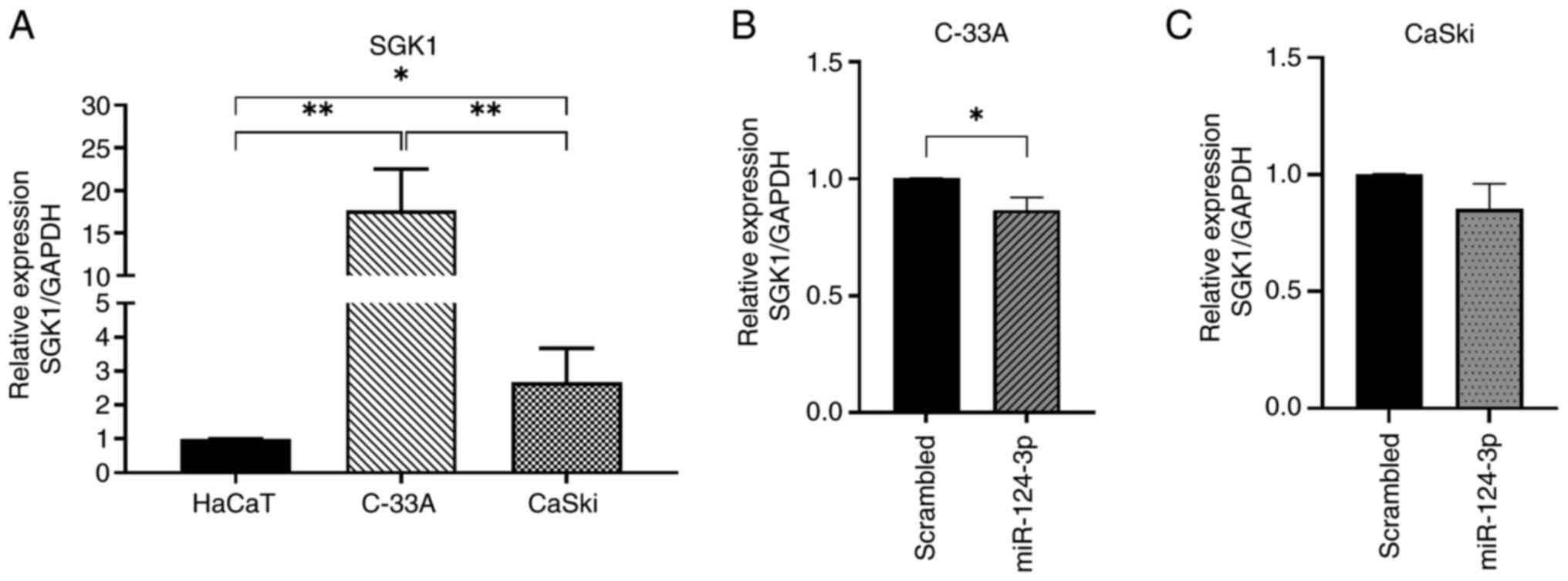
Relative expression of SGK1 mRNA.
SGK1 mRNA levels in (A) untransfected C-33A and CaSki cells
compared with HaCaT cells and in (B) C-33A and (C) CaSki cells
transfected with 100 nM of miR-124-3p mimetic for 24 h. SGK1 mRNA
expression was normalized to GAPDH mRNA and calculated by the
2−ΔΔCq method. Data are presented as mean ± SD.
Statistical significance was determined using unpaired Student's
t-test or Welch's ANOVA (Games-Howell test). *P<0.05;
**P<0.001. SGK1, serum- and glucocorticoid-induced kinase 1 miR,
microRNA.

Figure 7

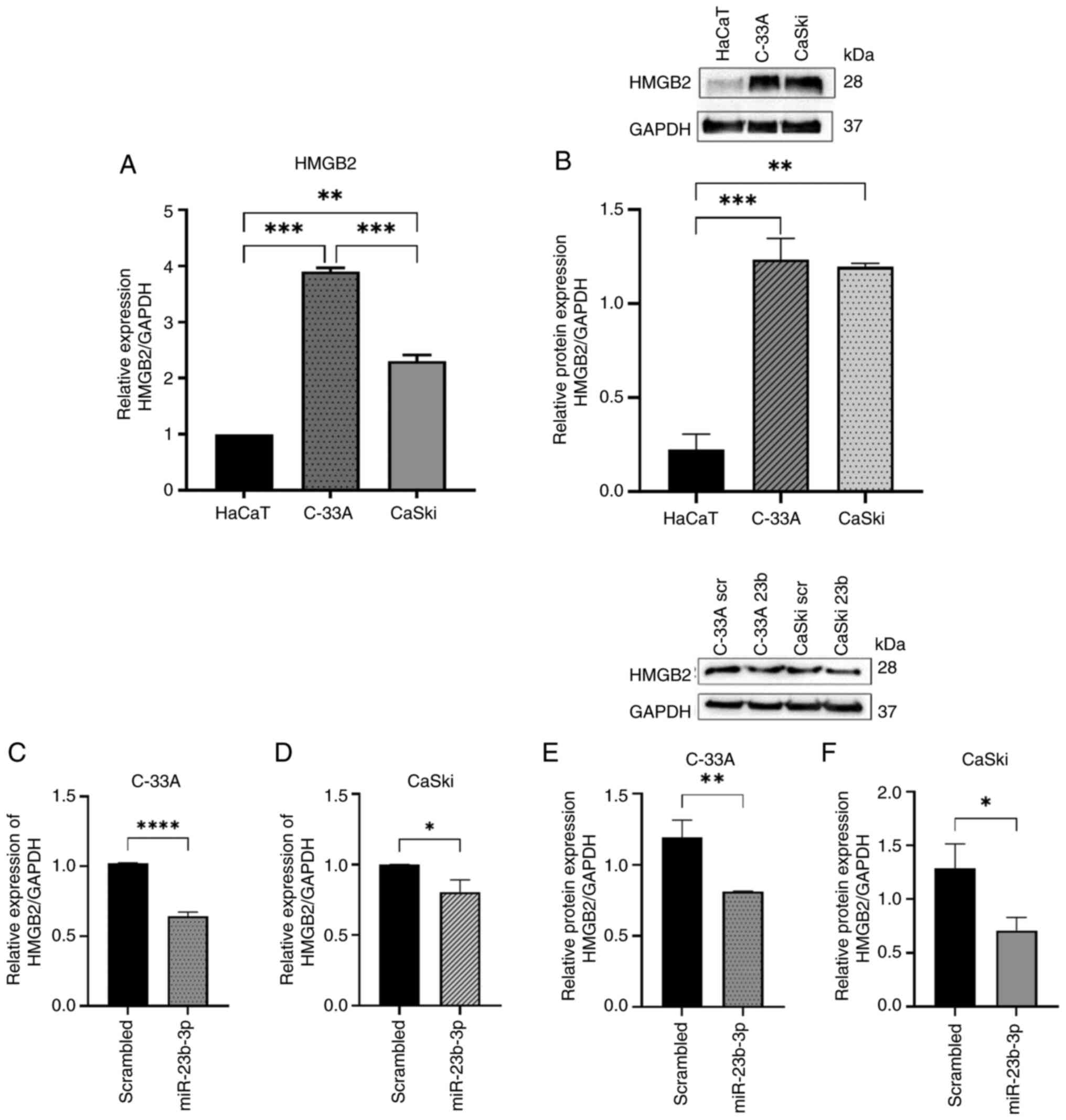
HMGB2 mRNA and protein expression in
C-33A and CaSki cells with miR-23b-3p overexpression. (A) mRNA and
(B) protein expression levels of HMGB2 in HaCaT, C-33A and CaSki
cells. mRNA expression in (C) C-33A and (D) CaSki cells transfected
with 100 nM of the miR-23b-3p mimic. Protein expression in (E)
C-33A and (F) CaSki cells transfected with 100 nM of the miR-23b-3p
mimic. mRNA and protein expression levels of HMGB2 were normalized
with GAPDH and calculated by the 2−ΔΔCt method. Data are
presented as mean ± SD. Statistical significance was determined
using Student's t-test unpaired or Welch's ANOVA (Games-Howell
test) *P<0.05; **P<0.001; ***P<0.0001; ****P<0.00001.
HMGB2, mobility group box 2 protein; miR, microRNA.

Figure 8

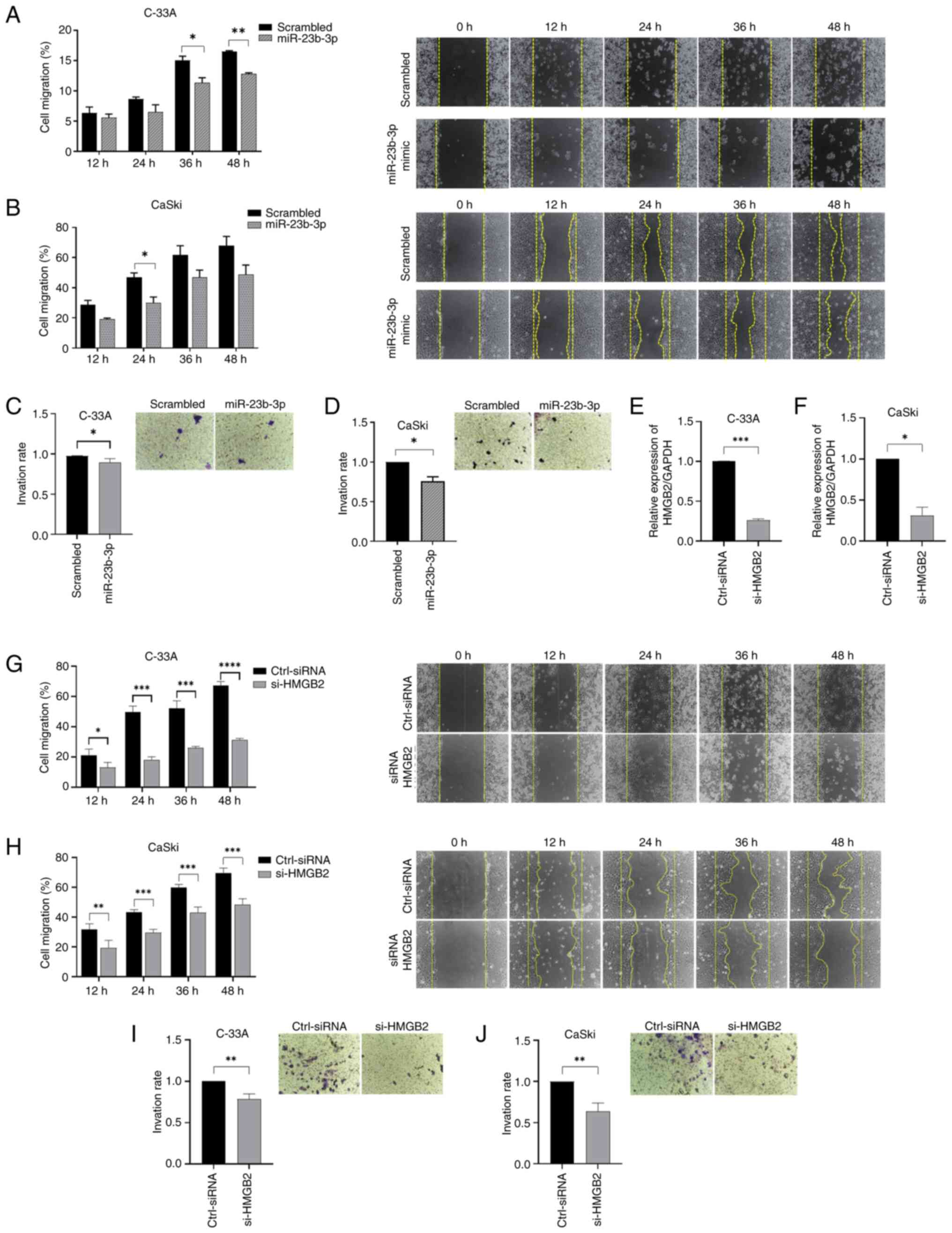
Overexpression of miR-23b-3p and
HMGB2 knockdown decreases migration and invasion of C-33A and CaSki
cells. Migration of (A) C-33A and (B) CaSki cells overexpressing
miR-23b-3p. Invasion of (C) C-33A and (D) CaSki cells
overexpressing miR-23b-3p. HMGB2 expression in (E) C-33A and (F)
CaSki cells transfected with 80 nM si-HMGB2. Migration of (G) C-33A
and (H) CaSki cells with HMGB2 knockdown. Invasion of (I) C-33A and
(J) CaSki cells transfected with si-HMGB2. Migration data are
expressed as percent wound closure ± SD in three independent
experiments. Migration and invasion results are shown at
magnification, ×20. *P<0.05, **P<0.001, ***P<0.0001,
****P<0.00001. miR, microRNA; HMGB2, mobility group box 2
protein; si, small interfering; ctrl, control.

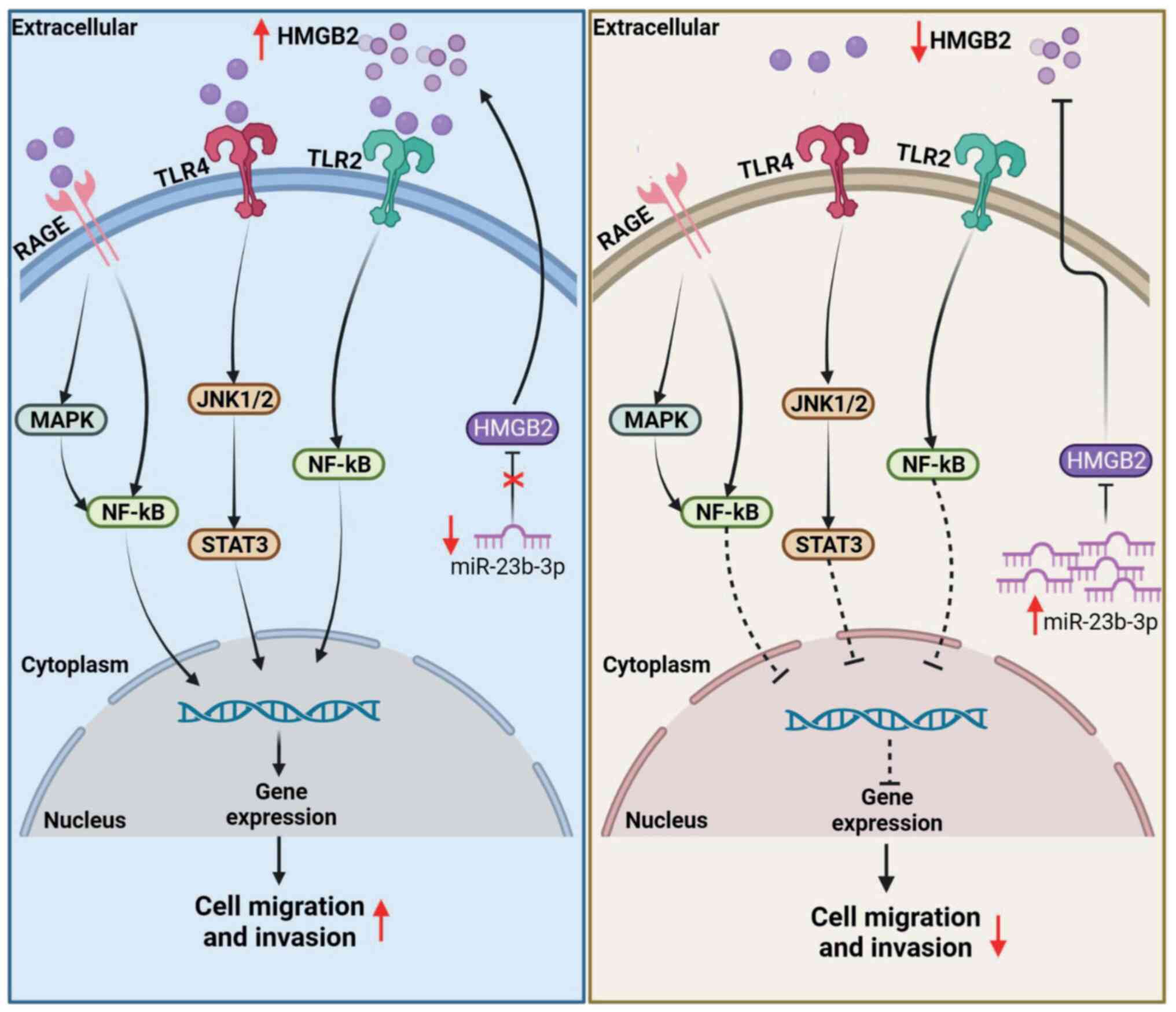
Figure 9

Predicted mechanism of regulation of
cell migration and invasion through the miR-23b-3p/HMGB2 axis.
HMGB2, high mobility group box 2; RAGE, receptor for advanced
glycation endproducts; TLR, toll like receptor; miR, microRNA.
View References

1 

Buskwofie A, David-West G and Clare CA: A review of cervical cancer: Incidence and disparities. J Natl Med Assoc. 112:229–232. 2020.PubMed/NCBI

2 

Servayge J, Olthof EP, Mom CH, van der Aa MA, Wenzel HHB, van der Velden J, Nout RA, Boere IA, van Doorn HC and van Beekhuizen HJ: Survival of women with advanced stage cervical cancer: Neo-adjuvant chemotherapy followed by radiotherapy and hyperthermia versus chemoradiotherapy. Cancers (Basel). 16:6352024. View Article : Google Scholar : PubMed/NCBI

3 

Gardner AB, Charo LM, Mann AK, Kapp DS, Eskander RN and Chan JK: Ovarian, uterine, and cervical cancer patients with distant metastases at diagnosis: Most common locations and outcomes. Clin Exp Metastasis. 37:107–113. 2020. View Article : Google Scholar : PubMed/NCBI

4 

Romero-López MJ, Jiménez-Wences H, Cruz-De La Rosa MI, Román-Fernández IV and Fernández-Tilapa G: miR-23b-3p, miR-124-3p and miR-218-5p synergistic or additive effects on cellular processes that modulate cervical cancer progression? A molecular balance that needs attention. Int J Mol Sci. 23:135512022. View Article : Google Scholar : PubMed/NCBI

5 

Ruan Y, Liu M, Guo J, Zhao J, Niu S and Li F: Evaluation of the accuracy of colposcopy in detecting high-grade squamous intraepithelial lesion and cervical cancer. Arch Gynecol Obstet. 302:1529–1538. 2020. View Article : Google Scholar : PubMed/NCBI

6 

Yan X, Huang Y, Zhang M, Hu X, Li K and Jing M: Prevalence of human papillomavirus infection and type distribution among Uyghur females in Xinjiang, northwest China. Oncol Lett. 20:252020.PubMed/NCBI

7 

Ben W, Yang Y, Yuan J, Sun J, Huang M, Zhang D and Zheng J: Human papillomavirus 16 E6 modulates the expression of host microRNAs in cervical cancer. Taiwan J Obstet Gynecol. 54:364–370. 2015. View Article : Google Scholar : PubMed/NCBI

8 

Castro-Oropeza R and Piña-Sánchez P: Epigenetic and transcriptomic regulation landscape in HPV+ cancers: Biological and clinical implications. Front Genet. 13:8866132022. View Article : Google Scholar : PubMed/NCBI

9 

Saliminejad K, Khorram Khorshid HR, Soleymani Fard S and Ghaffari SH: An overview of microRNAs: Biology, functions, therapeutics, and analysis methods. J Cell Physiol. 234:5451–5465. 2019. View Article : Google Scholar : PubMed/NCBI

10 

Zhang X, Cai D, Meng L and Wang B: MicroRNA-124 inhibits proliferation, invasion, migration and epithelial-mesenchymal transition of cervical carcinoma cells by targeting astrocyte-elevated gene-1. Oncol Rep. 36:2321–2328. 2016. View Article : Google Scholar : PubMed/NCBI

11 

Campos-Viguri GE, Peralta-Zaragoza O, Jiménez-Wences H, Longinos-González AE, Castañón-Sánchez CA, Ramírez-Carrillo M, Camarillo CL, Castañeda-Saucedo E, Jiménez-López MA, Martínez-Carrillo DN and Fernández-Tilapa G: MiR-23b-3p reduces the proliferation, migration and invasion of cervical cancer cell lines via the reduction of c-Met expression. Sci Rep. 10:32562020. View Article : Google Scholar : PubMed/NCBI

12 

Zhu Q, Zhang Y, Li M, Zhang Y, Zhang H, Chen J, Liu Z, Yuan P, Yang Z and Wang X: MiR-124-3p impedes the metastasis of non-small cell lung cancer via extracellular exosome transport and intracellular PI3K/AKT signaling. Biomark Res. 11:12023. View Article : Google Scholar : PubMed/NCBI

13 

Zhao Q, Jiang F, Zhuang H, Chu Y, Zhang F and Wang C: MicroRNA miR-124-3p suppresses proliferation and epithelial-mesenchymal transition of hepatocellular carcinoma via ARRDC1 (arrestin domain containing 1). Bioengineered. 13:8255–8265. 2022. View Article : Google Scholar : PubMed/NCBI

14 

Song B, Xu L, Jiang K and Cheng F: MiR-124-3p inhibits tumor progression in prostate cancer by targeting EZH2. Funct Integr Genomics. 23:802023. View Article : Google Scholar : PubMed/NCBI

15 

Song E, Yu W and Xiong X, Kuang X, Ai Y and Xiong X: Astrocyte elevated gene-1 promotes progression of cervical squamous cell carcinoma by inducing epithelial-mesenchymal transition via Wnt signaling. Int J Gynecol Cancer. 25:345–355. 2015. View Article : Google Scholar : PubMed/NCBI

16 

Grossi I, Arici B, Portolani N, Petro GD and Salvi A: Clinical and biological significance of miR-23b and miR-193a in human hepatocellular carcinoma. Oncotarget. 8:6955–6969. 2017. View Article : Google Scholar : PubMed/NCBI

17 

Pimenta RC, Viana NI, Amaral GQ, Park R, Morais DR, Pontes J Jr, Guimaraes VR, Camargo JA, Leite KR, Nahas WC, et al: MicroRNA-23b and microRNA-27b plus flutamide treatment enhances apoptosis rate and decreases CCNG1 expression in a castration-resistant prostate cancer cell line. Tumour Biol. 40:10104283188030112018. View Article : Google Scholar : PubMed/NCBI

18 

Liu H, Wei W, Wang X, Guan X, Chen Q, Pu Z, Xu X and Wei A: miR-23b-3p promotes the apoptosis and inhibits the proliferation and invasion of osteosarcoma cells by targeting SIX1. Mol Med Rep. 18:5683–5692. 2018.PubMed/NCBI

19 

Li YM, Li XJ, Yang HL, Zhang YB and Li JC: MicroRNA-23b suppresses cervical cancer biological progression by directly targeting six1 and affecting epithelial-to-mesenchymal transition and AKT/mTOR signaling pathway. Eur Rev Med Pharmacol Sci. 23:4688–4697. 2019.PubMed/NCBI

20 

Wang W, Li Y, Liu N, Gao Y and Li L: MiR-23b controls ALDH1A1 expression in cervical cancer stem cells. BMC Cancer. 17:2922017. View Article : Google Scholar : PubMed/NCBI

21 

You S, Zhu X, Yang Y, Du X, Song K, Zheng Q, Zeng P and Yao Q: SLC7A1 overexpression is involved in energy metabolism reprogramming to induce tumor progression in epithelial ovarian cancer and is associated with immune-infiltrating cells. J Oncol. 2022:58648262022. View Article : Google Scholar : PubMed/NCBI

22 

Missiaen R, Anderson NM, Kim LC, Nance B, Burrows M, Skuli N, Carens M, Riscal R, Steensels A, Li F and Simon MC: GCN2 inhibition sensitizes arginine-deprived hepatocellular carcinoma cells to senolytic treatment. Cell Metab. 34:1151–1167.e7. 2022. View Article : Google Scholar : PubMed/NCBI

23 

Kishikawa T, Otsuka M, Seng Tan P, Ohno M, Sun X, Yoshikawa T, Shibata C, Takata A, Kojima K, Takehana K, et al: Decreased miR122 in hepatocellular carcinoma leads to chemoresistance with increased arginine. Oncotarget. 6:8339–8352. 2015. View Article : Google Scholar : PubMed/NCBI

24 

Zhu R, Yang G, Cao Z, Shen K, Zheng L, Xiao J, You L and Zhang T: The prospect of serum and glucocorticoid-inducible kinase 1 (SGK1) in cancer therapy: A rising star. Ther Adv Med Oncol. 12:17588359209409462020. View Article : Google Scholar : PubMed/NCBI

25 

Ghani MJ: SGK1, autophagy and cancer: An overview. Mol Biol Rep. 49:675–685. 2022. View Article : Google Scholar : PubMed/NCBI

26 

Cicenas J, Meskinyte-Kausiliene E, Jukna V, Rimkus A, Simkus J and Soderholm D: SGK1 in cancer: Biomarker and drug target. Cancers (Basel). 14:23852022. View Article : Google Scholar : PubMed/NCBI

27 

Liu W, Wang X, Wang Y, Dai Y, Xie Y, Ping Y, Yin B, Yu P, Liu Z, Duan X, et al: SGK1 inhibition-induced autophagy impairs prostate cancer metastasis by reversing EMT. J Exp Clin Cancer Res. 37:732018. View Article : Google Scholar : PubMed/NCBI

28 

Wang M, Xue Y, Shen L, Qin P, Sang X, Tao Z, Yi J, Wang J, Liu P and Cheng H: Inhibition of SGK1 confers vulnerability to redox dysregulation in cervical cancer. Redox Biol. 24:1012252019. View Article : Google Scholar : PubMed/NCBI

29 

Zhang Y, Zhao Z, Zhao X, Xie H, Zhang C, Sun X and Zhang J: HMGB2 causes photoreceptor death via down-regulating Nrf2/HO-1 and up-regulating NF-κB/NLRP3 signaling pathways in light-induced retinal degeneration model. Free Radic Biol Med. 181:14–28. 2022. View Article : Google Scholar : PubMed/NCBI

30 

Zhang P, Lu Y and Gao S: High-mobility group box 2 promoted proliferation of cervical cancer cells by activating AKT signaling pathway. J Cell Biochem. 120:17345–17353. 2019. View Article : Google Scholar : PubMed/NCBI

31 

Shaw RJ and Cantley LC: Ras, PI(3)K and mTOR signalling controls tumour cell growth. Nature. 441:424–430. 2006. View Article : Google Scholar : PubMed/NCBI

32 

Ma L, Huang K, Zhang H, Kim E, Kim H, Liu Z, Kim CY, Park K, Raza MA, Kim K, et al: Imatinib inhibits oral squamous cell carcinoma by suppressing the PI3K/AKT/mTOR signaling pathway. J Cancer. 15:659–670. 2024. View Article : Google Scholar : PubMed/NCBI

33 

Boccardo E, Manzini Baldi CV, Carvalho AF, Rabachini T, Torres C, Barreta LA, Brentani H and Villa LL: Expression of human papillomavirus type 16 E7 oncoprotein alters keratinocytes expression profile in response to tumor necrosis factor-alpha. Carcinogenesis. 31:521–531. 2010. View Article : Google Scholar : PubMed/NCBI

34 

Tian R, Li H, Ren S, Li S, Fang R and Liu Y: circRNA THBS1 silencing inhibits the malignant biological behavior of cervical cancer cells via the regulation of miR-543/HMGB2 axis. Open Med (Wars). 18:202307092023. View Article : Google Scholar : PubMed/NCBI

35 

An Y, Zhang Z, Shang Y, Jiang X, Dong J, Yu P, Nie Y and Zhao Q: miR-23b-3p regulates the chemoresistance of gastric cancer cells by targeting ATG12 and HMGB2. Cell Death Dis. 6:e17662015. View Article : Google Scholar : PubMed/NCBI

36 

Tang Z, Li C, Kang B, Gao G, Li C and Zhang Z: GEPIA: A web server for cancer and normal gene expression profiling and interactive analyses. Nucleic Acids Res. 45:W98–W102. 2017. View Article : Google Scholar : PubMed/NCBI

37 

Szklarczyk D, Gable AL, Lyon D, Junge A, Wyder S, Huerta-Cepas J, Simonovic M, Doncheva NT, Morris JH, Bork P, et al: STRING v11: Protein-protein association networks with increased coverage, supporting functional discovery in genome-wide experimental datasets. Nucleic Acids Res. 47:D607–D613. 2019. View Article : Google Scholar : PubMed/NCBI

38 

Livak KJ and Schmittgen TD: Analysis of relative gene expression data using real-time quantitative PCR and the 2(−Delta Delta C(T)) method. Methods. 25:402–408. 2001. View Article : Google Scholar : PubMed/NCBI

39 

Nagandla K, Lin KH, Chitra E and Jamli MFBM: Role of microRNAs as biomarkers of cervical carcinogenesis: A systematic review. Obstet Gynecol Sci. 64:419–436. 2021. View Article : Google Scholar : PubMed/NCBI

40 

Liu S, Song L, Zeng S and Zhang L: MALAT1-miR-124-RBG2 axis is involved in growth and invasion of HR-HPV-positive cervical cancer cells. Tumor Biol. 37:633–640. 2016. View Article : Google Scholar

41 

Liu F, Hu H, Zhao J, Zhang Z, Ai X, Tang L and Xie L: miR-124-3p acts as a potential marker and suppresses tumor growth in gastric cancer. Biomed Rep. 9:147–155. 2018.PubMed/NCBI

42 

Yan G, Li Y, Zhan L, Sun S, Yuan J, Wang T, Yin Y, Dai Z, Zhu Y, Jiang Z, et al: Decreased miR-124-3p promoted breast cancer proliferation and metastasis by targeting MGAT5. Am J Cancer Res. 9:585–596. 2019.PubMed/NCBI

43 

Yan J, Jiang J, Meng XN, Xiu YL and Zong ZH: MiR-23b targets cyclin G1 and suppresses ovarian cancer tumorigenesis and progression. J Exp Clin Cancer Res. 35:312016. View Article : Google Scholar : PubMed/NCBI

44 

Hao L and Yu H: MiR-23b inhibits cell migration and invasion through targeting PDE7A in colon cancer cells. Int J Clin Exp Pathol. 10:9436–9443. 2017.PubMed/NCBI

45 

Jiramongkol Y and Lam EWF: FOXO transcription factor family in cancer and metastasis. Cancer Metastasis Rev. 39:681–709. 2020. View Article : Google Scholar : PubMed/NCBI

46 

Liu B, Feng Y, Xie N, Yang Y and Yang D: FERMT1 promotes cell migration and invasion in non-small cell lung cancer via regulating PKP3-mediated activation of p38 MAPK signaling. BMC Cancer. 24:582024. View Article : Google Scholar : PubMed/NCBI

47 

Wu Z, Zhuang X, Liang M, Sheng L, Huang L, Li Y and Ke Y: Identification of an inflammatory response-related gene prognostic signature and immune microenvironment for cervical cancer. Front Mol Biosci. 11:13949022024. View Article : Google Scholar : PubMed/NCBI

48 

Cormerais Y, Vučetić M, Parks SK and Pouyssegur J: Amino acid transporters are a vital focal point in the control of mTORC1 signaling and cancer. Int J Mol Sci. 22:232020. View Article : Google Scholar : PubMed/NCBI

49 

Narayanankutty A: Phytochemicals as PI3K/Akt/mTOR Inhibitors and their role in breast cancer treatment. Recent Pat Anticancer Drug Discov. 15:188–199. 2020. View Article : Google Scholar : PubMed/NCBI

50 

Hémon A, Louandre C, Lailler C, Godin C, Bottelin M, Morel V, François C, Galmiche A and Saidak Z: SLC7A11 as a biomarker and therapeutic target in HPV-positive head and neck squamous cell carcinoma. Biochem Biophys Res Commun. 533:1083–1087. 2020. View Article : Google Scholar : PubMed/NCBI

51 

You S, Han X, Xu Y, Sui L, Song K and Yao Q: High expression of SLC7A1 in high-grade serous ovarian cancer promotes tumor progression and is involved in MAPK/ERK pathway and EMT. Cancer Med. 13:e72172024. View Article : Google Scholar : PubMed/NCBI

52 

Sætrom P, Heale BSE, Snøve O, Aagaard L, Alluin J and Rossi JJ: Distance constraints between microRNA target sites dictate efficacy and cooperativity. Nucleic Acids Res. 35:2333–2342. 2007. View Article : Google Scholar : PubMed/NCBI

53 

Gupta S, Kumar P and Das BC: HPV: Molecular pathways and targets. Curr Probl Cancer. 42:161–174. 2018. View Article : Google Scholar : PubMed/NCBI

54 

Bossler F, Hoppe-Seyler K and Hoppe-Seyler F: PI3K/AKT/mTOR signaling regulates the virus/host cell crosstalk in HPV-positive cervical cancer cells. Int J Mol Sci. 20:21882019. View Article : Google Scholar : PubMed/NCBI

55 

Greenawalt EJ, Edmonds MD, Jain N, Adams CM, Mitra R and Eischen CM: Targeting of SGK1 by miR-576-3p inhibits lung adenocarcinoma migration and invasion. Mol Cancer Res. 17:289–298. 2019. View Article : Google Scholar : PubMed/NCBI

56 

Yadav J, Chaudhary A, Tripathi T, Janjua D, Joshi U, Aggarwal N, Chhokar A, Keshavam CC, Senrung A and Bharti AC: Exosomal transcript cargo and functional correlation with HNSCC patients' survival. BMC Cancer. 24:11442024. View Article : Google Scholar : PubMed/NCBI

57 

Liang T, Lu T, Jia W, Li R, Jiang M, Jiao Y, Wang Y, Cong S, Jiang X, Dong L, et al: Knockdown of lncRNA MALAT1 induces pyroptosis by regulating the miR-124/SIRT1 axis in cervical cancer cells. Int J Oncol. 63:1382023. View Article : Google Scholar : PubMed/NCBI

58 

Zhang Y, Li X, Zhang J and Liang H: Natural killer T cell cytotoxic activity in cervical cancer is facilitated by the LINC00240/microRNA-124-3p/STAT3/MICA axis. Cancer Lett. 474:63–73. 2020. View Article : Google Scholar : PubMed/NCBI

59 

Li X, Huang C, Li Y and Zheng D: MiR-124 inhibits the proliferation of human hepatic L02 cells by targeting SGK1. Int J Clin Exp Med. 12:1570–1576. 2019.

60 

Alaaeldin R, Ali FEM, Bekhit AA, Zhao QL and Fathy M: Inhibition of NF-kB/IL-6/JAK2/STAT3 pathway and epithelial-mesenchymal transition in breast cancer cells by Azilsartan. Molecules. 27:78252022. View Article : Google Scholar : PubMed/NCBI

61 

Sui H, Zhu L, Deng W and Li Q: Epithelial-mesenchymal transition and drug resistance: Role, molecular mechanisms, and therapeutic strategies. Oncol Res Treat. 37:584–589. 2014. View Article : Google Scholar : PubMed/NCBI

62 

Zhang ZB and Liu N: Long non-coding RNA KTN1-AS1 promotes progression in pancreatic cancer through regulating microRNA-23b-3p/high-mobility group box 2 axis. Aging (Albany NY). 13:20820–20835. 2021. View Article : Google Scholar : PubMed/NCBI

63 

He ZH, Guo F, Hu XX, Luo ZY and Yi JW: Knockdown of HMGB2 inhibits proliferation and invasion of renal tumor cells via the p-38MAPK pathway. Eur Rev Med Pharmacol Sci. 24:4729–4737. 2020.PubMed/NCBI

64 

Huang Y, Hong W and Wei X: The molecular mechanisms and therapeutic strategies of EMT in tumor progression and metastasis. J Hematol Oncol. 15:1292022. View Article : Google Scholar : PubMed/NCBI

65 

Lee SA, Baik S and Chung SH: Functional roles of female sex hormones and their nuclear receptors in cervical cancer. Essays Biochem. 65:941–950. 2021. View Article : Google Scholar : PubMed/NCBI

66 

Chen R, Gan Q, Zhao S, Zhang D, Wang S, Yao L, Yuan M and Cheng J: DNA methylation of miR-138 regulates cell proliferation and EMT in cervical cancer by targeting EZH2. BMC Cancer. 22:4882022. View Article : Google Scholar : PubMed/NCBI

67 

Zheng P, Wu Y, Wang Y and Hu F: Disulfiram suppresses epithelial-mesenchymal transition (EMT), migration and invasion in cervical cancer through the HSP90A/NDRG1 pathway. Cell Signal. 109:1107712023. View Article : Google Scholar : PubMed/NCBI

68 

Sun Q, Liang Y, Zhang T, Wang K and Yang X: ER-α36 mediates estrogen-stimulated MAPK/ERK activation and regulates migration, invasion, proliferation in cervical cancer cells. Biochem Biophys Res Commun. 487:625–632. 2017. View Article : Google Scholar : PubMed/NCBI

69 

Zhang X, Zhang A, Zhang X, Hu S, Bao Z, Zhang Y, Jiang X, He H and Zhang TC: ERa-36 instead of ERa mediates the stimulatory effects of estrogen on the expression of viral oncogenes HPV E6/E7 and the malignant phenotypes in cervical cancer cells. Virus Res. 306:1986022021. View Article : Google Scholar : PubMed/NCBI

Related Articles

  • Abstract
  • View
  • Download
  • Twitter
Copy and paste a formatted citation
Spandidos Publications style
Valente‑Niño GW, Jiménez‑Wences H, Romero‑López MJ, Alarcón‑Millán J, Mendoza‑Catalán MÁ, Peralta‑Zaragoza O, Hernández‑Sotelo D, Pérez‑Plasencia C and Fernández‑Tilapa G: <em>SLC7A1</em>, <em>SGK1</em> and <em>HMGB2</em> are overexpressed in cervical cancer tissues and the miR‑23b‑3p/HMGB2 axis regulates cell migration and invasion. Mol Med Rep 32: 235, 2025.
APA
Valente‑Niño, G.W., Jiménez‑Wences, H., Romero‑López, M.J., Alarcón‑Millán, J., Mendoza‑Catalán, M.Á., Peralta‑Zaragoza, O. ... Fernández‑Tilapa, G. (2025). <em>SLC7A1</em>, <em>SGK1</em> and <em>HMGB2</em> are overexpressed in cervical cancer tissues and the miR‑23b‑3p/HMGB2 axis regulates cell migration and invasion. Molecular Medicine Reports, 32, 235. https://doi.org/10.3892/mmr.2025.13600
MLA
Valente‑Niño, G. W., Jiménez‑Wences, H., Romero‑López, M. J., Alarcón‑Millán, J., Mendoza‑Catalán, M. Á., Peralta‑Zaragoza, O., Hernández‑Sotelo, D., Pérez‑Plasencia, C., Fernández‑Tilapa, G."<em>SLC7A1</em>, <em>SGK1</em> and <em>HMGB2</em> are overexpressed in cervical cancer tissues and the miR‑23b‑3p/HMGB2 axis regulates cell migration and invasion". Molecular Medicine Reports 32.3 (2025): 235.
Chicago
Valente‑Niño, G. W., Jiménez‑Wences, H., Romero‑López, M. J., Alarcón‑Millán, J., Mendoza‑Catalán, M. Á., Peralta‑Zaragoza, O., Hernández‑Sotelo, D., Pérez‑Plasencia, C., Fernández‑Tilapa, G."<em>SLC7A1</em>, <em>SGK1</em> and <em>HMGB2</em> are overexpressed in cervical cancer tissues and the miR‑23b‑3p/HMGB2 axis regulates cell migration and invasion". Molecular Medicine Reports 32, no. 3 (2025): 235. https://doi.org/10.3892/mmr.2025.13600
Copy and paste a formatted citation
x
Spandidos Publications style
Valente‑Niño GW, Jiménez‑Wences H, Romero‑López MJ, Alarcón‑Millán J, Mendoza‑Catalán MÁ, Peralta‑Zaragoza O, Hernández‑Sotelo D, Pérez‑Plasencia C and Fernández‑Tilapa G: <em>SLC7A1</em>, <em>SGK1</em> and <em>HMGB2</em> are overexpressed in cervical cancer tissues and the miR‑23b‑3p/HMGB2 axis regulates cell migration and invasion. Mol Med Rep 32: 235, 2025.
APA
Valente‑Niño, G.W., Jiménez‑Wences, H., Romero‑López, M.J., Alarcón‑Millán, J., Mendoza‑Catalán, M.Á., Peralta‑Zaragoza, O. ... Fernández‑Tilapa, G. (2025). <em>SLC7A1</em>, <em>SGK1</em> and <em>HMGB2</em> are overexpressed in cervical cancer tissues and the miR‑23b‑3p/HMGB2 axis regulates cell migration and invasion. Molecular Medicine Reports, 32, 235. https://doi.org/10.3892/mmr.2025.13600
MLA
Valente‑Niño, G. W., Jiménez‑Wences, H., Romero‑López, M. J., Alarcón‑Millán, J., Mendoza‑Catalán, M. Á., Peralta‑Zaragoza, O., Hernández‑Sotelo, D., Pérez‑Plasencia, C., Fernández‑Tilapa, G."<em>SLC7A1</em>, <em>SGK1</em> and <em>HMGB2</em> are overexpressed in cervical cancer tissues and the miR‑23b‑3p/HMGB2 axis regulates cell migration and invasion". Molecular Medicine Reports 32.3 (2025): 235.
Chicago
Valente‑Niño, G. W., Jiménez‑Wences, H., Romero‑López, M. J., Alarcón‑Millán, J., Mendoza‑Catalán, M. Á., Peralta‑Zaragoza, O., Hernández‑Sotelo, D., Pérez‑Plasencia, C., Fernández‑Tilapa, G."<em>SLC7A1</em>, <em>SGK1</em> and <em>HMGB2</em> are overexpressed in cervical cancer tissues and the miR‑23b‑3p/HMGB2 axis regulates cell migration and invasion". Molecular Medicine Reports 32, no. 3 (2025): 235. https://doi.org/10.3892/mmr.2025.13600
Follow us
  • Twitter
  • LinkedIn
  • Facebook
About
  • Spandidos Publications
  • Careers
  • Cookie Policy
  • Privacy Policy
How can we help?
  • Help
  • Live Chat
  • Contact
  • Email to our Support Team