Spandidos Publications Logo
  • About
    • About Spandidos
    • Aims and Scopes
    • Abstracting and Indexing
    • Editorial Policies
    • Reprints and Permissions
    • Job Opportunities
    • Terms and Conditions
    • Contact
  • Journals
    • All Journals
    • Oncology Letters
      • Oncology Letters
      • Information for Authors
      • Editorial Policies
      • Editorial Board
      • Aims and Scope
      • Abstracting and Indexing
      • Bibliographic Information
      • Archive
    • International Journal of Oncology
      • International Journal of Oncology
      • Information for Authors
      • Editorial Policies
      • Editorial Board
      • Aims and Scope
      • Abstracting and Indexing
      • Bibliographic Information
      • Archive
    • Molecular and Clinical Oncology
      • Molecular and Clinical Oncology
      • Information for Authors
      • Editorial Policies
      • Editorial Board
      • Aims and Scope
      • Abstracting and Indexing
      • Bibliographic Information
      • Archive
    • Experimental and Therapeutic Medicine
      • Experimental and Therapeutic Medicine
      • Information for Authors
      • Editorial Policies
      • Editorial Board
      • Aims and Scope
      • Abstracting and Indexing
      • Bibliographic Information
      • Archive
    • International Journal of Molecular Medicine
      • International Journal of Molecular Medicine
      • Information for Authors
      • Editorial Policies
      • Editorial Board
      • Aims and Scope
      • Abstracting and Indexing
      • Bibliographic Information
      • Archive
    • Biomedical Reports
      • Biomedical Reports
      • Information for Authors
      • Editorial Policies
      • Editorial Board
      • Aims and Scope
      • Abstracting and Indexing
      • Bibliographic Information
      • Archive
    • Oncology Reports
      • Oncology Reports
      • Information for Authors
      • Editorial Policies
      • Editorial Board
      • Aims and Scope
      • Abstracting and Indexing
      • Bibliographic Information
      • Archive
    • Molecular Medicine Reports
      • Molecular Medicine Reports
      • Information for Authors
      • Editorial Policies
      • Editorial Board
      • Aims and Scope
      • Abstracting and Indexing
      • Bibliographic Information
      • Archive
    • World Academy of Sciences Journal
      • World Academy of Sciences Journal
      • Information for Authors
      • Editorial Policies
      • Editorial Board
      • Aims and Scope
      • Abstracting and Indexing
      • Bibliographic Information
      • Archive
    • International Journal of Functional Nutrition
      • International Journal of Functional Nutrition
      • Information for Authors
      • Editorial Policies
      • Editorial Board
      • Aims and Scope
      • Abstracting and Indexing
      • Bibliographic Information
      • Archive
    • International Journal of Epigenetics
      • International Journal of Epigenetics
      • Information for Authors
      • Editorial Policies
      • Editorial Board
      • Aims and Scope
      • Abstracting and Indexing
      • Bibliographic Information
      • Archive
    • Medicine International
      • Medicine International
      • Information for Authors
      • Editorial Policies
      • Editorial Board
      • Aims and Scope
      • Abstracting and Indexing
      • Bibliographic Information
      • Archive
  • Articles
  • Information
    • Information for Authors
    • Information for Reviewers
    • Information for Librarians
    • Information for Advertisers
    • Conferences
  • Language Editing
Spandidos Publications Logo
  • About
    • About Spandidos
    • Aims and Scopes
    • Abstracting and Indexing
    • Editorial Policies
    • Reprints and Permissions
    • Job Opportunities
    • Terms and Conditions
    • Contact
  • Journals
    • All Journals
    • Biomedical Reports
      • Information for Authors
      • Editorial Policies
      • Editorial Board
      • Aims and Scope
      • Abstracting and Indexing
      • Bibliographic Information
      • Archive
    • Experimental and Therapeutic Medicine
      • Information for Authors
      • Editorial Policies
      • Editorial Board
      • Aims and Scope
      • Abstracting and Indexing
      • Bibliographic Information
      • Archive
    • International Journal of Epigenetics
      • Information for Authors
      • Editorial Policies
      • Editorial Board
      • Aims and Scope
      • Abstracting and Indexing
      • Bibliographic Information
      • Archive
    • International Journal of Functional Nutrition
      • Information for Authors
      • Editorial Policies
      • Editorial Board
      • Aims and Scope
      • Abstracting and Indexing
      • Bibliographic Information
      • Archive
    • International Journal of Molecular Medicine
      • Information for Authors
      • Editorial Policies
      • Editorial Board
      • Aims and Scope
      • Abstracting and Indexing
      • Bibliographic Information
      • Archive
    • International Journal of Oncology
      • Information for Authors
      • Editorial Policies
      • Editorial Board
      • Aims and Scope
      • Abstracting and Indexing
      • Bibliographic Information
      • Archive
    • Medicine International
      • Information for Authors
      • Editorial Policies
      • Editorial Board
      • Aims and Scope
      • Abstracting and Indexing
      • Bibliographic Information
      • Archive
    • Molecular and Clinical Oncology
      • Information for Authors
      • Editorial Policies
      • Editorial Board
      • Aims and Scope
      • Abstracting and Indexing
      • Bibliographic Information
      • Archive
    • Molecular Medicine Reports
      • Information for Authors
      • Editorial Policies
      • Editorial Board
      • Aims and Scope
      • Abstracting and Indexing
      • Bibliographic Information
      • Archive
    • Oncology Letters
      • Information for Authors
      • Editorial Policies
      • Editorial Board
      • Aims and Scope
      • Abstracting and Indexing
      • Bibliographic Information
      • Archive
    • Oncology Reports
      • Information for Authors
      • Editorial Policies
      • Editorial Board
      • Aims and Scope
      • Abstracting and Indexing
      • Bibliographic Information
      • Archive
    • World Academy of Sciences Journal
      • Information for Authors
      • Editorial Policies
      • Editorial Board
      • Aims and Scope
      • Abstracting and Indexing
      • Bibliographic Information
      • Archive
  • Articles
  • Information
    • For Authors
    • For Reviewers
    • For Librarians
    • For Advertisers
    • Conferences
  • Language Editing
Login Register Submit
  • This site uses cookies
  • You can change your cookie settings at any time by following the instructions in our Cookie Policy. To find out more, you may read our Privacy Policy.

    I agree
Search articles by DOI, keyword, author or affiliation
Search
Advanced Search
presentation
Molecular Medicine Reports
Join Editorial Board Propose a Special Issue
Print ISSN: 1791-2997 Online ISSN: 1791-3004
Journal Cover
September-2025 Volume 32 Issue 3

Full Size Image

Sign up for eToc alerts
Recommend to Library

Journals

International Journal of Molecular Medicine

International Journal of Molecular Medicine

International Journal of Molecular Medicine is an international journal devoted to molecular mechanisms of human disease.

International Journal of Oncology

International Journal of Oncology

International Journal of Oncology is an international journal devoted to oncology research and cancer treatment.

Molecular Medicine Reports

Molecular Medicine Reports

Covers molecular medicine topics such as pharmacology, pathology, genetics, neuroscience, infectious diseases, molecular cardiology, and molecular surgery.

Oncology Reports

Oncology Reports

Oncology Reports is an international journal devoted to fundamental and applied research in Oncology.

Experimental and Therapeutic Medicine

Experimental and Therapeutic Medicine

Experimental and Therapeutic Medicine is an international journal devoted to laboratory and clinical medicine.

Oncology Letters

Oncology Letters

Oncology Letters is an international journal devoted to Experimental and Clinical Oncology.

Biomedical Reports

Biomedical Reports

Explores a wide range of biological and medical fields, including pharmacology, genetics, microbiology, neuroscience, and molecular cardiology.

Molecular and Clinical Oncology

Molecular and Clinical Oncology

International journal addressing all aspects of oncology research, from tumorigenesis and oncogenes to chemotherapy and metastasis.

World Academy of Sciences Journal

World Academy of Sciences Journal

Multidisciplinary open-access journal spanning biochemistry, genetics, neuroscience, environmental health, and synthetic biology.

International Journal of Functional Nutrition

International Journal of Functional Nutrition

Open-access journal combining biochemistry, pharmacology, immunology, and genetics to advance health through functional nutrition.

International Journal of Epigenetics

International Journal of Epigenetics

Publishes open-access research on using epigenetics to advance understanding and treatment of human disease.

Medicine International

Medicine International

An International Open Access Journal Devoted to General Medicine.

Journal Cover
September-2025 Volume 32 Issue 3

Full Size Image

Sign up for eToc alerts
Recommend to Library

  • Article
  • Citations
    • Cite This Article
    • Download Citation
    • Create Citation Alert
    • Remove Citation Alert
    • Cited By
  • Similar Articles
    • Related Articles (in Spandidos Publications)
    • Similar Articles (Google Scholar)
    • Similar Articles (PubMed)
  • Download PDF
  • Download XML
  • View XML
Article Open Access

Chimeric PD‑1 receptor redirects primary T cells against childhood solid tumors but not to PD‑1 ligand‑positive CD80‑coexpressing cells

  • Authors:
    • Chansu Shin
    • Masaru Imamura
    • Yasushi Kasahara
    • Yuko Suzuki
    • Minori Baba
    • Nobuhiro Kubo
    • Ryosuke Hosokai
    • Haruko Iwabuchi
    • Yudai Murayama
    • Hiroyuki Kawashima
    • Akira Ogose
    • Keichiro Mihara
    • Akihiko Saitoh
    • Chihaya Imai
  • View Affiliations / Copyright

    Affiliations: Department of Pediatrics, Niigata University Graduate School of Medical and Dental Sciences, Niigata, Niigata 951‑8510, Japan, Division of Orthopedic Surgery, Niigata University Graduate School of Medical and Dental Sciences, Niigata, Niigata 951‑8510, Japan, Department of Orthopedic Surgery, Uonuma Kikan Hospital, Minamiuonuma, Niigata 949‑7302, Japan, International Center for Cell and Gene Therapy, Fujita Health University, Toyoake, Aichi 470‑1192, Japan
    Copyright: © Shin et al. This is an open access article distributed under the terms of Creative Commons Attribution License.
  • Article Number: 243
    |
    Published online on: July 7, 2025
       https://doi.org/10.3892/mmr.2025.13608
  • Expand metrics +
Metrics: Total Views: 0 (Spandidos Publications: | PMC Statistics: )
Metrics: Total PDF Downloads: 0 (Spandidos Publications: | PMC Statistics: )
Cited By (CrossRef): 0 citations Loading Articles...

This article is mentioned in:


Abstract

The clinical application of T cells engineered with chimeric antigen receptors (CARs) for solid tumors is challenging. A major reason for this involves tumor immune evasion mechanisms, including the high expression of immune checkpoint molecules, such as the programmed death 1 (PD‑1) ligands PD‑L1 and PD‑L2. The inducible expression of PD‑L1 in tumors has been observed after CAR‑T‑cell infusion, even in tumors natively not expressing PD‑L1. Furthermore, numerous types of pediatric cancer do not have suitable targets for CAR‑T‑cell therapy. Therefore, the present study aimed to develop novel CAR‑T cells that target PD‑L1 and PD‑L2, and to evaluate their efficacy against pediatric solid tumors. A novel CAR harboring the immunoglobulin V‑set domain of the human PD‑1 receptor as an antigen binding site (PD‑1 CAR‑T) was developed without using a single‑chain variable fragment. PD‑1 CAR‑T cells were successfully manufactured by adding an anti‑PD‑1 antibody, nivolumab, to the ex vivo expansion culture to prevent fratricide during the manufacturing process due to the inducible expression of PD‑L1 in activated human T cells. The expression of PD‑L1 (and PD‑L2 to a lesser extent) was revealed to be highly upregulated in various pediatric solid tumor cells, which displayed no or very low expression initially, on in vitro exposure to interferon‑γ and/or tumor necrosis factor‑α, which are cytokines secreted by tumor‑infiltrating T cells. Furthermore, PD‑1 CAR-T cells exhibited strong cytotoxic activity against pediatric solid tumor cells expressing PD‑L1 and PD‑L2. Conversely, the effect of PD‑1 CAR‑T cells was significantly attenuated against PD‑L1‑positive cells coexpressing CD80, suggesting that the toxicity of PD‑1 CAR‑T cells to normal immune cells, including antigen presenting cells, can be minimized. In conclusion, PD‑1 ligands are promising therapeutic targets for pediatric solid tumors. PD‑1 CAR‑T cells, either alone or in combination with CAR‑T cells with other targets, represent a potential treatment option for solid tumors.
View Figures

Figure 1

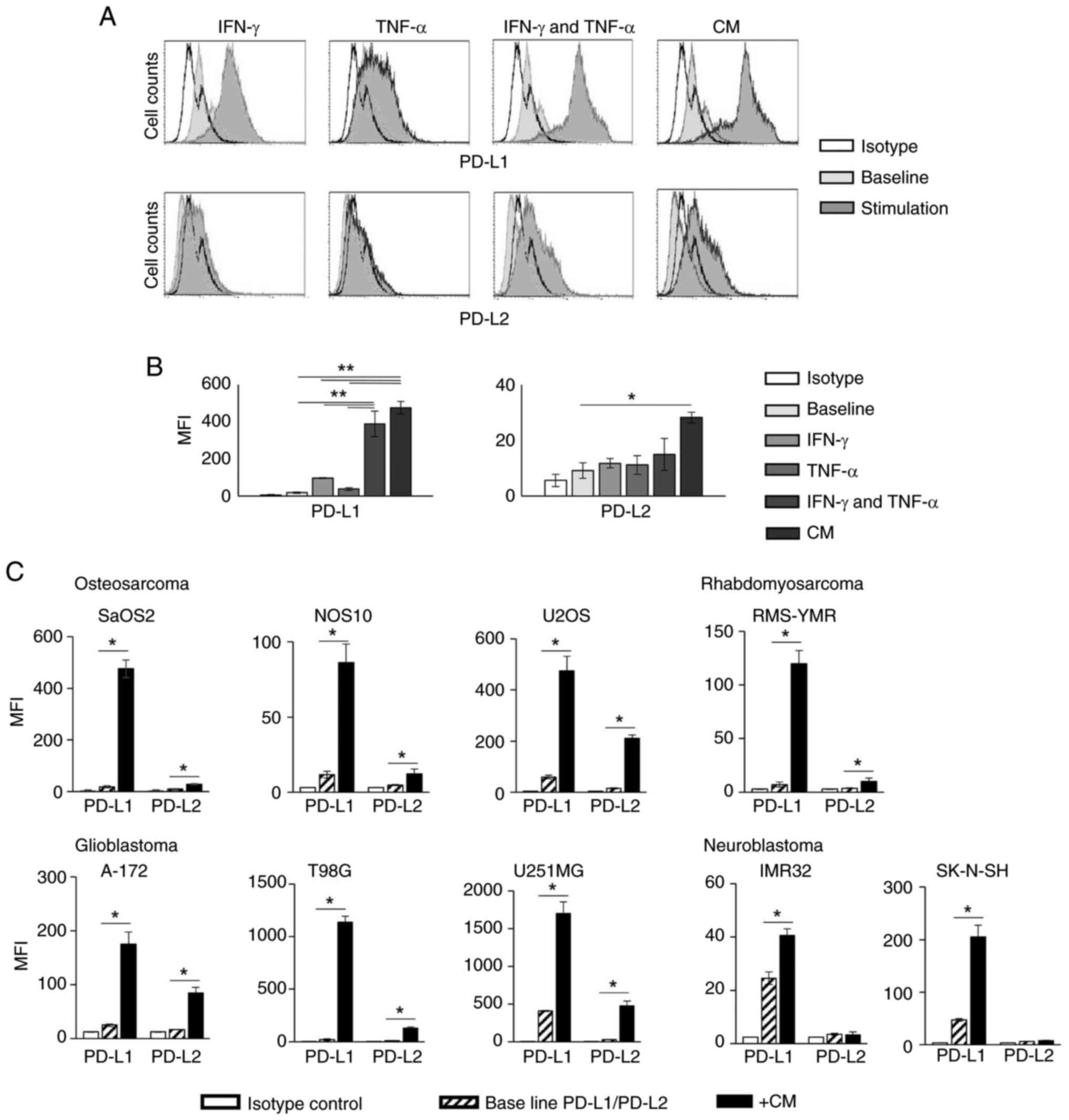
Expression of (PD-1) ligands in
pediatric tumor cell lines. (A) Histogram plots showing the
expression of PD-L1 (upper panels) and PD-L2 (lower panels) in
SaOS2 cells with or without treatment with cytokines or CM. (B)
Expression of PD-L1 and PD-L2 in SaOS2 with or without treatment
with cytokines or CM. (C) Expression of PD-L1 and PD-L2 in various
tumor cell lines treated with CM. *P<0.05, **P<0.01. PD-1,
programmed death 1; PD-L, programmed cell death 1 ligand; CM,
conditioned medium; IFN-γ, interferon-γ; TNF-α, tumor necrosis
factor-α; MFI, mean fluorescence intensity.

Figure 2

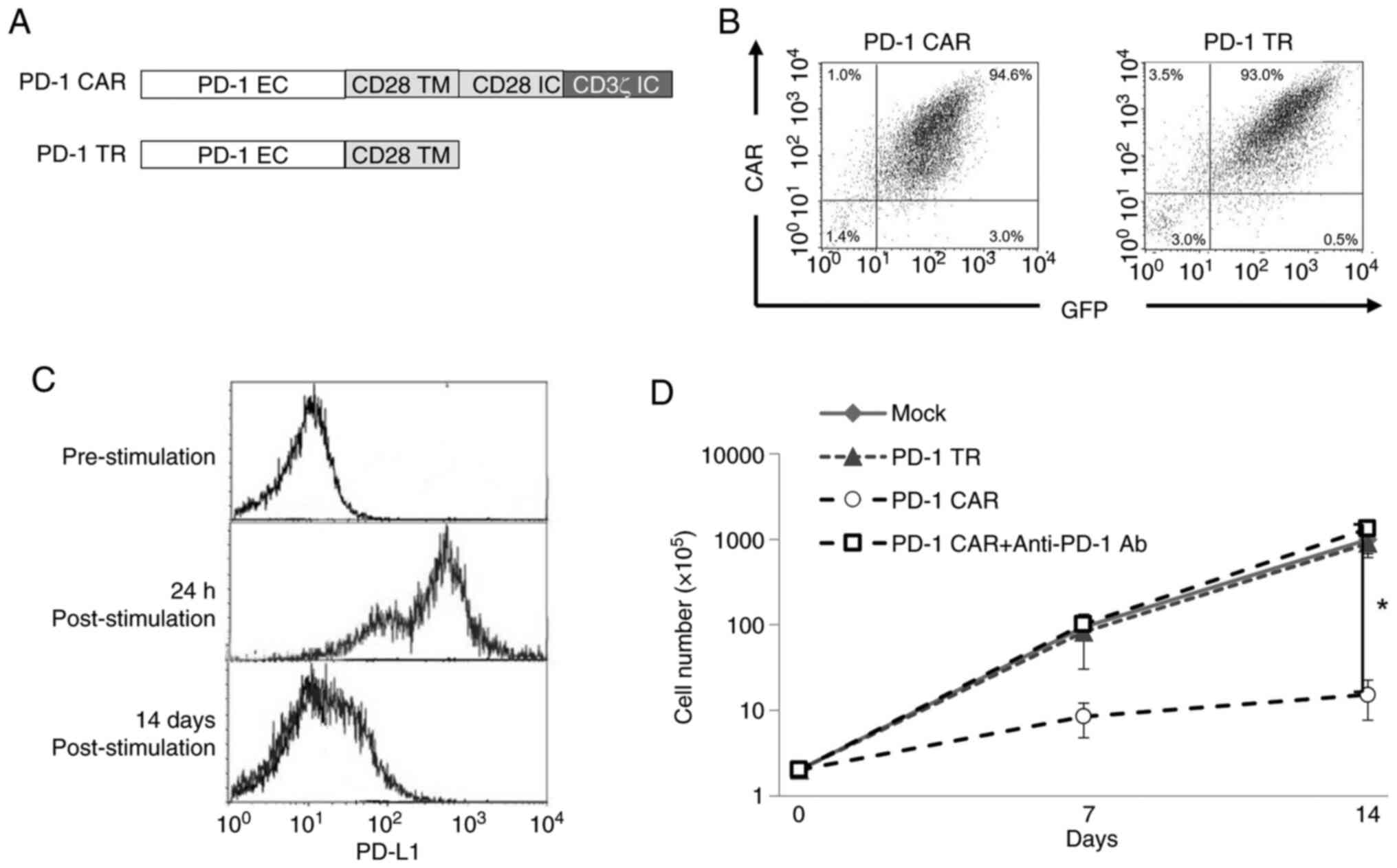
Generation of PD-1 CAR-T cells. (A)
Gene constructs of PD-1 CAR. PD-1 TR represents a chimeric receptor
lacking signaling domain to serve as a non-signaling control
receptor. (B) Cell surface expression of PD-1 CAR and PD-1 TR in
retrovirally transduced T cells. (C) Expression of programmed cell
death 1 ligand 1 (PD-L1) in T cells before and after activation
with CD3/CD28 beads. PD-L1 was not expressed before activation;
however, expression was significantly upregulated 24 h after T cell
activation and declined 14 days. (D) Absolute cell counts of CAR-T
cells in the expansion culture. PD-1 CAR-T cells exhibited
significantly poorer growth compared with mock-transduced T cells
or PD-1 TR T cells that proliferated exponentially. By adding the
anti-PD-1 Ab nivolumab to the culture during the first week, we
were able to produce PD-1 CAR T cells with growth rates comparable
to mock or PD-1 TR control T cells. *P<0.05 vs. PD-1, programmed
death 1; CAR, chimeric antigen receptor; PD-1 TR, truncated PD-1
CAR; Ab, antibody; EC, extracellular domain; TM, transmembrane
domain; IC, intracellular signaling domain; GFP, green fluorescent
protein.

Figure 3

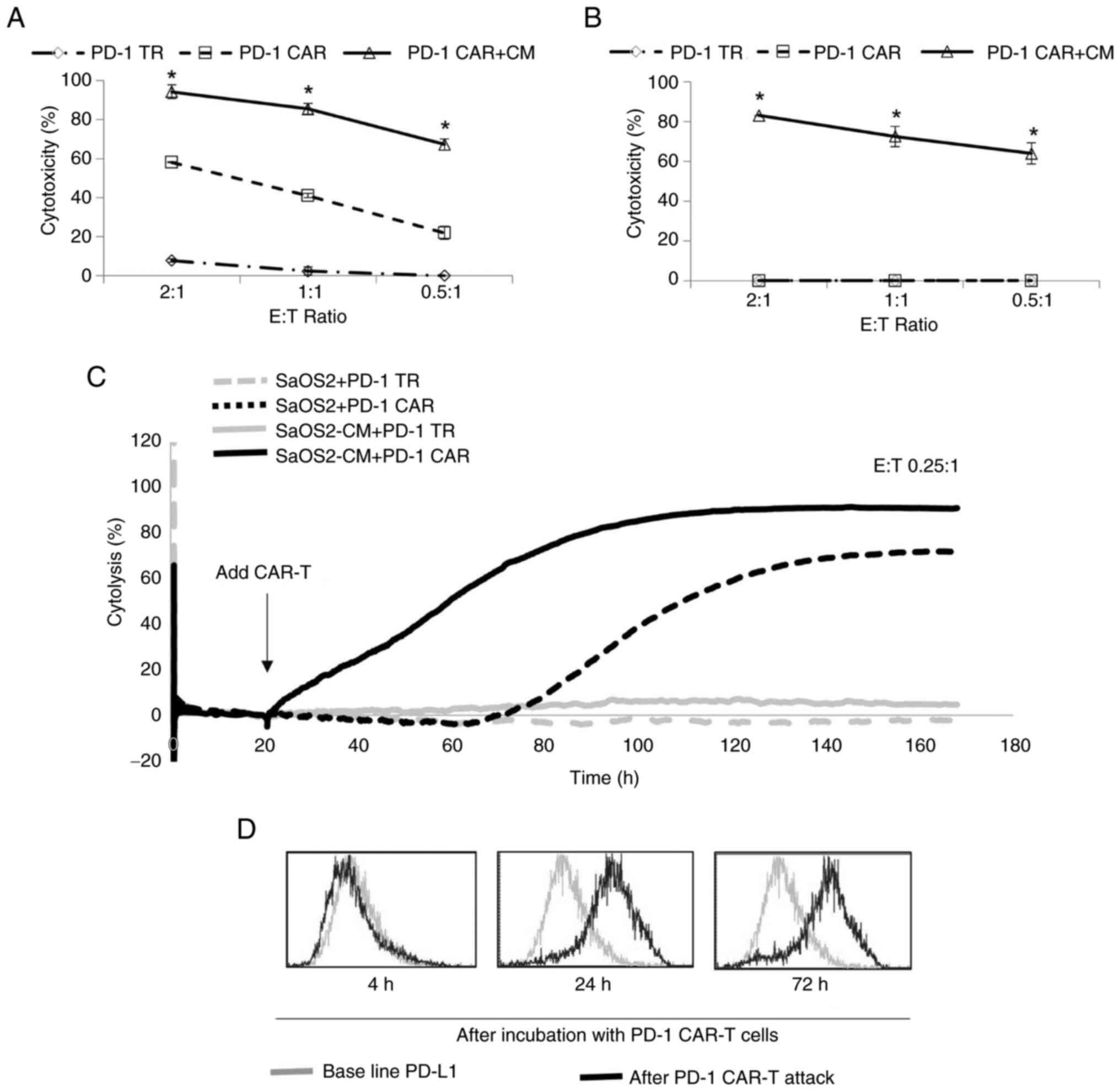
Cytotoxic effects of PD-1 CAR-T cells
against tumor cell lines (A) 4-h cytotoxicity of PD-1 CAR-T cells
against osteosarcoma cell line U2OS with modest expression of PD-1
ligands, with or without pretreatment with CM. (B) 4-h cytotoxicity
of PD-1 CAR-T cells against osteosarcoma cell line SaOS2 that does
not express PD-1 ligands, with or without pretreatment with CM. (C)
Real-time monitoring of SaOS2 cytolysis. SaOS2 were incubated with
PD-1 CAR-T at a low E:T ratio (E:T=0.25:1). SaOS2 cells were
compared with SaOS2 cells with pretreatment with CM (SaOS2-CM). (D)
Time series of histogram plots of PD-L1 expression in SaOS2 by flow
cytometry. After co-culture with PD-1 CAR-T cells, PD-L1 expression
of residual SaOS2 was gradually upregulated. *P<0.05 vs. PD-1
CAR. PD-1, programmed death 1; CAR, chimeric antigen receptor; CM,
conditioned medium; E:T, effector-to-target; PD-L1, programmed cell
death 1 ligand 1; PD-1 TR, truncated PD-1 CAR.

Figure 4

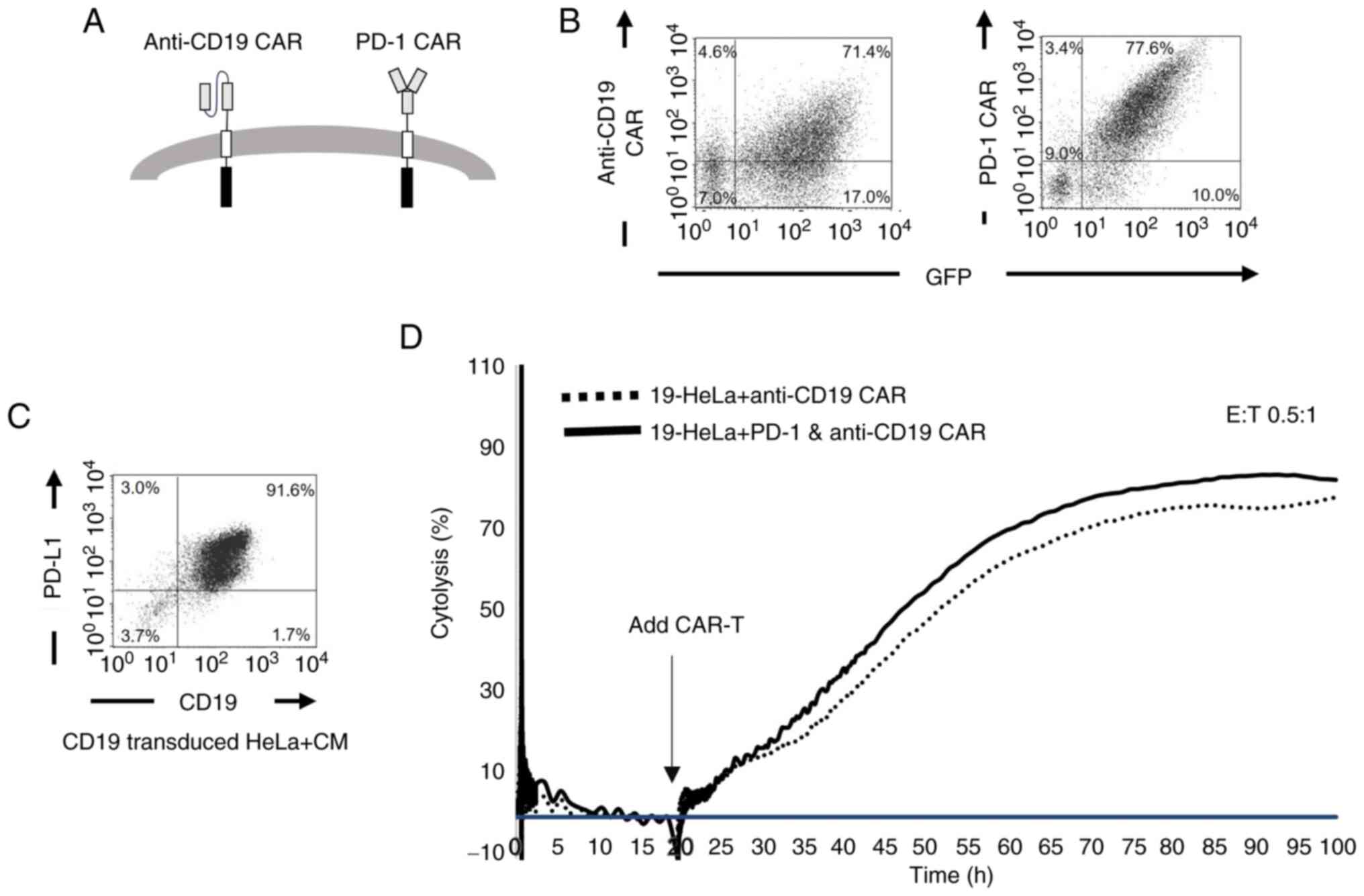
Dual targeting CAR-T cells. (A) The
proposed scheme for dual-targeting CAR. PD-1 CAR and anti-CD19 CAR
were transduced in the same T cells. (B) Surface expression of
anti-CD19 CAR and PD-1 CAR in transduced T cells. T cells showed
strong expression of both PD-1 CAR and anti-CD19 CAR. (C) Surface
expression of CD19 and PD-L1 in HeLa cells retrovirally transduced
with CD19 gene (19-HeLa). 19-Hela cells stimulated with CM
expressed both CD19 and PD-L1. (D) Long-term cytotoxicity of
dual-targeting CAR-T cells against 19-HeLa with pretreatment with
CM. Anti-CD19 CAR-T cells were used as control. PD-1, programmed
death 1; CAR, chimeric antigen receptor; CM, conditioned medium;
PD-L1, programmed cell death 1 ligand 1; GFP, green fluorescent
protein; E:T, effector-to-target.

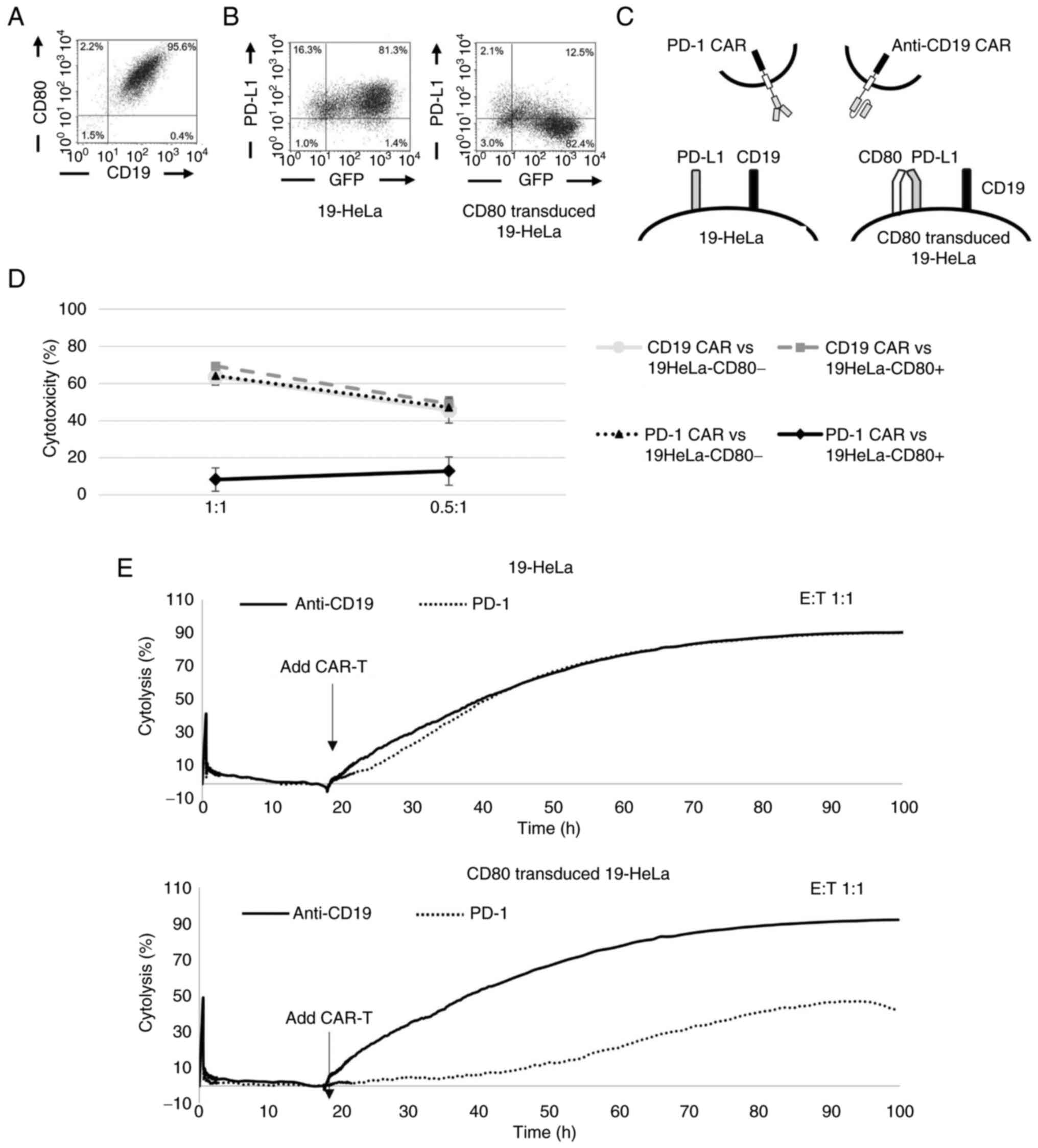
Figure 5

CD80 inhibits PD-1 CAR binding to
PD-L1 and attenuates cytotoxicity. (A) Surface expression of CD80
in 19-HeLa cells after transduction of CD80. (B) Surface expression
of PD-L1 after treatment with CM in 19-HeLa cells and
CD80-transduced 19-HeLa cells. Anti-PD-L1 antibody binding was
modestly attenuated in CD80-expressing 19-HeLa cells. (C) Schematic
diagram of the experiment. Cytotoxicity of anti-CD19 CAR-T cells or
PD-1 CAR-T cells against CM-pretreated, CD80-transduced 19-HeLa
(that simultaneously expresses CD80, CD19, and PD-L1) were
evaluated. (D) Cytotoxic effects of PD-1 CAR-T cells against
CM-pretreated 19-HeLa with or without CD80 overexpression. Cells
were cocultured for 24 h. (E) Long-term cytotoxicity of PD-1 CAR-T
cells and anti-CD19 CAR-T cells against CM-pretreated 19-HeLa cells
with or without CD80 overexpression (lower and upper panels). PD-1,
programmed death 1; CAR, chimeric antigen receptor; CM, conditioned
medium; PD-L1, programmed cell death 1 ligand 1; GFP, green
fluorescent protein; E:T, effector-to-target.

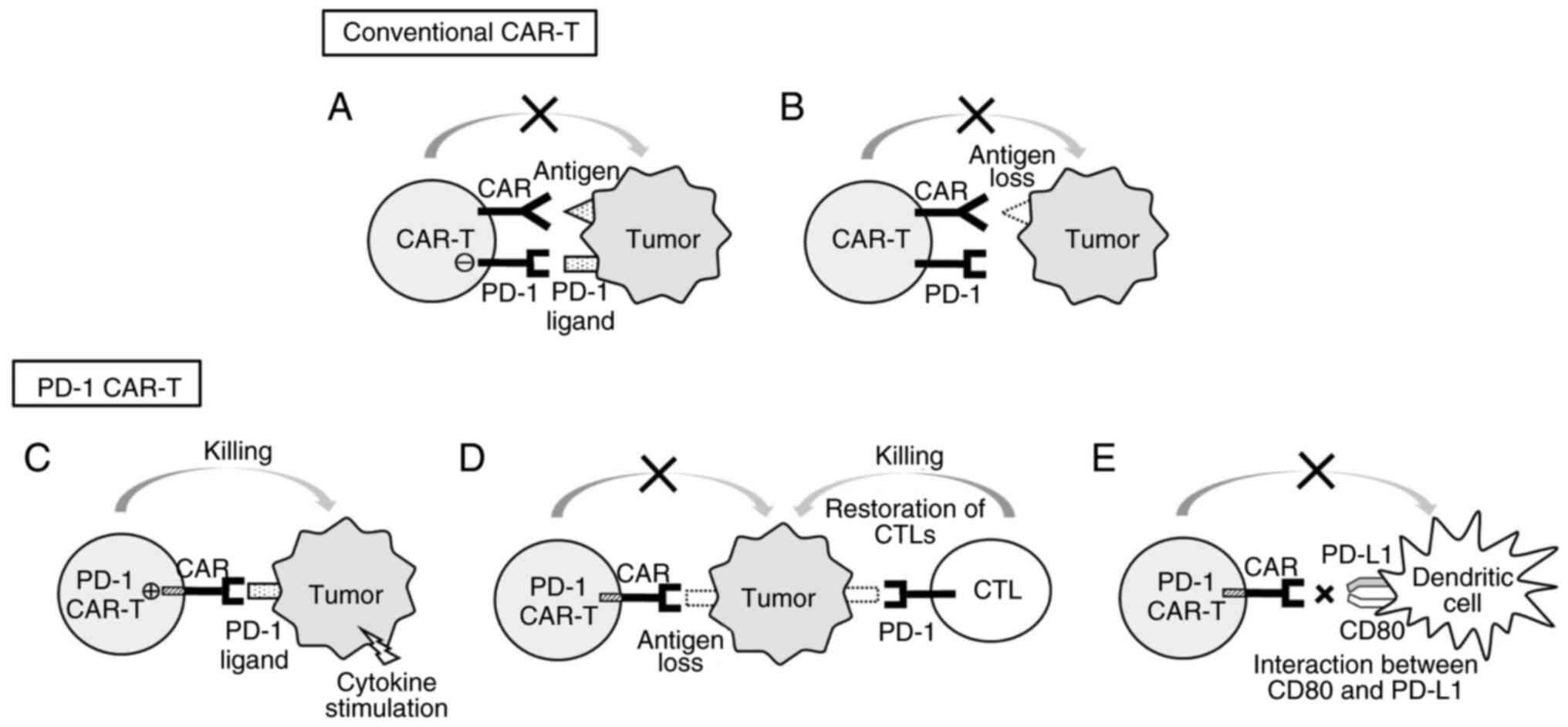
Figure 6

Proposed concept of the study. (A)
Conventional CAR-T cells are inhibited by immune checkpoint
molecules, such as PD-1 ligands. (B) Loss of the target antigen
occurs after exposure to CAR-T cells as one of immune evasion
mechanisms by cancer cells. (C) PD-1 CAR-T cells can target PD-1
ligands. (D) Loss of PD-1 ligands in cancer cells occurring as an
immune evasion mechanism after attack by PD-1 CAR-T cells leads to
the restoration of the T-cell inhibiting microenvironment. (E) PD-1
CAR-T cells using the PD-1 extracellular domain developed in this
study have minimal impact on normal immune cells that express both
CD80 and PD-L1 (e.g. dendritic cells). PD-1, programmed death 1;
CAR, chimeric antigen receptor; PD-L1, programmed cell death 1
ligand 1.
View References

1 

Maude SL, Laetsch TW, Buechner J, Rives S, Boyer M, Bittencourt H, Bader P, Verneris MR, Stefanski HE, Myers GD, et al: Tisagenlecleucel in children and young adults with B-Cell lymphoblastic leukemia. N Engl J Med. 378:439–448. 2018. View Article : Google Scholar : PubMed/NCBI

2 

Neelapu SS, Locke FL, Bartlett NL, Lekakis LJ, Miklos DB, Jacobson CA, Braunschweig I, Oluwole OO, Siddiqi T, Lin Y, et al: Axicabtagene ciloleucel CAR T-cell therapy in refractory large B-cell lymphoma. N Engl J Med. 377:2531–2544. 2017. View Article : Google Scholar : PubMed/NCBI

3 

Rodriguez-Otero P, Ailawadhi S, Arnulf B, Patel K, Cavo M, Nooka AK, Manier S, Callander N, Costa LJ, Vij R, et al: Ide-cel or standard regimens in relapsed and refractory multiple myeloma. N Engl J Med. 388:1002–1014. 2023. View Article : Google Scholar : PubMed/NCBI

4 

Xu X, Sun Q, Liang X, Chen Z, Zhang X, Zhou X, Li M, Tu H, Liu Y, Tu S, et al: Mechanisms of relapse after CD19 CAR T-Cell therapy for acute lymphoblastic leukemia and its prevention and treatment strategies. Front Immunol. 10:26642019. View Article : Google Scholar

5 

Samur MK, Fulciniti M, Aktas Samur A, Bazarbachi AH, Tai YT, Prabhala R, Alonso A, Sperling AS, Campbell T, Petrocca F, et al: Biallelic loss of BCMA as a resistance mechanism to CAR T cell therapy in a patient with multiple myeloma. Nat Commun. 12:8682021. View Article : Google Scholar : PubMed/NCBI

6 

Haneen S, Ira LK, Hao W, Constance M, Bonnie Y, Cindy D, Julie DZ, Roger G, Maryalice S, Elaine SJ, et al: Sequential loss of tumor surface antigens following chimeric antigen receptor T-cell therapies in diffuse large B-cell lymphoma. Haematologica. 103:e2152018. View Article : Google Scholar

7 

O'Rourke DM, Nasrallah MP, Desai A, Melenhorst JJ, Mansfield K, Morrissette JJD, Martinez-Lage M, Brem S, Maloney E, Shen A, et al: A single dose of peripherally infused EGFRvIII-directed CAR T cells mediates antigen loss and induces adaptive resistance in patients with recurrent glioblastoma. Sci Transl Med. 9:eaaa09842017. View Article : Google Scholar

8 

Secondino S, Canino C, Alaimo D, Muzzana M, Galli G, Borgetto S, Basso S, Bagnarino J, Pulvirenti C, Comoli P, et al: Clinical trials of cellular therapies in solid tumors. Cancers (Basel). 15:36672023. View Article : Google Scholar : PubMed/NCBI

9 

Keir ME, Butte MJ, Freeman GJ and Sharpe AH: PD-1 and its ligands in tolerance and immunity. Annu Rev Immunol. 26:677–704. 2008. View Article : Google Scholar

10 

Pardoll DM: The blockade of immune checkpoints in cancer immunotherapy. Nat Rev Cancer. 12:252–264. 2012. View Article : Google Scholar : PubMed/NCBI

11 

Afreen S and Dermime S: The immunoinhibitory B7-H1 molecule as a potential target in cancer: Killing many birds with one stone. Hematol Oncol Stem Cell Ther. 7:1–17. 2014. View Article : Google Scholar : PubMed/NCBI

12 

Brahmer J, Reckamp KL, Baas P, Crinò L, Eberhardt WE, Poddubskaya E, Antonia S, Pluzanski A, Vokes EE, Holgado E, et al: Nivolumab versus docetaxel in advanced squamous-cell non-small-cell lung cancer. N Engl J Med. 373:123–135. 2015. View Article : Google Scholar : PubMed/NCBI

13 

Robert C, Schachter J, Long GV, Arance A, Grob JJ, Mortier L, Daud A, Carlino MS, McNeil C, Lotem M, et al: Pembrolizumab versus ipilimumab in advanced melanoma. N Engl J Med. 372:2521–2532. 2015. View Article : Google Scholar : PubMed/NCBI

14 

John LB, Devaud C, Duong CP, Yong CS, Beavis PA, Haynes NM, Chow MT, Smyth MJ, Kershaw MH and Darcy PK: Anti-PD-1 antibody therapy potently enhances the eradication of established tumors by gene-modified T cells. Clin Cancer Res. 19:5636–5646. 2013. View Article : Google Scholar : PubMed/NCBI

15 

Li S, Siriwon N, Zhang X, Yang S, Jin T, He F, Kim YJ, Mac J, Lu Z, Wang S, et al: Enhanced cancer immunotherapy by chimeric antigen Receptor-modified T cells engineered to secrete checkpoint inhibitors. Clin Cancer Res. 23:6982–6992. 2017. View Article : Google Scholar : PubMed/NCBI

16 

Davies JS, Karimipour F, Zhang L, Nagarsheth N, Norberg S, Serna C, Strauss J, Chiou S, Gulley JL and Hinrichs CS: Non-synergy of PD-1 blockade with T-cell therapy in solid tumors. J Immunother Cancer. 10:e0049062022. View Article : Google Scholar : PubMed/NCBI

17 

Adusumilli PS, Zauderer MG, Rivière I, Solomon SB, Rusch VW, O'Cearbhaill RE, Zhu A, Cheema W, Chintala NK, Halton E, et al: A phase I trial of regional mesothelin-targeted CAR T-cell therapy in patients with malignant pleural disease, in combination with the anti-PD-1 agent pembrolizumab. Cancer Discov. 11:2748–2763. 2021. View Article : Google Scholar : PubMed/NCBI

18 

Chong EA, Alanio C, Svoboda J, Nasta SD, Landsburg DJ, Lacey SF, Ruella M, Bhattacharyya S, Wherry EJ and Schuster SJ: Pembrolizumab for B-cell lymphomas relapsing after or refractory to CD19-directed CAR T-cell therapy. Blood. 139:1026–1038. 2022. View Article : Google Scholar : PubMed/NCBI

19 

Aoki T, Hino M, Koh K, Kyushiki M, Kishimoto H, Arakawa Y, Hanada R, Kawashima H, Kurihara J, Shimojo N, et al: Low frequency of programmed death ligand 1 expression in pediatric cancers. Pediatr Blood Cancer. 63:1461–1464. 2016. View Article : Google Scholar : PubMed/NCBI

20 

Davis KL, Fox E, Merchant MS, Reid JM, Kudgus RA, Liu X, Minard CG, Voss S, Berg SL, Weigel BJ and Mackall CL: Nivolumab in children and young adults with relapsed or refractory solid tumours or lymphoma (ADVL1412): A multicentre, open-label, single-arm, phase 1–2 trial. Lancet Oncol. 21:541–550. 2020. View Article : Google Scholar

21 

Geoerger B, Kang HJ, Yalon-Oren M, Marshall LV, Vezina C, Pappo A, Laetsch TW, Petrilli AS, Ebinger M, Toporski J, et al: Pembrolizumab in paediatric patients with advanced melanoma or a PD-L1-positive, advanced, relapsed, or refractory solid tumour or lymphoma (KEYNOTE-051): Interim analysis of an open-label, single-arm, phase 1–2 trial. Lancet Oncol. 21:121–133. 2020. View Article : Google Scholar

22 

Cherkassky L, Morello A, Villena-Vargas J, Feng Y, Dimitrov DS, Jones DR, Sadelain M and Adusumilli PS: Human CAR T cells with cell-intrinsic PD-1 checkpoint blockade resist tumor-mediated inhibition. J Clin Invest. 126:3130–3144. 2016. View Article : Google Scholar

23 

Lynch A, Hawk W, Nylen E, Ober S, Autin P and Barber A: Adoptive transfer of murine T cells expressing a chimeric-PD1-Dap10 receptor as an immunotherapy for lymphoma. Immunology. 152:472–483. 472–483. 2017. View Article : Google Scholar : PubMed/NCBI

24 

Li D, English H, Hong J, Liang T, Merlino G, Day CP and Ho M: A novel PD-L1-targeted shark VNAR single-domain-based CAR-T cell strategy for treating breast cancer and liver cancer. Mol Ther Oncolytics. 24:849–863. 2022. View Article : Google Scholar : PubMed/NCBI

25 

Imai C, Mihara K, Andreansky M, Nicholson IC, Pui CH, Geiger TL and Campana D: Chimeric receptors with 4-1BB signaling capacity provoke potent cytotoxicity against acute lymphoblastic leukemia. Leukemia. 18:676–684. 2004. View Article : Google Scholar

26 

Mihara K, Yanagihara K, Takigahira M, Kitanaka A, Imai C, Bhattacharyya J, Kubo T, Takei Y, Yasunaga S, Takihara Y, et al: Synergistic and persistent effect of T-cell immunotherapy with anti-CD19 or anti-CD38 chimeric receptor in conjunction with rituximab on B-cell non-Hodgkin lymphoma. Br J Haematol. 151:37–46. 2010. View Article : Google Scholar

27 

Kanda Y: Investigation of the freely available easy-to-use software ‘EZR’ for medical statistics. Bone Marrow Transplant. 48:452–458. 2013. View Article : Google Scholar

28 

Sugiura D, Maruhashi T, Okazaki IM, Shimizu K, Maeda TK, Takemoto T and Okazaki T: Restriction of PD-1 function by cis-PD-L1/CD80 interactions is required for optimal T cell responses. Science. 364:558–566. 2019. View Article : Google Scholar : PubMed/NCBI

29 

Shen JK, Cote GM, Choy E, Yang P, Harmon D, Schwab J, Nielsen GP, Chebib I, Ferrone S, Wang X, et al: Programmed cell death ligand 1 expression in osteosarcoma. Cancer Immunol Res. 2:690–698. 2014. View Article : Google Scholar : PubMed/NCBI

30 

Alessandra D, Fabio P, Mariella DC, Maria VC, Fabio M, Vito P, Daniel O, Francesca B, Franco L, Aurora C, et al: PD-L1 expression in metastatic neuroblastoma as an additional mechanism for limiting immune surveillance. Oncoimmunology. 5:e1064578302020.

31 

Spiegel JY, Patel S, Muffly L, Hossain NM, Oak J, Baird JH, Frank MJ, Shiraz P, Sahaf B, Craig J, et al: CAR T cells with dual targeting of CD19 and CD22 in adult patients with recurrent or refractory B cell malignancies: A phase 1 trial. Nat Med. 27:1419–1431. 2021. View Article : Google Scholar : PubMed/NCBI

32 

Li W, Ding L, Shi W, Wan X, Yang X, Yang J, Wang T, Song L, Wang X, Ma Y, et al: Safety and efficacy of co-administration of CD19 and CD22 CAR-T cells in children with B-ALL relapse after CD19 CAR-T therapy. J Transl Med. 21:2132023. View Article : Google Scholar : PubMed/NCBI

33 

Wang T, Tang Y, Cai J, Wan X, Hu S, Lu X, Xie Z, Qiao X, Jiang H, Shao J, et al: Coadministration of CD19- and CD22-directed chimeric antigen receptor T-Cell therapy in childhood B-cell acute lymphoblastic leukemia: A Single-arm, multicenter, phase II trial. J Clin Oncol. 41:1670–1683. 2023. View Article : Google Scholar

34 

Rafiq S, Yeku OO, Jackson HJ, Purdon TJ, van Leeuwen DG, Drakes DJ, Song M, Miele MM, Li Z, Wang P, et al: Targeted delivery of a PD-1-blocking scFv by CAR-T cells enhances anti-tumor efficacy in vivo. Nat Biotechnol. 36:847–856. 2018. View Article : Google Scholar

35 

Liu X, Ranganathan R, Jiang S, Fang C, Sun J, Kim S, Newick K, Lo A, June CH, Zhao Y, et al: A chimeric Switch-receptor targeting PD1 augments the efficacy of Second-generation CAR T cells in advanced solid tumors. Cancer Res. 76:1578–1590. 2016. View Article : Google Scholar : PubMed/NCBI

36 

Lu C, Guo C, Chen H, Zhang H, Zhi L, Lv T, Li M, Niu Z, Lu P and Zhu W: A novel chimeric PD1-NKG2D-41BB receptor enhances antitumor activity of NK92 cells against human lung cancer H1299 cells by triggering pyroptosis. Mol Immunol. 122:200–206. 2020. View Article : Google Scholar

37 

Fabian KP, Padget MR, Donahue RN, Solocinski K, Robbins Y, Allen CT, Lee JH, Rabizadeh S, Soon-Shiong P, Schlom J and Hodge JW: PD-L1 targeting high-affinity NK (t-haNK) cells induce direct antitumor effects and target suppressive MDSC populations. J Immunother Cancer. 8:e0004502020. View Article : Google Scholar : PubMed/NCBI

38 

Liu WN, So WY, Harden SL, Fong SY, Wong MXY, Tan WWS, Tan SY, Ong JKL, Rajarethinam R, Liu M, et al: Successful targeting of PD-1/PD-L1 with chimeric antigen receptor-natural killer cells and nivolumab in a humanized mouse cancer model. Sci Adv. 8:eadd11872022. View Article : Google Scholar : PubMed/NCBI

39 

Yan L, Martha EG, Yaqing Q, Andrea OL, Jesus ES, Mieu MB, Maria J, Tanya H, Shuhua L, Hong Q, et al: Solid cancer-directed CAR T cell therapy that attacks both tumor and immunosuppressive cells via targeting PD-L1. Mol Ther Oncol. 32:2008912024. View Article : Google Scholar

Related Articles

  • Abstract
  • View
  • Download
  • Twitter
Copy and paste a formatted citation
Spandidos Publications style
Shin C, Imamura M, Kasahara Y, Suzuki Y, Baba M, Kubo N, Hosokai R, Iwabuchi H, Murayama Y, Kawashima H, Kawashima H, et al: Chimeric PD‑1 receptor redirects primary T cells against childhood solid tumors but not to PD‑1 ligand‑positive CD80‑coexpressing cells. Mol Med Rep 32: 243, 2025.
APA
Shin, C., Imamura, M., Kasahara, Y., Suzuki, Y., Baba, M., Kubo, N. ... Imai, C. (2025). Chimeric PD‑1 receptor redirects primary T cells against childhood solid tumors but not to PD‑1 ligand‑positive CD80‑coexpressing cells. Molecular Medicine Reports, 32, 243. https://doi.org/10.3892/mmr.2025.13608
MLA
Shin, C., Imamura, M., Kasahara, Y., Suzuki, Y., Baba, M., Kubo, N., Hosokai, R., Iwabuchi, H., Murayama, Y., Kawashima, H., Ogose, A., Mihara, K., Saitoh, A., Imai, C."Chimeric PD‑1 receptor redirects primary T cells against childhood solid tumors but not to PD‑1 ligand‑positive CD80‑coexpressing cells". Molecular Medicine Reports 32.3 (2025): 243.
Chicago
Shin, C., Imamura, M., Kasahara, Y., Suzuki, Y., Baba, M., Kubo, N., Hosokai, R., Iwabuchi, H., Murayama, Y., Kawashima, H., Ogose, A., Mihara, K., Saitoh, A., Imai, C."Chimeric PD‑1 receptor redirects primary T cells against childhood solid tumors but not to PD‑1 ligand‑positive CD80‑coexpressing cells". Molecular Medicine Reports 32, no. 3 (2025): 243. https://doi.org/10.3892/mmr.2025.13608
Copy and paste a formatted citation
x
Spandidos Publications style
Shin C, Imamura M, Kasahara Y, Suzuki Y, Baba M, Kubo N, Hosokai R, Iwabuchi H, Murayama Y, Kawashima H, Kawashima H, et al: Chimeric PD‑1 receptor redirects primary T cells against childhood solid tumors but not to PD‑1 ligand‑positive CD80‑coexpressing cells. Mol Med Rep 32: 243, 2025.
APA
Shin, C., Imamura, M., Kasahara, Y., Suzuki, Y., Baba, M., Kubo, N. ... Imai, C. (2025). Chimeric PD‑1 receptor redirects primary T cells against childhood solid tumors but not to PD‑1 ligand‑positive CD80‑coexpressing cells. Molecular Medicine Reports, 32, 243. https://doi.org/10.3892/mmr.2025.13608
MLA
Shin, C., Imamura, M., Kasahara, Y., Suzuki, Y., Baba, M., Kubo, N., Hosokai, R., Iwabuchi, H., Murayama, Y., Kawashima, H., Ogose, A., Mihara, K., Saitoh, A., Imai, C."Chimeric PD‑1 receptor redirects primary T cells against childhood solid tumors but not to PD‑1 ligand‑positive CD80‑coexpressing cells". Molecular Medicine Reports 32.3 (2025): 243.
Chicago
Shin, C., Imamura, M., Kasahara, Y., Suzuki, Y., Baba, M., Kubo, N., Hosokai, R., Iwabuchi, H., Murayama, Y., Kawashima, H., Ogose, A., Mihara, K., Saitoh, A., Imai, C."Chimeric PD‑1 receptor redirects primary T cells against childhood solid tumors but not to PD‑1 ligand‑positive CD80‑coexpressing cells". Molecular Medicine Reports 32, no. 3 (2025): 243. https://doi.org/10.3892/mmr.2025.13608
Follow us
  • Twitter
  • LinkedIn
  • Facebook
About
  • Spandidos Publications
  • Careers
  • Cookie Policy
  • Privacy Policy
How can we help?
  • Help
  • Live Chat
  • Contact
  • Email to our Support Team