Spandidos Publications Logo
  • About
    • About Spandidos
    • Aims and Scopes
    • Abstracting and Indexing
    • Editorial Policies
    • Reprints and Permissions
    • Job Opportunities
    • Terms and Conditions
    • Contact
  • Journals
    • All Journals
    • Oncology Letters
      • Oncology Letters
      • Information for Authors
      • Editorial Policies
      • Editorial Board
      • Aims and Scope
      • Abstracting and Indexing
      • Bibliographic Information
      • Archive
    • International Journal of Oncology
      • International Journal of Oncology
      • Information for Authors
      • Editorial Policies
      • Editorial Board
      • Aims and Scope
      • Abstracting and Indexing
      • Bibliographic Information
      • Archive
    • Molecular and Clinical Oncology
      • Molecular and Clinical Oncology
      • Information for Authors
      • Editorial Policies
      • Editorial Board
      • Aims and Scope
      • Abstracting and Indexing
      • Bibliographic Information
      • Archive
    • Experimental and Therapeutic Medicine
      • Experimental and Therapeutic Medicine
      • Information for Authors
      • Editorial Policies
      • Editorial Board
      • Aims and Scope
      • Abstracting and Indexing
      • Bibliographic Information
      • Archive
    • International Journal of Molecular Medicine
      • International Journal of Molecular Medicine
      • Information for Authors
      • Editorial Policies
      • Editorial Board
      • Aims and Scope
      • Abstracting and Indexing
      • Bibliographic Information
      • Archive
    • Biomedical Reports
      • Biomedical Reports
      • Information for Authors
      • Editorial Policies
      • Editorial Board
      • Aims and Scope
      • Abstracting and Indexing
      • Bibliographic Information
      • Archive
    • Oncology Reports
      • Oncology Reports
      • Information for Authors
      • Editorial Policies
      • Editorial Board
      • Aims and Scope
      • Abstracting and Indexing
      • Bibliographic Information
      • Archive
    • Molecular Medicine Reports
      • Molecular Medicine Reports
      • Information for Authors
      • Editorial Policies
      • Editorial Board
      • Aims and Scope
      • Abstracting and Indexing
      • Bibliographic Information
      • Archive
    • World Academy of Sciences Journal
      • World Academy of Sciences Journal
      • Information for Authors
      • Editorial Policies
      • Editorial Board
      • Aims and Scope
      • Abstracting and Indexing
      • Bibliographic Information
      • Archive
    • International Journal of Functional Nutrition
      • International Journal of Functional Nutrition
      • Information for Authors
      • Editorial Policies
      • Editorial Board
      • Aims and Scope
      • Abstracting and Indexing
      • Bibliographic Information
      • Archive
    • International Journal of Epigenetics
      • International Journal of Epigenetics
      • Information for Authors
      • Editorial Policies
      • Editorial Board
      • Aims and Scope
      • Abstracting and Indexing
      • Bibliographic Information
      • Archive
    • Medicine International
      • Medicine International
      • Information for Authors
      • Editorial Policies
      • Editorial Board
      • Aims and Scope
      • Abstracting and Indexing
      • Bibliographic Information
      • Archive
  • Articles
  • Information
    • Information for Authors
    • Information for Reviewers
    • Information for Librarians
    • Information for Advertisers
    • Conferences
  • Language Editing
Spandidos Publications Logo
  • About
    • About Spandidos
    • Aims and Scopes
    • Abstracting and Indexing
    • Editorial Policies
    • Reprints and Permissions
    • Job Opportunities
    • Terms and Conditions
    • Contact
  • Journals
    • All Journals
    • Biomedical Reports
      • Information for Authors
      • Editorial Policies
      • Editorial Board
      • Aims and Scope
      • Abstracting and Indexing
      • Bibliographic Information
      • Archive
    • Experimental and Therapeutic Medicine
      • Information for Authors
      • Editorial Policies
      • Editorial Board
      • Aims and Scope
      • Abstracting and Indexing
      • Bibliographic Information
      • Archive
    • International Journal of Epigenetics
      • Information for Authors
      • Editorial Policies
      • Editorial Board
      • Aims and Scope
      • Abstracting and Indexing
      • Bibliographic Information
      • Archive
    • International Journal of Functional Nutrition
      • Information for Authors
      • Editorial Policies
      • Editorial Board
      • Aims and Scope
      • Abstracting and Indexing
      • Bibliographic Information
      • Archive
    • International Journal of Molecular Medicine
      • Information for Authors
      • Editorial Policies
      • Editorial Board
      • Aims and Scope
      • Abstracting and Indexing
      • Bibliographic Information
      • Archive
    • International Journal of Oncology
      • Information for Authors
      • Editorial Policies
      • Editorial Board
      • Aims and Scope
      • Abstracting and Indexing
      • Bibliographic Information
      • Archive
    • Medicine International
      • Information for Authors
      • Editorial Policies
      • Editorial Board
      • Aims and Scope
      • Abstracting and Indexing
      • Bibliographic Information
      • Archive
    • Molecular and Clinical Oncology
      • Information for Authors
      • Editorial Policies
      • Editorial Board
      • Aims and Scope
      • Abstracting and Indexing
      • Bibliographic Information
      • Archive
    • Molecular Medicine Reports
      • Information for Authors
      • Editorial Policies
      • Editorial Board
      • Aims and Scope
      • Abstracting and Indexing
      • Bibliographic Information
      • Archive
    • Oncology Letters
      • Information for Authors
      • Editorial Policies
      • Editorial Board
      • Aims and Scope
      • Abstracting and Indexing
      • Bibliographic Information
      • Archive
    • Oncology Reports
      • Information for Authors
      • Editorial Policies
      • Editorial Board
      • Aims and Scope
      • Abstracting and Indexing
      • Bibliographic Information
      • Archive
    • World Academy of Sciences Journal
      • Information for Authors
      • Editorial Policies
      • Editorial Board
      • Aims and Scope
      • Abstracting and Indexing
      • Bibliographic Information
      • Archive
  • Articles
  • Information
    • For Authors
    • For Reviewers
    • For Librarians
    • For Advertisers
    • Conferences
  • Language Editing
Login Register Submit
  • This site uses cookies
  • You can change your cookie settings at any time by following the instructions in our Cookie Policy. To find out more, you may read our Privacy Policy.

    I agree
Search articles by DOI, keyword, author or affiliation
Search
Advanced Search
presentation
Molecular Medicine Reports
Join Editorial Board Propose a Special Issue
Print ISSN: 1791-2997 Online ISSN: 1791-3004
Journal Cover
September-2025 Volume 32 Issue 3

Full Size Image

Sign up for eToc alerts
Recommend to Library

Journals

International Journal of Molecular Medicine

International Journal of Molecular Medicine

International Journal of Molecular Medicine is an international journal devoted to molecular mechanisms of human disease.

International Journal of Oncology

International Journal of Oncology

International Journal of Oncology is an international journal devoted to oncology research and cancer treatment.

Molecular Medicine Reports

Molecular Medicine Reports

Covers molecular medicine topics such as pharmacology, pathology, genetics, neuroscience, infectious diseases, molecular cardiology, and molecular surgery.

Oncology Reports

Oncology Reports

Oncology Reports is an international journal devoted to fundamental and applied research in Oncology.

Experimental and Therapeutic Medicine

Experimental and Therapeutic Medicine

Experimental and Therapeutic Medicine is an international journal devoted to laboratory and clinical medicine.

Oncology Letters

Oncology Letters

Oncology Letters is an international journal devoted to Experimental and Clinical Oncology.

Biomedical Reports

Biomedical Reports

Explores a wide range of biological and medical fields, including pharmacology, genetics, microbiology, neuroscience, and molecular cardiology.

Molecular and Clinical Oncology

Molecular and Clinical Oncology

International journal addressing all aspects of oncology research, from tumorigenesis and oncogenes to chemotherapy and metastasis.

World Academy of Sciences Journal

World Academy of Sciences Journal

Multidisciplinary open-access journal spanning biochemistry, genetics, neuroscience, environmental health, and synthetic biology.

International Journal of Functional Nutrition

International Journal of Functional Nutrition

Open-access journal combining biochemistry, pharmacology, immunology, and genetics to advance health through functional nutrition.

International Journal of Epigenetics

International Journal of Epigenetics

Publishes open-access research on using epigenetics to advance understanding and treatment of human disease.

Medicine International

Medicine International

An International Open Access Journal Devoted to General Medicine.

Journal Cover
September-2025 Volume 32 Issue 3

Full Size Image

Sign up for eToc alerts
Recommend to Library

  • Article
  • Citations
    • Cite This Article
    • Download Citation
    • Create Citation Alert
    • Remove Citation Alert
    • Cited By
  • Similar Articles
    • Related Articles (in Spandidos Publications)
    • Similar Articles (Google Scholar)
    • Similar Articles (PubMed)
  • Download PDF
  • Download XML
  • View XML
Article Open Access

Dexmedetomidine mitigates oxidative stress in H9C2 cardiac myoblasts under a high‑glucose environment via the PI3K/AKT signaling pathway

  • Authors:
    • Yan Qu
    • Wei Xiong
    • Rui Zhou
    • Ning Song
    • Jinqiao Qian
  • View Affiliations / Copyright

    Affiliations: Department of Anesthesiology, First Affiliated Hospital of Kunming Medical University, Kunming, Yunnan 650032, P.R. China
    Copyright: © Qu et al. This is an open access article distributed under the terms of Creative Commons Attribution License.
  • Article Number: 251
    |
    Published online on: July 8, 2025
       https://doi.org/10.3892/mmr.2025.13616
  • Expand metrics +
Metrics: Total Views: 0 (Spandidos Publications: | PMC Statistics: )
Metrics: Total PDF Downloads: 0 (Spandidos Publications: | PMC Statistics: )
Cited By (CrossRef): 0 citations Loading Articles...

This article is mentioned in:


Abstract

Dexmedetomidine (Dex) is a selective α2‑adrenergic receptor agonist used for its sedative effects in anesthesia and critical care. Although Dex exhibits cardioprotective effects, to the best of our knowledge, the mechanisms underlying these effects, particularly in a high‑glucose (HG) environment, remain unclear. Research into the role of Dex in alleviating oxidative stress injury in cardiac myoblasts through the PI3K/AKT signaling pathway may reveal novel cardioprotective mechanisms, enhance the understanding of cell survival and metabolic regulation, and offer potential clinical applications in cardiac surgery and critical care. The aim of the present study was to assess the protective effect and mechanism of Dex preconditioning (DP) against hydrogen peroxide (H2O2)‑induced H9C2 cardiac myoblast injury under HG conditions. H9C2 cardiac myoblasts were either untreated or pretreated with 10 nM Dex and the PI3K inhibitor LY294002 before exposure to H2O2 to induce oxidative cellular damage in the presence of HG culture medium. Cell viability assays were carried out, and apoptosis was evaluated using flow cytometry, TUNEL assays and western blotting. Additionally, the relative levels of oxidative stress indicators, including superoxide dismutase (SOD), catalase (CAT) and malondialdehyde (MDA), were determined. Exposure to H2O2 significantly decreased cell viability and increased apoptosis in H9C2 cardiac myoblasts cultured in HG conditions. Treatment with Dex significantly mitigated H2O2‑induced apoptosis, as evidenced by reduced expression of caspase‑3 and BAX, and increased levels of BCL‑2. In addition, oxidative stress was elevated in the HG + H2O2 group, as indicated by increased levels of the oxidative stress marker MDA, and reduced levels of the antioxidant enzymes SOD and CAT compared with those in the HG group. By contrast, DP in the DP + HG + H2O2 group reduced MDA levels, and increased SOD and CAT levels, indicating improved oxidative stress regulation. Treatment with the PI3K/AKT inhibitor LY294002 in the LY294002 + HG + DP + H2O2 group prevented these effects, further increasing MDA levels, and decreasing SOD and CAT levels compared with the DP + HG + H2O2 group, suggesting that the protective effects of Dex were abrogated by inhibition of the PI3K/AKT pathway. The present study revealed that Dex pretreatment attenuated H9C2 cardiac myoblast injury via the PI3K/AKT signaling pathway under HG conditions. Its protective effects may be achieved by reducing oxidative stress damage to cardiac myoblasts.
View Figures

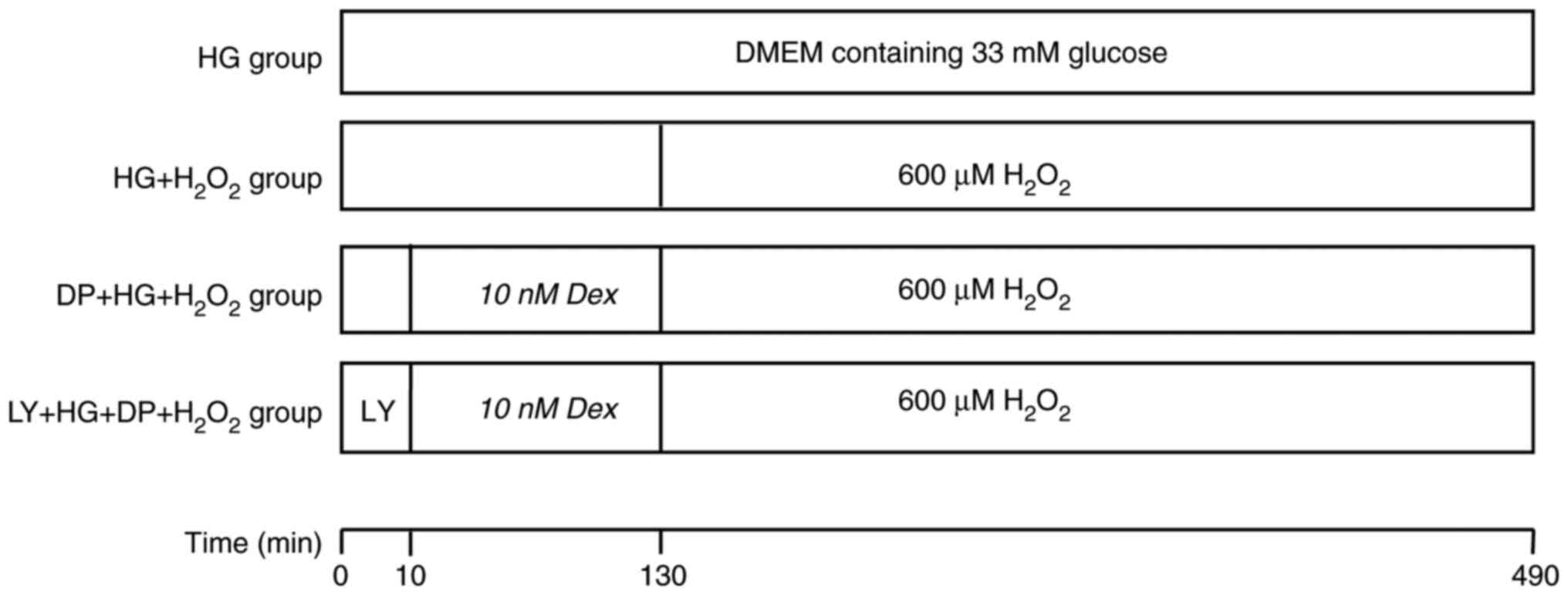
Figure 1

Cell experiment protocol. H9C2 cells
were cultured overnight in plates and divided into the following
four groups (n=5 wells/group): i) HG group: H9C2 cells were
cultured in DMEM containing 33 mM glucose for 490 min; ii) HG +
H2O2 group: H9C2 cells were cultured in DMEM
containing 33 mM glucose for 130 min, then treated with 600 µM
H2O2 for 360 min; iii) DP + HG +
H2O2 group: H9C2 cells were cultured in DMEM
containing 33 mM glucose, pretreated with 10 nM Dex for 120 min and
then treated with 600 µM H2O2 for 360 min;
and iv) LY + HG + DP + H2O2 group: H9C2 cells
were cultured in DMEM containing 33 mM glucose, treated with 10 µM
LY for 10 min, then treated with 10 nM Dex for 120 min and finally
treated with 600 µM H2O2 for 360 min. HG,
high-glucose; Dex, dexmedetomidine; DP, dexmedetomidine
preconditioning; H2O2, hydrogen peroxide; LY,
LY294002.

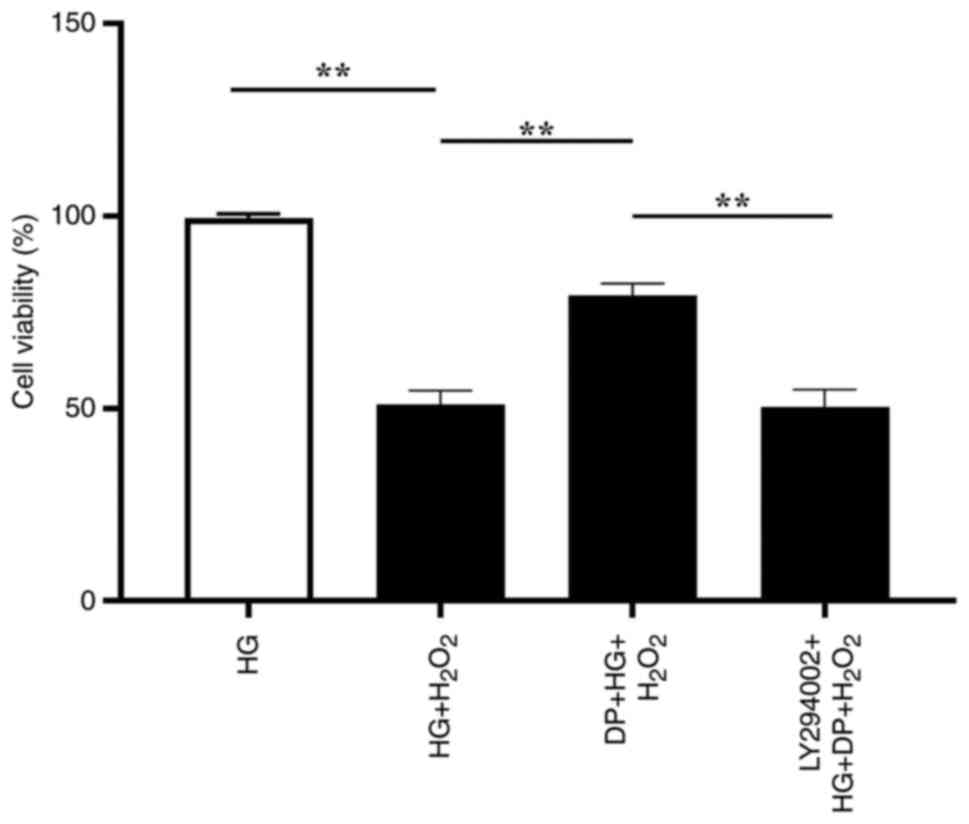
Figure 2

Cell viability was assessed using a
Cell Counting Kit-8 assay. Data are presented as the mean ± SEM;
n=5 per group. **P<0.01. HG, high-glucose; DP, dexmedetomidine
preconditioning; H2O2, hydrogen peroxide.

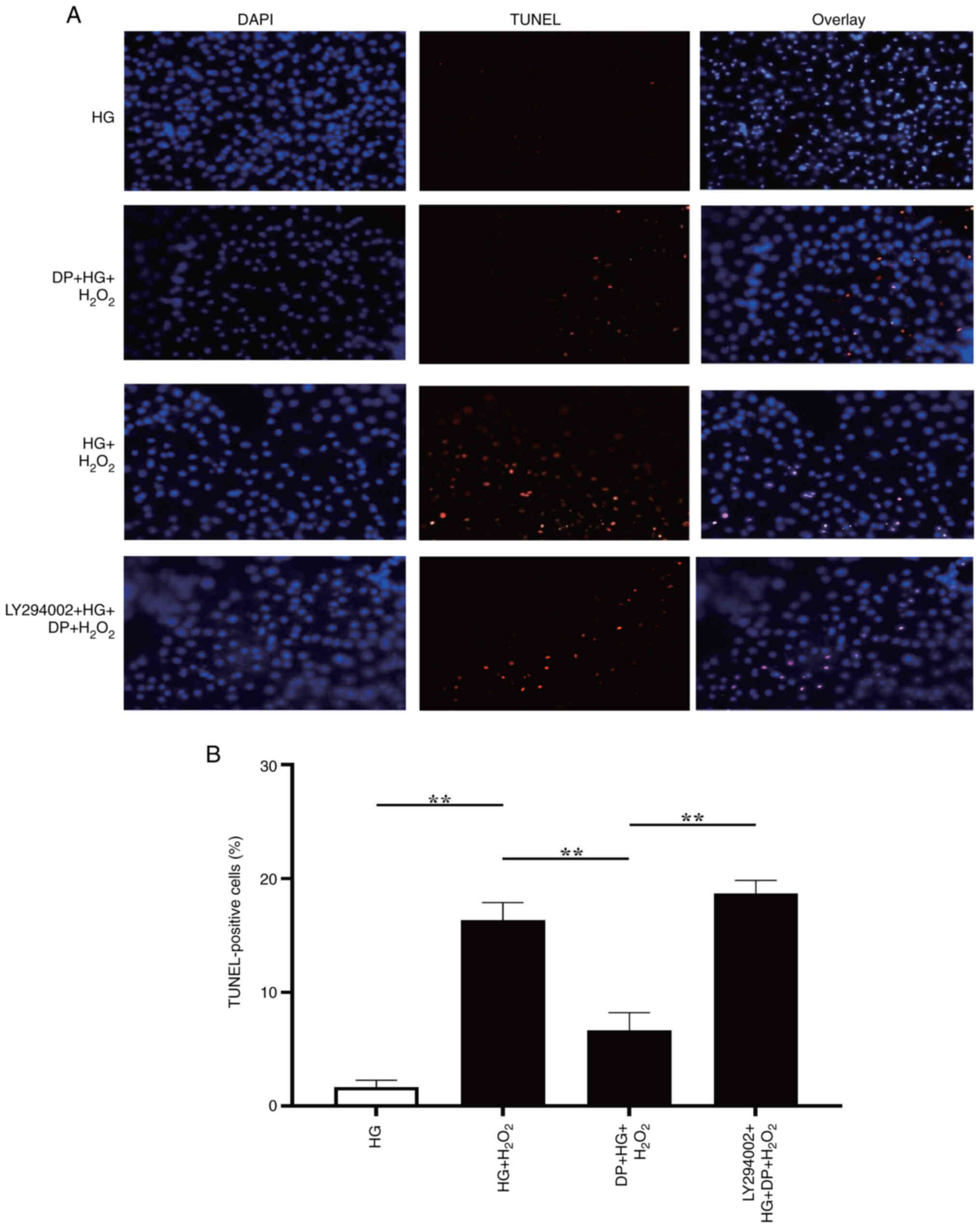
Figure 3

TUNEL staining analysis. (A)
Morphological changes were detected by TUNEL staining
(magnification, ×40). (B) Quantification of TUNEL staining. Data
are presented as the mean ± SEM; n=5 per group. **P<0.01. HG,
high-glucose; DP, dexmedetomidine preconditioning;
H2O2, hydrogen peroxide.

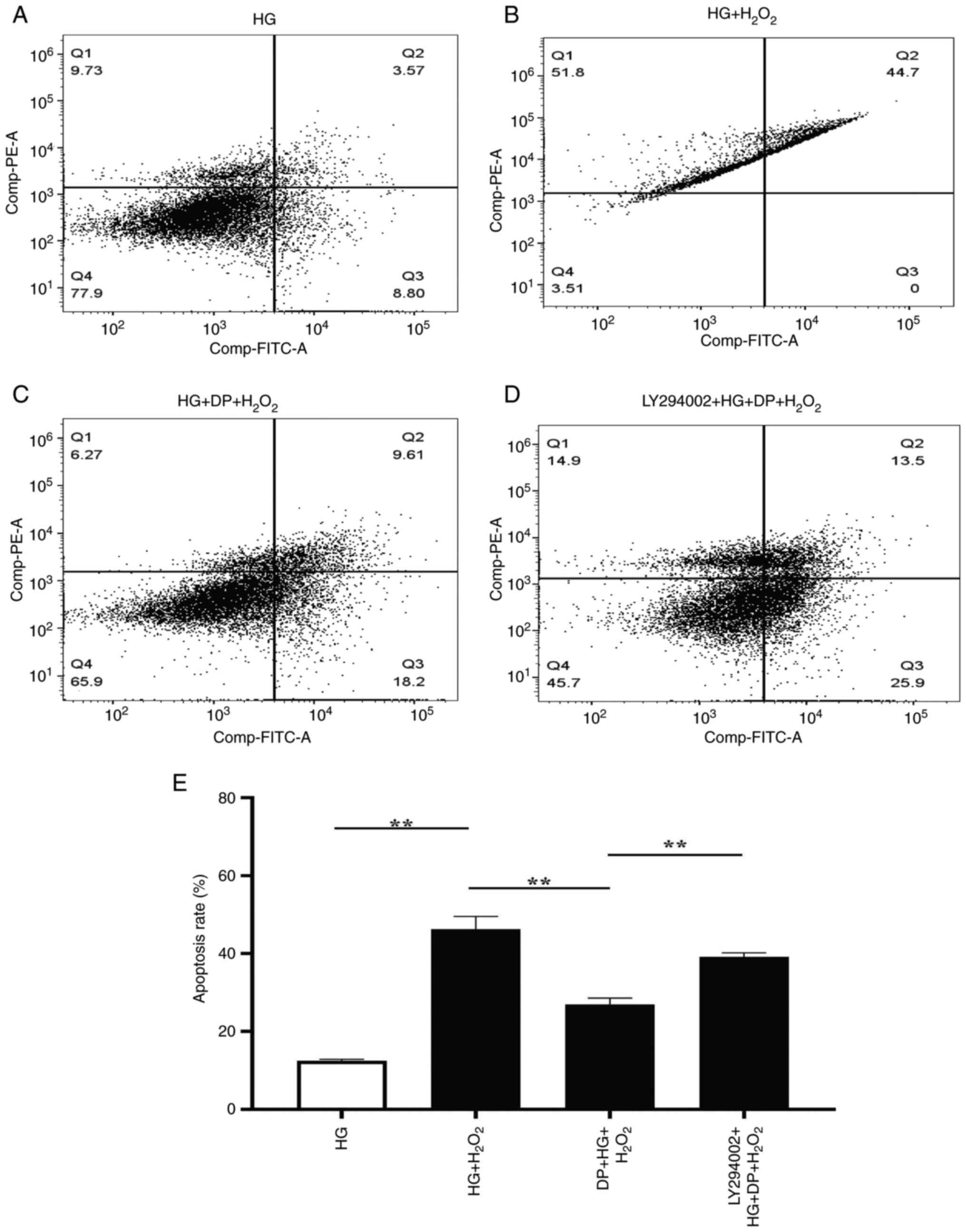
Figure 4

Flow cytometry analysis of apoptosis.
(A) HG group. (B) HG + H2O2 group. (C) DP +
HG + H2O2 group. (D) LY294002 + HG + DP +
H2O2 group. (E) Quantification of H9C2 cell
apoptosis. **P<0.01. Data are presented as the mean ± SEM, n=5
per group. HG, high-glucose; DP, dexmedetomidine preconditioning;
H2O2, hydrogen peroxide.

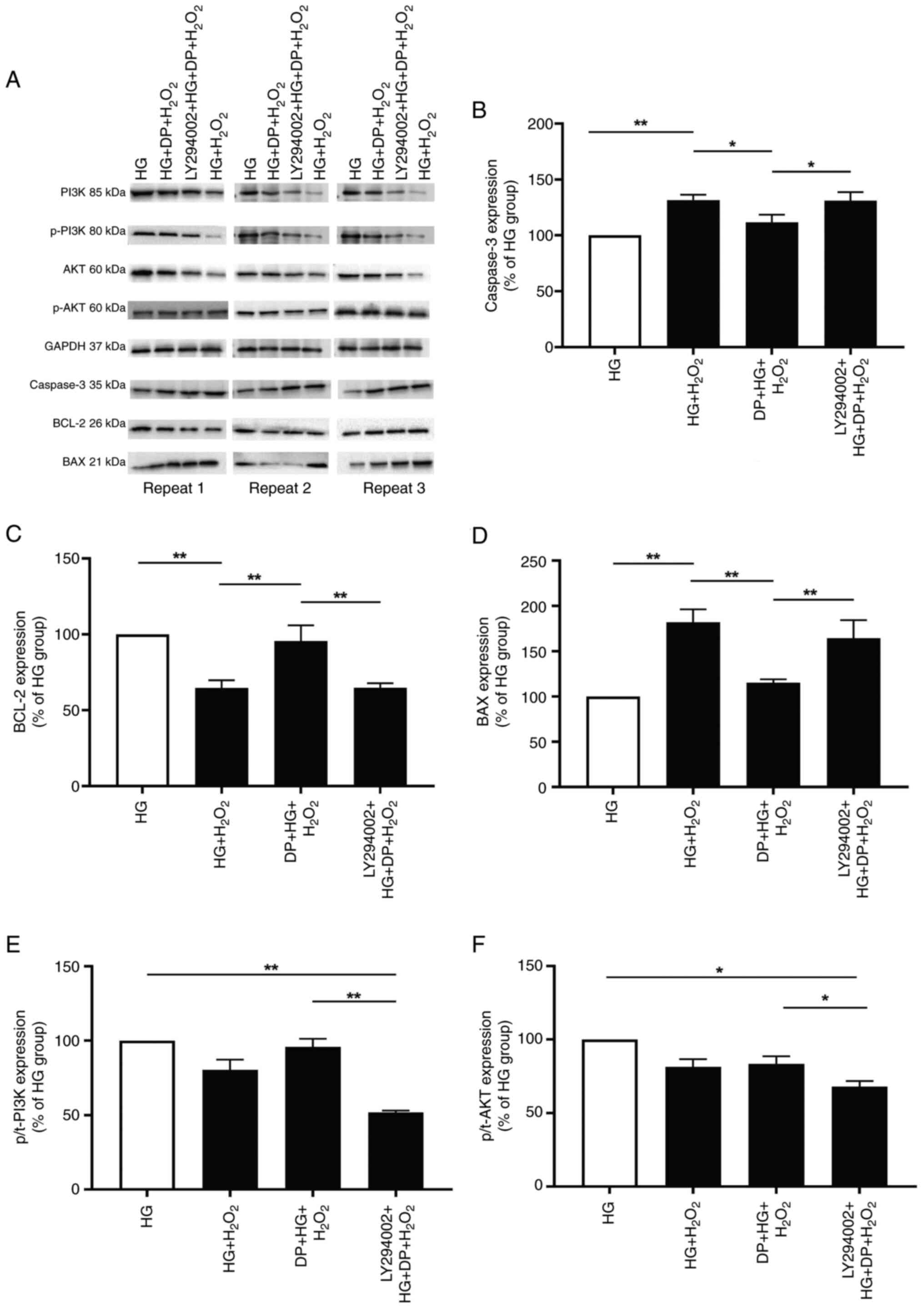
Figure 5

Detection of the levels of
apoptosis-related proteins by western blotting. (A) Protein bands
of apoptosis-related proteins caspase-3, PI3K, AKT, BCL-2, BAX,
p-PI3K and p-AKT in H9C2 cells from the four groups assessed by
western blotting. GAPDH served as an internal control for sample
loading. The differing band curvatures observed (‘frown’ effect for
p-PI3K and ‘smile’ effect for t-PI3K) may result from minor
membrane handling variations during blotting or localized gel
inconsistencies during protein migration. These factors cause
uneven stretching, folding or pressure, leading to the observed
discrepancies. Semi-quantification of western blotting data of
apoptosis-related proteins, including (B) caspase-3, (C) BCL-2, (D)
BAX, (E) p/t-PI3K and (F) p/t-AKT, in H9C2 cells from the four
groups. n=3 per group. *P<0.05, **P<0.01. HG, high-glucose;
Dex, dexmedetomidine; DP, dexmedetomidine preconditioning; p,
phosphorylated; t, total; H2O2, hydrogen
peroxide.

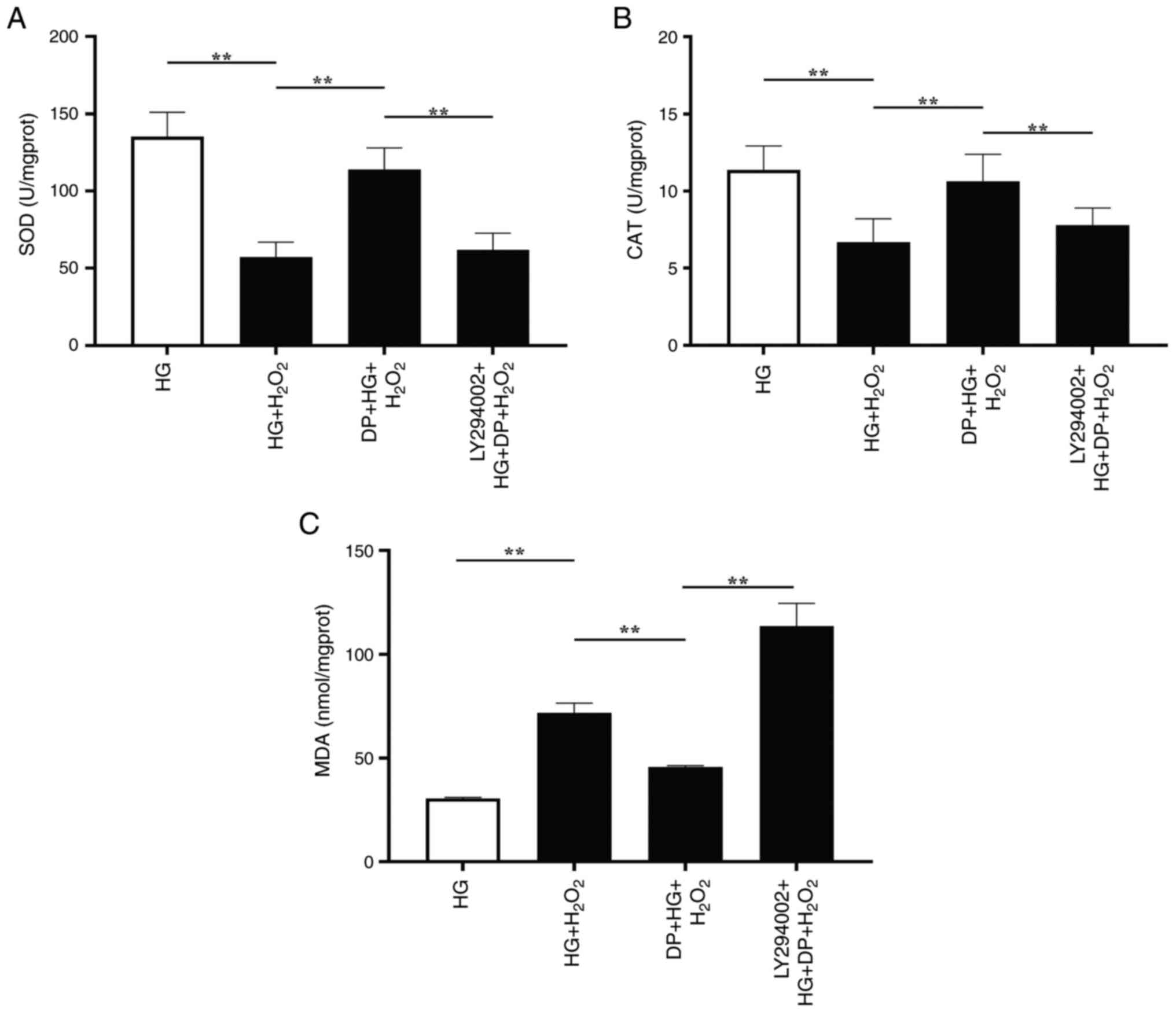
Figure 6

Analysis of oxidative stress markers
in each group. (A) SOD), (B) Catalase (CAT), and (C)
Malondialdehyde (MDA). Data are presented as the mean ± SEM; n=5
per group. **P<0.01, SOD, superoxide dismutase; CAT, catalase;
MDA, malondialdehyde; HG, high-glucose; DP, dexmedetomidine
preconditioning; H2O2, hydrogen peroxide;
mgprot, mg protein.
View References

1 

World Health Organization, . The top 10 causes of death, 2024. https://www.who.int/news-room/fact-sheets/detail/the-top-10-causes-of-deathJune 18–2025

2 

Frangogiannis NG: Pathophysiology of myocardial infarction. Compr Physiol. 5:1841–1875. 2015. View Article : Google Scholar

3 

Norhammar A, Kjellström B, Habib N, Gustafsson A, Klinge B, Nygren Å, Näsman P, Svenungsson E and Rydén L: Undetected dysglycemia is an important risk factor for two common diseases, myocardial infarction and periodontitis: A report from the PAROKRANK study. Diabetes Care. 42:1504–1511. 2019. View Article : Google Scholar : PubMed/NCBI

4 

Nepogodiev D, Martin J, Biccard B, Makupe A and Bhangu A: Global burden of postoperative death. Lancet. 393:4012019. View Article : Google Scholar

5 

Liang S, Wang Y and Liu Y: Dexmedetomidine alleviates lung ischemia-reperfusion injury in rats by activating PI3K/Akt pathway. Eur Rev Med Pharmacol Sci. 23:370–377. 2019.

6 

Xiong W, Zhou R, Qu Y, Yang Y, Wang Z, Song N, Liang R and Qian J: Dexmedetomidine preconditioning mitigates myocardial ischemia/reperfusion injury via inhibition of mast cell degranulation. Biomed Pharmacother. 141:1118532021. View Article : Google Scholar : PubMed/NCBI

7 

Wu Y, Qiu G, Zhang H, Zhu L, Cheng G, Wang Y, Li Y and Wu W: Dexmedetomidine alleviates hepatic ischaemia-reperfusion injury via the PI3K/AKT/Nrf2-NLRP3 pathway. J Cell Mol Med. 25:9983–9994. 2021. View Article : Google Scholar : PubMed/NCBI

8 

Hou M, Chen F, He Y, Tan Z, Han X, Shi Y, Xu Y and Leng Y: Dexmedetomidine against intestinal ischemia/reperfusion injury: A systematic review and meta-analysis of preclinical studies. Eur J Pharmacol. 959:1760902023. View Article : Google Scholar

9 

Feng J, Li Y, Li Y, Yin Q, Li H, Li J, Zhou B, Meng J, Lian H, Wu M, et al: Versican promotes cardiomyocyte proliferation and cardiac repair. Circulation. 149:1004–1015. 2024. View Article : Google Scholar : PubMed/NCBI

10 

Li YZ, Wu XD, Liu XH and Li PF: Mitophagy imbalance in cardiomyocyte ischaemia/reperfusion injury. Acta Physiol (Oxf). 225:e132282019. View Article : Google Scholar : PubMed/NCBI

11 

Su H, Ji L, Xing W, Zhang W, Zhou H, Qian X, Wang X, Gao F, Sun X and Zhang H: Acute hyperglycaemia enhances oxidative stress and aggravates myocardial ischaemia/reperfusion injury: Role of thioredoxin-interacting protein. J Cell Mol Med. 17:181–191. 2013. View Article : Google Scholar : PubMed/NCBI

12 

Forman HJ and Zhang H: Targeting oxidative stress in disease: Promise and limitations of antioxidant therapy. Nat Rev Drug Discov. 20:689–709. 2021. View Article : Google Scholar : PubMed/NCBI

13 

Teleanu DM, Niculescu AG, Lungu II, Radu CI, Vladâcenco O, Roza E, Costăchescu B, Grumezescu AM and Teleanu RI: An overview of oxidative stress, neuroinflammation, and neurodegenerative diseases. Int J Mol Sci. 23:59382022. View Article : Google Scholar

14 

Yu J, Yang W, Wang W, Wang Z, Pu Y, Chen H, Wang F and Qian J: Involvement of miR-665 in protection effect of dexmedetomidine against oxidative stress injury in myocardial cells via CB2 and CK1. Biomed Pharmacother. 115:1088942019. View Article : Google Scholar : PubMed/NCBI

15 

Liu J, Wu P, Xu Z, Zhang J, Liu J and Yang Z: Ginkgolide B inhibits hydrogen peroxide-induced apoptosis and attenuates cytotoxicity via activating the PI3K/Akt/mTOR signaling pathway in H9c2 cells. Mol Med Rep. 22:310–316. 2020. View Article : Google Scholar : PubMed/NCBI

16 

Mao CY, Lu HB, Kong N, Li JY, Liu M, Yang CY and Yang P: Levocarnitine protects H9c2 rat cardiomyocytes from H2O2-induced mitochondrial dysfunction and apoptosis. Int J Med Sci. 11:1107–1115. 2014. View Article : Google Scholar

17 

Wong SSC and Irwin MG: Peri-operative cardiac protection for non-cardiac surgery. Anaesthesia. 71 (Suppl 1):S29–S39. 2016. View Article : Google Scholar

18 

Ollila A, Vikatmaa L, Sund R, Pettilä V and Wilkman E: Efficacy and safety of intravenous esmolol for cardiac protection in non-cardiac surgery. A systematic review and meta-analysis. Ann Med. 51:17–27. 2019. View Article : Google Scholar : PubMed/NCBI

19 

Davidson SM, Ferdinandy P, Andreadou I, Bøtker HE, Heusch G, Ibáñez B, Ovize M, Schulz R, Yellon DM, Hausenloy DJ, et al: Multitarget strategies to reduce myocardial ischemia/reperfusion injury: JACC review topic of the week. J Am Coll Cardiol. 73:89–99. 2019. View Article : Google Scholar

20 

Thompson A, Fleischmann KE, Smilowitz NR, de Las Fuentes L, Mukherjee D, Aggarwal NR, Ahmad FS, Allen RB, Altin SE, Auerbach A, et al: 2024 AHA/ACC/ACS/ASNC/HRS/SCA/SCCT/SCMR/SVM guideline for perioperative cardiovascular management for noncardiac surgery: A report of the american college of cardiology/American heart association joint committee on clinical practice guidelines. Circulation. 150:e351–e442. 2024. View Article : Google Scholar : PubMed/NCBI

21 

Miki T, Itoh T, Sunaga D and Miura T: Effects of diabetes on myocardial infarct size and cardioprotection by preconditioning and postconditioning. Cardiovasc Diabetol. 11:672012. View Article : Google Scholar

22 

Torregroza C, Feige K, Schneider L, Bunte S, Stroethoff M, Heinen A, Hollmann MW, Huhn R and Raupach A: Influence of hyperglycemia on dexmedetomidine-induced cardioprotection in the isolated perfused rat heart. J Clin Med. 9:14452020. View Article : Google Scholar : PubMed/NCBI

23 

Harding JL, Pavkov ME, Magliano DJ, Shaw JE and Gregg EW: Global trends in diabetes complications: A review of current evidence. Diabetologia. 62:3–16. 2019. View Article : Google Scholar

24 

Xie Y, Shi X, Sheng K, Han G, Li W, Zhao Q, Jiang B, Feng J, Li J and Gu Y: PI3K/Akt signaling transduction pathway, erythropoiesis and glycolysis in hypoxia (review). Mol Med Rep. 19:783–791. 2019. View Article : Google Scholar : PubMed/NCBI

25 

Abdelmoneim SS, Hagen ME, Mendrick E, Pattan V, Wong B, Norby B, Roberson T, Szydel T, Basu R, Basu A and Mulvagh SL: Acute hyperglycemia reduces myocardial blood flow reserve and the magnitude of reduction is associated with insulin resistance: A study in nondiabetic humans using contrast echocardiography. Heart Vessels. 28:757–768. 2013. View Article : Google Scholar : PubMed/NCBI

26 

Muniyappa R and Quon MJ: Insulin action and insulin resistance in vascular endothelium. Curr Opin Clin Nutr Metab Care. 10:523–530. 2007. View Article : Google Scholar : PubMed/NCBI

27 

Huang X, Liu G, Guo J and Su Z: The PI3K/AKT pathway in obesity and type 2 diabetes. Int J Biol Sci. 14:1483–1496. 2018. View Article : Google Scholar

28 

Yao M, Wang Z, Jiang L, Wang L, Yang Y, Wang Q, Qian X, Zeng W, Yang W, Liang R and Qian J: Oxytocin ameliorates high glucose- and ischemia/reperfusion-induced myocardial injury by suppressing pyroptosis via AMPK signaling pathway. Biomed Pharmacother. 153:1134982022. View Article : Google Scholar : PubMed/NCBI

29 

Kristiansen SB, Pælestik KB, Johnsen J, Jespersen NR, Pryds K, Hjortbak MV, Jensen RV and Bøtker HE: Impact of hyperglycemia on myocardial ischemia-reperfusion susceptibility and ischemic preconditioning in hearts from rats with type 2 diabetes. Cardiovasc Diabetol. 18:662019. View Article : Google Scholar

30 

Wang T, Li Z, Xia S, Xu Z, Chen X and Sun H: Dexmedetomidine promotes cell proliferation and inhibits cell apoptosis by regulating LINC00982 and activating the phosphoinositide-3-kinase (PI3K)/protein kinase B (AKT) signaling in hypoxia/reoxygenation-induced H9c2 cells. Bioengineered. 13:10159–10167. 2022. View Article : Google Scholar : PubMed/NCBI

31 

Yu T, Liu D, Gao M, Yang P, Zhang M, Song F, Zhang X and Liu Y: Dexmedetomidine prevents septic myocardial dysfunction in rats via activation of α7nAChR and PI3K/Akt-mediated autophagy. Biomed Pharmacother. 120:1092312019. View Article : Google Scholar : PubMed/NCBI

32 

Li H, Xu C, Li Q, Gao X, Sugano E, Tomita H, Yang L and Shi S: Thioredoxin 2 offers protection against mitochondrial oxidative stress in H9c2 cells and against myocardial hypertrophy induced by hyperglycemia. Int J Mol Sci. 18:19582017. View Article : Google Scholar

33 

World Health Organization, . Diabetes. https://www.who.int/news-room/fact-sheets/detail/diabetesJune 18–2025

34 

Qamar F, Sultana S and Sharma M: Animal models for induction of diabetes and its complications. J Diabetes Metab Disord. 22:1021–1028. 2023. View Article : Google Scholar : PubMed/NCBI

35 

Mapanga R and FEssop MF: Damaging effects of hyperglycemia on cardiovascular function: Spotlight on glucose metabolic pathways. Am J Physiol Heart Circ Physiol. 310:H153–H173. 2016. View Article : Google Scholar

36 

Mapanga RF, Joseph D, Symington B, Garson KL, Kimar C, Kelly-Laubscher R and Essop MF: Detrimental effects of acute hyperglycaemia on the rat heart. Acta Physiol (Oxf). 210:546–564. 2014. View Article : Google Scholar : PubMed/NCBI

37 

Mapanga RF, Rajamani U, Dlamini N, Zungu-Edmondson M, Kelly-Laubscher R, Shafiullah M, Wahab A, Hasan MY, Fahim MA, Rondeau P, et al: Oleanolic acid: A novel cardioprotective agent that blunts hyperglycemia-induced contractile dysfunction. PLoS One. 7:e473222012. View Article : Google Scholar : PubMed/NCBI

38 

Cui J, Zhang F, Wang Y, Liu J, Ming X, Hou J, Lv B, Fang S and Yu B: Macrophage migration inhibitory factor promotes cardiac stem cell proliferation and endothelial differentiation through the activation of the PI3K/Akt/mTOR and AMPK pathways. Int J Mol Med. 37:1299–1309. 2016. View Article : Google Scholar : PubMed/NCBI

39 

Hong F, Kwon SJ, Jhun BS, Kim SS, Ha J, Kim SJ, Sohn NW, Kang C and Kang I: Insulin-like growth factor-1 protects H9c2 cardiac myoblasts from oxidative stress-induced apoptosis via phosphatidylinositol 3-kinase and extracellular signal-regulated kinase pathways. Life Sci. 68:1095–1105. 2001. View Article : Google Scholar

Related Articles

  • Abstract
  • View
  • Download
  • Twitter
Copy and paste a formatted citation
Spandidos Publications style
Qu Y, Xiong W, Zhou R, Song N and Qian J: Dexmedetomidine mitigates oxidative stress in H9C2 cardiac myoblasts under a high‑glucose environment via the PI3K/AKT signaling pathway. Mol Med Rep 32: 251, 2025.
APA
Qu, Y., Xiong, W., Zhou, R., Song, N., & Qian, J. (2025). Dexmedetomidine mitigates oxidative stress in H9C2 cardiac myoblasts under a high‑glucose environment via the PI3K/AKT signaling pathway. Molecular Medicine Reports, 32, 251. https://doi.org/10.3892/mmr.2025.13616
MLA
Qu, Y., Xiong, W., Zhou, R., Song, N., Qian, J."Dexmedetomidine mitigates oxidative stress in H9C2 cardiac myoblasts under a high‑glucose environment via the PI3K/AKT signaling pathway". Molecular Medicine Reports 32.3 (2025): 251.
Chicago
Qu, Y., Xiong, W., Zhou, R., Song, N., Qian, J."Dexmedetomidine mitigates oxidative stress in H9C2 cardiac myoblasts under a high‑glucose environment via the PI3K/AKT signaling pathway". Molecular Medicine Reports 32, no. 3 (2025): 251. https://doi.org/10.3892/mmr.2025.13616
Copy and paste a formatted citation
x
Spandidos Publications style
Qu Y, Xiong W, Zhou R, Song N and Qian J: Dexmedetomidine mitigates oxidative stress in H9C2 cardiac myoblasts under a high‑glucose environment via the PI3K/AKT signaling pathway. Mol Med Rep 32: 251, 2025.
APA
Qu, Y., Xiong, W., Zhou, R., Song, N., & Qian, J. (2025). Dexmedetomidine mitigates oxidative stress in H9C2 cardiac myoblasts under a high‑glucose environment via the PI3K/AKT signaling pathway. Molecular Medicine Reports, 32, 251. https://doi.org/10.3892/mmr.2025.13616
MLA
Qu, Y., Xiong, W., Zhou, R., Song, N., Qian, J."Dexmedetomidine mitigates oxidative stress in H9C2 cardiac myoblasts under a high‑glucose environment via the PI3K/AKT signaling pathway". Molecular Medicine Reports 32.3 (2025): 251.
Chicago
Qu, Y., Xiong, W., Zhou, R., Song, N., Qian, J."Dexmedetomidine mitigates oxidative stress in H9C2 cardiac myoblasts under a high‑glucose environment via the PI3K/AKT signaling pathway". Molecular Medicine Reports 32, no. 3 (2025): 251. https://doi.org/10.3892/mmr.2025.13616
Follow us
  • Twitter
  • LinkedIn
  • Facebook
About
  • Spandidos Publications
  • Careers
  • Cookie Policy
  • Privacy Policy
How can we help?
  • Help
  • Live Chat
  • Contact
  • Email to our Support Team