Spandidos Publications Logo
  • About
    • About Spandidos
    • Aims and Scopes
    • Abstracting and Indexing
    • Editorial Policies
    • Reprints and Permissions
    • Job Opportunities
    • Terms and Conditions
    • Contact
  • Journals
    • All Journals
    • Oncology Letters
      • Oncology Letters
      • Information for Authors
      • Editorial Policies
      • Editorial Board
      • Aims and Scope
      • Abstracting and Indexing
      • Bibliographic Information
      • Archive
    • International Journal of Oncology
      • International Journal of Oncology
      • Information for Authors
      • Editorial Policies
      • Editorial Board
      • Aims and Scope
      • Abstracting and Indexing
      • Bibliographic Information
      • Archive
    • Molecular and Clinical Oncology
      • Molecular and Clinical Oncology
      • Information for Authors
      • Editorial Policies
      • Editorial Board
      • Aims and Scope
      • Abstracting and Indexing
      • Bibliographic Information
      • Archive
    • Experimental and Therapeutic Medicine
      • Experimental and Therapeutic Medicine
      • Information for Authors
      • Editorial Policies
      • Editorial Board
      • Aims and Scope
      • Abstracting and Indexing
      • Bibliographic Information
      • Archive
    • International Journal of Molecular Medicine
      • International Journal of Molecular Medicine
      • Information for Authors
      • Editorial Policies
      • Editorial Board
      • Aims and Scope
      • Abstracting and Indexing
      • Bibliographic Information
      • Archive
    • Biomedical Reports
      • Biomedical Reports
      • Information for Authors
      • Editorial Policies
      • Editorial Board
      • Aims and Scope
      • Abstracting and Indexing
      • Bibliographic Information
      • Archive
    • Oncology Reports
      • Oncology Reports
      • Information for Authors
      • Editorial Policies
      • Editorial Board
      • Aims and Scope
      • Abstracting and Indexing
      • Bibliographic Information
      • Archive
    • Molecular Medicine Reports
      • Molecular Medicine Reports
      • Information for Authors
      • Editorial Policies
      • Editorial Board
      • Aims and Scope
      • Abstracting and Indexing
      • Bibliographic Information
      • Archive
    • World Academy of Sciences Journal
      • World Academy of Sciences Journal
      • Information for Authors
      • Editorial Policies
      • Editorial Board
      • Aims and Scope
      • Abstracting and Indexing
      • Bibliographic Information
      • Archive
    • International Journal of Functional Nutrition
      • International Journal of Functional Nutrition
      • Information for Authors
      • Editorial Policies
      • Editorial Board
      • Aims and Scope
      • Abstracting and Indexing
      • Bibliographic Information
      • Archive
    • International Journal of Epigenetics
      • International Journal of Epigenetics
      • Information for Authors
      • Editorial Policies
      • Editorial Board
      • Aims and Scope
      • Abstracting and Indexing
      • Bibliographic Information
      • Archive
    • Medicine International
      • Medicine International
      • Information for Authors
      • Editorial Policies
      • Editorial Board
      • Aims and Scope
      • Abstracting and Indexing
      • Bibliographic Information
      • Archive
  • Articles
  • Information
    • Information for Authors
    • Information for Reviewers
    • Information for Librarians
    • Information for Advertisers
    • Conferences
  • Language Editing
Spandidos Publications Logo
  • About
    • About Spandidos
    • Aims and Scopes
    • Abstracting and Indexing
    • Editorial Policies
    • Reprints and Permissions
    • Job Opportunities
    • Terms and Conditions
    • Contact
  • Journals
    • All Journals
    • Biomedical Reports
      • Information for Authors
      • Editorial Policies
      • Editorial Board
      • Aims and Scope
      • Abstracting and Indexing
      • Bibliographic Information
      • Archive
    • Experimental and Therapeutic Medicine
      • Information for Authors
      • Editorial Policies
      • Editorial Board
      • Aims and Scope
      • Abstracting and Indexing
      • Bibliographic Information
      • Archive
    • International Journal of Epigenetics
      • Information for Authors
      • Editorial Policies
      • Editorial Board
      • Aims and Scope
      • Abstracting and Indexing
      • Bibliographic Information
      • Archive
    • International Journal of Functional Nutrition
      • Information for Authors
      • Editorial Policies
      • Editorial Board
      • Aims and Scope
      • Abstracting and Indexing
      • Bibliographic Information
      • Archive
    • International Journal of Molecular Medicine
      • Information for Authors
      • Editorial Policies
      • Editorial Board
      • Aims and Scope
      • Abstracting and Indexing
      • Bibliographic Information
      • Archive
    • International Journal of Oncology
      • Information for Authors
      • Editorial Policies
      • Editorial Board
      • Aims and Scope
      • Abstracting and Indexing
      • Bibliographic Information
      • Archive
    • Medicine International
      • Information for Authors
      • Editorial Policies
      • Editorial Board
      • Aims and Scope
      • Abstracting and Indexing
      • Bibliographic Information
      • Archive
    • Molecular and Clinical Oncology
      • Information for Authors
      • Editorial Policies
      • Editorial Board
      • Aims and Scope
      • Abstracting and Indexing
      • Bibliographic Information
      • Archive
    • Molecular Medicine Reports
      • Information for Authors
      • Editorial Policies
      • Editorial Board
      • Aims and Scope
      • Abstracting and Indexing
      • Bibliographic Information
      • Archive
    • Oncology Letters
      • Information for Authors
      • Editorial Policies
      • Editorial Board
      • Aims and Scope
      • Abstracting and Indexing
      • Bibliographic Information
      • Archive
    • Oncology Reports
      • Information for Authors
      • Editorial Policies
      • Editorial Board
      • Aims and Scope
      • Abstracting and Indexing
      • Bibliographic Information
      • Archive
    • World Academy of Sciences Journal
      • Information for Authors
      • Editorial Policies
      • Editorial Board
      • Aims and Scope
      • Abstracting and Indexing
      • Bibliographic Information
      • Archive
  • Articles
  • Information
    • For Authors
    • For Reviewers
    • For Librarians
    • For Advertisers
    • Conferences
  • Language Editing
Login Register Submit
  • This site uses cookies
  • You can change your cookie settings at any time by following the instructions in our Cookie Policy. To find out more, you may read our Privacy Policy.

    I agree
Search articles by DOI, keyword, author or affiliation
Search
Advanced Search
presentation
Molecular Medicine Reports
Join Editorial Board Propose a Special Issue
Print ISSN: 1791-2997 Online ISSN: 1791-3004
Journal Cover
September-2025 Volume 32 Issue 3

Full Size Image

Sign up for eToc alerts
Recommend to Library

Journals

International Journal of Molecular Medicine

International Journal of Molecular Medicine

International Journal of Molecular Medicine is an international journal devoted to molecular mechanisms of human disease.

International Journal of Oncology

International Journal of Oncology

International Journal of Oncology is an international journal devoted to oncology research and cancer treatment.

Molecular Medicine Reports

Molecular Medicine Reports

Covers molecular medicine topics such as pharmacology, pathology, genetics, neuroscience, infectious diseases, molecular cardiology, and molecular surgery.

Oncology Reports

Oncology Reports

Oncology Reports is an international journal devoted to fundamental and applied research in Oncology.

Experimental and Therapeutic Medicine

Experimental and Therapeutic Medicine

Experimental and Therapeutic Medicine is an international journal devoted to laboratory and clinical medicine.

Oncology Letters

Oncology Letters

Oncology Letters is an international journal devoted to Experimental and Clinical Oncology.

Biomedical Reports

Biomedical Reports

Explores a wide range of biological and medical fields, including pharmacology, genetics, microbiology, neuroscience, and molecular cardiology.

Molecular and Clinical Oncology

Molecular and Clinical Oncology

International journal addressing all aspects of oncology research, from tumorigenesis and oncogenes to chemotherapy and metastasis.

World Academy of Sciences Journal

World Academy of Sciences Journal

Multidisciplinary open-access journal spanning biochemistry, genetics, neuroscience, environmental health, and synthetic biology.

International Journal of Functional Nutrition

International Journal of Functional Nutrition

Open-access journal combining biochemistry, pharmacology, immunology, and genetics to advance health through functional nutrition.

International Journal of Epigenetics

International Journal of Epigenetics

Publishes open-access research on using epigenetics to advance understanding and treatment of human disease.

Medicine International

Medicine International

An International Open Access Journal Devoted to General Medicine.

Journal Cover
September-2025 Volume 32 Issue 3

Full Size Image

Sign up for eToc alerts
Recommend to Library

  • Article
  • Citations
    • Cite This Article
    • Download Citation
    • Create Citation Alert
    • Remove Citation Alert
    • Cited By
  • Similar Articles
    • Related Articles (in Spandidos Publications)
    • Similar Articles (Google Scholar)
    • Similar Articles (PubMed)
  • Download PDF
  • Download XML
  • View XML
Article Open Access

GPM6B inhibits tumor progression by targeting HPGD in lung adenocarcinoma

  • Authors:
    • Yonghuai Li
    • Xufeng Yao
    • Qian Chai
    • Xueyi Feng
    • Yuhao Ma
    • Guomeng Li
    • Hongbin Zhu
    • Lei Zhao
    • Qian Dai
  • View Affiliations / Copyright

    Affiliations: Department of Respiratory Medicine, The First Affiliated Hospital of Anhui Medical University, Hefei, Anhui 230012, P.R. China, School of Life Science, Anhui Medical University, Hefei, Anhui 230032, P.R. China, Department of Respiratory Medicine, Chaohu Hospital of Anhui Medical University, Chaohu, Anhui 238000, P.R. China
    Copyright: © Li et al. This is an open access article distributed under the terms of Creative Commons Attribution License.
  • Article Number: 253
    |
    Published online on: July 9, 2025
       https://doi.org/10.3892/mmr.2025.13618
  • Expand metrics +
Metrics: Total Views: 0 (Spandidos Publications: | PMC Statistics: )
Metrics: Total PDF Downloads: 0 (Spandidos Publications: | PMC Statistics: )
Cited By (CrossRef): 0 citations Loading Articles...

This article is mentioned in:


Abstract

Lung adenocarcinoma (LUAD) is the most prevalent form of lung cancer and the predominant cause of cancer-associated mortality. Given the low survival rate of patients with LUAD, there is a need to identify new therapeutic targets. Glycoprotein M6B (GPM6B) is a tumor‑associated gene in numerous types of malignancies; however, its specific role in LUAD remains largely unexplored. Integrated bioinformatics analyses of The Cancer Genome Atlas and Gene Expression Omnibus datasets, along with immunohistochemistry assays demonstrated that GPM6B was downregulated in LUAD compared with adjacent normal tissue. Elevated expression of GPM6B was associated with prolonged survival in patients with LUAD, suggesting that GPM6B serves as a prognostic biomarker in LUAD. Cell Counting Kit‑8 (CCK‑8) and Transwell assays demonstrated that exogenously expressed GPM6B significantly inhibited the proliferation and migration of the LUAD cell lines A549 and PC9. Notably, tumorigenesis assays conducted in nude mice demonstrated that the overexpression of GPM6B also suppressed tumor growth in vivo. Mechanistically, GPM6B may have inhibited the malignant behavior of LUAD cells by promoting the expression of 15‑hydroxyprostaglandin dehydrogenase and activating the p53 signaling pathway, as evidenced by transcriptome data analysis, western blotting and phenotypic assays. Furthermore, the qPCR results from LUAD cells treated with DNA methylation and histone deacetylase inhibitors indicated that low expression of GPM6B was associated with DNA methylation and histone deacetylation. Overall, the present study demonstrated that GPM6B may serve as a novel tumor suppressor and elucidated its potential mechanism in regulating the progression of LUAD.
View Figures

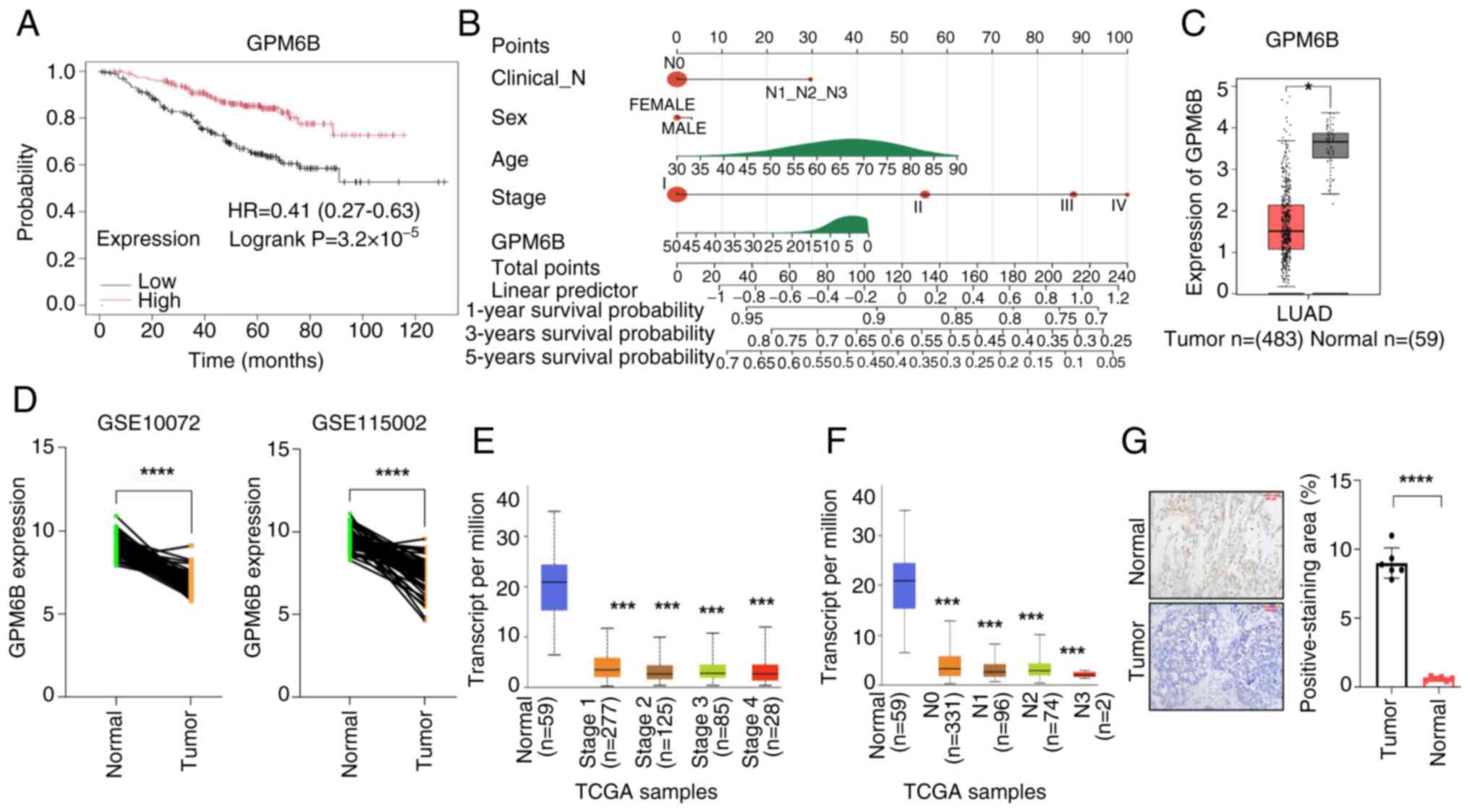
Figure 1

Association between GPM6B expression
and prognosis of patients with LUAD. (A) Survival curve for the
differential expression of GPM6B was analyzed using the
Kaplan-Meier plotter. (B) Nomogram based on clinicopathological
factors, including clinical N stage, sex, age, tumor stage and
GPM6B expression. Differential expression of GPM6B in LUAD tumor
and normal tissue based on the (C) Gene Expression Profiling
Interactive Analysis and (D) Gene Expression Omnibus datasets.
Differential expression of GPM6B based on (E) individual cancer
stage and (F) nodal metastasis status. (G) IHC analysis of GPM6B in
LUAD tissues and adjacent normal tissues. Scale bar, 100 µm.
*P<0.05, ***P<0.001, ****P<0.0001 vs. normal. HR, hazard
ratio; LUAD, lung adenocarcinoma; IHC, immunohistochemistry; GPM6B,
Glycoprotein M6B; TCGA The Cancer Genome Atlas.

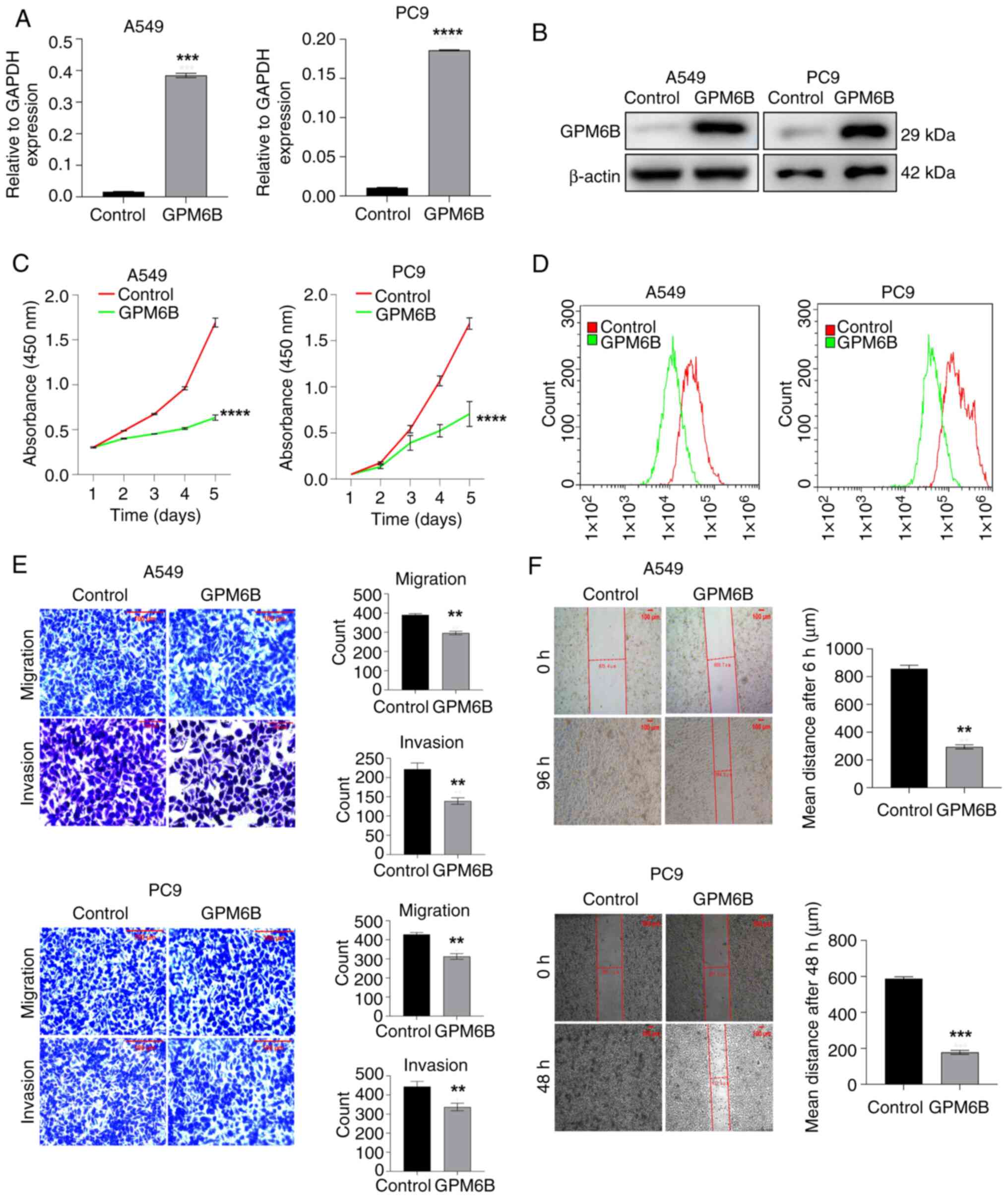
Figure 2

GPM6B regulates the proliferation,
migration and invasion of LUAD cells. (A) Reverse
transcription-quantitative PCR analysis and (B) western blot
confirmation of GPM6B overexpression in LUAD cells A549 and PC9.
(C) CCK-8 and (D) Ki67 staining assays depicting the decreased
proliferation ability of GPM6B-overexpressing cells. (E) Transwell
assays were used to determine the migration and invasion of
GPM6B-overexpressing A549 and PC9 cells. (F) Wound healing assay
was used to monitor the migration ability of GPM6B-overexpressing
cells. **P<0.01, ***P<0.001, ****P<0.0001 vs. Control.
(A,C) LUAD, lung adenocarcinoma; GPM6B, Glycoprotein M6B.

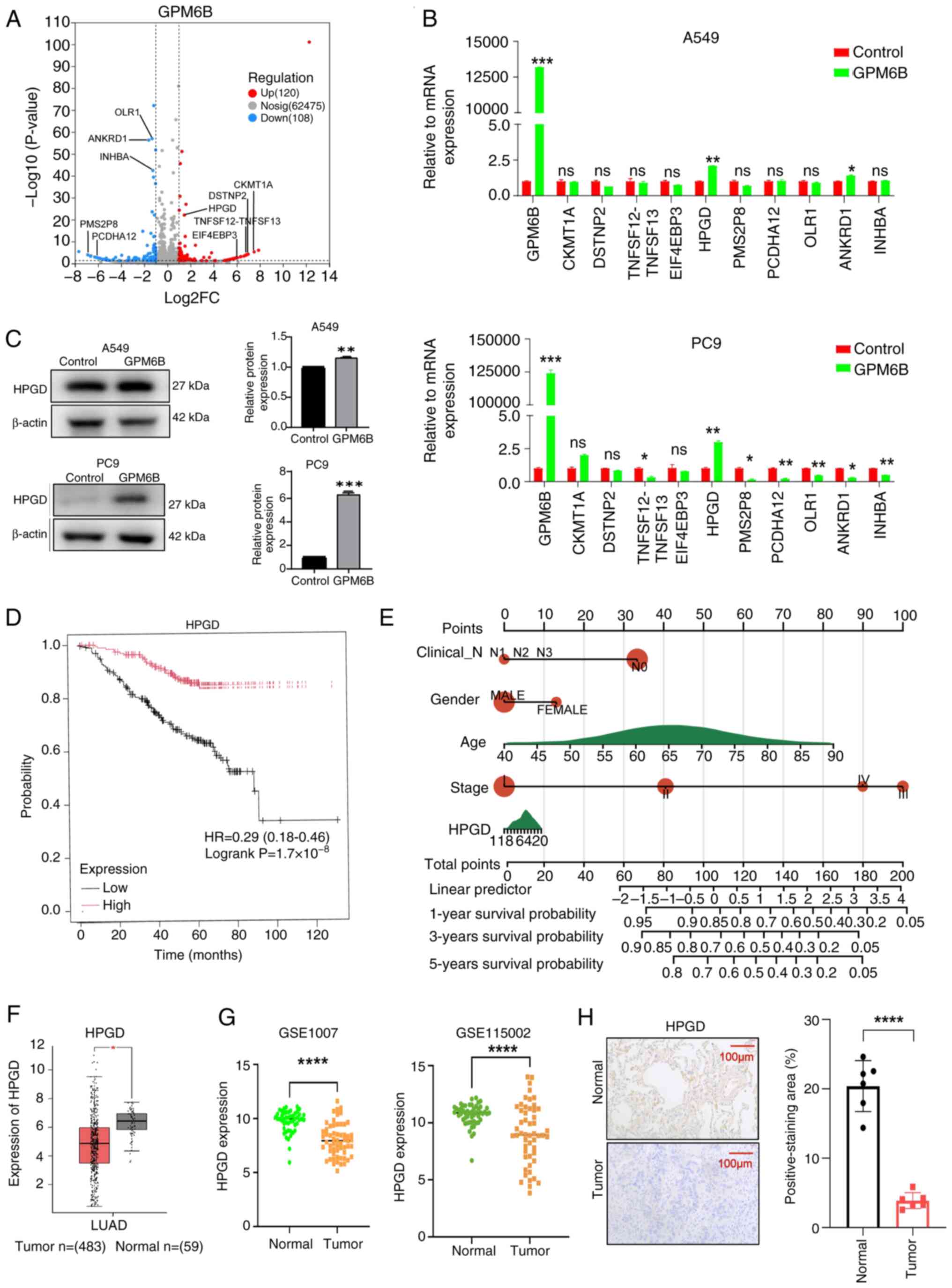
Figure 3

GPM6B regulates HPGD expression. (A)
DEGs identified via transcriptome sequencing following GPM6B
overexpression. (B) Reverse transcription-quantitative PCR
validation of DEGs. (C) Western blot analysis of HPGD expression.
(D) OS plot of HPGD in LUAD. (E) Nomogram was used to predict the
OS probability of patients with LUAD at 1, 3 and 5 years. mRNA
expression levels of HPGD in LUAD and paired adjacent normal tissue
in (F) The Cancer Genome Atlas and (G) GSE10072 and GSE115002
datasets. (H) IHC analysis of HPGD in LUAD and adjacent normal
tissues. Scale bar, 100 µm. *P<0.05 vs. Normal; **P<0.01,
***P<0.01, ****P<0.0001 vs. Control. (G, H) HPGD, 15-hydroxy
prostaglandin dehydrogenase; DEG, differentially expressed gene;
OS, overall survival; LUAD, lung adenocarcinoma; IHC,
immunohistochemistry; ns, not significant.

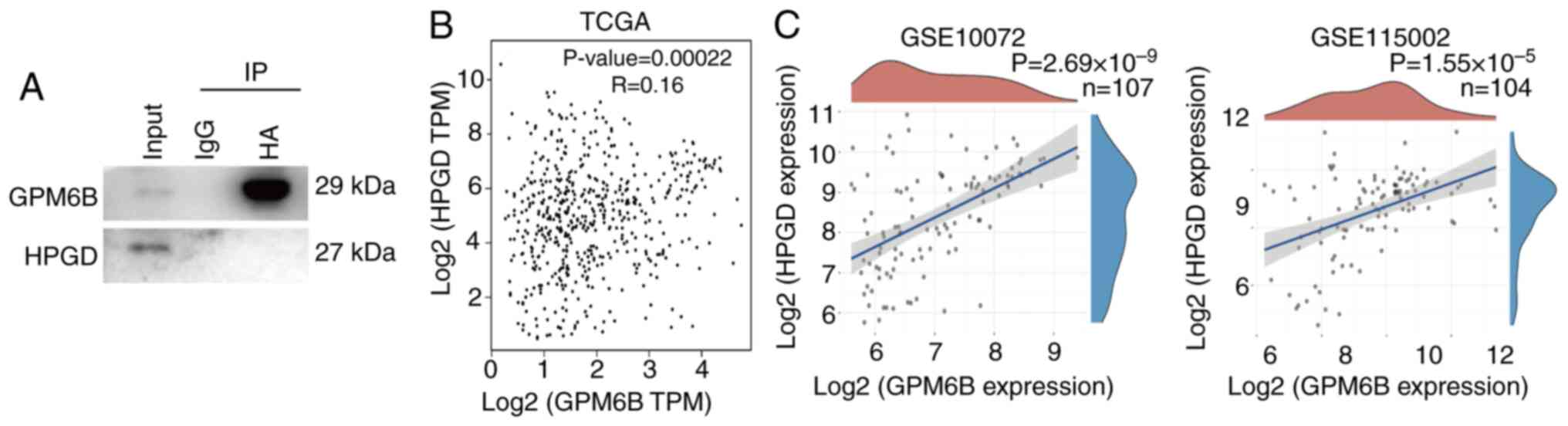
Figure 4

Association between GPM6B and HPGD.
(A) Western blot showing the expression of GPM6B and HPGD in 293T
cells transfected with HA-tagged GPM6B plasmid. Association between
GPM6B and HPGD expression in (B) TCGA and (C) GSE10072 and
GSE115002 datasets. HPGD, 15-hydroxy prostaglandin dehydrogenase;
TGCA, The Cancer Genome Atlas; GPM6B, Glycoprotein M6B; IP,
Immunoprecipitation; TPM, Transcripts Per Million.

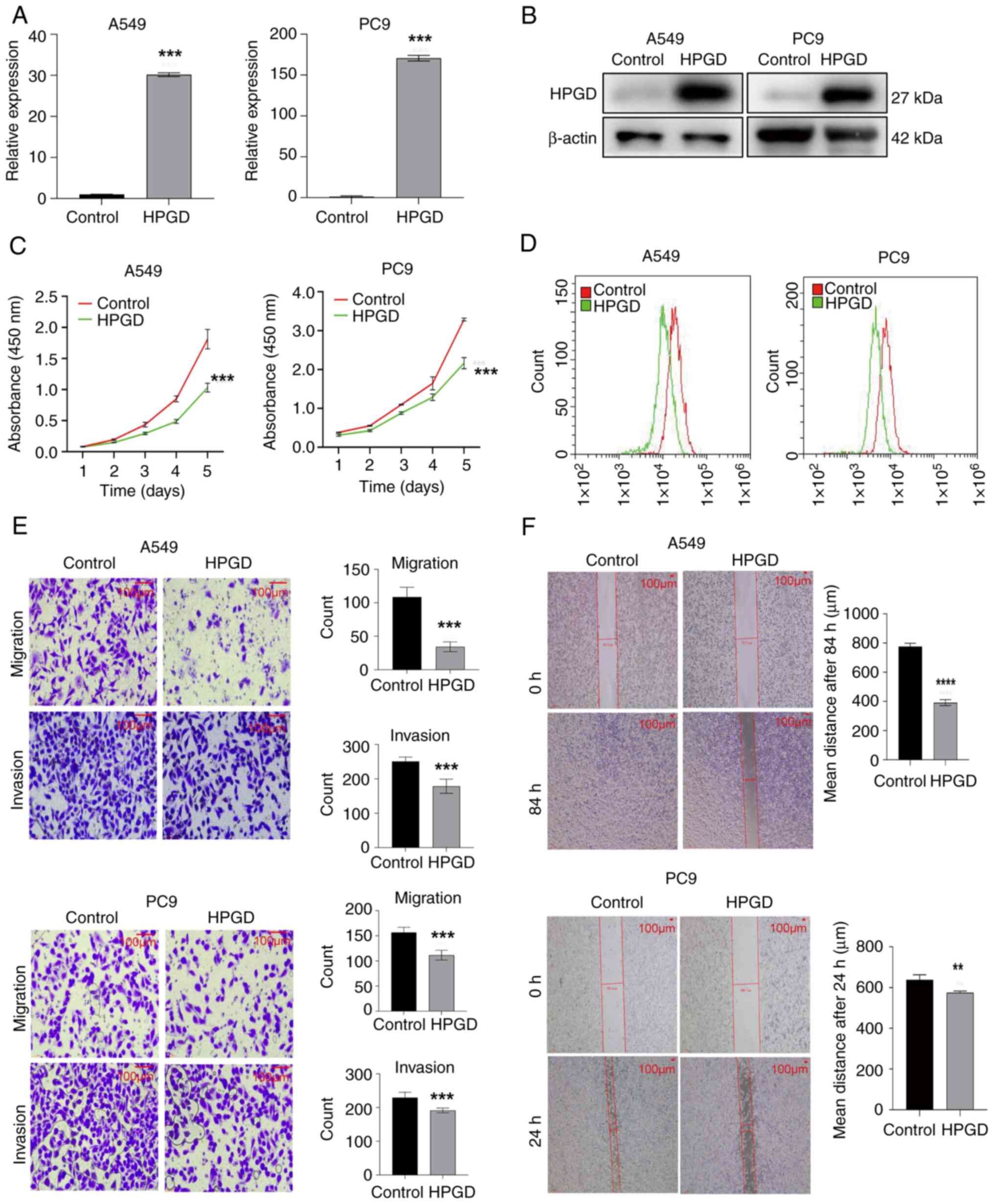
Figure 5

HPGD overexpression inhibits the
proliferation, migration and invasion of LUAD cells. (A) Reverse
transcription-quantitative PCR and (B) western blot confirmation of
HPGD overexpression efficiency in LUAD cells. (C) Cell Counting
Kit-8 and (D) Ki67 staining demonstrated reduced proliferation of
HPGD-overexpressing cells. (E) Transwell assays were used to
determine the migration and invasion of control and
HPGD-overexpressing LUAD cells. (F) Wound healing assay was used to
monitor the migration. **P<0.01, ***P<0.001, ****P<0.0001
vs. control. HPGD, 15-hydroxy prostaglandin dehydrogenase; LUAD,
lung adenocarcinoma.

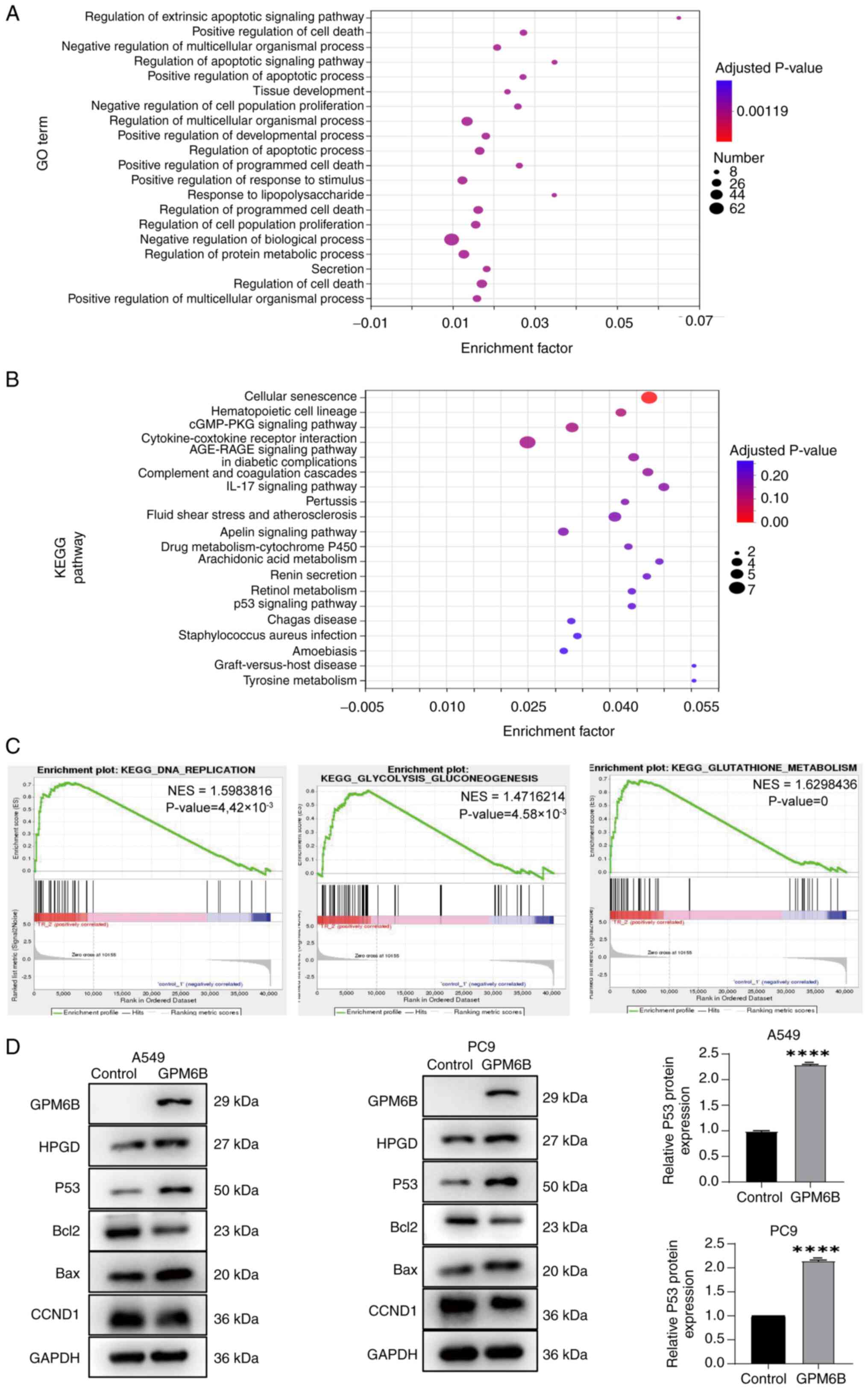
Figure 6

GPM6B overexpression activates p53
signaling pathway. (A) GO, (B) KEGG and (C) Gene Set Enrichment
Analysis. (D) Western blot images revealed changes in the
expression of GPM6B, HPGD, P53, CCND1, Bcl2 and Bax.
****P<0.0001 vs. Control. (D) GO, Gene Ontology; KEGG, Kyoto
Encyclopedia of Genes and Genomes; GPM6B, Glycoprotein M6B; HPGD,
15-hydroxy prostaglandin dehydrogenase; CCND1, cyclin D1; NES,
normalized enrichment score.

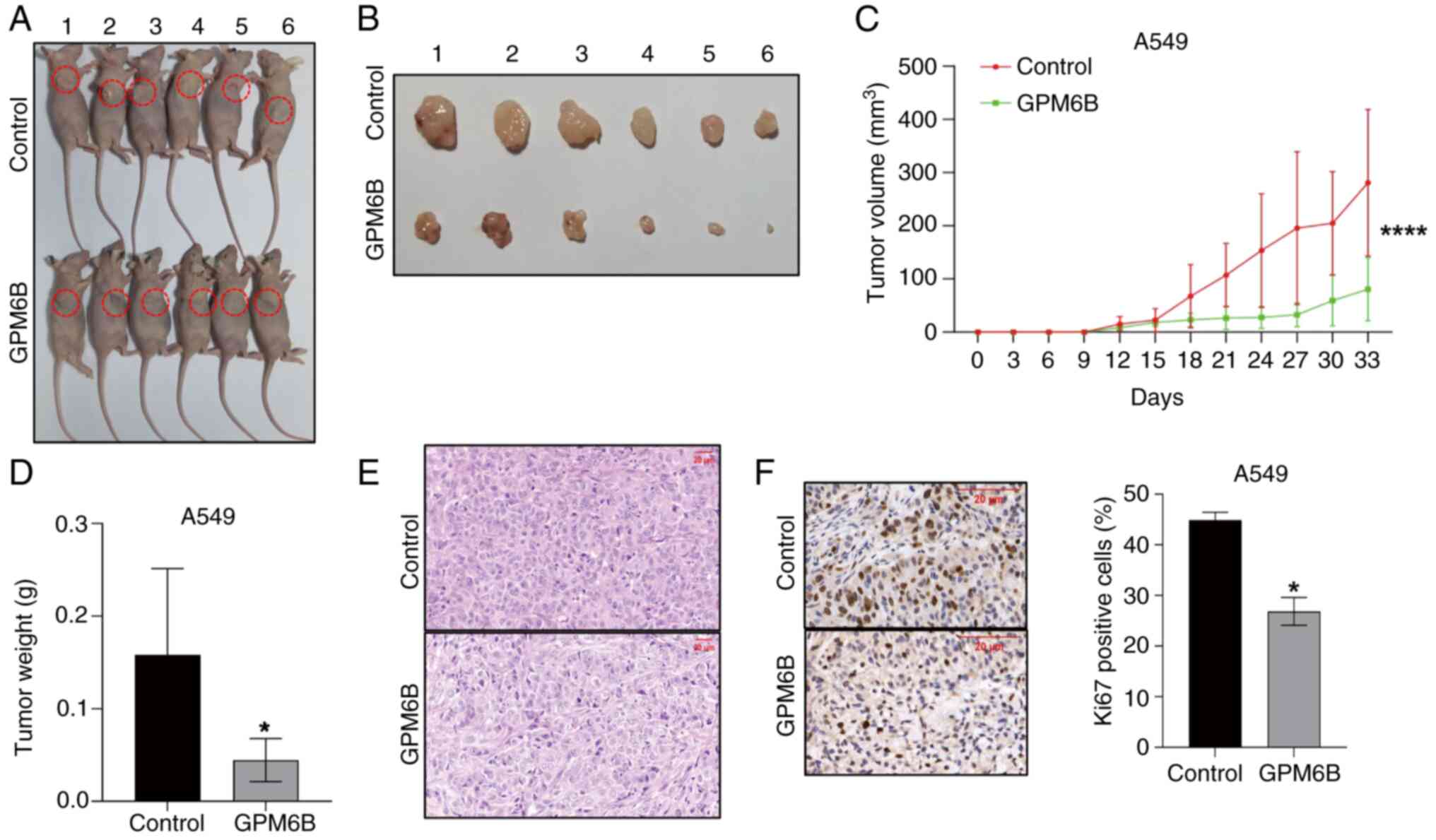
Figure 7

Overexpression of GPM6B suppresses
LUAD tumor growth in vivo. (A) Subcutaneous tumors (circled
in red for visualization. (B) Xenograft tumors in each group. (C)
Changes in tumor volume. (D) Statistical histogram displaying the
weights of xenograft tumors. (E) Representative hematoxylin and
eosin staining. Scale bar, 20 µm. (F) Representative
immunohistochemistry analysis of Ki67. Scale bar, 100 µm.
*P<0.05, ****P<0.0001 vs. Control. LUAD, lung adenocarcinoma;
GPM6B, Glycoprotein M6B.

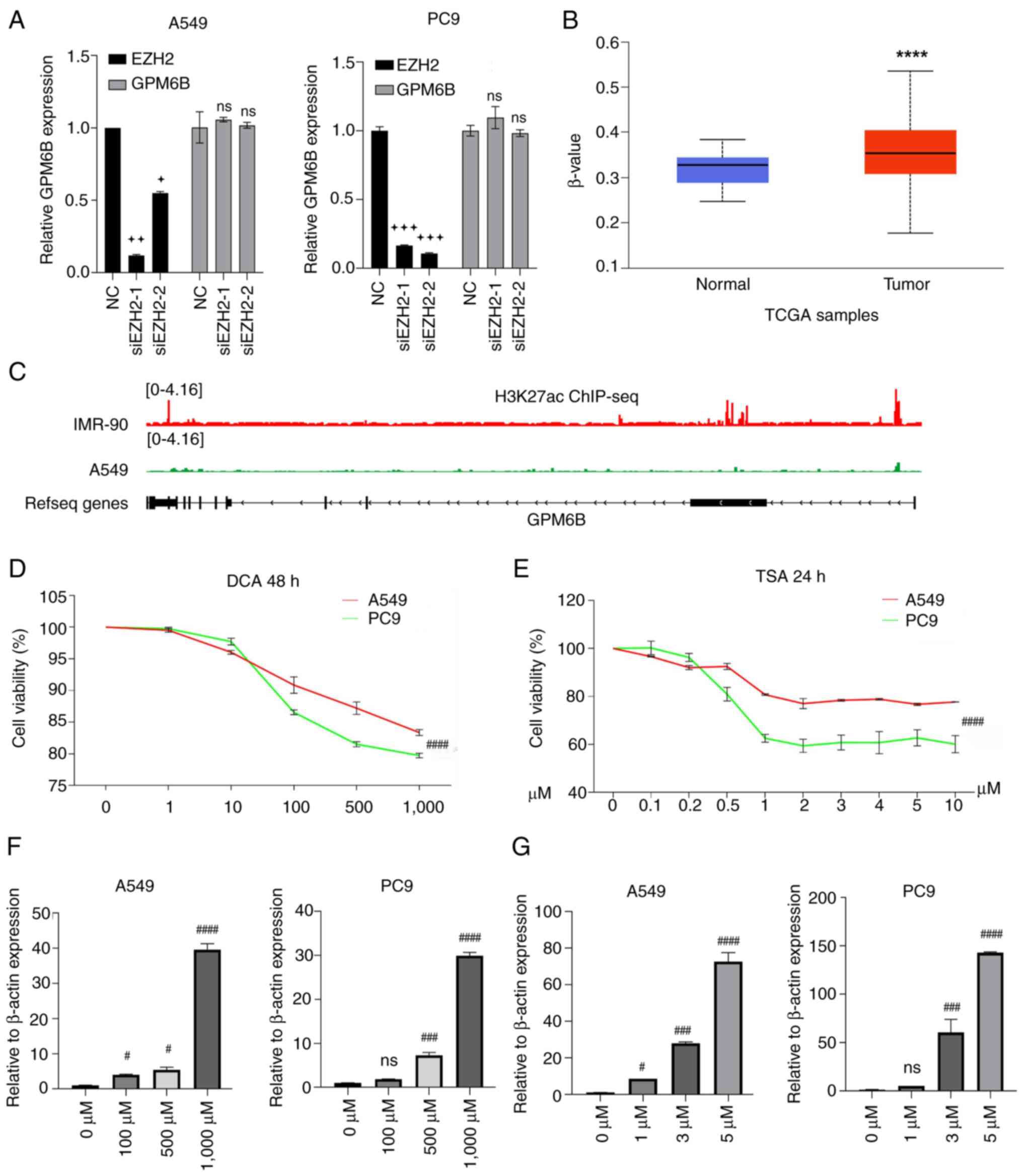
Figure 8

DNA methylation and histone
deacetylation inhibit expression of GPM6B. (A) Reverse
transcription-quantitative PCR analysis of GPM6B expression. (B)
DNA methylation at the GPM6B promoter region. (C) Enrichment of
H3K27ac at the GPM6B promoter region in IMR90 and A549 cells. The
effects of (D) DCA and (E) TSA were measured using Cell Counting
Kit-8 assay. The mRNA levels of GPM6B in control and (F) DCA or (G)
TSA-treated LUAD cells. +P<0.05,
++P<0.01, +++P<0.001 vs. NC,
****P<0.0001 vs. Normal, #P<0.05,
###P<0.001, ####P<0.0001 vs. 0 µM. ns,
not significant; EZH2, enhancer of zeste homolog 2; LUAD, lung
adenocarcinoma; TCGA, The Cancer Genome Atlas; DCA, decitabine;
TSA, trichostatin A; GPM6B, Glycoprotein M6B; NC, negative control;
si, small interfering.
View References

1 

Kratzer TB, Bandi P, Freedman ND, Smith RA, Travis WD, Jemal A and Siegel RL: Lung cancer statistics, 2023. Cancer. 130:1330–1348. 2024. View Article : Google Scholar : PubMed/NCBI

2 

Siegel RL, Kratzer TB, Giaquinto AN, Sung H and Jemal A: Cancer statistics, 2025. CA Cancer J Clin. 75:10–45. 2025. View Article : Google Scholar : PubMed/NCBI

3 

Denisenko TV, Budkevich IN and Zhivotovsky B: Cell death-based treatment of lung adenocarcinoma. Cell Death Dis. 9:1172018. View Article : Google Scholar : PubMed/NCBI

4 

Wu SG and Shih JY: Management of acquired resistance to EGFR TKI-targeted therapy in advanced non-small cell lung cancer. Mol Cancer. 17:382018. View Article : Google Scholar : PubMed/NCBI

5 

Lim SM, Syn NL, Cho BC and Soo RA: Acquired resistance to EGFR targeted therapy in non-small cell lung cancer: Mechanisms and therapeutic strategies. Cancer Treat Rev. 65:1–10. 2018. View Article : Google Scholar : PubMed/NCBI

6 

Imyanitov EN, Iyevleva AG and Levchenko EV: Molecular testing and targeted therapy for Non-small cell lung cancer: Current status and perspectives. Crit Rev Oncol Hematol. 157:1031942021. View Article : Google Scholar : PubMed/NCBI

7 

Lamberti G, Andrini E, Sisi M, Rizzo A, Parisi C, Di Federico A, Gelsomino F and Ardizzoni A: Beyond EGFR, ALK and ROS1: Current evidence and future perspectives on newly targetable oncogenic drivers in lung adenocarcinoma. Crit Rev Oncol Hematol. 156:1031192020. View Article : Google Scholar : PubMed/NCBI

8 

Xia L, Liu Y and Wang Y: PD-1/PD-L1 blockade therapy in advanced Non-Small-cell lung cancer: Current status and future directions. Oncologist. 24 (Suppl 1):S31–S41. 2019. View Article : Google Scholar : PubMed/NCBI

9 

Mamdani H, Matosevic S, Khalid AB, Durm G and Jalal SI: Immunotherapy in lung cancer: Current landscape and future directions. Front Immunol. 13:8236182022. View Article : Google Scholar : PubMed/NCBI

10 

Wang S, Wang Y, Wu X, Yang L and Zhang X: Patients outcomes in lung adenocarcinoma transforming to small-cell lung cancer after tyrosine kinase inhibitor therapy. World J Surg Oncol. 23:342025. View Article : Google Scholar : PubMed/NCBI

11 

Zha J, Li J, Yin H, Shen M and Xia Y: TIMM23 overexpression drives NSCLC cell growth and survival by enhancing mitochondrial function. Cell Death Dis. 16:1742025. View Article : Google Scholar : PubMed/NCBI

12 

Leonetti A, Sharma S, Minari R, Perego P, Giovannetti E and Tiseo M: Resistance mechanisms to osimertinib in EGFR-mutated non-small cell lung cancer. Br J Cancer. 121:725–737. 2019. View Article : Google Scholar : PubMed/NCBI

13 

Chao YL and Pecot CV: Targeting epigenetics in lung cancer. Cold Spring Harb Perspect Med. 11:a0380002021. View Article : Google Scholar : PubMed/NCBI

14 

Dong N, Shi L, Wang DC, Chen C and Wang X: Role of epigenetics in lung cancer heterogeneity and clinical implication. Semin Cell Dev Biol. 64:18–25. 2017. View Article : Google Scholar : PubMed/NCBI

15 

Liu Y, Hu X, Han C, Wang L, Zhang X, He X and Lu X: Targeting tumor suppressor genes for cancer therapy. Bioessays. 37:1277–1286. 2015. View Article : Google Scholar : PubMed/NCBI

16 

Moore LD, Le T and Fan G: DNA methylation and its basic function. Neuropsychopharmacology. 38:23–38. 2013. View Article : Google Scholar : PubMed/NCBI

17 

Bajbouj K, Al-Ali A, Ramakrishnan RK, Saber-Ayad M and Hamid Q: Histone modification in NSCLC: Molecular mechanisms and therapeutic targets. Int J Mol Sci. 22:117012021. View Article : Google Scholar : PubMed/NCBI

18 

Laugesen A, Hojfeldt JW and Helin K: Molecular mechanisms directing PRC2 recruitment and H3K27 methylation. Mol Cell. 74:8–18. 2019. View Article : Google Scholar : PubMed/NCBI

19 

Belinsky SA: Gene-promoter hypermethylation as a biomarker in lung cancer. Nat Rev Cancer. 4:707–717. 2004. View Article : Google Scholar : PubMed/NCBI

20 

Yang X, Shi W, Huang X, Hu L, Wang J, Zhang F, Wang Y and Huang K: Low-level EFCAB1 promoted progress by upregulated DNMT3B and could be as a potential biomarker in lung adenocarcinoma. J Clin Lab Anal. 36:e241662022. View Article : Google Scholar : PubMed/NCBI

21 

Tan M, Wu J and Cai Y: Suppression of Wnt signaling by the miR-29 family is mediated by demethylation of WIF-1 in non-small-cell lung cancer. Biochem Biophys Res Commun. 438:673–679. 2013. View Article : Google Scholar : PubMed/NCBI

22 

Duan R, Du W and Guo W: EZH2: A novel target for cancer treatment. J Hematol Oncol. 13:1042020. View Article : Google Scholar : PubMed/NCBI

23 

Gao M, Li Y, Cao P, Liu H, Chen J and Kang S: Exploring the therapeutic potential of targeting polycomb repressive complex 2 in lung cancer. Front Oncol. 13:12162892023. View Article : Google Scholar : PubMed/NCBI

24 

Shin DS, Park K, Garon E and Dubinett S: Targeting EZH2 to overcome the resistance to immunotherapy in lung cancer. Semin Oncol. 49:306–318. 2022. View Article : Google Scholar : PubMed/NCBI

25 

Werner H, Dimou L, Klugmann M, Pfeiffer S and Nave KA: Multiple splice isoforms of proteolipid M6B in neurons and oligodendrocytes. Mol Cell Neurosci. 18:593–605. 2001. View Article : Google Scholar : PubMed/NCBI

26 

Werner HB, Kramer-Albers EM, Strenzke N, Saher G, Tenzer S, Ohno-Iwashita Y, De Monasterio-Schrader P, Möbius W, Moser T, Griffiths IR and Nave KA: A critical role for the cholesterol-associated proteolipids PLP and M6B in myelination of the central nervous system. Glia. 61:567–586. 2013. View Article : Google Scholar : PubMed/NCBI

27 

Honda A, Ito Y, Takahashi-Niki K, Matsushita N, Nozumi M, Tabata H, Takeuchi K and Igarashi M: Extracellular signals induce glycoprotein M6a clustering of lipid rafts and associated signaling molecules. J Neurosci. 37:4046–4064. 2017. View Article : Google Scholar : PubMed/NCBI

28 

Zhu Y, Wang Q, Xia Y, Xiong X, Weng S, Ni H, Ye Y, Chen L, Lin J, Chen Y, et al: Evaluation of MiR-1908-3p as a novel serum biomarker for breast cancer and analysis its oncogenic function and target genes. BMC Cancer. 20:6442020. View Article : Google Scholar : PubMed/NCBI

29 

He S, Huang Z, Li X, Ding Y, Sheng H, Liu B and Jia Z: GPM6B inhibit PCa proliferation by blocking prostate cancer cell serotonin absorptive capacity. Dis Markers. 2020:88107562020. View Article : Google Scholar : PubMed/NCBI

30 

Miao Z, Geng L, Xu L, Ye Y, Wu C, Tian W and Liu N: Integrated analysis reveals prognostic value and mesenchymal identity suppression by glycoprotein M6B in glioma. Am J Transl Res. 14:3052–3065. 2022.PubMed/NCBI

31 

Clough E and Barrett T: The gene expression omnibus database. Methods Mol Biol. 1418:93–110. 2016. View Article : Google Scholar : PubMed/NCBI

32 

Tomczak K, Czerwinska P and Wiznerowicz M: The cancer genome atlas (TCGA): An immeasurable source of knowledge. Contemp Oncol (Pozn). 19:A68–A77. 2015.PubMed/NCBI

33 

Livak KJ and Schmittgen TD: Analysis of relative gene expression data using real-time quantitative PCR and the 2(−Delta Delta C(T)) method. Methods. 25:402–408. 2001. View Article : Google Scholar : PubMed/NCBI

34 

Li LT, Jiang G, Chen Q and Zheng JN: Ki67 is a promising molecular target in the diagnosis of cancer (review). Mol Med Rep. 11:1566–1572. 2015. View Article : Google Scholar : PubMed/NCBI

35 

Menon SS, Guruvayoorappan C, Sakthivel KM and Rasmi RR: Ki-67 protein as a tumour proliferation marker. Clin Chim Acta. 491:39–45. 2019. View Article : Google Scholar : PubMed/NCBI

36 

Jurikova M, Danihel L, Polak S and Varga I: Ki67, PCNA, and MCM proteins: Markers of proliferation in the diagnosis of breast cancer. Acta Histochem. 118:544–552. 2016. View Article : Google Scholar : PubMed/NCBI

37 

Han T, Zhan W, Gan M, Liu F, Yu B, Chin YE and Wang JB: Phosphorylation of glutaminase by PKCepsilon is essential for its enzymatic activity and critically contributes to tumorigenesis. Cell Res. 28:655–669. 2018. View Article : Google Scholar : PubMed/NCBI

38 

Wu J, Zhao Q, Chen S, Xu H, Zhang R, Cai D, Gao Y, Peng W, Chen X, Yuan S, et al: NSUN4-mediated m5C modification of circERI3 promotes lung cancer development by altering mitochondrial energy metabolism. Cancer Lett. 605:2172662024. View Article : Google Scholar : PubMed/NCBI

39 

Xu Y, Hu Y, Xu T, Yan K, Zhang T, Li Q, Chang F, Guo X, Peng J, Li M, et al: RNF8-mediated regulation of Akt promotes lung cancer cell survival and resistance to DNA damage. Cell Rep. 37:1098542021. View Article : Google Scholar : PubMed/NCBI

40 

Ren Y, Yu G, Shi C, Liu L, Guo Q, Han C, Zhang D, Zhang L, Liu B, Gao H, et al: Majorbio cloud: A One-stop, comprehensive bioinformatic platform for multiomics analyses. Imeta. 1:e122022. View Article : Google Scholar : PubMed/NCBI

41 

Liu Y, Su Z, Tavana O and Gu W: Understanding the complexity of p53 in a new era of tumor suppression. Cancer Cell. 42:946–967. 2024. View Article : Google Scholar : PubMed/NCBI

42 

Zhu M, Han Y, Gu T, Wang R, Si X, Kong D, Zhao P, Wang X, Li J, Zhai X, et al: Class I HDAC inhibitors enhance antitumor efficacy and persistence of CAR-T cells by activation of the Wnt pathway. Cell Rep. 43:1140652024. View Article : Google Scholar : PubMed/NCBI

43 

Ling H, Li Y, Peng C, Yang S and Seto E: HDAC10 inhibition represses melanoma cell growth and BRAF inhibitor resistance via upregulating SPARC expression. NAR Cancer. 6:zcae0182024. View Article : Google Scholar : PubMed/NCBI

44 

Bray F, Laversanne M, Sung H, Ferlay J, Siegel RL, Soerjomataram I and Jemal A: Global cancer statistics 2022: GLOBOCAN estimates of incidence and mortality worldwide for 36 cancers in 185 countries. CA Cancer J Clin. 74:229–263. 2024. View Article : Google Scholar : PubMed/NCBI

45 

Hendriks LEL, Remon J, Faivre-Finn C, Garassino MC, Heymach JV, Kerr KM, Tan DSW, Veronesi G and Reck M: Non-small-cell lung cancer. Nat Rev Dis Primers. 10:712024. View Article : Google Scholar : PubMed/NCBI

46 

Copur MS, Crockett D, Gauchan D, Ramaekers R and Mleczko K: Molecular testing guideline for the selection of patients with lung cancer for targeted therapy. J Clin Oncol. 36:20062018. View Article : Google Scholar : PubMed/NCBI

47 

Zito Marino F, Bianco R, Accardo M, Ronchi A, Cozzolino I, Morgillo F, Rossi G and Franco R: Molecular heterogeneity in lung cancer: From mechanisms of origin to clinical implications. Int J Med Sci. 16:981–989. 2019. View Article : Google Scholar : PubMed/NCBI

48 

Brown FR III, Beck JC, Niebyl JR and Singh I: Effect of proteolipid protein on central nervous system myelin membrane fluidity. Neurosci Lett. 59:149–154. 1985. View Article : Google Scholar : PubMed/NCBI

49 

Mobius W, Patzig J, Nave KA and Werner HB: Phylogeny of proteolipid proteins: Divergence, constraints, and the evolution of novel functions in myelination and neuroprotection. Neuron Glia Biol. 4:111–127. 2008. View Article : Google Scholar : PubMed/NCBI

50 

Sapirstein VS, Nolan C, Stern R, Ciocci M and Masur SK: Identification of the plasma membrane proteolipid protein as a constituent of brain coated vesicles and synaptic plasma membrane. J Neurochem. 51:925–933. 1988. View Article : Google Scholar : PubMed/NCBI

51 

Fernandez ME, Alfonso J, Brocco MA and Frasch AC: Conserved cellular function and Stress-mediated regulation among members of the proteolipid protein family. J Neurosci Res. 88:1298–1308. 2010. View Article : Google Scholar : PubMed/NCBI

52 

Vouyiouklis DA, Werner H, Griffiths IR, Stewart GJ, Armin-Nave K and Thomson CE: Molecular cloning and transfection studies of M6b-2, a novel splice variant of a member of the PLP-DM20/M6 gene family. J Neurosci Res. 52:633–640. 1998. View Article : Google Scholar : PubMed/NCBI

53 

Charfi C, Edouard E and Rassart E: Identification of GPM6A and GPM6B as potential new human lymphoid leukemia-associated oncogenes. Cell Oncol (Dordr). 37:179–191. 2014. View Article : Google Scholar : PubMed/NCBI

54 

Yan M, Rerko RM, Platzer P, Dawson D, Willis J, Tong M, Lawrence E, Lutterbaugh J, Lu S, Willson JK, et al: 15-Hydroxyprostaglandin dehydrogenase, a COX-2 oncogene antagonist, is a TGF-beta-induced suppressor of human gastrointestinal cancers. Proc Natl Acad Sci USA. 101:17468–17473. 2004. View Article : Google Scholar : PubMed/NCBI

55 

Gee JR, Montoya RG, Khaled HM, Sabichi AL and Grossman HB: Cytokeratin 20, AN43, PGDH, and COX-2 expression in transitional and squamous cell carcinoma of the bladder. Urol Oncol. 21:266–270. 2003. View Article : Google Scholar : PubMed/NCBI

56 

Ding Y, Tong M, Liu S, Moscow JA and Tai HH: NAD+-linked 15-hydroxyprostaglandin dehydrogenase (15-PGDH) behaves as a tumor suppressor in lung cancer. Carcinogenesis. 26:65–72. 2005. View Article : Google Scholar : PubMed/NCBI

57 

Sun L, Suo C, Zhang T, Shen S, Gu X, Qiu S, Zhang P, Wei H, Ma W, Yan R, et al: ENO1 promotes liver carcinogenesis through YAP1-dependent arachidonic acid metabolism. Nat Chem Biol. 19:1492–1503. 2023. View Article : Google Scholar : PubMed/NCBI

58 

Shu L, Li X, Liu Z, Li K, Shi A, Tang Y, Zhao L, Huang L, Zhang Z, Zhang D, et al: Bile exosomal miR-182/183-5p increases cholangiocarcinoma stemness and progression by targeting HPGD and increasing PGE2 generation. Hepatology. 79:307–322. 2023. View Article : Google Scholar : PubMed/NCBI

59 

Kusumoto S, Ikeda JI, Kurashige M, Maeno-Fujinami E, Tahara S, Matsui T, Nojima S, Okuzaki D and Morii E: Tumor cell plasticity in endometrioid carcinoma is regulated by neuronal membrane glycoprotein M6-b. Oncol Lett. 25:452023. View Article : Google Scholar : PubMed/NCBI

60 

Ruiz-Losada M, Gonzalez R, Peropadre A, Gil-Gálvez A, Tena JJ, Baonza A and Estella C: Coordination between cell proliferation and apoptosis after DNA damage in Drosophila. Cell Death Differ. 29:832–845. 2022. View Article : Google Scholar : PubMed/NCBI

61 

Meng H, Cao Y, Qin J, Song X, Zhang Q, Shi Y and Cao L: DNA methylation, its mediators and genome integrity. Int J Biol Sci. 11:604–617. 2015. View Article : Google Scholar : PubMed/NCBI

62 

Gallinari P, Di Marco S, Jones P, Pallaoro M and Steinkuhler C: HDACs, histone deacetylation and gene transcription: From molecular biology to cancer therapeutics. Cell Res. 17:195–211. 2007. View Article : Google Scholar : PubMed/NCBI

63 

Yu J, Qin B, Moyer AM, Nowsheen S, Liu T, Qin S, Zhuang Y, Liu D, Lu SW, Kalari KR, et al: DNA methyltransferase expression in triple-negative breast cancer predicts sensitivity to decitabine. J Clin Invest. 128:2376–2388. 2018. View Article : Google Scholar : PubMed/NCBI

64 

Wong KK, Lawrie CH and Green TM: Oncogenic roles and inhibitors of DNMT1, DNMT3A, and DNMT3B in acute myeloid leukaemia. Biomark Insights. 14:11772719198464542019. View Article : Google Scholar : PubMed/NCBI

65 

Chang J, Varghese DS, Gillam MC, Peyton M, Modi B, Schiltz RL, Girard L and Martinez ED: Differential response of cancer cells to HDAC inhibitors trichostatin A and depsipeptide. Br J Cancer. 106:116–125. 2012. View Article : Google Scholar : PubMed/NCBI

66 

Zahnow CA, Topper M, Stone M, Murray-Stewart T, Li H, Baylin SB and Casero RA Jr: Inhibitors of DNA methylation, histone deacetylation, and histone demethylation: A perfect combination for cancer therapy. Adv Cancer Res. 130:55–111. 2016. View Article : Google Scholar : PubMed/NCBI

67 

Soflaei SS, Momtazi-Borojeni AA, Majeed M, Derosa G, Maffioli P and Sahebkar A: Curcumin: A natural Pan-HDAC inhibitor in cancer. Curr Pharm Des. 24:123–129. 2018. View Article : Google Scholar : PubMed/NCBI

68 

Li Y and Seto E: HDACs and HDAC inhibitors in cancer development and therapy. Cold Spring Harb Perspect Med. 6:a0268312016. View Article : Google Scholar : PubMed/NCBI

Related Articles

  • Abstract
  • View
  • Download
  • Twitter
Copy and paste a formatted citation
Spandidos Publications style
Li Y, Yao X, Chai Q, Feng X, Ma Y, Li G, Zhu H, Zhao L and Dai Q: GPM6B inhibits tumor progression by targeting HPGD in lung adenocarcinoma. Mol Med Rep 32: 253, 2025.
APA
Li, Y., Yao, X., Chai, Q., Feng, X., Ma, Y., Li, G. ... Dai, Q. (2025). GPM6B inhibits tumor progression by targeting HPGD in lung adenocarcinoma. Molecular Medicine Reports, 32, 253. https://doi.org/10.3892/mmr.2025.13618
MLA
Li, Y., Yao, X., Chai, Q., Feng, X., Ma, Y., Li, G., Zhu, H., Zhao, L., Dai, Q."GPM6B inhibits tumor progression by targeting HPGD in lung adenocarcinoma". Molecular Medicine Reports 32.3 (2025): 253.
Chicago
Li, Y., Yao, X., Chai, Q., Feng, X., Ma, Y., Li, G., Zhu, H., Zhao, L., Dai, Q."GPM6B inhibits tumor progression by targeting HPGD in lung adenocarcinoma". Molecular Medicine Reports 32, no. 3 (2025): 253. https://doi.org/10.3892/mmr.2025.13618
Copy and paste a formatted citation
x
Spandidos Publications style
Li Y, Yao X, Chai Q, Feng X, Ma Y, Li G, Zhu H, Zhao L and Dai Q: GPM6B inhibits tumor progression by targeting HPGD in lung adenocarcinoma. Mol Med Rep 32: 253, 2025.
APA
Li, Y., Yao, X., Chai, Q., Feng, X., Ma, Y., Li, G. ... Dai, Q. (2025). GPM6B inhibits tumor progression by targeting HPGD in lung adenocarcinoma. Molecular Medicine Reports, 32, 253. https://doi.org/10.3892/mmr.2025.13618
MLA
Li, Y., Yao, X., Chai, Q., Feng, X., Ma, Y., Li, G., Zhu, H., Zhao, L., Dai, Q."GPM6B inhibits tumor progression by targeting HPGD in lung adenocarcinoma". Molecular Medicine Reports 32.3 (2025): 253.
Chicago
Li, Y., Yao, X., Chai, Q., Feng, X., Ma, Y., Li, G., Zhu, H., Zhao, L., Dai, Q."GPM6B inhibits tumor progression by targeting HPGD in lung adenocarcinoma". Molecular Medicine Reports 32, no. 3 (2025): 253. https://doi.org/10.3892/mmr.2025.13618
Follow us
  • Twitter
  • LinkedIn
  • Facebook
About
  • Spandidos Publications
  • Careers
  • Cookie Policy
  • Privacy Policy
How can we help?
  • Help
  • Live Chat
  • Contact
  • Email to our Support Team