Spandidos Publications Logo
  • About
    • About Spandidos
    • Aims and Scopes
    • Abstracting and Indexing
    • Editorial Policies
    • Reprints and Permissions
    • Job Opportunities
    • Terms and Conditions
    • Contact
  • Journals
    • All Journals
    • Oncology Letters
      • Oncology Letters
      • Information for Authors
      • Editorial Policies
      • Editorial Board
      • Aims and Scope
      • Abstracting and Indexing
      • Bibliographic Information
      • Archive
    • International Journal of Oncology
      • International Journal of Oncology
      • Information for Authors
      • Editorial Policies
      • Editorial Board
      • Aims and Scope
      • Abstracting and Indexing
      • Bibliographic Information
      • Archive
    • Molecular and Clinical Oncology
      • Molecular and Clinical Oncology
      • Information for Authors
      • Editorial Policies
      • Editorial Board
      • Aims and Scope
      • Abstracting and Indexing
      • Bibliographic Information
      • Archive
    • Experimental and Therapeutic Medicine
      • Experimental and Therapeutic Medicine
      • Information for Authors
      • Editorial Policies
      • Editorial Board
      • Aims and Scope
      • Abstracting and Indexing
      • Bibliographic Information
      • Archive
    • International Journal of Molecular Medicine
      • International Journal of Molecular Medicine
      • Information for Authors
      • Editorial Policies
      • Editorial Board
      • Aims and Scope
      • Abstracting and Indexing
      • Bibliographic Information
      • Archive
    • Biomedical Reports
      • Biomedical Reports
      • Information for Authors
      • Editorial Policies
      • Editorial Board
      • Aims and Scope
      • Abstracting and Indexing
      • Bibliographic Information
      • Archive
    • Oncology Reports
      • Oncology Reports
      • Information for Authors
      • Editorial Policies
      • Editorial Board
      • Aims and Scope
      • Abstracting and Indexing
      • Bibliographic Information
      • Archive
    • Molecular Medicine Reports
      • Molecular Medicine Reports
      • Information for Authors
      • Editorial Policies
      • Editorial Board
      • Aims and Scope
      • Abstracting and Indexing
      • Bibliographic Information
      • Archive
    • World Academy of Sciences Journal
      • World Academy of Sciences Journal
      • Information for Authors
      • Editorial Policies
      • Editorial Board
      • Aims and Scope
      • Abstracting and Indexing
      • Bibliographic Information
      • Archive
    • International Journal of Functional Nutrition
      • International Journal of Functional Nutrition
      • Information for Authors
      • Editorial Policies
      • Editorial Board
      • Aims and Scope
      • Abstracting and Indexing
      • Bibliographic Information
      • Archive
    • International Journal of Epigenetics
      • International Journal of Epigenetics
      • Information for Authors
      • Editorial Policies
      • Editorial Board
      • Aims and Scope
      • Abstracting and Indexing
      • Bibliographic Information
      • Archive
    • Medicine International
      • Medicine International
      • Information for Authors
      • Editorial Policies
      • Editorial Board
      • Aims and Scope
      • Abstracting and Indexing
      • Bibliographic Information
      • Archive
  • Articles
  • Information
    • Information for Authors
    • Information for Reviewers
    • Information for Librarians
    • Information for Advertisers
    • Conferences
  • Language Editing
Spandidos Publications Logo
  • About
    • About Spandidos
    • Aims and Scopes
    • Abstracting and Indexing
    • Editorial Policies
    • Reprints and Permissions
    • Job Opportunities
    • Terms and Conditions
    • Contact
  • Journals
    • All Journals
    • Biomedical Reports
      • Information for Authors
      • Editorial Policies
      • Editorial Board
      • Aims and Scope
      • Abstracting and Indexing
      • Bibliographic Information
      • Archive
    • Experimental and Therapeutic Medicine
      • Information for Authors
      • Editorial Policies
      • Editorial Board
      • Aims and Scope
      • Abstracting and Indexing
      • Bibliographic Information
      • Archive
    • International Journal of Epigenetics
      • Information for Authors
      • Editorial Policies
      • Editorial Board
      • Aims and Scope
      • Abstracting and Indexing
      • Bibliographic Information
      • Archive
    • International Journal of Functional Nutrition
      • Information for Authors
      • Editorial Policies
      • Editorial Board
      • Aims and Scope
      • Abstracting and Indexing
      • Bibliographic Information
      • Archive
    • International Journal of Molecular Medicine
      • Information for Authors
      • Editorial Policies
      • Editorial Board
      • Aims and Scope
      • Abstracting and Indexing
      • Bibliographic Information
      • Archive
    • International Journal of Oncology
      • Information for Authors
      • Editorial Policies
      • Editorial Board
      • Aims and Scope
      • Abstracting and Indexing
      • Bibliographic Information
      • Archive
    • Medicine International
      • Information for Authors
      • Editorial Policies
      • Editorial Board
      • Aims and Scope
      • Abstracting and Indexing
      • Bibliographic Information
      • Archive
    • Molecular and Clinical Oncology
      • Information for Authors
      • Editorial Policies
      • Editorial Board
      • Aims and Scope
      • Abstracting and Indexing
      • Bibliographic Information
      • Archive
    • Molecular Medicine Reports
      • Information for Authors
      • Editorial Policies
      • Editorial Board
      • Aims and Scope
      • Abstracting and Indexing
      • Bibliographic Information
      • Archive
    • Oncology Letters
      • Information for Authors
      • Editorial Policies
      • Editorial Board
      • Aims and Scope
      • Abstracting and Indexing
      • Bibliographic Information
      • Archive
    • Oncology Reports
      • Information for Authors
      • Editorial Policies
      • Editorial Board
      • Aims and Scope
      • Abstracting and Indexing
      • Bibliographic Information
      • Archive
    • World Academy of Sciences Journal
      • Information for Authors
      • Editorial Policies
      • Editorial Board
      • Aims and Scope
      • Abstracting and Indexing
      • Bibliographic Information
      • Archive
  • Articles
  • Information
    • For Authors
    • For Reviewers
    • For Librarians
    • For Advertisers
    • Conferences
  • Language Editing
Login Register Submit
  • This site uses cookies
  • You can change your cookie settings at any time by following the instructions in our Cookie Policy. To find out more, you may read our Privacy Policy.

    I agree
Search articles by DOI, keyword, author or affiliation
Search
Advanced Search
presentation
Molecular Medicine Reports
Join Editorial Board Propose a Special Issue
Print ISSN: 1791-2997 Online ISSN: 1791-3004
Journal Cover
October-2025 Volume 32 Issue 4

Full Size Image

Sign up for eToc alerts
Recommend to Library

Journals

International Journal of Molecular Medicine

International Journal of Molecular Medicine

International Journal of Molecular Medicine is an international journal devoted to molecular mechanisms of human disease.

International Journal of Oncology

International Journal of Oncology

International Journal of Oncology is an international journal devoted to oncology research and cancer treatment.

Molecular Medicine Reports

Molecular Medicine Reports

Covers molecular medicine topics such as pharmacology, pathology, genetics, neuroscience, infectious diseases, molecular cardiology, and molecular surgery.

Oncology Reports

Oncology Reports

Oncology Reports is an international journal devoted to fundamental and applied research in Oncology.

Experimental and Therapeutic Medicine

Experimental and Therapeutic Medicine

Experimental and Therapeutic Medicine is an international journal devoted to laboratory and clinical medicine.

Oncology Letters

Oncology Letters

Oncology Letters is an international journal devoted to Experimental and Clinical Oncology.

Biomedical Reports

Biomedical Reports

Explores a wide range of biological and medical fields, including pharmacology, genetics, microbiology, neuroscience, and molecular cardiology.

Molecular and Clinical Oncology

Molecular and Clinical Oncology

International journal addressing all aspects of oncology research, from tumorigenesis and oncogenes to chemotherapy and metastasis.

World Academy of Sciences Journal

World Academy of Sciences Journal

Multidisciplinary open-access journal spanning biochemistry, genetics, neuroscience, environmental health, and synthetic biology.

International Journal of Functional Nutrition

International Journal of Functional Nutrition

Open-access journal combining biochemistry, pharmacology, immunology, and genetics to advance health through functional nutrition.

International Journal of Epigenetics

International Journal of Epigenetics

Publishes open-access research on using epigenetics to advance understanding and treatment of human disease.

Medicine International

Medicine International

An International Open Access Journal Devoted to General Medicine.

Journal Cover
October-2025 Volume 32 Issue 4

Full Size Image

Sign up for eToc alerts
Recommend to Library

  • Article
  • Citations
    • Cite This Article
    • Download Citation
    • Create Citation Alert
    • Remove Citation Alert
    • Cited By
  • Similar Articles
    • Related Articles (in Spandidos Publications)
    • Similar Articles (Google Scholar)
    • Similar Articles (PubMed)
  • Download PDF
  • Download XML
  • View XML

  • Supplementary Files
    • Supplementary_Data.pdf
Article Open Access

Pan‑cancer analysis of the carcinogenic role of WSB2 in human tumors

  • Authors:
    • Yingzi Deng
    • Yifei Li
    • Ruobing Li
    • Xiaohui Guo
    • Yan Liu
    • Shuqing Wang
    • Juan Zhang
    • Mi Li
    • Lina Zhao
    • Haifeng Cai
    • Yunfeng Zhang
    • Fen Hu
  • View Affiliations / Copyright

    Affiliations: Department of Bioinformatics, College of Life Sciences, North China University of Science and Technology, Tangshan, Hebei 063210, P.R. China, Department of Bioinformatics, College of Life Sciences, North China University of Science and Technology, Tangshan, Hebei 063210, P.R. China, The Second Department of Breast Surgery, Tangshan People's Hospital, Tangshan, Hebei 063000, P.R. China, The Second Department of Breast Surgery, Tangshan People's Hospital, Tangshan, Hebei 063000, P.R. China, Tangshan Key Laboratory of Agricultural Pathogenic Fungi and Toxins, Department of Life Sciences, Tangshan Normal University, Tangshan, Hebei 063000, P.R. China
    Copyright: © Deng et al. This is an open access article distributed under the terms of Creative Commons Attribution License.
  • Article Number: 260
    |
    Published online on: July 21, 2025
       https://doi.org/10.3892/mmr.2025.13625
  • Expand metrics +
Metrics: Total Views: 0 (Spandidos Publications: | PMC Statistics: )
Metrics: Total PDF Downloads: 0 (Spandidos Publications: | PMC Statistics: )
Cited By (CrossRef): 0 citations Loading Articles...

This article is mentioned in:


Abstract

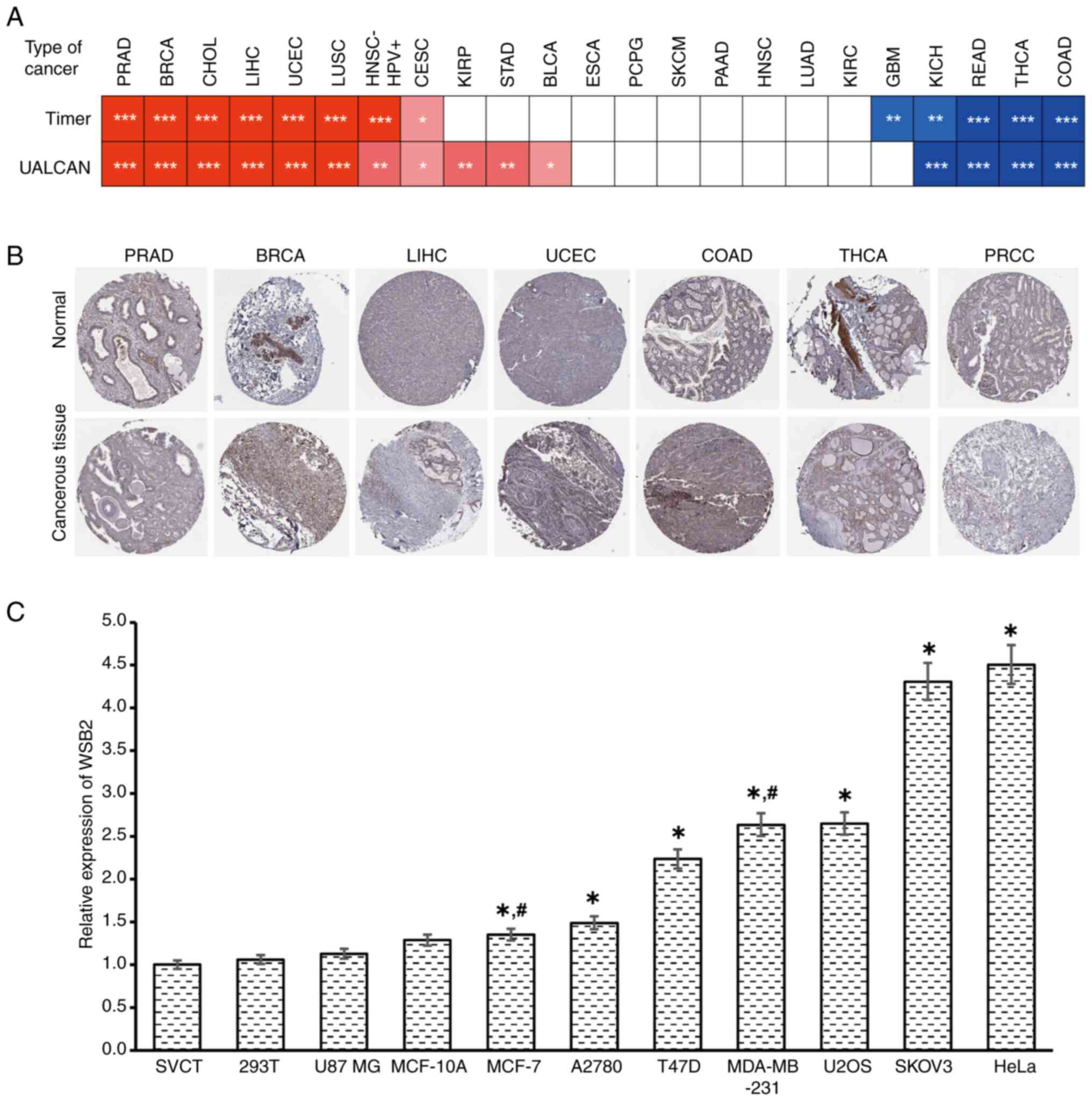
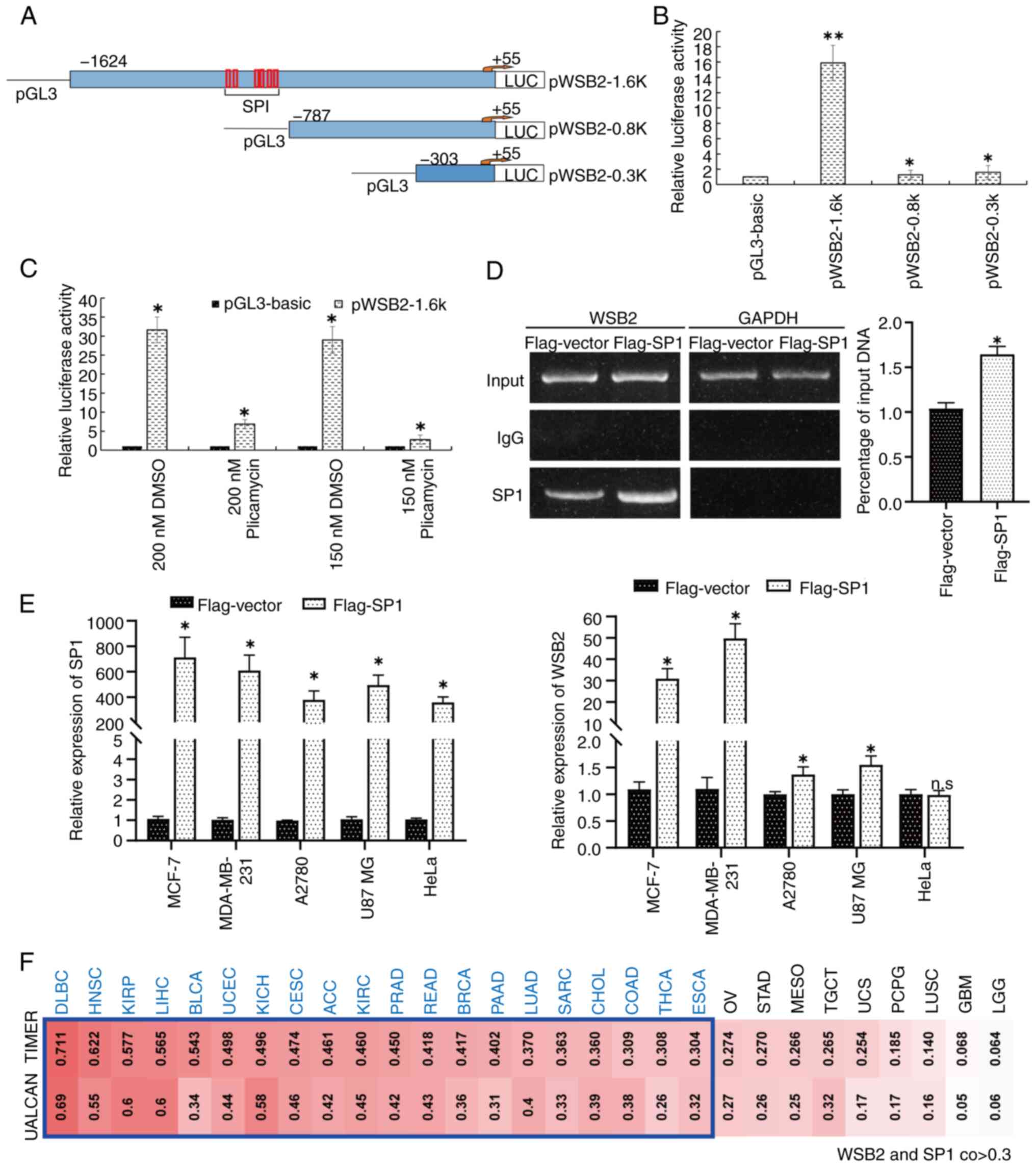
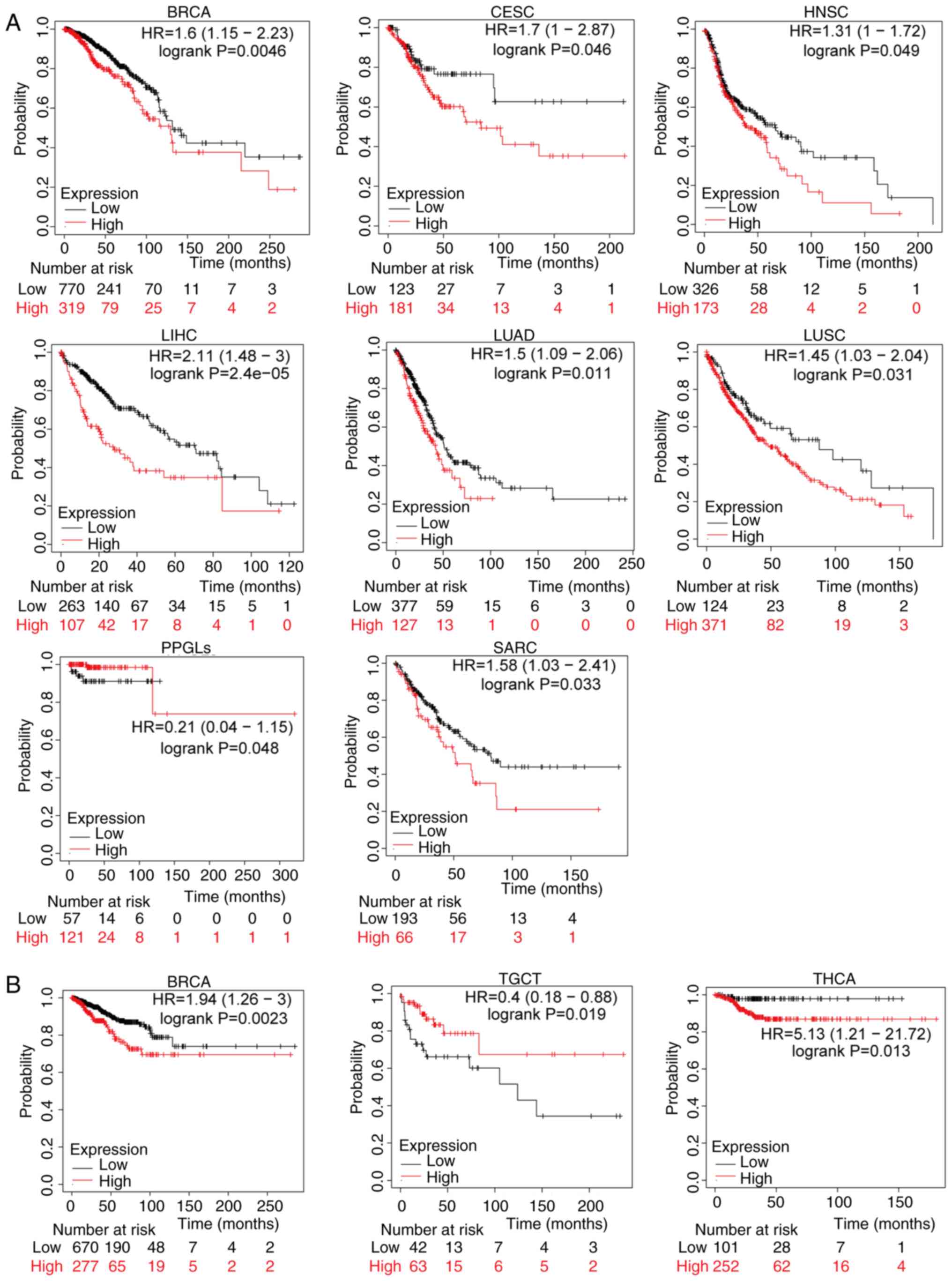
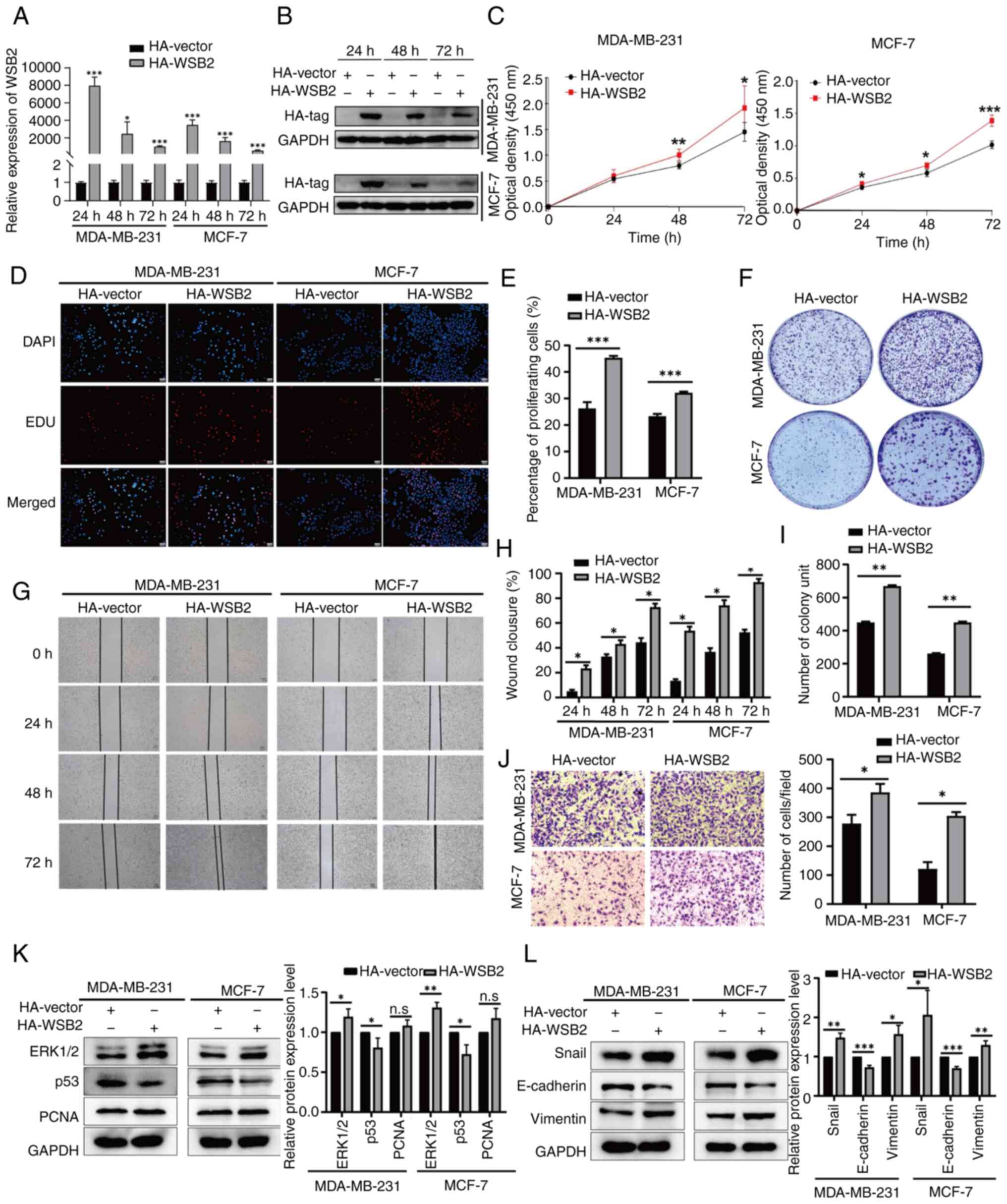
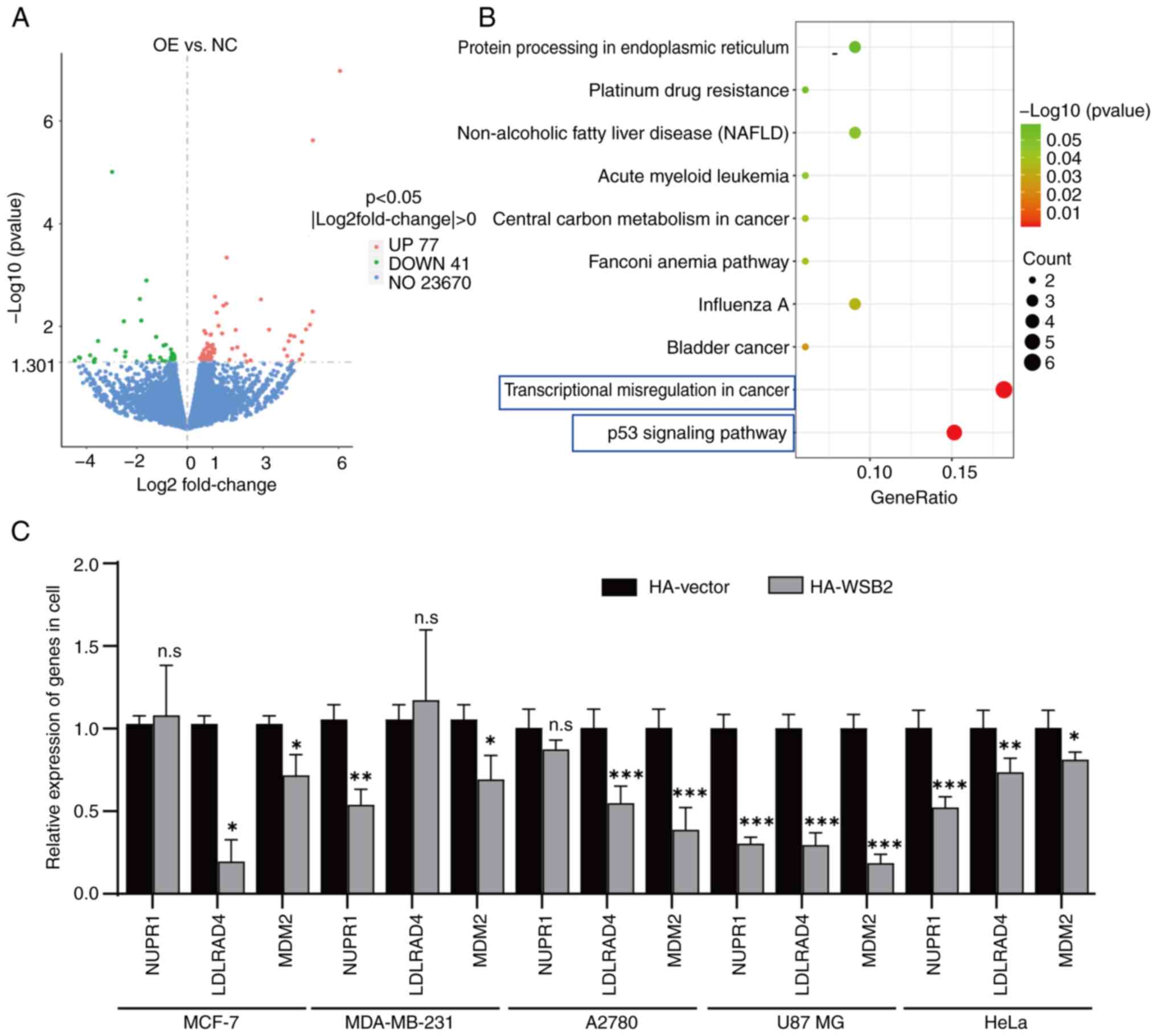
WD repeat and SOCS box containing 2 (WSB2) is an E3 ubiquitin ligase that might be involved in regulating protein stability, thus performing important roles in the development of different types of cancer. However, the biological significance of WSB2 in pan‑cancer is unclear. Pan‑cancer analysis with the online platforms UALCAN and TIMER2.0. revealed that the expression levels of WSB2 were increased in various types of tumors, including breast invasive carcinoma, uterine corpus endometrial carcinoma, liver hepatocellular carcinoma and were decreased in other types such as colon adenocarcinoma, kidney chromophobe and rectum adenocarcinoma, compared with that in their corresponding normal tissues. In addition, pan‑cancer analysis using The Human Protein Atlas database indicated that WSB2 expression levels vary across different cancer types. Reverse transcription‑quantitative PCR (RT‑qPCR) revealed that WSB2 expression varied in 11 different cell lines. Promoter activity analysis indicates that specificity protein 1 carries out a key role in regulating WSB2 expression by binding to its promoter region. UALCAN and Kaplan‑Meier analysis were used to assess the pathological stage and prognostic value of WSB2 in pan‑cancer. Finally, overexpression of WSB2 promoted the proliferation and migration of MCF‑7 and MDA‑MB‑231 cells. Western blotting revealed that WSB2 increased the levels of vimentin, Snail and ERK1/2, and inhibited the expression of p53 and E‑cadherin in MDA‑MB‑231 and MCF‑7 cells. Transcriptome sequencing analysis identified 118 differentially expressed genes associated with WSB2 overexpression, which were mainly enriched in the ‘p53 signaling pathway’. Furthermore, the expression of NUPR1 (encoding nuclear protein 1, transcriptional regulator), LDLRAD4 (encoding low density lipoprotein receptor class A domain containing 4) and MDM2 (encoding mouse double min 2) were verified by RT‑qPCR. Overall, the present study contributes to the understanding of the carcinogenic role of WSB2 in different types of cancer.
View Figures

Figure 1

Expression of WSB2 in cell lines and
tissues. (A) P-value heat maps of the TIMER and UALCAN analyses;
red indicates that the expression of WSB2 in cancer tissues is
increased compared with that in normal tissues, while blue
indicates that the expression of WSB2 in cancer tissues is
decreased *P<0.05, **P<0.01, ***P<0.001 vs. normal. (B)
Immunohistochemistry images of WSB2 protein expression from the
Human Protein Atlas database. (C) Expression of WSB2 in 11 cell
lines, as detected using RT-qPCR, *P<0.05 vs. SVCT cells,
#P<0.05 vs. MCF-10A cells. WSB2, WD repeat and SOCS
box containing 2; BRCA, breast invasive carcinoma; LIHC, liver
hepatocellular carcinoma; PRAD, prostate adenocarcinoma; UCEC,
uterine corpus endometrial carcinoma; COAD, colon adenocarcinoma;
THCA, thyroid carcinoma; PRCC, papillary renal cell carcinoma;
CHOL, cholangiocarcinoma; LUSC, Lung squamous cell carcinoma;
HNSC-HPV+, Human papillomavirus-Positive Head and Neck Squamous
Cell Carcinoma; CESC, Cervical and endocervical cancers; KIRP,
Kidney renal papillary cell carcinoma; STAD, Stomach
adenocarcinoma; BLCA, Bladder Urothelial Carcinoma; ESCA,
Esophageal carcinoma; PCPG, Pheochromocytoma and Paraganglioma;
SKCM, Skin Cutaneous Melanoma; PAAD, Pancreatic Adenocarcinoma;
LUAD, Lung adenocarcinoma; KIRC, Kidney renal clear cell carcinoma;
GBM, Glioblastoma multiforme; KICH, Kidney Chromophobe; READ,
Rectum adenocarcinoma.

Figure 2

Binding relationship between the WSB2
promoter and SP1. (A) Schematic diagram of the structure of three
WSB2 promoter luciferase expression vectors,
pWSB2-1.6k/pWSB2-0.8k/pWSB2-0.3k. (B) Relative levels of luciferase
activity of pWSB2-1.6k/pWSB2-0.8k/pWSB2-0.3k. (C) Relative levels
of luciferase activity of pWSB2-1.6k after treatment with
plicamycin. (D) The binding site of SP1 in the endogenous WSB2
promoter, as analyzed using chromatin immunoprecipitation-qPCR in
MDA-MB-231 cells, *P<0.05. (E) Reverse transcription-qPCR
analysis of the mRNA expression levels of SP1 and WSB2 in
MDA-MB-231, MCF-7, A2780, U87 MG and HeLa cells after
pCMV-SP1(human)-3×FLAG-Neo overexpression. (F) TIMER and UALCAN
data prediction of the correlation between SP1 and WSB2 expression
in a variety of types of cancer. Blue box, R>0.3. *P<0.05,
**P<0.01. WSB2, WD repeat and SOCS box containing 2; q,
quantitative; SP1, specificity protein-1.

Figure 3

Relationship between WD repeat and
SOCS box containing 2 gene expression and cancer survival and
prognosis. The Kaplan-Meier online database was used to analyze the
relationship between WSB2 expression and (A) overall survival and
(B) disease-free survival in The Cancer Genome Atlas and Gene
Expression Omnibus datasets. BRCA, breast invasive carcinoma; LIHC,
liver hepatocellular carcinoma; CESC, cervical squamous cell
carcinoma; HNSC, head and neck squamous cell carcinomas; LUAD, lung
adenocarcinoma; LUSC, lung squamous cell carcinoma; PPGLs,
pheochromocytomas and paragangliomas; TGCT, testicular germ cell
tumors; THCA, thyroid carcinoma; SARC, sarcoma; HR, hazard
ratio.

Figure 4

WSB2 promotes the proliferation and
migration of breast cancer cells. (A) Reverse
transcription-quantitative PCR and (B) western blotting were used
to detect the effect of WSB2 overexpression in MDA-MB-231 and MCF-7
cells. (C) Viability of MDA-MB-231 and MCF-7 cells was evaluated
using a CCK-8 assay. (D) Representative images and (E) the
quantification of the number of MDA-MB-231 and MCF-7 cells in the S
phase evaluated using an 5 ethynyl-2′-deoxyuridine assay. (F)
Representative images of colony formation ability of MDA-MB-231 and
MCF-7cells. (G) Representative images and (H) quantification of
wound healing and (I) colony formation ability of MDA-MB-231 and
MCF-7cells. (J) Transwell assays to determine the migration ability
of MDA-MB-231and MCF-7cells. (K) ERK1/2, p53 and PCNA and (L)
Snail, E-cadherin and Vimentin protein levels in MDA-MB-231 and
MCF-7 cells were detected using western blotting. *P<0.05,
**P<0.01, ***P<0.001. WSB2, WD repeat and SOCS box containing
2.

Figure 5

Detection of DEGs regulated by WSB2.
(A) MDA-MB-231 cells were transfected with pCMV-HA or pCMV-HA-WSB2.
Volcano map of DEGs, which was obtained from the transcriptome
sequencing analysis results. Red dots indicate significantly
upregulated genes and green dots indicate significantly
downregulated genes. (B) Top 10 Kyoto Encyclopedia of Genes and
Genomes pathway items enriched for DEGs. (C) NUPR1, MDM2 and
LDLRAD4 mRNA levels were detected in MDA-MB-231, MCF-7, A2780, U87
MG and HeLa cells using reverse transcription-quantitative PCR.
Compared with HA-vector, *P<0.05, **P<0.01, ***P<0.001 vs.
HA-vector. n.s, no significance; WSB2, WD repeat and SOCS box
containing 2; DEGs, differentially expressed genes; OE,
overexpressed; NC, negative control; LDLRAD4, low density
lipoprotein receptor class A domain containing 4; MDM2, mouse
double min 2; NUPR1, nuclear protein 1.
View References

1 

Miller KD, Nogueira L, Devasia T, Mariotto AB, Yabroff KR, Jemal A, Kramer J and Siegel RL: Cancer treatment and survivorship statistics, 2022. CA Cancer J Clin. 72:409–436. 2022.PubMed/NCBI

2 

Hu C, Li Q, Xiang L, Luo Y, Li S, An J, Yu X, Zhang G, Chen Y, Wang Y and Wang D: Comprehensive pan-cancer analysis unveils the significant prognostic value and potential role in immune microenvironment modulation of TRIB3. Comput Struct Biotechnol J. 23:234–250. 2023. View Article : Google Scholar : PubMed/NCBI

3 

Kirchhammer N, Trefny MP, Auf der Maur P, Läubli H and Zippelius A: Combination cancer immunotherapies: Emerging treatment strategies adapted to the tumor microenvironment. Sci Transl Med. 14:eabo36052022. View Article : Google Scholar : PubMed/NCBI

4 

Zhang Y, Li Z, Zhao W, Hu H, Zhao L, Zhu Y, Yang X, Gao B, Yang H, Huang Y and Song X: WD repeat and SOCS box containing protein 2 in the proliferation, cycle progression, and migration of melanoma cells. Biomed Pharmacother. 116:1089742019. View Article : Google Scholar : PubMed/NCBI

5 

Yu L, Gaitatzes C, Neer E and Smith TF: Thirty-plus functional families from a single motif. Protein Sci. 9:2470–2476. 2000. View Article : Google Scholar : PubMed/NCBI

6 

Jain BP and Pandey S: WD40 repeat proteins: Signalling scaffold with diverse functions. Protein J. 37:391–406. 2018. View Article : Google Scholar : PubMed/NCBI

7 

Kim JJ, Lee SB, Jang J, Yi SY, Kim SH, Han SA, Lee JM, Tong SY, Vincelette ND, Gao B, et al: WSB1 promotes tumor metastasis by inducing pVHL degradation. Genes Dev. 29:2244–2257. 2015. View Article : Google Scholar : PubMed/NCBI

8 

Kim JJ, Lee SB, Yi SY, Han SA, Kim SH, Lee JM, Tong SY, Yin P, Gao B, Zhang J and Lou Z: WSB1 overcomes oncogene-induced senescence by targeting ATM for degradation. Cell Res. 27:274–293. 2017. View Article : Google Scholar : PubMed/NCBI

9 

Ma L, Zhang Y and Hu F: miR-28-5p inhibits the migration of breast cancer by regulating WSB2. Int J Mol Med. 46:1562–1570. 2020.PubMed/NCBI

10 

Li X, Zhang CC, Lin XT, Zhang J, Zhang YJ, Yu HQ, Liu ZY, Gong Y, Zhang LD and Xie CM: Elevated expression of WSB2 degrades p53 and activates the IGFBP3-AKT-mTOR-dependent pathway to drive hepatocellular carcinoma. Exp Mol Med. 56:177–191. 2024. View Article : Google Scholar : PubMed/NCBI

11 

Zhou H, Lv Q and Guo Z: Transcriptomic signature predicts the distant relapse in patients with ER+ breast cancer treated with tamoxifen for five years. Mol Med Rep. 17:3152–3157. 2018.PubMed/NCBI

12 

Erkeland SJ, Aarts LH, Irandoust M, Roovers O, Klomp A, Valkhof M, Gits J, Eyckerman S, Tavernier J and Touw IP: Novel role of WD40 and SOCS box protein-2 in steady-state distribution of granulocyte colony-stimulating factor receptor and G-CSF-controlled proliferation and differentiation signaling. Oncogene. 26:1985–1994. 2007. View Article : Google Scholar : PubMed/NCBI

13 

Zhang J, Yu Y, Zou X, Du Y, Liang Q, Gong M, He Y, Luo J, Wu D, Jiang X, et al: WSB1/2 target chromatin-bound lysine-methylated RelA for proteasomal degradation and NF-κB termination. Nucleic Acids Res. 52:4969–4984. 2024. View Article : Google Scholar : PubMed/NCBI

14 

Chen J, Chen X, Cai H, Yang Y, Zhu Q, Sun D and Gao C: The ubiquitination degradation of KLF15 mediated by WSB2 promotes lipogenesis and progression of hepatocellular carcinoma via inhibiting PDLIM2 expression. J Gastroenterol Hepatol. 40:192–207. 2025. View Article : Google Scholar : PubMed/NCBI

15 

Li T, Fan J, Wang B, Traugh N, Chen Q, Liu JS, Li B and Liu XS: TIMER: A web server for comprehensive analysis of tumor-infiltrating immune cells. Cancer Res. 77:e108–e110. 2017. View Article : Google Scholar : PubMed/NCBI

16 

Chandrashekar DS, Karthikeyan SK, Korla PK, Patel H, Shovon AR, Athar M, Netto GJ, Qin ZS, Kumar S, Manne U, et al: UALCAN: An update to the integrated cancer data analysis platform. Neoplasia. 25:18–27. 2022. View Article : Google Scholar : PubMed/NCBI

17 

Pontén F, Schwenk JM, Asplund A and Edqvist PH: The human protein atlas as a proteomic resource for biomarker discovery. J Intern Med. 270:428–446. 2011. View Article : Google Scholar : PubMed/NCBI

18 

Goel MK, Khanna P and Kishore J: Understanding survival analysis: Kaplan-Meier estimate. Int J Ayurveda Res. 1:274–278. 2010. View Article : Google Scholar : PubMed/NCBI

19 

Livak KJ and Schmittgen TD: Analysis of relative gene expression data using real-time quantitative PCR and the 2(−Delta Delta C(T)) Method. Methods. 25:402–408. 2001. View Article : Google Scholar : PubMed/NCBI

20 

Hu F, Meng Y, Gou L and Zhang X: Analysis of promoters and CREB/AP-1 binding sites of the human TMEM174 gene. Exp Ther Med. 6:1290–1294. 2013. View Article : Google Scholar : PubMed/NCBI

21 

Hu F, Meng X, Tong Q, Liang L, Xiang R, Zhu T and Yang S: BMP-6 inhibits cell proliferation by targeting microRNA-192 in breast cancer. Biochim Biophys Acta. 1832:2379–2390. 2013. View Article : Google Scholar : PubMed/NCBI

22 

Wang J, Zou Y, Guan R, Tan S, Su L, Zhao Z, Cao Z, Jiang K, Wang T and Zheng G: Copper supplementation alleviates hypoxia-induced ferroptosis and oxidative stress in neuronal cells. Int J Mol Med. 54:1172024. View Article : Google Scholar : PubMed/NCBI

23 

Hu F, Zhang Y, Li M, Bai Y and Zhang X: Expression and role of HEPIS in breast cancer. Oncol Lett. 18:6648–6656. 2019.PubMed/NCBI

24 

Li J, Jiang H, Lv Z, Sun Z, Cheng C, Tan G, Wang M, Liu A, Sun H, Guo H, et al: Articular fibrocartilage-targeted therapy by microtubule stabilization. Sci Adv. 8:eabn84202022. View Article : Google Scholar : PubMed/NCBI

25 

Zhang X, Hao L, Meng L, Liu M, Zhao L, Hu F, Ding C, Wang Y, He B, Pan Y, et al: Digital gene expression tag profiling analysis of the gene expression patterns regulating the early stage of mouse spermatogenesis. PLoS One. 8:e586802013. View Article : Google Scholar : PubMed/NCBI

26 

Kanehisa M and Goto S: KEGG: Kyoto encyclopedia of genes and genomes. Nucleic Acids Res. 28:27–30. 2000. View Article : Google Scholar : PubMed/NCBI

27 

Lambert SA, Jolma A, Campitelli LF, Das PK, Yin Y, Albu M, Chen X, Taipale J, Hughes TR and Weirauch MT: The human transcription factors. Cell. 172:650–665. 2018. View Article : Google Scholar : PubMed/NCBI

28 

Gothe HJ, Bouwman BAM, Gusmao EG, Piccinno R, Petrosino G, Sayols S, Drechsel O, Minneker V, Josipovic N, Mizi A, et al: Spatial chromosome folding and active transcription drive DNA fragility and formation of oncogenic MLL translocations. Mol Cell. 75:267–283.e12. 2019. View Article : Google Scholar : PubMed/NCBI

29 

Lu F and Lionnet T: Transcription factor dynamics. Cold Spring Harb Perspect Biol. 13:a0409492021. View Article : Google Scholar : PubMed/NCBI

30 

Moore LD, Le T and Fan G: DNA methylation and its basic function. Neuropsychopharmacology. 38:23–38. 2013. View Article : Google Scholar : PubMed/NCBI

31 

Vellingiri B, Iyer M, Devi Subramaniam M, Jayaramayya K, Siama Z, Giridharan B, Narayanasamy A, Abdal Dayem A and Cho SG: Understanding the role of the transcription factor Sp1 in ovarian cancer: From theory to practice. Int J Mol Sci. 21:11532020. View Article : Google Scholar : PubMed/NCBI

32 

Vizcaíno C, Mansilla S and Portugal J: Sp1 transcription factor: A long-standing target in cancer chemotherapy. Pharmacol Ther. 152:111–124. 2015. View Article : Google Scholar : PubMed/NCBI

33 

Zhang M, Lu K, Wei G, Xiao G, Tong L and Chen D: Multiple cullin-associated E3 ligases regulate cyclin D1 protein stability. Elife. 12:e803272023. View Article : Google Scholar : PubMed/NCBI

34 

Nara H, Onoda T, Rahman M, Araki A, Juliana FM, Tanaka N and Asao H: Regulation of interleukin-21 receptor expression and its signal transduction by WSB-2. Biochem Biophys Res Commun. 392:171–177. 2010. View Article : Google Scholar : PubMed/NCBI

35 

Yang Z, Jia Y, Wang S, Zhang Y, Fan W, Wang X, He L, Shen X, Yang X, Zhang Y and Yang H: Retinoblastoma-binding protein 5 regulates H3K4 methylation modification to inhibit the proliferation of melanoma cells by inactivating the Wnt/β-catenin and epithelial-mesenchymal transition pathways. J Oncol. 2023:50939412023. View Article : Google Scholar : PubMed/NCBI

Related Articles

  • Abstract
  • View
  • Download
  • Twitter
Copy and paste a formatted citation
Spandidos Publications style
Deng Y, Li Y, Li R, Guo X, Liu Y, Wang S, Zhang J, Li M, Zhao L, Cai H, Cai H, et al: Pan‑cancer analysis of the carcinogenic role of WSB2 in human tumors. Mol Med Rep 32: 260, 2025.
APA
Deng, Y., Li, Y., Li, R., Guo, X., Liu, Y., Wang, S. ... Hu, F. (2025). Pan‑cancer analysis of the carcinogenic role of WSB2 in human tumors. Molecular Medicine Reports, 32, 260. https://doi.org/10.3892/mmr.2025.13625
MLA
Deng, Y., Li, Y., Li, R., Guo, X., Liu, Y., Wang, S., Zhang, J., Li, M., Zhao, L., Cai, H., Zhang, Y., Hu, F."Pan‑cancer analysis of the carcinogenic role of WSB2 in human tumors". Molecular Medicine Reports 32.4 (2025): 260.
Chicago
Deng, Y., Li, Y., Li, R., Guo, X., Liu, Y., Wang, S., Zhang, J., Li, M., Zhao, L., Cai, H., Zhang, Y., Hu, F."Pan‑cancer analysis of the carcinogenic role of WSB2 in human tumors". Molecular Medicine Reports 32, no. 4 (2025): 260. https://doi.org/10.3892/mmr.2025.13625
Copy and paste a formatted citation
x
Spandidos Publications style
Deng Y, Li Y, Li R, Guo X, Liu Y, Wang S, Zhang J, Li M, Zhao L, Cai H, Cai H, et al: Pan‑cancer analysis of the carcinogenic role of WSB2 in human tumors. Mol Med Rep 32: 260, 2025.
APA
Deng, Y., Li, Y., Li, R., Guo, X., Liu, Y., Wang, S. ... Hu, F. (2025). Pan‑cancer analysis of the carcinogenic role of WSB2 in human tumors. Molecular Medicine Reports, 32, 260. https://doi.org/10.3892/mmr.2025.13625
MLA
Deng, Y., Li, Y., Li, R., Guo, X., Liu, Y., Wang, S., Zhang, J., Li, M., Zhao, L., Cai, H., Zhang, Y., Hu, F."Pan‑cancer analysis of the carcinogenic role of WSB2 in human tumors". Molecular Medicine Reports 32.4 (2025): 260.
Chicago
Deng, Y., Li, Y., Li, R., Guo, X., Liu, Y., Wang, S., Zhang, J., Li, M., Zhao, L., Cai, H., Zhang, Y., Hu, F."Pan‑cancer analysis of the carcinogenic role of WSB2 in human tumors". Molecular Medicine Reports 32, no. 4 (2025): 260. https://doi.org/10.3892/mmr.2025.13625
Follow us
  • Twitter
  • LinkedIn
  • Facebook
About
  • Spandidos Publications
  • Careers
  • Cookie Policy
  • Privacy Policy
How can we help?
  • Help
  • Live Chat
  • Contact
  • Email to our Support Team