Spandidos Publications Logo
  • About
    • About Spandidos
    • Aims and Scopes
    • Abstracting and Indexing
    • Editorial Policies
    • Reprints and Permissions
    • Job Opportunities
    • Terms and Conditions
    • Contact
  • Journals
    • All Journals
    • Oncology Letters
      • Oncology Letters
      • Information for Authors
      • Editorial Policies
      • Editorial Board
      • Aims and Scope
      • Abstracting and Indexing
      • Bibliographic Information
      • Archive
    • International Journal of Oncology
      • International Journal of Oncology
      • Information for Authors
      • Editorial Policies
      • Editorial Board
      • Aims and Scope
      • Abstracting and Indexing
      • Bibliographic Information
      • Archive
    • Molecular and Clinical Oncology
      • Molecular and Clinical Oncology
      • Information for Authors
      • Editorial Policies
      • Editorial Board
      • Aims and Scope
      • Abstracting and Indexing
      • Bibliographic Information
      • Archive
    • Experimental and Therapeutic Medicine
      • Experimental and Therapeutic Medicine
      • Information for Authors
      • Editorial Policies
      • Editorial Board
      • Aims and Scope
      • Abstracting and Indexing
      • Bibliographic Information
      • Archive
    • International Journal of Molecular Medicine
      • International Journal of Molecular Medicine
      • Information for Authors
      • Editorial Policies
      • Editorial Board
      • Aims and Scope
      • Abstracting and Indexing
      • Bibliographic Information
      • Archive
    • Biomedical Reports
      • Biomedical Reports
      • Information for Authors
      • Editorial Policies
      • Editorial Board
      • Aims and Scope
      • Abstracting and Indexing
      • Bibliographic Information
      • Archive
    • Oncology Reports
      • Oncology Reports
      • Information for Authors
      • Editorial Policies
      • Editorial Board
      • Aims and Scope
      • Abstracting and Indexing
      • Bibliographic Information
      • Archive
    • Molecular Medicine Reports
      • Molecular Medicine Reports
      • Information for Authors
      • Editorial Policies
      • Editorial Board
      • Aims and Scope
      • Abstracting and Indexing
      • Bibliographic Information
      • Archive
    • World Academy of Sciences Journal
      • World Academy of Sciences Journal
      • Information for Authors
      • Editorial Policies
      • Editorial Board
      • Aims and Scope
      • Abstracting and Indexing
      • Bibliographic Information
      • Archive
    • International Journal of Functional Nutrition
      • International Journal of Functional Nutrition
      • Information for Authors
      • Editorial Policies
      • Editorial Board
      • Aims and Scope
      • Abstracting and Indexing
      • Bibliographic Information
      • Archive
    • International Journal of Epigenetics
      • International Journal of Epigenetics
      • Information for Authors
      • Editorial Policies
      • Editorial Board
      • Aims and Scope
      • Abstracting and Indexing
      • Bibliographic Information
      • Archive
    • Medicine International
      • Medicine International
      • Information for Authors
      • Editorial Policies
      • Editorial Board
      • Aims and Scope
      • Abstracting and Indexing
      • Bibliographic Information
      • Archive
  • Articles
  • Information
    • Information for Authors
    • Information for Reviewers
    • Information for Librarians
    • Information for Advertisers
    • Conferences
  • Language Editing
Spandidos Publications Logo
  • About
    • About Spandidos
    • Aims and Scopes
    • Abstracting and Indexing
    • Editorial Policies
    • Reprints and Permissions
    • Job Opportunities
    • Terms and Conditions
    • Contact
  • Journals
    • All Journals
    • Biomedical Reports
      • Information for Authors
      • Editorial Policies
      • Editorial Board
      • Aims and Scope
      • Abstracting and Indexing
      • Bibliographic Information
      • Archive
    • Experimental and Therapeutic Medicine
      • Information for Authors
      • Editorial Policies
      • Editorial Board
      • Aims and Scope
      • Abstracting and Indexing
      • Bibliographic Information
      • Archive
    • International Journal of Epigenetics
      • Information for Authors
      • Editorial Policies
      • Editorial Board
      • Aims and Scope
      • Abstracting and Indexing
      • Bibliographic Information
      • Archive
    • International Journal of Functional Nutrition
      • Information for Authors
      • Editorial Policies
      • Editorial Board
      • Aims and Scope
      • Abstracting and Indexing
      • Bibliographic Information
      • Archive
    • International Journal of Molecular Medicine
      • Information for Authors
      • Editorial Policies
      • Editorial Board
      • Aims and Scope
      • Abstracting and Indexing
      • Bibliographic Information
      • Archive
    • International Journal of Oncology
      • Information for Authors
      • Editorial Policies
      • Editorial Board
      • Aims and Scope
      • Abstracting and Indexing
      • Bibliographic Information
      • Archive
    • Medicine International
      • Information for Authors
      • Editorial Policies
      • Editorial Board
      • Aims and Scope
      • Abstracting and Indexing
      • Bibliographic Information
      • Archive
    • Molecular and Clinical Oncology
      • Information for Authors
      • Editorial Policies
      • Editorial Board
      • Aims and Scope
      • Abstracting and Indexing
      • Bibliographic Information
      • Archive
    • Molecular Medicine Reports
      • Information for Authors
      • Editorial Policies
      • Editorial Board
      • Aims and Scope
      • Abstracting and Indexing
      • Bibliographic Information
      • Archive
    • Oncology Letters
      • Information for Authors
      • Editorial Policies
      • Editorial Board
      • Aims and Scope
      • Abstracting and Indexing
      • Bibliographic Information
      • Archive
    • Oncology Reports
      • Information for Authors
      • Editorial Policies
      • Editorial Board
      • Aims and Scope
      • Abstracting and Indexing
      • Bibliographic Information
      • Archive
    • World Academy of Sciences Journal
      • Information for Authors
      • Editorial Policies
      • Editorial Board
      • Aims and Scope
      • Abstracting and Indexing
      • Bibliographic Information
      • Archive
  • Articles
  • Information
    • For Authors
    • For Reviewers
    • For Librarians
    • For Advertisers
    • Conferences
  • Language Editing
Login Register Submit
  • This site uses cookies
  • You can change your cookie settings at any time by following the instructions in our Cookie Policy. To find out more, you may read our Privacy Policy.

    I agree
Search articles by DOI, keyword, author or affiliation
Search
Advanced Search
presentation
Molecular Medicine Reports
Join Editorial Board Propose a Special Issue
Print ISSN: 1791-2997 Online ISSN: 1791-3004
Journal Cover
October-2025 Volume 32 Issue 4

Full Size Image

Sign up for eToc alerts
Recommend to Library

Journals

International Journal of Molecular Medicine

International Journal of Molecular Medicine

International Journal of Molecular Medicine is an international journal devoted to molecular mechanisms of human disease.

International Journal of Oncology

International Journal of Oncology

International Journal of Oncology is an international journal devoted to oncology research and cancer treatment.

Molecular Medicine Reports

Molecular Medicine Reports

Covers molecular medicine topics such as pharmacology, pathology, genetics, neuroscience, infectious diseases, molecular cardiology, and molecular surgery.

Oncology Reports

Oncology Reports

Oncology Reports is an international journal devoted to fundamental and applied research in Oncology.

Experimental and Therapeutic Medicine

Experimental and Therapeutic Medicine

Experimental and Therapeutic Medicine is an international journal devoted to laboratory and clinical medicine.

Oncology Letters

Oncology Letters

Oncology Letters is an international journal devoted to Experimental and Clinical Oncology.

Biomedical Reports

Biomedical Reports

Explores a wide range of biological and medical fields, including pharmacology, genetics, microbiology, neuroscience, and molecular cardiology.

Molecular and Clinical Oncology

Molecular and Clinical Oncology

International journal addressing all aspects of oncology research, from tumorigenesis and oncogenes to chemotherapy and metastasis.

World Academy of Sciences Journal

World Academy of Sciences Journal

Multidisciplinary open-access journal spanning biochemistry, genetics, neuroscience, environmental health, and synthetic biology.

International Journal of Functional Nutrition

International Journal of Functional Nutrition

Open-access journal combining biochemistry, pharmacology, immunology, and genetics to advance health through functional nutrition.

International Journal of Epigenetics

International Journal of Epigenetics

Publishes open-access research on using epigenetics to advance understanding and treatment of human disease.

Medicine International

Medicine International

An International Open Access Journal Devoted to General Medicine.

Journal Cover
October-2025 Volume 32 Issue 4

Full Size Image

Sign up for eToc alerts
Recommend to Library

  • Article
  • Citations
    • Cite This Article
    • Download Citation
    • Create Citation Alert
    • Remove Citation Alert
    • Cited By
  • Similar Articles
    • Related Articles (in Spandidos Publications)
    • Similar Articles (Google Scholar)
    • Similar Articles (PubMed)
  • Download PDF
  • Download XML
  • View XML
Article Open Access

A novel tRNA‑derived small RNA, 5'tiRNA‑Gln‑TTG‑001, aggravates cardiomyocyte inflammatory injury through upregulation of CLIC4

  • Authors:
    • Jing Wang
    • Yingchun Yi
    • Bo Han
    • Li Zhang
    • Hailin Jia
  • View Affiliations / Copyright

    Affiliations: Department of Pediatric Cardiology, Shandong Provincial Hospital Affiliated to Shandong First Medical University, Jinan, Shandong 250021, P.R. China
    Copyright: © Wang et al. This is an open access article distributed under the terms of Creative Commons Attribution License.
  • Article Number: 261
    |
    Published online on: July 21, 2025
       https://doi.org/10.3892/mmr.2025.13626
  • Expand metrics +
Metrics: Total Views: 0 (Spandidos Publications: | PMC Statistics: )
Metrics: Total PDF Downloads: 0 (Spandidos Publications: | PMC Statistics: )
Cited By (CrossRef): 0 citations Loading Articles...

This article is mentioned in:


Abstract

Acute myocarditis encompasses a spectrum of diseases characterized by ongoing inflammation and cardiomyocyte injury, lacking specific diagnostic biomarkers and effective therapies. Transfer RNA (tRNA)‑derived small RNAs (tsRNAs), formed by specific cleavage of tRNAs in response to certain stimuli, participate in diverse diseases; however, their involvement in myocarditis remains unclear. The present study aimed to investigate the role and mechanism of a novel tsRNA, 5'tRNA‑derived stress‑induced RNA (tiRNA)‑Gln‑TTG‑001, in myocarditis. Plasma samples were obtained from patients with acute myocarditis to examine the clinical significance of 5'tiRNA‑Gln‑TTG‑001. AC16 human cardiomyocytes treated with lipopolysaccharide to induce inflammatory responses were utilized to explore the function and mechanism of 5'tiRNA‑Gln‑TTG‑001. Cell viability, apoptosis rates, and levels of factors associated with inflammation (IL‑1β, IL‑6 and IL‑18), myocardial injury (creatine kinase MB and high‑sensitivity cardiac troponin) and myocardial dysfunction (N‑terminal pro‑B‑type natriuretic peptide) were quantified to assess the degree of cardiomyocyte inflammatory injury. RNA fluorescence in situ hybridization (RNA‑FISH), cell transfection, dual‑luciferase reporter assays and functional experiments, including gain‑of‑function and loss‑of‑function assays and rescue experiments, were carried out to further explore the underlying mechanisms. The results revealed that 5'tiRNA‑Gln‑TTG‑001 was upregulated in acute myocarditis and positively correlated with high‑sensitivity cardiac troponin T and T2 ratio. In vitro experiments demonstrated that 5'tiRNA‑Gln‑TTG‑001 aggravated cardiomyocyte inflammatory injury. RNA‑FISH revealed co‑localization of 5'tiRNA‑Gln‑TTG‑001 and chloride intracellular channel 4 (CLIC4) in the nucleus and cytoplasm. Gain‑of‑function and loss‑of‑function experiments revealed that 5'tiRNA‑Gln‑TTG‑001 promoted CLIC4 expression. Dual‑luciferase reporter assays indicated that 5'tiRNA‑Gln‑TTG‑001 activated CLIC4 by binding to its 3'untranslated region. Furthermore, downregulation of CLIC4 rescued cardiomyocyte inflammatory injury aggravated by 5'tiRNA‑Gln‑TTG‑001. Meanwhile, the knockdown of 5'tiRNA‑Gln‑TTG‑001 reduced cardiomyocyte inflammatory injury and the effect was reversed by the upregulation of CLIC4. Overall, the present study demonstrated that 5'tiRNA‑Gln‑TTG‑001 may aggravate cardiomyocyte inflammatory injury via CLIC4 upregulation. Moreover, 5'tiRNA‑Gln‑TTG‑001 could offer a promising option for the diagnosis of myocarditis and serve as a potential therapeutic target.
View Figures

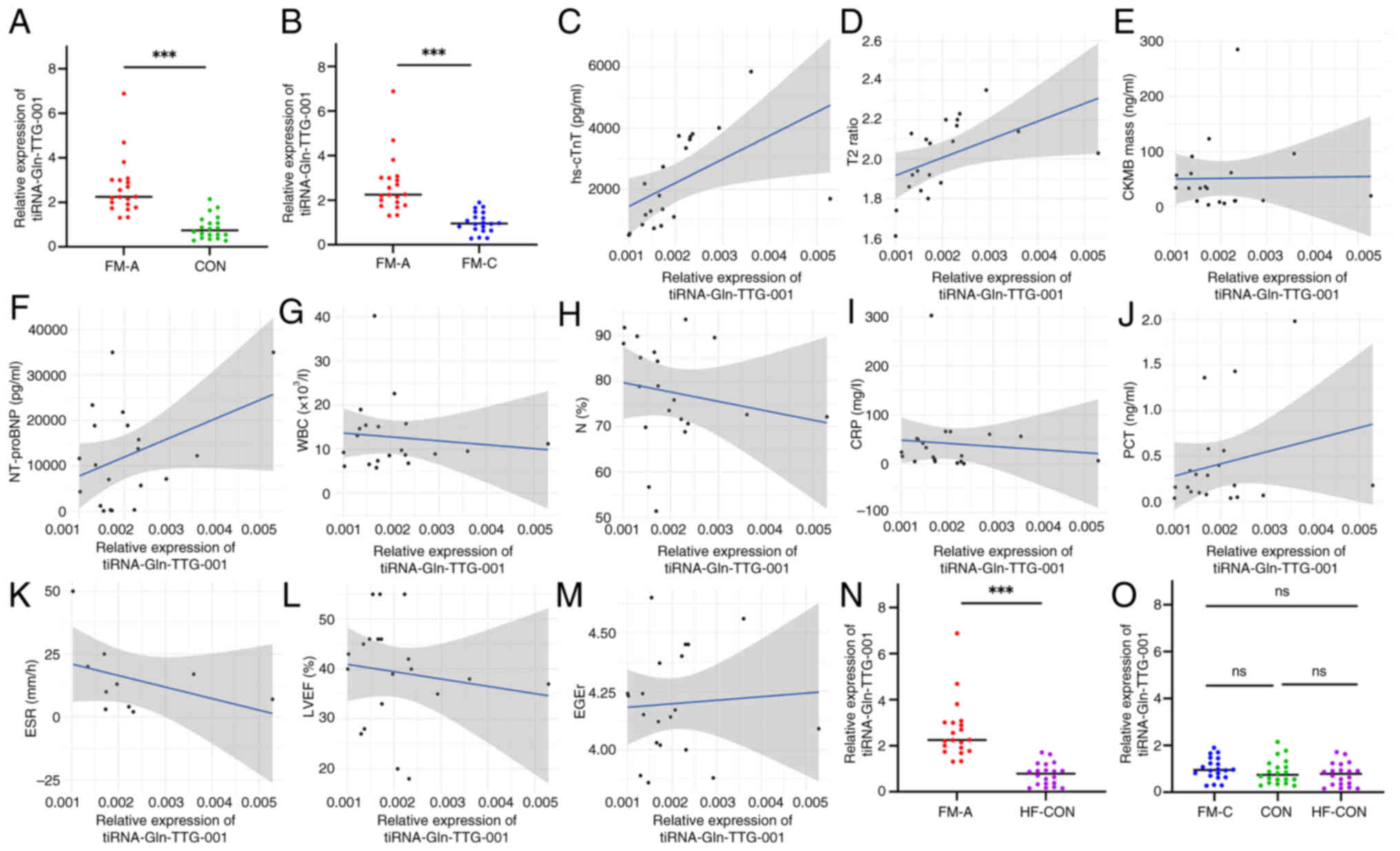
Figure 1

Clinical significance of
5′tiRNA-Gln-TTG-001. Expression levels of 5′tiRNA-Gln-TTG-001 in
(A) FM-A and CON, and in (B) FM-A and FM-C were detected by
RT-qPCR. Expression levels of 5′tiRNA-Gln-TTG-001 demonstrated a
positive correlation with (C) hs-cTnT values and (D) the T2 ratio.
No significance was observed between the relative expression levels
of 5′tiRNA-Gln-TTG-001 and (E) CKMB mass, (F) NT-proBNP, (G) WBC,
(H) N%, (I) CRP, (J) PCT, (K) ESR, (L) LVEF and (M) EGEr.
Expression levels of 5′tiRNA-Gln-TTG-001 in (N) FM-A and HF-CON,
and in (O) FM-C, FM-A and HF-CON were detected by RT-qPCR, and no
significant differences were observed among FM-C, CON and HF-CON.
Data are presented as the mean ± SD. ***P<0.001; ns, not
significant (P>0.05). CKMB, creatine kinase MB; CON, control;
CRP, C-reactive protein; EGEr, early gadolinium enhancement ratio;
ESR, erythrocyte sedimentation rate; FM, fulminant myocarditis;
FM-A, acute FM; FM-C, convalescent FM; hs-cTnT, high-sensitivity
cardiac troponin; LVEF, left ventricular ejection fraction; N,
neutrophil ratio; NT-proBNP, N-terminal pro-B-type natriuretic
peptide; PCT, procalcitonin; RT-qPCR, reverse
transcription-quantitative PCR; tiRNA, transfer RNA-derived
stress-induced RNA; WBC, white blood cell count.

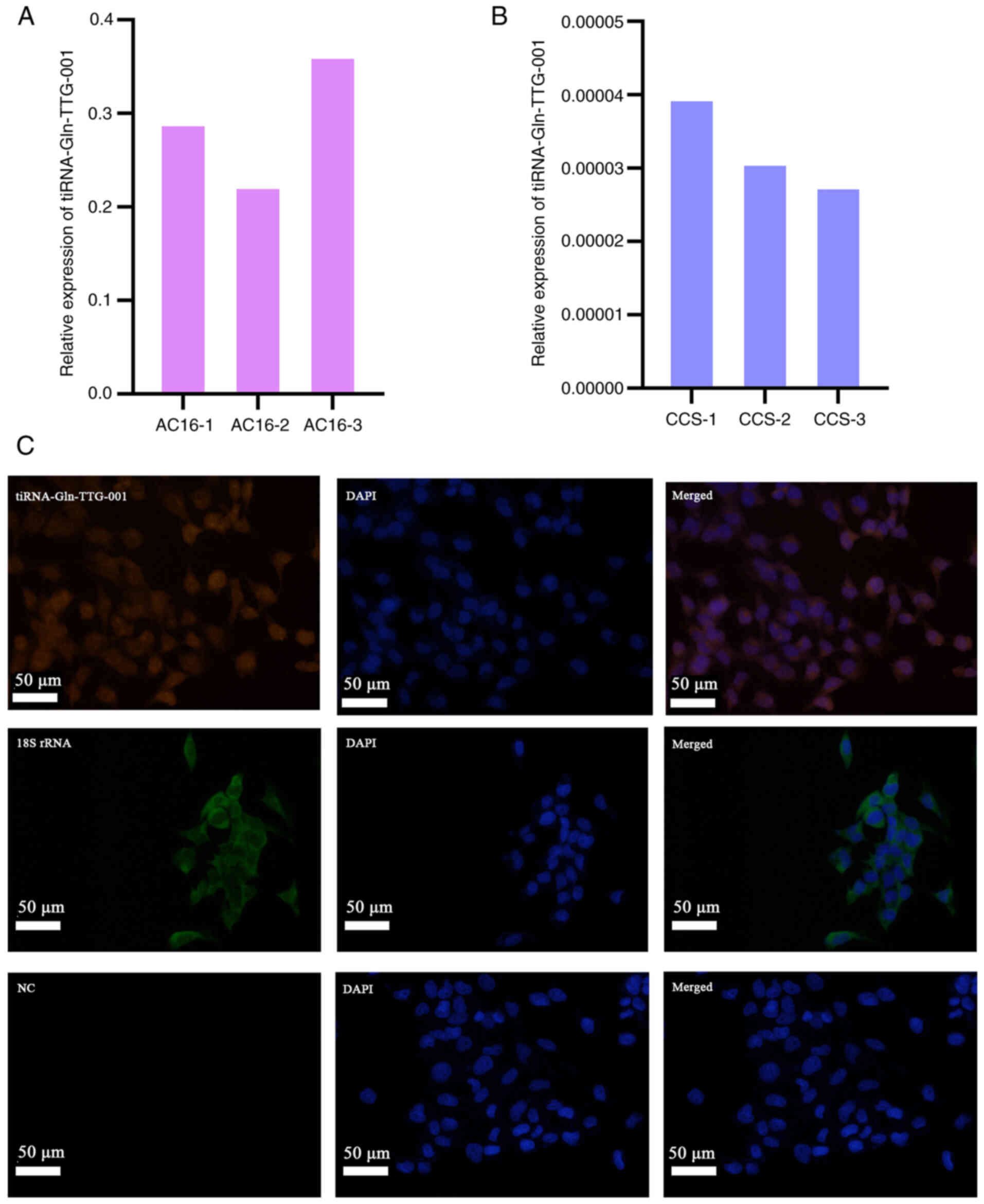
Figure 2

Origin and subcellular localization
of 5′tiRNA-Gln-TTG-001. (A) Expression levels of
5′tiRNA-Gln-TTG-001 from AC16 cells were detected by RT-qPCR.
Representative data from three discrete experiments (AC16-1, AC16-2
and AC16-3) are shown. These data are presented as visual
representations only and have not been analyzed statistically. (B)
Expression levels of 5′tiRNA-Gln-TTG-001 from CCS were detected by
RT-qPCR. Data from three distinct experiments (CCS-1, CCS-2 and
CCS-3) are presented. These data are displayed solely as visual
representations and have not undergone statistical analysis. (C)
RNA-FISH demonstrated distribution of 5′tiRNA-Gln-TTG-001 within
both the cytoplasmic and nuclear compartments, 18S rRNA (labelled
with carboxyfluorescein, green) exclusively in the cytoplasm, and
the absence of signal in the NC. 5′tiRNA-Gln-TTG-001 probes were
labeled with cyanine 3 (red). Nuclei were stained with DAPI (blue).
Scale bar, 50 µm. All experiments were independently replicated at
least three times. CCS, cell culture supernatant; FISH,
fluorescence in situ hybridization; NC, negative control;
tiRNA, transfer RNA-derived stress-induced RNA.

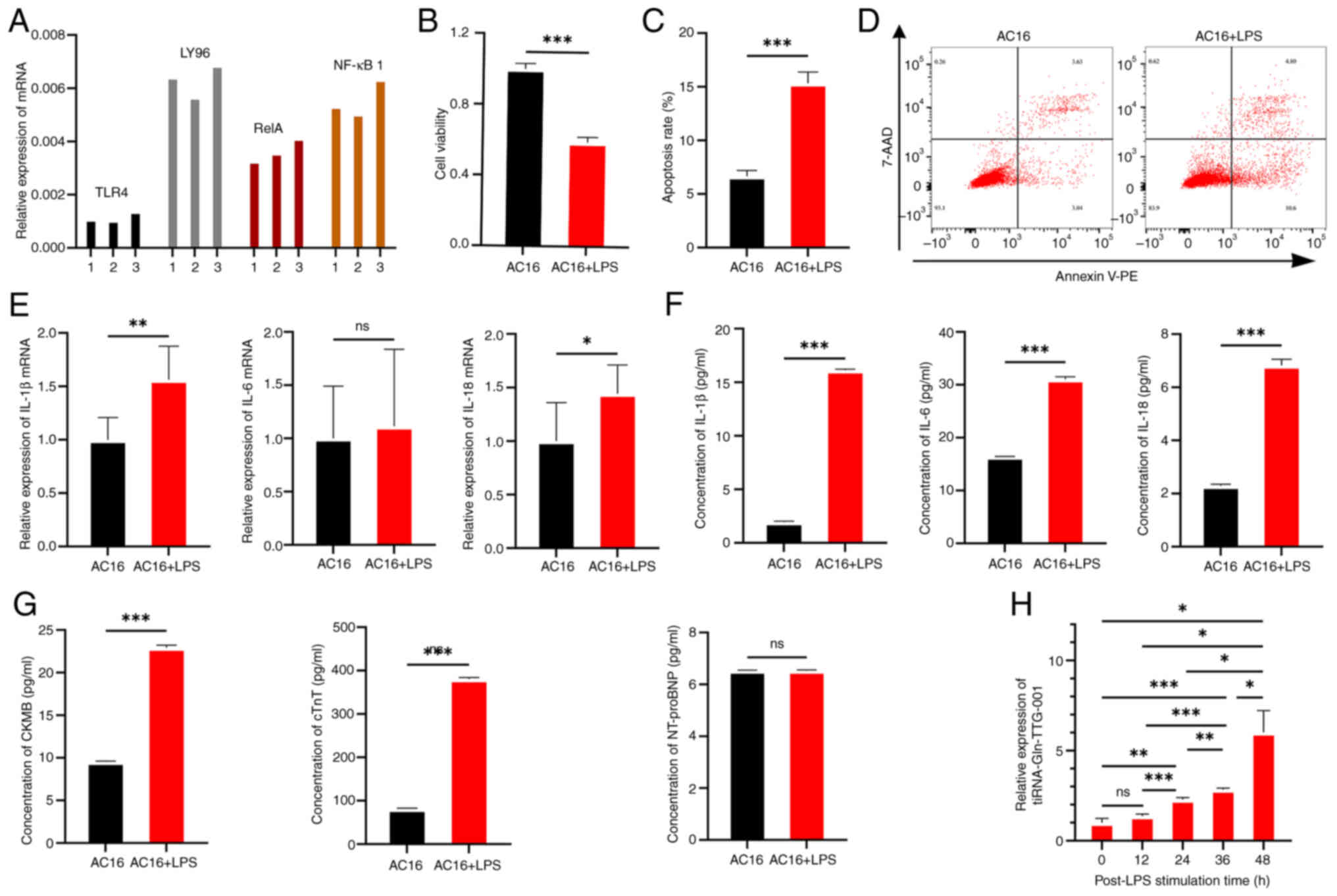
Figure 3

Establishment of the cell model
mimicking myocarditis and dynamic expression of
5′tiRNA-Gln-TTG-001. (A) Expression levels of TLR4, LY96, RelA and
NF-kB1. Representative data from three distinct experiments are
presented. These data are provided solely as visual representations
and have not undergone statistical analysis. (B) Cell viability was
measured using the Cell Counting Kit-8 assay with or without LPS
stimulation. Apoptosis was assessed utilizing an Annexin V-PE/7-AAD
double staining protocol in conjunction with a flow cytometry-based
apoptosis assay with or without LPS stimulation; (C) quantification
of results and (D) representative images. (E) Expression levels of
IL-1β, IL-6 and IL-18 were detected by RT-qPCR with or without LPS
stimulation. (F) Levels of IL-1β, IL-6 and IL-18 were detected by
ELISA with or without LPS stimulation. (G) Levels of CKMB, cTnT and
NT-proBNP were detected by ELISA with or without LPS stimulation.
(H) Expression levels of 5′tiRNA-Gln-TTG-001 secreted from AC16
cells were detected by RT-qPCR at 0, 12, 24, 36 and 48 h post-LPS
stimulation, and they were markedly elevated at 48, 36 and 24 h
compared with all earlier time points but did not differ at 12 h
compared with at 0 h. Data are presented as the mean ± SD.
*P<0.05, **P<0.01, ***P<0.001; ns, not significant
(P>0.05). 7-AAD, 7-aminoactinomycin D; CKMB, creatine kinase MB;
cTnT, cardiac troponin; LPS, lipopolysaccharide; LY96, lymphocyte
antigen 96; NT-proBNP, N-terminal pro-B-type natriuretic peptide;
PE, phycoerythrin; RT-qPCR, reverse transcription-quantitative PCR;
tiRNA, transfer RNA-derived stress-induced RNA; TLR4, Toll-like
receptor 4.

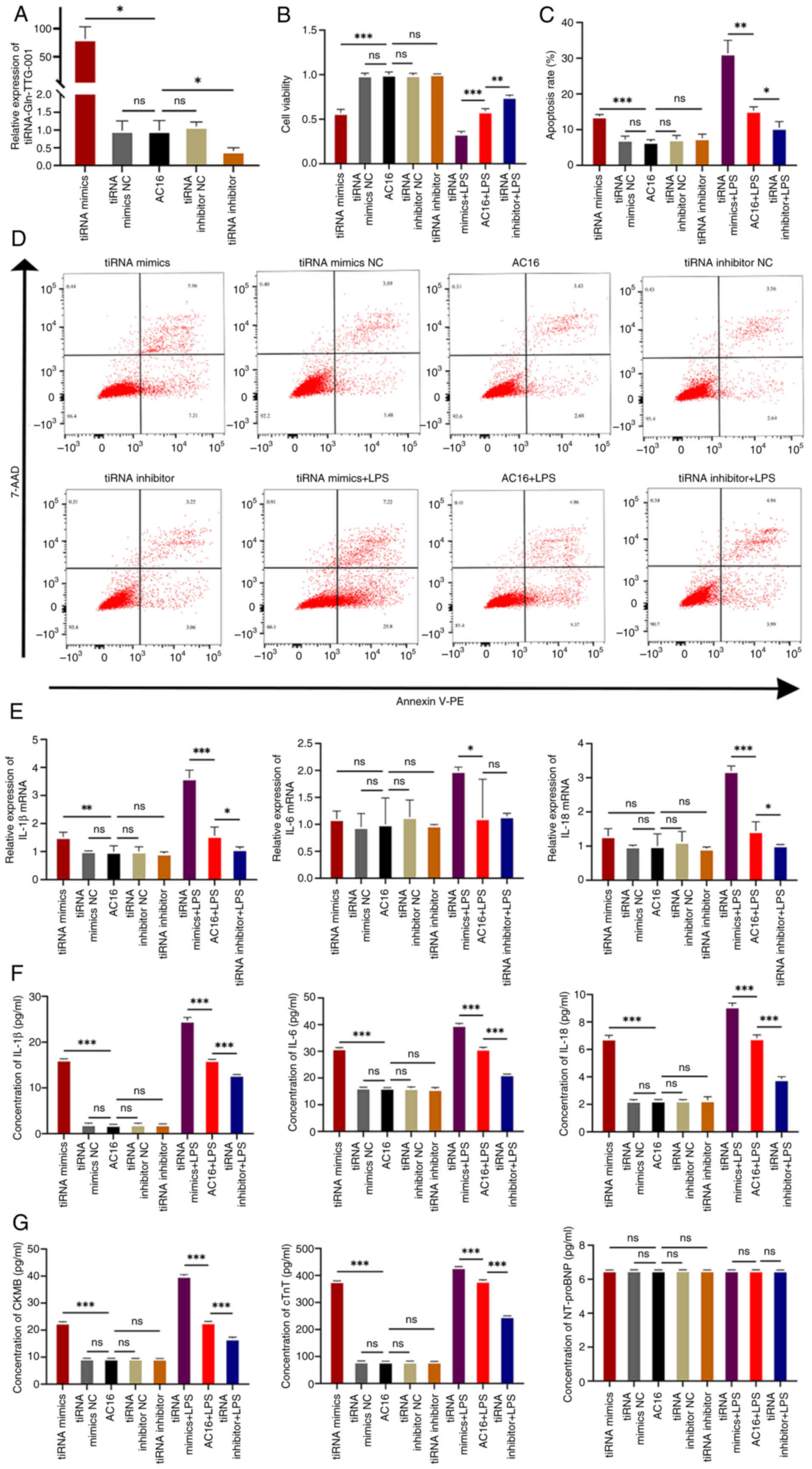
Figure 4

Pathophysiological functions of
5′tiRNA-Gln-TTG-001 in cardiomyocyte inflammatory injury. (A)
Efficiency of overexpression or knockdown of 5′tiRNA-Gln-TTG-001 in
AC16 was detected by RT-qPCR. (B) Cell viability was measured using
the Cell Counting Kit-8 when transiently transfected with
5′tiRNA-Gln-TTG-001 mimics or inhibitors with or without LPS
stimulation. Apoptosis was assessed utilizing an Annexin V-PE/7-AAD
double staining protocol in conjunction with a flow cytometry-based
apoptosis assay when transiently transfected with
5′tiRNA-Gln-TTG-001 mimics or inhibitors with or without LPS
stimulation; (C) quantification of results and (D) representative
images. (E) Expression levels of IL-1β, IL-6 and IL-18 were
detected by RT-qPCR when transiently transfected with
5′tiRNA-Gln-TTG-001 mimics or inhibitors with or without LPS
stimulation. (F) Levels of IL-1β, IL-6 and IL-18 were detected by
ELISA when transiently transfected with 5′tiRNA-Gln-TTG-001 mimics
or inhibitors with or without LPS stimulation. (G) Levels of CKMB,
cTnT and NT-proBNP were detected by ELISA when transiently
transfected with 5′tiRNA-Gln-TTG-001 mimics or inhibitors with or
without LPS stimulation. Data are presented as the mean ± SD.
*P<0.05, **P<0.01, ***P<0.001; ns, not significant
(P>0.05). 7-AAD, 7-aminoactinomycin D; CKMB, creatine kinase MB;
cTnT, cardiac troponin T; LPS, lipopolysaccharide; NC, negative
control; NT-proBNP, N-terminal pro-B-type natriuretic peptide; PE,
phycoerythrin; RT-qPCR, reverse transcription-quantitative PCR;
tiRNA, transfer RNA-derived stress-induced RNA.

Figure 5

Temporal, spatial and structural
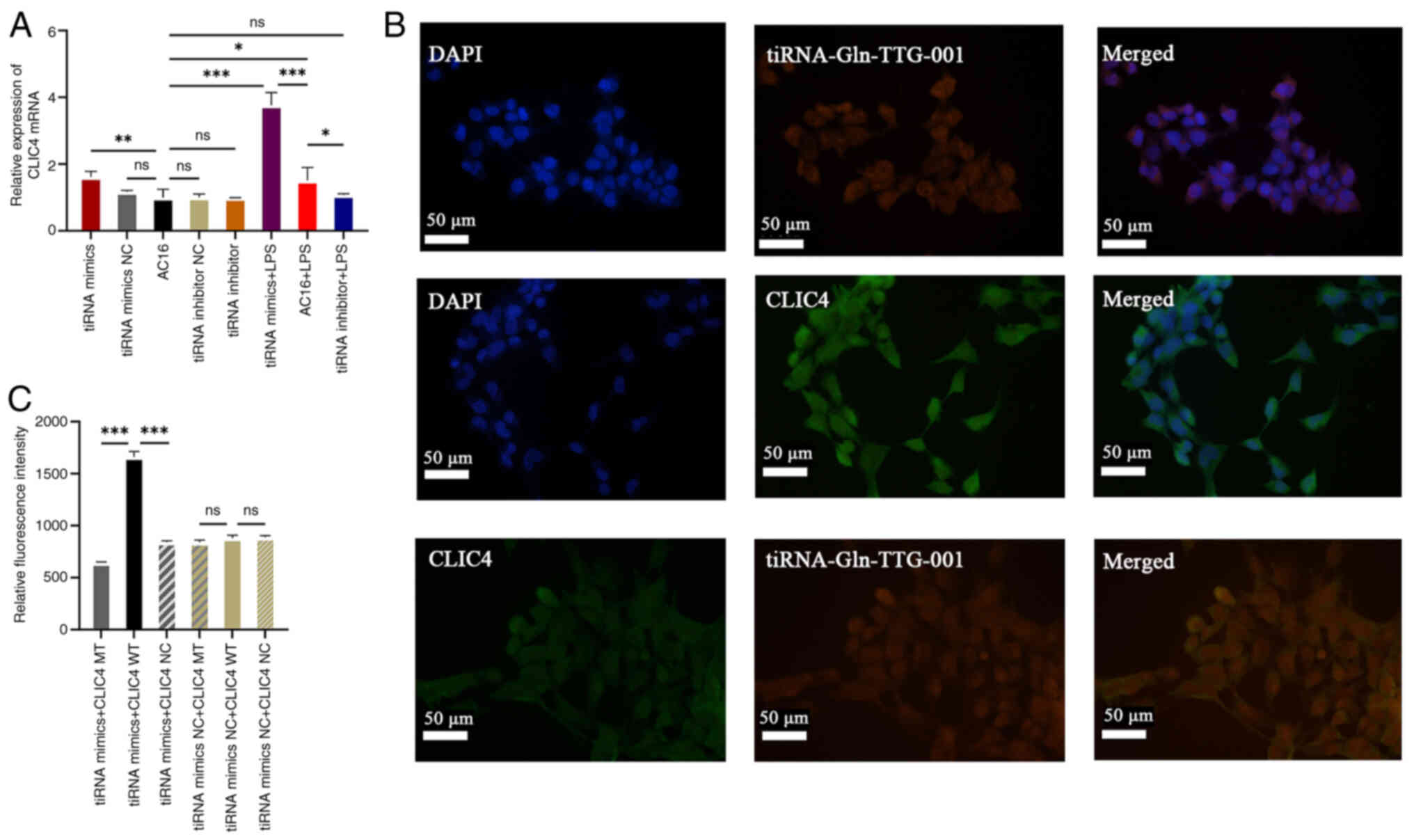
association between 5′tiRNA-Gln-TTG-001 and CLIC4. (A) Expression
levels of CLIC4 in AC16 cells transiently transfected with
5′tiRNA-Gln-TTG-001 mimics or inhibitors with or without LPS
stimulation were detected by reverse transcription-quantitative
PCR. (B) RNA-fluorescence in situ hybridization revealed the
cytosolic colocalization of 5′tiRNA-Gln-TTG-001 and CLIC4 in AC16
human cardiomyocytes. Probes for 5′tiRNA-Gln-TTG-001 were labeled
with cyanine 3 (red). CLIC4 probes were labeled with
carboxyfluorescein (green). Nuclei were stained with DAPI (blue).
Scale bar, 50 µm. (C) Luciferase reporter assay verified the
molecular interactions between 5′tiRNA-Gln-TTG-001 and the
3′untranslated region of CLIC4 WT transcripts. Data are presented
as the mean ± SD. *P<0.05; **P<0.01; ***P<0.001; ns, not
significant (P>0.05). CLIC4, chloride intracellular channel 4;
LPS, lipopolysaccharide; MT, mutant; NC, negative control; tiRNA,
transfer RNA-derived stress-induced RNA; WT, wild-type.

Figure 6

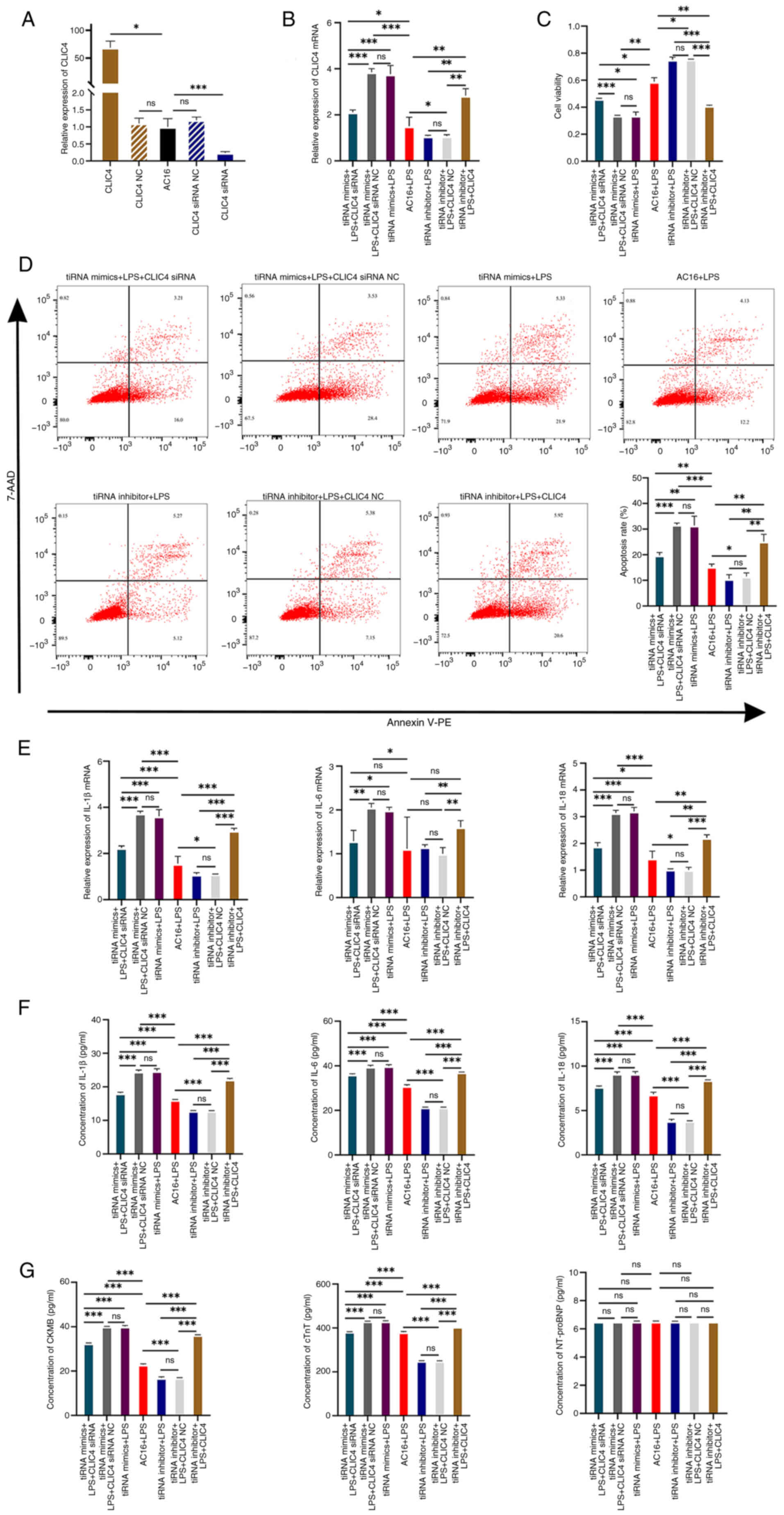
Downregulation of CLIC4 reverses the
effects of upregulation of 5′tiRNA-Gln-TTG-001 on cardiomyocyte
inflammatory injury. (A) Efficiency of overexpression or knockdown
of CLIC4 in AC16 human cardiomyocytes was detected by RT-qPCR. (B)
Expression levels of CLIC4 in transfected AC16 were detected by
RT-qPCR. (C) Cell viability was measured using the Cell Counting
Kit-8 when transiently co-transfected with tiRNA mimics and CLIC4
siRNA or tiRNA inhibitor and the CLIC4 overexpression plasmid with
LPS stimulation. (D) Apoptosis was detected with Annexin V-PE/7-AAD
double staining using a flow cytometry apoptosis assay. (E)
Expression levels of IL-1β, IL-6 and IL-18 were detected by RT-qPCR
when co-transfected with tiRNA mimics and CLIC4 siRNA or tiRNA
inhibitor and the CLIC4 overexpression plasmid with LPS
stimulation. (F) Levels of IL-1β, IL-6 and IL-18 were detected by
ELISA when co-transfected with tiRNA mimics and CLIC4 siRNA or
tiRNA inhibitor and the CLIC4 overexpression plasmid with LPS
stimulation. (G) Levels of CKMB, cTnT, and NT-proBNP were detected
by ELISA when co-transfected with tiRNA mimics and CLIC4 siRNA or
tiRNA inhibitor and the CLIC4 overexpression plasmid with LPS
stimulation. Data are presented as the mean ± SD. *P<0.05,
**P<0.01, ***P<0.001; ns, not significant (P>0.05). 7-AAD,
7-aminoactinomycin D; CKMB, creatine kinase MB; CLIC4, chloride
intracellular channel 4; cTnT, cardiac troponin T; LPS,
lipopolysaccharide; NC, negative control; NT-proBNP, N-terminal
pro-B-type natriuretic peptide; PE, phycoerythrin; RT-qPCR, reverse
transcription-quantitative PCR; siRNA, small interfering RNA;
tiRNA, transfer RNA-derived stress-induced RNA.
View References

1 

Ammirati E and Moslehi JJ: Diagnosis and treatment of acute myocarditis: A review. JAMA. 329:1098–1113. 2023. View Article : Google Scholar : PubMed/NCBI

2 

Basso C and Longo DL: Myocarditis. N Engl J Med. 387:1488–1500. 2022. View Article : Google Scholar : PubMed/NCBI

3 

Caforio ALP, Pankuweit S, Arbustini E, Basso C, Gimeno-Blanes J, Felix SB, Fu M, Heliö T, Heymans S, Jahns R, et al: Current state of knowledge on aetiology, diagnosis, management, and therapy of myocarditis: A position statement of the European society of cardiology working group on myocardial and pericardial diseases. Eur Heart J. 34:2636–2648. 2013. View Article : Google Scholar : PubMed/NCBI

4 

Nagai T, Inomata T, Kohno T, Sato T, Tada A, Kubo T, Nakamura K, Oyama-Manabe N, Ikeda Y, Fujino T, et al: JCS 2023 guideline on the diagnosis and treatment of myocarditis. Circ J. 87:674–754. 2023. View Article : Google Scholar : PubMed/NCBI

5 

Friedrich MG, Sechtem U, Schulz-Menger J, Holmvang G, Alakija P, Cooper LT, White JA, Abdel-Aty H, Gutberlet M, Prasad S, et al: Cardiovascular magnetic resonance in myocarditis: A JACC white paper. J Am Coll Cardiol. 53:1475–1487. 2009. View Article : Google Scholar : PubMed/NCBI

6 

Ferreira VM, Schulz-Menger J, Holmvang G, Kramer CM, Carbone I, Sechtem U, Kindermann I, Gutberlet M, Cooper LT, Liu P and Friedrich MG: Cardiovascular magnetic resonance in nonischemic myocardial inflammation: Expert recommendations. J Am Coll Cardiol. 72:3158–3176. 2018. View Article : Google Scholar : PubMed/NCBI

7 

Law YM, Lal AK, Chen S, Čiháková D, Cooper LT Jr, Deshpande S, Godown J, Grosse-Wortmann L, Robinson JD and Towbin JA; American Heart Association Pediatric Heart Failure, Transplantation Committee of the Council on Lifelong Congenital Heart Disease, Heart Health in the Young and Stroke Council, . Diagnosis and management of myocarditis in children: A scientific statement from the American heart association. Circulation. 144:e123–e135. 2021. View Article : Google Scholar : PubMed/NCBI

8 

Bernhard B, Marxer ME, Zurkirchen JC, Schütze J, Wahl A, Elchinova E, Spano G, Boscolo Berto M, Wieser M, Garefa C, et al: Prognostic implications of clinical and imaging diagnostic criteria for myocarditis. J Am Coll Cardiol. 84:1373–1387. 2024. View Article : Google Scholar : PubMed/NCBI

9 

Kociol RD, Cooper LT, Fang JC, Moslehi JJ, Pang PS, Sabe MA, Shah RV, Sims DB, Thiene G and Vardeny O; American Heart Association Heart Failure, Transplantation Committee of the Council on Clinical Cardiology, . Recognition and initial management of fulminant myocarditis: A scientific statement from the American heart association. Circulation. 141:e69–e92. 2020. View Article : Google Scholar : PubMed/NCBI

10 

Caforio ALP, Kaski JP, Gimeno JR, Elliott PM, Laroche C, Tavazzi L, Tendera M, Fu M, Sala S, Seferovic PM, et al: Endomyocardial biopsy: Safety and prognostic utility in paediatric and adult myocarditis in the European Society of cardiology EURObservational research programme cardiomyopathy and myocarditis long-term registry. Eur Heart J. 45:2548–2569. 2024. View Article : Google Scholar : PubMed/NCBI

11 

Lee YS, Shibata Y, Malhotra A and Dutta A: A novel class of small RNAs: tRNA-derived RNA fragments (tRFs). Genes Dev. 23:2639–2649. 2009. View Article : Google Scholar : PubMed/NCBI

12 

Schimmel P: The emerging complexity of the tRNA world: Mammalian tRNAs beyond protein synthesis. Nat Rev Mol Cell Biol. 19:45–58. 2018. View Article : Google Scholar : PubMed/NCBI

13 

Magee R and Rigoutsos I: On the expanding roles of tRNA fragments in modulating cell behavior. Nucleic Acids Res. 48:9433–9448. 2020. View Article : Google Scholar : PubMed/NCBI

14 

Ruggero K, Guffanti A, Corradin A, Sharma VK, De Bellis G, Corti G, Grassi A, Zanovello P, Bronte V, Ciminale V and D'Agostino DM: Small noncoding RNAs in cells transformed by human T-cell leukemia virus type 1: A role for a tRNA fragment as a primer for reverse transcriptase. J Virol. 88:3612–3622. 2014. View Article : Google Scholar : PubMed/NCBI

15 

Geng G, Wang H, Xin W, Liu Z, Chen J, Danting Z, Han F and Ye S: tRNA derived fragment (tRF)-3009 participates in modulation of IFN-α-induced CD4+ T cell oxidative phosphorylation in lupus patients. J Transl Med. 19:3052021. View Article : Google Scholar : PubMed/NCBI

16 

Maute RL, Schneider C, Sumazin P, Holmes A, Califano A, Basso K and Dalla-Favera R: tRNA-derived microRNA modulates proliferation and the DNA damage response and is down-regulated in B cell lymphoma. Proc Natl Acad Sci USA. 110:1404–1409. 2013. View Article : Google Scholar : PubMed/NCBI

17 

Ivanov P, O'Day E, Emara MM, Wagner G, Lieberman J and Anderson P: G-quadruplex structures contribute to the neuroprotective effects of angiogenin-induced tRNA fragments. Proc Natl Acad Sci USA. 111:18201–18206. 2014. View Article : Google Scholar : PubMed/NCBI

18 

Chen Q, Yan M, Cao Z, Li X, Zhang Y, Shi J, Feng GH, Peng H, Zhang X, Zhang Y, et al: Sperm tsRNAs contribute to intergenerational inheritance of an acquired metabolic disorder. Science. 351:397–400. 2016. View Article : Google Scholar : PubMed/NCBI

19 

Hogg MC, Raoof R, El Naggar H, Monsefi N, Delanty N, O'Brien DF, Bauer S, Rosenow F, Henshall DC and Prehn JH: Elevation in plasma tRNA fragments precede seizures in human epilepsy. J Clin Invest. 129:2946–2951. 2019. View Article : Google Scholar : PubMed/NCBI

20 

Wang J, Han B, Yi Y, Wang Y, Zhang L, Jia H, Lv J, Yang X, Jiang D and Zhang J: Expression profiles and functional analysis of plasma tRNA-derived small RNAs in children with fulminant myocarditis. Epigenomics. 13:1057–1075. 2021. View Article : Google Scholar : PubMed/NCBI

21 

Suh KS and Yuspa SH: Intracellular chloride channels: Critical mediators of cell viability and potential targets for cancer therapy. Curr Pharm Des. 11:2753–2764. 2005. View Article : Google Scholar : PubMed/NCBI

22 

Fernández-Salas E, Suh KS, Speransky VV, Bowers WL, Levy JM, Adams T, Pathak KR, Edwards LE, Hayes DD, Cheng C, et al: mtCLIC/CLIC4, an organellular chloride channel protein, is increased by DNA damage and participates in the apoptotic response to p53. Mol Cell Biol. 22:3610–3620. 2002. View Article : Google Scholar : PubMed/NCBI

23 

Suh KS, Mutoh M, Nagashima K, Fernandez-Salas E, Edwards LE, Hayes DD, Crutchley JM, Marin KG, Dumont RA, Levy JM, et al: The organellular chloride channel protein CLIC4/mtCLIC translocates to the nucleus in response to cellular stress and accelerates apoptosis. J Biol Chem. 279:4632–4641. 2004. View Article : Google Scholar : PubMed/NCBI

24 

Abdul-Salam VB, Russomanno G, Chien-Nien C, Mahomed AS, Yates LA, Wilkins MR, Zhao L, Gierula M, Dubois O, Schaeper U, et al: CLIC4/Arf6 pathway. Circ Res. 124:52–65. 2019. View Article : Google Scholar : PubMed/NCBI

25 

He G, Ma Y, Chou SY, Li H, Yang C, Chuang JZ, Sung CH and Ding A: Role of CLIC4 in the host innate responses to bacterial lipopolysaccharide. Eur J Immunol. 41:1221–1230. 2011. View Article : Google Scholar : PubMed/NCBI

26 

Kleinjan ML, Mao Y, Naiche LA, Joshi JC, Gupta A, Jesse JJ, Shaye DD, Mehta D and Kitajewski J: CLIC4 regulates endothelial barrier control by mediating PAR1 signaling via RhoA. Arterioscler Thromb Vasc Biol. 43:1441–1454. 2023. View Article : Google Scholar : PubMed/NCBI

27 

Livak KJ and Schmittgen TD: Analysis of relative gene expression data using real-time quantitative PCR and the 2(−Delta Delta C(T)) method. Methods. 25:402–408. 2001. View Article : Google Scholar : PubMed/NCBI

28 

R Core Team: R: A Language and Environment for Statistical Computing. R Foundation for Statistical Computing; Vienna, Austria: 2023, https://www.R-project.org/

29 

Yeung ML, Bennasser Y, Watashi K, Le SY, Houzet L and Jeang KT: Pyrosequencing of small non-coding RNAs in HIV-1 infected cells: Evidence for the processing of a viral-cellular double-stranded RNA hybrid. Nucleic Acids Res. 37:6575–6586. 2009. View Article : Google Scholar : PubMed/NCBI

30 

Martinez G, Choudury SG and Slotkin RK: tRNA-derived small RNAs target transposable element transcripts. Nucleic Acids Res. 45:5142–5152. 2017. View Article : Google Scholar : PubMed/NCBI

31 

Matsui M and Corey DR: Non-coding RNAs as drug targets. Nat Rev Drug Discov. 16:167–179. 2017. View Article : Google Scholar : PubMed/NCBI

32 

Tao EW, Wang HL, Cheng WY, Liu QQ, Chen YX and Gao QY: A specific tRNA half, 5′tiRNA-His-GTG, responds to hypoxia via the HIF1α/ANG axis and promotes colorectal cancer progression by regulating LATS2. J Exp Clin Cancer Res. 40:672021. View Article : Google Scholar : PubMed/NCBI

33 

Zong T, Yang Y, Lin X, Jiang S, Zhao H, Liu M, Meng Y, Li Y, Zhao L, Tang G, et al: 5′-tiRNA-Cys-GCA regulates VSMC proliferation and phenotypic transition by targeting STAT4 in aortic dissection. Mol Ther Nucleic Acids. 26:295–306. 2021. View Article : Google Scholar : PubMed/NCBI

34 

Jehn J, Treml J, Wulsch S, Ottum B, Erb V, Hewel C, Kooijmans RN, Wester L, Fast I and Rosenkranz D: 5′ tRNA halves are highly expressed in the primate hippocampus and might sequence-specifically regulate gene expression. RNA. 26:694–707. 2020. View Article : Google Scholar : PubMed/NCBI

35 

Hang W, Chen C, Seubert JM and Wang DW: Fulminant myocarditis: A comprehensive review from etiology to treatments and outcomes. Signal Transduct Target Ther. 5:2872020. View Article : Google Scholar : PubMed/NCBI

36 

Tao EW, Cheng WY, Li WL, Yu J and Gao QY: tiRNAs: A novel class of small noncoding RNAs that helps cells respond to stressors and plays roles in cancer progression. J Cell Physiol. 235:683–690. 2020. View Article : Google Scholar : PubMed/NCBI

37 

Su Z, Kuscu C, Malik A, Shibata E and Dutta A: Angiogenin generates specific stress-induced tRNA halves and is not involved in tRF-3-mediated gene silencing. J Biol Chem. 294:16930–16941. 2019. View Article : Google Scholar : PubMed/NCBI

38 

Fricker R, Brogli R, Luidalepp H, Wyss L, Fasnacht M, Joss O, Zywicki M, Helm M, Schneider A, Cristodero M and Polacek N: A tRNA half modulates translation as stress response in Trypanosoma brucei. Nat Commun. 10:1182019. View Article : Google Scholar : PubMed/NCBI

39 

Li Q, Hu B, Hu GW, Chen CY, Niu X, Liu J, Zhou SM, Zhang CQ, Wang Y and Deng ZF: tRNA-derived small non-coding RNAs in response to ischemia inhibit angiogenesis. Sci Rep. 6:208502016. View Article : Google Scholar : PubMed/NCBI

40 

Pawar K, Shigematsu M, Sharbati S and Kirino Y: Infection-induced 5′-half molecules of tRNAHisGUG activate Toll-like receptor 7. PLoS Biol. 18:e30009822020. View Article : Google Scholar : PubMed/NCBI

41 

Pekarsky Y, Balatti V, Palamarchuk A, Rizzotto L, Veneziano D, Nigita G, Rassenti LZ, Pass HI, Kipps TJ, Liu CG and Croce CM: Dysregulation of a family of short noncoding RNAs, tsRNAs, in human cancer. Proc Natl Acad Sci USA. 113:5071–5076. 2016. View Article : Google Scholar : PubMed/NCBI

42 

Goodarzi H, Liu X, Nguyen HCB, Zhang S, Fish L and Tavazoie SF: Endogenous tRNA-derived fragments suppress breast cancer progression via YBX1 displacement. Cell. 161:790–802. 2015. View Article : Google Scholar : PubMed/NCBI

43 

Sharma U, Conine CC, Shea JM, Boskovic A, Derr AG, Bing XY, Belleannee C, Kucukural A, Serra RW, Sun F, et al: Biogenesis and function of tRNA fragments during sperm maturation and fertilization in mammals. Science. 351:391–396. 2016. View Article : Google Scholar : PubMed/NCBI

44 

Huang B, Yang H, Cheng X, Wang D, Fu S, Shen W, Zhang Q, Zhang L, Xue Z, Li Y, et al: tRF/miR-1280 suppresses stem cell-like cells and metastasis in colorectal cancer. Cancer Res. 77:3194–3206. 2017. View Article : Google Scholar : PubMed/NCBI

45 

Boskovic A, Bing XY, Kaymak E and Rando OJ: Control of noncoding RNA production and histone levels by a 5′ tRNA fragment. Genes Dev. 34:118–131. 2020. View Article : Google Scholar : PubMed/NCBI

46 

Malik M, Jividen K, Padmakumar VC, Cataisson C, Li L, Lee J, Howard OM and Yuspa SH: Inducible NOS-induced chloride intracellular channel 4 (CLIC4) nuclear translocation regulates macrophage deactivation. Proc Natl Acad Sci USA. 109:6130–6135. 2012. View Article : Google Scholar : PubMed/NCBI

Related Articles

  • Abstract
  • View
  • Download
  • Twitter
Copy and paste a formatted citation
Spandidos Publications style
Wang J, Yi Y, Han B, Zhang L and Jia H: A novel tRNA‑derived small RNA, 5'tiRNA‑Gln‑TTG‑001, aggravates cardiomyocyte inflammatory injury through upregulation of CLIC4. Mol Med Rep 32: 261, 2025.
APA
Wang, J., Yi, Y., Han, B., Zhang, L., & Jia, H. (2025). A novel tRNA‑derived small RNA, 5'tiRNA‑Gln‑TTG‑001, aggravates cardiomyocyte inflammatory injury through upregulation of CLIC4. Molecular Medicine Reports, 32, 261. https://doi.org/10.3892/mmr.2025.13626
MLA
Wang, J., Yi, Y., Han, B., Zhang, L., Jia, H."A novel tRNA‑derived small RNA, 5'tiRNA‑Gln‑TTG‑001, aggravates cardiomyocyte inflammatory injury through upregulation of CLIC4". Molecular Medicine Reports 32.4 (2025): 261.
Chicago
Wang, J., Yi, Y., Han, B., Zhang, L., Jia, H."A novel tRNA‑derived small RNA, 5'tiRNA‑Gln‑TTG‑001, aggravates cardiomyocyte inflammatory injury through upregulation of CLIC4". Molecular Medicine Reports 32, no. 4 (2025): 261. https://doi.org/10.3892/mmr.2025.13626
Copy and paste a formatted citation
x
Spandidos Publications style
Wang J, Yi Y, Han B, Zhang L and Jia H: A novel tRNA‑derived small RNA, 5'tiRNA‑Gln‑TTG‑001, aggravates cardiomyocyte inflammatory injury through upregulation of CLIC4. Mol Med Rep 32: 261, 2025.
APA
Wang, J., Yi, Y., Han, B., Zhang, L., & Jia, H. (2025). A novel tRNA‑derived small RNA, 5'tiRNA‑Gln‑TTG‑001, aggravates cardiomyocyte inflammatory injury through upregulation of CLIC4. Molecular Medicine Reports, 32, 261. https://doi.org/10.3892/mmr.2025.13626
MLA
Wang, J., Yi, Y., Han, B., Zhang, L., Jia, H."A novel tRNA‑derived small RNA, 5'tiRNA‑Gln‑TTG‑001, aggravates cardiomyocyte inflammatory injury through upregulation of CLIC4". Molecular Medicine Reports 32.4 (2025): 261.
Chicago
Wang, J., Yi, Y., Han, B., Zhang, L., Jia, H."A novel tRNA‑derived small RNA, 5'tiRNA‑Gln‑TTG‑001, aggravates cardiomyocyte inflammatory injury through upregulation of CLIC4". Molecular Medicine Reports 32, no. 4 (2025): 261. https://doi.org/10.3892/mmr.2025.13626
Follow us
  • Twitter
  • LinkedIn
  • Facebook
About
  • Spandidos Publications
  • Careers
  • Cookie Policy
  • Privacy Policy
How can we help?
  • Help
  • Live Chat
  • Contact
  • Email to our Support Team