Spandidos Publications Logo
  • About
    • About Spandidos
    • Aims and Scopes
    • Abstracting and Indexing
    • Editorial Policies
    • Reprints and Permissions
    • Job Opportunities
    • Terms and Conditions
    • Contact
  • Journals
    • All Journals
    • Oncology Letters
      • Oncology Letters
      • Information for Authors
      • Editorial Policies
      • Editorial Board
      • Aims and Scope
      • Abstracting and Indexing
      • Bibliographic Information
      • Archive
    • International Journal of Oncology
      • International Journal of Oncology
      • Information for Authors
      • Editorial Policies
      • Editorial Board
      • Aims and Scope
      • Abstracting and Indexing
      • Bibliographic Information
      • Archive
    • Molecular and Clinical Oncology
      • Molecular and Clinical Oncology
      • Information for Authors
      • Editorial Policies
      • Editorial Board
      • Aims and Scope
      • Abstracting and Indexing
      • Bibliographic Information
      • Archive
    • Experimental and Therapeutic Medicine
      • Experimental and Therapeutic Medicine
      • Information for Authors
      • Editorial Policies
      • Editorial Board
      • Aims and Scope
      • Abstracting and Indexing
      • Bibliographic Information
      • Archive
    • International Journal of Molecular Medicine
      • International Journal of Molecular Medicine
      • Information for Authors
      • Editorial Policies
      • Editorial Board
      • Aims and Scope
      • Abstracting and Indexing
      • Bibliographic Information
      • Archive
    • Biomedical Reports
      • Biomedical Reports
      • Information for Authors
      • Editorial Policies
      • Editorial Board
      • Aims and Scope
      • Abstracting and Indexing
      • Bibliographic Information
      • Archive
    • Oncology Reports
      • Oncology Reports
      • Information for Authors
      • Editorial Policies
      • Editorial Board
      • Aims and Scope
      • Abstracting and Indexing
      • Bibliographic Information
      • Archive
    • Molecular Medicine Reports
      • Molecular Medicine Reports
      • Information for Authors
      • Editorial Policies
      • Editorial Board
      • Aims and Scope
      • Abstracting and Indexing
      • Bibliographic Information
      • Archive
    • World Academy of Sciences Journal
      • World Academy of Sciences Journal
      • Information for Authors
      • Editorial Policies
      • Editorial Board
      • Aims and Scope
      • Abstracting and Indexing
      • Bibliographic Information
      • Archive
    • International Journal of Functional Nutrition
      • International Journal of Functional Nutrition
      • Information for Authors
      • Editorial Policies
      • Editorial Board
      • Aims and Scope
      • Abstracting and Indexing
      • Bibliographic Information
      • Archive
    • International Journal of Epigenetics
      • International Journal of Epigenetics
      • Information for Authors
      • Editorial Policies
      • Editorial Board
      • Aims and Scope
      • Abstracting and Indexing
      • Bibliographic Information
      • Archive
    • Medicine International
      • Medicine International
      • Information for Authors
      • Editorial Policies
      • Editorial Board
      • Aims and Scope
      • Abstracting and Indexing
      • Bibliographic Information
      • Archive
  • Articles
  • Information
    • Information for Authors
    • Information for Reviewers
    • Information for Librarians
    • Information for Advertisers
    • Conferences
  • Language Editing
Spandidos Publications Logo
  • About
    • About Spandidos
    • Aims and Scopes
    • Abstracting and Indexing
    • Editorial Policies
    • Reprints and Permissions
    • Job Opportunities
    • Terms and Conditions
    • Contact
  • Journals
    • All Journals
    • Biomedical Reports
      • Information for Authors
      • Editorial Policies
      • Editorial Board
      • Aims and Scope
      • Abstracting and Indexing
      • Bibliographic Information
      • Archive
    • Experimental and Therapeutic Medicine
      • Information for Authors
      • Editorial Policies
      • Editorial Board
      • Aims and Scope
      • Abstracting and Indexing
      • Bibliographic Information
      • Archive
    • International Journal of Epigenetics
      • Information for Authors
      • Editorial Policies
      • Editorial Board
      • Aims and Scope
      • Abstracting and Indexing
      • Bibliographic Information
      • Archive
    • International Journal of Functional Nutrition
      • Information for Authors
      • Editorial Policies
      • Editorial Board
      • Aims and Scope
      • Abstracting and Indexing
      • Bibliographic Information
      • Archive
    • International Journal of Molecular Medicine
      • Information for Authors
      • Editorial Policies
      • Editorial Board
      • Aims and Scope
      • Abstracting and Indexing
      • Bibliographic Information
      • Archive
    • International Journal of Oncology
      • Information for Authors
      • Editorial Policies
      • Editorial Board
      • Aims and Scope
      • Abstracting and Indexing
      • Bibliographic Information
      • Archive
    • Medicine International
      • Information for Authors
      • Editorial Policies
      • Editorial Board
      • Aims and Scope
      • Abstracting and Indexing
      • Bibliographic Information
      • Archive
    • Molecular and Clinical Oncology
      • Information for Authors
      • Editorial Policies
      • Editorial Board
      • Aims and Scope
      • Abstracting and Indexing
      • Bibliographic Information
      • Archive
    • Molecular Medicine Reports
      • Information for Authors
      • Editorial Policies
      • Editorial Board
      • Aims and Scope
      • Abstracting and Indexing
      • Bibliographic Information
      • Archive
    • Oncology Letters
      • Information for Authors
      • Editorial Policies
      • Editorial Board
      • Aims and Scope
      • Abstracting and Indexing
      • Bibliographic Information
      • Archive
    • Oncology Reports
      • Information for Authors
      • Editorial Policies
      • Editorial Board
      • Aims and Scope
      • Abstracting and Indexing
      • Bibliographic Information
      • Archive
    • World Academy of Sciences Journal
      • Information for Authors
      • Editorial Policies
      • Editorial Board
      • Aims and Scope
      • Abstracting and Indexing
      • Bibliographic Information
      • Archive
  • Articles
  • Information
    • For Authors
    • For Reviewers
    • For Librarians
    • For Advertisers
    • Conferences
  • Language Editing
Login Register Submit
  • This site uses cookies
  • You can change your cookie settings at any time by following the instructions in our Cookie Policy. To find out more, you may read our Privacy Policy.

    I agree
Search articles by DOI, keyword, author or affiliation
Search
Advanced Search
presentation
Molecular Medicine Reports
Join Editorial Board Propose a Special Issue
Print ISSN: 1791-2997 Online ISSN: 1791-3004
Journal Cover
October-2025 Volume 32 Issue 4

Full Size Image

Sign up for eToc alerts
Recommend to Library

Journals

International Journal of Molecular Medicine

International Journal of Molecular Medicine

International Journal of Molecular Medicine is an international journal devoted to molecular mechanisms of human disease.

International Journal of Oncology

International Journal of Oncology

International Journal of Oncology is an international journal devoted to oncology research and cancer treatment.

Molecular Medicine Reports

Molecular Medicine Reports

Covers molecular medicine topics such as pharmacology, pathology, genetics, neuroscience, infectious diseases, molecular cardiology, and molecular surgery.

Oncology Reports

Oncology Reports

Oncology Reports is an international journal devoted to fundamental and applied research in Oncology.

Experimental and Therapeutic Medicine

Experimental and Therapeutic Medicine

Experimental and Therapeutic Medicine is an international journal devoted to laboratory and clinical medicine.

Oncology Letters

Oncology Letters

Oncology Letters is an international journal devoted to Experimental and Clinical Oncology.

Biomedical Reports

Biomedical Reports

Explores a wide range of biological and medical fields, including pharmacology, genetics, microbiology, neuroscience, and molecular cardiology.

Molecular and Clinical Oncology

Molecular and Clinical Oncology

International journal addressing all aspects of oncology research, from tumorigenesis and oncogenes to chemotherapy and metastasis.

World Academy of Sciences Journal

World Academy of Sciences Journal

Multidisciplinary open-access journal spanning biochemistry, genetics, neuroscience, environmental health, and synthetic biology.

International Journal of Functional Nutrition

International Journal of Functional Nutrition

Open-access journal combining biochemistry, pharmacology, immunology, and genetics to advance health through functional nutrition.

International Journal of Epigenetics

International Journal of Epigenetics

Publishes open-access research on using epigenetics to advance understanding and treatment of human disease.

Medicine International

Medicine International

An International Open Access Journal Devoted to General Medicine.

Journal Cover
October-2025 Volume 32 Issue 4

Full Size Image

Sign up for eToc alerts
Recommend to Library

  • Article
  • Citations
    • Cite This Article
    • Download Citation
    • Create Citation Alert
    • Remove Citation Alert
    • Cited By
  • Similar Articles
    • Related Articles (in Spandidos Publications)
    • Similar Articles (Google Scholar)
    • Similar Articles (PubMed)
  • Download PDF
  • Download XML
  • View XML

  • Supplementary Files
    • Supplementary_Data.pdf
Article Open Access

Role of cellular prion protein in mouse granulosa cells and its effects on ovarian function in knockout mice

  • Authors:
    • Qinyue Cao
    • Hehua Wang
    • Jingjing Hu
    • Yan Wang
    • Tong Dai
    • Fen Liu
    • Xia Yang
    • Qinyu Yang
    • Chunhua Tu
  • View Affiliations / Copyright

    Affiliations: Department of Obstetrics and Gynecology, The First Affiliated Hospital of Nanchang University, Nanchang, Jiangxi 330006, P.R. China
    Copyright: © Cao et al. This is an open access article distributed under the terms of Creative Commons Attribution License.
  • Article Number: 265
    |
    Published online on: July 22, 2025
       https://doi.org/10.3892/mmr.2025.13630
  • Expand metrics +
Metrics: Total Views: 0 (Spandidos Publications: | PMC Statistics: )
Metrics: Total PDF Downloads: 0 (Spandidos Publications: | PMC Statistics: )
Cited By (CrossRef): 0 citations Loading Articles...

This article is mentioned in:


Abstract

Cellular prion protein (PrPc) regulates ovarian reserve maintenance through anti‑Müllerian hormone (AMH)‑dependent mechanisms. The present study explored the role of PrPc in the ovarian function of mice using complementary in vitro and in vivo models. First, prion protein gene (PRNP) knockdown or overexpression was carried out in mouse ovarian granulosa cells. In vitro analyses conducted using flow cytometry and ELISA revealed that the depletion of PrPc specifically hindered the secretion of AMH compared with control groups, while the levels of progesterone (P4) and estradiol (E2) remained unchanged across all experimental groups. Importantly, the reduction in AMH levels was reversed upon re‑expression of PrPc. Additionally, neither the distribution of the cell cycle nor the rates of apoptosis were affected by the manipulation of PrPc. Subsequently, a comparative analysis of mice with PRNP knockout (KO) vs. wild‑type mice was performed. However, PrPc depletion did not alter the production of progesterone or estradiol. Whilst the ovarian histology remained intact in KO mice, an elevation in follicle‑stimulating hormone levels was observed, thereby suggesting a potential involvement of compensatory neuroendocrine regulation. These findings revealed that PrPc may be a novel modulator for maintaining the ovarian reserve which depends on AMH. The present study redefined the molecular landscape of ovarian reserve depletion by identifying the dysfunction of the PrPc‑AMH axis as a possible reason for diminished ovarian reserve syndromes.
View Figures

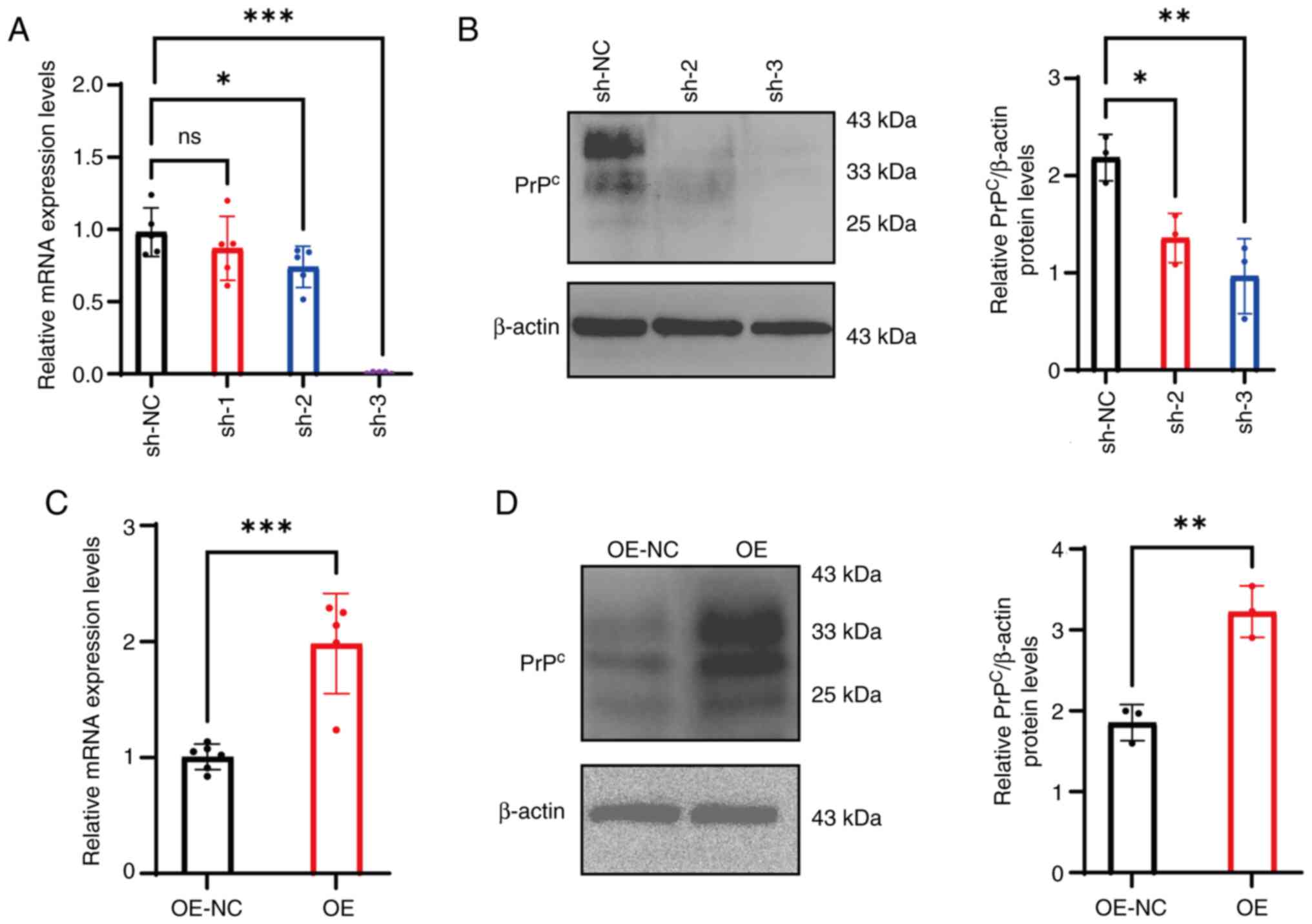
Figure 1

PrPc knockdown and OE
efficiency in mGCs. (A) mRNA expression levels of PRNP and
(B) protein expression levels of PrPc in mGCs
transfected with different shRNAs. (C) mRNA expression levels of
PRNP and (D) protein expression levels of PrPc in
mGCs transfected with OE vectors. β-actin was used as an internal
control. *P<0.05; **P<0.01; ***P<0.001. ns,
non-significant; PrPc, cellular prion protein;
PRNP, prion protein gene; mGCs, mouse ovarian granulosa
cells; OE, overexpression; sh, short hairpin; NC, negative
control.

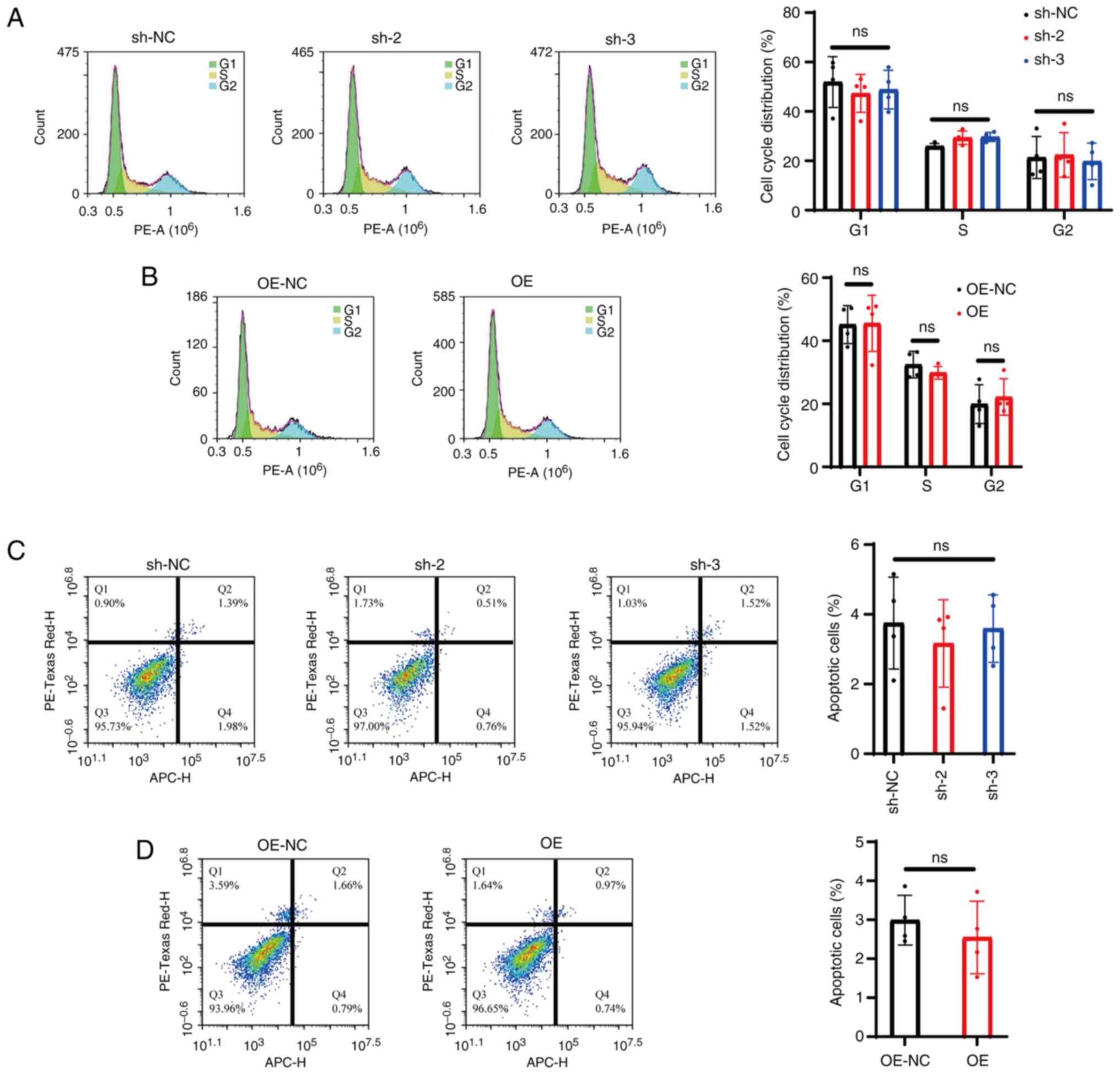
Figure 2

Cellular prion protein exhibits
minimal influence on the cell cycle distribution and apoptosis of
mouse granulosa cells. Flow cytometry was employed to analyze the
cell cycle distribution, enabling quantification of cells in the
G0/G1, S and G2/M phases after
transfection with (A) different shRNAs or (B) OE vectors. Apoptotic
and necrotic cells were assessed using Annexin V/PI staining after
transfection with (C) different shRNAs or (D) OE vectors. ns,
non-significant; sh, short hairpin; NC, negative control; OE,
overexpression.

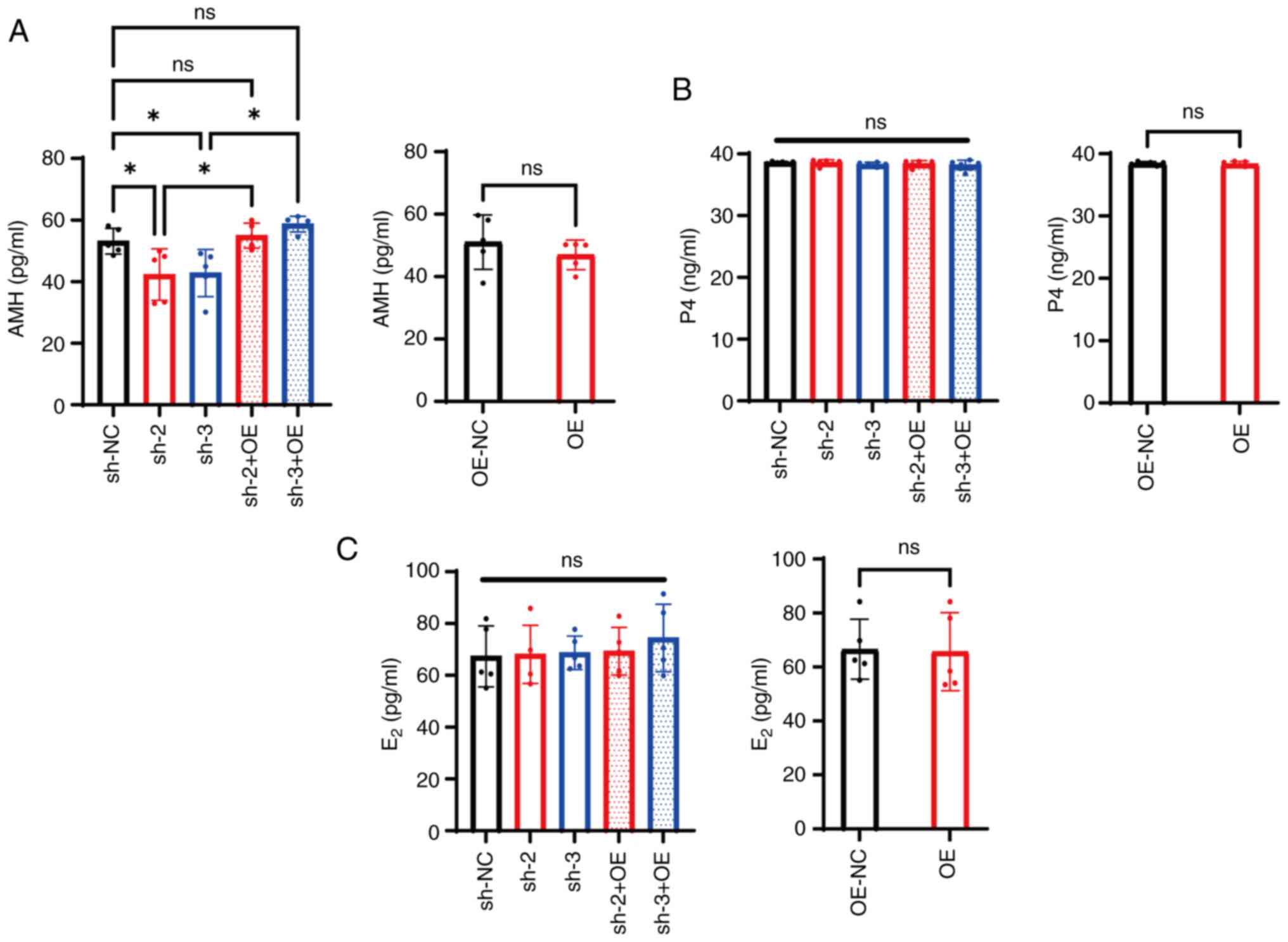
Figure 3

Cellular prion protein knockdown
specifically reduces AMH secretion in mGCs. (A) AMH, (B) P4 and (C)
E2 levels in the culture medium of mGCs transfected with
different shRNAs, OE vectors or their combination. *P<0.05. ns,
non-significant; AMH, anti-Müllerian hormone; mGCs, mouse granulosa
cells; P4, progesterone; E2, estradiol; sh, short
hairpin; OE, overexpression; NC, negative control.

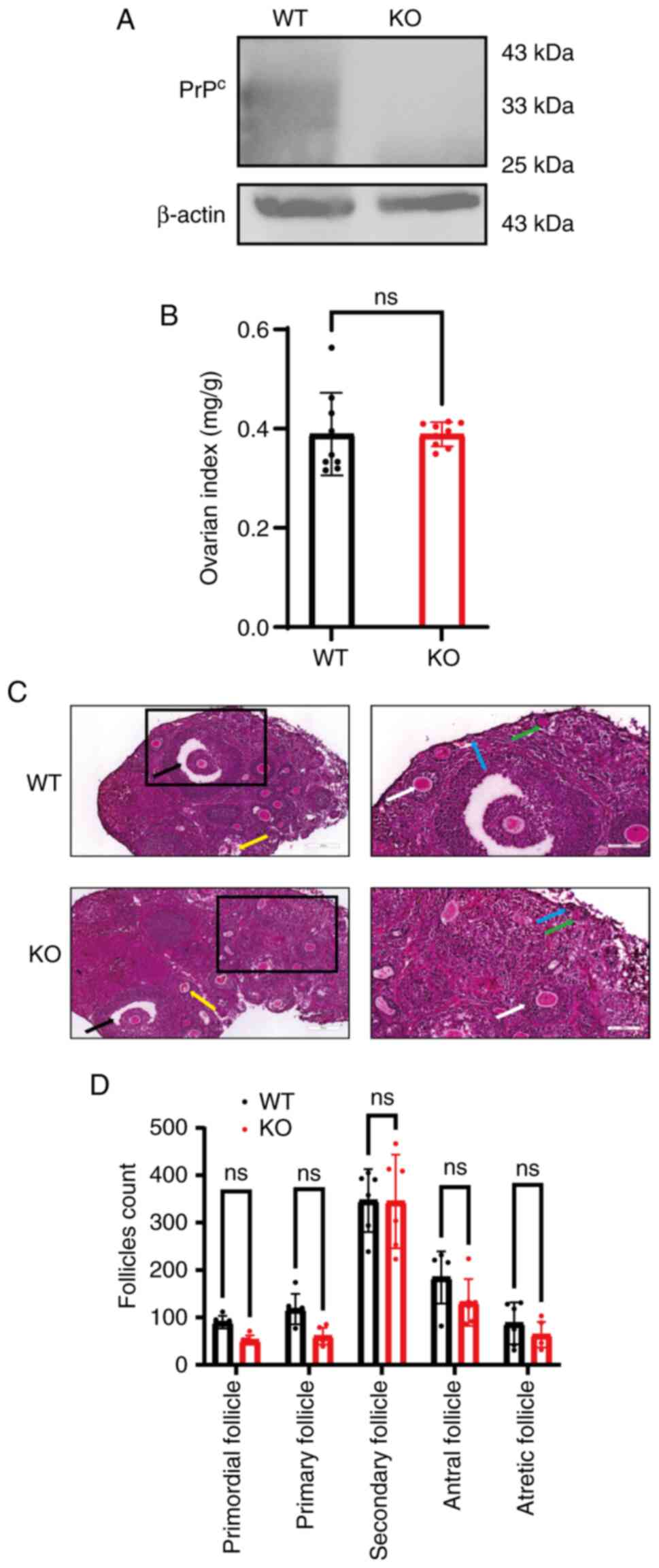
Figure 4

Prion protein gene KO mice exhibit
normal ovarian morphology and follicular development. (A)
PrPc protein expression in the ovaries of WT and KO
mice. (B) Ratio of bilateral ovary weight to body weight showed no
differences between groups. (C) H&E staining on mouse ovaries
(scale bars, 200 µm for overviews and 100 µm for higher mag). The
stages of follicular development are clearly indicated by
color-coded arrows: Blue represents primordial follicles, which
consist of a single layer of squamous granulosa cells; green
denotes primary follicles, characterized by cuboidal granulosa
cells; white signifies secondary follicles, identifiable by having
≥3 layers of granulosa cells and the early formation of an antrum;
black marks antral follicles, distinguished by the presence of a
fluid-filled cavity; and yellow indicates atretic follicles, which
display pyknotic granulosa cell nuclei and fragmentation of the
zona pellucida. (D) Follicle counts across developmental stages
were comparable between WT and KO mice. ns, non-significant; WT,
wild-type; KO, knockout; PrPc, cellular prion
protein.

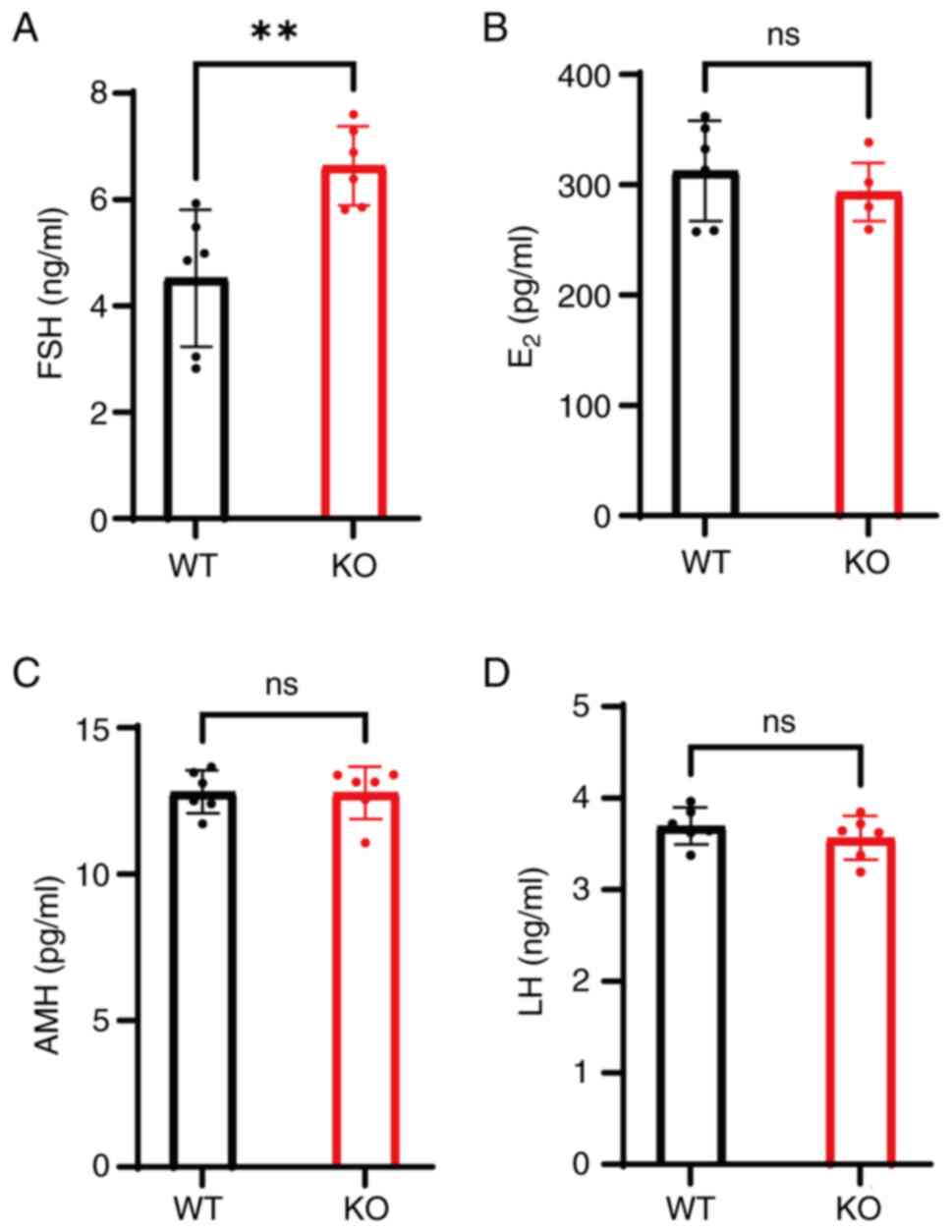
Figure 5

KO mice exhibit elevated FSH levels
but normal E2, AMH and LH levels. Serum hormone levels
of (A) FSH, (B) E2, (C) AMH and (D) LH in WT and KO
mice. **P<0.01. ns, non-significant; FSH, follicle-stimulating
hormone; LH, luteinizing hormone; E2, estradiol; AMH,
anti-Müllerian hormone; WT, wild-type; KO, knockout.

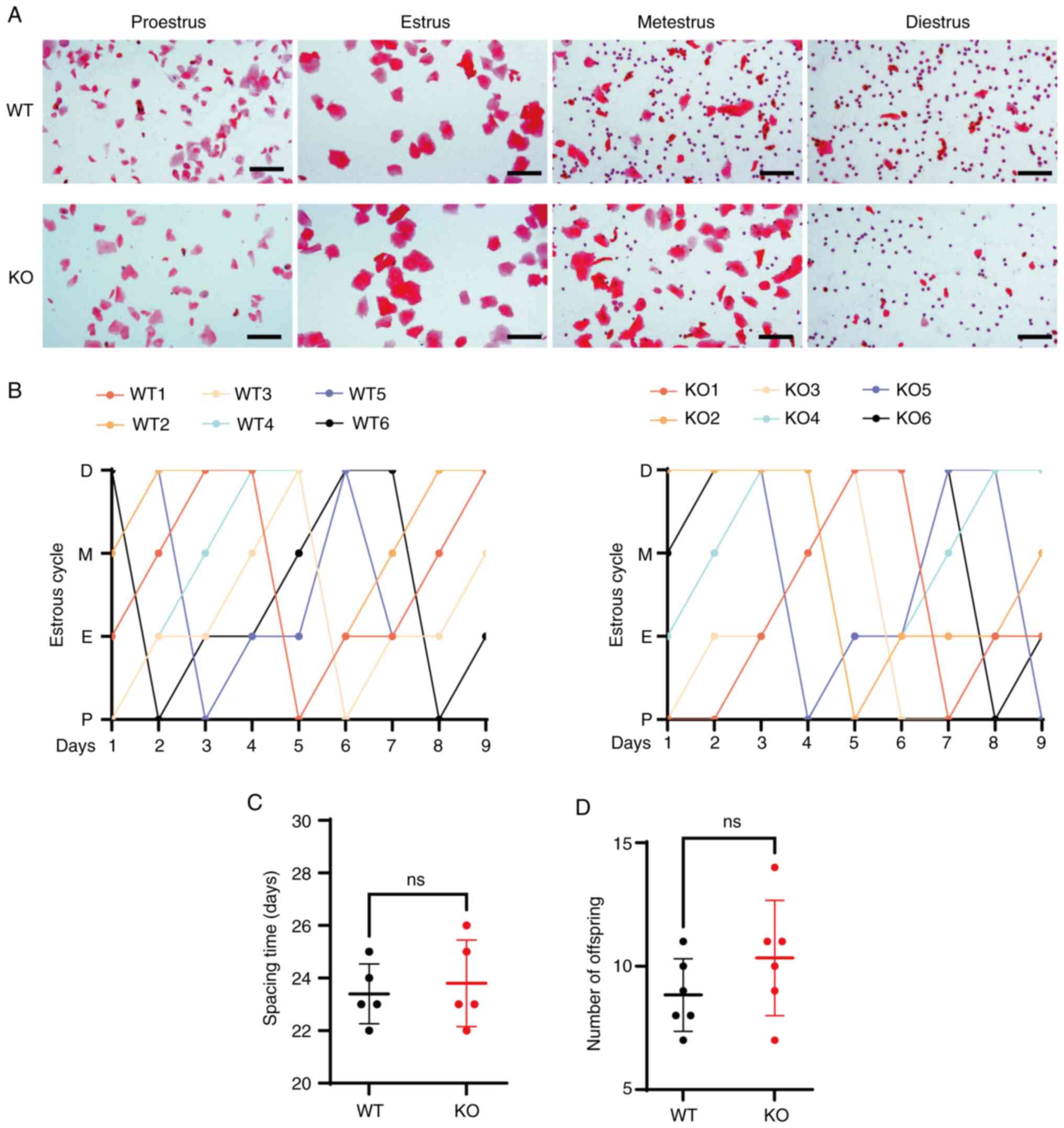
Figure 6

KO mice exhibit regular estrous cycle
and fertility. (A) Vaginal secretion smears stained with H&E
stain during estrous cycle phases: Proestrus, estrus, metestrus,
diestrus (scale bar, 50 µm). (B) Regular estrous cycle patterns in
mice spanning 9 consecutive days. (C) Interval from mating,
following co-housing, to parturition. (D) Number of offspring at
birth. ns, non-significant; WT, wild-type; KO, knockout; P,
proestrus; E, estrus; M, metestrus; D, diestrus.
View References

1 

Ermonval M, Petit D, Le Duc A, Kellermann O and Gallet PF: Glycosylation-related genes are variably expressed depending on the differentiation state of a bioaminergic neuronal cell line: Implication for the cellular prion protein. Glycoconj J. 26:477–493. 2009. View Article : Google Scholar : PubMed/NCBI

2 

Hu W, Nessler S, Hemmer B, Eagar TN, Kane LP, Leliveld SR, Müller-Schiffmann A, Gocke AR, Lovett-Racke A, Ben LH, et al: Pharmacological prion protein silencing accelerates central nervous system autoimmune disease via T cell receptor signalling. Brain. 133:375–388. 2010. View Article : Google Scholar : PubMed/NCBI

3 

Wulf MA, Senatore A and Aguzzi A: The biological function of the cellular prion protein: An update. BMC Biol. 15:342017. View Article : Google Scholar : PubMed/NCBI

4 

Watts JC, Bourkas MEC and Arshad H: The function of the cellular prion protein in health and disease. Acta Neuropathol. 135:159–178. 2018. View Article : Google Scholar : PubMed/NCBI

5 

Sigurdson CJ, Bartz JC and Glatzel M: Cellular and molecular mechanisms of prion disease. Annu Rev Pathol. 14:497–516. 2019. View Article : Google Scholar : PubMed/NCBI

6 

Ribes JM, Patel MP, Halim HA, Berretta A, Tooze SA and Klöhn PC: Prion protein conversion at two distinct cellular sites precedes fibrillisation. Nat Commun. 14:83542023. View Article : Google Scholar : PubMed/NCBI

7 

Salvesen Ø, Tatzelt J and Tranulis MA: The prion protein in neuroimmune crosstalk. Neurochem Int. 130:1043352019. View Article : Google Scholar : PubMed/NCBI

8 

Dematteis G, Restelli E, Vanella VV, Manfredi M, Marengo E, Corazzari M, Genazzani AA, Chiesa R, Lim D and Tapella L: Calcineurin controls cellular prion protein expression in mouse astrocytes. Cells. 11:6092022. View Article : Google Scholar : PubMed/NCBI

9 

Goedert M: NEURODEGENERATION. Alzheimer's and Parkinson's diseases: The prion concept in relation to assembled Aβ, tau, and α-synuclein. Science. 349:12555552015. View Article : Google Scholar : PubMed/NCBI

10 

Stoner A, Fu L, Nicholson L, Zheng C, Toyonaga T, Spurrier J, Laird W, Cai Z and Strittmatter SM: Neuronal transcriptome, tau and synapse loss in Alzheimer's knock-in mice require prion protein. Alzheimers Res Ther. 15:2012023. View Article : Google Scholar : PubMed/NCBI

11 

Evoniuk JM, Johnson ML, Borowicz PP, Caton JS, Vonnahme KA, Reynolds LP, Taylor JB, Stoltenow CL, O'Rourke KI and Redmer DA: Effects of nutrition and genotype on prion protein (PrPC) gene expression in the fetal and maternal sheep placenta. Placenta. 29:422–428. 2008. View Article : Google Scholar : PubMed/NCBI

12 

Moldenhauer LM, Jin M, Wilson JJ, Green ES, Sharkey DJ, Salkeld MD, Bristow TC, Hull ML, Dekker GA and Robertson SA: Regulatory T cell proportion and phenotype are altered in women using oral contraception. Endocrinology. 163:bqac0982022. View Article : Google Scholar : PubMed/NCBI

13 

Memon S, Li G, Xiong H, Wang L, Liu XY, Yuan M, Deng W and Xi D: Deletion/insertion polymorphisms of the prion protein gene (PRNP) in gayal (Bos frontalis). J Genet. 97:1131–1138. 2018. View Article : Google Scholar : PubMed/NCBI

14 

Johnson ML, Grazul-Bilska AT, Reynolds LP and Redmer DA: Prion (PrPC) expression in ovine uteroplacental tissues increases after estrogen treatment of ovariectomized ewes and during early pregnancy. Reproduction. 148:1–10. 2014. View Article : Google Scholar : PubMed/NCBI

15 

Buratini J, Dellaqua TT, Dal Canto M, La Marca A, Carone D, Mignini Renzini M and Webb R: The putative roles of FSH and AMH in the regulation of oocyte developmental competence: From fertility prognosis to mechanisms underlying age-related subfertility. Hum Reprod Update. 28:232–254. 2022. View Article : Google Scholar : PubMed/NCBI

16 

Suarez-Henriques P, Miranda E, Silva-Chaves C, Cardoso-Leite R, Guilermo-Ferreira R, Katiki LM and Louvandini H: Exploring AMH levels, homeostasis parameters, and ovarian primordial follicle activation in pubertal infected sheep on a high-protein diet. Res Vet Sci. 169:1051582024. View Article : Google Scholar : PubMed/NCBI

17 

Smith ER, Ye D, Luo S, Xu IRL and Xu XX: AMH regulates a mosaic population of AMHR2-positive cells in the ovarian surface epithelium. J Biol Chem. 300:1078972024. View Article : Google Scholar : PubMed/NCBI

18 

Xiang Y, Jiang L, Gou J, Sun Y, Zhang D, Xin X, Song Z and Huang J: Chronic unpredictable mild stress-induced mouse ovarian insufficiency by interrupting lipid homeostasis in the ovary. Front Cell Dev Biol. 10:9336742022. View Article : Google Scholar : PubMed/NCBI

19 

Rios JS, Greenwood EA, Pavone MEG, Cedars MI, Legro RS, Diamond MP, Santoro N, Sun F, Robinson RD, Christman G, et al: Associations between anti-mullerian hormone and cardiometabolic health in reproductive age women are explained by body mass index. J Clin Endocrinol Metab. 105:e555–e563. 2020. View Article : Google Scholar : PubMed/NCBI

20 

Livak KJ and Schmittgen TD: Analysis of relative gene expression data using real-time quantitative PCR and the 2(−Delta Delta C(T)) method. Methods. 25:402–408. 2001. View Article : Google Scholar : PubMed/NCBI

21 

Remans T, Keunen E, Bex GJ, Smeets K, Vangronsveld J and Cuypers A: Reliable gene expression analysis by reverse transcription-quantitative PCR: Reporting and minimizing the uncertainty in data accuracy. Plant Cell. 26:3829–3837. 2014. View Article : Google Scholar : PubMed/NCBI

22 

Hatakeyama D, Chikamoto N, Fujimoto K, Kitahashi T and Ito E: Comparison between relative and absolute quantitative real-time PCR applied to single-cell analyses: Transcriptional levels in a key neuron for long-term memory in the pond snail. PLoS One. 17:e02790172022. View Article : Google Scholar : PubMed/NCBI

23 

Salido J, Vallez N, González-López L, Deniz O and Bueno G: Comparison of deep learning models for digital H&E staining from unpaired label-free multispectral microscopy images. Comput Methods Programs Biomed. 235:1075282023. View Article : Google Scholar : PubMed/NCBI

24 

Asaf MZ, Salam AA, Khan S, Musolff N, Akram MU and Rao B: E-Staining DermaRepo: H&E whole slide image staining dataset. Data Brief. 57:1109972024. View Article : Google Scholar : PubMed/NCBI

25 

Egbert JR, Fahey PG, Reimer J, Owen CM, Evsikov AV, Nikolaev VO, Griesbeck O, Ray RS, Tolias AS and Jaffe LA: Follicle-stimulating hormone and luteinizing hormone increase Ca2+ in the granulosa cells of mouse ovarian follicles†. Biol Reprod. 101:433–444. 2019. View Article : Google Scholar : PubMed/NCBI

26 

Kim SJ, Kim TE and Jee BC: Impact of imatinib administration on the mouse ovarian follicle count and levels of intra-ovarian proteins related to follicular quality. Clin Exp Reprod Med. 49:93–100. 2022. View Article : Google Scholar : PubMed/NCBI

27 

Wall EG, Desai R, Khant Aung Z, Yeo SH, Grattan DR, Handelsman DJ and Herbison AE: Unexpected plasma gonadal steroid and prolactin levels across the mouse estrous cycle. Endocrinology. 164:bqad0702023. View Article : Google Scholar : PubMed/NCBI

28 

Abrams J, Arhar T, Mok SA, Taylor IR, Kampmann M and Gestwicki JE: Functional genomics screen identifies proteostasis targets that modulate prion protein (PrP) stability. Cell Stress Chaperones. 26:443–452. 2021. View Article : Google Scholar : PubMed/NCBI

29 

Schmitt-Ulms G, Mehrabian M, Williams D and Ehsani S: The IDIP framework for assessing protein function and its application to the prion protein. Biol Rev Camb Philos Soc. 96:1907–1932. 2021. View Article : Google Scholar : PubMed/NCBI

30 

Sawaya MR, Hughes MP, Rodriguez JA, Riek R and Eisenberg DS: The expanding amyloid family: Structure, stability, function, and pathogenesis. Cell. 184:4857–4873. 2021. View Article : Google Scholar : PubMed/NCBI

31 

Lawrence JA, Aguilar-Calvo P, Ojeda-Juárez D, Khuu H, Soldau K, Pizzo DP, Wang J, Malik A, Shay TF, Sullivan EE, et al: Diminished neuronal ESCRT-0 function exacerbates AMPA receptor derangement and accelerates prion-induced neurodegeneration. J Neurosci. 43:3970–3984. 2023. View Article : Google Scholar : PubMed/NCBI

32 

Lidón L, Vergara C, Ferrer I, Hernández F, Ávila J, Del Rio JA and Gavín R: Tau protein as a new regulator of cellular prion protein transcription. Mol Neurobiol. 57:4170–4186. 2020. View Article : Google Scholar : PubMed/NCBI

33 

Ribeiro LW, Pietri M, Ardila-Osorio H, Baudry A, Boudet-Devaud F, Bizingre C, Arellano-Anaya ZE, Haeberlé AM, Gadot N, Boland S, et al: Titanium dioxide and carbon black nanoparticles disrupt neuronal homeostasis via excessive activation of cellular prion protein signaling. Part Fibre Toxicol. 19:482022. View Article : Google Scholar : PubMed/NCBI

34 

Yang CC, Sung PH, Chen KH, Chai HT, Chiang JY, Ko SF, Lee FY and Yip HK: Valsartan- and melatonin-supported adipose-derived mesenchymal stem cells preserve renal function in chronic kidney disease rat through upregulation of prion protein participated in promoting PI3K-Akt-mTOR signaling and cell proliferation. Biomed Pharmacother. 146:1125512022. View Article : Google Scholar : PubMed/NCBI

35 

Sheu JJ, Chai HT, Chiang JY, Sung PH, Chen YL and Yip HK: Cellular prion protein is essential for myocardial regeneration but not the recovery of left ventricular function from apical ballooning. Biomedicines. 10:1672022. View Article : Google Scholar : PubMed/NCBI

36 

Tuğrul B, Balcan E, Öztel Z, Çöllü F and Gürcü B: Prion protein-dependent regulation of p53-MDM2 crosstalk during endoplasmic reticulum stress and doxorubicin treatments might be essential for cell fate in human breast cancer cell line, MCF-7. Exp Cell Res. 429:1136562023. View Article : Google Scholar : PubMed/NCBI

37 

Pimenta JMBGA, Pires VMR, Nolasco S, Castelo-Branco P, Marques CC, Apolónio J, Azevedo R, Fernandes MT, Lopes-da-Costa L, Prates J and Pereira RMLN: Post-transcriptional silencing of Bos taurus prion family genes and its impact on granulosa cell steroidogenesis. Biochem Biophys Res Commun. 598:95–99. 2022. View Article : Google Scholar : PubMed/NCBI

38 

Hart KN, Stocker WA, Nagykery NG, Walton KL, Harrison CA, Donahoe PK, Pépin D and Thompson TB: Structure of AMH bound to AMHR2 provides insight into a unique signaling pair in the TGF-β family. Proc Natl Acad Sci USA. 118:e21048091182021. View Article : Google Scholar : PubMed/NCBI

39 

Spector I, Derech-Haim S, Boustanai I, Safrai M and Meirow D: Anti-Müllerian hormone signaling in the ovary involves stromal fibroblasts: A study in humans and mice provides novel insights into the role of ovarian stroma. Hum Reprod. 39:2551–2564. 2024. View Article : Google Scholar : PubMed/NCBI

40 

Puig B, Altmeppen HC, Linsenmeier L, Chakroun K, Wegwitz F, Piontek UK, Tatzelt J, Bate C, Magnus T and Glatzel M: GPI-anchor signal sequence influences PrPC sorting, shedding and signalling, and impacts on different pathomechanistic aspects of prion disease in mice. PLoS Pathog. 15:e10075202019. View Article : Google Scholar : PubMed/NCBI

41 

Suriyakalaa U, Ramachandran R, Doulathunnisa JA, Aseervatham SB, Sankarganesh D, Kamalakkannan S, Kadalmani B, Angayarkanni J, Akbarsha MA and Achiraman S: Upregulation of Cyp19a1 and PPAR-γ in ovarian steroidogenic pathway by Ficus religiosa: A potential cure for polycystic ovary syndrome. J Ethnopharmacol. 267:1135402021. View Article : Google Scholar : PubMed/NCBI

42 

Zhang S, Liu Y, Wang M, Ponikwicka-Tyszko D, Ma W, Krentowska A, Kowalska I, Huhtaniemi I, Wolczynski S, Rahman NA and Li X: Role and mechanism of miR-335-5p in the pathogenesis and treatment of polycystic ovary syndrome. Transl Res. 252:64–78. 2023. View Article : Google Scholar : PubMed/NCBI

43 

Cai S, Chen M, Xue B, Zhu Z, Wang X, Li J, Wang H and Zeng X, Qiao S and Zeng X: Retinoic acid enhances ovarian steroidogenesis by regulating granulosa cell proliferation and MESP2/STAR/CYP11A1 pathway. J Adv Res. 58:163–173. 2024. View Article : Google Scholar : PubMed/NCBI

44 

Liu Y, Jiang JJ, Du SY, Mu LS, Fan JJ, Hu JC, Ye Y, Ding M, Zhou WY, Yu QH, et al: Artemisinins ameliorate polycystic ovarian syndrome by mediating LONP1-CYP11A1 interaction. Science. 384:eadk53822024. View Article : Google Scholar : PubMed/NCBI

45 

Doeppner TR, Kaltwasser B, Schlechter J, Jaschke J, Kilic E, Bähr M, Hermann DM and Weise J: Cellular prion protein promotes post-ischemic neuronal survival, angioneurogenesis and enhances neural progenitor cell homing via proteasome inhibition. Cell Death Dis. 6:e20242015. View Article : Google Scholar : PubMed/NCBI

46 

Passet B, Castille J, Makhzami S, Truchet S, Vaiman A, Floriot S, Moazami-Goudarzi K, Vilotte M, Gaillard AL, Helary L, et al: The Prion-like protein Shadoo is involved in mouse embryonic and mammary development and differentiation. Sci Rep. 10:67652020. View Article : Google Scholar : PubMed/NCBI

47 

Lonardo MS, Cacciapuoti N, Guida B, Di Lorenzo M, Chiurazzi M, Damiano S and Menale C: Hypothalamic-ovarian axis and adiposity relationship in polycystic ovary syndrome: Physiopathology and therapeutic options for the management of metabolic and inflammatory aspects. Curr Obes Rep. 13:51–70. 2024. View Article : Google Scholar : PubMed/NCBI

48 

Telfer EE, Grosbois J, Odey YL, Rosario R and Anderson RA: Making a good egg: Human oocyte health, aging, and in vitro development. Physiol Rev. 103:2623–2677. 2023. View Article : Google Scholar : PubMed/NCBI

49 

Park SU, Walsh L and Berkowitz KM: Mechanisms of ovarian aging. Reproduction. 162:R19–R33. 2021. View Article : Google Scholar : PubMed/NCBI

50 

Amadei G, Handford CE, Qiu C, De Jonghe J, Greenfeld H, Tran M, Martin BK, Chen DY, Aguilera-Castrejon A, Hanna JH, et al: Embryo model completes gastrulation to neurulation and organogenesis. Nature. 610:143–153. 2022. View Article : Google Scholar : PubMed/NCBI

51 

Chap BS, Rayroux N, Grimm AJ, Ghisoni E and Dangaj Laniti D: Crosstalk of T cells within the ovarian cancer microenvironment. Trends Cancer. 10:1116–1130. 2024. View Article : Google Scholar : PubMed/NCBI

52 

Schoutrop E, Moyano-Galceran L, Lheureux S, Mattsson J, Lehti K, Dahlstrand H and Magalhaes I: Molecular, cellular and systemic aspects of epithelial ovarian cancer and its tumor microenvironment. Semin Cancer Biol. 86:207–223. 2022. View Article : Google Scholar : PubMed/NCBI

53 

Mariana M, Castelo-Branco M, Soares AM and Cairrao E: Phthalates' exposure leads to an increasing concern on cardiovascular health. J Hazard Mater. 457:1316802023. View Article : Google Scholar : PubMed/NCBI

54 

Pepe A, Avolio R, Matassa DS, Esposito F, Nitsch L, Zurzolo C, Paladino S and Sarnataro D: Regulation of sub-compartmental targeting and folding properties of the Prion-like protein Shadoo. Sci Rep. 7:37312017. View Article : Google Scholar : PubMed/NCBI

55 

Steiner AZ, Pritchard D, Stanczyk FZ, Kesner JS, Meadows JW, Herring AH and Baird DD: Association between biomarkers of ovarian reserve and infertility among older women of reproductive age. JAMA. 318:1367–1376. 2017. View Article : Google Scholar : PubMed/NCBI

56 

Zhuang D, Liu Y, Mao Y, Gao L, Zhang H, Luan S, Huang F and Li Q: TMZ-induced PrPc/par-4 interaction promotes the survival of human glioma cells. Int J Cancer. 130:309–318. 2012. View Article : Google Scholar : PubMed/NCBI

57 

Spears N, Lopes F, Stefansdottir A, Rossi V, De Felici M, Anderson RA and Klinger FG: Ovarian damage from chemotherapy and current approaches to its protection. Hum Reprod Update. 25:673–693. 2019. View Article : Google Scholar : PubMed/NCBI

58 

Park HS, Seok J, Cetin E, Ghasroldasht MM, Liakath Ali F, Mohammed H, Alkelani H and Al-Hendy A: Fertility protection: A novel approach using pretreatment with mesenchymal stem cell exosomes to prevent chemotherapy-induced ovarian damage in a mouse model. Am J Obstet Gynecol. 231:111.e1–111.e18. 2024. View Article : Google Scholar : PubMed/NCBI

59 

Guo Y, Xue L, Tang W, Xiong J, Chen D, Dai Y, Wu C, Wei S, Dai J, Wu M and Wang S: Ovarian microenvironment: Challenges and opportunities in protecting against chemotherapy-associated ovarian damage. Hum Reprod Update. 30:614–647. 2024. View Article : Google Scholar : PubMed/NCBI

Related Articles

  • Abstract
  • View
  • Download
  • Twitter
Copy and paste a formatted citation
Spandidos Publications style
Cao Q, Wang H, Hu J, Wang Y, Dai T, Liu F, Yang X, Yang Q and Tu C: Role of cellular prion protein in mouse granulosa cells and its effects on ovarian function in knockout mice. Mol Med Rep 32: 265, 2025.
APA
Cao, Q., Wang, H., Hu, J., Wang, Y., Dai, T., Liu, F. ... Tu, C. (2025). Role of cellular prion protein in mouse granulosa cells and its effects on ovarian function in knockout mice. Molecular Medicine Reports, 32, 265. https://doi.org/10.3892/mmr.2025.13630
MLA
Cao, Q., Wang, H., Hu, J., Wang, Y., Dai, T., Liu, F., Yang, X., Yang, Q., Tu, C."Role of cellular prion protein in mouse granulosa cells and its effects on ovarian function in knockout mice". Molecular Medicine Reports 32.4 (2025): 265.
Chicago
Cao, Q., Wang, H., Hu, J., Wang, Y., Dai, T., Liu, F., Yang, X., Yang, Q., Tu, C."Role of cellular prion protein in mouse granulosa cells and its effects on ovarian function in knockout mice". Molecular Medicine Reports 32, no. 4 (2025): 265. https://doi.org/10.3892/mmr.2025.13630
Copy and paste a formatted citation
x
Spandidos Publications style
Cao Q, Wang H, Hu J, Wang Y, Dai T, Liu F, Yang X, Yang Q and Tu C: Role of cellular prion protein in mouse granulosa cells and its effects on ovarian function in knockout mice. Mol Med Rep 32: 265, 2025.
APA
Cao, Q., Wang, H., Hu, J., Wang, Y., Dai, T., Liu, F. ... Tu, C. (2025). Role of cellular prion protein in mouse granulosa cells and its effects on ovarian function in knockout mice. Molecular Medicine Reports, 32, 265. https://doi.org/10.3892/mmr.2025.13630
MLA
Cao, Q., Wang, H., Hu, J., Wang, Y., Dai, T., Liu, F., Yang, X., Yang, Q., Tu, C."Role of cellular prion protein in mouse granulosa cells and its effects on ovarian function in knockout mice". Molecular Medicine Reports 32.4 (2025): 265.
Chicago
Cao, Q., Wang, H., Hu, J., Wang, Y., Dai, T., Liu, F., Yang, X., Yang, Q., Tu, C."Role of cellular prion protein in mouse granulosa cells and its effects on ovarian function in knockout mice". Molecular Medicine Reports 32, no. 4 (2025): 265. https://doi.org/10.3892/mmr.2025.13630
Follow us
  • Twitter
  • LinkedIn
  • Facebook
About
  • Spandidos Publications
  • Careers
  • Cookie Policy
  • Privacy Policy
How can we help?
  • Help
  • Live Chat
  • Contact
  • Email to our Support Team