Spandidos Publications Logo
  • About
    • About Spandidos
    • Aims and Scopes
    • Abstracting and Indexing
    • Editorial Policies
    • Reprints and Permissions
    • Job Opportunities
    • Terms and Conditions
    • Contact
  • Journals
    • All Journals
    • Oncology Letters
      • Oncology Letters
      • Information for Authors
      • Editorial Policies
      • Editorial Board
      • Aims and Scope
      • Abstracting and Indexing
      • Bibliographic Information
      • Archive
    • International Journal of Oncology
      • International Journal of Oncology
      • Information for Authors
      • Editorial Policies
      • Editorial Board
      • Aims and Scope
      • Abstracting and Indexing
      • Bibliographic Information
      • Archive
    • Molecular and Clinical Oncology
      • Molecular and Clinical Oncology
      • Information for Authors
      • Editorial Policies
      • Editorial Board
      • Aims and Scope
      • Abstracting and Indexing
      • Bibliographic Information
      • Archive
    • Experimental and Therapeutic Medicine
      • Experimental and Therapeutic Medicine
      • Information for Authors
      • Editorial Policies
      • Editorial Board
      • Aims and Scope
      • Abstracting and Indexing
      • Bibliographic Information
      • Archive
    • International Journal of Molecular Medicine
      • International Journal of Molecular Medicine
      • Information for Authors
      • Editorial Policies
      • Editorial Board
      • Aims and Scope
      • Abstracting and Indexing
      • Bibliographic Information
      • Archive
    • Biomedical Reports
      • Biomedical Reports
      • Information for Authors
      • Editorial Policies
      • Editorial Board
      • Aims and Scope
      • Abstracting and Indexing
      • Bibliographic Information
      • Archive
    • Oncology Reports
      • Oncology Reports
      • Information for Authors
      • Editorial Policies
      • Editorial Board
      • Aims and Scope
      • Abstracting and Indexing
      • Bibliographic Information
      • Archive
    • Molecular Medicine Reports
      • Molecular Medicine Reports
      • Information for Authors
      • Editorial Policies
      • Editorial Board
      • Aims and Scope
      • Abstracting and Indexing
      • Bibliographic Information
      • Archive
    • World Academy of Sciences Journal
      • World Academy of Sciences Journal
      • Information for Authors
      • Editorial Policies
      • Editorial Board
      • Aims and Scope
      • Abstracting and Indexing
      • Bibliographic Information
      • Archive
    • International Journal of Functional Nutrition
      • International Journal of Functional Nutrition
      • Information for Authors
      • Editorial Policies
      • Editorial Board
      • Aims and Scope
      • Abstracting and Indexing
      • Bibliographic Information
      • Archive
    • International Journal of Epigenetics
      • International Journal of Epigenetics
      • Information for Authors
      • Editorial Policies
      • Editorial Board
      • Aims and Scope
      • Abstracting and Indexing
      • Bibliographic Information
      • Archive
    • Medicine International
      • Medicine International
      • Information for Authors
      • Editorial Policies
      • Editorial Board
      • Aims and Scope
      • Abstracting and Indexing
      • Bibliographic Information
      • Archive
  • Articles
  • Information
    • Information for Authors
    • Information for Reviewers
    • Information for Librarians
    • Information for Advertisers
    • Conferences
  • Language Editing
Spandidos Publications Logo
  • About
    • About Spandidos
    • Aims and Scopes
    • Abstracting and Indexing
    • Editorial Policies
    • Reprints and Permissions
    • Job Opportunities
    • Terms and Conditions
    • Contact
  • Journals
    • All Journals
    • Biomedical Reports
      • Information for Authors
      • Editorial Policies
      • Editorial Board
      • Aims and Scope
      • Abstracting and Indexing
      • Bibliographic Information
      • Archive
    • Experimental and Therapeutic Medicine
      • Information for Authors
      • Editorial Policies
      • Editorial Board
      • Aims and Scope
      • Abstracting and Indexing
      • Bibliographic Information
      • Archive
    • International Journal of Epigenetics
      • Information for Authors
      • Editorial Policies
      • Editorial Board
      • Aims and Scope
      • Abstracting and Indexing
      • Bibliographic Information
      • Archive
    • International Journal of Functional Nutrition
      • Information for Authors
      • Editorial Policies
      • Editorial Board
      • Aims and Scope
      • Abstracting and Indexing
      • Bibliographic Information
      • Archive
    • International Journal of Molecular Medicine
      • Information for Authors
      • Editorial Policies
      • Editorial Board
      • Aims and Scope
      • Abstracting and Indexing
      • Bibliographic Information
      • Archive
    • International Journal of Oncology
      • Information for Authors
      • Editorial Policies
      • Editorial Board
      • Aims and Scope
      • Abstracting and Indexing
      • Bibliographic Information
      • Archive
    • Medicine International
      • Information for Authors
      • Editorial Policies
      • Editorial Board
      • Aims and Scope
      • Abstracting and Indexing
      • Bibliographic Information
      • Archive
    • Molecular and Clinical Oncology
      • Information for Authors
      • Editorial Policies
      • Editorial Board
      • Aims and Scope
      • Abstracting and Indexing
      • Bibliographic Information
      • Archive
    • Molecular Medicine Reports
      • Information for Authors
      • Editorial Policies
      • Editorial Board
      • Aims and Scope
      • Abstracting and Indexing
      • Bibliographic Information
      • Archive
    • Oncology Letters
      • Information for Authors
      • Editorial Policies
      • Editorial Board
      • Aims and Scope
      • Abstracting and Indexing
      • Bibliographic Information
      • Archive
    • Oncology Reports
      • Information for Authors
      • Editorial Policies
      • Editorial Board
      • Aims and Scope
      • Abstracting and Indexing
      • Bibliographic Information
      • Archive
    • World Academy of Sciences Journal
      • Information for Authors
      • Editorial Policies
      • Editorial Board
      • Aims and Scope
      • Abstracting and Indexing
      • Bibliographic Information
      • Archive
  • Articles
  • Information
    • For Authors
    • For Reviewers
    • For Librarians
    • For Advertisers
    • Conferences
  • Language Editing
Login Register Submit
  • This site uses cookies
  • You can change your cookie settings at any time by following the instructions in our Cookie Policy. To find out more, you may read our Privacy Policy.

    I agree
Search articles by DOI, keyword, author or affiliation
Search
Advanced Search
presentation
Molecular Medicine Reports
Join Editorial Board Propose a Special Issue
Print ISSN: 1791-2997 Online ISSN: 1791-3004
Journal Cover
October-2025 Volume 32 Issue 4

Full Size Image

Sign up for eToc alerts
Recommend to Library

Journals

International Journal of Molecular Medicine

International Journal of Molecular Medicine

International Journal of Molecular Medicine is an international journal devoted to molecular mechanisms of human disease.

International Journal of Oncology

International Journal of Oncology

International Journal of Oncology is an international journal devoted to oncology research and cancer treatment.

Molecular Medicine Reports

Molecular Medicine Reports

Covers molecular medicine topics such as pharmacology, pathology, genetics, neuroscience, infectious diseases, molecular cardiology, and molecular surgery.

Oncology Reports

Oncology Reports

Oncology Reports is an international journal devoted to fundamental and applied research in Oncology.

Experimental and Therapeutic Medicine

Experimental and Therapeutic Medicine

Experimental and Therapeutic Medicine is an international journal devoted to laboratory and clinical medicine.

Oncology Letters

Oncology Letters

Oncology Letters is an international journal devoted to Experimental and Clinical Oncology.

Biomedical Reports

Biomedical Reports

Explores a wide range of biological and medical fields, including pharmacology, genetics, microbiology, neuroscience, and molecular cardiology.

Molecular and Clinical Oncology

Molecular and Clinical Oncology

International journal addressing all aspects of oncology research, from tumorigenesis and oncogenes to chemotherapy and metastasis.

World Academy of Sciences Journal

World Academy of Sciences Journal

Multidisciplinary open-access journal spanning biochemistry, genetics, neuroscience, environmental health, and synthetic biology.

International Journal of Functional Nutrition

International Journal of Functional Nutrition

Open-access journal combining biochemistry, pharmacology, immunology, and genetics to advance health through functional nutrition.

International Journal of Epigenetics

International Journal of Epigenetics

Publishes open-access research on using epigenetics to advance understanding and treatment of human disease.

Medicine International

Medicine International

An International Open Access Journal Devoted to General Medicine.

Journal Cover
October-2025 Volume 32 Issue 4

Full Size Image

Sign up for eToc alerts
Recommend to Library

  • Article
  • Citations
    • Cite This Article
    • Download Citation
    • Create Citation Alert
    • Remove Citation Alert
    • Cited By
  • Similar Articles
    • Related Articles (in Spandidos Publications)
    • Similar Articles (Google Scholar)
    • Similar Articles (PubMed)
  • Download PDF
  • Download XML
  • View XML
Article Open Access

Deciphering age‑related differences in wound healing: Insights from the interaction between endothelial cells and fibroblasts

  • Authors:
    • Jianjun Li
    • Dongzhen Zhu
    • Mengde Zhang
    • Zhao Li
    • Liting Liang
    • Yuyan Huang
    • Xu Guo
    • Yi Kong
    • Xiaobing Fu
    • Sha Huang
  • View Affiliations / Copyright

    Affiliations: Research Center for Tissue Repair and Regeneration Affiliated to the Medical Innovation Research Department, PLA General Hospital and PLA Medical College, PLA Key Laboratory of Tissue Repair and Regenerative Medicine, Beijing 100853, P.R. China, Research Center for Tissue Repair and Regeneration Affiliated to the Medical Innovation Research Department, PLA General Hospital and PLA Medical College, PLA Key Laboratory of Tissue Repair and Regenerative Medicine, Beijing 100853, P.R. China, College of Graduate, Tianjin Medical University, Tianjin 300050 P.R. China
    Copyright: © Li et al. This is an open access article distributed under the terms of Creative Commons Attribution License.
  • Article Number: 278
    |
    Published online on: August 4, 2025
       https://doi.org/10.3892/mmr.2025.13643
  • Expand metrics +
Metrics: Total Views: 0 (Spandidos Publications: | PMC Statistics: )
Metrics: Total PDF Downloads: 0 (Spandidos Publications: | PMC Statistics: )
Cited By (CrossRef): 0 citations Loading Articles...

This article is mentioned in:


Abstract

Aging impairs wound healing, primarily because of alterations in cell phenotypes and interactions, particularly between endothelial cells (ECs) and fibroblasts (Fibs). The present study investigated the dynamics of EC‑Fib interactions in aged wounds using a mouse model and single‑cell transcriptomics, supplemented by CellChat analysis and functional validation using in vitro co‑culture systems. Aged mice exhibited markedly reduced wound healing efficiency and impaired angiogenesis when compared with younger mice, as indicated by hematoxylin and eosin and immunohistochemical staining. Single‑cell transcriptomic analysis revealed that the regeneration of ECs and Fibs was delayed in aged wounds. Furthermore, key genes involved in angiogenesis and tissue repair were downregulated, whereas those related to inflammation and aging were upregulated. Integrating CellChat analysis with in vitro co‑culture validation, it was found that the bidirectional communication between ECs and Fibs, predominantly mediated via the transforming growth factor β pathway, was markedly reduced in aged wounds. These findings underscored the critical role of disrupted cell‑cell communication in age‑related impaired wound healing, providing mechanistic evidence for potential therapeutic strategies to enhance wound healing in the elderly.
View Figures

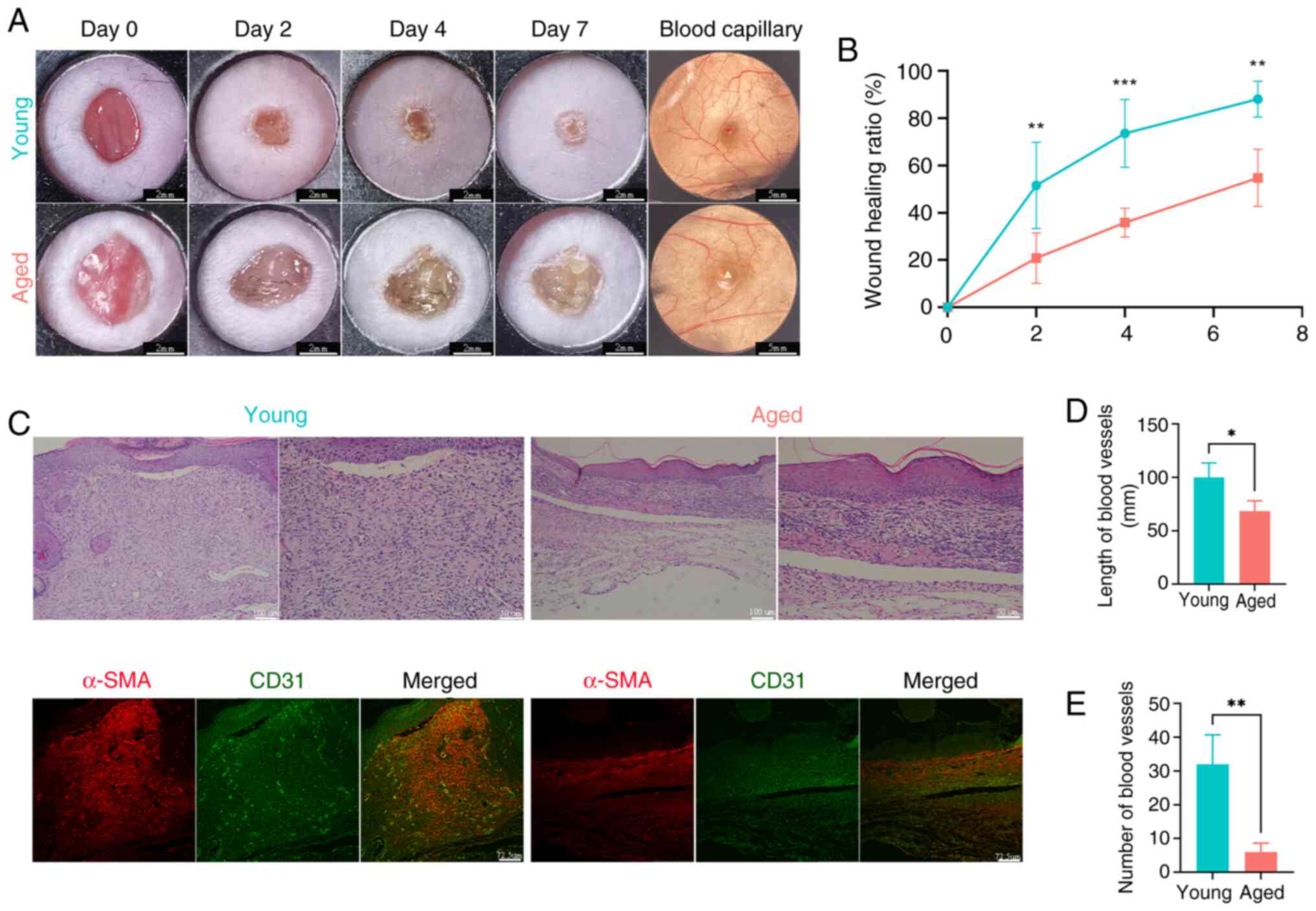
Figure 1

Decreased vascularization in wound
healing associated with aging. (A) Representative images of
cutaneous wounds in two age groups (aged vs. young) of mice on days
0, 2, 4 and 7; and the blood capillaries at the wound site at day
7. (B) Quantification of the wound healing rate after injures in
young and aged mice. (young: n=5, aged: n=3), (C) H&E staining
and immunohistochemical profiles of CD31 and α-SMA in young vs.
aged wounds at day 7 post-injury. (D and E) Quantification of
subcutaneous blood vessels length (D) and density (E) in aged vs.
young wounds, *P<0.05, **P<0.01, ***P<0.001. H&E,
hematoxylin and eosin; CD, cluster of differentiation; α-SMA,
α-smooth muscle actin.

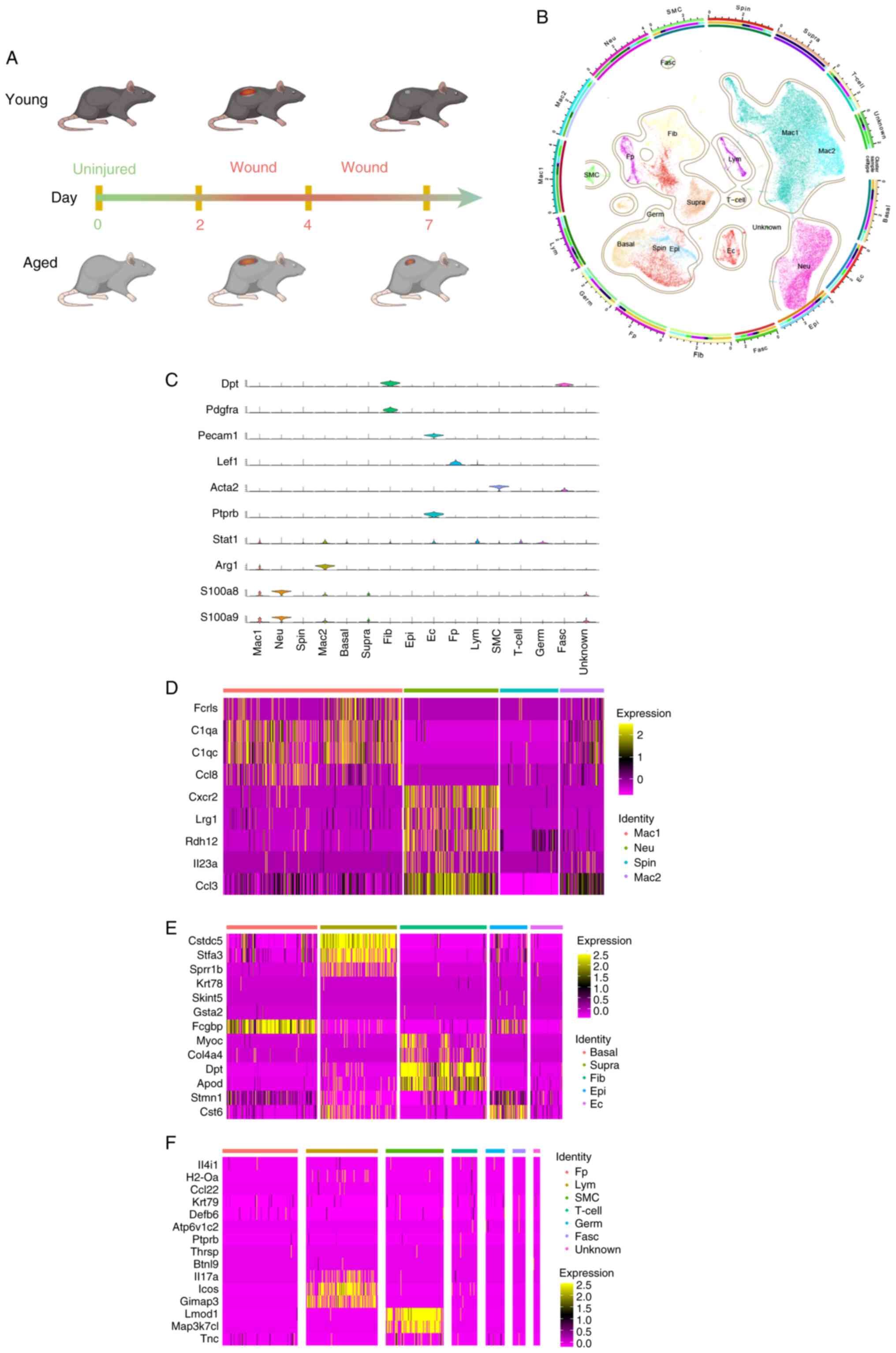
Figure 2

The visualization and analysis of the
single-cell transcriptional atlas. (A) Schematic diagram
illustrating the study workflow for single-cell RNA sequencing
datasets (GSA: CRA010641) across different time points. (B) Cirlize
plot visualizing the UMAP of cell types in young and aged wounds
across four time points. Colors represent cell types. (C-E)
Expression of maker genes used for identification of cell types in
(B). (F) Heatmap of top three differentially expressed marker genes
of cell types in (B). GSA, Genome Sequence Archive; UMAP, uniform
manifold approximation and projection.

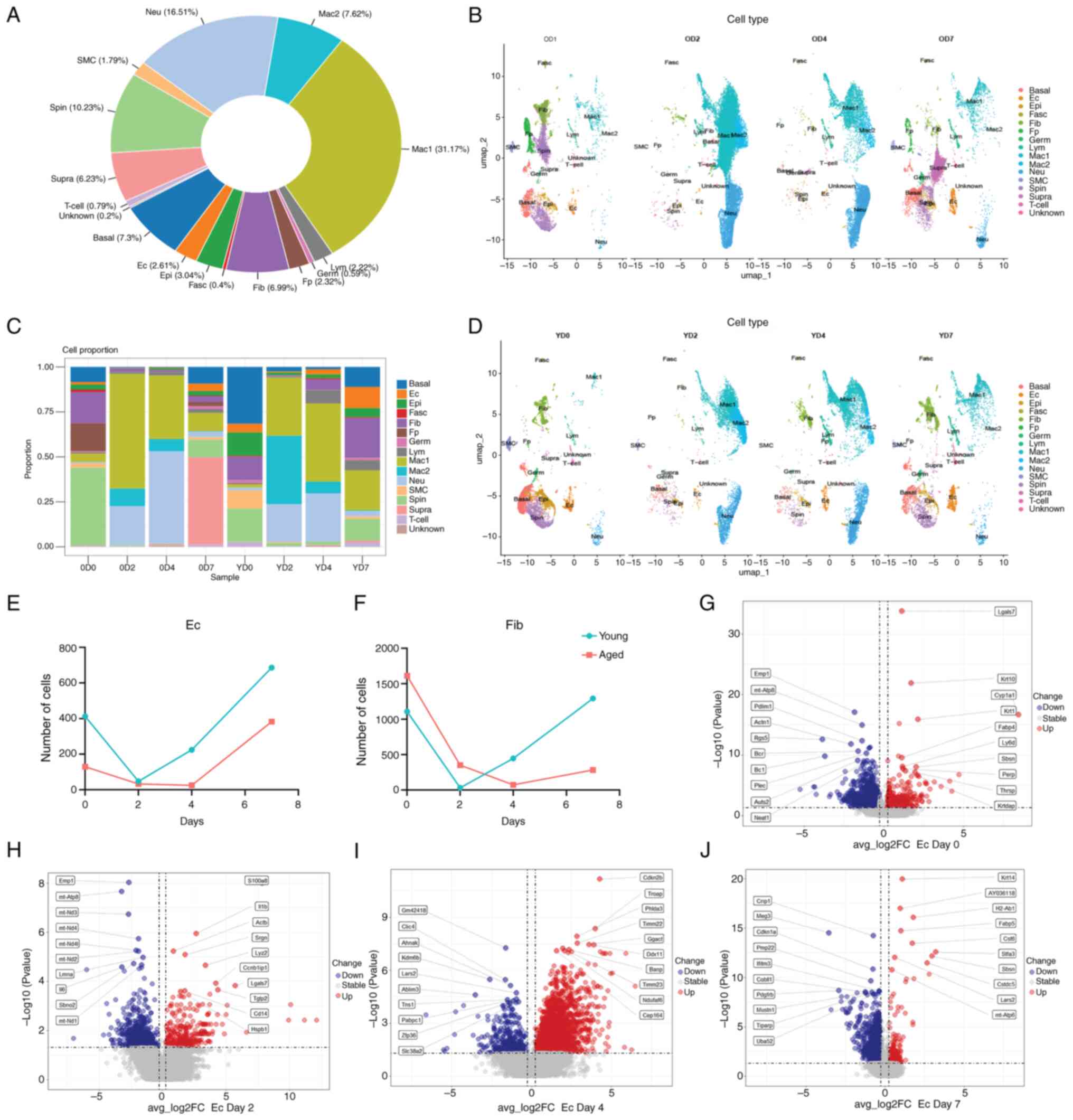
Figure 3

Cellular composition alterations
between young and aged wounds. (A) Proportion of all cell types in
wounds from the integrated datasets. (B) UMAP of each cell types in
aged wound over four time points. (C) Proportion of cell types in
young and aged wounds over time points. (D) UMAP of each cell types
in young wound over four time points (E) Quantification of the Ec
in young and aged wounds over time points. (F) Quantification of
the Fib in young and aged wounds over time points. Volcano plots of
differentially expression genes of EC in aged compared with young
wounds at day (G) 0, (H) 2, (I) 4 and (J) 7. UMAP, uniform manifold
approximation and projection; OD0, aged wound at day 0; OD2, aged
wound at day 2; OD4, aged wound at day 4; OD7. aged wound at day 7;
YD0, young wound at day 0; YD2, young wound at day 2; YD4, young
wound at day 4; YD7, young wound at day 7; Ec, endothelial cell;
Fib, fibroblast.

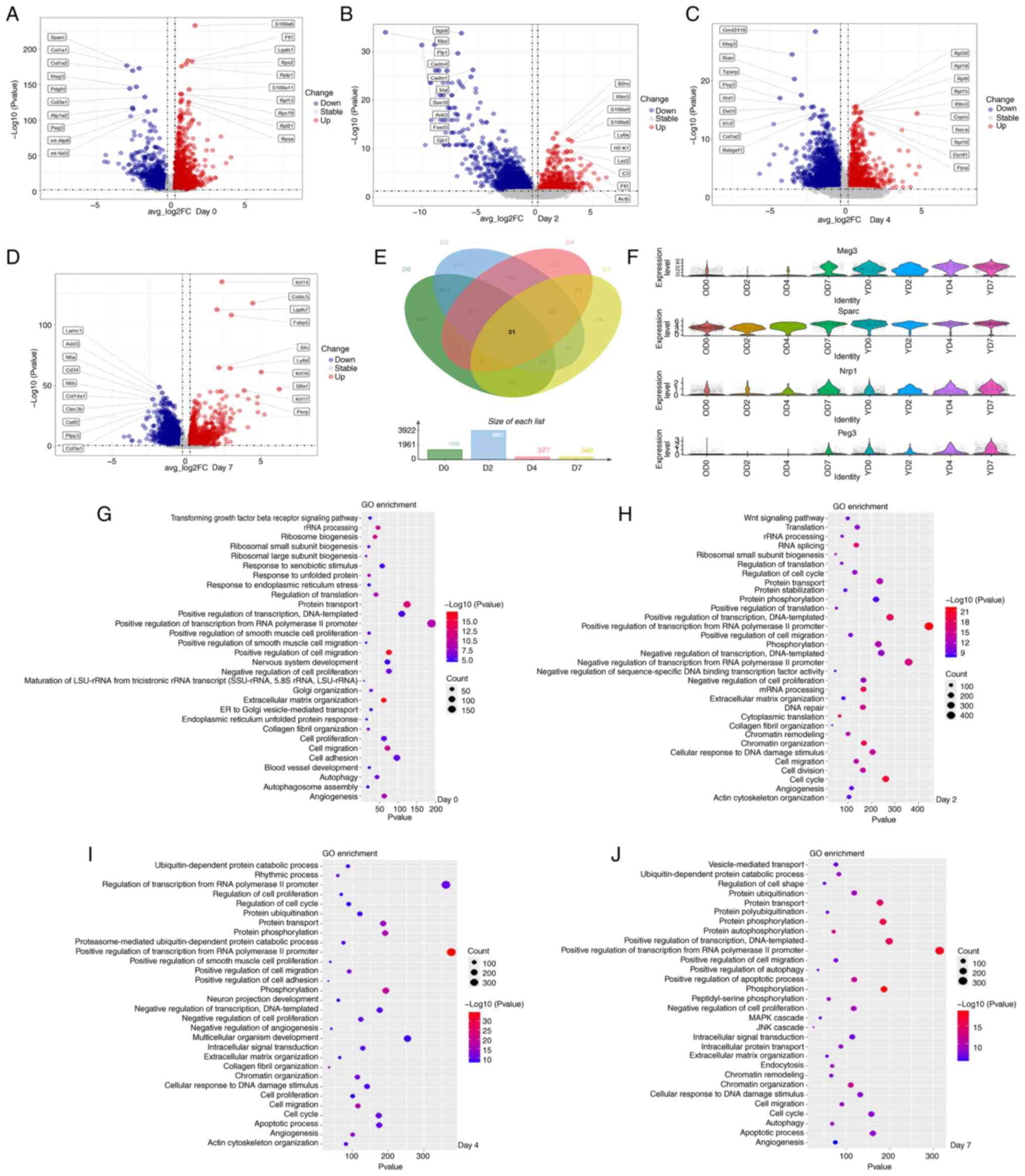
Figure 4

Differential expression genes
analysis of Fib in age compared with young wounds. Volcano plots of
DEGs at days (A) 0, (B) 2, (C) 4 and (D) 7. (E) Venn diagrams
showing the overlap of downregulated DEGs at days 0, 2, 4 and 7.
Each section displays the number of DEGs. (F) Expression patterns
of Meg3, Sparc, Nrp1 and Pdgfrl. GO term analysis of downregulated
DEGs at days (G) 0, (H) 2, (I) 4 and (J) 7. Fib, fibroblast; DEGs,
differentially expression genes; GO, Gene Ontology.

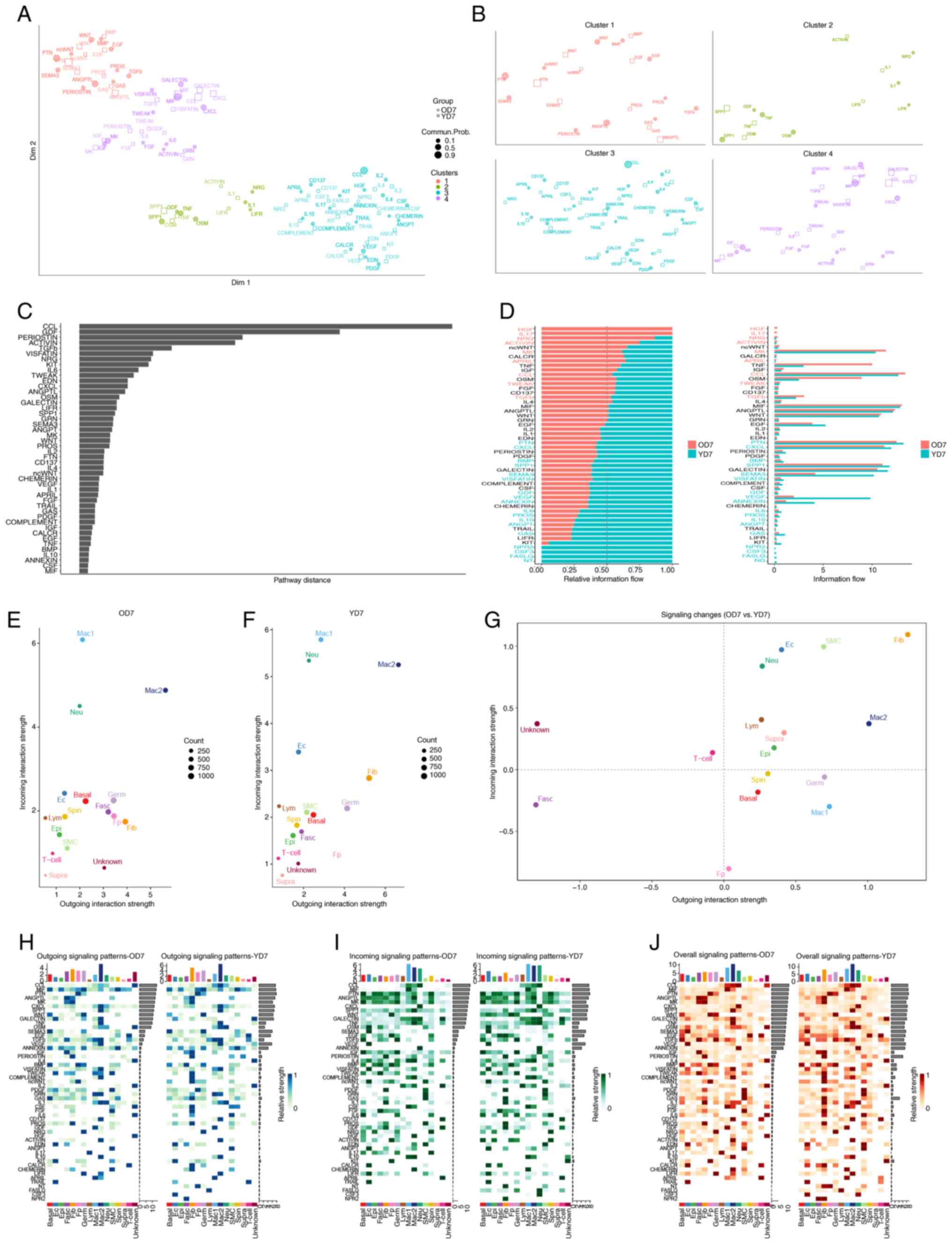
Figure 5

Differential intercellular
communication patterns between aged and young wounds. (A)
Clustering signaling pathways from aged and young wounds at day 7
into a shared two-dimensional manifold. (B) Magnified view of each
pathway cluster. (C) The overlapping signaling pathways between
aged and young wounds at day 7 were ordered in accordance with
their pairwise Euclidean distance in the shared two-dimensional
manifold. (D) The depiction of all signaling pathways within the
overall information flow of the inferred networks between aged and
young wounds at day 7. The signaling pathways colored red are more
enriched in aged wound. The signaling pathways colored green are
more enriched in young wound. The signaling pathways colored black
are equally enriched between aged and young wounds at day 7. (E)
Interaction analysis across all cell types in the aged wound at day
7 identifying prominent signaling sources and targets. (F)
Interaction analysis across all cell types in the young wound at
day 7 identifying prominent signaling sources and targets. (G)
Altered signaling pathways across all cell types in aged compared
with young wounds at day 7. (H) Heatmap of all signaling pathways
across all cell types between aged and young wounds at day 7,
focusing on outgoing signaling patterns. (I) Heatmap of all
signaling pathways among all cell types between aged and young
wounds at day 7, emphasizing incoming signaling patterns. (J)
Heatmap of all signaling pathways among all cell types in aged vs.
young wounds at day 7. OD7. aged wound at day 7; YD7, young wound
at day 7.

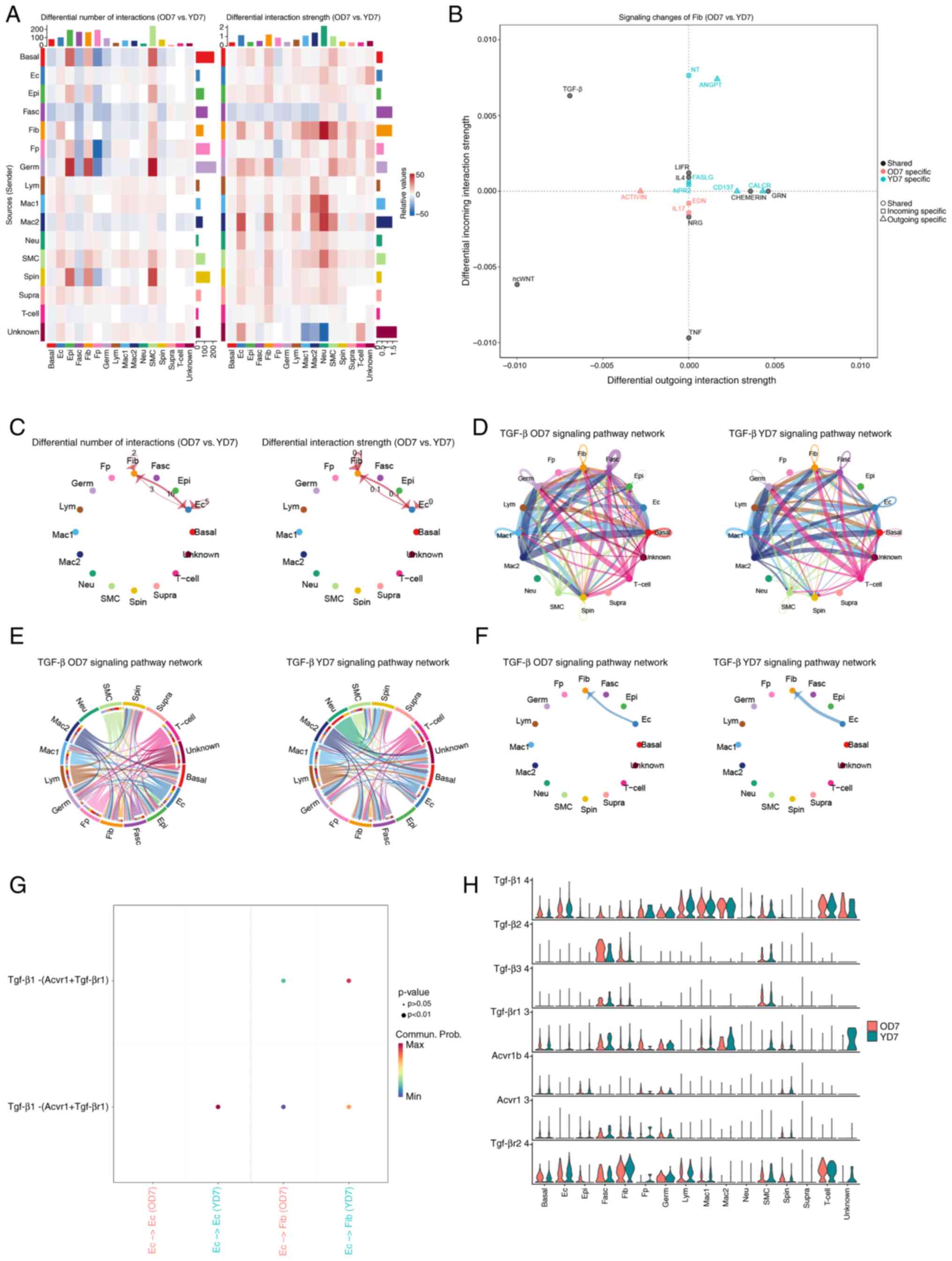
Figure 6

Altered signaling interaction between
Fib and Ec in aged vs. young wounds. (A) Differences in interaction
numbers and strength across all cell types in aged compared with
young wounds at day 7. (B) Altered signaling pathways associated
with Fib in aged compared with young wounds at day 7. (C)
Difference in interaction numbers and strength specifically between
Fib and Ec in aged vs. young wounds at day 7. (D) Circle plot of
TGF-β pathway-associated interaction network across all cell types
in aged and young wounds at day 7. (E) Chord diagrams of TGF-β
pathway-associated interaction network across all cell types in
aged and young wounds at day 7. (F) The strength of interaction
from Ec to Fib via TGF-β pathway in in aged and young wounds at day
7. The thickness of the connecting line indicates the level of
communication probability. (G) Significant ligand-receptor pairs
that contribute to the signaling sent from EC via TGF-β pathway in
in aged and young wounds at day 7. (H) The distribution of gene
expression related to the TGF-β pathway across all cell types in in
aged and young wounds at day 7. OD7. aged wound at day 7; YD7,
young wound at day 7; TGF-β, transforming growth factor β; Ec,
endothelial cell; Fib, fibroblast.

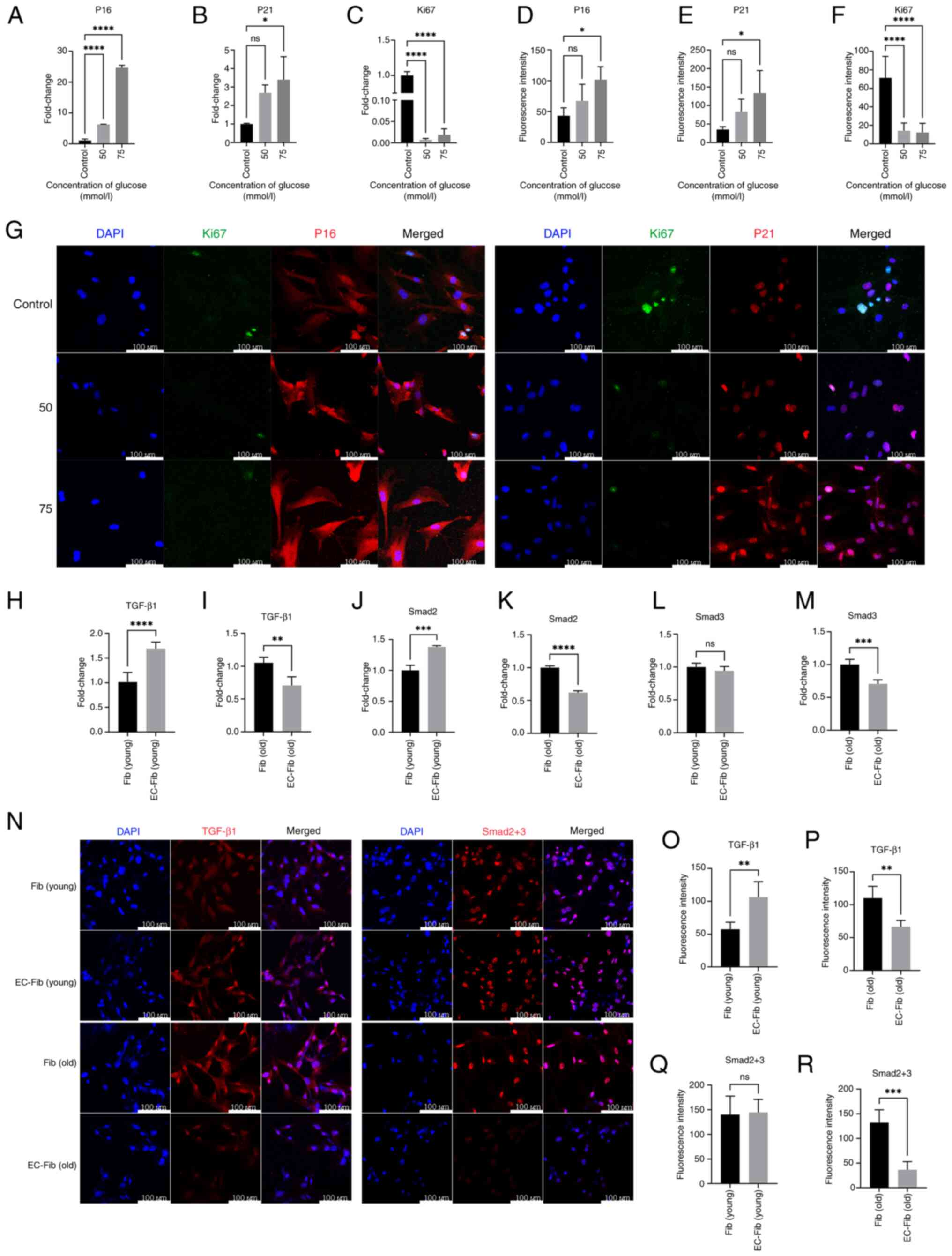
Figure 7

Gene and protein expression profiling
in fibroblasts under high-glucose induction and co-culture system.
Gene expression level of (A) P16, (B) P21 and (C)
Ki67 in fibroblasts under different glucose concentrations.
(n=3) Quantification of fluorescence intensity for (D) P16, (E) P21
and (F) Ki67 in fibroblasts under different glucose concentrations
following (G) Immunofluorescence staining. (H) TGF-β1 gene
expression in young fibroblasts co-cultured with ECs. (I)
TGF-β1 gene expression in old fibroblasts co-cultured with
ECs. (J) Smad2 gene expression in young fibroblasts
co-cultured with ECs. (K) Smad2 gene expression in old
fibroblasts co-cultured with ECs. Smad3 gene expression in
(L) young fibroblasts co-cultured with ECs. (M) Smad3 gene
expression in old fibroblasts co-cultured with ECs. (N-R)
Immunofluorescence staining and quantification of fluorescence
intensity for TGF-β1 and Smad2+3 in fibroblasts under different
co-culture system. *P<0.05, **P<0.01, ***P<0.001,
****P<0.0001.
View References

1 

Tan Y, Zhang M, Kong Y, Zhang F, Wang Y, Huang Y, Song W, Li Z, Hou L, Liang L, et al: Fibroblasts and endothelial cells interplay drives hypertrophic scar formation: Insights from in vitro and in vivo models. Bioeng Transl Med. 9:e106302023. View Article : Google Scholar : PubMed/NCBI

2 

Sun X, Nkennor B, Mastikhina O, Soon K and Nunes SS: Endothelium-mediated contributions to fibrosis. Semin Cell Dev Biol. 101:78–86. 2020. View Article : Google Scholar : PubMed/NCBI

3 

Ramasamy SK, Kusumbe AP and Adams RH: Regulation of tissue morphogenesis by endothelial cell-derived signals. Trends Cell Biol. 25:148–157. 2015. View Article : Google Scholar : PubMed/NCBI

4 

Sgonc R and Gruber J: Age-related aspects of cutaneous wound healing: A mini-review. Gerontology. 59:159–164. 2013. View Article : Google Scholar : PubMed/NCBI

5 

Brauer E, Lange T, Keller D, Görlitz S, Cho S, Keye J, Gossen M, Petersen A and Kornak U: Dissecting the influence of cellular senescence on cell mechanics and extracellular matrix formation in vitro. Aging Cell. 22:e137442023. View Article : Google Scholar : PubMed/NCBI

6 

Dańczak-Pazdrowska A, Gornowicz-Porowska J, Polańska A, Krajka-Kuźniak V, Stawny M, Gostyńska A, Rubiś B, Nourredine S, Ashiqueali S, Schneider A, et al: Cellular senescence in skin-related research: Targeted signaling pathways and naturally occurring therapeutic agents. Aging Cell. 22:e138452023. View Article : Google Scholar : PubMed/NCBI

7 

Yu GT, Monie DD, Khosla S, Tchkonia T, Kirkland JL and Wyles SP: Mapping cellular senescence networks in human diabetic foot ulcers. Geroscience. 46:1071–1082. 2024. View Article : Google Scholar : PubMed/NCBI

8 

Pilkington SM, Bulfone-Paus S, Griffiths CEM and Watson REB: Inflammaging and the Skin. J Invest Dermatol. 141((4S)): 1087–1095. 2021. View Article : Google Scholar : PubMed/NCBI

9 

Ding X, Kakanj P, Leptin M and Eming SA: Regulation of the Wound Healing Response during Aging. J Invest Dermatol. 141((4S)): 1063–1070. 2021. View Article : Google Scholar : PubMed/NCBI

10 

Zhou S, Li Z, Li X, Ye Y, Wang M, Jiang J, Tao L, Wang Y, Tung CT, Chung Y, et al: Crosstalk between endothelial cells and dermal papilla entails hair regeneration and angiogenesis during aging. J Adv Res. 70:339–353. 2025. View Article : Google Scholar : PubMed/NCBI

11 

Reed MJ and Edelberg JM: Impaired angiogenesis in the aged. Sci Aging Knowledge Environ. 2004:pe72004. View Article : Google Scholar : PubMed/NCBI

12 

R Core Team, . R: A language and environment for statistical computing. R Foundation for Statistical Computing; Vienna: 2023, http://www.R-project.org/

13 

Martin P and Nunan R: Cellular and molecular mechanisms of repair in acute and chronic wound healing. Br J Dermatol. 173:370–378. 2015. View Article : Google Scholar : PubMed/NCBI

14 

Cai Y, Xiong M, Xin Z, Liu C, Ren J, Yang X, Lei J, Li W, Liu F, Chu Q, et al: Decoding aging-dependent regenerative decline across tissues at single-cell resolution. Cell Stem Cell. 30:1674–1691.e8. 2023. View Article : Google Scholar : PubMed/NCBI

15 

Arostegui M, Scott RW, Böse K and Underhill TM: Cellular taxonomy of Hic1+ mesenchymal progenitor derivatives in the limb: From embryo to adult. Nat Commun. 13:49892022. View Article : Google Scholar : PubMed/NCBI

16 

Liu M, Zhang L, Marsboom G, Jambusaria A, Xiong S, Toth PT, Benevolenskaya EV, Rehman J and Malik AB: Sox17 is required for endothelial regeneration following inflammation-induced vascular injury. Nat Commun. 10:21262019. View Article : Google Scholar : PubMed/NCBI

17 

Perisic Matic L, Rykaczewska U, Razuvaev A, Sabater-Lleal M, Lengquist M, Miller CL, Ericsson I, Röhl S, Kronqvist M, Aldi S, et al: Phenotypic modulation of smooth muscle cells in atherosclerosis is associated with downregulation of LMOD1, SYNPO2, PDLIM7, PLN, and SYNM. Arterioscler Thromb Vasc Biol. 36:1947–1961. 2016. View Article : Google Scholar : PubMed/NCBI

18 

Ng SS, De Labastida Rivera F, Yan J, Corvino D, Das I, Zhang P, Kuns R, Chauhan SB, Hou J, Li XY, et al: The NK cell granule protein NKG7 regulates cytotoxic granule exocytosis and inflammation. Nat Immunol. 21:1205–1218. 2020. View Article : Google Scholar : PubMed/NCBI

19 

Zhang X, Yin M and Zhang LJ: Keratin 6, 16 and 17-critical barrier alarmin molecules in skin wounds and psoriasis. Cells. 8:8072019. View Article : Google Scholar : PubMed/NCBI

20 

Heinzelmann K, Hu Q, Hu Y, Dobrinskikh E, Ansari M, Melo-Narváez MC, Ulke HM, Leavitt C, Mirita C, Trudeau T, et al: Single-cell RNA sequencing identifies G-protein coupled receptor 87 as a basal cell marker expressed in distal honeycomb cysts in idiopathic pulmonary fibrosis. Eur Respir J. 59:21023732022. View Article : Google Scholar : PubMed/NCBI

21 

Veniaminova NA, Vagnozzi AN, Kopinke D, Do TT, Murtaugh LC, Maillard I, Dlugosz AA, Reiter JF and Wong SY: Keratin 79 identifies a novel population of migratory epithelial cells that initiates hair canal morphogenesis and regeneration. Development. 140:4870–4880. 2013. View Article : Google Scholar : PubMed/NCBI

22 

Rippa AL, Kalabusheva EP and Vorotelyak EA: Regeneration of dermis: Scarring and cells involved. Cells. 8:6072019. View Article : Google Scholar : PubMed/NCBI

23 

Driskell RR, Lichtenberger BM, Hoste E, Kretzschmar K, Simons BD, Charalambous M, Ferron SR, Herault Y, Pavlovic G, Ferguson-Smith AC and Watt FM: Distinct fibroblast lineages determine dermal architecture in skin development and repair. Nature. 504:277–281. 2013. View Article : Google Scholar : PubMed/NCBI

24 

Li Y, Yan H, Guo J, Han Y, Zhang C, Liu X, Du J and Tian XL: Down-regulated RGS5 by genetic variants impairs endothelial cell function and contributes to coronary artery disease. Cardiovasc Res. 117:240–255. 2021. View Article : Google Scholar : PubMed/NCBI

25 

Bartoschek M and Pietras K: PDGF family function and prognostic value in tumor biology. Biochem Biophys Res Commun. 503:984–990. 2018. View Article : Google Scholar : PubMed/NCBI

26 

Kyoreva M, Li Y, Hoosenally M, Hardman-Smart J, Morrison K, Tosi I, Tolaini M, Barinaga G, Stockinger B, Mrowietz U, et al: CYP1A1 enzymatic activity influences skin inflammation via regulation of the AHR pathway. J Invest Dermatol. 141:1553–1563.e3. 2021. View Article : Google Scholar : PubMed/NCBI

27 

Qin L, Zhang R, Yang S, Chen F and Shi J: Knockdown of ANGPTL-4 inhibits inflammatory response and extracellular matrix accumulation in glomerular mesangial cells cultured under high glucose condition. Artif Cells Nanomed Biotechnol. 47:3368–3373. 2019. View Article : Google Scholar : PubMed/NCBI

28 

Ye Y, Yang K, Liu H, Yu Y, Song M, Huang D, Lei J, Zhang Y, Liu Z, Chu Q, et al: SIRT2 counteracts primate cardiac aging via deacetylation of STAT3 that silences CDKN2B. Nat Aging. 3:1269–1287. 2023. View Article : Google Scholar : PubMed/NCBI

29 

Rolny C, Nilsson I, Magnusson P, Armulik A, Jakobsson L, Wentzel P, Lindblom P, Norlin J, Betsholtz C, Heuchel R, et al: Platelet-derived growth factor receptor-beta promotes early endothelial cell differentiation. Blood. 108:1877–1886. 2006. View Article : Google Scholar : PubMed/NCBI

30 

Stables MJ, Shah S, Camon EB, Lovering RC, Newson J, Bystrom J, Farrow S and Gilroy DW: Transcriptomic analyses of murine resolution-phase macrophages. Blood. 118:e192–e208. 2011. View Article : Google Scholar : PubMed/NCBI

31 

Liu Y, Ji Y, Jiang R, Fang C, Shi G, Cheng L, Zuo Y, Ye Y, Su X, Li J, et al: Reduced smooth muscle-fibroblasts transformation potentially decreases intestinal wound healing and colitis-associated cancer in ageing mice. Signal Transduct Target Ther. 8:2942023. View Article : Google Scholar : PubMed/NCBI

32 

Bergmeier V, Etich J, Pitzler L, Frie C, Koch M, Fischer M, Rappl G, Abken H, Tomasek JJ and Brachvogel B: Identification of a myofibroblast-specific expression signature in skin wounds. Matrix Biol. 65:59–74. 2018. View Article : Google Scholar : PubMed/NCBI

33 

Lu HP, Lin CJ, Chen WC, Chang YJ, Lin SW, Wang HH and Chang CJ: TRIM28 regulates Dlk1 expression in adipogenesis. Int J Mol Sci. 21:72452020. View Article : Google Scholar : PubMed/NCBI

34 

Khoury LE, Posthumus M, Collins M, van der Merwe W, Handley C, Cook J and Raleigh SM: ELN and FBN2 gene variants as risk factors for two sports-related musculoskeletal injuries. Int J Sports Med. 36:333–337. 2015.PubMed/NCBI

35 

Matsusaka T, Katori H, Inagami T, Fogo A and Ichikawa I: Communication between myocytes and fibroblasts in cardiac remodeling in angiotensin chimeric mice. J Clin Invest. 103:1451–1458. 1999. View Article : Google Scholar : PubMed/NCBI

36 

AlQudah M, Hale TM and Czubryt MP: Targeting the renin-angiotensin-aldosterone system in fibrosis. Matrix Biol. 91–92. 92–108. 2020.PubMed/NCBI

37 

Zhao J, Bai J, Peng F, Qiu C, Li Y and Zhong L: USP9X-mediated NRP1 deubiquitination promotes liver fibrosis by activating hepatic stellate cells. Cell Death Dis. 14:402023. View Article : Google Scholar : PubMed/NCBI

38 

Guan T, Fang F, Su X, Lin K and Gao Q: Silencing PEG3 inhibits renal fibrosis in a rat model of diabetic nephropathy by suppressing the NF-κB pathway. Mol Cell Endocrinol. 513:1108232020. View Article : Google Scholar : PubMed/NCBI

39 

Wu W, Zhou S, Fei G and Wang R: The role of long noncoding RNA MEG3 in fibrosis diseases. Postgrad Med J. 100:529–538. 2024. View Article : Google Scholar : PubMed/NCBI

40 

Du J, Qian T, Lu Y, Zhou W, Xu X, Zhang C, Zhang J and Zhang Z: SPARC-YAP/TAZ inhibition prevents the fibroblasts-myofibroblasts transformation. Exp Cell Res. 429:1136492023. View Article : Google Scholar : PubMed/NCBI

41 

Cerezo-Wallis D, Contreras-Alcalde M, Troulé K, Catena X, Mucientes C, Calvo TG, Cañón E, Tejedo C, Pennacchi PC, Hogan S, et al: Midkine rewires the melanoma microenvironment toward a tolerogenic and immune-resistant state. Nat Med. 26:1865–1877. 2020. View Article : Google Scholar : PubMed/NCBI

42 

Hayward S, Gachehiladze M, Badr N, Andrijes R, Molostvov G, Paniushkina L, Sopikova B, Slobodová Z, Mgebrishvili G, Sharma N, et al: The CD151-midkine pathway regulates the immune microenvironment in inflammatory breast cancer. J Pathol. 251:63–73. 2020. View Article : Google Scholar : PubMed/NCBI

43 

Russell CD, Unger SA, Walton M and Schwarze J: The human immune response to respiratory syncytial virus infection. Clin Microbiol Rev. 30:481–502. 2017. View Article : Google Scholar : PubMed/NCBI

44 

Meng XM, Nikolic-Paterson DJ and Lan HY: TGF-β: The master regulator of fibrosis. Nat Rev Nephrol. 12:325–338. 2016. View Article : Google Scholar : PubMed/NCBI

45 

Lee JH and Massagué J: TGF-β in developmental and fibrogenic EMTs. Semin Cancer Biol. 86((Pt 2)): 136–145. 2022. View Article : Google Scholar : PubMed/NCBI

46 

Morikawa M, Derynck R and Miyazono K: TGF-β and the TGF-β family: Context-dependent roles in cell and tissue physiology. Cold Spring Harb Perspect Biol. 8:a0218732016. View Article : Google Scholar : PubMed/NCBI

47 

DiPietro LA: Angiogenesis and wound repair: When enough is enough. J Leukoc Biol. 100:979–984. 2016. View Article : Google Scholar : PubMed/NCBI

48 

Riggin CN, Weiss SN, Rodriguez AB, Raja H, Chen M, Schultz SM, Sehgal CM and Soslowsky LJ: Increasing vascular response to injury improves tendon early healing outcome in aged rats. Ann Biomed Eng. 50:587–600. 2022. View Article : Google Scholar : PubMed/NCBI

49 

Bonham CA, Kuehlmann B and Gurtner GC: Impaired neovascularization in aging. Adv Wound Care (New Rochelle). 9:111–126. 2020. View Article : Google Scholar : PubMed/NCBI

50 

Eming SA, Martin P and Tomic-Canic M: Wound repair and regeneration: Mechanisms, signaling, and translation. Sci Transl Med. 6:265sr62014. View Article : Google Scholar : PubMed/NCBI

51 

Fougère B, Boulanger E, Nourhashémi F, Guyonnet S and Cesari M: Chronic inflammation: Accelerator of biological aging. J Gerontol A Biol Sci Med Sci. 72:1218–1225. 2017. View Article : Google Scholar : PubMed/NCBI

52 

Zhao R, Liang H, Clarke E, Jackson C and Xue M: Inflammation in chronic wounds. Int J Mol Sci. 17:20852016. View Article : Google Scholar : PubMed/NCBI

53 

Kiritsi D and Nyström A: The role of TGFβ in wound healing pathologies. Mech Ageing Dev. 172:51–58. 2018. View Article : Google Scholar : PubMed/NCBI

54 

Talbott HE, Mascharak S, Griffin M, Wan DC and Longaker MT: Wound healing, fibroblast heterogeneity, and fibrosis. Cell Stem Cell. 29:1161–1180. 2022. View Article : Google Scholar : PubMed/NCBI

55 

Zhang J, Zheng Y, Lee J, Hua J, Li S, Panchamukhi A, Yue J, Gou X, Xia Z, Zhu L and Wu X: A pulsatile release platform based on photo-induced imine-crosslinking hydrogel promotes scarless wound healing. Nat Commun. 12:16702021. View Article : Google Scholar : PubMed/NCBI

56 

Lu ZZ, Sun C, Zhang X, Peng Y, Wang Y, Zeng Y, Zhu N, Yuan Y and Zeng MS: Neuropilin 1 is an entry receptor for KSHV infection of mesenchymal stem cell through TGFBR1/2-mediated macropinocytosis. Sci Adv. 9:eadg17782023. View Article : Google Scholar : PubMed/NCBI

57 

Fan J, Zhang X, Jiang Y, Chen L, Sheng M and Chen Y: SPARC knockdown attenuated TGF-β1-induced fibrotic effects through Smad2/3 pathways in human pterygium fibroblasts. Arch Biochem Biophys. 713:1090492021. View Article : Google Scholar : PubMed/NCBI

58 

Nagashima G, Suzuki R, Asai JI, Noda M, Fujimoto M and Fujimoto T: Tissue reconstruction process in the area of peri-tumoural oedema caused by glioblastoma-immunohistochemical and graphical analysis using brain obtained at autopsy. Acta Neurochir Suppl. 86:507–511. 2003.PubMed/NCBI

59 

Zhan H, Sun X, Wang X, Gao Q, Yang M, Liu H, Zheng J, Gong X, Feng S, Chang X and Sun Y: LncRNA MEG3 involved in NiO NPs-induced pulmonary fibrosis via regulating TGF-β1-mediated PI3K/AKT pathway. Toxicol Sci. 182:120–131. 2021. View Article : Google Scholar : PubMed/NCBI

60 

O'Reilly S, Tsou PS and Varga J: Senescence and tissue fibrosis: Opportunities for therapeutic targeting. Trends Mol Med. 30:1113–1125. 2024. View Article : Google Scholar : PubMed/NCBI

61 

Percie du Sert N, Hurst V, Ahluwalia A, Alam S, Avey MT, Baker M, Browne WJ, Clark A, Cuthill IC, Dirnagl U, et al: The ARRIVE guidelines 2.0: Updated guidelines for reporting animal research. PLoS Biol. 18:e30004102020. View Article : Google Scholar : PubMed/NCBI

Related Articles

  • Abstract
  • View
  • Download
  • Twitter
Copy and paste a formatted citation
Spandidos Publications style
Li J, Zhu D, Zhang M, Li Z, Liang L, Huang Y, Guo X, Kong Y, Fu X, Huang S, Huang S, et al: Deciphering age‑related differences in wound healing: Insights from the interaction between endothelial cells and fibroblasts. Mol Med Rep 32: 278, 2025.
APA
Li, J., Zhu, D., Zhang, M., Li, Z., Liang, L., Huang, Y. ... Huang, S. (2025). Deciphering age‑related differences in wound healing: Insights from the interaction between endothelial cells and fibroblasts. Molecular Medicine Reports, 32, 278. https://doi.org/10.3892/mmr.2025.13643
MLA
Li, J., Zhu, D., Zhang, M., Li, Z., Liang, L., Huang, Y., Guo, X., Kong, Y., Fu, X., Huang, S."Deciphering age‑related differences in wound healing: Insights from the interaction between endothelial cells and fibroblasts". Molecular Medicine Reports 32.4 (2025): 278.
Chicago
Li, J., Zhu, D., Zhang, M., Li, Z., Liang, L., Huang, Y., Guo, X., Kong, Y., Fu, X., Huang, S."Deciphering age‑related differences in wound healing: Insights from the interaction between endothelial cells and fibroblasts". Molecular Medicine Reports 32, no. 4 (2025): 278. https://doi.org/10.3892/mmr.2025.13643
Copy and paste a formatted citation
x
Spandidos Publications style
Li J, Zhu D, Zhang M, Li Z, Liang L, Huang Y, Guo X, Kong Y, Fu X, Huang S, Huang S, et al: Deciphering age‑related differences in wound healing: Insights from the interaction between endothelial cells and fibroblasts. Mol Med Rep 32: 278, 2025.
APA
Li, J., Zhu, D., Zhang, M., Li, Z., Liang, L., Huang, Y. ... Huang, S. (2025). Deciphering age‑related differences in wound healing: Insights from the interaction between endothelial cells and fibroblasts. Molecular Medicine Reports, 32, 278. https://doi.org/10.3892/mmr.2025.13643
MLA
Li, J., Zhu, D., Zhang, M., Li, Z., Liang, L., Huang, Y., Guo, X., Kong, Y., Fu, X., Huang, S."Deciphering age‑related differences in wound healing: Insights from the interaction between endothelial cells and fibroblasts". Molecular Medicine Reports 32.4 (2025): 278.
Chicago
Li, J., Zhu, D., Zhang, M., Li, Z., Liang, L., Huang, Y., Guo, X., Kong, Y., Fu, X., Huang, S."Deciphering age‑related differences in wound healing: Insights from the interaction between endothelial cells and fibroblasts". Molecular Medicine Reports 32, no. 4 (2025): 278. https://doi.org/10.3892/mmr.2025.13643
Follow us
  • Twitter
  • LinkedIn
  • Facebook
About
  • Spandidos Publications
  • Careers
  • Cookie Policy
  • Privacy Policy
How can we help?
  • Help
  • Live Chat
  • Contact
  • Email to our Support Team