Spandidos Publications Logo
  • About
    • About Spandidos
    • Aims and Scopes
    • Abstracting and Indexing
    • Editorial Policies
    • Reprints and Permissions
    • Job Opportunities
    • Terms and Conditions
    • Contact
  • Journals
    • All Journals
    • Oncology Letters
      • Oncology Letters
      • Information for Authors
      • Editorial Policies
      • Editorial Board
      • Aims and Scope
      • Abstracting and Indexing
      • Bibliographic Information
      • Archive
    • International Journal of Oncology
      • International Journal of Oncology
      • Information for Authors
      • Editorial Policies
      • Editorial Board
      • Aims and Scope
      • Abstracting and Indexing
      • Bibliographic Information
      • Archive
    • Molecular and Clinical Oncology
      • Molecular and Clinical Oncology
      • Information for Authors
      • Editorial Policies
      • Editorial Board
      • Aims and Scope
      • Abstracting and Indexing
      • Bibliographic Information
      • Archive
    • Experimental and Therapeutic Medicine
      • Experimental and Therapeutic Medicine
      • Information for Authors
      • Editorial Policies
      • Editorial Board
      • Aims and Scope
      • Abstracting and Indexing
      • Bibliographic Information
      • Archive
    • International Journal of Molecular Medicine
      • International Journal of Molecular Medicine
      • Information for Authors
      • Editorial Policies
      • Editorial Board
      • Aims and Scope
      • Abstracting and Indexing
      • Bibliographic Information
      • Archive
    • Biomedical Reports
      • Biomedical Reports
      • Information for Authors
      • Editorial Policies
      • Editorial Board
      • Aims and Scope
      • Abstracting and Indexing
      • Bibliographic Information
      • Archive
    • Oncology Reports
      • Oncology Reports
      • Information for Authors
      • Editorial Policies
      • Editorial Board
      • Aims and Scope
      • Abstracting and Indexing
      • Bibliographic Information
      • Archive
    • Molecular Medicine Reports
      • Molecular Medicine Reports
      • Information for Authors
      • Editorial Policies
      • Editorial Board
      • Aims and Scope
      • Abstracting and Indexing
      • Bibliographic Information
      • Archive
    • World Academy of Sciences Journal
      • World Academy of Sciences Journal
      • Information for Authors
      • Editorial Policies
      • Editorial Board
      • Aims and Scope
      • Abstracting and Indexing
      • Bibliographic Information
      • Archive
    • International Journal of Functional Nutrition
      • International Journal of Functional Nutrition
      • Information for Authors
      • Editorial Policies
      • Editorial Board
      • Aims and Scope
      • Abstracting and Indexing
      • Bibliographic Information
      • Archive
    • International Journal of Epigenetics
      • International Journal of Epigenetics
      • Information for Authors
      • Editorial Policies
      • Editorial Board
      • Aims and Scope
      • Abstracting and Indexing
      • Bibliographic Information
      • Archive
    • Medicine International
      • Medicine International
      • Information for Authors
      • Editorial Policies
      • Editorial Board
      • Aims and Scope
      • Abstracting and Indexing
      • Bibliographic Information
      • Archive
  • Articles
  • Information
    • Information for Authors
    • Information for Reviewers
    • Information for Librarians
    • Information for Advertisers
    • Conferences
  • Language Editing
Spandidos Publications Logo
  • About
    • About Spandidos
    • Aims and Scopes
    • Abstracting and Indexing
    • Editorial Policies
    • Reprints and Permissions
    • Job Opportunities
    • Terms and Conditions
    • Contact
  • Journals
    • All Journals
    • Biomedical Reports
      • Information for Authors
      • Editorial Policies
      • Editorial Board
      • Aims and Scope
      • Abstracting and Indexing
      • Bibliographic Information
      • Archive
    • Experimental and Therapeutic Medicine
      • Information for Authors
      • Editorial Policies
      • Editorial Board
      • Aims and Scope
      • Abstracting and Indexing
      • Bibliographic Information
      • Archive
    • International Journal of Epigenetics
      • Information for Authors
      • Editorial Policies
      • Editorial Board
      • Aims and Scope
      • Abstracting and Indexing
      • Bibliographic Information
      • Archive
    • International Journal of Functional Nutrition
      • Information for Authors
      • Editorial Policies
      • Editorial Board
      • Aims and Scope
      • Abstracting and Indexing
      • Bibliographic Information
      • Archive
    • International Journal of Molecular Medicine
      • Information for Authors
      • Editorial Policies
      • Editorial Board
      • Aims and Scope
      • Abstracting and Indexing
      • Bibliographic Information
      • Archive
    • International Journal of Oncology
      • Information for Authors
      • Editorial Policies
      • Editorial Board
      • Aims and Scope
      • Abstracting and Indexing
      • Bibliographic Information
      • Archive
    • Medicine International
      • Information for Authors
      • Editorial Policies
      • Editorial Board
      • Aims and Scope
      • Abstracting and Indexing
      • Bibliographic Information
      • Archive
    • Molecular and Clinical Oncology
      • Information for Authors
      • Editorial Policies
      • Editorial Board
      • Aims and Scope
      • Abstracting and Indexing
      • Bibliographic Information
      • Archive
    • Molecular Medicine Reports
      • Information for Authors
      • Editorial Policies
      • Editorial Board
      • Aims and Scope
      • Abstracting and Indexing
      • Bibliographic Information
      • Archive
    • Oncology Letters
      • Information for Authors
      • Editorial Policies
      • Editorial Board
      • Aims and Scope
      • Abstracting and Indexing
      • Bibliographic Information
      • Archive
    • Oncology Reports
      • Information for Authors
      • Editorial Policies
      • Editorial Board
      • Aims and Scope
      • Abstracting and Indexing
      • Bibliographic Information
      • Archive
    • World Academy of Sciences Journal
      • Information for Authors
      • Editorial Policies
      • Editorial Board
      • Aims and Scope
      • Abstracting and Indexing
      • Bibliographic Information
      • Archive
  • Articles
  • Information
    • For Authors
    • For Reviewers
    • For Librarians
    • For Advertisers
    • Conferences
  • Language Editing
Login Register Submit
  • This site uses cookies
  • You can change your cookie settings at any time by following the instructions in our Cookie Policy. To find out more, you may read our Privacy Policy.

    I agree
Search articles by DOI, keyword, author or affiliation
Search
Advanced Search
presentation
Molecular Medicine Reports
Join Editorial Board Propose a Special Issue
Print ISSN: 1791-2997 Online ISSN: 1791-3004
Journal Cover
October-2025 Volume 32 Issue 4

Full Size Image

Sign up for eToc alerts
Recommend to Library

Journals

International Journal of Molecular Medicine

International Journal of Molecular Medicine

International Journal of Molecular Medicine is an international journal devoted to molecular mechanisms of human disease.

International Journal of Oncology

International Journal of Oncology

International Journal of Oncology is an international journal devoted to oncology research and cancer treatment.

Molecular Medicine Reports

Molecular Medicine Reports

Covers molecular medicine topics such as pharmacology, pathology, genetics, neuroscience, infectious diseases, molecular cardiology, and molecular surgery.

Oncology Reports

Oncology Reports

Oncology Reports is an international journal devoted to fundamental and applied research in Oncology.

Experimental and Therapeutic Medicine

Experimental and Therapeutic Medicine

Experimental and Therapeutic Medicine is an international journal devoted to laboratory and clinical medicine.

Oncology Letters

Oncology Letters

Oncology Letters is an international journal devoted to Experimental and Clinical Oncology.

Biomedical Reports

Biomedical Reports

Explores a wide range of biological and medical fields, including pharmacology, genetics, microbiology, neuroscience, and molecular cardiology.

Molecular and Clinical Oncology

Molecular and Clinical Oncology

International journal addressing all aspects of oncology research, from tumorigenesis and oncogenes to chemotherapy and metastasis.

World Academy of Sciences Journal

World Academy of Sciences Journal

Multidisciplinary open-access journal spanning biochemistry, genetics, neuroscience, environmental health, and synthetic biology.

International Journal of Functional Nutrition

International Journal of Functional Nutrition

Open-access journal combining biochemistry, pharmacology, immunology, and genetics to advance health through functional nutrition.

International Journal of Epigenetics

International Journal of Epigenetics

Publishes open-access research on using epigenetics to advance understanding and treatment of human disease.

Medicine International

Medicine International

An International Open Access Journal Devoted to General Medicine.

Journal Cover
October-2025 Volume 32 Issue 4

Full Size Image

Sign up for eToc alerts
Recommend to Library

  • Article
  • Citations
    • Cite This Article
    • Download Citation
    • Create Citation Alert
    • Remove Citation Alert
    • Cited By
  • Similar Articles
    • Related Articles (in Spandidos Publications)
    • Similar Articles (Google Scholar)
    • Similar Articles (PubMed)
  • Download PDF
  • Download XML
  • View XML
Article Open Access

ER‑α36 knockdown is associated with lysosomal dysfunction and proliferation inhibition in liver cancer cells

  • Authors:
    • Huanhuan He
    • Xuan Wang
    • Zhixuan Wei
    • An Wang
    • Xiangyue Fang
    • Hanbo He
    • Zhuorui Wu
    • Xiji Shu
    • Binlian Sun
    • Qiongxia Chen
    • Xuan Huang
    • Hongyan Zhou
    • Yuchen Liu
    • Zhengqi Fu
  • View Affiliations / Copyright

    Affiliations: Department of Pathology and Pathophysiology, School of Medicine, Jianghan University, Wuhan, Hubei 430056, P.R. China, Cancer Institute, School of Medicine, Jianghan University, Wuhan, Hubei 430056, P.R. China
    Copyright: © He et al. This is an open access article distributed under the terms of Creative Commons Attribution License.
  • Article Number: 284
    |
    Published online on: August 11, 2025
       https://doi.org/10.3892/mmr.2025.13649
  • Expand metrics +
Metrics: Total Views: 0 (Spandidos Publications: | PMC Statistics: )
Metrics: Total PDF Downloads: 0 (Spandidos Publications: | PMC Statistics: )
Cited By (CrossRef): 0 citations Loading Articles...

This article is mentioned in:


Abstract

Estrogen receptor (ER)‑α36 and autophagy have each independently been reported to promote the proliferation of liver cancer cells; however, the association between them has not been explored. Therefore, the present study aimed to investigate the role and the underlying mechanism of ER‑α36 in the regulation of autophagy in liver cancer cells. The proliferation of liver cancer cell variants was examined by colony formation assay. A xenograft tumor model in nude mice was used to examine the role of ER‑α36 in malignant proliferation of liver cancer cells in vivo. Autophagic flux and lysosomal localization were assessed with immunofluorescence and confocal microscopy. The levels of ER‑α36, LAMP1, AKT, p62 and LC3‑Ⅱ/Ⅰ in liver cancer cell variants, and tumors formed by HepG2 cell variants in the nude mice were examined using Western blot and immunohistochemistry. The results revealed that ER‑α36 knockdown impaired autophagic flux by increasing lysosomal membrane permeabilization (LMP) and blocking lysosomal degradation. ER‑α36 knockdown also significantly inhibited the proliferation of liver cancer cells and orthotopic liver xenograft tumors. In addition, decreased AKT phosphorylation and the juxtanuclear clustering of lysosomes were observed in the liver cancer cells with ER‑α36 knockdown. In vitro experiments using the AKT inhibitor MK‑2206 indicated that AKT is involved in the ER‑α36 knockdown‑induced changes in LMP and lysosomal localization in liver cancer cells. In summary, the present study revealed that ER‑α36 plays a role in regulating the autophagy and proliferation of liver cancer cells, which is associated with the modulation of AKT signaling, LMP and lysosome localization. These findings highlight an important role of ER‑α36 in liver tumorigenesis.
View Figures

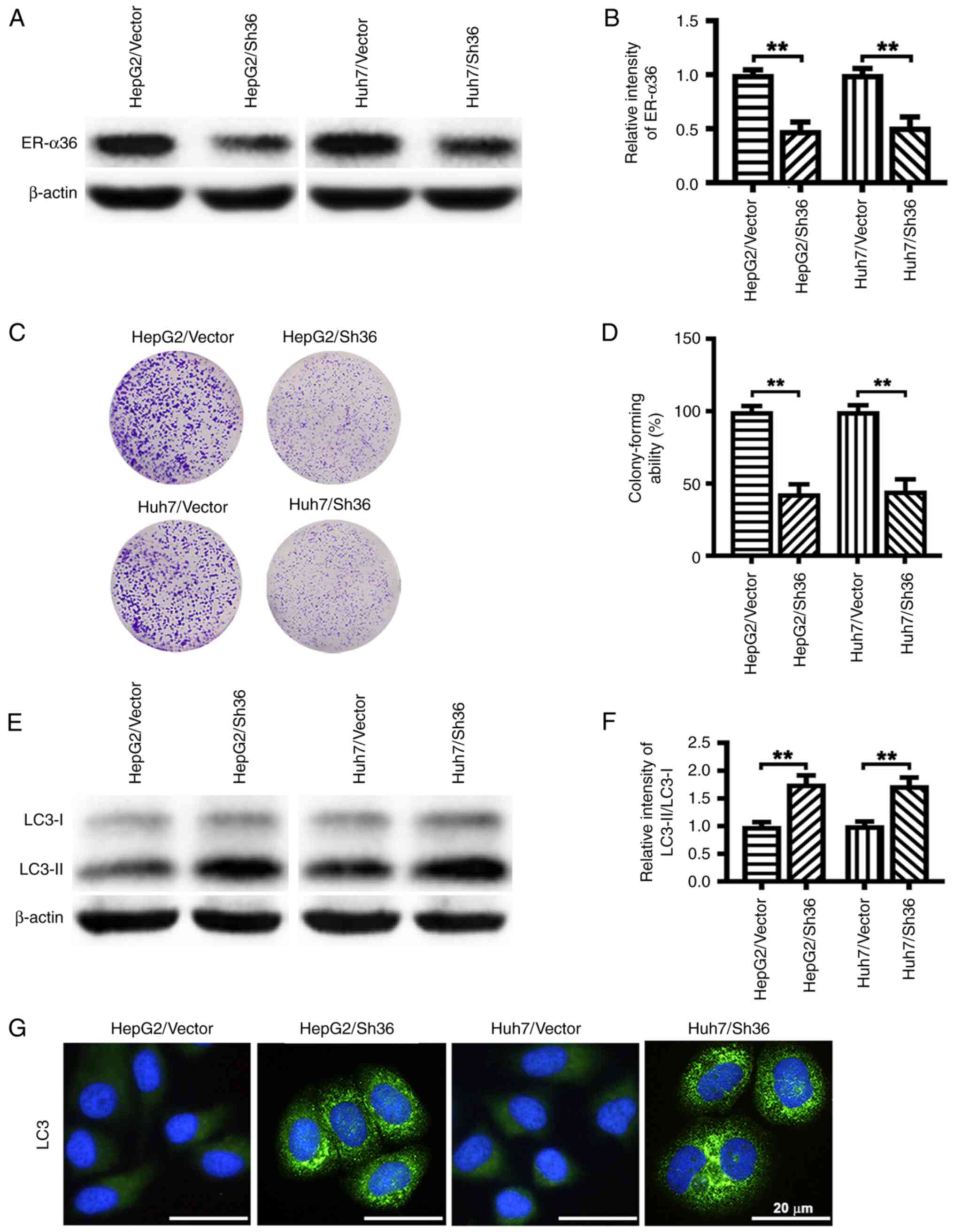
Figure 1

ER-α36 knockdown attenuates the
colony formation of liver cancer cells and promotes the
accumulation of autophagosomes. Expression of ER-α36 in stably
transfected HepG2 and Huh7 cells: (A) Representative western blots
and (B) quantitative analysis. (C) Representative images of colony
formation by the liver cancer cell variants and (D) quantitative
analysis. (E) Levels of LC3-II and LC3-I in the liver cancer cell
variants measured by western blotting and (F) quantitative analysis
of the LC3-II/LC3-I ratio. Data are presented as the mean ± SEM
(n=3). **P<0.01. (G) Analysis of the liver cancer cells by
immunofluorescence assay using an LC3 antibody and nuclear staining
with Hoechst 33342. Scale bar, 20 µm. ER, estrogen receptor; LC3,
microtubule-associated protein 1 light chain 3; Sh36, transfected
with ER-α36 specific short hairpin RNA expression vector; Vector,
transfected with empty vector.

Figure 2

ER-α36 knockdown blocks autophagic
flux and degradation. Expression of p62 in stably transfected liver
cancer cells with different levels of ER-α36 expression: (A)
Representative western blots and (B) quantitative analysis. (C)
Confocal microscopy images of liver cancer cells with and without
ER-α36 knockdown infected with pmCherry-enhanced GFP-LC3b
adenovirus (scale bar, 10 µm) and (D) quantification of yellow and
red puncta. (E) Levels of LC3-II and LC3-I assessed by western
blotting in transfected liver cancer cells treated with or without
CQ (20 µM) for 24 h, and (F) quantitative analysis of the
LC3-II/LC3-I ratio. (G) Western blots of ubiquitinated proteins in
the transfected liver cancer cells and (H) quantitative analysis of
Ub levels. **P<0.01. ER, estrogen receptor; GFP, green
fluorescence protein; LC3, microtubule-associated protein 1 light
chain 3; CQ, chloroquine; Ub, ubiquitin; Sh36, transfected with
ER-α36 specific short hairpin RNA expression vector; Vector,
transfected with empty vector.

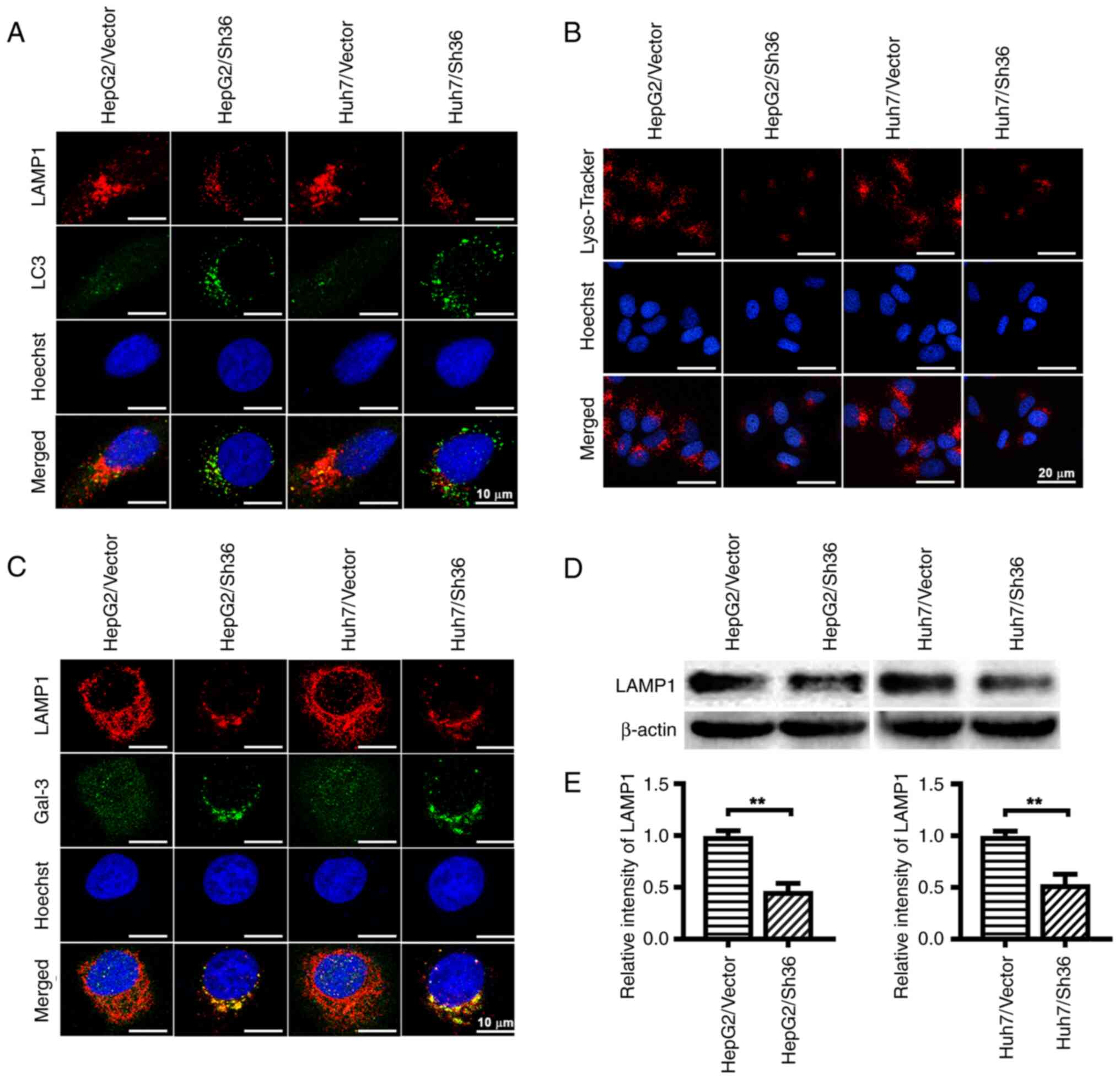
Figure 3

ER-α36 knockdown induces lysosomal
damage and membrane permeabilization. (A) Co-localization of LC3
(green) and LAMP1 (red) in stably transfected liver cancer cells
with different levels of ER-α36 expression. Scale bar, 10 µm. (B)
Fluorescence images of the transfected liver cancer cells following
staining with Lyso-Tracker Red. Scale bar, 20 µm. (C)
Co-localization of Gal-3 and LAMP1 in the transfected liver cancer
cells. Scale bar, 10 µm. (D) Expression levels of LAMP1 in the
liver cancer cells evaluated by western blotting and (E)
quantitative analysis. Data are presented as the mean ± SEM.
**P<0.01. ER, estrogen receptor; LC3, microtubule-associated
protein 1 light chain 3; LAMP1, lysosome-associated membrane
protein 1; Gal-3, galectin-3; Sh36, transfected with ER-α36
specific short hairpin RNA expression vector; Vector, transfected
with empty vector.

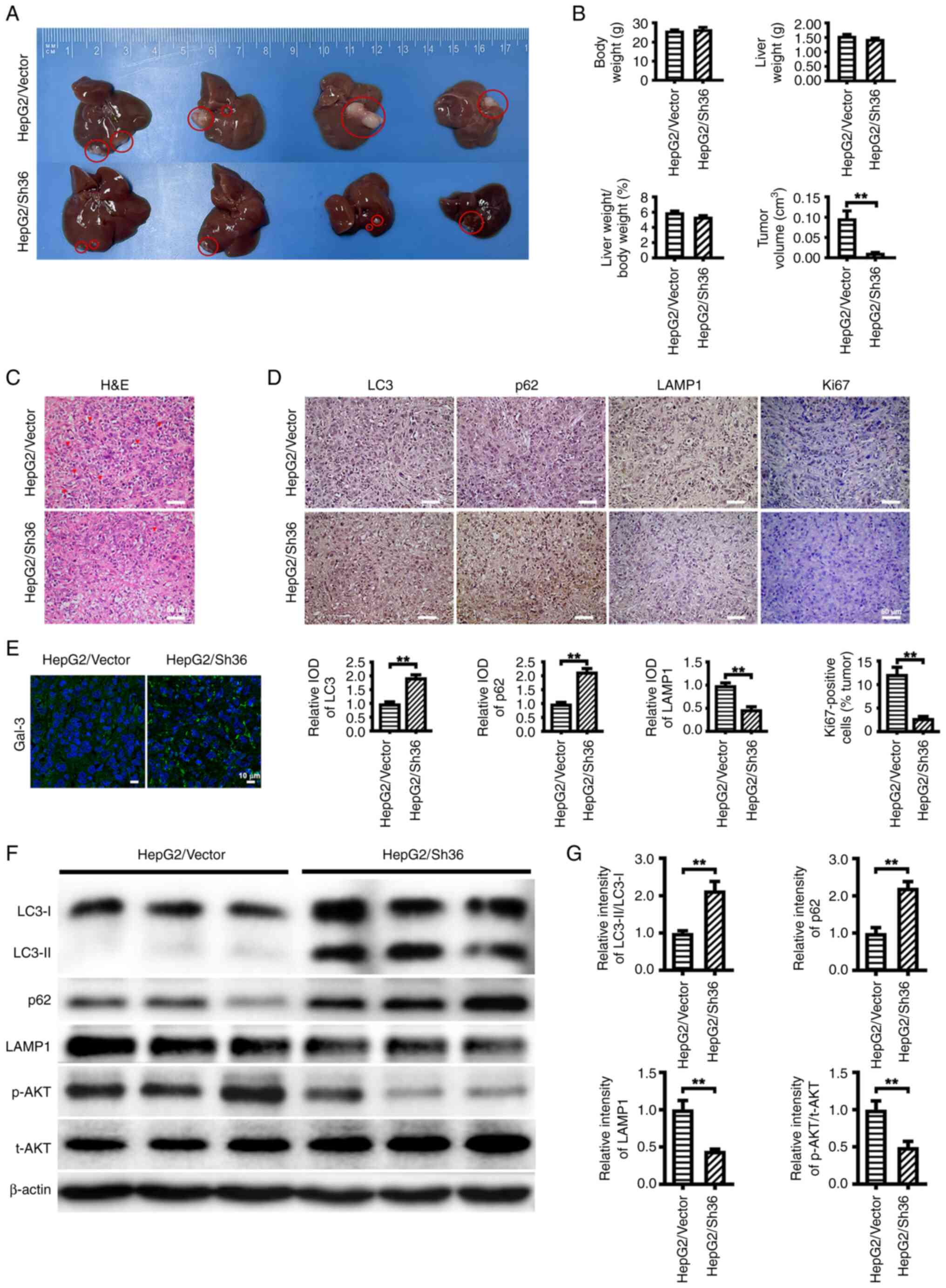
Figure 4

ER-α36 knockdown suppresses the
malignant proliferation of liver cancer cells and induces lysosomal
membrane permeabilization. (A) Representative images of liver
tumors from nude mice intrahepatically injected with HepG2 cells
expressing different ER-α36 levels, harvested at 28 days
post-injection. (B) Quantitative analysis of liver tumor volume,
liver weight, body weight and the ratio of liver weight to body
weight. (C) Representative H&E staining images showing
pathological karyomitosis changes. Scale bar, 50 µm. (D)
Immunohistochemical staining of LC3, p62, LAMP1 and Ki67 with
corresponding IOD values. Scale bar, 50 µm. (E) Immunofluorescence
staining of Gal-3 in the tumors formed from the transfected HepG2
cells. Scale bar, 10 µm. (F) Western blotting results showing the
levels of LC3-II and LC3-II, p62, LAMP1, p-AKT and t-AKT in the
tumors, and (G) quantitative analyses of the LC3-II/LC3-I and
p-AKT/t-AKT ratios, and p62 and LAMP1 expression levels. β-actin
was used as the internal loading control. Data are presented as the
mean ± SEM. **P<0.01. ER, estrogen receptor; H&E,
hematoxylin and eosin; LC3, microtubule-associated protein 1 light
chain 3; LAMP1, lysosome-associated membrane protein 1; Gal-3,
galectin-3; IOD, integrated optical density; p-, phosphorylated;
t-, total; Sh36, transfected with ER-α36 specific short hairpin RNA
expression vector; Vector, transfected with empty vector.

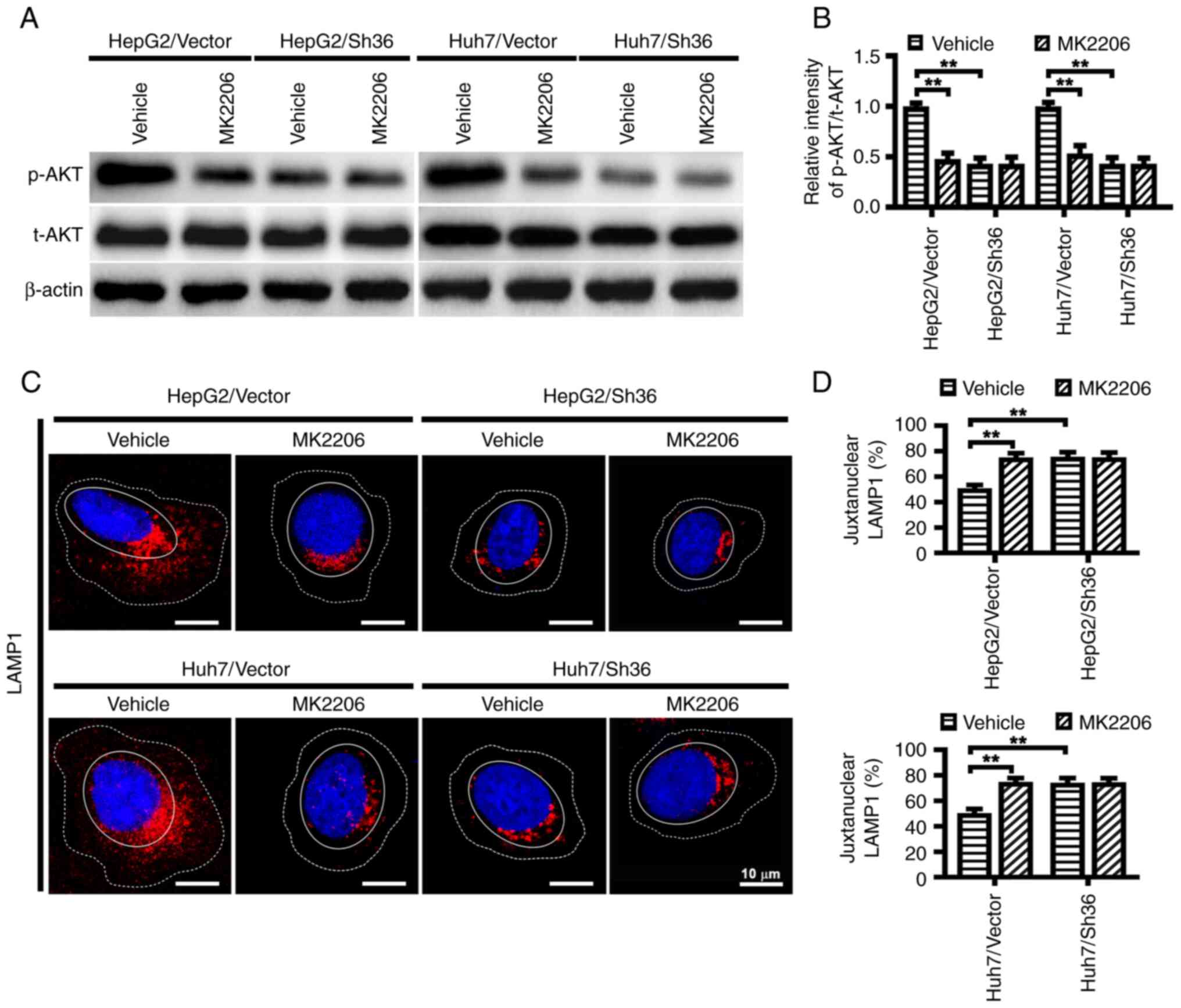
Figure 5

ER-α36 knockdown decreases AKT
phosphorylation and influences lysosomal localization in liver
cancer cells. Stably transfected liver cancer cells with different
levels of ER-α36 expression were treated with or without MK-2206
(100 nM) for 6 h. (A) Representative western blots of p-AKT and
t-AKT, and (B) quantitative analysis. (C) Immunofluorescence
analysis of LAMP1. Cell peripheries and the juxtanuclear region are
indicated with dashed lines and solid lines, respectively. Scale
bar, 10 µm. (D) Quantification of the juxtanuclear percentage of
LAMP1. **P<0.01. ER, estrogen receptor; p-, phosphorylated; t-,
total; LAMP1, lysosome-associated membrane protein 1; Sh36,
transfected with ER-α36 specific short hairpin RNA expression
vector; Vector, transfected with empty vector.

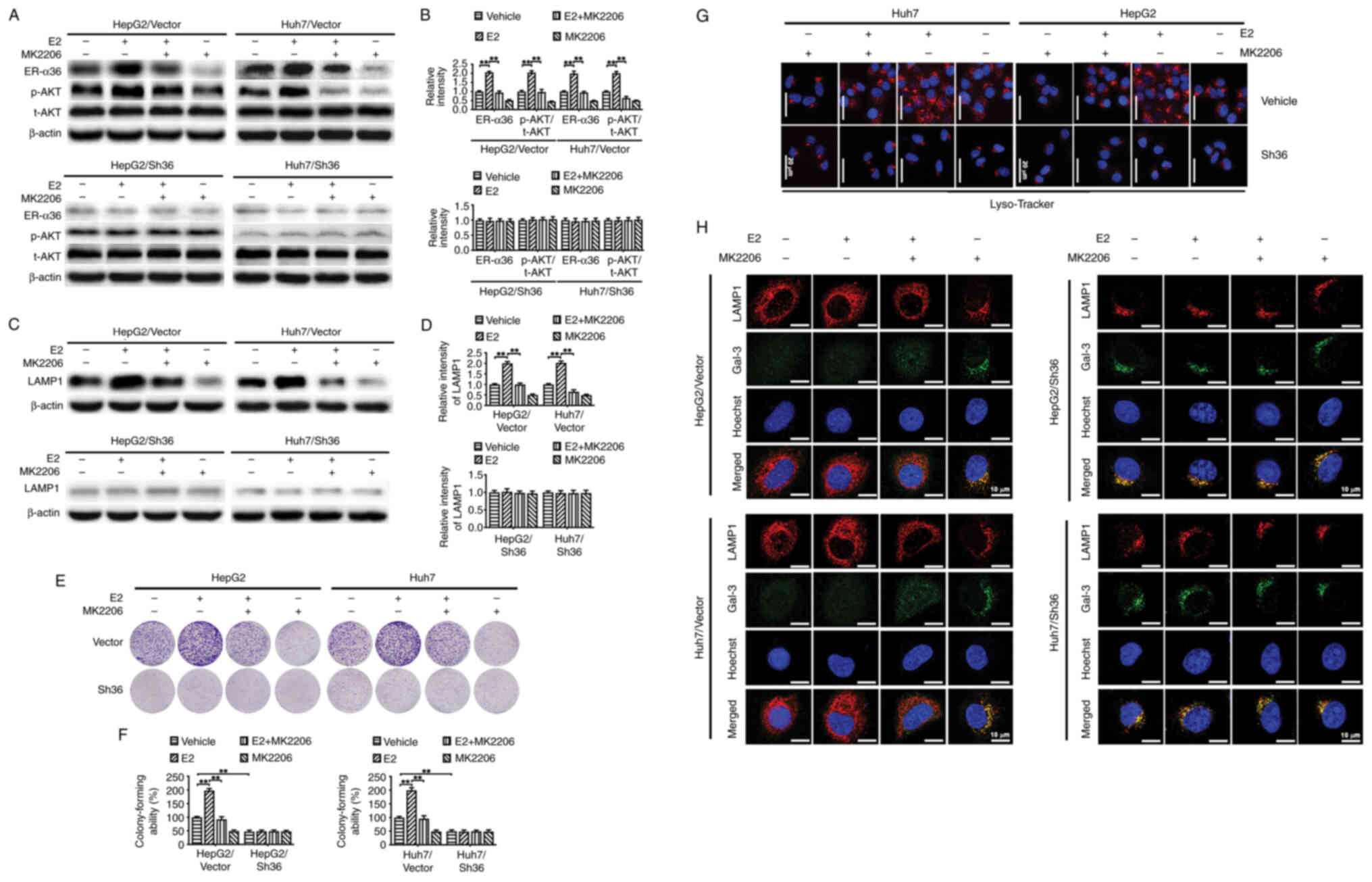
Figure 6

AKT is involved in the lysosomal
localization and LMP induced by ER-α36 knockdown. Transfected liver
cancer cells with different levels of ER-α36 expression were
treated with MK-2206 (100 nM) for 6 h, followed by E2 (1 nM) for 30
min, and the same volume of alcohol was used as a vehicle control.
(A) Representative western blots of ER-α36, p-AKT and AKT, and (B)
quantitative analysis of ER-α36 expression and the p-AKT/t-AKT
ratio. In subsequent assays, the transfected liver cancer cells
were treated with MK-2206 (100 nM) for 6 h, followed by E2 (1 nM)
for 24 h. (C) Representative western blots of LAMP1 and (D)
quantitative analysis of LAMP1 expression. (E) Representative
images of colony formation by the liver cancer cells and (F)
quantitative analysis of colony forming ability. Data are presented
as the mean ± SEM. **P<0.01. (G) Fluorescence microscopy images
of the cells following staining with Lyso-Tracker Red. Scale bar,
20 µm. (H) Co-localization of Gal-3 (green) and LAMP1 (red) in the
cells as revealed by immunofluorescence staining. Scale bar, 10 µm.
ER, estrogen receptor; E2, 17β-estradiol; Gal-3, galectin-3; p-,
phosphorylated; t-, total; LAMP1, lysosome-associated membrane
protein 1; Sh36, transfected with ER-α36 specific short hairpin RNA
expression vector; Vector, transfected with empty vector.
View References

1 

Bray F, Laversanne M, Sung H, Ferlay J, Siegel RL, Soerjomataram I and Jemal A: Global cancer statistics 2022: GLOBOCAN estimates of incidence and mortality worldwide for 36 cancers in 185 countries. CA Cancer J Clin. 74:229–263. 2024.PubMed/NCBI

2 

Siegel RL, Giaquinto AN and Jemal A: Cancer statistics, 2024. CA Cancer J Clin. 74:12–49. 2024.PubMed/NCBI

3 

Han B, Zheng R, Zeng H, Wang S, Sun K, Chen R, Li L, Wei W and He J: Cancer incidence and mortality in China, 2022. J Natl Cancer Cent. 4:47–53. 2024.PubMed/NCBI

4 

Kasarinaite A, Sinton M, Saunders PTK and Hay DC: The influence of sex hormones in liver function and disease. Cells. 12:16042023. View Article : Google Scholar : PubMed/NCBI

5 

Iavarone M, Lampertico P, Seletti C, Donato MF, Ronchi G, del Ninno E and Colombo M: The clinical and pathogenetic significance of estrogen receptor-beta expression in chronic liver diseases and liver carcinoma. Cancer. 98:529–534. 2003. View Article : Google Scholar : PubMed/NCBI

6 

Tu BB, Lin SL, Yan LY, Wang ZY, Sun QY and Qiao J: ER-α36, a novel variant of estrogen receptor α, is involved in EGFR-related carcinogenesis in endometrial cancer. Am J Obstet Gynecol. 205:227.e221–226. 2011. View Article : Google Scholar : PubMed/NCBI

7 

Miceli V, Cocciadiferro L, Fregapane M, Zarcone M, Montalto G, Polito LM, Agostara B, Granata OM and Carruba G: Expression of wild-type and variant estrogen receptor alpha in liver carcinogenesis and tumor progression. OMICS. 15:313–317. 2011. View Article : Google Scholar : PubMed/NCBI

8 

Su X, Xu X, Li G, Lin B, Cao J and Teng L: ER-α36: A novel biomarker and potential therapeutic target in breast cancer. Onco Targets Ther. 7:1525–1533. 2014.PubMed/NCBI

9 

Zhang J, Ren J, Wei J, Chong CC, Yang D, He Y, Chen GG and Lai PB: Alternative splicing of estrogen receptor alpha in hepatocellular carcinoma. BMC Cancer. 16:9262016. View Article : Google Scholar : PubMed/NCBI

10 

You H, Meng K and Wang ZY: The ER-α36/EGFR signaling loop promotes growth of hepatocellular carcinoma cells. Steroids. 134:78–87. 2018. View Article : Google Scholar : PubMed/NCBI

11 

Li G, Zhang J, Jin K, He K, Zheng Y, Xu X, Wang H, Wang H, Li Z, Yu X, et al: Estrogen receptor-α36 is involved in development of acquired tamoxifen resistance via regulating the growth status switch in breast cancer cells. Mol Oncol. 7:611–624. 2013. View Article : Google Scholar : PubMed/NCBI

12 

Qu C, Ma J, Zhang Y, Han C, Huang L, Shen L, Li H, Wang X, Liu J, Zou W, et al: Estrogen receptor variant ER-α36 promotes tamoxifen agonist activity in glioblastoma cells. Cancer Sci. 110:221–234. 2019. View Article : Google Scholar : PubMed/NCBI

13 

Qi Z, Yang W, Xue B, Chen T, Lu X, Zhang R, Li Z, Zhao X, Zhang Y, Han F, et al: ROS-mediated lysosomal membrane permeabilization and autophagy inhibition regulate bleomycin-induced cellular senescence. Autophagy. 20:2000–2016. 2024. View Article : Google Scholar : PubMed/NCBI

14 

Yamamoto H, Zhang S and Mizushima N: Autophagy genes in biology and disease. Nat Rev Genet. 24:382–400. 2023. View Article : Google Scholar : PubMed/NCBI

15 

Gros F and Muller S: The role of lysosomes in metabolic and autoimmune diseases. Nat Rev Nephrol. 19:366–383. 2023. View Article : Google Scholar : PubMed/NCBI

16 

Xiang L, Lou J, Zhao J, Geng Y, Zhang J, Wu Y, Zhao Y, Tao Z, Li Y, Qi J, et al: Underlying mechanism of lysosomal membrane permeabilization in CNS injury: A literature review. Mol Neurobiol. 62:626–642. 2025. View Article : Google Scholar : PubMed/NCBI

17 

Nie B, Liu X, Lei C, Liang X, Zhang D and Zhang J: The role of lysosomes in airborne particulate matter-induced pulmonary toxicity. Sci Total Environ. 919:1708932024. View Article : Google Scholar : PubMed/NCBI

18 

Eriksson I and Öllinger K: Lysosomes in cancer-at the crossroad of good and evil. Cells. 13:4592024. View Article : Google Scholar : PubMed/NCBI

19 

Li Z, Zhang Y, Lei J and Wu Y: Autophagy in oral cancer: Promises and challenges (Review). Int J Mol Med. 54:1162024. View Article : Google Scholar : PubMed/NCBI

20 

Ballabio A and Bonifacino JS: Lysosomes as dynamic regulators of cell and organismal homeostasis. Nat Rev Mol Cell Biol. 21:101–118. 2020. View Article : Google Scholar : PubMed/NCBI

21 

Cao M, Luo X, Wu K and He X: Targeting lysosomes in human disease: From basic research to clinical applications. Signal Transduct Target Ther. 6:3792021. View Article : Google Scholar : PubMed/NCBI

22 

Davidson SM and Vander Heiden MG: Critical functions of the lysosome in cancer biology. Annu Rev Pharmacol Toxicol. 57:481–507. 2017. View Article : Google Scholar : PubMed/NCBI

23 

Weber RA, Yen FS, Nicholson SPV, Alwaseem H, Bayraktar EC, Alam M, Timson RC, La K, Abu-Remaileh M, Molina H and Birsoy K: Maintaining iron homeostasis is the key role of lysosomal acidity for cell proliferation. Mol Cell. 77:645–655.e647. 2020. View Article : Google Scholar : PubMed/NCBI

24 

Wang R, Chen J, Yu H, Wei Z, Ma M, Ye X, Wu W, Chen H and Fu Z: Downregulation of estrogen receptor-α36 expression attenuates metastasis of hepatocellular carcinoma cells. Environ Toxicol. 37:1113–1123. 2022. View Article : Google Scholar : PubMed/NCBI

25 

Zhang X, Deng H and Wang ZY: Estrogen activation of the mitogen-activated protein kinase is mediated by ER-α36 in ER-positive breast cancer cells. J Steroid Biochem Mol Biol. 143:434–443. 2014. View Article : Google Scholar : PubMed/NCBI

26 

Wang ZY and Yin L: Estrogen receptor alpha-36 (ER-α36): A new player in human breast cancer. Mol Cell Endocrinol. 418:193–206. 2015. View Article : Google Scholar : PubMed/NCBI

27 

Kendall RL and Holian A: The role of lysosomal ion channels in lysosome dysfunction. Inhal Toxicol. 33:41–54. 2021. View Article : Google Scholar : PubMed/NCBI

28 

Chen Y, Zhu S, Liao T, Wang C, Han J, Yang Z, Lu X, Hu Z, Hu J, Wang X, et al: The HN protein of Newcastle disease virus induces cell apoptosis through the induction of lysosomal membrane permeabilization. PLoS Pathog. 20:e10119812024. View Article : Google Scholar : PubMed/NCBI

29 

Wu B, Liu DA, Guan L, Myint PK, Chin L, Dang H, Xu Y, Ren J, Li T, Yu Z, et al: Stiff matrix induces exosome secretion to promote tumour growth. Nat Cell Biol. 25:415–424. 2023. View Article : Google Scholar : PubMed/NCBI

30 

Li Q, Sun H, Zou J, Ge C, Yu K, Cao Y and Hong Q: Increased expression of estrogen receptor α-36 by breast cancer oncogene IKKε promotes growth of ER-negative breast cancer cells. Cell Physiol Biochem. 31:833–841. 2013. View Article : Google Scholar : PubMed/NCBI

31 

Klionsky DJ, Petroni G, Amaravadi RK, Baehrecke EH, Ballabio A, Boya P, Pedro JM, Cadwell K, Cecconi F, Choi AM, et al: Autophagy in major human diseases. EMBO J. 40:e1088632021. View Article : Google Scholar : PubMed/NCBI

32 

Koirala M and DiPaola M: Overcoming cancer resistance: Strategies and modalities for effective treatment. Biomedicines. 12:18012024. View Article : Google Scholar : PubMed/NCBI

33 

Tanida I, Minematsu-Ikeguchi N, Ueno T and Kominami E: Lysosomal turnover, but not a cellular level, of endogenous LC3 is a marker for autophagy. Autophagy. 1:84–91. 2005. View Article : Google Scholar : PubMed/NCBI

34 

Ju JS, Varadhachary AS, Miller SE and Weihl CC: Quantitation of ‘autophagic flux’ in mature skeletal muscle. Autophagy. 6:929–935. 2010. View Article : Google Scholar : PubMed/NCBI

35 

Rubinsztein DC, Cuervo AM, Ravikumar B, Sarkar S, Korolchuk V, Kaushik S and Klionsky DJ: In search of an ‘autophagomometer’. Autophagy. 5:585–589. 2009. View Article : Google Scholar : PubMed/NCBI

36 

Ou M, Cho HY, Fu J, Thein TZ, Wang W, Swenson SD, Minea RO, Stathopoulos A, Schönthal AH, Hofman FM, et al: Inhibition of autophagy and induction of glioblastoma cell death by NEO214, a perillyl alcohol-rolipram conjugate. Autophagy. 19:3169–3188. 2023. View Article : Google Scholar : PubMed/NCBI

37 

Nakamura S, Akayama S and Yoshimori T: Autophagy-independent function of lipidated LC3 essential for TFEB activation during the lysosomal damage responses. Autophagy. 17:581–583. 2021. View Article : Google Scholar : PubMed/NCBI

38 

Chan H, Li Q, Wang X, Liu WY, Hu W, Zeng J, Xie C, Kwong TNY, Ho IHT, Liu X, et al: Vitamin D (3) and carbamazepine protect against Clostridioides difficile infection in mice by restoring macrophage lysosome acidification. Autophagy. 18:2050–2067. 2022. View Article : Google Scholar : PubMed/NCBI

39 

Gu H, Qiu H, Yang H, Deng Z, Zhang S, Du L and He F: PRRSV utilizes MALT1-regulated autophagy flux to switch virus spread and reserve. Autophagy. 20:2697–2718. 2024. View Article : Google Scholar : PubMed/NCBI

40 

Zhang J, Zeng W, Han Y, Lee WR, Liou J and Jiang Y: Lysosomal LAMP proteins regulate lysosomal pH by direct inhibition of the TMEM175 channel. Mol Cell. 83:2524–2539.e2527. 2023. View Article : Google Scholar : PubMed/NCBI

41 

Tanaka T, Warner BM, Michael DG, Nakamura H, Odani T, Yin H, Atsumi T, Noguchi M and Chiorini JA: LAMP3 inhibits autophagy and contributes to cell death by lysosomal membrane permeabilization. Autophagy. 18:1629–1647. 2022. View Article : Google Scholar : PubMed/NCBI

42 

Korolchuk VI, Saiki S, Lichtenberg M, Siddiqi FH, Roberts EA, Imarisio S, Jahreiss L, Sarkar S, Futter M, Menzies FM, et al: Lysosomal positioning coordinates cellular nutrient responses. Nat Cell Biol. 13:453–460. 2011. View Article : Google Scholar : PubMed/NCBI

43 

Jia R, Guardia CM, Pu J, Chen Y and Bonifacino JS: BORC coordinates encounter and fusion of lysosomes with autophagosomes. Autophagy. 13:1648–1663. 2017. View Article : Google Scholar : PubMed/NCBI

44 

Zhao YG, Codogno P and Zhang H: Machinery, regulation and pathophysiological implications of autophagosome maturation. Nat Rev Mol Cell Biol. 22:733–750. 2021. View Article : Google Scholar : PubMed/NCBI

45 

Pu J, Schindler C, Jia R, Jarnik M, Backlund P and Bonifacino JS: BORC, a multisubunit complex that regulates lysosome positioning. Dev Cell. 33:176–188. 2015. View Article : Google Scholar : PubMed/NCBI

46 

Steffan JJ, Dykes SS, Coleman DT, Adams LK, Rogers D, Carroll JL, Williams BJ and Cardelli JA: Supporting a role for the GTPase Rab7 in prostate cancer progression. PLoS One. 9:e878822014. View Article : Google Scholar : PubMed/NCBI

47 

Palma M, Riffo E, Farias A, Coliboro-Dannich V, Espinoza-Francine L, Escalona E, Amigo R, Gutiérrez JL, Pincheira R and Castro AF: NUAK1 coordinates growth factor-dependent activation of mTORC2 and Akt signaling. Cell Biosci. 13:2322023. View Article : Google Scholar : PubMed/NCBI

48 

Jia R and Bonifacino JS: Lysosome positioning influences mTORC2 and AKT signaling. Mol Cell. 75:26–38. e232019. View Article : Google Scholar : PubMed/NCBI

49 

Seo SU, Woo SM, Lee HS, Kim SH, Min KJ and Kwon TK: mTORC1/2 inhibitor and curcumin induce apoptosis through lysosomal membrane permeabilization-mediated autophagy. Oncogene. 37:5205–5220. 2018. View Article : Google Scholar : PubMed/NCBI

Related Articles

  • Abstract
  • View
  • Download
  • Twitter
Copy and paste a formatted citation
Spandidos Publications style
He H, Wang X, Wei Z, Wang A, Fang X, He H, Wu Z, Shu X, Sun B, Chen Q, Chen Q, et al: ER‑&alpha;36 knockdown is associated with lysosomal dysfunction and proliferation inhibition in liver cancer cells. Mol Med Rep 32: 284, 2025.
APA
He, H., Wang, X., Wei, Z., Wang, A., Fang, X., He, H. ... Fu, Z. (2025). ER‑&alpha;36 knockdown is associated with lysosomal dysfunction and proliferation inhibition in liver cancer cells. Molecular Medicine Reports, 32, 284. https://doi.org/10.3892/mmr.2025.13649
MLA
He, H., Wang, X., Wei, Z., Wang, A., Fang, X., He, H., Wu, Z., Shu, X., Sun, B., Chen, Q., Huang, X., Zhou, H., Liu, Y., Fu, Z."ER‑&alpha;36 knockdown is associated with lysosomal dysfunction and proliferation inhibition in liver cancer cells". Molecular Medicine Reports 32.4 (2025): 284.
Chicago
He, H., Wang, X., Wei, Z., Wang, A., Fang, X., He, H., Wu, Z., Shu, X., Sun, B., Chen, Q., Huang, X., Zhou, H., Liu, Y., Fu, Z."ER‑&alpha;36 knockdown is associated with lysosomal dysfunction and proliferation inhibition in liver cancer cells". Molecular Medicine Reports 32, no. 4 (2025): 284. https://doi.org/10.3892/mmr.2025.13649
Copy and paste a formatted citation
x
Spandidos Publications style
He H, Wang X, Wei Z, Wang A, Fang X, He H, Wu Z, Shu X, Sun B, Chen Q, Chen Q, et al: ER‑&alpha;36 knockdown is associated with lysosomal dysfunction and proliferation inhibition in liver cancer cells. Mol Med Rep 32: 284, 2025.
APA
He, H., Wang, X., Wei, Z., Wang, A., Fang, X., He, H. ... Fu, Z. (2025). ER‑&alpha;36 knockdown is associated with lysosomal dysfunction and proliferation inhibition in liver cancer cells. Molecular Medicine Reports, 32, 284. https://doi.org/10.3892/mmr.2025.13649
MLA
He, H., Wang, X., Wei, Z., Wang, A., Fang, X., He, H., Wu, Z., Shu, X., Sun, B., Chen, Q., Huang, X., Zhou, H., Liu, Y., Fu, Z."ER‑&alpha;36 knockdown is associated with lysosomal dysfunction and proliferation inhibition in liver cancer cells". Molecular Medicine Reports 32.4 (2025): 284.
Chicago
He, H., Wang, X., Wei, Z., Wang, A., Fang, X., He, H., Wu, Z., Shu, X., Sun, B., Chen, Q., Huang, X., Zhou, H., Liu, Y., Fu, Z."ER‑&alpha;36 knockdown is associated with lysosomal dysfunction and proliferation inhibition in liver cancer cells". Molecular Medicine Reports 32, no. 4 (2025): 284. https://doi.org/10.3892/mmr.2025.13649
Follow us
  • Twitter
  • LinkedIn
  • Facebook
About
  • Spandidos Publications
  • Careers
  • Cookie Policy
  • Privacy Policy
How can we help?
  • Help
  • Live Chat
  • Contact
  • Email to our Support Team