Spandidos Publications Logo
  • About
    • About Spandidos
    • Aims and Scopes
    • Abstracting and Indexing
    • Editorial Policies
    • Reprints and Permissions
    • Job Opportunities
    • Terms and Conditions
    • Contact
  • Journals
    • All Journals
    • Oncology Letters
      • Oncology Letters
      • Information for Authors
      • Editorial Policies
      • Editorial Board
      • Aims and Scope
      • Abstracting and Indexing
      • Bibliographic Information
      • Archive
    • International Journal of Oncology
      • International Journal of Oncology
      • Information for Authors
      • Editorial Policies
      • Editorial Board
      • Aims and Scope
      • Abstracting and Indexing
      • Bibliographic Information
      • Archive
    • Molecular and Clinical Oncology
      • Molecular and Clinical Oncology
      • Information for Authors
      • Editorial Policies
      • Editorial Board
      • Aims and Scope
      • Abstracting and Indexing
      • Bibliographic Information
      • Archive
    • Experimental and Therapeutic Medicine
      • Experimental and Therapeutic Medicine
      • Information for Authors
      • Editorial Policies
      • Editorial Board
      • Aims and Scope
      • Abstracting and Indexing
      • Bibliographic Information
      • Archive
    • International Journal of Molecular Medicine
      • International Journal of Molecular Medicine
      • Information for Authors
      • Editorial Policies
      • Editorial Board
      • Aims and Scope
      • Abstracting and Indexing
      • Bibliographic Information
      • Archive
    • Biomedical Reports
      • Biomedical Reports
      • Information for Authors
      • Editorial Policies
      • Editorial Board
      • Aims and Scope
      • Abstracting and Indexing
      • Bibliographic Information
      • Archive
    • Oncology Reports
      • Oncology Reports
      • Information for Authors
      • Editorial Policies
      • Editorial Board
      • Aims and Scope
      • Abstracting and Indexing
      • Bibliographic Information
      • Archive
    • Molecular Medicine Reports
      • Molecular Medicine Reports
      • Information for Authors
      • Editorial Policies
      • Editorial Board
      • Aims and Scope
      • Abstracting and Indexing
      • Bibliographic Information
      • Archive
    • World Academy of Sciences Journal
      • World Academy of Sciences Journal
      • Information for Authors
      • Editorial Policies
      • Editorial Board
      • Aims and Scope
      • Abstracting and Indexing
      • Bibliographic Information
      • Archive
    • International Journal of Functional Nutrition
      • International Journal of Functional Nutrition
      • Information for Authors
      • Editorial Policies
      • Editorial Board
      • Aims and Scope
      • Abstracting and Indexing
      • Bibliographic Information
      • Archive
    • International Journal of Epigenetics
      • International Journal of Epigenetics
      • Information for Authors
      • Editorial Policies
      • Editorial Board
      • Aims and Scope
      • Abstracting and Indexing
      • Bibliographic Information
      • Archive
    • Medicine International
      • Medicine International
      • Information for Authors
      • Editorial Policies
      • Editorial Board
      • Aims and Scope
      • Abstracting and Indexing
      • Bibliographic Information
      • Archive
  • Articles
  • Information
    • Information for Authors
    • Information for Reviewers
    • Information for Librarians
    • Information for Advertisers
    • Conferences
  • Language Editing
Spandidos Publications Logo
  • About
    • About Spandidos
    • Aims and Scopes
    • Abstracting and Indexing
    • Editorial Policies
    • Reprints and Permissions
    • Job Opportunities
    • Terms and Conditions
    • Contact
  • Journals
    • All Journals
    • Biomedical Reports
      • Information for Authors
      • Editorial Policies
      • Editorial Board
      • Aims and Scope
      • Abstracting and Indexing
      • Bibliographic Information
      • Archive
    • Experimental and Therapeutic Medicine
      • Information for Authors
      • Editorial Policies
      • Editorial Board
      • Aims and Scope
      • Abstracting and Indexing
      • Bibliographic Information
      • Archive
    • International Journal of Epigenetics
      • Information for Authors
      • Editorial Policies
      • Editorial Board
      • Aims and Scope
      • Abstracting and Indexing
      • Bibliographic Information
      • Archive
    • International Journal of Functional Nutrition
      • Information for Authors
      • Editorial Policies
      • Editorial Board
      • Aims and Scope
      • Abstracting and Indexing
      • Bibliographic Information
      • Archive
    • International Journal of Molecular Medicine
      • Information for Authors
      • Editorial Policies
      • Editorial Board
      • Aims and Scope
      • Abstracting and Indexing
      • Bibliographic Information
      • Archive
    • International Journal of Oncology
      • Information for Authors
      • Editorial Policies
      • Editorial Board
      • Aims and Scope
      • Abstracting and Indexing
      • Bibliographic Information
      • Archive
    • Medicine International
      • Information for Authors
      • Editorial Policies
      • Editorial Board
      • Aims and Scope
      • Abstracting and Indexing
      • Bibliographic Information
      • Archive
    • Molecular and Clinical Oncology
      • Information for Authors
      • Editorial Policies
      • Editorial Board
      • Aims and Scope
      • Abstracting and Indexing
      • Bibliographic Information
      • Archive
    • Molecular Medicine Reports
      • Information for Authors
      • Editorial Policies
      • Editorial Board
      • Aims and Scope
      • Abstracting and Indexing
      • Bibliographic Information
      • Archive
    • Oncology Letters
      • Information for Authors
      • Editorial Policies
      • Editorial Board
      • Aims and Scope
      • Abstracting and Indexing
      • Bibliographic Information
      • Archive
    • Oncology Reports
      • Information for Authors
      • Editorial Policies
      • Editorial Board
      • Aims and Scope
      • Abstracting and Indexing
      • Bibliographic Information
      • Archive
    • World Academy of Sciences Journal
      • Information for Authors
      • Editorial Policies
      • Editorial Board
      • Aims and Scope
      • Abstracting and Indexing
      • Bibliographic Information
      • Archive
  • Articles
  • Information
    • For Authors
    • For Reviewers
    • For Librarians
    • For Advertisers
    • Conferences
  • Language Editing
Login Register Submit
  • This site uses cookies
  • You can change your cookie settings at any time by following the instructions in our Cookie Policy. To find out more, you may read our Privacy Policy.

    I agree
Search articles by DOI, keyword, author or affiliation
Search
Advanced Search
presentation
Molecular Medicine Reports
Join Editorial Board Propose a Special Issue
Print ISSN: 1791-2997 Online ISSN: 1791-3004
Journal Cover
November-2025 Volume 32 Issue 5

Full Size Image

Sign up for eToc alerts
Recommend to Library

Journals

International Journal of Molecular Medicine

International Journal of Molecular Medicine

International Journal of Molecular Medicine is an international journal devoted to molecular mechanisms of human disease.

International Journal of Oncology

International Journal of Oncology

International Journal of Oncology is an international journal devoted to oncology research and cancer treatment.

Molecular Medicine Reports

Molecular Medicine Reports

Covers molecular medicine topics such as pharmacology, pathology, genetics, neuroscience, infectious diseases, molecular cardiology, and molecular surgery.

Oncology Reports

Oncology Reports

Oncology Reports is an international journal devoted to fundamental and applied research in Oncology.

Experimental and Therapeutic Medicine

Experimental and Therapeutic Medicine

Experimental and Therapeutic Medicine is an international journal devoted to laboratory and clinical medicine.

Oncology Letters

Oncology Letters

Oncology Letters is an international journal devoted to Experimental and Clinical Oncology.

Biomedical Reports

Biomedical Reports

Explores a wide range of biological and medical fields, including pharmacology, genetics, microbiology, neuroscience, and molecular cardiology.

Molecular and Clinical Oncology

Molecular and Clinical Oncology

International journal addressing all aspects of oncology research, from tumorigenesis and oncogenes to chemotherapy and metastasis.

World Academy of Sciences Journal

World Academy of Sciences Journal

Multidisciplinary open-access journal spanning biochemistry, genetics, neuroscience, environmental health, and synthetic biology.

International Journal of Functional Nutrition

International Journal of Functional Nutrition

Open-access journal combining biochemistry, pharmacology, immunology, and genetics to advance health through functional nutrition.

International Journal of Epigenetics

International Journal of Epigenetics

Publishes open-access research on using epigenetics to advance understanding and treatment of human disease.

Medicine International

Medicine International

An International Open Access Journal Devoted to General Medicine.

Journal Cover
November-2025 Volume 32 Issue 5

Full Size Image

Sign up for eToc alerts
Recommend to Library

  • Article
  • Citations
    • Cite This Article
    • Download Citation
    • Create Citation Alert
    • Remove Citation Alert
    • Cited By
  • Similar Articles
    • Related Articles (in Spandidos Publications)
    • Similar Articles (Google Scholar)
    • Similar Articles (PubMed)
  • Download PDF
  • Download XML
  • View XML

  • Supplementary Files
    • Supplementary_Data.pdf
Article Open Access

Rupatadine suppresses tumor growth and EMT in pancreatic cancer: Evidence from in vitro and in vivo models

  • Authors:
    • Byung Jo Choi
    • Ho Joong Choi
    • Dosang Lee
    • Jung Hyun Park
    • Tae Ho Hong
    • Hee-Jung Jung
    • Ga-Hee Jo
    • Ok-Hee Kim
    • Say-June Kim
  • View Affiliations / Copyright

    Affiliations: Department of Surgery, Daejeon St. Mary's Hospital, College of Medicine, The Catholic University of Korea, Daejeon 34943, Republic of Korea, Division of Hepatobiliary Pancreatic Surgery, Department of Surgery, Seoul St. Mary's Hospital, College of Medicine, The Catholic University of Korea, Seoul 06591, Republic of Korea, Catholic Central Laboratory of Surgery, College of Medicine, The Catholic University of Korea, Seoul 06591, Republic of Korea, Translational Research Team, Surginex Co., Ltd., Seoul 06591, Republic of Korea
    Copyright: © Choi et al. This is an open access article distributed under the terms of Creative Commons Attribution License.
  • Article Number: 310
    |
    Published online on: September 5, 2025
       https://doi.org/10.3892/mmr.2025.13675
  • Expand metrics +
Metrics: Total Views: 0 (Spandidos Publications: | PMC Statistics: )
Metrics: Total PDF Downloads: 0 (Spandidos Publications: | PMC Statistics: )
Cited By (CrossRef): 0 citations Loading Articles...

This article is mentioned in:


Abstract

Rupatadine, primarily used for treating allergic rhinitis as a selective histamine H1 receptor and platelet‑activating factor antagonist, has potential anticancer properties, specifically through inducing lysosomal membrane permeabilization. The present study explores the efficacy of rupatadine in pancreatic cancer. The study assessed the effects of rupatadine on cell viability in AsPC‑1 and MIA PaCa‑2 pancreatic cancer cell lines at concentrations ranging from 0.001 to 50 µM. Additionally, a xenograft pancreatic cancer model in mice was used, with rupatadine administered intraperitoneally at 3 mg/kg three times weekly for 3 weeks. Tumor weights were measured 21 days post‑treatment. Western blot analysis and immunohistochemical staining were conducted on excised tumor tissues to evaluate the impact on EMT and apoptosis. Rupatadine exhibited a concentration‑dependent decrease in cell viability in both pancreatic cancer cell lines (P<0.05). In vivo, rupatadine significantly reduced tumor weight in the xenograft model compared with control groups (P<0.05). Further analysis revealed inhibition of EMT, evidenced by increased E‑cadherin and decreased Vimentin and Snail levels. Apoptosis was enhanced, as shown by increased PARP and decreased Mcl‑1 levels (P<0.05). Rupatadine shows significant anticancer potential in pancreatic cancer by inhibiting EMT and promoting apoptosis. These findings suggest that rupatadine could be developed as a novel therapeutic agent for pancreatic cancer, meriting further clinical investigation.
View Figures

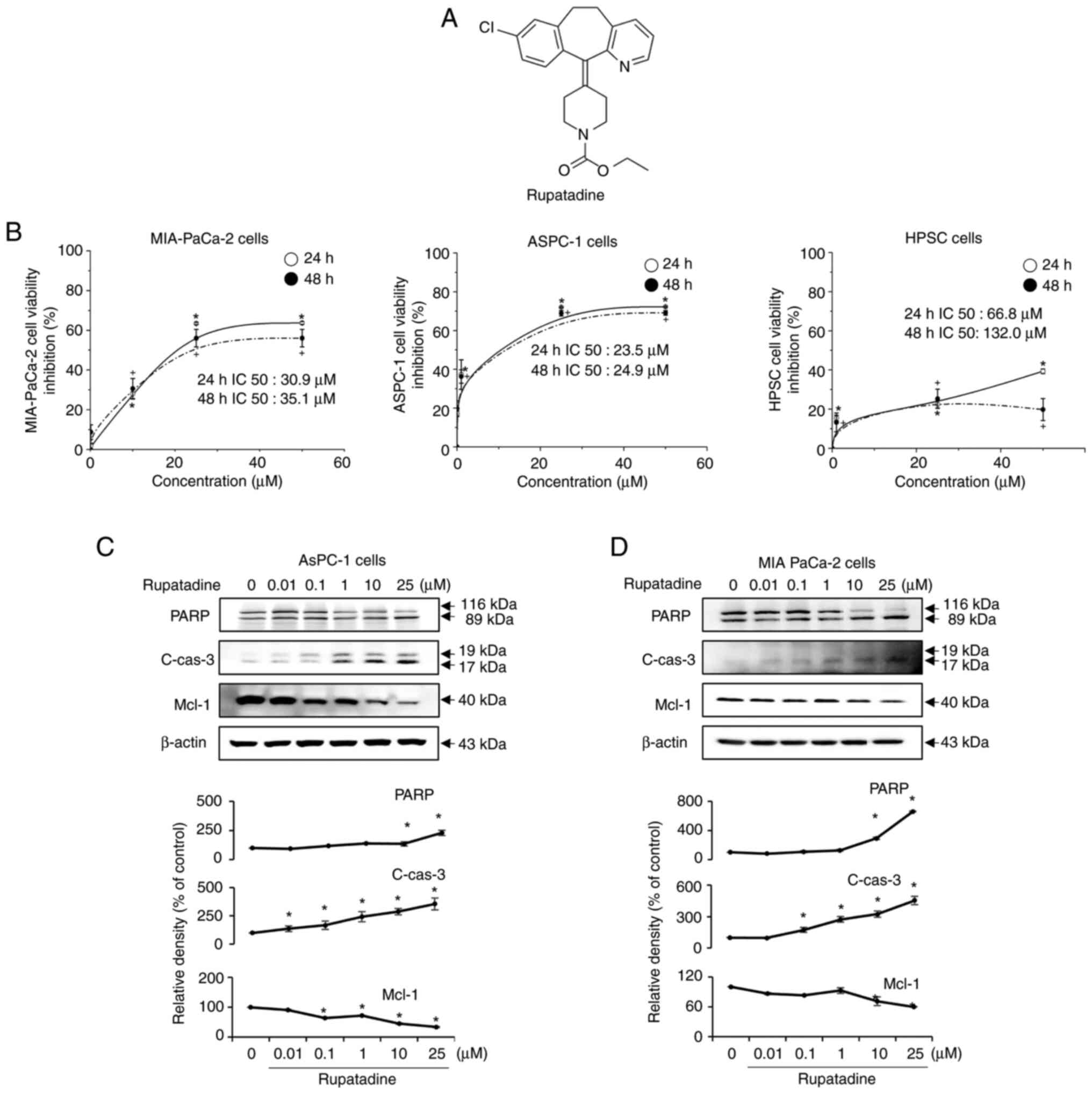
Figure 1

In vitro anticancer effects of
rupatadine on pancreatic cancer cell lines. (A) Chemical structure
of rupatadine. As a cationic amphiphilic drug, the structure of
rupatadine, comprising a hydrophobic ring and a cationic amine
group, facilitates its penetration through the plasma membrane. (B)
Dose-response curves comparing the effects of rupatadine on AsPC-1
and MIA-PaCa-2 pancreatic cancer cells with those on HPSC (bottom).
For the cancer cell lines, a dose-dependent decrease in viability
is observed with rupatadine concentrations from 0 to 50 µM, with
IC50 values of 23.5 µM (24 h) and 24.9 µM (48 h) for
AsPC-1 cells (top, left) and 30.9 µM (24 h) and 35.1 µM (48 h) for
MIA-PaCa-2 cells (top, right). By contrast, HPSCs (bottom) exhibit
significantly higher IC50 values of 66.8 µM (24 h) and
132.0 µM (48 h), indicating lower sensitivity to rupatadine. (C)
Induction of apoptosis in AsPC-1 cells. Western blot analysis shows
a dose-dependent increase in the levels of pro-apoptotic markers
PARP and cleaved caspase-3 and a reduction in the anti-apoptotic
marker Mcl-1 in AsPC-1 pancreatic cancer cells following treatment
with rupatadine, ranging from 0 to 25 µM (P<0.05). (D) Induction
of apoptosis in MIA-PACA-2 cells. MIA-PACA-2 cells treated with
rupatadine showed increased pro-apoptotic markers and decreased
anti-apoptotic markers, similar to AsPC-1 cells, indicating
rupatadine's consistent pro-apoptotic effect (P<0.05). Relative
densities of individual markers had been quantified using Image J
software and then were normalized to that of β-actin in each group.
Values are presented as mean ± SD of three independent experiments.
*P<0.05 vs. the control after 24 h; +P<0.05 vs.
the control after 48 h. HPSC, human pancreatic stellate cells;
Mcl-1, Myeloid cell leukemia-1; c-, cleaved; cas3, caspase 3.

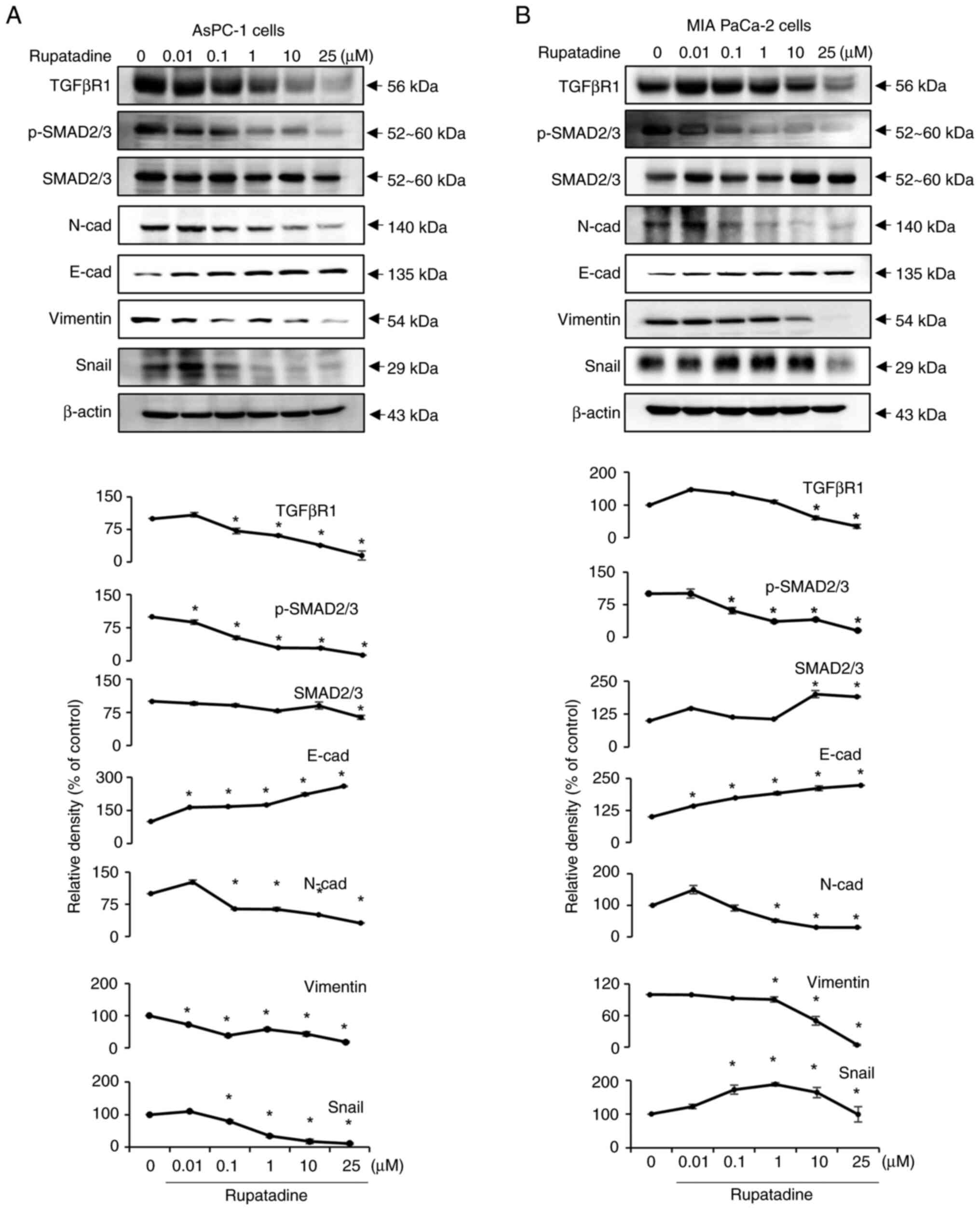
Figure 2

Effects of rupatadine on TGF-β
signaling and EMT marker regulation. (A) In AsPC-1 pancreatic
cancer cells, rupatadine exhibits a dose-dependent decrease in
TGF-βRI expression and reduces the ratio of p-SMAD2/3 to total
SMAD2/3, suggesting an inhibition of the TGFβ1 pathway. (B) In MIA
PaCa-2 cells, analogous dose-dependent effects of rupatadine are
observed, consistent with findings in AsPC-1 cells, further
validating the drug's role in modulating TGF-β signaling and EMT.
Relative densities of individual markers had been quantified using
Image J software and then were normalized to that of β-actin in
each group. Values are presented as mean ± SD of three independent
experiments. *P<0.05 vs. the control. EMT,
epithelial-mesenchymal transition; TGF-βRI, transforming growth
factor β receptor type I; p-, phosphorylated; N-cad, N-cadherin;
E-cad, E-cadherin.

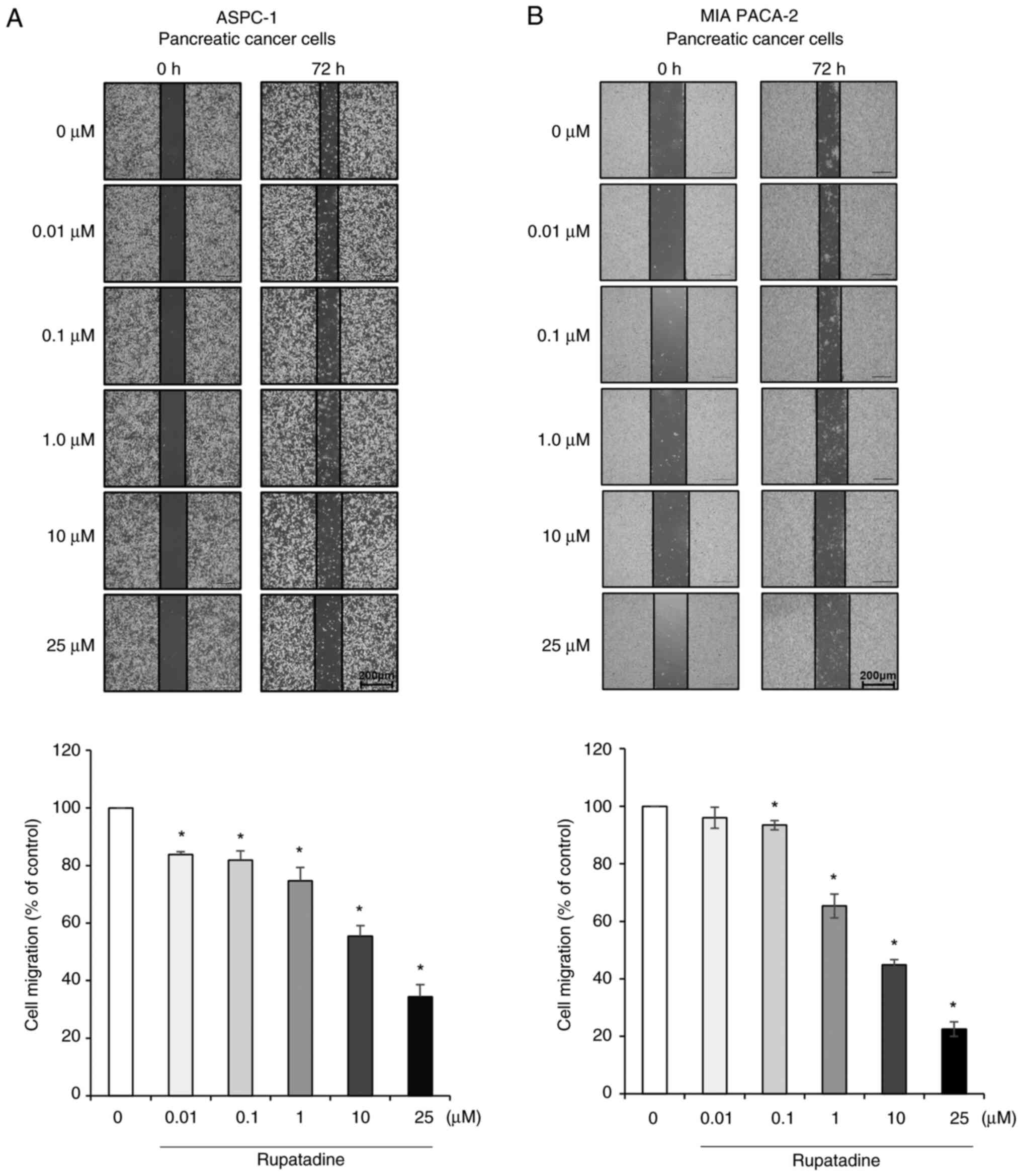
Figure 3

Impact of rupatadine on the migration
of pancreatic cancer cells. (A) Wound healing assay in AsPC-1
cells. The assay involved monitoring wound closure in a monolayer
of AsPC-1 cells, scratched and then treated with varying
concentrations of rupatadine (0.01–25 µM). Results showed that
higher concentrations of rupatadine significantly expanded the
scratch area, indicating reduced cell migration. (B) Wound healing
assay in MIA PaCa2 cells. Similar patterns to AsPC-1 cells were
observed. Values are presented as mean ± SD of three independent
experiments. Scale bar, 200 µm. *P<0.05 vs. the control.

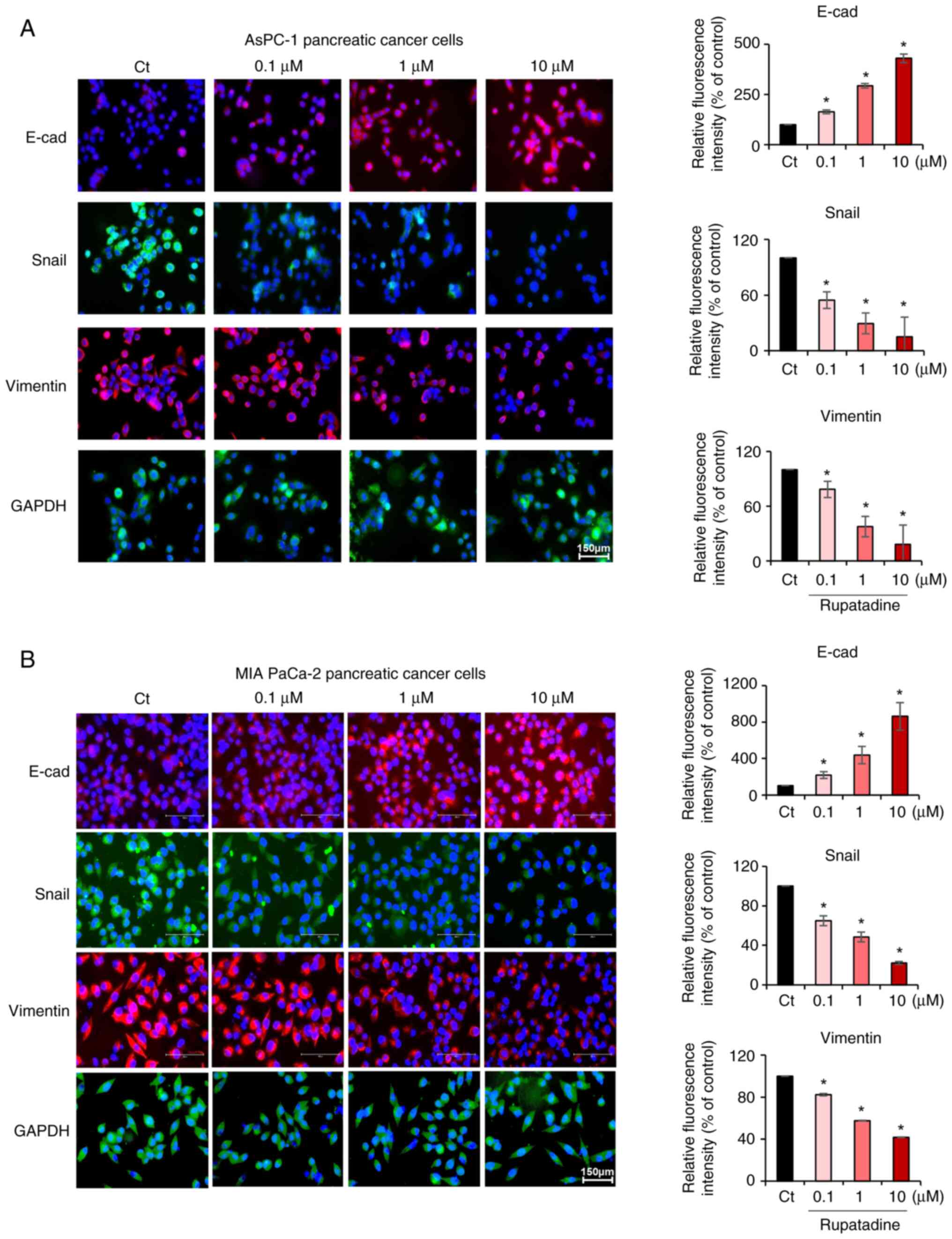
Figure 4

Immunofluorescence assay showing
rupatadine's influence on EMT in pancreatic cancer cells. (A)
Immunofluorescence in AsPC-1 cells. The assay revealed a
dose-dependent increase in E-cadherin immunofluorescence and a
decrease in Snail and Vimentin, indicative of EMT inhibition. (B)
Immunofluorescence in MIA PaCa-2 cells. Similar patterns to AsPC-1
cells were observed. Values are presented as mean ± SD of three
independent experiments. Percentages of immunoreactive areas were
measured using NIH Image J and expressed as relative values to
those in control tissues. Scale bar, 150 µm. *P<0.05 vs. the
control. EMT, epithelial-mesenchymal transition; E-cad; E-cadherin;
Ct, control.

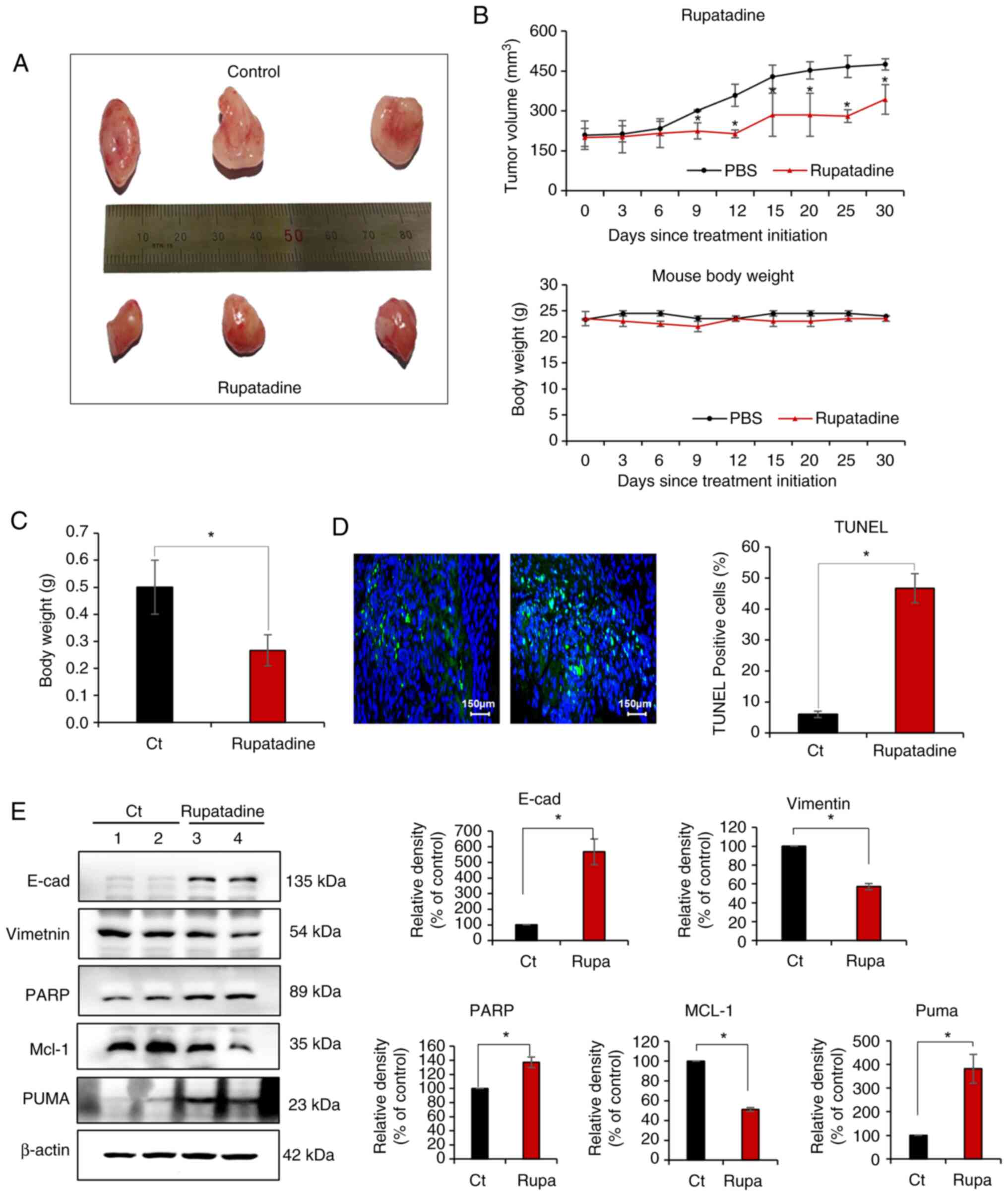
Figure 5

Anticancer efficacy of rupatadine in a
pancreatic cancer xenograft mouse model. (A) Representative images
of excised tumors from the control and rupatadine-treated groups on
day 21 after initial treatment. (B) Tumor growth curve (top)
showing a significantly slower tumor growth rate in the
rupatadine-treated group compared to the control group. Body weight
changes (bottom) indicate no significant differences between the
groups, suggesting no systemic toxicity. (C) Tumor weight analysis
on day 21 post-treatment, showing a significant reduction in the
rupatadine-treated group (P<0.05). (D) TUNEL assay demonstrating
a higher apoptosis index in the rupatadine-treated tumors compared
to the control group (P<0.05). Scale bar, 150 µm (E) Western
blot analysis of EMT and apoptosis-related markers in excised
tumors. Rupatadine treatment increased E-cadherin and pro-apoptotic
markers (PARP, PUMA) while reducing vimentin and the anti-apoptotic
marker Mcl-1 (P<0.05). Relative densities of individual markers
had been quantified using Image J software and then were normalized
to that of β-actin in each group. Values are presented as mean ± SD
of three independent experiments. *P<0.05 vs. the control. EMT,
epithelial-mesenchymal transition; Mcl-1, Myeloid cell leukemia-1;
E-cad; E-cadherin; Ct, control; PUMA, p53 upregulated modulator of
apoptosis.

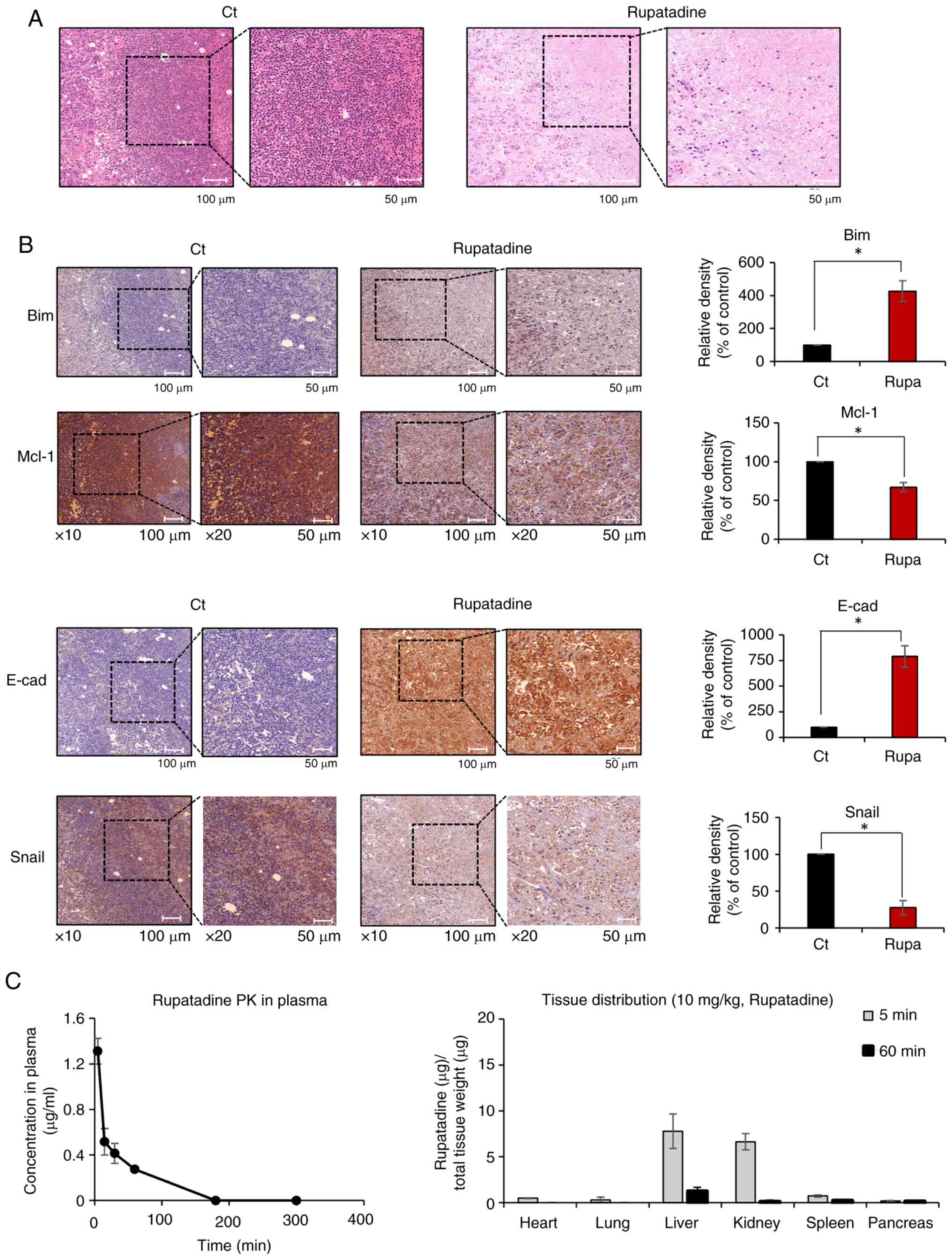
Figure 6

Impact of rupatadine on histological
changes in a pancreatic cancer xenograft mouse model. (A) H&E
staining of excised tumor tissues, demonstrating a notable
reduction in tumor cell density in the rupatadine-treated group.
(B) Immunohistochemical analysis for the markers of apoptosis and
EMT. Rupatadine-treated group exhibited increased immunoreactivity
for the pro-apoptotic marker BIM and decreased expression of the
anti-apoptotic marker Mcl-1. In addition, the rupatadine-treated
group exhibited decreased immunoreactivity for the epithelial
marker E-cadherin and decreased expression of the mesenchymal
marker Snail. For 10× magnification, the scale bar is 100 µm; for
20× magnification, the scale bar is 50 µm. (C) Pharmacokinetic and
tissue distribution analysis of rupatadine in vivo. (Left)
Plasma concentration-time curve of rupatadine following intravenous
administration (10 mg/kg) in mice. Rupatadine was rapidly cleared
from plasma, with undetectable levels beyond 180 min. (Right)
Tissue distribution of rupatadine at 5 and 60 min post-injection,
showing predominant accumulation in the liver and kidneys at early
time points, with minimal retention after 60 min. Values are
presented as mean ± SD of three independent experiments.
Percentages of immunoreactive areas were measured using Image J
(National Institute of Health) and expressed as relative values to
those in control tissues. *P<0.05 vs. the control. H&E,
hematoxylin and eosin staining; EMT, epithelial-mesenchymal
transition; BIM, Bcl-2 interacting mediator of cell death; Ct,
control; Mcl-1, Myeloid cell leukemia-1; E-cad, E-cadherin; Rupa,
Rupatadine.
View References

1 

Jiang Z, Zheng X, Li M and Liu M: Improving the prognosis of pancreatic cancer: Insights from epidemiology, genomic alterations, and therapeutic challenges. Front Med. 17:1135–1169. 2023. View Article : Google Scholar : PubMed/NCBI

2 

Rahib L, Wehner MR, Matrisian LM and Nead KT: Estimated projection of US cancer incidence and death to 2040. JAMA Netw Open. 4:e2147082021. View Article : Google Scholar : PubMed/NCBI

3 

Siegel RL, Miller KD, Fuchs HE and Jemal A: Cancer statistics, 2021. CA Cancer J Clin. 71:7–33. 2021.PubMed/NCBI

4 

Mizrahi JD, Surana R, Valle JW and Shroff RT: Pancreatic cancer. Lancet. 395:2008–2020. 2020. View Article : Google Scholar : PubMed/NCBI

5 

Park W, Chawla A and O'Reilly EM: Pancreatic cancer: A review. JAMA. 326:851–862. 2021. View Article : Google Scholar : PubMed/NCBI

6 

Awais N, Satnarine T, Ahmed A, Haq A, Patel D, Hernandez GN, Seffah KD, Zaman MA and Khan S: A systematic review of chemotherapeutic regimens used in pancreatic cancer. Cureus. 15:e466302023.PubMed/NCBI

7 

Deuster E, Hysenaj I, Kahaly M, Schmoeckel E, Mayr D, Beyer S, Kolben T, Hester A, Kraus F, Chelariu-Raicu A, et al: The platelet-activating factor receptor's association with the outcome of ovarian cancer patients and its experimental inhibition by rupatadine. Cells. 10:23372021. View Article : Google Scholar : PubMed/NCBI

8 

Faustino-Rocha AI, Ferreira R, Gama A, Oliveira PA and Ginja M: Antihistamines as promising drugs in cancer therapy. Life Sci. 172:27–41. 2017. View Article : Google Scholar : PubMed/NCBI

9 

Cornet-Masana JM, Banus-Mulet A, Carbo JM, Torrente MA, Guijarro F, Cuesta-Casanovas L, Esteve J and Risueno RM: Dual lysosomal-mitochondrial targeting by antihistamines to eradicate leukaemic cells. EBioMedicine. 47:221–234. 2019. View Article : Google Scholar : PubMed/NCBI

10 

Ahmed LA, Mohamed AF, Abd El-Haleim EA and El-Tanbouly DM: Boosting Akt pathway by rupatadine modulates Th17/Tregs balance for attenuation of isoproterenol-induced heart failure in rats. Front Pharmacol. 12:6511502021. View Article : Google Scholar : PubMed/NCBI

11 

Didamoony MA, Atwa AM and Ahmed LA: A novel mechanistic approach for the anti-fibrotic potential of rupatadine in rat liver via amendment of PAF/NF-kB p65/TGF-beta1 and hedgehog/HIF-1alpha/VEGF trajectories. Inflammopharmacology. 31:845–858. 2023. View Article : Google Scholar : PubMed/NCBI

12 

Didamoony MA, Atwa AM and Ahmed LA: Modulatory effect of rupatadine on mesenchymal stem cell-derived exosomes in hepatic fibrosis in rats: A potential role for miR-200a. Life Sci. 324:1217102023. View Article : Google Scholar : PubMed/NCBI

13 

Lv XX, Wang XX, Li K, Wang ZY, Li Z, Lv Q, Fu XM and Hu ZW: Rupatadine protects against pulmonary fibrosis by attenuating PAF-mediated senescence in rodents. PLoS One. 8:e686312013. View Article : Google Scholar : PubMed/NCBI

14 

Yuan W, Fang W, Zhang R, Lyu H, Xiao S, Guo D, Ali DW, Michalak M, Chen XZ, Zhou C, et al: Therapeutic strategies targeting AMPK-dependent autophagy in cancer cells. Biochim Biophys Acta Mol Cell Res. 1870:1195372023. View Article : Google Scholar : PubMed/NCBI

15 

Paunovic V, Kosic M, Misirkic-Marjanovic M, Trajkovic V and Harhaji-Trajkovic L: Dual targeting of tumor cell energy metabolism and lysosomes as an anticancer strategy. Biochim Biophys Acta Mol Cell Res. 1868:1189442021. View Article : Google Scholar : PubMed/NCBI

16 

Debnath J, Gammoh N and Ryan KM: Autophagy and autophagy-related pathways in cancer. Nat Rev Mol Cell Biol. 24:560–575. 2023. View Article : Google Scholar : PubMed/NCBI

17 

Bhagya N and Chandrashekar KR: Liposome encapsulated anticancer drugs on autophagy in cancer cells - Current and future perspective. Int J Pharm. 642:1231052023. View Article : Google Scholar : PubMed/NCBI

Related Articles

  • Abstract
  • View
  • Download
  • Twitter
Copy and paste a formatted citation
Spandidos Publications style
Choi BJ, Choi HJ, Lee D, Park JH, Hong TH, Jung H, Jo G, Kim O and Kim S: Rupatadine suppresses tumor growth and EMT in pancreatic cancer: Evidence from <em>in vitro</em> and <em>in vivo</em> models. Mol Med Rep 32: 310, 2025.
APA
Choi, B.J., Choi, H.J., Lee, D., Park, J.H., Hong, T.H., Jung, H. ... Kim, S. (2025). Rupatadine suppresses tumor growth and EMT in pancreatic cancer: Evidence from <em>in vitro</em> and <em>in vivo</em> models. Molecular Medicine Reports, 32, 310. https://doi.org/10.3892/mmr.2025.13675
MLA
Choi, B. J., Choi, H. J., Lee, D., Park, J. H., Hong, T. H., Jung, H., Jo, G., Kim, O., Kim, S."Rupatadine suppresses tumor growth and EMT in pancreatic cancer: Evidence from <em>in vitro</em> and <em>in vivo</em> models". Molecular Medicine Reports 32.5 (2025): 310.
Chicago
Choi, B. J., Choi, H. J., Lee, D., Park, J. H., Hong, T. H., Jung, H., Jo, G., Kim, O., Kim, S."Rupatadine suppresses tumor growth and EMT in pancreatic cancer: Evidence from <em>in vitro</em> and <em>in vivo</em> models". Molecular Medicine Reports 32, no. 5 (2025): 310. https://doi.org/10.3892/mmr.2025.13675
Copy and paste a formatted citation
x
Spandidos Publications style
Choi BJ, Choi HJ, Lee D, Park JH, Hong TH, Jung H, Jo G, Kim O and Kim S: Rupatadine suppresses tumor growth and EMT in pancreatic cancer: Evidence from <em>in vitro</em> and <em>in vivo</em> models. Mol Med Rep 32: 310, 2025.
APA
Choi, B.J., Choi, H.J., Lee, D., Park, J.H., Hong, T.H., Jung, H. ... Kim, S. (2025). Rupatadine suppresses tumor growth and EMT in pancreatic cancer: Evidence from <em>in vitro</em> and <em>in vivo</em> models. Molecular Medicine Reports, 32, 310. https://doi.org/10.3892/mmr.2025.13675
MLA
Choi, B. J., Choi, H. J., Lee, D., Park, J. H., Hong, T. H., Jung, H., Jo, G., Kim, O., Kim, S."Rupatadine suppresses tumor growth and EMT in pancreatic cancer: Evidence from <em>in vitro</em> and <em>in vivo</em> models". Molecular Medicine Reports 32.5 (2025): 310.
Chicago
Choi, B. J., Choi, H. J., Lee, D., Park, J. H., Hong, T. H., Jung, H., Jo, G., Kim, O., Kim, S."Rupatadine suppresses tumor growth and EMT in pancreatic cancer: Evidence from <em>in vitro</em> and <em>in vivo</em> models". Molecular Medicine Reports 32, no. 5 (2025): 310. https://doi.org/10.3892/mmr.2025.13675
Follow us
  • Twitter
  • LinkedIn
  • Facebook
About
  • Spandidos Publications
  • Careers
  • Cookie Policy
  • Privacy Policy
How can we help?
  • Help
  • Live Chat
  • Contact
  • Email to our Support Team