Spandidos Publications Logo
  • About
    • About Spandidos
    • Aims and Scopes
    • Abstracting and Indexing
    • Editorial Policies
    • Reprints and Permissions
    • Job Opportunities
    • Terms and Conditions
    • Contact
  • Journals
    • All Journals
    • Oncology Letters
      • Oncology Letters
      • Information for Authors
      • Editorial Policies
      • Editorial Board
      • Aims and Scope
      • Abstracting and Indexing
      • Bibliographic Information
      • Archive
    • International Journal of Oncology
      • International Journal of Oncology
      • Information for Authors
      • Editorial Policies
      • Editorial Board
      • Aims and Scope
      • Abstracting and Indexing
      • Bibliographic Information
      • Archive
    • Molecular and Clinical Oncology
      • Molecular and Clinical Oncology
      • Information for Authors
      • Editorial Policies
      • Editorial Board
      • Aims and Scope
      • Abstracting and Indexing
      • Bibliographic Information
      • Archive
    • Experimental and Therapeutic Medicine
      • Experimental and Therapeutic Medicine
      • Information for Authors
      • Editorial Policies
      • Editorial Board
      • Aims and Scope
      • Abstracting and Indexing
      • Bibliographic Information
      • Archive
    • International Journal of Molecular Medicine
      • International Journal of Molecular Medicine
      • Information for Authors
      • Editorial Policies
      • Editorial Board
      • Aims and Scope
      • Abstracting and Indexing
      • Bibliographic Information
      • Archive
    • Biomedical Reports
      • Biomedical Reports
      • Information for Authors
      • Editorial Policies
      • Editorial Board
      • Aims and Scope
      • Abstracting and Indexing
      • Bibliographic Information
      • Archive
    • Oncology Reports
      • Oncology Reports
      • Information for Authors
      • Editorial Policies
      • Editorial Board
      • Aims and Scope
      • Abstracting and Indexing
      • Bibliographic Information
      • Archive
    • Molecular Medicine Reports
      • Molecular Medicine Reports
      • Information for Authors
      • Editorial Policies
      • Editorial Board
      • Aims and Scope
      • Abstracting and Indexing
      • Bibliographic Information
      • Archive
    • World Academy of Sciences Journal
      • World Academy of Sciences Journal
      • Information for Authors
      • Editorial Policies
      • Editorial Board
      • Aims and Scope
      • Abstracting and Indexing
      • Bibliographic Information
      • Archive
    • International Journal of Functional Nutrition
      • International Journal of Functional Nutrition
      • Information for Authors
      • Editorial Policies
      • Editorial Board
      • Aims and Scope
      • Abstracting and Indexing
      • Bibliographic Information
      • Archive
    • International Journal of Epigenetics
      • International Journal of Epigenetics
      • Information for Authors
      • Editorial Policies
      • Editorial Board
      • Aims and Scope
      • Abstracting and Indexing
      • Bibliographic Information
      • Archive
    • Medicine International
      • Medicine International
      • Information for Authors
      • Editorial Policies
      • Editorial Board
      • Aims and Scope
      • Abstracting and Indexing
      • Bibliographic Information
      • Archive
  • Articles
  • Information
    • Information for Authors
    • Information for Reviewers
    • Information for Librarians
    • Information for Advertisers
    • Conferences
  • Language Editing
Spandidos Publications Logo
  • About
    • About Spandidos
    • Aims and Scopes
    • Abstracting and Indexing
    • Editorial Policies
    • Reprints and Permissions
    • Job Opportunities
    • Terms and Conditions
    • Contact
  • Journals
    • All Journals
    • Biomedical Reports
      • Information for Authors
      • Editorial Policies
      • Editorial Board
      • Aims and Scope
      • Abstracting and Indexing
      • Bibliographic Information
      • Archive
    • Experimental and Therapeutic Medicine
      • Information for Authors
      • Editorial Policies
      • Editorial Board
      • Aims and Scope
      • Abstracting and Indexing
      • Bibliographic Information
      • Archive
    • International Journal of Epigenetics
      • Information for Authors
      • Editorial Policies
      • Editorial Board
      • Aims and Scope
      • Abstracting and Indexing
      • Bibliographic Information
      • Archive
    • International Journal of Functional Nutrition
      • Information for Authors
      • Editorial Policies
      • Editorial Board
      • Aims and Scope
      • Abstracting and Indexing
      • Bibliographic Information
      • Archive
    • International Journal of Molecular Medicine
      • Information for Authors
      • Editorial Policies
      • Editorial Board
      • Aims and Scope
      • Abstracting and Indexing
      • Bibliographic Information
      • Archive
    • International Journal of Oncology
      • Information for Authors
      • Editorial Policies
      • Editorial Board
      • Aims and Scope
      • Abstracting and Indexing
      • Bibliographic Information
      • Archive
    • Medicine International
      • Information for Authors
      • Editorial Policies
      • Editorial Board
      • Aims and Scope
      • Abstracting and Indexing
      • Bibliographic Information
      • Archive
    • Molecular and Clinical Oncology
      • Information for Authors
      • Editorial Policies
      • Editorial Board
      • Aims and Scope
      • Abstracting and Indexing
      • Bibliographic Information
      • Archive
    • Molecular Medicine Reports
      • Information for Authors
      • Editorial Policies
      • Editorial Board
      • Aims and Scope
      • Abstracting and Indexing
      • Bibliographic Information
      • Archive
    • Oncology Letters
      • Information for Authors
      • Editorial Policies
      • Editorial Board
      • Aims and Scope
      • Abstracting and Indexing
      • Bibliographic Information
      • Archive
    • Oncology Reports
      • Information for Authors
      • Editorial Policies
      • Editorial Board
      • Aims and Scope
      • Abstracting and Indexing
      • Bibliographic Information
      • Archive
    • World Academy of Sciences Journal
      • Information for Authors
      • Editorial Policies
      • Editorial Board
      • Aims and Scope
      • Abstracting and Indexing
      • Bibliographic Information
      • Archive
  • Articles
  • Information
    • For Authors
    • For Reviewers
    • For Librarians
    • For Advertisers
    • Conferences
  • Language Editing
Login Register Submit
  • This site uses cookies
  • You can change your cookie settings at any time by following the instructions in our Cookie Policy. To find out more, you may read our Privacy Policy.

    I agree
Search articles by DOI, keyword, author or affiliation
Search
Advanced Search
presentation
Molecular Medicine Reports
Join Editorial Board Propose a Special Issue
Print ISSN: 1791-2997 Online ISSN: 1791-3004
Journal Cover
December-2025 Volume 32 Issue 6

Full Size Image

Sign up for eToc alerts
Recommend to Library

Journals

International Journal of Molecular Medicine

International Journal of Molecular Medicine

International Journal of Molecular Medicine is an international journal devoted to molecular mechanisms of human disease.

International Journal of Oncology

International Journal of Oncology

International Journal of Oncology is an international journal devoted to oncology research and cancer treatment.

Molecular Medicine Reports

Molecular Medicine Reports

Covers molecular medicine topics such as pharmacology, pathology, genetics, neuroscience, infectious diseases, molecular cardiology, and molecular surgery.

Oncology Reports

Oncology Reports

Oncology Reports is an international journal devoted to fundamental and applied research in Oncology.

Experimental and Therapeutic Medicine

Experimental and Therapeutic Medicine

Experimental and Therapeutic Medicine is an international journal devoted to laboratory and clinical medicine.

Oncology Letters

Oncology Letters

Oncology Letters is an international journal devoted to Experimental and Clinical Oncology.

Biomedical Reports

Biomedical Reports

Explores a wide range of biological and medical fields, including pharmacology, genetics, microbiology, neuroscience, and molecular cardiology.

Molecular and Clinical Oncology

Molecular and Clinical Oncology

International journal addressing all aspects of oncology research, from tumorigenesis and oncogenes to chemotherapy and metastasis.

World Academy of Sciences Journal

World Academy of Sciences Journal

Multidisciplinary open-access journal spanning biochemistry, genetics, neuroscience, environmental health, and synthetic biology.

International Journal of Functional Nutrition

International Journal of Functional Nutrition

Open-access journal combining biochemistry, pharmacology, immunology, and genetics to advance health through functional nutrition.

International Journal of Epigenetics

International Journal of Epigenetics

Publishes open-access research on using epigenetics to advance understanding and treatment of human disease.

Medicine International

Medicine International

An International Open Access Journal Devoted to General Medicine.

Journal Cover
December-2025 Volume 32 Issue 6

Full Size Image

Sign up for eToc alerts
Recommend to Library

  • Article
  • Citations
    • Cite This Article
    • Download Citation
    • Create Citation Alert
    • Remove Citation Alert
    • Cited By
  • Similar Articles
    • Related Articles (in Spandidos Publications)
    • Similar Articles (Google Scholar)
    • Similar Articles (PubMed)
  • Download PDF
  • Download XML
  • View XML

  • Supplementary Files
    • Supplementary_Data1.pdf
    • Supplementary_Data2.pdf
Article Open Access

Induction of CXCL8 by endoplasmic reticulum stress promotes migration and invasion of esophageal squamous cell carcinoma through activation of SMAD2/3

  • Authors:
    • Junhong Wu
    • Fangyu Su
    • Juntao Lu
    • Huanchen Xu
    • Xia Yang
    • Fei Li
    • Lei Liu
    • Wei Guo
  • View Affiliations / Copyright

    Affiliations: Laboratory of Pathology, Hebei Cancer Institute, The Fourth Hospital of Hebei Medical University, Shijiazhuang, Hebei 050011, P.R. China, Department of Thoracic Surgery, The Fourth Hospital of Hebei Medical University, Shijiazhuang, Hebei 050011, P.R. China
    Copyright: © Wu et al. This is an open access article distributed under the terms of Creative Commons Attribution License.
  • Article Number: 311
    |
    Published online on: September 5, 2025
       https://doi.org/10.3892/mmr.2025.13676
  • Expand metrics +
Metrics: Total Views: 0 (Spandidos Publications: | PMC Statistics: )
Metrics: Total PDF Downloads: 0 (Spandidos Publications: | PMC Statistics: )
Cited By (CrossRef): 0 citations Loading Articles...

This article is mentioned in:


Abstract

Endoplasmic reticulum stress (ERS) is a protective stress response aimed at mitigating its own abnormal proteins, which is closely associated with tumors. However, the molecular mechanism of ERS in the pathogenesis of esophageal squamous cell carcinoma (ESCC) remains unclear. In the present study, RNA sequencing was carried out in the ESCC ERS cell model in vitro, and differentially expressed genes were screened, among which CXCL8 with exhibited differential expression which was studied. CXCL8 was significantly upregulated after thapsigargin (TG; an ERS inducer) treatment in ESCC cells. A marked elevated expression of CXCL8 and its receptors were observed in ESCC cells. CXCL8 was induced by the IRE1α and PERK pathways of ERS, transcription of which was activated by the downstream transcription factors XBP1 and ATF4. TG and rh‑CXCL8 facilitated migration and invasion of ESCC cells, and the migration and invasion effect of TG on ESCC cells could be partially prevented by knockdown of CXCR1. Furthermore, CXCL8‑CXCR1 could activate SMAD2/3 and the activation of SMAD2/3 directly or indirectly regulated the transcription of SNAI2 and ZEB1 to promote the progression of epithelial‑mesenchymal transition (EMT) in ESCC. Both in vivo experiments and immunohistochemical analyses further demonstrated the oncogenic effects of CXCL8. In conclusion, the data obtained in the present study indicated that CXCL8 may be induced via the IRE1α/XBP1 and PERK/ATF4 pathways, and that the CXCL8‑CXCR1/2‑SMAD2/3‑SNAI2/ZEB1 axis is involved in the EMT process of ER‑stressed ESCC cells. Thus, blocking the CXCL8‑CXCR1/2 axis may disrupt ERS‑induced migration and invasion of ESCC cells, thereby improving the prognosis of patients with ESCC.
View Figures

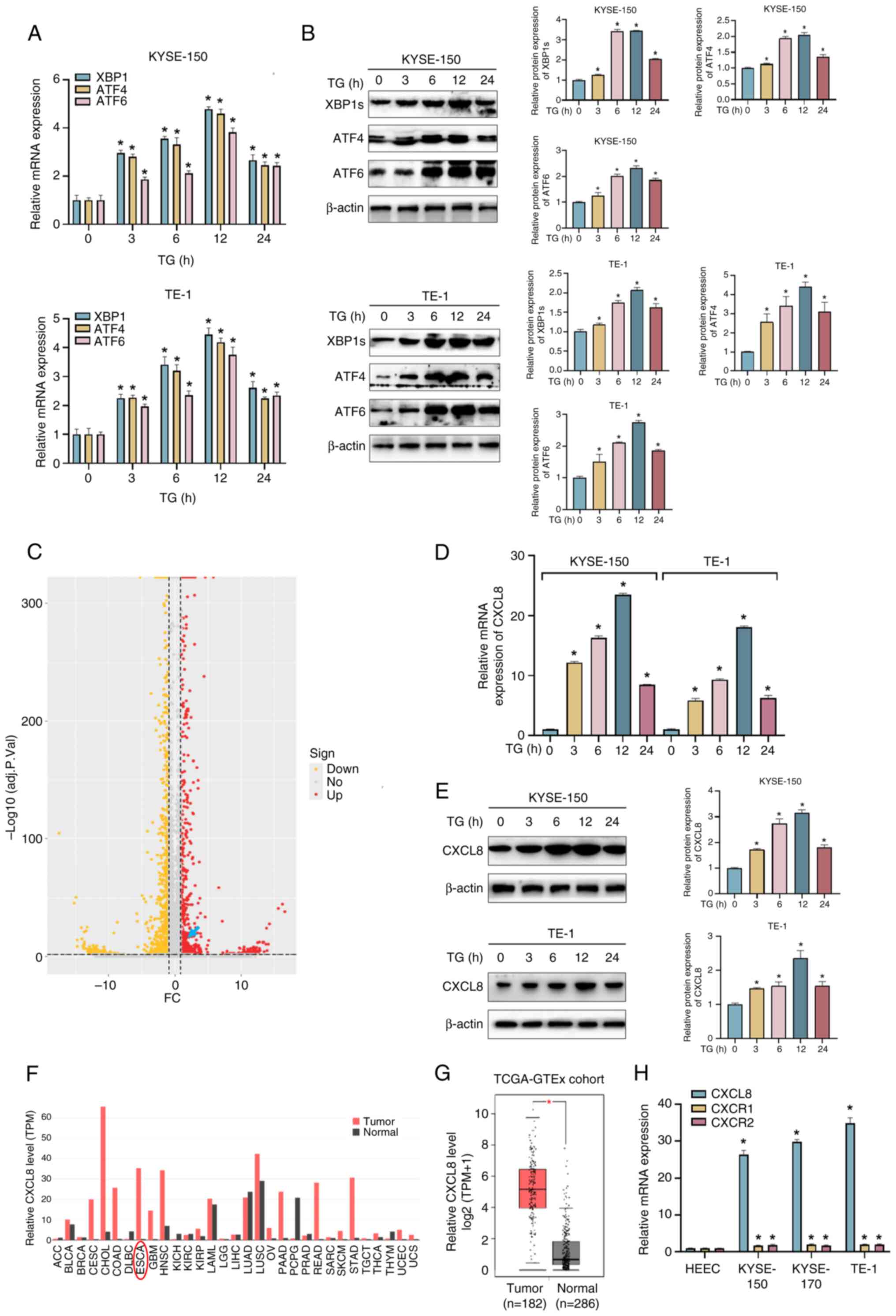
Figure 1

Endoplasmic reticulum stress induces
CXCL8 expression in ESCC cells. KYSE-150 and TE-1 cells were
treated with 100 nM TG for 0, 3, 6, 12 and 24 h, and expression
levels of effectors in the UPR were examined by (A) RT-qPCR and (B)
western blot analysis. (C) The volcano plot shows differentially
expressed genes in TE-1 cells treated with 100 nM TG for 12 h. The
x-axis represents the log2-transformed of FC ratios and the y-axis
is the log10-transformed adjusted P-value. Red/yellow dots
represent significantly up/downregulated genes (|log2FC|≥1,
adj.P<0.05). The blue arrow indicates the possible location of
CXCL8. The (D) mRNA and (E) protein expression levels of CXCL8 in
ESCC cells treated with 100 nM TG for 24 h. (F) The CXCL8
expression profile across all tumor samples and corresponding
normal tissues was obtained from the GEPIA. (G) The mRNA expression
levels of CXCL8 in ESCC tissues (n=182) and normal tissues (n=286)
were obtained from the GEPIA database. (H) Expression levels of
CXCL8, the receptors CXCR1 and CXCR2 in the normal esophageal
epithelial cell line and ESCC cell lines were determined by RT-qPCR
method. All data are expressed as mean ± SD, n=3/group. *P<0.05
vs. TG-treated 0 h group. CXCL8, C-X-C motif chemokine ligand;
ESCC, esophageal squamous cell carcinoma; TG, thapsigargin; FC,
fold change; GEPIA, Gene Expression Profiling Interactive
£Analysis, RT-qPCR, reverse transcription-quantitative PCR; HEEC,
human normal esophageal epithelial cell; XBP1, X-box binding
protein 1; ATF, activating transcription factor; TCGA-GTEx; The
Cancer Genome Atlas-Genotype-Tissue Expression; sign, significance;
up, upregulated; no, no significance; down, downregulated; TPM,
transcript per million.

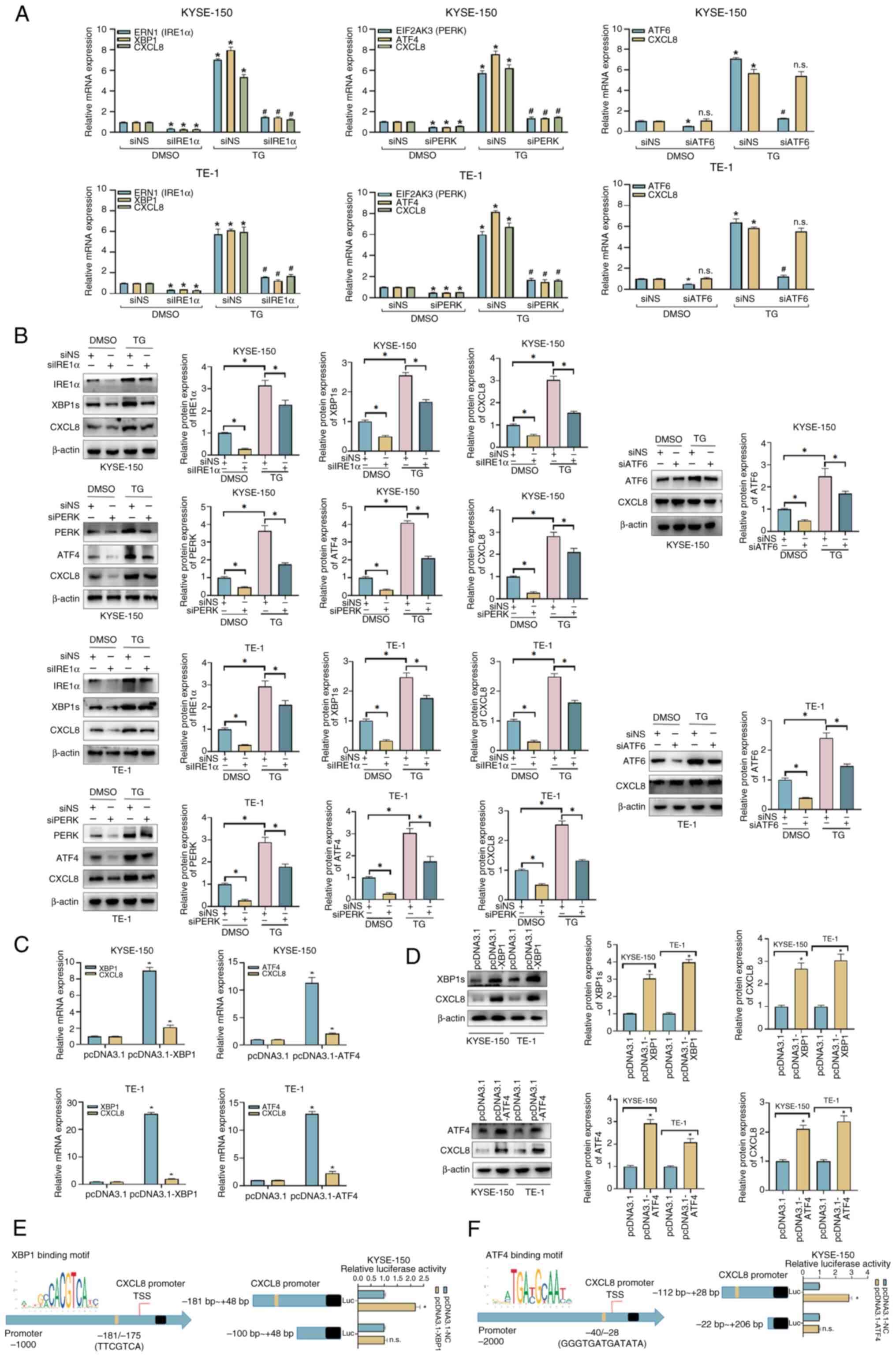
Figure 2

CXCL8 is induced by the PERK and
IRE1α pathways of the unfolded protein response in esophageal
squamous cell carcinoma cells. Evaluation of the indicated (A) mRNA
and (B) protein expression levels in siRNA-transfected KYSE-150 and
TE-1 cells, which were treated with 100 nM TG or DMSO for 24 h.
Evaluation of (C) mRNA and (D) protein expression levels of CXCL8
in transfected KYSE-150 and TE-1 cells by reverse
transcription-quantitative PCR and western blot analysis.
Dual-luciferase reporter assays were conducted in KYSE-150 cells to
verify the direct binding effects of (E) XBP1 and (F) ATF4 on the
CXCL8 promoter. All data are expressed as mean ± SD, n=3/group.
*P<0.05, vs. siNS + DMSO group, siNS + TG group or pcDNA3.1
group; #P<0.05 vs. siNS + TG group. n.s., not
significant; IRE1α, inositol-requiring enzyme 1α; PERK, protein
kinase R (PKR)-like endoplasmic reticulum kinase; si, small
interfering; ERN, endoplasmic reticulum to nucleus signaling;
EIF2AK3, ATF, eukaryotic translation initiation factor 2 alpha
kinase 3; TG, thapsigargin; NS, non-silencing; CXCL, C-X-C motif
chemokine ligand.

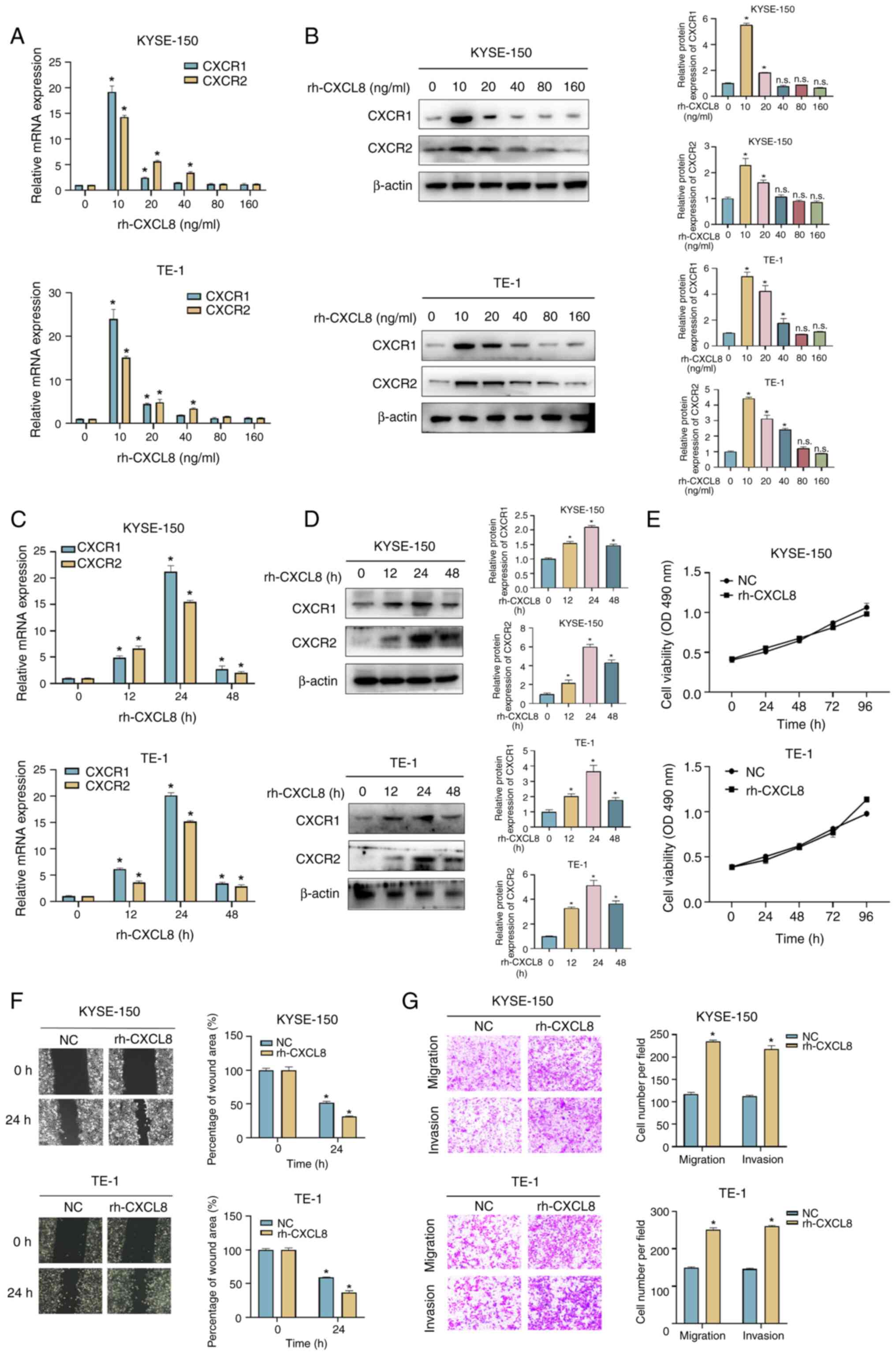
Figure 3

CXCL8 facilitates migration and
invasion of ESCC cells. Evaluation of (A) mRNA and (B) protein
expression levels of CXCR1 and CXCR2 in KYSE-150 and TE-1 cells
treated with 0, 10, 20, 49, 80 and 160 mg/ml rh-CXCL8 for 24 h.
Evaluation of (C) mRNA and (D) protein expression levels of CXCR1
and CXCR2 in KYSE-150 and TE-1 cells treated with 10 ng/ml rh-CXCL8
for 0, 12, 24 and 48 h. (E) Cell proliferation was analyzed with an
MTS assay in KYSE-150 and TE-1 cells treated with 10 ng/ml rh-CXCL8
for 24 h. (F) Wound healing and (G) Transwell assays were conducted
to assess the migration and invasion abilities in KYSE-150 and TE-1
cells treated with 10 ng/ml rh-CXCL8 for 24 h. All data are
expressed as mean ± SD, n=3/group. *P<0.05 vs. 0 ng/ml
rh-CXCL8-treated group, rh-CXCL8-treated 0 h group, NC-treated 0 h
group or NC group. n.s., not significant; rh-CXCL, recombinant
human-C-X-C motif chemokine ligand; CXCR, chemokine receptor; NC,
negative control.

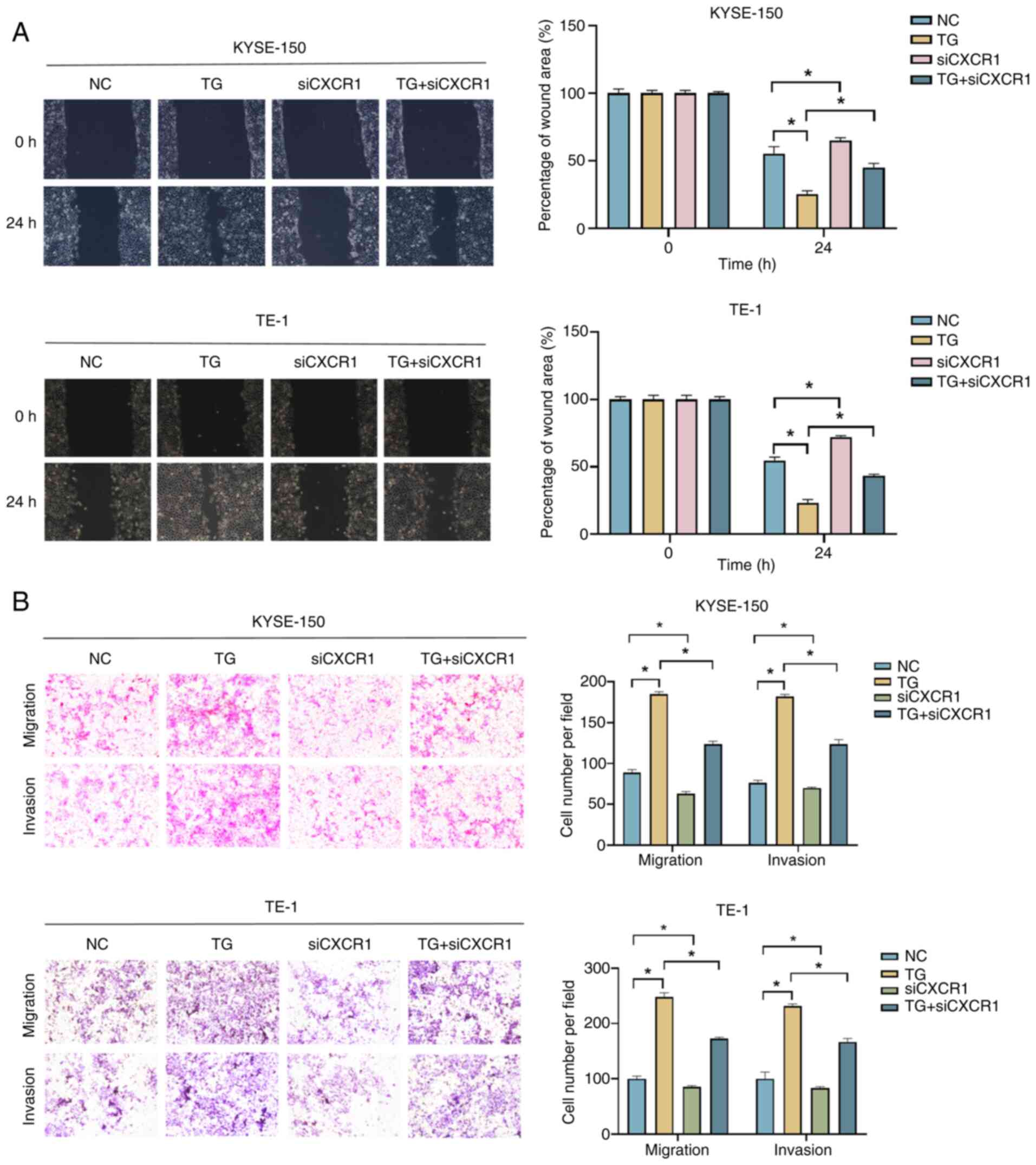
Figure 4

Effect of CXCR1 knockdown on
esophageal squamous cell carcinoma cell migration and invasion
under an endoplasmic reticulum stress state. (A) Wound healing and
(B) Transwell assays were conducted to explore the migration and
invasion ability KYSE-150 and TE-1 cells that underwent various
treatments (magnification, ×100). All data are expressed as mean ±
SD, n=3/group. *P<0.05 vs. NC-treated 24 h group, TG-treated 24
h group, NC-treated group or TG-treated group. NC, negative
control; TG, thapsigargin; si, small interfering; CXCR, chemokine
receptor.

Figure 5

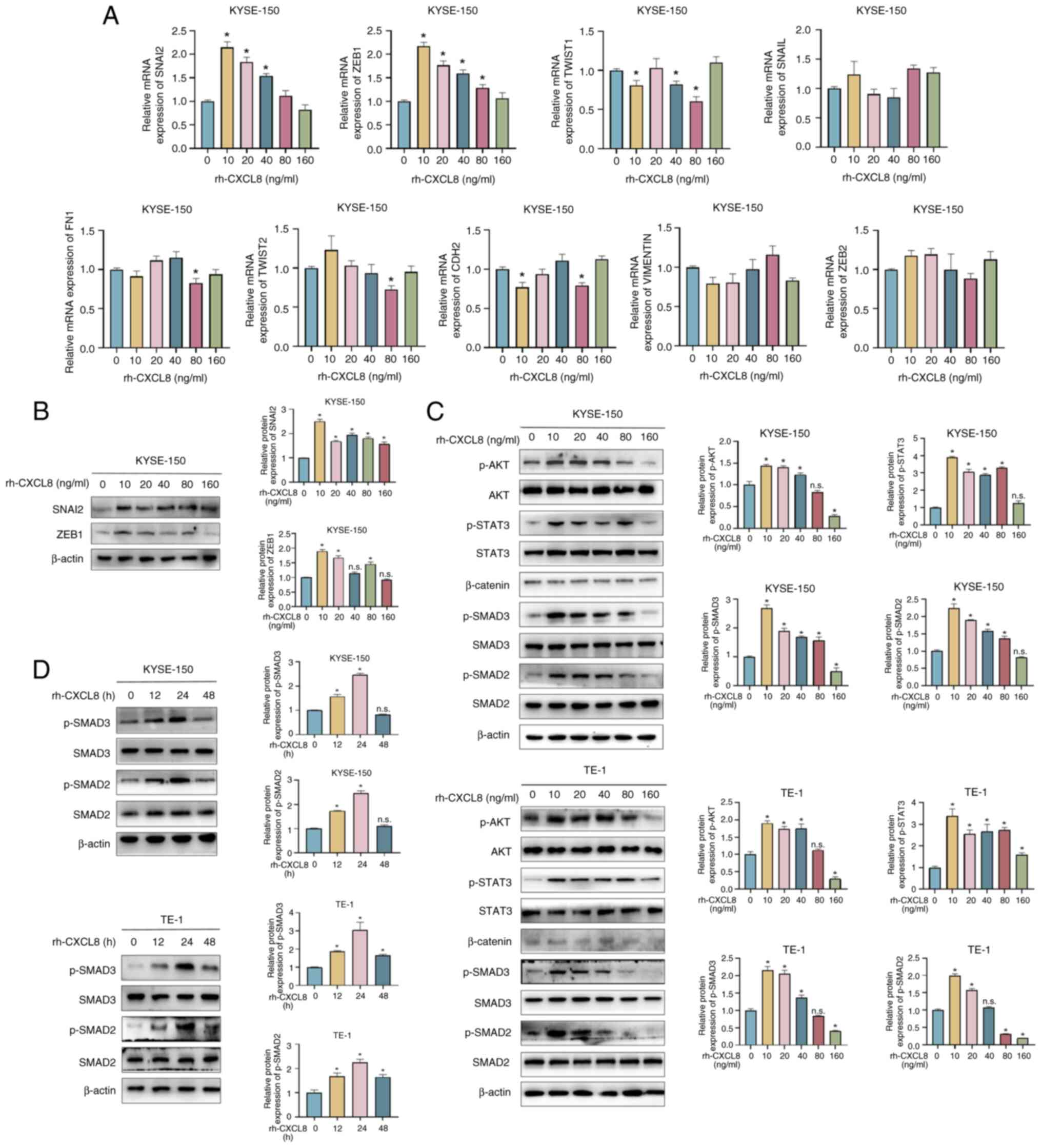
CXCL8 participates in the EMT process
by regulating the expression of SNAI2 and ZEB1. KYSE-150 cells were
treated with specified concentrations of rh-CXCL8 for 24 h, and
then (A) mRNA expression of SNAI2, ZEB1, TWIST1, SNAIL, FN1,
TWIST2, CDH2, VIMENTIN and ZEB2 was detected by RT-qPCR, and (B)
protein expression of SNAI2 and ZEB1 was detected by western
blotting. (C) KYSE-150 and TE-1 cells were treated with specified
concentrations of rh-CXCL8 for 24 h and the protein expression
levels of EMT-related pathway genes were examined by Western blot
assay. (D) KYSE-150 and TE-1 cells were treated with 10 ng/ml
rh-CXCL8 for indicated times, and the protein expression of SMAD2/3
and p-SMAD2/3 was detected by Western blot assay. All data are
expressed as mean ± SD, n=3/group. *P<0.05 vs. 0 ng/ml
rh-CXCL8-treated group or rh-CXCL8-treated 0 h group. n.s., not
significant; rh-CXCL, recombinant human C-X-C motif chemokine
ligand; EMT, epithelial-mesenchymal transition.

Figure 6

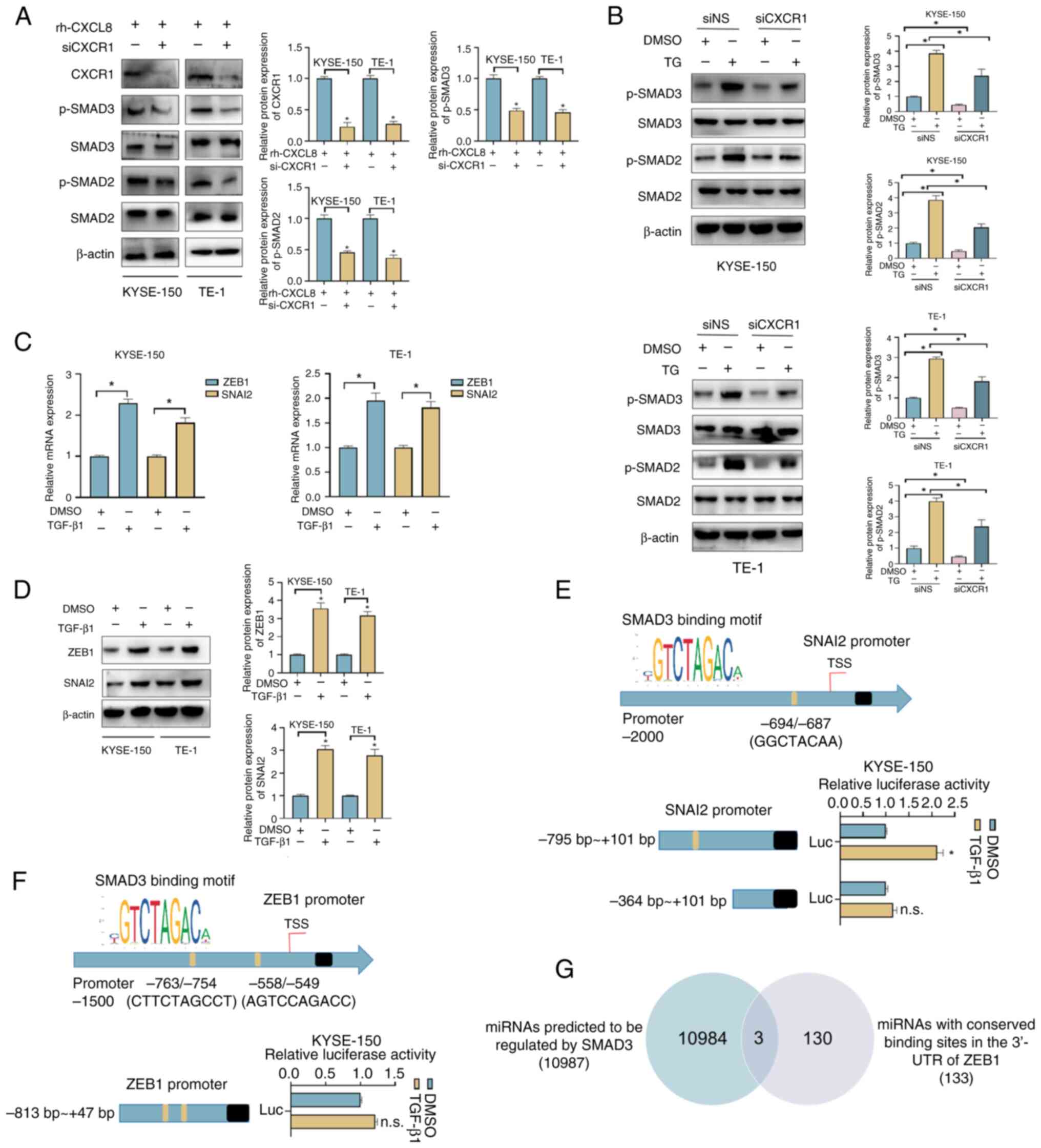
CXCL8 regulates the expression of
SNAI2 and ZEB1 through phosphorylated activation of SMAD2/3. (A)
Influence of knocking down CXCR1 on the protein expression of
SMAD2/3 and p-SMAD2/3 in KYSE-150 and TE-1 cells, treated with 10
ng/ml rh-CXCL8 for 24 h. (B) Influence of knocking down CXCR1 on
protein expression of SMAD2/3 and p-SMAD2/3 in TG (100 nM; 24 h)
treated KYSE-150 and TE-1 cells. (C) mRNA and (D) protein
expression levels of ZEB1 and SNAI2 were examined in KYSE-150 and
TE-1 cells treated with TGF-β1 (10 ng/ml; 48 h) using reverse
transcription-quantitative PCR and western blot analysis.
Dual-luciferase reporter assays were conducted in KYSE-150 cells to
detect the transcriptional regulatory effect of SMAD3 on (E) SNAI2
and (F) ZEB1. (G) Venn diagram showing the bioinformatics
identification of SMAD3-regulated miRNAs that target ZEB1. All data
are expressed as mean ± SD, n=3/group. *P<0.05 vs. rh-CXCL8
group, DMSO + siNS group, TG + siNS group or DMSO group. n.s., not
significant; rh-CXCL, recombinant human-C-X-C motif chemokine
ligand; CXCR, chemokine receptor; p-, phosphorylated; TG,
thapsigargin; si, small interfering; NS, non-silencing; Luc,
luciferase; miRNA, microRNA; UTR, untranslated region.

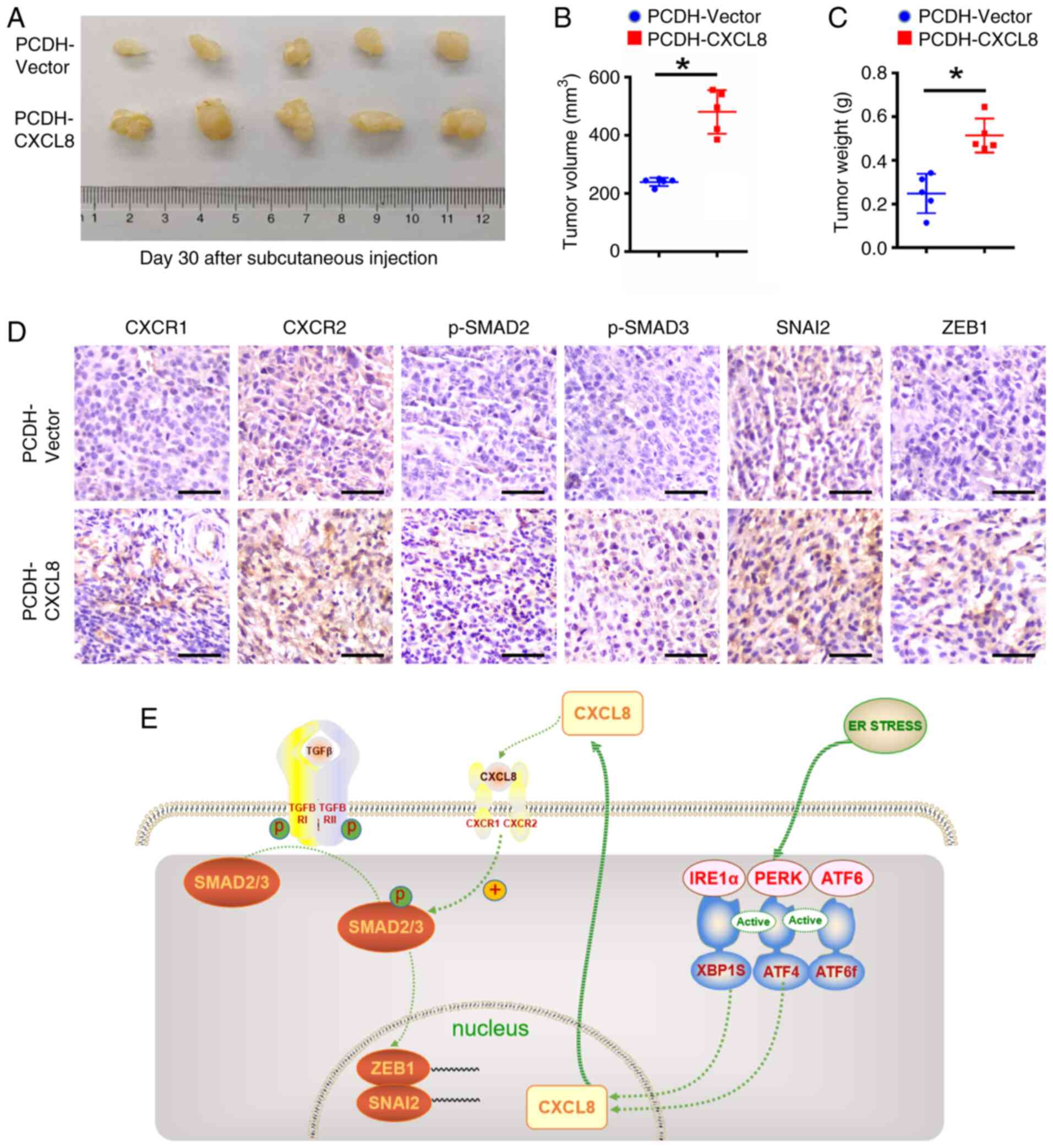
Figure 7

Animal experiments validate the role
of the CXCL8-CXCR1/2-SMAD2/3-SNAI2/ZEB1 axis in tumor growth and
metastasis. (A) Image of subcutaneous xenograft tumors following
injection of CXCL8-overexpressing KYSE-150 cells (n=5) or control
cells (n=5) in BALB/c-nude mice. The volume (B) and weight (C) of
harvested xenograft tumors were measured (n=5). (D) Representative
immunohistochemical images of CXCR1/2, p-SMAD2/3, SNAI2 and ZEB1
expression in CXCL8-overexpressing ESCC tissues and corresponding
control tissues (n=5). Scale bar, 50 µm. (E) Mechanistic diagram of
CXCL8 in ESCC cells under an ER stress state. All data are
expressed as mean ± SD. *P < 0.05. vs. PCDH-Vector group. CXCL,
C-X-C motif chemokine ligand; IRE1α, inositol-requiring enzyme 1α;
PERK, protein kinase R (PKR)-like endoplasmic reticulum kinase;
ATF, activating transcription factor; XBP, X-box binding protein;
ER, endoplasmic reticulum; p-, phosphorylated; ESCC, esophageal
squamous cell carcinoma.
View References

1 

Jin W, Huang K, Ding Z, Zhang M, Li C, Yuan Z, Ma K and Ye X: Global, regional, and national burden of esophageal cancer: A systematic analysis of the Global Burden of Disease Study 2021. Biomark Res. 13:32025. View Article : Google Scholar

2 

Ilic I, Zivanovic Macuzic I, Ravic-Nikolic A, Ilic M and Milicic V: Global burden of esophageal cancer and its risk factors: A systematic analysis of the global burden of disease study 2019. Life (Basel). 15:242024.

3 

Qi L, Sun M, Liu W, Zhang X, Yu Y, Tian Z, Ni Z, Zheng R and Li Y: Global esophageal cancer epidemiology in 2022 and predictions for 2050: A comprehensive analysis and projections based on GLOBOCAN data. Chin Med J (Engl). 137:3108–3116. 2024. View Article : Google Scholar

4 

Yokoyama A, Tsutsumi E, Imazeki H, Suwa Y, Nakamura C, Mizukami T and Yokoyama T: Salivary acetaldehyde concentration according to alcoholic beverage consumed and aldehyde dehydrogenase-2 genotype. Alcohol Clin Exp Res. 32:1607–1614. 2008. View Article : Google Scholar

5 

Prabhu A, Obi KO and Rubenstein JH: The synergistic effects of alcohol and tobacco consumption on the risk of esophageal squamous cell carcinoma: a meta-analysis. Am J Gastroenterol. 109:822–827. 2014. View Article : Google Scholar

6 

Blaydon DC, Etheridge SL, Risk JM, Hennies HC, Gay LJ, Carroll R, Plagnol V, McRonald FE, Stevens HP, Spurr NK, et al: RHBDF2 mutations are associated with tylosis, a familial esophageal cancer syndrome. Am J Hum Genet. 90:340–346. 2012. View Article : Google Scholar

7 

Ludmir EB, Stephens SJ, Palta M, Willett CG and Czito BG: Human papillomavirus tumor infection in esophageal squamous cell carcinoma. J Gastrointest Oncol. 6:287–295. 2015.

8 

Kato K, Ito Y, Nozaki I, Daiko H, Kojima T, Yano M, Ueno M, Nakagawa S, Takagi M, Tsunoda S, et al: Parallel-group controlled trial of surgery versus chemoradiotherapy in patients with stage I esophageal squamous cell carcinoma. Gastroenterology. 161:1878–1886.e2. 2021. View Article : Google Scholar

9 

Sun JM, Shen L, Shah MA, Enzinger P, Adenis A, Doi T, Kojima T, Metges JP, Li Z, Kim SB, et al: Pembrolizumab plus chemotherapy versus chemotherapy alone for first-line treatment of advanced oesophageal cancer (KEYNOTE-590): A randomised, placebo-controlled, phase 3 study. Lancet. 398:759–771. 2021. View Article : Google Scholar

10 

Fan X, Wang J, Xia L, Qiu H, Tian Y, Zhangcai Y, Luo X, Gao Y, Li C, Wu Y, et al: Efficacy of endoscopic therapy for T1b esophageal cancer and construction of prognosis prediction model: A retrospective cohort study. Int J Surg. 109:1708–1719. 2023. View Article : Google Scholar

11 

Li Y, Li Y and Chen X: NOTCH and esophageal squamous cell carcinoma. Adv Exp Med Biol. 1287:59–68. 2021. View Article : Google Scholar

12 

Ron D and Walter P: Signal integration in the endoplasmic reticulum unfolded protein response. Nat Rev Mol Cell Biol. 8:519–529. 2007. View Article : Google Scholar

13 

Bobrovnikova-Marjon E, Grigoriadou C, Pytel D, Zhang F, Ye J, Koumenis C, Cavener D and Diehl JA: PERK promotes cancer cell proliferation and tumor growth by limiting oxidative DNA damage. Oncogene. 29:3881–3895. 2010. View Article : Google Scholar

14 

Urra H, Henriquez DR, Cánovas J, Villarroel-Campos D, Carreras-Sureda A, Pulgar E, Molina E, Hazari YM, Limia CM, Alvarez-Rojas S, et al: IRE1α governs cytoskeleton remodelling and cell migration through a direct interaction with filamin A. Nat Cell Biol. 20:942–953. 2018. View Article : Google Scholar

15 

Hart LS, Cunningham JT, Datta T, Dey S, Tameire F, Lehman SL, Qiu B, Zhang H, Cerniglia G, Bi M, et al: ER stress-mediated autophagy promotes Myc-dependent transformation and tumor growth. J Clin Invest. 122:4621–4634. 2012. View Article : Google Scholar

16 

Avivar-Valderas A, Salas E, Bobrovnikova-Marjon E, Diehl JA, Nagi C, Debnath J and Aguirre-Ghiso JA: PERK integrates autophagy and oxidative stress responses to promote survival during extracellular matrix detachment. Mol Cell Biol. 31:3616–3629. 2011. View Article : Google Scholar

17 

Notte A, Rebucci M, Fransolet M, Roegiers E, Genin M, Tellier C, Watillon K, Fattaccioli A, Arnould T and Michiels C: Taxol-induced unfolded protein response activation in breast cancer cells exposed to hypoxia: ATF4 activation regulates autophagy and inhibits apoptosis. Int J Biochem Cell Biol. 62:1–14. 2015. View Article : Google Scholar

18 

Lu M, Lawrence DA, Marsters S, Acosta-Alvear D, Kimmig P, Mendez AS, Paton AW, Paton JC, Walter P and Ashkenazi A: Opposing unfolded-protein-response signals converge on death receptor 5 to control apoptosis. Science. 345:98–101. 2014. View Article : Google Scholar

19 

Li G, Mongillo M, Chin KT, Harding H, Ron D, Marks AR and Tabas I: Role of ERO1-alpha-mediated stimulation of inositol 1,4,5-triphosphate receptor activity in endoplasmic reticulum stress-induced apoptosis. J Cell Biol. 186:783–792. 2009. View Article : Google Scholar

20 

Prieto K, Cao Y, Mohamed E, Trillo-Tinoco J, Sierra RA, Urueña C, Sandoval TA, Fiorentino S, Rodriguez PC and Barreto A: Polyphenol-rich extract induces apoptosis with immunogenic markers in melanoma cells through the ER stress-associated kinase PERK. Cell Death Discov. 5:1342019. View Article : Google Scholar

21 

Alfaro C, Sanmamed MF, Rodríguez-Ruiz ME, Teijeira Á, Oñate C, González Á, Ponz M, Schalper KA, Pérez-Gracia JL and Melero I: Interleukin-8 in cancer pathogenesis, treatment and follow-up. Cancer Treat Rev. 60:24–31. 2017. View Article : Google Scholar

22 

Raghuwanshi SK, Su Y, Singh V, Haynes K, Richmond A and Richardson RM: The chemokine receptors CXCR1 and CXCR2 couple to distinct G protein-coupled receptor kinases to mediate and regulate leukocyte functions. J Immunol. 189:2824–2832. 2012. View Article : Google Scholar

23 

Shen T, Yang Z, Cheng X, Xiao Y, Yu K, Cai X, Xia C and Li Y: CXCL8 induces epithelial-mesenchymal transition in colon cancer cells via the PI3K/Akt/NF-κB signaling pathway. Oncol Rep. 37:2095–2100. 2017. View Article : Google Scholar

24 

Liubomirski Y, Lerrer S, Meshel T, Rubinstein-Achiasaf L, Morein D, Wiemann S, Körner C and Ben-Baruch A: Tumor-stroma-inflammation networks promote pro-metastatic chemokines and aggressiveness characteristics in triple-negative breast cancer. Front Immunol. 10:7572019. View Article : Google Scholar

25 

Zhu YM, Webster SJ, Flower D and Woll PJ: Interleukin-8/CXCL8 is a growth factor for human lung cancer cells. Br J Cancer. 91:1970–1976. 2004. View Article : Google Scholar

26 

Yi M, Peng C, Xia B and Gan L: CXCL8 facilitates the survival and paclitaxel-resistance of triple-negative breast cancers. Clin Breast Cancer. 22:e191–e198. 2022. View Article : Google Scholar

27 

Zhai J, Shen J, Xie G, Wu J, He M, Gao L, Zhang Y, Yao X and Shen L: Cancer-associated fibroblasts-derived IL-8 mediates resistance to cisplatin in human gastric cancer. Cancer Lett. 454:37–43. 2019. View Article : Google Scholar

28 

Xue J, Song Y, Xu W and Zhu Y: The CDK1-related lncRNA and CXCL8 mediated immune resistance in lung adenocarcinoma. Cells. 11:26882022. View Article : Google Scholar

29 

Zhang H, Yu QL, Meng L, Huang H, Liu H, Zhang N, Liu N, Yang J, Zhang YZ and Huang Q: TAZ-regulated expression of IL-8 is involved in chemoresistance of hepatocellular carcinoma cells. Arch Biochem Biophys. 693:1085712020. View Article : Google Scholar

30 

Liu Q, Li A, Tian Y, Wu JD, Liu Y, Li T, Chen Y, Han X and Wu K: The CXCL8-CXCR1/2 pathways in cancer. Cytokine Growth Factor Rev. 31:61–71. 2016. View Article : Google Scholar

31 

Ogura M, Takeuchi H, Kawakubo H, Nishi T, Fukuda K, Nakamura R, Takahashi T, Wada N, Saikawa Y, Omori T, et al: Clinical significance of CXCL-8/CXCR-2 network in esophageal squamous cell carcinoma. Surgery. 154:512–520. 2013. View Article : Google Scholar

32 

Hosono M, Koma YI, Takase N, Urakawa N, Higashino N, Suemune K, Kodaira H, Nishio M, Shigeoka M, Kakeji Y and Yokozaki H: CXCL8 derived from tumor-associated macrophages and esophageal squamous cell carcinomas contributes to tumor progression by promoting migration and invasion of cancer cells. Oncotarget. 8:106071–106088. 2017. View Article : Google Scholar

33 

Livak KJ and Schmittgen TD: Analysis of relative gene expression data using real-time quantitative PCR and the 2(−Delta Delta C(T)) method. Methods. 25:402–408. 2001. View Article : Google Scholar

34 

Hayakawa K, Nakajima S, Hiramatsu N, Okamura M, Huang T, Saito Y, Tagawa Y, Tamai M, Takahashi S, Yao J and Kitamura M: ER stress depresses NF-kappaB activation in mesangial cells through preferential induction of C/EBP beta. J Am Soc Nephrol. 21:73–81. 2010. View Article : Google Scholar

35 

Knall C, Young S, Nick JA, Buhl AM, Worthen GS and Johnson GL: Interleukin-8 regulation of the Ras/Raf/mitogen-activated protein kinase pathway in human neutrophils. J Biol Chem. 271:2832–2838. 1996. View Article : Google Scholar

36 

Cheng GZ, Park S, Shu S, He L, Kong W, Zhang W, Yuan Z, Wang LH and Cheng JQ: Advances of AKT pathway in human oncogenesis and as a target for anti-cancer drug discovery. Curr Cancer Drug Targets. 8:2–6. 2008. View Article : Google Scholar

37 

Waugh DJJ and Wilson C: The interleukin-8 pathway in cancer. Clin Cancer Res. 14:6735–6741. 2008. View Article : Google Scholar

38 

Cheng K and Hao M: Metformin inhibits TGF-β1-induced epithelial-to-mesenchymal transition via PKM2 relative-mTOR/p70s6k signaling pathway in cervical carcinoma cells. Int J Mol Sci. 17:20002016. View Article : Google Scholar

39 

Hetz C and Papa FR: The unfolded protein response and cell fate control. Mol Cell. 69:169–181. 2018. View Article : Google Scholar

40 

He J, Zhou Y and Sun L: Emerging mechanisms of the unfolded protein response in therapeutic resistance: From chemotherapy to Immunotherapy. Cell Commun Signal. 22:892024. View Article : Google Scholar

41 

Dong D, Ni M, Li J, Xiong S, Ye W, Virrey JJ, Mao C, Ye R, Wang M, Pen L, et al: Critical role of the stress chaperone GRP78/BiP in tumor proliferation, survival, and tumor angiogenesis in transgene-induced mammary tumor development. Cancer Res. 68:498–505. 2008. View Article : Google Scholar

42 

Li J and Lee AS: Stress induction of GRP78/BiP and its role in cancer. Curr Mol Med. 6:45–54. 2006. View Article : Google Scholar

43 

Tan Y, Dourdin N, Wu C, De Veyra T, Elce JS and Greer PA: Ubiquitous calpains promote caspase-12 and JNK activation during endoplasmic reticulum stress-induced apoptosis. J Biol Chem. 281:16016–16024. 2006. View Article : Google Scholar

44 

Yuan YJ, Liu S, Yang H, Xu JL, Zhai J, Jiang HM and Sun B: Acetylshikonin induces apoptosis through the endoplasmic reticulum stress-activated PERK/eIF2α/CHOP axis in oesophageal squamous cell carcinoma. J Cell Mol Med. 28:e180302024. View Article : Google Scholar

45 

Hetz C, Zhang K and Kaufman RJ: Mechanisms, regulation and functions of the unfolded protein response. Nat Rev Mol Cell Biol. 21:421–438. 2020. View Article : Google Scholar

46 

Yin X, Zhang P, Xia N, Wu S, Liu B, Weng L and Shang M: GPx8 regulates apoptosis and autophagy in esophageal squamous cell carcinoma through the IRE1/JNK pathway. Cell Signal. 93:1103072022. View Article : Google Scholar

47 

Wang YM, Xu X, Tang J, Sun ZY, Fu YJ, Zhao XJ, Ma XM and Ye Q: Apatinib induces endoplasmic reticulum stress-mediated apoptosis and autophagy and potentiates cell sensitivity to paclitaxel via the IRE-1α-AKT-mTOR pathway in esophageal squamous cell carcinoma. Cell Biosci. 11:1242021. View Article : Google Scholar

48 

Mamik MK and Ghorpade A: Chemokine CXCL8 promotes HIV-1 replication in human monocyte-derived macrophages and primary microglia via nuclear factor-κB pathway. PLoS One. 9:e921452014. View Article : Google Scholar

49 

Aarntzen EHJG, Hermsen R, Drenth JPH, Boerman OC and Oyen WJG: 99mTc-CXCL8 SPECT to monitor disease activity in inflammatory bowel disease. J Nucl Med. 57:398–403. 2016. View Article : Google Scholar

50 

Amrouche L, Desbuissons G, Rabant M, Sauvaget V, Nguyen C, Benon A, Barre P, Rabaté C, Lebreton X, Gallazzini M, et al: MicroRNA-146a in human and experimental ischemic AKI: CXCL8-dependent mechanism of action. J Am Soc Nephrol. 28:479–493. 2017. View Article : Google Scholar

51 

Barnes PJ: New treatments for chronic obstructive pulmonary disease. Ann Ist Super Sanita. 39:573–582. 2003.

52 

Traves SL, Smith SJ, Barnes PJ and Donnelly LE: Specific CXC but not CC chemokines cause elevated monocyte migration in COPD: A role for CXCR2. J Leukoc Biol. 76:441–450. 2004. View Article : Google Scholar

53 

Long X, Ye Y, Zhang L, Liu P, Yu W, Wei F, Ren X and Yu J: IL-8, a novel messenger to cross-link inflammation and tumor EMT via autocrine and paracrine pathways (Review). Int J Oncol. 48:5–12. 2016. View Article : Google Scholar

54 

Sheshadri N, Poria DK, Sharan S, Hu Y, Yan C, Koparde VN, Balamurugan K and Sterneck E: PERK signaling through C/EBPδ contributes to ER stress-induced expression of immunomodulatory and tumor promoting chemokines by cancer cells. Cell Death Dis. 12:10382021. View Article : Google Scholar

55 

Zhang L, Xu S, Cheng X, Wu J, Wang Y, Gao W, Bao J and Yu H: Inflammatory tumor microenvironment of thyroid cancer promotes cellular dedifferentiation and silencing of iodide-handling genes expression. Pathol Res Pract. 246:1544952023. View Article : Google Scholar

56 

Püschel F, Favaro F, Redondo-Pedraza J, Lucendo E, Iurlaro R, Marchetti S, Majem B, Eldering E, Nadal E, Ricci JE, et al: Starvation and antimetabolic therapy promote cytokine release and recruitment of immune cells. Proc Natl Acad Sci USA. 117:9932–9941. 2020. View Article : Google Scholar

57 

MacManus CF, Pettigrew J, Seaton A, Wilson C, Maxwell PJ, Berlingeri S, Purcell C, McGurk M, Johnston PG and Waugh DJJ: Interleukin-8 signaling promotes translational regulation of cyclin D in androgen-independent prostate cancer cells. Mol Cancer Res. 5:737–748. 2007. View Article : Google Scholar

58 

Matsuo Y, Raimondo M, Woodward TA, Wallace MB, Gill KR, Tong Z, Burdick MD, Yang Z, Strieter RM, Hoffman RM and Guha S: CXC-chemokine/CXCR2 biological axis promotes angiogenesis in vitro and in vivo in pancreatic cancer. Int J Cancer. 125:1027–1037. 2009. View Article : Google Scholar

59 

Wang J, Hu W, Wu X, Wang K, Yu J, Luo B, Luo G, Wang W, Wang H, Li J and Wen J: CXCR1 promotes malignant behavior of gastric cancer cells in vitro and in vivo in AKT and ERK1/2 phosphorylation. Int J Oncol. 48:2184–2196. 2016. View Article : Google Scholar

60 

Urbantat RM, Blank A, Kremenetskaia I, Vajkoczy P, Acker G and Brandenburg S: The CXCL2/IL8/CXCR2 pathway is relevant for brain tumor malignancy and endothelial cell function. Int J Mol Sci. 22:26342021. View Article : Google Scholar

61 

Knall C, Worthen GS and Johnson GL: Interleukin 8-stimulated phosphatidylinositol-3-kinase activity regulates the migration of human neutrophils independent of extracellular signal-regulated kinase and p38 mitogen-activated protein kinases. Proc Natl Acad Sci USA. 94:3052–3057. 1997. View Article : Google Scholar

62 

Luppi F, Longo AM, de Boer WI, Rabe KF and Hiemstra PS: Interleukin-8 stimulates cell proliferation in non-small cell lung cancer through epidermal growth factor receptor transactivation. Lung Cancer. 56:25–33. 2007. View Article : Google Scholar

63 

Brandl M, Seidler B, Haller F, Adamski J, Schmid RM, Saur D and Schneider G: IKK(α) controls canonical TGF(ß)-SMAD signaling to regulate genes expressing SNAIL and SLUG during EMT in panc1 cells. J Cell Sci. 123:4231–4239. 2010. View Article : Google Scholar

64 

Xiong M, Jiang L, Zhou Y, Qiu W, Fang L, Tan R, Wen P and Yang J: The miR-200 family regulates TGF-β1-induced renal tubular epithelial to mesenchymal transition through Smad pathway by targeting ZEB1 and ZEB2 expression. Am J Physiol Renal Physiol. 302:F369–F379. 2012. View Article : Google Scholar

Related Articles

  • Abstract
  • View
  • Download
  • Twitter
Copy and paste a formatted citation
Spandidos Publications style
Wu J, Su F, Lu J, Xu H, Yang X, Li F, Liu L and Guo W: Induction of CXCL8 by endoplasmic reticulum stress promotes migration and invasion of esophageal squamous cell carcinoma through activation of SMAD2/3. Mol Med Rep 32: 311, 2025.
APA
Wu, J., Su, F., Lu, J., Xu, H., Yang, X., Li, F. ... Guo, W. (2025). Induction of CXCL8 by endoplasmic reticulum stress promotes migration and invasion of esophageal squamous cell carcinoma through activation of SMAD2/3. Molecular Medicine Reports, 32, 311. https://doi.org/10.3892/mmr.2025.13676
MLA
Wu, J., Su, F., Lu, J., Xu, H., Yang, X., Li, F., Liu, L., Guo, W."Induction of CXCL8 by endoplasmic reticulum stress promotes migration and invasion of esophageal squamous cell carcinoma through activation of SMAD2/3". Molecular Medicine Reports 32.6 (2025): 311.
Chicago
Wu, J., Su, F., Lu, J., Xu, H., Yang, X., Li, F., Liu, L., Guo, W."Induction of CXCL8 by endoplasmic reticulum stress promotes migration and invasion of esophageal squamous cell carcinoma through activation of SMAD2/3". Molecular Medicine Reports 32, no. 6 (2025): 311. https://doi.org/10.3892/mmr.2025.13676
Copy and paste a formatted citation
x
Spandidos Publications style
Wu J, Su F, Lu J, Xu H, Yang X, Li F, Liu L and Guo W: Induction of CXCL8 by endoplasmic reticulum stress promotes migration and invasion of esophageal squamous cell carcinoma through activation of SMAD2/3. Mol Med Rep 32: 311, 2025.
APA
Wu, J., Su, F., Lu, J., Xu, H., Yang, X., Li, F. ... Guo, W. (2025). Induction of CXCL8 by endoplasmic reticulum stress promotes migration and invasion of esophageal squamous cell carcinoma through activation of SMAD2/3. Molecular Medicine Reports, 32, 311. https://doi.org/10.3892/mmr.2025.13676
MLA
Wu, J., Su, F., Lu, J., Xu, H., Yang, X., Li, F., Liu, L., Guo, W."Induction of CXCL8 by endoplasmic reticulum stress promotes migration and invasion of esophageal squamous cell carcinoma through activation of SMAD2/3". Molecular Medicine Reports 32.6 (2025): 311.
Chicago
Wu, J., Su, F., Lu, J., Xu, H., Yang, X., Li, F., Liu, L., Guo, W."Induction of CXCL8 by endoplasmic reticulum stress promotes migration and invasion of esophageal squamous cell carcinoma through activation of SMAD2/3". Molecular Medicine Reports 32, no. 6 (2025): 311. https://doi.org/10.3892/mmr.2025.13676
Follow us
  • Twitter
  • LinkedIn
  • Facebook
About
  • Spandidos Publications
  • Careers
  • Cookie Policy
  • Privacy Policy
How can we help?
  • Help
  • Live Chat
  • Contact
  • Email to our Support Team