Spandidos Publications Logo
  • About
    • About Spandidos
    • Aims and Scopes
    • Abstracting and Indexing
    • Editorial Policies
    • Reprints and Permissions
    • Job Opportunities
    • Terms and Conditions
    • Contact
  • Journals
    • All Journals
    • Oncology Letters
      • Oncology Letters
      • Information for Authors
      • Editorial Policies
      • Editorial Board
      • Aims and Scope
      • Abstracting and Indexing
      • Bibliographic Information
      • Archive
    • International Journal of Oncology
      • International Journal of Oncology
      • Information for Authors
      • Editorial Policies
      • Editorial Board
      • Aims and Scope
      • Abstracting and Indexing
      • Bibliographic Information
      • Archive
    • Molecular and Clinical Oncology
      • Molecular and Clinical Oncology
      • Information for Authors
      • Editorial Policies
      • Editorial Board
      • Aims and Scope
      • Abstracting and Indexing
      • Bibliographic Information
      • Archive
    • Experimental and Therapeutic Medicine
      • Experimental and Therapeutic Medicine
      • Information for Authors
      • Editorial Policies
      • Editorial Board
      • Aims and Scope
      • Abstracting and Indexing
      • Bibliographic Information
      • Archive
    • International Journal of Molecular Medicine
      • International Journal of Molecular Medicine
      • Information for Authors
      • Editorial Policies
      • Editorial Board
      • Aims and Scope
      • Abstracting and Indexing
      • Bibliographic Information
      • Archive
    • Biomedical Reports
      • Biomedical Reports
      • Information for Authors
      • Editorial Policies
      • Editorial Board
      • Aims and Scope
      • Abstracting and Indexing
      • Bibliographic Information
      • Archive
    • Oncology Reports
      • Oncology Reports
      • Information for Authors
      • Editorial Policies
      • Editorial Board
      • Aims and Scope
      • Abstracting and Indexing
      • Bibliographic Information
      • Archive
    • Molecular Medicine Reports
      • Molecular Medicine Reports
      • Information for Authors
      • Editorial Policies
      • Editorial Board
      • Aims and Scope
      • Abstracting and Indexing
      • Bibliographic Information
      • Archive
    • World Academy of Sciences Journal
      • World Academy of Sciences Journal
      • Information for Authors
      • Editorial Policies
      • Editorial Board
      • Aims and Scope
      • Abstracting and Indexing
      • Bibliographic Information
      • Archive
    • International Journal of Functional Nutrition
      • International Journal of Functional Nutrition
      • Information for Authors
      • Editorial Policies
      • Editorial Board
      • Aims and Scope
      • Abstracting and Indexing
      • Bibliographic Information
      • Archive
    • International Journal of Epigenetics
      • International Journal of Epigenetics
      • Information for Authors
      • Editorial Policies
      • Editorial Board
      • Aims and Scope
      • Abstracting and Indexing
      • Bibliographic Information
      • Archive
    • Medicine International
      • Medicine International
      • Information for Authors
      • Editorial Policies
      • Editorial Board
      • Aims and Scope
      • Abstracting and Indexing
      • Bibliographic Information
      • Archive
  • Articles
  • Information
    • Information for Authors
    • Information for Reviewers
    • Information for Librarians
    • Information for Advertisers
    • Conferences
  • Language Editing
Spandidos Publications Logo
  • About
    • About Spandidos
    • Aims and Scopes
    • Abstracting and Indexing
    • Editorial Policies
    • Reprints and Permissions
    • Job Opportunities
    • Terms and Conditions
    • Contact
  • Journals
    • All Journals
    • Biomedical Reports
      • Information for Authors
      • Editorial Policies
      • Editorial Board
      • Aims and Scope
      • Abstracting and Indexing
      • Bibliographic Information
      • Archive
    • Experimental and Therapeutic Medicine
      • Information for Authors
      • Editorial Policies
      • Editorial Board
      • Aims and Scope
      • Abstracting and Indexing
      • Bibliographic Information
      • Archive
    • International Journal of Epigenetics
      • Information for Authors
      • Editorial Policies
      • Editorial Board
      • Aims and Scope
      • Abstracting and Indexing
      • Bibliographic Information
      • Archive
    • International Journal of Functional Nutrition
      • Information for Authors
      • Editorial Policies
      • Editorial Board
      • Aims and Scope
      • Abstracting and Indexing
      • Bibliographic Information
      • Archive
    • International Journal of Molecular Medicine
      • Information for Authors
      • Editorial Policies
      • Editorial Board
      • Aims and Scope
      • Abstracting and Indexing
      • Bibliographic Information
      • Archive
    • International Journal of Oncology
      • Information for Authors
      • Editorial Policies
      • Editorial Board
      • Aims and Scope
      • Abstracting and Indexing
      • Bibliographic Information
      • Archive
    • Medicine International
      • Information for Authors
      • Editorial Policies
      • Editorial Board
      • Aims and Scope
      • Abstracting and Indexing
      • Bibliographic Information
      • Archive
    • Molecular and Clinical Oncology
      • Information for Authors
      • Editorial Policies
      • Editorial Board
      • Aims and Scope
      • Abstracting and Indexing
      • Bibliographic Information
      • Archive
    • Molecular Medicine Reports
      • Information for Authors
      • Editorial Policies
      • Editorial Board
      • Aims and Scope
      • Abstracting and Indexing
      • Bibliographic Information
      • Archive
    • Oncology Letters
      • Information for Authors
      • Editorial Policies
      • Editorial Board
      • Aims and Scope
      • Abstracting and Indexing
      • Bibliographic Information
      • Archive
    • Oncology Reports
      • Information for Authors
      • Editorial Policies
      • Editorial Board
      • Aims and Scope
      • Abstracting and Indexing
      • Bibliographic Information
      • Archive
    • World Academy of Sciences Journal
      • Information for Authors
      • Editorial Policies
      • Editorial Board
      • Aims and Scope
      • Abstracting and Indexing
      • Bibliographic Information
      • Archive
  • Articles
  • Information
    • For Authors
    • For Reviewers
    • For Librarians
    • For Advertisers
    • Conferences
  • Language Editing
Login Register Submit
  • This site uses cookies
  • You can change your cookie settings at any time by following the instructions in our Cookie Policy. To find out more, you may read our Privacy Policy.

    I agree
Search articles by DOI, keyword, author or affiliation
Search
Advanced Search
presentation
Molecular Medicine Reports
Join Editorial Board Propose a Special Issue
Print ISSN: 1791-2997 Online ISSN: 1791-3004
Journal Cover
December-2025 Volume 32 Issue 6

Full Size Image

Sign up for eToc alerts
Recommend to Library

Journals

International Journal of Molecular Medicine

International Journal of Molecular Medicine

International Journal of Molecular Medicine is an international journal devoted to molecular mechanisms of human disease.

International Journal of Oncology

International Journal of Oncology

International Journal of Oncology is an international journal devoted to oncology research and cancer treatment.

Molecular Medicine Reports

Molecular Medicine Reports

Covers molecular medicine topics such as pharmacology, pathology, genetics, neuroscience, infectious diseases, molecular cardiology, and molecular surgery.

Oncology Reports

Oncology Reports

Oncology Reports is an international journal devoted to fundamental and applied research in Oncology.

Experimental and Therapeutic Medicine

Experimental and Therapeutic Medicine

Experimental and Therapeutic Medicine is an international journal devoted to laboratory and clinical medicine.

Oncology Letters

Oncology Letters

Oncology Letters is an international journal devoted to Experimental and Clinical Oncology.

Biomedical Reports

Biomedical Reports

Explores a wide range of biological and medical fields, including pharmacology, genetics, microbiology, neuroscience, and molecular cardiology.

Molecular and Clinical Oncology

Molecular and Clinical Oncology

International journal addressing all aspects of oncology research, from tumorigenesis and oncogenes to chemotherapy and metastasis.

World Academy of Sciences Journal

World Academy of Sciences Journal

Multidisciplinary open-access journal spanning biochemistry, genetics, neuroscience, environmental health, and synthetic biology.

International Journal of Functional Nutrition

International Journal of Functional Nutrition

Open-access journal combining biochemistry, pharmacology, immunology, and genetics to advance health through functional nutrition.

International Journal of Epigenetics

International Journal of Epigenetics

Publishes open-access research on using epigenetics to advance understanding and treatment of human disease.

Medicine International

Medicine International

An International Open Access Journal Devoted to General Medicine.

Journal Cover
December-2025 Volume 32 Issue 6

Full Size Image

Sign up for eToc alerts
Recommend to Library

  • Article
  • Citations
    • Cite This Article
    • Download Citation
    • Create Citation Alert
    • Remove Citation Alert
    • Cited By
  • Similar Articles
    • Related Articles (in Spandidos Publications)
    • Similar Articles (Google Scholar)
    • Similar Articles (PubMed)
  • Download PDF
  • Download XML
  • View XML

  • Supplementary Files
    • Supplementary_Data1.pdf
    • Supplementary_Data2.pdf
Article Open Access

Intestinal CD4+ T cells treated with Pseudostellaria heterophylla polysaccharide improve insulin resistance in BNL CL.2 cells by modulating PI3K/AKT signaling and energy metabolism

  • Authors:
    • Yongjun Kan
    • Yingying Liu
    • Yating Huang
    • Li Zhao
    • Jiang Chang
    • Wensheng Pang
    • Wenxiong Lin
    • Juan Hu
  • View Affiliations / Copyright

    Affiliations: Institute of Materia Medica, Fujian Academy of Chinese Medical Sciences, Fuzhou, Fujian 350003, P.R. China, Clinical Research Institute, The Second Affiliated Hospital of Fujian University of Traditional Chinese Medicine, Fuzhou, Fujian 350003, P.R. China, School of Pharmacy, Fujian University of Traditional Chinese Medicine, Fuzhou, Fujian 350122, P.R. China, Fujian Key Laboratory for Agroecological Processes and Safety Monitoring, Fujian Agriculture and Forestry University, Fuzhou, Fujian 350002, P.R. China
    Copyright: © Kan et al. This is an open access article distributed under the terms of Creative Commons Attribution License.
  • Article Number: 317
    |
    Published online on: September 11, 2025
       https://doi.org/10.3892/mmr.2025.13682
  • Expand metrics +
Metrics: Total Views: 0 (Spandidos Publications: | PMC Statistics: )
Metrics: Total PDF Downloads: 0 (Spandidos Publications: | PMC Statistics: )
Cited By (CrossRef): 0 citations Loading Articles...

This article is mentioned in:


Abstract

Pseudostellaria heterophylla polysaccharide PF40 has shown potential in alleviating insulin resistance by modulating CD4+ T cells in the intestinal tissue of rats with type 2 diabetes mellitus. To further elucidate the underlying mechanism, CD4+ T cells were isolated from the intestinal tissue of rats treated with PF40 (P‑T) and co‑cultured with insulin‑resistant (IR)‑BNL CL.2 cells. Oxidative stress was assessed by measuring reactive oxygen species, malondialdehyde and superoxide dismutase activity, while apoptosis was evaluated by flow cytometry. Insulin sensitivity was examined by glucose uptake and consumption assays. Protein expression related to the PI3K/AKT pathway was determined by western blotting, and targeted energy metabolomics was performed to analyze glycolysis and the tricarboxylic acid cycle. P‑T treatment reduced oxidative stress in IR‑BNL CL.2 cells by reducing reactive oxygen species and malondialdehyde levels, while increasing superoxide dismutase activity. Additionally, P‑T inhibited apoptosis and improved insulin sensitivity, as evidenced by the increased glucose uptake and consumption. Mechanistically, P‑T decreased phosphorylated‑insulin receptor substrate‑1 expression, leading to activation of the PI3K/AKT signaling pathway, which enhanced glucose metabolism. Targeted energy metabolomics analysis further revealed that P‑T regulated glycolysis and the tricarboxylic acid cycle, ameliorating energy metabolism dysfunction. Notably, the combined treatment of PF40 and metformin indicated potential synergistic effects. These findings highlight the critical role of intestinal CD4+ T cells in PF40‑mediated metabolic regulation, suggesting that targeted modulation of intestinal immune cell homeostasis may offer a promising strategy for the prevention and treatment of insulin resistance.
View Figures

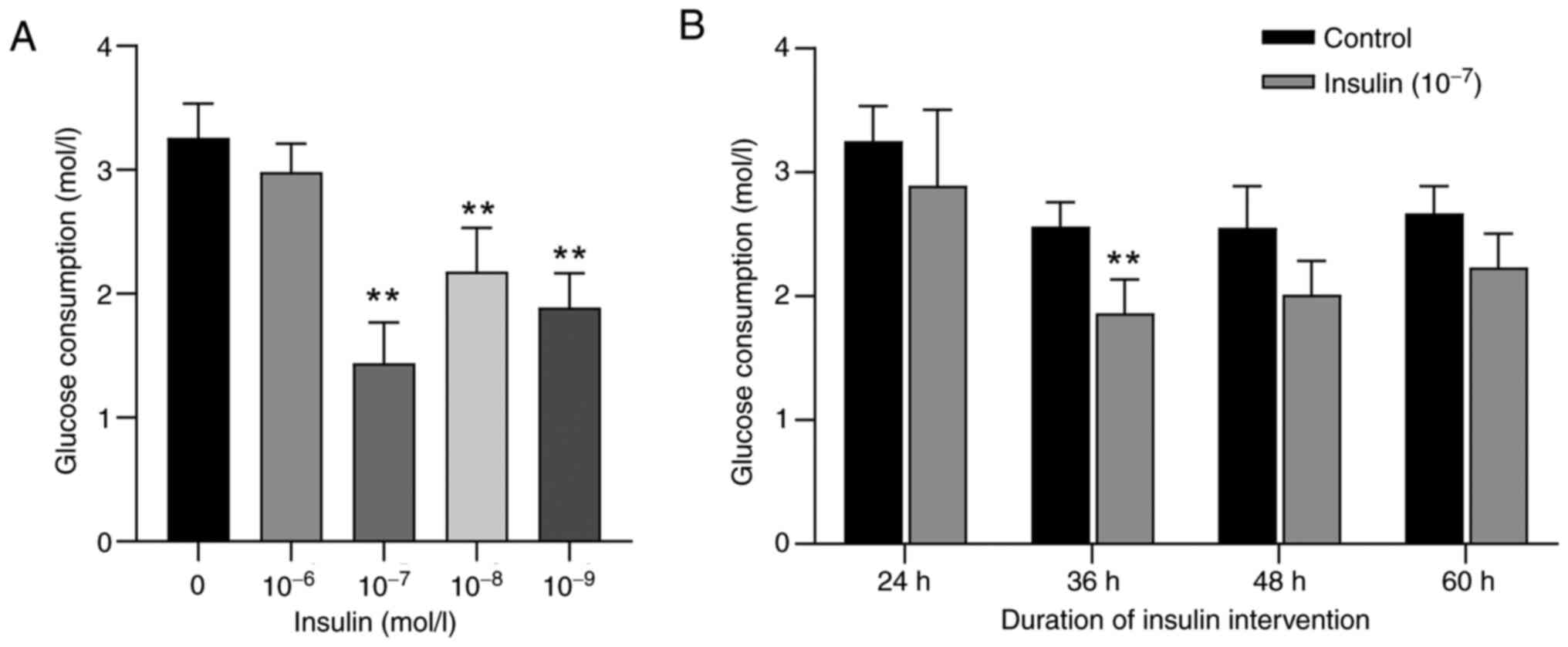
Figure 1

Effects of different insulin
concentrations and intervention durations on glucose consumption in
IR-BNL CL.2 cells. (A) Effects of various insulin concentrations
(0-1×10⁻⁹ mol/l) on glucose consumption in IR-BNL CL.2
cells. **P<0.01 vs. untreated control group. (B) Effects of
different intervention durations of insulin (1×10⁻⁷
mol/l) on glucose consumption in IR-BNL CL.2 cells. Data are
presented as the mean ± SD, n=6. **P<0.01 vs. control group.
IR-BNL CL.2, insulin-resistant BNL CL.2.

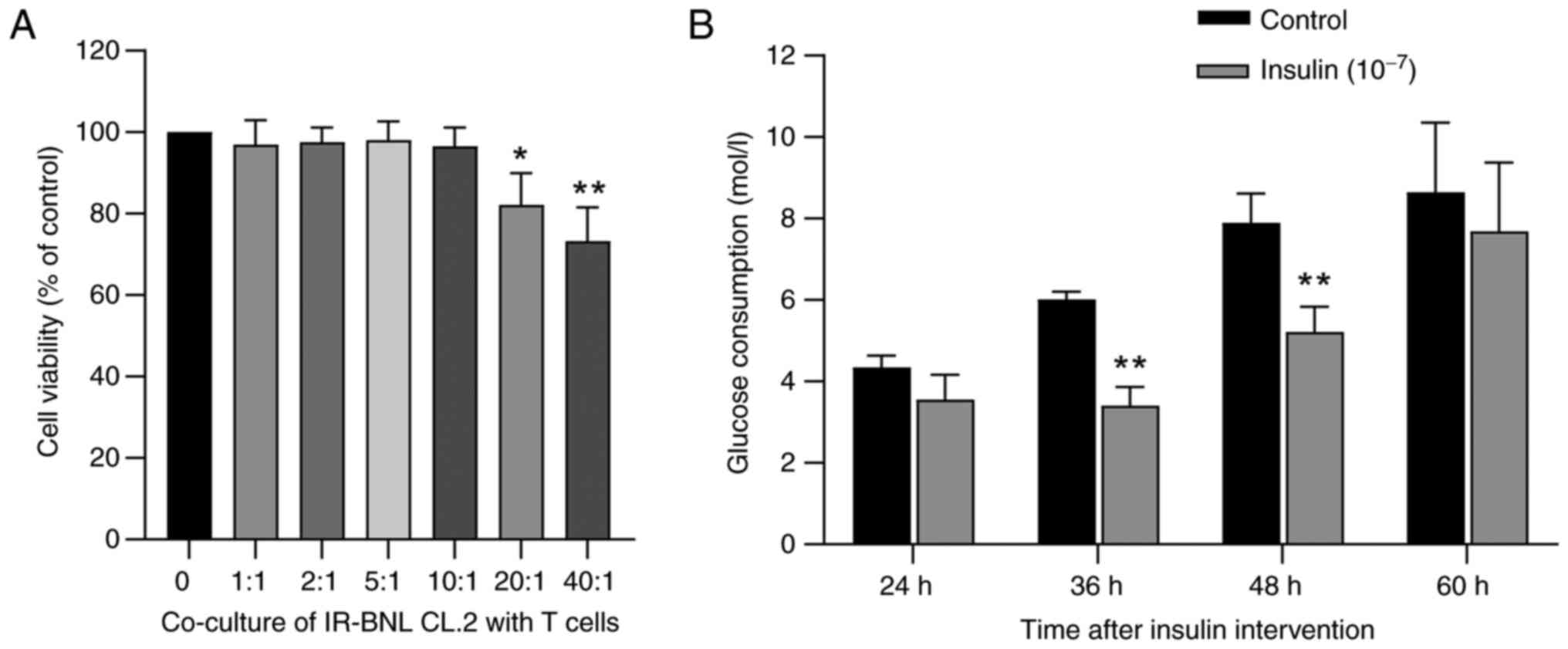
Figure 2

Stability of the IR-BNL CL.2 cell
model and characteristics of co-culture with CD4+ T
cells. (A) Analysis of cell viability in IR-BNL CL.2 and
CD4+ T cells co-cultured at different ratios (1-40:1).
(B) Changes in glucose consumption in IR-BNL CL.2 cells at various
time points (24-60 h) following insulin intervention. **P<0.01
vs. control. Data are presented as the mean ± SD, n=6. *P<0.05,
**P<0.01 vs. untreated IR-BNL CL.2 cells. IR-BNL CL.2,
insulin-resistant BNL CL.2.

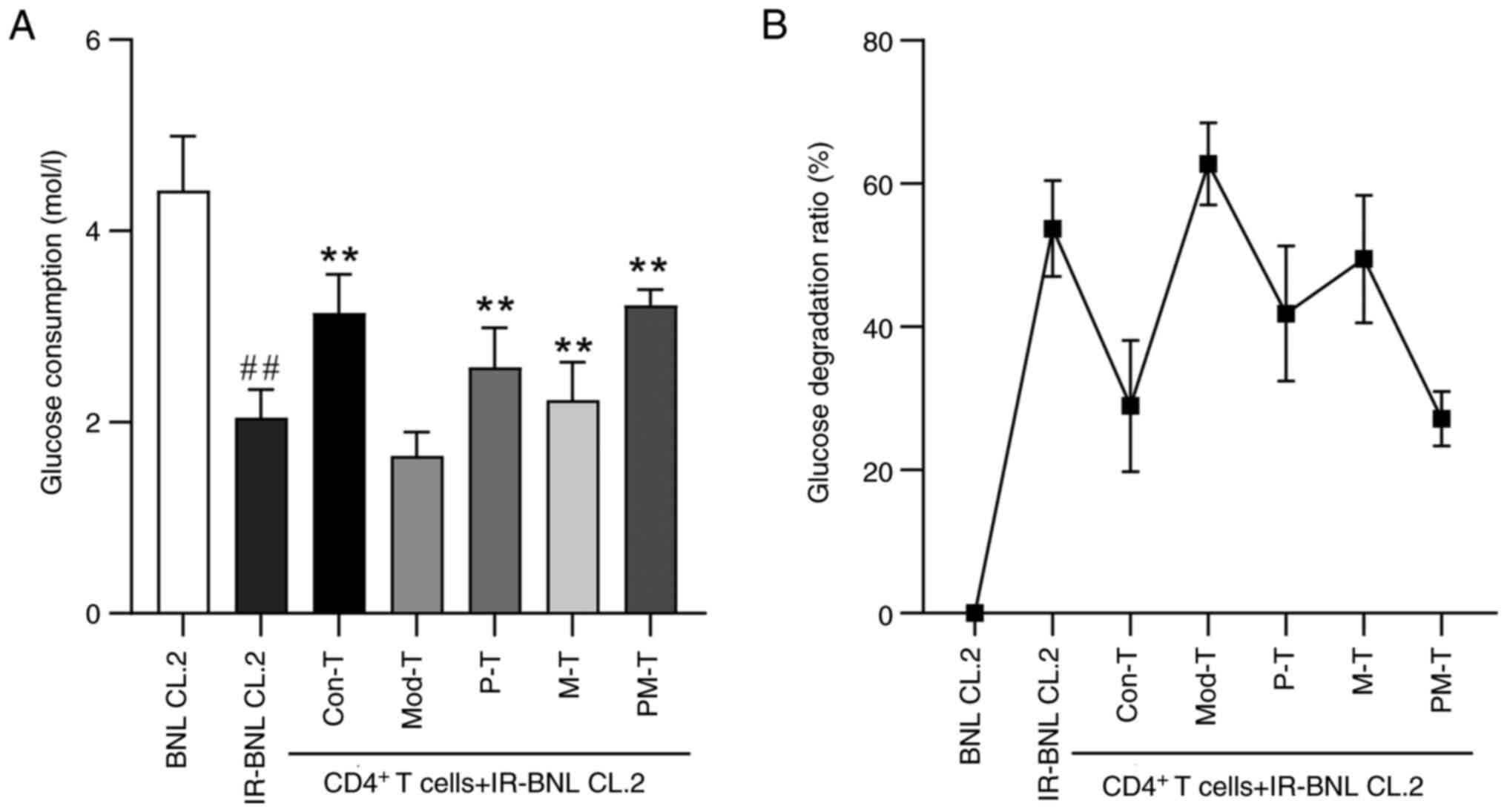
Figure 3

Effects of treated CD4+ T
cells on glucose uptake of BNL CL-2 cells. (A) Glucose consumption
in the different treatment groups. (B) Glucose degradation ratio in
the different treatment groups. Data are presented as the mean ±
SD, n=6. ##P<0.01 vs. BNL CL.2 control group;
**P<0.01 vs. Mod-T group. IR-BNL CL.2, insulin-resistant BNL
CL.2; Con-T, control; Mod-T, model; P-T, PF40; M-T, metformin;
PM-T, combined PF40 and metformin.

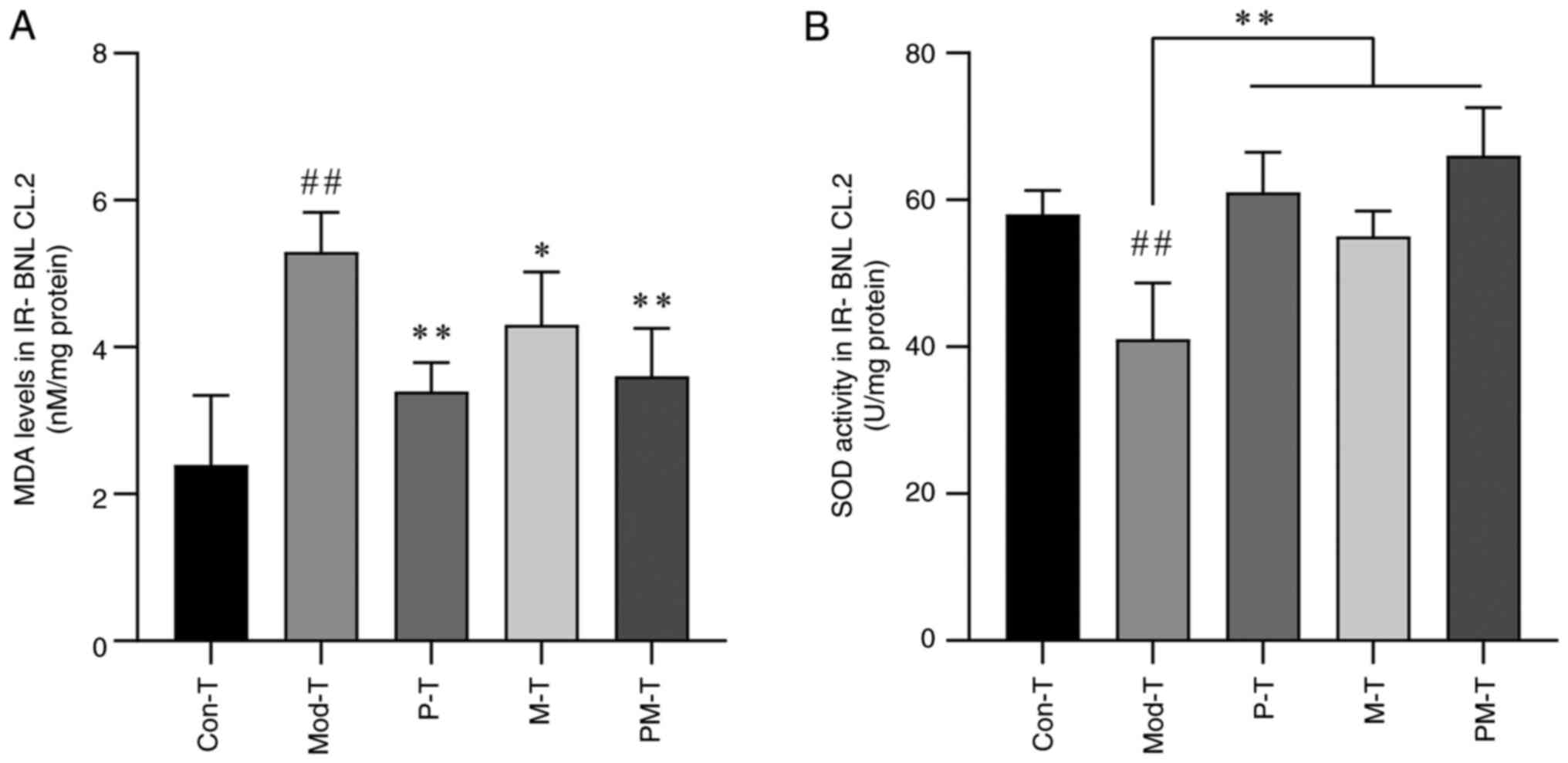
Figure 4

Effects of differently treated
CD4+ T cells on (A) MDA and (B) SOD levels in IR-BNL
CL.2 cells. Data are presented as the mean ± SD, n=5.
##P<0.01 vs. Con-T group; *P<0.05, **P<0.01 vs.
Mod-T group. MDA, malondialdehyde; SOD, superoxide dismutase;
IR-BNL CL.2, insulin-resistant BNL CL.2; Con-T, control; Mod-T,
model; P-T, PF40; M-T, metformin; PM-T, combined PF40 and
metformin.

Figure 5

Effects of differently treated
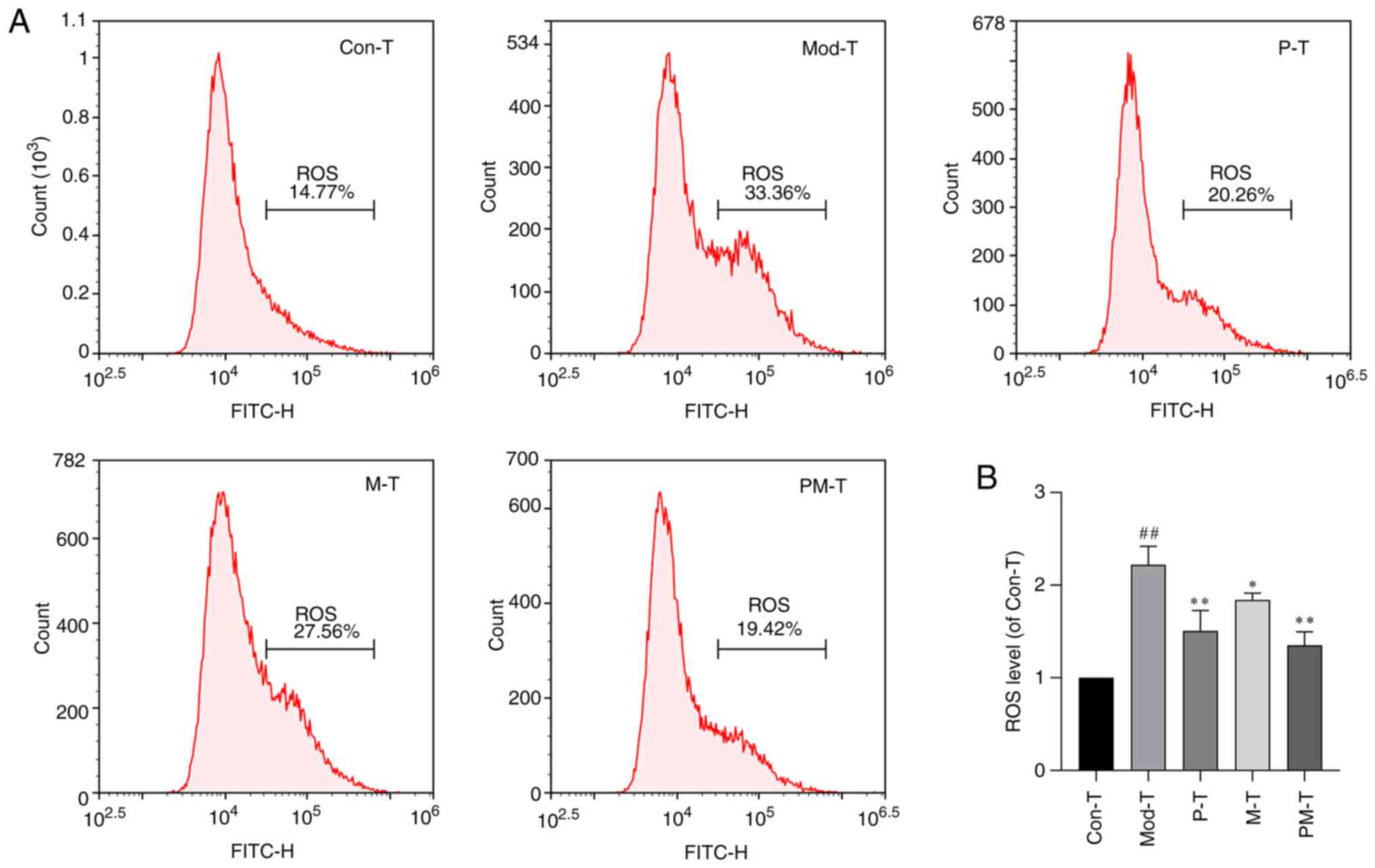
CD4+ T cells on ROS levels in IR-BNL CL.2 cells. (A)
Representative ROS images for each treatment group. (B) Statistical
analysis of ROS levels across treatment groups. Data are presented
as the mean ± SD, n=6. ##P<0.01 vs. Con-T group;
*P<0.05, **P<0.01 vs. Mod-T group. ROS, reactive oxygen
species; IR-BNL CL.2, insulin-resistant BNL CL.2; Con-T, control;
Mod-T, model; P-T, PF40; M-T, metformin; PM-T, combined PF40 and
metformin.

Figure 6

Effects of differently treated
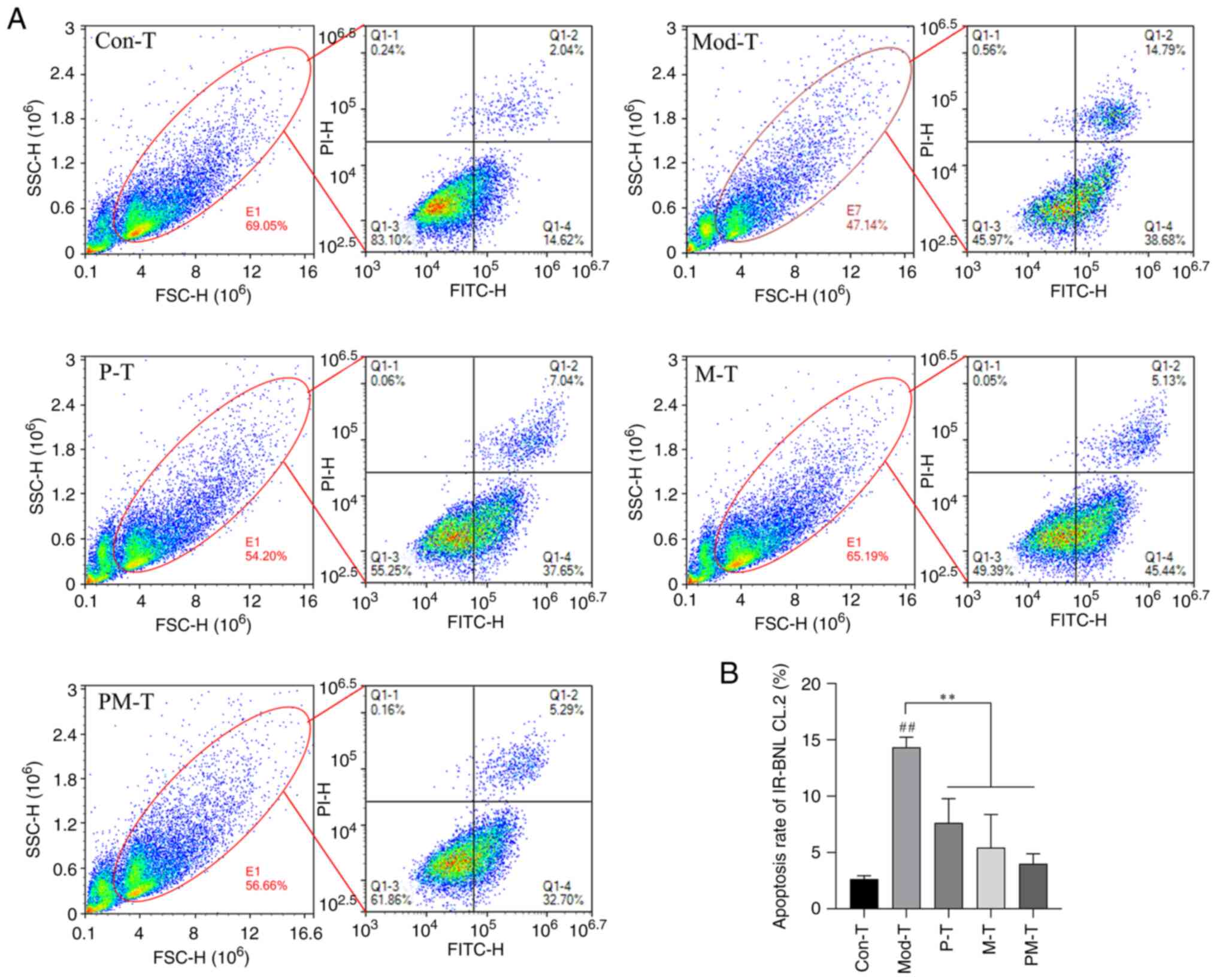
CD4+ T cells on the apoptosis of IR-BNL CL.2 cells. (A)
Representative plots of apoptosis in each treatment group. (B)
Quantification of apoptosis levels across treatment groups, based
on the percentages of cells in the Q1-2 quadrants as determined by
flow cytometry. Data are presented as the mean ± SD, n=6.
##P<0.01 vs. Con-T group; **P<0.01 vs. Mod-T
group. IR-BNL CL.2, insulin-resistant BNL CL.2; Con-T, control;
Mod-T, model; P-T, PF40; M-T, metformin; PM-T, combined PF40 and
metformin.

Figure 7

Effects of differently treated
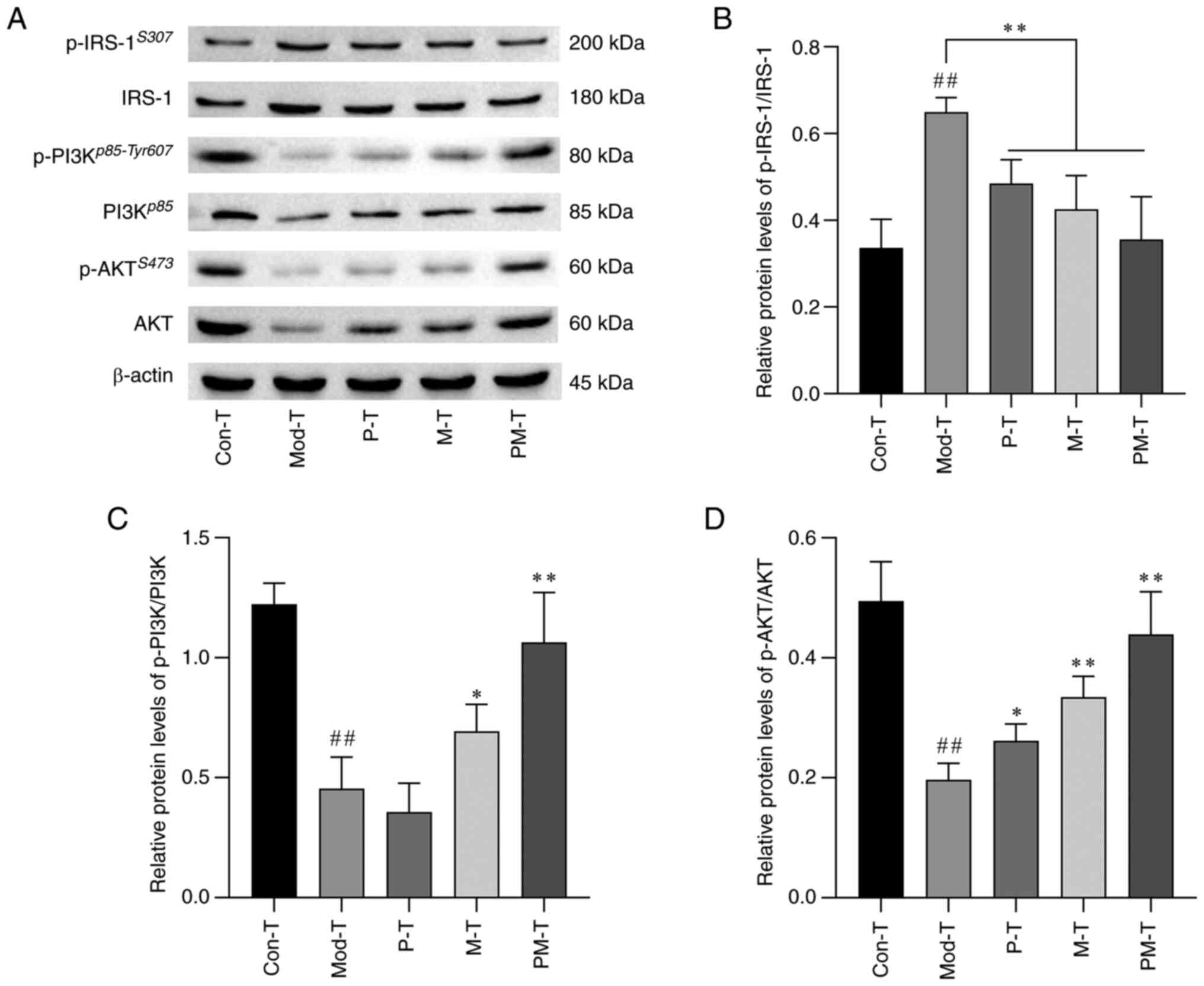
CD4+ T cells on the IRS-1/PI3K/AKT signaling pathway in
IR-BNL CL.2 cells. (A) Representative western blot images showing
protein and p-protein expression levels of IRS-1, PI3K and AKT
across the different treatment groups. Relative protein expression
levels of (B) p-IRS-1/IRS-1, (C) p-PI3K/PI3K, and (D) p-AKT/AKT.
Data are presented as the mean ± SD, n=3. ##P<0.01
vs. Con-T group; *P<0.05, **P<0.01 vs. Mod-T group. Con-T,
control; Mod-T, model; P-T, PF40; M-T, metformin; PM-T, combined
PF40 and metformin; IRS-1, insulin receptor substrate-1; p-,
phosphorylated.

Figure 8

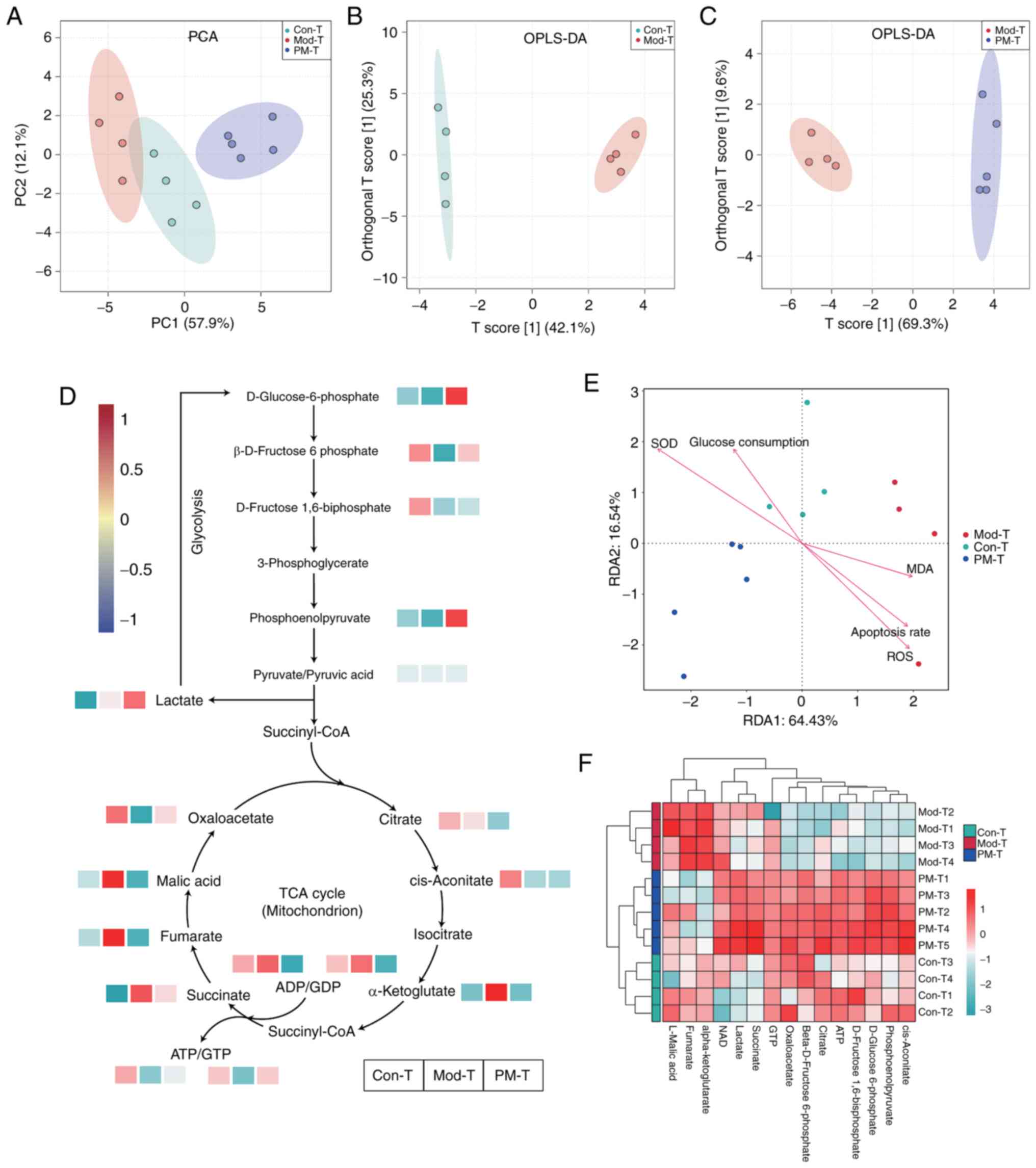
Targeted energy metabolomics analysis
of the different treatment groups. (A) PCA of metabolites in the
different treatment groups. OPLS-DA was performed between the (B)
Con-T and Mod-T groups, and the (C) Mod-T and PM-T groups. (D) Heat
maps showing the relative content of key glycolysis products across
different treatment groups. (E) Redundancy analysis. Data are
presented as the mean ± SD, n=4 or 5. (F) Heat map showing the
relative content of key TCA cycle products across different
treatment groups. Mod-T. Con-T, control; Mod-T, model; P-T, PF40;
M-T, metformin; PM-T, combined PF40 and metformin; PCA, principal
component analysis; OPLS-DA, orthogonal partial least squares
discriminant analysis; TCA, tricarboxylic acid.
View References

1 

Garg SS, Kushwaha K, Dubey R and Gupta J: Association between obesity, inflammation and insulin resistance: Insights into signaling pathways and therapeutic interventions. Diabetes Res Clin Pract. 200:1106912023. View Article : Google Scholar : PubMed/NCBI

2 

Guzmán-Flores J, Ramírez-Emiliano J, Pérez-Vázquez V and López-Briones S: Th17 and regulatory T cells in patients with different time of progression of type 2 diabetes mellitus. Cent Eur J Immunol. 45:29–36. 2020. View Article : Google Scholar : PubMed/NCBI

3 

Kiernan K and MacIver NJ: A novel mechanism for Th17 inflammation in human type 2 diabetes mellitus. Trends Endocrinol Metab. 31:1–2. 2020. View Article : Google Scholar : PubMed/NCBI

4 

Zhang S, Gang X, Yang S, Cui M, Sun L, Li Z and Wang G: The alterations in and the role of the Th17/Treg balance in metabolic diseases. Front Immunol. 12:6783552021. View Article : Google Scholar : PubMed/NCBI

5 

Yan JB, Luo MM, Chen ZY and He BH: The function and role of the Th17/Treg cell balance in inflammatory bowel disease. J Immunol Res. 2020:88135582020. View Article : Google Scholar : PubMed/NCBI

6 

Lin Z, Zhang J, Duan T, Yang J and Yang Y: Trefoil factor 3 can stimulate Th17 cell response in the development of type 2 diabetes mellitus. Sci Rep. 14:103402024. View Article : Google Scholar : PubMed/NCBI

7 

Hu DJ, Shakerian F, Zhao J and Li SP: Chemistry, pharmacology and analysis of Pseudostellaria heterophylla: A mini-review. Chin Med. 14:212019. View Article : Google Scholar : PubMed/NCBI

8 

Lu F, Yang H, Lin SD, Zhao L, Jiang C, Chen ZB, Liu YY, Kan YJ, Hu J and Pang WS: Cyclic peptide extracts derived from pseudostellaria heterophylla ameliorates COPD via regulation of the TLR4/MyD88 pathway proteins. Front Pharmacol. 11:8502020. View Article : Google Scholar : PubMed/NCBI

9 

Kan Y, Liu Y, Huang Y, Zhao L, Jiang C, Zhu Y, Pang Z, Hu J, Pang W and Lin W: The regulatory effects of Pseudostellaria heterophylla polysaccharide on immune function and gut flora in immunosuppressed mice. Food Sci Nutr. 10:3828–3841. 2022. View Article : Google Scholar : PubMed/NCBI

10 

Hu J, Pang W, Chen J, Bai S, Zheng Z and Wu X: Hypoglycemic effect of polysaccharides with different molecular weight of Pseudostellaria heterophylla. BMC Complement Altern Med. 13:2672013. View Article : Google Scholar : PubMed/NCBI

11 

Liu Y, Kan Y, Huang Y, Jiang C, Zhao L, Hu J and Pang W: Physicochemical characteristics and antidiabetic properties of the polysaccharides from pseudostellaria heterophylla. Molecules. 27:37192022. View Article : Google Scholar : PubMed/NCBI

12 

Chen J, Pang W, Kan Y, Zhao L, He Z, Shi W, Yan B, Chen H and Hu J: Structure of a pectic polysaccharide from pseudostellaria heterophylla and stimulating insulin secretion of INS-1 cell and distributing in rats by oral. Int J Biol Macromol. 106:456–463. 2018. View Article : Google Scholar : PubMed/NCBI

13 

Brucklacher-Waldert V, Carr EJ, Linterman MA and Veldhoen M: Cellular plasticity of CD4+ T cells in the intestine. Front Immunol. 5:4882014. View Article : Google Scholar : PubMed/NCBI

14 

Jiménez JM, Contreras-Riquelme JS, Vidal PM, Prado C, Bastías M, Meneses C, Martín AJM, Perez-Acle T and Pacheco R: Identification of master regulator genes controlling pathogenic CD4+ T cell fate in inflammatory bowel disease through transcriptional network analysis. Sci Rep. 14:105532024. View Article : Google Scholar : PubMed/NCBI

15 

Tao L, Liu H and Gong Y: Role and mechanism of the Th17/Treg cell balance in the development and progression of insulin resistance. Mol Cell Biochem. 459:183–188. 2019. View Article : Google Scholar : PubMed/NCBI

16 

Wang M, Chen F, Wang J, Zeng Z, Yang Q and Shao S: Th17 and Treg lymphocytes in obesity and type 2 diabetic patients. Clin Immunol. 197:77–85. 2018. View Article : Google Scholar : PubMed/NCBI

17 

Monteiro-Sepulveda M, Touch S, Mendes-Sá C, André S, Poitou C, Allatif O, Cotillard A, Fohrer-Ting H, Hubert EL, Remark R, et al: Jejunal T cell inflammation in human obesity correlates with decreased enterocyte insulin signaling. Cell Metab. 22:113–124. 2015. View Article : Google Scholar : PubMed/NCBI

18 

Garidou L, Pomié C, Klopp P, Waget A, Charpentier J, Aloulou M, Giry A, Serino M, Stenman L, Lahtinen S, et al: The gut microbiota regulates intestinal CD4 T cells expressing RORγt and controls metabolic disease. Cell Metab. 22:100–112. 2015. View Article : Google Scholar : PubMed/NCBI

19 

Zi C, He L, Yao H, Ren Y, He T and Gao Y: Changes of Th17 cells, regulatory T cells, Treg/Th17, IL-17 and IL-10 in patients with type 2 diabetes mellitus: A systematic review and meta-analysis. Endocrine. 76:263–272. 2022. View Article : Google Scholar : PubMed/NCBI

20 

Wei Y, Jing J, Peng Z, Liu X and Wang X: Acacetin ameliorates insulin resistance in obesity mice through regulating Treg/Th17 balance via MiR-23b-3p/NEU1 axis. BMC Endocr Disorders. 21:572021. View Article : Google Scholar : PubMed/NCBI

21 

Cheng Z, Wang SH, Li LY, Zhou YC and Zhang CY: Fermented Porphyra haitanensis polysaccharides inhibit the degranulation of mast cell and passive cutaneous anaphylaxis. Food & Medicine Homology. 3:94200862025.

22 

Bradford MM: A rapid and sensitive method for the quantitation of microgram quantities of protein utilizing the principle of protein-dye binding. Anal Biochem. 72:248–254. 1976. View Article : Google Scholar : PubMed/NCBI

23 

Cai M, Xing H, Tian B, Xu J, Li Z, Zhu H, Yang K and Sun P: Characteristics and antifatigue activity of graded polysaccharides from Ganoderma lucidum separated by cascade membrane technology. Carbohydr Polym. 269:1183292021. View Article : Google Scholar : PubMed/NCBI

24 

Nataraj A, Govindan S, Ramani P, Subbaiah KA, Sathianarayanan S, Venkidasamy B, Thiruvengadam M, Rebezov M, Shariati MA, Lorenzo JM and Pateiro M: Antioxidant, anti-tumour, and anticoagulant activities of polysaccharide from calocybe indica (APK2). Antioxidants (Basel). 11:16942022. View Article : Google Scholar : PubMed/NCBI

25 

Kim E, Tran M, Sun Y and Huh JR: Isolation and analyses of lamina propria lymphocytes from mouse intestines. STAR Protoc. 3:1013662022. View Article : Google Scholar : PubMed/NCBI

26 

Hu X, Yu Q, Hou K, Ding X, Chen Y, Xie J, Nie S and Xie M: Regulatory effects of Ganoderma atrum polysaccharides on LPS-induced inflammatory macrophages model and intestinal-like Caco-2/macrophages co-culture inflammation model. Food Chem Toxicol. 140:1113212020. View Article : Google Scholar : PubMed/NCBI

27 

da Rocha GH, Müller C, Przybylski-Wartner S, Schaller H, Riemschneider S and Lehmann J: AhR-induced anti-inflammatory effects on a Caco-2/THP-1 co-culture model of intestinal inflammation are mediated by PPARγ. Int J Mol Sci. 25:130722024. View Article : Google Scholar : PubMed/NCBI

28 

Liu X, Xiang D, Jin W, Zhao G, Li H, Xie B and Gu X: Timosaponin B-II alleviates osteoarthritis-related inflammation and extracellular matrix degradation through inhibition of mitogen-activated protein kinases and nuclear factor-κB pathways in vitro. Bioengineered. 13:3450–3461. 2022. View Article : Google Scholar : PubMed/NCBI

29 

Wang W, Huang S, Li S, Li X, Ling Y, Wang X, Zhang S, Zhou D and Yin W: Rosa sterilis juice alleviated breast cancer by triggering the mitochondrial apoptosis pathway and suppressing the Jak2/Stat3 pathway. Nutrients. 16:27842024. View Article : Google Scholar : PubMed/NCBI

30 

Fan X, Tao J, Zhou Y, Hou Y, Wang Y, Gu D, Su Y, Jang Y and Li S: Investigations on the effects of ginsenoside-Rg1 on glucose uptake and metabolism in insulin resistant HepG2 cells. Eur J Pharmacol. 843:277–284. 2019. View Article : Google Scholar : PubMed/NCBI

31 

Tangvarasittichai S: Oxidative stress, insulin resistance, dyslipidemia and type 2 diabetes mellitus. World J Diabetes. 6:456–480. 2015. View Article : Google Scholar : PubMed/NCBI

32 

Liu L, Hu J, Wang Y, Lei H and Xu D: The role and research progress of the balance and interaction between regulatory T cells and other immune cells in obesity with insulin resistance. Adipocyte. 10:66–79. 2021. View Article : Google Scholar : PubMed/NCBI

33 

Wu H and Ballantyne CM: Metabolic inflammation and insulin resistance in obesity. Circ Res. 126:1549–1564. 2020. View Article : Google Scholar : PubMed/NCBI

34 

Sakurai Y, Kubota N, Yamauchi T and Kadowaki T: Role of insulin resistance in MAFLD. Int J Mol Sci. 22:41562021. View Article : Google Scholar : PubMed/NCBI

35 

Tanase DM, Gosav EM, Costea CF, Ciocoiu M, Lacatusu CM, Maranduca MA, Ouatu A and Floria M: The intricate relationship between type 2 diabetes mellitus (T2DM), insulin resistance (IR), and nonalcoholic fatty liver disease (NAFLD). J Diabetes Res. 2020:39201962020. View Article : Google Scholar : PubMed/NCBI

36 

Schafer A, Neschen S, Kahle M, Sarioglu H, Gaisbauer T, Imhof A, Adamski J, Hauck SM and Ueffing M: The epoxyeicosatrienoic acid pathway enhances hepatic insulin signaling and is repressed in insulin-resistant mouse liver. Mol Cell Proteomics. 14:2764–2774. 2015. View Article : Google Scholar : PubMed/NCBI

37 

Zhou X, Wang LL, Tang WJ and Tang B: Astragaloside IV inhibits protein tyrosine phosphatase 1B and improves insulin resistance in insulin-resistant HepG2 cells and triglyceride accumulation in oleic acid (OA)-treated HepG2 cells. J Ethnopharmacol. 268:1135562021. View Article : Google Scholar : PubMed/NCBI

38 

Zhong RF, Liu CJ, Hao KX, Fan XD and Jiang JG: Polysaccharides from Flos Sophorae Immaturus ameliorates insulin resistance in IR-HepG2 cells by co-regulating signaling pathways of AMPK and IRS-1/PI3K/AKT. Int J Biol Macromol. 280:1360882024. View Article : Google Scholar : PubMed/NCBI

39 

Jiang S, Wu X, Wang Y, Zou J and Zhao X: The potential DPP-4 inhibitors from Xiao-Ke-An improve the glucolipid metabolism via the activation of AKT/GSK-3β pathway. Eur J Pharmacol. 882:1732722020. View Article : Google Scholar : PubMed/NCBI

40 

Kim S, Yoon D, Lee YH, Lee J, Kim ND, Kim S and Jung YS: Transformation of liver cells by 3-methylcholanthrene potentiates oxidative stress via the downregulation of glutathione synthesis. Int J Mol Med. 40:2011–2017. 2017.PubMed/NCBI

41 

Jobgen WS and Wu G: L-Arginine increases AMPK phosphorylation and the oxidation of energy substrates in hepatocytes, skeletal muscle cells, and adipocytes. Amino Acids. 54:1553–1568. 2022. View Article : Google Scholar : PubMed/NCBI

42 

Ding W, Yang X, Lai K, Jiang Y and Liu Y: The potential of therapeutic strategies targeting mitochondrial biogenesis for the treatment of insulin resistance and type 2 diabetes mellitus. Arch Pharm Res. 47:219–248. 2024. View Article : Google Scholar : PubMed/NCBI

43 

Roden M, Petersen KF and Shulman GI: Insulin resistance in type 2 diabetes. Textbook of Diabetes Wiley. 238–249. 2024. View Article : Google Scholar

44 

Masenga SK, Kabwe LS, Chakulya M and Kirabo A: Mechanisms of oxidative stress in metabolic syndrome. Int J Mol Sci. 24:78982023. View Article : Google Scholar : PubMed/NCBI

45 

Redza-Dutordoir M and Averill-Bates DA: Activation of apoptosis signalling pathways by reactive oxygen species. Biochim Biophys Acta. 1863:2977–2992. 2016. View Article : Google Scholar : PubMed/NCBI

46 

Chen H, Li J, Zhang Y, Zhang W, Li X, Tang H, Liu Y, Li T, He H, Du B, et al: Bisphenol F suppresses insulin-stimulated glucose metabolism in adipocytes by inhibiting IRS-1/PI3K/AKT pathway. Ecotoxicol Environ Saf. 231:1132012022. View Article : Google Scholar : PubMed/NCBI

47 

Zhao SL, Liu D, Ding LQ, Liu GK, Yao T, Wu LL, Li G, Cao SJ, Qiu F and Kang N: Schisandra chinensis lignans improve insulin resistance by targeting TLR4 and activating IRS-1/PI3K/AKT and NF-κB signaling pathways. Int Immunopharmacol. 142:1130692024. View Article : Google Scholar : PubMed/NCBI

48 

Huang L, Guo Z, Huang M, Zeng X and Huang H: Triiodothyronine (T3) promotes browning of white adipose through inhibition of the PI3K/AKT signalling pathway. Sci Rep. 14:203702024. View Article : Google Scholar : PubMed/NCBI

49 

Báez AM, Ayala G, Pedroza-Saavedra A, González-Sánchez HM and Amparan LC: Phosphorylation codes in IRS-1 and IRS-2 are associated with the activation/inhibition of insulin canonical signaling pathways. Curr Issues Mol Biol. 46:634–649. 2024. View Article : Google Scholar : PubMed/NCBI

50 

Woo JR, Bae SH, Wales TE, Engen JR, Lee J, Jang H and Park S: The serine phosphorylations in the IRS-1 PIR domain abrogate IRS-1 and IR interaction. Proc Nat Acad Sci USA. 121:e24017161212024. View Article : Google Scholar : PubMed/NCBI

51 

Lien EC, Lyssiotis CA and Cantley LC: Metabolic reprogramming by the PI3K-Akt-mTOR pathway in cancer. Metabolism in Cancer. 207:39–72. 2016. View Article : Google Scholar

52 

Fontana F, Giannitti G, Marchesi S and Limonta P: The PI3K/Akt pathway and glucose metabolism: A dangerous liaison in cancer. Int J Biol Sci. 20:3113–3125. 2024. View Article : Google Scholar : PubMed/NCBI

53 

Park J, Rho HK, Kim KH, Choe SS, Lee YS and Kim JB: Overexpression of Glucose-6-Phosphate dehydrogenase is associated with lipid dysregulation and insulin resistance in obesity. Mol Cell Biol. 25:5146–5157. 2005. View Article : Google Scholar : PubMed/NCBI

54 

Martínez-Reyes I and Chandel NS: Mitochondrial TCA cycle metabolites control physiology and disease. Nat Commun. 11:1022020. View Article : Google Scholar : PubMed/NCBI

55 

Choi I, Son H and Baek JH: Tricarboxylic Acid (TCA) cycle intermediates: Regulators of immune responses. Life (Basel). 11:692021.PubMed/NCBI

56 

Zhang X, Jia Y, Yuan Z, Wen Y, Zhang Y, Ren J, Ji P, Yao W, Hua Y and Wei Y: Sheng Mai San ameliorated heat stress-induced liver injury via regulating energy metabolism and AMPK/Drp1-dependent autophagy process. Phytomedicine. 97:1539202022. View Article : Google Scholar : PubMed/NCBI

57 

Tian JL, Si X, Shu C, Wang YH, Tan H, Zang ZH, Zhang WJ, Xie X, Chen Y and Li B: Synergistic effects of combined anthocyanin and metformin treatment for hyperglycemia in vitro and in vivo. J Agric Food Chem. 70:1182–1195. 2022. View Article : Google Scholar : PubMed/NCBI

58 

Namvarjah F, Shokri-Afra H, Moradi-Sardareh H, Khorzoughi RB, Pasalar P, Panahi G and Meshkani R: Chlorogenic acid improves anti-lipogenic activity of metformin by positive regulating of AMPK signaling in HepG2 cells. Cell Biochem Biophys. 80:537–545. 2022. View Article : Google Scholar : PubMed/NCBI

59 

Sun L, Jiang J, Zeng Y, Zhu J, Wang S, Huang D and Cao C: Polysaccharide NAP-3 synergistically enhances the efficiency of metformin in type 2 diabetes via Bile Acid/GLP-1 axis through gut microbiota remodeling. J Agric Food Chem. 72:21077–21088. 2024. View Article : Google Scholar : PubMed/NCBI

60 

Long J, Li M, Yao C, Ma W, Liu H and Yan D: Structural characterization of Astragalus polysaccharide-D1 and its improvement of low-dose metformin effect by enriching Staphylococcus lentus. Int J Biol Macromol. 272:1328602024. View Article : Google Scholar : PubMed/NCBI

61 

Toubal A, Kiaf B, Beaudoin L, Cagninacci L, Rhimi M, Fruchet B, da Silva J, Corbett AJ, Simoni Y, Lantz O, et al: Mucosal-associated invariant T cells promote inflammation and intestinal dysbiosis leading to metabolic dysfunction during obesity. Nat Commun. 11:37552020. View Article : Google Scholar : PubMed/NCBI

62 

Khan S, Luck H, Winer S and Winer DA: Emerging concepts in intestinal immune control of obesity-related metabolic disease. Nat Commun. 12:25982021. View Article : Google Scholar : PubMed/NCBI

63 

Riedel S, Pheiffer C, Johnson R, Louw J and Muller CJF: Intestinal barrier function and immune homeostasis are missing links in obesity and type 2 diabetes development. Front Endocrinol (Lausanne). 12:8335442021. View Article : Google Scholar : PubMed/NCBI

64 

Wang YX, Chen XL, Zhou K, Wang LL, Zhong YZ, Peng J, Ge BS, Ho CT and Lu CY: Fucoidan dose-dependently alleviated hyperuricemia and modulated gut microbiota in mice. Food & Medicine Homology. 3:94200952025.

65 

Qin W, Wei B, Ren P, Chang Y, Xue C and Tang Q: Fucoidan from Apostichopus japonicus enhances intestinal barrier function and promotes intestinal immunity via regulating the gut microbiota and tryptophan metabolism. Int J Biol Macromol. 301:1399292025. View Article : Google Scholar : PubMed/NCBI

66 

Zhang Y, Ji W, Qin H, Chen Z, Zhou Y, Zhou Z, Wang J and Wang K: Astragalus polysaccharides alleviate DSS-induced ulcerative colitis in mice by restoring SCFA production and regulating Th17/Treg cell homeostasis in a microbiota-dependent manner. Carbohydr Polym. 349:1228292025. View Article : Google Scholar : PubMed/NCBI

67 

Yang W, Yu T, Huang X, Bilotta AJ, Xu L, Lu Y, Sun J, Pan F, Zhou J, Zhang W, et al: Intestinal microbiota-derived short-chain fatty acids regulation of immune cell IL-22 production and gut immunity. Nat Commun. 11:44572020. View Article : Google Scholar : PubMed/NCBI

Related Articles

  • Abstract
  • View
  • Download
  • Twitter
Copy and paste a formatted citation
Spandidos Publications style
Kan Y, Liu Y, Huang Y, Zhao L, Chang J, Pang W, Lin W and Hu J: Intestinal CD4<sup>+</sup> T cells treated with <em>Pseudostellaria heterophylla</em> polysaccharide improve insulin resistance in BNL CL.2 cells by modulating PI3K/AKT signaling and energy metabolism. Mol Med Rep 32: 317, 2025.
APA
Kan, Y., Liu, Y., Huang, Y., Zhao, L., Chang, J., Pang, W. ... Hu, J. (2025). Intestinal CD4<sup>+</sup> T cells treated with <em>Pseudostellaria heterophylla</em> polysaccharide improve insulin resistance in BNL CL.2 cells by modulating PI3K/AKT signaling and energy metabolism. Molecular Medicine Reports, 32, 317. https://doi.org/10.3892/mmr.2025.13682
MLA
Kan, Y., Liu, Y., Huang, Y., Zhao, L., Chang, J., Pang, W., Lin, W., Hu, J."Intestinal CD4<sup>+</sup> T cells treated with <em>Pseudostellaria heterophylla</em> polysaccharide improve insulin resistance in BNL CL.2 cells by modulating PI3K/AKT signaling and energy metabolism". Molecular Medicine Reports 32.6 (2025): 317.
Chicago
Kan, Y., Liu, Y., Huang, Y., Zhao, L., Chang, J., Pang, W., Lin, W., Hu, J."Intestinal CD4<sup>+</sup> T cells treated with <em>Pseudostellaria heterophylla</em> polysaccharide improve insulin resistance in BNL CL.2 cells by modulating PI3K/AKT signaling and energy metabolism". Molecular Medicine Reports 32, no. 6 (2025): 317. https://doi.org/10.3892/mmr.2025.13682
Copy and paste a formatted citation
x
Spandidos Publications style
Kan Y, Liu Y, Huang Y, Zhao L, Chang J, Pang W, Lin W and Hu J: Intestinal CD4<sup>+</sup> T cells treated with <em>Pseudostellaria heterophylla</em> polysaccharide improve insulin resistance in BNL CL.2 cells by modulating PI3K/AKT signaling and energy metabolism. Mol Med Rep 32: 317, 2025.
APA
Kan, Y., Liu, Y., Huang, Y., Zhao, L., Chang, J., Pang, W. ... Hu, J. (2025). Intestinal CD4<sup>+</sup> T cells treated with <em>Pseudostellaria heterophylla</em> polysaccharide improve insulin resistance in BNL CL.2 cells by modulating PI3K/AKT signaling and energy metabolism. Molecular Medicine Reports, 32, 317. https://doi.org/10.3892/mmr.2025.13682
MLA
Kan, Y., Liu, Y., Huang, Y., Zhao, L., Chang, J., Pang, W., Lin, W., Hu, J."Intestinal CD4<sup>+</sup> T cells treated with <em>Pseudostellaria heterophylla</em> polysaccharide improve insulin resistance in BNL CL.2 cells by modulating PI3K/AKT signaling and energy metabolism". Molecular Medicine Reports 32.6 (2025): 317.
Chicago
Kan, Y., Liu, Y., Huang, Y., Zhao, L., Chang, J., Pang, W., Lin, W., Hu, J."Intestinal CD4<sup>+</sup> T cells treated with <em>Pseudostellaria heterophylla</em> polysaccharide improve insulin resistance in BNL CL.2 cells by modulating PI3K/AKT signaling and energy metabolism". Molecular Medicine Reports 32, no. 6 (2025): 317. https://doi.org/10.3892/mmr.2025.13682
Follow us
  • Twitter
  • LinkedIn
  • Facebook
About
  • Spandidos Publications
  • Careers
  • Cookie Policy
  • Privacy Policy
How can we help?
  • Help
  • Live Chat
  • Contact
  • Email to our Support Team