Spandidos Publications Logo
  • About
    • About Spandidos
    • Aims and Scopes
    • Abstracting and Indexing
    • Editorial Policies
    • Reprints and Permissions
    • Job Opportunities
    • Terms and Conditions
    • Contact
  • Journals
    • All Journals
    • Oncology Letters
      • Oncology Letters
      • Information for Authors
      • Editorial Policies
      • Editorial Board
      • Aims and Scope
      • Abstracting and Indexing
      • Bibliographic Information
      • Archive
    • International Journal of Oncology
      • International Journal of Oncology
      • Information for Authors
      • Editorial Policies
      • Editorial Board
      • Aims and Scope
      • Abstracting and Indexing
      • Bibliographic Information
      • Archive
    • Molecular and Clinical Oncology
      • Molecular and Clinical Oncology
      • Information for Authors
      • Editorial Policies
      • Editorial Board
      • Aims and Scope
      • Abstracting and Indexing
      • Bibliographic Information
      • Archive
    • Experimental and Therapeutic Medicine
      • Experimental and Therapeutic Medicine
      • Information for Authors
      • Editorial Policies
      • Editorial Board
      • Aims and Scope
      • Abstracting and Indexing
      • Bibliographic Information
      • Archive
    • International Journal of Molecular Medicine
      • International Journal of Molecular Medicine
      • Information for Authors
      • Editorial Policies
      • Editorial Board
      • Aims and Scope
      • Abstracting and Indexing
      • Bibliographic Information
      • Archive
    • Biomedical Reports
      • Biomedical Reports
      • Information for Authors
      • Editorial Policies
      • Editorial Board
      • Aims and Scope
      • Abstracting and Indexing
      • Bibliographic Information
      • Archive
    • Oncology Reports
      • Oncology Reports
      • Information for Authors
      • Editorial Policies
      • Editorial Board
      • Aims and Scope
      • Abstracting and Indexing
      • Bibliographic Information
      • Archive
    • Molecular Medicine Reports
      • Molecular Medicine Reports
      • Information for Authors
      • Editorial Policies
      • Editorial Board
      • Aims and Scope
      • Abstracting and Indexing
      • Bibliographic Information
      • Archive
    • World Academy of Sciences Journal
      • World Academy of Sciences Journal
      • Information for Authors
      • Editorial Policies
      • Editorial Board
      • Aims and Scope
      • Abstracting and Indexing
      • Bibliographic Information
      • Archive
    • International Journal of Functional Nutrition
      • International Journal of Functional Nutrition
      • Information for Authors
      • Editorial Policies
      • Editorial Board
      • Aims and Scope
      • Abstracting and Indexing
      • Bibliographic Information
      • Archive
    • International Journal of Epigenetics
      • International Journal of Epigenetics
      • Information for Authors
      • Editorial Policies
      • Editorial Board
      • Aims and Scope
      • Abstracting and Indexing
      • Bibliographic Information
      • Archive
    • Medicine International
      • Medicine International
      • Information for Authors
      • Editorial Policies
      • Editorial Board
      • Aims and Scope
      • Abstracting and Indexing
      • Bibliographic Information
      • Archive
  • Articles
  • Information
    • Information for Authors
    • Information for Reviewers
    • Information for Librarians
    • Information for Advertisers
    • Conferences
  • Language Editing
Spandidos Publications Logo
  • About
    • About Spandidos
    • Aims and Scopes
    • Abstracting and Indexing
    • Editorial Policies
    • Reprints and Permissions
    • Job Opportunities
    • Terms and Conditions
    • Contact
  • Journals
    • All Journals
    • Biomedical Reports
      • Information for Authors
      • Editorial Policies
      • Editorial Board
      • Aims and Scope
      • Abstracting and Indexing
      • Bibliographic Information
      • Archive
    • Experimental and Therapeutic Medicine
      • Information for Authors
      • Editorial Policies
      • Editorial Board
      • Aims and Scope
      • Abstracting and Indexing
      • Bibliographic Information
      • Archive
    • International Journal of Epigenetics
      • Information for Authors
      • Editorial Policies
      • Editorial Board
      • Aims and Scope
      • Abstracting and Indexing
      • Bibliographic Information
      • Archive
    • International Journal of Functional Nutrition
      • Information for Authors
      • Editorial Policies
      • Editorial Board
      • Aims and Scope
      • Abstracting and Indexing
      • Bibliographic Information
      • Archive
    • International Journal of Molecular Medicine
      • Information for Authors
      • Editorial Policies
      • Editorial Board
      • Aims and Scope
      • Abstracting and Indexing
      • Bibliographic Information
      • Archive
    • International Journal of Oncology
      • Information for Authors
      • Editorial Policies
      • Editorial Board
      • Aims and Scope
      • Abstracting and Indexing
      • Bibliographic Information
      • Archive
    • Medicine International
      • Information for Authors
      • Editorial Policies
      • Editorial Board
      • Aims and Scope
      • Abstracting and Indexing
      • Bibliographic Information
      • Archive
    • Molecular and Clinical Oncology
      • Information for Authors
      • Editorial Policies
      • Editorial Board
      • Aims and Scope
      • Abstracting and Indexing
      • Bibliographic Information
      • Archive
    • Molecular Medicine Reports
      • Information for Authors
      • Editorial Policies
      • Editorial Board
      • Aims and Scope
      • Abstracting and Indexing
      • Bibliographic Information
      • Archive
    • Oncology Letters
      • Information for Authors
      • Editorial Policies
      • Editorial Board
      • Aims and Scope
      • Abstracting and Indexing
      • Bibliographic Information
      • Archive
    • Oncology Reports
      • Information for Authors
      • Editorial Policies
      • Editorial Board
      • Aims and Scope
      • Abstracting and Indexing
      • Bibliographic Information
      • Archive
    • World Academy of Sciences Journal
      • Information for Authors
      • Editorial Policies
      • Editorial Board
      • Aims and Scope
      • Abstracting and Indexing
      • Bibliographic Information
      • Archive
  • Articles
  • Information
    • For Authors
    • For Reviewers
    • For Librarians
    • For Advertisers
    • Conferences
  • Language Editing
Login Register Submit
  • This site uses cookies
  • You can change your cookie settings at any time by following the instructions in our Cookie Policy. To find out more, you may read our Privacy Policy.

    I agree
Search articles by DOI, keyword, author or affiliation
Search
Advanced Search
presentation
Molecular Medicine Reports
Join Editorial Board Propose a Special Issue
Print ISSN: 1791-2997 Online ISSN: 1791-3004
Journal Cover
December-2025 Volume 32 Issue 6

Full Size Image

Sign up for eToc alerts
Recommend to Library

Journals

International Journal of Molecular Medicine

International Journal of Molecular Medicine

International Journal of Molecular Medicine is an international journal devoted to molecular mechanisms of human disease.

International Journal of Oncology

International Journal of Oncology

International Journal of Oncology is an international journal devoted to oncology research and cancer treatment.

Molecular Medicine Reports

Molecular Medicine Reports

Covers molecular medicine topics such as pharmacology, pathology, genetics, neuroscience, infectious diseases, molecular cardiology, and molecular surgery.

Oncology Reports

Oncology Reports

Oncology Reports is an international journal devoted to fundamental and applied research in Oncology.

Experimental and Therapeutic Medicine

Experimental and Therapeutic Medicine

Experimental and Therapeutic Medicine is an international journal devoted to laboratory and clinical medicine.

Oncology Letters

Oncology Letters

Oncology Letters is an international journal devoted to Experimental and Clinical Oncology.

Biomedical Reports

Biomedical Reports

Explores a wide range of biological and medical fields, including pharmacology, genetics, microbiology, neuroscience, and molecular cardiology.

Molecular and Clinical Oncology

Molecular and Clinical Oncology

International journal addressing all aspects of oncology research, from tumorigenesis and oncogenes to chemotherapy and metastasis.

World Academy of Sciences Journal

World Academy of Sciences Journal

Multidisciplinary open-access journal spanning biochemistry, genetics, neuroscience, environmental health, and synthetic biology.

International Journal of Functional Nutrition

International Journal of Functional Nutrition

Open-access journal combining biochemistry, pharmacology, immunology, and genetics to advance health through functional nutrition.

International Journal of Epigenetics

International Journal of Epigenetics

Publishes open-access research on using epigenetics to advance understanding and treatment of human disease.

Medicine International

Medicine International

An International Open Access Journal Devoted to General Medicine.

Journal Cover
December-2025 Volume 32 Issue 6

Full Size Image

Sign up for eToc alerts
Recommend to Library

  • Article
  • Citations
    • Cite This Article
    • Download Citation
    • Create Citation Alert
    • Remove Citation Alert
    • Cited By
  • Similar Articles
    • Related Articles (in Spandidos Publications)
    • Similar Articles (Google Scholar)
    • Similar Articles (PubMed)
  • Download PDF
  • Download XML
  • View XML
Article Open Access

Capsaicin attenuates sepsis‑associated encephalopathy by inhibiting neuroinflammation and apoptosis whilst activating mitophagy through the BNIP3/NIX pathway

  • Authors:
    • Silun Zhang
    • Nanbo Luo
    • Hanxi Wu
    • Junfa Chen
    • Yonghan Jiang
    • Lifei Xiao
    • Hanlin Liang
    • Qingsheng Xue
    • Yan Luo
    • Buwei Yu
    • Yuqiang Liu
    • Zhiheng Liu
  • View Affiliations / Copyright

    Affiliations: Department of Anesthesiology, Shenzhen Second People's Hospital, The First Affiliated Hospital of Shenzhen University, Shenzhen, Guangdong 518035, P.R. China, Department of Anesthesiology, Ruijin Hospital Affiliated to Shanghai Jiaotong University, Shanghai 200025, P.R. China
    Copyright: © Zhang et al. This is an open access article distributed under the terms of Creative Commons Attribution License.
  • Article Number: 322
    |
    Published online on: September 17, 2025
       https://doi.org/10.3892/mmr.2025.13686
  • Expand metrics +
Metrics: Total Views: 0 (Spandidos Publications: | PMC Statistics: )
Metrics: Total PDF Downloads: 0 (Spandidos Publications: | PMC Statistics: )
Cited By (CrossRef): 0 citations Loading Articles...

This article is mentioned in:


Abstract

Sepsis‑induced abnormalities in brain function or sepsis‑associated encephalopathy (SAE) can manifest as cognitive dysfunction and other neuropsychiatric symptoms; however, the underlying mechanisms remain unclear. The aim of the present study was to elucidate the possible effects and mechanism of capsaicin, a transient receptor potential vanilloid 1 (TRPV1) agonist, on the pathological features of SAE. A model of SAE in C57BL/6 mice was generated using cecal ligation and puncture (CLP). Capsaicin (1 mg/kg) was injected subcutaneously before surgery. Cognitive function in mice was evaluated using the novel object recognition test (NORT) and Morris water maze (MWM). Immunofluorescence staining, ELISA, western blotting and transmission electron microscopy were performed to detect the degree of microglial activation (ionized calcium‑binding adapter molecule 1), proinflammatory cytokine levels (TNF‑α), autophagy and apoptosis‑related protein expression, and autophagosomes. Autophagic flux was monitored using the LC3‑GFP‑mCherry fluorescent reporter. Compared with that in the sham group mice, the expression levels of TRPV1 were significantly reduced in the hippocampal tissue of mice with sepsis. Mice with sepsis also exhibited cognitive dysfunction. Notably, a single administration of capsaicin reduced the mortality rate, but did not improve cognitive function in mice with sepsis. Furthermore, repeated administration of capsaicin was revealed to enhance the recognition index of novel objects among mice with sepsis, to reduce the latency to locate the platform and to augment the duration of mouse platform quadrant movements, according to the NORT and MWM tasks. Increased microglial activation, release of proinflammatory cytokines and expression levels of apoptosis‑related proteins were all observed in mice with CLP‑induced sepsis, as was brain tissue destruction in the hippocampal regions. By contrast, capsaicin treatment ameliorated CLP‑induced microglial activation, inflammation, neuronal apoptosis (cleaved caspase 3 expression increased) and brain tissue destruction. Furthermore, application of capsaicin increased the expression levels of LC3, reduced the expression of p62 and elevated autophagic flux compared with those in the CLP group. Finally, treatment with capsaicin effectively enhanced the levels of Bcl‑2‑interacting protein 3 (BNIP3) and BNIP3‑like (NIX) expression. These findings suggested that capsaicin may be considered a potential drug for the treatment of SAE, and BNIP3/NIX‑mediated mitophagy may be involved in this process.
View Figures

Figure 1

Effects of subcutaneous CAP
administration on mouse survival rate and cognitive function after
CLP surgery. (A) Western blot analysis and semi-quantitative
analysis of TRPV1 protein expression levels in hippocampal tissues
after CLP surgery (n=6 mice/group; unpaired Student's t-test;
t(10)=3.221;
P<0.01). (B) Survival rate of sham (n=10), CLP + Veh (n=15) and
CLP + 1 mg/kg CAP (n=15) mice were monitored for 7 days. Log-rank
Mantel-Cox test, P=0.035. (C) Recognition index of the novel
objective in the novel object recognition test [Sham (n=8), CLP
(n=6) and CLP + CAP (n=7) mice; one-way ANOVA with Bonferroni post
hoc test; F(2,18) =3.670; P=0.046]. (D) Time
spent in the target quadrant in the Morris water maze test phase
[Sham (n=8), CLP (n=10) and CLP + CAP (n=12) mice]. Data are
presented as the mean ± standard deviation. *P<0.05 and
**P<0.01 vs. sham. CAP, capsaicin; CLP, cecal ligation and
puncture; TRPV1, transient receptor potential vanilloid 1; Veh,
vehicle; CAP-1*1, capsaicin 1 mg/kg * 1 application.

Figure 2

CAP-induced protection in mice with
sepsis. (A) Recognition index of the novel object in the novel
object recognition test [Sham (n=10), CLP (n=12) and CLP + CAP
(n=11) mice; n=10-12 mice/group; one-way ANOVA with Bonferroni post
hoc test; F(2,30)=12.45; P=0.0001]. (B) Escape
latency in the MWM during the training phase [Sham (n=10), CLP
(n=15) and CLP + CAP (n=14) mice]. (C) Time spent in the target
quadrant in the MWM during the test phase (one-way ANOVA with
Bonferroni post hoc test; F(2,35)=8.925; P=0.0007). (D)
Representative swimming traces in the MWM during the learning and
test phase. (E) Average swimming speed in the MWM during the test
phase. Data are presented as the mean ± standard deviation.
*P<0.05, **P<0.01 and ***P<0.001. CAP, capsaicin; CLP,
cecal ligation and puncture; MWM, Morris water maze; Veh, vehicle;
CAP-1*3, capsaicin 1 mg/kg * 3 application.

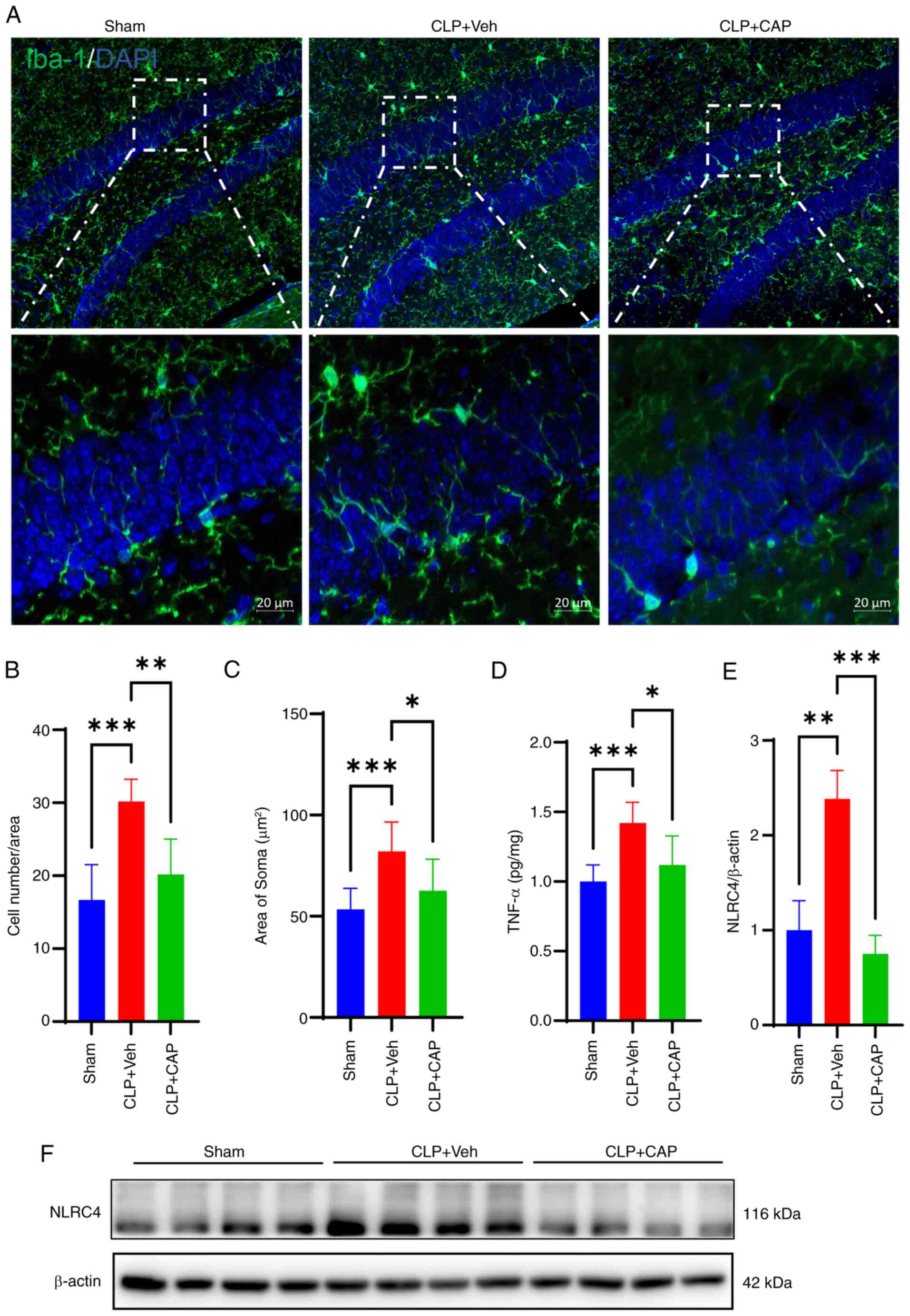
Figure 3

CAP inhibits CLP-induced microglia
activation and level of pro-inflammatory factors. (A)
Immunofluorescence images of Iba1 (green) fluorescent signals.
Scale bars, 10 µm. (B) Quantification of microglia cell numbers
(n=6 mice/group) (one-way ANOVA with Bonferroni post hoc test;
F(2,15)=15.72; P=0.0002). (C)
Quantification of the microglial cell area (n=6 mice/group)
(one-way ANOVA with Bonferroni post hoc test; F(2,24)=10.48; P=0.0005). (D) Levels of
TNF-α in the hippocampus (n=6 mice/group) (one-way ANOVA with
Bonferroni post hoc test; F(2,15)=10.73; P=0.0013). (E) Relative
density of NLRC4 expression. (n=8 mice/group) (one-way ANOVA with
Bonferroni post hoc test; F(2,21)=10.37; P=0.0007). (F) NLRC4
expression was detected by western blotting. Data are presented as
the mean ± standard deviation. *P<0.05, **P<0.01 and
***P<0.001. CAP, capsaicin; CLP, cecal ligation and puncture;
Iba1, ionized calcium-binding adapter molecule 1; NLRC4,
nucleotide-binding oligomerization domain, leucine rich repeat and
CARD domain-containing 4; Veh, vehicle.

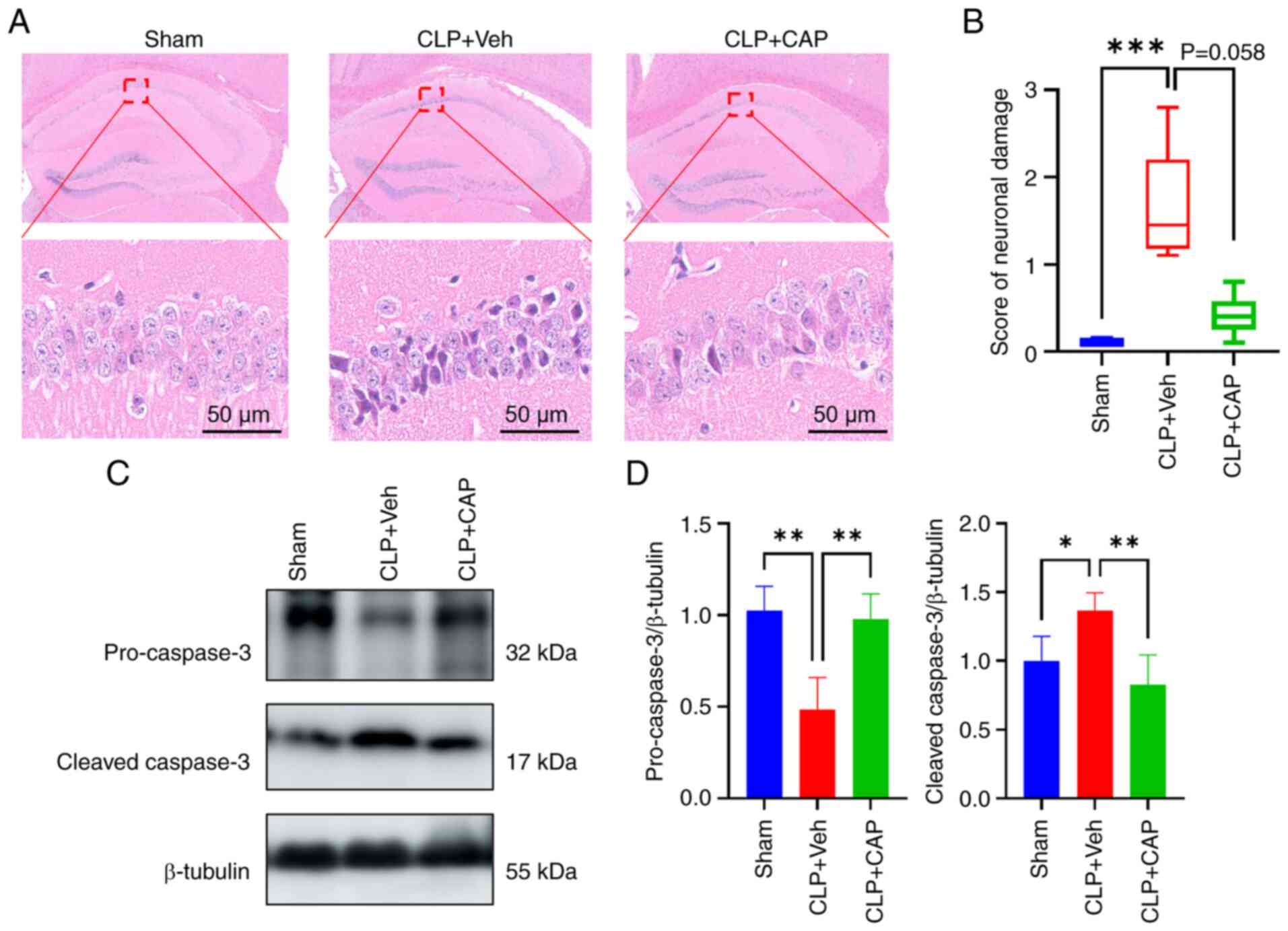
Figure 4

CAP inhibits CLP-induced neuronal
damage in mice with sepsis. (A) Representative image of hematoxylin
and eosin staining showing the morphological features of neurons in
the hippocampal CA1 region. Scale bars, 50 µm. (B) Qualitative
analysis of neuronal damage of the hippocampus in septic mice, n=6
mice/group. ***P<0.001, Kruskal-Wallis test with Dunn's post-hoc
analysis. (C) Pro-caspase 3 and cleaved caspase 3 expression was
detected by western blotting. (D) Relative density of pro-caspase 3
and cleaved caspase 3 expression (n=4 mice/group) (one-way ANOVA
with Bonferroni post hoc test; pro-caspase 3: F(2,9)=16; P=0.0010; cleaved caspase 3:
F(2,9)=9.571; P=0.0059). Data are
presented as the mean ± standard deviation. *P<0.05 and
**P<0.01. CAP, capsaicin; CLP, cecal ligation and puncture; Veh,
vehicle.

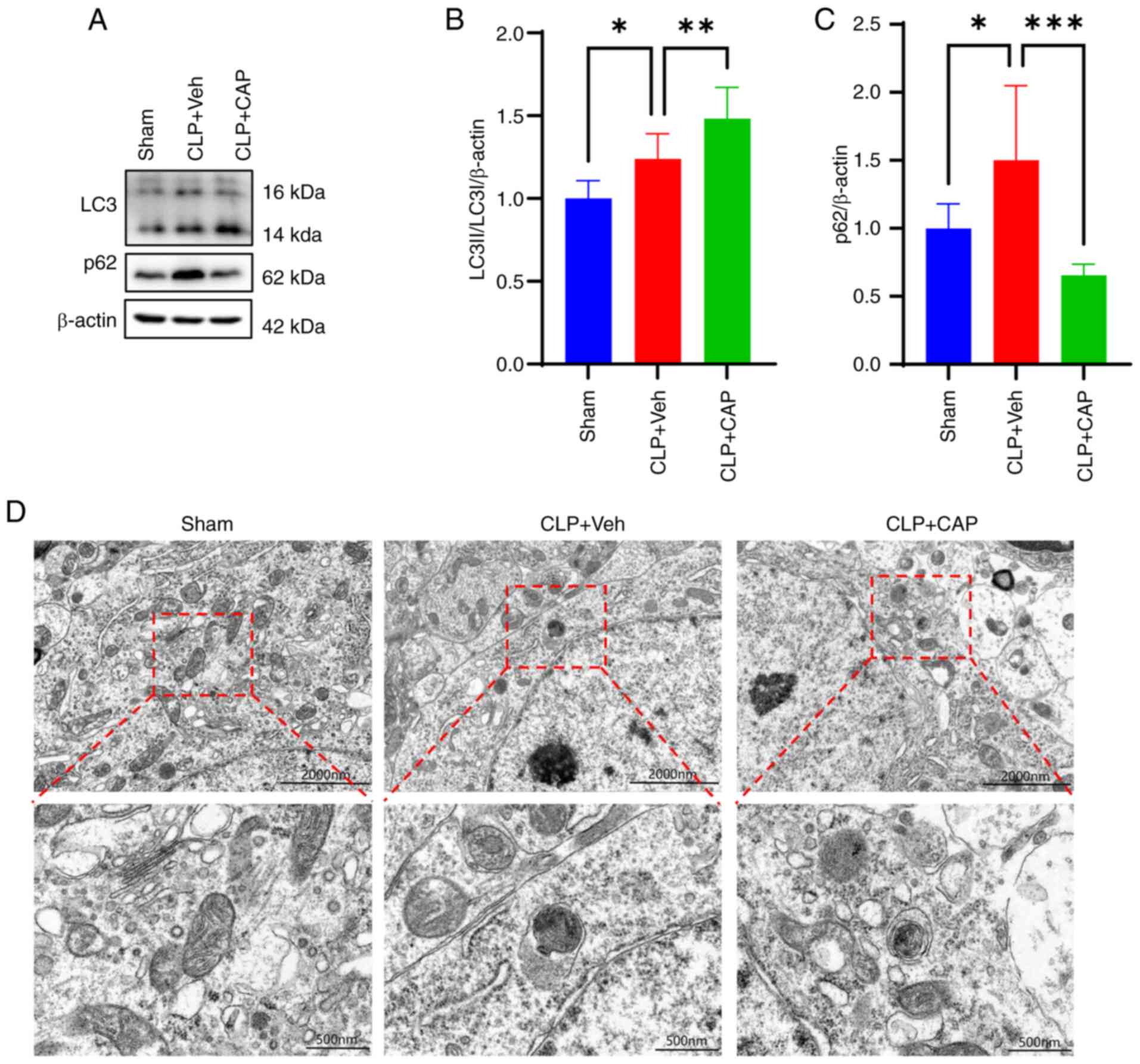
Figure 5

Autophagy level in mice with
CLP-induced sepsis. (A) LC3 and p62 protein expression levels in
the hippocampus were detected by western blotting. Relative density
of (B) LC3 and (C) p62 expression (n=8 mice/group) (one-way ANOVA
with Bonferroni post hoc test; LC3: F(2,21)=20; P<0.0001; p62:
F(2,21)=12.76; P=0.0002). (D) Mitophagy
was observed under a transmission electron microscope. Data are
presented as the mean ± standard deviation. *P<0.05, **P<0.01
and ***P<0.001. CAP, capsaicin; CLP, cecal ligation and
puncture; Veh, vehicle.

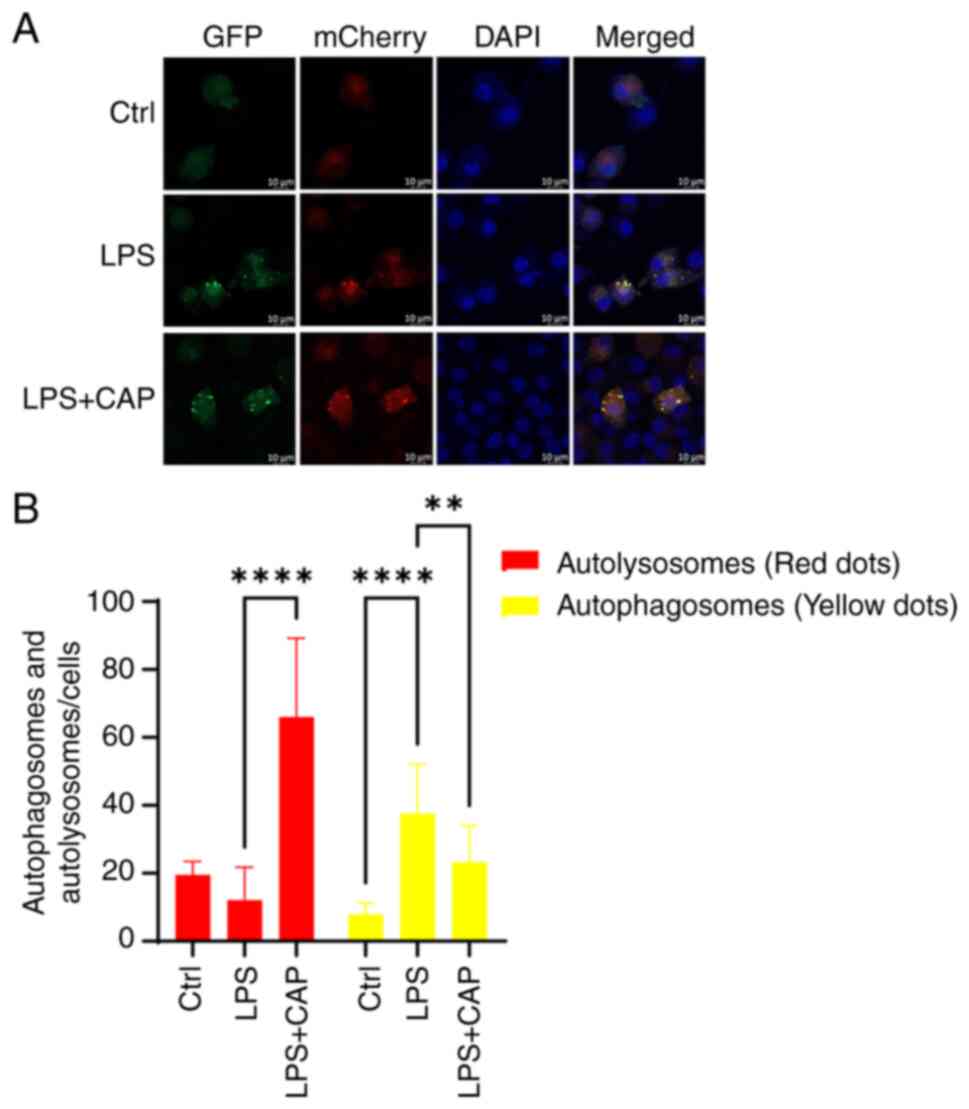
Figure 6

CAP enhances autophagy in LPS-treated
BV2 cells. (A) BV2 cells were transfected with LC3-GFP-mCherry. The
fluorescence images were captured by confocal microscopy. (B)
Quantification of autophagosomes (yellow) and autolysosomes (red)
from BV2 cells (one-way ANOVA with Bonferroni post hoc test;
F(5,90)=44.77; P<0.0001). Data are presented as the
mean ± standard deviation. **P<0.01 and ****P<0.0001. CAP,
capsaicin; Ctrl, control; LPS, lipopolysaccharide.

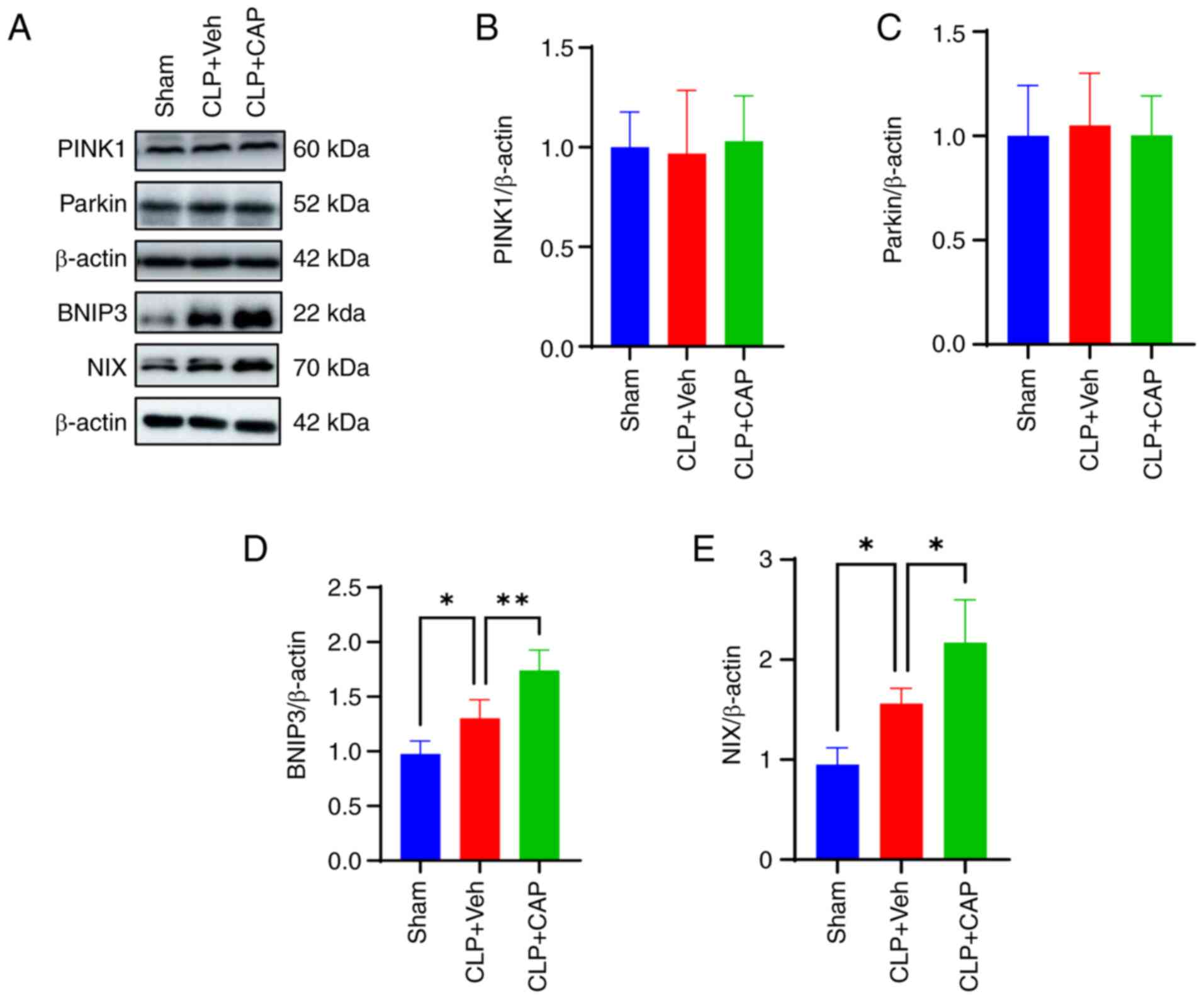
Figure 7

Capsaicin promotes mitophagy via the
BNIP3/NIX pathway. (A) PINK1, Parkin, BNIP3 and NIX proteins were
detected by western blotting. Relative density of (B) PINK1, (C)
Parkin, (D) BNIP3 and (E) NIX expression; n=4 mice/group. (one-way
ANOVA with Bonferroni post hoc test; BNIP3: F(2,9)=22.79; P=0.0003; NIX:
F(2,9)=22; P=0.0003). Data are presented
as the mean ± standard deviation. *P<0.05 and **P<0.01.
BNIP3, Bcl-2-interacting protein 3; CAP, capsaicin; CLP, cecal
ligation and puncture; NIX, BNIP3-like; PINK1, PTEN-induced kinase
1; Veh, vehicle.
View References

1 

Hu D, Sheeja Prabhakaran H, Zhang YY, Luo G, He W and Liou YC: Mitochondrial dysfunction in sepsis: Mechanisms and therapeutic perspectives. Crit Care. 28:2922024. View Article : Google Scholar : PubMed/NCBI

2 

Rudd KE, Johnson SC, Agesa KM, Shackelford KA, Tsoi D, Kievlan DR, Colombara DV, Ikuta KS, Kissoon N, Finfer S, et al: Global, regional, and national sepsis incidence and mortality, 1990–2017: Analysis for the Global Burden of Disease Study. Lancet. 395:200–211. 2020. View Article : Google Scholar : PubMed/NCBI

3 

Borges A and Bento L: Organ crosstalk and dysfunction in sepsis. Ann Intensive Care. 14:1472024. View Article : Google Scholar : PubMed/NCBI

4 

Slooter AJC, Otte WM, Devlin JW, Arora RC, Bleck TP, Claassen J, Duprey MS, Ely EW, Kaplan PW, Latronico N, et al: Updated nomenclature of delirium and acute encephalopathy: Statement of ten Societies. Intensive Care Med. 46:1020–1022. 2020. View Article : Google Scholar : PubMed/NCBI

5 

Mazeraud A, Righy C, Bouchereau E, Benghanem S, Bozza FA and Sharshar T: Septic-associated encephalopathy: A comprehensive review. Neurotherapeutics. 17:392–403. 2020. View Article : Google Scholar : PubMed/NCBI

6 

Sonneville R, Benghanem S, Jeantin L, de Montmollin E, Doman M, Gaudemer A, Thy M and Timsit JF: The spectrum of Sepsis-associated encephalopathy: A clinical perspective. Crit Care. 27:3862023. View Article : Google Scholar : PubMed/NCBI

7 

Widmann CN and Heneka MT: Long-term cerebral consequences of sepsis. Lancet Neurol. 13:630–636. 2014. View Article : Google Scholar : PubMed/NCBI

8 

Lund-Sorensen H, Benros ME, Madsen T, Sørensen HJ, Eaton WW, Postolache TT, Nordentoft M and Erlangsen A: A nationwide cohort study of the association between hospitalization with infection and risk of death by suicide. JAMA Psychiatry. 73:912–919. 2016. View Article : Google Scholar : PubMed/NCBI

9 

Li D, Zhang X, Lu Y, Jing L, Hu H, Song Y, Wu S and Zhu W: Post-sepsis psychiatric disorder: Pathophysiology, prevention, and treatment. Neurol Sci. 45:3093–3105. 2024. View Article : Google Scholar : PubMed/NCBI

10 

Zhou Y, Bai L, Tang W, Yang W and Sun L: Research progress in the pathogenesis of sepsis-associated encephalopathy. Heliyon. 10:e334582024. View Article : Google Scholar : PubMed/NCBI

11 

Denver P and Cunningham C: Microglial activation and neuroinflammation in acute and chronic cognitive deficits in sepsis. Neuropharmacology. 267:1102852025. View Article : Google Scholar : PubMed/NCBI

12 

Liu YX, Yu Y, Liu JP, Liu WJ, Cao Y, Yan RM and Yao YM: Neuroimmune regulation in Sepsis-associated encephalopathy: The interaction between the brain and peripheral immunity. Front Neurol. 13:8924802022. View Article : Google Scholar : PubMed/NCBI

13 

Ashrafi G and Schwarz TL: The pathways of mitophagy for quality control and clearance of mitochondria. Cell Death Differ. 20:31–42. 2013. View Article : Google Scholar : PubMed/NCBI

14 

Ma K, Chen G, Li W, Kepp O, Zhu Y and Chen Q: Mitophagy, mitochondrial homeostasis, and cell fate. Front Cell Dev Biol. 8:4672020. View Article : Google Scholar : PubMed/NCBI

15 

Picca A, Faitg J, Auwerx J, Ferrucci L and D'Amico D: Mitophagy in human health, ageing and disease. Nat Metab. 5:2047–2061. 2023. View Article : Google Scholar : PubMed/NCBI

16 

Liu Y, Yang H, Luo N, Fu Y, Qiu F, Pan Z, Li X, Jian W, Yang X, Xue Q, et al: An Fgr kinase inhibitor attenuates sepsis-associated encephalopathy by ameliorating mitochondrial dysfunction, oxidative stress, and neuroinflammation via the SIRT1/PGC-1α signaling pathway. J Transl Med. 21:4862023. View Article : Google Scholar : PubMed/NCBI

17 

Pan P, Wang X and Liu D: The potential mechanism of mitochondrial dysfunction in septic cardiomyopathy. J Int Med Res. 46:2157–2169. 2018. View Article : Google Scholar : PubMed/NCBI

18 

Zhu CL, Yao RQ, Li LX, Li P, Xie J, Wang JF and Deng XM: Mechanism of mitophagy and its role in sepsis induced organ dysfunction: A review. Front Cell Dev Biol. 9:6648962021. View Article : Google Scholar : PubMed/NCBI

19 

Maximiano TKE, Carneiro JA, Fattori V and Verri WA: TRPV1: Receptor structure, activation, modulation and role in neuro-immune interactions and pain. Cell Calcium. 119:1028702024. View Article : Google Scholar : PubMed/NCBI

20 

In: TRP Ion Channel Function in Sensory Transduction and Cellular Signaling Cascades. Liedtke WB and Heller S: CRC Press/Taylor & Francis; Boca Raton, FL: 2007

21 

Tyagi S, Shekhar N and Thakur AK: Protective role of capsaicin in neurological disorders: An overview. Neurochem Res. 47:1513–1531. 2022. View Article : Google Scholar : PubMed/NCBI

22 

Pasierski M and Szulczyk B: Beneficial effects of capsaicin in disorders of the central nervous system. Molecules. 27:24842022. View Article : Google Scholar : PubMed/NCBI

23 

Ghorbanpour A, Salari S, Baluchnejadmojarad T and Roghani M: Capsaicin protects against septic acute liver injury by attenuation of apoptosis and mitochondrial dysfunction. Heliyon. 9:e142052023. View Article : Google Scholar : PubMed/NCBI

24 

Han J, Wu J, Liu H, Huang Y, Ju W, Xing Y, Zhang X and Yang J: Inhibition of pyroptosis and apoptosis by capsaicin protects against LPS-induced acute kidney injury through TRPV1/UCP2 axis in vitro. Open Life Sci. 18:202206472023. View Article : Google Scholar : PubMed/NCBI

25 

Qiao Y, Wang L, Hu T, Yin D, He H and He M: Capsaicin protects cardiomyocytes against lipopolysaccharide-induced damage via 14-3-3gamma-mediated autophagy augmentation. Front Pharmacol. 12:6590152021. View Article : Google Scholar : PubMed/NCBI

26 

Wang R, Li Q, Wu P, Ren K, Li Y, Wang Y, Zhu H and Lv C: Fe-capsaicin nanozymes attenuate Sepsis-induced acute lung injury via NF-κB signaling. Int J Nanomedicine. 19:73–90. 2024. View Article : Google Scholar : PubMed/NCBI

27 

Zhang Q, Luo P, Xia F, Tang H, Chen J, Zhang J, Liu D, Zhu Y, Liu Y, Gu L, et al: Capsaicin ameliorates inflammation in a TRPV1-independent mechanism by inhibiting PKM2-LDHA-mediated Warburg effect in sepsis. Cell Chem Biol. 29:1248–1259.e6. 2022. View Article : Google Scholar : PubMed/NCBI

28 

Yuan J, Liu H, Zhang H, Wang T, Zheng Q and Li Z: Controlled activation of TRPV1 Channels on microglia to boost their autophagy for clearance of Alpha-synuclein and enhance therapy of Parkinson's disease. Adv Mater. 34:e21084352022. View Article : Google Scholar : PubMed/NCBI

29 

Lin Y, Huang T, Shen W, Pang Q, Xie Q, Chen X and Tu F: TRPV1 suppressed NLRP3 through regulating autophagy in microglia after Ischemia-reperfusion injury. J Mol Neurosci. 72:792–801. 2022. View Article : Google Scholar : PubMed/NCBI

30 

Wang C, Huang W, Lu J, Chen H and Yu Z: TRPV1-mediated microglial autophagy attenuates Alzheimer's Disease-associated pathology and cognitive decline. Front Pharmacol. 12:7638662021. View Article : Google Scholar : PubMed/NCBI

31 

Beider K, Rosenberg E, Dimenshtein-Voevoda V, Sirovsky Y, Vladimirsky J, Magen H, Ostrovsky O, Shimoni A, Bromberg Z, Weiss L, et al: Blocking of transient receptor potential vanilloid 1 (TRPV1) promotes terminal mitophagy in multiple myeloma, disturbing calcium homeostasis and targeting ubiquitin pathway and bortezomib-induced unfolded protein response. J Hematol Oncol. 13:1582020. View Article : Google Scholar : PubMed/NCBI

32 

Shibata M, Kayama Y, Takizawa T, Ibata K, Shimizu T, Yuzaki M, Suzuki N and Nakahara J: Resilience to capsaicin-induced mitochondrial damage in trigeminal ganglion neurons. Mol Pain. 16:17448069209608562020. View Article : Google Scholar : PubMed/NCBI

33 

Percie du Sert N, Hurst V, Ahluwalia A, Alam S, Avey MT, Baker M, Browne WJ, Clark A, Cuthill IC, Dirnagl U, et al: The ARRIVE guidelines 2.0: Updated guidelines for reporting animal research. PLoS Biol. 18:e30004102020. View Article : Google Scholar : PubMed/NCBI

34 

Rittirsch D, Huber-Lang MS, Flierl MA and Ward PA: Immunodesign of experimental sepsis by cecal ligation and puncture. Nat Protoc. 4:31–36. 2009. View Article : Google Scholar : PubMed/NCBI

35 

Wu J, Zhang M, Hao S, Jia M, Ji M, Qiu L, Sun X, Yang J and Li K: Mitochondria-targeted peptide reverses mitochondrial dysfunction and cognitive deficits in Sepsis-Associated encephalopathy. Mol Neurobiol. 52:783–791. 2015. View Article : Google Scholar : PubMed/NCBI

36 

Kelliny S, Lin L, Deng I, Xiong J, Zhou F, Al-Hawwas M, Bobrovskaya L and Zhou XF: A new approach to model sporadic alzheimer's disease by intracerebroventricular streptozotocin injection in APP/PS1 mice. Mol Neurobiol. 58:3692–3711. 2021. View Article : Google Scholar : PubMed/NCBI

37 

Kawase M, Murakami K, Fujimura M, Morita-Fujimura Y, Gasche Y, Kondo T, Scott RW and Chan PH: Exacerbation of delayed cell injury after transient global ischemia in mutant mice with CuZn superoxide dismutase deficiency. Stroke. 30:1962–1968. 1999. View Article : Google Scholar : PubMed/NCBI

38 

Mizushima N, Yoshimori T and Levine B: Methods in mammalian autophagy research. Cell. 140:313–326. 2010. View Article : Google Scholar : PubMed/NCBI

39 

Gofton TE and Young GB: Sepsis-associated encephalopathy. Nat Rev Neurol. 8:557–566. 2012. View Article : Google Scholar : PubMed/NCBI

40 

Sonneville R, de Montmollin E, Poujade J, Garrouste-Orgeas M, Souweine B, Darmon M, Mariotte E, Argaud L, Barbier F, Goldgran-Toledano D, et al: Potentially modifiable factors contributing to sepsis-associated encephalopathy. Intensive Care Med. 43:1075–1084. 2017. View Article : Google Scholar : PubMed/NCBI

41 

Xin Y, Tian M, Pei X, Deng S, Wang Y, Zhao F, Behnisch T, Gao Y and Gong Y: Optimized mouse model of Sepsis-associated encephalopathy: A rational standard based on modified SHIRPA score and neurobehaviors in mice. CNS Neurosci Ther. 31:e703652025. View Article : Google Scholar : PubMed/NCBI

42 

Liao H, Li H, Bao H, Jiang L, Du J, Guo Y and Si Y: Short chain fatty acids protect the cognitive function of sepsis associated encephalopathy mice via GPR43. Front Neurol. 13:9094362022. View Article : Google Scholar : PubMed/NCBI

43 

Sekino N, Selim M and Shehadah A: Sepsis-associated brain injury: Underlying mechanisms and potential therapeutic strategies for acute and long-term cognitive impairments. J Neuroinflammation. 19:1012022. View Article : Google Scholar : PubMed/NCBI

44 

Xu XE, Liu L, Wang YC, Wang CT, Zheng Q, Liu QX, Li ZF, Bai XJ and Liu XH: Caspase-1 inhibitor exerts brain-protective effects against sepsis-associated encephalopathy and cognitive impairments in a mouse model of sepsis. Brain Behav Immun. 80:859–870. 2019. View Article : Google Scholar : PubMed/NCBI

45 

Tian M, Wang W, Wang K, Jin P, Lenahan C, Wang Y, Tan J, Wen H, Deng S, Zhao F and Gong Y: Dexmedetomidine alleviates cognitive impairment by reducing Blood-brain barrier interruption and neuroinflammation via regulating Th1/Th2/Th17 polarization in an experimental sepsis model of mice. Int Immunopharmacol. 101:1083322021. View Article : Google Scholar : PubMed/NCBI

46 

Bodkin JV and Fernandes ES: TRPV1 and SP: Key elements for sepsis outcome? Br J Pharmacol. 170:1279–1292. 2013. View Article : Google Scholar : PubMed/NCBI

47 

Bryant P, Shumate M, Yumet G, Lang CH, Vary TC and Cooney RN: Capsaicin-sensitive nerves regulate the metabolic response to abdominal sepsis. J Surg Res. 112:152–161. 2003. View Article : Google Scholar : PubMed/NCBI

48 

Zhang Q, Liu J, Shen J, Ou J, Wong YK, Xie L, Huang J, Zhang C, Fu C, Chen J, et al: Single-cell RNA sequencing reveals the effects of capsaicin in the treatment of sepsis-induced liver injury. MedComm (2020). 4:e3952023. View Article : Google Scholar : PubMed/NCBI

49 

Chen H, Li N, Zhan X, Zheng T, Huang X, Chen Q, Song Z, Yang F, Nie H, Zhang Y, et al: Capsaicin protects against lipopolysaccharide-induced acute lung injury through the HMGB1/NF-κB and PI3K/AKT/mTOR pathways. J Inflamm Res. 14:5291–5304. 2021. View Article : Google Scholar : PubMed/NCBI

50 

Haileselassie B, Joshi AU, Minhas PS, Mukherjee R, Andreasson KI and Mochly-Rosen D: Mitochondrial dysfunction mediated through dynamin-related protein 1 (Drp1) propagates impairment in blood brain barrier in septic encephalopathy. J Neuroinflammation. 17:362020. View Article : Google Scholar : PubMed/NCBI

51 

Zhang L, Dai L and Li D: Mitophagy in neurological disorders. J Neuroinflammation. 18:2972021. View Article : Google Scholar : PubMed/NCBI

52 

Klionsky DJ, Abdel-Aziz AK, Abdelfatah S, Abdellatif M, Abdoli A, Abe S, Abeliovich H, Abildgaard MH, Princely Abudu Y, Acevedo-Arozena A, et al: Guidelines for the use and interpretation of assays for monitoring autophagy (4th edition)1. Autophagy. 17:1–382. 2021. View Article : Google Scholar : PubMed/NCBI

53 

Wang S, Long H, Hou L, Feng B, Ma Z, Wu Y, Zeng Y, Cai J, Zhang DW and Zhao G: The mitophagy pathway and its implications in human diseases. Signal Transduct Target Ther. 8:3042023. View Article : Google Scholar : PubMed/NCBI

54 

Cui Y, Liu J, Song Y, Chen C, Shen Y and Xie K: High Concentration hydrogen protects Sepsis-associated encephalopathy by enhancing pink1/Parkin-Mediated mitophagy and inhibiting cGAS-STING-IRF3 pathway. CNS Neurosci Ther. 31:e703052025. View Article : Google Scholar : PubMed/NCBI

55 

Min SY, Yong HJ and Kim D: Sex or gender differences in treatment outcomes of sepsis and septic shock. Acute Crit Care. 39:207–213. 2024. View Article : Google Scholar : PubMed/NCBI

56 

Nasa P, Juneja D and Singh O: Severe sepsis and septic shock in the elderly: An overview. World J Crit Care Med. 1:23–30. 2012. View Article : Google Scholar : PubMed/NCBI

Related Articles

  • Abstract
  • View
  • Download
  • Twitter
Copy and paste a formatted citation
Spandidos Publications style
Zhang S, Luo N, Wu H, Chen J, Jiang Y, Xiao L, Liang H, Xue Q, Luo Y, Yu B, Yu B, et al: Capsaicin attenuates sepsis‑associated encephalopathy by inhibiting neuroinflammation and apoptosis whilst activating mitophagy through the BNIP3/NIX pathway. Mol Med Rep 32: 322, 2025.
APA
Zhang, S., Luo, N., Wu, H., Chen, J., Jiang, Y., Xiao, L. ... Liu, Z. (2025). Capsaicin attenuates sepsis‑associated encephalopathy by inhibiting neuroinflammation and apoptosis whilst activating mitophagy through the BNIP3/NIX pathway. Molecular Medicine Reports, 32, 322. https://doi.org/10.3892/mmr.2025.13686
MLA
Zhang, S., Luo, N., Wu, H., Chen, J., Jiang, Y., Xiao, L., Liang, H., Xue, Q., Luo, Y., Yu, B., Liu, Y., Liu, Z."Capsaicin attenuates sepsis‑associated encephalopathy by inhibiting neuroinflammation and apoptosis whilst activating mitophagy through the BNIP3/NIX pathway". Molecular Medicine Reports 32.6 (2025): 322.
Chicago
Zhang, S., Luo, N., Wu, H., Chen, J., Jiang, Y., Xiao, L., Liang, H., Xue, Q., Luo, Y., Yu, B., Liu, Y., Liu, Z."Capsaicin attenuates sepsis‑associated encephalopathy by inhibiting neuroinflammation and apoptosis whilst activating mitophagy through the BNIP3/NIX pathway". Molecular Medicine Reports 32, no. 6 (2025): 322. https://doi.org/10.3892/mmr.2025.13686
Copy and paste a formatted citation
x
Spandidos Publications style
Zhang S, Luo N, Wu H, Chen J, Jiang Y, Xiao L, Liang H, Xue Q, Luo Y, Yu B, Yu B, et al: Capsaicin attenuates sepsis‑associated encephalopathy by inhibiting neuroinflammation and apoptosis whilst activating mitophagy through the BNIP3/NIX pathway. Mol Med Rep 32: 322, 2025.
APA
Zhang, S., Luo, N., Wu, H., Chen, J., Jiang, Y., Xiao, L. ... Liu, Z. (2025). Capsaicin attenuates sepsis‑associated encephalopathy by inhibiting neuroinflammation and apoptosis whilst activating mitophagy through the BNIP3/NIX pathway. Molecular Medicine Reports, 32, 322. https://doi.org/10.3892/mmr.2025.13686
MLA
Zhang, S., Luo, N., Wu, H., Chen, J., Jiang, Y., Xiao, L., Liang, H., Xue, Q., Luo, Y., Yu, B., Liu, Y., Liu, Z."Capsaicin attenuates sepsis‑associated encephalopathy by inhibiting neuroinflammation and apoptosis whilst activating mitophagy through the BNIP3/NIX pathway". Molecular Medicine Reports 32.6 (2025): 322.
Chicago
Zhang, S., Luo, N., Wu, H., Chen, J., Jiang, Y., Xiao, L., Liang, H., Xue, Q., Luo, Y., Yu, B., Liu, Y., Liu, Z."Capsaicin attenuates sepsis‑associated encephalopathy by inhibiting neuroinflammation and apoptosis whilst activating mitophagy through the BNIP3/NIX pathway". Molecular Medicine Reports 32, no. 6 (2025): 322. https://doi.org/10.3892/mmr.2025.13686
Follow us
  • Twitter
  • LinkedIn
  • Facebook
About
  • Spandidos Publications
  • Careers
  • Cookie Policy
  • Privacy Policy
How can we help?
  • Help
  • Live Chat
  • Contact
  • Email to our Support Team