Spandidos Publications Logo
  • About
    • About Spandidos
    • Aims and Scopes
    • Abstracting and Indexing
    • Editorial Policies
    • Reprints and Permissions
    • Job Opportunities
    • Terms and Conditions
    • Contact
  • Journals
    • All Journals
    • Oncology Letters
      • Oncology Letters
      • Information for Authors
      • Editorial Policies
      • Editorial Board
      • Aims and Scope
      • Abstracting and Indexing
      • Bibliographic Information
      • Archive
    • International Journal of Oncology
      • International Journal of Oncology
      • Information for Authors
      • Editorial Policies
      • Editorial Board
      • Aims and Scope
      • Abstracting and Indexing
      • Bibliographic Information
      • Archive
    • Molecular and Clinical Oncology
      • Molecular and Clinical Oncology
      • Information for Authors
      • Editorial Policies
      • Editorial Board
      • Aims and Scope
      • Abstracting and Indexing
      • Bibliographic Information
      • Archive
    • Experimental and Therapeutic Medicine
      • Experimental and Therapeutic Medicine
      • Information for Authors
      • Editorial Policies
      • Editorial Board
      • Aims and Scope
      • Abstracting and Indexing
      • Bibliographic Information
      • Archive
    • International Journal of Molecular Medicine
      • International Journal of Molecular Medicine
      • Information for Authors
      • Editorial Policies
      • Editorial Board
      • Aims and Scope
      • Abstracting and Indexing
      • Bibliographic Information
      • Archive
    • Biomedical Reports
      • Biomedical Reports
      • Information for Authors
      • Editorial Policies
      • Editorial Board
      • Aims and Scope
      • Abstracting and Indexing
      • Bibliographic Information
      • Archive
    • Oncology Reports
      • Oncology Reports
      • Information for Authors
      • Editorial Policies
      • Editorial Board
      • Aims and Scope
      • Abstracting and Indexing
      • Bibliographic Information
      • Archive
    • Molecular Medicine Reports
      • Molecular Medicine Reports
      • Information for Authors
      • Editorial Policies
      • Editorial Board
      • Aims and Scope
      • Abstracting and Indexing
      • Bibliographic Information
      • Archive
    • World Academy of Sciences Journal
      • World Academy of Sciences Journal
      • Information for Authors
      • Editorial Policies
      • Editorial Board
      • Aims and Scope
      • Abstracting and Indexing
      • Bibliographic Information
      • Archive
    • International Journal of Functional Nutrition
      • International Journal of Functional Nutrition
      • Information for Authors
      • Editorial Policies
      • Editorial Board
      • Aims and Scope
      • Abstracting and Indexing
      • Bibliographic Information
      • Archive
    • International Journal of Epigenetics
      • International Journal of Epigenetics
      • Information for Authors
      • Editorial Policies
      • Editorial Board
      • Aims and Scope
      • Abstracting and Indexing
      • Bibliographic Information
      • Archive
    • Medicine International
      • Medicine International
      • Information for Authors
      • Editorial Policies
      • Editorial Board
      • Aims and Scope
      • Abstracting and Indexing
      • Bibliographic Information
      • Archive
  • Articles
  • Information
    • Information for Authors
    • Information for Reviewers
    • Information for Librarians
    • Information for Advertisers
    • Conferences
  • Language Editing
Spandidos Publications Logo
  • About
    • About Spandidos
    • Aims and Scopes
    • Abstracting and Indexing
    • Editorial Policies
    • Reprints and Permissions
    • Job Opportunities
    • Terms and Conditions
    • Contact
  • Journals
    • All Journals
    • Biomedical Reports
      • Information for Authors
      • Editorial Policies
      • Editorial Board
      • Aims and Scope
      • Abstracting and Indexing
      • Bibliographic Information
      • Archive
    • Experimental and Therapeutic Medicine
      • Information for Authors
      • Editorial Policies
      • Editorial Board
      • Aims and Scope
      • Abstracting and Indexing
      • Bibliographic Information
      • Archive
    • International Journal of Epigenetics
      • Information for Authors
      • Editorial Policies
      • Editorial Board
      • Aims and Scope
      • Abstracting and Indexing
      • Bibliographic Information
      • Archive
    • International Journal of Functional Nutrition
      • Information for Authors
      • Editorial Policies
      • Editorial Board
      • Aims and Scope
      • Abstracting and Indexing
      • Bibliographic Information
      • Archive
    • International Journal of Molecular Medicine
      • Information for Authors
      • Editorial Policies
      • Editorial Board
      • Aims and Scope
      • Abstracting and Indexing
      • Bibliographic Information
      • Archive
    • International Journal of Oncology
      • Information for Authors
      • Editorial Policies
      • Editorial Board
      • Aims and Scope
      • Abstracting and Indexing
      • Bibliographic Information
      • Archive
    • Medicine International
      • Information for Authors
      • Editorial Policies
      • Editorial Board
      • Aims and Scope
      • Abstracting and Indexing
      • Bibliographic Information
      • Archive
    • Molecular and Clinical Oncology
      • Information for Authors
      • Editorial Policies
      • Editorial Board
      • Aims and Scope
      • Abstracting and Indexing
      • Bibliographic Information
      • Archive
    • Molecular Medicine Reports
      • Information for Authors
      • Editorial Policies
      • Editorial Board
      • Aims and Scope
      • Abstracting and Indexing
      • Bibliographic Information
      • Archive
    • Oncology Letters
      • Information for Authors
      • Editorial Policies
      • Editorial Board
      • Aims and Scope
      • Abstracting and Indexing
      • Bibliographic Information
      • Archive
    • Oncology Reports
      • Information for Authors
      • Editorial Policies
      • Editorial Board
      • Aims and Scope
      • Abstracting and Indexing
      • Bibliographic Information
      • Archive
    • World Academy of Sciences Journal
      • Information for Authors
      • Editorial Policies
      • Editorial Board
      • Aims and Scope
      • Abstracting and Indexing
      • Bibliographic Information
      • Archive
  • Articles
  • Information
    • For Authors
    • For Reviewers
    • For Librarians
    • For Advertisers
    • Conferences
  • Language Editing
Login Register Submit
  • This site uses cookies
  • You can change your cookie settings at any time by following the instructions in our Cookie Policy. To find out more, you may read our Privacy Policy.

    I agree
Search articles by DOI, keyword, author or affiliation
Search
Advanced Search
presentation
Molecular Medicine Reports
Join Editorial Board Propose a Special Issue
Print ISSN: 1791-2997 Online ISSN: 1791-3004
Journal Cover
December-2025 Volume 32 Issue 6

Full Size Image

Sign up for eToc alerts
Recommend to Library

Journals

International Journal of Molecular Medicine

International Journal of Molecular Medicine

International Journal of Molecular Medicine is an international journal devoted to molecular mechanisms of human disease.

International Journal of Oncology

International Journal of Oncology

International Journal of Oncology is an international journal devoted to oncology research and cancer treatment.

Molecular Medicine Reports

Molecular Medicine Reports

Covers molecular medicine topics such as pharmacology, pathology, genetics, neuroscience, infectious diseases, molecular cardiology, and molecular surgery.

Oncology Reports

Oncology Reports

Oncology Reports is an international journal devoted to fundamental and applied research in Oncology.

Experimental and Therapeutic Medicine

Experimental and Therapeutic Medicine

Experimental and Therapeutic Medicine is an international journal devoted to laboratory and clinical medicine.

Oncology Letters

Oncology Letters

Oncology Letters is an international journal devoted to Experimental and Clinical Oncology.

Biomedical Reports

Biomedical Reports

Explores a wide range of biological and medical fields, including pharmacology, genetics, microbiology, neuroscience, and molecular cardiology.

Molecular and Clinical Oncology

Molecular and Clinical Oncology

International journal addressing all aspects of oncology research, from tumorigenesis and oncogenes to chemotherapy and metastasis.

World Academy of Sciences Journal

World Academy of Sciences Journal

Multidisciplinary open-access journal spanning biochemistry, genetics, neuroscience, environmental health, and synthetic biology.

International Journal of Functional Nutrition

International Journal of Functional Nutrition

Open-access journal combining biochemistry, pharmacology, immunology, and genetics to advance health through functional nutrition.

International Journal of Epigenetics

International Journal of Epigenetics

Publishes open-access research on using epigenetics to advance understanding and treatment of human disease.

Medicine International

Medicine International

An International Open Access Journal Devoted to General Medicine.

Journal Cover
December-2025 Volume 32 Issue 6

Full Size Image

Sign up for eToc alerts
Recommend to Library

  • Article
  • Citations
    • Cite This Article
    • Download Citation
    • Create Citation Alert
    • Remove Citation Alert
    • Cited By
  • Similar Articles
    • Related Articles (in Spandidos Publications)
    • Similar Articles (Google Scholar)
    • Similar Articles (PubMed)
  • Download PDF
  • Download XML
  • View XML
Article Open Access

Inhibitory effect of antibodies against the cell adhesion molecule gicerin on gastric cancer progression

  • Authors:
    • Saaya Ueno
    • Nao Uemura
    • Kazuhide Adachi
    • Yasuhiro Tsukamoto
  • View Affiliations / Copyright

    Affiliations: Laboratory of Animal Hygiene, Department of Agricultural and Life Science, Faculty of Life and Environmental Sciences, Kyoto Prefectural University, Kyoto 606‑8522, Japan
    Copyright: © Ueno et al. This is an open access article distributed under the terms of Creative Commons Attribution License.
  • Article Number: 321
    |
    Published online on: September 17, 2025
       https://doi.org/10.3892/mmr.2025.13687
  • Expand metrics +
Metrics: Total Views: 0 (Spandidos Publications: | PMC Statistics: )
Metrics: Total PDF Downloads: 0 (Spandidos Publications: | PMC Statistics: )
Cited By (CrossRef): 0 citations Loading Articles...

This article is mentioned in:


Abstract

Gicerin is a member of the immunoglobulin superfamily, which functions as a cell adhesion molecule that is expressed in developing and regenerating tissues, as well as in various types of tumors. In malignant neoplasms, gicerin has been implicated in promoting cellular invasion and metastasis. The present study aimed to investigate whether or not anti‑gicerin antibodies could inhibit the progression of the human gastric cancer cell line NUGC‑4 in a murine model. First, immunofluorescence staining was employed to confirm gicerin expression in the NUGC‑4 cells. The cells were subsequently pretreated with either anti‑gicerin antibodies or pre‑immune IgG and transplanted subcutaneously into nude mice, where the extent of tumor growth and local invasion were both assessed. In a separate hematogenous metastasis model, mice received a tail‑vein injection of NUGC‑4 cells pretreated in an identical manner and pulmonary metastases were evaluated. Anti‑gicerin antibody pretreatment led to a significant suppression of subcutaneous tumor formation, histological invasiveness and lung nodule formation compared with the controls. Taken together, these findings suggested that the antibody‑mediated inhibition of gicerin reduced both local tumor progression and hematogenous spread in gastric cancer, highlighting gicerin as a promising therapeutic target that potentially may be effective when used in combination with conventional chemotherapy.
View Figures

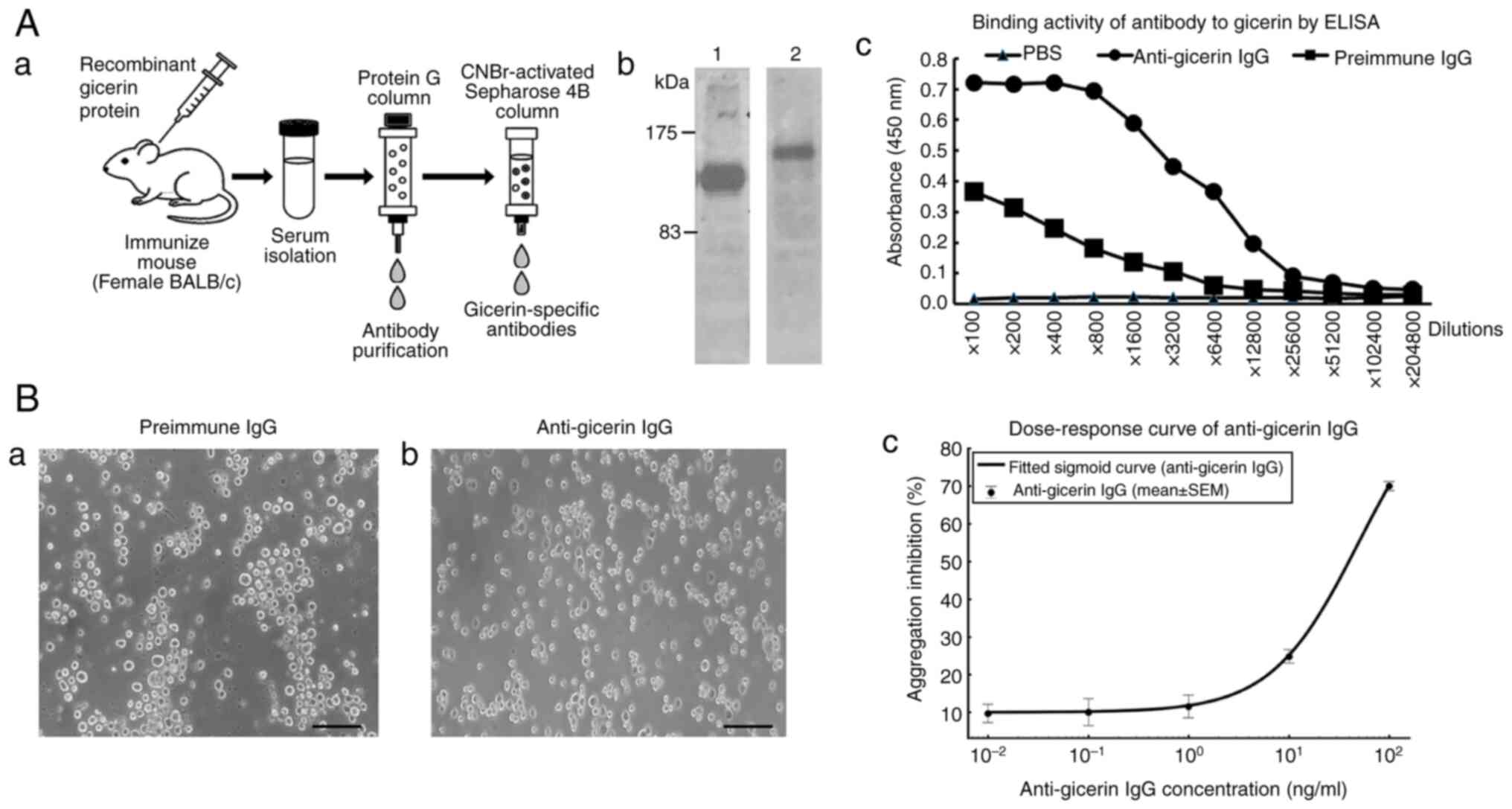
Figure 1

Generation of mouse anti-gicerin
antibody and validation of its binding activity. (A) The procedure
for generating and purifying the murine anti-gicerin antibody is
summarized. (a) BALB/c mice were immunized with recombinant gicerin
protein, followed by IgG purification from serum. The IgG fraction
was subsequently affinity-purified using a Sepharose column
conjugated with gicerin protein. (b) As shown by SDS-PAGE, the
gicerin recombinant protein immunized as the antigen for antibody
production (lane 1) appeared as a single band at ~120 kDa, while
the final purified mouse IgG (lane 2) exhibited a single band at
~150 kDa. Binding activity of mouse IgG to gicerin proteins by
ELISA. (c) Recombinant proteins of gicerin were bound to plate at 2
µg/ml overnight at 4°C. Samples were blocked with 1% blocking
buffer (Block Ace) in distilled water for 2 h. Serial dilutions of
pre-immune or anti-gicerin IgG were incubated at room temperature
for 2 h. After washing with PBS, HRP-conjugated polyclonal antibody
against mouse IgGs were reacted for 1 h at room temperature. Then,
3,3′,5,5′-tetramethylbenzidine was added to each well and plates
were read at 450 nm utilizing a Multiscan JX (Thermo Fisher
Scientific, Inc.). ELISA demonstrated that the purified antibody
exhibited strong binding activity to gicerin protein, with an ELISA
titer of 12,800 when compared to pre-immune IgG. (B) Neutralizing
activity of anti-gicerin IgG in cell adhesion. (a) In the cell
aggregation assay, L-929 cells expressing gicerin formed
multicellular aggregates upon the addition of pre-immune IgG,
indicating cell-cell adhesion. (b) When the anti-gicerin IgG was
added to the suspension cultures, a marked inhibition of cell-cell
aggregation was observed. Scale bars, 100 µm; magnification, ×200.
(c) Dose-response curves were generated by plotting the aggregation
index against the logarithmic antibody concentrations. Nonlinear
regression analysis determined that the IC50 of
anti-gicerin IgG was 49.5 ng/ml, indicating its potent neutralizing
effect on cell adhesion. IC50, half-maximal inhibitory
concentration.

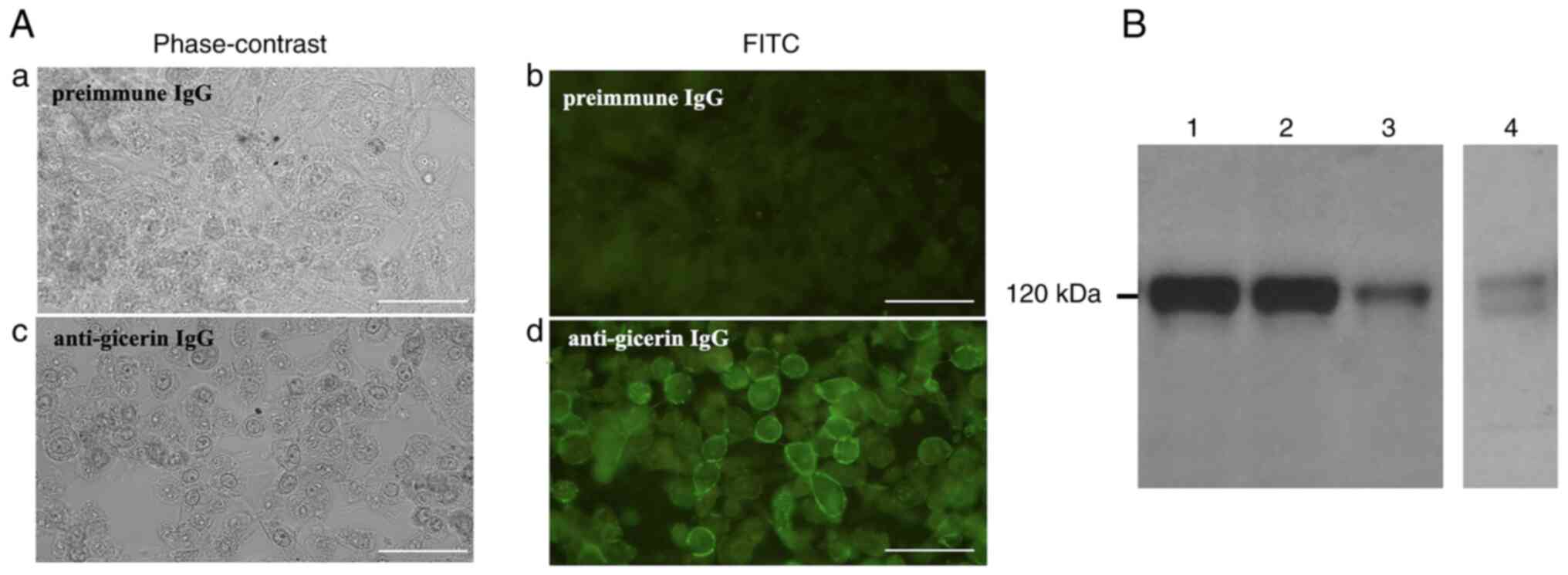
Figure 2

Gicerin expression in NUGC-4 cells.
(A) Indirect immunofluorescence staining of NUGC-4 cells was
performed and observed under a fluorescence microscope (as shown by
the B-excitation filter). No fluorescence was detected when
pre-immune IgG was applied (a, phase contrast; b,
immunofluorescence). By contrast, strong green fluorescence was
observed on the cell surface following staining with anti-gicerin
IgG (c, phase contrast; d, immunofluorescence), indicating
membrane-associated expression of gicerin. scale bars, 50 µm;
magnification, ×400. (B) Western blot analysis of membrane
fractions from B16 (lane 2), HUVEC (lane 3) and NUGC-4 cells (lane
4) following SDS-PAGE. The recombinant gicerin protein used as the
immunogen was also subjected to electrophoresis as a positive
control and to verify the specificity and reactivity of the
antibody (lane 1). Notably, a doublet band of ~120 kDa was observed
in lane 4, consistent with the expression of both the short and
long isoforms of gicerin in NUGC-4 cells.

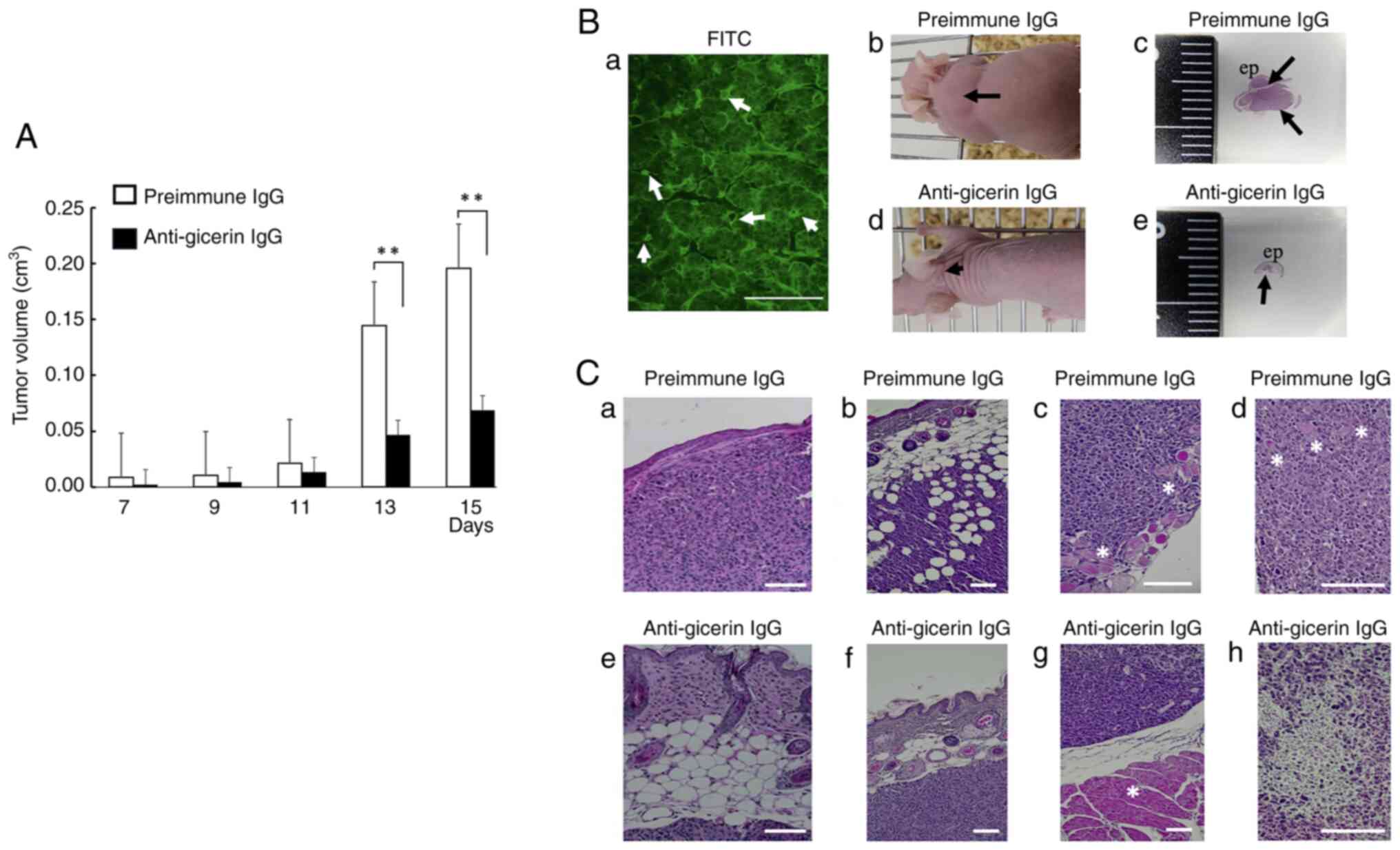
Figure 3

Tumor growth and histopathological
features following subcutaneous injection into nude mice. (A)
NUGC-4 cells treated with either pre-immune IgG or anti-gicerin IgG
were subcutaneously injected into the dorsal neck region of nude
mice (n=5 per group). Tumor volume was measured over time using the
formula: AxB2/2, where A and B represent the maximum and
minimum tumor diameters, respectively. Data are mean ± SD (n=5 mice
per group). Two-tailed unpaired Student's t-tests were performed
between pre-immune IgG and anti-gicerin IgG at each time point.
Significance indicators: ns (P≥0.05), *P<0.05, **P<0.01. (B)
On day 15 post-injection, tumor tissues were examined both
histologically and using immunofluorescence analysis. (a) Gicerin
expression was detected in the tumor cell membranes, especially in
epithelial-like structures, as well as in neovascular structures
(denoted by the arrows) scale bars, 100 µm; magnification, ×200.
Compared with mice injected with pre-immune IgG (b and c), those
injected with anti-gicerin IgG displayed smaller tumor masses and
reduced tumor areas histologically with hematoxylin and eosin
staining (arrows) (d and e). (C) In the pre-immune IgG group,
histological evidence of tumor invasion into the dermis (a),
adipose tissue (b), subcutaneous muscle (c) and undifferentiated
adenocarcinoma (d) regions was noted (arrows indicate invasion into
the muscle). (e-g) By contrast, mice treated with anti-gicerin IgG
showed markedly reduced tumor invasiveness. (h) Furthermore, signs
of cellular degeneration, structural disintegration, pyknosis and
karyorrhexis were frequently observed within tumors treated with
anti-gicerin antibody. Scale bars, 100 µm; magnification: a and e:
×100; b, f and g: ×50; and c, d and h, ×200.

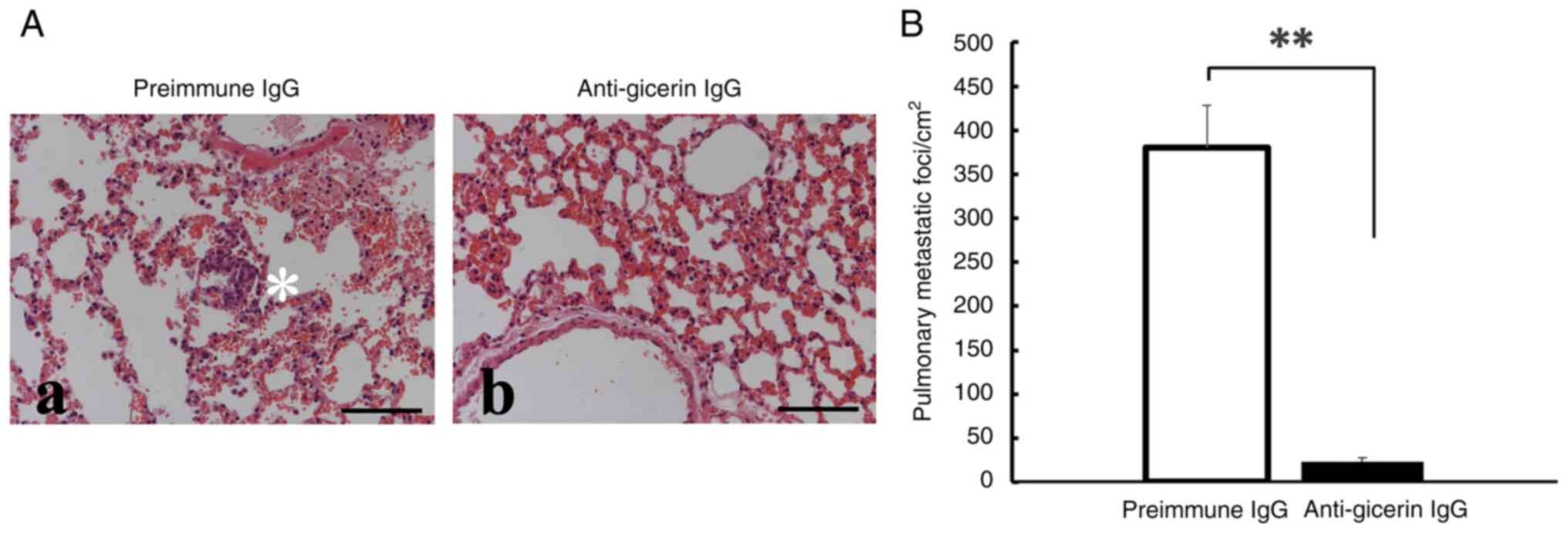
Figure 4

Pulmonary metastasis following tail
vein injection in nude mice. (A) NUGC-4 cells pretreated with
either pre-immune IgG or anti-gicerin IgG were injected into the
tail veins of nude mice (n=5 per group). On day 15, lung tissues
were harvested and examined histologically. (a) In the pre-immune
IgG group, multiple metastatic foci were observed, characterized by
epithelial-like tumor cell proliferation and frequent hemorrhaging.
(b) By contrast, few metastatic lesions were detected in the
anti-gicerin IgG group. Scale bar, 100 µm; magnification, ×100. (B)
The number of metastatic foci per unit area in lung tissue was
quantified histologically. Data are shown as mean ± SD (n=5 mice
per group). Between-group comparison was performed with a
two-tailed unpaired Student's t-test; the difference was
statistically significant. Significance indicators: ns (P≥0.05),
*P<0.05, **P<0.01.

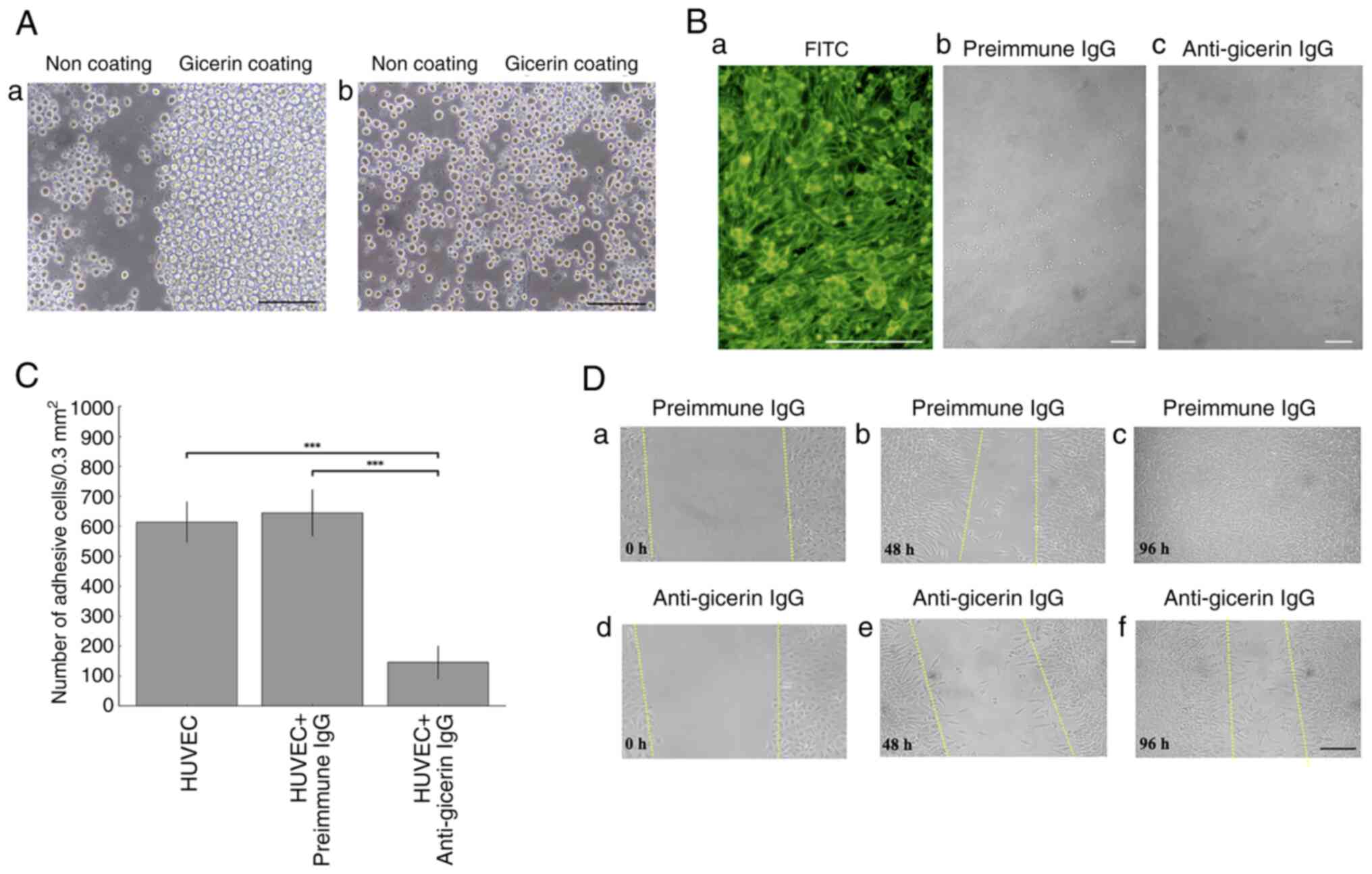
Figure 5

(A) Inhibition of NUGC-4 cell
adhesion to gicerin protein by anti-gicerin antibody. Only the
right half of each culture dish was coated with recombinant gicerin
protein. NUGC-4 cell adhesion was assessed under a phase-contrast
microscope. (a) The cells predominantly adhered to the
gicerin-coated region, indicating that NUGC-4 cells exhibit
homophilic binding through gicerin molecules expressed on their
surface. Adhesion was not inhibited by pre-immune IgG. (b) By
contrast, treatment with anti-gicerin IgG markedly suppressed the
attachment of NUGC-4 cells to the gicerin-coated area. These
findings demonstrate that anti-gicerin IgG effectively blocks the
homophilic adhesion ability of NUGC-4 cells via gicerin. Scale
bars, 100 µm; magnification ×200. (B) Adhesion of NUGC-4 cells to
HUVEC monolayers. (a) Immunofluorescence staining revealed gicerin
expression on both adherent NUGC-4 cells and HUVEC feeder cells.
NUGC-4 cells treated with either (b) pre-immune IgG or (c)
anti-gicerin IgG were seeded on to confluent HUVEC monolayers.
Compared with the pre-immune IgG group, the number of NUGC-4 cells
attached to HUVEC layers was noticeably reduced in the anti-gicerin
IgG group. Scale bar, 100 µm. Magnification: a, ×200; and b and c,
×50. (C) The number of NUGC-4 cells adhering to HUVECs was markedly
lower in the anti-gicerin IgG group compared with the pre-immune
control. Adherent cells were counted in randomly selected 0.3
mm2 areas under light microscopy. Data are mean ± SD
(n=5 independent replicates per group). Group differences were
analyzed by one-way ANOVA followed by Tukey's HSD test across PBS,
pre-immune IgG and anti-gicerin IgG conditions. Anti-gicerin IgG
differed markedly from the other groups (***P<0.001), whereas
other pairwise comparisons were not significant unless indicated.
(D) Inhibition of NUGC-4 cell migration by anti-gicerin antibody.
NUGC-4 cells were seeded on culture dishes pre-coated with gicerin
protein and incubated until they reached confluence. (a) A linear
scratch was made across the cell monolayer using the tip of a
yellow pipette to create a cell-free area. (b) Culture media
containing either pre-immune IgG or anti-gicerin IgG was then added
and cell migration into the scratched area was monitored over time
using phase-contrast microscopy. (b) In the presence of pre-immune
IgG, numerous cells migrated into the scratch area by 48 h and (c)
the wound was completely closed by 96 h. (d) By contrast, dishes
treated with anti-gicerin IgG showed (e) markedly reduced cell
migration at 48 h and (f) a large cell-free area remained even
after 96 h. These findings indicate that anti-gicerin IgG inhibits
gicerin-mediated cell motility. The dashed straight line indicates
the edge of the wound at each time point after the initial scratch
procedure. Scale bar, 100 µm; magnification: ×100.

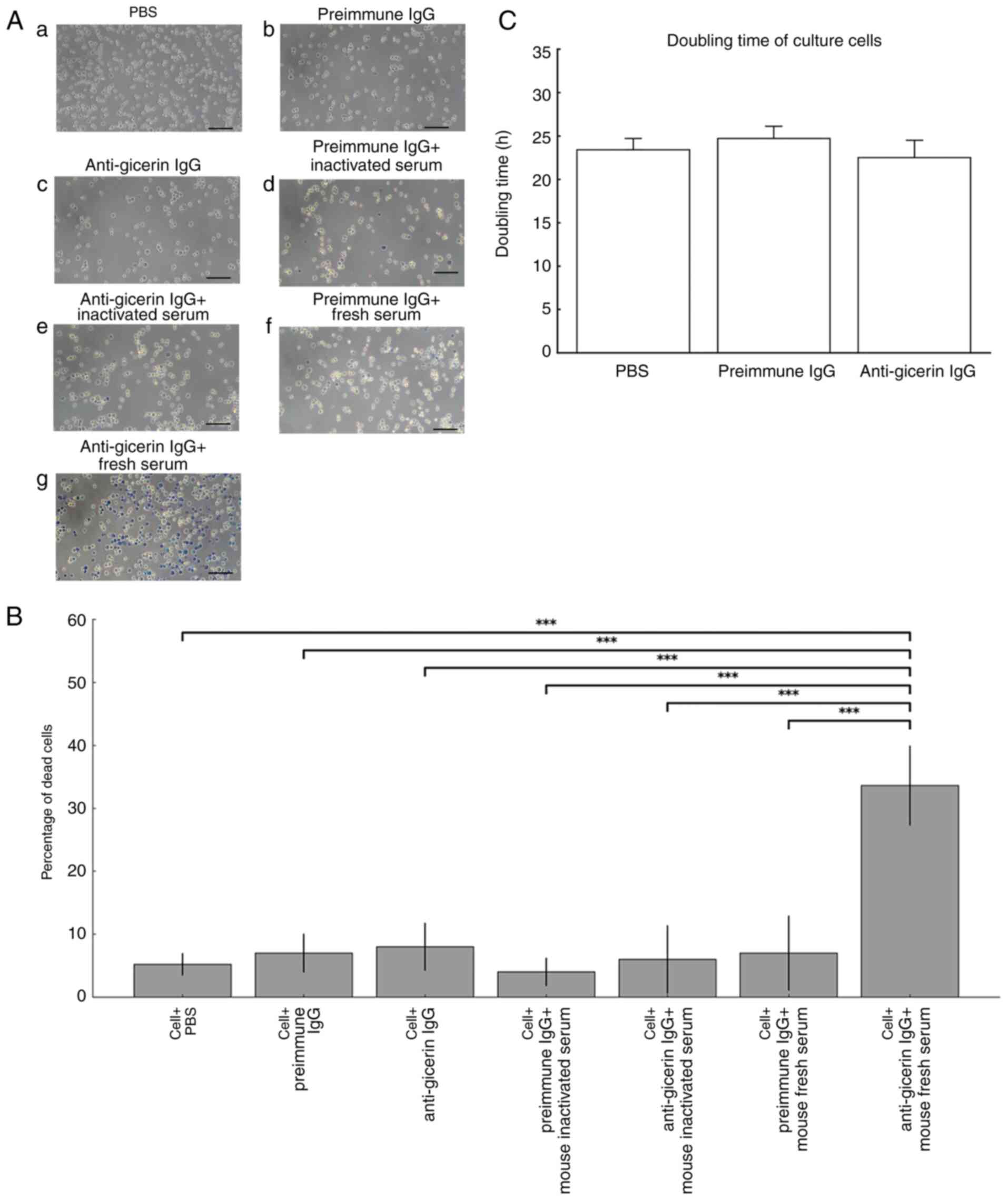
Figure 6

Complement-dependent cytotoxicity
assay. (A) NUGC-4 cells were incubated with either pre-immune IgG
or anti-gicerin IgG, followed by treatment with either fresh mouse
serum (complement-active) or heat-inactivated serum (heated at 56°C
for 30 min). After a 1 h incubation at 37°C, non-adherent cells
were removed and adherent cells were detached by treating the cells
with trypsin-EDTA. Cell viability was assessed using the trypan
blue exclusion method under light microscopy (a, with PBS; b, with
pre-immune IgG, c, with anti-gicerin IgG; d, with pre-immune IgG
and inactivated serum; e, with anti-gicerin IgG and inactivated
serum; f, pre-immune IgG and fresh serum; g, with anti-gicerin IgG
and fresh serum. (B) Viable (unstained) and nonviable
(blue-stained) cells were counted and the percentages of dead cells
were calculated. Data are mean ± SD (n=5 independent replicates per
group). Seven groups were compared by one-way ANOVA with Tukey's
HSD; only the cell + anti-gicerin IgG + fresh mouse serum group
differed markedly from all other groups (***P<0.001). (C)
Doubling times of NUGC-4 cells with anti-gicerin antibody. The
cells were cultured with PBS, pre-immune IgG and anti-gicerin IgG
and doubling times in each condition were calculated. As shown in
the graph, anti-gicerin antibody did not affect the proliferation
of NUGC-4 cells under in vitro conditions, similar to
pre-immune IgG. Data are presented as mean ± SD (n=4 independent
replicates per group). Differences among the three groups (PBS,
pre-immune IgG and anti-gicerin IgG) were evaluated by one-way
ANOVA followed by Tukey's HSD post hoc test; no statistically
significant differences were detected.
View References

1 

Cunningham BA: Cell adhesion molecules and signal transduction. Curr Opin Cell Biol. 7:628–633. 1995. View Article : Google Scholar : PubMed/NCBI

2 

Albelda SM: Role of integrins and other cell adhesion molecules in tumor progression and metastasis. Lab Invest. 68:4–17. 1993.PubMed/NCBI

3 

Takeichi M: Cadherins in cancer: Implications for invasion and metastasis. Curr Opin Cell Biol. 5:806–811. 1993. View Article : Google Scholar : PubMed/NCBI

4 

Hanahan D and Weinberg RA: Hallmarks of cancer: The next generation. Cell. 144:646–674. 2011. View Article : Google Scholar : PubMed/NCBI

5 

Janiszewska M, Primi MC and Izard T: Cell adhesion in cancer: Beyond the migration of single cells. J Biol Chem. 295:2495–2505. 2020. View Article : Google Scholar : PubMed/NCBI

6 

Berx G and van Roy F: The E-cadherin/catenin complex: An important gatekeeper in breast cancer tumorigenesis and malignant progression. Breast Cancer Res. 3:289–293. 2001. View Article : Google Scholar : PubMed/NCBI

7 

Desgrosellier JS and Cheresh DA: Integrins in cancer: Biological implications and therapeutic opportunities. Nat Rev Cancer. 10:9–22. 2010. View Article : Google Scholar : PubMed/NCBI

8 

Rathinam R and Alahari SK: Important role of integrins in the cancer biology. Cancer Metastasis Rev. 29:223–237. 2010. View Article : Google Scholar : PubMed/NCBI

9 

Jung H, Jun KH, Jung JH, Chin HM and Park WB: The expression of claudin-1, claudin-2, claudin-3, and claudin-4 in gastric cancer tissue. J Surg Res. 167:e185–e191. 2011. View Article : Google Scholar : PubMed/NCBI

10 

Chen DL, Zeng ZL, Yang J, Ren C, Wang DS, Wu WJ and Xu RH: L1cam promotes tumor progression and metastasis and is an independent unfavorable prognostic factor in gastric cancer. J Hematol Oncol. 6:432013. View Article : Google Scholar : PubMed/NCBI

11 

Lu G, Cai Z, Jiang R, Tong F, Tu J, Chen Y, Fu Y, Sun J and Zhang T: Reduced expression of E-cadherin correlates with poor prognosis and unfavorable clinicopathological features in gastric carcinoma: A meta-analysis. Aging (Albany NY). 16:10271–10298. 2024. View Article : Google Scholar : PubMed/NCBI

12 

Gu L, Chen M, Guo D, Zhu H, Zhang W, Pan J, Zhong X, Li X, Qian H and Wang X: PD-L1 and gastric cancer prognosis: A systematic review and meta-analysis. PLoS One. 12:e01826922017. View Article : Google Scholar : PubMed/NCBI

13 

Chen DH, Yu JW and Jiang BJ: Contactin 1: A potential therapeutic target and biomarker in gastric cancer. World J Gastroenterol. 21:9707–9716. 2015. View Article : Google Scholar : PubMed/NCBI

14 

Singh P, Toom S and Huang Y: Anti-claudin 18.2 antibody as new targeted therapy for advanced gastric cancer. J Hematol Oncol. 10:1052017. View Article : Google Scholar : PubMed/NCBI

15 

Tsukamoto Y, Taira E, Kotani T, Yamate J, Wada S, Takaha N, Miki N and Sakuma S: Involvement of gicerin, a cell adhesion molecule, in tracheal development and regeneration. Cell Growth Differ. 7:1761–1767. 1996.PubMed/NCBI

16 

Adachi K, Hattori M, Kato H, Inai M, Tsukamoto M, Handharyani E, Taira E and Tsukamoto Y: Involvement of gicerin, a cell adhesion molecule, in the portal metastasis of rat colorectal adenocarcinoma cells. Oncol Rep. 24:1427–1431. 2010.PubMed/NCBI

17 

Tsukamoto Y, Matsumoto T, Kotani T, Taira E, Takaha N, Miki N, Yamate J and Sakuma S: The expression of gicerin, a cell adhesion molecule, in regenerating process of collecting ducts and ureters of the chicken kidney after the nephrotrophic strain of infectious bronchitis virus infection. Avian Pathol. 26:245–255. 1997. View Article : Google Scholar : PubMed/NCBI

18 

Tsukamoto Y, Taira E, Yamate J, Nakane Y, Kajimura K, Tsudzuki M, Kiso Y, Kotani T, Miki N and Sakuma S: Gicerin, a cell adhesion molecule, participates in the histogenesis of retina. J Neurobiol. 33:769–780. 1997. View Article : Google Scholar : PubMed/NCBI

19 

Tsukamoto Y, Sakaiuchi T, Hiroi S, Furuya M, Tsuchiya S, Sasaki F, Miki N and Taira E: Expression of gicerin enhances the invasive and metastatic activities of a mouse mammary carcinoma cell line. Int J Oncol. 23:1671–1677. 2003.PubMed/NCBI

20 

Tsukamoto Y, Egawa M, Hiroi S, Furuya M, Tsuchiya S, Sasaki F, Miki N and Taira E: Gicerin, an Ig-superfamily cell adhesion molecule, promotes the invasive and metastatic activities of a mouse fibroblast cell line. J Cell Physiol. 197:103–109. 2003. View Article : Google Scholar : PubMed/NCBI

21 

Taira E, Takaha N, Taniura H, Kim CH and Miki N: Molecular cloning and functional expression of gicerin, a novel cell adhesion molecule that binds to neurite outgrowth factor. Neuron. 12:861–872. 1994. View Article : Google Scholar : PubMed/NCBI

22 

Taira E, Nagino T, Taniura H, Takaha N, Kim CH, Kuo CH, Li BS, Higuchi H and Miki N: Expression and functional analysis of a novel isoform of gicerin, an immunoglobulin superfamily cell adhesion molecule. J Biol Chem. 270:28681–28687. 1995. View Article : Google Scholar : PubMed/NCBI

23 

Kong JH, Lee J, Yi CA, Park SH, Park JO, Park YS, Lim HY, Park KW and Kang WK: Lung metastases in metastatic gastric cancer: Pattern of lung metastases and clinical outcome. Gastric Cancer. 15:292–298. 2012. View Article : Google Scholar : PubMed/NCBI

24 

Niimi T, Samejima J, Koike Y, Miyoshi T, Tane K, Aokage K, Taki T, Ishii G and Tsuboi M: A case of lung metastasis from gastric cancer presenting as ground-glass opacity dominant nodules. J Cardiothorac Surg. 19:3652024. View Article : Google Scholar : PubMed/NCBI

25 

Chen ZR, Yang MF, Xie ZY, Wang PA, Zhang L, Huang ZH and Luo Y: Risk stratification in gastric cancer lung metastasis: Utilizing an overall survival nomogram and comparing it with previous staging. World J Gastrointest Surg. 16:357–381. 2024. View Article : Google Scholar : PubMed/NCBI

26 

Rabben HL, Kodama Y, Nakamura M, Bones AM, Wang TC, Chen D, Zhao CM and Øverby A: Chemopreventive effects of dietary isothiocyanates in animal models of gastric cancer and synergistic anticancer effects with cisplatin in human gastric cancer cells. Front Pharmacol. 12:6134582021. View Article : Google Scholar : PubMed/NCBI

27 

Li W, Zhao X, Wang H, Liu X, Zhao X, Huang M, Qiu L, Zhang W, Chen Z, Guo W, et al: Maintenance treatment of Uracil and Tegafur (UFT) in responders following first-line fluorouracil-based chemotherapy in metastatic gastric cancer: A randomized phase II study. Oncotarget. 8:37826–37834. 2017. View Article : Google Scholar : PubMed/NCBI

28 

Akiyama S, Amo H, Watanabe T, Matsuyama M, Sakamoto J, Imaizumi M, Ichihashi H, Kondo T and Takagi H: Characteristics of three human gastric cancer cell lines, NU-GC-2, NU-GC-3 and NU-GC-4. Jpn J Surg. 18:438–446. 1988. View Article : Google Scholar : PubMed/NCBI

29 

Taira E, Kohama K, Tsukamoto Y, Okumura S and Miki N: Characterization of Gicerin/MUC18/CD146 in the rat nervous system. J Cell Physiol. 198:377–387. 2004. View Article : Google Scholar : PubMed/NCBI

30 

Taira E, Nagino T, Tsukamoto Y, Okumura S, Muraoka O, Sasaki F and Miki N: Cytoplasmic domain is not essential for the cell adhesion activities of gicerin, an Ig-superfamily molecule. Exp Cell Res. 253:697–703. 1999. View Article : Google Scholar : PubMed/NCBI

31 

Taniura H, Kuo CH, Hayashi Y and Miki N: Purification and characterization of an 82-kD membrane protein as a neurite outgrowth factor binding protein: Possible involvement of NOF binding protein in axonal outgrowth in developing retina. J Cell Biol. 112:313–322. 1991. View Article : Google Scholar : PubMed/NCBI

32 

Spyridopoulou K, Aindelis G, Lampri E, Giorgalli M, Lamprianidou E, Kotsianidis I, Tsingotjidou A, Pappa A, Kalogirou O and Chlichlia K: Improving the subcutaneous mouse tumor model by effective manipulation of magnetic nanoparticles-treated implanted cancer cells. Ann Biomed Eng. 46:1975–1987. 2018. View Article : Google Scholar : PubMed/NCBI

33 

Slominski RM, Raman C, Chen JY and Slominski AT: How cancer hijacks the body's homeostasis through the neuroendocrine system. Trends Neurosci. 46:263–275. 2023. View Article : Google Scholar : PubMed/NCBI

34 

Tsukamoto Y, Taira E, Miki N and Sasaki F: The role of gicerin, a novel cell adhesion molecule, in development, regeneration and neoplasia. Histol Histopathol. 16:563–571. 2001.PubMed/NCBI

35 

Tsuchiya S, Tsukamoto Y, Furuya M, Hiroi S, Miki N, Sasaki F and Taira E: Gicerin, a cell adhesion molecule, promotes the metastasis of lymphoma cells of the chicken. Cell Tissue Res. 314:389–397. 2003. View Article : Google Scholar : PubMed/NCBI

36 

Kirimura N, Kubota Y, Adachi K and Tsukamoto Y: Involvement of gicerin, a cell adhesion molecule, in the hematogenous metastatic activities of a melanoma cell line. Am Int J Biol. 2:65–75. 2014. View Article : Google Scholar

37 

Kohama K, Tsukamoto Y, Fruya M, Okamura K, Tanaka H, Miki N and Taira E: Molecular cloning and analysis of the mouse gicerin gene. Neurochem Int. 46:465–470. 2005. View Article : Google Scholar : PubMed/NCBI

38 

Taira E, Kohama K, Tsukamoto Y, Okumura S and Miki N: Gicerin/CD146 is involved in neurite extension of NGF-treated PC12 cells. J Cell physiol. 204:632–637. 2005. View Article : Google Scholar : PubMed/NCBI

39 

Tsuchiya S, Tsukamoto Y, Taira E and LaMarre J: Involvement of transforming growth factor-beta in the expression of gicerin, a cell adhesion molecule, in the regeneration of hepatocytes. Int J Mol Med. 19:381–386. 2007.PubMed/NCBI

40 

Chen X, Yan H, Liu D, Xu Q, Duan H, Feng J, Yan X and Xie C: Structure basis for AA98 inhibition on the activation of endothelial cells mediated by CD146. iScience. 24:1024172021. View Article : Google Scholar : PubMed/NCBI

41 

Matsuoka T and Masakazu Y: Molecular mechanism for malignant progression of gastric cancer within the tumor microenvironment. Int J Mol Sci. 25:117352024. View Article : Google Scholar : PubMed/NCBI

Related Articles

  • Abstract
  • View
  • Download
  • Twitter
Copy and paste a formatted citation
Spandidos Publications style
Ueno S, Uemura N, Adachi K and Tsukamoto Y: Inhibitory effect of antibodies against the cell adhesion molecule gicerin on gastric cancer progression. Mol Med Rep 32: 321, 2025.
APA
Ueno, S., Uemura, N., Adachi, K., & Tsukamoto, Y. (2025). Inhibitory effect of antibodies against the cell adhesion molecule gicerin on gastric cancer progression. Molecular Medicine Reports, 32, 321. https://doi.org/10.3892/mmr.2025.13687
MLA
Ueno, S., Uemura, N., Adachi, K., Tsukamoto, Y."Inhibitory effect of antibodies against the cell adhesion molecule gicerin on gastric cancer progression". Molecular Medicine Reports 32.6 (2025): 321.
Chicago
Ueno, S., Uemura, N., Adachi, K., Tsukamoto, Y."Inhibitory effect of antibodies against the cell adhesion molecule gicerin on gastric cancer progression". Molecular Medicine Reports 32, no. 6 (2025): 321. https://doi.org/10.3892/mmr.2025.13687
Copy and paste a formatted citation
x
Spandidos Publications style
Ueno S, Uemura N, Adachi K and Tsukamoto Y: Inhibitory effect of antibodies against the cell adhesion molecule gicerin on gastric cancer progression. Mol Med Rep 32: 321, 2025.
APA
Ueno, S., Uemura, N., Adachi, K., & Tsukamoto, Y. (2025). Inhibitory effect of antibodies against the cell adhesion molecule gicerin on gastric cancer progression. Molecular Medicine Reports, 32, 321. https://doi.org/10.3892/mmr.2025.13687
MLA
Ueno, S., Uemura, N., Adachi, K., Tsukamoto, Y."Inhibitory effect of antibodies against the cell adhesion molecule gicerin on gastric cancer progression". Molecular Medicine Reports 32.6 (2025): 321.
Chicago
Ueno, S., Uemura, N., Adachi, K., Tsukamoto, Y."Inhibitory effect of antibodies against the cell adhesion molecule gicerin on gastric cancer progression". Molecular Medicine Reports 32, no. 6 (2025): 321. https://doi.org/10.3892/mmr.2025.13687
Follow us
  • Twitter
  • LinkedIn
  • Facebook
About
  • Spandidos Publications
  • Careers
  • Cookie Policy
  • Privacy Policy
How can we help?
  • Help
  • Live Chat
  • Contact
  • Email to our Support Team