Spandidos Publications Logo
  • About
    • About Spandidos
    • Aims and Scopes
    • Abstracting and Indexing
    • Editorial Policies
    • Reprints and Permissions
    • Job Opportunities
    • Terms and Conditions
    • Contact
  • Journals
    • All Journals
    • Oncology Letters
      • Oncology Letters
      • Information for Authors
      • Editorial Policies
      • Editorial Board
      • Aims and Scope
      • Abstracting and Indexing
      • Bibliographic Information
      • Archive
    • International Journal of Oncology
      • International Journal of Oncology
      • Information for Authors
      • Editorial Policies
      • Editorial Board
      • Aims and Scope
      • Abstracting and Indexing
      • Bibliographic Information
      • Archive
    • Molecular and Clinical Oncology
      • Molecular and Clinical Oncology
      • Information for Authors
      • Editorial Policies
      • Editorial Board
      • Aims and Scope
      • Abstracting and Indexing
      • Bibliographic Information
      • Archive
    • Experimental and Therapeutic Medicine
      • Experimental and Therapeutic Medicine
      • Information for Authors
      • Editorial Policies
      • Editorial Board
      • Aims and Scope
      • Abstracting and Indexing
      • Bibliographic Information
      • Archive
    • International Journal of Molecular Medicine
      • International Journal of Molecular Medicine
      • Information for Authors
      • Editorial Policies
      • Editorial Board
      • Aims and Scope
      • Abstracting and Indexing
      • Bibliographic Information
      • Archive
    • Biomedical Reports
      • Biomedical Reports
      • Information for Authors
      • Editorial Policies
      • Editorial Board
      • Aims and Scope
      • Abstracting and Indexing
      • Bibliographic Information
      • Archive
    • Oncology Reports
      • Oncology Reports
      • Information for Authors
      • Editorial Policies
      • Editorial Board
      • Aims and Scope
      • Abstracting and Indexing
      • Bibliographic Information
      • Archive
    • Molecular Medicine Reports
      • Molecular Medicine Reports
      • Information for Authors
      • Editorial Policies
      • Editorial Board
      • Aims and Scope
      • Abstracting and Indexing
      • Bibliographic Information
      • Archive
    • World Academy of Sciences Journal
      • World Academy of Sciences Journal
      • Information for Authors
      • Editorial Policies
      • Editorial Board
      • Aims and Scope
      • Abstracting and Indexing
      • Bibliographic Information
      • Archive
    • International Journal of Functional Nutrition
      • International Journal of Functional Nutrition
      • Information for Authors
      • Editorial Policies
      • Editorial Board
      • Aims and Scope
      • Abstracting and Indexing
      • Bibliographic Information
      • Archive
    • International Journal of Epigenetics
      • International Journal of Epigenetics
      • Information for Authors
      • Editorial Policies
      • Editorial Board
      • Aims and Scope
      • Abstracting and Indexing
      • Bibliographic Information
      • Archive
    • Medicine International
      • Medicine International
      • Information for Authors
      • Editorial Policies
      • Editorial Board
      • Aims and Scope
      • Abstracting and Indexing
      • Bibliographic Information
      • Archive
  • Articles
  • Information
    • Information for Authors
    • Information for Reviewers
    • Information for Librarians
    • Information for Advertisers
    • Conferences
  • Language Editing
Spandidos Publications Logo
  • About
    • About Spandidos
    • Aims and Scopes
    • Abstracting and Indexing
    • Editorial Policies
    • Reprints and Permissions
    • Job Opportunities
    • Terms and Conditions
    • Contact
  • Journals
    • All Journals
    • Biomedical Reports
      • Information for Authors
      • Editorial Policies
      • Editorial Board
      • Aims and Scope
      • Abstracting and Indexing
      • Bibliographic Information
      • Archive
    • Experimental and Therapeutic Medicine
      • Information for Authors
      • Editorial Policies
      • Editorial Board
      • Aims and Scope
      • Abstracting and Indexing
      • Bibliographic Information
      • Archive
    • International Journal of Epigenetics
      • Information for Authors
      • Editorial Policies
      • Editorial Board
      • Aims and Scope
      • Abstracting and Indexing
      • Bibliographic Information
      • Archive
    • International Journal of Functional Nutrition
      • Information for Authors
      • Editorial Policies
      • Editorial Board
      • Aims and Scope
      • Abstracting and Indexing
      • Bibliographic Information
      • Archive
    • International Journal of Molecular Medicine
      • Information for Authors
      • Editorial Policies
      • Editorial Board
      • Aims and Scope
      • Abstracting and Indexing
      • Bibliographic Information
      • Archive
    • International Journal of Oncology
      • Information for Authors
      • Editorial Policies
      • Editorial Board
      • Aims and Scope
      • Abstracting and Indexing
      • Bibliographic Information
      • Archive
    • Medicine International
      • Information for Authors
      • Editorial Policies
      • Editorial Board
      • Aims and Scope
      • Abstracting and Indexing
      • Bibliographic Information
      • Archive
    • Molecular and Clinical Oncology
      • Information for Authors
      • Editorial Policies
      • Editorial Board
      • Aims and Scope
      • Abstracting and Indexing
      • Bibliographic Information
      • Archive
    • Molecular Medicine Reports
      • Information for Authors
      • Editorial Policies
      • Editorial Board
      • Aims and Scope
      • Abstracting and Indexing
      • Bibliographic Information
      • Archive
    • Oncology Letters
      • Information for Authors
      • Editorial Policies
      • Editorial Board
      • Aims and Scope
      • Abstracting and Indexing
      • Bibliographic Information
      • Archive
    • Oncology Reports
      • Information for Authors
      • Editorial Policies
      • Editorial Board
      • Aims and Scope
      • Abstracting and Indexing
      • Bibliographic Information
      • Archive
    • World Academy of Sciences Journal
      • Information for Authors
      • Editorial Policies
      • Editorial Board
      • Aims and Scope
      • Abstracting and Indexing
      • Bibliographic Information
      • Archive
  • Articles
  • Information
    • For Authors
    • For Reviewers
    • For Librarians
    • For Advertisers
    • Conferences
  • Language Editing
Login Register Submit
  • This site uses cookies
  • You can change your cookie settings at any time by following the instructions in our Cookie Policy. To find out more, you may read our Privacy Policy.

    I agree
Search articles by DOI, keyword, author or affiliation
Search
Advanced Search
presentation
Molecular Medicine Reports
Join Editorial Board Propose a Special Issue
Print ISSN: 1791-2997 Online ISSN: 1791-3004
Journal Cover
December-2025 Volume 32 Issue 6

Full Size Image

Sign up for eToc alerts
Recommend to Library

Journals

International Journal of Molecular Medicine

International Journal of Molecular Medicine

International Journal of Molecular Medicine is an international journal devoted to molecular mechanisms of human disease.

International Journal of Oncology

International Journal of Oncology

International Journal of Oncology is an international journal devoted to oncology research and cancer treatment.

Molecular Medicine Reports

Molecular Medicine Reports

Covers molecular medicine topics such as pharmacology, pathology, genetics, neuroscience, infectious diseases, molecular cardiology, and molecular surgery.

Oncology Reports

Oncology Reports

Oncology Reports is an international journal devoted to fundamental and applied research in Oncology.

Experimental and Therapeutic Medicine

Experimental and Therapeutic Medicine

Experimental and Therapeutic Medicine is an international journal devoted to laboratory and clinical medicine.

Oncology Letters

Oncology Letters

Oncology Letters is an international journal devoted to Experimental and Clinical Oncology.

Biomedical Reports

Biomedical Reports

Explores a wide range of biological and medical fields, including pharmacology, genetics, microbiology, neuroscience, and molecular cardiology.

Molecular and Clinical Oncology

Molecular and Clinical Oncology

International journal addressing all aspects of oncology research, from tumorigenesis and oncogenes to chemotherapy and metastasis.

World Academy of Sciences Journal

World Academy of Sciences Journal

Multidisciplinary open-access journal spanning biochemistry, genetics, neuroscience, environmental health, and synthetic biology.

International Journal of Functional Nutrition

International Journal of Functional Nutrition

Open-access journal combining biochemistry, pharmacology, immunology, and genetics to advance health through functional nutrition.

International Journal of Epigenetics

International Journal of Epigenetics

Publishes open-access research on using epigenetics to advance understanding and treatment of human disease.

Medicine International

Medicine International

An International Open Access Journal Devoted to General Medicine.

Journal Cover
December-2025 Volume 32 Issue 6

Full Size Image

Sign up for eToc alerts
Recommend to Library

  • Article
  • Citations
    • Cite This Article
    • Download Citation
    • Create Citation Alert
    • Remove Citation Alert
    • Cited By
  • Similar Articles
    • Related Articles (in Spandidos Publications)
    • Similar Articles (Google Scholar)
    • Similar Articles (PubMed)
  • Download PDF
  • Download XML
  • View XML

  • Supplementary Files
    • Supplementary_Data1.pdf
    • Supplementary_Data2.pdf
Article Open Access

Atractylodin inhibits ferroptosis in sepsis‑induced acute gastrointestinal injury via SIRT3/PRDX3

  • Authors:
    • Yun-Xia Hu
    • Ming-Qi Chen
    • Jian-Lin Wang
    • Tao Wu
    • Hai-Dong Zhang
    • Tong-Tong Li
    • Hui Gao
    • Yu Bai
  • View Affiliations / Copyright

    Affiliations: Department of Intensive Care Medicine, Liyang Branch of Jiangsu Provincial Hospital of Chinese Medicine, Changzhou, Jiangsu 213300, P.R. China, Department of Intensive Care Medicine, Affiliated Hospital of Nanjing University of Chinese Medicine, Nanjing, Jiangsu 210004, P.R. China, Department of Intensive Care Medicine, Liyang Branch of Jiangsu Provincial Hospital of Chinese Medicine, Changzhou, Jiangsu 213300, P.R. China, Department of Intensive Care Medicine, Affiliated Hospital of Nanjing University of Chinese Medicine, Nanjing, Jiangsu 210004, P.R. China, Clinical Department of Integrated Traditional Chinese and Western Medicine, School of Integrative Medicine, Nanjing University of Chinese Medicine, Nanjing, Jiangsu 210023, P.R. China
    Copyright: © Hu et al. This is an open access article distributed under the terms of Creative Commons Attribution License.
  • Article Number: 330
    |
    Published online on: September 26, 2025
       https://doi.org/10.3892/mmr.2025.13695
  • Expand metrics +
Metrics: Total Views: 0 (Spandidos Publications: | PMC Statistics: )
Metrics: Total PDF Downloads: 0 (Spandidos Publications: | PMC Statistics: )
Cited By (CrossRef): 0 citations Loading Articles...

This article is mentioned in:


Abstract

Gastrointestinal injury (GI) is a significant concern in various medical contexts, particularly in patients undergoing antiplatelet therapy, experiencing trauma, or dealing with the effects of medications. The present study investigated the effect of atractylodin, a bioactive compound derived from Atractylodes lancea (Thunb.) DC., traditionally used in medicinal applications. A sepsis animal model was established through cecal ligation and perforation. Mice were treated with atractylodin, with or without silencing of NAD‑dependent protein deacetylase sirtuin‑3 (SIRT3), via transfection with adeno‑associated virus (AAV) vectors. Atractylodin markedly improved mitochondrial function in vivo, as evidenced by increased mitochondrial‑related proteins via western blot analysis (TOM20) and increased mitochondrial membrane potential, as observed via JC‑1 staining. In addition, atractylodin treatment inhibited apoptosis. Together, these changes regulated mitochondrial dysfunction. Moreover, atractylodin improved the prognosis of sepsis‑induced ferroptosis in the stomach and colon tissues. Atractylodin markedly activated SIRT3 while suppressing the expression of ac‑peroxiredoxin‑3 (PRDX3). Notably, the knockdown of SIRT3 diminishes the inhibitory effect of atractylodin on ferroptosis, when AAV‑short hairpinSIRT3 was injected into the stomach and colon tissues of C57 BL/6 mice. Further, atractylodin may have attenuated GI development by preventing mitochondrial dysfunction through the SIRT3/PRDX3 pathway. Hence, protection against mitochondrial dysfunction using atractylodin may be a promising therapeutic strategy against sepsis‑induced acute GI.
View Figures

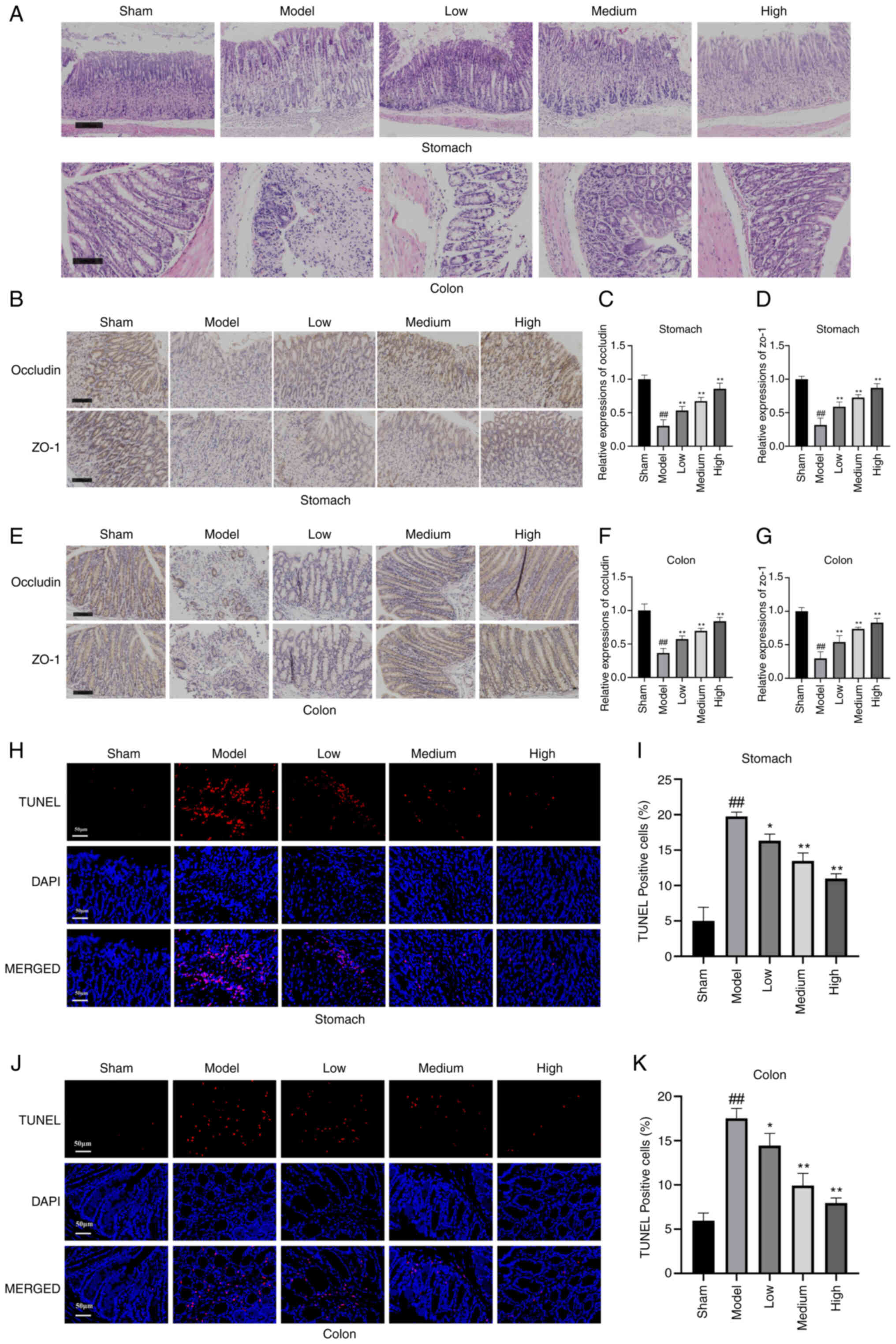
Figure 1

Atractylodin mitigates sepsis-induced
GI. (A) H&E staining of mousee stomach (scale bar, 200 µm) and
colon tissue. (B) The immunohistochemical detection of tissue
damage in the stomach; scale bar, 100 µm. (C) Relative expression
of Occludin in the stomach. (D) Relative expression of ZO-1 in the
stomach. (E) The immunohistochemical detection of tissue damage in
the colon, scale bar 100 µm. (F) Relative expression of occludin in
the colon. (G) Relative expression of ZO-1 in the colon. The (H)
stomach tissue and (J) colon tissue cell apoptosis were analyzed
via TUNEL assay. Blue is nuclei stained with DAPI, while red is
TUNEL-positive cells stained with TUNEL; scale bar 50 µm. The
percentage of TUNEL-positive cells in (I) stomach tissues and (K)
colon tissues. TUNEL-positive cells (%) were calculated by the
number of positive cells divided by the total number of cells. Data
are combined from n=3 biological repeats. *P<0.05, **P<0.01
vs. the model group, ##P<0.01 vs. the Sham group. GI,
gastrointestinal injury; H&E, hematoxylin-eosin; TUNEL,
terminal dUTP nick end labeling; ZO-1, Zona occludens protein
1.

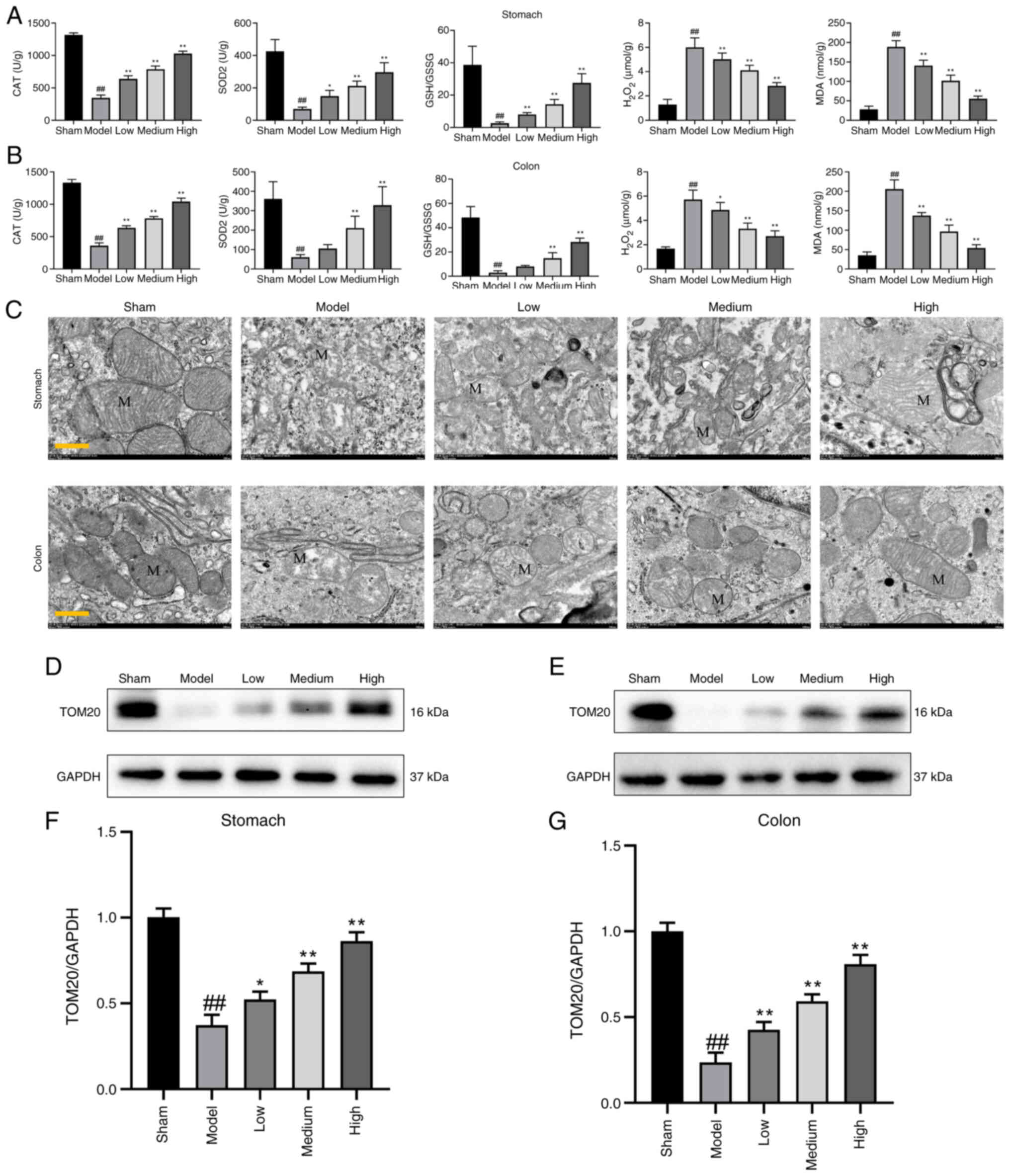
Figure 2

Effect of atractylodin on regulating
mitochondrial dysfunction. (A) Regulation of mitochondrial
oxidative damage markers: CAT, SOD 2, GSH/GSSG,
H2O2, MDA in the stomach, and (B) colon
tissue. (C) TEM images of mitochondrial morphology of each group.
Western blot analysis of mitochondrial membrane TOM20 markers in
(D) stomach and (E) colon tissue. Scale bar 500 nm. Relative
quantitation of the intensity of TOM20 in the (F) stomach and (G)
colon tissue. Values are means ± SD of n=6 (A, B, F and G) or n=3
(D and E) experiments. *P<0.05, **P<0.01 vs. the model group,
##P<0.01 vs. the Sham group. CAT, catalase; SOD 2,
superoxide dismutase; GSH/GSSG, glutathione/glutathione (oxidized);
MDA, malondialdehyde TEM, transmission electron microscopy; TOM20,
mitochondrial import receptor subunit TOM20 homolog; MDA,
malondialdehyde.

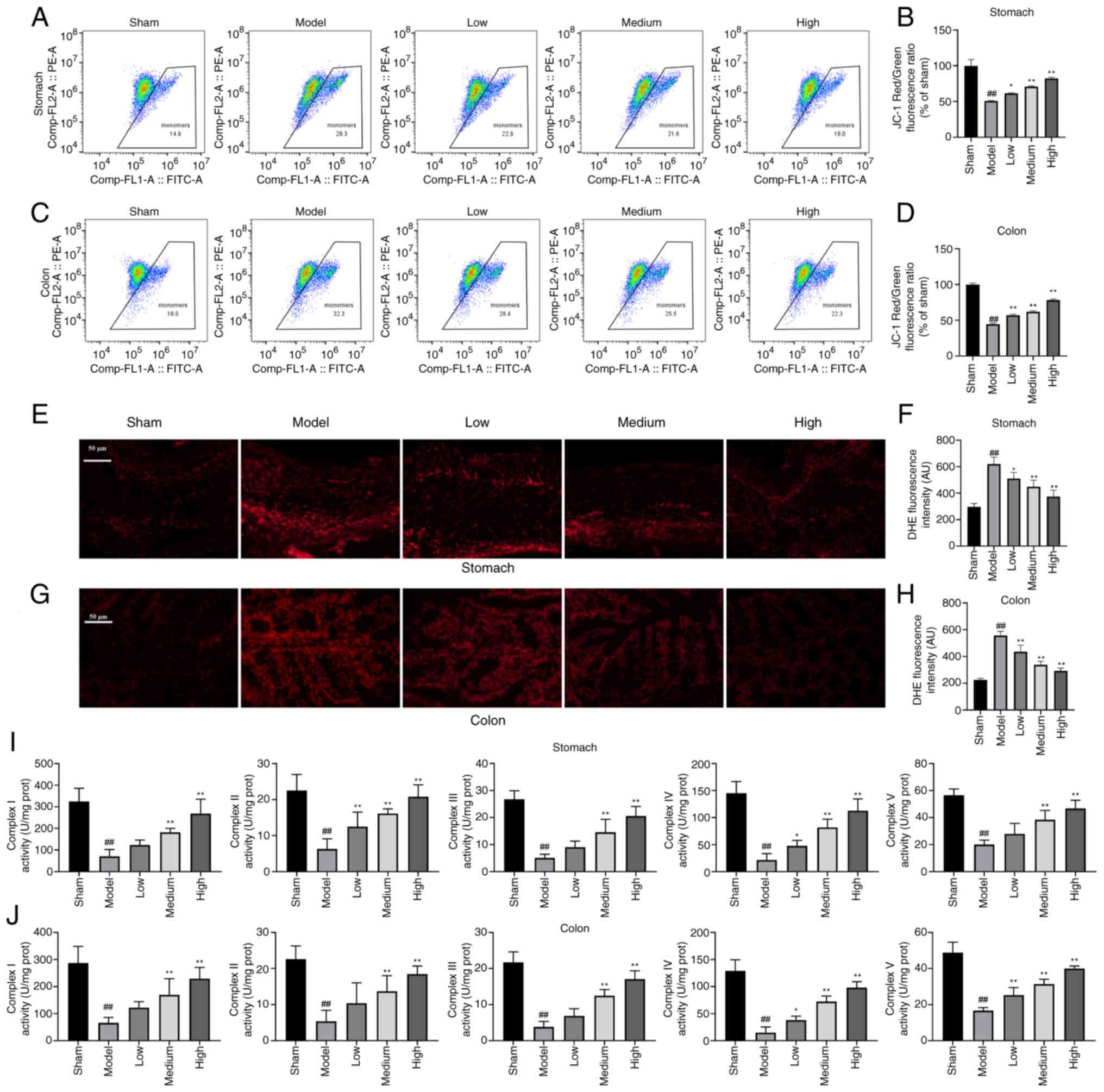
Figure 3

Results of stomach and colon tissue
mitochondrial membrane potential and ROS. Flow cytometric diagram
of cell mitochondrial membrane potential in each group in (A)
stomach and (C) colon tissue. Green fluorescence represents the
monomeric form of JC-1 (JC-1 monomers), indicating mitochondrial
transmembrane potential dissipation. Analysis of cell mitochondrial
membrane potential in each group in (B) stomach and (D) colon
tissue. DHE fluorescence (red) images in the (E) stomach and (G)
colon tissue; scale bar 50 µm. Statistical analysis results of
mitochondrial ROS in (F) stomach and (H) colon tissue. The activity
of mitochondrial respiratory chain complex I, II, III, IV, V in (I)
stomach and (J) colon tissue. Values are means ± SD of n=3 (A-H) or
n=6 (I and J) experiments. *P<0.05, **P<0.01 vs. the model
group, ##P<0.01 vs. the Sham group. ROS, reactive
oxygen species; DHE, dihydroethidium.

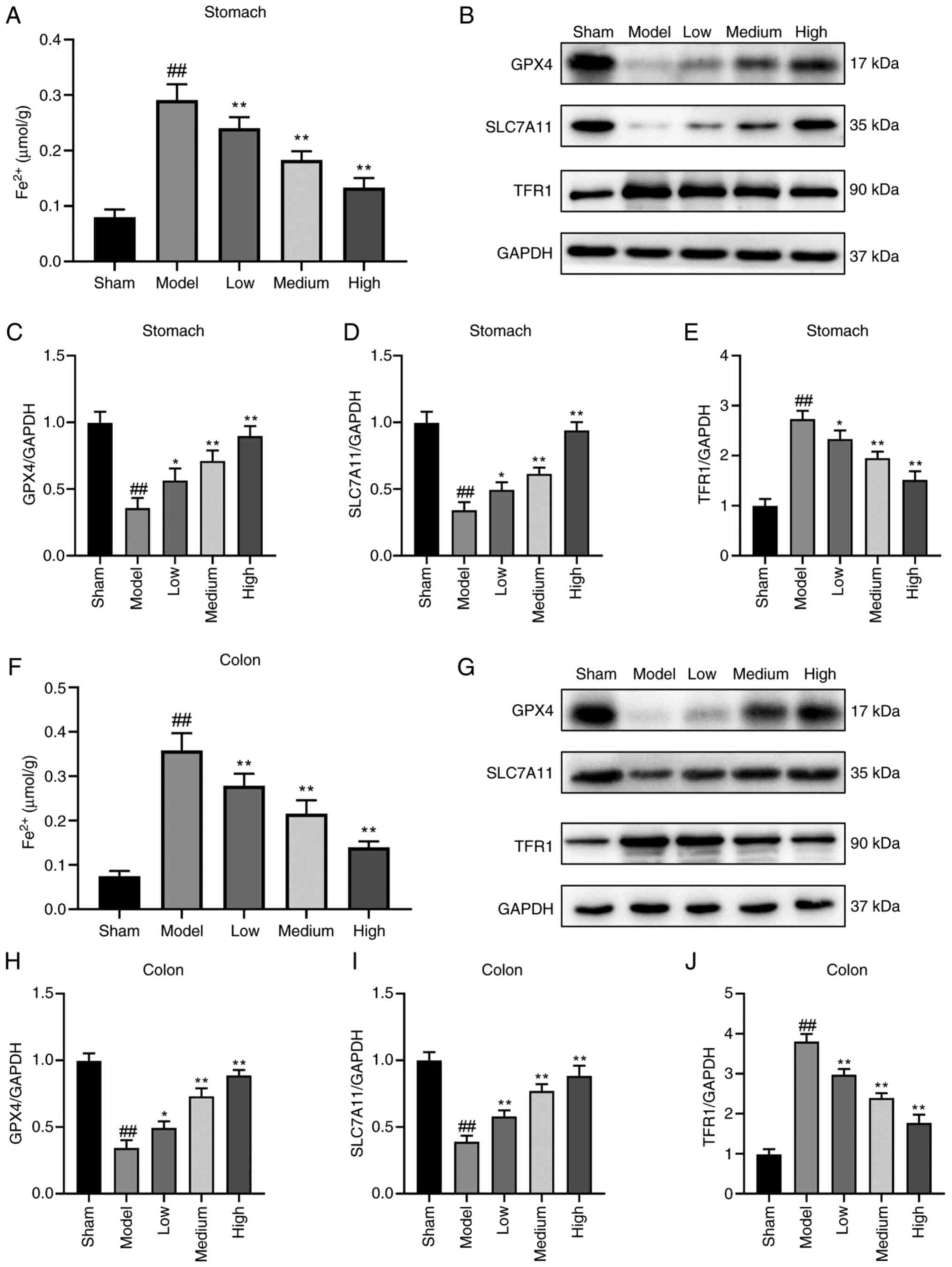
Figure 4

Atractylodin treatment improves the
prognosis of sepsis-induced ferroptosis in the stomach and colon
tissues. (A) Determination of the expression levels of
Fe2+ in stomach tissues. (B) Protein expression levels
of GPX4, SLC7A11, TFR1 and GAPDH in stomach tissue in each group.
Quantification of relative protein expression of (C) GPX4, (D)
SLC7A11 and (E) TFR1in the stomach tissue. (F) Determination of the
expression levels of Fe2+ in colon tissues. (G) Protein
expression levels of GPX4, SLC7A11, TFR1 and GAPDH in colon tissue
in each group. (H-I) Quantifying relative protein expression of (H)
GPX4, (I) SLC7A11 and (J) TFR1 in the colon tissue. Values are
means ± SD of n=6 (A and F) or n=3 (B-E and G-J) experiments.
*P<0.05, **P<0.01 vs. the model group, ##P<0.01
vs. the Sham group. GPX4, Phospholipid hydroperoxide glutathione
peroxidase; SLC7A11, Solute carrier family 7 member 11; TFR1,
transferrin receptor protein 1; GAPDH, glyceraldehyde-3-phosphate
dehydrogenase.

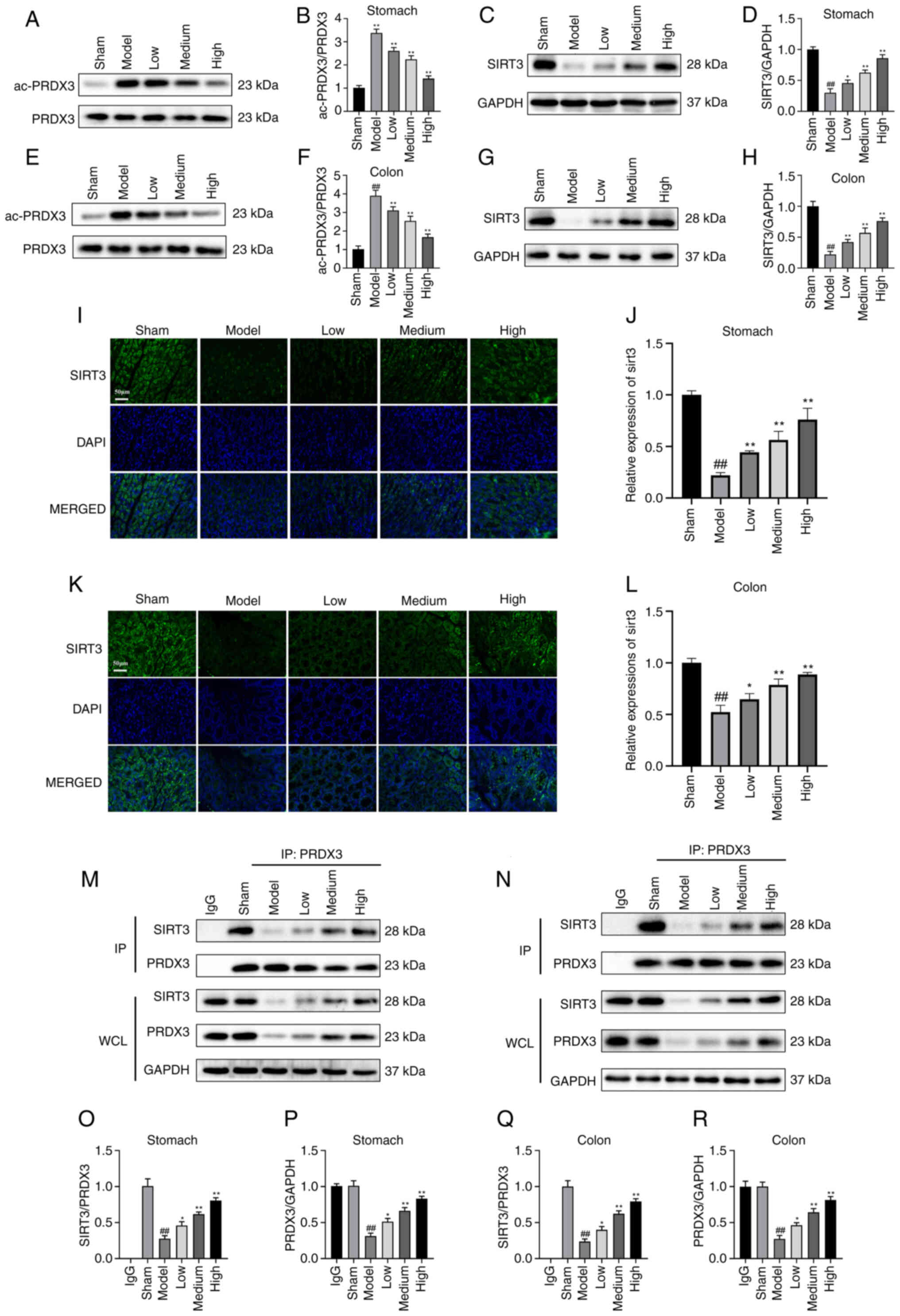
Figure 5

Atractylodin suppresses the
expression of Ac-PRDX3 while inducing the expression of SIRT3 in
stomach and colon tissues. (A) The western blot assay of Ac-PRDX3
and PRDX3 in stomach tissue and (E) colon tissue of each group.
Quantifying relative protein expression of Ac-PRDX3/PRDX3 in the
(B) stomach and (F) colon tissue. The western blot assay of SIRT3
in (C) stomach and (G) colon tissue of each group. Quantification
of relative protein expression of SIRT3/GAPDH in the (D) stomach
and (H) colon tissue. Confocal immunofluorescence of the mice
cochlear tissues in different groups. Confocal immunofluorescence
of SIRT3 (green) in (I) stomach tissue and (K) colon tissue; scale
bar, 50 µm. the cell nuclear parts were labeled with blue.
Quantification of relative expression of SIRT3 in the (J) stomach
and (L) colon tissue. Co-IP of PRDX3 with SIRT3 in (M) stomach and
(N) colon tissue. (O-R) Relative quantitative evaluation of the
western-blot analysis for SIRT3/PRDX3, PRDX3/GAPDH expression was
obtained using ImageJ software. Values are means ± SD of n=3 (A-R)
experiments. *P<0.05, **P<0.01 vs. the model group,
##P<0.01 vs. the Sham group. PRDX3, peroxiredoxin-3;
SIRT3, NAD-dependent protein deacetylase sirtuin-3, mitochondrial;
Co-IP, coimmunoprecipitation.

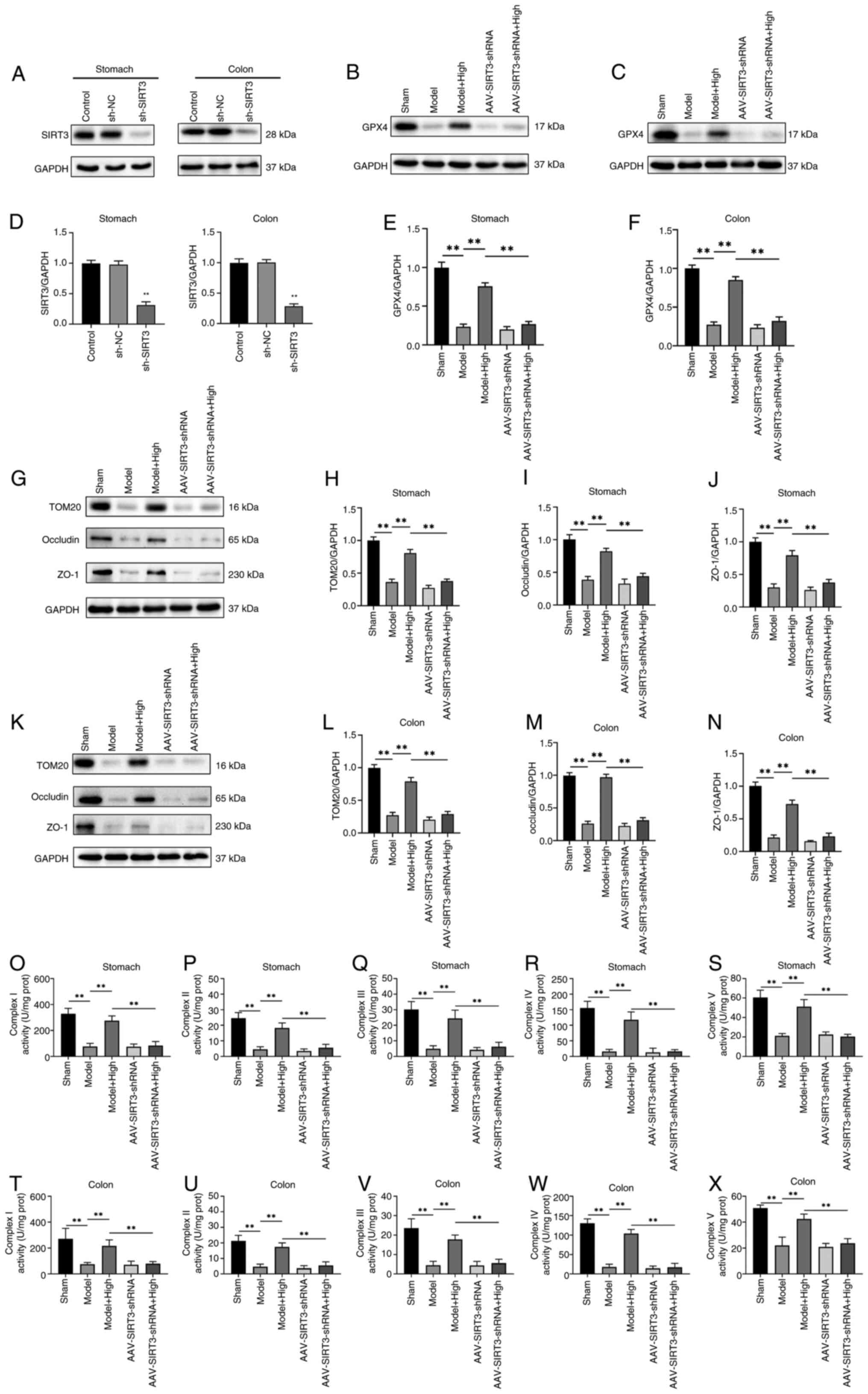
Figure 6

Regulatory mechanism of SIRT3 and
PRDX3 in sepsis-induced ferroptosis-mediated mitochondrial
oxidative damage. (A) Western blot analysis of SIRT3 protein level
in the stomach and colon tissue. Mice were injected with sh-SIRT3
or control shRNA (shRNA-NC). (B) Western blot analysis of GPX4
protein level in stomach and (C) Western blot analysis of GPX4
protein level in colon tissue. (D) Relative SIRT3/GAPDH expression
obtained using ImageJ software. Relative quantitative evaluation of
the GPX4/GAPDH expression in (E) stomach and (F) colon tissue of
each group. (G) Western blot analysis of TOM20, occludin, and ZO-1
protein level in stomach tissue of each group. Relative
quantitative evaluation of (H) TOM20, (I) occludin and (J) ZO-1
protein expression level in stomach tissue in each group. (K)
Western blot analysis of TOM20, occludin, and ZO-1 protein level in
stomach and colon tissue of each group. Relative quantitative
evaluation of (L) TOM20, (M) occludin and (N) ZO-1 protein
expression level in colon tissue. Activity of mitochondrial
respiratory chain complex (O) I, mitochondrial respiratory chain
complex II (P), mitochondrial respiratory chain complex III (Q),
mitochondrial respiratory chain complex IV (R), mitochondrial
respiratory chain complex V (S) in the stomach tissue. (T-X) The
activity of mitochondrial respiratory chain complex I (T),
mitochondrial respiratory chain complex II (U), mitochondrial
respiratory chain complex III (V), mitochondrial respiratory chain
complex IV (W), mitochondrial respiratory chain complex V (X) in
the colon tissue. Values are means ± SD of n=3 (A-N) or n=6 (O-X)
experiments. **P<0.01. SIRT3, NAD-dependent protein deacetylase
sirtuin-3, mitochondrial; PRDX3, peroxiredoxin-3; sh, short
hairpin; GPX4, Phospholipid hydroperoxide glutathione peroxidase;
TOM20, mitochondrial import receptor subunit TOM20 homolog; ZO-1,
zona occludens protein 1.
View References

1 

Salomão R, Ferreira BL, Salomão MC, Santos SS, Azevedo LCP and Brunialti M: Sepsis: Evolving concepts and challenges. Braz J Med Biol Res. 52:e85952019. View Article : Google Scholar

2 

Deitch EA: Gut-origin sepsis: Evolution of a concept. Surgeon. 10:350–356. 2012. View Article : Google Scholar

3 

Rudd KE, Johnson SC, Agesa KM, Shackelford KA, Tsoi D, Kievlan DR, Colombara DV, Ikuta KS, Kissoon N, Finfer S, et al: Global, regional, and national sepsis incidence and mortality, 1990–2017: Analysis for the global burden of disease study. Lancet. 395:200–211. 2020. View Article : Google Scholar

4 

Clements TW, Tolonen M, Ball CG and Kirkpatrick AW: Secondary peritonitis and intra-abdominal sepsis: An increasingly global disease in search of better systemic therapies. Scand J Surg. 110:139–149. 2021. View Article : Google Scholar

5 

Rittirsch D, Flierl MA and Ward PA: Harmful molecular mechanisms in sepsis. Nat Rev Immunol. 8:776–787. 2008. View Article : Google Scholar

6 

Zarjou A and Agarwal A: Sepsis and acute kidney injury. J Am Soc Nephrol. 22:999–1006. 2011. View Article : Google Scholar

7 

Tadokoro T, Ikeda M, Ide T, Deguchi H, Ikeda S, Okabe K, Ishikita A, Matsushima S, Koumura T, Yamada KI, et al: Mitochondria-dependent ferroptosis plays a pivotal role in doxorubicin cardiotoxicity. JCI Insight. 5:e1327472020. View Article : Google Scholar

8 

Dixon SJ, Lemberg KM, Lamprecht MR, Skouta R, Zaitsev EM, Gleason CE, Patel DN, Bauer AJ, Cantley AM, Yang WS, et al: Ferroptosis: An iron-dependent form of nonapoptotic cell death. Cell. 149:1060–1072. 2012. View Article : Google Scholar

9 

Li N, Wang W, Zhou H, Wu Q, Duan M, Liu C, Wu H, Deng W, Shen D and Tang Q: Ferritinophagy-mediated ferroptosis is involved in sepsis-induced cardiac injury. Free Radic Biol Med. 160:303–318. 2020. View Article : Google Scholar

10 

Li J, Lu K, Sun F, Tan S, Zhang X, Sheng W, Hao W, Liu M, Lv W and Han W: Panaxydol attenuates ferroptosis against LPS-induced acute lung injury in mice by Keap1-Nrf2/HO-1 pathway. J Transl Med. 19:962021. View Article : Google Scholar

11 

Wang Z, Sun R, Wang G, Chen Z, Li Y, Zhao Y, Liu D, Zhao H, Zhang F, Yao J and Tian X: SIRT3-mediated deacetylation of PRDX3 alleviates mitochondrial oxidative damage and apoptosis induced by intestinal ischemia/reperfusion injury. Redox Biol. 28:1013432020. View Article : Google Scholar

12 

Xu S, Liu Y, Yang S, Fei W, Qin J, Lu W and Xu J: FXN targeting induces cell death in ovarian cancer stem-like cells through PRDX3-Mediated oxidative stress. iScience. 27:1105062024. View Article : Google Scholar

13 

Tang F, Fan K, Wang K and Bian C: Atractylodin attenuates lipopolysaccharide-induced acute lung injury by inhibiting NLRP3 inflammasome and TLR4 pathways. J Pharmacol Sci. 136:203–211. 2018. View Article : Google Scholar

14 

Koonrungsesomboon N, Na-Bangchang K and Karbwang J: Therapeutic potential and pharmacological activities of Atractylodes lancea (Thunb.) DC. Asian Pac J Trop Med. 7:421–428. 2014. View Article : Google Scholar

15 

Yu C, Xiong Y, Chen D, Li Y, Xu B, Lin Y, Tang Z, Jiang C and Wang L: Ameliorative effects of atractylodin on intestinal inflammation and co-occurring dysmotility in both constipation and diarrhea prominent rats. Korean J Physiol Pharmacol. 21:1–9. 2017. View Article : Google Scholar

16 

Xu L, Zhou Y, Xu J, Xu X, Lu G, Lv Q, Wei L, Deng X, Shen X, Feng H and Wang J: Anti-inflammatory, antioxidant and anti-virulence roles of atractylodin in attenuating Listeria monocytogenes infection. Front Immunol. 13:9770512022. View Article : Google Scholar

17 

Lin YC, Yang CC, Lin CH, Hsia TC, Chao WC and Lin CC: Atractylodin ameliorates ovalbumin-induced asthma in a mouse model and exerts immunomodulatory effects on Th2 immunity and dendritic cell function. Mol Med Rep. 22:4909–4918. 2020. View Article : Google Scholar

18 

Qu L, Lin X, Liu C, Ke C, Zhou Z, Xu K, Cao G and Liu Y: Atractylodin attenuates dextran sulfate sodium-induced colitis by alleviating gut microbiota dysbiosis and inhibiting inflammatory response through the MAPK pathway. Front Pharmacol. 12:6653762021. View Article : Google Scholar

19 

Heo G, Kim Y, Kim EL, Park S, Rhee SH, Jung JH and Im E: Atractylodin ameliorates colitis via PPARα agonism. Int J Mol Sci. 24:8022023. View Article : Google Scholar

20 

Vitzthum LK, Nalawade V, Riviere P, Marar M, Furnish T, Lin LA, Thompson R and Murphy JD: Impacts of an opioid safety initiative on US veterans undergoing cancer treatment. J Natl Cancer Inst. 114:753–760. 2022. View Article : Google Scholar

21 

Nullens S, Staessens M, Peleman C, Plaeke P, Francque SM, Lammens C, Malhotra-Kumar S, De Man J and De Winter BY: Su1190 effect of gastrointestinal barrier protection on sepsis-induced changes of intestinal motility, inflammation and colonic permeability. Gastroenterology. 150:S4912016. View Article : Google Scholar

22 

Song GY, Kim SM, Back S, Yang SB and Yang YM: Atractylodes lancea and its constituent, atractylodin, ameliorates metabolic dysfunction-associated steatotic liver disease via AMPK activation. Biomol Ther (Seoul). 32:778–792. 2024. View Article : Google Scholar

23 

Kuo WT, Odenwald MA, Turner JR and Zuo L: Tight junction proteins occludin and ZO-1 as regulators of epithelial proliferation and survival. Ann N Y Acad Sci. 1514:21–33. 2022. View Article : Google Scholar

24 

Li S and Huang Y: Ferroptosis: An iron-dependent cell death form linking metabolism, diseases, immune cell and targeted therapy. Clin Transl Oncol. 24:1–12. 2022. View Article : Google Scholar

25 

Wu H, Wang F, Ta N, Zhang T and Gao W: The multifaceted regulation of mitochondria in ferroptosis. Life (Basel). 11:2222021.

26 

Gu J, Liu T, Guo R, Zhang L and Yang M: The coupling mechanism of mammalian mitochondrial complex I. Nat Struct Mol Biol. 29:172–182. 2022. View Article : Google Scholar

27 

Ryu KW, Fung TS, Baker DC, Saoi M, Park J, Febres-Aldana CA, Aly RG, Cui R, Sharma A, Fu Y, et al: Cellular ATP demand creates metabolically distinct subpopulations of mitochondria. Nature. 635:746–754. 2024. View Article : Google Scholar

28 

Sazanov LA: A giant molecular proton pump: structure and mechanism of respiratory complex I. Nat Rev Mol Cell Biol. 16:375–388. 2015. View Article : Google Scholar

29 

Lee HJ, Svahn E, Swanson JM, Lepp H, Voth GA, Brzezinski P and Gennis RB: Intricate role of water in proton transport through cytochrome c oxidase. J Am Chem Soc. 132:16225–16239. 2010. View Article : Google Scholar

30 

Chen Y, Guo X, Zeng Y, Mo X, Hong S, He H, Li J, Fatima S and Liu Q: Oxidative stress induces mitochondrial iron overload and ferroptotic cell death. Sci Rep. 13:155152023. View Article : Google Scholar

31 

Dixon SJ and Olzmann JA: The cell biology of ferroptosis. Nat Rev Mol Cell Biol. 25:424–442. 2024. View Article : Google Scholar

32 

Bryk R, Griffin P and Nathan C: Peroxynitrite reductase activity of bacterial peroxiredoxins. Nature. 407:211–215. 2000. View Article : Google Scholar

33 

Kang SW, Chae HZ, Seo MS, Kim K, Baines IC and Rhee SG: Mammalian peroxiredoxin isoforms can reduce hydrogen peroxide generated in response to growth factors and tumor necrosis factor-alpha. J Biol Chem. 273:6297–6302. 1998. View Article : Google Scholar

34 

Cox AG, Winterbourn CC and Hampton MB: Mitochondrial peroxiredoxin involvement in antioxidant defence and redox signalling. Biochem J. 425:313–325. 2009. View Article : Google Scholar

35 

Peskin AV, Low FM, Paton LN, Maghzal GJ, Hampton MB and Winterbourn CC: The high reactivity of peroxiredoxin 2 with H(2)O(2) is not reflected in its reaction with other oxidants and thiol reagents. J Biol Chem. 282:11885–11892. 2007. View Article : Google Scholar

36 

Nonn L, Berggren M and Powis G: Increased expression of mitochondrial peroxiredoxin-3 (thioredoxin peroxidase-2) protects cancer cells against hypoxia and drug-induced hydrogen peroxide-dependent apoptosis. Mol Cancer Res. 1:682–689. 2003.

37 

Lombard DB and Zwaans BM: SIRT3: As simple as it seems? Gerontology. 60:56–64. 2014. View Article : Google Scholar

38 

Shimazu T, Hirschey MD, Hua L, Dittenhafer-Reed KE, Schwer B, Lombard DB, Li Y, Bunkenborg J, Alt FW, Denu JM, et al: SIRT3 deacetylates mitochondrial 3-hydroxy-3-methylglutaryl CoA synthase 2 and regulates ketone body production. Cell Metab. 12:654–661. 2010. View Article : Google Scholar

39 

Hebert AS, Dittenhafer-Reed KE, Yu W, Bailey DJ, Selen ES, Boersma MD, Carson JJ, Tonelli M, Balloon AJ, Higbee AJ, et al: Calorie restriction and SIRT3 trigger global reprogramming of the mitochondrial protein acetylome. Mol Cell. 49:186–199. 2013. View Article : Google Scholar

40 

Liang J, Zhou C, Zhang C, Liang S, Zhou Z, Zhou Z, Wu C, Zhao H, Meng X, Zou F, et al: Nicotinamide mononucleotide attenuates airway epithelial barrier dysfunction via inhibiting SIRT3 SUMOylation in asthma. Int Immunopharmacol. 127:1113282024. View Article : Google Scholar

41 

Wang T, Cao Y, Zheng Q, Tu J, Zhou W, He J, Zhong J, Chen Y, Wang J, Cai R, et al: SENP1-Sirt3 signaling controls mitochondrial protein acetylation and metabolism. Mol Cell. 75:823–834.e5. 2019. View Article : Google Scholar

42 

Wang X, Shen T, Lian J, Deng K, Qu C, Li E, Li G, Ren Y, Wang Z, Jiang Z, et al: Resveratrol reduces ROS-induced ferroptosis by activating SIRT3 and compensating the GSH/GPX4 pathway. Mol Med. 29:1372023. View Article : Google Scholar

43 

Na-Bangchang K, Kulma I, Plengsuriyakarn T, Tharavanij T, Kotawng K, Chemung A, Muhamad N and Karbwang J: Phase I clinical trial to evaluate the safety and pharmacokinetics of capsule formulation of the standardized extract of Atractylodes lancea. J Tradit Complement Med. 11:343–355. 2021. View Article : Google Scholar

44 

Park SJ, Park J, Lee MJ, Seo JS, Ahn JY and Cho JW: Time series analysis of delta neutrophil index as the predictor of sepsis in patients with acute poisoning. Hum Exp Toxicol. 39:86–94. 2020. View Article : Google Scholar

45 

Geven C, Blet A, Kox M, Hartmann O, Scigalla P, Zimmermann J, Marx G, Laterre PF, Mebazaa A and Pickkers P: A double-blind, placebo-controlled, randomised, multicentre, proof-of-concept and dose-finding phase II clinical trial to investigate the safety, tolerability and efficacy of adrecizumab in patients with septic shock and elevated adrenomedullin concentration (AdrenOSS-2). BMJ Open. 9:e0244752019. View Article : Google Scholar

Related Articles

  • Abstract
  • View
  • Download
  • Twitter
Copy and paste a formatted citation
Spandidos Publications style
Hu Y, Chen M, Wang J, Wu T, Zhang H, Li T, Gao H and Bai Y: Atractylodin inhibits ferroptosis in sepsis‑induced acute gastrointestinal injury via SIRT3/PRDX3. Mol Med Rep 32: 330, 2025.
APA
Hu, Y., Chen, M., Wang, J., Wu, T., Zhang, H., Li, T. ... Bai, Y. (2025). Atractylodin inhibits ferroptosis in sepsis‑induced acute gastrointestinal injury via SIRT3/PRDX3. Molecular Medicine Reports, 32, 330. https://doi.org/10.3892/mmr.2025.13695
MLA
Hu, Y., Chen, M., Wang, J., Wu, T., Zhang, H., Li, T., Gao, H., Bai, Y."Atractylodin inhibits ferroptosis in sepsis‑induced acute gastrointestinal injury via SIRT3/PRDX3". Molecular Medicine Reports 32.6 (2025): 330.
Chicago
Hu, Y., Chen, M., Wang, J., Wu, T., Zhang, H., Li, T., Gao, H., Bai, Y."Atractylodin inhibits ferroptosis in sepsis‑induced acute gastrointestinal injury via SIRT3/PRDX3". Molecular Medicine Reports 32, no. 6 (2025): 330. https://doi.org/10.3892/mmr.2025.13695
Copy and paste a formatted citation
x
Spandidos Publications style
Hu Y, Chen M, Wang J, Wu T, Zhang H, Li T, Gao H and Bai Y: Atractylodin inhibits ferroptosis in sepsis‑induced acute gastrointestinal injury via SIRT3/PRDX3. Mol Med Rep 32: 330, 2025.
APA
Hu, Y., Chen, M., Wang, J., Wu, T., Zhang, H., Li, T. ... Bai, Y. (2025). Atractylodin inhibits ferroptosis in sepsis‑induced acute gastrointestinal injury via SIRT3/PRDX3. Molecular Medicine Reports, 32, 330. https://doi.org/10.3892/mmr.2025.13695
MLA
Hu, Y., Chen, M., Wang, J., Wu, T., Zhang, H., Li, T., Gao, H., Bai, Y."Atractylodin inhibits ferroptosis in sepsis‑induced acute gastrointestinal injury via SIRT3/PRDX3". Molecular Medicine Reports 32.6 (2025): 330.
Chicago
Hu, Y., Chen, M., Wang, J., Wu, T., Zhang, H., Li, T., Gao, H., Bai, Y."Atractylodin inhibits ferroptosis in sepsis‑induced acute gastrointestinal injury via SIRT3/PRDX3". Molecular Medicine Reports 32, no. 6 (2025): 330. https://doi.org/10.3892/mmr.2025.13695
Follow us
  • Twitter
  • LinkedIn
  • Facebook
About
  • Spandidos Publications
  • Careers
  • Cookie Policy
  • Privacy Policy
How can we help?
  • Help
  • Live Chat
  • Contact
  • Email to our Support Team