Spandidos Publications Logo
  • About
    • About Spandidos
    • Aims and Scopes
    • Abstracting and Indexing
    • Editorial Policies
    • Reprints and Permissions
    • Job Opportunities
    • Terms and Conditions
    • Contact
  • Journals
    • All Journals
    • Oncology Letters
      • Oncology Letters
      • Information for Authors
      • Editorial Policies
      • Editorial Board
      • Aims and Scope
      • Abstracting and Indexing
      • Bibliographic Information
      • Archive
    • International Journal of Oncology
      • International Journal of Oncology
      • Information for Authors
      • Editorial Policies
      • Editorial Board
      • Aims and Scope
      • Abstracting and Indexing
      • Bibliographic Information
      • Archive
    • Molecular and Clinical Oncology
      • Molecular and Clinical Oncology
      • Information for Authors
      • Editorial Policies
      • Editorial Board
      • Aims and Scope
      • Abstracting and Indexing
      • Bibliographic Information
      • Archive
    • Experimental and Therapeutic Medicine
      • Experimental and Therapeutic Medicine
      • Information for Authors
      • Editorial Policies
      • Editorial Board
      • Aims and Scope
      • Abstracting and Indexing
      • Bibliographic Information
      • Archive
    • International Journal of Molecular Medicine
      • International Journal of Molecular Medicine
      • Information for Authors
      • Editorial Policies
      • Editorial Board
      • Aims and Scope
      • Abstracting and Indexing
      • Bibliographic Information
      • Archive
    • Biomedical Reports
      • Biomedical Reports
      • Information for Authors
      • Editorial Policies
      • Editorial Board
      • Aims and Scope
      • Abstracting and Indexing
      • Bibliographic Information
      • Archive
    • Oncology Reports
      • Oncology Reports
      • Information for Authors
      • Editorial Policies
      • Editorial Board
      • Aims and Scope
      • Abstracting and Indexing
      • Bibliographic Information
      • Archive
    • Molecular Medicine Reports
      • Molecular Medicine Reports
      • Information for Authors
      • Editorial Policies
      • Editorial Board
      • Aims and Scope
      • Abstracting and Indexing
      • Bibliographic Information
      • Archive
    • World Academy of Sciences Journal
      • World Academy of Sciences Journal
      • Information for Authors
      • Editorial Policies
      • Editorial Board
      • Aims and Scope
      • Abstracting and Indexing
      • Bibliographic Information
      • Archive
    • International Journal of Functional Nutrition
      • International Journal of Functional Nutrition
      • Information for Authors
      • Editorial Policies
      • Editorial Board
      • Aims and Scope
      • Abstracting and Indexing
      • Bibliographic Information
      • Archive
    • International Journal of Epigenetics
      • International Journal of Epigenetics
      • Information for Authors
      • Editorial Policies
      • Editorial Board
      • Aims and Scope
      • Abstracting and Indexing
      • Bibliographic Information
      • Archive
    • Medicine International
      • Medicine International
      • Information for Authors
      • Editorial Policies
      • Editorial Board
      • Aims and Scope
      • Abstracting and Indexing
      • Bibliographic Information
      • Archive
  • Articles
  • Information
    • Information for Authors
    • Information for Reviewers
    • Information for Librarians
    • Information for Advertisers
    • Conferences
  • Language Editing
Spandidos Publications Logo
  • About
    • About Spandidos
    • Aims and Scopes
    • Abstracting and Indexing
    • Editorial Policies
    • Reprints and Permissions
    • Job Opportunities
    • Terms and Conditions
    • Contact
  • Journals
    • All Journals
    • Biomedical Reports
      • Information for Authors
      • Editorial Policies
      • Editorial Board
      • Aims and Scope
      • Abstracting and Indexing
      • Bibliographic Information
      • Archive
    • Experimental and Therapeutic Medicine
      • Information for Authors
      • Editorial Policies
      • Editorial Board
      • Aims and Scope
      • Abstracting and Indexing
      • Bibliographic Information
      • Archive
    • International Journal of Epigenetics
      • Information for Authors
      • Editorial Policies
      • Editorial Board
      • Aims and Scope
      • Abstracting and Indexing
      • Bibliographic Information
      • Archive
    • International Journal of Functional Nutrition
      • Information for Authors
      • Editorial Policies
      • Editorial Board
      • Aims and Scope
      • Abstracting and Indexing
      • Bibliographic Information
      • Archive
    • International Journal of Molecular Medicine
      • Information for Authors
      • Editorial Policies
      • Editorial Board
      • Aims and Scope
      • Abstracting and Indexing
      • Bibliographic Information
      • Archive
    • International Journal of Oncology
      • Information for Authors
      • Editorial Policies
      • Editorial Board
      • Aims and Scope
      • Abstracting and Indexing
      • Bibliographic Information
      • Archive
    • Medicine International
      • Information for Authors
      • Editorial Policies
      • Editorial Board
      • Aims and Scope
      • Abstracting and Indexing
      • Bibliographic Information
      • Archive
    • Molecular and Clinical Oncology
      • Information for Authors
      • Editorial Policies
      • Editorial Board
      • Aims and Scope
      • Abstracting and Indexing
      • Bibliographic Information
      • Archive
    • Molecular Medicine Reports
      • Information for Authors
      • Editorial Policies
      • Editorial Board
      • Aims and Scope
      • Abstracting and Indexing
      • Bibliographic Information
      • Archive
    • Oncology Letters
      • Information for Authors
      • Editorial Policies
      • Editorial Board
      • Aims and Scope
      • Abstracting and Indexing
      • Bibliographic Information
      • Archive
    • Oncology Reports
      • Information for Authors
      • Editorial Policies
      • Editorial Board
      • Aims and Scope
      • Abstracting and Indexing
      • Bibliographic Information
      • Archive
    • World Academy of Sciences Journal
      • Information for Authors
      • Editorial Policies
      • Editorial Board
      • Aims and Scope
      • Abstracting and Indexing
      • Bibliographic Information
      • Archive
  • Articles
  • Information
    • For Authors
    • For Reviewers
    • For Librarians
    • For Advertisers
    • Conferences
  • Language Editing
Login Register Submit
  • This site uses cookies
  • You can change your cookie settings at any time by following the instructions in our Cookie Policy. To find out more, you may read our Privacy Policy.

    I agree
Search articles by DOI, keyword, author or affiliation
Search
Advanced Search
presentation
Molecular Medicine Reports
Join Editorial Board Propose a Special Issue
Print ISSN: 1791-2997 Online ISSN: 1791-3004
Journal Cover
December-2025 Volume 32 Issue 6

Full Size Image

Sign up for eToc alerts
Recommend to Library

Journals

International Journal of Molecular Medicine

International Journal of Molecular Medicine

International Journal of Molecular Medicine is an international journal devoted to molecular mechanisms of human disease.

International Journal of Oncology

International Journal of Oncology

International Journal of Oncology is an international journal devoted to oncology research and cancer treatment.

Molecular Medicine Reports

Molecular Medicine Reports

Covers molecular medicine topics such as pharmacology, pathology, genetics, neuroscience, infectious diseases, molecular cardiology, and molecular surgery.

Oncology Reports

Oncology Reports

Oncology Reports is an international journal devoted to fundamental and applied research in Oncology.

Experimental and Therapeutic Medicine

Experimental and Therapeutic Medicine

Experimental and Therapeutic Medicine is an international journal devoted to laboratory and clinical medicine.

Oncology Letters

Oncology Letters

Oncology Letters is an international journal devoted to Experimental and Clinical Oncology.

Biomedical Reports

Biomedical Reports

Explores a wide range of biological and medical fields, including pharmacology, genetics, microbiology, neuroscience, and molecular cardiology.

Molecular and Clinical Oncology

Molecular and Clinical Oncology

International journal addressing all aspects of oncology research, from tumorigenesis and oncogenes to chemotherapy and metastasis.

World Academy of Sciences Journal

World Academy of Sciences Journal

Multidisciplinary open-access journal spanning biochemistry, genetics, neuroscience, environmental health, and synthetic biology.

International Journal of Functional Nutrition

International Journal of Functional Nutrition

Open-access journal combining biochemistry, pharmacology, immunology, and genetics to advance health through functional nutrition.

International Journal of Epigenetics

International Journal of Epigenetics

Publishes open-access research on using epigenetics to advance understanding and treatment of human disease.

Medicine International

Medicine International

An International Open Access Journal Devoted to General Medicine.

Journal Cover
December-2025 Volume 32 Issue 6

Full Size Image

Sign up for eToc alerts
Recommend to Library

  • Article
  • Citations
    • Cite This Article
    • Download Citation
    • Create Citation Alert
    • Remove Citation Alert
    • Cited By
  • Similar Articles
    • Related Articles (in Spandidos Publications)
    • Similar Articles (Google Scholar)
    • Similar Articles (PubMed)
  • Download PDF
  • Download XML
  • View XML
Article Open Access

HSPD1 regulates angiotensin II‑induced atrial fibrillation via the PPAR signaling pathway

  • Authors:
    • Yimeng Zhou
    • Lianzhi Zhang
    • Shunping Zhou
    • Wenjia Zhang
    • Qunlin Gong
    • Nan Xu
    • Jiahong Wang
    • Zhong Zhang
    • Nannan Chen
  • View Affiliations / Copyright

    Affiliations: Department of Cardiology, School of Medicine, Yangpu Hospital, Tongji University, Shanghai 200090, P.R. China
    Copyright: © Zhou et al. This is an open access article distributed under the terms of Creative Commons Attribution License.
  • Article Number: 331
    |
    Published online on: September 26, 2025
       https://doi.org/10.3892/mmr.2025.13696
  • Expand metrics +
Metrics: Total Views: 0 (Spandidos Publications: | PMC Statistics: )
Metrics: Total PDF Downloads: 0 (Spandidos Publications: | PMC Statistics: )
Cited By (CrossRef): 0 citations Loading Articles...

This article is mentioned in:


Abstract

Atrial fibrillation (AF) is a multifactorial condition, and understanding its molecular mechanisms is key for developing targeted therapies. The present study aimed to investigate the role of heat shock protein D1 (HSPD1) in the pathogenesis of AF, particularly in angiotensin II (Ang II)‑induced cardiac fibroblasts (CFs). Differentially expressed genes (DEGs) were screened from the GSE31821 dataset for enrichment analysis, protein‑protein interaction (PPI) network construction and the hub gene HSPD1 was identified. In vitro experiments, including Cell Counting Kit‑8 and Transwell migration assay, Reverse transcription‑quantitative (RT‑q)PCR, Western blotting and ELISA, were conducted to evaluated the effects of Ang II on CF viability, migration, fibrosis‑associated markers (collagen I, collagen III and α‑smooth muscle actin) and HSPD1 expression. The effects of HSPD1 knockdown on cell viability, inflammatory cytokines (TNF‑α, IL‑8 and IL‑1β), AF‑associated proteins [atrial natriuretic peptide (ANP), β‑major histocompatibility complex (MHC) and MMP‑2] and peroxisome proliferator‑activated receptor (PPAR) signaling pathways were investigated. A total of 582 DEGs were identified, with significant involvement of pathways such as ‘MAPK signaling pathway’ and ‘Wnt signaling pathway’. A total of five genes (HSP90AA1, HSP90AB1, HSPA4, HSPA8 and HSPD1) were highly expressed in AF samples. In vitro, Ang II‑induced fibrotic changes in CFs included increased viability, migration and upregulated fibrosis markers and HSPD1 expression. HSPD1 knockdown decreased Ang II‑induced secretion of inflammatory cytokines (TNF‑α, IL‑8 and IL‑1β) and expression of AF‑associated proteins (ANP, β‑MHC and MMP‑2). Downregulation of PPAR signaling proteins (PPARα, PPARγ, carnitine palmitoyltransferase I and sirtuin3) were observed, while thiazolidinedione treatment partially prevented Ang II‑induced changes. HSPD1 serves a key role in Ang II‑induced CF function, promoting fibrosis, inflammation and AF‑associated protein expression. Targeting HSPD1 in combination with PPAR pathway modulation presents a promising therapeutic strategy for AF treatment.
View Figures

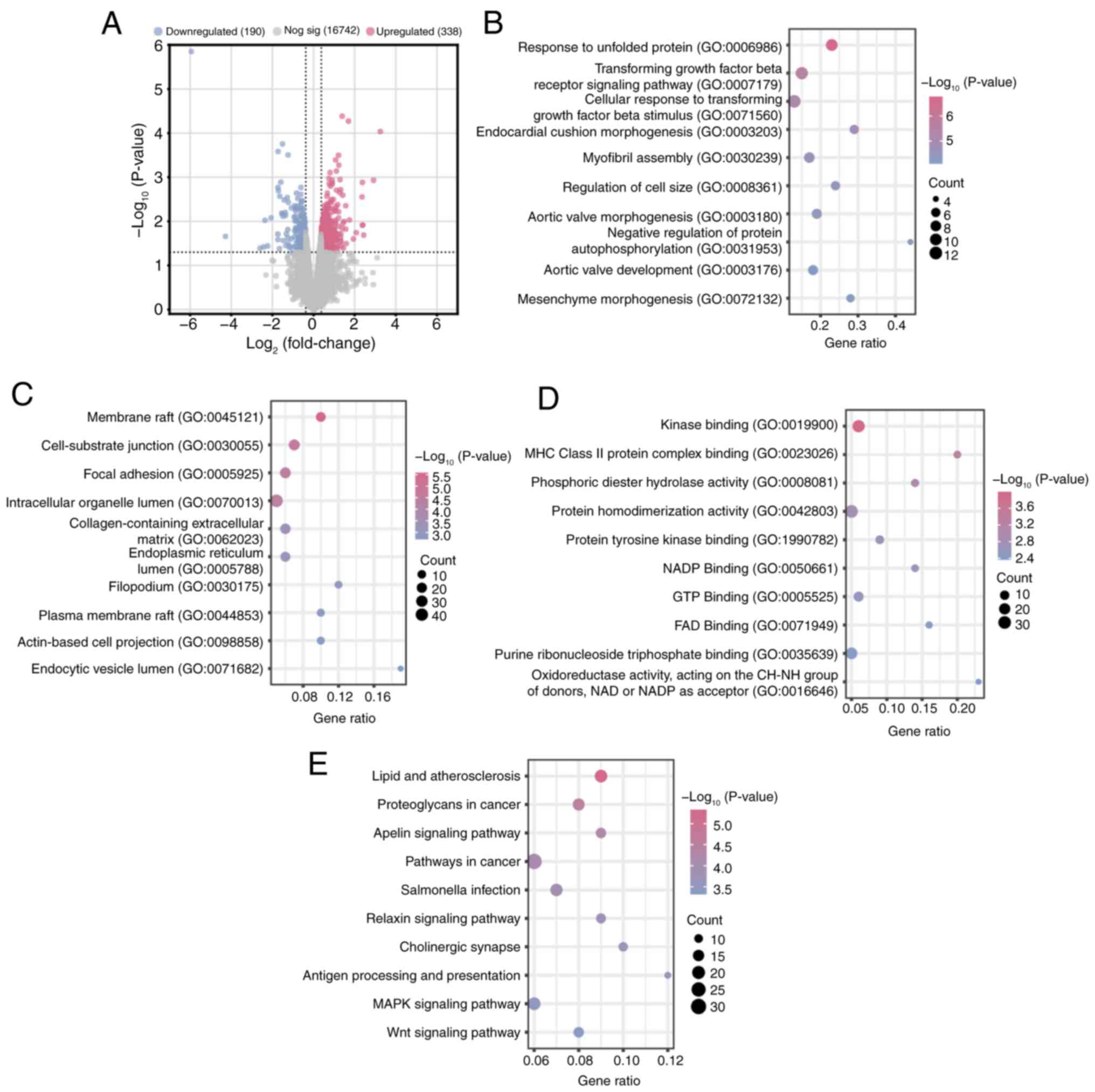
Figure 1

Screening and enrichment analysis of
GSE31821 DEGs. (A) Volcano plot of filtered DEGs from the GSE31821
dataset. Enrichment analysis of DEGs of the GSE31812 dataset,
including (B) biological process, (C) cellular component, (D)
molecular function and (E) KEGG. DEG, differentially expressed
gene; KEGG, Kyoto Encyclopedia of Genes and Genomes.

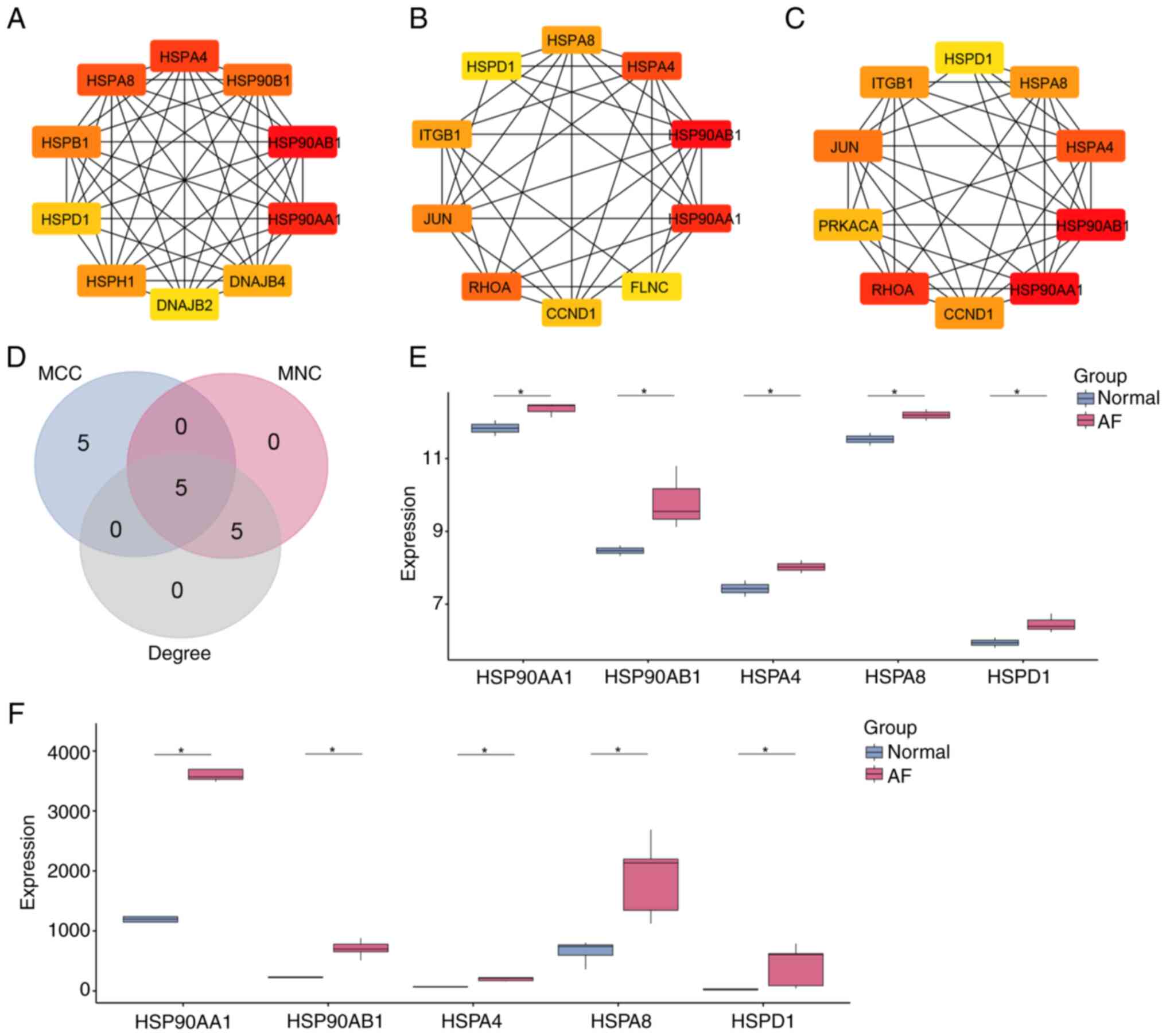
Figure 2

Expression analysis of candidate
genes in the PPI network. PPI network of DEGs of the GSE31812
dataset, including (A) MCC, (B) MNC and (C) degree. (D) Venn
diagram of the intersection of MCC, MNC and degree. Expression
analysis of five overlapping genes in (E) GSE31821 dataset and (F)
GSE14975 dataset. *P<0.05. PPI, protein-protein interaction;
DEG, differentially expressed gene; MCC, maximum correlation
criterion; MNC, maximum neighborhood component; AF, atrial
fibrillation; HSP, heat shock protein.

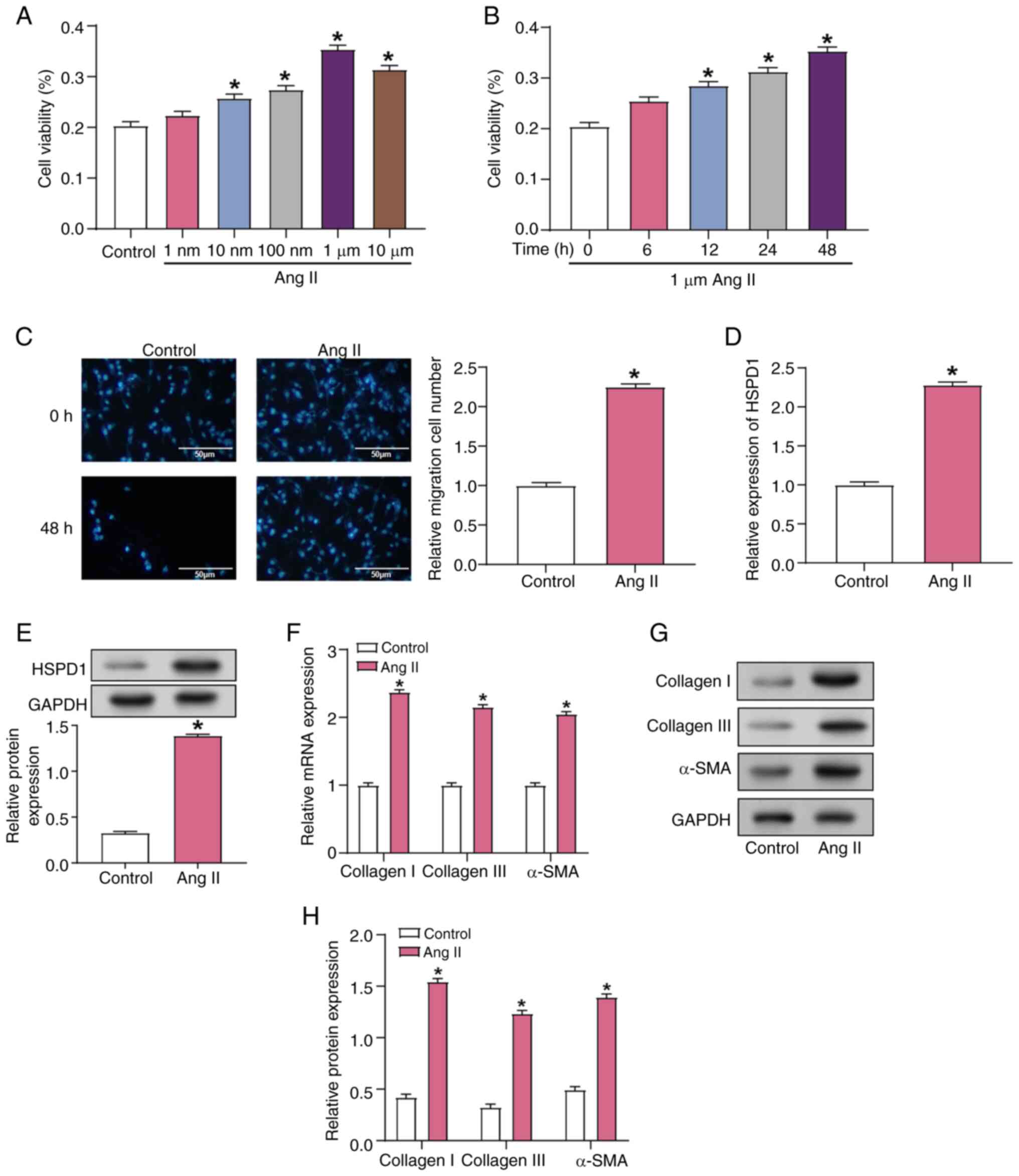
Figure 3

Effects of Ang II induction on
fibrosis in CFs. (A) Viability of CFs treated with different
concentrations of Ang II for 24 h, measured using the Cell Counting
Kit-8 assay. *P<0.05 vs. the Control group. (B) Cell viability
of CFs treated with 1 µM Ang II for 0, 6, 12, 24, and 48 h.
*P<0.05 vs. the 1 µM Ang II for 0 h group. (C) Transwell assay
of CF migration after induction with 1 µM Ang II for 48 h. Scale
bar, 50 µm. *P<0.05 vs. the Control group. (D) mRNA and (E)
protein expression of HSPD1 in CF cells induced by 1 µM Ang
II for 48 h. *P<0.05 vs. the Control group. (F) mRNA expression
of collagen I, collagen III and α-SMA in CFs following induction
with 1 µM Ang II for 48 h. *P<0.05 vs. the Control group. (G)
Representative western blotting and (H) protein expression of
collagen I, collagen III and α-SMA in CFs following induction with
1 µM Ang II for 48 h. *P<0.05 vs. Control group Ang II,
angiotensin II; CF, cardiac fibroblast; HSPD1, heat shock protein
D1.

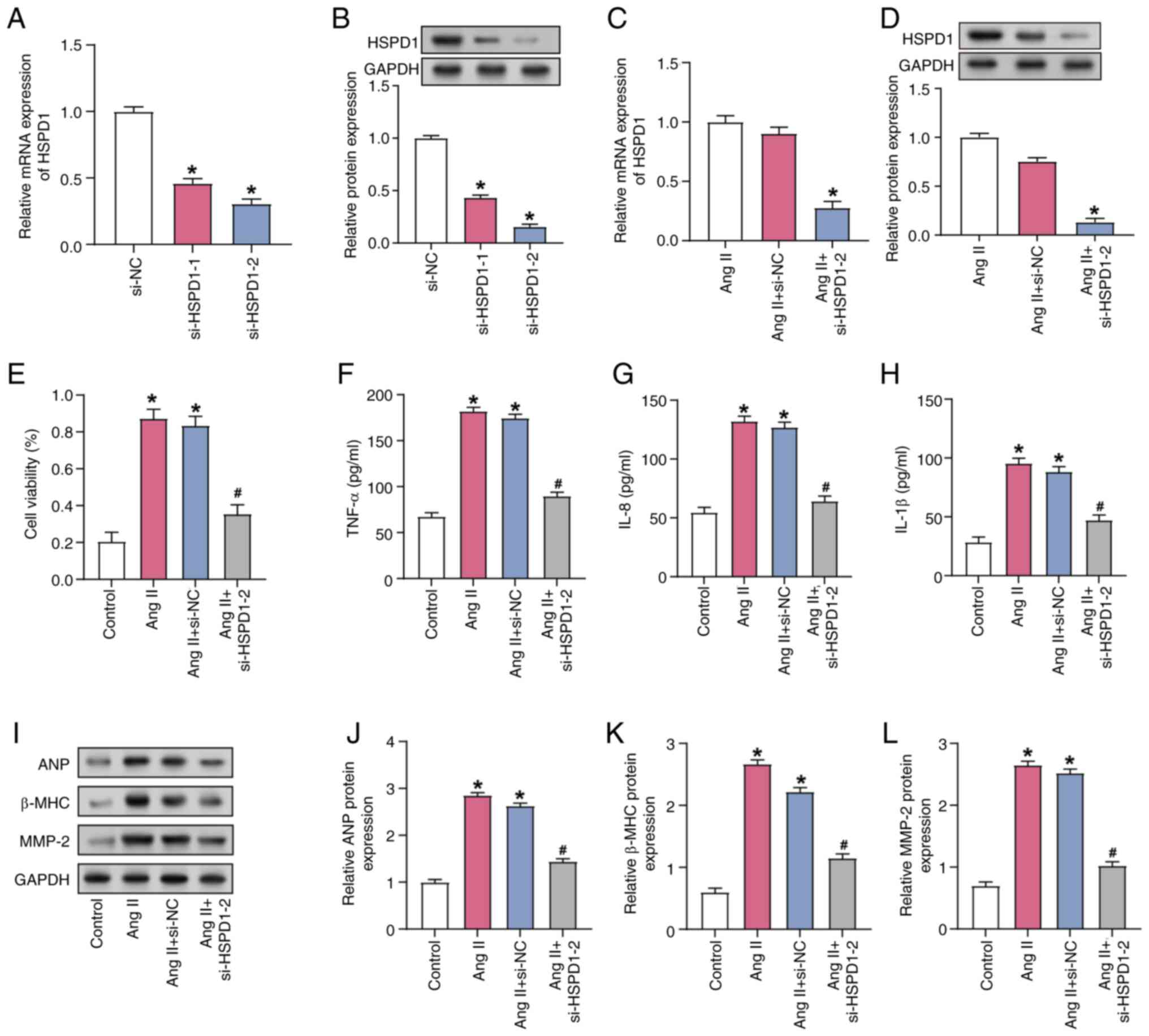
Figure 4

Downregulation of HSPD1 improves Ang
II-induced AF. (A) mRNA and (B) protein expression of HSPD1 in
HSPD1-knockdown CFs. *P<0.05 vs. the si-NC group. (C)
mRNA and (D) protein expression of HSPD1 in CFs. *P<0.05 vs. the
Ang II+ si-NC group. (E) Cell viability of CFs was assessed by Cell
Counting Kit-8 assay. ELISA was used to detect the secretion of
inflammatory factors (F) TNF-α, (G) IL-8 and (H) IL-1β in CFs. (I)
Representative western blotting and protein expression of the
AF-associated markers (J) ANP, (K) β-MHC and (L) MMP-2 in CFs.
*P<0.05 vs. the Control group; #P<0.05 vs. the Ang
II+ si-NC group. AF, atrial fibrillation; Ang II, angiotensin II;
CF, cardiac fibroblast; si, small interfering; NC, negative
control; HSPD1, heat shock protein D1; ANP, atrial natriuretic
peptide; MHC, major histocompatibility complex.

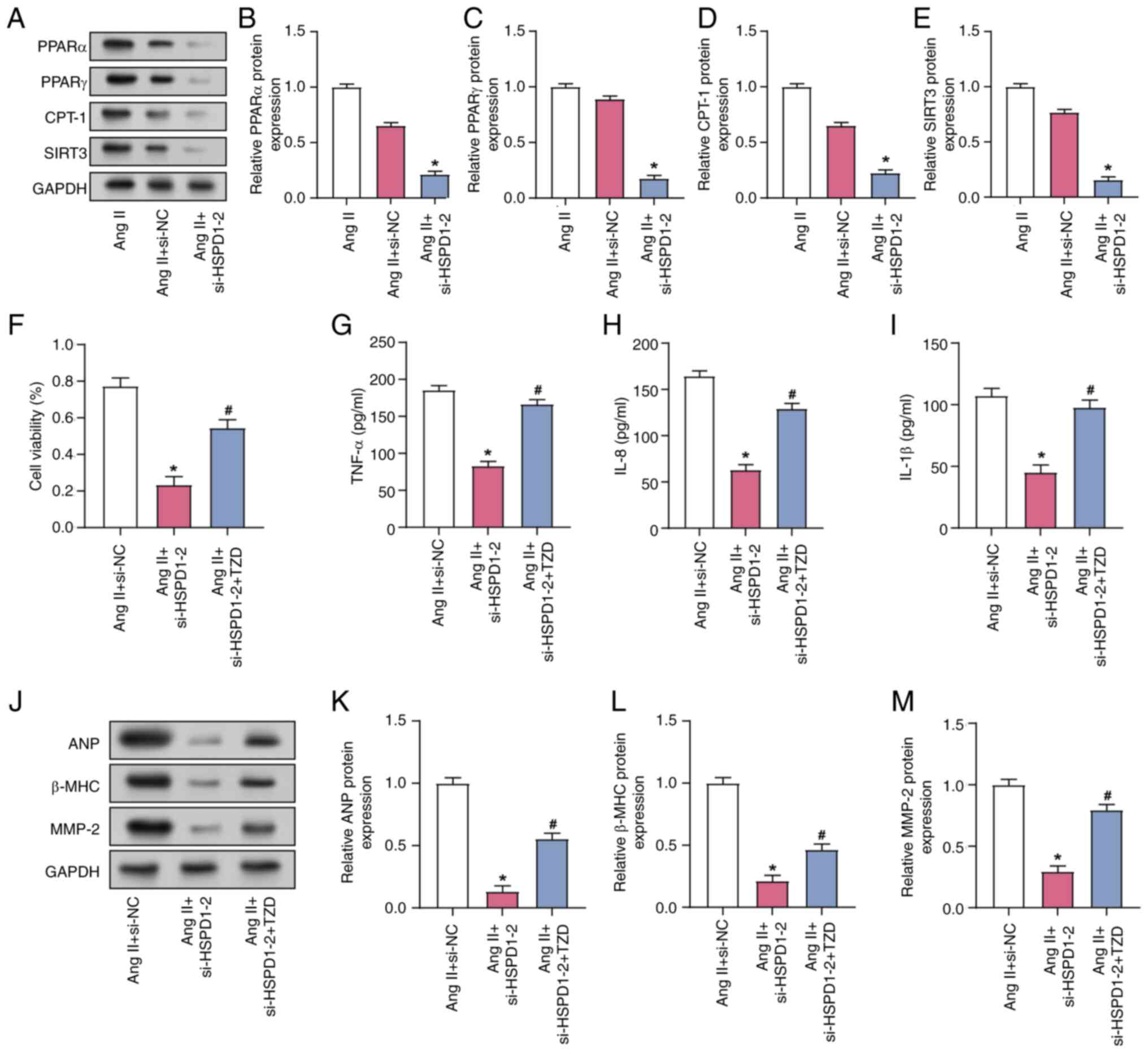
Figure 5

Regulation of Ang II-induced AF by
HSPD1 via the PPAR signaling pathway. (A) Representative western
blotting and protein expression of PPAR signaling
pathway-associated proteins (B) PPARα, (C) PPARγ, (D) CPT-1 and (E)
SIRT3 in CFs. (F) Cell Counting Kit-8 assay of CF viability. ELISA
detection of the expression of the inflammatory factors (G) TNF-α,
(H) IL-8 and (I) IL-1β in CFs. (J) Representative western blotting
and protein expression of the AF markers (K) ANP, (L) β-MHC and (M)
MMP-2 in CFs. *P<0.05 vs. Ang II+ si-NC; #P<0.05
vs. the Ang II+si-HSPD1-2 group. AF, atrial fibrillation; TZD,
thiazolidinedione; CF, cardiac fibroblast; si, small interfering;
NC, negative control; PPAR, peroxisome proliferator-activated
receptor; CPT-1, carnitine palmitoyltransferase I; SIRT, sirtuin;
ANP, atrial natriuretic peptide; MHC, major histocompatibility
complex.
View References

1 

Czabanski R, Horoba K, Wrobel J, Matonia A, Martinek R, Kupka T, Jezewski M, Kahankova R, Jezewski J and Leski JM: Detection of atrial fibrillation episodes in long-term heart rhythm signals using a support vector machine. Sensors (Basel). 20:7652020. View Article : Google Scholar

2 

Bavishi A and Patel RB: Addressing comorbidities in heart failure: Hypertension, atrial fibrillation, and diabetes. Heart Fail Clin. 16:441–456. 2020. View Article : Google Scholar

3 

Middeldorp ME, Ariyaratnam J, Lau D and Sanders P: Lifestyle modifications for treatment of atrial fibrillation. Heart. 106:325–332. 2020. View Article : Google Scholar

4 

Carlisle MA, Fudim M, DeVore AD and Piccini JP: Heart failure and atrial fibrillation, like fire and fury. JACC Heart Fail. 7:447–456. 2019. View Article : Google Scholar

5 

Karakasis P, Theofilis P, Vlachakis PK, Korantzopoulos P, Patoulias D, Antoniadis AP and Fragakis N: Atrial fibrosis in atrial fibrillation: Mechanistic insights, diagnostic challenges, and emerging therapeutic targets. Int J Mol Sci. 26:2092024. View Article : Google Scholar

6 

Huang J, Wu B, Qin P, Cheng Y, Zhang Z and Chen Y: Research on atrial fibrillation mechanisms and prediction of therapeutic prospects: Focus on the autonomic nervous system upstream pathways. Front Cardiovasc Med. 10:12704522023. View Article : Google Scholar

7 

Korbecki J, Bobiński R and Dutka M: Self-regulation of the inflammatory response by peroxisome proliferator-activated receptors. Inflamm Res. 68:443–458. 2019. View Article : Google Scholar

8 

Qiu YY, Zhang J, Zeng FY and Zhu YZ: Roles of the peroxisome proliferator-activated receptors (PPARs) in the pathogenesis of nonalcoholic fatty liver disease (NAFLD). Pharmacol Res. 192:1067862023. View Article : Google Scholar

9 

Tahri-Joutey M, Andreoletti P, Surapureddi S, Nasser B, Cherkaoui-Malki M and Latruffe N: Mechanisms mediating the regulation of peroxisomal fatty acid beta-oxidation by PPARα. Int J Mol Sci. 22:89692021. View Article : Google Scholar

10 

Montaigne D, Butruille L and Staels B: PPAR control of metabolism and cardiovascular functions. Nat Rev Cardiol. 18:809–823. 2021. View Article : Google Scholar

11 

Recinella L, Orlando G, Ferrante C, Chiavaroli A, Brunetti L and Leone S: Adipokines: New potential therapeutic target for obesity and metabolic, rheumatic, and cardiovascular diseases. Front Physiol. 11:5789662020. View Article : Google Scholar

12 

Zhu X, Zhang X, Cong X, Zhu L and Ning Z: ANGPTL4 attenuates Ang II-induced atrial fibrillation and fibrosis in mice via PPAR pathway. Cardiol Res Pract. 2021:99353102021. View Article : Google Scholar

13 

Zheng P, Zhang W, Wang J, Gong Q, Xu N and Chen N: Bioinformatics and functional experiments reveal that MRC2 inhibits atrial fibrillation via the PPAR signaling pathway. J Thorac Dis. 15:5625–5639. 2023. View Article : Google Scholar

14 

Xu D, Murakoshi N, Igarashi M, Hirayama A, Ito Y, Seo Y, Tada H and Aonuma K: PPAR-γ activator pioglitazone prevents age-related atrial fibrillation susceptibility by improving antioxidant capacity and reducing apoptosis in a rat model. J Cardiovasc Electrophysiol. 23:209–217. 2021. View Article : Google Scholar

15 

Enomoto H, Mittal N, Inomata T, Arimura T, Izumi T, Kimura A, Fukuda K and Makino S: Dilated cardiomyopathy-linked heat shock protein family D member 1 mutations cause up-regulation of reactive oxygen species and autophagy through mitochondrial dysfunction. Cardiovasc Res. 117:1118–1131. 2021. View Article : Google Scholar

16 

Wachoski-Dark E, Zhao T, Khan A, Shutt TE and Greenway SC: Mitochondrial protein homeostasis and cardiomyopathy. Int J Mol Sci. 23:33532022. View Article : Google Scholar

17 

Khafaga AF, Noreldin AE and Saadeldin IM: Role of HSP in the pathogenesis of age-related inflammatory diseases. Heat Shock Proteins in Inflammatory Diseases. Asea AAA and Kaur P: Volume 22. Springer; Cham: pp. 341–371. 2020, View Article : Google Scholar

18 

van Marion DMS, Ramos KS, Lanters EAH, Bulte LB, Bogers AJJC, de Groot NMS and Brundel BJJM: Atrial heat shock protein levels are associated with early postoperative and persistence of atrial fibrillation. Heart Rhythm. 18:1790–1798. 2021. View Article : Google Scholar

19 

Oc M, Ucar HI, Pinar A, Akbulut B, Oc B, Akyon Y, Kanbak M and Dogan R: Heat shock protein70: A new marker for subsequent atrial fibrillation development? Artif Organs. 32:846–850. 2008. View Article : Google Scholar

20 

Meijering RAM, Zhang D, Hoogstra-Berends F, Henning R and Brundel BJJM: Loss of proteostatic control as a substrate for atrial fibrillation: A novel target for upstream therapy by heat shock proteins. Front Physiol. 3:362012. View Article : Google Scholar

21 

Nehme A, Zouein FA, Zayeri ZD and Zibara K: An update on the tissue renin angiotensin system and its role in physiology and pathology. J Cardiovasc Dev Dis. 6:142019.

22 

Dennis G Jr, Sherman BT, Hosack DA, Yang J, Gao W, Lane HC and Lempicki RA: DAVID: Database for annotation, visualization, and integrated discovery. Genome Boil. 4:P32003. View Article : Google Scholar

23 

Fang Y, Liu L and Wang H: The four key genes participated in and maintained atrial fibrillation process via reprogramming lipid metabolism in AF patients. Front Genet. 13:8217542022. View Article : Google Scholar

24 

Xiao S, Zhou Y, Liu Q, Zhang T and Pan D: Identification of pivotal MicroRNAs and target genes associated with persistent atrial fibrillation based on bioinformatics analysis. Comput Math Methods Med. 2021:66802112021. View Article : Google Scholar

25 

Okamoto Y, Nagasawa Y, Obara Y, Ishii K, Takagi D and Ono K: Molecular identification of HSPA8 as an accessory protein of a hyperpolarization-activated chloride channel from rat pulmonary vein cardiomyocytes. J Biol Chem. 294:16049–16061. 2019. View Article : Google Scholar

26 

Marques Rodrigues D: The role of heat shock protein A4 (HSPA4) in the heart. eDiss. 2023.

27 

Rowin EJ, Link MS, Maron MS and Maron BJ: Evolving contemporary management of atrial fibrillation in hypertrophic cardiomyopathy. Circulation. 148:1797–1811. 2023. View Article : Google Scholar

28 

Hesselkilde EZ, Carstensen H, Flethøj M, Fenner M, Kruse DD, Sattler SM, Tfelt-Hansen J, Pehrson S, Braunstein TH, Carlson J, et al: Longitudinal study of electrical, functional and structural remodelling in an equine model of atrial fibrillation. BMC Cardiovasc Disord. 19:2282019. View Article : Google Scholar

29 

Velleca M, Costa G, Goldstein LJ, Bishara M, Ming Boo L and Sha Q: Management of atrial fibrillation in Europe: Current care pathways and the clinical impact of antiarrhythmic drugs and catheter ablation. EMJ Cardiol. 7:98–109. 2019. View Article : Google Scholar

30 

Zhou S, Jin X, Chen X, Zhu J, Xu Z, Wang X, Liu F, Hu W, Zhou L and Su C: Heat shock protein 60 in eggs specifically induces Tregs and reduces liver immunopathology in mice with Schistosomiasis japonica. PLoS One. 10:e01391332015. View Article : Google Scholar

31 

Yang YL, Wang PW, Wang FS, Lin HY and Huang YH: miR-29a modulates GSK3β/SIRT1-linked mitochondrial proteostatic stress to ameliorate mouse non-alcoholic steatohepatitis. Int J Mol Sci. 21:68842020. View Article : Google Scholar

32 

Fu Y, Zhao D, Zhou Y, Lu J, Kang L, Jiang X, Xu R, Ding Z and Zou Y: Identification of differential expression genes between volume and pressure overloaded hearts based on bioinformatics analysis. Genes (Basel). 13:12762022. View Article : Google Scholar

33 

Zheng J, Zhao S, Yang Q, Wei Y, Li J and Guo T: Sympathetic activation promotes cardiomyocyte apoptosis in a rabbit susceptibility model of hyperthyroidism-induced atrial fibrillation via the p38 MAPK signaling pathway. Crit Rev Eukaryot Gene Expr. 33:17–27. 2023. View Article : Google Scholar

34 

Wolke C, Antileo E and Lendeckel U: WNT signaling in atrial fibrillation. Exp Biol Med (Maywood). 246:1112–1120. 2021. View Article : Google Scholar

35 

Zhao J, Yu L, Xue X, Xu Y, Huang T, Xu D, Wang Z, Luo L and Wang H: Diminished α7 nicotinic acetylcholine receptor (α7nAChR) rescues amyloid-β induced atrial remodeling by oxi-CaMKII/MAPK/AP-1 axis-mediated mitochondrial oxidative stress. Redox Biol. 59:1025942023. View Article : Google Scholar

36 

Zeng X and Yang Y: Molecular mechanisms underlying vascular remodeling in hypertension. Rev Cardiovasc Med. 25:722024. View Article : Google Scholar

37 

Sygitowicz G, Maciejak-Jastrzębska A and Sitkiewicz D: A review of the molecular mechanisms underlying cardiac fibrosis and atrial fibrillation. J Clin Med. 10:44302021. View Article : Google Scholar

38 

Mirabito Colafella KM, Bovée DM and Danser AHJ: The renin-angiotensin-aldosterone system and its therapeutic targets. Exp Eye Res. 186:1076802019. View Article : Google Scholar

39 

Singh D, Rai V and Agrawal DK: Regulation of collagen I and collagen III in tissue injury and regeneration. Cardiol Cardiovasc Med. 7:5–16. 2023. View Article : Google Scholar

40 

Hinz B, McCulloch CA and Coelho NM: Mechanical regulation of myofibroblast phenoconversion and collagen contraction. Exp Cell Res. 379:119–128. 2019. View Article : Google Scholar

41 

Ma J, Chen Q and Ma S: Left atrial fibrosis in atrial fibrillation: Mechanisms, clinical evaluation and management. J Cell Mol Med. 25:2764–2775. 2021. View Article : Google Scholar

42 

Su H, Su H, Liu CH, Hu HJ, Zhao JB, Zou T and Tang YX: H2S inhibits atrial fibrillation-induced atrial fibrosis through miR-133a/CTGF axis. Cytokine. 146:1555572021. View Article : Google Scholar

43 

Li PF, He RH, Shi SB, Li R, Wang QT, Rao GT and Yang B: Modulation of miR-10a-mediated TGF-β1/Smads signaling affects atrial fibrillation-induced cardiac fibrosis and cardiac fibroblast proliferation. Biosci Rep. 39:BSR201819312019. View Article : Google Scholar

44 

Nakamura F, Tsukamoto I, Inoue S, Hashimoto K and Akagi M: Cyclic compressive loading activates angiotensin II type 1 receptor in articular chondrocytes and stimulates hypertrophic differentiation through a G-protein-dependent pathway. FEBS Open Bio. 8:962–973. 2018. View Article : Google Scholar

45 

Soare AY, Durham ND, Gopal R, Tweel B, Hoffman KW, Brown JA, O'Brien M, Bhardwaj N, Lim JK, Chen BK and Swartz TH: P2X antagonists inhibit HIV-1 productive infection and inflammatory cytokines interleukin-10 (IL-10) and IL-1β in a human tonsil explant model. J Virol. 93:e01186–18. 2018.

46 

Rao S, Pena C, Shurmur S and Nugent K: Atrial natriuretic peptide: Structure, function, and physiological effects: A narrative review. Curr Cardiol Rev. 17:e0511211910032021. View Article : Google Scholar

47 

Bai L, Zhao Y, Zhao L, Zhang M, Cai Z, Yung KKL, Dong C and Li R: Ambient air PM2.5 exposure induces heart injury and cardiac hypertrophy in rats through regulation of miR-208a/b, α/β-MHC, and GATA4. Environ Toxicol Pharmacol. 85:1036532021. View Article : Google Scholar

48 

Henriet P and Emonard H: Matrix metalloproteinase-2: Not (just) a ‘hero’ of the past. Biochimie. 166:223–232. 2019. View Article : Google Scholar

49 

Thijssen VLJL, van der Velden HMW, van Ankeren EP, Ausma J, Allessie MA, Borgers M, van Eys GJJM and Jongsma HJ: Analysis of altered gene expression during sustained atrial fibrillation in the goat. Cardiovasc Res. 54:427–437. 2002. View Article : Google Scholar

50 

Yang Q, Qi X, Dang Y, Li Y, Song X and Hao X: Effects of atorvastatin on atrial remodeling in a rabbit model of atrial fibrillation produced by rapid atrial pacing. BMC Cardiovasc Disord. 16:1422016. View Article : Google Scholar

51 

Xia PP, Li LJ, Qi RD, Shi JJ, Ju WZ and Chen ML: Electrical and histological remodeling of the pulmonary vein in 2K1C hypertensive rats: Indication of initiation and maintenance of atrial fibrillation. Anatol J Cardiol. 19:169–175. 2018.

52 

Hauffe R, Rath M, Schell M, Ritter K, Kappert K, Deubel S, Ott C, Jähnert M, Jonas W, Schürmann A and Kleinridders A: HSP60 reduction protects against diet-induced obesity by modulating energy metabolism in adipose tissue. Mol Metab. 53:1012762021. View Article : Google Scholar

53 

Kleinridders A, Lauritzen HPMM, Ussar S, Christensen JH, Mori MA, Bross P and Kahn CR: Leptin regulation of Hsp60 impacts hypothalamic insulin signaling. J Clin Invest. 123:4667–4680. 2013. View Article : Google Scholar

54 

Timofeev YS, Kiselev AR, Dzhioeva ON and Drapkina OM: Heat shock proteins (HSPs) and cardiovascular complications of obesity: Searching for potential biomarkers. Curr Issues Mol Biol. 45:9378–9389. 2023. View Article : Google Scholar

55 

Bougarne N, Weyers B, Desmet SJ, Deckers J, Ray DW, Staels B and De Bosscher K: Molecular actions of PPARα in lipid metabolism and inflammation. Endocr Rev. 39:760–802. 2018. View Article : Google Scholar

56 

Wang X, Zhu XX, Jiao SY, Qi D, Yu BQ, Xie GM, Liu Y, Song YT, Xu Q, Xu QB, et al: Cardiomyocyte peroxisome proliferator-activated receptor α is essential for energy metabolism and extracellular matrix homeostasis during pressure overload-induced cardiac remodeling. Acta Pharmacol Sin. 43:1231–1242. 2022. View Article : Google Scholar

57 

Song F, Mao YJ, Hu Y, Zhao SS, Wang R, Wu WY, Li GR, Wang Y and Li G: Acacetin attenuates diabetes-induced cardiomyopathy by inhibiting oxidative stress and energy metabolism via PPAR-α/AMPK pathway. Eur J Pharmacol. 922:1749162022. View Article : Google Scholar

58 

Liu X, Xu X, Zhang T, Xu L, Tao H, Liu Y, Zhang Y and Meng X: Fatty acid metabolism disorders and potential therapeutic traditional Chinese medicines in cardiovascular diseases. Phytother Res. 37:4976–4998. 2023. View Article : Google Scholar

59 

Zhang J, Ren D, Fedorova J, He Z and Li J: SIRT1/SIRT3 modulates redox homeostasis during ischemia/reperfusion in the aging heart. Antioxidants (Basel). 9:8582020. View Article : Google Scholar

60 

Kvandová M, Majzúnová M and Dovinová I: The role of PPARgamma in cardiovascular diseases. Physiol Res. 65 (Suppl 3):S343–S363. 2016. View Article : Google Scholar

61 

Metzger JM, Matsoff HN, Zinnen AD, Fleddermann RA, Bondarenko V, Simmons HA, Mejia A, Moore CF and Emborg ME: Post mortem evaluation of inflammation, oxidative stress, and PPARγ activation in a nonhuman primate model of cardiac sympathetic neurodegeneration. PLoS One. 15:e02269992020. View Article : Google Scholar

62 

Singh MK, Shin Y, Han S, Ha J, Tiwari PK, Kim SS and Kang I: Molecular chaperonin HSP60: Current understanding and future prospects. Int J Mol Sci. 25:54832024. View Article : Google Scholar

63 

Pokharel MD, Marciano DP, Fu P, Franco MC, Unwalla H, Tieu K, Fineman JR, Wang T and Black SM: Metabolic reprogramming, oxidative stress, and pulmonary hypertension. Redox Biol. 64:1027972023. View Article : Google Scholar

64 

Navaneethabalakrishnan S, Smith HL, Arenaz CM, Goodlett BL, McDermott JG and Mitchell BM: Update on immune mechanisms in hypertension. Am J Hypertens. 35:842–851. 2022. View Article : Google Scholar

65 

Escobales N, Nuñez RE and Javadov S: Mitochondrial angiotensin receptors and cardioprotective pathways. Am J Physiol Heart Circ Physiol. 316:H1426–H438. 2019. View Article : Google Scholar

Related Articles

  • Abstract
  • View
  • Download
  • Twitter
Copy and paste a formatted citation
Spandidos Publications style
Zhou Y, Zhang L, Zhou S, Zhang W, Gong Q, Xu N, Wang J, Zhang Z and Chen N: HSPD1 regulates angiotensin II‑induced atrial fibrillation via the PPAR signaling pathway. Mol Med Rep 32: 331, 2025.
APA
Zhou, Y., Zhang, L., Zhou, S., Zhang, W., Gong, Q., Xu, N. ... Chen, N. (2025). HSPD1 regulates angiotensin II‑induced atrial fibrillation via the PPAR signaling pathway. Molecular Medicine Reports, 32, 331. https://doi.org/10.3892/mmr.2025.13696
MLA
Zhou, Y., Zhang, L., Zhou, S., Zhang, W., Gong, Q., Xu, N., Wang, J., Zhang, Z., Chen, N."HSPD1 regulates angiotensin II‑induced atrial fibrillation via the PPAR signaling pathway". Molecular Medicine Reports 32.6 (2025): 331.
Chicago
Zhou, Y., Zhang, L., Zhou, S., Zhang, W., Gong, Q., Xu, N., Wang, J., Zhang, Z., Chen, N."HSPD1 regulates angiotensin II‑induced atrial fibrillation via the PPAR signaling pathway". Molecular Medicine Reports 32, no. 6 (2025): 331. https://doi.org/10.3892/mmr.2025.13696
Copy and paste a formatted citation
x
Spandidos Publications style
Zhou Y, Zhang L, Zhou S, Zhang W, Gong Q, Xu N, Wang J, Zhang Z and Chen N: HSPD1 regulates angiotensin II‑induced atrial fibrillation via the PPAR signaling pathway. Mol Med Rep 32: 331, 2025.
APA
Zhou, Y., Zhang, L., Zhou, S., Zhang, W., Gong, Q., Xu, N. ... Chen, N. (2025). HSPD1 regulates angiotensin II‑induced atrial fibrillation via the PPAR signaling pathway. Molecular Medicine Reports, 32, 331. https://doi.org/10.3892/mmr.2025.13696
MLA
Zhou, Y., Zhang, L., Zhou, S., Zhang, W., Gong, Q., Xu, N., Wang, J., Zhang, Z., Chen, N."HSPD1 regulates angiotensin II‑induced atrial fibrillation via the PPAR signaling pathway". Molecular Medicine Reports 32.6 (2025): 331.
Chicago
Zhou, Y., Zhang, L., Zhou, S., Zhang, W., Gong, Q., Xu, N., Wang, J., Zhang, Z., Chen, N."HSPD1 regulates angiotensin II‑induced atrial fibrillation via the PPAR signaling pathway". Molecular Medicine Reports 32, no. 6 (2025): 331. https://doi.org/10.3892/mmr.2025.13696
Follow us
  • Twitter
  • LinkedIn
  • Facebook
About
  • Spandidos Publications
  • Careers
  • Cookie Policy
  • Privacy Policy
How can we help?
  • Help
  • Live Chat
  • Contact
  • Email to our Support Team