Spandidos Publications Logo
  • About
    • About Spandidos
    • Aims and Scopes
    • Abstracting and Indexing
    • Editorial Policies
    • Reprints and Permissions
    • Job Opportunities
    • Terms and Conditions
    • Contact
  • Journals
    • All Journals
    • Oncology Letters
      • Oncology Letters
      • Information for Authors
      • Editorial Policies
      • Editorial Board
      • Aims and Scope
      • Abstracting and Indexing
      • Bibliographic Information
      • Archive
    • International Journal of Oncology
      • International Journal of Oncology
      • Information for Authors
      • Editorial Policies
      • Editorial Board
      • Aims and Scope
      • Abstracting and Indexing
      • Bibliographic Information
      • Archive
    • Molecular and Clinical Oncology
      • Molecular and Clinical Oncology
      • Information for Authors
      • Editorial Policies
      • Editorial Board
      • Aims and Scope
      • Abstracting and Indexing
      • Bibliographic Information
      • Archive
    • Experimental and Therapeutic Medicine
      • Experimental and Therapeutic Medicine
      • Information for Authors
      • Editorial Policies
      • Editorial Board
      • Aims and Scope
      • Abstracting and Indexing
      • Bibliographic Information
      • Archive
    • International Journal of Molecular Medicine
      • International Journal of Molecular Medicine
      • Information for Authors
      • Editorial Policies
      • Editorial Board
      • Aims and Scope
      • Abstracting and Indexing
      • Bibliographic Information
      • Archive
    • Biomedical Reports
      • Biomedical Reports
      • Information for Authors
      • Editorial Policies
      • Editorial Board
      • Aims and Scope
      • Abstracting and Indexing
      • Bibliographic Information
      • Archive
    • Oncology Reports
      • Oncology Reports
      • Information for Authors
      • Editorial Policies
      • Editorial Board
      • Aims and Scope
      • Abstracting and Indexing
      • Bibliographic Information
      • Archive
    • Molecular Medicine Reports
      • Molecular Medicine Reports
      • Information for Authors
      • Editorial Policies
      • Editorial Board
      • Aims and Scope
      • Abstracting and Indexing
      • Bibliographic Information
      • Archive
    • World Academy of Sciences Journal
      • World Academy of Sciences Journal
      • Information for Authors
      • Editorial Policies
      • Editorial Board
      • Aims and Scope
      • Abstracting and Indexing
      • Bibliographic Information
      • Archive
    • International Journal of Functional Nutrition
      • International Journal of Functional Nutrition
      • Information for Authors
      • Editorial Policies
      • Editorial Board
      • Aims and Scope
      • Abstracting and Indexing
      • Bibliographic Information
      • Archive
    • International Journal of Epigenetics
      • International Journal of Epigenetics
      • Information for Authors
      • Editorial Policies
      • Editorial Board
      • Aims and Scope
      • Abstracting and Indexing
      • Bibliographic Information
      • Archive
    • Medicine International
      • Medicine International
      • Information for Authors
      • Editorial Policies
      • Editorial Board
      • Aims and Scope
      • Abstracting and Indexing
      • Bibliographic Information
      • Archive
  • Articles
  • Information
    • Information for Authors
    • Information for Reviewers
    • Information for Librarians
    • Information for Advertisers
    • Conferences
  • Language Editing
Spandidos Publications Logo
  • About
    • About Spandidos
    • Aims and Scopes
    • Abstracting and Indexing
    • Editorial Policies
    • Reprints and Permissions
    • Job Opportunities
    • Terms and Conditions
    • Contact
  • Journals
    • All Journals
    • Biomedical Reports
      • Information for Authors
      • Editorial Policies
      • Editorial Board
      • Aims and Scope
      • Abstracting and Indexing
      • Bibliographic Information
      • Archive
    • Experimental and Therapeutic Medicine
      • Information for Authors
      • Editorial Policies
      • Editorial Board
      • Aims and Scope
      • Abstracting and Indexing
      • Bibliographic Information
      • Archive
    • International Journal of Epigenetics
      • Information for Authors
      • Editorial Policies
      • Editorial Board
      • Aims and Scope
      • Abstracting and Indexing
      • Bibliographic Information
      • Archive
    • International Journal of Functional Nutrition
      • Information for Authors
      • Editorial Policies
      • Editorial Board
      • Aims and Scope
      • Abstracting and Indexing
      • Bibliographic Information
      • Archive
    • International Journal of Molecular Medicine
      • Information for Authors
      • Editorial Policies
      • Editorial Board
      • Aims and Scope
      • Abstracting and Indexing
      • Bibliographic Information
      • Archive
    • International Journal of Oncology
      • Information for Authors
      • Editorial Policies
      • Editorial Board
      • Aims and Scope
      • Abstracting and Indexing
      • Bibliographic Information
      • Archive
    • Medicine International
      • Information for Authors
      • Editorial Policies
      • Editorial Board
      • Aims and Scope
      • Abstracting and Indexing
      • Bibliographic Information
      • Archive
    • Molecular and Clinical Oncology
      • Information for Authors
      • Editorial Policies
      • Editorial Board
      • Aims and Scope
      • Abstracting and Indexing
      • Bibliographic Information
      • Archive
    • Molecular Medicine Reports
      • Information for Authors
      • Editorial Policies
      • Editorial Board
      • Aims and Scope
      • Abstracting and Indexing
      • Bibliographic Information
      • Archive
    • Oncology Letters
      • Information for Authors
      • Editorial Policies
      • Editorial Board
      • Aims and Scope
      • Abstracting and Indexing
      • Bibliographic Information
      • Archive
    • Oncology Reports
      • Information for Authors
      • Editorial Policies
      • Editorial Board
      • Aims and Scope
      • Abstracting and Indexing
      • Bibliographic Information
      • Archive
    • World Academy of Sciences Journal
      • Information for Authors
      • Editorial Policies
      • Editorial Board
      • Aims and Scope
      • Abstracting and Indexing
      • Bibliographic Information
      • Archive
  • Articles
  • Information
    • For Authors
    • For Reviewers
    • For Librarians
    • For Advertisers
    • Conferences
  • Language Editing
Login Register Submit
  • This site uses cookies
  • You can change your cookie settings at any time by following the instructions in our Cookie Policy. To find out more, you may read our Privacy Policy.

    I agree
Search articles by DOI, keyword, author or affiliation
Search
Advanced Search
presentation
Molecular Medicine Reports
Join Editorial Board Propose a Special Issue
Print ISSN: 1791-2997 Online ISSN: 1791-3004
Journal Cover
December-2025 Volume 32 Issue 6

Full Size Image

Sign up for eToc alerts
Recommend to Library

Journals

International Journal of Molecular Medicine

International Journal of Molecular Medicine

International Journal of Molecular Medicine is an international journal devoted to molecular mechanisms of human disease.

International Journal of Oncology

International Journal of Oncology

International Journal of Oncology is an international journal devoted to oncology research and cancer treatment.

Molecular Medicine Reports

Molecular Medicine Reports

Covers molecular medicine topics such as pharmacology, pathology, genetics, neuroscience, infectious diseases, molecular cardiology, and molecular surgery.

Oncology Reports

Oncology Reports

Oncology Reports is an international journal devoted to fundamental and applied research in Oncology.

Experimental and Therapeutic Medicine

Experimental and Therapeutic Medicine

Experimental and Therapeutic Medicine is an international journal devoted to laboratory and clinical medicine.

Oncology Letters

Oncology Letters

Oncology Letters is an international journal devoted to Experimental and Clinical Oncology.

Biomedical Reports

Biomedical Reports

Explores a wide range of biological and medical fields, including pharmacology, genetics, microbiology, neuroscience, and molecular cardiology.

Molecular and Clinical Oncology

Molecular and Clinical Oncology

International journal addressing all aspects of oncology research, from tumorigenesis and oncogenes to chemotherapy and metastasis.

World Academy of Sciences Journal

World Academy of Sciences Journal

Multidisciplinary open-access journal spanning biochemistry, genetics, neuroscience, environmental health, and synthetic biology.

International Journal of Functional Nutrition

International Journal of Functional Nutrition

Open-access journal combining biochemistry, pharmacology, immunology, and genetics to advance health through functional nutrition.

International Journal of Epigenetics

International Journal of Epigenetics

Publishes open-access research on using epigenetics to advance understanding and treatment of human disease.

Medicine International

Medicine International

An International Open Access Journal Devoted to General Medicine.

Journal Cover
December-2025 Volume 32 Issue 6

Full Size Image

Sign up for eToc alerts
Recommend to Library

  • Article
  • Citations
    • Cite This Article
    • Download Citation
    • Create Citation Alert
    • Remove Citation Alert
    • Cited By
  • Similar Articles
    • Related Articles (in Spandidos Publications)
    • Similar Articles (Google Scholar)
    • Similar Articles (PubMed)
  • Download PDF
  • Download XML
  • View XML

  • Supplementary Files
    • Supplementary_Data.pdf
Article Open Access

Glioma‑associated microglia and macrophages as a potential target for mTOR inhibition in glioblastoma

  • Authors:
    • Pia S. Zeiner
    • Michael Schulz
    • Jana Schomber
    • Jan-Béla Weinem
    • Nadja I. Lorenz
    • Benedikt Sauer
    • Bastian Roller
    • Katharina J. Weber
    • Anna-Luisa Luger
    • Annemarie Berger
    • Karl H. Plate
    • Lisa Sevenich
    • Joachim P. Steinbach
    • Mohammed H. Mosa
    • Patrick N. Harter
    • Michael W. Ronellenfitsch
  • View Affiliations / Copyright

    Affiliations: Dr. Senckenberg Institute of Neurooncology, University Hospital, Goethe University Frankfurt, D‑60596 Frankfurt, Germany, Georg‑Speyer‑Haus, Institute for Tumor Biology and Experimental Therapy, D‑60596 Frankfurt, Germany, Frankfurt Cancer Institute, Goethe University Frankfurt, D‑60596 Frankfurt am Main, Germany, Institute for Medical Virology, University Hospital, Goethe University Frankfurt, D‑60596 Frankfurt, Germany, Institute of Neurology (Edinger‑Institute), University Hospital, Goethe University Frankfurt, D‑60528 Frankfurt, Germany
    Copyright: © Zeiner et al. This is an open access article distributed under the terms of Creative Commons Attribution License.
  • Article Number: 343
    |
    Published online on: October 6, 2025
       https://doi.org/10.3892/mmr.2025.13708
  • Expand metrics +
Metrics: Total Views: 0 (Spandidos Publications: | PMC Statistics: )
Metrics: Total PDF Downloads: 0 (Spandidos Publications: | PMC Statistics: )
Cited By (CrossRef): 0 citations Loading Articles...

This article is mentioned in:


Abstract

Glioma‑associated microglia/macrophages (GAM) constitute the predominant immune cell population in glioblastoma (GB). Both GB cells and GAM exhibit upregulated mTOR signaling. The present study aimed to investigate the effects of pharmacological mTOR inhibition (mTORi) specifically on GAM. The effects of mTORi on signal transduction, cell growth and viability were analyzed in immortalized microglia cell lines. Additionally, a comprehensive analysis of the GAM phenotype was conducted, including whole transcriptome analyses and cytokine profiling. Effects were investigated in a tumor cell/GAM co‑culture model under mTORi with rapamycin or torin2 or treatment with temozolomide, the standard chemotherapy agent for patients with GB. In the in vitro model, mTORi had significant effects on central biological functions of GAM, resulting in reduced proliferation and oxygen consumption. Additionally, treatment with mTORi induced a pro‑inflammatory phenotype in microglia cell lines. These findings demonstrate the relevance of mTOR signaling on GAM biology. Moreover, they provide rationales for therapeutic interventions targeting mTOR signaling specifically in GAM as a potential novel treatment strategy. 
View Figures

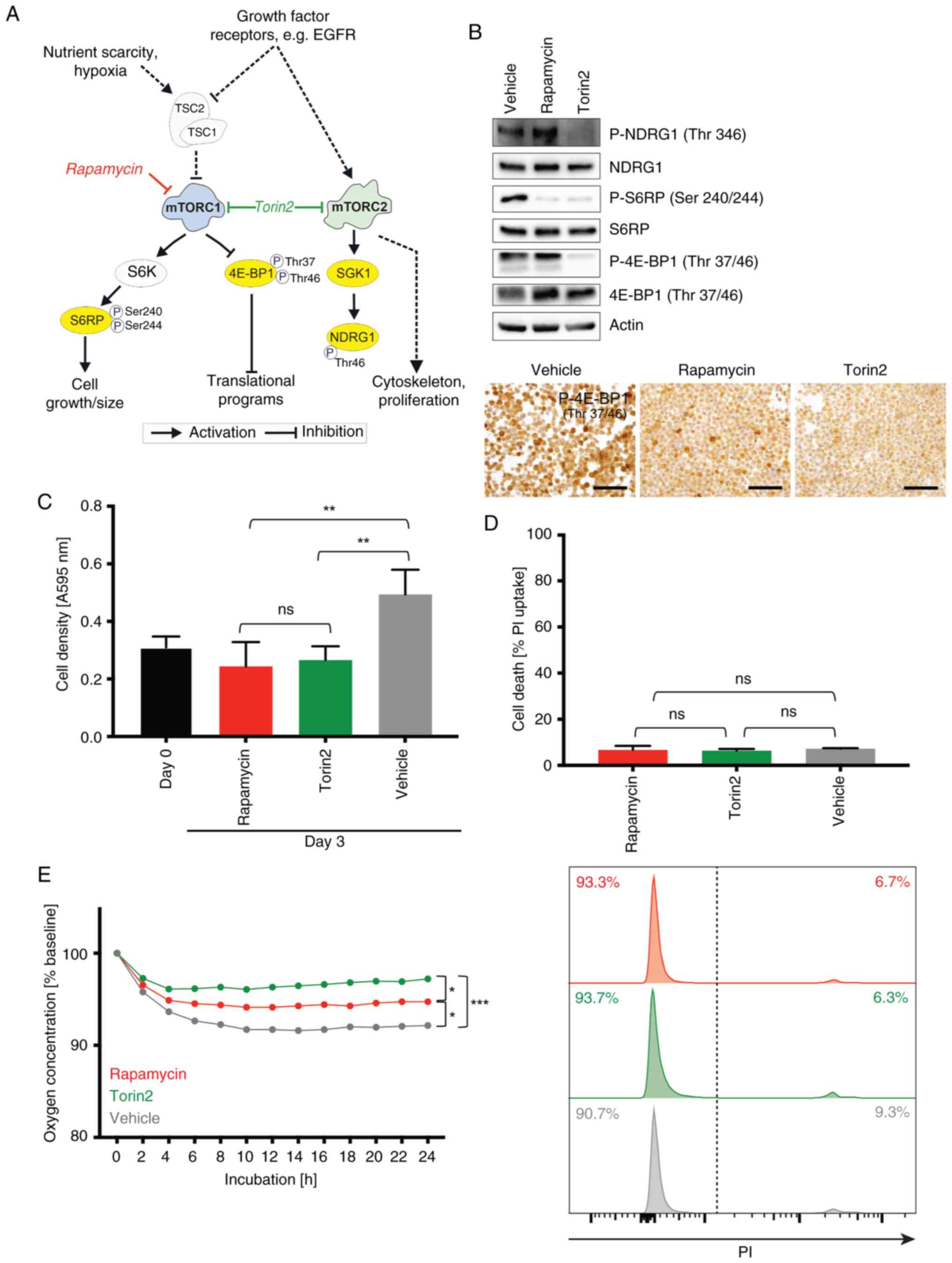
Figure 1

Impact of pharmacological mTOR
inhibition on basal functions of human microglia cell lines. (A)
Overview of the mTOR pathway and targets of the mTOR inhibitors
investigated in this study. Scheme adapted from (33). (B) C20 cells were incubated with
100 nM rapamycin, 100 nM torin2 and vehicle control for 24 h.
Protein lysates were analyzed by immunoblotting with antibodies for
NDRG1, P-NDRG1 (Thr346), S6RP, P-S6RP (Ser240/244), 4E-BP1,
P-4E-BP1 (Thr37/46) and actin as well as by immunocytochemistry
stainings of P-4E-BP1 (scale bar, 100 µm) of C20 cell pellets
incubated with 100 nM rapamycin, 100 nM torin2 and vehicle control
for 24 h. (C-E) C20 microglia cells were treated with 100 nM
rapamycin (red), 100 nM, torin2 (green) or vehicle control (grey).
(C) Crystal violet staining was used to quantify cell density at
baseline (day 0, after a 24 h attachment period prior to any
treatment intervention, black) and after 72 h of exposure to the
respective treatment conditions. Data are presented as mean ± SD
(n=4; one-way ANOVA, Tukey's multiple comparisons test). (D) Cell
death was quantified by PI FACS after 72 h. Data represent mean ±
SD (n=3; one-way ANOVA, Tukey's multiple comparisons test).
Histograms were depicted. (E) Quantification of oxygen by a
fluorescence-based assay was performed in C20 cells during 24 h
treatment. Oxygen consumption is shown relative to the start of the
experiment as mean (n=3) every hour; treatment groups were then
compared at timepoint 24 h (n=3; one-way ANOVA, Tukey's multiple
comparisons test). *P<0.05, **P<0.01 and ***P<0.001. ns,
not significant; PI, propidium iodide; SD, standard deviation;
NDRG1, N-myc downstream-regulated gene 1; P-, phosphorylated; S6RP,
S6 ribosomal protein; 4E-BP1, 4E-binding protein 1.

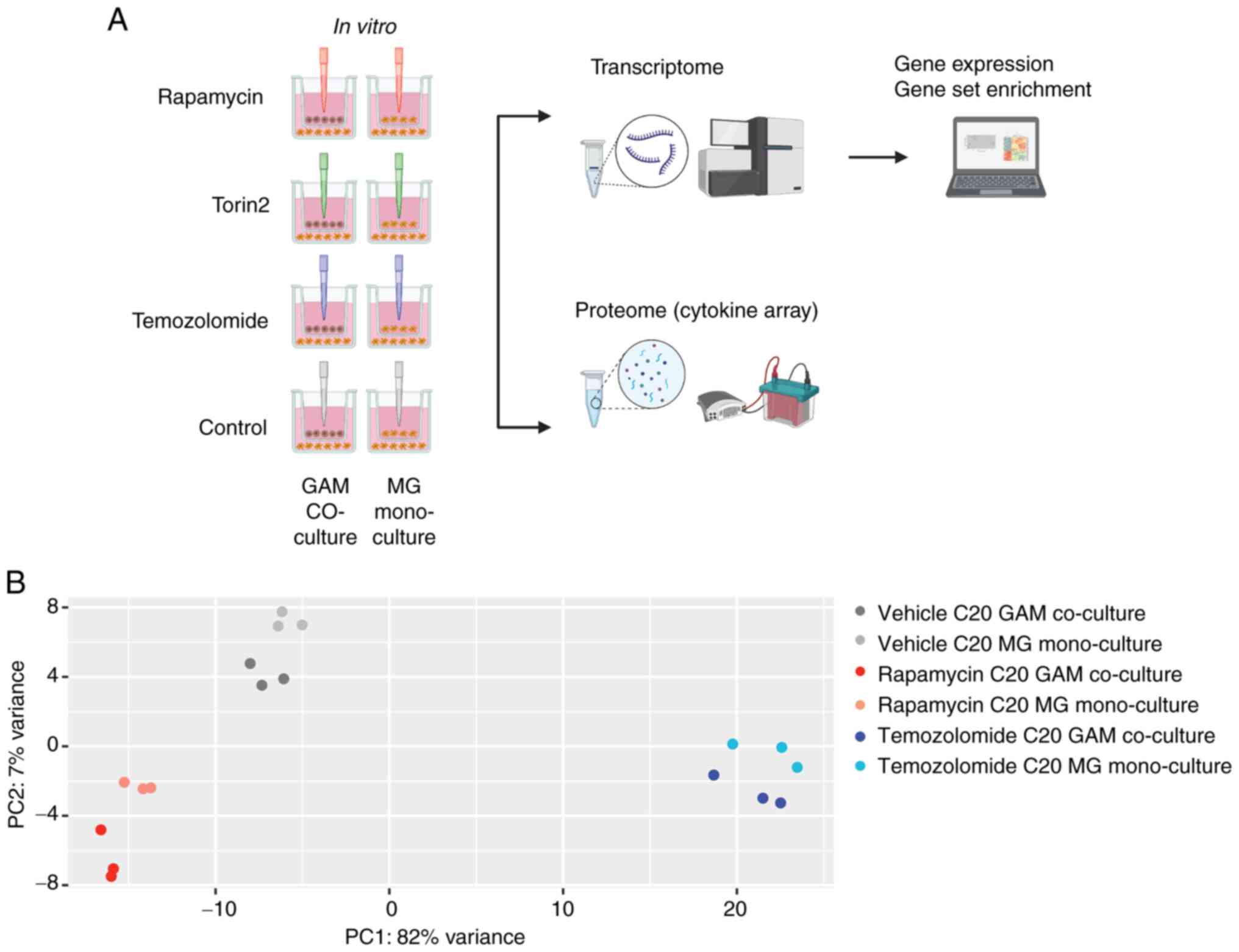
Figure 2

Impact of rapamycin compared with
temozolomide on the GAM transcriptome. (A) Overview on all
treatment conditions used throughout the experimental setup
(created in BioRender, Strecker, M. (2025); http://BioRender.com/wgg6ezp). Temozolomide effects
were only analyzed by RNA sequencing (transcriptome), torin2
co-culture experiments were only analyzed in the cytokine assay.
(B) Gene expression was analyzed in the whole transcriptome dataset
by PCA across all C20 samples including triplicates of the
different treatments (rapamycin, temozolomide and vehicle control)
in the co-culture (C20 microglia with LNT-229 glioma cells) or the
C20 mono-culture condition (bright colors, GAM co-culture of C20
with LNT-229; light colors, MG mono-culture control condition; red,
treatment with 100 nM rapamycin; blue, 400 µM temozolomide; grey,
vehicle control) (biological replicates were labelled 1 to 3). PCA,
principal component analysis; GAM, glioma-associated
microglia/macrophages; MG, microglia.

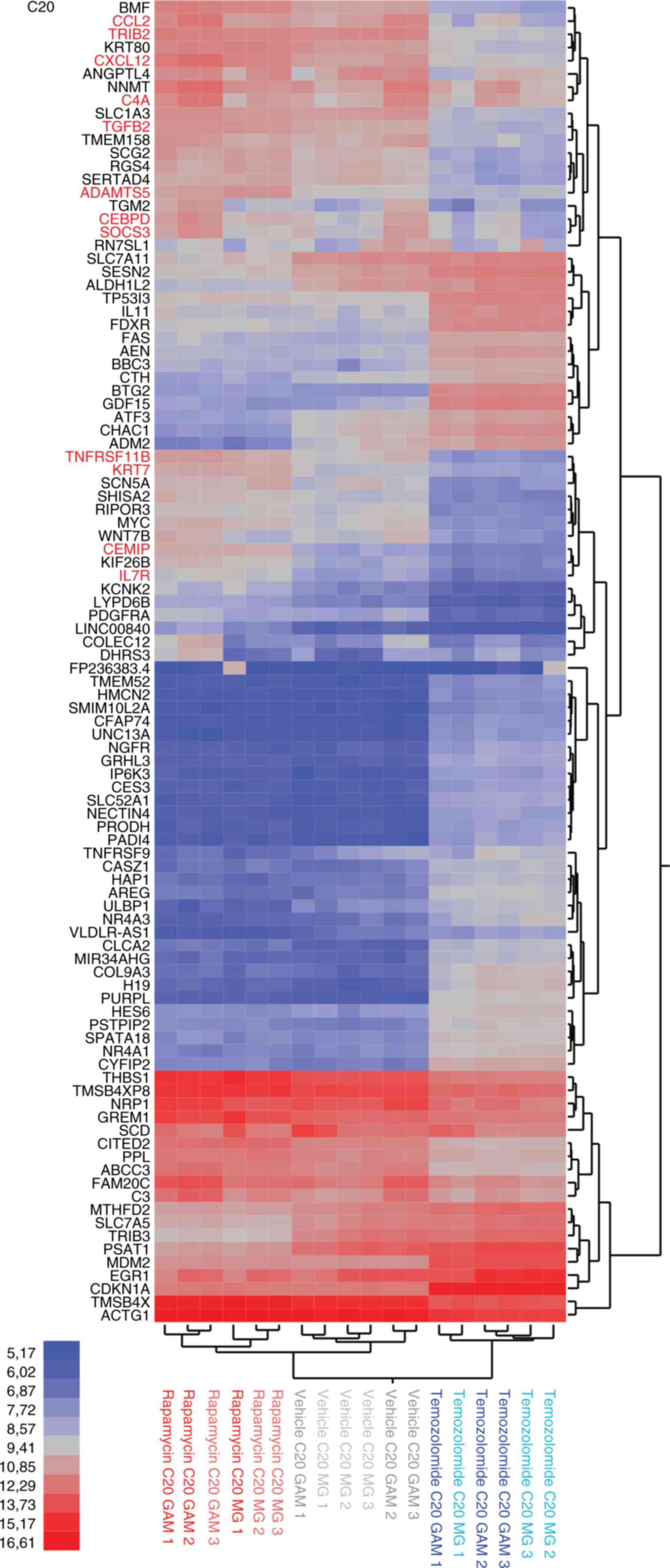
Figure 3

Differential expression of genes in
GAM following rapamycin and temozolomide treatment. Heatmap depicts
hierarchical clustering of the top 100 PCA gene loadings in C20 GAM
(co-cultivated) or C20 MG (C20 monoculture control condition)
following pharmacological mTORi with 100 nM rapamycin versus
vehicle control or treatment with 400 µM temozolomide versus
vehicle control. Variance-stabilized transformed data values are
shown. Genes involved in inflammatory processes were highlighted in
red. GAM, glioma-associated microglia/macrophages; PCA, principal
component analysis; MG, microglia; mTORi, mTOR inhibition.

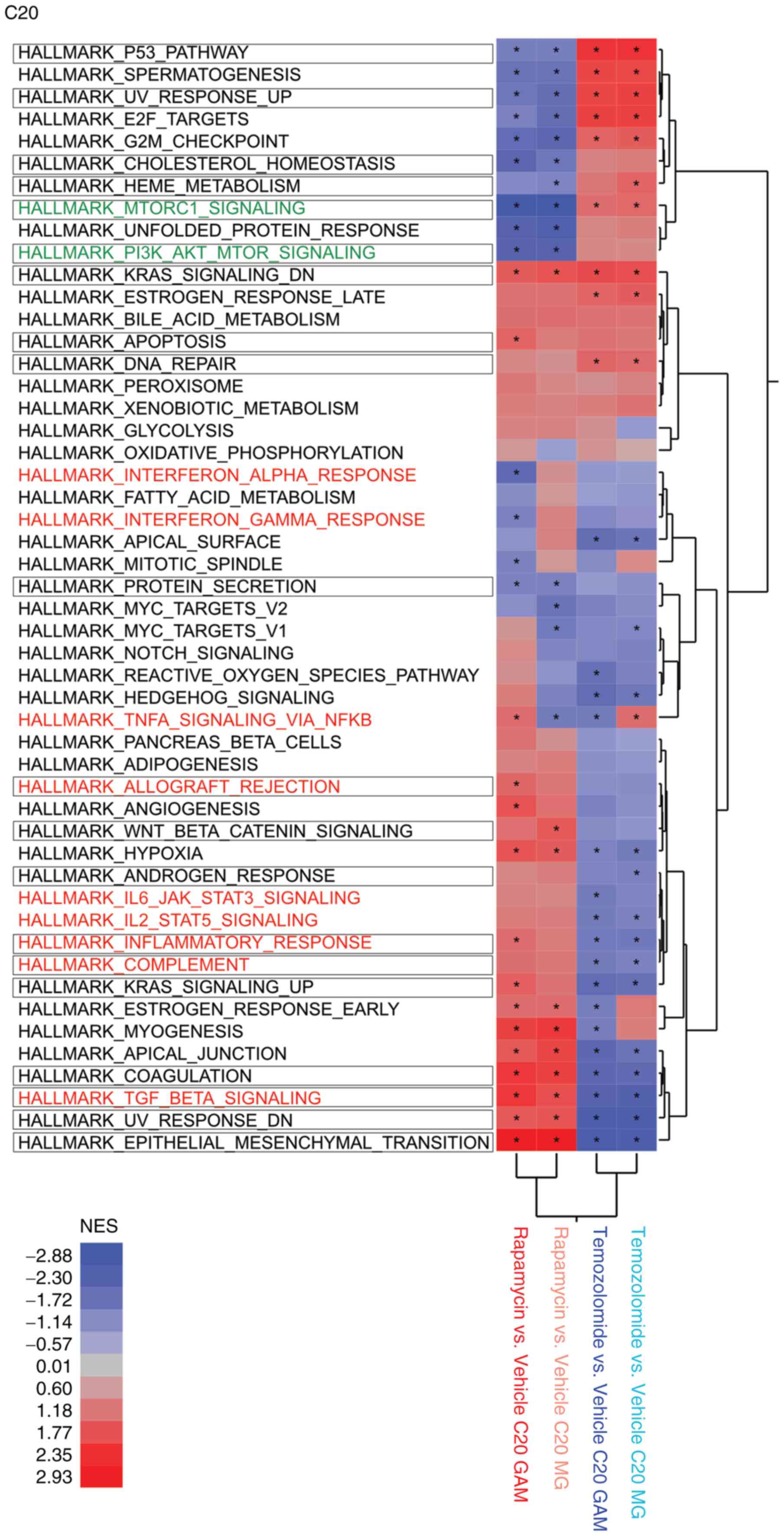
Figure 4

Impact of rapamycin and temozolomide
on key gene programs in GAM. Gene set enrichment analysis was
performed to decipher gene programs most relevant to the respective
culture and treatment conditions. Heatmap of normalized enrichment
score of the hallmark gene sets (v7.4) in C20 GAM (co-cultivated)
or C20 MG (C20 monoculture control condition) following
pharmacological mTORi with 100 nM rapamycin versus vehicle control
or treatment with 400 µM temozolomide versus vehicle control.
Normalized enrichment scores are shown. A significance level of
*P<0.05 was depicted. Hallmark gene sets involved in key
immunogenic pathways were highlighted in red and for mTORC1
signaling in green. Hallmark gene sets displaying the same
regulation pattern under rapamycin in C20 and HMC3 (Fig. S6) were highlighted with squares.
GAM, glioma-associated microglia/macrophages; MG, microglia;
mTORC1, mTOR complex 1; mTORi, mTOR inhibition.

Figure 5

Impact of pharmacological mTOR
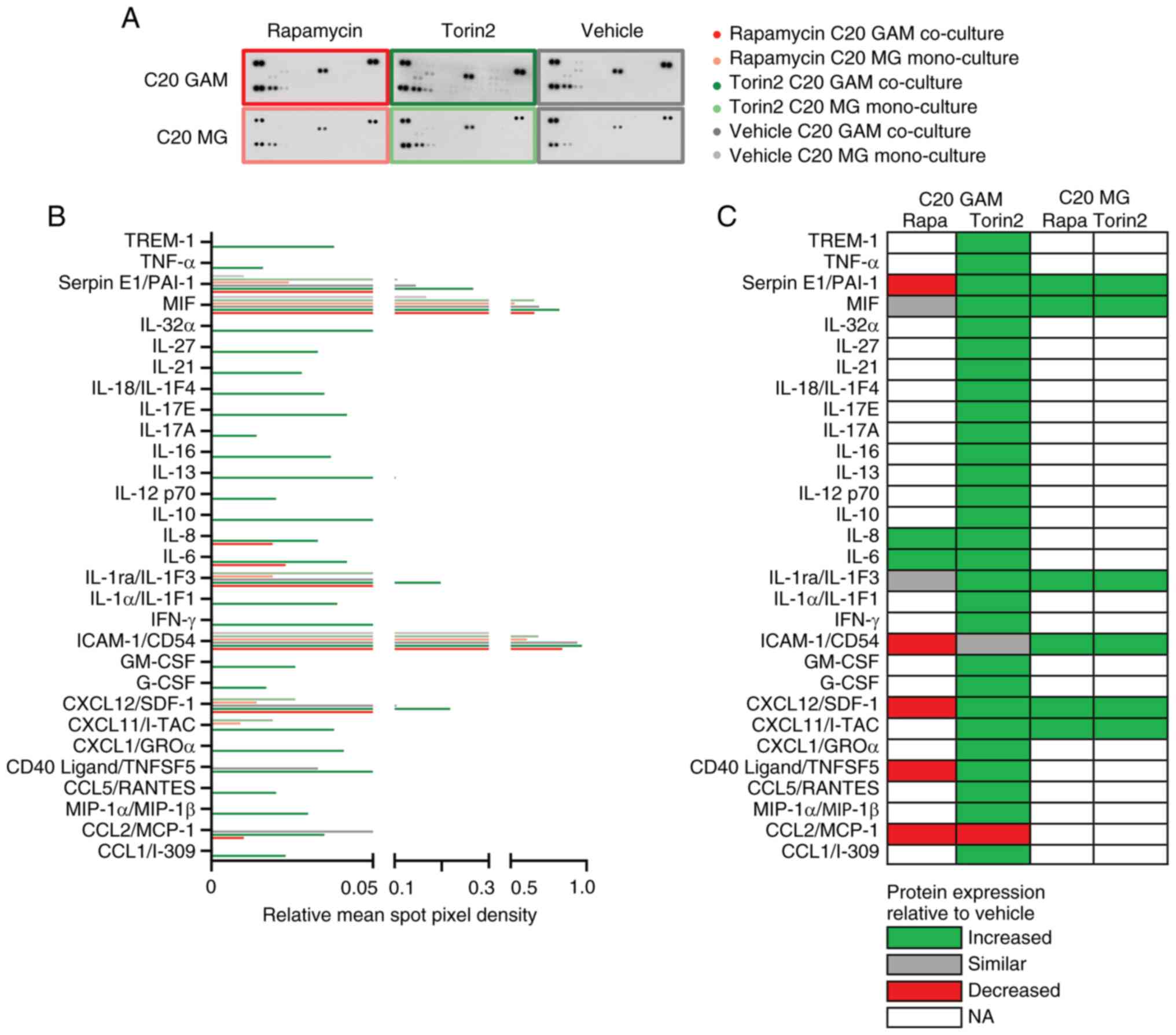
inhibition on cytokine expression profiles of GAM. (A)
Immunodetection of 36 different cytokines (each in duplicate) per
pooled sample (pool of n=3) incubated with rapamycin, torin2 or
vehicle. (B) Quantification by relative mean spot pixel density for
each cytokine was depicted. (A and B) Bright colors, GAM co-culture
of C20 with LNT-229; light colors, MG mono-culture control
condition; red, treatment with 100 nM rapamycin; green, 100 nM
torin2; grey, vehicle control. (C) Overview of protein expression
in the treatment conditions rapamycin and torin2 compared to
vehicle control in C20 GAM and C20 MG, respectively. Green,
increased; grey, similar; red, decreased; no color, not
analyzable/detectable. GAM, glioma-associated
microglia/macrophages; MG, microglia.
View References

1 

Capper D, Jones DTW, Sill M, Hovestadt V, Schrimpf D, Sturm D, Koelsche C, Sahm F, Chavez L, Reuss DE, et al: DNA methylation-based classification of central nervous system tumours. Nature. 555:469–474. 2018. View Article : Google Scholar : PubMed/NCBI

2 

Mandel JJ, Yust-Katz S, Patel AJ, Cachia D, Liu D, Park M, Yuan Y, Kent TA and de Groot JF: Inability of positive phase II clinical trials of investigational treatments to subsequently predict positive phase III clinical trials in glioblastoma. Neuro Oncol. 20:113–122. 2018. View Article : Google Scholar : PubMed/NCBI

3 

Ronellenfitsch MW, Steinbach JP and Wick W: Epidermal growth factor receptor and mammalian target of rapamycin as therapeutic targets in malignant glioma: Current clinical status and perspectives. Target Oncol. 5:183–191. 2010. View Article : Google Scholar : PubMed/NCBI

4 

Stupp R, Mason WP, van Den Bent MJ, Weller M, Fisher B, Taphoorn MJ, Belanger K, Brandes AA, Marosi C, Bogdahn U, et al: Radiotherapy plus concomitant and adjuvant temozolomide for glioblastoma. New Engl J Med. 352:987–996. 2005. View Article : Google Scholar : PubMed/NCBI

5 

Bowman RL, Klemm F, Akkari L, Pyonteck SM, Sevenich L, Quail DF, Dhara S, Simpson K, Gardner EE, Iacobuzio-Donahue CA, et al: Macrophage ontogeny underlies differences in tumor-specific education in brain malignancies. Cell Rep. 17:2445–2459. 2016. View Article : Google Scholar : PubMed/NCBI

6 

Klemm F, Maas RR, Bowman RL, Kornete M, Soukup K, Nassiri S, Brouland JP, Iacobuzio-Donahue CA, Brennan C, Tabar V, et al: Interrogation of the microenvironmental landscape in brain tumors reveals disease-specific alterations of immune cells. Cell. 181:1643–1660. 2020. View Article : Google Scholar : PubMed/NCBI

7 

Friebel E, Kapolou K, Unger S, Núñez NG, Utz S, Rushing EJ, Regli L, Weller M, Greter M, Tugues S, et al: Single-cell mapping of human brain cancer reveals tumor-specific instruction of tissue-invading leukocytes. Cell. 181:1626–1642. 2020. View Article : Google Scholar : PubMed/NCBI

8 

Gabrusiewicz K, Rodriguez B, Wei J, Hashimoto Y, Healy LM, Maiti SN, Thomas G, Zhou S, Wang Q, Elakkad A, et al: Glioblastoma-infiltrated innate immune cells resemble M0 macrophage phenotype. JCI Insight. 1:e858412016. View Article : Google Scholar : PubMed/NCBI

9 

Selenica MLB, Alvarez JA, Nash KR, Lee DC, Cao C, Lin X, Reid P, Mouton PR, Morgan D and Gordon M: Diverse activation of microglia by chemokine (C-C motif) ligand 2 overexpression in brain. J Neuroinflammation. 10:8562013. View Article : Google Scholar : PubMed/NCBI

10 

Stables MJ, Shah S, Camon EB, Lovering RC, Newson J, Bystrom J, Farrow S and Gilroy DW: Transcriptomic analyses of murine resolution-phase macrophages. Blood. 118:e192–e208. 2011. View Article : Google Scholar : PubMed/NCBI

11 

Szulzewsky F, Pelz A, Feng X, Synowitz M, Markovic D, Langmann T, Holtman IR, Wang X, Eggen BJ, Boddeke HW, et al: Glioma-associated microglia/macrophages display an expression profile different from M1 and M2 polarization and highly express Gpnmb and Spp1. PLoS One. 10:e01166442015. View Article : Google Scholar : PubMed/NCBI

12 

Zeiner PS, Preusse C, Blank AE, Zachskorn C, Baumgarten P, Caspary L, Braczynski AK, Weissenberger J, Bratzke H, Reiß S, et al: MIF receptor CD74 is restricted to microglia/macrophages, associated with a M1-polarized immune milieu and prolonged patient survival in gliomas. Brain Pathol. 25:491–504. 2015. View Article : Google Scholar : PubMed/NCBI

13 

Keane L, Cheray M, Blomgren K and Joseph B: Multifaceted microglia-key players in primary brain tumour heterogeneity. Nat Rev Neurol. 17:243–259. 2021. View Article : Google Scholar : PubMed/NCBI

14 

Gieryng A, Pszczolkowska D, Walentynowicz KA, Rajan WD and Kaminska B: Immune microenvironment of gliomas. Lab Invest. 97:498–518. 2017. View Article : Google Scholar : PubMed/NCBI

15 

Kennedy BC, Showers CR, Anderson DE, Anderson L, Canoll P, Bruce JN and Anderson RCE: Tumor-associated macrophages in glioma: Friend or foe? J Oncol. 2013:4869122013. View Article : Google Scholar : PubMed/NCBI

16 

Zeiner PS, Preusse C, Golebiewska A, Zinke J, Iriondo A, Muller A, Kaoma T, Filipski K, Müller-Eschner M, Bernatz S, et al: Distribution and prognostic impact of microglia/macrophage subpopulations in gliomas. Brain Pathol. 29:513–529. 2019. View Article : Google Scholar : PubMed/NCBI

17 

Kaffes I, Szulzewsky F, Chen Z, Herting CJ, Gabanic B, Vega JE, Shelton J, Switchenko JM, Ross JL, McSwain LF, et al: Human mesenchymal glioblastomas are characterized by an increased immune cell presence compared to proneural and classical tumors. Oncoimmunology. 8:e16553602019. View Article : Google Scholar : PubMed/NCBI

18 

Klemm F, Möckl A, Salamero-Boix A, Alekseeva T, Schäffer A, Schulz M, Niesel K, Maas RR, Groth M, Elie BT, et al: Compensatory CSF2-driven macrophage activation promotes adaptive resistance to CSF1R inhibition in breast-to-brain metastasis. Nat Cancer. 2:1086–1101. 2021. View Article : Google Scholar : PubMed/NCBI

19 

Niesel K, Schulz M, Anthes J, Alekseeva T, Macas J, Salamero-Boix A, Möckl A, Oberwahrenbrock T, Lolies M, Stein S, et al: The immune suppressive microenvironment affects efficacy of radio-immunotherapy in brain metastasis. EMBO Mol Med. 13:e134122021. View Article : Google Scholar : PubMed/NCBI

20 

Cancer Genome Atlas Research Network, . Comprehensive genomic characterization defines human glioblastoma genes and core pathways. Nature. 455:1061–1068. 2008. View Article : Google Scholar : PubMed/NCBI

21 

Ronellenfitsch MW, Brucker DP, Burger MC, Wolking S, Tritschler F, Rieger J, Wick W, Weller M and Steinbach JP: Antagonism of the mammalian target of rapamycin selectively mediates metabolic effects of epidermal growth factor receptor inhibition and protects human malignant glioma cells from hypoxia-induced cell death. Brain. 132:1509–1522. 2009. View Article : Google Scholar : PubMed/NCBI

22 

Thiepold AL, Lorenz NI, Foltyn M, Engel AL, Divé I, Urban H, Heller S, Bruns I, Hofmann U, Dröse S, et al: Mammalian target of rapamycin complex 1 activation sensitizes human glioma cells to hypoxia-induced cell death. Brain. 140:2623–2638. 2017. View Article : Google Scholar : PubMed/NCBI

23 

Liu GY and Sabatini DM: mTOR at the nexus of nutrition, growth, ageing and disease. Nat Rev Mol Cell Biol. 21:183–203. 2020. View Article : Google Scholar : PubMed/NCBI

24 

García-Martínez JM and Alessi DR: mTOR complex 2 (mTORC2) controls hydrophobic motif phosphorylation and activation of serum- and glucocorticoid-induced protein kinase 1 (SGK1). Biochem J. 416:375–385. 2008. View Article : Google Scholar : PubMed/NCBI

25 

Heinzen D, Divé I, Lorenz NI, Luger AL, Steinbach JP and Ronellenfitsch MW: Second generation mTOR inhibitors as a double-edged sword in malignant glioma treatment. Int J Mol Sci. 20:44742019. View Article : Google Scholar : PubMed/NCBI

26 

Ronellenfitsch MW, Zeiner PS, Mittelbronn M, Urban H, Pietsch T, Reuter D, Senft C, Steinbach JP, Westphal M and Harter PN: Akt and mTORC1 signaling as predictive biomarkers for the EGFR antibody nimotuzumab in glioblastoma. Acta Neuropathol Commun. 6:812018. View Article : Google Scholar : PubMed/NCBI

27 

Chinnaiyan P, Won M, Wen PY, Rojiani AM, Werner-Wasik M, Shih HA, Ashby LS, Yu HH, Stieber VW, Malone SC, et al: A randomized phase II study of everolimus in combination with chemoradiation in newly diagnosed glioblastoma: Results of NRG oncology RTOG 0913. Neuro Oncol. 20:666–673. 2018. View Article : Google Scholar : PubMed/NCBI

28 

Wick W, Dettmer S, Berberich A, Kessler T, Karapanagiotou-Schenkel I, Wick A, Winkler F, Pfaff E, Brors B, Debus J, et al: N2M2 (NOA-20) phase I/II trial of molecularly matched targeted therapies plus radiotherapy in patients with newly diagnosed non-MGMT hypermethylated glioblastoma. Neuro Oncol. 21:95–105. 2019. View Article : Google Scholar : PubMed/NCBI

29 

Alexander BM, Ba S, Berger MS, Berry DA, Cavenee WK, Chang SM, Cloughesy TF, Jiang T, Khasraw M, Li W, et al: Adaptive global innovative learning environment for glioblastoma: GBM AGILE. Clin Cancer Res. 24:737–743. 2018. View Article : Google Scholar : PubMed/NCBI

30 

Divé I, Klann K, Michaelis JB, Heinzen D, Steinbach JP, Münch C and Ronellenfitsch MW: Inhibition of mTOR signaling protects human glioma cells from hypoxia-induced cell death in an autophagy-independent manner. Cell Death Discov. 8:4092022. View Article : Google Scholar : PubMed/NCBI

31 

Sauer B, Lorenz NI, Divé I, Klann K, Luger AL, Urban H, Schröder JH, Steinbach JP, Münch C and Ronellenfitsch MW: Mammalian target of rapamycin inhibition protects glioma cells from temozolomide-induced cell death. Cell Death Discov. 10:82024. View Article : Google Scholar : PubMed/NCBI

32 

Wick W, Gorlia T, Bady P, Platten M, van den Bent MJ, Taphoorn MJ, Steuve J, Brandes AA, Hamou MF, Wick A, et al: Phase II study of radiotherapy and temsirolimus versus radiochemotherapy with temozolomide in patients with newly diagnosed glioblastoma without MGMT promoter hypermethylation (EORTC 26082). Clin Cancer Res. 22:4797–4806. 2016. View Article : Google Scholar : PubMed/NCBI

33 

Harter PN, Jennewein L, Baumgarten P, Ilina E, Burger MC, Thiepold AL, Tichy J, Zörnig M, Senft C, Steinbach JP, et al: Immunohistochemical assessment of phosphorylated mTORC1-pathway proteins in human brain tumors. PLoS One. 10:e01271232015. View Article : Google Scholar : PubMed/NCBI

34 

Weichhart T, Hengstschläger M and Linke M: Regulation of innate immune cell function by mTOR. Nat Rev Immunol. 15:599–614. 2015. View Article : Google Scholar : PubMed/NCBI

35 

Weichhart T, Costantino G, Poglitsch M, Rosner M, Zeyda M, Stuhlmeier KM, Kolbe T, Stulnig TM, Hörl WH, Hengstschläger M, et al: The TSC-mTOR signaling pathway regulates the innate inflammatory response. Immunity. 29:565–577. 2008. View Article : Google Scholar : PubMed/NCBI

36 

Soave DF, Miguel MP, Tomé FD, de Menezes LB, Nagib PRA and Celes MRN: The fate of the tumor in the hands of microenvironment: Role of TAMs and mTOR pathway. Mediators Inflamm. 2016:89105202016. View Article : Google Scholar : PubMed/NCBI

37 

Li D, Wang C, Yao Y, Chen L, Liu G, Zhang R, Liu Q, Shi FD and Hao J: mTORC1 pathway disruption ameliorates brain inflammation following stroke via a shift in microglia phenotype from M1 type to M2 type. FASEB J. 30:3388–3399. 2016. View Article : Google Scholar : PubMed/NCBI

38 

Xie L, Sun F, Wang J, Mao X, Xie L, Yang SH, Su DM, Simpkins JW, Greenberg DA and Jin K: mTOR signaling inhibition modulates macrophage/microglia-mediated neuroinflammation and secondary injury via regulatory T cells after focal ischemia. J Immunol. 192:6009–6019. 2014. View Article : Google Scholar : PubMed/NCBI

39 

Keane L, Antignano I, Riechers SP, Zollinger R, Dumas AA, Offermann N, Bernis ME, Russ J, Graelmann F, McCormick PN, et al: mTOR-dependent translation amplifies microglia priming in aging mice. J Clin Invest. 131:e1327272021. View Article : Google Scholar : PubMed/NCBI

40 

Hu Y, Mai W, Chen L, Cao K, Zhang B, Zhang Z, Liu Y, Lou H, Duan S and Gao Z: mTOR-mediated metabolic reprogramming shapes distinct microglia functions in response to lipopolysaccharide and ATP. Glia. 68:1031–1045. 2020. View Article : Google Scholar : PubMed/NCBI

41 

Lisi L, Laudati E, Navarra P and dello Russo C: The mTOR kinase inhibitors polarize glioma-activated microglia to express a M1 phenotype. J Neuroinflammation. 11:1252014. View Article : Google Scholar : PubMed/NCBI

42 

Lisi L, Ciotti GMP, Chiavari M, Pizzoferrato M, Mangiola A, Kalinin S, Feinstein DL and Navarra P: Phospho-mTOR expression in human glioblastoma microglia-macrophage cells. Neurochem Int. 129:1044852019. View Article : Google Scholar : PubMed/NCBI

43 

Dumas AA, Pomella N, Rosser G, Guglielmi L, Vinel C, Millner TO, Rees J, Aley N, Sheer D, Wei J, et al: Microglia promote glioblastoma via mTOR-mediated immunosuppression of the tumour microenvironment. EMBO J. 39:e1037902020. View Article : Google Scholar : PubMed/NCBI

44 

Garcia-Mesa Y, Jay TR, Checkley MA, Luttge B, Dobrowolski C, Valadkhan S, Landreth GE, Karn J and Alvarez-Carbonell D: Immortalization of primary microglia: A new platform to study HIV regulation in the central nervous system. J Neurovirol. 23:47–66. 2017. View Article : Google Scholar : PubMed/NCBI

45 

Janabi N, Peudenier S, Héron B, Ng KH and Tardieu M: Establishment of human microglial cell lines after transfection of primary cultures of embryonic microglial cells with the SV40 large T antigen. Neurosci Lett. 195:105–108. 1995. View Article : Google Scholar : PubMed/NCBI

46 

Dello Russo C, Cappoli N, Coletta I, Mezzogori D, Paciello F, Pozzoli G, Navarra P and Battaglia A: The human microglial HMC3 cell line: Where do we stand? A systematic literature review. J Neuroinflammation. 15:2592018. View Article : Google Scholar : PubMed/NCBI

47 

Studer A, de Tribolet N, Diserens AC, Gaide AC, Matthieu JM, Carrel S and Stavrou D: Characterization of four human malignant glioma cell lines. Acta Neuropathol. 66:208–217. 1985. View Article : Google Scholar : PubMed/NCBI

48 

Wischhusen J, Naumann U, Ohgaki H, Rastinejad F and Weller M: CP-31398, a novel p53-stabilizing agent, induces p53-dependent and p53-independent glioma cell death. Oncogene. 22:8233–8245. 2003. View Article : Google Scholar : PubMed/NCBI

49 

Lorenz NI, Sittig ACM, Urban H, Luger AL, Engel AL, Münch C, Steinbach JP and Ronellenfitsch MW: Activating transcription factor 4 mediates adaptation of human glioblastoma cells to hypoxia and temozolomide. Sci Rep. 11:141612021. View Article : Google Scholar : PubMed/NCBI

50 

Roth W, Fontana A, Trepel M, Reed JC, Dichgans J and Weller M: Immunochemotherapy of malignant glioma: Synergistic activity of CD95 ligand and chemotherapeutics. Cancer Immunol Immunother. 44:55–63. 1997. View Article : Google Scholar : PubMed/NCBI

51 

Steinbach JP, Wolburg H, Klumpp A, Probst H and Weller M: Hypoxia-induced cell death in human malignant glioma cells: Energy deprivation promotes decoupling of mitochondrial cytochrome c release from caspase processing and necrotic cell death. Cell Death Differ. 10:823–832. 2003. View Article : Google Scholar : PubMed/NCBI

52 

Schulz M, Michels B, Niesel K, Stein S, Farin H, Rödel F and Sevenich L: Cellular and molecular changes of brain metastases-associated myeloid cells during disease progression and therapeutic response. iScience. 23:1011782020. View Article : Google Scholar : PubMed/NCBI

53 

Michels BE, Mosa MH, Grebbin BM, Yepes D, Darvishi T, Hausmann J, Urlaub H, Zeuzem S, Kvasnicka HM, Oellerich T and Farin HF: Human colon organoids reveal distinct physiologic and oncogenic Wnt responses. J Exp Med. 216:704–720. 2019. View Article : Google Scholar : PubMed/NCBI

54 

Kim D, Pertea G, Trapnell C, Pimentel H, Kelley R and Salzberg SL: TopHat2: Accurate alignment of transcriptomes in the presence of insertions, deletions and gene fusions. Genome Biol. 14:R362013. View Article : Google Scholar : PubMed/NCBI

55 

Love MI, Huber W and Anders S: Moderated estimation of fold change and dispersion for RNA-seq data with DESeq2. Genome Biol. 15:5502014. View Article : Google Scholar : PubMed/NCBI

56 

Westphal M, Heese O, Steinbach JP, Schnell O, Schackert G, Mehdorn M, Schulz D, Simon M, Schlegel U, Senft C, et al: A randomised, open label phase III trial with nimotuzumab, an anti-epidermal growth factor receptor monoclonal antibody in the treatment of newly diagnosed adult glioblastoma. Eur J Cancer. 51:522–532. 2015. View Article : Google Scholar : PubMed/NCBI

57 

He S, Kato K, Jiang J, Wahl DR, Mineishi S, Fisher EM, Murasko DM, Glick GD and Zhang Y: Characterization of the metabolic phenotype of rapamycin-treated CD8+ T cells with augmented ability to generate long-lasting memory cells. PLoS One. 6:e201072011. View Article : Google Scholar : PubMed/NCBI

58 

Mills CD, Kincaid K, Alt JM, Heilman MJ and Hill AM: M-1/M-2 macrophages and the Th1/Th2 paradigm. J Immunol. 164:6166–6173. 2000. View Article : Google Scholar : PubMed/NCBI

59 

Platten M, Bunse L, Wick A, Bunse T, Le Cornet L, Harting I, Sahm F, Sanghvi K, Tan CL, Poschke I, et al: A vaccine targeting mutant IDH1 in newly diagnosed glioma. Nature. 592:463–468. 2021. View Article : Google Scholar : PubMed/NCBI

60 

Burger MC, Forster MT, Romanski A, Straßheimer F, Macas J, Zeiner PS, Steidl E, Herkt S, Weber KJ, Schupp J, et al: Intracranial injection of NK cells engineered with a HER2-targeted chimeric antigen receptor in patients with recurrent glioblastoma. Neuro Oncol. 25:2058–2071. 2023. View Article : Google Scholar : PubMed/NCBI

61 

Omuro A, Brandes AA, Carpentier AF, Idbaih A, Reardon DA, Cloughesy T, Sumrall A, Baehring J, van den Bent M, Bähr O, et al: Radiotherapy combined with nivolumab or temozolomide for newly diagnosed glioblastoma with unmethylated MGMT promoter: An international randomized phase III trial. Neuro Oncol. 25:123–134. 2023. View Article : Google Scholar : PubMed/NCBI

62 

Lim M, Weller M, Idbaih A, Steinbach J, Finocchiaro G, Raval RR, Ansstas G, Baehring J, Taylor JW, Honnorat J, et al: Phase III trial of chemoradiotherapy with temozolomide plus nivolumab or placebo for newly diagnosed glioblastoma with methylated MGMT promoter. Neuro Oncol. 24:1935–1949. 2022. View Article : Google Scholar : PubMed/NCBI

63 

Gunasegaran B, Krishnamurthy S, Chow SS, Villanueva MD, Guller A, Ahn SB and Heng B: Comparative analysis of HMC3 and C20 microglial cell lines reveals differential myeloid characteristics and responses to immune stimuli. Immunology. 175:84–102. 2025. View Article : Google Scholar : PubMed/NCBI

64 

Liu Q, Xu C, Kirubakaran S, Zhang X, Hur W, Liu Y, Kwiatkowski NP, Wang J, Westover KD, Gao P, et al: Characterization of Torin2, an ATP-competitive inhibitor of mTOR, ATM, and ATR. Cancer Res. 73:2574–2586. 2013. View Article : Google Scholar : PubMed/NCBI

65 

Wick W, Lanz LM, Wick A, Harting I, Dettmer S, Suwala AK, Ketter R, Tabatabai G, Seliger-Behme C, Glas M, et al: N2M2/NOA-20: Phase I/IIa umbrella trial of molecularly matched targeted therapies plus radiotherapy in patients with newly diagnosed glioblastoma without MGMT promoter hypermethylation. J Clin Oncol. 42:20002024. View Article : Google Scholar

66 

Strecker MI, Wlotzka K, Strassheimer F, Roller B, Ludmirski G, König S, Röder J, Opitz C, Alekseeva T, Reul J, et al: AAV-mediated gene transfer of a checkpoint inhibitor in combination with HER2-targeted CAR-NK cells as experimental therapy for glioblastoma. Oncoimmunology. 11:21275082022. View Article : Google Scholar : PubMed/NCBI

Related Articles

  • Abstract
  • View
  • Download
  • Twitter
Copy and paste a formatted citation
Spandidos Publications style
Zeiner PS, Schulz M, Schomber J, Weinem J, Lorenz NI, Sauer B, Roller B, Weber KJ, Luger A, Berger A, Berger A, et al: Glioma‑associated microglia and macrophages as a potential target for mTOR inhibition in glioblastoma. Mol Med Rep 32: 343, 2025.
APA
Zeiner, P.S., Schulz, M., Schomber, J., Weinem, J., Lorenz, N.I., Sauer, B. ... Ronellenfitsch, M.W. (2025). Glioma‑associated microglia and macrophages as a potential target for mTOR inhibition in glioblastoma. Molecular Medicine Reports, 32, 343. https://doi.org/10.3892/mmr.2025.13708
MLA
Zeiner, P. S., Schulz, M., Schomber, J., Weinem, J., Lorenz, N. I., Sauer, B., Roller, B., Weber, K. J., Luger, A., Berger, A., Plate, K. H., Sevenich, L., Steinbach, J. P., Mosa, M. H., Harter, P. N., Ronellenfitsch, M. W."Glioma‑associated microglia and macrophages as a potential target for mTOR inhibition in glioblastoma". Molecular Medicine Reports 32.6 (2025): 343.
Chicago
Zeiner, P. S., Schulz, M., Schomber, J., Weinem, J., Lorenz, N. I., Sauer, B., Roller, B., Weber, K. J., Luger, A., Berger, A., Plate, K. H., Sevenich, L., Steinbach, J. P., Mosa, M. H., Harter, P. N., Ronellenfitsch, M. W."Glioma‑associated microglia and macrophages as a potential target for mTOR inhibition in glioblastoma". Molecular Medicine Reports 32, no. 6 (2025): 343. https://doi.org/10.3892/mmr.2025.13708
Copy and paste a formatted citation
x
Spandidos Publications style
Zeiner PS, Schulz M, Schomber J, Weinem J, Lorenz NI, Sauer B, Roller B, Weber KJ, Luger A, Berger A, Berger A, et al: Glioma‑associated microglia and macrophages as a potential target for mTOR inhibition in glioblastoma. Mol Med Rep 32: 343, 2025.
APA
Zeiner, P.S., Schulz, M., Schomber, J., Weinem, J., Lorenz, N.I., Sauer, B. ... Ronellenfitsch, M.W. (2025). Glioma‑associated microglia and macrophages as a potential target for mTOR inhibition in glioblastoma. Molecular Medicine Reports, 32, 343. https://doi.org/10.3892/mmr.2025.13708
MLA
Zeiner, P. S., Schulz, M., Schomber, J., Weinem, J., Lorenz, N. I., Sauer, B., Roller, B., Weber, K. J., Luger, A., Berger, A., Plate, K. H., Sevenich, L., Steinbach, J. P., Mosa, M. H., Harter, P. N., Ronellenfitsch, M. W."Glioma‑associated microglia and macrophages as a potential target for mTOR inhibition in glioblastoma". Molecular Medicine Reports 32.6 (2025): 343.
Chicago
Zeiner, P. S., Schulz, M., Schomber, J., Weinem, J., Lorenz, N. I., Sauer, B., Roller, B., Weber, K. J., Luger, A., Berger, A., Plate, K. H., Sevenich, L., Steinbach, J. P., Mosa, M. H., Harter, P. N., Ronellenfitsch, M. W."Glioma‑associated microglia and macrophages as a potential target for mTOR inhibition in glioblastoma". Molecular Medicine Reports 32, no. 6 (2025): 343. https://doi.org/10.3892/mmr.2025.13708
Follow us
  • Twitter
  • LinkedIn
  • Facebook
About
  • Spandidos Publications
  • Careers
  • Cookie Policy
  • Privacy Policy
How can we help?
  • Help
  • Live Chat
  • Contact
  • Email to our Support Team