Spandidos Publications Logo
  • About
    • About Spandidos
    • Aims and Scopes
    • Abstracting and Indexing
    • Editorial Policies
    • Reprints and Permissions
    • Job Opportunities
    • Terms and Conditions
    • Contact
  • Journals
    • All Journals
    • Oncology Letters
      • Oncology Letters
      • Information for Authors
      • Editorial Policies
      • Editorial Board
      • Aims and Scope
      • Abstracting and Indexing
      • Bibliographic Information
      • Archive
    • International Journal of Oncology
      • International Journal of Oncology
      • Information for Authors
      • Editorial Policies
      • Editorial Board
      • Aims and Scope
      • Abstracting and Indexing
      • Bibliographic Information
      • Archive
    • Molecular and Clinical Oncology
      • Molecular and Clinical Oncology
      • Information for Authors
      • Editorial Policies
      • Editorial Board
      • Aims and Scope
      • Abstracting and Indexing
      • Bibliographic Information
      • Archive
    • Experimental and Therapeutic Medicine
      • Experimental and Therapeutic Medicine
      • Information for Authors
      • Editorial Policies
      • Editorial Board
      • Aims and Scope
      • Abstracting and Indexing
      • Bibliographic Information
      • Archive
    • International Journal of Molecular Medicine
      • International Journal of Molecular Medicine
      • Information for Authors
      • Editorial Policies
      • Editorial Board
      • Aims and Scope
      • Abstracting and Indexing
      • Bibliographic Information
      • Archive
    • Biomedical Reports
      • Biomedical Reports
      • Information for Authors
      • Editorial Policies
      • Editorial Board
      • Aims and Scope
      • Abstracting and Indexing
      • Bibliographic Information
      • Archive
    • Oncology Reports
      • Oncology Reports
      • Information for Authors
      • Editorial Policies
      • Editorial Board
      • Aims and Scope
      • Abstracting and Indexing
      • Bibliographic Information
      • Archive
    • Molecular Medicine Reports
      • Molecular Medicine Reports
      • Information for Authors
      • Editorial Policies
      • Editorial Board
      • Aims and Scope
      • Abstracting and Indexing
      • Bibliographic Information
      • Archive
    • World Academy of Sciences Journal
      • World Academy of Sciences Journal
      • Information for Authors
      • Editorial Policies
      • Editorial Board
      • Aims and Scope
      • Abstracting and Indexing
      • Bibliographic Information
      • Archive
    • International Journal of Functional Nutrition
      • International Journal of Functional Nutrition
      • Information for Authors
      • Editorial Policies
      • Editorial Board
      • Aims and Scope
      • Abstracting and Indexing
      • Bibliographic Information
      • Archive
    • International Journal of Epigenetics
      • International Journal of Epigenetics
      • Information for Authors
      • Editorial Policies
      • Editorial Board
      • Aims and Scope
      • Abstracting and Indexing
      • Bibliographic Information
      • Archive
    • Medicine International
      • Medicine International
      • Information for Authors
      • Editorial Policies
      • Editorial Board
      • Aims and Scope
      • Abstracting and Indexing
      • Bibliographic Information
      • Archive
  • Articles
  • Information
    • Information for Authors
    • Information for Reviewers
    • Information for Librarians
    • Information for Advertisers
    • Conferences
  • Language Editing
Spandidos Publications Logo
  • About
    • About Spandidos
    • Aims and Scopes
    • Abstracting and Indexing
    • Editorial Policies
    • Reprints and Permissions
    • Job Opportunities
    • Terms and Conditions
    • Contact
  • Journals
    • All Journals
    • Biomedical Reports
      • Information for Authors
      • Editorial Policies
      • Editorial Board
      • Aims and Scope
      • Abstracting and Indexing
      • Bibliographic Information
      • Archive
    • Experimental and Therapeutic Medicine
      • Information for Authors
      • Editorial Policies
      • Editorial Board
      • Aims and Scope
      • Abstracting and Indexing
      • Bibliographic Information
      • Archive
    • International Journal of Epigenetics
      • Information for Authors
      • Editorial Policies
      • Editorial Board
      • Aims and Scope
      • Abstracting and Indexing
      • Bibliographic Information
      • Archive
    • International Journal of Functional Nutrition
      • Information for Authors
      • Editorial Policies
      • Editorial Board
      • Aims and Scope
      • Abstracting and Indexing
      • Bibliographic Information
      • Archive
    • International Journal of Molecular Medicine
      • Information for Authors
      • Editorial Policies
      • Editorial Board
      • Aims and Scope
      • Abstracting and Indexing
      • Bibliographic Information
      • Archive
    • International Journal of Oncology
      • Information for Authors
      • Editorial Policies
      • Editorial Board
      • Aims and Scope
      • Abstracting and Indexing
      • Bibliographic Information
      • Archive
    • Medicine International
      • Information for Authors
      • Editorial Policies
      • Editorial Board
      • Aims and Scope
      • Abstracting and Indexing
      • Bibliographic Information
      • Archive
    • Molecular and Clinical Oncology
      • Information for Authors
      • Editorial Policies
      • Editorial Board
      • Aims and Scope
      • Abstracting and Indexing
      • Bibliographic Information
      • Archive
    • Molecular Medicine Reports
      • Information for Authors
      • Editorial Policies
      • Editorial Board
      • Aims and Scope
      • Abstracting and Indexing
      • Bibliographic Information
      • Archive
    • Oncology Letters
      • Information for Authors
      • Editorial Policies
      • Editorial Board
      • Aims and Scope
      • Abstracting and Indexing
      • Bibliographic Information
      • Archive
    • Oncology Reports
      • Information for Authors
      • Editorial Policies
      • Editorial Board
      • Aims and Scope
      • Abstracting and Indexing
      • Bibliographic Information
      • Archive
    • World Academy of Sciences Journal
      • Information for Authors
      • Editorial Policies
      • Editorial Board
      • Aims and Scope
      • Abstracting and Indexing
      • Bibliographic Information
      • Archive
  • Articles
  • Information
    • For Authors
    • For Reviewers
    • For Librarians
    • For Advertisers
    • Conferences
  • Language Editing
Login Register Submit
  • This site uses cookies
  • You can change your cookie settings at any time by following the instructions in our Cookie Policy. To find out more, you may read our Privacy Policy.

    I agree
Search articles by DOI, keyword, author or affiliation
Search
Advanced Search
presentation
Molecular Medicine Reports
Join Editorial Board Propose a Special Issue
Print ISSN: 1791-2997 Online ISSN: 1791-3004
Journal Cover
January-2026 Volume 33 Issue 1

Full Size Image

Sign up for eToc alerts
Recommend to Library

Journals

International Journal of Molecular Medicine

International Journal of Molecular Medicine

International Journal of Molecular Medicine is an international journal devoted to molecular mechanisms of human disease.

International Journal of Oncology

International Journal of Oncology

International Journal of Oncology is an international journal devoted to oncology research and cancer treatment.

Molecular Medicine Reports

Molecular Medicine Reports

Covers molecular medicine topics such as pharmacology, pathology, genetics, neuroscience, infectious diseases, molecular cardiology, and molecular surgery.

Oncology Reports

Oncology Reports

Oncology Reports is an international journal devoted to fundamental and applied research in Oncology.

Experimental and Therapeutic Medicine

Experimental and Therapeutic Medicine

Experimental and Therapeutic Medicine is an international journal devoted to laboratory and clinical medicine.

Oncology Letters

Oncology Letters

Oncology Letters is an international journal devoted to Experimental and Clinical Oncology.

Biomedical Reports

Biomedical Reports

Explores a wide range of biological and medical fields, including pharmacology, genetics, microbiology, neuroscience, and molecular cardiology.

Molecular and Clinical Oncology

Molecular and Clinical Oncology

International journal addressing all aspects of oncology research, from tumorigenesis and oncogenes to chemotherapy and metastasis.

World Academy of Sciences Journal

World Academy of Sciences Journal

Multidisciplinary open-access journal spanning biochemistry, genetics, neuroscience, environmental health, and synthetic biology.

International Journal of Functional Nutrition

International Journal of Functional Nutrition

Open-access journal combining biochemistry, pharmacology, immunology, and genetics to advance health through functional nutrition.

International Journal of Epigenetics

International Journal of Epigenetics

Publishes open-access research on using epigenetics to advance understanding and treatment of human disease.

Medicine International

Medicine International

An International Open Access Journal Devoted to General Medicine.

Journal Cover
January-2026 Volume 33 Issue 1

Full Size Image

Sign up for eToc alerts
Recommend to Library

  • Article
  • Citations
    • Cite This Article
    • Download Citation
    • Create Citation Alert
    • Remove Citation Alert
    • Cited By
  • Similar Articles
    • Related Articles (in Spandidos Publications)
    • Similar Articles (Google Scholar)
    • Similar Articles (PubMed)
  • Download PDF
  • Download XML
  • View XML

  • Supplementary Files
    • Supplementary_Data.pdf
Article Open Access

MALT1 inhibition by MI‑2 suppresses epithelial‑to‑mesenchymal transition and fibrosis by inactivating the NF‑κB pathway in high glucose‑treated HK‑2 cells

  • Authors:
    • Yating Lan
    • Jian Ma
    • Huijun Chen
    • Chaohong Lan
    • Na Zhao
  • View Affiliations / Copyright

    Affiliations: School of Clinical Medicine, Heilongjiang University of Chinese Medicine, Harbin, Heilongjiang 150040, P.R. China, Department of Endocrinology, First Affiliated Hospital, Heilongjiang University of Chinese Medicine, Harbin, Heilongjiang 150040, P.R. China, Department of Chinese Medicine Internal Medicine, Second Affiliated Hospital, Heilongjiang University of Chinese Medicine, Harbin, Heilongjiang 150008, P.R. China, Internal Medicine Ward 5, Harbin Traditional Chinese Medicine Hospital, Harbin, Heilongjiang 150016, P.R. China
    Copyright: © Lan et al. This is an open access article distributed under the terms of Creative Commons Attribution License.
  • Article Number: 2
    |
    Published online on: October 14, 2025
       https://doi.org/10.3892/mmr.2025.13712
  • Expand metrics +
Metrics: Total Views: 0 (Spandidos Publications: | PMC Statistics: )
Metrics: Total PDF Downloads: 0 (Spandidos Publications: | PMC Statistics: )
Cited By (CrossRef): 0 citations Loading Articles...

This article is mentioned in:


Abstract

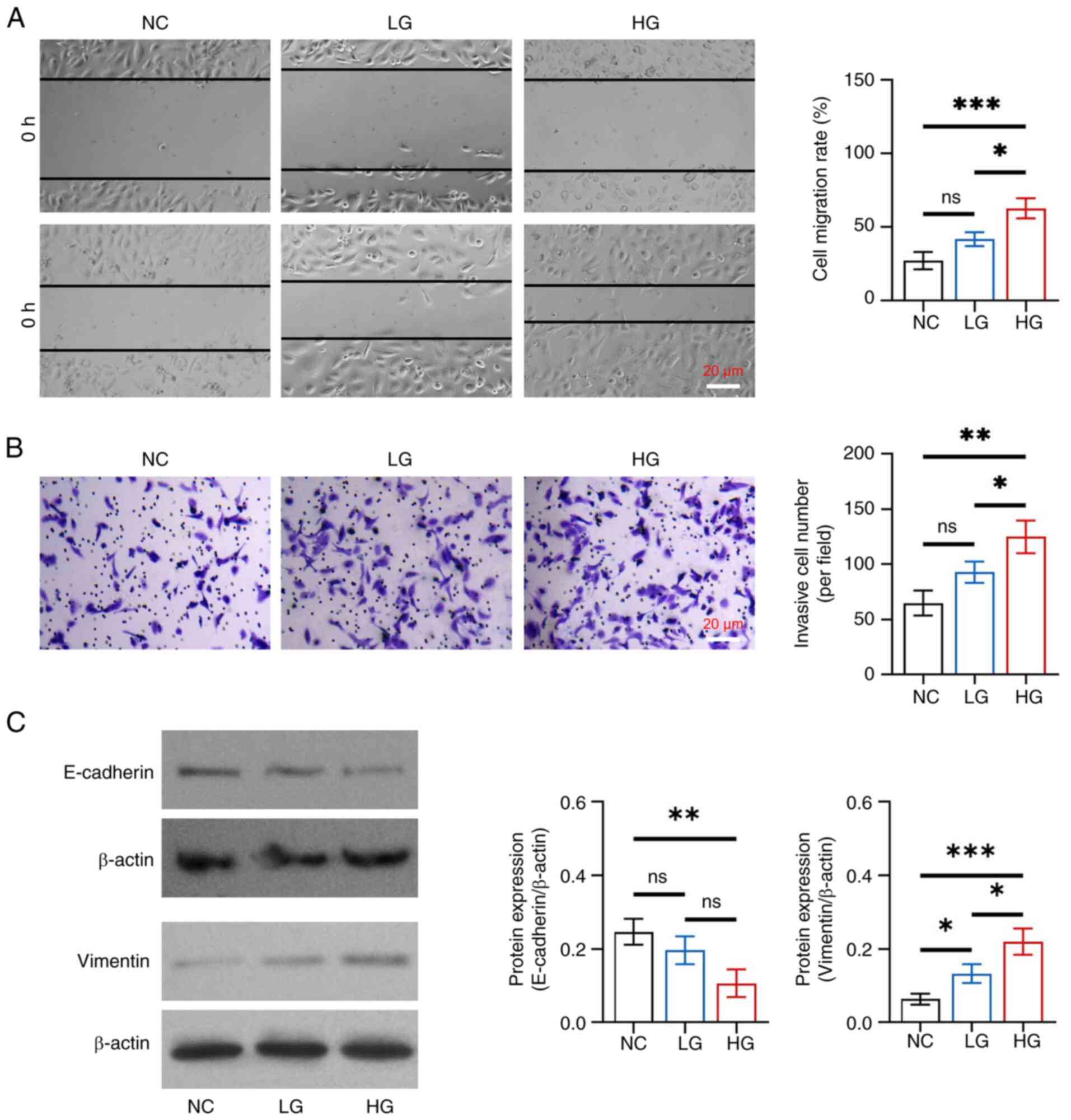
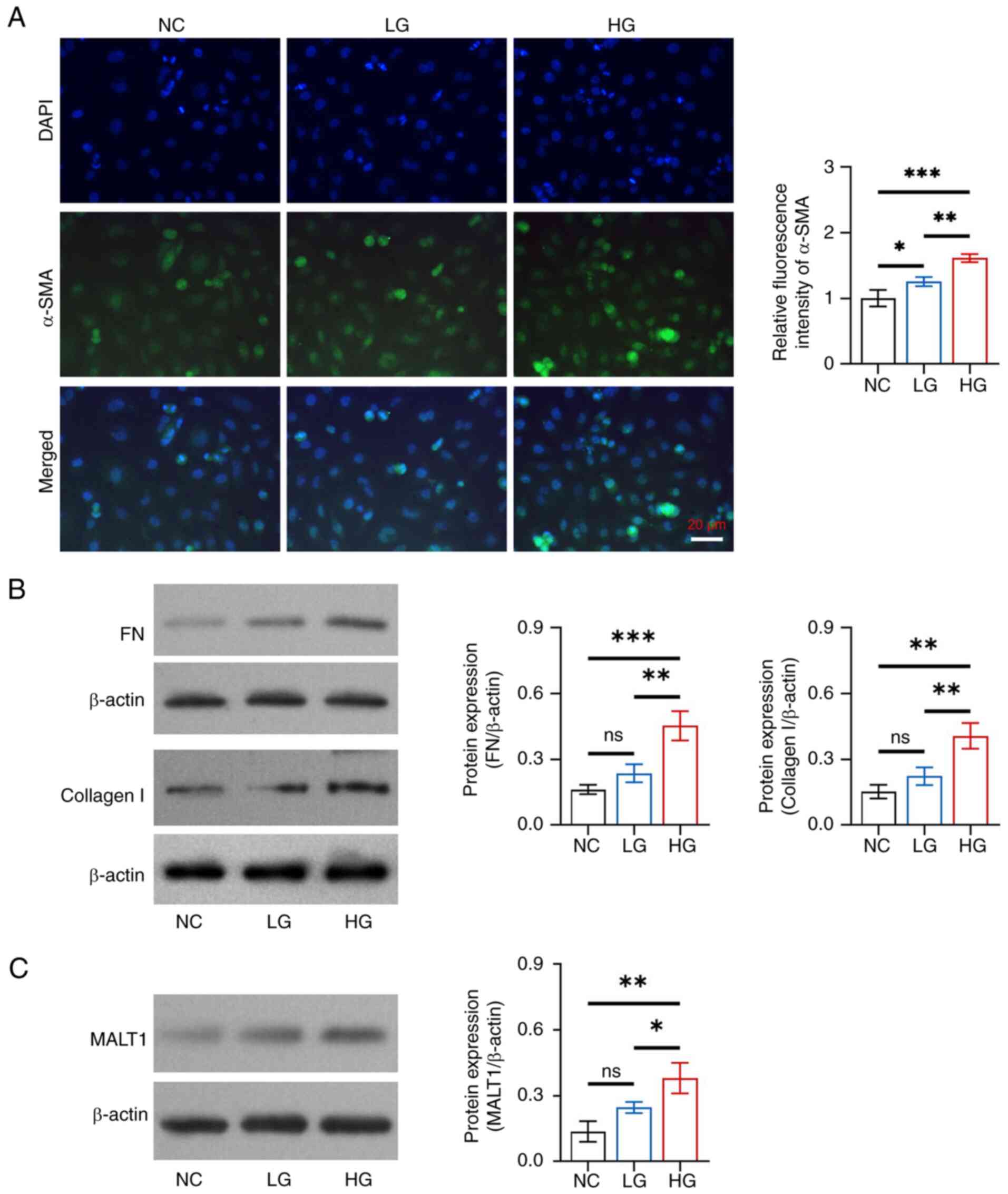
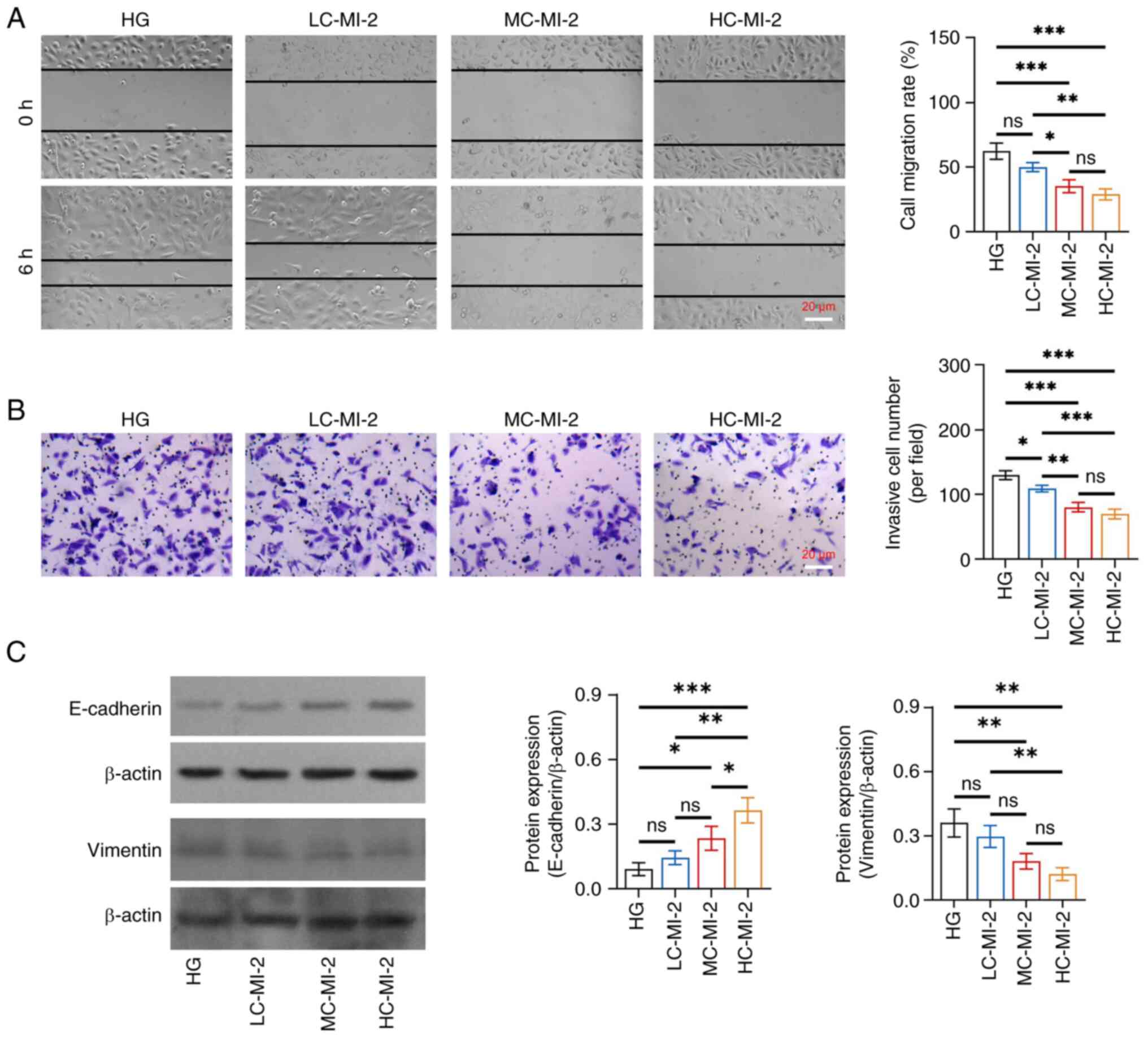
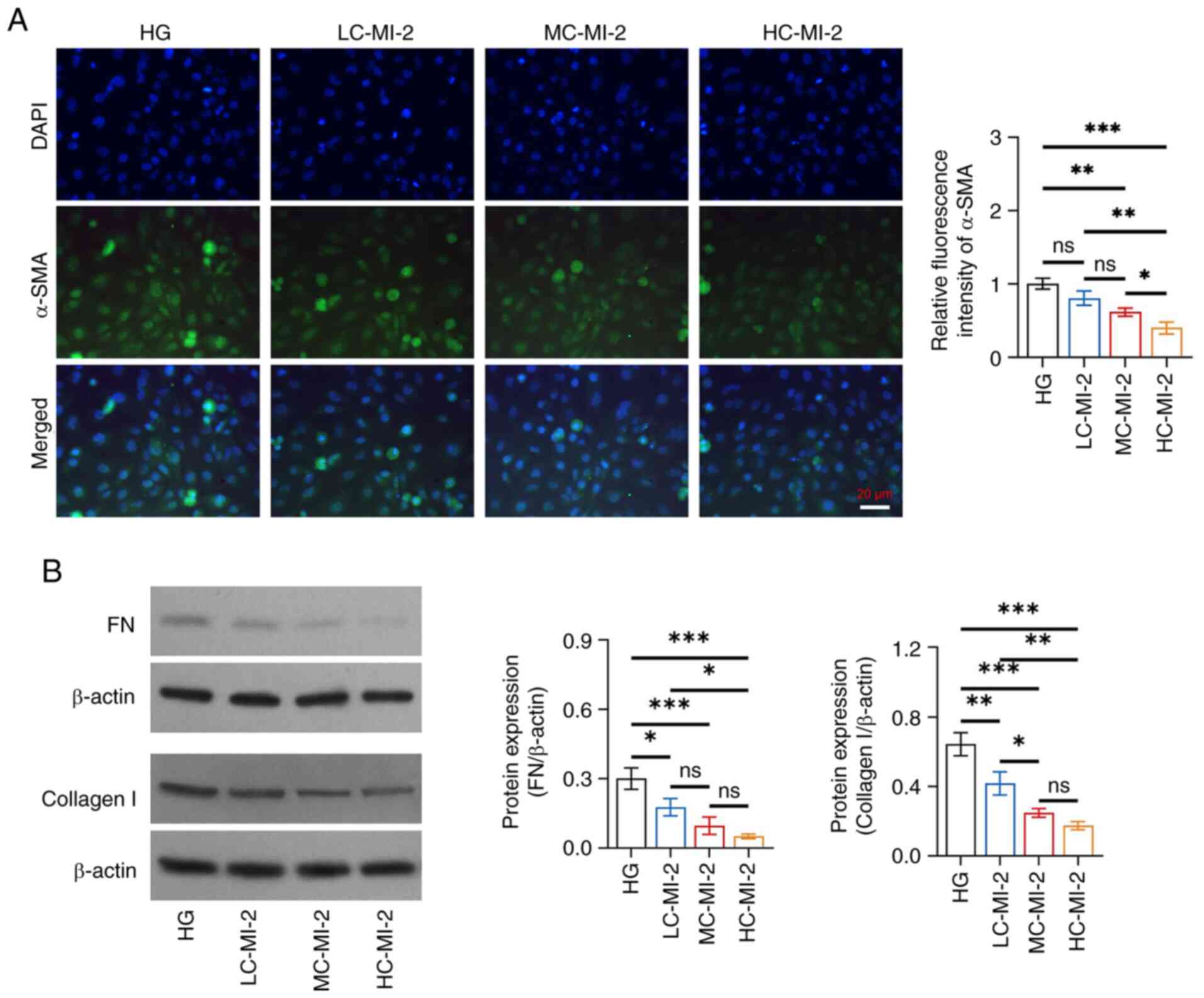
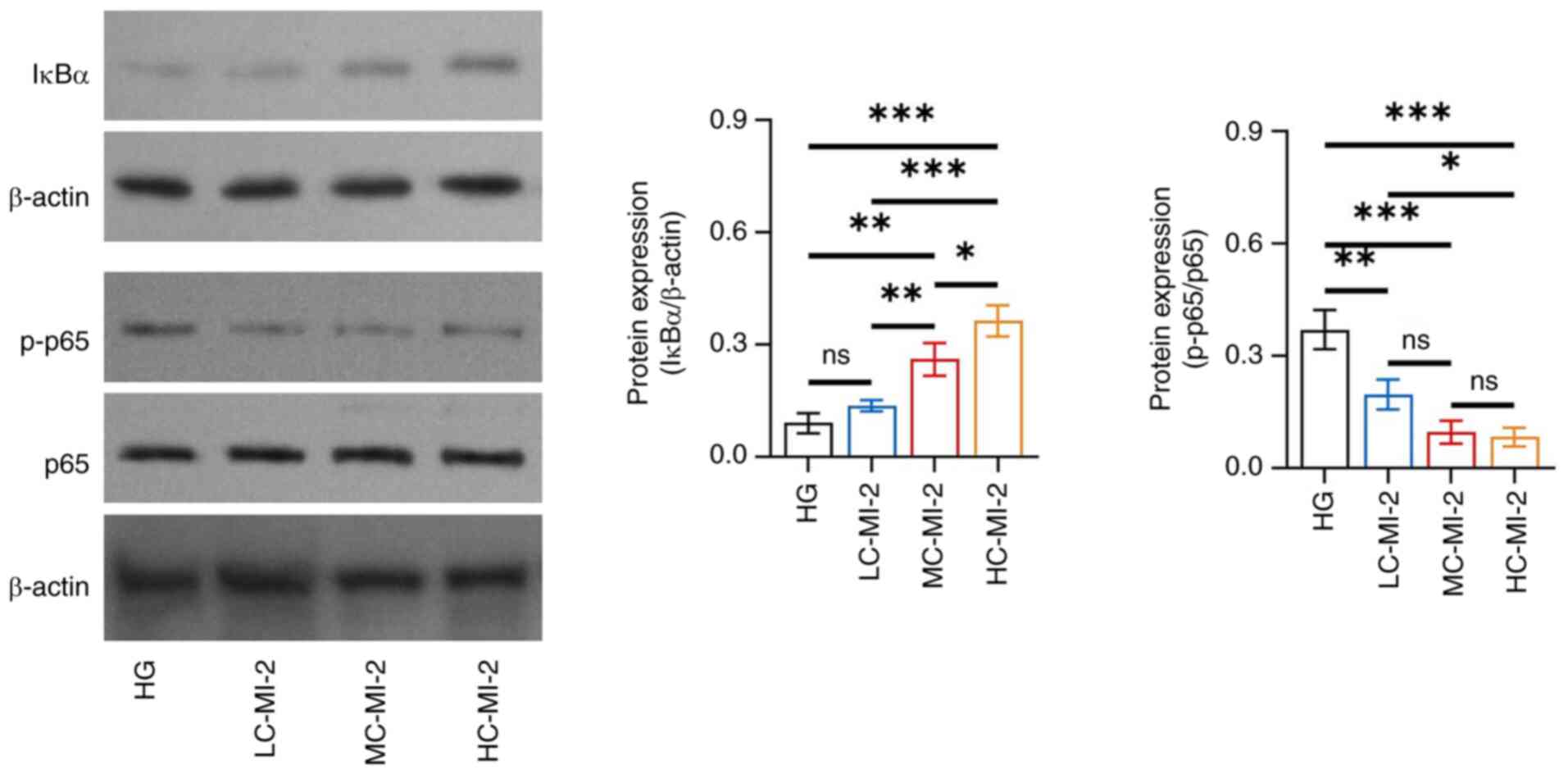
Mucosa‑associated lymphoid tissue lymphoma translocation protein 1 (MALT1) is a scaffold protein and protease that is associated with multiple biological processes, such as immune signaling transduction, inflammation and glucose variation. However, its implication in diabetic nephropathy (DN) is unclear. The present study aimed to investigate the dysregulation of MALT1 and the effect of its inhibition by MI‑2 in high glucose‑treated renal tubular epithelial cells. HK‑2 cells were treated with 15 mM D‑glucose [low‑concentration glucose (LG) group] and 30 mM D‑glucose [high‑concentration glucose (HG)]. The negative control (NC) group consisted of cells cultured only with the standard medium. Subsequently, HK‑2 cells under the HG condition were treated with 0, 1, 2 and 4 µM MI‑2, an inhibitor of MALT1. Cell migration rate, invasive cell count, and the expression levels of vimentin, α‑smooth muscle actin (α‑SMA), fibronectin (FN) and collagen I were increased, whereas E‑cadherin expression was decreased in the HG group compared with that in the NC group (all P<0.01), implying enhanced epithelial‑to‑mesenchymal transition (EMT) and fibrosis in the HG group. Furthermore, MALT1 was upregulated in the HG group compared with that in the NC group (P<0.01). Following MI‑2 treatment in cells under the HG condition, the inhibitory effects of MI‑2 on EMT, fibrosis and the NF‑κB pathway were dose‑dependent. Cell migration rate, invasive cell count and vimentin expression were reduced, whereas E‑cadherin expression was elevated; furthermore, the expression levels of α‑SMA, FN and collagen I were downregulated in the high concentration MI‑2 (HC‑MI‑2) group compared with those in the HG group (all P<0.01). In addition, the NF‑κB pathway was inactivated, as reflected by increased inhibitor of κB α expression and decreased phosphorylated-p65 expression in the HC‑MI‑2 group compared with in the HG group (both P<0.001). In conclusion, MALT1 inhibition by MI‑2 suppresses EMT and fibrosis by inactivating the NF‑κB pathway in HG‑treated HK‑2 cells, indicating its potency as a target for DN.
View Figures

Figure 1

Effect of different concentrations of
glucose on epithelial-to-mesenchymal transition in HK-2 cells. (A)
Comparison of cell migration rate among the NC, LG and HG groups,
between the NC and LG groups, between the NC and HG groups, and
between the LG and HG groups. (B) Comparison of invasive cell
number among the NC, LG and HG groups, between the NC and LG
groups, between the NC and HG groups, and between the LG and HG
groups. (C) Comparison of the protein expression levels of
E-cadherin among the NC, LG and HG groups, between the NC and LG
groups, between the NC and HG groups, and between the LG and HG
groups; and comparison of the protein expression levels of vimentin
among the NC, LG and HG groups, between the NC and LG groups,
between the NC and HG groups, and between the LG and HG groups.
*P<0.05, **P<0.01, ***P<0.001; ns, not significant;
n=3/group. NC, negative control; LG, low-concentration glucose; HG,
high-concentration glucose.

Figure 2

Effects of different concentrations
of glucose on fibrosis and MALT1 expression in HK-2 cells. (A)
Comparison of the relative fluorescence intensity of α-SMA among
the NC, LG and HG groups, between the NC and LG groups, between the
NC and HG groups, and between the LG and HG groups. (B) Comparison
of the protein expression levels of FN among the NC, LG and HG
groups, between the NC and LG groups, between the NC and HG groups,
and between the LG and HG groups; and comparison of the protein
expression levels of collagen I among the NC, LG and HG groups,
between the NC and LG groups, between the NC and HG groups, and
between the LG and HG groups. (C) Comparison of the protein
expression levels of MALT1 among the NC, LG and HG groups, between
the NC and LG groups, between the NC and HG groups, and between the
LG and HG groups. *P<0.05, **P<0.01, ***P<0.001; ns, not
significant; n=3/group. MALT1, mucosa-associated lymphoid tissue
lymphoma translocation protein 1; α-SMA, α-smooth muscle actin; NC,
negative control; LG, low-concentration glucose; HG,
high-concentration glucose; FN, fibronectin.

Figure 3

Effect of different concentrations of
MI-2 on epithelial-to-mesenchymal transition in HG-treated HK-2
cells. (A) Comparison of cell migration rate among the HG, LC-MI-2,
MC-MI-2 and HC-MI-2 groups, between the HG and LC-MI-2 groups,
between the HG and MC-MI-2 groups, between the HG and HC-MI-2
groups, between the LC-MI-2 and MC-MI-2 groups, between the LC-MI-2
and HC-MI-2 groups, and between the MC-MI-2 and HC-MI-2 groups. (B)
Comparison of invasive cell number among the HG, LC-MI-2, MC-MI-2
and HC-MI-2 groups, between the HG and LC-MI-2 groups, between the
HG and MC-MI-2 groups, between the HG and HC-MI-2 groups, between
the LC-MI-2 and MC-MI-2 groups, between the LC-MI-2 and HC-MI-2
groups, and between the MC-MI-2 and HC-MI-2 groups. (C) Comparison
of the protein expression levels of E-cadherin among the HG,
LC-MI-2, MC-MI-2 and HC-MI-2 groups, between the HG and LC-MI-2
groups, between the HG and MC-MI-2 groups, between the HG and
HC-MI-2 groups, between the LC-MI-2 and MC-MI-2 groups, between the
LC-MI-2 and HC-MI-2 groups, and between the MC-MI-2 and HC-MI-2
groups; and comparison of the protein expression levels of vimentin
among the HG, LC-MI-2, MC-MI-2 and HC-MI-2 groups, between the HG
and LC-MI-2 groups, between the HG and MC-MI-2 groups, between the
HG and HC-MI-2 groups, between the LC-MI-2 and MC-MI-2 groups,
between the LC-MI-2 and HC-MI-2 groups, and between the MC-MI-2 and
HC-MI-2 groups. HK-2 cells in the LC-MI-2, MC-MI-2 and HC-MI-2
groups were treated with HG. *P<0.05, **P<0.01,
***P<0.001; ns, not significant; n=3/group. HG,
high-concentration glucose; LC-MI-2, low concentration MI-2;
MC-MI-2, medium concentration MI-2; HC-MI-2; high concentration
MI-2.

Figure 4

Effect of different concentrations of
MI-2 on fibrosis in HG-treated HK-2 cells. (A) Comparison of the
relative fluorescence intensity of α-SMA among the HG, LC-MI-2,
MC-MI-2 and HC-MI-2 groups between the HG and LC-MI-2 groups,
between the HG and MC-MI-2 groups, between the HG and HC-MI-2
groups, between the LC-MI-2 and MC-MI-2 groups, between the LC-MI-2
and HC-MI-2 groups, and between the MC-MI-2 and HC-MI-2 groups. (B)
Comparison of the protein expression levels of FN among the HG,
LC-MI-2, MC-MI-2 and HC-MI-2 groups, between the HG and LC-MI-2
groups, between the HG and MC-MI-2 groups, between the HG and
HC-MI-2 groups, between the LC-MI-2 and MC-MI-2 groups, between the
LC-MI-2 and HC-MI-2 groups, and between the MC-MI-2 and HC-MI-2
groups; and comparison of the protein expression levels of collagen
I among the HG, LC-MI-2, MC-MI-2 and HC-MI-2 groups, between the HG
and LC-MI-2 groups, between the HG and MC-MI-2 groups, between the
HG and HC-MI-2 groups, between the LC-MI-2 and MC-MI-2 groups,
between the LC-MI-2 and HC-MI-2 groups, and between the MC-MI-2 and
HC-MI-2 groups. HK-2 cells in the LC-MI-2, MC-MI-2 and HC-MI-2
groups were treated with HG. *P<0.05, **P<0.01,
***P<0.001; ns, not significant; n=3/group. HG,
high-concentration glucose; α-SMA, α-smooth muscle actin; LC-MI-2,
low concentration MI-2; MC-MI-2, medium concentration MI-2;
HC-MI-2; high concentration MI-2; FN, fibronectin.

Figure 5

Effect of different concentrations of
MI-2 on the NF-κB pathway in HG-treated HK-2 cells. Comparison of
the protein expression levels of IκBα among the HG, LC-MI-2,
MC-MI-2 and HC-MI-2 groups, between the HG and LC-MI-2 groups,
between the HG and MC-MI-2 groups, between the HG and HC-MI-2
groups, between the LC-MI-2 and MC-MI-2 groups, between the LC-MI-2
and HC-MI-2 groups, and between the MC-MI-2 and HC-MI-2 groups; and
comparison of p-p65/p65 among the HG, LC-MI-2, MC-MI-2 and HC-MI-2
groups, between the HG and LC-MI-2 groups, between the HG and
MC-MI-2 groups, between the HG and HC-MI-2 groups, between the
LC-MI-2 and MC-MI-2 groups, between the LC-MI-2 and HC-MI-2 groups,
and between the MC-MI-2 and HC-MI-2 groups. HK-2 cells in the
LC-MI-2, MC-MI-2 and HC-MI-2 groups were treated with HG.
*P<0.05, **P<0.01, ***P<0.001; ns, not significant;
n=3/group. HG, high-concentration glucose; IκBα, inhibitor of κB α;
LC-MI-2, low concentration MI-2; MC-MI-2, medium concentration
MI-2; HC-MI-2; high concentration MI-2; p, phosphorylated.
View References

1 

Caramori ML and Rossing P: Diabetic Kidney Disease. Endotext. Feingold KR, Anawalt B, Blackman MR, Boyce A, Chrousos G, Corpas E, de Herder WW, Dhatariya K, Dungan K, Hofland J, Kalra S, Kaltsas G, Kapoor N, Koch C, Kopp P, Korbonits M, Kovacs CS, Kuohung W, Laferrere B, Levy M, McGee EA, McLachlan R, New M, Purnell J, Sahay R, Shah AS, Singer F, Sperling MA, Stratakis CA, Trence DL and Wilson DP: South Dartmouth (MA): 2000

2 

Dwivedi S and Sikarwar MS: Diabetic nephropathy: Pathogenesis, mechanisms, and therapeutic strategies. Horm Metab Res. 57:7–17. 2025. View Article : Google Scholar : PubMed/NCBI

3 

Hu Q, Chen Y, Deng X, Li Y, Ma X, Zeng J and Zhao Y: Diabetic nephropathy: Focusing on pathological signals, clinical treatment, and dietary regulation. Biomed Pharmacother. 159:1142522023. View Article : Google Scholar : PubMed/NCBI

4 

Zac-Varghese S, Mark P, Bain S, Banerjee D, Chowdhury TA, Dasgupta I, De P, Fogarty D, Frankel A, Goldet G, et al: Clinical practice guideline for the management of lipids in adults with diabetic kidney disease: Abbreviated summary of the Joint Association of British Clinical Diabetologists and UK Kidney Association (ABCD-UKKA) Guideline 2024. BMC Nephrol. 25:2162024. View Article : Google Scholar : PubMed/NCBI

5 

Zeng LF, Xiao Y and Sun L: A glimpse of the mechanisms related to renal fibrosis in diabetic nephropathy. Adv Exp Med Biol. 1165:49–79. 2019. View Article : Google Scholar : PubMed/NCBI

6 

Watanabe K, Sato E, Mishima E, Miyazaki M and Tanaka T: What's new in the molecular mechanisms of diabetic kidney disease: Recent advances. Int J Mol Sci. 24:5702022. View Article : Google Scholar : PubMed/NCBI

7 

Jonckheere S, Adams J, De Groote D, Campbell K, Berx G and Goossens S: Epithelial-mesenchymal transition (EMT) as a therapeutic target. Cells Tissues Organs. 211:157–182. 2022. View Article : Google Scholar : PubMed/NCBI

8 

Chen Y, Zou H, Lu H, Xiang H and Chen S: Research progress of endothelial-mesenchymal transition in diabetic kidney disease. J Cell Mol Med. 26:3313–3322. 2022. View Article : Google Scholar : PubMed/NCBI

9 

Balakumar P, Sambathkumar R, Mahadevan N, Muhsinah AB, Alsayari A, Venkateswaramurthy N and Jagadeesh G: A potential role of the renin-angiotensin-aldosterone system in epithelial-to-mesenchymal transition-induced renal abnormalities: Mechanisms and therapeutic implications. Pharmacol Res. 146:1043142019. View Article : Google Scholar : PubMed/NCBI

10 

Hadpech S and Thongboonkerd V: Epithelial-mesenchymal plasticity in kidney fibrosis. Genesis. 62:e235292024. View Article : Google Scholar : PubMed/NCBI

11 

Zhang YY, Peng J and Luo XJ: Post-translational modification of MALT1 and its role in B cell- and T cell-related diseases. Biochem Pharmacol. 198:1149772022. View Article : Google Scholar : PubMed/NCBI

12 

Afonina IS, Elton L, Carpentier I and Beyaert R: MALT1-a universal soldier: Multiple strategies to ensure NF-ĸB activation and target gene expression. FEBS J. 282:3286–3297. 2015. View Article : Google Scholar : PubMed/NCBI

13 

Hachmann J and Salvesen GS: The Paracaspase MALT1. Biochimie. 122:324–338. 2016. View Article : Google Scholar : PubMed/NCBI

14 

Lee JL, Ekambaram P, Carleton NM, Hu D, Klei LR, Cai Z, Myers MI, Hubel NE, Covic L, Agnihotri S, et al: MALT1 is a targetable driver of epithelial-to-mesenchymal transition in claudin-low, triple-negative breast cancer. Mol Cancer Res. 20:373–386. 2022. View Article : Google Scholar : PubMed/NCBI

15 

Fusco R, Siracusa R, D'Amico R, Cordaro M, Genovese T, Gugliandolo E, Peritore AF, Crupi R, Di Paola R, Cuzzocrea S and Impellizzeri D: Mucosa-associated lymphoid tissue lymphoma translocation 1 inhibitor as a novel therapeutic tool for lung injury. Int J Mol Sci. 21:77612020. View Article : Google Scholar : PubMed/NCBI

16 

Fontan L, Yang C, Kabaleeswaran V, Volpon L, Osborne MJ, Beltran E, Garcia M, Cerchietti L, Shaknovich R, Yang SN, et al: MALT1 small molecule inhibitors specifically suppress ABC-DLBCL in vitro and in vivo. Cancer Cell. 22:812–824. 2012. View Article : Google Scholar : PubMed/NCBI

17 

Elendu C, John Okah M, Fiemotongha KDJ, Adeyemo BI, Bassey BN, Omeludike EK and Obidigbo B: Comprehensive advancements in the prevention and treatment of diabetic nephropathy: A narrative review. Medicine (Baltimore). 102:e353972023. View Article : Google Scholar : PubMed/NCBI

18 

Samsu N: Diabetic nephropathy: Challenges in pathogenesis, diagnosis, and treatment. Biomed Res Int. 2021:14974492021. View Article : Google Scholar : PubMed/NCBI

19 

Huang R, Fu P and Ma L: Kidney fibrosis: From mechanisms to therapeutic medicines. Signal Transduct Target Ther. 8:1292023. View Article : Google Scholar : PubMed/NCBI

20 

Cao Y, Lin JH, Hammes HP and Zhang C: Cellular phenotypic transitions in diabetic nephropathy: An update. Front Pharmacol. 13:10380732022. View Article : Google Scholar : PubMed/NCBI

21 

Huang J, Chen G, Wang J, Liu S and Su J: Platycodin D regulates high glucose-induced ferroptosis of HK-2 cells through glutathione peroxidase 4 (GPX4). Bioengineered. 13:6627–6637. 2022. View Article : Google Scholar : PubMed/NCBI

22 

Li J, Shu L, Jiang Q, Feng B, Bi Z, Zhu G, Zhang Y, Li X and Wu J: Oridonin ameliorates renal fibrosis in diabetic nephropathy by inhibiting the Wnt/β-catenin signaling pathway. Ren Fail. 46:23474622024. View Article : Google Scholar : PubMed/NCBI

23 

Zeng J and Bao X: Tanshinone IIA attenuates high glucose-induced epithelial-to-mesenchymal transition in HK-2 cells through VDR/Wnt/β-catenin signaling pathway. Folia Histochem Cytobiol. 59:259–270. 2021. View Article : Google Scholar : PubMed/NCBI

24 

Sun Y, Qu H, Song Q, Shen Y, Wang L and Niu X: High-glucose induced toxicity in HK-2 cells can be alleviated by inhibition of miRNA-320c. Ren Fail. 44:1388–1398. 2022. View Article : Google Scholar : PubMed/NCBI

25 

Deng J, Zheng C, Hua Z, Ci H, Wang G and Chen L: Diosmin mitigates high glucose-induced endoplasmic reticulum stress through PI3K/AKT pathway in HK-2 cells. BMC Complement Med Ther. 22:1162022. View Article : Google Scholar : PubMed/NCBI

26 

Chen ST, Chang KS, Lin YH, Hou CP, Lin WY, Hsu SY, Sung HC, Feng TH, Tsui KH and Juang HH: Glucose upregulates ChREBP via phosphorylation of AKT and AMPK to modulate MALT1 and WISP1 expression. J Cell Physiol. 240:e314782025. View Article : Google Scholar : PubMed/NCBI

27 

Wang X, Gao Y, Sun H, et al: Mechanism of Tangluoning for alleviating high glucose-induced inflammatory reaction of Schwann cells by regulating lncRNA MALAT1. Beijing Journal of Traditional Chinese Medicine. 41:236–239. 2022.(In Chinese).

28 

Yang J, Antin P, Berx G, Blanpain C, Brabletz T, Bronner M, Campbell K, Cano A, Casanova J, Christofori G, et al: Guidelines and definitions for research on epithelial-mesenchymal transition. Nat Rev Mol Cell Biol. 21:341–352. 2020. View Article : Google Scholar : PubMed/NCBI

29 

Serrano-Gomez SJ, Maziveyi M and Alahari SK: Regulation of epithelial-mesenchymal transition through epigenetic and post-translational modifications. Mol Cancer. 15:182016. View Article : Google Scholar : PubMed/NCBI

30 

Meran S and Steadman R: Fibroblasts and myofibroblasts in renal fibrosis. Int J Exp Pathol. 92:158–167. 2011. View Article : Google Scholar : PubMed/NCBI

31 

Zhang H, Sun G, Li X, Fu Z, Guo C, Cao G, Wang B, Wang Q, Yang S, Li D, et al: Inhibition of MALT1 paracaspase activity improves lesion recovery following spinal cord injury. Sci Bull (Beijing). 64:1179–1194. 2019. View Article : Google Scholar : PubMed/NCBI

32 

Yan B, Belke D, Gui Y, Chen YX, Jiang ZS and Zheng XL: Pharmacological inhibition of MALT1 (mucosa-associated lymphoid tissue lymphoma translocation protein 1) induces ferroptosis in vascular smooth muscle cells. Cell Death Discov. 9:4562023. View Article : Google Scholar : PubMed/NCBI

33 

Gu H, Qiu H, Yang H, Deng Z, Zhang S, Du L and He F: PRRSV utilizes MALT1-regulated autophagy flux to switch virus spread and reserve. Autophagy. 20:2697–2718. 2024. View Article : Google Scholar : PubMed/NCBI

34 

Li Y, Huang X, Huang S, He H, Lei T, Saaoud F, Yu XQ, Melnick A, Kumar A, Papasian CJ, et al: Central role of myeloid MCPIP1 in protecting against LPS-induced inflammation and lung injury. Signal Transduct Target Ther. 2:170662017. View Article : Google Scholar : PubMed/NCBI

35 

Jiang VC, Liu Y, Lian J, Huang S, Jordan A, Cai Q, Lin R, Yan F, McIntosh J, Li Y, et al: Cotargeting of BTK and MALT1 overcomes resistance to BTK inhibitors in mantle cell lymphoma. J Clin Invest. 133:e1656942023. View Article : Google Scholar : PubMed/NCBI

36 

Qian R, Niu X, Wang Y, Guo Z, Deng X, Ding Z, Zhou M and Deng H: Targeting MALT1 suppresses the malignant progression of colorectal cancer via miR-375/miR-365a-3p/NF-ĸB axis. Front Cell Dev Biol. 10:8450482022. View Article : Google Scholar : PubMed/NCBI

37 

Yao Y, Yuan M, Shi M, Li W, Sha Y, Zhang Y, Yuan C, Luo J, Li Z, Liao C, et al: Halting multiple myeloma with MALT1 inhibition: suppressing BCMA-induced NF-ĸB and inducing immunogenic cell death. Blood Adv. 8:4003–4016. 2024. View Article : Google Scholar : PubMed/NCBI

38 

Lee JH and Massague J: TGF-β in developmental and fibrogenic EMTs. Semin Cancer Biol. 86:136–145. 2022. View Article : Google Scholar : PubMed/NCBI

39 

Hu L, Ding M and He W: Emerging therapeutic strategies for attenuating tubular EMT and kidney fibrosis by targeting Wnt/β-catenin signaling. Front Pharmacol. 12:8303402022. View Article : Google Scholar : PubMed/NCBI

40 

Lu Q, Wang WW, Zhang MZ, Ma ZX, Qiu XR, Shen M and Yin XX: ROS induces epithelial-mesenchymal transition via the TGF-β1/PI3K/Akt/mTOR pathway in diabetic nephropathy. Exp Ther Med. 17:835–846. 2019.PubMed/NCBI

41 

Moud BN, Ober F, O'Neill TJ and Krappmann D: MALT1 substrate cleavage: What is it good for? Front Immunol. 15:14123472024. View Article : Google Scholar : PubMed/NCBI

Related Articles

  • Abstract
  • View
  • Download
  • Twitter
Copy and paste a formatted citation
Spandidos Publications style
Lan Y, Ma J, Chen H, Lan C and Zhao N: MALT1 inhibition by MI‑2 suppresses epithelial‑to‑mesenchymal transition and fibrosis by inactivating the NF‑&kappa;B pathway in high glucose‑treated HK‑2 cells. Mol Med Rep 33: 2, 2026.
APA
Lan, Y., Ma, J., Chen, H., Lan, C., & Zhao, N. (2026). MALT1 inhibition by MI‑2 suppresses epithelial‑to‑mesenchymal transition and fibrosis by inactivating the NF‑&kappa;B pathway in high glucose‑treated HK‑2 cells. Molecular Medicine Reports, 33, 2. https://doi.org/10.3892/mmr.2025.13712
MLA
Lan, Y., Ma, J., Chen, H., Lan, C., Zhao, N."MALT1 inhibition by MI‑2 suppresses epithelial‑to‑mesenchymal transition and fibrosis by inactivating the NF‑&kappa;B pathway in high glucose‑treated HK‑2 cells". Molecular Medicine Reports 33.1 (2026): 2.
Chicago
Lan, Y., Ma, J., Chen, H., Lan, C., Zhao, N."MALT1 inhibition by MI‑2 suppresses epithelial‑to‑mesenchymal transition and fibrosis by inactivating the NF‑&kappa;B pathway in high glucose‑treated HK‑2 cells". Molecular Medicine Reports 33, no. 1 (2026): 2. https://doi.org/10.3892/mmr.2025.13712
Copy and paste a formatted citation
x
Spandidos Publications style
Lan Y, Ma J, Chen H, Lan C and Zhao N: MALT1 inhibition by MI‑2 suppresses epithelial‑to‑mesenchymal transition and fibrosis by inactivating the NF‑&kappa;B pathway in high glucose‑treated HK‑2 cells. Mol Med Rep 33: 2, 2026.
APA
Lan, Y., Ma, J., Chen, H., Lan, C., & Zhao, N. (2026). MALT1 inhibition by MI‑2 suppresses epithelial‑to‑mesenchymal transition and fibrosis by inactivating the NF‑&kappa;B pathway in high glucose‑treated HK‑2 cells. Molecular Medicine Reports, 33, 2. https://doi.org/10.3892/mmr.2025.13712
MLA
Lan, Y., Ma, J., Chen, H., Lan, C., Zhao, N."MALT1 inhibition by MI‑2 suppresses epithelial‑to‑mesenchymal transition and fibrosis by inactivating the NF‑&kappa;B pathway in high glucose‑treated HK‑2 cells". Molecular Medicine Reports 33.1 (2026): 2.
Chicago
Lan, Y., Ma, J., Chen, H., Lan, C., Zhao, N."MALT1 inhibition by MI‑2 suppresses epithelial‑to‑mesenchymal transition and fibrosis by inactivating the NF‑&kappa;B pathway in high glucose‑treated HK‑2 cells". Molecular Medicine Reports 33, no. 1 (2026): 2. https://doi.org/10.3892/mmr.2025.13712
Follow us
  • Twitter
  • LinkedIn
  • Facebook
About
  • Spandidos Publications
  • Careers
  • Cookie Policy
  • Privacy Policy
How can we help?
  • Help
  • Live Chat
  • Contact
  • Email to our Support Team