Spandidos Publications Logo
  • About
    • About Spandidos
    • Aims and Scopes
    • Abstracting and Indexing
    • Editorial Policies
    • Reprints and Permissions
    • Job Opportunities
    • Terms and Conditions
    • Contact
  • Journals
    • All Journals
    • Oncology Letters
      • Oncology Letters
      • Information for Authors
      • Editorial Policies
      • Editorial Board
      • Aims and Scope
      • Abstracting and Indexing
      • Bibliographic Information
      • Archive
    • International Journal of Oncology
      • International Journal of Oncology
      • Information for Authors
      • Editorial Policies
      • Editorial Board
      • Aims and Scope
      • Abstracting and Indexing
      • Bibliographic Information
      • Archive
    • Molecular and Clinical Oncology
      • Molecular and Clinical Oncology
      • Information for Authors
      • Editorial Policies
      • Editorial Board
      • Aims and Scope
      • Abstracting and Indexing
      • Bibliographic Information
      • Archive
    • Experimental and Therapeutic Medicine
      • Experimental and Therapeutic Medicine
      • Information for Authors
      • Editorial Policies
      • Editorial Board
      • Aims and Scope
      • Abstracting and Indexing
      • Bibliographic Information
      • Archive
    • International Journal of Molecular Medicine
      • International Journal of Molecular Medicine
      • Information for Authors
      • Editorial Policies
      • Editorial Board
      • Aims and Scope
      • Abstracting and Indexing
      • Bibliographic Information
      • Archive
    • Biomedical Reports
      • Biomedical Reports
      • Information for Authors
      • Editorial Policies
      • Editorial Board
      • Aims and Scope
      • Abstracting and Indexing
      • Bibliographic Information
      • Archive
    • Oncology Reports
      • Oncology Reports
      • Information for Authors
      • Editorial Policies
      • Editorial Board
      • Aims and Scope
      • Abstracting and Indexing
      • Bibliographic Information
      • Archive
    • Molecular Medicine Reports
      • Molecular Medicine Reports
      • Information for Authors
      • Editorial Policies
      • Editorial Board
      • Aims and Scope
      • Abstracting and Indexing
      • Bibliographic Information
      • Archive
    • World Academy of Sciences Journal
      • World Academy of Sciences Journal
      • Information for Authors
      • Editorial Policies
      • Editorial Board
      • Aims and Scope
      • Abstracting and Indexing
      • Bibliographic Information
      • Archive
    • International Journal of Functional Nutrition
      • International Journal of Functional Nutrition
      • Information for Authors
      • Editorial Policies
      • Editorial Board
      • Aims and Scope
      • Abstracting and Indexing
      • Bibliographic Information
      • Archive
    • International Journal of Epigenetics
      • International Journal of Epigenetics
      • Information for Authors
      • Editorial Policies
      • Editorial Board
      • Aims and Scope
      • Abstracting and Indexing
      • Bibliographic Information
      • Archive
    • Medicine International
      • Medicine International
      • Information for Authors
      • Editorial Policies
      • Editorial Board
      • Aims and Scope
      • Abstracting and Indexing
      • Bibliographic Information
      • Archive
  • Articles
  • Information
    • Information for Authors
    • Information for Reviewers
    • Information for Librarians
    • Information for Advertisers
    • Conferences
  • Language Editing
Spandidos Publications Logo
  • About
    • About Spandidos
    • Aims and Scopes
    • Abstracting and Indexing
    • Editorial Policies
    • Reprints and Permissions
    • Job Opportunities
    • Terms and Conditions
    • Contact
  • Journals
    • All Journals
    • Biomedical Reports
      • Information for Authors
      • Editorial Policies
      • Editorial Board
      • Aims and Scope
      • Abstracting and Indexing
      • Bibliographic Information
      • Archive
    • Experimental and Therapeutic Medicine
      • Information for Authors
      • Editorial Policies
      • Editorial Board
      • Aims and Scope
      • Abstracting and Indexing
      • Bibliographic Information
      • Archive
    • International Journal of Epigenetics
      • Information for Authors
      • Editorial Policies
      • Editorial Board
      • Aims and Scope
      • Abstracting and Indexing
      • Bibliographic Information
      • Archive
    • International Journal of Functional Nutrition
      • Information for Authors
      • Editorial Policies
      • Editorial Board
      • Aims and Scope
      • Abstracting and Indexing
      • Bibliographic Information
      • Archive
    • International Journal of Molecular Medicine
      • Information for Authors
      • Editorial Policies
      • Editorial Board
      • Aims and Scope
      • Abstracting and Indexing
      • Bibliographic Information
      • Archive
    • International Journal of Oncology
      • Information for Authors
      • Editorial Policies
      • Editorial Board
      • Aims and Scope
      • Abstracting and Indexing
      • Bibliographic Information
      • Archive
    • Medicine International
      • Information for Authors
      • Editorial Policies
      • Editorial Board
      • Aims and Scope
      • Abstracting and Indexing
      • Bibliographic Information
      • Archive
    • Molecular and Clinical Oncology
      • Information for Authors
      • Editorial Policies
      • Editorial Board
      • Aims and Scope
      • Abstracting and Indexing
      • Bibliographic Information
      • Archive
    • Molecular Medicine Reports
      • Information for Authors
      • Editorial Policies
      • Editorial Board
      • Aims and Scope
      • Abstracting and Indexing
      • Bibliographic Information
      • Archive
    • Oncology Letters
      • Information for Authors
      • Editorial Policies
      • Editorial Board
      • Aims and Scope
      • Abstracting and Indexing
      • Bibliographic Information
      • Archive
    • Oncology Reports
      • Information for Authors
      • Editorial Policies
      • Editorial Board
      • Aims and Scope
      • Abstracting and Indexing
      • Bibliographic Information
      • Archive
    • World Academy of Sciences Journal
      • Information for Authors
      • Editorial Policies
      • Editorial Board
      • Aims and Scope
      • Abstracting and Indexing
      • Bibliographic Information
      • Archive
  • Articles
  • Information
    • For Authors
    • For Reviewers
    • For Librarians
    • For Advertisers
    • Conferences
  • Language Editing
Login Register Submit
  • This site uses cookies
  • You can change your cookie settings at any time by following the instructions in our Cookie Policy. To find out more, you may read our Privacy Policy.

    I agree
Search articles by DOI, keyword, author or affiliation
Search
Advanced Search
presentation
Molecular Medicine Reports
Join Editorial Board Propose a Special Issue
Print ISSN: 1791-2997 Online ISSN: 1791-3004
Journal Cover
January-2026 Volume 33 Issue 1

Full Size Image

Sign up for eToc alerts
Recommend to Library

Journals

International Journal of Molecular Medicine

International Journal of Molecular Medicine

International Journal of Molecular Medicine is an international journal devoted to molecular mechanisms of human disease.

International Journal of Oncology

International Journal of Oncology

International Journal of Oncology is an international journal devoted to oncology research and cancer treatment.

Molecular Medicine Reports

Molecular Medicine Reports

Covers molecular medicine topics such as pharmacology, pathology, genetics, neuroscience, infectious diseases, molecular cardiology, and molecular surgery.

Oncology Reports

Oncology Reports

Oncology Reports is an international journal devoted to fundamental and applied research in Oncology.

Experimental and Therapeutic Medicine

Experimental and Therapeutic Medicine

Experimental and Therapeutic Medicine is an international journal devoted to laboratory and clinical medicine.

Oncology Letters

Oncology Letters

Oncology Letters is an international journal devoted to Experimental and Clinical Oncology.

Biomedical Reports

Biomedical Reports

Explores a wide range of biological and medical fields, including pharmacology, genetics, microbiology, neuroscience, and molecular cardiology.

Molecular and Clinical Oncology

Molecular and Clinical Oncology

International journal addressing all aspects of oncology research, from tumorigenesis and oncogenes to chemotherapy and metastasis.

World Academy of Sciences Journal

World Academy of Sciences Journal

Multidisciplinary open-access journal spanning biochemistry, genetics, neuroscience, environmental health, and synthetic biology.

International Journal of Functional Nutrition

International Journal of Functional Nutrition

Open-access journal combining biochemistry, pharmacology, immunology, and genetics to advance health through functional nutrition.

International Journal of Epigenetics

International Journal of Epigenetics

Publishes open-access research on using epigenetics to advance understanding and treatment of human disease.

Medicine International

Medicine International

An International Open Access Journal Devoted to General Medicine.

Journal Cover
January-2026 Volume 33 Issue 1

Full Size Image

Sign up for eToc alerts
Recommend to Library

  • Article
  • Citations
    • Cite This Article
    • Download Citation
    • Create Citation Alert
    • Remove Citation Alert
    • Cited By
  • Similar Articles
    • Related Articles (in Spandidos Publications)
    • Similar Articles (Google Scholar)
    • Similar Articles (PubMed)
  • Download PDF
  • Download XML
  • View XML

  • Supplementary Files
    • Supplementary_Data1.pdf
    • Supplementary_Data2.pdf
Article Open Access

Exploring the role of cytochrome P450 family 1 subfamily B member 1 and quercetin in modulating neuropathic pain after spinal cord injury

  • Authors:
    • Pengyu Zhou
    • Lu Li
    • Yu Cao
    • Jiahao Chen
    • Chuyin Chen
    • Xiangsheng Zhang
    • Jiurong Chen
    • Yingdong Deng
    • Ziqiang Lin
    • Yupei Lai
    • Suo Wang
    • Simin Tang
    • Wenqi Zhang
    • Peng Sun
    • Jun Zhou
  • View Affiliations / Copyright

    Affiliations: Department of Anesthesiology, The Third Affiliated Hospital of Southern Medical University, Guangzhou, Guangdong 510630, P.R. China, Department of Anesthesiology, Shunde Hospital of Guangzhou University of Chinese Medicine, Foshan, Guangdong 528300, P.R. China, Department of Anesthesiology, Hainan General Hospital (Affiliated Hospital of Hainan Medical University), Haikou, Hainan 570311, P.R. China, Department of Anesthesiology, Sun Yat‑Sen University Cancer Center, Guangzhou, Guangdong 510060, P.R. China
    Copyright: © Zhou et al. This is an open access article distributed under the terms of Creative Commons Attribution License.
  • Article Number: 7
    |
    Published online on: October 15, 2025
       https://doi.org/10.3892/mmr.2025.13717
  • Expand metrics +
Metrics: Total Views: 0 (Spandidos Publications: | PMC Statistics: )
Metrics: Total PDF Downloads: 0 (Spandidos Publications: | PMC Statistics: )
Cited By (CrossRef): 0 citations Loading Articles...

This article is mentioned in:


Abstract

Spinal cord injury (SCI) represents a notable global health challenge, with neuropathic pain (NP) being a common complication that intensifies patient suffering. Existing research tends to overlook the temporal aspects of NP and fails to offer targeted treatment options. To tackle this issue, the present study initially examined genome‑wide association study summaries related to NP, incorporating expression quantitative trait locus (eQTL) from blood samples through summary‑based Mendelian randomization. This allowed the investigation of the association between NP and eQTL, facilitating the identification of genes linked to the risk of NP. Following this, weighted gene co‑expression network analysis of a Gene Expression Omnibus dataset was utilized to identify SCI‑related module genes, resulting in the detection of 218 shared genes across these analyses. Subsequent functional enrichment assessments, protein‑protein interaction evaluations and machine learning technique analyses, including least absolute shrinkage and selection operator regression, random forest and support vector machine recursive feature elimination analyses, highlighted three central genes: Glycerol‑3‑phosphate dehydrogenase 1‑like, epoxide hydrolase 2 and cytochrome P450 family 1 subfamily B member 1 (CYP1B1). Additionally, network pharmacology and molecular docking analyses confirmed CYP1B1 as a viable therapeutic target. A analysis of single‑cell RNA sequencing datasets demonstrated an increase in CYP1B1 expression within spinal cord fibroblasts following SCI. Furthermore, quercetin (Que) was shown to inhibit CYP1B1 expression and reduce NP (based on mechanical paw withdrawal threshold and thermal paw withdrawal latency) in murine models. The results of the present study highlight the important role of spinal cord fibroblast CYP1B1 as a notable contributor to NP following SCI and suggest that Que may serve as a promising mechanism‑based therapeutic option.
View Figures

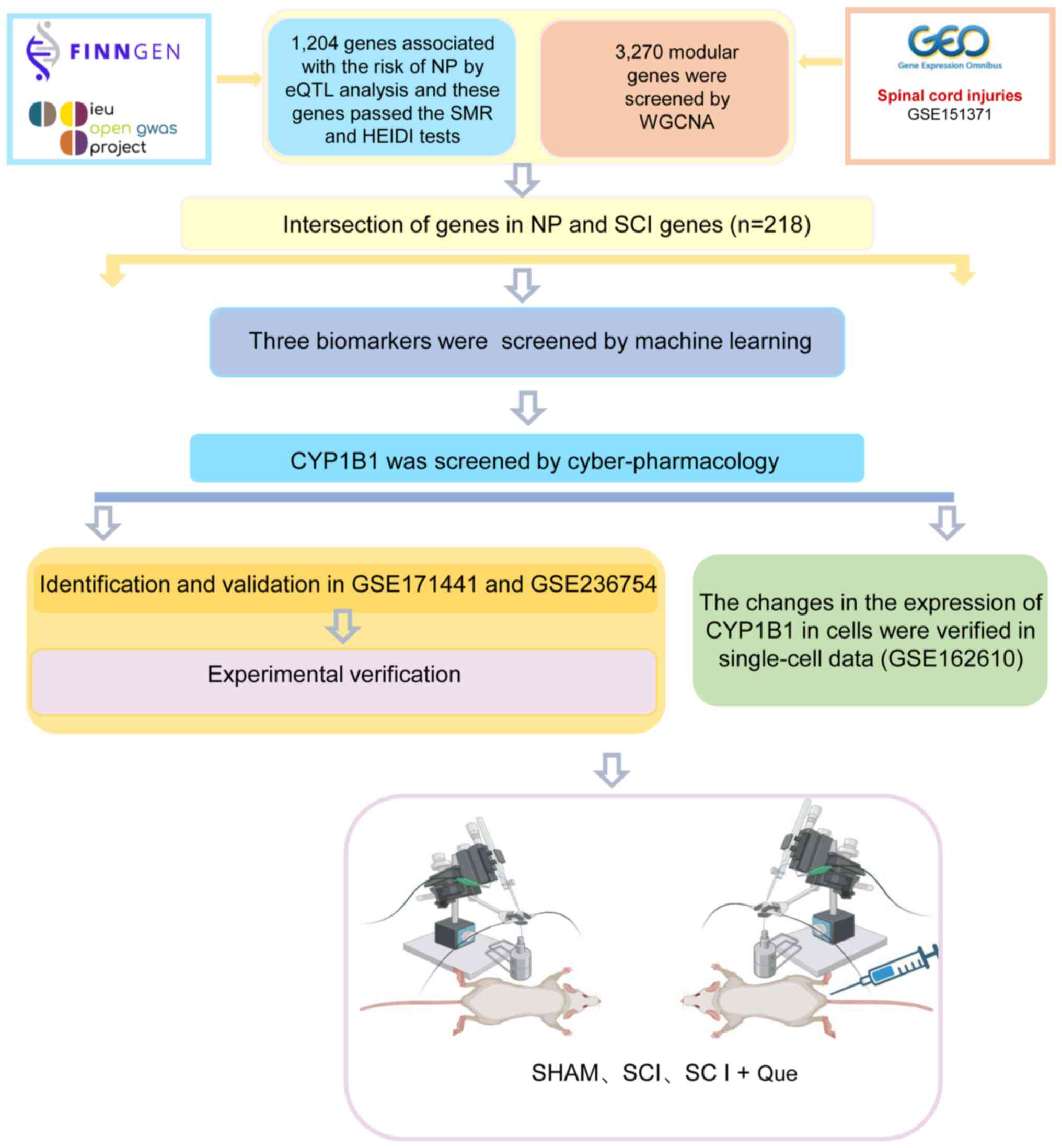
Figure 1

Research workflow. CYP1B1, cytochrome
P450 family 1 subfamily B member 1; eQTL, expression-quantitative
trait loci; HEIDI, heterogeneity in dependent instruments; NP,
neuropathic pain; PPI, protein-protein interaction; Que, quercetin;
SCI, spinal cord injury; SMR, summary-based Mendelian
randomization; WGCNA, weighted gene co-expression network
analysis.

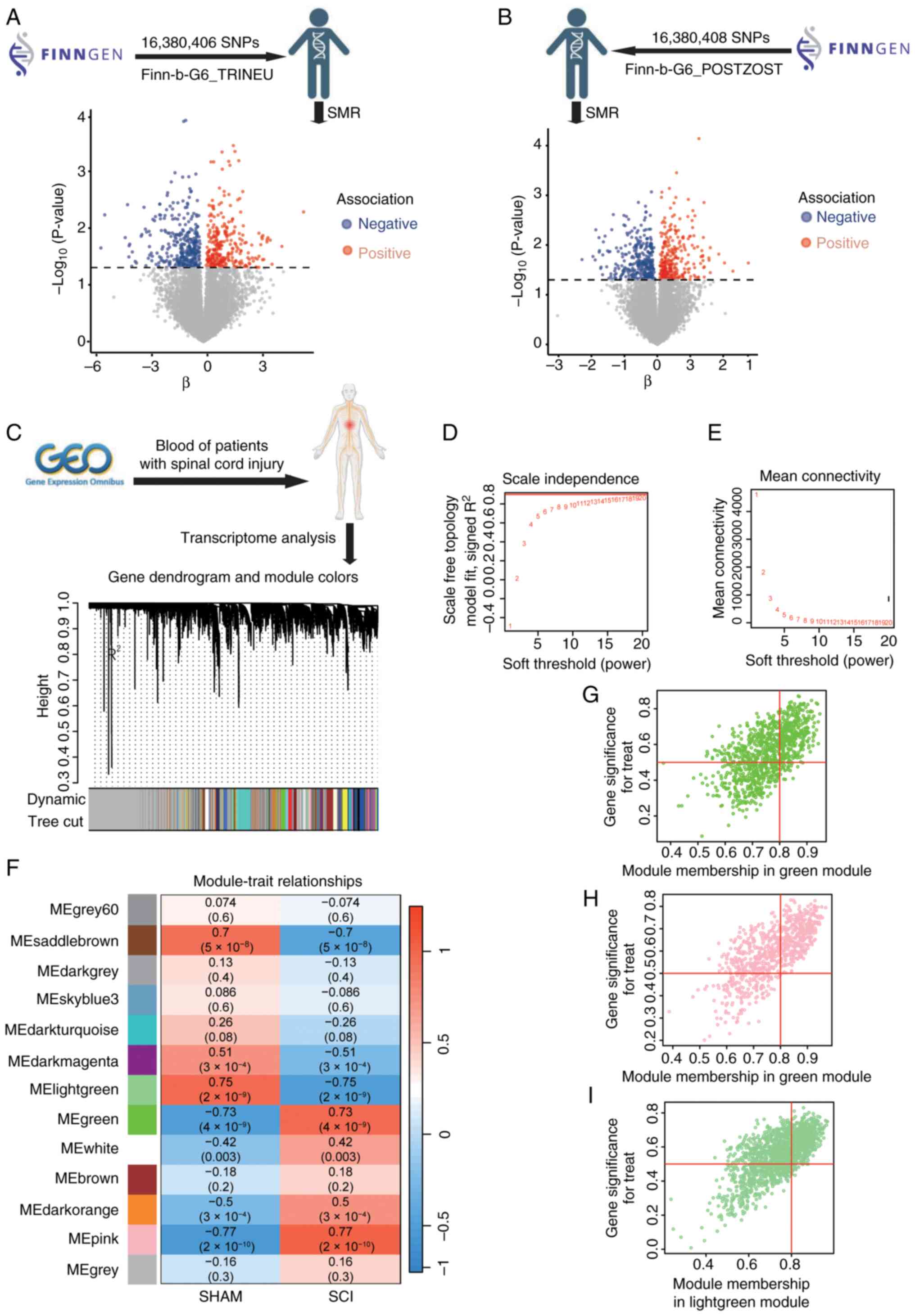
Figure 2

(A) Volcano plot showing 610 genes
associated with trigeminal neuralgia. (B) Volcano plot showing 619
genes associated with post-herpetic neuralgia. Genes positively
correlated with the disease are marked in red and genes negatively
correlated with the disease are marked in blue. (C) Co-expression
modules of genes represented by different colors under the gene
tree. (D) The scale-free topology model fit (y-axis, signed
R2) against different soft threshold (power) values
(x-axis). (E) The mean connectivity (average number of connections
per gene, y-axis) vs. the soft threshold (power) (x-axis). (F)
Heatmap of module-trait relationships in SCI, with each unit of a
different module containing the corresponding correlation and
P-value. (G) Green Module: Correlation between module membership
and gene significance for treatment. (H) Pink module: Correlation
between module membership and gene significance for treatment. (I)
Light green module: Correlation between module membership and gene
significance for treatment. SCI, spinal cord injury; SHAM, sham
surgery group; SMR, summary-based Mendelian randomization; SNP,
short nucleotide polymorphism.

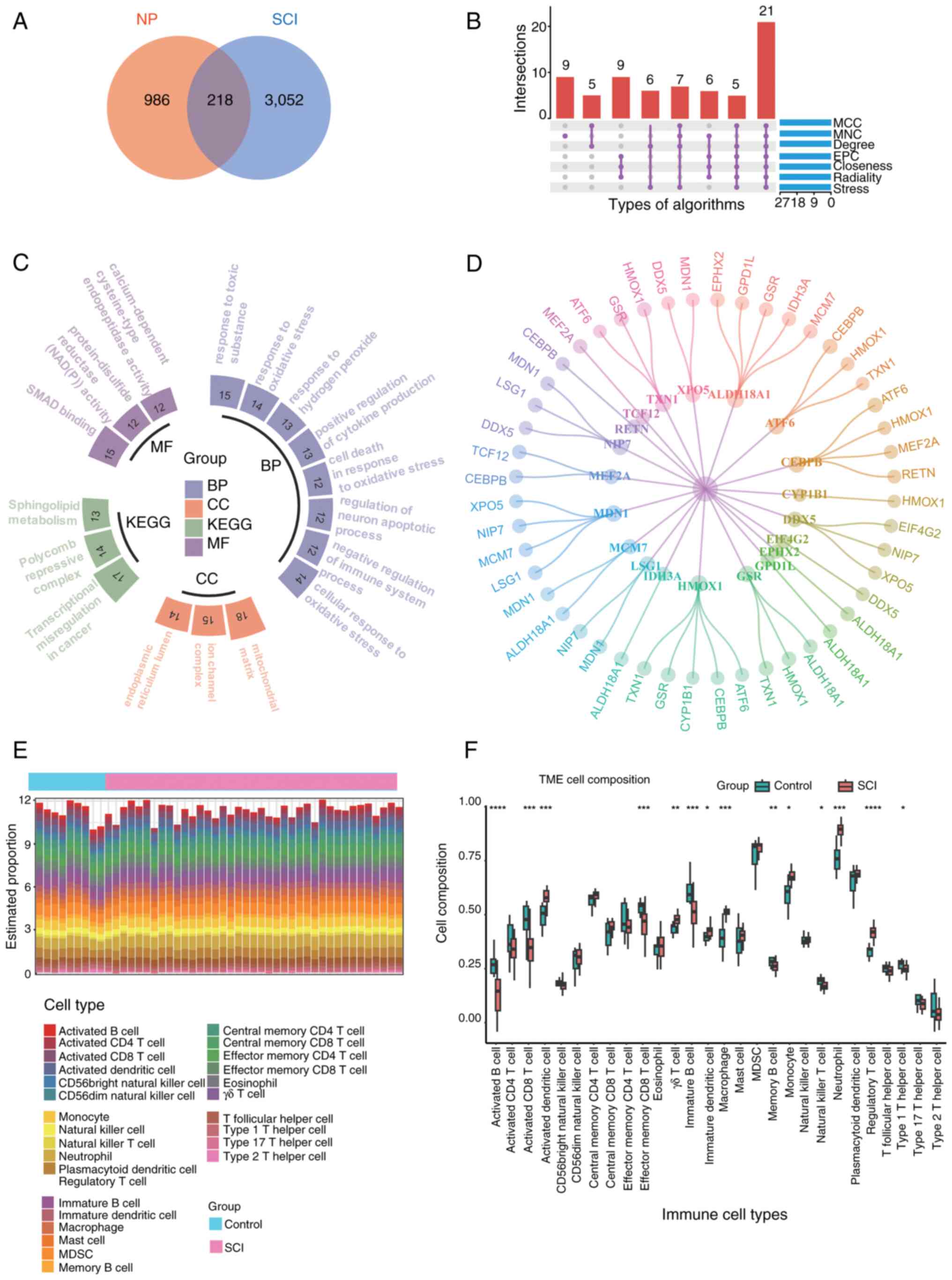
Figure 3

(A) Venn diagram obtained by crossing
NP-related candidate genes with SCI key module genes, with a total
of 218 common genes. (B) Upset plot depicting the intersection of
the top 45 genes produced by each of the seven algorithms to get 21
genes. (C) Results of GO and KEGG enrichment analysis of 218 common
genes. Different colors represent the classification of different
enrichment pathways, including KEGG, and BP, CC and MF in GO, with
P<0.05 for all enriched pathways, and the number of each bar
cell represents the Count. (D) Protein-protein interaction network
diagram of the 21 core genes (there are only 20 gene interactions
in the image as the gene ALOX5AP cannot be identified by the SRING
database). (E) Proportions of 28 immune cell types in different
samples are shown in the bar graph. (F) Comparison of the
proportions of 28 immune cell types in SCI and control groups.
*P<0.05, **P<0.01, ***P<0.001 and ****P<0.0001 vs.
control. BP, biological processes; CC, cellular component; GO, Gene
Ontology; KEGG, Kyoto Encylopedia of Genes and Genomes; MF,
molecular function; NP, neuropathic pain; SCI, spinal cord injury;
TME, tumor microenvironment; MCC, maximal clique centrality; MNC,
measurement coefficient network; EPC, embedding pathway
components.

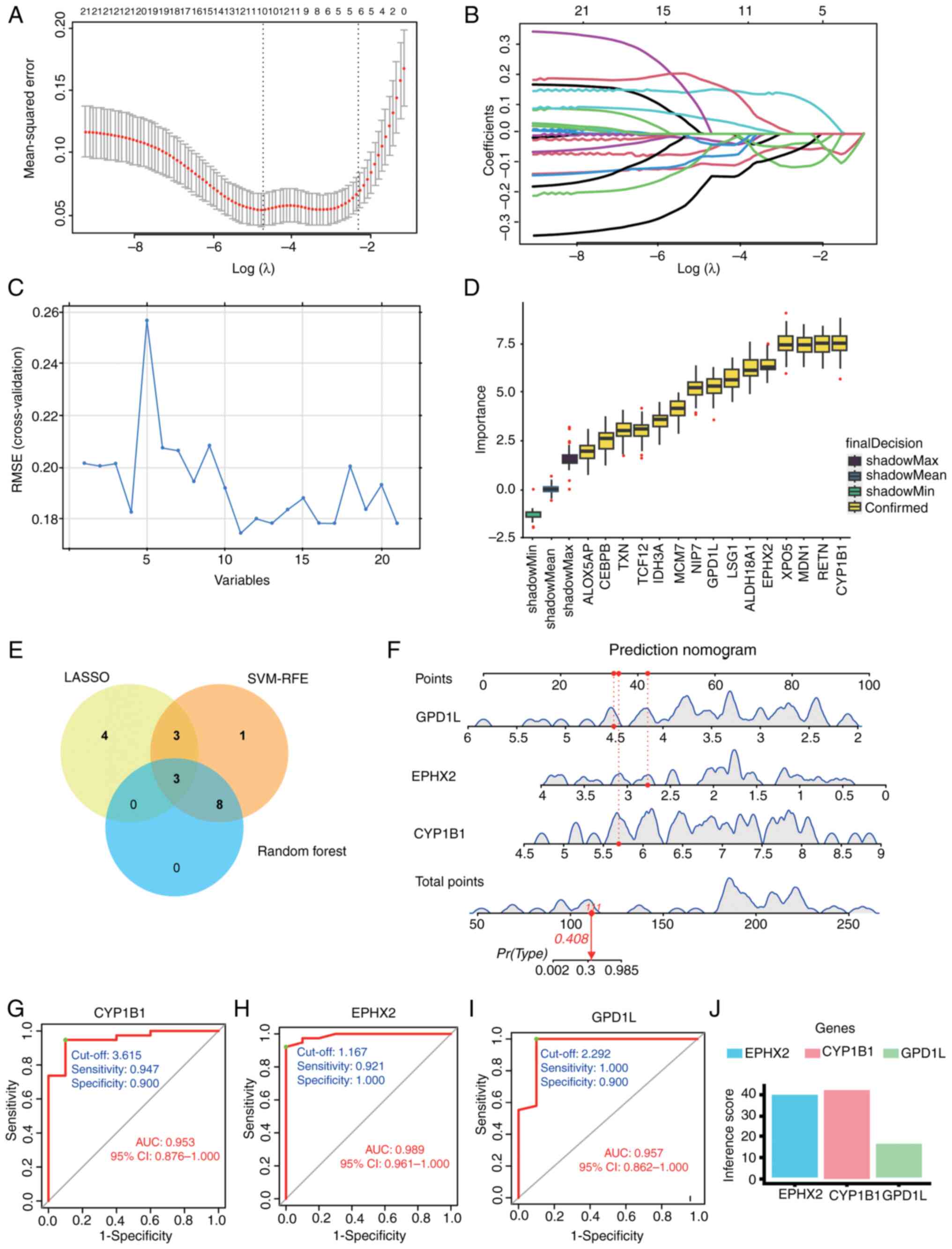
Figure 4

(A) Screening of diagnostic marker
genes in the LASSO model. This panel shows the cross-validated
mean-squared error plotted against Log(λ). The number of genes
corresponding to the lowest point of the curve (n=10) was most
suitable for the diagnosis of SCI. (B) This panel displays the
number of features (variables) retained in the model at different
values of Log(λ). (C) Characteristic gene selection using the
SVM-RFE technique. A total of 11 characteristic genes were
identified from the 21 core genes. (D) The 15 trait genes were
ranked according to the importance score. (E) Venn diagram of
diagnostic candidate genes identified by three machine algorithms.
(F) Predicted nomograms of candidate genes for SCI diagnosis. To
use it, locate the value for each biomarker (GPD1L, EPHX2, CYP1B1)
on its respective scale and draw a line upward to the ‘Points’ axis
to determine the score for each variable. Sum all the points to get
the ‘Total points’. (G) ROC curve of CYP1B1 in GSE151371 with an
AUC value of 0.953. (H) ROC curve of EPHX2 in GSE151371 with an AUC
value of 0.989. (I) ROC curve of GPD1L in GSE151371 with an AUC
value of 0.957. (J) Visualization of SCI diagnostic candidate genes
based on CTD pain inference scores. AUC, area under the curve; CTD,
Comparative Toxicogenomics Database; CYP1B1, cytochrome P450 family
1 subfamily B member 1; EPHX2, epoxide hydrolase 2; GPD1L,
glycerol-3-phosphate dehydrogenase 1-like; LASSO, least absolute
shrinkage and selection operator; RMSE, root mean square error;
ROC, receiver operating characteristic; SCI, spinal cord injury;
SVM-RFE, support vector machine recursive feature elimination.

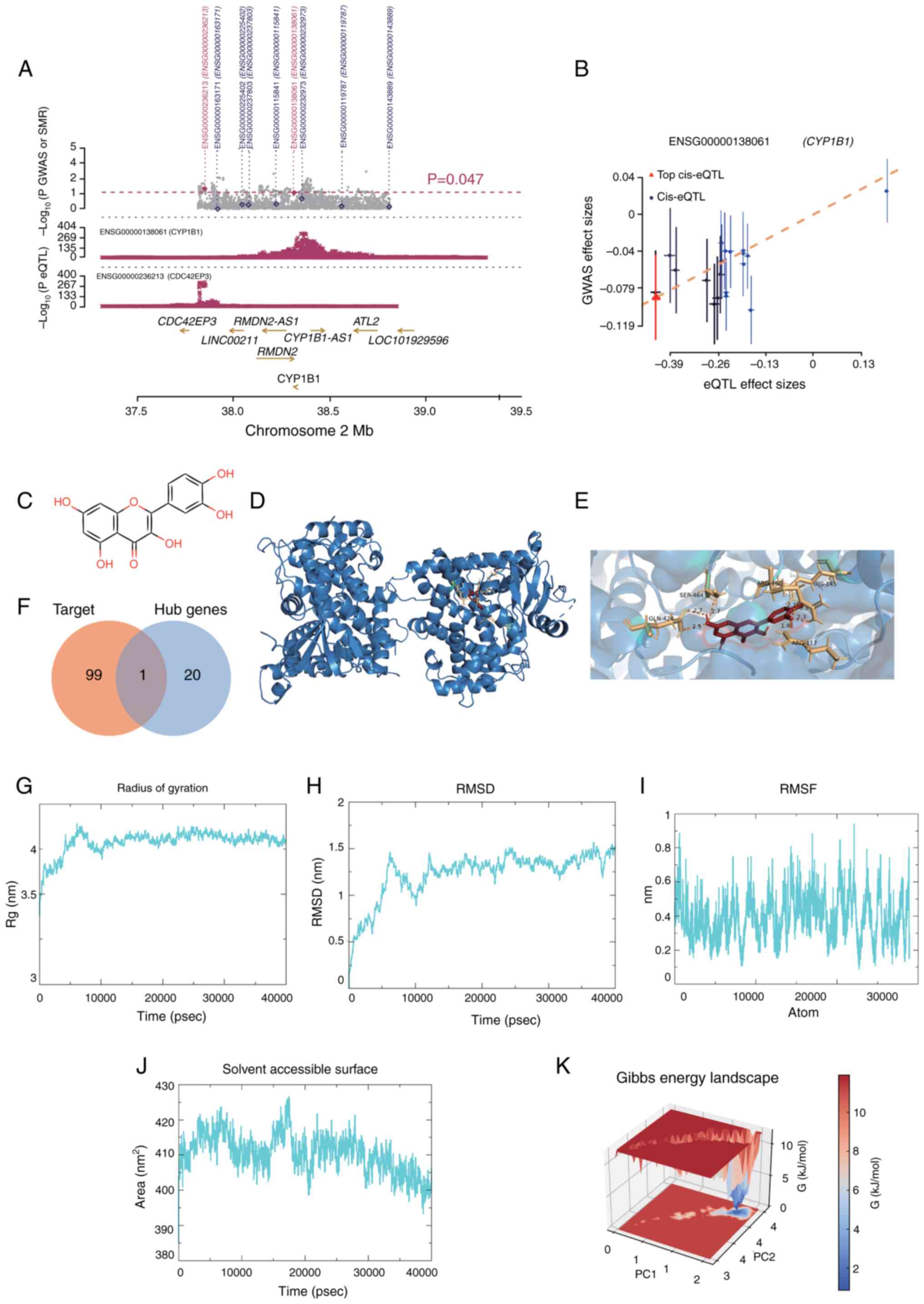
Figure 5

(A) MR association between CYP1B1
gene expression and trigeminal neuralgia in blood. All SNPs
available in GWAS and eQTL data are shown in. (A) Grey dots
represent the P-values of SNPs for GWAS, and diamonds represent
P-values of probes for SMR tests. (B) P-values for eQTL analyses of
CYP1B1 SNPs from GWAS (used in the heterogeneity in dependent
instruments test) are plotted against effect sizes of SNPs from
eQTL studies. The orange dashed line indicates the effect size
estimate for the MR association at the top cis-eQTL. The error line
is the standard error of the SNP effect. (C) Chemical structure of
Que. (D) Interaction of the CYP1B1 receptor with Que ligands. The
protein is depicted as a blue cartoon (α-helices and β-sheets) with
its molecular surface shown in transparent gray. Que is shown as
red sticks. (E) Detailed view of the local interactions within the
Que-CYP1B1 binding pocket Protein residues are shown as blue
sticks. The ligand, Que, is shown as red sticks. (F) Venn diagram
of potential targets of Que and 21 core genes. (G) Rg of the
Que-CYP1B1 complex. (H) RMSD of the Que-CYP1B1 complex. (I) RMSF of
CYP1B1 protein residues. (J) Solvent accessible surface of the
Que-CYP1B1 complex. (K) Free energy landscape of the Que-CYP1B1
complex. CYP1B1, cytochrome P450 family 1 subfamily B member 1;
eQTL, expression-quantitative trait loci; GWAS, genome wide
association study; MR, Mendelian randomization; PC, principal
component; Que, quercetin; Rg, radius of gyration; RMSD, root mean
square deviation; RMSF, root mean square fluctuation; SMR,
summary-based Mendelian randomization.

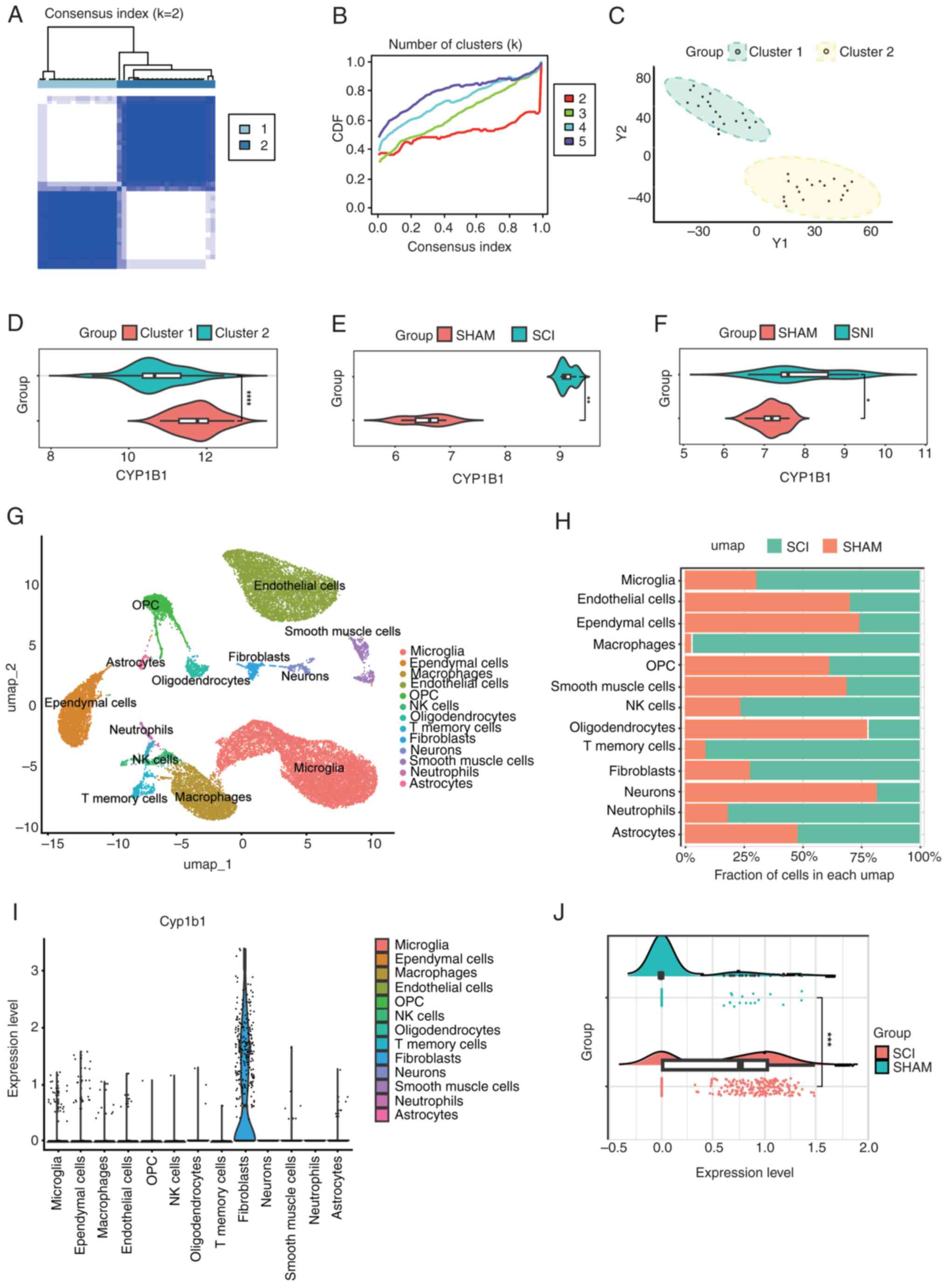
Figure 6

(A) A clustering heat map of the
samples with the optimal clustering number set to k=2. (B) CDF
curve for various values of k, constrained within the minimum range
of the consensus index. (C) Principal component analysis graphs
with the optimal clustering number set to k=2. (D) Differential
expression of CYP1B1 across two distinct clusters. (E) CYP1B1
expression in the GSE171441 dataset. (F) CYP1B1 expression in the
GSE236754 dataset. (G) A total of 13 cell populations were
identified in the single-cell sequencing data from the GSE162610
dataset. (H) Proportion of the 13 cell populations in the two
groups. (I) CYP1B1 expression in 13 cell populations. (J)
Comparison of changes in CYP1B1 levels in fibroblasts of two
groups. *P<0.05, **P<0.01, ***P<0.001 and ****P<0.0001.
CDF, cumulative distribution function; CYP1B1, cytochrome P450
family 1 subfamily B member 1; NK, natural killer; OPC,
oligodendrocyte precursor cells; SCI, spinal cord injury; SHAM,
sham surgery group; umap, uniform manifold approximation and
projection; Y1, Principal Component 1; Y2, Principal Component
2.

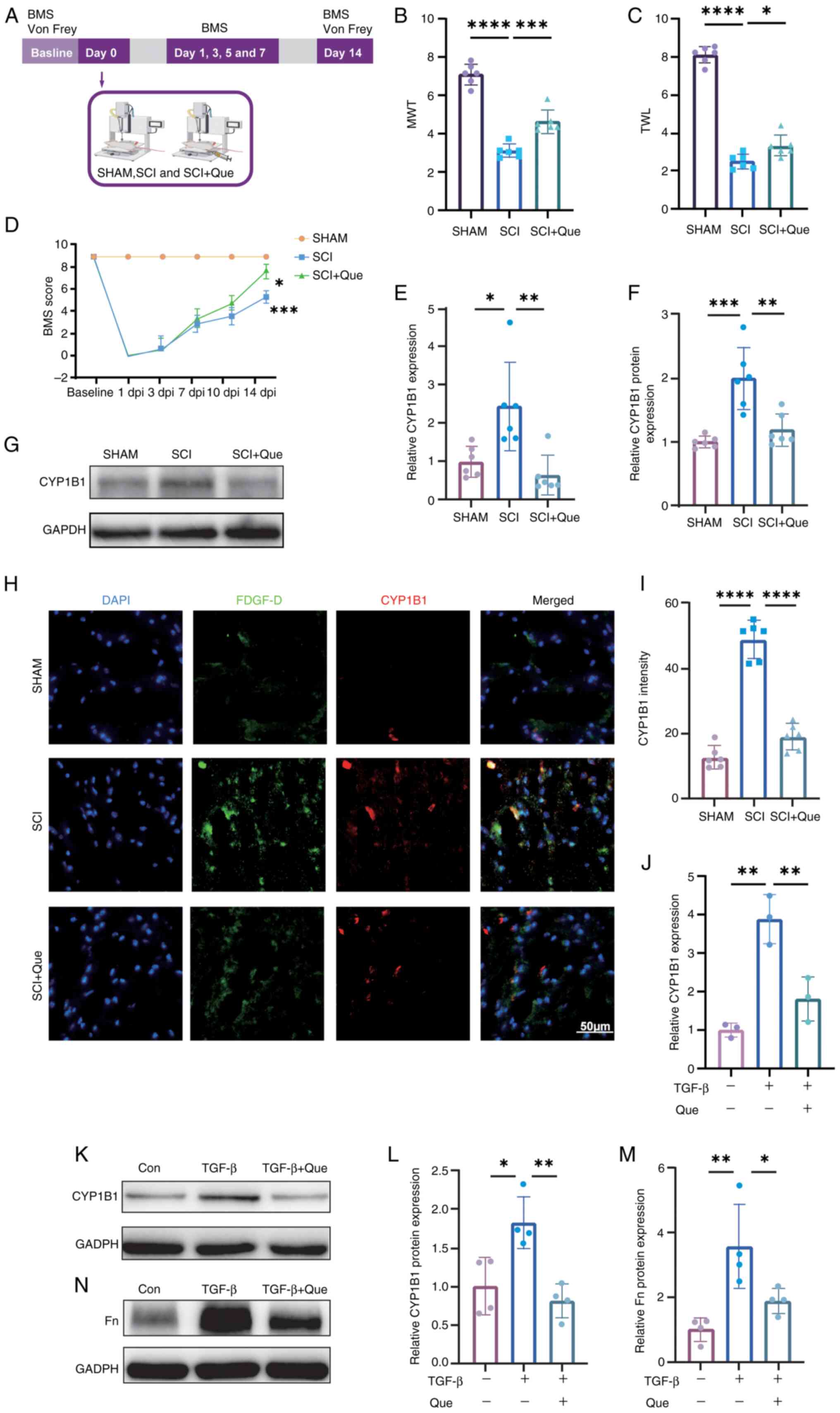
Figure 7

(A) Flow chart of the animal
experiment. (B) MWT measurements for the SHAM, SCI and SCI + Que
groups were recorded on day 14. (C) TWL for the SHAM, SCI and SCI +
Que groups was also measured on day 14. (D) BMS scores for the
SHAM, SCI and SCI + Que groups were assessed at baseline and on
postoperative days 1, 3, 5, 7, 10 and 14. A statistically
significant difference was observed (***P<0.001) between the SCI
and SHAM groups of mice (n=6 each). Additionally, a significant
difference was noted between the SCI and SCI + Que groups
(*P<0.05), with n=6. (E) RT-qPCR assessment of CYP1B1 mRNA
levels in spinal cord tissues from SHAM, SCI and SCI + Que groups,
with expression levels normalized to GAPDH. (F) Semi-quantitative
analysis of CYP1B1 protein levels in spinal cord tissues from the
SHAM, SCI and SCI + Que groups, with fold-changes normalized to
GAPDH. (G) Western blot analysis was conducted to assess CYP1B1
expression in spinal cord tissues from the SHAM, SCI and SCI + Que
groups on day 14 post-modeling. (H) Immunofluorescence analysis was
performed to assess the expression levels of CYP1B1 and the
fibroblast marker PDGF-D in spinal cord tissues from the SHAM, SCI
and SCI + Que groups, with n=6. Scale bar, 50 µm. (I) Quantitative
fluorescence analysis of CYP1B1 expression was conducted on spinal
cord tissues from the SHAM, SCI and SCI + Que groups. (J) RT-qPCR
evaluation of CYP1B1 mRNA expression in fibroblasts treated under
control conditions, with 10 ng/ml TGF-β and with 10 ng/ml TGF-β +
10 µmol/ml Que, with mRNA levels normalized to GAPDH. (K) Western
blot analysis was performed to evaluate CYP1B1 expression in
fibroblasts subjected to control conditions, 10 ng/ml TGF-β
stimulation or co-treatment with 10 ng/ml TGF-β and 10 µmol/ml Que.
(L) Semi-quantitative evaluation of CYP1B1 protein expression in
fibroblasts subjected to control conditions, treated with 10 ng/ml
TGF-β or treated with 10 ng/ml TGF-β combined with 10 µmol/ml Que,
with protein levels normalized to GAPDH. (M) A semi-quantitative
analysis was conducted on the Fn protein levels in fibroblasts
subjected to control conditions, 10 ng/ml TGF-β treatment or
treatment with a combination of 10 ng/ml TGF-β and 10 µmol/ml Que,
with the resulting fold-changes normalized against GAPDH. (N)
Western blot analysis was utilized to investigate Fn expression in
fibroblasts under control conditions, after treatment with 10 ng/ml
TGF-β or after co-treatment with 10 ng/ml TGF-β and 10 µmol/ml Que.
The data are presented as the mean ± SEM, with sample sizes of n=6
per group for (B, C, D, E, F, G, H and I), n=3 per group for (J)
and n=4 per group for (K, L, M and N). *P<0.05, **P<0.01,
***P<0.001 and ****P<0.0001. BMS, Basso Mouse Scale; Con,
control; CYP1B1, cytochrome P450 family 1 subfamily B member 1;
PDGF-D, platelet-derived growth factor D; dpi, days post-injury;
Fn, Fibronectin; MWT, mechanical withdrawal threshold; Que,
quercetin; RT-qPCR, reverse transcription-quantitative PCR; SCI,
spinal cord injury; SHAM, sham surgery group; TWL, thermal
withdrawal latency.

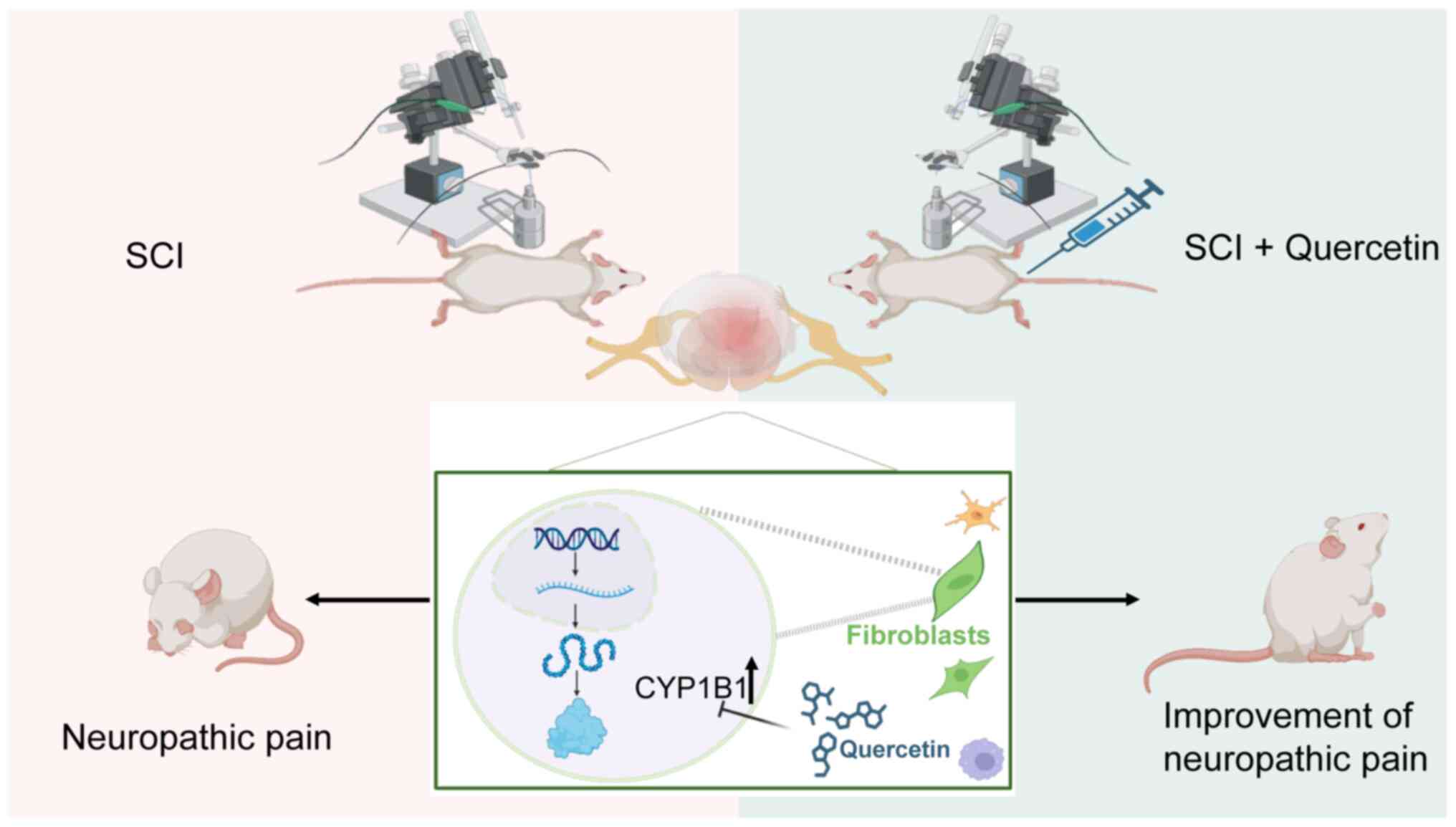
Figure 8

Mechanism diagram. CYP1B1, cytochrome
P450 family 1 subfamily B member 1; SCI, spinal cord injury.
View References

1 

Finnerup NB, Kuner R and Jensen TS: Neuropathic Pain: From mechanisms to treatment. Physiol Rev. 101:259–301. 2021. View Article : Google Scholar : PubMed/NCBI

2 

Burke D, Fullen BM, Stokes D and Lennon O: Neuropathic pain prevalence following spinal cord injury: A systematic review and meta-analysis. Eur J Pain. 21:29–44. 2017. View Article : Google Scholar : PubMed/NCBI

3 

Hergenroeder GW, Redell JB, Choi HA, Schmitt L, Donovan W, Francisco GE, Schmitt K, Moore AN and Dash PK: Increased levels of circulating glial fibrillary acidic protein and collapsin response mediator Protein-2 autoantibodies in the acute stage of spinal cord injury predict the subsequent development of neuropathic pain. J Neurotraum. 35:2530–2539. 2018. View Article : Google Scholar

4 

Widerström-Noga E: Neuropathic pain and spinal cord injury: Phenotypes and pharmacological management. Drugs. 77:967–984. 2017. View Article : Google Scholar

5 

Orr MB and Gensel JC: Spinal cord injury scarring and inflammation: Therapies targeting glial and inflammatory responses. Neurotherapeutics. 15:541–553. 2018. View Article : Google Scholar : PubMed/NCBI

6 

O'Shea TM, Burda JE and Sofroniew MV: Cell biology of spinal cord injury and repair. J Clin Invest. 127:3259–3270. 2017. View Article : Google Scholar

7 

Boldt I, Eriks-Hoogland I, Brinkhof MW, de Bie R, Joggi D and von Elm E: Non-pharmacological interventions for chronic pain in people with spinal cord injury. Cochrane Database Syst Rev. 2014:CD0091772014. View Article : Google Scholar : PubMed/NCBI

8 

Mehta S, McIntyre A, Janzen S, Loh E and Teasell R; Spinal Cord Injury Rehabilitation Evidence Team, : Systematic review of pharmacologic treatments of pain after spinal cord injury: An update. Arch Phys Med Rehabil. 97:1381–1391.e1. 2016. View Article : Google Scholar

9 

Loh E, Mirkowski M, Agudelo AR, Allison DJ, Benton B, Bryce TN, Guilcher S, Jeji T, Kras-Dupuis A, Kreutzwiser D, et al: The CanPain SCI clinical practice guidelines for rehabilitation management of neuropathic pain after spinal cord injury: 2021 update. Spinal Cord. 60:548–566. 2022. View Article : Google Scholar : PubMed/NCBI

10 

Liu C, Liu DQ, Tian YK, Mei W, Tian XB, Xu AJ and Zhou YQ: The emerging role of quercetin in the treatment of chronic pain. Curr Neuropharmacol. 20:2346–2353. 2022. View Article : Google Scholar

11 

Yang H, Yang T, Heng C, Zhou Y, Jiang Z, Qian X, Du L, Mao S, Yin X and Lu Q: Quercetin improves nonalcoholic fatty liver by ameliorating inflammation, oxidative stress, and lipid metabolism in db/db mice. Phytother Res. 33:3140–3152. 2019. View Article : Google Scholar : PubMed/NCBI

12 

Gao W, Zan Y, Wang ZJ, Hu XY and Huang F: Quercetin ameliorates paclitaxel-induced neuropathic pain by stabilizing mast cells, and subsequently blocking PKCε-dependent activation of TRPV1. Acta Pharmacol Sin. 37:1166–1177. 2016. View Article : Google Scholar : PubMed/NCBI

13 

Wang R, Qiu Z, Wang G, Hu Q, Shi N, Zhang Z, Wu Y and Zhou C: Quercetin attenuates diabetic neuropathic pain by inhibiting mTOR/p70S6K pathway-mediated changes of synaptic morphology and synaptic protein levels in spinal dorsal horn of db/db mice. Eur J Pharmacol. 882:1732662020. View Article : Google Scholar

14 

Abbey EL and Rankin JW: Effect of quercetin supplementation on repeated-sprint performance, xanthine oxidase activity, and inflammation. Int J Sport Nutr Exerc Metab. 21:91–96. 2011. View Article : Google Scholar : PubMed/NCBI

15 

Zhao L, Wang H and Du X: The therapeutic use of quercetin in ophthalmology: Recent applications. Biomed Pharmacother. 137:1113712021. View Article : Google Scholar : PubMed/NCBI

16 

Li Y, Yao J, Han C, Yang J, Chaudhry MT, Wang S, Liu H and Yin Y: Quercetin, inflammation and immunity. Nutrients. 8:1672016. View Article : Google Scholar : PubMed/NCBI

17 

Costa LG, Garrick JM, Roquè PJ and Pellacani C: Mechanisms of neuroprotection by Quercetin: Counteracting oxidative stress and more. Oxid Med Cell Longev. 2016:29867962016. View Article : Google Scholar : PubMed/NCBI

18 

Shao Z, Wang B, Shi Y, Xie C, Huang C, Chen B, Zhang H, Zeng G, Liang H, Wu Y, et al: Senolytic agent Quercetin ameliorates intervertebral disc degeneration via the Nrf2/NF-κB axis. Osteoarthritis Cartilage. 29:413–422. 2021. View Article : Google Scholar : PubMed/NCBI

19 

Chiang MC, Tsai TY and Wang CJ: The potential benefits of quercetin for brain health: A review of Anti-inflammatory and neuroprotective mechanisms. Int J Mol Sci. 24:63282023. View Article : Google Scholar

20 

Grewal AK, Singh TG, Sharma D, Sharma V, Singh M, Rahman MH, Najda A, Walasek-Janusz M, Kamel M, Albadrani GM, et al: Mechanistic insights and perspectives involved in neuroprotective action of quercetin. Biomed Pharmacother. 140:1117292021. View Article : Google Scholar : PubMed/NCBI

21 

Elsworth B, Lyon B, Alexander T, Liu Y, Matthews P, Hallett J, Bates P, Palmer T, Haberland V, Smith GD, et al: The MRC IEU OpenGWAS data infrastructure. bioRxiv. August 10–2020.doi: 10.1101/2020.08.10.244293. View Article : Google Scholar

22 

Kurki MI, Karjalainen J, Palta P, Sipilä TP, Kristiansson K, Donner KM, Reeve MP, Laivuori H, Aavikko M, Kaunisto MA, et al: FinnGen provides genetic insights from a well-phenotyped isolated population. Nature. 613:508–518. 2023. View Article : Google Scholar : PubMed/NCBI

23 

Võsa U, Claringbould A, Westra HJ, Bonder MJ, Deelen P, Zeng B, Kirsten H, Saha A, Kreuzhuber R, Yazar S, et al: Large-scale cis- and trans-eQTL analyses identify thousands of genetic loci and polygenic scores that regulate blood gene expression. Nat Genet. 53:1300–1310. 2021.

24 

Kyritsis N, Torres-Espín A, Schupp PG, Huie JR, Chou A, Duong-Fernandez X, Thomas LH, Tsolinas RE, Hemmerle DD, Pascual LU, et al: Diagnostic blood RNA profiles for human acute spinal cord injury. J Exp Med. 218:e202017952021. View Article : Google Scholar : PubMed/NCBI

25 

Milich LM, Choi JS, Ryan C, Cerqueira SR, Benavides S, Yahn SL, Tsoulfas P and Lee JK: Single-cell analysis of the cellular heterogeneity and interactions in the injured mouse spinal cord. J Exp Med. 218:e202100402021. View Article : Google Scholar : PubMed/NCBI

26 

Patel M, Li Y, Anderson J, Castro-Pedrido S, Skinner R, Lei S, Finkel Z, Rodriguez B, Esteban F, Lee KB, et al: Gsx1 promotes locomotor functional recovery after spinal cord injury. Mol Ther. 29:2469–2482. 2021. View Article : Google Scholar : PubMed/NCBI

27 

Ghazisaeidi S, Muley MM, Tu Y, Finn DP, Kolahdouzan M, Pitcher GM, Kim D, Sengar AS, Ramani AK, Brudno M and Salter MW: Conserved transcriptional programming across sex and species after peripheral nerve injury predicts treatments for neuropathic pain. Br J Pharmacol. 180:2822–2836. 2023. View Article : Google Scholar

28 

Zhu Z, Zhang F, Hu H, Bakshi A, Robinson MR, Powell JE, Montgomery GW, Goddard ME, Wray NR, Visscher PM and Yang J: Integration of summary data from GWAS and eQTL studies predicts complex trait gene targets. Nat Genet May. 48:481–487. 2016. View Article : Google Scholar

29 

Langfelder P and Horvath S: WGCNA: An R package for weighted correlation network analysis. BMC Bioinformatics. 9:5592008. View Article : Google Scholar : PubMed/NCBI

30 

Bardou P, Mariette J, Escudié F, Djemiel C and Klopp C: Jvenn: An interactive Venn diagram viewer. BMC Bioinformatics. 15:2932014. View Article : Google Scholar : PubMed/NCBI

31 

The Gene Ontology Consortium, . The Gene Ontology Resource: 20 years and still GOing strong. Nucleic Acids Res. 47:D330–D338. 2019. View Article : Google Scholar : PubMed/NCBI

32 

Ogata H, Goto S, Sato K, Fujibuchi W, Bono H and Kanehisa M: KEGG: Kyoto encyclopedia of genes and genomes. Nucleic Acids Res. 27:29–34. 1999. View Article : Google Scholar : PubMed/NCBI

33 

Li J, Miao B, Wang S, Dong W, Xu H, Si C, Wang W, Duan S, Lou J, Bao Z, et al: Hiplot: A comprehensive and easy-to-use web service for boosting publication-ready biomedical data visualization. Brief Bioinform. 23:bbac2612022. View Article : Google Scholar : PubMed/NCBI

34 

Szklarczyk D, Gable AL, Nastou KC, Lyon D, Kirsch R, Pyysalo S, Doncheva NT, Legeay M, Fang T, Bork P, et al: The STRING database in 2021: Customizable protein-protein Networks, and functional characterization of user-uploaded gene/measurement sets. Nucleic Acids Res. 49:D605–D601. 20212. View Article : Google Scholar

35 

Shannon P, Markiel A, Ozier O, Baliga NS, Wang JT, Ramage D, Amin N, Schwikowski B and Ideker T: Cytoscape: A software environment for integrated models of biomolecular interaction networks. Genome Res. 13:2498–2504. 2003. View Article : Google Scholar : PubMed/NCBI

36 

Bindea G, Mlecnik B, Tosolini M, Kirilovsky A, Waldner M, Obenauf AC, Angell H, Fredriksen T, Lafontaine L, Berger A, et al: Spatiotemporal dynamics of intratumoral immune cells reveal the immune landscape in human cancer. Immunity. 39:782–795. 2013. View Article : Google Scholar : PubMed/NCBI

37 

Barbie DA, Tamayo P, Boehm JS, Kim SY, Moody SE, Dunn IF, Schinzel AC, Sandy P, Meylan E, Scholl C, et al: Systematic RNA interference reveals that oncogenic KRAS-driven cancers require TBK1. Nature. 462:108–112. 2009. View Article : Google Scholar : PubMed/NCBI

38 

Yang C, Delcher C, Shenkman E and Ranka S: Machine learning approaches for predicting high cost high need patient expenditures in health care. Biomed Eng Online. 17 (Suppl 1):S1312018. View Article : Google Scholar

39 

Sahran S, Albashish D, Abdullah A, Shukor NA, Hayati Md and Pauzi S: Absolute cosine-based SVM-RFE feature selection method for prostate histopathological grading. Artif Intell Med. 87:78–90. 2018. View Article : Google Scholar : PubMed/NCBI

40 

Degenhardt F, Seifert S and Szymczak S: Evaluation of variable selection methods for random forests and omics data sets. Brief Bioinform. 20:492–503. 2019. View Article : Google Scholar : PubMed/NCBI

41 

Friedman J, Hastie T and Tibshirani R: Regularization paths for generalized linear models via coordinate descent. J Stat Softw. 33:1–22. 2010. View Article : Google Scholar : PubMed/NCBI

42 

Alderden J, Pepper GA, Wilson A, Whitney JD, Richardson S, Butcher R, Jo Y and Cummins MR: Predicting pressure injury in critical care patients: A Machine-learning model. Am J Crit Care. 27:461–468. 2018. View Article : Google Scholar : PubMed/NCBI

43 

Yoon S and Kim S: AdaBoost-based multiple SVM-RFE for classification of mammograms in DDSM. BMC Med Inform Decis Mak. 9 (Suppl 1):S12009. View Article : Google Scholar : PubMed/NCBI

44 

Ding X, Qin J, Huang F, Feng F and Luo L: The combination of machine learning and untargeted metabolomics identifies the lipid metabolism-related gene CH25H as a potential biomarker in asthma. Inflamm Res. 72:1099–1119. 2023. View Article : Google Scholar : PubMed/NCBI

45 

Li Y and Song M: Exact Model-free function inference using uniform marginal counts for null population. Bioinformatics. 41:btaf1212025. View Article : Google Scholar : PubMed/NCBI

46 

Robin X, Turck N, Hainard A, Tiberti N, Lisacek F, Sanchez JC and Müller M: pROC: An open-source package for R and S+ to analyze and compare ROC curves. BMC Bioinformatics. 12:772011. View Article : Google Scholar : PubMed/NCBI

47 

Daina A, Michielin O and Zoete V: SwissTargetPrediction: Updated data and new features for efficient prediction of protein targets of small molecules. Nucleic Acids Res. 47:W357–W364. 2019. View Article : Google Scholar : PubMed/NCBI

48 

Forli S, Huey R, Pique ME, Sanner MF, Goodsell DS and Olson AJ: Computational Protein-ligand docking and virtual drug screening with the AutoDock suite. Nat Protoc. 11:905–919. 2016. View Article : Google Scholar

49 

Trott O and Olson AJ: AutoDock Vina: Improving the speed and accuracy of docking with a new scoring function, efficient optimization, and multithreading. J Comput Chem. 31:455–461. 2010. View Article : Google Scholar : PubMed/NCBI

50 

DeLano WL: Unraveling hot spots in binding interfaces: Progress and challenges. Curr Opin Struct Biol. 12:14–20. 2002. View Article : Google Scholar

51 

Hao Y, Hao S, Andersen-Nissen E, Mauck WM III, Zheng S, Butler A, Lee MJ, Wilk AJ, Darby C, Zager M, et al: Integrated analysis of multimodal single-cell data. Cell. 184:3573–3587.e29. 2021. View Article : Google Scholar

52 

Butler A, Hoffman P, Smibert P, Papalexi E and Satija R: Integrating single-cell transcriptomic data across different conditions, technologies, and species. Nat Biotechnol. 36:411–420. 2018. View Article : Google Scholar

53 

Valenzi E, Bulik M, Tabib T, Morse C, Sembrat J, Trejo Bittar H, Rojas M and Lafyatis R: Single-cell analysis reveals fibroblast heterogeneity and myofibroblasts in systemic sclerosis-associated interstitial lung disease. Ann Rheum Dis. 78:1379–1387. 2019. View Article : Google Scholar : PubMed/NCBI

54 

Franzén O, Gan LM and Björkegren JLM: PanglaoDB: A web server for exploration of mouse and human single-cell RNA sequencing data. Database (Oxford). 2019:baz0462019.

55 

Zhang X, Lan Y, Xu J, Quan F, Zhao E, Deng C, Luo T, Xu L, Liao G, Yan M, et al: CellMarker: A manually curated resource of cell markers in human and mouse. Nucleic Acids Res. 47:D721–D728. 2019. View Article : Google Scholar : PubMed/NCBI

56 

Anjaneyulu M and Chopra K: Quercetin, a bioflavonoid, attenuates thermal hyperalgesia in a mouse model of diabetic neuropathic pain. Prog Neuropsychopharmacol Biol Psychiatry. 27:1001–1005. 2003. View Article : Google Scholar : PubMed/NCBI

57 

Fan H, Tang HB, Shan LQ, Liu SC, Huang DG, Chen X, Chen Z, Yang M, Yin XH, Yang H and Hao DJ: Quercetin prevents necroptosis of oligodendrocytes by inhibiting macrophages/microglia polarization to M1 phenotype after spinal cord injury in rats. J Neuroinflammation. 16:2062019. View Article : Google Scholar : PubMed/NCBI

58 

Basso DM, Fisher LC, Anderson AJ, Jakeman LB, McTigue DM and Popovich PG: Basso mouse scale for locomotion detects differences in recovery after spinal cord injury in five common mouse strains. J Neurotrauma. 23:635–659. 2006. View Article : Google Scholar

59 

Livak KJ and Schmittgen TD: Analysis of relative gene expression data using Real-time quantitative PCR and the 2(−Delta Delta C(T)) method. Methods. 25:402–408. 2001. View Article : Google Scholar : PubMed/NCBI

60 

Wang X, Fu Y, Botchway BOA, Zhang Y, Zhang Y, Jin T and Liu X: Quercetin can improve spinal cord injury by regulating the mTOR signaling pathway. Front Neurol. 13:9056402022. View Article : Google Scholar

61 

Bannister K, Sachau J, Baron R and Dickenson AH: Neuropathic Pain: Mechanism-based therapeutics. Annu Rev Pharmacol Toxicol. 60:257–274. 2020. View Article : Google Scholar

62 

Torrance N, Ferguson JA, Afolabi E, Bennett MI, Serpell MG, Dunn KM and Smith BH: Neuropathic pain in the community: More under-treated than refractory? Pain. 154:690–699. 2013. View Article : Google Scholar : PubMed/NCBI

63 

Jensen TS and Finnerup NB: Allodynia and hyperalgesia in neuropathic pain: Clinical manifestations and mechanisms. Lancet Neurol. 13:924–935. 2014. View Article : Google Scholar

64 

Szok D, Tajti J, Nyári A and Vécsei L: Therapeutic approaches for peripheral and central neuropathic pain. Behav Neurol. 2019:86859542019.

65 

McGinnis A and Ji RR: The similar and distinct roles of satellite glial cells and spinal astrocytes in neuropathic pain. Cells. 12:9652023. View Article : Google Scholar : PubMed/NCBI

66 

Calvo M, Dawes JM and Bennett DL: The role of the immune system in the generation of neuropathic pain. Lancet Neurol. 11:629–642. 2012. View Article : Google Scholar

67 

Hellenbrand DJ, Quinn CM, Piper ZJ, Morehouse CN, Fixel JA and Hanna AS: Inflammation after spinal cord injury: A review of the critical timeline of signaling cues and cellular infiltration. J Neuroinflammation. 18:2842021. View Article : Google Scholar : PubMed/NCBI

68 

Glaser J, Gonzalez R, Perreau VM, Cotman CW and Keirstead HS: Neutralization of the chemokine CXCL10 enhances tissue sparing and angiogenesis following spinal cord injury. J Neurosci Res. 77:701–708. 2004. View Article : Google Scholar : PubMed/NCBI

69 

Garcia E, Aguilar-Cevallos J, Silva-Garcia R and Ibarra A: Cytokine and growth factor activation in vivo and in vitro after spinal cord injury. Mediators Inflamm. 2016:94760202016. View Article : Google Scholar : PubMed/NCBI

70 

Sommer C, Leinders M and Üçeyler N: Inflammation in the pathophysiology of neuropathic pain. Pain. 159:595–602. 2018. View Article : Google Scholar : PubMed/NCBI

71 

Tang L, Song Z, Wang J, He S and Liu C: Regulatory role of neuronal guidance proteins in spinal cord injury. Neural Regen Res. May 6–2025.(Epub ahead of print). doi: 10.4103/NRR.NRR-D-24-00564. View Article : Google Scholar

72 

Neshasteh-Riz A, Ramezani F, Kookli K, Moghaddas Fazeli S, Motamed A, Nasirinezhad F, Janzadeh A, Hamblin MR and Asadi M: Optimization of the duration and dose of photobiomodulation therapy (660 nm Laser) for spinal cord injury in rats. Photobiomodul Photomed Laser Surg. 40:488–498. 2022. View Article : Google Scholar : PubMed/NCBI

73 

Huang Y, Gao P, Qin T, Chu B, Xu T, Yi J, Wang Q, Yang Z, Jiang T, Fan J, et al: Delayed inhibition of collagen deposition by targeting bone morphogenetic protein 1 promotes recovery after spinal cord injury. Matrix Biol. 118:69–91. 2023. View Article : Google Scholar

74 

Frangogiannis N: Transforming growth factor-β in tissue fibrosis. J Exp Med. 217:e201901032020. View Article : Google Scholar : PubMed/NCBI

75 

Zhou X, He X and Ren Y: Function of microglia and macrophages in secondary damage after spinal cord injury. Neural Regen Res. 9:1787–1795. 2014. View Article : Google Scholar : PubMed/NCBI

76 

Ji RR, Xu ZZ and Gao YJ: Emerging targets in neuroinflammation-driven chronic pain. Nat Rev Drug Discov. 13:533–548. 2014. View Article : Google Scholar : PubMed/NCBI

77 

Schoch HJ, Fischer S and Marti HH: Hypoxia-induced vascular endothelial growth factor expression causes vascular leakage in the brain. Brain. 125:2549–2557. 2002. View Article : Google Scholar : PubMed/NCBI

78 

Dina OA, Parada CA, Yeh J, Chen X, McCarter GC and Levine JD: Integrin signaling in inflammatory and neuropathic pain in the rat. Eur J Neurosci. 19:634–642. 2004. View Article : Google Scholar

79 

Murray GI, Melvin WT, Greenlee WF and Burke MD: Regulation, function, and tissue-specific expression of cytochrome P450 CYP1B1. Annu Rev Pharmacol Toxicol. 41:297–316. 2001. View Article : Google Scholar

80 

Lu Y, Nanayakkara G, Sun Y, Liu L, Xu K, Drummer CIV, Shao Y, Saaoud F, Choi ET, Jiang X, et al: Procaspase-1 patrolled to the nucleus of proatherogenic lipid LPC-activated human aortic endothelial cells induces ROS promoter CYP1B1 and strong inflammation. Redox Biol. 47:1021422021. View Article : Google Scholar

81 

Malik KU, Jennings BL, Yaghini FA, Sahan-Firat S, Song CY, Estes AM and Fang XR: Contribution of cytochrome P450 1B1 to hypertension and associated pathophysiology: A novel target for antihypertensive agents. Prostaglandins Other Lipid Mediat. 98:69–74. 2012. View Article : Google Scholar

82 

Singh P, Dutta SR, Song CY, Oh S, Gonzalez FJ and Malik KU: Brain Testosterone-CYP1B1 (Cytochrome P450 1B1) generated metabolite 6β-Hydroxytestosterone promotes neurogenic hypertension and inflammation. Hypertension. 76:1006–1018. 2020. View Article : Google Scholar : PubMed/NCBI

83 

Yu M, Wang Z, Wang D, Aierxi M, Ma Z and Wang Y: Oxidative stress following spinal cord injury: From molecular mechanisms to therapeutic targets. J Neurosci Res. 101:1538–1554. 2023. View Article : Google Scholar : PubMed/NCBI

84 

Fakhri S, Abbaszadeh F and Jorjani M: On the therapeutic targets and pharmacological treatments for pain relief following spinal cord injury: A mechanistic review. Biomed Pharmacother. 139:1115632021. View Article : Google Scholar : PubMed/NCBI

85 

Sun L, Zhang J, Niu C, Deering-Rice CE, Hughen RW, Lamb JG, Rose K, Chase KM, Almestica-Roberts M, Walter M, et al: CYP1B1-derived epoxides modulate the TRPA1 channel in chronic pain. Acta Pharm Sin B. 13:68–81. 2023. View Article : Google Scholar : PubMed/NCBI

86 

Falero-Perez J, Sorenson CM and Sheibani N: Cyp1b1-deficient retinal astrocytes are more proliferative and migratory and are protected from oxidative stress and inflammation. Am J Physiol Cell Physiol. 316:C767–C781. 2019. View Article : Google Scholar

87 

Lange KW and Li S: Resveratrol, pterostilbene, and dementia. Biofactors. 44:83–90. 2018. View Article : Google Scholar : PubMed/NCBI

88 

Azzini E, Peña-Corona SI, Hernández-Parra H, Chandran D, Saleena LAK, Sawikr Y, Peluso I, Dhumal S, Kumar M, Leyva-Gómez G, et al: Neuroprotective and anti-inflammatory effects of curcumin in Alzheimer's disease: Targeting neuroinflammation strategies. Phytother Res. 38:3169–3189. 2024. View Article : Google Scholar : PubMed/NCBI

89 

Ocal O, Borcek AO, Pasaoglu O, Gundogdu AC, Kaplanoglu GT and Baykaner MK: Can quercetin be an option for treatment of spinal cord injury? An experimental study. Turk Neurosurg. 29:247–253. 2019.PubMed/NCBI

90 

Ye G, Lin C, Zhang Y, Ma Z, Chen Y, Kong L, Yuan L and Ma T: Quercetin alleviates neuropathic pain in the rat CCI model by mediating AMPK/MAPK pathway. J Pain Res. 14:1289–1301. 2021. View Article : Google Scholar : PubMed/NCBI

91 

Fakhri S, Gravandi MM, Abdian S, Moradi SZ and Echeverría J: Quercetin derivatives in combating spinal cord injury: A mechanistic and systematic review. Life (Basel). 12:19602022. View Article : Google Scholar : PubMed/NCBI

92 

Hou DD, Zhang W, Gao YL, Sun YZ, Wang HX, Qi RQ, Chen HD and Gao XH: Anti-inflammatory effects of quercetin in a mouse model of MC903-induced atopic dermatitis. Int Immunopharmacol. 74:1056762019. View Article : Google Scholar

93 

Gao Y, Wang Y, Wu Y and Liu S: Biomaterials targeting the microenvironment for spinal cord injury repair: Progression and perspectives. Front Cell Neurosci. 18:13624942024. View Article : Google Scholar

Related Articles

  • Abstract
  • View
  • Download
  • Twitter
Copy and paste a formatted citation
Spandidos Publications style
Zhou P, Li L, Cao Y, Chen J, Chen C, Zhang X, Chen J, Deng Y, Lin Z, Lai Y, Lai Y, et al: Exploring the role of cytochrome P450 family 1 subfamily B member 1 and quercetin in modulating neuropathic pain after spinal cord injury. Mol Med Rep 33: 7, 2026.
APA
Zhou, P., Li, L., Cao, Y., Chen, J., Chen, C., Zhang, X. ... Zhou, J. (2026). Exploring the role of cytochrome P450 family 1 subfamily B member 1 and quercetin in modulating neuropathic pain after spinal cord injury. Molecular Medicine Reports, 33, 7. https://doi.org/10.3892/mmr.2025.13717
MLA
Zhou, P., Li, L., Cao, Y., Chen, J., Chen, C., Zhang, X., Chen, J., Deng, Y., Lin, Z., Lai, Y., Wang, S., Tang, S., Zhang, W., Sun, P., Zhou, J."Exploring the role of cytochrome P450 family 1 subfamily B member 1 and quercetin in modulating neuropathic pain after spinal cord injury". Molecular Medicine Reports 33.1 (2026): 7.
Chicago
Zhou, P., Li, L., Cao, Y., Chen, J., Chen, C., Zhang, X., Chen, J., Deng, Y., Lin, Z., Lai, Y., Wang, S., Tang, S., Zhang, W., Sun, P., Zhou, J."Exploring the role of cytochrome P450 family 1 subfamily B member 1 and quercetin in modulating neuropathic pain after spinal cord injury". Molecular Medicine Reports 33, no. 1 (2026): 7. https://doi.org/10.3892/mmr.2025.13717
Copy and paste a formatted citation
x
Spandidos Publications style
Zhou P, Li L, Cao Y, Chen J, Chen C, Zhang X, Chen J, Deng Y, Lin Z, Lai Y, Lai Y, et al: Exploring the role of cytochrome P450 family 1 subfamily B member 1 and quercetin in modulating neuropathic pain after spinal cord injury. Mol Med Rep 33: 7, 2026.
APA
Zhou, P., Li, L., Cao, Y., Chen, J., Chen, C., Zhang, X. ... Zhou, J. (2026). Exploring the role of cytochrome P450 family 1 subfamily B member 1 and quercetin in modulating neuropathic pain after spinal cord injury. Molecular Medicine Reports, 33, 7. https://doi.org/10.3892/mmr.2025.13717
MLA
Zhou, P., Li, L., Cao, Y., Chen, J., Chen, C., Zhang, X., Chen, J., Deng, Y., Lin, Z., Lai, Y., Wang, S., Tang, S., Zhang, W., Sun, P., Zhou, J."Exploring the role of cytochrome P450 family 1 subfamily B member 1 and quercetin in modulating neuropathic pain after spinal cord injury". Molecular Medicine Reports 33.1 (2026): 7.
Chicago
Zhou, P., Li, L., Cao, Y., Chen, J., Chen, C., Zhang, X., Chen, J., Deng, Y., Lin, Z., Lai, Y., Wang, S., Tang, S., Zhang, W., Sun, P., Zhou, J."Exploring the role of cytochrome P450 family 1 subfamily B member 1 and quercetin in modulating neuropathic pain after spinal cord injury". Molecular Medicine Reports 33, no. 1 (2026): 7. https://doi.org/10.3892/mmr.2025.13717
Follow us
  • Twitter
  • LinkedIn
  • Facebook
About
  • Spandidos Publications
  • Careers
  • Cookie Policy
  • Privacy Policy
How can we help?
  • Help
  • Live Chat
  • Contact
  • Email to our Support Team