Spandidos Publications Logo
  • About
    • About Spandidos
    • Aims and Scopes
    • Abstracting and Indexing
    • Editorial Policies
    • Reprints and Permissions
    • Job Opportunities
    • Terms and Conditions
    • Contact
  • Journals
    • All Journals
    • Oncology Letters
      • Oncology Letters
      • Information for Authors
      • Editorial Policies
      • Editorial Board
      • Aims and Scope
      • Abstracting and Indexing
      • Bibliographic Information
      • Archive
    • International Journal of Oncology
      • International Journal of Oncology
      • Information for Authors
      • Editorial Policies
      • Editorial Board
      • Aims and Scope
      • Abstracting and Indexing
      • Bibliographic Information
      • Archive
    • Molecular and Clinical Oncology
      • Molecular and Clinical Oncology
      • Information for Authors
      • Editorial Policies
      • Editorial Board
      • Aims and Scope
      • Abstracting and Indexing
      • Bibliographic Information
      • Archive
    • Experimental and Therapeutic Medicine
      • Experimental and Therapeutic Medicine
      • Information for Authors
      • Editorial Policies
      • Editorial Board
      • Aims and Scope
      • Abstracting and Indexing
      • Bibliographic Information
      • Archive
    • International Journal of Molecular Medicine
      • International Journal of Molecular Medicine
      • Information for Authors
      • Editorial Policies
      • Editorial Board
      • Aims and Scope
      • Abstracting and Indexing
      • Bibliographic Information
      • Archive
    • Biomedical Reports
      • Biomedical Reports
      • Information for Authors
      • Editorial Policies
      • Editorial Board
      • Aims and Scope
      • Abstracting and Indexing
      • Bibliographic Information
      • Archive
    • Oncology Reports
      • Oncology Reports
      • Information for Authors
      • Editorial Policies
      • Editorial Board
      • Aims and Scope
      • Abstracting and Indexing
      • Bibliographic Information
      • Archive
    • Molecular Medicine Reports
      • Molecular Medicine Reports
      • Information for Authors
      • Editorial Policies
      • Editorial Board
      • Aims and Scope
      • Abstracting and Indexing
      • Bibliographic Information
      • Archive
    • World Academy of Sciences Journal
      • World Academy of Sciences Journal
      • Information for Authors
      • Editorial Policies
      • Editorial Board
      • Aims and Scope
      • Abstracting and Indexing
      • Bibliographic Information
      • Archive
    • International Journal of Functional Nutrition
      • International Journal of Functional Nutrition
      • Information for Authors
      • Editorial Policies
      • Editorial Board
      • Aims and Scope
      • Abstracting and Indexing
      • Bibliographic Information
      • Archive
    • International Journal of Epigenetics
      • International Journal of Epigenetics
      • Information for Authors
      • Editorial Policies
      • Editorial Board
      • Aims and Scope
      • Abstracting and Indexing
      • Bibliographic Information
      • Archive
    • Medicine International
      • Medicine International
      • Information for Authors
      • Editorial Policies
      • Editorial Board
      • Aims and Scope
      • Abstracting and Indexing
      • Bibliographic Information
      • Archive
  • Articles
  • Information
    • Information for Authors
    • Information for Reviewers
    • Information for Librarians
    • Information for Advertisers
    • Conferences
  • Language Editing
Spandidos Publications Logo
  • About
    • About Spandidos
    • Aims and Scopes
    • Abstracting and Indexing
    • Editorial Policies
    • Reprints and Permissions
    • Job Opportunities
    • Terms and Conditions
    • Contact
  • Journals
    • All Journals
    • Biomedical Reports
      • Information for Authors
      • Editorial Policies
      • Editorial Board
      • Aims and Scope
      • Abstracting and Indexing
      • Bibliographic Information
      • Archive
    • Experimental and Therapeutic Medicine
      • Information for Authors
      • Editorial Policies
      • Editorial Board
      • Aims and Scope
      • Abstracting and Indexing
      • Bibliographic Information
      • Archive
    • International Journal of Epigenetics
      • Information for Authors
      • Editorial Policies
      • Editorial Board
      • Aims and Scope
      • Abstracting and Indexing
      • Bibliographic Information
      • Archive
    • International Journal of Functional Nutrition
      • Information for Authors
      • Editorial Policies
      • Editorial Board
      • Aims and Scope
      • Abstracting and Indexing
      • Bibliographic Information
      • Archive
    • International Journal of Molecular Medicine
      • Information for Authors
      • Editorial Policies
      • Editorial Board
      • Aims and Scope
      • Abstracting and Indexing
      • Bibliographic Information
      • Archive
    • International Journal of Oncology
      • Information for Authors
      • Editorial Policies
      • Editorial Board
      • Aims and Scope
      • Abstracting and Indexing
      • Bibliographic Information
      • Archive
    • Medicine International
      • Information for Authors
      • Editorial Policies
      • Editorial Board
      • Aims and Scope
      • Abstracting and Indexing
      • Bibliographic Information
      • Archive
    • Molecular and Clinical Oncology
      • Information for Authors
      • Editorial Policies
      • Editorial Board
      • Aims and Scope
      • Abstracting and Indexing
      • Bibliographic Information
      • Archive
    • Molecular Medicine Reports
      • Information for Authors
      • Editorial Policies
      • Editorial Board
      • Aims and Scope
      • Abstracting and Indexing
      • Bibliographic Information
      • Archive
    • Oncology Letters
      • Information for Authors
      • Editorial Policies
      • Editorial Board
      • Aims and Scope
      • Abstracting and Indexing
      • Bibliographic Information
      • Archive
    • Oncology Reports
      • Information for Authors
      • Editorial Policies
      • Editorial Board
      • Aims and Scope
      • Abstracting and Indexing
      • Bibliographic Information
      • Archive
    • World Academy of Sciences Journal
      • Information for Authors
      • Editorial Policies
      • Editorial Board
      • Aims and Scope
      • Abstracting and Indexing
      • Bibliographic Information
      • Archive
  • Articles
  • Information
    • For Authors
    • For Reviewers
    • For Librarians
    • For Advertisers
    • Conferences
  • Language Editing
Login Register Submit
  • This site uses cookies
  • You can change your cookie settings at any time by following the instructions in our Cookie Policy. To find out more, you may read our Privacy Policy.

    I agree
Search articles by DOI, keyword, author or affiliation
Search
Advanced Search
presentation
Molecular Medicine Reports
Join Editorial Board Propose a Special Issue
Print ISSN: 1791-2997 Online ISSN: 1791-3004
Journal Cover
January-2026 Volume 33 Issue 1

Full Size Image

Sign up for eToc alerts
Recommend to Library

Journals

International Journal of Molecular Medicine

International Journal of Molecular Medicine

International Journal of Molecular Medicine is an international journal devoted to molecular mechanisms of human disease.

International Journal of Oncology

International Journal of Oncology

International Journal of Oncology is an international journal devoted to oncology research and cancer treatment.

Molecular Medicine Reports

Molecular Medicine Reports

Covers molecular medicine topics such as pharmacology, pathology, genetics, neuroscience, infectious diseases, molecular cardiology, and molecular surgery.

Oncology Reports

Oncology Reports

Oncology Reports is an international journal devoted to fundamental and applied research in Oncology.

Experimental and Therapeutic Medicine

Experimental and Therapeutic Medicine

Experimental and Therapeutic Medicine is an international journal devoted to laboratory and clinical medicine.

Oncology Letters

Oncology Letters

Oncology Letters is an international journal devoted to Experimental and Clinical Oncology.

Biomedical Reports

Biomedical Reports

Explores a wide range of biological and medical fields, including pharmacology, genetics, microbiology, neuroscience, and molecular cardiology.

Molecular and Clinical Oncology

Molecular and Clinical Oncology

International journal addressing all aspects of oncology research, from tumorigenesis and oncogenes to chemotherapy and metastasis.

World Academy of Sciences Journal

World Academy of Sciences Journal

Multidisciplinary open-access journal spanning biochemistry, genetics, neuroscience, environmental health, and synthetic biology.

International Journal of Functional Nutrition

International Journal of Functional Nutrition

Open-access journal combining biochemistry, pharmacology, immunology, and genetics to advance health through functional nutrition.

International Journal of Epigenetics

International Journal of Epigenetics

Publishes open-access research on using epigenetics to advance understanding and treatment of human disease.

Medicine International

Medicine International

An International Open Access Journal Devoted to General Medicine.

Journal Cover
January-2026 Volume 33 Issue 1

Full Size Image

Sign up for eToc alerts
Recommend to Library

  • Article
  • Citations
    • Cite This Article
    • Download Citation
    • Create Citation Alert
    • Remove Citation Alert
    • Cited By
  • Similar Articles
    • Related Articles (in Spandidos Publications)
    • Similar Articles (Google Scholar)
    • Similar Articles (PubMed)
  • Download PDF
  • Download XML
  • View XML

  • Supplementary Files
    • Supplementary_Data1.pdf
    • Supplementary_Data2.pdf
Article Open Access

Liquid‑liquid phase separation of PHLDB2 promotes oral squamous cell carcinoma metastasis through regulating epithelial mesenchymal transition and PIK3CA expression

  • Authors:
    • Kunyi Chen
    • Yuhong Wang
    • Jianing Cui
    • Qianrui Liu
    • Xiaoyong Liu
    • Wenjin Wang
    • Jinsong Hou
  • View Affiliations / Copyright

    Affiliations: Department of Oral and Maxillofacial Surgery, Hospital of Stomatology, Sun Yat‑sen University, Guangzhou, Guangdong 510055, P.R. China
    Copyright: © Chen et al. This is an open access article distributed under the terms of Creative Commons Attribution License.
  • Article Number: 10
    |
    Published online on: October 22, 2025
       https://doi.org/10.3892/mmr.2025.13720
  • Expand metrics +
Metrics: Total Views: 0 (Spandidos Publications: | PMC Statistics: )
Metrics: Total PDF Downloads: 0 (Spandidos Publications: | PMC Statistics: )
Cited By (CrossRef): 0 citations Loading Articles...

This article is mentioned in:


Abstract

Liquid‑liquid phase separation (LLPS) contributes to multiple cellular bioprocesses; however, its clinicopathological relevance to oral squamous cell carcinoma (OSCC) remains largely unexplored. In the present study an integrative multi‑omics analysis investigating the prognostic value and molecular functions of LLPS‑related genes (LLPSRGs) in OSCC was conducted by leveraging transcriptomics and clinical data from 302 cases in The Cancer Genome Atlas database and LLPSRGs. A total of two prognostically distinct molecular subtypes were stratified by unsupervised clustering analysis, and a robust prognostic signature comprising seven key LLPSRGs was developed through LASSO regression and multivariate Cox analysis. Functional enrichment analysis highlighted the involvement of this signature in epithelial‑mesenchymal transition (EMT), with PHLDB2 emerging as a core regulator. Notably, the PHLDB2 protein underwent LLPS and formed droplet condensates both outside and in OSCC cells. Moreover, functional experiments revealed that PHLDB2 depletion attenuated the malignant biological behavior of OSCC cells, including cell proliferation, stemness, invasion and migration, and PHLDB2 promoted OSCC progression by regulating the PI3K‑Akt signaling pathway and PIK3CA expression. Retrospective clinical cohort and public dataset analyses validated that high expression of PHLDB2 was significantly associated with lymph node metastasis, higher pathological grade and reduced survival in patients with OSCC. Collectively, the present study established an LLPS‑based prognostic signature for OSCC, and revealed that phase separation of PHLDB2 may drive OSCC progression through regulating EMT and PIK3CA.
View Figures

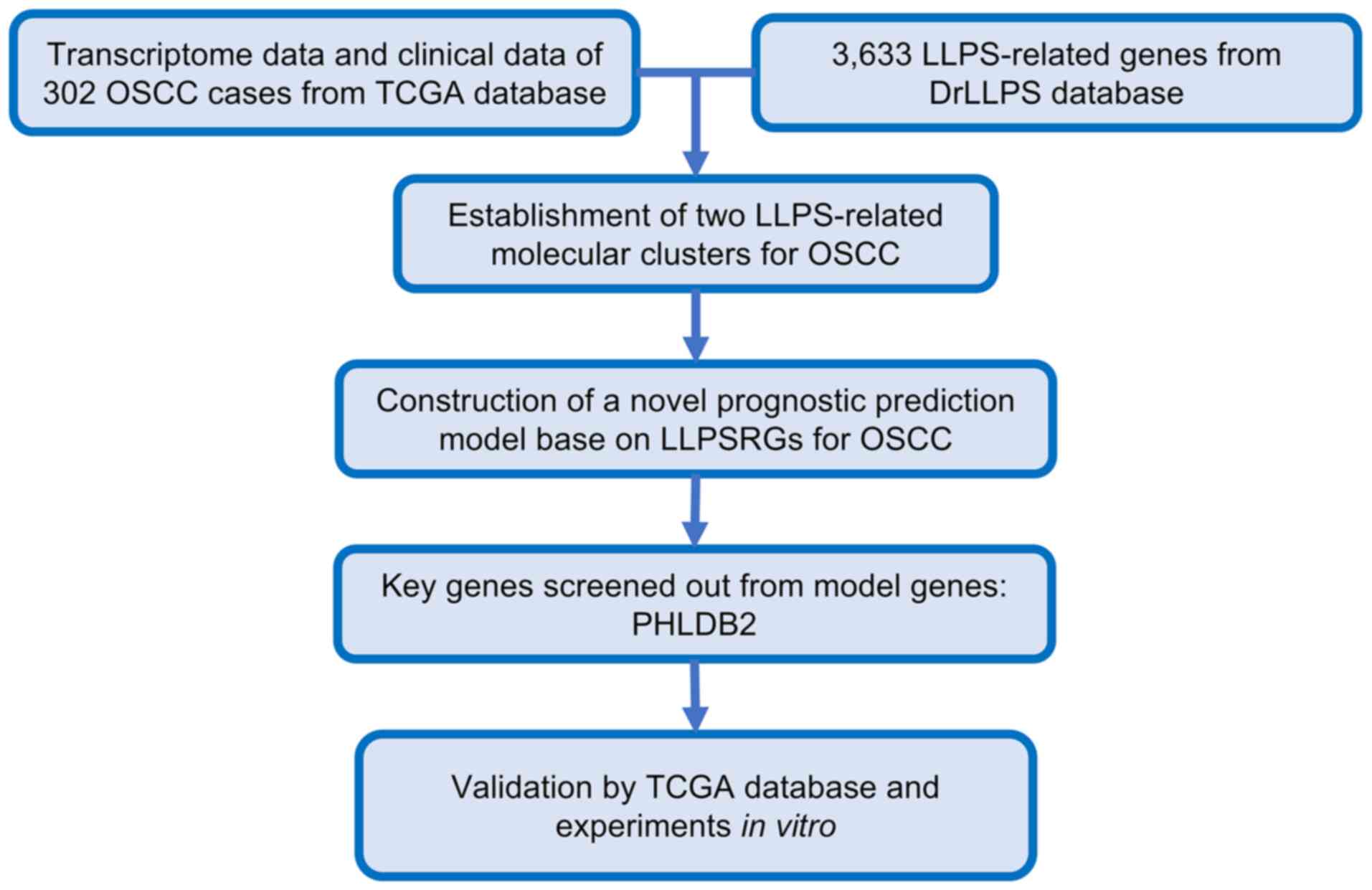
Figure 1

Workflow diagram of the present
study. DrLLPS, Data Resource of LLPS; LLPS, liquid-liquid phase
separation; LLPSRGs, LLPS-related genes; OSCC, oral squamous cell
carcinoma; TCGA, The Cancer Genome Atlas.

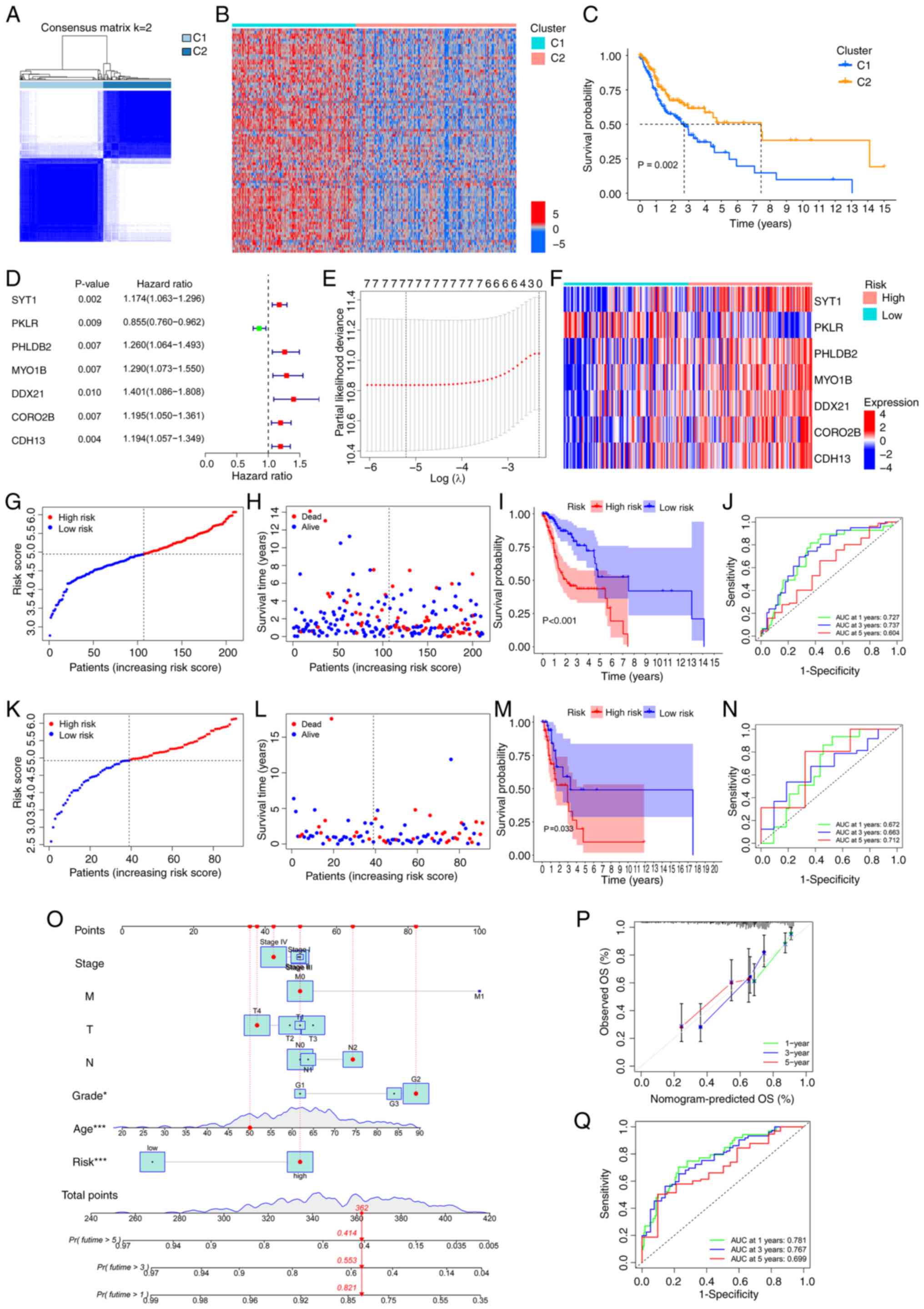
Figure 2

Establishment of two LLPS-related
molecular clusters and construction of a novel prognostic
prediction model based on LLPSRGs for OSCC. (A) Consensus
clustering matrix heatmap illustrating optimal partitioning (k=2)
of TCGA-OSCC samples based on LLPSRG expression patterns. (B)
Expression profile heatmap of differential genes between C1 and C2
clusters. (C) Kaplan-Meier curves for OS of C1 and C2 clusters. (D)
Univariate Cox regression screening identifying seven
prognostically significant LLPSRGs. (E) Construction of a
prognostic prediction model through LASSO coefficient trajectories
with a vertical line indicating optimal λ selection through 10-fold
cross-validation. (F) Expression profile heatmap of the seven model
genes. Training cohort validation including (G) risk stratification
by median cut-off, (H) survival distribution mapping, (I)
Kaplan-Meier curves for OS of the high- and low-risk groups, and
(J) time-dependent ROC analysis demonstrating predictive accuracy
(AUC values for 1, 3 and 5-year survival). Testing cohort
validation including (K) risk stratification by median cutoff, (L)
survival distribution mapping, (M) Kaplan-Meier curves for OS of
the high- and low-risk groups, and (N) time-dependent ROC analysis
demonstrating predictive accuracy (AUC values for 1, 3 and 5-year
survival). (O) Construction of a prognostic nomogram model
integrating risk score with clinical parameters
(Tumor-Node-Metastasis stage, histological grade and age). (P)
Calibration plots showing concordance between predicted and
observed survival probabilities at 1, 3 and 5-year intervals. (Q)
Time-dependent ROC analysis demonstrating predictive accuracy (AUC
values for 1, 3 and 5-year survival). *P<0.05 and ***P<0.001
by multivariate Cox regression analysis. AUC, area under the curve;
LLPS, liquid-liquid phase separation; LLPSRG, LLPS-related gene;
OS, overall survival; OSCC, oral squamous cell carcinoma; ROC,
receiver operating characteristic; TCGA, The Cancer Genome
Atlas.

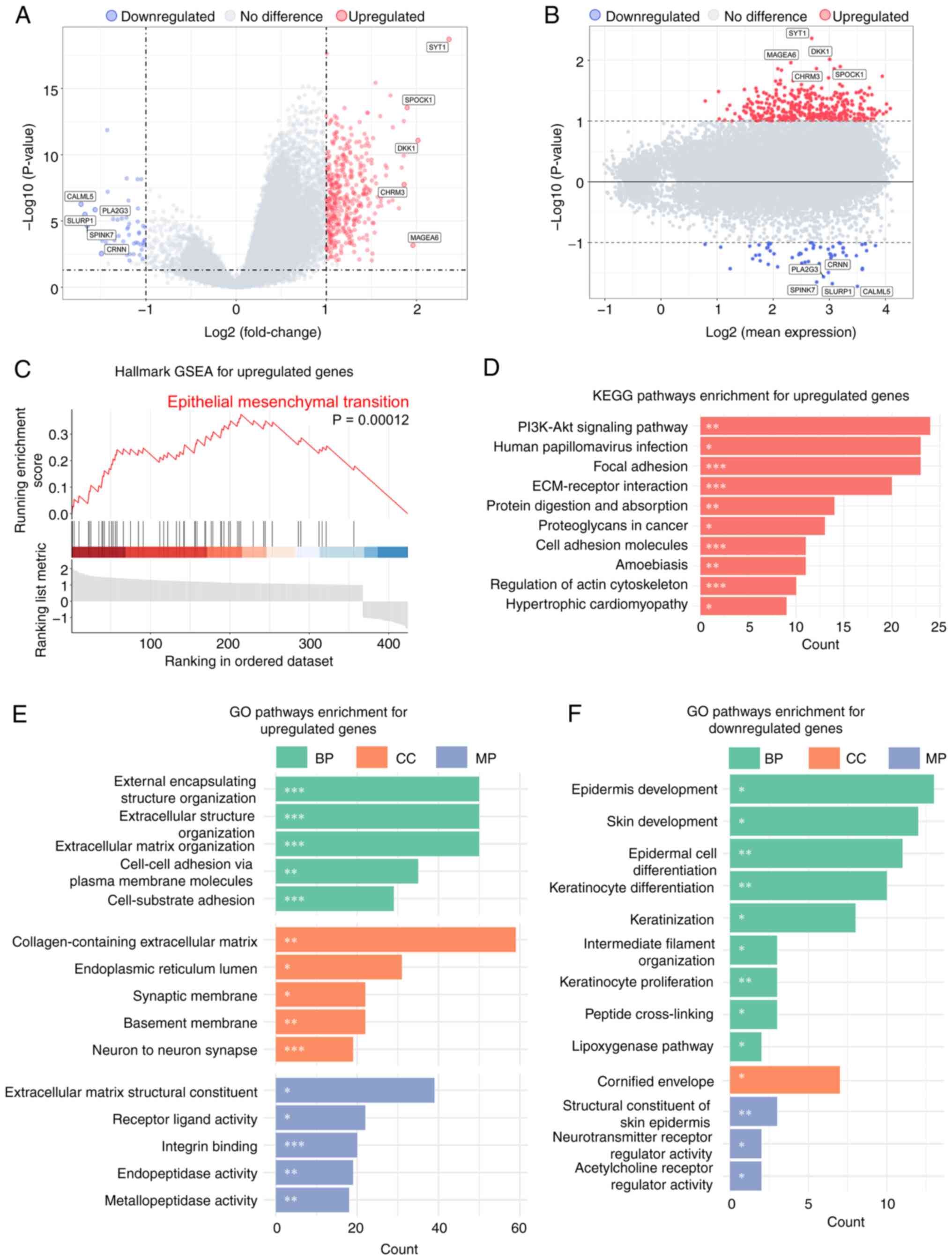
Figure 3

Functional enrichment analysis and
tumor microenvironment analysis of DEGs between high- and low-risk
groups. (A) DEG analysis identified significant differences between
high- and low-risk groups (threshold: P<0.05 and |log2 fold
change|>1). (B) Minus-vs.-Add plot quality control of the DEG
analysis. (C) Hallmark GSEA revealed enriched pathways in
upregulated DEGs. (D) KEGG GSEA identified significant pathways in
upregulated DEGs (FDR<0.05). (E) GO GSEA determined biological
functions in upregulated DEGs (FDR<0.05). (F) GO GSEA determined
biological functions in downregulated DEGs (FDR<0.05).
*P<0.05, **P<0.01 and ***P<0.001. DEGs, differentially
expressed genes; FDR, false discovery rate; GO, Gene Ontology;
GSEA, gene set enrichment analysis; KEGG, Kyoto Encyclopedia of
Genes and Genomes.

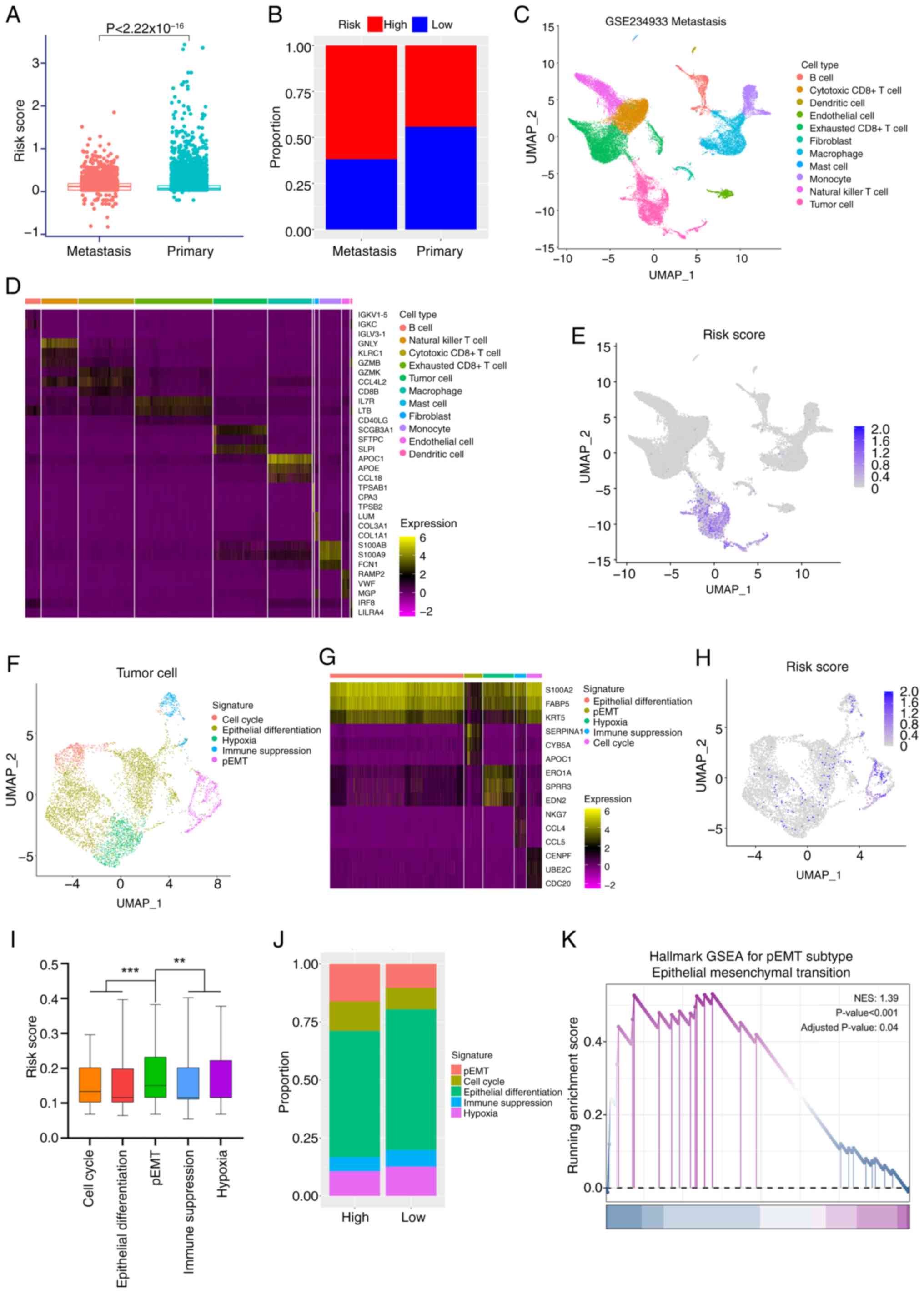
Figure 4

Expression profile of prognostic
model genes in oral squamous cell carcinoma at a single cell level.
(A) Risk scores of cells in primary and metastatic groups in the
GSE234933 dataset based on model gene signatures. (B) Bar plot
showing the distribution of high-risk and low-risk cells in the
primary and metastatic groups, stratified by median risk score. (C)
UMAP visualization of single-cell transcriptomes from the
metastatic group in GSE234933, with cell clusters identified by
unique gene expression profiles. (D) Heatmap showing the expression
of the top three marker genes for each cell cluster. (E) UMAP
visualization of the risk score calculated for the cells from the
metastatic group. (F) UMAP clustering of the tumor cell subtype in
the metastatic group, identified by unique gene expression
profiles. (G) Heatmap showing the expression of the top three
marker genes for each tumor cell subtype. (H) UMAP visualization of
the risk score calculated for the cells of the tumor cell subtype.
(I) Risk scores calculated for the cells of the tumor cell subtype.
(J) Proportion of tumor cell subtypes in the high- and low-risk
groups, stratified by the median risk score. (K) Hallmark GSEA for
pEMT tumor cell subpopulation. **P<0.01 and ***P<0.001. GSEA,
gene set enrichment analysis; NES, normalized enrichment score;
pEMT, partial epithelial-mesenchymal transition; UMAP, Uniform
Manifold Approximation and Projection.

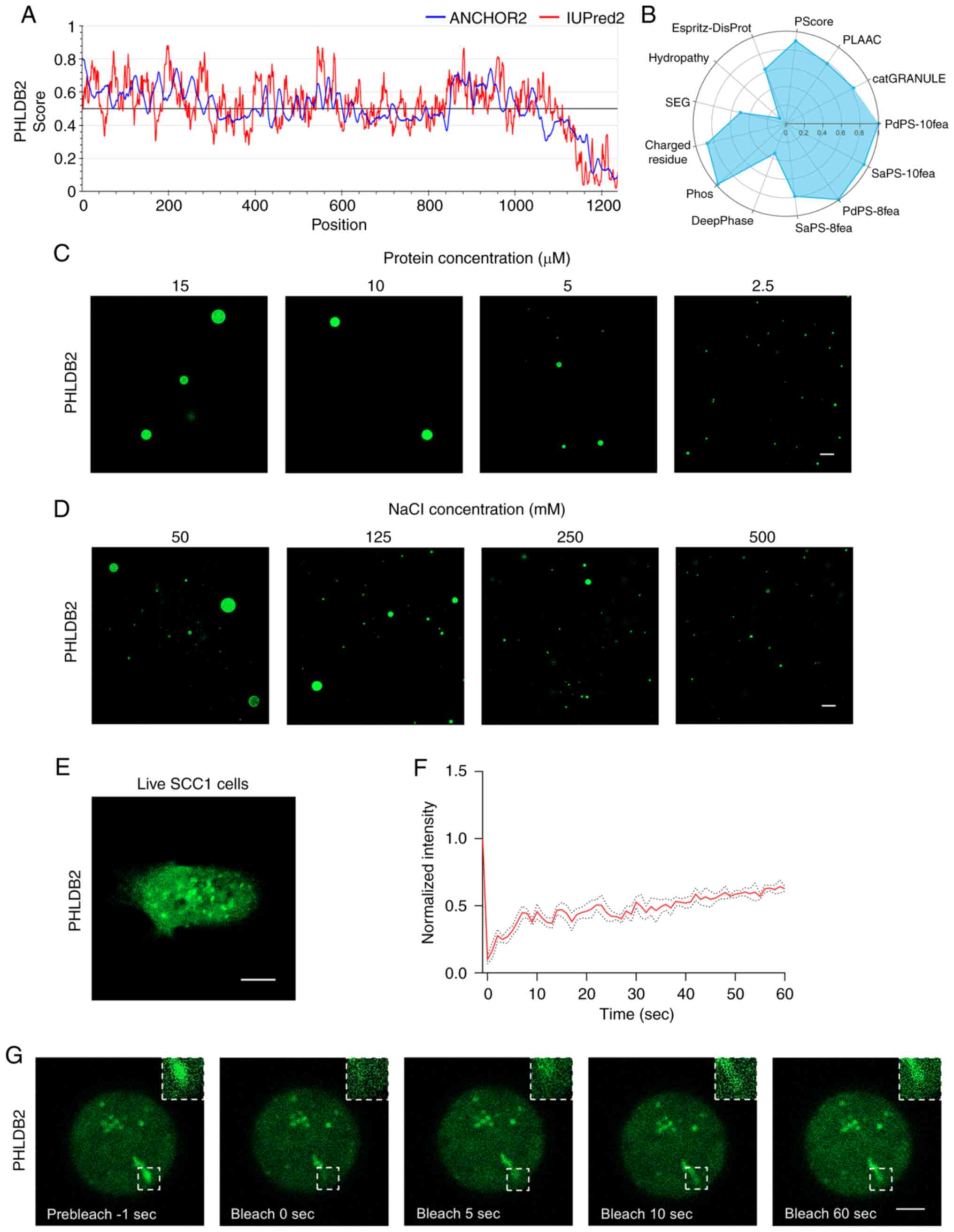
Figure 5

LLPS phenomenon of PHLDB2 in OSCC.
(A) Prediction of disordered protein regions (IUPred2) and
disordered binding motifs (ANCHOR2) in PHLDB2 via the IUPred2A
platform. (B) LLPS propensity scoring of PHLDB2 using PhaSePred.
In vitro droplet assay images of Alexa Fluor 488-labeled
PHLDB2 condensates under increasing (C) protein or (D) NaCl
concentrations (scale bar, 10 µm). (E) EGFP-PHLDB2
plasmid-transfected SCC1 cells showing intracellular droplet
formation (scale bar, 10 µm). (F) FRAP-based quantification of
normalized fluorescence intensity in EGFP-PHLDB2 condensates within
live OSCC cells. (G) FRAP recovery time-lapse imaging of
EGFP-PHLDB2 droplets in live OSCC cells (scale bar, 10 µm). FRAP,
fluorescence recovery after photobleaching; LLPS, liquid-liquid
phase separation; OSCC, oral squamous cell carcinoma.

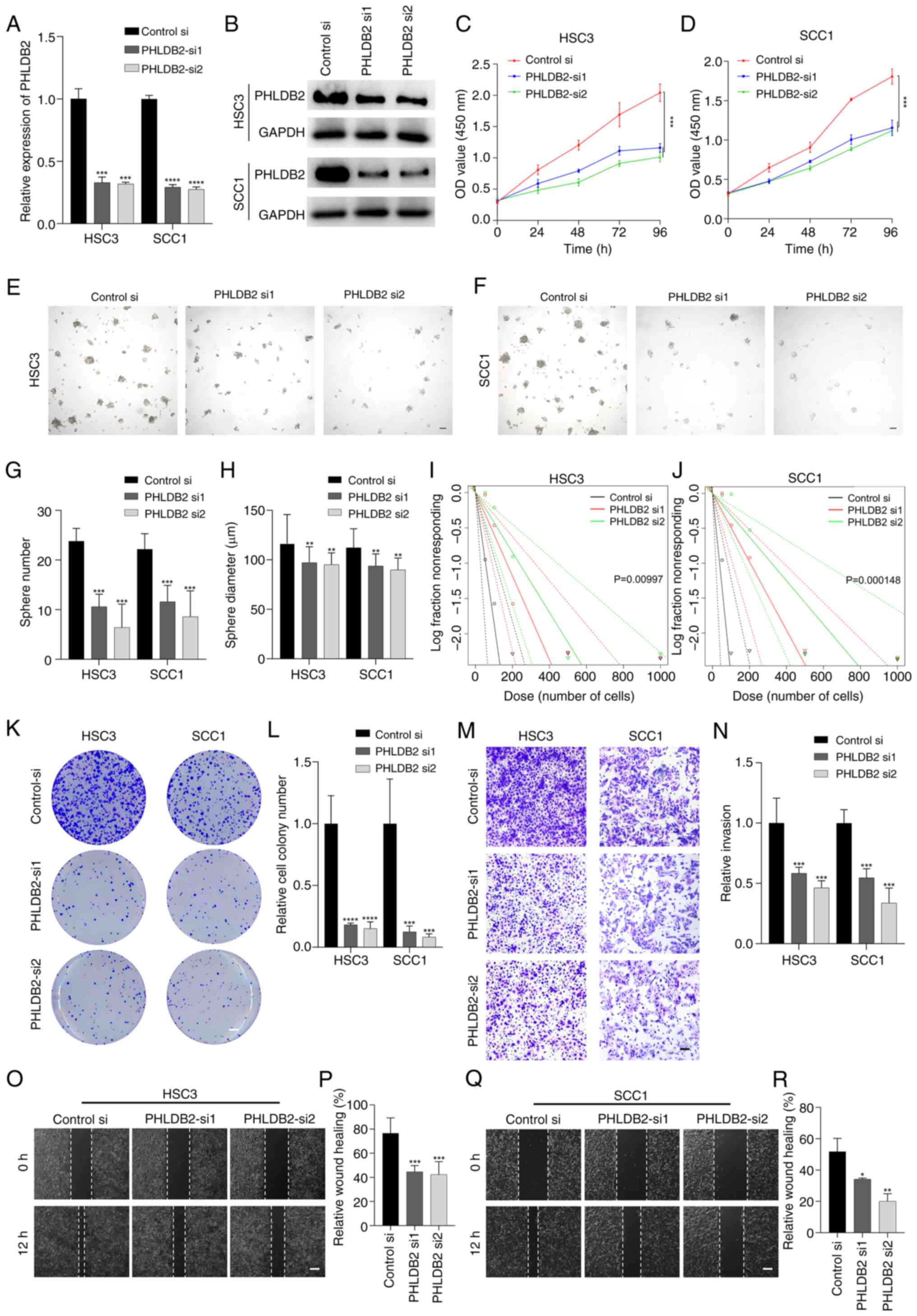
Figure 6

Promoting effects of PHLDB2 on
proliferation, stemness, invasion and metastasis in OSCC cell
lines. (A) PHLDB2 mRNA levels were decreased in OSCC cells
transfected with PHLDB2-targeting siRNAs (si1/si2). ***P<0.001,
****P<0.0001 vs. control-si. (B) Western blotting confirmed
PHLDB2 protein knockdown following siRNA transfection. OD values
demonstrated changes in (C) HSC3 cells and (D) SCC1 cells upon
PHLDB2 depletion. ***P<0.001. Tumor spheres formed in (E) HSC3
cells and (F) SCC1 cells. Scale bar, 100 µm. (G) Sphere number
decreased in PHLDB2-knockdown HSC3/SCC1 cells. ***P<0.001 vs.
control-si. (H) Sphere diameter decreased in PHLDB2-knockdown
HSC3/SCC1 cells. **P<0.01 vs. control-si. Sphere-forming
capacity decreased in (I) HSC3 cells and (J) SCC1 cells with PHLDB2
knockdown. (K) Representative image of colony formation assays
showed reduction in PHLDB2-knockdown HSC3/SCC1 cells vs. control.
Scale bar, 3 mm. (L) Quantification of colony formation assays
showed reduction in PHLDB2-knockdown HSC3/SCC1 cells.
***P<0.001, ****P<0.0001 vs. control-si. (M) Representative
image of invasion assays indicated suppression in PHLDB2-knockdown
HSC3/SCC1 cells. Scale bar, 50 µm. (N) Quantification of invasion
assays indicated suppression in PHLDB2-knockdown HSC3/SCC1 cells.
***P<0.001 vs. control-si. (O) Representative image of wound
healing assays indicated depletion of migratory capacity in
PHLDB2-knockdown HSC3 cells vs. control. Scale bar, 100 µm. (P)
Wound healing assays indicated depletion of migratory capacity in
PHLDB2-knockdown HSC3 cells. ***P<0.001 vs. control-si. (Q)
Quantification of wound healing assays indicated depletion of
migratory capacity in PHLDB2-knockdown SCC1 cells vs. control.
Scale bar, 100 µm. (R) Wound healing assays indicated depletion of
migratory capacity in PHLDB2-knockdown SCC1 cells. *P<0.05,
**P<0.01 vs. control-si. OSCC, oral squamous cell carcinoma; si,
small interfering.

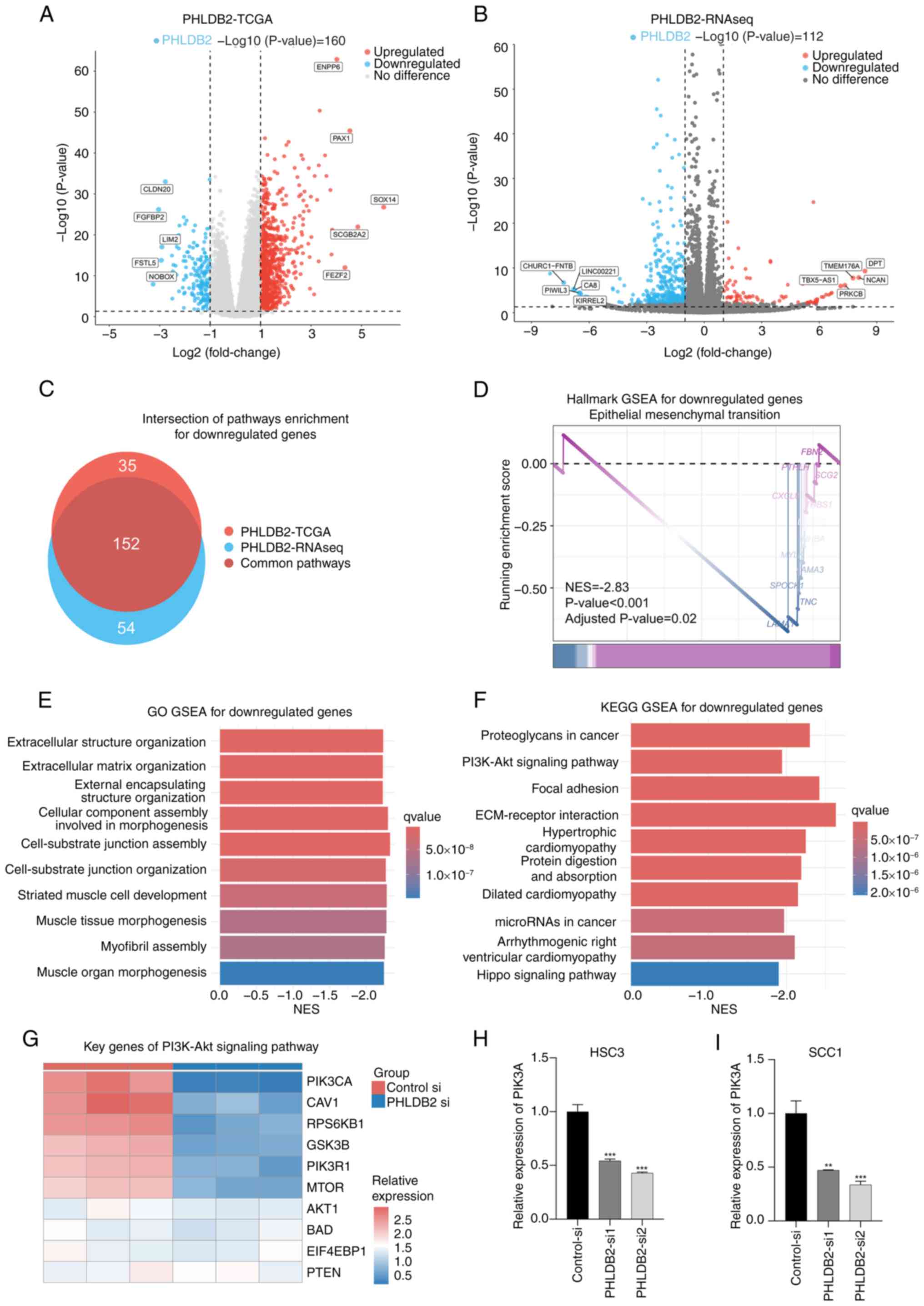
Figure 7

Exploration of the molecular
mechanisms of PHLDB2 promoting the malignant characteristics of
OSCC. (A) Differential gene analysis identified differentially
expressed genes between PHLDB2 low- and high-expression groups in
TCGA-OSCC cohort. Threshold: P<0.05 and |log2FC|>1. (B)
Differential gene analysis identified differentially expressed
genes between the PHLDB2 knockdown group and the control group.
Thresholds: P<0.05 and |log2FC|>1. (C) Intersection analysis
revealed downregulated pathways shared between PHLDB2-RNAseq and
PHLDB2-TCGA enrichment profiles. (D) Integrated Hallmark pathway
analysis demonstrated enriched pathway for downregulated genes. (E)
Integrated GO pathway analysis identified enriched biological terms
for downregulated genes. (F) Integrated KEGG pathway analysis
showed enriched pathways for downregulated genes. (G) Heatmap
displayed expression patterns of PI3K-Akt signaling pathway genes
in PHLDB2-knockdown vs. control groups. Reverse
transcription-quantitative PCR indicated reduced PIK3CA expression
in PHLDB2-depleted (H) HSC3 and (I) SCC1 cells. **P<0.01,
***P<0.001 vs. control-si. GO, Gene Ontology; GSEA, gene set
enrichment analysis; KEGG, Kyoto Encyclopedia of Genes and Genomes;
NES, normalized enrichment score; OSCC, oral squamous cell
carcinoma; RNAseq, RNA sequencing; TCGA, The Cancer Genome Atlas;
MsigDB, Molecular Signatures Database; si, small interfering.

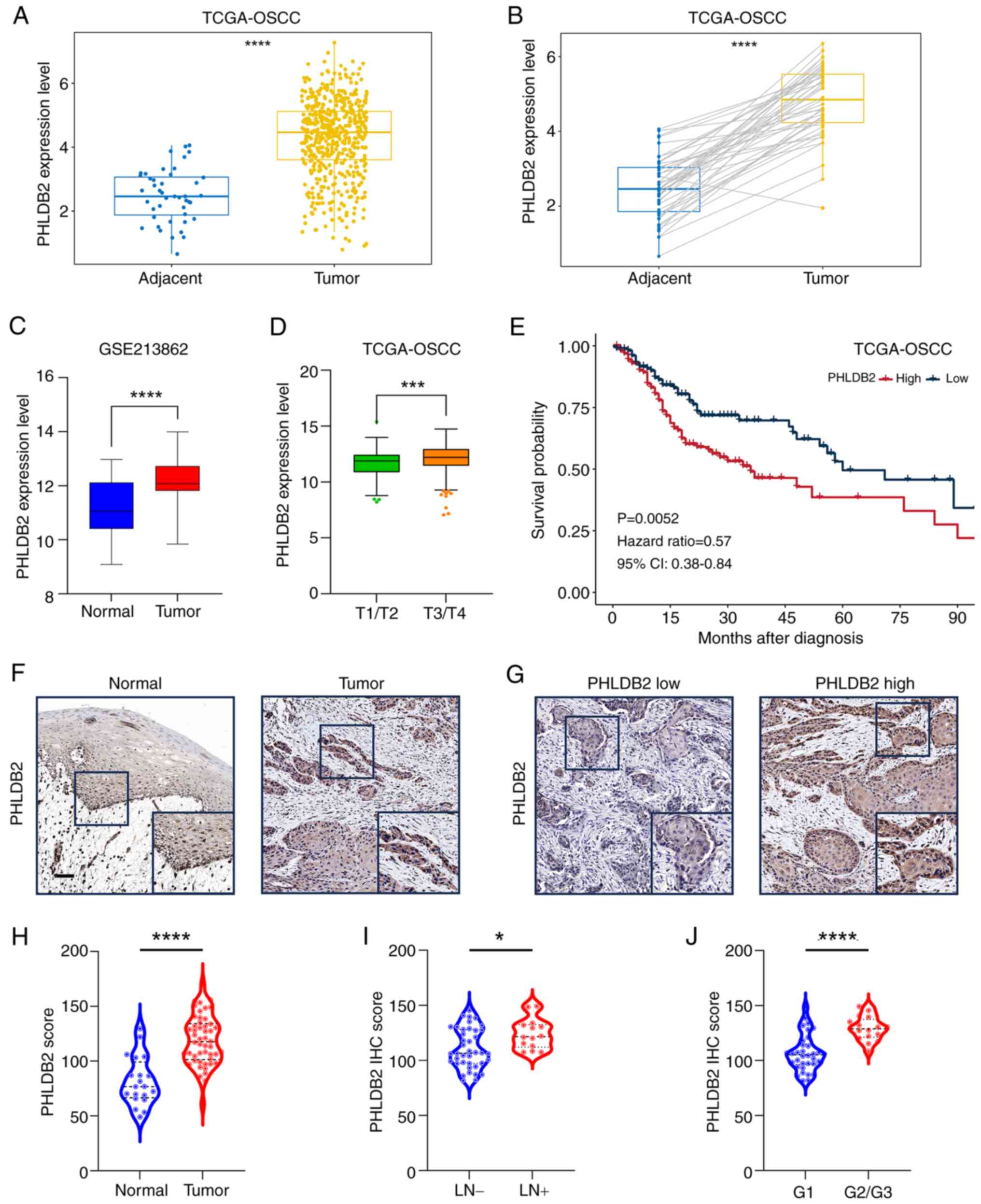
Figure 8

High expression of PHLDB2 is
associated with a poorer prognosis for patients with OSCC. (A)
Expression levels of PHLDB2 in tumor and normal tissues from
TCGA-OSCC cohort. (B) PHLDB2 expression in paired tumor and normal
samples from TCGA-OSCC cohort. (C) PHLDB2 levels in OSCC tissues
and normal mucosa in the GSE213862 cohort. (D) PHLDB2 expression in
early-stage (T1/T2) and late-stage (T3/T4) tumors from TCGA-OSCC.
(E) Survival comparison between the PHLDB2 high and low expression
groups in TCGA-OSCC. (F and G) IHC staining of PHLDB2 in tumor and
matched normal tissues (Sun Yat-Sen University cohort; scale bar,
50 µm). Semi-quantitative IHC analysis of (H) tumor vs. normal
tissues; (I) LN+ vs. LN− tissues; and (J) G1
vs. G2/G3 tissues. *P<0.05, ***P<0.001 and ****P<0.0001.
CI, confidence interval; IHC, immunohistochemical; LN, lymph node
metastasis; OSCC, oral squamous cell carcinoma; TCGA, The Cancer
Genome Atlas.
View References

1 

Bray F, Laversanne M, Sung H, Ferlay J, Siegel RL, Soerjomataram I and Jemal A: Global cancer statistics 2022: GLOBOCAN estimates of incidence and mortality worldwide for 36 cancers in 185 countries. CA Cancer J Clin. 74:229–263. 2024.PubMed/NCBI

2 

Cramer JD, Burtness B, Le QT and Ferris RL: The changing therapeutic landscape of head and neck cancer. Nat Rev Clin Oncol. 16:669–683. 2019. View Article : Google Scholar : PubMed/NCBI

3 

Alberti S, Gladfelter A and Mittag T: Considerations and challenges in studying liquid-liquid phase separation and biomolecular condensates. Cell. 176:419–434. 2019. View Article : Google Scholar : PubMed/NCBI

4 

Tong X, Tang R, Xu J, Wang W, Zhao Y, Yu X and Shi S: Liquid-liquid phase separation in tumor biology. Signal Transduct Target Ther. 7:2212022. View Article : Google Scholar : PubMed/NCBI

5 

Mehta S and Zhang J: Liquid-liquid phase separation drives cellular function and dysfunction in cancer. Nat Rev Cancer. 22:239–252. 2022. View Article : Google Scholar : PubMed/NCBI

6 

Zheng LW, Liu CC and Yu KD: Phase separations in oncogenesis, tumor progressions and metastasis: A glance from hallmarks of cancer. J Hematol Oncol. 16:1232023. View Article : Google Scholar : PubMed/NCBI

7 

Blackburn EH: Structure and function of telomeres. Nature. 350:569–573. 1991. View Article : Google Scholar : PubMed/NCBI

8 

Zhang H, Zhao R, Tones J, Liu M, Dilley RL, Chenoweth DM, Greenberg RA and Lampson MA: Nuclear body phase separation drives telomere clustering in ALT cancer cells. Mol Biol Cell. 31:2048–2056. 2020. View Article : Google Scholar : PubMed/NCBI

9 

Lu Y, Wu T, Gutman O, Lu H, Zhou Q, Henis YI and Luo K: Phase separation of TAZ compartmentalizes the transcription machinery to promote gene expression. Nat Cell Biol. 22:453–464. 2020. View Article : Google Scholar : PubMed/NCBI

10 

Cheng Y, Xie W, Pickering BF, Chu KL, Savino AM, Yang X, Luo H, Nguyen DT, Mo S, Barin E, et al: N6-methyladenosine on mRNA facilitates a phase-separated nuclear body that suppresses myeloid leukemic differentiation. Cancer Cell. 39:958–972.e8. 2021. View Article : Google Scholar : PubMed/NCBI

11 

Tulpule A, Guan J, Neel DS, Allegakoen HR, Lin YP, Brown D, Chou YT, Heslin A, Chatterjee N, Perati S, et al: Kinase-mediated RAS signaling via membraneless cytoplasmic protein granules. Cell. 184:2649–2664.e18. 2021. View Article : Google Scholar : PubMed/NCBI

12 

Qiu Y, Pan M and Chen X: A liquid-liquid phase separation-related gene signature as prognostic biomarker for epithelial ovarian cancer. Front Oncol. 11:6718922021. View Article : Google Scholar : PubMed/NCBI

13 

Yu-Qing H, Peng-Ping L, Ke S, Ke-Xing Y, Wei-Jun Z and Zhen-Yu W: Comprehensive analysis of liquid-liquid phase separation-related genes in prediction of breast cancer prognosis. Front Genet. 13:8344712022. View Article : Google Scholar : PubMed/NCBI

14 

Sun L, Liu XP, Yan X, Wu S, Tang X, Chen C, Li G, Hu H, Wang D and Li S: Identification of molecular subtypes based on liquid-liquid phase separation and cross-talk with immunological phenotype in bladder cancer. Front Immunol. 13:10595682022. View Article : Google Scholar : PubMed/NCBI

15 

Chatterjee A, Chaudhary A, Ghosh A, Arun P, Mukherjee G, Arun I, Maitra A, Biswas N and Majumder PP: Overexpression of CD73 is associated with recurrence and poor prognosis of gingivobuccal oral cancer as revealed by transcriptome and deep immune profiling of paired tumor and margin tissues. Cancer Med. 12:16774–16787. 2023. View Article : Google Scholar : PubMed/NCBI

16 

Wilkerson MD and Hayes DN: ConsensusClusterPlus: A class discovery tool with confidence assessments and item tracking. Bioinformatics. 26:1572–1573. 2010. View Article : Google Scholar : PubMed/NCBI

17 

Love MI, Huber W and Anders S: Moderated estimation of fold change and dispersion for RNA-seq data with DESeq2. Genome Biol. 15:5502014. View Article : Google Scholar : PubMed/NCBI

18 

Bill R, Wirapati P, Messemaker M, Roh W, Zitti B, Duval F, Kiss M, Park JC, Saal TM, Hoelzl J, et al: CXCL9:SPP1 macrophage polarity identifies a network of cellular programs that control human cancers. Science. 381:515–524. 2023. View Article : Google Scholar : PubMed/NCBI

19 

Tang Z, Kang B, Li C, Chen T and Zhang Z: GEPIA2: An enhanced web server for large-scale expression profiling and interactive analysis. Nucleic Acids Res. 47:W556–W560. 2019. View Article : Google Scholar : PubMed/NCBI

20 

Mészáros B, Erdos G and Dosztányi Z: IUPred2A: context-dependent prediction of protein disorder as a function of redox state and protein binding. Nucleic Acids Res. 46:W329–W337. 2018. View Article : Google Scholar : PubMed/NCBI

21 

Hou C, Wang X, Xie H, Chen T, Zhu P, Xu X, You K and Li T: PhaSepDB in 2022: Annotating phase separation-related proteins with droplet states, co-phase separation partners and other experimental information. Nucleic Acids Res. 51:D460–D465. 2023. View Article : Google Scholar : PubMed/NCBI

22 

Livak KJ and Schmittgen TD: Analysis of relative gene expression data using real-time quantitative PCR and the 2(−Delta Delta C(T)) method. Methods. 25:402–408. 2001. View Article : Google Scholar : PubMed/NCBI

23 

Lydiatt WM, Patel SG, O'Sullivan B, Brandwein MS, Ridge JA, Migliacci JC, Loomis AM and Shah JP: Head and Neck cancers-major changes in the American Joint Committee on cancer eighth edition cancer staging manual. CA Cancer J Clin. 67:122–137. 2017.PubMed/NCBI

24 

Coussy F, El Botty R, Lavigne M, Gu C, Fuhrmann L, Briaux A, de Koning L, Dahmani A, Montaudon E, Morisset L, et al: Combination of PI3K and MEK inhibitors yields durable remission in PDX models of PIK3CA-mutated metaplastic breast cancers. J Hematol Oncol. 13:132020. View Article : Google Scholar : PubMed/NCBI

25 

Jeong YG, Katuwal NB, Kang MS, Ghosh M, Hong SD, Park SM, Kim SG, Kim TH and Moon YW: Combined PI3K inhibitor and eribulin enhances anti-tumor activity in preclinical models of paclitaxel-resistant, PIK3CA-mutated endometrial cancer. Cancers (Basel). 15:48872023. View Article : Google Scholar : PubMed/NCBI

26 

Zhang J, Ni Z, Zhang Y, Guo Y, Zhai R, Wang M, Gong Z, Wang M, Zeng F, Gu Z, et al: DAZAP1 phase separation regulates mitochondrial metabolism to facilitate invasion and metastasis of oral squamous cell carcinoma. Cancer Res. 84:3818–3833. 2024. View Article : Google Scholar : PubMed/NCBI

27 

Wang W, Yun B, Hoyle RG, Ma Z, Zaman SU, Xiong G, Yi C, Xie N, Zhang M, Liu X, et al: CYTOR facilitates formation of FOSL1 phase separation and super enhancers to drive metastasis of tumor budding cells in head and neck squamous cell carcinoma. Adv Sci (Weinh). 11:e23050022024. View Article : Google Scholar : PubMed/NCBI

28 

Ning W, Guo Y, Lin S, Mei B, Wu Y, Jiang P, Tan X, Zhang W, Chen G, Peng D, et al: DrLLPS: A data resource of liquid-liquid phase separation in eukaryotes. Nucleic Acids Res. 48(D1): D288–D295. 2020. View Article : Google Scholar : PubMed/NCBI

29 

Shi J, Li W, Jia Z, Peng Y, Hou J, Li N, Meng R, Fu W, Feng Y, Wu L, et al: Synaptotagmin 1 suppresses colorectal cancer metastasis by inhibiting ERK/MAPK signaling-mediated tumor cell pseudopodial formation and migration. Cancers (Basel). 15:52822023. View Article : Google Scholar : PubMed/NCBI

30 

Balood M, Ahmadi M, Eichwald T, Ahmadi A, Majdoubi A, Roversi K, Roversi K, Lucido CT, Restaino AC, Huang S, et al: Nociceptor neurons affect cancer immunosurveillance. Nature. 611:405–412. 2022. View Article : Google Scholar : PubMed/NCBI

31 

Zhang Y, Lin C, Liu Z, Sun Y, Chen M, Guo Y, Liu W, Zhang C, Chen W, Sun J, et al: Cancer cells co-opt nociceptive nerves to thrive in nutrient-poor environments and upon nutrient-starvation therapies. Cell Metab. 34:1999–2017.e10. 2022. View Article : Google Scholar : PubMed/NCBI

32 

Qiao N, Dai X, Chen J, Cao H, Hu G, Guo X, Liu P, Xing C and Yang F: Single nucleus RNA sequencing reveals cellular and molecular responses to vanadium exposure in duck kidneys. J Hazard Mater. 480:1364922024. View Article : Google Scholar : PubMed/NCBI

33 

Yamada Y, Koshizuka K, Hanazawa T, Kikkawa N, Okato A, Idichi T, Arai T, Sugawara S, Katada K, Okamoto Y and Seki N: Passenger strand of miR-145-3p acts as a tumor-suppressor by targeting MYO1B in head and neck squamous cell carcinoma. Int J Oncol. 52:166–178. 2018.PubMed/NCBI

34 

Zhou X, Wang R, Li X, Yu L, Hua D, Sun C, Shi C, Luo W, Rao C, Jiang Z, et al: Splicing factor SRSF1 promotes gliomagenesis via oncogenic splice-switching of MYO1B. J Clin Invest. 129:676–693. 2019. View Article : Google Scholar : PubMed/NCBI

35 

Chen YH, Xu NZ, Hong C, Li WQ, Zhang YQ, Yu XY, Huang YL and Zhou JY: Myo1b promotes tumor progression and angiogenesis by inhibiting autophagic degradation of HIF-1α in colorectal cancer. Cell Death Dis. 13:9392022. View Article : Google Scholar : PubMed/NCBI

36 

Wang H, Yang F, Ye J, Dai X, Liao H, Xing C, Jiang Z, Peng C, Gao F and Cao H: Ginkgo biloba extract alleviates deltamethrin-induced testicular injury by upregulating SKP2 and inhibiting Beclin1-independent autophagy. Phytomedicine. 135:1562452024. View Article : Google Scholar : PubMed/NCBI

37 

Zhang D, Qian C, Wei H and Qian X: Identification of the prognostic value of tumor microenvironment-related genes in esophageal squamous cell carcinoma. Front Mol Biosci. 7:5994752020. View Article : Google Scholar : PubMed/NCBI

38 

Shao Y, Li W, Zhang L, Xue B, Chen Y, Zhang Z, Wang D and Wu B: CDH13 is a prognostic biomarker and a potential therapeutic target for patients with clear cell renal cell carcinoma. Am J Cancer Res. 12:4520–4544. 2022.PubMed/NCBI

39 

Gao H, Wei H, Yang Y, Li H, Liang J, Ye J, Zhang F, Wang L, Shi H, Wang J and Han A: Phase separation of DDX21 promotes colorectal cancer metastasis via MCM5-dependent EMT pathway. Oncogene. 42:1704–1715. 2023. View Article : Google Scholar : PubMed/NCBI

40 

Wang S, Zhang Y, Cai Q, Ma M, Jin LY, Weng M, Zhou D, Tang Z, Wang JD and Quan Z: Circular RNA FOXP1 promotes tumor progression and Warburg effect in gallbladder cancer by regulating PKLR expression. Mol Cancer. 18:1452019. View Article : Google Scholar : PubMed/NCBI

41 

Chen WY, Thuy Dung PV, Yeh HL, Chen WH, Jiang KC, Li HR, Chen ZQ, Hsiao M, Huang J, Wen YC and Liu YN: Targeting PKLR/MYCN/ROMO1 signaling suppresses neuroendocrine differentiation of castration-resistant prostate cancer. Redox Biol. 62:1026862023. View Article : Google Scholar : PubMed/NCBI

42 

Peng J, Dai X, Zhang T, Hu G, Cao H, Guo X, Fan H, Chen J, Tang W and Yang F: Copper as the driver of the lncRNA-TCONS-6251/miR-novel-100/TC2N axis: Unraveling ferroptosis in duck kidney. Int J Biol Macromol. 282:1367972024. View Article : Google Scholar : PubMed/NCBI

43 

Li H, Wang Z, Liang H, Liu X, Liu H, Zhuang Z and Hou J: Depletion of PHLDB2 suppresses epithelial-mesenchymal transition and enhances anti-tumor immunity in head and neck squamous cell carcinoma. Biomolecules. 14:2322024. View Article : Google Scholar : PubMed/NCBI

44 

Chen J, Dai X, Xing C, Zhang Y, Cao H, Hu G, Guo X, Gao X, Liu P and Yang F: Cooperative application of transcriptomics and ceRNA hypothesis: lncRNA-00742/miR-116 targets CD74 to mediate vanadium-induced mitochondrial apoptosis in duck liver. J Hazard Mater. 480:1359042024. View Article : Google Scholar : PubMed/NCBI

45 

Chen G, Zhou T, Ma T, Cao T and Yu Z: Oncogenic effect of PHLDB2 is associated with epithelial-mesenchymal transition and E-cadherin regulation in colorectal cancer. Cancer Cell Int. 19:1842019. View Article : Google Scholar : PubMed/NCBI

46 

Kang W, Zhang J, Huang T, Zhou Y, Wong CC, Chan RCK, Dong Y, Wu F, Zhang B, Wu WKK, et al: NOTCH3, a crucial target of miR-491-5p/miR-875-5p, promotes gastric carcinogenesis by upregulating PHLDB2 expression and activating Akt pathway. Oncogene. 40:1578–1594. 2021. View Article : Google Scholar : PubMed/NCBI

Related Articles

  • Abstract
  • View
  • Download
  • Twitter
Copy and paste a formatted citation
Spandidos Publications style
Chen K, Wang Y, Cui J, Liu Q, Liu X, Wang W and Hou J: Liquid‑liquid phase separation of PHLDB2 promotes oral squamous cell carcinoma metastasis through regulating epithelial mesenchymal transition and PIK3CA expression. Mol Med Rep 33: 10, 2026.
APA
Chen, K., Wang, Y., Cui, J., Liu, Q., Liu, X., Wang, W., & Hou, J. (2026). Liquid‑liquid phase separation of PHLDB2 promotes oral squamous cell carcinoma metastasis through regulating epithelial mesenchymal transition and PIK3CA expression. Molecular Medicine Reports, 33, 10. https://doi.org/10.3892/mmr.2025.13720
MLA
Chen, K., Wang, Y., Cui, J., Liu, Q., Liu, X., Wang, W., Hou, J."Liquid‑liquid phase separation of PHLDB2 promotes oral squamous cell carcinoma metastasis through regulating epithelial mesenchymal transition and PIK3CA expression". Molecular Medicine Reports 33.1 (2026): 10.
Chicago
Chen, K., Wang, Y., Cui, J., Liu, Q., Liu, X., Wang, W., Hou, J."Liquid‑liquid phase separation of PHLDB2 promotes oral squamous cell carcinoma metastasis through regulating epithelial mesenchymal transition and PIK3CA expression". Molecular Medicine Reports 33, no. 1 (2026): 10. https://doi.org/10.3892/mmr.2025.13720
Copy and paste a formatted citation
x
Spandidos Publications style
Chen K, Wang Y, Cui J, Liu Q, Liu X, Wang W and Hou J: Liquid‑liquid phase separation of PHLDB2 promotes oral squamous cell carcinoma metastasis through regulating epithelial mesenchymal transition and PIK3CA expression. Mol Med Rep 33: 10, 2026.
APA
Chen, K., Wang, Y., Cui, J., Liu, Q., Liu, X., Wang, W., & Hou, J. (2026). Liquid‑liquid phase separation of PHLDB2 promotes oral squamous cell carcinoma metastasis through regulating epithelial mesenchymal transition and PIK3CA expression. Molecular Medicine Reports, 33, 10. https://doi.org/10.3892/mmr.2025.13720
MLA
Chen, K., Wang, Y., Cui, J., Liu, Q., Liu, X., Wang, W., Hou, J."Liquid‑liquid phase separation of PHLDB2 promotes oral squamous cell carcinoma metastasis through regulating epithelial mesenchymal transition and PIK3CA expression". Molecular Medicine Reports 33.1 (2026): 10.
Chicago
Chen, K., Wang, Y., Cui, J., Liu, Q., Liu, X., Wang, W., Hou, J."Liquid‑liquid phase separation of PHLDB2 promotes oral squamous cell carcinoma metastasis through regulating epithelial mesenchymal transition and PIK3CA expression". Molecular Medicine Reports 33, no. 1 (2026): 10. https://doi.org/10.3892/mmr.2025.13720
Follow us
  • Twitter
  • LinkedIn
  • Facebook
About
  • Spandidos Publications
  • Careers
  • Cookie Policy
  • Privacy Policy
How can we help?
  • Help
  • Live Chat
  • Contact
  • Email to our Support Team