Spandidos Publications Logo
  • About
    • About Spandidos
    • Aims and Scopes
    • Abstracting and Indexing
    • Editorial Policies
    • Reprints and Permissions
    • Job Opportunities
    • Terms and Conditions
    • Contact
  • Journals
    • All Journals
    • Oncology Letters
      • Oncology Letters
      • Information for Authors
      • Editorial Policies
      • Editorial Board
      • Aims and Scope
      • Abstracting and Indexing
      • Bibliographic Information
      • Archive
    • International Journal of Oncology
      • International Journal of Oncology
      • Information for Authors
      • Editorial Policies
      • Editorial Board
      • Aims and Scope
      • Abstracting and Indexing
      • Bibliographic Information
      • Archive
    • Molecular and Clinical Oncology
      • Molecular and Clinical Oncology
      • Information for Authors
      • Editorial Policies
      • Editorial Board
      • Aims and Scope
      • Abstracting and Indexing
      • Bibliographic Information
      • Archive
    • Experimental and Therapeutic Medicine
      • Experimental and Therapeutic Medicine
      • Information for Authors
      • Editorial Policies
      • Editorial Board
      • Aims and Scope
      • Abstracting and Indexing
      • Bibliographic Information
      • Archive
    • International Journal of Molecular Medicine
      • International Journal of Molecular Medicine
      • Information for Authors
      • Editorial Policies
      • Editorial Board
      • Aims and Scope
      • Abstracting and Indexing
      • Bibliographic Information
      • Archive
    • Biomedical Reports
      • Biomedical Reports
      • Information for Authors
      • Editorial Policies
      • Editorial Board
      • Aims and Scope
      • Abstracting and Indexing
      • Bibliographic Information
      • Archive
    • Oncology Reports
      • Oncology Reports
      • Information for Authors
      • Editorial Policies
      • Editorial Board
      • Aims and Scope
      • Abstracting and Indexing
      • Bibliographic Information
      • Archive
    • Molecular Medicine Reports
      • Molecular Medicine Reports
      • Information for Authors
      • Editorial Policies
      • Editorial Board
      • Aims and Scope
      • Abstracting and Indexing
      • Bibliographic Information
      • Archive
    • World Academy of Sciences Journal
      • World Academy of Sciences Journal
      • Information for Authors
      • Editorial Policies
      • Editorial Board
      • Aims and Scope
      • Abstracting and Indexing
      • Bibliographic Information
      • Archive
    • International Journal of Functional Nutrition
      • International Journal of Functional Nutrition
      • Information for Authors
      • Editorial Policies
      • Editorial Board
      • Aims and Scope
      • Abstracting and Indexing
      • Bibliographic Information
      • Archive
    • International Journal of Epigenetics
      • International Journal of Epigenetics
      • Information for Authors
      • Editorial Policies
      • Editorial Board
      • Aims and Scope
      • Abstracting and Indexing
      • Bibliographic Information
      • Archive
    • Medicine International
      • Medicine International
      • Information for Authors
      • Editorial Policies
      • Editorial Board
      • Aims and Scope
      • Abstracting and Indexing
      • Bibliographic Information
      • Archive
  • Articles
  • Information
    • Information for Authors
    • Information for Reviewers
    • Information for Librarians
    • Information for Advertisers
    • Conferences
  • Language Editing
Spandidos Publications Logo
  • About
    • About Spandidos
    • Aims and Scopes
    • Abstracting and Indexing
    • Editorial Policies
    • Reprints and Permissions
    • Job Opportunities
    • Terms and Conditions
    • Contact
  • Journals
    • All Journals
    • Biomedical Reports
      • Information for Authors
      • Editorial Policies
      • Editorial Board
      • Aims and Scope
      • Abstracting and Indexing
      • Bibliographic Information
      • Archive
    • Experimental and Therapeutic Medicine
      • Information for Authors
      • Editorial Policies
      • Editorial Board
      • Aims and Scope
      • Abstracting and Indexing
      • Bibliographic Information
      • Archive
    • International Journal of Epigenetics
      • Information for Authors
      • Editorial Policies
      • Editorial Board
      • Aims and Scope
      • Abstracting and Indexing
      • Bibliographic Information
      • Archive
    • International Journal of Functional Nutrition
      • Information for Authors
      • Editorial Policies
      • Editorial Board
      • Aims and Scope
      • Abstracting and Indexing
      • Bibliographic Information
      • Archive
    • International Journal of Molecular Medicine
      • Information for Authors
      • Editorial Policies
      • Editorial Board
      • Aims and Scope
      • Abstracting and Indexing
      • Bibliographic Information
      • Archive
    • International Journal of Oncology
      • Information for Authors
      • Editorial Policies
      • Editorial Board
      • Aims and Scope
      • Abstracting and Indexing
      • Bibliographic Information
      • Archive
    • Medicine International
      • Information for Authors
      • Editorial Policies
      • Editorial Board
      • Aims and Scope
      • Abstracting and Indexing
      • Bibliographic Information
      • Archive
    • Molecular and Clinical Oncology
      • Information for Authors
      • Editorial Policies
      • Editorial Board
      • Aims and Scope
      • Abstracting and Indexing
      • Bibliographic Information
      • Archive
    • Molecular Medicine Reports
      • Information for Authors
      • Editorial Policies
      • Editorial Board
      • Aims and Scope
      • Abstracting and Indexing
      • Bibliographic Information
      • Archive
    • Oncology Letters
      • Information for Authors
      • Editorial Policies
      • Editorial Board
      • Aims and Scope
      • Abstracting and Indexing
      • Bibliographic Information
      • Archive
    • Oncology Reports
      • Information for Authors
      • Editorial Policies
      • Editorial Board
      • Aims and Scope
      • Abstracting and Indexing
      • Bibliographic Information
      • Archive
    • World Academy of Sciences Journal
      • Information for Authors
      • Editorial Policies
      • Editorial Board
      • Aims and Scope
      • Abstracting and Indexing
      • Bibliographic Information
      • Archive
  • Articles
  • Information
    • For Authors
    • For Reviewers
    • For Librarians
    • For Advertisers
    • Conferences
  • Language Editing
Login Register Submit
  • This site uses cookies
  • You can change your cookie settings at any time by following the instructions in our Cookie Policy. To find out more, you may read our Privacy Policy.

    I agree
Search articles by DOI, keyword, author or affiliation
Search
Advanced Search
presentation
Molecular Medicine Reports
Join Editorial Board Propose a Special Issue
Print ISSN: 1791-2997 Online ISSN: 1791-3004
Journal Cover
January-2026 Volume 33 Issue 1

Full Size Image

Sign up for eToc alerts
Recommend to Library

Journals

International Journal of Molecular Medicine

International Journal of Molecular Medicine

International Journal of Molecular Medicine is an international journal devoted to molecular mechanisms of human disease.

International Journal of Oncology

International Journal of Oncology

International Journal of Oncology is an international journal devoted to oncology research and cancer treatment.

Molecular Medicine Reports

Molecular Medicine Reports

Covers molecular medicine topics such as pharmacology, pathology, genetics, neuroscience, infectious diseases, molecular cardiology, and molecular surgery.

Oncology Reports

Oncology Reports

Oncology Reports is an international journal devoted to fundamental and applied research in Oncology.

Experimental and Therapeutic Medicine

Experimental and Therapeutic Medicine

Experimental and Therapeutic Medicine is an international journal devoted to laboratory and clinical medicine.

Oncology Letters

Oncology Letters

Oncology Letters is an international journal devoted to Experimental and Clinical Oncology.

Biomedical Reports

Biomedical Reports

Explores a wide range of biological and medical fields, including pharmacology, genetics, microbiology, neuroscience, and molecular cardiology.

Molecular and Clinical Oncology

Molecular and Clinical Oncology

International journal addressing all aspects of oncology research, from tumorigenesis and oncogenes to chemotherapy and metastasis.

World Academy of Sciences Journal

World Academy of Sciences Journal

Multidisciplinary open-access journal spanning biochemistry, genetics, neuroscience, environmental health, and synthetic biology.

International Journal of Functional Nutrition

International Journal of Functional Nutrition

Open-access journal combining biochemistry, pharmacology, immunology, and genetics to advance health through functional nutrition.

International Journal of Epigenetics

International Journal of Epigenetics

Publishes open-access research on using epigenetics to advance understanding and treatment of human disease.

Medicine International

Medicine International

An International Open Access Journal Devoted to General Medicine.

Journal Cover
January-2026 Volume 33 Issue 1

Full Size Image

Sign up for eToc alerts
Recommend to Library

  • Article
  • Citations
    • Cite This Article
    • Download Citation
    • Create Citation Alert
    • Remove Citation Alert
    • Cited By
  • Similar Articles
    • Related Articles (in Spandidos Publications)
    • Similar Articles (Google Scholar)
    • Similar Articles (PubMed)
  • Download PDF
  • Download XML
  • View XML
Article Open Access

Rapamycin improves endometriosis‑related infertility involving ovarian senescence via the PPARα/IGFBP2 pathway

  • Authors:
    • Qiongwei Wu
    • Jiao Fan
    • Qingjing Sheng
    • Xiaoying He
  • View Affiliations / Copyright

    Affiliations: Shanghai Key Laboratory of Maternal Fetal Medicine, Shanghai Institute of Maternal Fetal Medicine and Gynecologic Oncology, Shanghai First Maternity and Infant Hospital, School of Medicine, Tongji University, Shanghai 200120, P.R. China
    Copyright: © Wu et al. This is an open access article distributed under the terms of Creative Commons Attribution License [CC BY 4.0].
  • Article Number: 12
    |
    Published online on: October 24, 2025
       https://doi.org/10.3892/mmr.2025.13722
  • Expand metrics +
Metrics: Total Views: 0 (Spandidos Publications: | PMC Statistics: )
Metrics: Total PDF Downloads: 0 (Spandidos Publications: | PMC Statistics: )
Cited By (CrossRef): 0 citations Loading Articles...

This article is mentioned in:


Abstract

Endometriosis‑associated infertility is considered to be linked to cellular senescence. The present study assessed whether rapamycin, a senescence inhibitor, ameliorates endometriosis‑associated infertility by upregulating peroxisome proliferator‑activated receptor α (PPARα) and insulin‑like growth factor‑binding protein 2 (IGFBP2) expression. In the present study, mice were randomized into three groups: Control (CTL), endometriosis (EM) and rapamycin‑treated endometriosis (EM‑R). The expression of senescence‑associated markers at both the tissue and cellular levels were examined as well as the potential mechanisms underlying the effects of rapamycin treatment using ELSA and quantitative PCR. Oxidative stress markers (malondialdehyde and 8‑hydroxy‑2'‑deoxyguanosine) in peritoneal fluid were significantly elevated in the EM group compared with in the EM‑R and CTL groups, whilst antioxidant levels (superoxide dismutase and glutathione peroxidase) were lowest in the EM group. Senescence markers (p16, p21 and γH2AX) and gonadotropin receptors (follicle‑stimulating hormone receptor and luteinizing hormone receptor) were highest and lowest, respectively, in the EM group. Ovarian analysis revealed a higher primordial follicle count but fewer mature follicles in the EM group compared with the EM‑R and CTL groups. Rapamycin treatment increased PPARα and IGFBP2 expression in ovarian tissues, suggesting that its therapeutic effect on endometriosis‑related infertility may involve the PPARα/IGFBP2 pathway by mitigating cellular senescence. Rapamycin may potentially ameliorate follicular development in patients with endometriosis.
View Figures

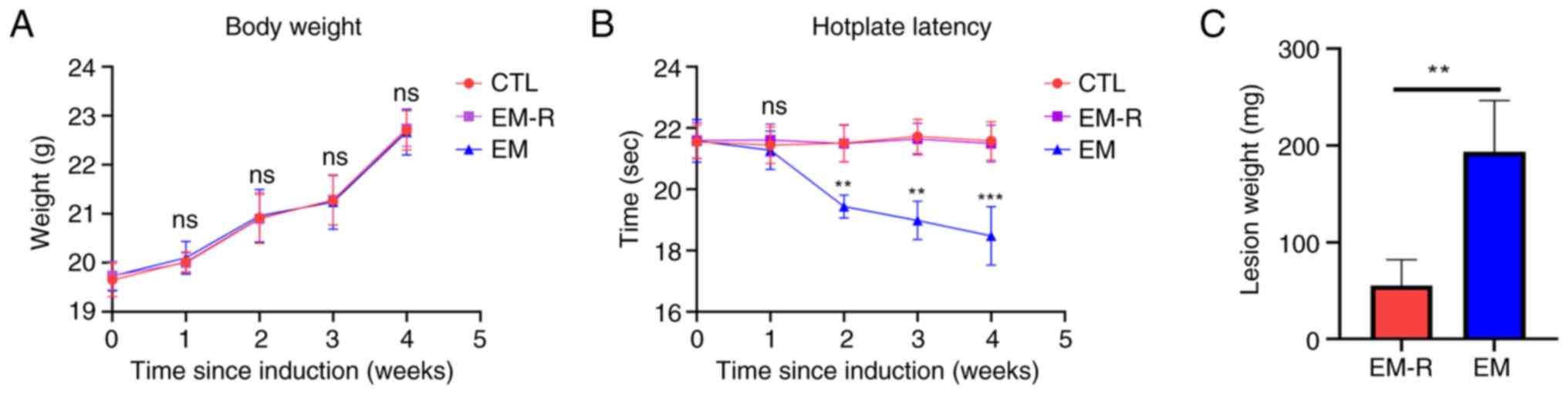
Figure 1

Comparison of mouse body weight,
results of the hotplate test and lesion weight. (A) Changes in body
weight in the three groups of mice before and after endometriosis
induction. (B) Results of the hotplate test in the three groups of
mice before and after endometriosis induction. (C) Comparison of
lesion weight between the EM and EM-R groups. **P<0.01;
***P<0.001. CTL, control group; EM-R, endometriosis + rapamycin
group; EM, endometriosis group; ns, not statistically
significant.

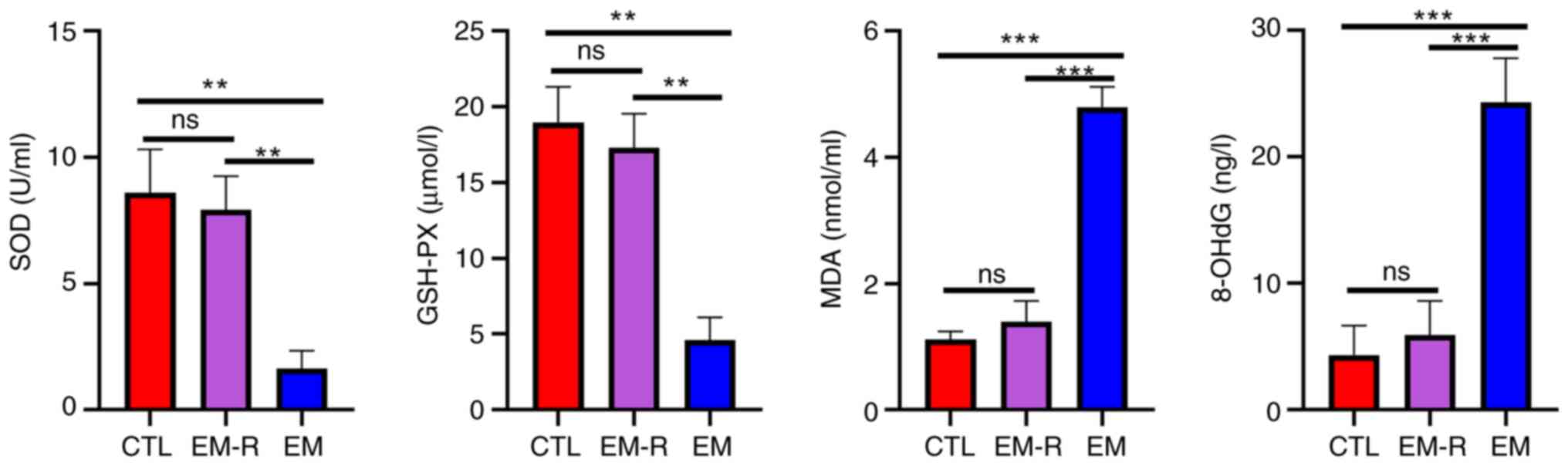
Figure 2

Detection of oxidative stress-related
markers in peritoneal fluid of mice. Comparison of
antioxidant-related molecules, SOD, GSH-PX and oxidative
capacity-related molecules MDA and 8-OHdG in peritoneal fluid of
three groups. **P<0.01; ***P<0.001. SOD, superoxide
dismutase; GSH-PX, glutathione peroxidase; MDA, malondialdehyde;
8-OHdG, 8-hydroxydeoxyguanosine; CTL, control group; EM-R,
endometriosis + rapamycin group; EM, endometriosis group; ns, not
statistically significant.

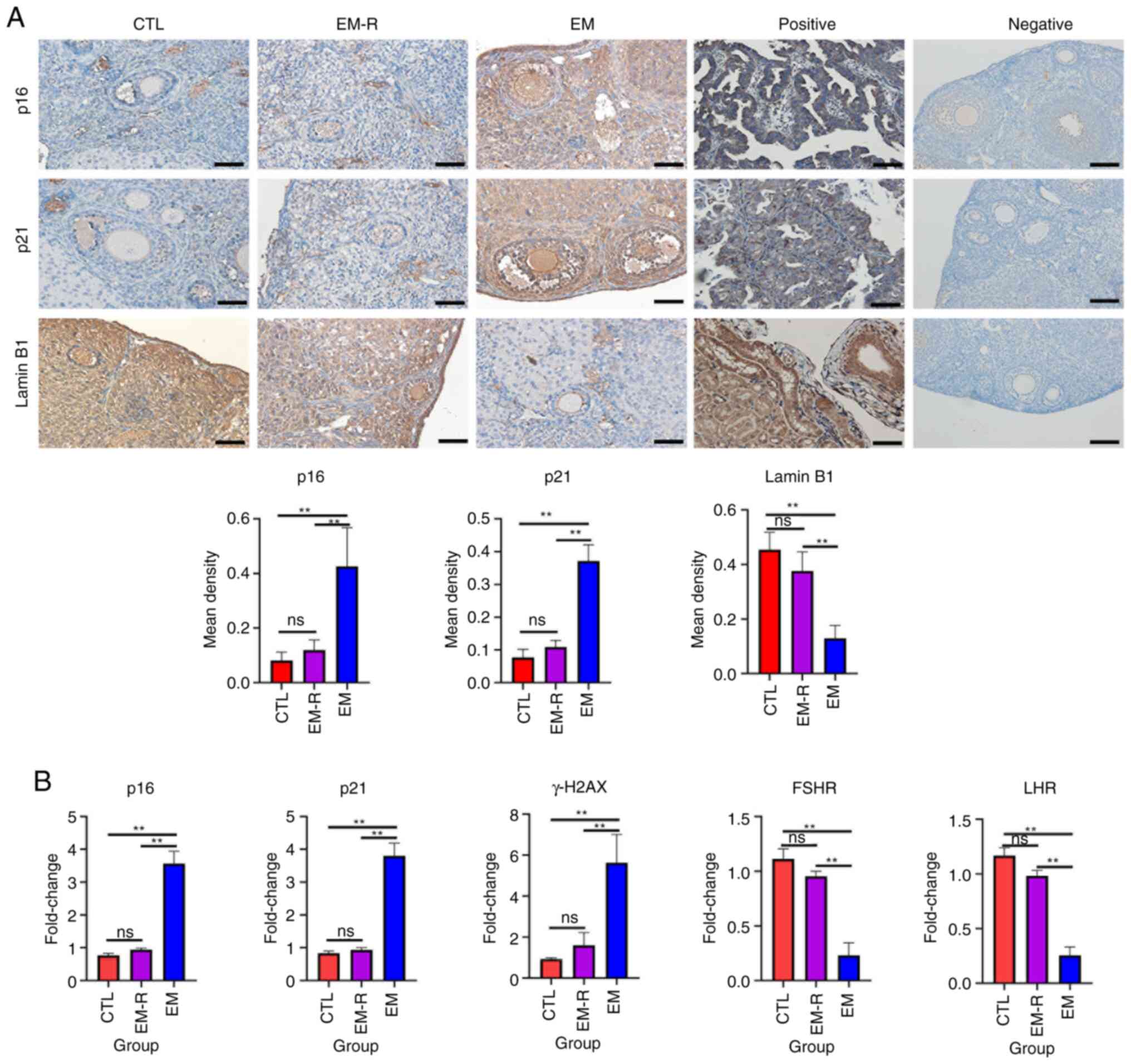
Figure 3

Detection of senescence-related
markers and gonadotropin receptor in mice ovarian tissues. (A)
Representative immunohistochemical images and the corresponding
statistical results of senescence-related markers, p16, p21 and
Lamin B1 in the ovarian tissues of three groups, as well as
positive and negative controls for immunostaining of p16, p21 and
Lamin B1. For positive controls, human endometrial adenocarcinoma
tissues were used for p16, human lung tissues were used for p21 and
human kidney tissues were used for Lamin B1. p16, p21, Lamin B1
showed positive staining in the nuclei. For negative controls,
mouse ovarian tissues were used. The controls all showed negative
staining. Scale bar, 50 µm. (B) Gene expression of p16, p21, γH2AX,
FSHR and LHR in mice ovarian tissues among the three groups.
**P<0.01. FSHR, follicle-stimulating hormone receptor; LHR,
luteinizing hormone receptor; CTL, control group; EM-R,
endometriosis + rapamycin group; EM, endometriosis group; ns, not
statistically significant.

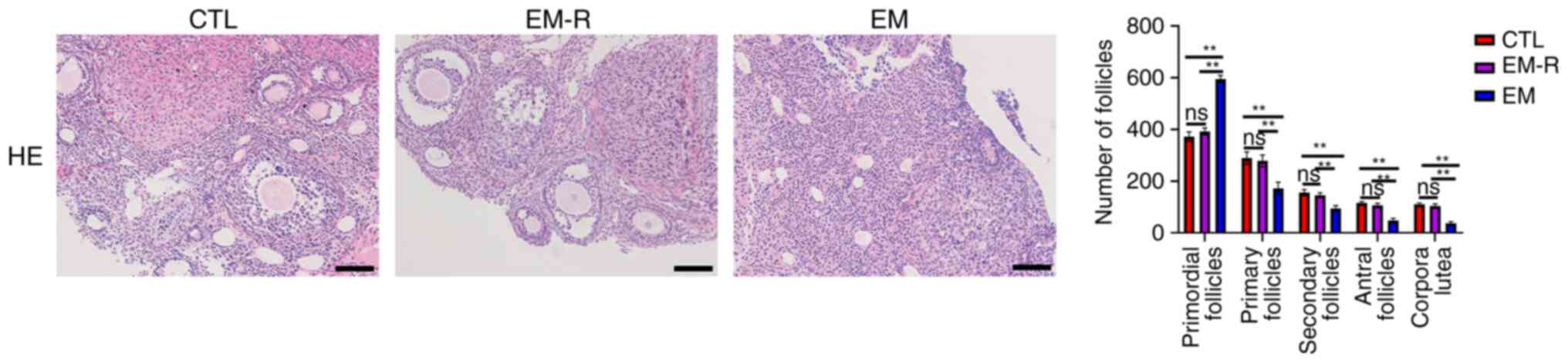
Figure 4

Representative HE staining of ovarian
tissues and the number of follicles at each stage in mice of three
groups. Scale bar, 100 µm. **P<0.01. CTL, control group; EM-R,
endometriosis + rapamycin group; EM, endometriosis group; ns, not
statistically significant.

Figure 5

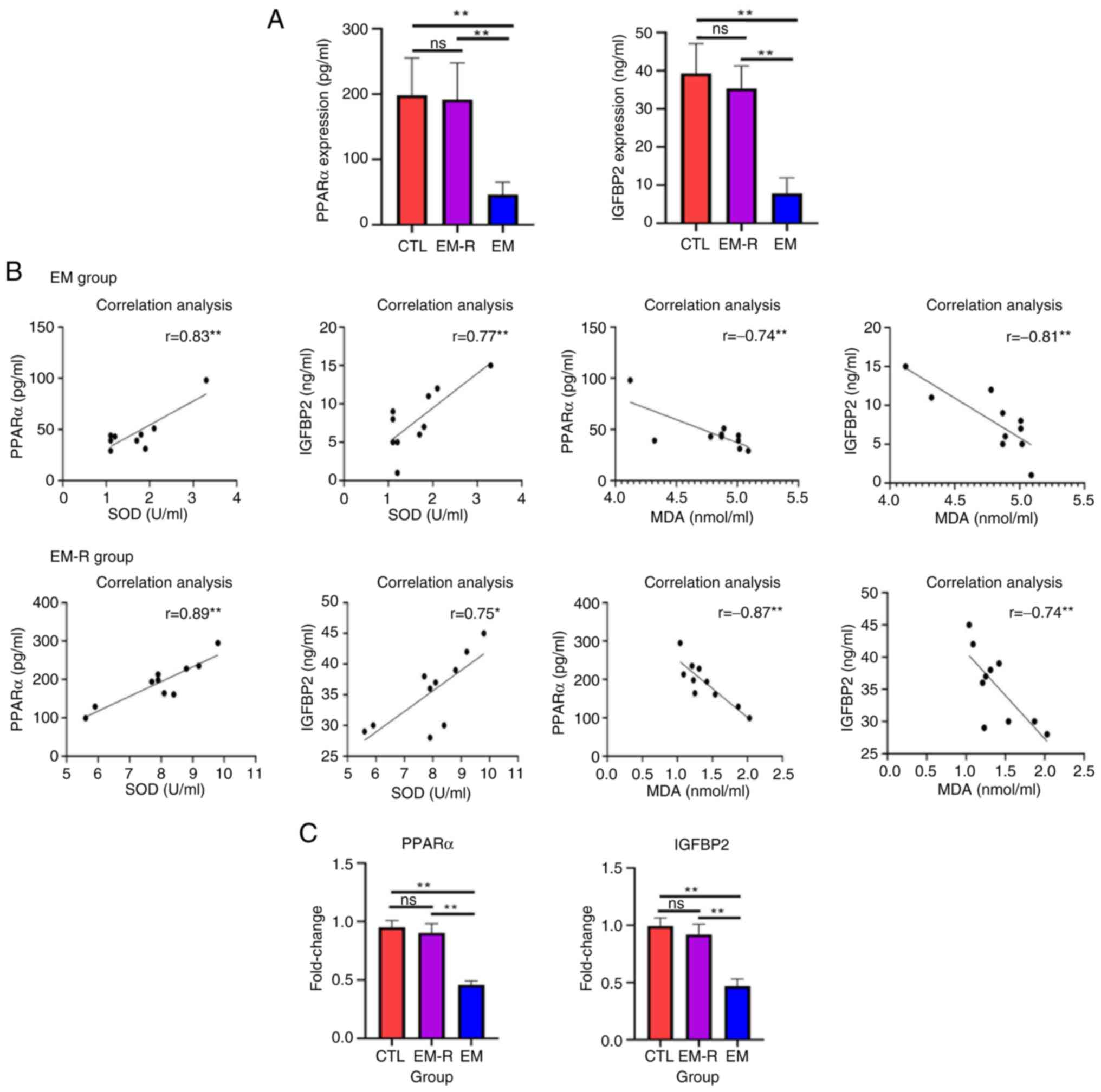
PPARα and IGFBP2 expression in the
endometriosis mouse model. (A) Expression of PPARα and IGFBP2 in
mouse peritoneal fluid. (B) Correlation between PPARα and IGFBP2
and oxidative stress-related molecules in the EM-R and EM groups.
(C) PPARα/IGFBP2 gene expression in mice ovaries of the three
groups of mice. *P<0.05; **P<0.01. PPARα,
proliferator-activated receptor α; IGFBP2, insulin-like growth
factor-binding protein 2; CTL, control group; EM-R, endometriosis +
rapamycin group; EM, endometriosis group; ns, not statistically
significant; SOD, superoxide dismutase; MDA, malondialdehyde.

Figure 6

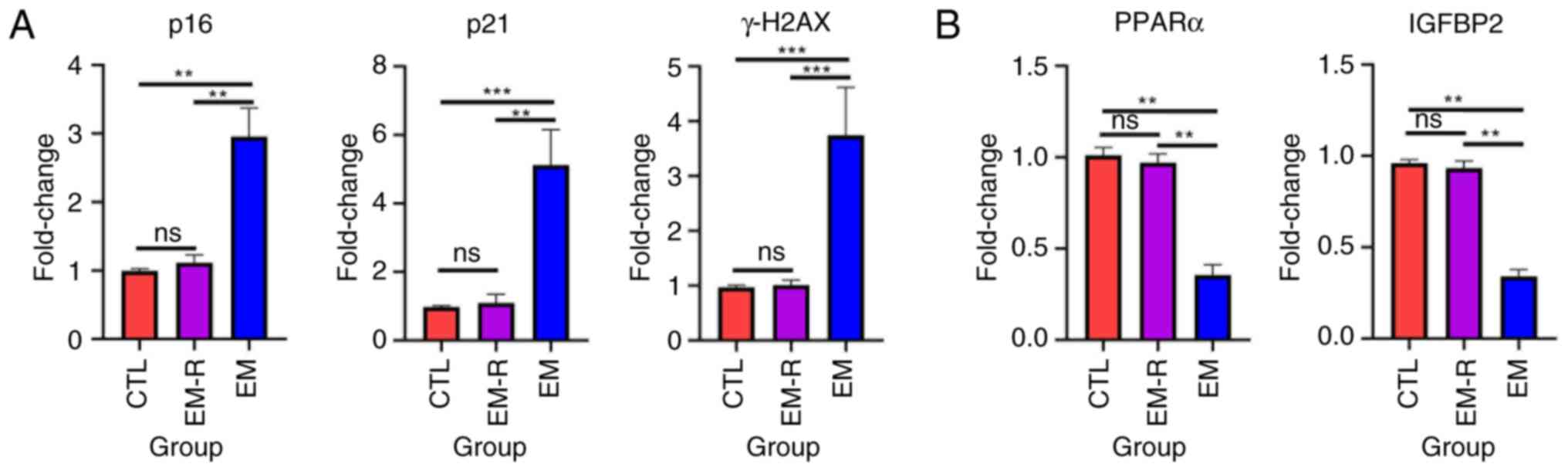
Senescence and PPARα/IGFBP2
expression in primary granulosa cells. Gene expression of (A) p16,
p21 and γH2AX and (B) PPARα and IGFBP2 in mice primary granulosa
cells among the three groups. **P<0.01; ***P<0.001. PPARα,
proliferator-activated receptor α; IGFBP2, insulin-like growth
factor-binding protein 2; CTL, control group; EM-R, endometriosis +
rapamycin group; EM, endometriosis group; ns, not statistically
significant.

Figure 7

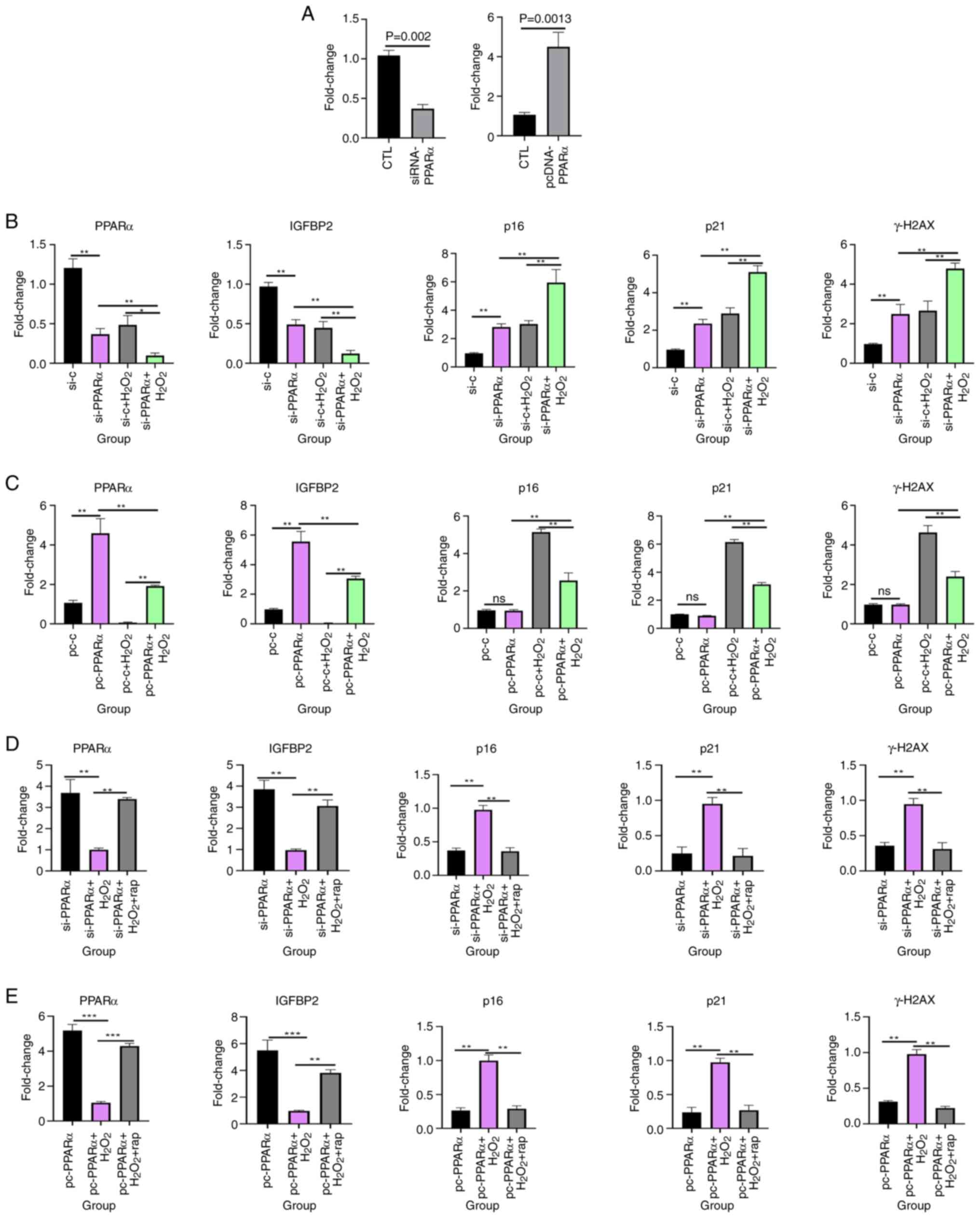
PPARα modulates oxidative
stress-induced senescence and IGFBP2 expression in KGN cells. (A)
Compared with the blank control group, the PCR results of PPARα
after cell transfection with siRNA and overexpression plasmids.
Gene expression of PPARα, IGFBP2, p16, p21 and γH2AX in KGN cells
treated with H2O2 after (B) knockdown and (C)
overexpression of PPARα. Gene expression of PPARα, IGFBP2, p16, p21
and γH2AX in KGN cells treated with H2O2 and
rapamycin after (D) knockdown and (E) overexpression of PPARα.
**P<0.01; ***P<0.001. PPARα, proliferator-activated receptor
α; IGFBP2, insulin-like growth factor-binding protein 2; si, small
interfering; si-c, non-specific control siRNA; pc, pcDNA; rap,
rapamycin; CTL, control; ns, not statistically significant.
View References

1 

Bulun SE, Yilmaz BD, Sison C, Miyazaki K, Bernardi L, Liu S, Kohlmeier A, Yin P, Milad M and Wei J: Endometriosis. Endocr Rev. 40:1048–1079. 2019. View Article : Google Scholar : PubMed/NCBI

2 

Harb HM, Gallos ID, Chu J, Harb M and Coomarasamy A: The effect of endometriosis on in vitro fertilisation outcome: A systematic review and meta-analysis. BJOG. 120:1308–1320. 2013. View Article : Google Scholar : PubMed/NCBI

3 

Sanchez AM, Vanni VS, Bartiromo L, Papaleo E, Zilberberg E, Candiani M, Orvieto R and Viganò P: Is the oocyte quality affected by endometriosis? A review of the literature. J Ovarian Res. 10:432017. View Article : Google Scholar : PubMed/NCBI

4 

De Hondt A, Peeraer K, Meuleman C, Meeuwis L, De Loecker P and D'Hooghe TM: Endometriosis and subfertility treatment: A review. Minerva Ginecol. 57:257–267. 2005.PubMed/NCBI

5 

Barnhart K, Dunsmoor-Su R and Coutifaris C: Effect of endometriosis on in vitro fertilization. Fertil Steril. 77:1148–1155. 2002. View Article : Google Scholar : PubMed/NCBI

6 

Burney RO and Giudice LC: Pathogenesis and pathophysiology of endometriosis. Fertil Steril. 98:511–519. 2012. View Article : Google Scholar : PubMed/NCBI

7 

Ansariniya H, Yavari A, Javaheri A and Zare F: Oxidative stress-related effects on various aspects of endometriosis. Am J Reprod Immunol. 88:e135932022. View Article : Google Scholar : PubMed/NCBI

8 

Schieber M and Chandel NS: ROS function in redox signaling and oxidative stress. Curr Biol. 24:R453–R462. 2014. View Article : Google Scholar : PubMed/NCBI

9 

Malvezzi H, Dobo C, Filippi RZ, Mendes do Nascimento H, Palmieri da Silva E Sousa L, Meola J, Piccinato CA and Podgaec S: Altered p16Ink4a, IL-1β, and lamin b1 protein expression suggest cellular senescence in deep endometriotic lesions. Int J Mol Sci. 23:24762022. View Article : Google Scholar : PubMed/NCBI

10 

Lin X, Dai Y, Tong X, Xu W, Huang Q, Jin X, Li C, Zhou F, Zhou H, Lin X, et al: Excessive oxidative stress in cumulus granulosa cells induced cell senescence contributes to endometriosis-associated infertility. Redox Biol. 30:1014312020. View Article : Google Scholar : PubMed/NCBI

11 

Duval C, Wyse BA, Tsang BK and Librach CL: Extracellular vesicles and their content in the context of polycystic ovarian syndrome and endometriosis: A review. J Ovarian Res. 17:1602024. View Article : Google Scholar : PubMed/NCBI

12 

Blagosklonny MV: Cell senescence, rapamycin and hyperfunction theory of aging. Cell Cycle. 21:1456–1467. 2022. View Article : Google Scholar : PubMed/NCBI

13 

Selvarani R, Mohammed S and Richardson A: Effect of rapamycin on aging and age-related diseases-past and future. Geroscience. 43:1135–1158. 2021. View Article : Google Scholar : PubMed/NCBI

14 

Fan J, Chen C and Zhong Y: A cohort study on IVF outcomes in infertile endometriosis patients: The effects of rapamycin treatment. Reprod Biomed Online. 48:1033192024. View Article : Google Scholar : PubMed/NCBI

15 

Sung B, Park S, Yu BP and Chung HY: Modulation of PPAR in aging, inflammation, and calorie restriction. J Gerontol A Biol Sci Med Sci. 59:997–1006. 2004. View Article : Google Scholar : PubMed/NCBI

16 

Iemitsu M, Miyauchi T, Maeda S, Tanabe T, Takanashi M, Irukayama-Tomobe Y, Sakai S, Ohmori H, Matsuda M and Yamaguchi I: Aging-induced decrease in the PPAR-alpha level in hearts is improved by exercise training. Am J Physiol Heart Circ Physiol. 283:H1750–H1760. 2002. View Article : Google Scholar : PubMed/NCBI

17 

Sanguino E, Roglans N, Alegret M, Sánchez RM, Vázquez-Carrera M and Laguna JC: Atorvastatin reverses age-related reduction in rat hepatic PPARalpha and HNF-4. Br J Pharmacol. 145:853–861. 2005. View Article : Google Scholar : PubMed/NCBI

18 

Kang HS, Cho HC, Lee JH, Oh GT, Koo SH, Park BH, Lee IK, Choi HS, Song DK and Im SS: Metformin stimulates IGFBP-2 gene expression through PPARalpha in diabetic states. Sci Rep. 6:236652016. View Article : Google Scholar : PubMed/NCBI

19 

Shin M, Kang HS, Park JH, Bae JH, Song DK and Im SS: Recent insights into insulin-like growth factor binding protein 2 transcriptional regulation. Endocrinol Metab (Seoul). 32:11–17. 2017. View Article : Google Scholar : PubMed/NCBI

20 

Spitschak M and Hoeflich A: Potential functions of IGFBP-2 for ovarian folliculogenesis and steroidogenesis. Front Endocrinol (Lausanne). 9:1192018. View Article : Google Scholar : PubMed/NCBI

21 

Haouzi D, Assou S, Monzo C, Vincens C, Dechaud H and Hamamah S: Altered gene expression profile in cumulus cells of mature MII oocytes from patients with polycystic ovary syndrome. Hum Reprod. 27:3523–3530. 2012. View Article : Google Scholar : PubMed/NCBI

22 

Kamangar BB, Gabillard JC and Bobe J: Insulin-like growth factor-binding protein (IGFBP)-1, −2, −3, −4, −5, and −6 and IGFBP-related protein 1 during rainbow trout postvitellogenesis and oocyte maturation: molecular characterization, expression profiles, and hormonal regulation. Endocrinology. 147:2399–2410. 2006. View Article : Google Scholar : PubMed/NCBI

23 

Somigliana E, Viganò P, Rossi G, Carinelli S, Vignali M and Panina-Bordignon P: Endometrial ability to implant in ectopic sites can be prevented by interleukin-12 in a murine model of endometriosis. Hum Reprod. 14:2944–2950. 1999. View Article : Google Scholar : PubMed/NCBI

24 

Ren XU, Wang Y, Xu G and Dai L: Effect of rapamycin on endometriosis in mice. Exp Ther Med. 12:101–106. 2016. View Article : Google Scholar : PubMed/NCBI

25 

Lu Y, Nie J, Liu X, Zheng Y and Guo SW: Trichostatin A, a histone deacetylase inhibitor, reduces lesion growth and hyperalgesia in experimentally induced endometriosis in mice. Hum Reprod. 25:1014–1025. 2010. View Article : Google Scholar : PubMed/NCBI

26 

Livak KJ and Schmittgen TD: Analysis of relative gene expression data using real-time quantitative PCR and the 2(−Delta Delta C(T)) method. Methods. 25:402–408. 2001. View Article : Google Scholar : PubMed/NCBI

27 

Tilly JL: Ovarian follicle counts-not as simple as 1, 2, 3. Reprod Biol Endocrinol. 1:112003. View Article : Google Scholar : PubMed/NCBI

28 

Luo LL, Huang J, Fu YC, Xu JJ and Qian YS: Effects of tea polyphenols on ovarian development in rats. J Endocrinol Invest. 31:1110–1118. 2008. View Article : Google Scholar : PubMed/NCBI

29 

Tian Y, Shen W, Lai Z, Shi L, Yang S, Ding T, Wang S and Luo A: Isolation and identification of ovarian theca-interstitial cells and granulose cells of immature female mice. Cell Biol Int. 39:584–590. 2015. View Article : Google Scholar : PubMed/NCBI

30 

Hernandez-Segura A, Nehme J and Demaria M: Hallmarks of cellular senescence. Trends Cell Biol. 28:436–453. 2018. View Article : Google Scholar : PubMed/NCBI

31 

Fragouli E, Lalioti MD and Wells D: The transcriptome of follicular cells: biological insights and clinical implications for the treatment of infertility. Hum Reprod Update. 20:1–11. 2014. View Article : Google Scholar : PubMed/NCBI

32 

Laschke MW, Elitzsch A, Scheuer C, Holstein JH, Vollmar B and Menger MD: Rapamycin induces regression of endometriotic lesions by inhibiting neovascularization and cell proliferation. Br J Pharmacol. 149:137–144. 2006. View Article : Google Scholar : PubMed/NCBI

33 

Augoulea A, Mastorakos G, Lambrinoudaki I, Christodoulakos G and Creatsas G: The role of the oxidative-stress in the endometriosis-related infertility. Gynecol Endocrinol. 25:75–81. 2009. View Article : Google Scholar : PubMed/NCBI

34 

Mansour G, Sharma RK, Agarwal A and Falcone T: Endometriosis-induced alterations in mouse metaphase II oocyte microtubules and chromosomal alignment: A possible cause of infertility. Fertil Steril. 94:1894–1899. 2010. View Article : Google Scholar : PubMed/NCBI

35 

Ding GL, Chen XJ, Luo Q, Dong MY, Wang N and Huang HF: Attenuated oocyte fertilization and embryo development associated with altered growth factor/signal transduction induced by endometriotic peritoneal fluid. Fertil Steril. 93:2538–2544. 2010. View Article : Google Scholar : PubMed/NCBI

36 

Papaconstantinou J: The role of signaling pathways of inflammation and oxidative stress in development of senescence and aging phenotypes in cardiovascular disease. Cells. 8:13832019. View Article : Google Scholar : PubMed/NCBI

37 

Kishi H, Kitahara Y, Imai F, Nakao K and Suwa H: Expression of the gonadotropin receptors during follicular development. Reprod Med Biol. 17:11–19. 2017. View Article : Google Scholar : PubMed/NCBI

38 

Harrison DE, Strong R, Sharp ZD, Nelson JF, Astle CM, Flurkey K, Nadon NL, Wilkinson JE, Frenkel K, Carter CS, et al: Rapamycin fed late in life extends lifespan in genetically heterogeneous mice. Nature. 460:392–395. 2009. View Article : Google Scholar : PubMed/NCBI

39 

Weichhart T: mTOR as regulator of lifespan, aging, and cellular senescence: A mini-review. Gerontology. 64:127–134. 2018. View Article : Google Scholar : PubMed/NCBI

40 

Shen B, Wang Y, Cheng J, Peng Y, Zhang Q, Li Z, Zhao L, Deng X and Feng H: Pterostilbene alleviated NAFLD via AMPK/mTOR signaling pathways and autophagy by promoting Nrf2. Phytomedicine. 109:1545612023. View Article : Google Scholar : PubMed/NCBI

41 

Chung KW, Lee EK, Lee MK, Oh GT, Yu BP and Chung HY: Impairment of PPARα and the fatty Acid oxidation pathway aggravates renal fibrosis during aging. J Am Soc Nephrol. 29:1223–1237. 2018. View Article : Google Scholar : PubMed/NCBI

42 

Chin C, Ravichandran R, Sanborn K, Fleming T, Wheatcroft SB, Kearney MT, Tokman S, Walia R, Smith MA, Flint DJ, et al: Loss of IGFBP2 mediates alveolar type 2 cell senescence and promotes lung fibrosis. Cell Rep Med. 4:1009452023. View Article : Google Scholar : PubMed/NCBI

Related Articles

  • Abstract
  • View
  • Download
  • Twitter
Copy and paste a formatted citation
Spandidos Publications style
Wu Q, Fan J, Sheng Q and He X: Rapamycin improves endometriosis‑related infertility involving ovarian senescence via the PPAR&alpha;/IGFBP2 pathway. Mol Med Rep 33: 12, 2026.
APA
Wu, Q., Fan, J., Sheng, Q., & He, X. (2026). Rapamycin improves endometriosis‑related infertility involving ovarian senescence via the PPAR&alpha;/IGFBP2 pathway. Molecular Medicine Reports, 33, 12. https://doi.org/10.3892/mmr.2025.13722
MLA
Wu, Q., Fan, J., Sheng, Q., He, X."Rapamycin improves endometriosis‑related infertility involving ovarian senescence via the PPAR&alpha;/IGFBP2 pathway". Molecular Medicine Reports 33.1 (2026): 12.
Chicago
Wu, Q., Fan, J., Sheng, Q., He, X."Rapamycin improves endometriosis‑related infertility involving ovarian senescence via the PPAR&alpha;/IGFBP2 pathway". Molecular Medicine Reports 33, no. 1 (2026): 12. https://doi.org/10.3892/mmr.2025.13722
Copy and paste a formatted citation
x
Spandidos Publications style
Wu Q, Fan J, Sheng Q and He X: Rapamycin improves endometriosis‑related infertility involving ovarian senescence via the PPAR&alpha;/IGFBP2 pathway. Mol Med Rep 33: 12, 2026.
APA
Wu, Q., Fan, J., Sheng, Q., & He, X. (2026). Rapamycin improves endometriosis‑related infertility involving ovarian senescence via the PPAR&alpha;/IGFBP2 pathway. Molecular Medicine Reports, 33, 12. https://doi.org/10.3892/mmr.2025.13722
MLA
Wu, Q., Fan, J., Sheng, Q., He, X."Rapamycin improves endometriosis‑related infertility involving ovarian senescence via the PPAR&alpha;/IGFBP2 pathway". Molecular Medicine Reports 33.1 (2026): 12.
Chicago
Wu, Q., Fan, J., Sheng, Q., He, X."Rapamycin improves endometriosis‑related infertility involving ovarian senescence via the PPAR&alpha;/IGFBP2 pathway". Molecular Medicine Reports 33, no. 1 (2026): 12. https://doi.org/10.3892/mmr.2025.13722
Follow us
  • Twitter
  • LinkedIn
  • Facebook
About
  • Spandidos Publications
  • Careers
  • Cookie Policy
  • Privacy Policy
How can we help?
  • Help
  • Live Chat
  • Contact
  • Email to our Support Team