Spandidos Publications Logo
  • About
    • About Spandidos
    • Aims and Scopes
    • Abstracting and Indexing
    • Editorial Policies
    • Reprints and Permissions
    • Job Opportunities
    • Terms and Conditions
    • Contact
  • Journals
    • All Journals
    • Oncology Letters
      • Oncology Letters
      • Information for Authors
      • Editorial Policies
      • Editorial Board
      • Aims and Scope
      • Abstracting and Indexing
      • Bibliographic Information
      • Archive
    • International Journal of Oncology
      • International Journal of Oncology
      • Information for Authors
      • Editorial Policies
      • Editorial Board
      • Aims and Scope
      • Abstracting and Indexing
      • Bibliographic Information
      • Archive
    • Molecular and Clinical Oncology
      • Molecular and Clinical Oncology
      • Information for Authors
      • Editorial Policies
      • Editorial Board
      • Aims and Scope
      • Abstracting and Indexing
      • Bibliographic Information
      • Archive
    • Experimental and Therapeutic Medicine
      • Experimental and Therapeutic Medicine
      • Information for Authors
      • Editorial Policies
      • Editorial Board
      • Aims and Scope
      • Abstracting and Indexing
      • Bibliographic Information
      • Archive
    • International Journal of Molecular Medicine
      • International Journal of Molecular Medicine
      • Information for Authors
      • Editorial Policies
      • Editorial Board
      • Aims and Scope
      • Abstracting and Indexing
      • Bibliographic Information
      • Archive
    • Biomedical Reports
      • Biomedical Reports
      • Information for Authors
      • Editorial Policies
      • Editorial Board
      • Aims and Scope
      • Abstracting and Indexing
      • Bibliographic Information
      • Archive
    • Oncology Reports
      • Oncology Reports
      • Information for Authors
      • Editorial Policies
      • Editorial Board
      • Aims and Scope
      • Abstracting and Indexing
      • Bibliographic Information
      • Archive
    • Molecular Medicine Reports
      • Molecular Medicine Reports
      • Information for Authors
      • Editorial Policies
      • Editorial Board
      • Aims and Scope
      • Abstracting and Indexing
      • Bibliographic Information
      • Archive
    • World Academy of Sciences Journal
      • World Academy of Sciences Journal
      • Information for Authors
      • Editorial Policies
      • Editorial Board
      • Aims and Scope
      • Abstracting and Indexing
      • Bibliographic Information
      • Archive
    • International Journal of Functional Nutrition
      • International Journal of Functional Nutrition
      • Information for Authors
      • Editorial Policies
      • Editorial Board
      • Aims and Scope
      • Abstracting and Indexing
      • Bibliographic Information
      • Archive
    • International Journal of Epigenetics
      • International Journal of Epigenetics
      • Information for Authors
      • Editorial Policies
      • Editorial Board
      • Aims and Scope
      • Abstracting and Indexing
      • Bibliographic Information
      • Archive
    • Medicine International
      • Medicine International
      • Information for Authors
      • Editorial Policies
      • Editorial Board
      • Aims and Scope
      • Abstracting and Indexing
      • Bibliographic Information
      • Archive
  • Articles
  • Information
    • Information for Authors
    • Information for Reviewers
    • Information for Librarians
    • Information for Advertisers
    • Conferences
  • Language Editing
Spandidos Publications Logo
  • About
    • About Spandidos
    • Aims and Scopes
    • Abstracting and Indexing
    • Editorial Policies
    • Reprints and Permissions
    • Job Opportunities
    • Terms and Conditions
    • Contact
  • Journals
    • All Journals
    • Biomedical Reports
      • Information for Authors
      • Editorial Policies
      • Editorial Board
      • Aims and Scope
      • Abstracting and Indexing
      • Bibliographic Information
      • Archive
    • Experimental and Therapeutic Medicine
      • Information for Authors
      • Editorial Policies
      • Editorial Board
      • Aims and Scope
      • Abstracting and Indexing
      • Bibliographic Information
      • Archive
    • International Journal of Epigenetics
      • Information for Authors
      • Editorial Policies
      • Editorial Board
      • Aims and Scope
      • Abstracting and Indexing
      • Bibliographic Information
      • Archive
    • International Journal of Functional Nutrition
      • Information for Authors
      • Editorial Policies
      • Editorial Board
      • Aims and Scope
      • Abstracting and Indexing
      • Bibliographic Information
      • Archive
    • International Journal of Molecular Medicine
      • Information for Authors
      • Editorial Policies
      • Editorial Board
      • Aims and Scope
      • Abstracting and Indexing
      • Bibliographic Information
      • Archive
    • International Journal of Oncology
      • Information for Authors
      • Editorial Policies
      • Editorial Board
      • Aims and Scope
      • Abstracting and Indexing
      • Bibliographic Information
      • Archive
    • Medicine International
      • Information for Authors
      • Editorial Policies
      • Editorial Board
      • Aims and Scope
      • Abstracting and Indexing
      • Bibliographic Information
      • Archive
    • Molecular and Clinical Oncology
      • Information for Authors
      • Editorial Policies
      • Editorial Board
      • Aims and Scope
      • Abstracting and Indexing
      • Bibliographic Information
      • Archive
    • Molecular Medicine Reports
      • Information for Authors
      • Editorial Policies
      • Editorial Board
      • Aims and Scope
      • Abstracting and Indexing
      • Bibliographic Information
      • Archive
    • Oncology Letters
      • Information for Authors
      • Editorial Policies
      • Editorial Board
      • Aims and Scope
      • Abstracting and Indexing
      • Bibliographic Information
      • Archive
    • Oncology Reports
      • Information for Authors
      • Editorial Policies
      • Editorial Board
      • Aims and Scope
      • Abstracting and Indexing
      • Bibliographic Information
      • Archive
    • World Academy of Sciences Journal
      • Information for Authors
      • Editorial Policies
      • Editorial Board
      • Aims and Scope
      • Abstracting and Indexing
      • Bibliographic Information
      • Archive
  • Articles
  • Information
    • For Authors
    • For Reviewers
    • For Librarians
    • For Advertisers
    • Conferences
  • Language Editing
Login Register Submit
  • This site uses cookies
  • You can change your cookie settings at any time by following the instructions in our Cookie Policy. To find out more, you may read our Privacy Policy.

    I agree
Search articles by DOI, keyword, author or affiliation
Search
Advanced Search
presentation
Molecular Medicine Reports
Join Editorial Board Propose a Special Issue
Print ISSN: 1791-2997 Online ISSN: 1791-3004
Journal Cover
January-2026 Volume 33 Issue 1

Full Size Image

Sign up for eToc alerts
Recommend to Library

Journals

International Journal of Molecular Medicine

International Journal of Molecular Medicine

International Journal of Molecular Medicine is an international journal devoted to molecular mechanisms of human disease.

International Journal of Oncology

International Journal of Oncology

International Journal of Oncology is an international journal devoted to oncology research and cancer treatment.

Molecular Medicine Reports

Molecular Medicine Reports

Covers molecular medicine topics such as pharmacology, pathology, genetics, neuroscience, infectious diseases, molecular cardiology, and molecular surgery.

Oncology Reports

Oncology Reports

Oncology Reports is an international journal devoted to fundamental and applied research in Oncology.

Experimental and Therapeutic Medicine

Experimental and Therapeutic Medicine

Experimental and Therapeutic Medicine is an international journal devoted to laboratory and clinical medicine.

Oncology Letters

Oncology Letters

Oncology Letters is an international journal devoted to Experimental and Clinical Oncology.

Biomedical Reports

Biomedical Reports

Explores a wide range of biological and medical fields, including pharmacology, genetics, microbiology, neuroscience, and molecular cardiology.

Molecular and Clinical Oncology

Molecular and Clinical Oncology

International journal addressing all aspects of oncology research, from tumorigenesis and oncogenes to chemotherapy and metastasis.

World Academy of Sciences Journal

World Academy of Sciences Journal

Multidisciplinary open-access journal spanning biochemistry, genetics, neuroscience, environmental health, and synthetic biology.

International Journal of Functional Nutrition

International Journal of Functional Nutrition

Open-access journal combining biochemistry, pharmacology, immunology, and genetics to advance health through functional nutrition.

International Journal of Epigenetics

International Journal of Epigenetics

Publishes open-access research on using epigenetics to advance understanding and treatment of human disease.

Medicine International

Medicine International

An International Open Access Journal Devoted to General Medicine.

Journal Cover
January-2026 Volume 33 Issue 1

Full Size Image

Sign up for eToc alerts
Recommend to Library

  • Article
  • Citations
    • Cite This Article
    • Download Citation
    • Create Citation Alert
    • Remove Citation Alert
    • Cited By
  • Similar Articles
    • Related Articles (in Spandidos Publications)
    • Similar Articles (Google Scholar)
    • Similar Articles (PubMed)
  • Download PDF
  • Download XML
  • View XML

  • Supplementary Files
    • Supplementary_Data.pdf
Article Open Access

Protective impact of landiolol against acute lung injury following hemorrhagic shock and resuscitation in rats

  • Authors:
    • Risa Sakamoto
    • Hiroko Shimizu
    • Ryu Nakamura
    • Yifu Lu
    • Yaqiang Li
    • Emiko Omori
    • Toru Takahashi
    • Hiroshi Morimatsu
  • View Affiliations / Copyright

    Affiliations: Department of Anesthesiology and Resuscitology, Okayama University, Graduate School of Medicine, Dentistry and Pharmaceutical Sciences, Okayama, Okayama 700‑8558, Japan, Department of Anesthesiology and Resuscitology, Okayama University Medical School, Okayama, Okayama 700‑8558, Japan, Department of Human Anatomy, Shantou University Medical College, Shantou, Guangdong 515041, P.R. China, Department of Anesthesiology, Okayama Saidaiji Hospital, Okayama, Okayama 704‑8194, Japan
    Copyright: © Sakamoto et al. This is an open access article distributed under the terms of Creative Commons Attribution License.
  • Article Number: 22
    |
    Published online on: October 31, 2025
       https://doi.org/10.3892/mmr.2025.13732
  • Expand metrics +
Metrics: Total Views: 0 (Spandidos Publications: | PMC Statistics: )
Metrics: Total PDF Downloads: 0 (Spandidos Publications: | PMC Statistics: )
Cited By (CrossRef): 0 citations Loading Articles...

This article is mentioned in:


Abstract

Hemorrhagic shock and resuscitation (HSR) induces pulmonary inflammation, leading to acute lung injury (ALI). Notably, blocking β1 receptors can lead to organ protection through anti‑inflammatory and anti‑apoptotic effects. Additionally, although the β1 receptor pathway is blocked by the β1 blocker, the β2 receptor pathway may be preserved and activate the 5' adenosine monophosphate‑activated protein kinase (AMPK) pathway. The present study aimed to examine whether administration of the β1 blocker landiolol could achieve lung protection in a model of HSR‑ALI, alongside improvements in inflammation and apoptosis. Male Sprague‑Dawley rats underwent hemorrhage keeping their mean arterial pressure at 30 mmHg for 1 h. Resuscitation by reinfusion was initiated to restore blood pressure to pre‑hemorrhage levels for >15 min, followed by a 45‑min stabilization period to create the HSR‑ALI model. Landiolol (100 mg/kg/min) or saline was continuously administered after resuscitation. The lung tissues, which were collected for assessing inflammation and apoptosis‑related damage, underwent analyses, including histological examination, neutrophil count, assessment of lung wet/dry weight ratio, detection of the mRNA levels of tumor necrosis factor‑α (TNF‑α) and inducible nitric oxide synthase (iNOS), identification of terminal deoxynucleotidyl transferase dUTP nick‑end labeling (TUNEL)‑positive cells, and evaluation of caspase‑3 expression. In addition, phosphorylated AMPKα (pAMPKα) expression was tested via western blotting. Compared with the HSR/saline group, the HSR/landiolol group demonstrated a reduction in lung tissue damage score, and significant reductions in neutrophil count, lung wet/dry weight ratio, lung TNF‑α and iNOS mRNA levels, TUNEL‑positive cells and cleaved caspase‑3 expression. Furthermore, landiolol administration following HSR treatment increased pAMPKα expression. No significant hypotension occurred between the HSR/landiolol and HSR/saline groups; and blood loss did not differ significantly between the groups. In conclusion, landiolol administration after HSR reduced lung inflammation and apoptosis, suggesting a potential improvement in tissue damage. Furthermore, pAMPKα activation in the HSR/landiolol group may be the mechanism underlying the pulmonary protective effects of landiolol.
View Figures

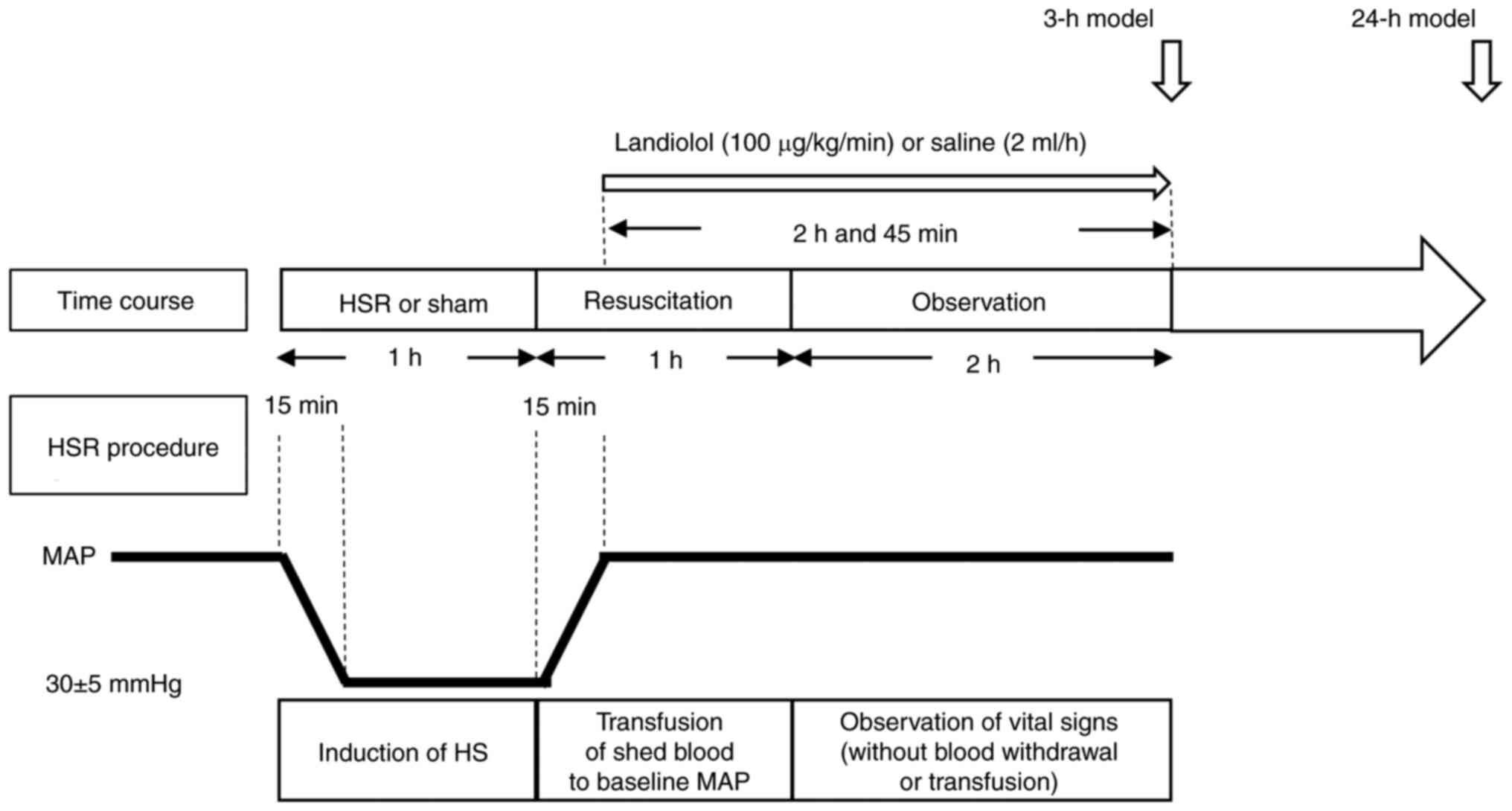
Figure 1

Experimental design. Establishment of
the HSR rat model and the landiolol administration protocol.
Animals were assigned to four groups (n=10 per group). Sham/saline
group: administered saline after sham surgery; sham/landiolol
group: administered landiolol after sham surgery; HSR/saline group:
administered saline after HS procedure; HSR/landiolol group:
administered landiolol after HS procedure. Rats were euthanized 3
or 24 h after the start of resuscitation; thereafter, samples were
collected. Landiolol or saline was administered 15 min after the
start of resuscitation and continued until 3 h after resuscitation.
HS, hemorrhagic shock; HSR, hemorrhagic shock and resuscitation;
MAP, mean arterial blood pressure.

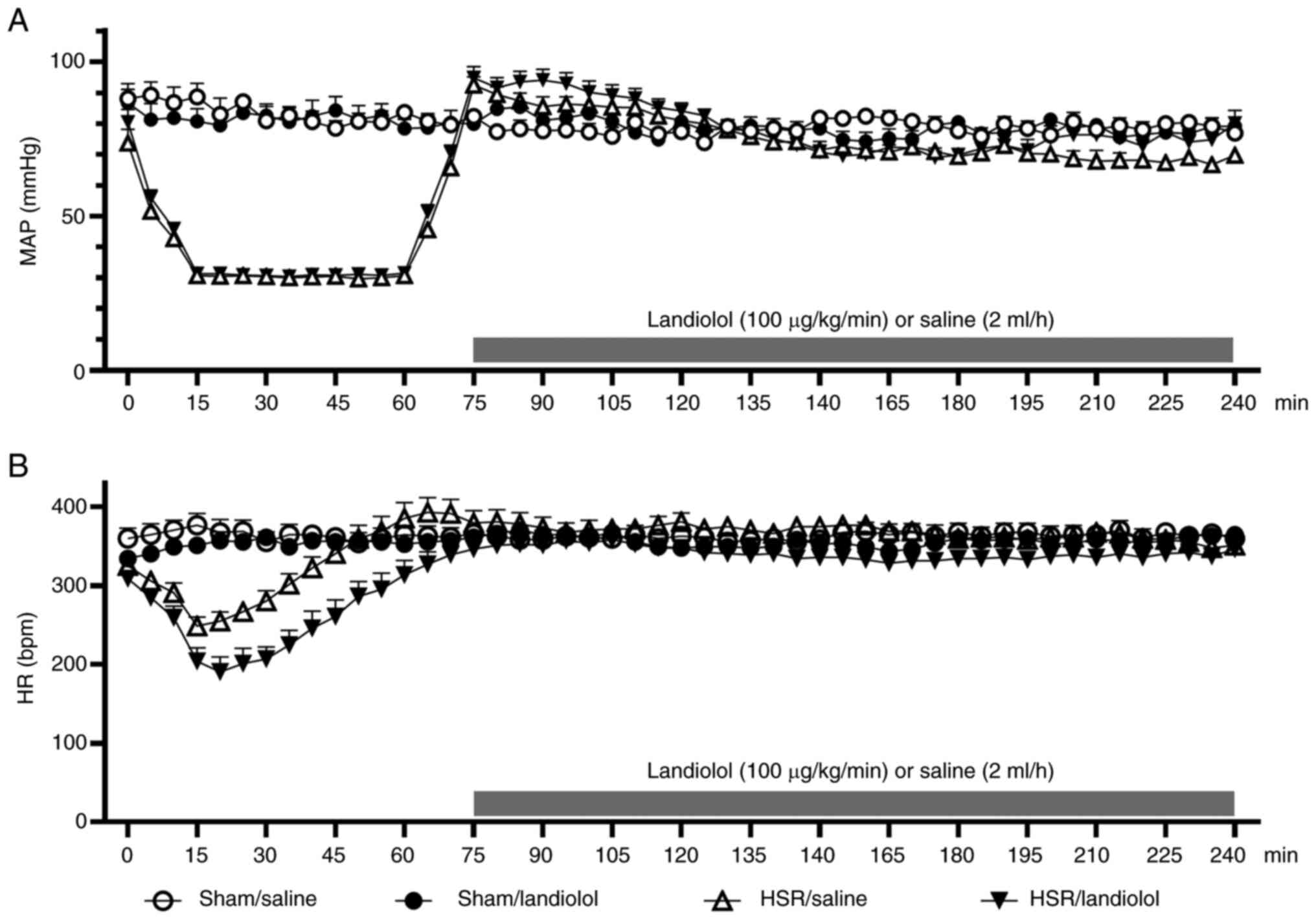
Figure 2

Landiolol administration did not
affect vital signs during or after HSR. Landiolol or vehicle
(normal saline) was administered through the tail vein immediately
following resuscitation. The MAP and HR were recorded at 5-min
intervals during and after the HSR procedure. (A) MAP measured at
5-min intervals throughout and following HSR. The x-axis represents
the time elapsed since the onset of hemorrhagic shock while the
y-axis shows the MAP values. The gray band at the bottom of the
graph represents the duration of drug or vehicle administration (B)
HR recorded at 5-min intervals during and after HSR. The x-axis
shows the time from the start of hemorrhagic shock, and the y-axis
displays the heart rate. The gray band at the bottom of the graph
represents the duration of drug or vehicle administration. Data are
presented as mean ± standard error of the mean (n=10 per group).HR,
heart rate; HSR, hemorrhagic shock and resuscitation; MAP, mean
arterial blood pressure.

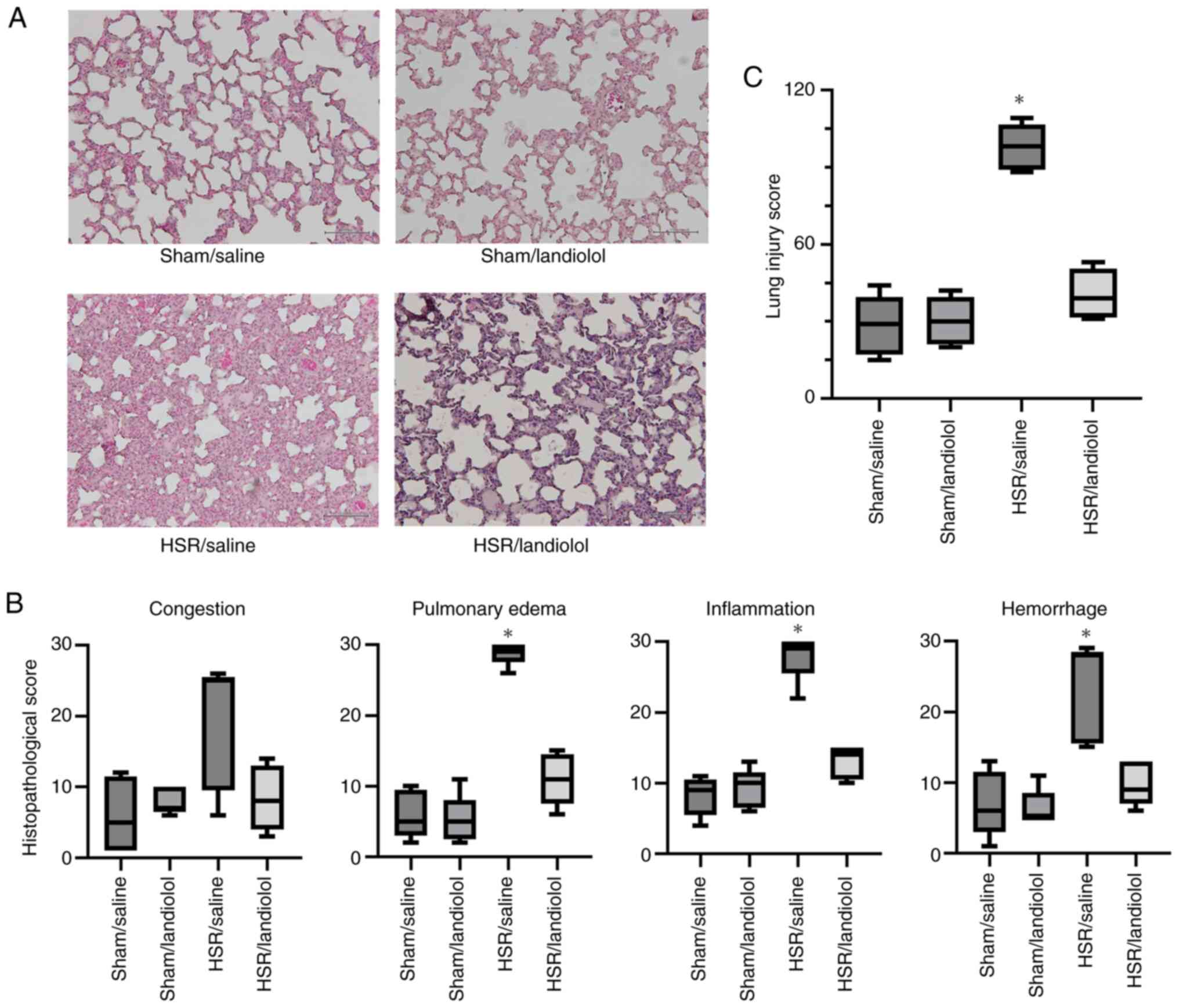
Figure 3

Histological assessment of lung
injury following HSR. Lungs were collected from HSR model rats,
treated with or without landiolol, 24 h after resuscitation for
histological analysis. (A) Representative images from four
independent experiments (H&E staining; original magnification,
×200; scale bar, 100 µm). (B) The severity of histopathological
alterations in the lungs was scored for congestion, edema,
inflammation, and hemorrhage. Ten areas of lung parenchyma per rat
were rated on a scale from 0 (normal) to 3 (severe) for each
parameter, resulting in a maximum of 30 points per parameter.
Scoring was performed independently by five blinded observers, and
data are presented as median (interquartile range) and analyzed
using the Kruskal-Wallis test followed by Dunn's post hoc test. (C)
The total histopathological score was calculated by summing scores
across the four parameters, with a maximum possible score of 120.
Again, scoring was performed by five blinded observers, and the
median values (interquartile range) were analyzed using the
Kruskal-Wallis test followed by Dunn's post hoc test. The sum score
reflects the extent of lung tissue injury for each group.
*P<0.05 vs. sham/saline. Sham/saline and sham/landiolol groups
received sham surgery with saline or landiolol; HSR/saline and
HSR/landiolol groups underwent HSR with saline or landiolol
administration. HSR, hemorrhagic shock and resuscitation.

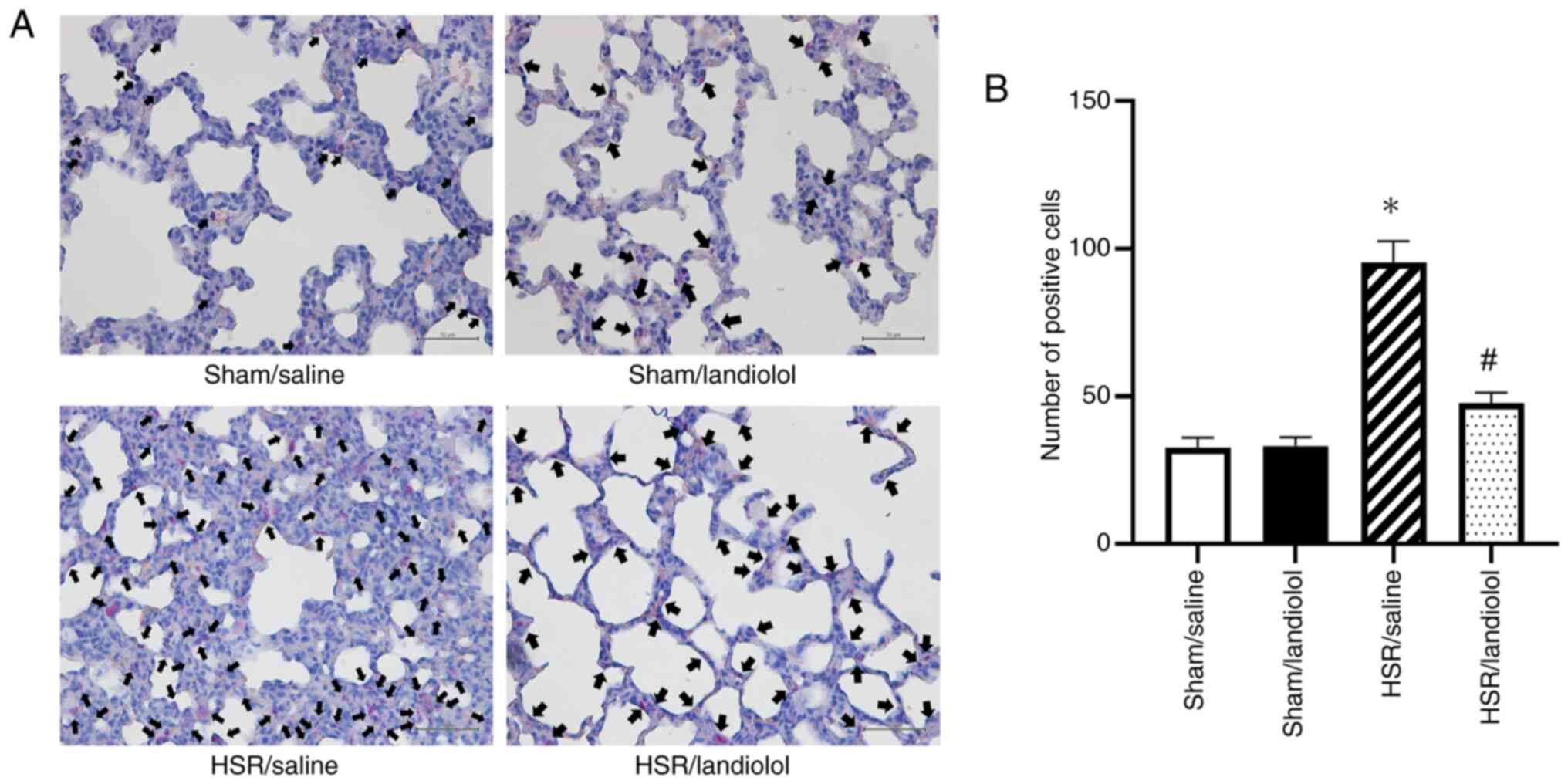
Figure 4

Neutrophil accumulation in the lungs
following HSR. Lungs from HSR model rats treated with or without
landiolol were collected 24 h post-resuscitation. Neutrophils were
stained using a naphthol AS-D chloroacetate esterase assay. (A)
Representative images from four independent experiments. Black
arrows point to neutrophils stained positively (original
magnification, ×400; scale bar, 50 µm). (B) Neutrophil counts in
five non-consecutive lung sections per rat at ×400 magnification
(n=5 per group). Data are shown as mean ± standard error of the
mean and analyzed using analysis of variance followed by the
Tukey-Kramer test. *P<0.0001 vs. sham/saline;
#P<0.0001 vs. HSR/saline. Sham/saline and
sham/landiolol groups received sham surgery with saline or
landiolol; HSR/saline and HSR/landiolol groups underwent HSR with
saline or landiolol administration. HSR, hemorrhagic shock and
resuscitation.

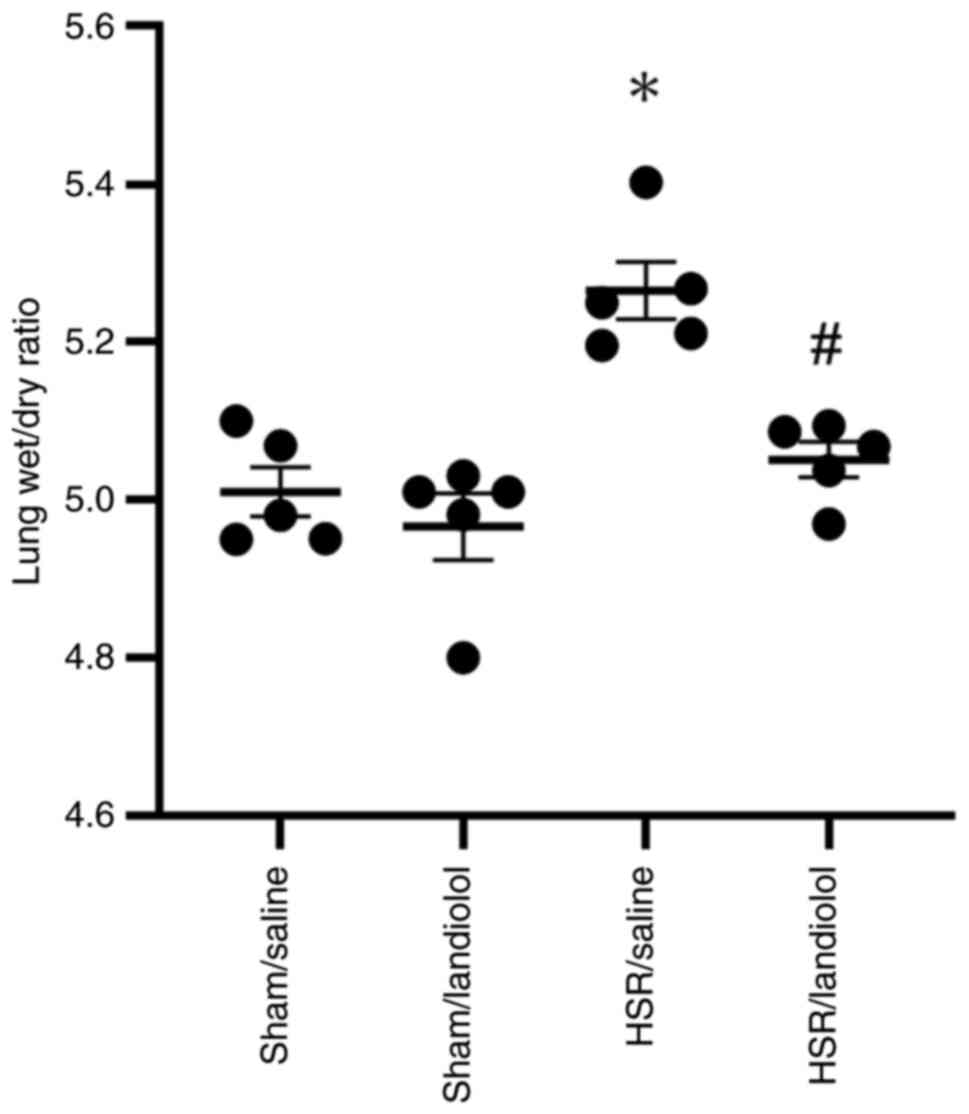
Figure 5

Lung wet/dry weight ratio following
HSR. Lungs from HSR model rats, treated with or without landiolol,
were collected 24 h post-resuscitation, and the wet/dry weight
ratio was measured. Data are presented as mean ± standard error of
the mean (n=5 per group). Statistical analysis was conducted using
analysis of variance, followed by the Tukey-Kramer test.
*P<0.0001 vs. sham/saline; #P<0.005 vs.
HSR/saline. Sham/saline and sham/landiolol groups received sham
surgery with saline or landiolol; HSR/saline and HSR/landiolol
groups underwent HSR with saline or landiolol administration. HSR,
hemorrhagic shock and resuscitation.

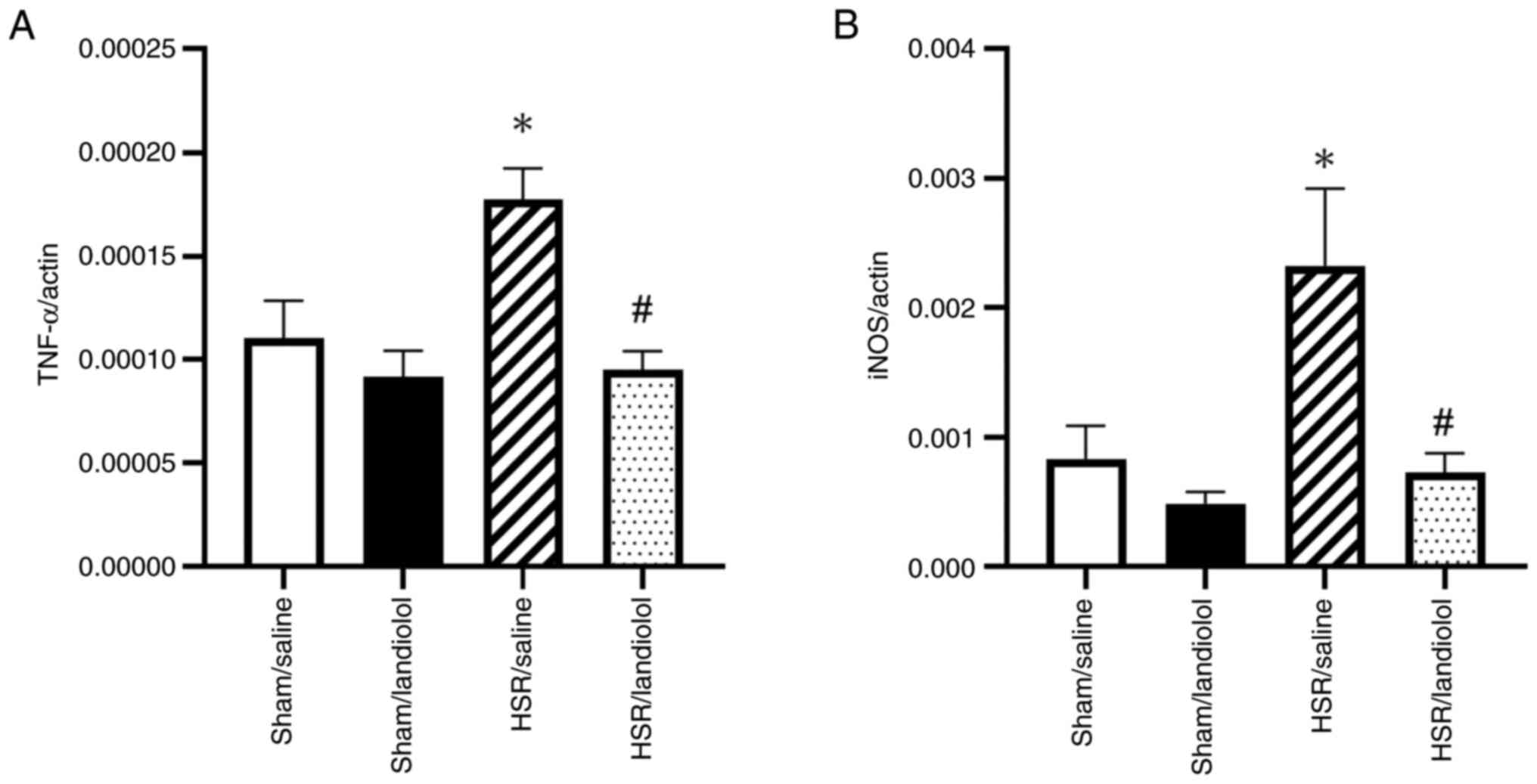
Figure 6

mRNA levels of inflammatory mediators
in the lungs following HSR, measured by RT-qPCR. Lungs from HSR
model rats treated with either saline or landiolol were collected 3
h post-resuscitation, and mRNA levels of (A) TNF-α and (B) iNOS
were measured by RT-qPCR. Data are presented as mean ± standard
error of the mean and analyzed using analysis of variance followed
by the Tukey-Kramer test (n=5 per group). *P<0.05 vs.
sham/saline; #P<0.05 vs. HSR/saline. Sham/saline and
sham/landiolol groups received sham surgery with saline or
landiolol; HSR/saline and HSR/landiolol groups underwent HSR with
saline or landiolol administration. HSR, hemorrhagic shock and
resuscitation; RT-qPCR, reverse transcription-quantitative
polymerase chain reaction; TNF-α, tumor necrosis factor-α; iNOS,
inducible nitric oxide synthase.

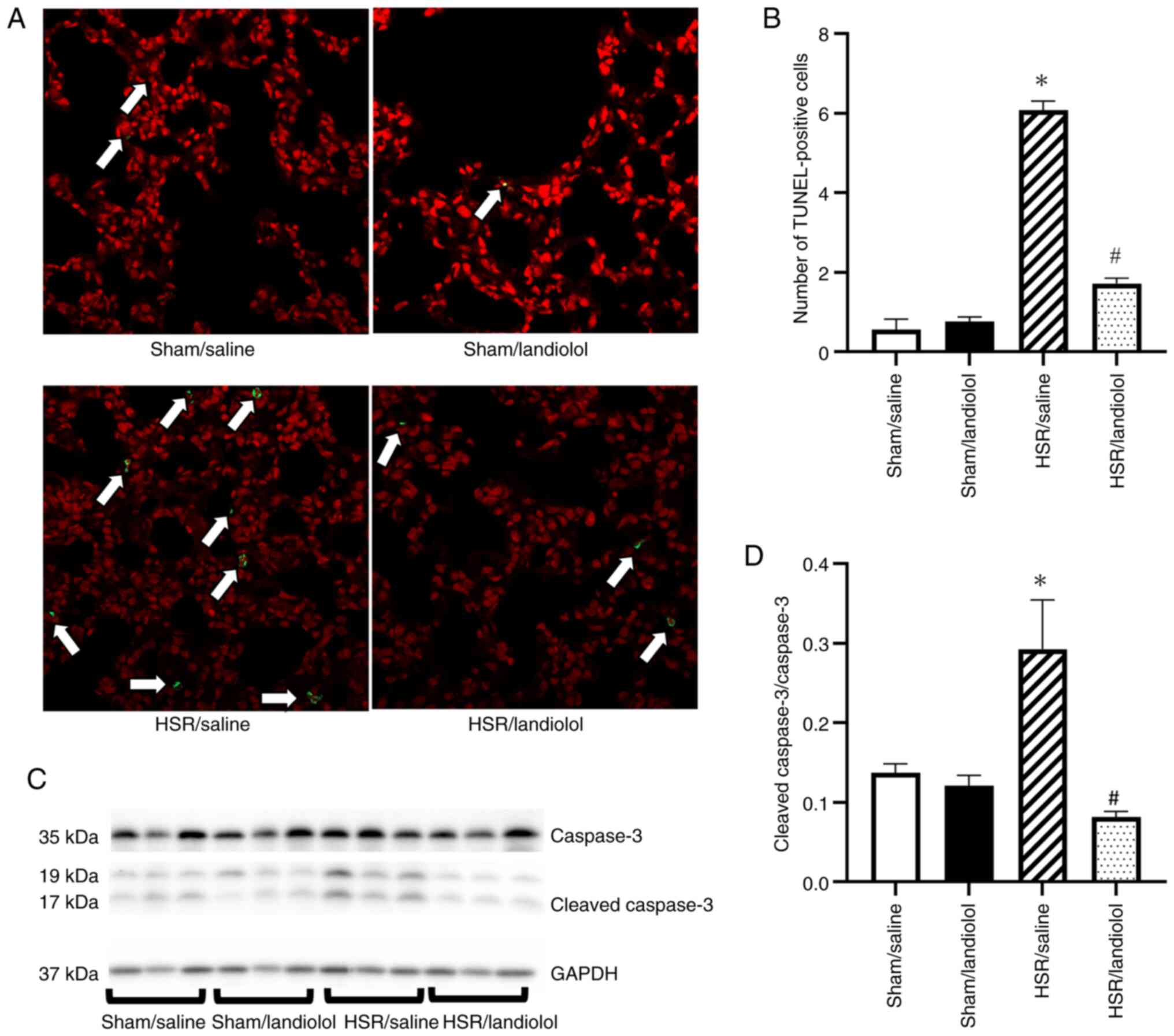
Figure 7

Apoptotic cell death in the lungs
following HSR. Lung tissue was collected 24 h post-resuscitation
and assessed for apoptosis using the TUNEL assay and cleaved
caspase-3 protein expression via western blot. (A) Representative
TUNEL-stained images of lung sections 24 h after HSR (original
magnification, ×400). White arrows point to TUNEL-positive cells.
(B) Quantification of TUNEL-positive cells in lung sections at 24 h
post-HSR. Data are presented as mean ± SEM (n=5 per group). (C)
Western blot analysis for caspase-3 and cleaved caspase-3, with
GAPDH as the loading control. (D) Densitometric analysis of cleaved
caspase-3 expression, normalized to caspase-3 levels. Data are
presented as mean ± SEM (n=3 per group). Data were analyzed with
analysis of variance followed by the Tukey-Kramer test. *P<0.05
vs. sham/saline; #P<0.05 vs. HSR/saline. Sham/saline
and sham/landiolol groups received sham surgery with saline or
landiolol; HSR/saline and HSR/landiolol groups underwent HSR with
saline or landiolol administration. HSR, hemorrhagic shock and
resuscitation; SEM, standard error of the mean; TUNEL, terminal
deoxynucleotidyl transferase dUTP nick-end labeling.

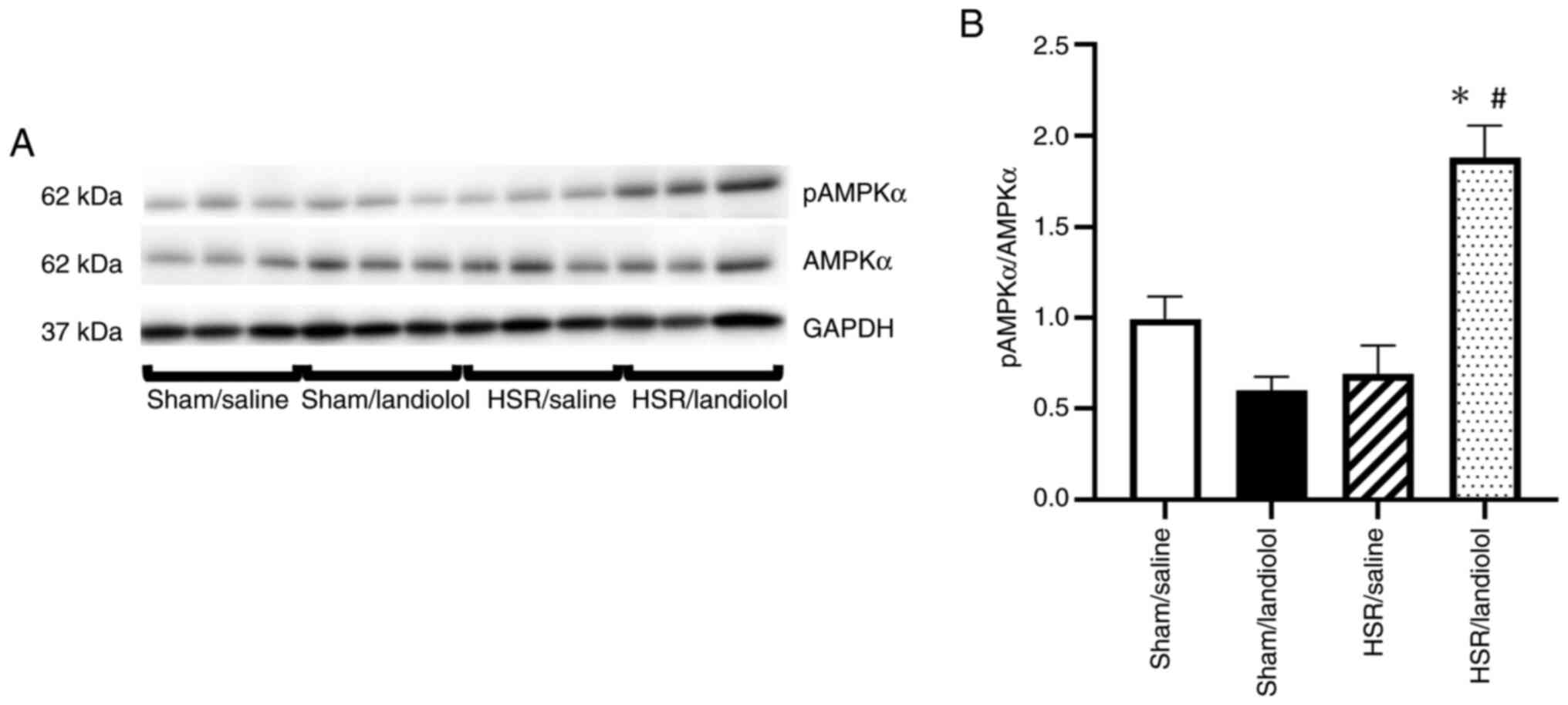
Figure 8

Expression of AMPK in the lungs
following HSR. Lung samples were collected 24 h post-resuscitation
and analyzed for AMPK expression by western blotting. (A) Western
blot analysis using an antibody for pAMPKα and AMPKα with GAPDH as
the loading control. (B) Densitometric analysis of pAMPKα levels,
normalized to AMPKα. Data are shown as mean ± SEM and analyzed
using analysis of variance followed by the Tukey-Kramer test (n=3
per group). *P<0.005 vs. sham/landiolol; #P<0.005
vs. HSR/saline. Sham/saline and sham/landiolol groups received sham
surgery with saline or landiolol; HSR/saline and HSR/landiolol
groups underwent HSR with saline or landiolol administration. AMPK,
5′ adenosine monophosphate-activated protein kinase; HSR,
hemorrhagic shock and resuscitation; pAMPK, phosphorylated
AMPK.
View References

1 

Dewar D, Moore FA, Moore EE and Balogh Z: Postinjury multiple organ failure. Injury. 40:912–918. 2009. View Article : Google Scholar : PubMed/NCBI

2 

Ciesla DJ, Moore EE, Johnson JL, Cothren CC, Banerjee A, Burch JM and Sauaia A: Decreased progression of postinjury lung dysfunction to the acute respiratory distress syndrome and multiple organ failure. Surgery. 140:640–648. 2006. View Article : Google Scholar : PubMed/NCBI

3 

Ware LB: Pathophysiology of acute lung injury and the acute respiratory distress syndrome. Semin Respir Crit Care Med. 27:337–349. 2006. View Article : Google Scholar : PubMed/NCBI

4 

ARDS Definition Task Force, . Ranieri VM, Rubenfeld GD, Thompson BT, Ferguson ND, Caldwell E, Fan E, Camporota L and Slutsky AS: Acute respiratory distress syndrome: The Berlin definition. JAMA. 307:2526–2533. 2012.PubMed/NCBI

5 

Acute Respiratory Distress Syndrome Network, . Brower RG, Matthay MA, Morris A, Schoenfeld D, Thompson BT and Wheeler A: Ventilation with lower tidal volumes as compared with traditional tidal volumes for acute lung injury and the acute respiratory distress syndrome. N Engl J Med. 342:1301–1308. 2000. View Article : Google Scholar : PubMed/NCBI

6 

Tonelli AR, Zein J, Adams J and Ioannidis JPA: Effects of interventions on survival in acute respiratory distress syndrome: An umbrella review of 159 published randomized trials and 29 meta-analyses. Intensive Care Med. 40:769–787. 2014. View Article : Google Scholar : PubMed/NCBI

7 

Adhikari N, Burns KEA and Meade MO: Pharmacologic therapies for adults with acute lung injury and acute respiratory distress syndrome. Cochrane Database Syst Rev. 2004:CD0044772004.PubMed/NCBI

8 

Peter JV, John P, Graham PL, Moran JL, George IA and Bersten A: Corticosteroids in the prevention and treatment of acute respiratory distress syndrome (ARDS) in adults: Meta-analysis. BMJ. 336:1006–1009. 2008. View Article : Google Scholar : PubMed/NCBI

9 

Kanagawa F, Takahashi T, Inoue K, Shimizu H, Omori E, Morimatsu H, Maeda S, Katayama H, Nakao A and Morita K: Protective effect of carbon monoxide inhalation on lung injury after hemorrhagic shock/resuscitation in rats. J Trauma. 69:185–194. 2010.PubMed/NCBI

10 

Kumada Y, Takahashi T, Shimizu H, Nakamura R, Omori E, Inoue K and Morimatsu H: Therapeutic effect of carbon monoxide-releasing molecule-3 on acute lung injury after hemorrhagic shock and resuscitation. Exp Ther Med. 17:3429–3440. 2019.PubMed/NCBI

11 

Esiobu P and Childs EW: A rat model of hemorrhagic shock for studying vascular hyperpermeability. Methods Mol Biol. 1717:53–60. 2018. View Article : Google Scholar : PubMed/NCBI

12 

Peitzman AB, Billiar TR, Harbrecht BG, Kelly E, Udekwu AO and Simmons RL: Hemorrhagic shock. Curr Probl Surg. 32:925–1002. 1995. View Article : Google Scholar : PubMed/NCBI

13 

Pérez-Schindler J, Philp A and Hernandez-Cascales J: Pathophysiological relevance of the cardiac β2-adrenergic receptor and its potential as a therapeutic target to improve cardiac function. Eur J Pharmacol. 698:39–47. 2013. View Article : Google Scholar : PubMed/NCBI

14 

Grisanti LA, Evanson J, Marchus E, Jorissen H, Woster AP, DeKrey W, Sauter ER, Combs CK and Porter JE: Pro-inflammatory responses in human monocytes are beta1-adrenergic receptor subtype dependent. Mol Immunol. 47:1244–1254. 2010. View Article : Google Scholar : PubMed/NCBI

15 

Zaugg M, Xu W, Lucchinetti E, Shafiq SA, Jamali NZ and Siddiqui MA: Beta-adrenergic receptor subtypes differentially affect apoptosis in adult rat ventricular myocytes. Circulation. 102:344–350. 2000. View Article : Google Scholar : PubMed/NCBI

16 

Aslam M and Ladilov Y: Emerging role of cAMP/AMPK signaling. Cells. 11:3082022. View Article : Google Scholar : PubMed/NCBI

17 

Ding R, Wu W, Sun Z and Li Z: AMP-activated protein kinase: An attractive therapeutic target for ischemia-reperfusion injury. Eur J Pharmacol. 888:1734842020. View Article : Google Scholar : PubMed/NCBI

18 

Plosker GL: Landiolol: A review of its use in intraoperative and postoperative tachyarrhythmias. Drugs. 73:959–977. 2013. View Article : Google Scholar : PubMed/NCBI

19 

Bennett M, Chang CL, Tatley M, Savage R and Hancox RJ: The safety of cardioselective β1-blockers in asthma: Literature review and search of global pharmacovigilance safety reports. ERJ Open Res. 7:00801–2020. 2021. View Article : Google Scholar : PubMed/NCBI

20 

Hagiwara S, Iwasaka H, Maeda H and Noguchi T: Landiolol, an ultrashort-acting beta1-adrenoceptor antagonist, has protective effects in an LPS-induced systemic inflammation model. Shock. 31:515–520. 2009. View Article : Google Scholar : PubMed/NCBI

21 

Kiyonaga N, Moriyama T and Kanmura Y: Effects of landiolol in lipopolysaccharide-induced acute kidney injury in rats and in vitro. Shock. 52:e117–e123. 2019. View Article : Google Scholar : PubMed/NCBI

22 

Goyagi T, Kimura T, Nishikawa T, Tobe Y and Masaki Y: Beta-adrenoreceptor antagonists attenuate brain injury after transient focal ischemia in rats. Anesth Analg. 103:658–663. 2006. View Article : Google Scholar : PubMed/NCBI

23 

Iwata M, Inoue S, Kawaguchi M, Nakamura M, Konishi N and Furuya H: Posttreatment but not pretreatment with selective beta-adrenoreceptor 1 antagonists provides neuroprotection in the hippocampus in rats subjected to transient forebrain ischemia. Anesth Analg. 110:1126–1132. 2010. View Article : Google Scholar : PubMed/NCBI

24 

Yoshino Y, Jesmin S, Islam M, Shimojo N, Sakuramoto H, Oki M, Khatun T, Suda M, Kawano S and Mizutani T: Landiolol hydrochloride ameliorates liver injury in a rat sepsis model by down regulating hepatic TNF-A. J Vasc Med Surg. 3:10001942015.

25 

Matsuishi Y, Jesmin S, Kawano S, Hideaki S, Shimojo N, Mowa CN, Akhtar S, Zaedi S, Khatun T, Tsunoda Y, et al: Landiolol hydrochloride ameliorates acute lung injury in a rat model of early sepsis through the suppression of elevated levels of pulmonary endothelin-1. Life Sci. 166:27–33. 2016. View Article : Google Scholar : PubMed/NCBI

26 

Percie du Sert N, Hurst V, Ahluwalia A, Alam S, Avey MT, Baker M, Browne WJ, Clark A, Cuthill IC, Dirnagl U, et al: The ARRIVE guidelines 2.0: Updated guidelines for reporting animal research. J Cereb Blood Flow Metab. 40:1769–1777. 2020. View Article : Google Scholar : PubMed/NCBI

27 

Leary S, Underwood W, Anthony R, Cartner S, Grandin T, Greenacre C, Gwaltney-Brant S, McCrackin MA, Meyer R, et al: AVMA Guidelines for the Euthanasia of Animals: 2020 Edition. American Veterinary Medical Association; Schaumburg, IL, USA: pp. 1–121. 2020, https://www.avma.org/resources-tools/avma-policies/avma-guidelines-euthanasia-animalsMarch 1–2021

28 

Kosaka J, Morimatsu H, Takahashi T, Shimizu H, Kawanishi S, Omori E, Endo Y, Tamaki N, Morita M and Morita K: Effects of biliverdin administration on acute lung injury induced by hemorrhagic shock and resuscitation in rats. PLoS One. 8:e636062013. View Article : Google Scholar : PubMed/NCBI

29 

Li Y, Shimizu H, Nakamura R, Lu Y, Sakamoto R, Omori E, Takahashi T and Morimatsu H: The protective effect of carbamazepine on acute lung injury induced by hemorrhagic shock and resuscitation in rats. PLoS One. 19:e03096222024. View Article : Google Scholar : PubMed/NCBI

30 

Umeda K, Takahashi T, Inoue K, Shimizu H, Maeda S, Morimatsu H, Omori E, Akagi R, Katayama H and Morita K: Prevention of hemorrhagic shock-induced intestinal tissue injury by glutamine via heme oxygenase-1 induction. Shock. 31:40–49. 2009. View Article : Google Scholar : PubMed/NCBI

31 

Maeshima K, Takahashi T, Uehara K, Shimizu H, Omori E, Yokoyama M, Tani T, Akagi R and Morita K: Prevention of hemorrhagic shock-induced lung injury by heme arginate treatment in rats. Biochem Pharmacol. 69:1667–1680. 2005. View Article : Google Scholar : PubMed/NCBI

32 

Yang Z, Zhang XR, Zhao Q, Wang SL, Xiong LL, Zhang P, Yuan B, Zhang ZB, Fan SY, Wang TH and Zhang YH: Knockdown of TNF-α alleviates acute lung injury in rats with intestinal ischemia and reperfusion injury by upregulating IL-10 expression. Int J Mol Med. 42:926–934. 2018.PubMed/NCBI

33 

Hassoun HT, Lie ML, Grigoryev DN, Liu M, Tuder RM and Rabb H: Kidney ischemia-reperfusion injury induces caspase-dependent pulmonary apoptosis. Am J Physiol Renal Physiol. 297:F125–F137. 2009. View Article : Google Scholar : PubMed/NCBI

34 

Murakami K, McGuire R, Cox RA, Jodoin JM, Bjertnaes LJ, Katahira J, Traber LD, Schmalstieg FC, Hawkins HK, Herndon DN and Traber DL: Heparin nebulization attenuates acute lung injury in sepsis following smoke inhalation in sheep. Shock. 18:236–241. 2002. View Article : Google Scholar : PubMed/NCBI

35 

Zegdi R, Fabre O, Cambillau M, Fornès P, Tazi KA, Shen M, Hervé P, Carpentier A and Fabiani JN: Exhaled nitric oxide and acute lung injury in a rat model of extracorporeal circulation. Shock. 20:569–574. 2003. View Article : Google Scholar : PubMed/NCBI

36 

Jiang H, Meng F, Li W, Tong L, Qiao H and Sun X: Splenectomy ameliorates acute multiple organ damage induced by liver warm ischemia reperfusion in rats. Surgery. 141:32–40. 2007. View Article : Google Scholar : PubMed/NCBI

37 

Stephens KE, Ishizaka A, Larrick JW and Raffin TA: Tumor necrosis factor causes increased pulmonary permeability and edema. Comparison to septic acute lung injury. Am Rev Respir Dis. 137:1364–1370. 1988. View Article : Google Scholar : PubMed/NCBI

38 

Livak KJ and Schmittgen TD: Analysis of relative gene expression data using real-time quantitative PCR and the 2(−Delta Delta C(T)) method. Methods. 25:402–408. 2001. View Article : Google Scholar : PubMed/NCBI

39 

Nakatsuka K, Matsuoka Y, Kurita M, Wang R, Tsuboi C, Sue N, Kaku R and Morimatsu H: Intrathecal administration of the α1 adrenergic antagonist phentolamine upregulates spinal GLT-1 and improves mirror image pain in SNI model rats. Acta Med Okayama. 76:255–263. 2022.PubMed/NCBI

40 

McMillen MA, Huribal M and Sumpio B: Common pathway of endothelial-leukocyte interaction in shock, ischemia, and reperfusion. Am J Surg. 166:557–562. 1993. View Article : Google Scholar : PubMed/NCBI

41 

Cinelli MA, Do HT, Miley GP and Silverman RB: Inducible nitric oxide synthase: Regulation, structure, and inhibition. Med Res Rev. 40:158–189. 2020. View Article : Google Scholar : PubMed/NCBI

42 

Ackland GL, Yao ST, Rudiger A, Dyson A, Stidwill R, Poputnikov D, Singer M and Gourine AV: Cardioprotection, attenuated systemic inflammation, and survival benefit of beta1-adrenoceptor blockade in severe sepsis in rats. Crit Care Med. 38:388–394. 2010. View Article : Google Scholar : PubMed/NCBI

43 

Hashemi S, Salma J, Wales S and McDermott JC: Pro-survival function of MEF2 in cardiomyocytes is enhanced by β-blockers. Cell Death Discov. 1:150192015. View Article : Google Scholar : PubMed/NCBI

44 

Taha MO, Silva TDMAE, Ota KS, Vilela WJ, Simões RS, Starzewski A and Fagundes DJ: The role of atenolol in the modulation of the expression of genes encoding pro-(caspase-1) and anti-(Bcl2L1) apoptotic proteins in endothelial cells exposed to intestinal ischemia and reperfusion in rats. Acta Cir Bras. 33:1061–1066. 2018. View Article : Google Scholar : PubMed/NCBI

45 

Huang Q, Ren YX, Yuan P, Huang M, Liu G, Shi Y, Jia G and Chen M: Targeting the AMPK/Nrf2 pathway: A novel therapeutic approach for acute lung injury. J Inflamm Res. 17:4683–4700. 2024. View Article : Google Scholar : PubMed/NCBI

46 

Matsumoto S, Tokumaru O, Ogata K, Kuribayashi Y, Oyama Y, Shingu C, Yokoi I and Kitano T: Dose-dependent scavenging activity of the ultra-short-acting β1-blocker landiolol against specific free radicals. J Clin Biochem Nutr. 71:185–190. 2022. View Article : Google Scholar : PubMed/NCBI

47 

Ferguson ND, Fan E, Camporota L, Antonelli M, Anzueto A, Beale R, Brochard L, Brower R, Esteban A, Gattinoni L, et al: The Berlin definition of ARDS: An expanded rationale, justification, and supplementary material. Intensive Care Med. 38:1573–1582. 2012. View Article : Google Scholar : PubMed/NCBI

48 

Matute-Bello G, Downey G, Moore BB, Groshong SD, Matthay MA, Slutsky AS and Kuebler WM; Acute Lung Injury in Animals Study Group, : An official American Thoracic Society workshop report: Features and measurements of experimental acute lung injury in animals. Am J Respir Cell Mol Biol. 44:725–738. 2011. View Article : Google Scholar : PubMed/NCBI

49 

Escobar DA, Botero-Quintero AM, Kautza BC, Luciano J, Loughran P, Darwiche S, Rosengart MR, Zuckerbraun BS and Gomez H: Adenosine monophosphate-activated protein kinase activation protects against sepsis-induced organ injury and inflammation. J Surg Res. 194:262–272. 2015. View Article : Google Scholar : PubMed/NCBI

50 

Jiang WL, Zhao KC, Yuan W, Zhou F, Song HY, Liu GL, Huang J, Zou JJ, Zhao B and Xie SP: MicroRNA-31-5p exacerbates lipopolysaccharide-induced acute lung injury via inactivating Cab39/AMPKα pathway. Oxid Med Cell Longev. 2020:88223612020. View Article : Google Scholar : PubMed/NCBI

51 

Chen R, Cao C, Liu H, Jiang W, Pan R, He H, Ding K and Meng Q: Macrophage Sprouty4 deficiency diminishes sepsis-induced acute lung injury in mice. Redox Biol. 58:1025132022. View Article : Google Scholar : PubMed/NCBI

Related Articles

  • Abstract
  • View
  • Download
  • Twitter
Copy and paste a formatted citation
Spandidos Publications style
Sakamoto R, Shimizu H, Nakamura R, Lu Y, Li Y, Omori E, Takahashi T and Morimatsu H: Protective impact of landiolol against acute lung injury following hemorrhagic shock and resuscitation in rats. Mol Med Rep 33: 22, 2026.
APA
Sakamoto, R., Shimizu, H., Nakamura, R., Lu, Y., Li, Y., Omori, E. ... Morimatsu, H. (2026). Protective impact of landiolol against acute lung injury following hemorrhagic shock and resuscitation in rats. Molecular Medicine Reports, 33, 22. https://doi.org/10.3892/mmr.2025.13732
MLA
Sakamoto, R., Shimizu, H., Nakamura, R., Lu, Y., Li, Y., Omori, E., Takahashi, T., Morimatsu, H."Protective impact of landiolol against acute lung injury following hemorrhagic shock and resuscitation in rats". Molecular Medicine Reports 33.1 (2026): 22.
Chicago
Sakamoto, R., Shimizu, H., Nakamura, R., Lu, Y., Li, Y., Omori, E., Takahashi, T., Morimatsu, H."Protective impact of landiolol against acute lung injury following hemorrhagic shock and resuscitation in rats". Molecular Medicine Reports 33, no. 1 (2026): 22. https://doi.org/10.3892/mmr.2025.13732
Copy and paste a formatted citation
x
Spandidos Publications style
Sakamoto R, Shimizu H, Nakamura R, Lu Y, Li Y, Omori E, Takahashi T and Morimatsu H: Protective impact of landiolol against acute lung injury following hemorrhagic shock and resuscitation in rats. Mol Med Rep 33: 22, 2026.
APA
Sakamoto, R., Shimizu, H., Nakamura, R., Lu, Y., Li, Y., Omori, E. ... Morimatsu, H. (2026). Protective impact of landiolol against acute lung injury following hemorrhagic shock and resuscitation in rats. Molecular Medicine Reports, 33, 22. https://doi.org/10.3892/mmr.2025.13732
MLA
Sakamoto, R., Shimizu, H., Nakamura, R., Lu, Y., Li, Y., Omori, E., Takahashi, T., Morimatsu, H."Protective impact of landiolol against acute lung injury following hemorrhagic shock and resuscitation in rats". Molecular Medicine Reports 33.1 (2026): 22.
Chicago
Sakamoto, R., Shimizu, H., Nakamura, R., Lu, Y., Li, Y., Omori, E., Takahashi, T., Morimatsu, H."Protective impact of landiolol against acute lung injury following hemorrhagic shock and resuscitation in rats". Molecular Medicine Reports 33, no. 1 (2026): 22. https://doi.org/10.3892/mmr.2025.13732
Follow us
  • Twitter
  • LinkedIn
  • Facebook
About
  • Spandidos Publications
  • Careers
  • Cookie Policy
  • Privacy Policy
How can we help?
  • Help
  • Live Chat
  • Contact
  • Email to our Support Team