Spandidos Publications Logo
  • About
    • About Spandidos
    • Aims and Scopes
    • Abstracting and Indexing
    • Editorial Policies
    • Reprints and Permissions
    • Job Opportunities
    • Terms and Conditions
    • Contact
  • Journals
    • All Journals
    • Oncology Letters
      • Oncology Letters
      • Information for Authors
      • Editorial Policies
      • Editorial Board
      • Aims and Scope
      • Abstracting and Indexing
      • Bibliographic Information
      • Archive
    • International Journal of Oncology
      • International Journal of Oncology
      • Information for Authors
      • Editorial Policies
      • Editorial Board
      • Aims and Scope
      • Abstracting and Indexing
      • Bibliographic Information
      • Archive
    • Molecular and Clinical Oncology
      • Molecular and Clinical Oncology
      • Information for Authors
      • Editorial Policies
      • Editorial Board
      • Aims and Scope
      • Abstracting and Indexing
      • Bibliographic Information
      • Archive
    • Experimental and Therapeutic Medicine
      • Experimental and Therapeutic Medicine
      • Information for Authors
      • Editorial Policies
      • Editorial Board
      • Aims and Scope
      • Abstracting and Indexing
      • Bibliographic Information
      • Archive
    • International Journal of Molecular Medicine
      • International Journal of Molecular Medicine
      • Information for Authors
      • Editorial Policies
      • Editorial Board
      • Aims and Scope
      • Abstracting and Indexing
      • Bibliographic Information
      • Archive
    • Biomedical Reports
      • Biomedical Reports
      • Information for Authors
      • Editorial Policies
      • Editorial Board
      • Aims and Scope
      • Abstracting and Indexing
      • Bibliographic Information
      • Archive
    • Oncology Reports
      • Oncology Reports
      • Information for Authors
      • Editorial Policies
      • Editorial Board
      • Aims and Scope
      • Abstracting and Indexing
      • Bibliographic Information
      • Archive
    • Molecular Medicine Reports
      • Molecular Medicine Reports
      • Information for Authors
      • Editorial Policies
      • Editorial Board
      • Aims and Scope
      • Abstracting and Indexing
      • Bibliographic Information
      • Archive
    • World Academy of Sciences Journal
      • World Academy of Sciences Journal
      • Information for Authors
      • Editorial Policies
      • Editorial Board
      • Aims and Scope
      • Abstracting and Indexing
      • Bibliographic Information
      • Archive
    • International Journal of Functional Nutrition
      • International Journal of Functional Nutrition
      • Information for Authors
      • Editorial Policies
      • Editorial Board
      • Aims and Scope
      • Abstracting and Indexing
      • Bibliographic Information
      • Archive
    • International Journal of Epigenetics
      • International Journal of Epigenetics
      • Information for Authors
      • Editorial Policies
      • Editorial Board
      • Aims and Scope
      • Abstracting and Indexing
      • Bibliographic Information
      • Archive
    • Medicine International
      • Medicine International
      • Information for Authors
      • Editorial Policies
      • Editorial Board
      • Aims and Scope
      • Abstracting and Indexing
      • Bibliographic Information
      • Archive
  • Articles
  • Information
    • Information for Authors
    • Information for Reviewers
    • Information for Librarians
    • Information for Advertisers
    • Conferences
  • Language Editing
Spandidos Publications Logo
  • About
    • About Spandidos
    • Aims and Scopes
    • Abstracting and Indexing
    • Editorial Policies
    • Reprints and Permissions
    • Job Opportunities
    • Terms and Conditions
    • Contact
  • Journals
    • All Journals
    • Biomedical Reports
      • Information for Authors
      • Editorial Policies
      • Editorial Board
      • Aims and Scope
      • Abstracting and Indexing
      • Bibliographic Information
      • Archive
    • Experimental and Therapeutic Medicine
      • Information for Authors
      • Editorial Policies
      • Editorial Board
      • Aims and Scope
      • Abstracting and Indexing
      • Bibliographic Information
      • Archive
    • International Journal of Epigenetics
      • Information for Authors
      • Editorial Policies
      • Editorial Board
      • Aims and Scope
      • Abstracting and Indexing
      • Bibliographic Information
      • Archive
    • International Journal of Functional Nutrition
      • Information for Authors
      • Editorial Policies
      • Editorial Board
      • Aims and Scope
      • Abstracting and Indexing
      • Bibliographic Information
      • Archive
    • International Journal of Molecular Medicine
      • Information for Authors
      • Editorial Policies
      • Editorial Board
      • Aims and Scope
      • Abstracting and Indexing
      • Bibliographic Information
      • Archive
    • International Journal of Oncology
      • Information for Authors
      • Editorial Policies
      • Editorial Board
      • Aims and Scope
      • Abstracting and Indexing
      • Bibliographic Information
      • Archive
    • Medicine International
      • Information for Authors
      • Editorial Policies
      • Editorial Board
      • Aims and Scope
      • Abstracting and Indexing
      • Bibliographic Information
      • Archive
    • Molecular and Clinical Oncology
      • Information for Authors
      • Editorial Policies
      • Editorial Board
      • Aims and Scope
      • Abstracting and Indexing
      • Bibliographic Information
      • Archive
    • Molecular Medicine Reports
      • Information for Authors
      • Editorial Policies
      • Editorial Board
      • Aims and Scope
      • Abstracting and Indexing
      • Bibliographic Information
      • Archive
    • Oncology Letters
      • Information for Authors
      • Editorial Policies
      • Editorial Board
      • Aims and Scope
      • Abstracting and Indexing
      • Bibliographic Information
      • Archive
    • Oncology Reports
      • Information for Authors
      • Editorial Policies
      • Editorial Board
      • Aims and Scope
      • Abstracting and Indexing
      • Bibliographic Information
      • Archive
    • World Academy of Sciences Journal
      • Information for Authors
      • Editorial Policies
      • Editorial Board
      • Aims and Scope
      • Abstracting and Indexing
      • Bibliographic Information
      • Archive
  • Articles
  • Information
    • For Authors
    • For Reviewers
    • For Librarians
    • For Advertisers
    • Conferences
  • Language Editing
Login Register Submit
  • This site uses cookies
  • You can change your cookie settings at any time by following the instructions in our Cookie Policy. To find out more, you may read our Privacy Policy.

    I agree
Search articles by DOI, keyword, author or affiliation
Search
Advanced Search
presentation
Molecular Medicine Reports
Join Editorial Board Propose a Special Issue
Print ISSN: 1791-2997 Online ISSN: 1791-3004
Journal Cover
January-2026 Volume 33 Issue 1

Full Size Image

Sign up for eToc alerts
Recommend to Library

Journals

International Journal of Molecular Medicine

International Journal of Molecular Medicine

International Journal of Molecular Medicine is an international journal devoted to molecular mechanisms of human disease.

International Journal of Oncology

International Journal of Oncology

International Journal of Oncology is an international journal devoted to oncology research and cancer treatment.

Molecular Medicine Reports

Molecular Medicine Reports

Covers molecular medicine topics such as pharmacology, pathology, genetics, neuroscience, infectious diseases, molecular cardiology, and molecular surgery.

Oncology Reports

Oncology Reports

Oncology Reports is an international journal devoted to fundamental and applied research in Oncology.

Experimental and Therapeutic Medicine

Experimental and Therapeutic Medicine

Experimental and Therapeutic Medicine is an international journal devoted to laboratory and clinical medicine.

Oncology Letters

Oncology Letters

Oncology Letters is an international journal devoted to Experimental and Clinical Oncology.

Biomedical Reports

Biomedical Reports

Explores a wide range of biological and medical fields, including pharmacology, genetics, microbiology, neuroscience, and molecular cardiology.

Molecular and Clinical Oncology

Molecular and Clinical Oncology

International journal addressing all aspects of oncology research, from tumorigenesis and oncogenes to chemotherapy and metastasis.

World Academy of Sciences Journal

World Academy of Sciences Journal

Multidisciplinary open-access journal spanning biochemistry, genetics, neuroscience, environmental health, and synthetic biology.

International Journal of Functional Nutrition

International Journal of Functional Nutrition

Open-access journal combining biochemistry, pharmacology, immunology, and genetics to advance health through functional nutrition.

International Journal of Epigenetics

International Journal of Epigenetics

Publishes open-access research on using epigenetics to advance understanding and treatment of human disease.

Medicine International

Medicine International

An International Open Access Journal Devoted to General Medicine.

Journal Cover
January-2026 Volume 33 Issue 1

Full Size Image

Sign up for eToc alerts
Recommend to Library

  • Article
  • Citations
    • Cite This Article
    • Download Citation
    • Create Citation Alert
    • Remove Citation Alert
    • Cited By
  • Similar Articles
    • Related Articles (in Spandidos Publications)
    • Similar Articles (Google Scholar)
    • Similar Articles (PubMed)
  • Download PDF
  • Download XML
  • View XML
Article Open Access

Apelin promotes RANKL‑mediated osteoclastogenesis by activating MAPK and NF‑κB pathways

  • Authors:
    • Yu-Han Wang
    • Yu-Ying Wu
    • Chun-Hao Tsai
    • Yi-Chin Fong
    • Chih-Yuan Ko
    • Hsien-Te Chen
    • Yat-Yin Law
    • Chih-Hsin Tang
  • View Affiliations / Copyright

    Affiliations: Department of Pharmacology, School of Medicine, China Medical University, Taichung 404328, Taiwan, R.O.C., Department of Orthopedics, Chung Shan Medical University Hospital, Taichung 402306, Taiwan, R.O.C., Department of Sports Medicine, College of Health Care, China Medical University, Taichung 402306, Taiwan, R.O.C., Department of Orthopedic Surgery, China Medical University Hospital, Taichung 404327, Taiwan, R.O.C.
    Copyright: © Wang et al. This is an open access article distributed under the terms of Creative Commons Attribution License.
  • Article Number: 41
    |
    Published online on: November 12, 2025
       https://doi.org/10.3892/mmr.2025.13751
  • Expand metrics +
Metrics: Total Views: 0 (Spandidos Publications: | PMC Statistics: )
Metrics: Total PDF Downloads: 0 (Spandidos Publications: | PMC Statistics: )
Cited By (CrossRef): 0 citations Loading Articles...

This article is mentioned in:


Abstract

The regulation of bone mass relies on a dynamic interplay between bone‑forming osteoblasts and bone‑resorbing osteoclasts. Imbalances in this regulatory system favor bone resorption and are implicated in the development of osteolytic disorders such as osteoporosis. Although current treatments targeting osteoclast activity are effective, safety concerns remain a notable limitation. As a multifunctional adipokine, apelin (APLN) serves a role in angiogenesis and metabolic regulation. However, to the best of our knowledge, its involvement in osteoclast differentiation has not yet been characterized. The present study thus examined the effects of APLN on osteoclastogenesis using a murine‑macrophage model stimulated with receptor activator of NF‑κB ligand (RANKL). The results revealed that APLN augmented RANKL‑induced osteoclast differentiation, promoting the formation of tartrate‑resistant acid phosphatase‑positive multinucleated cells and the development of organized F‑actin rings. Transcriptome analyses of a public dataset confirmed the temporal upregulation of osteoclast‑related genes under RANKL stimulation. It was further discovered that co‑treatment with APLN and RANKL significantly enhanced the expression of these osteoclast‑specific markers. APLN co‑treatment with RANKL upregulated the ERK, JNK, p38 and NF‑κB signaling pathways, and this activation was effectively attenuated by specific pathway inhibitors. In conclusion, these findings identified APLN as an enhancer of RANKL‑dependent osteoclast differentiation and signaling, suggesting that the modulation of APLN activity may provide a promising strategy for controlling excessive bone resorption in skeletal diseases.
View Figures

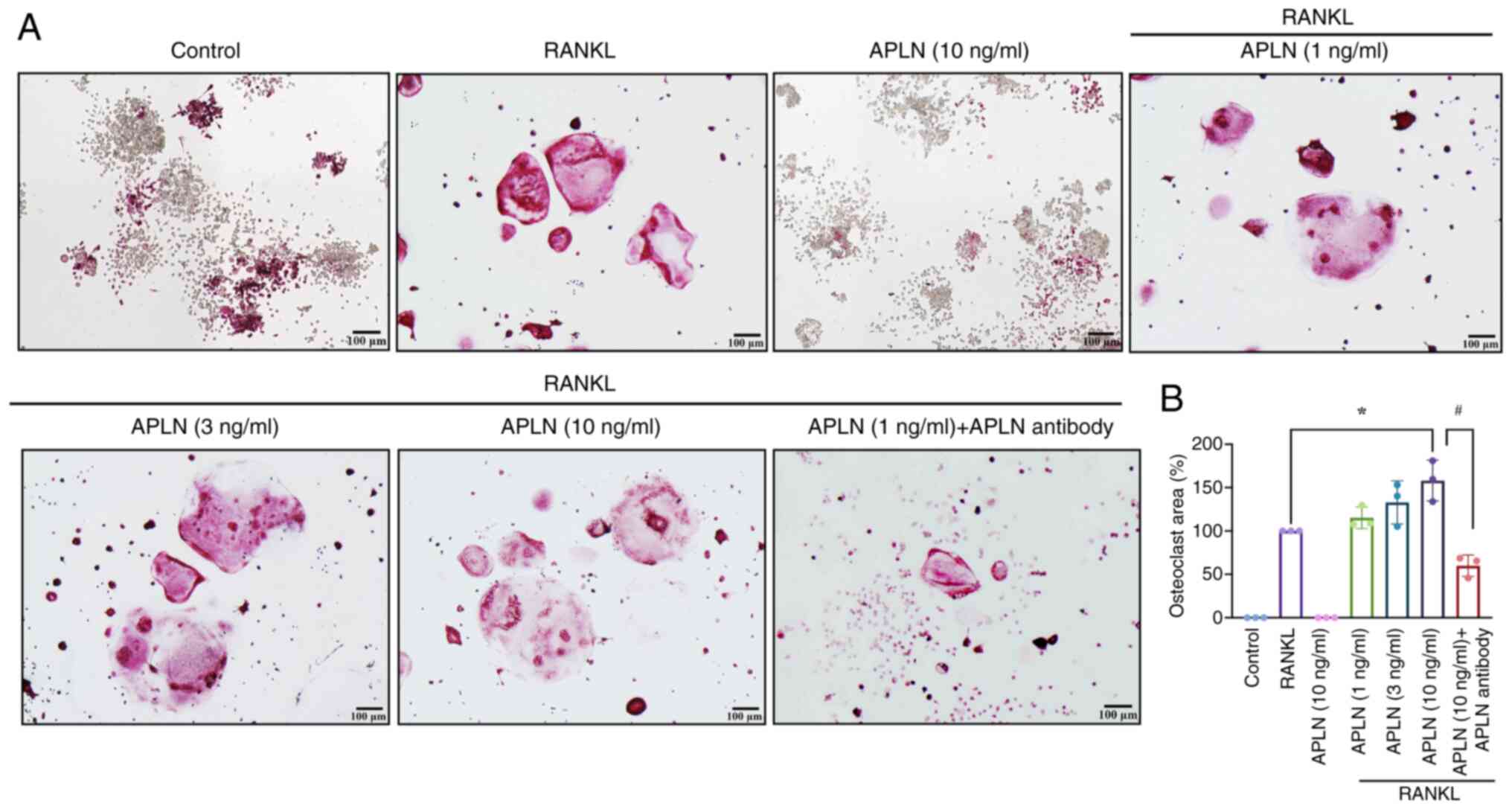
Figure 1

APLN promotes RANKL-induced
osteoclast differentiation. RAW264.7 cells were treated with RANKL
(50 ng/ml) in the presence or absence of APLN (1, 3 or 10 ng/ml)
for 5 days. (A) Representative images of cells were stained with
tartrate-resistant acid phosphatase to identify mature osteoclasts.
(B) Quantification of the osteoclast area percentage using ImageJ
software. Scale bar, 100 µm. *P<0.05 vs. RANKL-treated group.
#P<0.05 vs. RANKL + APLN (10 ng/ml)-treated group.
RANKL, receptor activator of NF-κB ligand; APLN, apelin.

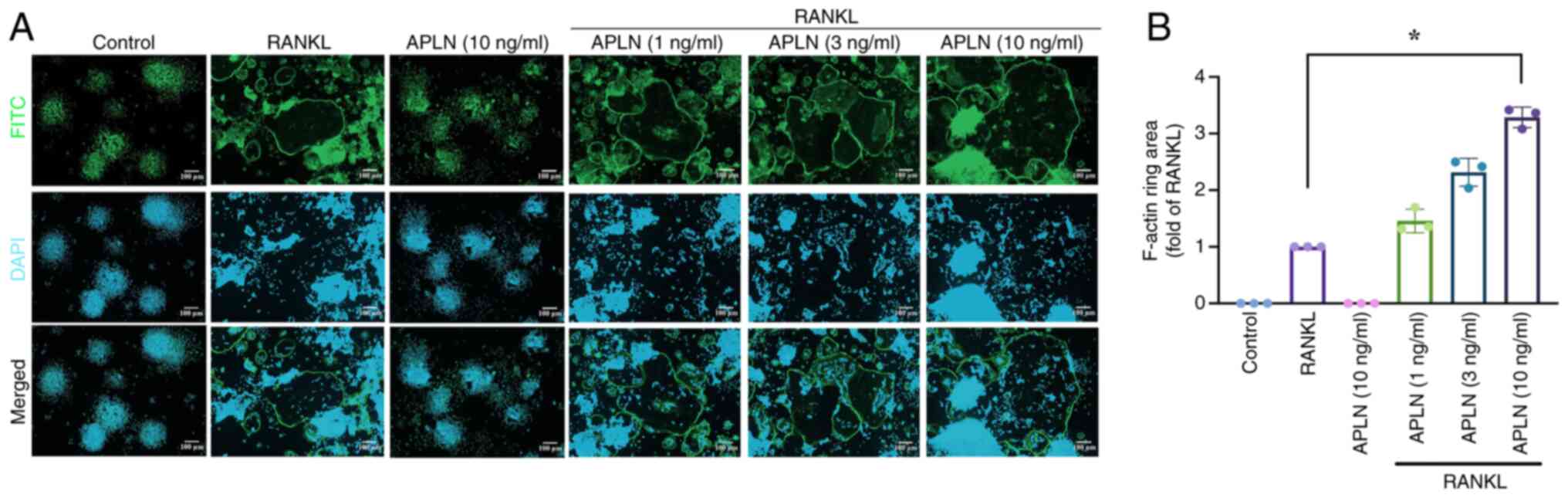
Figure 2

APLN enhances F-actin ring formation
in RANKL-treated RAW264.7 cells. (A) Immunofluorescence staining of
F-actin (green, Alexa Fluor 488) and nuclei (blue, DAPI) in
RAW264.7 cells treated with RANKL (50 ng/ml) and various
concentrations of apelin (1, 3 or 10 ng/ml) for 5 days. Merged
images are also shown. (B) Quantification of F-actin ring area
relative to the RANKL-treated group. Scale bar, 100 µm. *P<0.05
vs. RANKL-treated group. RANKL, receptor activator of NF-κB ligand;
APLN, apelin.

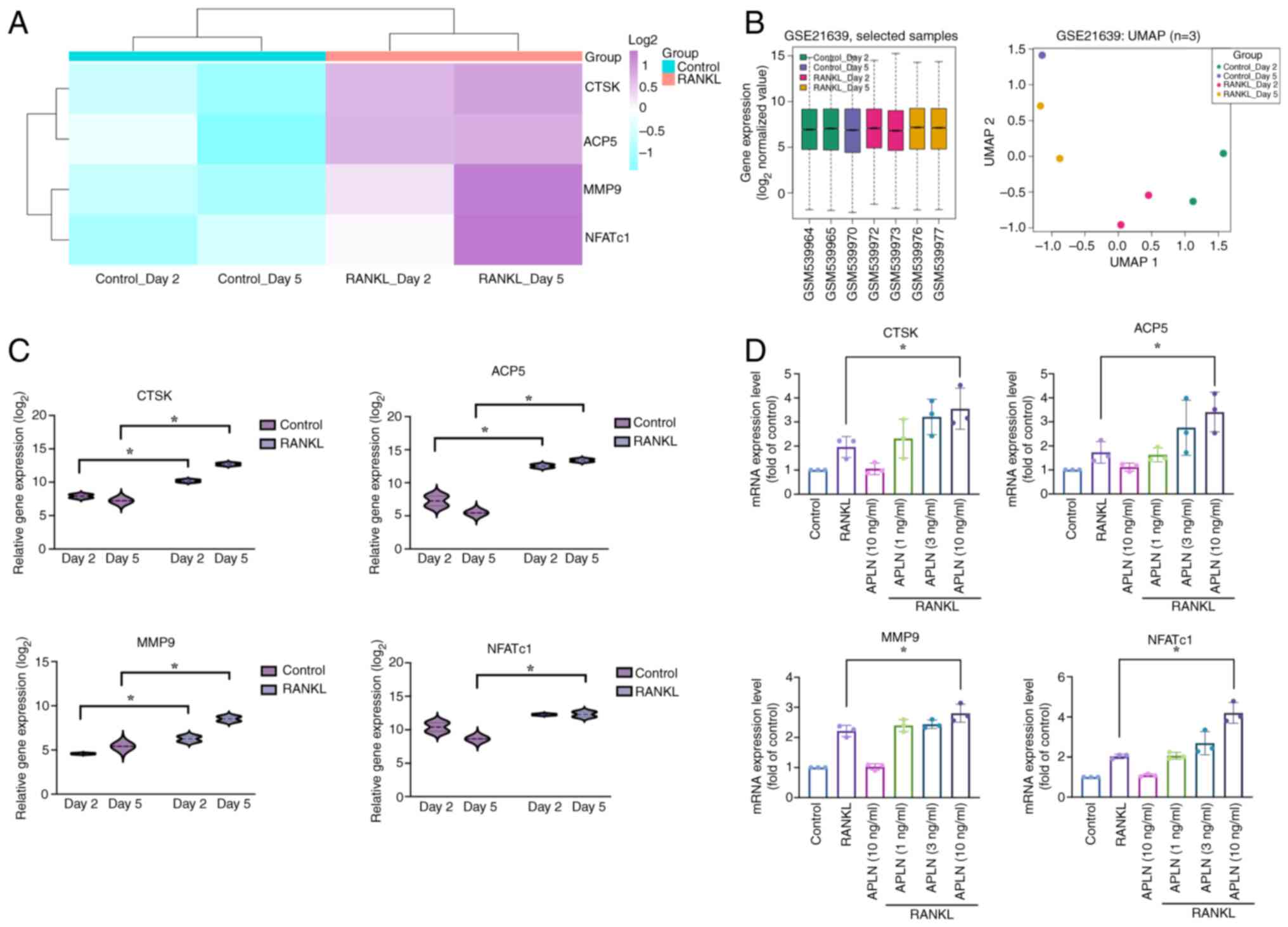
Figure 3

APLN enhances osteoclast marker gene
expression under RANKL stimulation. (A) Heatmap analysis of
osteoclast-related gene expression (ACP5, CTSK, MMP9 and NFATc1)
from the GSE21639 dataset. RAW264.7 cells were treated with or
without RANKL for 2 or 5 days. (B) Boxplot and UMAP analyses of the
GSE21639 dataset. The boxplot shows consistent overall gene
expression distributions across all samples without outliers, while
the UMAP plot illustrates the clustering of samples according to
experimental conditions (Control or RANKL treatment on days 2 and
5). These analyses were conducted to assess dataset quality and
comparability prior to differential expression analysis. (C) Violin
plot visualization of the transcript levels of each gene. Data were
log2-transformed and grouped by treatment condition. (D)
RAW264.7 cells were treated with RANKL (50 ng/ml) and increasing
concentrations of APLN (1, 3 or 10 ng/ml) for 5 days. The mRNA
expression of osteoclast markers was determined using reverse
transcription-quantitative PCR. *P<0.05 vs. RANKL-treated group.
UMAP, uniform manifold approximation and projection analyses;
RANKL, receptor activator of NF-κB ligand; APLN, apelin; ACP5, acid
phosphatase 5, tartrate resistant; CTSK, cathepsin K; MMP9, matrix
metalloproteinase 9; NFATc1, nuclear factor of activated T-cells
1.

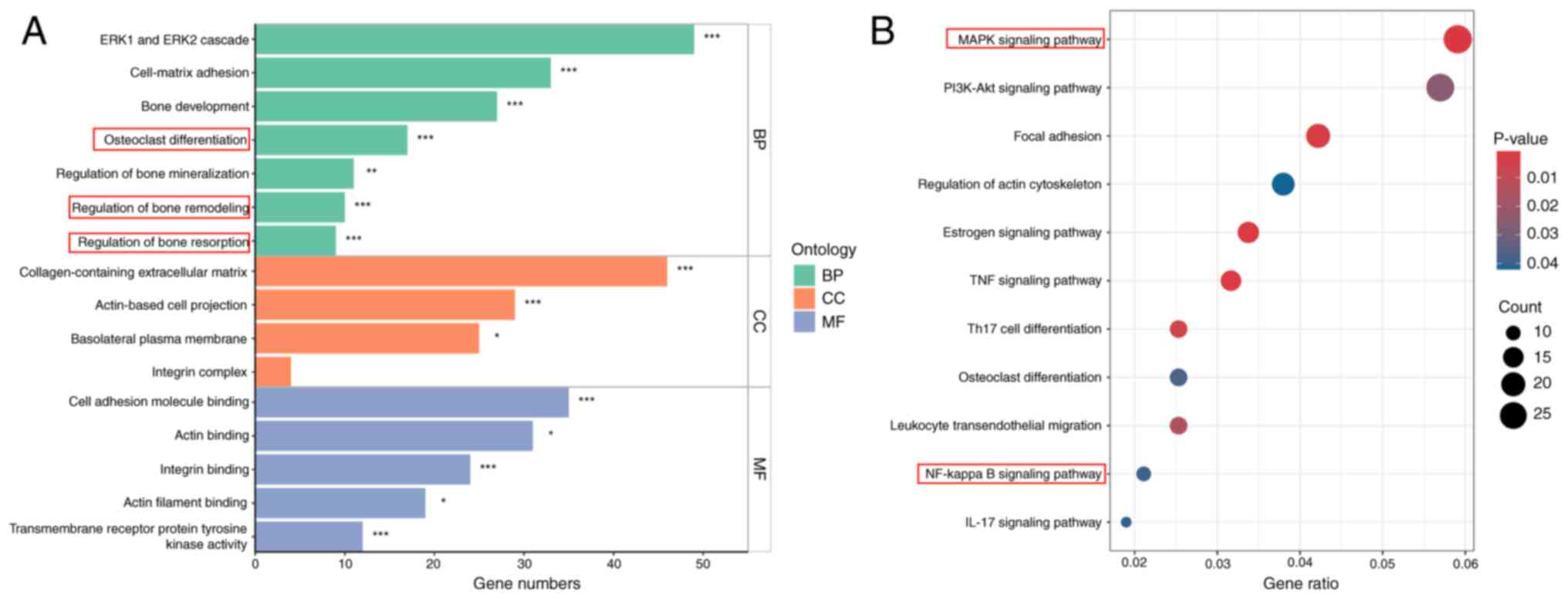
Figure 4

Transcriptome enrichment analysis
identifies osteoclast-related signaling pathways activated by
RANKL. DEGs were identified from the GSE21639 dataset by comparing
RANKL-treated and control RAW264.7 cells on day 5 (|log2
fold change|>2, P<0.05). (A) Gene Ontology enrichment
analysis of upregulated DEGs revealed significant enrichment in BP,
CC and MF terms. (B) Kyoto Encyclopedia of Genes and Genomes
pathway analysis revealed the significant enrichment of the
‘NF-kappa B signaling pathway’ and ‘MAPK signaling pathway’.
Adjusted P<0.05 was considered to indicate a significant
difference. *P<0.05, **P<0.01 and ***P<0.001. DEGs,
differentially expressed genes; BP, biological process; CC,
cellular component; MF, molecular function; RANKL, receptor
activator of NF-κB ligand.

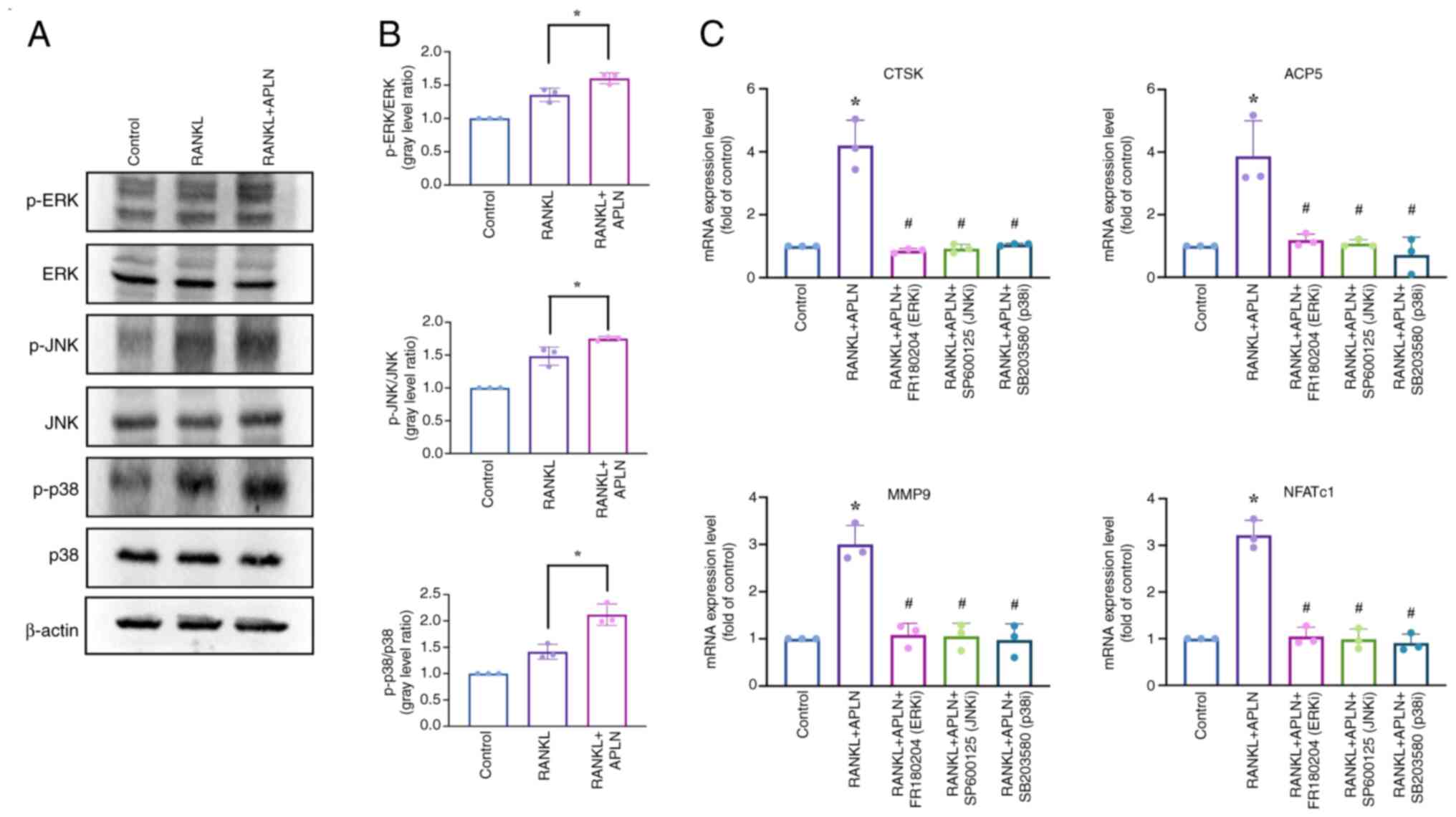
Figure 5

APLN promotes osteoclast
differentiation through activation of the MAPK pathway. (A)
RAW264.7 cells were exposed to a control medium, RANKL (50 ng/ml)
or RANKL + APLN (10 ng/ml) for 10 min. Cell lysates were subjected
to western blot analysis to assess the phosphorylation of MAPK
family members, including ERK, JNK and p38. (B) Signal intensities
of p-ERK, p-JNK and p-p38 were semi-quantified using ImageJ
software and normalized to their respective total protein levels.
*P<0.05 vs. RANKL-treated group. (C) mRNA expression levels of
osteoclast marker genes (ACP5, CTSK, MMP9 and NFATc1) were assessed
using reverse transcription-quantitative PCR in cells treated with
RANKL + APLN (10 ng/ml), either alone or in combination with MAPK
inhibitors (FR180204 for ERK, SP600125 for JNK and SB203580 for
p38). *P<0.05 vs. Control group; #P<0.05 vs. RANKL
+ APLN group. APLN, apelin; RANKL, receptor activator of NF-κB
ligand; ACP5, acid phosphatase 5, tartrate resistant; CTSK,
cathepsin K; MMP9, matrix metalloproteinase 9; NFATc1, nuclear
factor of activated T-cells 1; p-, phosphorylated-; ERK/JNK/p38i,
ERK/JNK/p38 inhibitor.

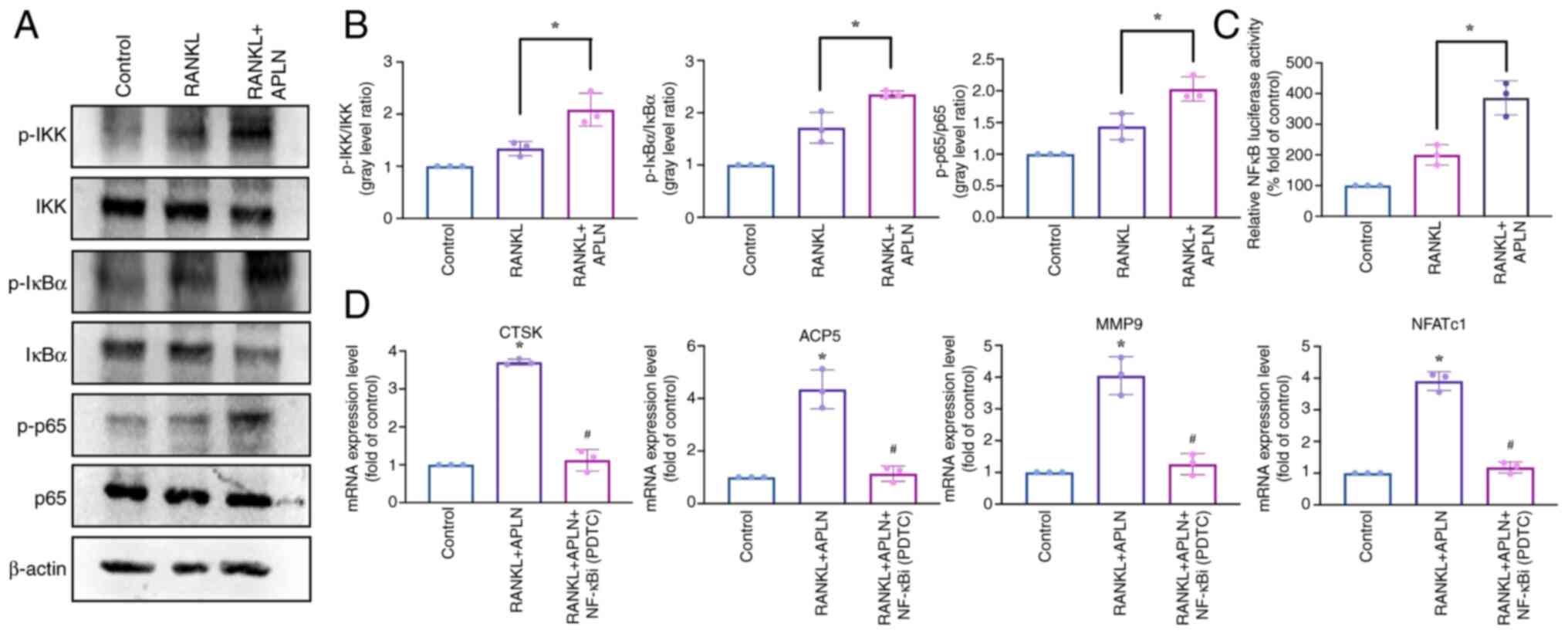
Figure 6

APLN enhances RANKL-induced
activation of the NF-κB signaling pathway. (A) Western blot
analysis of RAW264.7 cells treated with control medium, RANKL (50
ng/ml) or RANKL + APLN (10 ng/ml) for 10 min. Protein levels of
p-IKK, p-IκB and p-p65 were detected to evaluate pathway
activation. (B) Semi-quantification of p-IKK, p-IκB and p-p65
levels relative to their corresponding total proteins was performed
using ImageJ software. (C) RAW264.7 cells were transfected with an
NF-κB luciferase reporter construct and treated with RANKL (50
ng/ml) or RANKL + APLN (10 ng/ml) for 24 h. Luciferase activity was
measured using cell lysates and reporter buffer mixed at a 1:1
ratio. NF-κB transcriptional activity is shown as the fold change
relative to the RANKL-only group. *P<0.05 vs. RANKL-treated
group. (D) Reverse transcription-quantitative PCR analysis of
osteoclast marker genes (ACP5, CTSK, MMP9 and NFATc1) in cells
treated with RANKL + APLN (10 ng/ml) with or without the NF-κBi
PDTC (20 µM). *P<0.05 vs. Control group; #P<0.05
vs. RANKL + APLN group. APLN, apelin; RANKL, receptor activator of
NF-κB ligand; ACP5, acid phosphatase 5, tartrate resistant; CTSK,
cathepsin K; MMP9, matrix metalloproteinase 9; NFATc1, nuclear
factor of activated T-cells 1; p-, phosphorylated-; NF-κBi, NF-κB
inhibitor; PDTC, pyrrolidinedithiocarbamate ammonium.

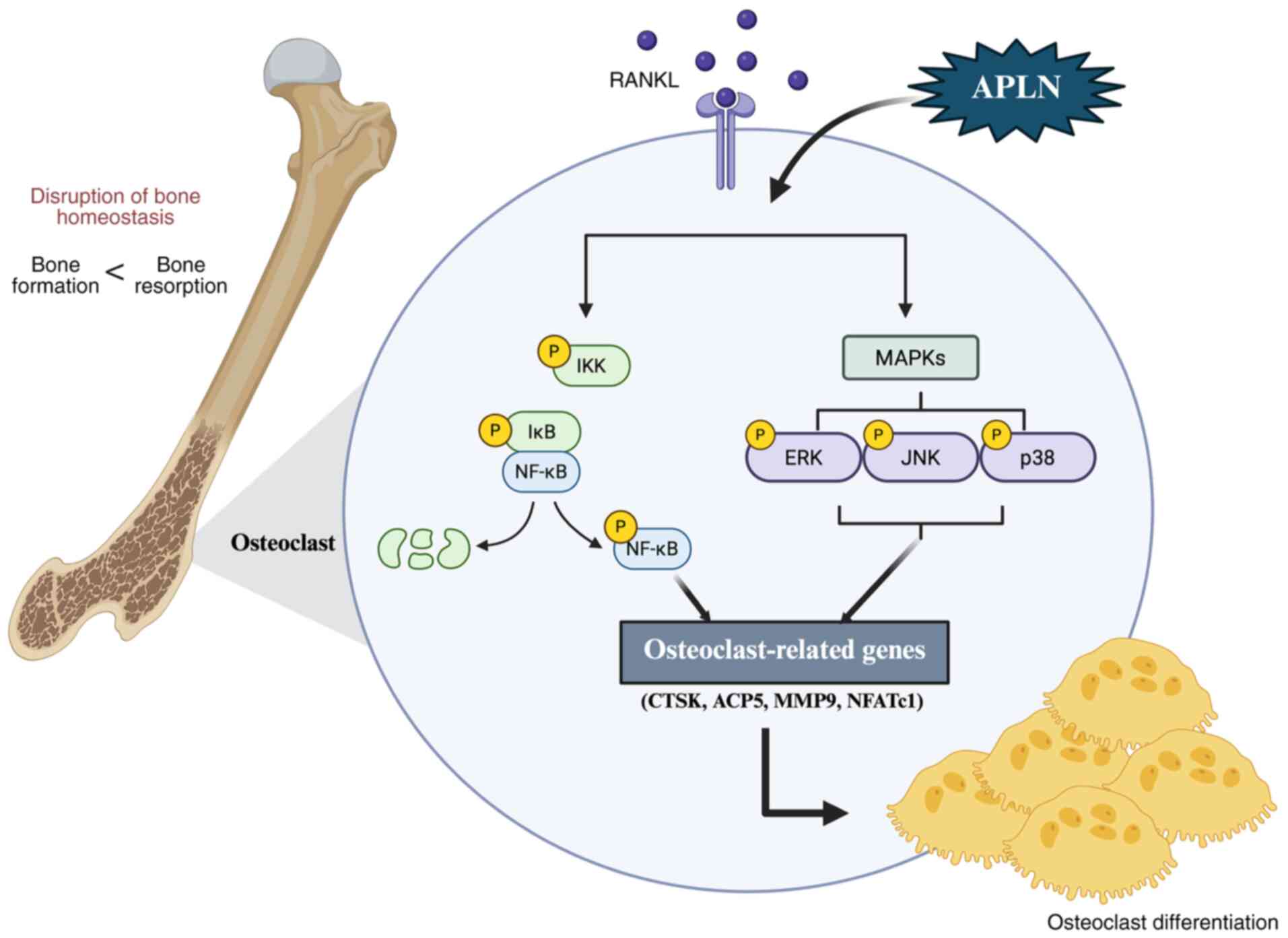
Figure 7

APLN promotes RANKL-mediated
osteoclastogenesis, and activates MAPK and NF-κB signaling
pathways. APLN augmented RANKL-induced phosphorylation of ERK, JNK,
p38 and NF-κB p65, leading to the increased expression of
osteoclast marker genes and enhanced osteoclast differentiation and
function. APLN, apelin; RANKL, receptor activator of NF-κB ligand;
ACP5, acid phosphatase 5, tartrate resistant; CTSK, cathepsin K;
MMP9, matrix metalloproteinase 9; NFATc1, nuclear factor of
activated T-cells 1.
View References

1 

Bolamperti S, Villa I and Rubinacci A: Bone remodeling: An operational process ensuring survival and bone mechanical competence. Bone Res. 10:482022. View Article : Google Scholar : PubMed/NCBI

2 

Zhu L, Zhou C, Chen S, Huang D, Jiang Y, Lan Y, Zou S and Li Y: Osteoporosis and alveolar bone health in periodontitis niche: A predisposing factors-centered review. Cells. 11:33802022. View Article : Google Scholar : PubMed/NCBI

3 

Ashai S and Harvey NC: Rheumatoid arthritis and bone health. Clin Med (Lond). 20:565–567. 2020. View Article : Google Scholar : PubMed/NCBI

4 

Park JJ and Wong C: Pharmacological prevention and management of skeletal-related events and bone loss in individuals with cancer. Semin Oncol Nurs. 38:1512762022. View Article : Google Scholar : PubMed/NCBI

5 

Salari N, Ghasemi H, Mohammadi L, Behzadi MH, Rabieenia E, Shohaimi S and Mohammadi M: The global prevalence of osteoporosis in the world: A comprehensive systematic review and meta-analysis. J Orthop Surg Res. 16:6092021. View Article : Google Scholar : PubMed/NCBI

6 

Elahmer NR, Wong SK, Mohamed N, Alias E, Chin KY and Muhammad N: Mechanistic insights and therapeutic strategies in osteoporosis: A comprehensive review. Biomedicines. 12:16352024. View Article : Google Scholar : PubMed/NCBI

7 

Ayers C, Kansagara D, Lazur B, Fu R, Kwon A and Harrod C: Effectiveness and safety of treatments to prevent fractures in people with low bone mass or primary osteoporosis: A living systematic review and network meta-analysis for the American College of Physicians. Ann Intern Med. 176:182–195. 2023. View Article : Google Scholar : PubMed/NCBI

8 

Weivoda MM and Bradley EW: Macrophages and bone remodeling. J Bone Miner Res. 38:359–369. 2023. View Article : Google Scholar : PubMed/NCBI

9 

Campbell MJ, Bustamante-Gomez C, Fu Q, Beenken KE, Reyes-Pardo H, Smeltzer MS and O'Brien CA: RANKL-mediated osteoclast formation is required for bone loss in a murine model of Staphylococcus aureus osteomyelitis. Bone. 187:1171812024. View Article : Google Scholar : PubMed/NCBI

10 

Park JH, Lee NK and Lee SY: Current understanding of RANK signaling in osteoclast differentiation and maturation. Mol Cells. 40:706–713. 2017. View Article : Google Scholar : PubMed/NCBI

11 

Yan J, Wang A, Cao J and Chen L: Apelin/APJ system: An emerging therapeutic target for respiratory diseases. Cell Mol Life Sci. 77:2919–2930. 2020. View Article : Google Scholar : PubMed/NCBI

12 

Wang YH, Kuo SJ, Liu SC, Wang SW, Tsai CH, Fong YC and Tang CH: Apelin affects the progression of osteoarthritis by regulating VEGF-dependent angiogenesis and miR-150-5p expression in human synovial fibroblasts. Cells. 9:5942020. View Article : Google Scholar : PubMed/NCBI

13 

Hu G, Wang Z, Zhang R, Sun W and Chen X: The role of apelin/apelin receptor in energy metabolism and water homeostasis: A comprehensive narrative review. Front Physiol. 12:6328862021. View Article : Google Scholar : PubMed/NCBI

14 

Chapman FA, Melville V, Godden E, Morrison B, Bruce L, Maguire JJ, Davenport AP, Newby DE and Dhaun N: Cardiovascular and renal effects of apelin in chronic kidney disease: A randomised, double-blind, placebo-controlled, crossover study. Nat Commun. 15:83872024. View Article : Google Scholar : PubMed/NCBI

15 

Wysocka MB, Pietraszek-Gremplewicz K and Nowak D: The role of apelin in cardiovascular diseases, obesity and cancer. Front Physiol. 9:5572018. View Article : Google Scholar : PubMed/NCBI

16 

Chang TK, Wang YH, Kuo SJ, Wang SW, Tsai CH, Fong YC, Wu NL, Liu SC and Tang CH: Apelin enhances IL-1beta expression in human synovial fibroblasts by inhibiting miR-144-3p through the PI3K and ERK pathways. Aging (Albany NY). 12:9224–9239. 2020. View Article : Google Scholar : PubMed/NCBI

17 

Ducy P, Amling M, Takeda S, Priemel M, Schilling AF, Beil FT, Shen J, Vinson C, Rueger JM and Karsenty G: Leptin inhibits bone formation through a hypothalamic relay: A central control of bone mass. Cell. 100:197–207. 2000. View Article : Google Scholar : PubMed/NCBI

18 

Tu Q, Zhang J, Dong LQ, Saunders E, Luo E, Tang J and Chen J: Adiponectin inhibits osteoclastogenesis and bone resorption via APPL1-mediated suppression of Akt1. J Biol Chem. 286:12542–12553. 2011. View Article : Google Scholar : PubMed/NCBI

19 

Wattanachanya L, Lu WD, Kundu RK, Wang L, Abbott MJ, O'Carroll D, Quertermous T and Nissenson RA: Increased bone mass in mice lacking the adipokine apelin. Endocrinology. 154:2069–2080. 2013. View Article : Google Scholar : PubMed/NCBI

20 

Izgut-Uysal VN, Gemici B, Birsen I, Acar N and Ustunel I: The effect of apelin on the functions of peritoneal macrophages. Physiol Res. 66:489–496. 2017. View Article : Google Scholar : PubMed/NCBI

21 

Sharma P, Patntirapong S, Hann S and Hauschka PV: RANKL-RANK signaling regulates expression of xenotropic and polytropic virus receptor (XPR1) in osteoclasts. Biochem Biophys Res Commun. 399:129–132. 2010. View Article : Google Scholar : PubMed/NCBI

22 

Love MI, Huber W and Anders S: Moderated estimation of fold change and dispersion for RNA-seq data with DESeq2. Genome Biol. 15:5502014. View Article : Google Scholar : PubMed/NCBI

23 

Dennis G Jr, Sherman BT, Hosack DA, Yang J, Gao W, Lane HC and Lempicki RA: DAVID: Database for annotation, visualization, and integrated discovery. Genome Biol. 4:P32003. View Article : Google Scholar : PubMed/NCBI

24 

Livak KJ and Schmittgen TD: Analysis of relative gene expression data using real-time quantitative PCR and the 2(−Delta Delta C(T)) method. Methods. 25:402–408. 2001. View Article : Google Scholar : PubMed/NCBI

25 

Lampiasi N, Russo R, Kireev I, Strelkova O, Zhironkina O and Zito F: Osteoclasts differentiation from murine RAW 264.7 cells stimulated by RANKL: Timing and behavior. Biology (Basel). 10:1172021.PubMed/NCBI

26 

Sun W, Li Y, Li J, Tan Y, Yuan X, Meng H, Ye J, Zhong G, Jin X, Liu Z, et al: Mechanical stimulation controls osteoclast function through the regulation of Ca(2+)-activated Cl(−) channel Anoctamin 1. Commun Biol. 6:4072023. View Article : Google Scholar : PubMed/NCBI

27 

Greco EA, Lenzi A and Migliaccio S: The obesity of bone. Ther Adv Endocrinol Metab. 6:273–286. 2015. View Article : Google Scholar : PubMed/NCBI

28 

Armutcu F, McCloskey E and Ince M: Obesity significantly modifies signaling pathways associated with bone remodeling and metabolism. J Cell Signal. 5:183–194. 2024. View Article : Google Scholar

29 

Yang WH, Tsai CH, Fong YC, Huang YL, Wang SJ, Chang YS and Tang CH: Leptin induces oncostatin M production in osteoblasts by downregulating miR-93 through the Akt signaling pathway. Int J Mol Sci. 15:15778–15790. 2014. View Article : Google Scholar : PubMed/NCBI

30 

Park KH, Kim DK, Huh YH, Lee G, Lee SH, Hong Y, Kim SH, Kook MS, Koh JT, Chun JS, et al: NAMPT enzyme activity regulates catabolic gene expression in gingival fibroblasts during periodontitis. Exp Mol Med. 49:e3682017. View Article : Google Scholar : PubMed/NCBI

31 

de Oliveira AA, Vergara A, Wang X, Vederas JC and Oudit GY: Apelin pathway in cardiovascular, kidney, and metabolic diseases: Therapeutic role of apelin analogs and apelin receptor agonists. Peptides. 147:1706972022. View Article : Google Scholar : PubMed/NCBI

32 

Wang Q, Wang B, Zhang W, Zhang T, Liu Q, Jiao X, Ye J, Hao Y, Gao Q, Ma G, et al: APLN promotes the proliferation, migration, and glycolysis of cervical cancer through the PI3K/AKT/mTOR pathway. Arch Biochem Biophys. 755:1099832024. View Article : Google Scholar : PubMed/NCBI

33 

Chen L, Tao Y and Jiang Y: Apelin activates the expression of inflammatory cytokines in microglial BV2 cells via PI-3K/Akt and MEK/Erk pathways. Sci China Life Sci. 58:531–540. 2015. View Article : Google Scholar : PubMed/NCBI

34 

Tilotta F, Gosset M, Herrou J, Briot K and Roux C: Association between osteoporosis and periodontitis. Joint Bone Spine. 92:1058832025. View Article : Google Scholar : PubMed/NCBI

35 

Llorente I, Garcia-Castaneda N, Valero C, Gonzalez-Alvaro I and Castaneda S: Osteoporosis in rheumatoid arthritis: Dangerous liaisons. Front Med (Lausanne). 7:6016182020. View Article : Google Scholar : PubMed/NCBI

36 

Sarhan RS, El-Hammady AM, Marei YM, Elwia SK, Ismail DM and Ahmed EAS: Plasma levels of miR-21b and miR-146a can discriminate rheumatoid arthritis diagnosis and severity. Biomedicine (Taipei). 15:30–41. 2025. View Article : Google Scholar : PubMed/NCBI

37 

Takegahara N, Kim H and Choi Y: Unraveling the intricacies of osteoclast differentiation and maturation: Insight into novel therapeutic strategies for bone-destructive diseases. Exp Mol Med. 56:264–272. 2024. View Article : Google Scholar : PubMed/NCBI

38 

Lee NK: RANK signaling pathways and key molecules inducing osteoclast differentiation. Biomed Sci Lett. 23:295–302. 2017. View Article : Google Scholar

39 

Castan-Laurell I, Dray C and Valet P: The therapeutic potentials of apelin in obesity-associated diseases. Mol Cell Endocrinol. 529:1112782021. View Article : Google Scholar : PubMed/NCBI

40 

Yasir M, Senthilkumar GP, Jayashree K, Ramesh Babu K, Vadivelan M and Palanivel C: Association of serum omentin-1, apelin and chemerin concentrations with the presence and severity of diabetic retinopathy in type 2 diabetes mellitus patients. Arch Physiol Biochem. 128:313–320. 2022. View Article : Google Scholar : PubMed/NCBI

41 

Gao S and Chen H: Therapeutic potential of apelin and Elabela in cardiovascular disease. Biomed Pharmacother. 166:1152682023. View Article : Google Scholar : PubMed/NCBI

42 

Couvineau P and Llorens-Cortes C: Metabolically stable apelin analogs: Development and functional role in water balance and cardiovascular function. Clin Sci (Lond). 139:131–149. 2025. View Article : Google Scholar : PubMed/NCBI

43 

Liang B, Burley G, Lin S and Shi YC: Osteoporosis pathogenesis and treatment: Existing and emerging avenues. Cell Mol Biol Lett. 27:722022. View Article : Google Scholar : PubMed/NCBI

44 

Mbese Z and Aderibigbe BA: Bisphosphonate-based conjugates and derivatives as potential therapeutic agents in osteoporosis, bone cancer and metastatic bone cancer. Int J Mol Sci. 22:68692021. View Article : Google Scholar : PubMed/NCBI

45 

Hussain MA, Joseph A, Cherian VM, Srivastava A, Cherian KE, Kapoor N and Paul TV: Bisphosphonate-induced atypical femoral fracture in tandem: long-term follow-up is warranted. Endocrinol Diabetes Metab Case Rep. 2022:2022:22–0249. 2022.PubMed/NCBI

46 

Tsourdi E, Zillikens MC, Meier C, Body JJ, Rodriguez EG, Anastasilakis AD, Abrahamsen B, McCloskey E, Hofbauer LC, Guañabens N, et al: Fracture risk and management of discontinuation of denosumab therapy: A systematic review and position statement by ECTS. J Clin Endocrinol Metab. 26:dgaa7562020.

47 

Okamoto H, Shibazaki N, Yoshimura T, Uzawa T and Sugimoto T: Association between elcatonin use and cancer risk in Japan: A follow-up study after a randomized, double-blind, placebo-controlled study of once-weekly elcatonin in primary postmenopausal osteoporosis. Osteoporos Sarcopenia. 6:15–19. 2020. View Article : Google Scholar : PubMed/NCBI

48 

Vinogradova Y, Coupland C and Hippisley-Cox J: Use of hormone replacement therapy and risk of breast cancer: Nested case-control studies using the QResearch and CPRD databases. BMJ. 371:m38732020. View Article : Google Scholar : PubMed/NCBI

49 

Nordstrom BL, Cai B, De Gregorio F, Ban L, Fraeman KH, Yoshida Y and Gibbs T: Risk of venous thromboembolism among women receiving ospemifene: A comparative observational study. Ther Adv Drug Saf. Nov 19–2022.(Epub ahead of print). View Article : Google Scholar : PubMed/NCBI

Related Articles

  • Abstract
  • View
  • Download
  • Twitter
Copy and paste a formatted citation
Spandidos Publications style
Wang Y, Wu Y, Tsai C, Fong Y, Ko C, Chen H, Law Y and Tang C: Apelin promotes RANKL‑mediated osteoclastogenesis by activating MAPK and NF‑&kappa;B pathways. Mol Med Rep 33: 41, 2026.
APA
Wang, Y., Wu, Y., Tsai, C., Fong, Y., Ko, C., Chen, H. ... Tang, C. (2026). Apelin promotes RANKL‑mediated osteoclastogenesis by activating MAPK and NF‑&kappa;B pathways. Molecular Medicine Reports, 33, 41. https://doi.org/10.3892/mmr.2025.13751
MLA
Wang, Y., Wu, Y., Tsai, C., Fong, Y., Ko, C., Chen, H., Law, Y., Tang, C."Apelin promotes RANKL‑mediated osteoclastogenesis by activating MAPK and NF‑&kappa;B pathways". Molecular Medicine Reports 33.1 (2026): 41.
Chicago
Wang, Y., Wu, Y., Tsai, C., Fong, Y., Ko, C., Chen, H., Law, Y., Tang, C."Apelin promotes RANKL‑mediated osteoclastogenesis by activating MAPK and NF‑&kappa;B pathways". Molecular Medicine Reports 33, no. 1 (2026): 41. https://doi.org/10.3892/mmr.2025.13751
Copy and paste a formatted citation
x
Spandidos Publications style
Wang Y, Wu Y, Tsai C, Fong Y, Ko C, Chen H, Law Y and Tang C: Apelin promotes RANKL‑mediated osteoclastogenesis by activating MAPK and NF‑&kappa;B pathways. Mol Med Rep 33: 41, 2026.
APA
Wang, Y., Wu, Y., Tsai, C., Fong, Y., Ko, C., Chen, H. ... Tang, C. (2026). Apelin promotes RANKL‑mediated osteoclastogenesis by activating MAPK and NF‑&kappa;B pathways. Molecular Medicine Reports, 33, 41. https://doi.org/10.3892/mmr.2025.13751
MLA
Wang, Y., Wu, Y., Tsai, C., Fong, Y., Ko, C., Chen, H., Law, Y., Tang, C."Apelin promotes RANKL‑mediated osteoclastogenesis by activating MAPK and NF‑&kappa;B pathways". Molecular Medicine Reports 33.1 (2026): 41.
Chicago
Wang, Y., Wu, Y., Tsai, C., Fong, Y., Ko, C., Chen, H., Law, Y., Tang, C."Apelin promotes RANKL‑mediated osteoclastogenesis by activating MAPK and NF‑&kappa;B pathways". Molecular Medicine Reports 33, no. 1 (2026): 41. https://doi.org/10.3892/mmr.2025.13751
Follow us
  • Twitter
  • LinkedIn
  • Facebook
About
  • Spandidos Publications
  • Careers
  • Cookie Policy
  • Privacy Policy
How can we help?
  • Help
  • Live Chat
  • Contact
  • Email to our Support Team