Spandidos Publications Logo
  • About
    • About Spandidos
    • Aims and Scopes
    • Abstracting and Indexing
    • Editorial Policies
    • Reprints and Permissions
    • Job Opportunities
    • Terms and Conditions
    • Contact
  • Journals
    • All Journals
    • Oncology Letters
      • Oncology Letters
      • Information for Authors
      • Editorial Policies
      • Editorial Board
      • Aims and Scope
      • Abstracting and Indexing
      • Bibliographic Information
      • Archive
    • International Journal of Oncology
      • International Journal of Oncology
      • Information for Authors
      • Editorial Policies
      • Editorial Board
      • Aims and Scope
      • Abstracting and Indexing
      • Bibliographic Information
      • Archive
    • Molecular and Clinical Oncology
      • Molecular and Clinical Oncology
      • Information for Authors
      • Editorial Policies
      • Editorial Board
      • Aims and Scope
      • Abstracting and Indexing
      • Bibliographic Information
      • Archive
    • Experimental and Therapeutic Medicine
      • Experimental and Therapeutic Medicine
      • Information for Authors
      • Editorial Policies
      • Editorial Board
      • Aims and Scope
      • Abstracting and Indexing
      • Bibliographic Information
      • Archive
    • International Journal of Molecular Medicine
      • International Journal of Molecular Medicine
      • Information for Authors
      • Editorial Policies
      • Editorial Board
      • Aims and Scope
      • Abstracting and Indexing
      • Bibliographic Information
      • Archive
    • Biomedical Reports
      • Biomedical Reports
      • Information for Authors
      • Editorial Policies
      • Editorial Board
      • Aims and Scope
      • Abstracting and Indexing
      • Bibliographic Information
      • Archive
    • Oncology Reports
      • Oncology Reports
      • Information for Authors
      • Editorial Policies
      • Editorial Board
      • Aims and Scope
      • Abstracting and Indexing
      • Bibliographic Information
      • Archive
    • Molecular Medicine Reports
      • Molecular Medicine Reports
      • Information for Authors
      • Editorial Policies
      • Editorial Board
      • Aims and Scope
      • Abstracting and Indexing
      • Bibliographic Information
      • Archive
    • World Academy of Sciences Journal
      • World Academy of Sciences Journal
      • Information for Authors
      • Editorial Policies
      • Editorial Board
      • Aims and Scope
      • Abstracting and Indexing
      • Bibliographic Information
      • Archive
    • International Journal of Functional Nutrition
      • International Journal of Functional Nutrition
      • Information for Authors
      • Editorial Policies
      • Editorial Board
      • Aims and Scope
      • Abstracting and Indexing
      • Bibliographic Information
      • Archive
    • International Journal of Epigenetics
      • International Journal of Epigenetics
      • Information for Authors
      • Editorial Policies
      • Editorial Board
      • Aims and Scope
      • Abstracting and Indexing
      • Bibliographic Information
      • Archive
    • Medicine International
      • Medicine International
      • Information for Authors
      • Editorial Policies
      • Editorial Board
      • Aims and Scope
      • Abstracting and Indexing
      • Bibliographic Information
      • Archive
  • Articles
  • Information
    • Information for Authors
    • Information for Reviewers
    • Information for Librarians
    • Information for Advertisers
    • Conferences
  • Language Editing
Spandidos Publications Logo
  • About
    • About Spandidos
    • Aims and Scopes
    • Abstracting and Indexing
    • Editorial Policies
    • Reprints and Permissions
    • Job Opportunities
    • Terms and Conditions
    • Contact
  • Journals
    • All Journals
    • Biomedical Reports
      • Information for Authors
      • Editorial Policies
      • Editorial Board
      • Aims and Scope
      • Abstracting and Indexing
      • Bibliographic Information
      • Archive
    • Experimental and Therapeutic Medicine
      • Information for Authors
      • Editorial Policies
      • Editorial Board
      • Aims and Scope
      • Abstracting and Indexing
      • Bibliographic Information
      • Archive
    • International Journal of Epigenetics
      • Information for Authors
      • Editorial Policies
      • Editorial Board
      • Aims and Scope
      • Abstracting and Indexing
      • Bibliographic Information
      • Archive
    • International Journal of Functional Nutrition
      • Information for Authors
      • Editorial Policies
      • Editorial Board
      • Aims and Scope
      • Abstracting and Indexing
      • Bibliographic Information
      • Archive
    • International Journal of Molecular Medicine
      • Information for Authors
      • Editorial Policies
      • Editorial Board
      • Aims and Scope
      • Abstracting and Indexing
      • Bibliographic Information
      • Archive
    • International Journal of Oncology
      • Information for Authors
      • Editorial Policies
      • Editorial Board
      • Aims and Scope
      • Abstracting and Indexing
      • Bibliographic Information
      • Archive
    • Medicine International
      • Information for Authors
      • Editorial Policies
      • Editorial Board
      • Aims and Scope
      • Abstracting and Indexing
      • Bibliographic Information
      • Archive
    • Molecular and Clinical Oncology
      • Information for Authors
      • Editorial Policies
      • Editorial Board
      • Aims and Scope
      • Abstracting and Indexing
      • Bibliographic Information
      • Archive
    • Molecular Medicine Reports
      • Information for Authors
      • Editorial Policies
      • Editorial Board
      • Aims and Scope
      • Abstracting and Indexing
      • Bibliographic Information
      • Archive
    • Oncology Letters
      • Information for Authors
      • Editorial Policies
      • Editorial Board
      • Aims and Scope
      • Abstracting and Indexing
      • Bibliographic Information
      • Archive
    • Oncology Reports
      • Information for Authors
      • Editorial Policies
      • Editorial Board
      • Aims and Scope
      • Abstracting and Indexing
      • Bibliographic Information
      • Archive
    • World Academy of Sciences Journal
      • Information for Authors
      • Editorial Policies
      • Editorial Board
      • Aims and Scope
      • Abstracting and Indexing
      • Bibliographic Information
      • Archive
  • Articles
  • Information
    • For Authors
    • For Reviewers
    • For Librarians
    • For Advertisers
    • Conferences
  • Language Editing
Login Register Submit
  • This site uses cookies
  • You can change your cookie settings at any time by following the instructions in our Cookie Policy. To find out more, you may read our Privacy Policy.

    I agree
Search articles by DOI, keyword, author or affiliation
Search
Advanced Search
presentation
Molecular Medicine Reports
Join Editorial Board Propose a Special Issue
Print ISSN: 1791-2997 Online ISSN: 1791-3004
Journal Cover
January-2026 Volume 33 Issue 1

Full Size Image

Sign up for eToc alerts
Recommend to Library

Journals

International Journal of Molecular Medicine

International Journal of Molecular Medicine

International Journal of Molecular Medicine is an international journal devoted to molecular mechanisms of human disease.

International Journal of Oncology

International Journal of Oncology

International Journal of Oncology is an international journal devoted to oncology research and cancer treatment.

Molecular Medicine Reports

Molecular Medicine Reports

Covers molecular medicine topics such as pharmacology, pathology, genetics, neuroscience, infectious diseases, molecular cardiology, and molecular surgery.

Oncology Reports

Oncology Reports

Oncology Reports is an international journal devoted to fundamental and applied research in Oncology.

Experimental and Therapeutic Medicine

Experimental and Therapeutic Medicine

Experimental and Therapeutic Medicine is an international journal devoted to laboratory and clinical medicine.

Oncology Letters

Oncology Letters

Oncology Letters is an international journal devoted to Experimental and Clinical Oncology.

Biomedical Reports

Biomedical Reports

Explores a wide range of biological and medical fields, including pharmacology, genetics, microbiology, neuroscience, and molecular cardiology.

Molecular and Clinical Oncology

Molecular and Clinical Oncology

International journal addressing all aspects of oncology research, from tumorigenesis and oncogenes to chemotherapy and metastasis.

World Academy of Sciences Journal

World Academy of Sciences Journal

Multidisciplinary open-access journal spanning biochemistry, genetics, neuroscience, environmental health, and synthetic biology.

International Journal of Functional Nutrition

International Journal of Functional Nutrition

Open-access journal combining biochemistry, pharmacology, immunology, and genetics to advance health through functional nutrition.

International Journal of Epigenetics

International Journal of Epigenetics

Publishes open-access research on using epigenetics to advance understanding and treatment of human disease.

Medicine International

Medicine International

An International Open Access Journal Devoted to General Medicine.

Journal Cover
January-2026 Volume 33 Issue 1

Full Size Image

Sign up for eToc alerts
Recommend to Library

  • Article
  • Citations
    • Cite This Article
    • Download Citation
    • Create Citation Alert
    • Remove Citation Alert
    • Cited By
  • Similar Articles
    • Related Articles (in Spandidos Publications)
    • Similar Articles (Google Scholar)
    • Similar Articles (PubMed)
  • Download PDF
  • Download XML
  • View XML

  • Supplementary Files
    • Supplementary_Data1.pdf
    • Supplementary_Data2.pdf
Article Open Access

NEDD4 regulates VEGF signaling and mTOR to promote angiogenesis and the cell cycle in steroid‑induced osteonecrosis of the femoral head

  • Authors:
    • Jian Li
    • Dong Zhen
    • Yuhuan Qin
    • Caifen Guo
  • View Affiliations / Copyright

    Affiliations: Department of Sports Medicine, The Beijing Jishuitan Hospital Guizhou Hospital, Guiyang, Guizhou 550014, P.R. China, Department of Urology, The Affiliated Hospital of Guizhou Medical University, Guiyang, Guizhou 550004, P.R. China
    Copyright: © Li et al. This is an open access article distributed under the terms of Creative Commons Attribution License.
  • Article Number: 49
    |
    Published online on: November 21, 2025
       https://doi.org/10.3892/mmr.2025.13759
  • Expand metrics +
Metrics: Total Views: 0 (Spandidos Publications: | PMC Statistics: )
Metrics: Total PDF Downloads: 0 (Spandidos Publications: | PMC Statistics: )
Cited By (CrossRef): 0 citations Loading Articles...

This article is mentioned in:


Abstract

Steroid‑induced osteonecrosis of the femoral head (SONFH) is a progressive hip condition marked by osteocyte apoptosis from poor blood supply, leading to femoral head collapse and hip joint dysfunction. Examination of the GSE123568 dataset revealed the important role of ubiquitination in the development of SONFH, contributing to processes such as ‘apoptosis’, ‘protein processing in the endoplasmic reticulum’, ‘lysosome function’, ‘cell cycle regulation and autophagy’. The present research revealed that the E3 ubiquitin ligase neural precursor cell expressed developmentally downregulated protein 4 (NEDD4) is involved in SONFH, showing positive correlations with key genes in the p53 signaling pathway, DNA damage response and cell cycle regulation. This highlights the role of NEDD4 in DNA repair and cell cycle control. Additionally, NEDD4 exhibited varying regulatory effects on integrin, TGF‑β/SMAD, Hippo/yes‑associated protein and Notch signaling pathways, underscoring its multifaceted role in cellular signaling. A NEDD4 overexpression vector was created and found to significantly boost the viability, migration and angiogenesis of bone microvascular endothelial cells (BMECs). Reverse transcription‑quantitative PCR results revealed higher mRNA levels of mTOR, VEGF and VEGFR2 in NEDD4‑overexpressing cells, suggesting that the VEGF signaling pathway was activated. Immunoprecipitation assays showed decreased mTOR ubiquitination levels following NEDD4 overexpression, suggesting NEDD4 may indirectly modulate mTOR ubiquitination rather than directly catalyzing it., Small interfering RNA experiments found that NEDD4 and mTOR cooperated to boost BMEC proliferation and migration, as confirmed by MTT, EdU and wound healing assays. Furthermore, the present research showed that glucocorticoids could suppress NEDD4 expression by increasing promoter methylation levels. These findings highlight the key roles of NEDD4 in angiogenesis, maintaining cell balance, regulating the cell cycle and repairing DNA damage in SONFH. By demonstrating the numerous functions of NEDD4 in steroid‑induced osteonecrosis and angiogenesis, the present study suggested that it may impact vascular growth and bone tissue repair through multiple pathways and mechanisms.
View Figures

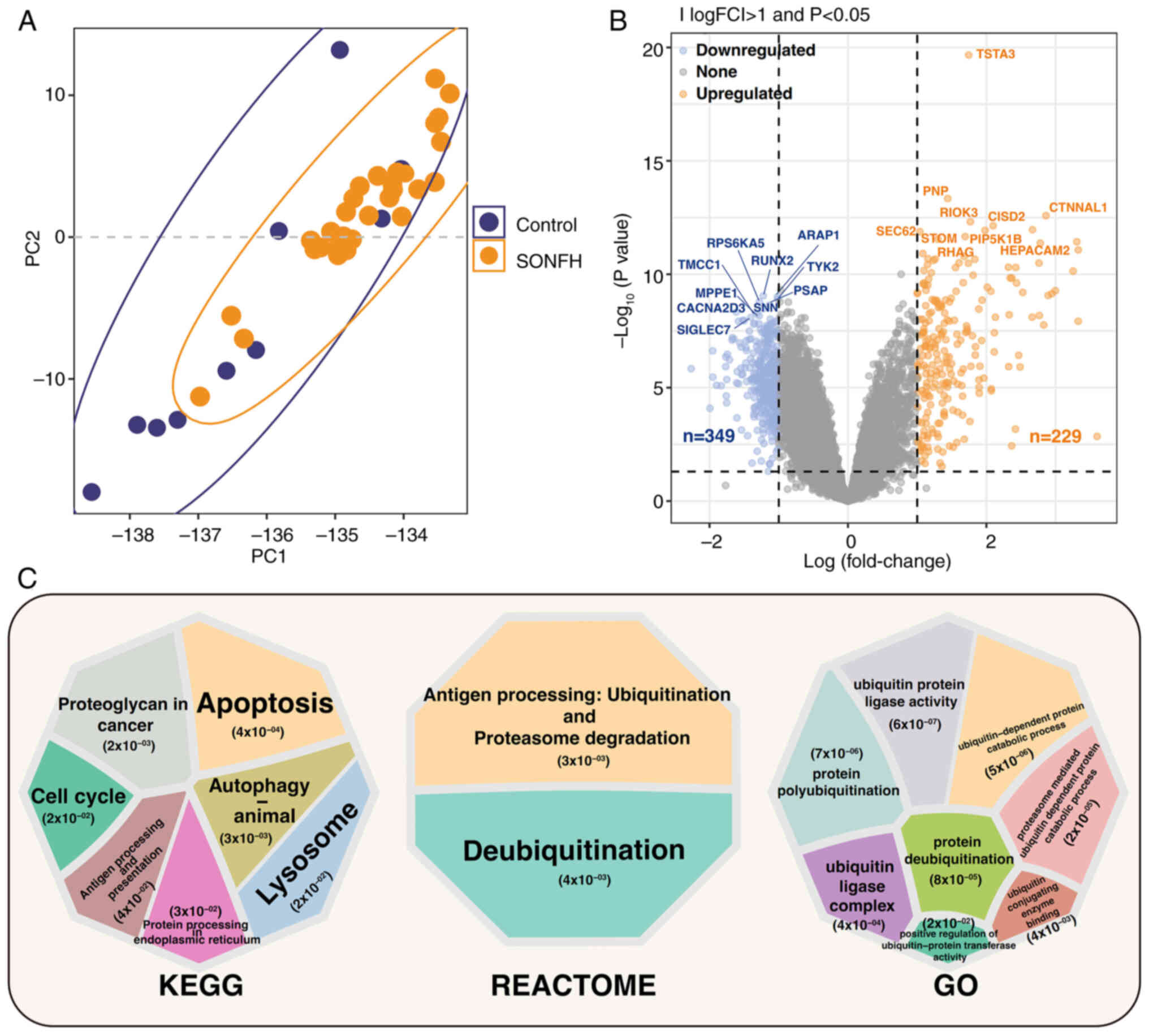
Figure 1

Differential gene and pathway
enrichment analysis between the control and SONFH groups. (A) PC
analysis showing the separation between control and SONFH groups.
(B) Results of differential analysis. The x-axis represents
log(fold change) and the y-axis represents-log10
(P-value). Differentially expressed genes are categorized as
upregulated, downregulated or not significantly changed. Genes with
|log(FC)|>1 and P<0.05 were considered significantly
differentially expressed (orange for upregulated, blue for
downregulated and gray for not significantly changed). (C) KEGG,
REACTOME and GO enrichment results, with significant pathways
highlighted. The pathways were selected based on P<0.05 and
|log(FC)| >1). Each circle represents one pathway; the size of
the circle corresponds to the number of genes, while the color
indicates-log10 (P-value), with darker colors
representing higher significance. SONFH, steroid-induced
osteonecrosis of the femoral head; KEGG, Kyoto Encyclopedia of
Genes and Genomes; GO, Gene Ontology; FC, fold change; PC,
principal component.

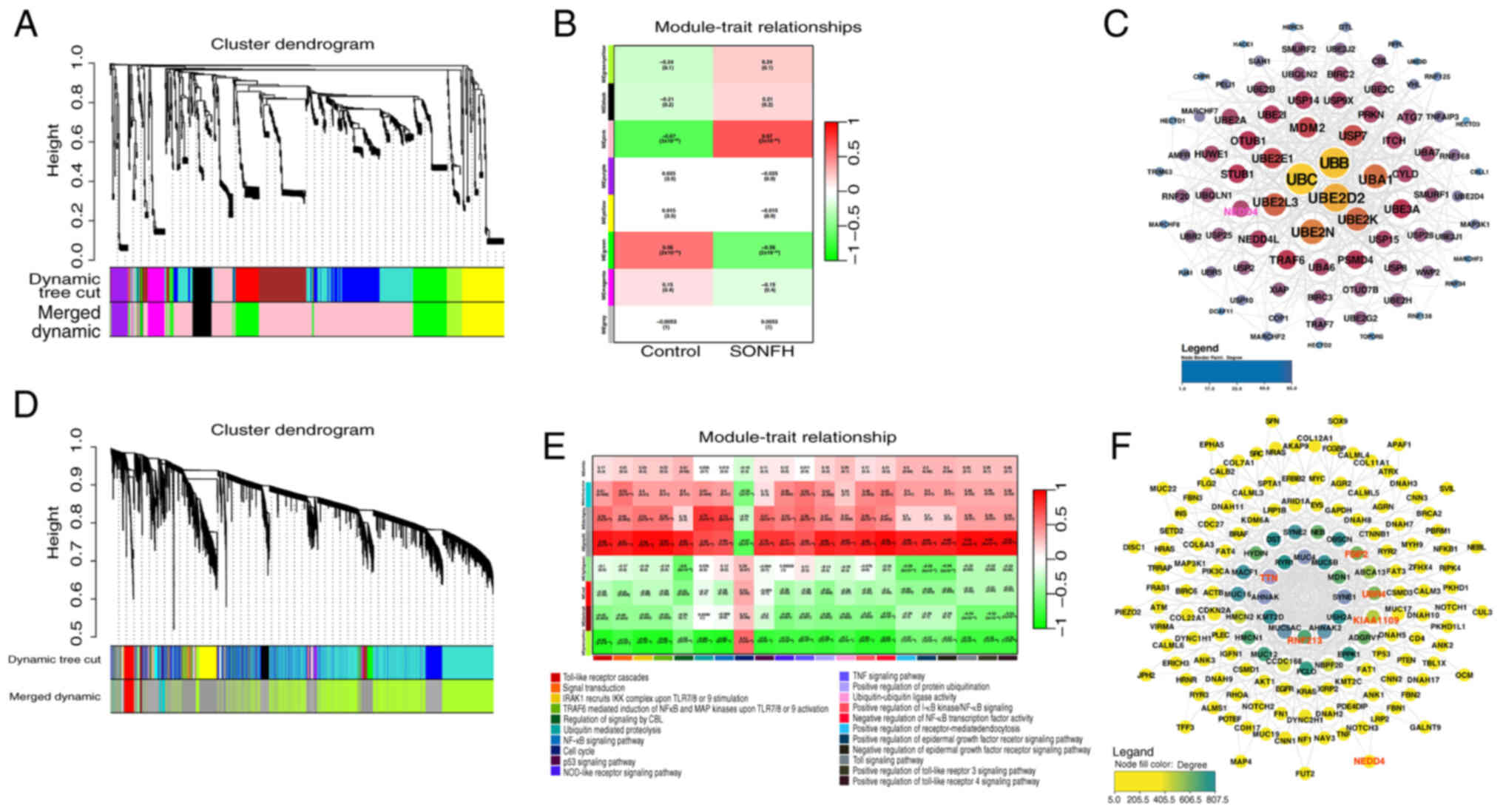
Figure 2

Weighted gene co-expression network
analysis. (A) Cluster dendrogram of involved pathways. (B) Heatmap
showing correlations between MEs) and the control and SONFH groups,
with correlation coefficients and P-values shown in rectangles and
parentheses, respectively. (C) Pathway gene interaction network in
the MEpink module, with circle size and color indicating degree
values. (D) Clustering dendrogram of involved genes, showing
modules containing pathways significantly associated with ME. (E)
Heatmap of ME correlations with pathways. (F) Gene interaction
network in the MEdarkgrey module. SONFH, steroid-induced
osteonecrosis of the femoral head; ME, module eigengene.

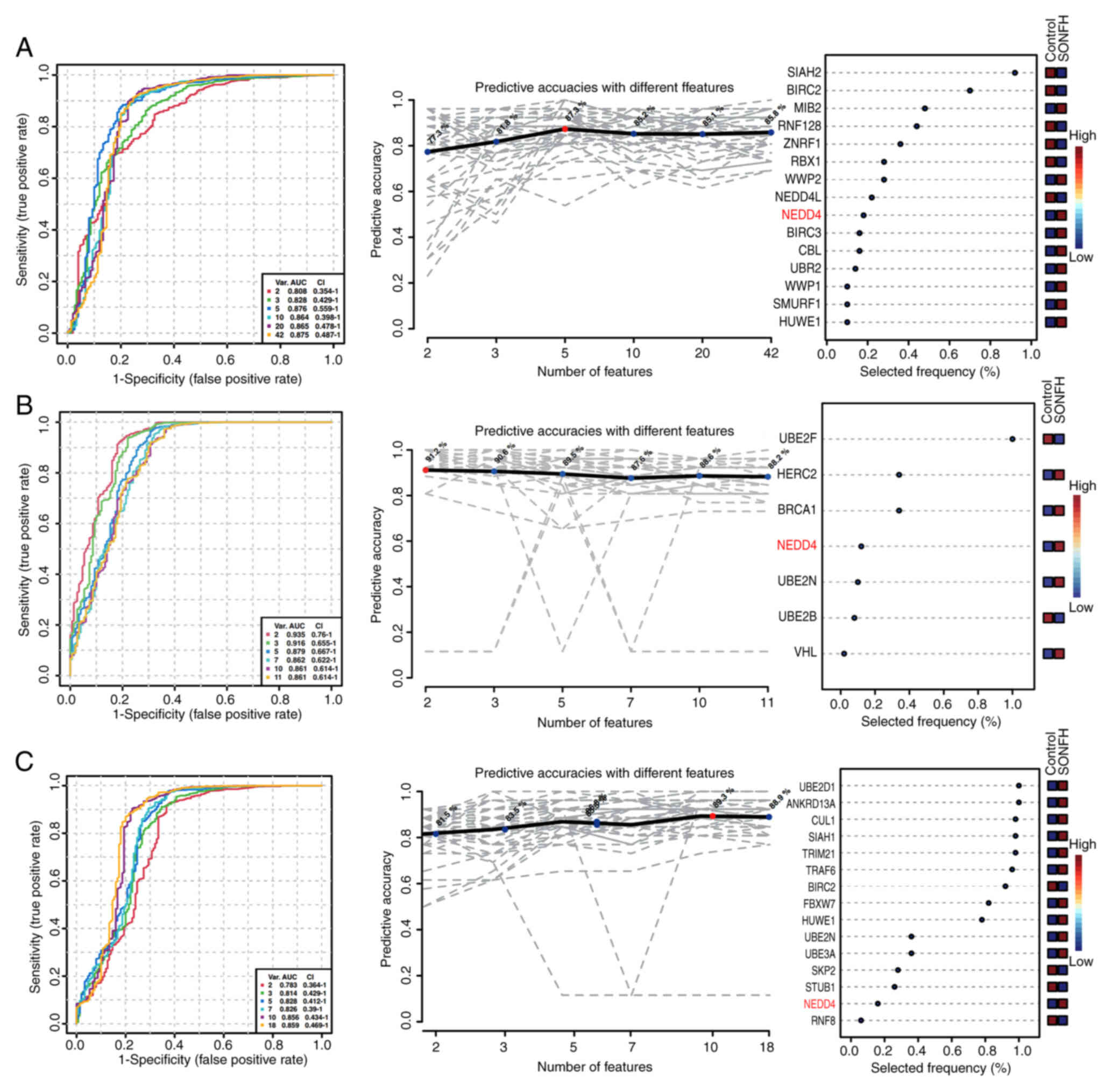
Figure 3

Multivariate exploratory ROC analysis
of NEDD4 in SONFH. (A) ROC analysis, prediction accuracy and gene
selection frequency for genes in the ubiquitin-ubiquitin ligase
activity pathway. (B) ROC analysis, prediction accuracy and gene
selection frequency for genes in the ubiquitin-mediated proteolysis
pathway. (C) ROC analysis, prediction accuracy and gene selection
frequency for genes in the positive regulation of protein
ubiquitination pathway. ROC, receiver operating characteristic;
AUC, area under the curve; Var., variables; SONFH, steroid-induced
osteonecrosis of the femoral head; NEDD4, neural precursor cell
expressed developmentally downregulated protein 4.

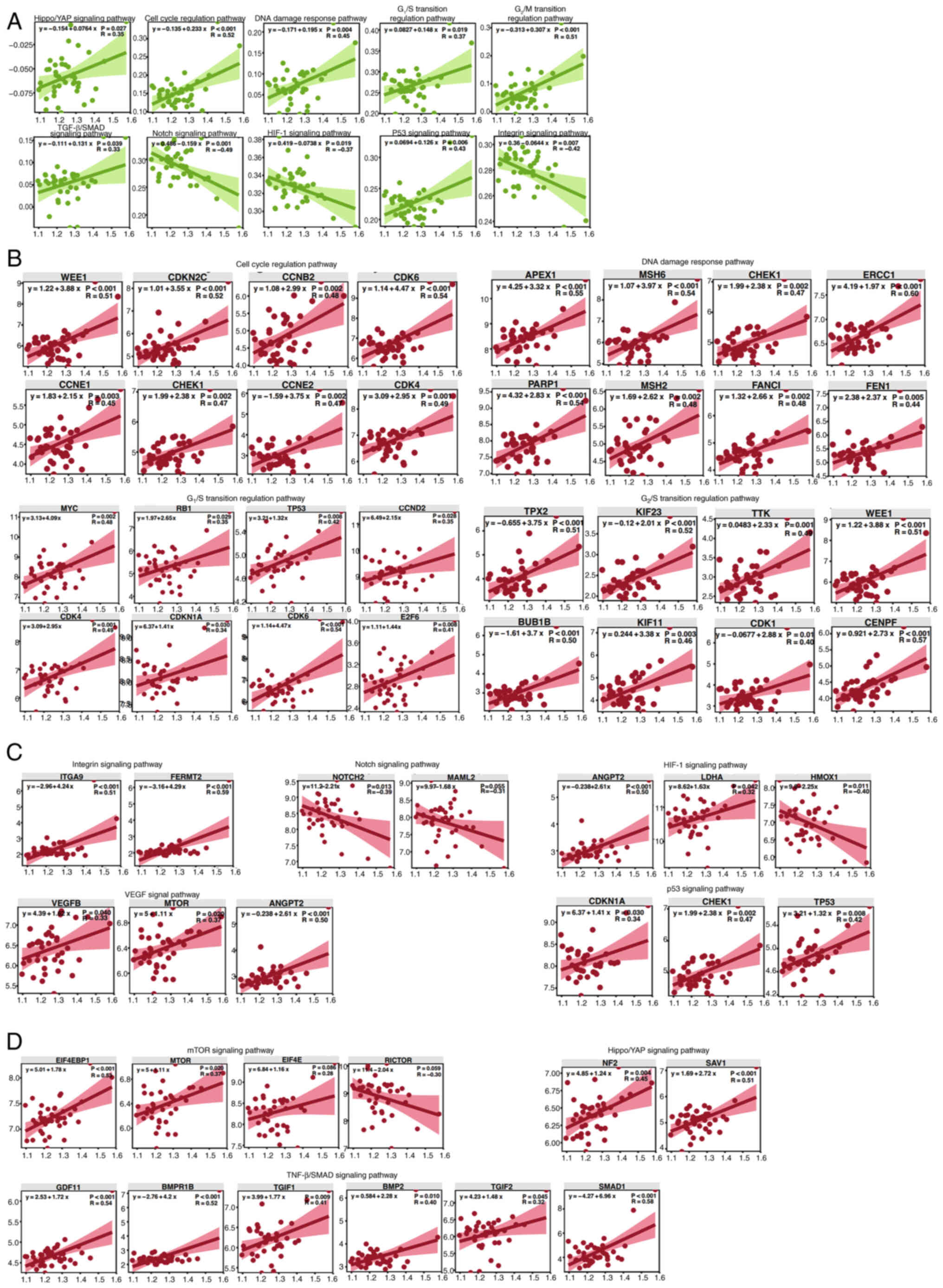
Figure 4

Key roles of NEDD4 in various
biological pathways and its correlation with gene expression. (A)
Correlation between NEDD4 and pathways related to cell
proliferation, the cell cycle and angiogenesis. (B) Correlation
between NEDD4 and cell cycle pathway genes. (C) Correlation between
NEDD4 and angiogenesis pathway genes. (D) Correlation between NEDD4
and cell growth pathway genes. NEDD4, neural precursor cell
expressed developmentally downregulated protein 4.

Figure 5

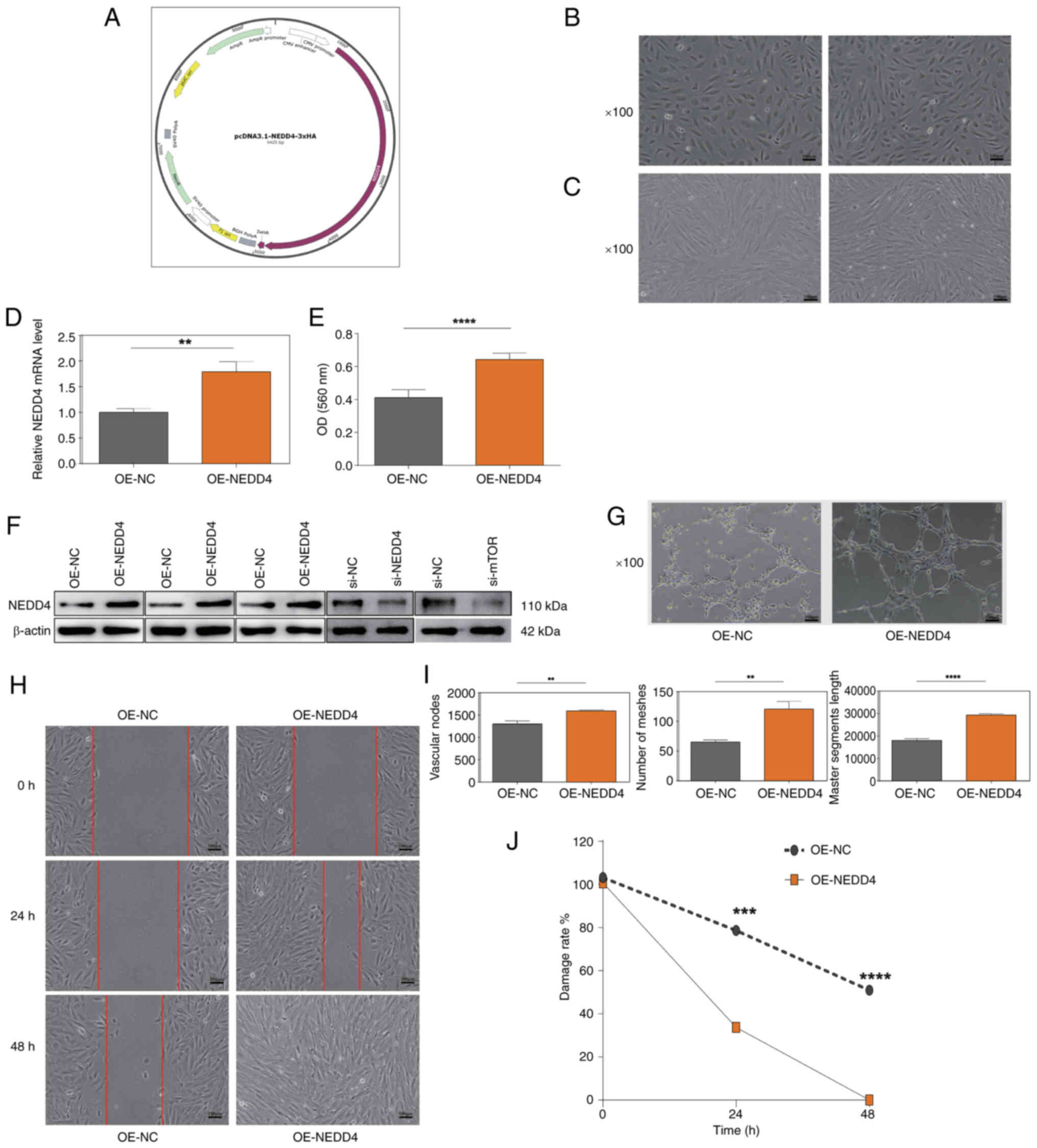
Effects of NEDD4 overexpression on
BMECs. (A) Morphology of BMECs in the control group showing normal
cell boundaries and morphology. (B) Morphology of BMECs in the
OE-NEDD4 group showing no visible damage. (C) BMECs maintained good
condition after transient NEDD4 transfection. Magnification, ×100.
(D) Reverse transcription-quantitative PCR confirmed significantly
elevated NEDD4 mRNA expression in the OE-NEDD4 group. (E) An MTT
assay showed increased viability of BMECs after NEDD4
overexpression. (F) Western blot analysis demonstrating efficient
NEDD4 overexpression and knockdown in OE-NEDD4- and
siRNA-2-transfected cells, respectively. (G) Quantitative analysis
of tube formation indicating increased number of meshes, greater
master segment length, and more vascular nodes in the OE-NEDD4
group. (H) Representative wound-healing assay showing smaller
scratch areas in the OE-NEDD4 group. Magnification, ×100; scale
bar, 100 µm. (I) Quantitative analysis of wound-healing rates,
indicating significantly improved migration capacity in the
OE-NEDD4 group. (J) Decreased scratch area in the OE-NEDD4 group at
0, 24 and 48 h, consistent with enhanced migration ability.
Magnification, ×100. OE, overexpression; NC, negative control; si,
small interfering RNA; NEDD4, neural precursor cell expressed
developmentally downregulated protein 4; BMEC, bone microvascular
endothelial cell; OD, optical density. *P<0.05; **P<0.01;
***P<0.001; ****P<0.0001 vs. OE-NC or 0 h.

Figure 6

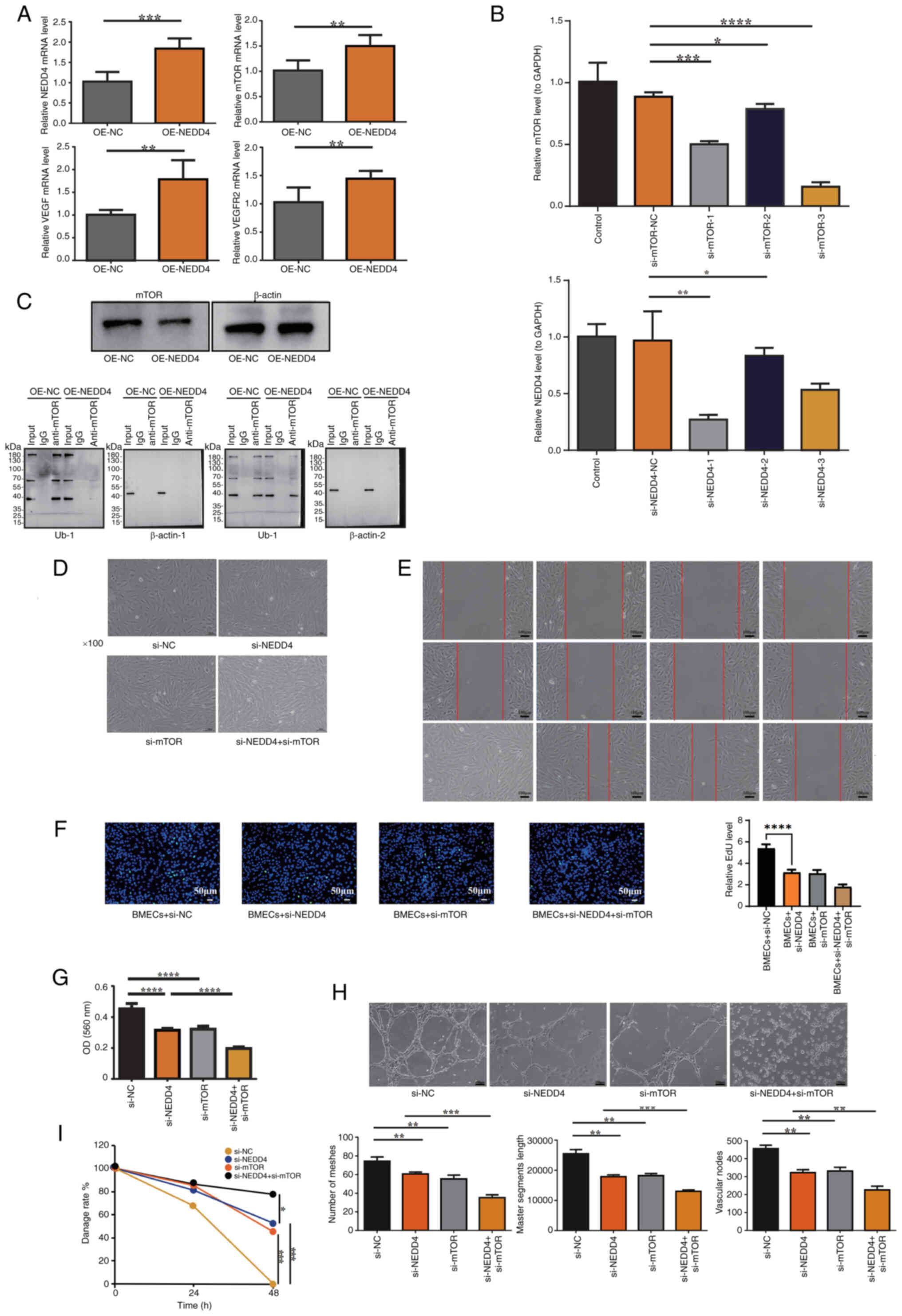
Functional validation of NEDD4 in the
VEGF signaling pathway. (A) RT-qPCR showed increased mTOR, VEGF and
VEGFR2 mRNA levels after NEDD4 overexpression. (B) RT-qPCR
identified si-NEDD4-1 and si-mTOR-3 as the most effective
interference sequences. (C) Immunoprecipitation analysis showing
that NEDD4 overexpression decreased the ubiquitination level of
mTOR. (D) Validation of transfection efficiency in BMECs.
Representative microscopic images show cells transfected with
si-NEDD4, si-mTOR and their respective controls (si-NC). BMECs
maintained a normal morphology and healthy growth state after
transfection, without observable cytotoxicity or detachment,
confirming that the transfection was effective and did not
adversely affect cell viability. Magnification, ×100. (E) Scratch
assay showing decreased wound closure rates in the si-NEDD4 and
si-mTOR groups compared with the control group, with the lowest
migration observed in the si-NEDD4 + si-mTOR group. Scale bar, 100
µm. (F) Representative images from the EdU proliferation assay
demonstrating reduced EdU-positive nuclei in the si-NEDD4 and
si-mTOR groups, with further reductions in the si-NEDD4 + si-mTOR
group. Scale bar, 50 µm. (G) MTT assay showed reduced viability in
si-NEDD4 and si-mTOR groups, with the greatest reduction in the
si-NEDD4 + si-mTOR group. (H) Tube formation assay demonstrating
reduced angiogenesis parameters in the si-NEDD4 and si-mTOR groups,
with further reductions in the si-NEDD4 + si-mTOR group.
Magnification, ×100. (I) Quantitative analysis of wound-healing
rates, indicating significantly reduced migration ability in the
si-NEDD4 and si-mTOR groups, with further reduction in the si-NEDD4
+ si-mTOR group. NC, negative control; si, small interfering RNA;
NEDD4, neural precursor cell expressed developmentally
downregulated protein 4; OE, overexpression; RT-qPCR, reverse
transcription-quantitative PCR; BMEC, bone microvascular
endothelial cell; OD, optical density; Ub-1, first ubiquitination
site assay. *P<0.05, **P<0.01, ***P<0.001 and
****P<0.0001.

Figure 7

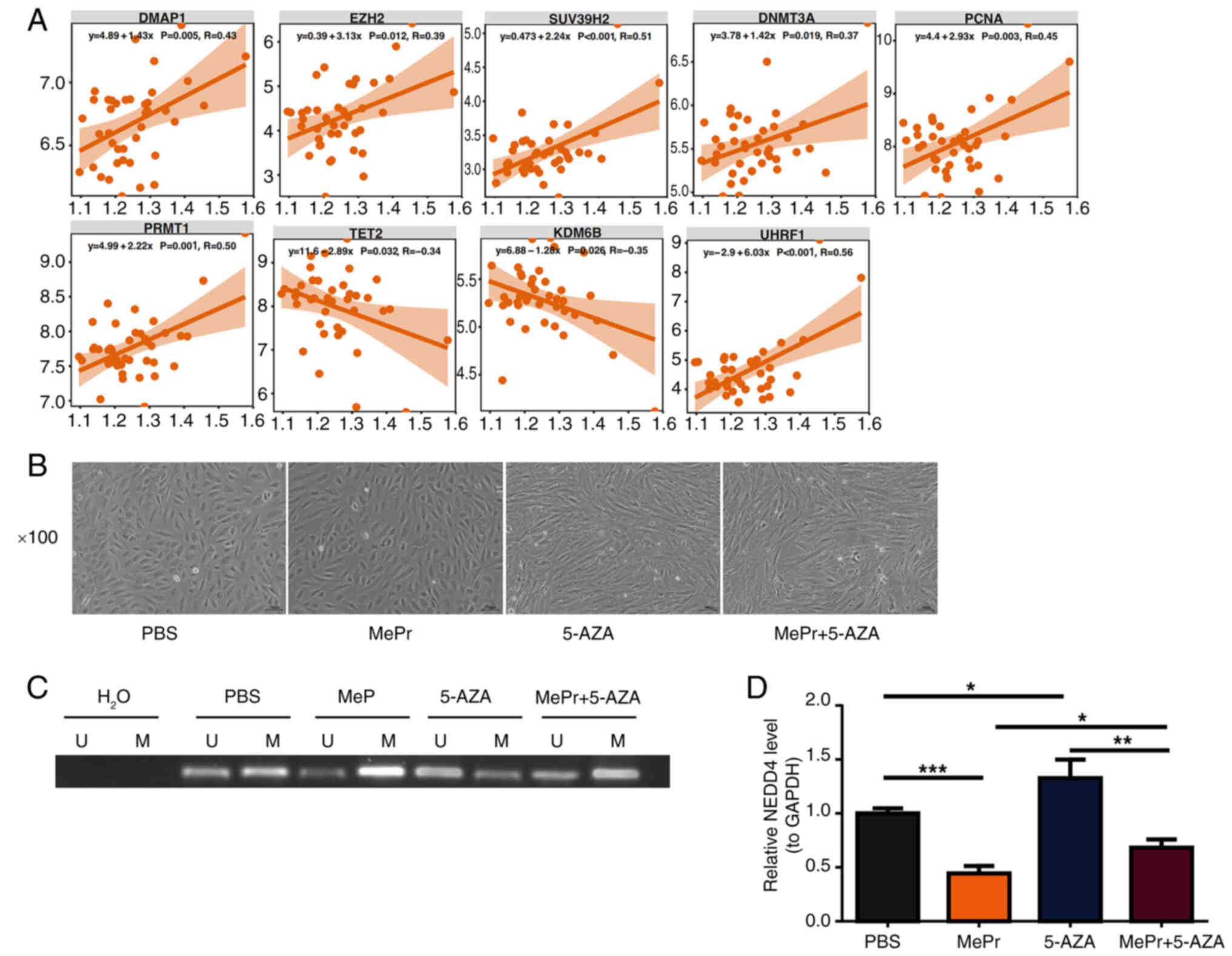
Glucocorticoids inhibit NEDD4
expression by increasing promoter methylation levels in BMECs. (A)
Correlation between NEDD4 and methylation-related genes, with
significance and correlation marked. (B) BMEC culture, including
PBS, MePr, 5-AZA and MePr + 5-AZA groups. Magnification, ×100. (C)
Methylation PCR, with H2O as the system negative control
to exclude contamination. (D) NEDD4 mRNA expression level, with
significant differences marked. U, unmethylated control; M,
methylated sample; NEDD4, neural precursor cell expressed
developmentally downregulated protein 4; BMEC, bone microvascular
endothelial cell; MePr, methylprednisolone; 5-AZA, 5-azacytidine.
*P<0.05, **P<0.01 and ***P<0.001.
View References

1 

Zhang W, Du H, Liu Z, Zhou D, Li Q and Liu W: Worldwide research trends on femur head necrosis (2000–2021): A bibliometrics analysis and suggestions for researchers. Ann Transl Med. 11:1552023. View Article : Google Scholar : PubMed/NCBI

2 

Wang T, Azeddine B, Mah W, Harvey EJ, Rosenblatt D and Séguin C: Osteonecrosis of the femoral head: Genetic basis. Int Orthop. 43:519–530. 2019. View Article : Google Scholar : PubMed/NCBI

3 

Shao W, Wang P, Lv X, Wang B, Gong S and Feng Y: Unraveling the role of endothelial dysfunction in osteonecrosis of the femoral head: A pathway to new therapies. Biomedicines. 12:6642024. View Article : Google Scholar : PubMed/NCBI

4 

Fukushima W, Fujioka M, Kubo T, Tamakoshi A, Nagai M and Hirota Y: Nationwide epidemiologic survey of idiopathic osteonecrosis of the femoral head. Clin Orthop Relat Res. 468:2715–2724. 2010. View Article : Google Scholar : PubMed/NCBI

5 

Mont MA, Pivec R, Banerjee S, Issa K, Elmallah RK and Jones LC: High-dose corticosteroid use and risk of hip osteonecrosis: Meta-analysis and systematic literature review. J Arthroplasty. 30:1506–1512.e5. 2015. View Article : Google Scholar : PubMed/NCBI

6 

Radke S, Battmann A, Jatzke S, Eulert J, Jakob F and Schütze N: Expression of the angiomatrix and angiogenic proteins CYR61, CTGF, and VEGF in osteonecrosis of the femoral head. J Orthop Res. 24:945–952. 2006. View Article : Google Scholar : PubMed/NCBI

7 

Shao W, Li Z, Wang B, Gong S, Wang P, Song B, Chen Z and Feng Y: Dimethyloxalylglycine attenuates steroid-associated endothelial progenitor cell impairment and osteonecrosis of the femoral head by regulating the HIF-1α signaling pathway. Biomedicines. 11:9922023. View Article : Google Scholar : PubMed/NCBI

8 

Huard J: Stem cells, blood vessels, and angiogenesis as major determinants for musculoskeletal tissue repair. J Orthop Res. 37:1212–1220. 2019. View Article : Google Scholar : PubMed/NCBI

9 

Wang Y, Xia CJ, Wang BJ, Ma XW and Zhao DW: The association between VEGF-634C/G polymorphisms and osteonecrosis of femoral head: A meta-analysis. Int J Clin Exp Med. 8:9313–9319. 2015.PubMed/NCBI

10 

Hang D, Wang Q, Guo C, Chen Z and Yan Z: Treatment of osteonecrosis of the femoral head with VEGF165 transgenic bone marrow mesenchymal stem cells in mongrel dogs. Cells Tissues Organs. 195:495–506. 2012. View Article : Google Scholar : PubMed/NCBI

11 

Grosso A, Burger MG, Lunger A, Schaefer DJ, Banfi A and Di Maggio N: It takes two to tango: Coupling of angiogenesis and osteogenesis for bone regeneration. Front Bioeng Biotechnol. 5:682017. View Article : Google Scholar : PubMed/NCBI

12 

Portal-Núñez S, Lozano D and Esbrit P: Role of angiogenesis on bone formation. Histol Histopathol. 27:559–566. 2012.PubMed/NCBI

13 

Deng S, Xiang JJ, Shen YY, Lin SY, Zeng YQ and Shen JP: Effects of VEGF-notch signaling pathway on proliferation and apoptosis of bone marrow MSC in patients with aplastic anemia. Zhongguo Shi Yan Xue Ye Xue Za Zhi. 27:1925–1932. 2019.(In Chinese). PubMed/NCBI

14 

Wang S, Lu J, You Q, Huang H, Chen Y and Liu K: The mTOR/AP-1/VEGF signaling pathway regulates vascular endothelial cell growth. Oncotarget. 7:53269–53276. 2016. View Article : Google Scholar : PubMed/NCBI

15 

Liu Z and Li Y: Expression of the HIF-1α/VEGF pathway is upregulated to protect alveolar bone density reduction in nasal-obstructed rats. Histol Histopathol. 39:1053–1063. 2024.PubMed/NCBI

16 

Gao L, Zhang W, Shi XH, Chang X, Han Y, Liu C, Jiang Z and Yang X: The mechanism of linear ubiquitination in regulating cell death and correlative diseases. Cell Death Dis. 14:6592023. View Article : Google Scholar : PubMed/NCBI

17 

Popovic D, Vucic D and Dikic I: Ubiquitination in disease pathogenesis and treatment. Nat Med. 20:1242–1253. 2014. View Article : Google Scholar : PubMed/NCBI

18 

Wang Y, Huang S, Xu P and Li Y: Progress in atypical ubiquitination via K6-linkages. Sheng Wu Gong Cheng Xue Bao. 38:3215–3227. 2022.(In Chinese). PubMed/NCBI

19 

Yan J, Qiao G, Yin Y, Wang E, Xiao J, Peng Y, Yu J, Du Y, Li Z, Wu H, et al: Black carp RNF5 inhibits STING/IFN signaling through promoting K48-linked ubiquitination and degradation of STING. Dev Comp Immunol. 145:1047122023. View Article : Google Scholar : PubMed/NCBI

20 

Xu J, Sheng Z, Li F, Wang S, Yuan Y, Wang M and Yu Z: NEDD4 protects vascular endothelial cells against Angiotensin II-induced cell death via enhancement of XPO1-mediated nuclear export. Exp Cell Res. 383:1115052019. View Article : Google Scholar : PubMed/NCBI

21 

Eide PW, Cekaite L, Danielsen SA, Eilertsen IA, Kjenseth A, Fykerud TA, Ågesen TH, Bruun J, Rivedal E, Lothe RA and Leithe E: NEDD4 is overexpressed in colorectal cancer and promotes colonic cell growth independently of the PI3K/PTEN/AKT pathway. Cell Signal. 25:12–18. 2013. View Article : Google Scholar : PubMed/NCBI

22 

Huang ZJ, Zhu JJ, Yang XY and Biskup E: NEDD4 promotes cell growth and migration via PTEN/PI3K/AKT signaling in hepatocellular carcinoma. Oncol Lett. 14:2649–2656. 2017. View Article : Google Scholar : PubMed/NCBI

23 

Guo Y, Wang Y, Liu H, Jiang X and Lei S: High glucose environment induces NEDD4 deficiency that impairs angiogenesis and diabetic wound healing. J Dermatol Sci. 112:148–157. 2023. View Article : Google Scholar : PubMed/NCBI

24 

Sun W, Lu H, Cui S, Zhao S, Yu H, Song H, Ruan Q, Zhang Y, Chu Y and Dong S: NEDD4 ameliorates myocardial reperfusion injury by preventing macrophages pyroptosis. Cell Commun Signal. 21:292023. View Article : Google Scholar : PubMed/NCBI

25 

Xu K, Chu Y, Liu Q, Fan W, He H and Huang F: NEDD4 E3 Ligases: Functions and mechanisms in bone and tooth. Int J Mol Sci. 23:99372022. View Article : Google Scholar : PubMed/NCBI

26 

Drinjakovic J, Jung H, Campbell DS, Strochlic L, Dwivedy A and Holt CE: E3 ligase Nedd4 promotes axon branching by downregulating PTEN. Neuron. 65:341–357. 2010. View Article : Google Scholar : PubMed/NCBI

27 

Han X, Zhang G, Chen G, Wu Y, Xu T, Xu H, Liu B and Zhou Y: Buyang huanwu decoction promotes angiogenesis in myocardial infarction through suppression of PTEN and activation of the PI3K/Akt signalling pathway. J Ethnopharmacol. 287:1149292022. View Article : Google Scholar : PubMed/NCBI

28 

Zhou YJ, Xiong YX, Wu XT, Shi D, Fan W, Zhou T, Li YC and Huang X: Inactivation of PTEN is associated with increased angiogenesis and VEGF overexpression in gastric cancer. World J Gastroenterol. 10:3225–3229. 2004. View Article : Google Scholar : PubMed/NCBI

29 

Lindberg ME, Stodden GR, King ML, MacLean JA II, Mann JL, DeMayo FJ, Lydon JP and Hayashi K: Loss of CDH1 and Pten accelerates cellular invasiveness and angiogenesis in the mouse uterus. Biol Reprod. 89:82013. View Article : Google Scholar : PubMed/NCBI

30 

Jeon SA, Lee JH, Kim DW and Cho JY: E3-ubiquitin ligase NEDD4 enhances bone formation by removing TGFβ1-induced pSMAD1 in immature osteoblast. Bone. 116:248–258. 2018. View Article : Google Scholar : PubMed/NCBI

31 

Zheng HL, Xu WN, Zhou WS, Yang RZ, Chen PB, Liu T, Jiang LS and Jiang SD: Beraprost ameliorates postmenopausal osteoporosis by regulating Nedd4-induced Runx2 ubiquitination. Cell Death Dis. 12:4972021. View Article : Google Scholar : PubMed/NCBI

32 

Livak KJ and Schmittgen TD: Analysis of relative gene expression data using real-time quantitative PCR and the 2(−Delta Delta C(T)) method. Methods. 25:402–408. 2001. View Article : Google Scholar : PubMed/NCBI

33 

Liang XZ, Luo D, Chen YR, Li JC, Yan BZ, Guo YB, Wen MT, Xu B and Li G: Identification of potential autophagy-related genes in steroid-induced osteonecrosis of the femoral head via bioinformatics analysis and experimental verification. J Orthop Surg Res. 17:862022. View Article : Google Scholar : PubMed/NCBI

34 

Liu Y, Su Z, Tavana O and Gu W: Understanding the complexity of p53 in a new era of tumor suppression. Cancer Cell. 42:946–967. 2024. View Article : Google Scholar : PubMed/NCBI

35 

Chatterjee N and Walker GC: Mechanisms of DNA damage, repair, and mutagenesis. Environ Mol Mutagen. 58:235–263. 2017. View Article : Google Scholar : PubMed/NCBI

36 

Ciccia A and Elledge SJ: The DNA damage response: Making it safe to play with knives. Mol Cell. 40:179–204. 2010. View Article : Google Scholar : PubMed/NCBI

37 

Li J, Zhao H, McMahon A and Yan S: APE1 assembles biomolecular condensates to promote the ATR-Chk1 DNA damage response in nucleolus. Nucleic Acids Res. 50:10503–10525. 2022. View Article : Google Scholar : PubMed/NCBI

38 

Provasek V, Kodavati M, Kim B, Mitra J and Hegde ML: TDP43 Interacts with MLH1 and MSH6 Proteins in A DNA Damage-Inducible Manner. Mol Brain. 17:322024. View Article : Google Scholar : PubMed/NCBI

39 

Pfeiffer C, Grandits AM, Asnagli H, Schneller A, Huber J, Zojer N, Schreder M, Parker AE, Bolomsky A, Beer PA and Ludwig H: CTPS1 is a novel therapeutic target in multiple myeloma which synergizes with inhibition of CHEK1, ATR or WEE1. Leukemia. 38:181–192. 2024. View Article : Google Scholar : PubMed/NCBI

40 

Li WH, Wang F, Song GY, Yu QH, Du RP and Xu P: PARP-1: A critical regulator in radioprotection and radiotherapy-mechanisms, challenges, and therapeutic opportunities. Front Pharmacol. 14:11989482023. View Article : Google Scholar : PubMed/NCBI

41 

Olazabal-Herrero A, He B, Kwon Y, Gupta AK, Dutta A, Huang Y, Boddu P, Liang Z, Liang F, Teng Y, et al: The FANCI/FANCD2 complex links DNA damage response to R-loop regulation through SRSF1-mediated mRNA export. Cell Rep. 43:1136102024. View Article : Google Scholar : PubMed/NCBI

42 

Zheng L, Jia J, Finger LD, Guo Z, Zer C and Shen B: Functional regulation of FEN1 nuclease and its link to cancer. Nucleic Acids Res. 39:781–794. 2011. View Article : Google Scholar : PubMed/NCBI

43 

Sonntag R, Giebeler N, Nevzorova YA, Bangen JM, Fahrenkamp D, Lambertz D, Haas U, Hu W, Gassler N, Cubero FJ, et al: Cyclin E1 and cyclin-dependent kinase 2 are critical for initiation, but not for progression of hepatocellular carcinoma. Proc Natl Acad Sci USA. 115:9282–9287. 2018. View Article : Google Scholar : PubMed/NCBI

44 

Ghelli Luserna di Rorà A, Cerchione C, Martinelli G and Simonetti G: A WEE1 family business: Regulation of mitosis, cancer progression, and therapeutic target. J Hematol Oncol. 13:1262020. View Article : Google Scholar : PubMed/NCBI

45 

Sokhi S, Lewis CW, Bukhari AB, Hadfield J, Xiao EJ, Fung J, Yoon YJ, Hsu WH, Gamper AM and Chan GK: Myt1 overexpression mediates resistance to cell cycle and DNA damage checkpoint kinase inhibitors. Front Cell Dev Biol. 11:12705422023. View Article : Google Scholar : PubMed/NCBI

46 

Abe H, Alavattam KG, Kato Y, Castrillon DH, Pang Q, Andreassen PR and Namekawa SH: CHEK1 coordinates DNA damage signaling and meiotic progression in the male germline of mice. Hum Mol Genet. 27:1136–1149. 2018. View Article : Google Scholar : PubMed/NCBI

47 

Li S, Sampson C, Liu C, Piao HL and Liu HX: Integrin signaling in cancer: Bidirectional mechanisms and therapeutic opportunities. Cell Commun Signal. 21:2662023. View Article : Google Scholar : PubMed/NCBI

48 

Huveneers S and Danen EH: Adhesion signaling-crosstalk between integrins, Src and Rho. J Cell Sci. 122:1059–1069. 2009. View Article : Google Scholar : PubMed/NCBI

49 

Nobta M, Tsukazaki T, Shibata Y, Xin C, Moriishi T, Sakano S, Shindo H and Yamaguchi A: Critical regulation of bone morphogenetic protein-induced osteoblastic differentiation by Delta1/Jagged1-activated Notch1 signaling. J Biol Chem. 280:15842–15848. 2005. View Article : Google Scholar : PubMed/NCBI

50 

Rafii S and Lis R: Angiocrine ANGPTL2 executes HSC functions in endothelial niche. Blood. 139:1433–1434. 2022. View Article : Google Scholar : PubMed/NCBI

51 

Lal N, Puri K and Rodrigues B: Vascular endothelial growth factor B and its signaling. Front Cardiovasc Med. 5:392018. View Article : Google Scholar : PubMed/NCBI

52 

Mang T, Kleinschmidt-Doerr K, Ploeger F, Schoenemann A, Lindemann S and Gigout A: BMPR1A is necessary for chondrogenesis and osteogenesis, whereas BMPR1B prevents hypertrophic differentiation. J Cell Sci. 133:jcs2469342020. View Article : Google Scholar : PubMed/NCBI

53 

Wei X, Luo L and Chen J: Roles of mTOR signaling in tissue regeneration. Cells. 8:10752019. View Article : Google Scholar : PubMed/NCBI

54 

Zhang F, Wei L, Wang L, Wang T, Xie Z, Luo H, Li F, Zhang J, Dong W, Liu G, et al: FAR591 promotes the pathogenesis and progression of SONFH by regulating Fos expression to mediate the apoptosis of bone microvascular endothelial cells. Bone Res. 11:272023. View Article : Google Scholar : PubMed/NCBI

Related Articles

  • Abstract
  • View
  • Download
  • Twitter
Copy and paste a formatted citation
Spandidos Publications style
Li J, Zhen D, Qin Y and Guo C: NEDD4 regulates VEGF signaling and mTOR to promote angiogenesis and the cell cycle in steroid‑induced osteonecrosis of the femoral head. Mol Med Rep 33: 49, 2026.
APA
Li, J., Zhen, D., Qin, Y., & Guo, C. (2026). NEDD4 regulates VEGF signaling and mTOR to promote angiogenesis and the cell cycle in steroid‑induced osteonecrosis of the femoral head. Molecular Medicine Reports, 33, 49. https://doi.org/10.3892/mmr.2025.13759
MLA
Li, J., Zhen, D., Qin, Y., Guo, C."NEDD4 regulates VEGF signaling and mTOR to promote angiogenesis and the cell cycle in steroid‑induced osteonecrosis of the femoral head". Molecular Medicine Reports 33.1 (2026): 49.
Chicago
Li, J., Zhen, D., Qin, Y., Guo, C."NEDD4 regulates VEGF signaling and mTOR to promote angiogenesis and the cell cycle in steroid‑induced osteonecrosis of the femoral head". Molecular Medicine Reports 33, no. 1 (2026): 49. https://doi.org/10.3892/mmr.2025.13759
Copy and paste a formatted citation
x
Spandidos Publications style
Li J, Zhen D, Qin Y and Guo C: NEDD4 regulates VEGF signaling and mTOR to promote angiogenesis and the cell cycle in steroid‑induced osteonecrosis of the femoral head. Mol Med Rep 33: 49, 2026.
APA
Li, J., Zhen, D., Qin, Y., & Guo, C. (2026). NEDD4 regulates VEGF signaling and mTOR to promote angiogenesis and the cell cycle in steroid‑induced osteonecrosis of the femoral head. Molecular Medicine Reports, 33, 49. https://doi.org/10.3892/mmr.2025.13759
MLA
Li, J., Zhen, D., Qin, Y., Guo, C."NEDD4 regulates VEGF signaling and mTOR to promote angiogenesis and the cell cycle in steroid‑induced osteonecrosis of the femoral head". Molecular Medicine Reports 33.1 (2026): 49.
Chicago
Li, J., Zhen, D., Qin, Y., Guo, C."NEDD4 regulates VEGF signaling and mTOR to promote angiogenesis and the cell cycle in steroid‑induced osteonecrosis of the femoral head". Molecular Medicine Reports 33, no. 1 (2026): 49. https://doi.org/10.3892/mmr.2025.13759
Follow us
  • Twitter
  • LinkedIn
  • Facebook
About
  • Spandidos Publications
  • Careers
  • Cookie Policy
  • Privacy Policy
How can we help?
  • Help
  • Live Chat
  • Contact
  • Email to our Support Team