Spandidos Publications Logo
  • About
    • About Spandidos
    • Aims and Scopes
    • Abstracting and Indexing
    • Editorial Policies
    • Reprints and Permissions
    • Job Opportunities
    • Terms and Conditions
    • Contact
  • Journals
    • All Journals
    • Oncology Letters
      • Oncology Letters
      • Information for Authors
      • Editorial Policies
      • Editorial Board
      • Aims and Scope
      • Abstracting and Indexing
      • Bibliographic Information
      • Archive
    • International Journal of Oncology
      • International Journal of Oncology
      • Information for Authors
      • Editorial Policies
      • Editorial Board
      • Aims and Scope
      • Abstracting and Indexing
      • Bibliographic Information
      • Archive
    • Molecular and Clinical Oncology
      • Molecular and Clinical Oncology
      • Information for Authors
      • Editorial Policies
      • Editorial Board
      • Aims and Scope
      • Abstracting and Indexing
      • Bibliographic Information
      • Archive
    • Experimental and Therapeutic Medicine
      • Experimental and Therapeutic Medicine
      • Information for Authors
      • Editorial Policies
      • Editorial Board
      • Aims and Scope
      • Abstracting and Indexing
      • Bibliographic Information
      • Archive
    • International Journal of Molecular Medicine
      • International Journal of Molecular Medicine
      • Information for Authors
      • Editorial Policies
      • Editorial Board
      • Aims and Scope
      • Abstracting and Indexing
      • Bibliographic Information
      • Archive
    • Biomedical Reports
      • Biomedical Reports
      • Information for Authors
      • Editorial Policies
      • Editorial Board
      • Aims and Scope
      • Abstracting and Indexing
      • Bibliographic Information
      • Archive
    • Oncology Reports
      • Oncology Reports
      • Information for Authors
      • Editorial Policies
      • Editorial Board
      • Aims and Scope
      • Abstracting and Indexing
      • Bibliographic Information
      • Archive
    • Molecular Medicine Reports
      • Molecular Medicine Reports
      • Information for Authors
      • Editorial Policies
      • Editorial Board
      • Aims and Scope
      • Abstracting and Indexing
      • Bibliographic Information
      • Archive
    • World Academy of Sciences Journal
      • World Academy of Sciences Journal
      • Information for Authors
      • Editorial Policies
      • Editorial Board
      • Aims and Scope
      • Abstracting and Indexing
      • Bibliographic Information
      • Archive
    • International Journal of Functional Nutrition
      • International Journal of Functional Nutrition
      • Information for Authors
      • Editorial Policies
      • Editorial Board
      • Aims and Scope
      • Abstracting and Indexing
      • Bibliographic Information
      • Archive
    • International Journal of Epigenetics
      • International Journal of Epigenetics
      • Information for Authors
      • Editorial Policies
      • Editorial Board
      • Aims and Scope
      • Abstracting and Indexing
      • Bibliographic Information
      • Archive
    • Medicine International
      • Medicine International
      • Information for Authors
      • Editorial Policies
      • Editorial Board
      • Aims and Scope
      • Abstracting and Indexing
      • Bibliographic Information
      • Archive
  • Articles
  • Information
    • Information for Authors
    • Information for Reviewers
    • Information for Librarians
    • Information for Advertisers
    • Conferences
  • Language Editing
Spandidos Publications Logo
  • About
    • About Spandidos
    • Aims and Scopes
    • Abstracting and Indexing
    • Editorial Policies
    • Reprints and Permissions
    • Job Opportunities
    • Terms and Conditions
    • Contact
  • Journals
    • All Journals
    • Biomedical Reports
      • Information for Authors
      • Editorial Policies
      • Editorial Board
      • Aims and Scope
      • Abstracting and Indexing
      • Bibliographic Information
      • Archive
    • Experimental and Therapeutic Medicine
      • Information for Authors
      • Editorial Policies
      • Editorial Board
      • Aims and Scope
      • Abstracting and Indexing
      • Bibliographic Information
      • Archive
    • International Journal of Epigenetics
      • Information for Authors
      • Editorial Policies
      • Editorial Board
      • Aims and Scope
      • Abstracting and Indexing
      • Bibliographic Information
      • Archive
    • International Journal of Functional Nutrition
      • Information for Authors
      • Editorial Policies
      • Editorial Board
      • Aims and Scope
      • Abstracting and Indexing
      • Bibliographic Information
      • Archive
    • International Journal of Molecular Medicine
      • Information for Authors
      • Editorial Policies
      • Editorial Board
      • Aims and Scope
      • Abstracting and Indexing
      • Bibliographic Information
      • Archive
    • International Journal of Oncology
      • Information for Authors
      • Editorial Policies
      • Editorial Board
      • Aims and Scope
      • Abstracting and Indexing
      • Bibliographic Information
      • Archive
    • Medicine International
      • Information for Authors
      • Editorial Policies
      • Editorial Board
      • Aims and Scope
      • Abstracting and Indexing
      • Bibliographic Information
      • Archive
    • Molecular and Clinical Oncology
      • Information for Authors
      • Editorial Policies
      • Editorial Board
      • Aims and Scope
      • Abstracting and Indexing
      • Bibliographic Information
      • Archive
    • Molecular Medicine Reports
      • Information for Authors
      • Editorial Policies
      • Editorial Board
      • Aims and Scope
      • Abstracting and Indexing
      • Bibliographic Information
      • Archive
    • Oncology Letters
      • Information for Authors
      • Editorial Policies
      • Editorial Board
      • Aims and Scope
      • Abstracting and Indexing
      • Bibliographic Information
      • Archive
    • Oncology Reports
      • Information for Authors
      • Editorial Policies
      • Editorial Board
      • Aims and Scope
      • Abstracting and Indexing
      • Bibliographic Information
      • Archive
    • World Academy of Sciences Journal
      • Information for Authors
      • Editorial Policies
      • Editorial Board
      • Aims and Scope
      • Abstracting and Indexing
      • Bibliographic Information
      • Archive
  • Articles
  • Information
    • For Authors
    • For Reviewers
    • For Librarians
    • For Advertisers
    • Conferences
  • Language Editing
Login Register Submit
  • This site uses cookies
  • You can change your cookie settings at any time by following the instructions in our Cookie Policy. To find out more, you may read our Privacy Policy.

    I agree
Search articles by DOI, keyword, author or affiliation
Search
Advanced Search
presentation
Molecular Medicine Reports
Join Editorial Board Propose a Special Issue
Print ISSN: 1791-2997 Online ISSN: 1791-3004
Journal Cover
February-2026 Volume 33 Issue 2

Full Size Image

Sign up for eToc alerts
Recommend to Library

Journals

International Journal of Molecular Medicine

International Journal of Molecular Medicine

International Journal of Molecular Medicine is an international journal devoted to molecular mechanisms of human disease.

International Journal of Oncology

International Journal of Oncology

International Journal of Oncology is an international journal devoted to oncology research and cancer treatment.

Molecular Medicine Reports

Molecular Medicine Reports

Covers molecular medicine topics such as pharmacology, pathology, genetics, neuroscience, infectious diseases, molecular cardiology, and molecular surgery.

Oncology Reports

Oncology Reports

Oncology Reports is an international journal devoted to fundamental and applied research in Oncology.

Experimental and Therapeutic Medicine

Experimental and Therapeutic Medicine

Experimental and Therapeutic Medicine is an international journal devoted to laboratory and clinical medicine.

Oncology Letters

Oncology Letters

Oncology Letters is an international journal devoted to Experimental and Clinical Oncology.

Biomedical Reports

Biomedical Reports

Explores a wide range of biological and medical fields, including pharmacology, genetics, microbiology, neuroscience, and molecular cardiology.

Molecular and Clinical Oncology

Molecular and Clinical Oncology

International journal addressing all aspects of oncology research, from tumorigenesis and oncogenes to chemotherapy and metastasis.

World Academy of Sciences Journal

World Academy of Sciences Journal

Multidisciplinary open-access journal spanning biochemistry, genetics, neuroscience, environmental health, and synthetic biology.

International Journal of Functional Nutrition

International Journal of Functional Nutrition

Open-access journal combining biochemistry, pharmacology, immunology, and genetics to advance health through functional nutrition.

International Journal of Epigenetics

International Journal of Epigenetics

Publishes open-access research on using epigenetics to advance understanding and treatment of human disease.

Medicine International

Medicine International

An International Open Access Journal Devoted to General Medicine.

Journal Cover
February-2026 Volume 33 Issue 2

Full Size Image

Sign up for eToc alerts
Recommend to Library

  • Article
  • Citations
    • Cite This Article
    • Download Citation
    • Create Citation Alert
    • Remove Citation Alert
    • Cited By
  • Similar Articles
    • Related Articles (in Spandidos Publications)
    • Similar Articles (Google Scholar)
    • Similar Articles (PubMed)
  • Download PDF
  • Download XML
  • View XML

  • Supplementary Files
    • Supplementary_Data.pdf
Article Open Access

Hyperoside prevents osteoporosis by activating the PI3K/AKT signaling pathway to inhibit oxidative stress and promote osteogenesis

  • Authors:
    • Lirong Li
    • Huaidong Deng
    • Shabin Zhuan
    • Boyu Wu
    • Dawei Xiao
  • View Affiliations / Copyright

    Affiliations: Department of Orthopedics, Dongguan Traditional Chinese Medicine Hospital, Dongguan, Guangdong 523000, P.R. China, Department of Orthopedics, Dongguan Traditional Chinese Medicine Hospital, Dongguan, Guangdong 523000, P.R. China
    Copyright: © Li et al. This is an open access article distributed under the terms of Creative Commons Attribution License.
  • Article Number: 57
    |
    Published online on: December 3, 2025
       https://doi.org/10.3892/mmr.2025.13767
  • Expand metrics +
Metrics: Total Views: 0 (Spandidos Publications: | PMC Statistics: )
Metrics: Total PDF Downloads: 0 (Spandidos Publications: | PMC Statistics: )
Cited By (CrossRef): 0 citations Loading Articles...

This article is mentioned in:


Abstract

Hyperoside (Hyp), a naturally occurring flavonol glycoside derived from Crataegus, otherwise known as hawthorn, possesses potent antioxidant properties and has demonstrated therapeutic potential in various oxidative stress‑related diseases, including osteoporosis (OP). However, the precise molecular mechanisms underlying the anti‑osteoporotic effects of Hyp remain to be fully elucidated. The present study aimed to evaluate the therapeutic efficacy of Hyp against OP and to elucidate its underlying mechanisms. An osteoporotic mouse model was established via bilateral ovariectomy (OVX) to assess the in vivo efficacy of Hyp. Network pharmacology was employed to predict the potential therapeutic targets of Hyp in OP. In vitro experiments using bone marrow mesenchymal stem cells (BMSCs) were performed to validate the findings. Techniques including alkaline phosphatase staining, Alizarin red S staining, reverse transcription‑quantitative PCR and western blotting were used to assess osteogenic differentiation and molecular signaling pathways. Micro‑CT analysis revealed that Hyp significantly ameliorated OVX‑induced bone loss in mice. Network pharmacology identified the PI3K/AKT signaling pathway as a potential key target. In vitro, Hyp significantly reduced H2O2‑induced oxidative stress in BMSCs and promoted their osteogenic differentiation. Mechanistically, Hyp was found to activate the PI3K/AKT signaling pathway, suggesting its notable role in mediating the antioxidant and osteoinductive effects of Hyp. Summarily, Hyp may effectively alleviate OVX‑induced OP in mice, potentially by mitigating oxidative stress and promoting osteogenesis via activation of the PI3K/AKT signaling pathway. These findings provide novel insights into the therapeutic mechanism of Hyp and support its potential as a candidate agent for OP treatment.
View Figures

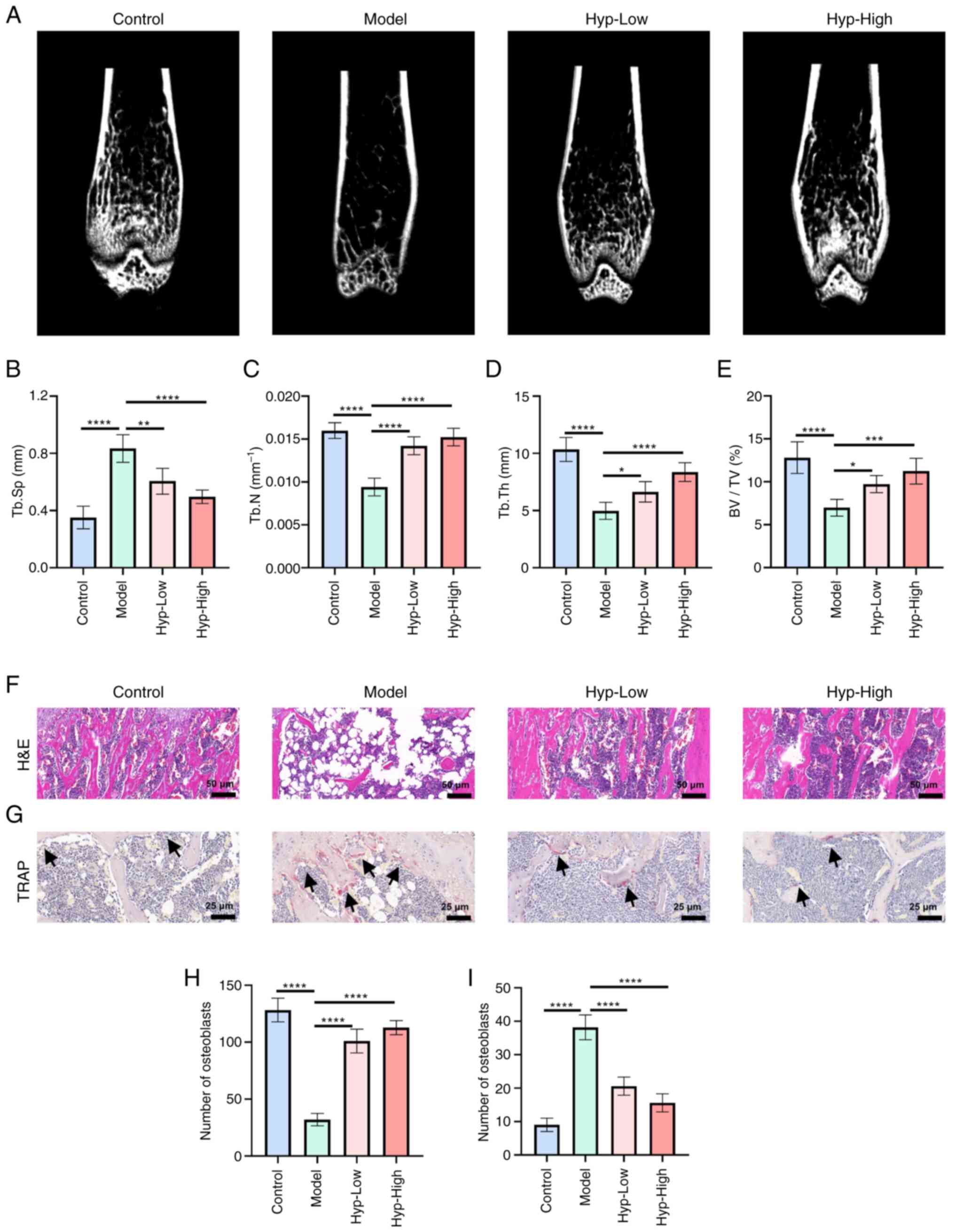
Figure 1

Hyp alleviates ovariectomy-induced
osteoporosis in mice. (A) Representative micro-CT three-dimensional
reconstruction images of the mouse femur. Quantitative analyses of
(B) Tb.Sp, (C) Tb.N, (D) Tb.Th and (E) BV/TV (n=5). (F)
Representative H&E staining images of femoral sections (n=5;
×20 magnification). (G) Representative TRAP-stained sections
showing osteoclasts (indicated by black arrows) (n=5; ×40
magnification). (H) Quantification of osteoblast number per bone
surface (n=5). (I) Quantification of osteoclast number per bone
surface (n=5). Data are presented as the mean ± standard deviation.
*P<0.05, **P<0.01, ***P<0.001 and ****P<0.0001. Tb.Sp,
trabecular separation; Tb.N, trabecular number; Tb.Th, trabecular
thickness; BV/TV, bone volume fraction; TRAP, tartrate-resistant
acid phosphatase; Hyp, hyperoside.

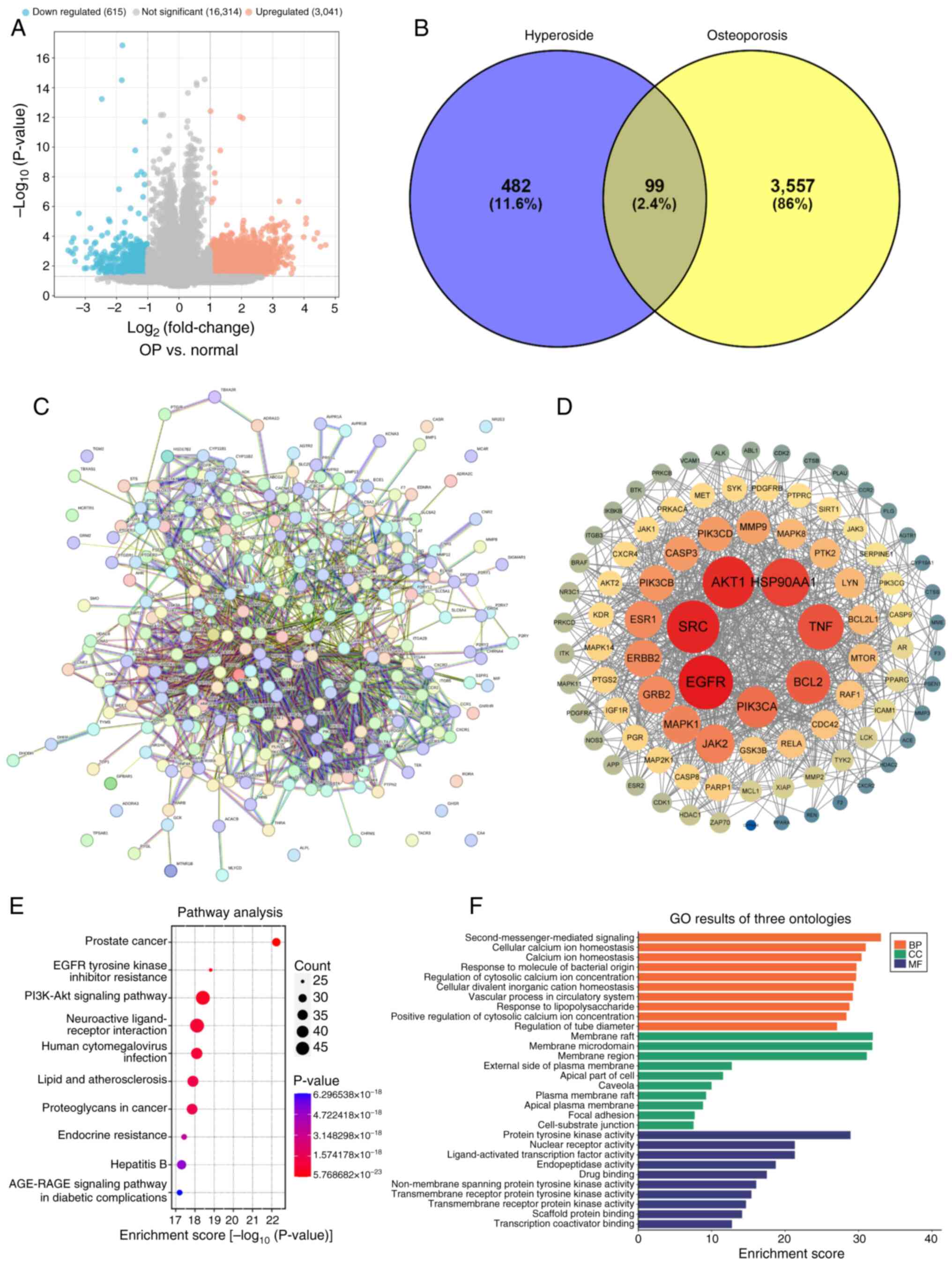
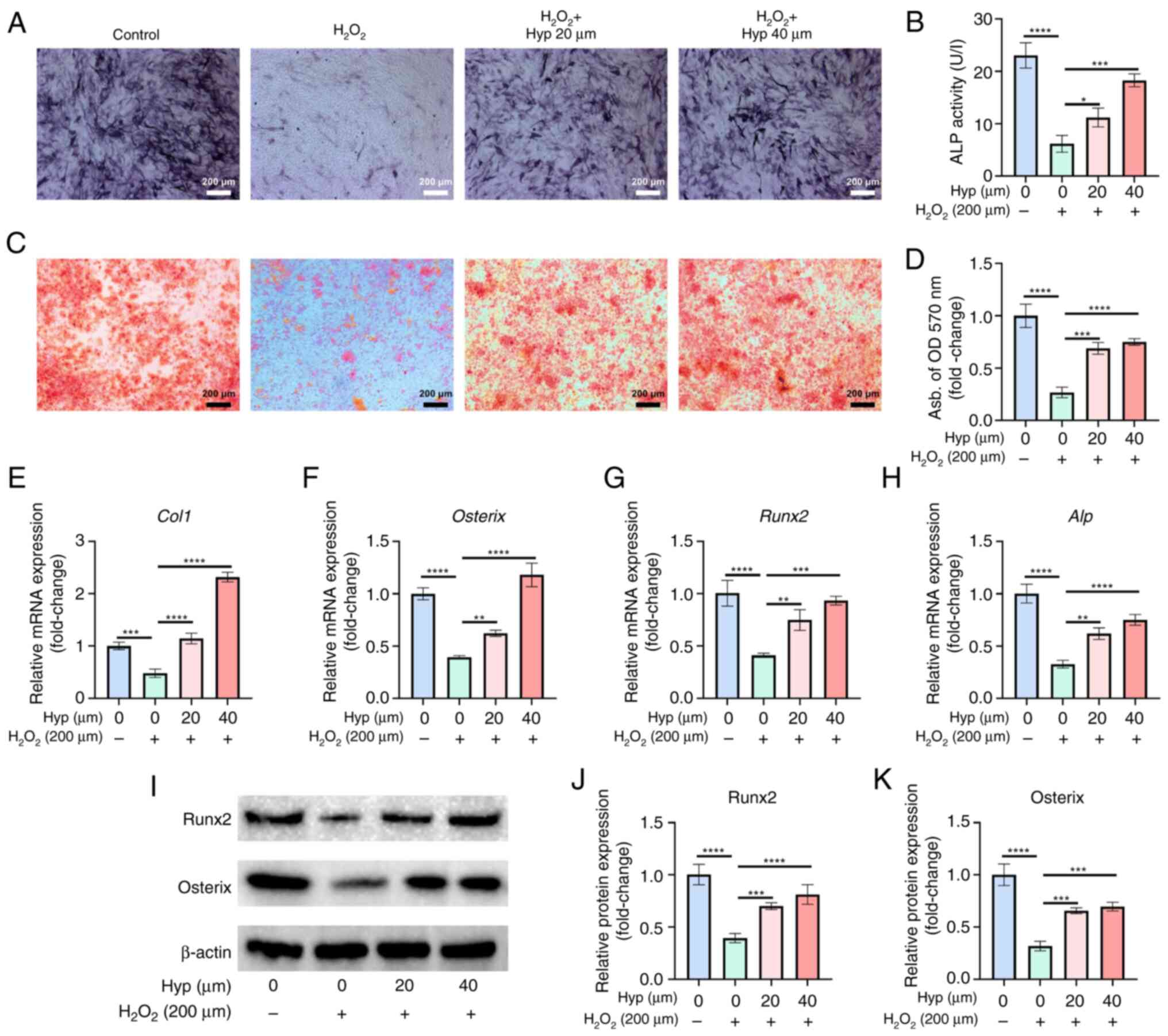
Figure 2

Potential mechanism of Hyperoside for
the treatment of OP. (A) Volcano plots of the GSE35956 and GSE80614
gene chip datasets. (B) Venn diagram of disease and drug targets.
(C) Protein-protein interaction network constructed using the
STRING database of Hyperoside in the treatment of OP. (D)
Visualization and analysis of the PPI network performed using
Cytoscape software. (E) Bubble chart of Kyoto Encyclopedia of Genes
and Genomes enrichment analysis. (F) GO enrichment analysis. All
displayed GO terms met the significance threshold of adjusted
P<0.05. OP, osteoporosis; GO, Gene Ontology; BP, biological
process; CC, cellular component; MF, molecular function.

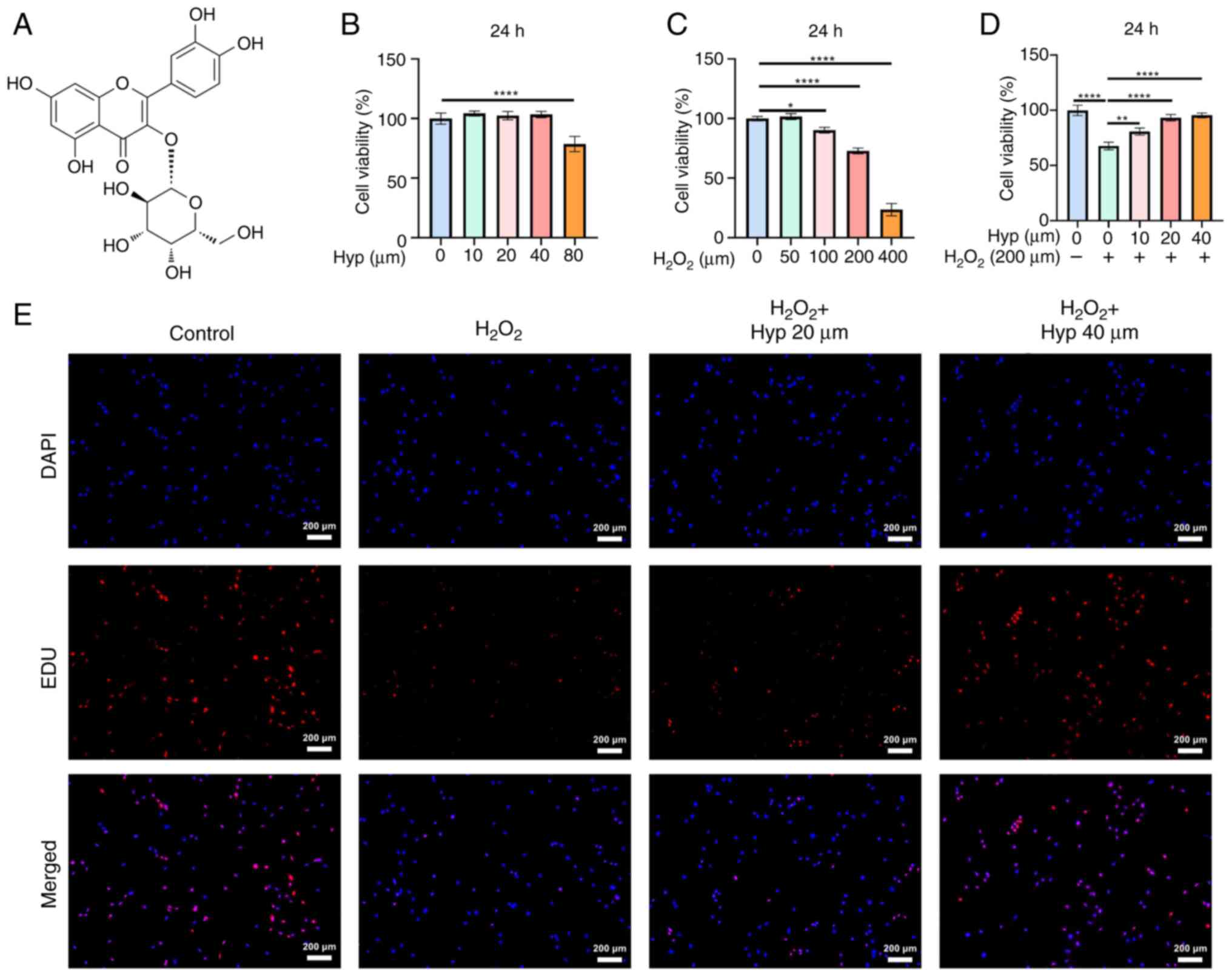
Figure 3

Hyp alleviates the inhibitory effect
of H2O2 on the viability of BMSCs. (A)
Chemical structure of Hyp. (B) Impact of Hyp on the viability of
BMSCs (n=3). (C) Impact of H2O2 on the
viability of BMSCs (n=3). (D) Impact of Hyp on the viability of
BMSCs under the intervention of H2O2 (n=3).
(E) Representative EDU staining images showing cell proliferation
in BMSCs treated with Hyp and H2O2 (n=3; ×5
magnification). Data are presented as the mean ± standard
deviation. *P<0.05, **P<0.01 and ****P<0.0001. BMSC, bone
marrow mesenchymal stem cells; Hyp, hyperoside.

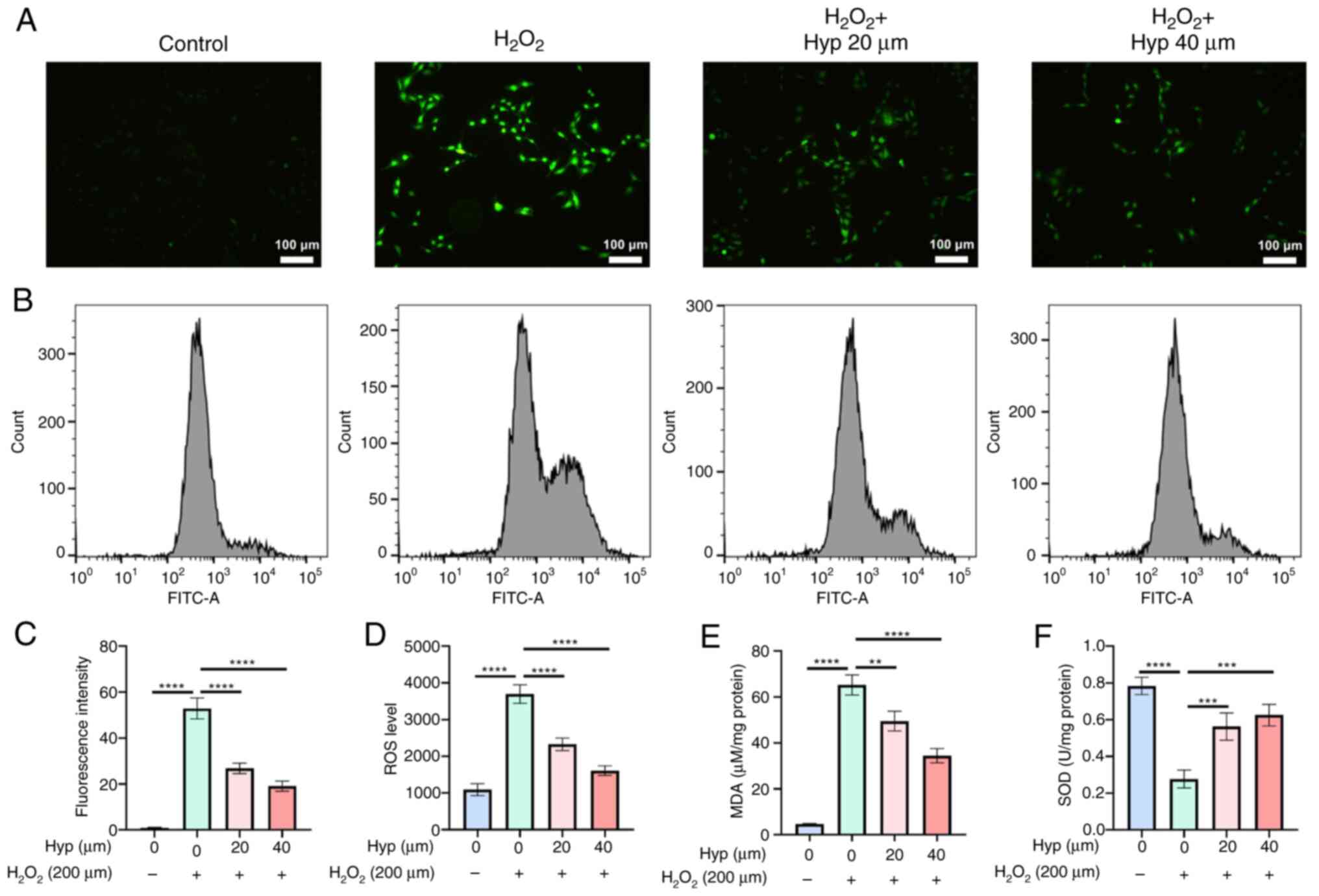
Figure 4

Hyperoside alleviates the oxidative
stress of bone marrow mesenchymal stem cells induced by
H2O2. (A) Representative fluorescence images
of DCFH-DA staining (n=3; ×10 magnification). (B) Representative
flow cytometry images of DCFH-DA staining (n=3). (C) Quantification
of the fluorescence intensity of DCFH-DA staining and (D)
quantification of the mean fluorescence intensity in flow cytometry
(n=3). Quantification of the (E) MDA and (F) SOD levels (n=3). Data
are presented as the mean ± standard deviation. **P<0.01,
***P<0.001 and ****P<0.0001. Hyp, hyperoside; ROS, reactive
oxygen species; MDA, malondialdehyde; SOD, superoxide
dismutase.

Figure 5

Hyperoside rescues the osteogenic
differentiation function of bone marrow mesenchymal stem cells. (A)
Representative images of ALP staining and (B) quantification of ALP
activity (n=3; ×5 magnification). (C) Representative images of ARS
staining and (D) quantification of ARS staining (n=3; ×5
magnification). The mRNA expression levels of (E) Col1, (F)
Osterix, (G) Runx2 and (H) Alp (n=3). (I)
Representative western blot images, and semi-quantification of the
protein expression levels of (J) Runx2 and (K) Osterix (n=3). Data
are presented as the mean ± standard deviation. *P<0.05,
**P<0.01, ***P<0.001 and ****P<0.0001. OD, optical
density; Hyp, Hyperoside; Col1, type-I collagen; Runx2,
runt-related transcription factor 2; ARS, Alizarin red S;
ALP/Alp, alkaline phosphatase.

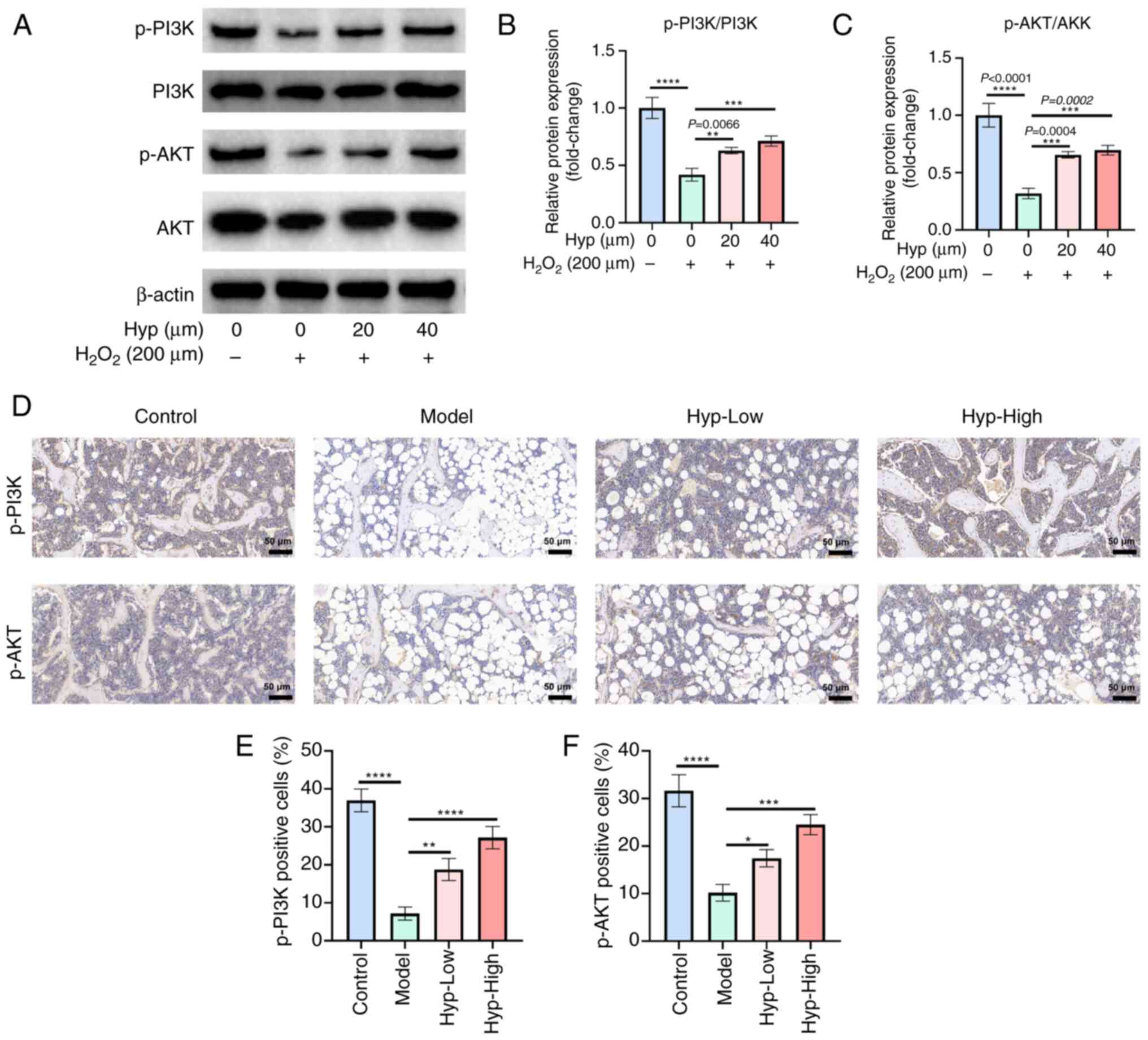
Figure 6

Hyp initiates activation of the
PI3K/AKT signaling pathway. (A) Representative western blotting
images, and semi-quantification of the protein expression levels of
(B) p-PI3K/PI3K and (C) p-AKT/AKT (n=3). (D) Representative
immunohistochemistry images of p-PI3K and p-AKT expression in
femoral sections. Semi-quantification of (E) p-PI3K- and (F)
p-AKT-positive cells observed in (D) (n=5; ×20 magnification). Data
are presented as the mean ± standard deviation. *P<0.05,
**P<0.01, ***P<0.001 and ****P<0.0001. Hyp, Hyperoside;
p-, phosphorylated.

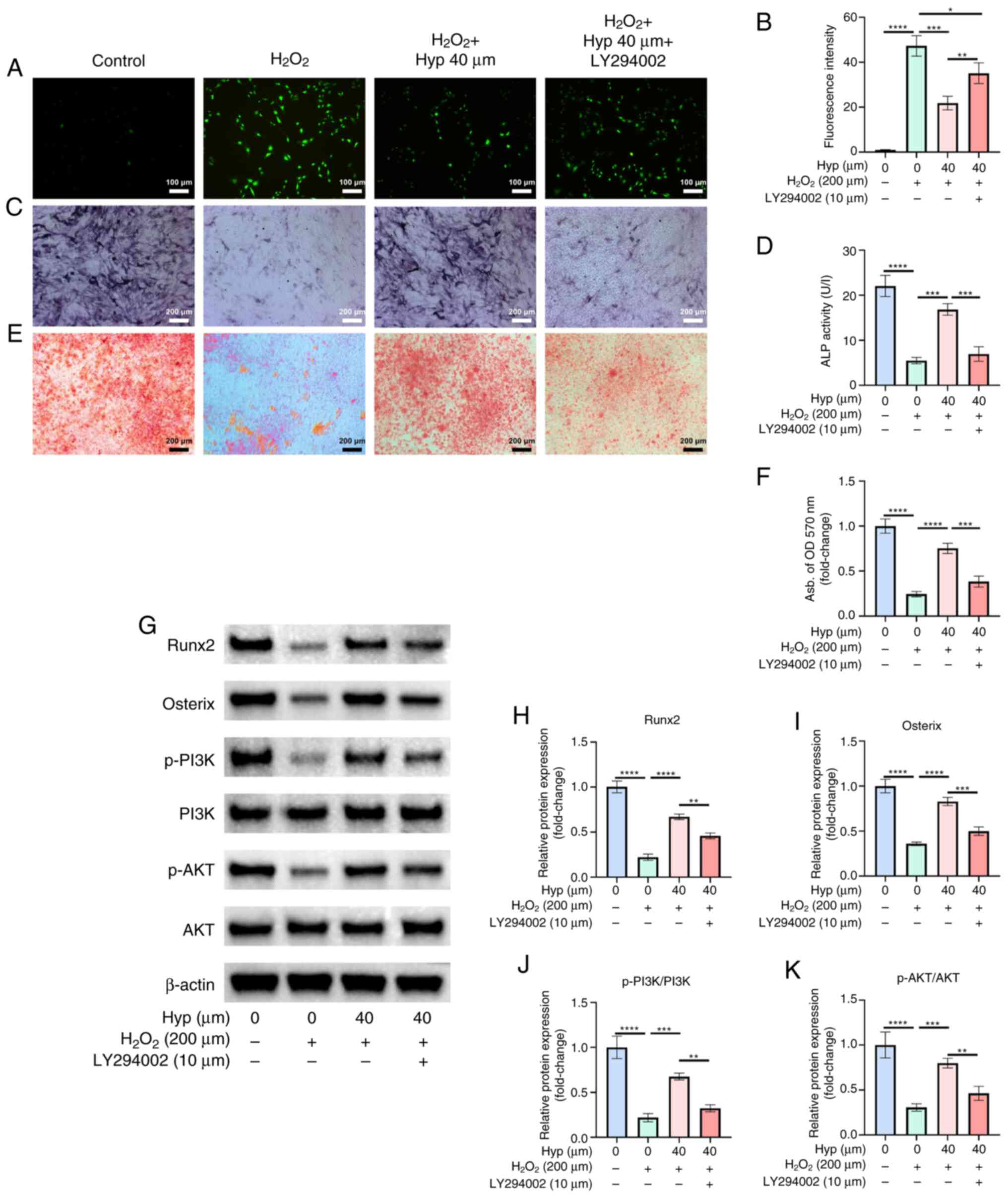
Figure 7

Inhibition of the PI3K/AKT pathway
attenuates the antioxidative and osteogenic effects of Hyp. (A)
Representative fluorescence images of DCFH-DA staining and (B)
quantification (n=3; ×10 magnification). (C) Representative images
of ALP staining and (D) quantification of ALP activity (n=3; ×5
magnification). (E) Representative images of ARS staining and (F)
quantification of ARS absorbance levels (n=3; ×5 magnification).
(G) Representative western blotting images, and semi-quantification
of the protein expression levels of (H) Runx2, (I) Osterix, (J)
p-PI3K/PI3K and (K) p-AKT/AKT (n=3). Data are presented as the mean
± standard deviation. *P<0.05, **P<0.01, ***P<0.001 and
****P<0.0001. Hyp, Hyperoside; ALP, alkaline phosphatase; ARS,
Alizarin red S; Runx2, runt-related transcription factor 2; p-,
phosphorylated.
View References

1 

Walker MD and Shane E: Postmenopausal osteoporosis. N Engl J Med. 389:1979–1991. 2023. View Article : Google Scholar : PubMed/NCBI

2 

Tang SS, Yin XJ, Yu W, Cui L, Li ZX, Cui LJ, Wang LH and Xia W: Prevalence of osteoporosis and related factors in postmenopausal women aged 40 and above in China. Zhonghua Liu Xing Bing Xue Za Zhi. 43:509–516. 2022.(In Chinese). PubMed/NCBI

3 

LeBoff MS, Greenspan SL, Insogna KL, Lewiecki EM, Saag KG, Singer AJ and Siris ES: The clinician's guide to prevention and treatment of osteoporosis. Osteoporos Int. 33:2049–2102. 2022. View Article : Google Scholar : PubMed/NCBI

4 

Cosman F, Langdahl B and Leder BZ: Treatment sequence for osteoporosis. Endocr Pract. 30:490–496. 2024. View Article : Google Scholar : PubMed/NCBI

5 

Eid A and Atlas J: The role of bisphosphonates in medical oncology and their association with jaw bone necrosis. Oral Maxillofac Surg Clin North Am. 26:231–237. 2014. View Article : Google Scholar : PubMed/NCBI

6 

Chlebowski RT and Manson JE: Menopausal hormone therapy and breast cancer. Cancer J. 28:169–175. 2022. View Article : Google Scholar : PubMed/NCBI

7 

Cho L, Kaunitz AM, Faubion SS, Hayes SN, Lau ES, Pristera N, Scott N, Shifren JL, Shufelt CL, Stuenkel CA, et al: Rethinking menopausal hormone therapy: For whom, what, when, and how long? Circulation. 147:597–610. 2023. View Article : Google Scholar : PubMed/NCBI

8 

Luo J, Mills K, le Cessie S, Noordam R and van Heemst D: Ageing, age-related diseases and oxidative stress: What to do next? Ageing Res Rev. 57:1009822020. View Article : Google Scholar : PubMed/NCBI

9 

Iantomasi T, Romagnoli C, Palmini G, Donati S, Falsetti I, Miglietta F, Aurilia C, Marini F, Giusti F and Brandi ML: Oxidative stress and inflammation in osteoporosis: Molecular mechanisms involved and the relationship with microRNAs. Int J Mol Sci. 24:37722023. View Article : Google Scholar : PubMed/NCBI

10 

Marcucci G, Domazetovic V, Nediani C, Ruzzolini J, Favre C and Brandi ML: Oxidative stress and natural antioxidants in osteoporosis: Novel preventive and therapeutic approaches. Antioxidants (Basel). 12:3732023. View Article : Google Scholar : PubMed/NCBI

11 

Kimball JS, Johnson JP and Carlson DA: Oxidative stress and osteoporosis. J Bone Joint Surg Am. 103:1451–1461. 2021. View Article : Google Scholar : PubMed/NCBI

12 

Chen Y, Cai Y, Chen C, Li M, Lu L, Yu Z, Wang S, Fang L and Xu S: Aroclor 1254 induced inhibitory effects on osteoblast differentiation in murine MC3T3-E1 cells through oxidative stress. Front Endocrinol (Lausanne). 13:9406242022. View Article : Google Scholar : PubMed/NCBI

13 

Tanaka M, Inoue H, Takahashi N and Uehara M: AMPK negatively regulates RANKL-induced osteoclast differentiation by controlling oxidative stress. Free Radic Biol Med. 205:107–115. 2023. View Article : Google Scholar : PubMed/NCBI

14 

Zhu C, Shen S, Zhang S, Huang M, Zhang L and Chen X: Autophagy in bone remodeling: A regulator of oxidative stress. Front Endocrinol (Lausanne). 13:8986342022. View Article : Google Scholar : PubMed/NCBI

15 

Zhao Q, Feng J, Liu F, Liang Q, Xie M, Dong J, Zou Y, Ye J, Liu G, Cao Y, et al: Rhizoma Drynariae-derived nanovesicles reverse osteoporosis by potentiating osteogenic differentiation of human bone marrow mesenchymal stem cells via targeting ERα signaling. Acta Pharm Sin B. 14:2210–2227. 2024. View Article : Google Scholar : PubMed/NCBI

16 

Li B, Wang Y, Gong S, Yao W, Gao H, Liu M and Wei M: Puerarin improves OVX-induced osteoporosis by regulating phospholipid metabolism and biosynthesis of unsaturated fatty acids based on serum metabolomics. Phytomedicine. 102:1541982022. View Article : Google Scholar : PubMed/NCBI

17 

Rao T, Tong H, Li J, Huang J, Yin Y and Zhang J: Exploring the role and mechanism of hyperoside against cardiomyocyte injury in mice with myocardial infarction based on JAK2/STAT3 signaling pathway. Phytomedicine. 128:1553192024. View Article : Google Scholar : PubMed/NCBI

18 

Zhao K, Zhou F, Lu Y, Gao T, Wang R, Xie M and Wang H: Hyperoside alleviates depressive-like behavior in social defeat mice by mediating microglial polarization and neuroinflammation via TRX1/NLRP1/Caspase-1 signal pathway. Int Immunopharmacol. 145:1137312025. View Article : Google Scholar : PubMed/NCBI

19 

Chen Y, Dai F, He Y, Chen Q, Xia Q, Cheng G, Lu Y and Zhang Q: Beneficial effects of hyperoside on bone metabolism in ovariectomized mice. Biomed Pharmacother. 107:1175–1182. 2018. View Article : Google Scholar : PubMed/NCBI

20 

Yan K, Zhang RK, Wang JX, Chen HF, Zhang Y, Cheng F, Jiang Y, Wang M, Wu Z, Chen XG, et al: Using network pharmacology and molecular docking technology, proteomics and experiments were used to verify the effect of Yigu decoction (YGD) on the expression of key genes in osteoporotic mice. Ann Med. 57:24492252025. View Article : Google Scholar : PubMed/NCBI

21 

Yang PH, Wei YN, Xiao BJ, Li SY, Li XL, Yang LJ, Pan HF and Chen GX: Curcumin for gastric cancer: Mechanism prediction via network pharmacology, docking, and in vitro experiments. World J Gastrointest Oncol. 16:3635–3650. 2024. View Article : Google Scholar : PubMed/NCBI

22 

Benisch P, Schilling T, Klein-Hitpass L, Frey SP, Seefried L, Raaijmakers N, Krug M, Regensburger M, Zeck S, Schinke T, et al: The transcriptional profile of mesenchymal stem cell populations in primary osteoporosis is distinct and shows overexpression of osteogenic inhibitors. PLoS One. 7:e451422012. View Article : Google Scholar : PubMed/NCBI

23 

van de Peppel J, Strini T, Tilburg J, Westerhoff H, van Wijnen AJ and van Leeuwen JP: Identification of three early phases of cell-fate determination during osteogenic and adipogenic differentiation by transcription factor dynamics. Stem Cell Reports. 8:947–960. 2017. View Article : Google Scholar : PubMed/NCBI

24 

Livak KJ and Schmittgen TD: Analysis of relative gene expression data using real-time quantitative PCR and the 2(−Delta Delta C(T)) method. Methods. 25:402–408. 2001. View Article : Google Scholar : PubMed/NCBI

25 

Zhang C, Li H, Li J, Hu J, Yang K and Tao L: Oxidative stress: A common pathological state in a high-risk population for osteoporosis. Biomed Pharmacother. 163:1148342023. View Article : Google Scholar : PubMed/NCBI

26 

Karthik V and Guntur AR: Energy metabolism of osteocytes. Curr Osteoporos Rep. 19:444–451. 2021. View Article : Google Scholar : PubMed/NCBI

27 

Shinohara I, Morita M, Chow SK, Murayama M, Sususki Y, Gao Q and Goodman SB: Pathophysiology of the effects of oxidative stress on the skeletal system. J Orthop Res. 43:1059–1072. 2025. View Article : Google Scholar : PubMed/NCBI

28 

Li D, Zhao Z, Zhu L, Feng H, Song J, Fu J, Li J, Chen Z and Fu H: 7,8-DHF inhibits BMSC oxidative stress via the TRKB/PI3K/AKT/NRF2 pathway to improve symptoms of postmenopausal osteoporosis. Free Radic Biol Med. 223:413–429. 2024. View Article : Google Scholar : PubMed/NCBI

29 

Chai S, Yang Y, Wei L, Cao Y, Ma J, Zheng X, Teng J and Qin N: Luteolin rescues postmenopausal osteoporosis elicited by OVX through alleviating osteoblast pyroptosis via activating PI3K-AKT signaling. Phytomedicine. 128:1555162024. View Article : Google Scholar : PubMed/NCBI

30 

Jang E: Hyperoside as a potential natural product targeting oxidative stress in liver diseases. Antioxidants (Basel). 11:14372022. View Article : Google Scholar : PubMed/NCBI

31 

Ku SK, Zhou W, Lee W, Han MS, Na M and Bae JS: Anti-inflammatory effects of hyperoside in human endothelial cells and in mice. Inflammation. 38:784–799. 2015. View Article : Google Scholar : PubMed/NCBI

32 

Wu L, Li Q, Liu S, An X, Huang Z, Zhang B, Yuan Y and Xing C: Protective effect of hyperoside against renal ischemia-reperfusion injury via modulating mitochondrial fission, oxidative stress, and apoptosis. Free Radic Res. 53:727–736. 2019. View Article : Google Scholar : PubMed/NCBI

33 

Lennicke C and Cocheme HM: Redox metabolism: ROS as specific molecular regulators of cell signaling and function. Mol Cell. 81:3691–3707. 2021. View Article : Google Scholar : PubMed/NCBI

34 

Gebicki JM: Oxidative stress, free radicals and protein peroxides. Arch Biochem Biophys. 595:33–39. 2016. View Article : Google Scholar : PubMed/NCBI

35 

Jomova K, Raptova R, Alomar SY, Alwasel SH, Nepovimova E, Kuca K and Valko M: Reactive oxygen species, toxicity, oxidative stress, and antioxidants: chronic diseases and aging. Arch Toxicol. 97:2499–2574. 2023. View Article : Google Scholar : PubMed/NCBI

36 

Ren BC, Zhang YF, Liu SS, Cheng XJ, Yang X, Cui XG, Zhao XR, Zhao H, Hao MF, Li MD, et al: Curcumin alleviates oxidative stress and inhibits apoptosis in diabetic cardiomyopathy via Sirt1-Foxo1 and PI3K-Akt signalling pathways. J Cell Mol Med. 24:12355–12367. 2020. View Article : Google Scholar : PubMed/NCBI

37 

Deng S, Dai G, Chen S, Nie Z, Zhou J, Fang H and Peng H: Dexamethasone induces osteoblast apoptosis through ROS-PI3K/AKT/GSK3β signaling pathway. Biomed Pharmacother. 110:602–608. 2019. View Article : Google Scholar : PubMed/NCBI

38 

Wei L, Chen W, Huang L, Wang H, Su Y, Liang J, Lian H, Xu J, Zhao J and Liu Q: Alpinetin ameliorates bone loss in LPS-induced inflammation osteolysis via ROS mediated P38/PI3K signaling pathway. Pharmacol Res. 184:1064002022. View Article : Google Scholar : PubMed/NCBI

39 

Xin L, Feng HC and Zhang Q, Cen XL, Huang RR, Tan GY and Zhang Q: Exploring the osteogenic effects of simiao wan through activation of the PI3K/AKT pathway in osteoblasts. J Ethnopharmacol. 338:1190232025. View Article : Google Scholar : PubMed/NCBI

40 

Wang D, Liu Y, Tang D, Wei S, Sun J, Ruan L, He L, Li R, Ren Q, Tian X and Chen Y: Induction of PI3K/Akt-mediated apoptosis in osteoclasts is a key approach for buxue tongluo pills to treat osteonecrosis of the femoral head. Front Pharmacol. 12:7299092021. View Article : Google Scholar : PubMed/NCBI

41 

Wu CH, Hung TH, Chen CC, Ke CH, Lee CY, Wang PY and Chen SF: Post-injury treatment with 7,8-dihydroxyflavone, a TrkB receptor agonist, protects against experimental traumatic brain injury via PI3K/Akt signaling. PLoS One. 9:e1133972014. View Article : Google Scholar : PubMed/NCBI

42 

Liang G, Zhao J, Dou Y, Yang Y, Zhao D, Zhou Z, Zhang R, Yang W and Zeng L: Mechanism and experimental verification of luteolin for the treatment of osteoporosis based on network pharmacology. Front Endocrinol (Lausanne). 13:8666412022. View Article : Google Scholar : PubMed/NCBI

43 

Xiong Y, Zhao B, Zhang W, Jia L, Zhang Y and Xu X: Curcumin promotes osteogenic differentiation of periodontal ligament stem cells through the PI3K/AKT/Nrf2 signaling pathway. Iran J Basic Med Sci. 23:954–960. 2020.PubMed/NCBI

44 

Lu J, Shi X, Fu Q, Han Y, Zhu L, Zhou Z, Li Y and Lu N: New mechanistic understanding of osteoclast differentiation and bone resorption mediated by P2X7 receptors and PI3K-Akt-GSK3beta signaling. Cell Mol Biol Lett. 29:1002024. View Article : Google Scholar : PubMed/NCBI

45 

Jiang Z, Deng L, Li M, Alonge E and Wang Y and Wang Y: Ginsenoside Rg1 modulates PI3K/AKT pathway for enhanced osteogenesis via GPER. Phytomedicine. 124:1552842024. View Article : Google Scholar : PubMed/NCBI

Related Articles

  • Abstract
  • View
  • Download
  • Twitter
Copy and paste a formatted citation
Spandidos Publications style
Li L, Deng H, Zhuan S, Wu B and Xiao D: Hyperoside prevents osteoporosis by activating the PI3K/AKT signaling pathway to inhibit oxidative stress and promote osteogenesis. Mol Med Rep 33: 57, 2026.
APA
Li, L., Deng, H., Zhuan, S., Wu, B., & Xiao, D. (2026). Hyperoside prevents osteoporosis by activating the PI3K/AKT signaling pathway to inhibit oxidative stress and promote osteogenesis. Molecular Medicine Reports, 33, 57. https://doi.org/10.3892/mmr.2025.13767
MLA
Li, L., Deng, H., Zhuan, S., Wu, B., Xiao, D."Hyperoside prevents osteoporosis by activating the PI3K/AKT signaling pathway to inhibit oxidative stress and promote osteogenesis". Molecular Medicine Reports 33.2 (2026): 57.
Chicago
Li, L., Deng, H., Zhuan, S., Wu, B., Xiao, D."Hyperoside prevents osteoporosis by activating the PI3K/AKT signaling pathway to inhibit oxidative stress and promote osteogenesis". Molecular Medicine Reports 33, no. 2 (2026): 57. https://doi.org/10.3892/mmr.2025.13767
Copy and paste a formatted citation
x
Spandidos Publications style
Li L, Deng H, Zhuan S, Wu B and Xiao D: Hyperoside prevents osteoporosis by activating the PI3K/AKT signaling pathway to inhibit oxidative stress and promote osteogenesis. Mol Med Rep 33: 57, 2026.
APA
Li, L., Deng, H., Zhuan, S., Wu, B., & Xiao, D. (2026). Hyperoside prevents osteoporosis by activating the PI3K/AKT signaling pathway to inhibit oxidative stress and promote osteogenesis. Molecular Medicine Reports, 33, 57. https://doi.org/10.3892/mmr.2025.13767
MLA
Li, L., Deng, H., Zhuan, S., Wu, B., Xiao, D."Hyperoside prevents osteoporosis by activating the PI3K/AKT signaling pathway to inhibit oxidative stress and promote osteogenesis". Molecular Medicine Reports 33.2 (2026): 57.
Chicago
Li, L., Deng, H., Zhuan, S., Wu, B., Xiao, D."Hyperoside prevents osteoporosis by activating the PI3K/AKT signaling pathway to inhibit oxidative stress and promote osteogenesis". Molecular Medicine Reports 33, no. 2 (2026): 57. https://doi.org/10.3892/mmr.2025.13767
Follow us
  • Twitter
  • LinkedIn
  • Facebook
About
  • Spandidos Publications
  • Careers
  • Cookie Policy
  • Privacy Policy
How can we help?
  • Help
  • Live Chat
  • Contact
  • Email to our Support Team