Spandidos Publications Logo
  • About
    • About Spandidos
    • Aims and Scopes
    • Abstracting and Indexing
    • Editorial Policies
    • Reprints and Permissions
    • Job Opportunities
    • Terms and Conditions
    • Contact
  • Journals
    • All Journals
    • Oncology Letters
      • Oncology Letters
      • Information for Authors
      • Editorial Policies
      • Editorial Board
      • Aims and Scope
      • Abstracting and Indexing
      • Bibliographic Information
      • Archive
    • International Journal of Oncology
      • International Journal of Oncology
      • Information for Authors
      • Editorial Policies
      • Editorial Board
      • Aims and Scope
      • Abstracting and Indexing
      • Bibliographic Information
      • Archive
    • Molecular and Clinical Oncology
      • Molecular and Clinical Oncology
      • Information for Authors
      • Editorial Policies
      • Editorial Board
      • Aims and Scope
      • Abstracting and Indexing
      • Bibliographic Information
      • Archive
    • Experimental and Therapeutic Medicine
      • Experimental and Therapeutic Medicine
      • Information for Authors
      • Editorial Policies
      • Editorial Board
      • Aims and Scope
      • Abstracting and Indexing
      • Bibliographic Information
      • Archive
    • International Journal of Molecular Medicine
      • International Journal of Molecular Medicine
      • Information for Authors
      • Editorial Policies
      • Editorial Board
      • Aims and Scope
      • Abstracting and Indexing
      • Bibliographic Information
      • Archive
    • Biomedical Reports
      • Biomedical Reports
      • Information for Authors
      • Editorial Policies
      • Editorial Board
      • Aims and Scope
      • Abstracting and Indexing
      • Bibliographic Information
      • Archive
    • Oncology Reports
      • Oncology Reports
      • Information for Authors
      • Editorial Policies
      • Editorial Board
      • Aims and Scope
      • Abstracting and Indexing
      • Bibliographic Information
      • Archive
    • Molecular Medicine Reports
      • Molecular Medicine Reports
      • Information for Authors
      • Editorial Policies
      • Editorial Board
      • Aims and Scope
      • Abstracting and Indexing
      • Bibliographic Information
      • Archive
    • World Academy of Sciences Journal
      • World Academy of Sciences Journal
      • Information for Authors
      • Editorial Policies
      • Editorial Board
      • Aims and Scope
      • Abstracting and Indexing
      • Bibliographic Information
      • Archive
    • International Journal of Functional Nutrition
      • International Journal of Functional Nutrition
      • Information for Authors
      • Editorial Policies
      • Editorial Board
      • Aims and Scope
      • Abstracting and Indexing
      • Bibliographic Information
      • Archive
    • International Journal of Epigenetics
      • International Journal of Epigenetics
      • Information for Authors
      • Editorial Policies
      • Editorial Board
      • Aims and Scope
      • Abstracting and Indexing
      • Bibliographic Information
      • Archive
    • Medicine International
      • Medicine International
      • Information for Authors
      • Editorial Policies
      • Editorial Board
      • Aims and Scope
      • Abstracting and Indexing
      • Bibliographic Information
      • Archive
  • Articles
  • Information
    • Information for Authors
    • Information for Reviewers
    • Information for Librarians
    • Information for Advertisers
    • Conferences
  • Language Editing
Spandidos Publications Logo
  • About
    • About Spandidos
    • Aims and Scopes
    • Abstracting and Indexing
    • Editorial Policies
    • Reprints and Permissions
    • Job Opportunities
    • Terms and Conditions
    • Contact
  • Journals
    • All Journals
    • Biomedical Reports
      • Information for Authors
      • Editorial Policies
      • Editorial Board
      • Aims and Scope
      • Abstracting and Indexing
      • Bibliographic Information
      • Archive
    • Experimental and Therapeutic Medicine
      • Information for Authors
      • Editorial Policies
      • Editorial Board
      • Aims and Scope
      • Abstracting and Indexing
      • Bibliographic Information
      • Archive
    • International Journal of Epigenetics
      • Information for Authors
      • Editorial Policies
      • Editorial Board
      • Aims and Scope
      • Abstracting and Indexing
      • Bibliographic Information
      • Archive
    • International Journal of Functional Nutrition
      • Information for Authors
      • Editorial Policies
      • Editorial Board
      • Aims and Scope
      • Abstracting and Indexing
      • Bibliographic Information
      • Archive
    • International Journal of Molecular Medicine
      • Information for Authors
      • Editorial Policies
      • Editorial Board
      • Aims and Scope
      • Abstracting and Indexing
      • Bibliographic Information
      • Archive
    • International Journal of Oncology
      • Information for Authors
      • Editorial Policies
      • Editorial Board
      • Aims and Scope
      • Abstracting and Indexing
      • Bibliographic Information
      • Archive
    • Medicine International
      • Information for Authors
      • Editorial Policies
      • Editorial Board
      • Aims and Scope
      • Abstracting and Indexing
      • Bibliographic Information
      • Archive
    • Molecular and Clinical Oncology
      • Information for Authors
      • Editorial Policies
      • Editorial Board
      • Aims and Scope
      • Abstracting and Indexing
      • Bibliographic Information
      • Archive
    • Molecular Medicine Reports
      • Information for Authors
      • Editorial Policies
      • Editorial Board
      • Aims and Scope
      • Abstracting and Indexing
      • Bibliographic Information
      • Archive
    • Oncology Letters
      • Information for Authors
      • Editorial Policies
      • Editorial Board
      • Aims and Scope
      • Abstracting and Indexing
      • Bibliographic Information
      • Archive
    • Oncology Reports
      • Information for Authors
      • Editorial Policies
      • Editorial Board
      • Aims and Scope
      • Abstracting and Indexing
      • Bibliographic Information
      • Archive
    • World Academy of Sciences Journal
      • Information for Authors
      • Editorial Policies
      • Editorial Board
      • Aims and Scope
      • Abstracting and Indexing
      • Bibliographic Information
      • Archive
  • Articles
  • Information
    • For Authors
    • For Reviewers
    • For Librarians
    • For Advertisers
    • Conferences
  • Language Editing
Login Register Submit
  • This site uses cookies
  • You can change your cookie settings at any time by following the instructions in our Cookie Policy. To find out more, you may read our Privacy Policy.

    I agree
Search articles by DOI, keyword, author or affiliation
Search
Advanced Search
presentation
Molecular Medicine Reports
Join Editorial Board Propose a Special Issue
Print ISSN: 1791-2997 Online ISSN: 1791-3004
Journal Cover
February-2026 Volume 33 Issue 2

Full Size Image

Sign up for eToc alerts
Recommend to Library

Journals

International Journal of Molecular Medicine

International Journal of Molecular Medicine

International Journal of Molecular Medicine is an international journal devoted to molecular mechanisms of human disease.

International Journal of Oncology

International Journal of Oncology

International Journal of Oncology is an international journal devoted to oncology research and cancer treatment.

Molecular Medicine Reports

Molecular Medicine Reports

Covers molecular medicine topics such as pharmacology, pathology, genetics, neuroscience, infectious diseases, molecular cardiology, and molecular surgery.

Oncology Reports

Oncology Reports

Oncology Reports is an international journal devoted to fundamental and applied research in Oncology.

Experimental and Therapeutic Medicine

Experimental and Therapeutic Medicine

Experimental and Therapeutic Medicine is an international journal devoted to laboratory and clinical medicine.

Oncology Letters

Oncology Letters

Oncology Letters is an international journal devoted to Experimental and Clinical Oncology.

Biomedical Reports

Biomedical Reports

Explores a wide range of biological and medical fields, including pharmacology, genetics, microbiology, neuroscience, and molecular cardiology.

Molecular and Clinical Oncology

Molecular and Clinical Oncology

International journal addressing all aspects of oncology research, from tumorigenesis and oncogenes to chemotherapy and metastasis.

World Academy of Sciences Journal

World Academy of Sciences Journal

Multidisciplinary open-access journal spanning biochemistry, genetics, neuroscience, environmental health, and synthetic biology.

International Journal of Functional Nutrition

International Journal of Functional Nutrition

Open-access journal combining biochemistry, pharmacology, immunology, and genetics to advance health through functional nutrition.

International Journal of Epigenetics

International Journal of Epigenetics

Publishes open-access research on using epigenetics to advance understanding and treatment of human disease.

Medicine International

Medicine International

An International Open Access Journal Devoted to General Medicine.

Journal Cover
February-2026 Volume 33 Issue 2

Full Size Image

Sign up for eToc alerts
Recommend to Library

  • Article
  • Citations
    • Cite This Article
    • Download Citation
    • Create Citation Alert
    • Remove Citation Alert
    • Cited By
  • Similar Articles
    • Related Articles (in Spandidos Publications)
    • Similar Articles (Google Scholar)
    • Similar Articles (PubMed)
  • Download PDF
  • Download XML
  • View XML
Article Open Access

ABCC9 knockdown attenuates isoproterenol‑induced myocardial hypertrophy by inhibiting the PI3K/AKT signaling pathway

  • Authors:
    • Qian Peng
    • Rui Chang
    • Linlin Ma
    • Yanfei Li
  • View Affiliations / Copyright

    Affiliations: Graduate School, Shanghai University of Traditional Chinese Medicine, Shanghai 201203, P.R. China, Department of Scientific Research, Shanghai University of Medicine and Health Sciences Affiliated Zhoupu Hospital, Shanghai 201318, P.R. China
    Copyright: © Peng et al. This is an open access article distributed under the terms of Creative Commons Attribution License.
  • Article Number: 60
    |
    Published online on: December 4, 2025
       https://doi.org/10.3892/mmr.2025.13770
  • Expand metrics +
Metrics: Total Views: 0 (Spandidos Publications: | PMC Statistics: )
Metrics: Total PDF Downloads: 0 (Spandidos Publications: | PMC Statistics: )
Cited By (CrossRef): 0 citations Loading Articles...

This article is mentioned in:


Abstract

Myocardial hypertrophy (MH) represents an early pathological manifestation that progresses to severe cardiovascular disease (CVD), and its reversal is important for preventing and treating heart failure. Dysregulated expression of ATP‑binding cassette subfamily C member 9 (ABCC9) has been associated with complex CVD pathogenesis, although its precise mechanistic role remains ambiguous. The present study was designed to investigate the protective effects of ABCC9 knockdown against isoproterenol (ISO)‑induced MH and elucidate its underlying molecular mechanisms. AC16 cardiomyocytes were treated with ISO to establish an MH model, in which ABCC9 protein expression was significantly elevated. Fluorescence staining of cardiomyocyte surface area and quantification of MH‑related biomarkers, including atrial natriuretic peptide, brain natriuretic peptide and β‑myosin heavy chain, demonstrated that ABCC9 knockdown effectively attenuated MH and improved cardiac function. Furthermore, western blot analysis and flow cytometry revealed that ABCC9 knockdown not only decreased cardiomyocyte apoptosis but also reduced oxidative stress, as indicated by lower reactive oxygen species levels. Mechanistically, western blotting and mitochondrial membrane potential assays showed that ABCC9 knockdown inhibited the phosphatidylinositol 3‑kinase/protein kinase B (PI3K/AKT) signaling pathway and improved mitochondrial function. Notably, these protective effects were diminished by treatment with the PI3K/AKT activator 740Y‑P. These findings collectively suggest that ABCC9 knockdown protects against MH by inhibiting the PI3K/AKT signaling pathway, thereby alleviating mitochondrial dysfunction and reducing apoptosis and oxidative stress, positioning ABCC9 as a potential therapeutic target for MH treatment.
View Figures

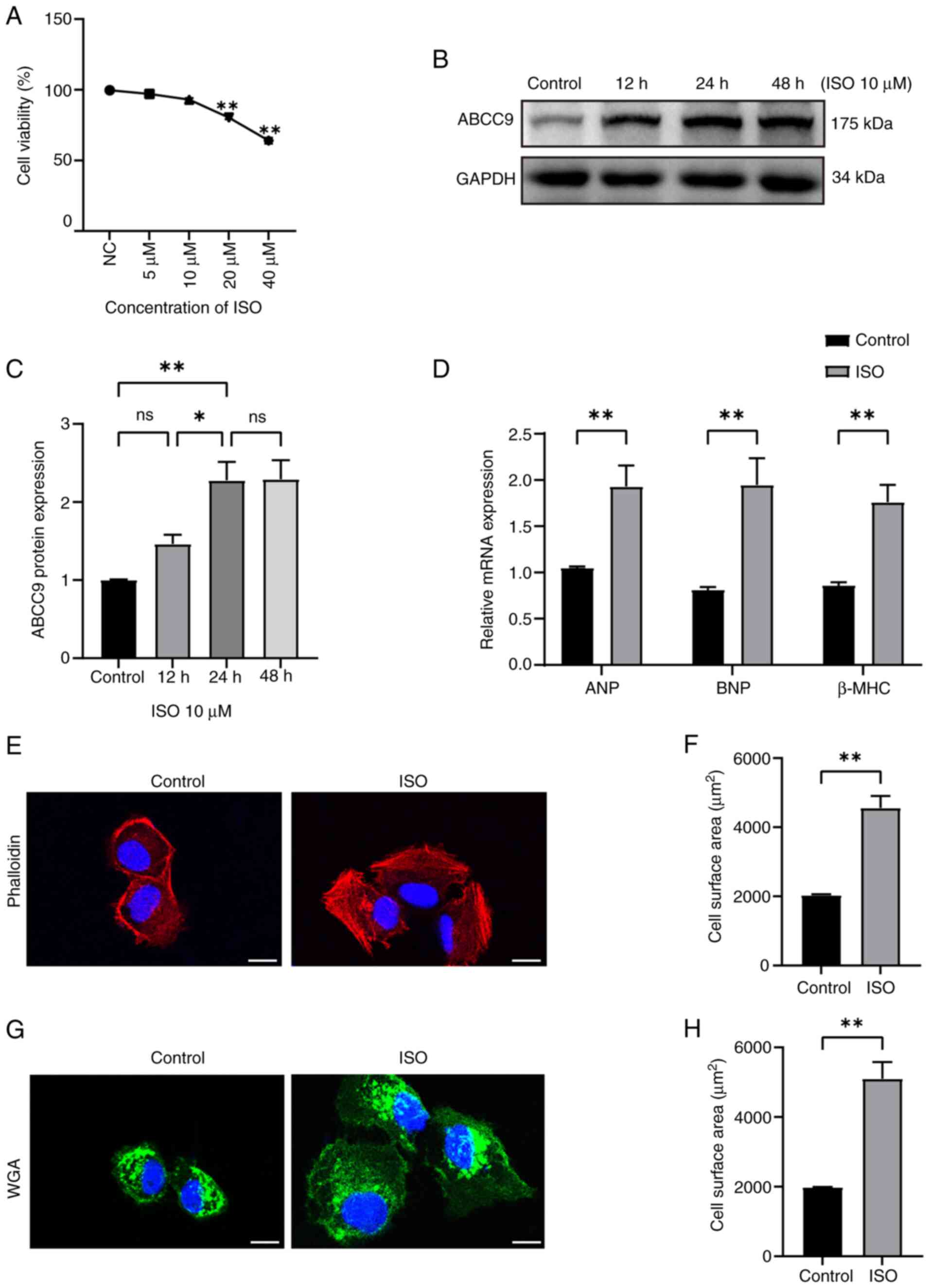
Figure 1

Elevated expression of ABCC9 in the
ISO-induced myocardial hypertrophy model. (A) Cell Counting Kit-8
was used to determine the viability of ISO-induced AC16 cells.
After treating AC16 cardiomyocytes with 10 µM ISO for different
time periods, western blot analysis was performed to assess changes
in ABCC9 protein expression. (B) Representative western blot image
of ABCC9 and (C) semi-quantitative detection of ABCC9 protein
expression levels using ImageJ software. (D) Evaluation of mRNA
expression levels of ANP, BNP and β-MHC in ISO-treated AC16 cells
using reverse transcription-quantitative PCR. After ISO
stimulation, cardiomyocytes were stained with (E) rhodamine
phalloidin and (F) cell surface area was analyzed. After ISO
stimulation, cardiomyocytes were stained with (G) WGA and (H) cell
surface area was analyzed. Fluorescent images of ISO-treated AC16
cells were obtained using a laser confocal microscope, and cell
surface area was quantified using ImageJ software. Scale bar, 20
µm. AC16 cells were treated with ISO (10 µmol/l) for 24 h. n=3;
*P<0.05 and **P<0.01 vs. control. ABCC9, ATP-binding cassette
subfamily C member 9; NC, negative control; ns, not significant;
ISO, isoproterenol; ANP, atrial natriuretic peptide; BNP, brain
natriuretic peptide; β-MHC, β-myosin heavy chain; WGA, wheat germ
agglutinin.

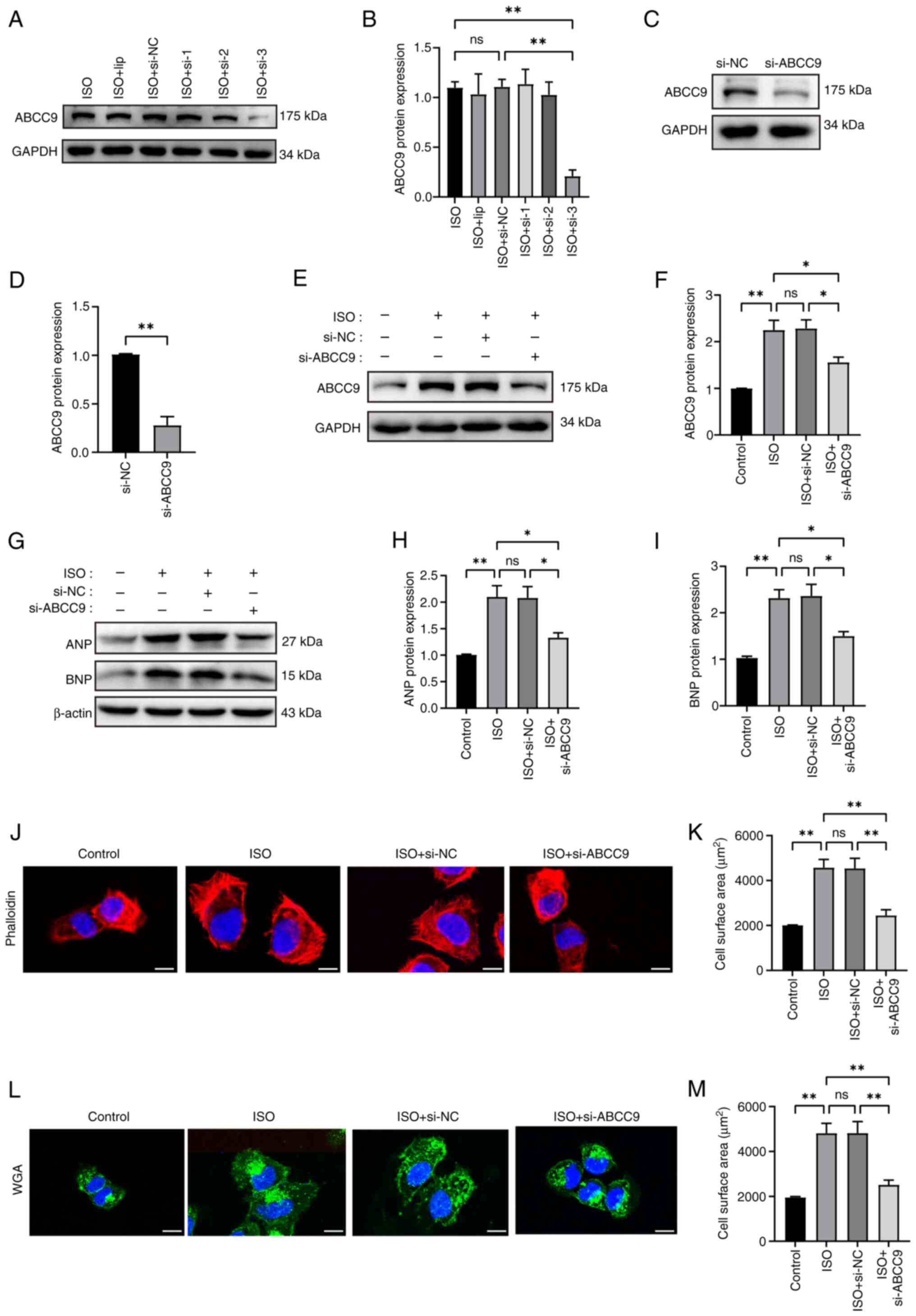
Figure 2

Silencing of ABCC9 attenuates
ISO-induced myocardial hypertrophy in AC16 cells. (A) Western blot
analysis assessed the transfection efficiency of ABCC9 knockdown.
(B) ImageJ was used for semi-quantitative analysis of ABCC9 protein
expression levels. (C) Western blotting and (D) semi-quantitative
analysis confirmed the knockdown efficiency of ABCC9 si-3
transfection in normal cardiomyocytes. (E) Western blot analysis
was used to assess the protein expression levels of ABCC9 in
ISO-treated AC16 cells after ABCC9 knockdown. (F) ImageJ was used
for semi-quantitative analysis of ABCC9 protein expression levels.
(G) Representative western blot images of ANP and BNP. (H) ANP and
(I) BNP protein expression levels were semi-quantified using
ImageJ. Myocardial cells transfected with ABCC9-siRNA for 24 h were
treated with (J) rhodamine-phalloidin and (K) analyzed
quantitatively. Myocardial cells transfected with ABCC9-siRNA for
24 h were treated with (L) WGA staining and (M) analyzed
quantitatively. The ISO-induced surface area of AC16 myocardial
cells was detected using a laser confocal microscope. The cell
surface area was quantified using ImageJ software. Scale bar, 20
µm. AC16 cells were treated with ISO (10 µmol/l) for 24 h. n=3;
*P<0.05 and **P<0.01. NC, negative control; ns, not
significant; ISO, isoproterenol; ABCC9, ATP-binding cassette
subfamily C member 9; ANP, atrial natriuretic peptide; BNP, brain
natriuretic peptide; si, small interfering RNA; WGA, wheat germ
agglutinin; lip, Lipofectamine® 3000 transfection
reagent.

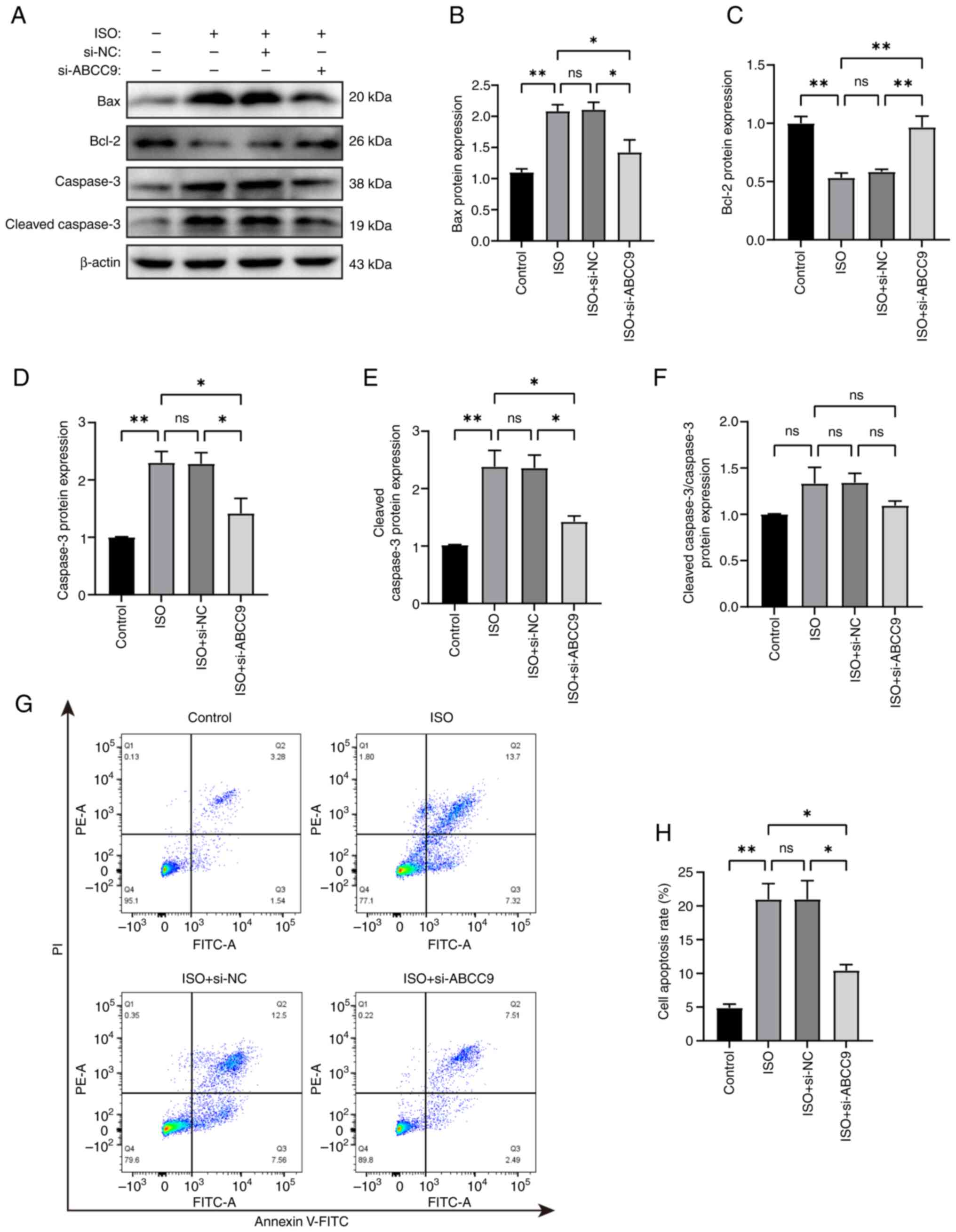
Figure 3

ABCC9 knockdown inhibits apoptosis in
cardiomyocytes. (A) Western blot analysis was used to assess
changes in the expression of apoptosis-related proteins Bax, Bcl-2,
caspase-3 and cleaved caspase-3 in AC16 cells. ImageJ was used for
semi-quantitative analysis of the expression levels of (B) Bax, (C)
Bcl-2, (D) caspase-3, (E) cleaved caspase-3 proteins and (F)
cleaved caspase-3/caspase-3 ratio. (G) Representative flow
cytometry images and (H) quantitative analysis of Annexin V-FITC/PI
staining in AC16 cells. AC16 cells were treated with ISO (10
µmol/l) for 24 h. n=3; *P<0.05 and **P<0.01. NC, negative
control; ns, not significant; ISO, isoproterenol; ABCC9,
ATP-binding cassette subfamily C member 9; Bax, Bcl-2 associated X
protein; Bcl-2, B-cell lymphoma 2 protein; si, small interfering
RNA.

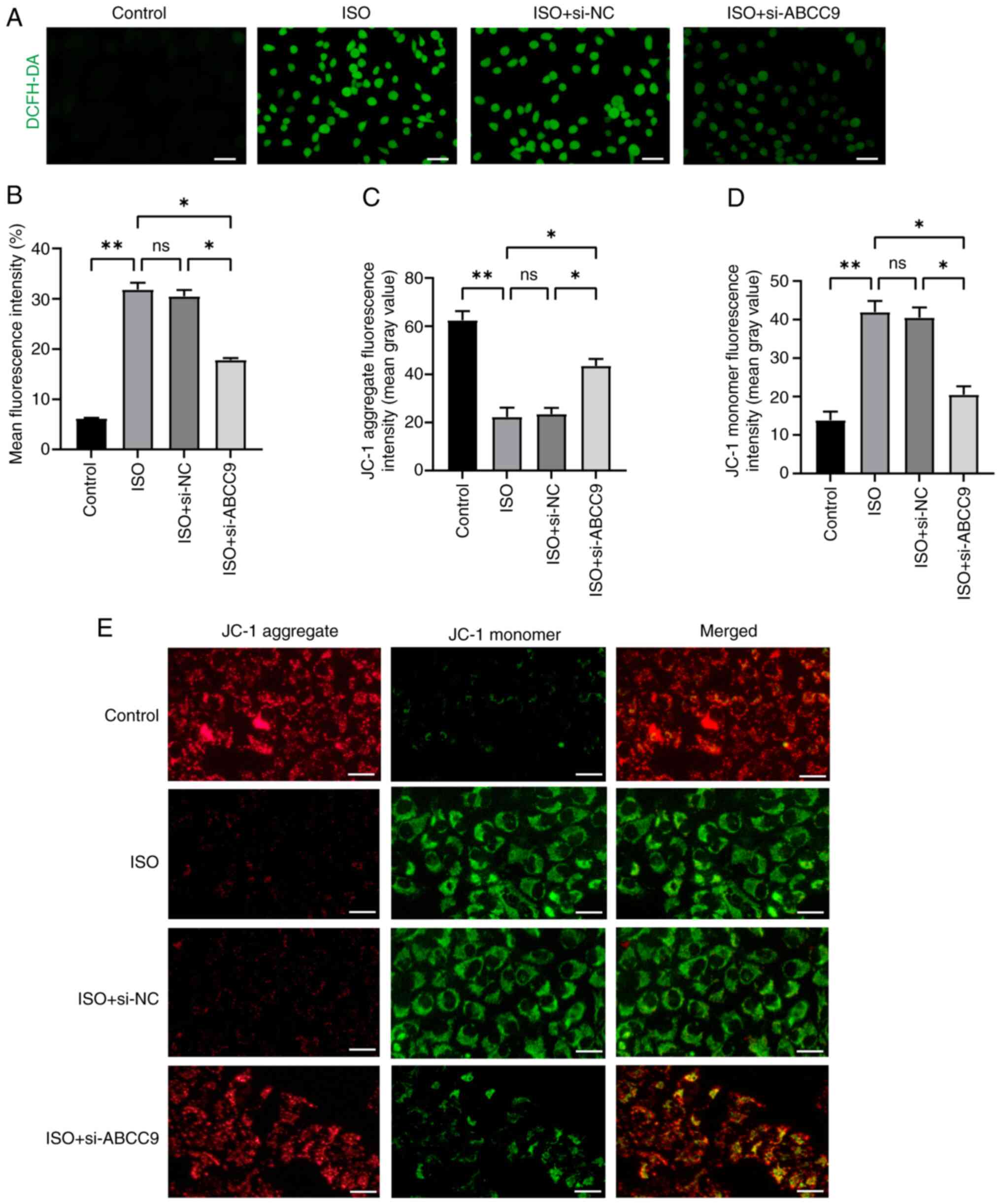
Figure 4

ABCC9 knockdown alleviates oxidative
stress and mitochondrial damage in cardiomyocytes. (A)
Representative fluorescent images of DCFH-DA staining and (B)
semi-quantification of intracellular reactive oxidative species
levels in AC16 cells. Fluorescence intensity analysis of (C) JC-1
aggregate and (D) JC-1 monomer on mitochondrial membrane potential.
(E) Mitochondrial membrane potential representative fluorescence
images. Scale bar, 100 µm. AC16 cells were treated with ISO (10
µmol/l) for 24 h. n=3; *P<0.05 and **P<0.01. NC, negative
control; ns, not significant; ABCC9, ATP-binding cassette subfamily
C member 9; ISO, isoproterenol; DCFH-DA,
2′,7′-dichlorodihydrofluorescein diacetate; si, small interfering
RNA.

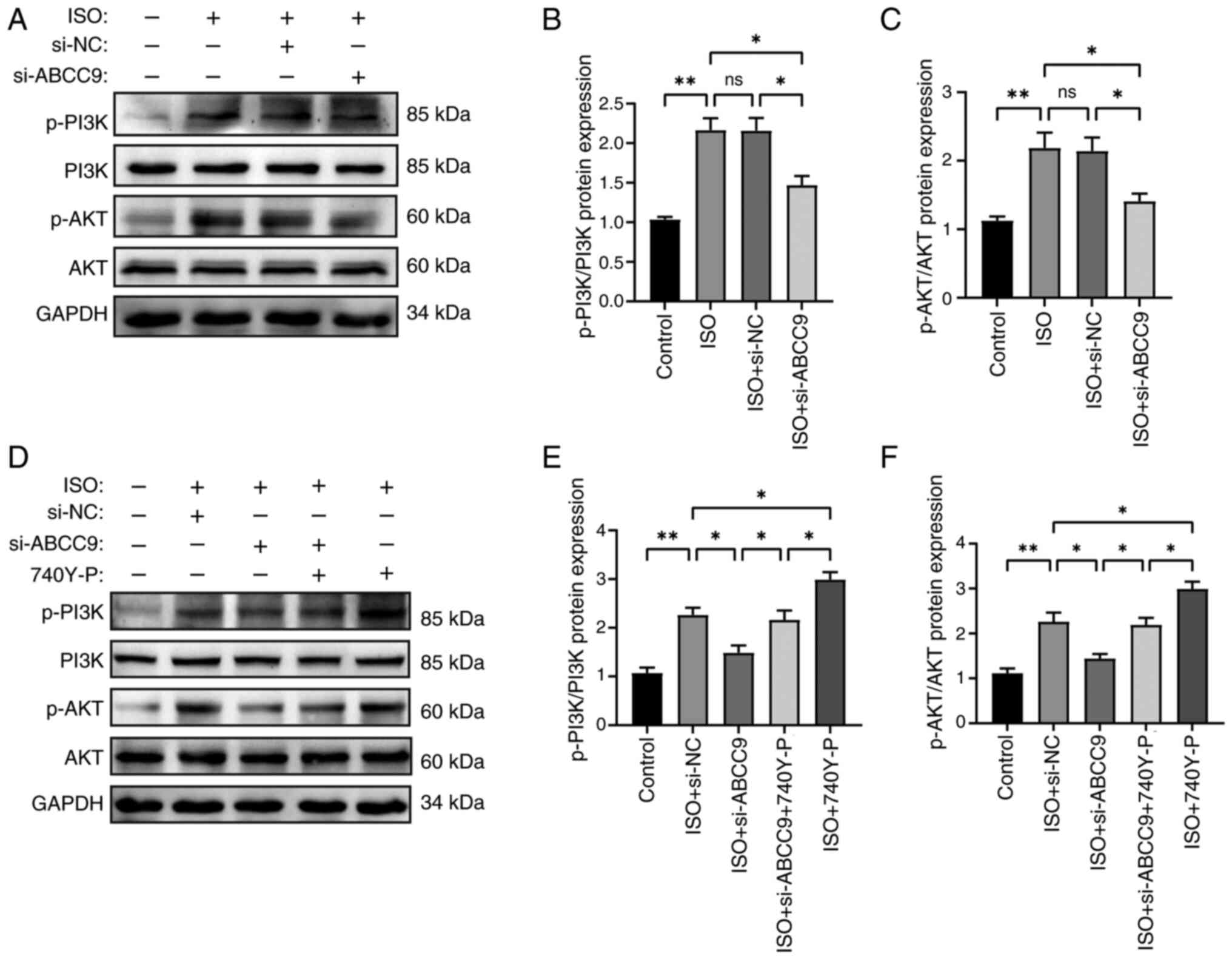
Figure 5

Effect of 740Y-P and ABCC9 knockdown
on PI3K/AKT signaling pathway proteins. (A) Western blot bands of
PI3K, p-PI3K, AKT and p-AKT in AC16 cells. Semi-quantitative
analysis of (B) p-PI3K and (C) p-AKT protein expression using
ImageJ. (D) Western blotting with 740Y-P showed a reversal of the
protective effect of ABCC9 knockdown on ISO-induced AC16 cells. (E)
Semi-quantitative analysis of p-PI3K and (F) p-AKT protein
expression with 740Y-P treatment. AC16 cells were treated with ISO
(10 µmol/l) for 24 h. n=3; *P<0.05 and **P<0.01. NC, negative
control; ns, not significant; ABCC9, ATP-binding cassette subfamily
C member 9; ISO, isoproterenol; si, small interfering RNA; PI3K,
phosphatidylinositol-3-kinase; AKT, protein kinase B; p-,
phosphorylated.

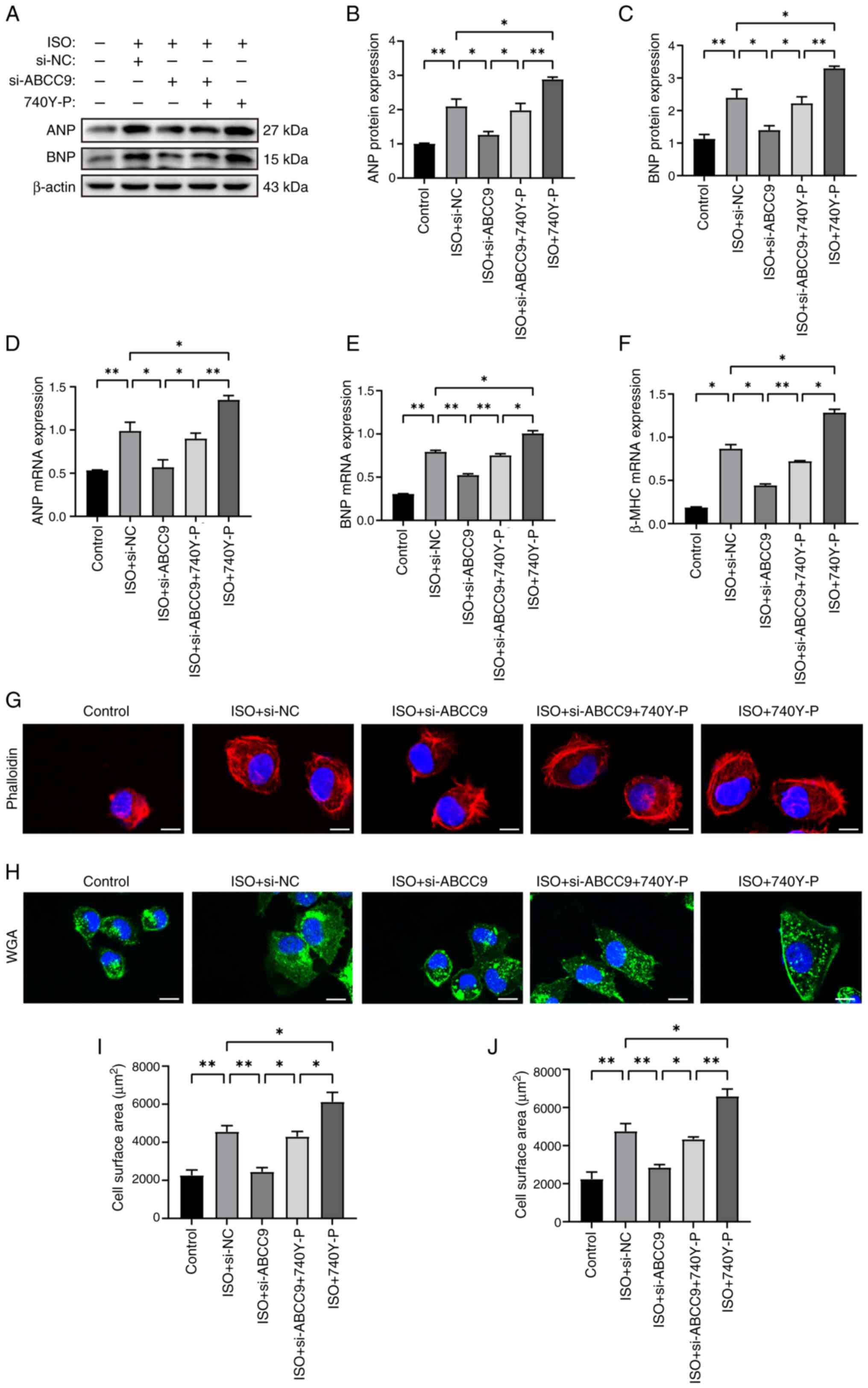
Figure 6

ABCC9 knockdown attenuates myocardial
hypertrophy by inhibiting PI3K/AKT signaling pathway. (A) Western
blot bands showing the effect of 740Y-P on ANP and BNP protein
expression. (B) Semi-quantitative analysis of ANP and (C) BNP
protein expression. Reverse transcription-quantitative PCR was used
to assess the mRNA levels of the hypertrophic genes (D) ANP, (E)
BNP and (F) β-MHC in 740Y-P treated AC16 cells. After transfection
and 740Y-P pretreatment, AC16 cells were stained with (G) rhodamine
phalloidin and (H) WGA, and fluorescence images of si-ABCC9 and
740Y-P-treated AC16 cells were obtained using a laser confocal
microscope. Quantitative analysis of cell surface area in (I)
rhodamine phalloidin and (J) WGA stained samples using ImageJ
software. Scale bar, 20 µm. AC16 cells were treated with ISO (10
µmol/l) for 24 h. n=3; *P<0.05 and **P<0.01. NC, negative
control; ABCC9, ATP-binding cassette subfamily C member 9; ISO,
isoproterenol; ANP, atrial natriuretic peptide; BNP, brain
natriuretic peptide; β-MHC, β-myosin heavy chain. si, small
interfering RNA; WGA, wheat germ agglutinin.

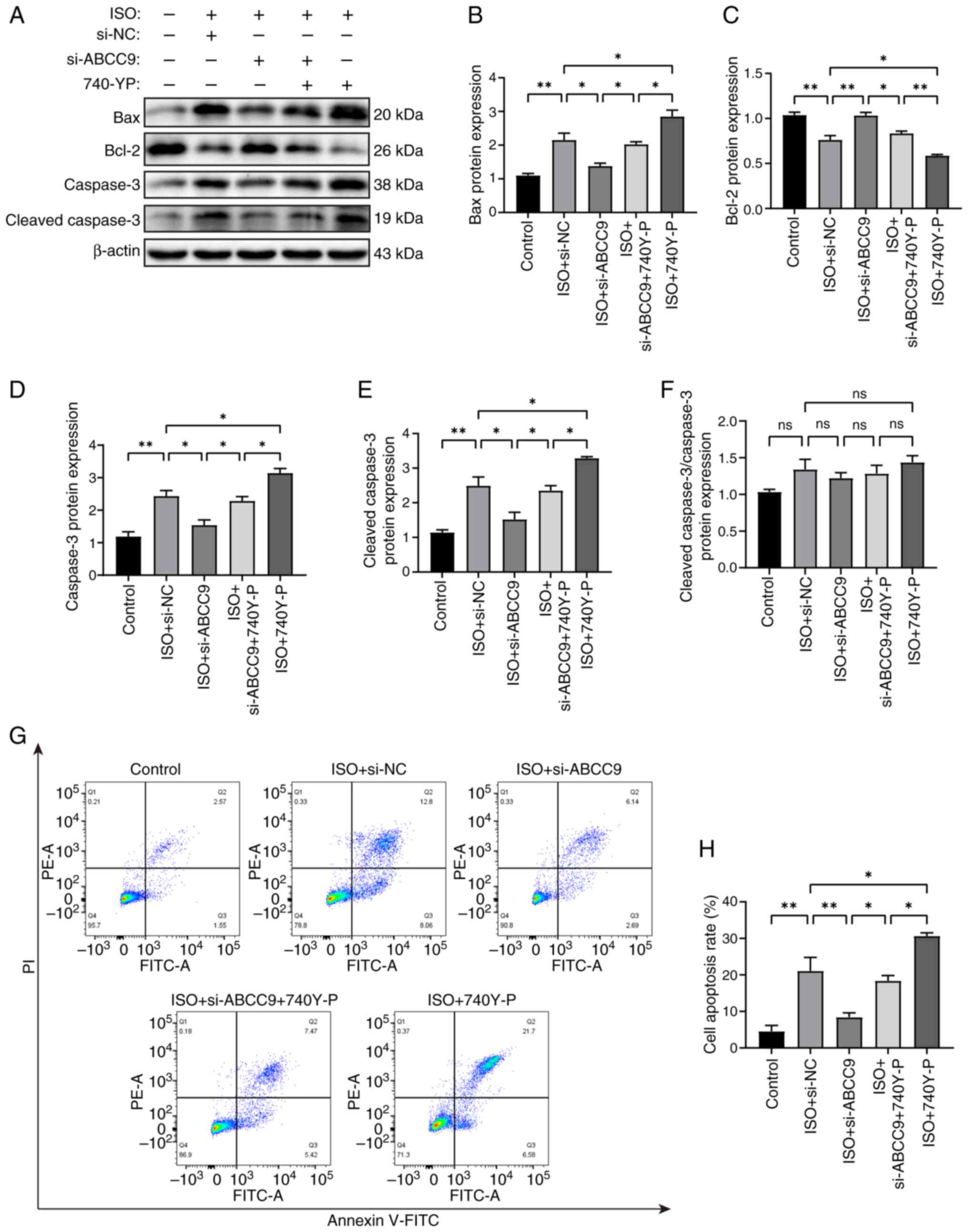
Figure 7

ABCC9 knockdown attenuates apoptosis
in cardiomyocytes by inhibiting the PI3K/AKT pathway and
alleviating mitochondrial dysfunction. (A) Western blot bands
showing the effect of 740Y-P on the expression of the
apoptosis-related proteins Bax, Bcl-2, caspase-3 and cleaved
caspase-3 in AC16 cells. Semi-quantitative analysis of (B) Bax, (C)
Bcl-2, (D) caspase-3, (E) cleaved caspase-3 proteins expression
levels and (F) cleaved caspase-3/caspase-3 ratio was performed
using ImageJ. (G) Representative flow cytometry images of Annexin
V/PI staining and (H) quantification of apoptosis rate in AC16
cells. AC16 cells were treated with ISO (10 µmol/l) for 24 h. n=3;
*P<0.05 and **P<0.01. NC, negative control; ns, not
significant; ISO, isoproterenol; ABCC9, ATP-binding cassette
subfamily C member 9; Bax, Bcl-2 associated X protein; Bcl-2,
B-cell lymphoma 2 protein; DCFH-DA,
2′,7′-dichlorodihydrofluorescein diacetate; si, small interfering
RNA.

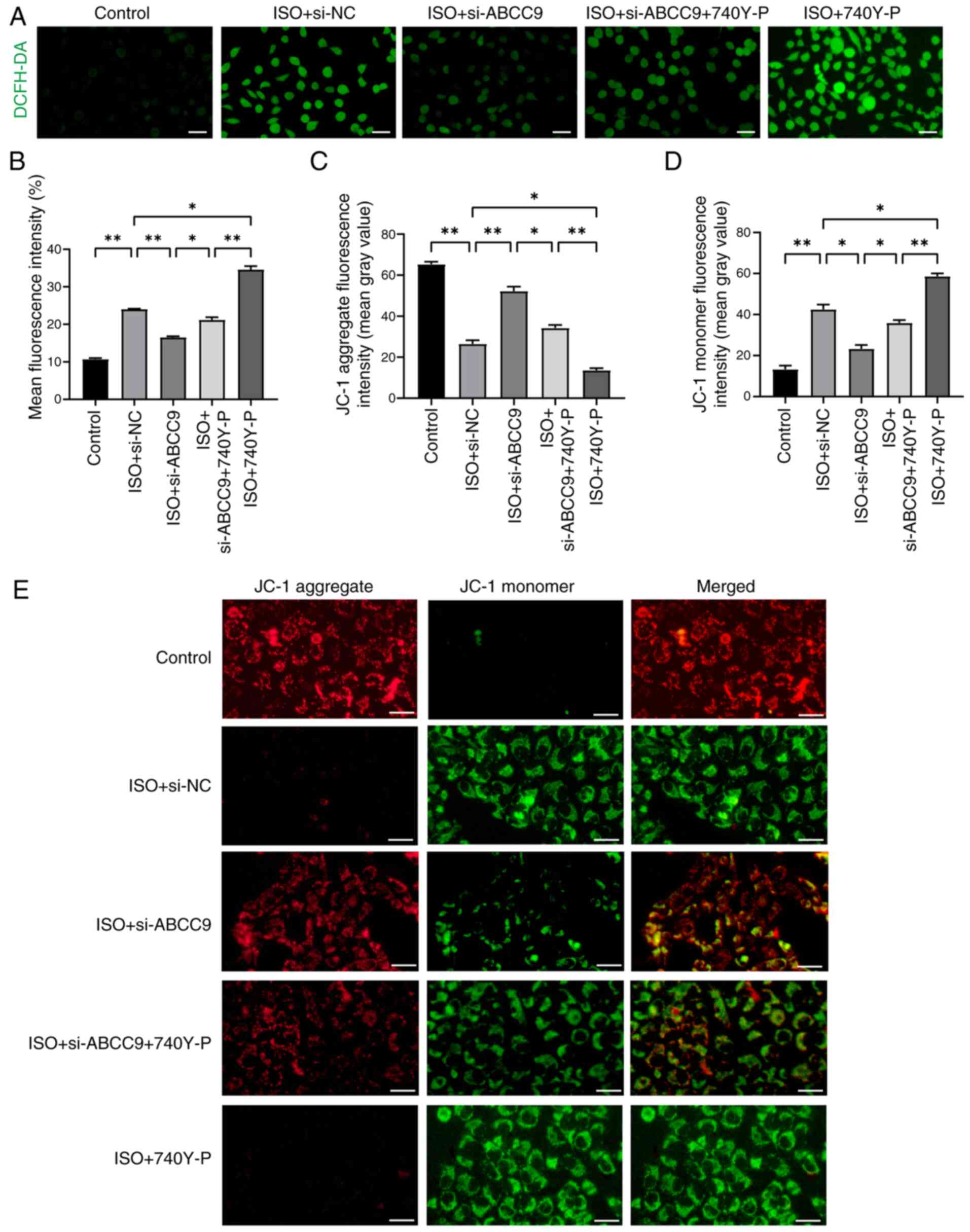
Figure 8

ABCC9 knockdown attenuates oxidative
stress in cardiomyocytes by inhibiting the PI3K/AKT pathway and
alleviating mitochondrial dysfunction. (A) Representative images of
staining for reactive oxygen species and (B) fluorescence intensity
analysis. After treatment with 740Y-P, the fluorescence intensity
of (C) JC-1 aggregate and (D) JC-1 monomer of mitochondrial
membrane potential in cardiomyocytes was analyzed. (E)
Mitochondrial membrane potential representative fluorescence
images. Scale bar, 100 µm. AC16 cells were treated with ISO (10
µmol/l) for 24 h. n=3; *P<0.05 and **P<0.01. NC, negative
control; ISO, isoproterenol; ABCC9, ATP-binding cassette subfamily
C member 9; DCFH-DA, 2′,7′-dichlorodihydrofluorescein diacetate;
si, small interfering RNA.

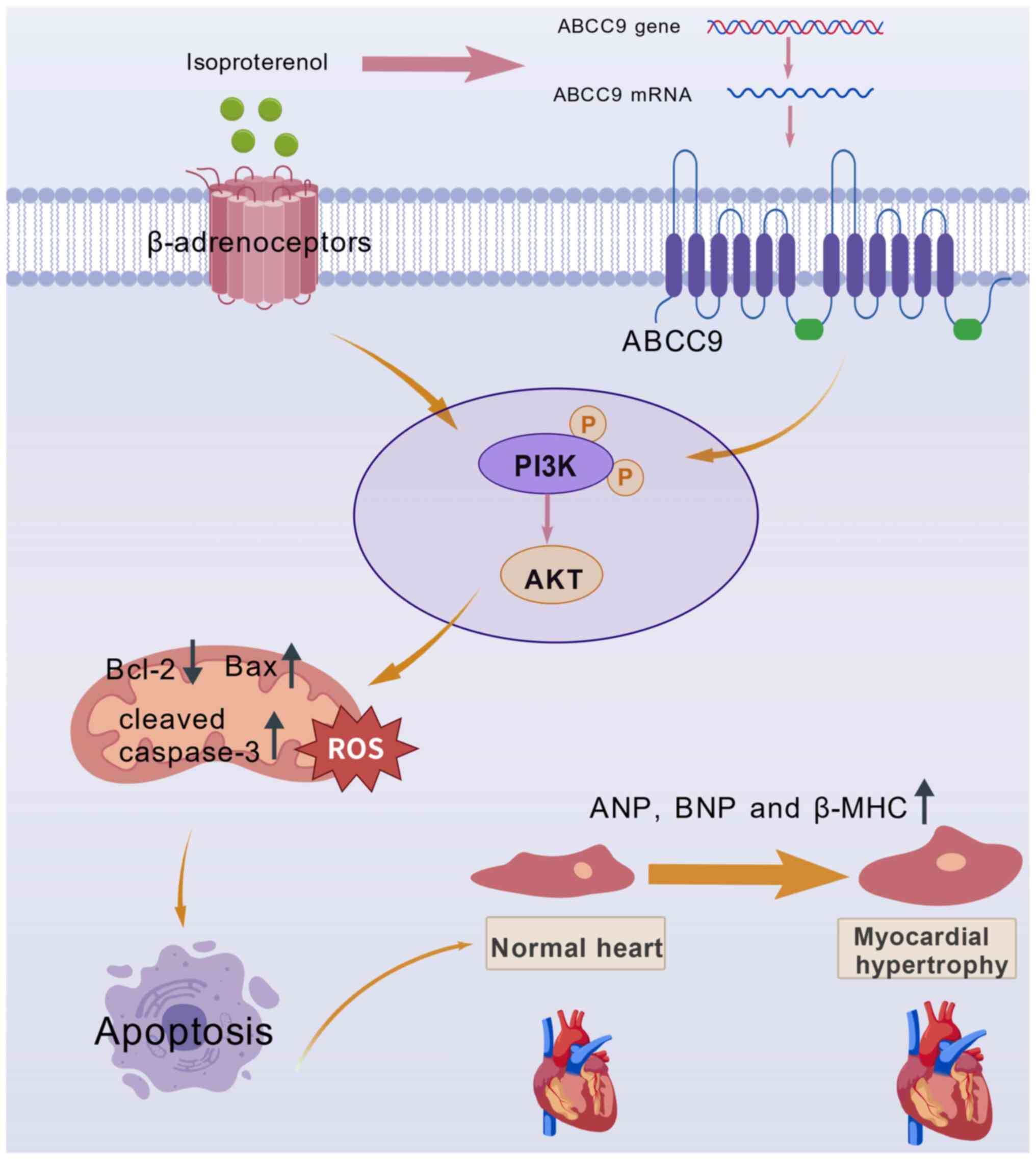
Figure 9

Schematic diagram describing the
PI3K/AKT signaling pathway mechanism by which ABCC9 acts on MH. ISO
binds to the cellular β-adrenergic surface receptor of
cardiomyocytes, while ABCC9 is highly expressed in ISO-mediated
cardiomyocytes, which triggers apoptosis and oxidative stress
through activation of the PI3K/AKT pathway and results in
mitochondrial dysfunction, ultimately leading to MH. ISO,
isoproterenol; ABCC9, ATP-binding cassette subfamily C member 9;
ANP, atrial natriuretic peptide; BNP, brain natriuretic peptide;
β-MHC, β-myosin heavy chain; Bax, Bcl-2 associated X protein;
Bcl-2, B-cell lymphoma 2 protein; ROS, reactive oxygen species; P,
phosphate group; MH, myocardial hypertrophy.
View References

1 

Jagannathan R, Patel SA, Ali MK and Narayan KMV: Global updates on cardiovascular disease mortality trends and attribution of traditional risk factors. Curr Diab Rep. 19:442019. View Article : Google Scholar : PubMed/NCBI

2 

Kahleova H, Levin S and Barnard ND: Vegetarian dietary patterns and cardiovascular disease. Prog Cardiovasc Dis. 61:54–61. 2018. View Article : Google Scholar : PubMed/NCBI

3 

Tsao CW, Aday AW, Almarzooq ZI, Alonso A, Beaton AZ, Bittencourt MS, Boehme AK, Buxton AE, Carson AP, Commodore-Mensah Y, et al: Heart disease and stroke Statistics-2022 update: A report from the American heart association. Circulation. 145:e153–e639. 2022. View Article : Google Scholar : PubMed/NCBI

4 

Tan Y-Q, Chen HW and Li J: Astragaloside IV: An effective drug for the treatment of cardiovascular diseases. Drug Des Devel Ther. 14:3731–3746. 2020. View Article : Google Scholar : PubMed/NCBI

5 

Roth GA, Mensah GA, Johnson CO, Addolorato G, Ammirati E, Baddour LM, Barengo NC, Beaton AZ, Benjamin EJ, Benziger CP, et al: Global burden of cardiovascular diseases and risk factors, 1990–2019. J Am Coll Cardiol. 76:2982–3021. 2020. View Article : Google Scholar : PubMed/NCBI

6 

Zhu XY, Shi MQ, Jiang ZM, Xiao Li, Tian JW and Su FF: Global, regional, and national burden of cardiovascular diseases attributable to metabolic risks across all age groups from 1990 to 2021: An analysis of the 2021 global burden of disease study data. BMC Public Health. 25:17042025. View Article : Google Scholar : PubMed/NCBI

7 

Yan Z, Zhao W, Zhao N, Liu Y, Yang B, Wang L, Liu J, Wang D, Wang J, Jiao X, et al: PRMT1 alleviates isoprenaline-induced myocardial hypertrophy by methylating SRSF1. Acta Biochim Biophys Sin (Shanghai). 57:1338–1349. 2024. View Article : Google Scholar : PubMed/NCBI

8 

Chang CC, Cheng HC, Chou WC, Huang YT, Hsieh PL, Chu PM and Lee SD: Sesamin suppresses angiotensin-II-enhanced oxidative stress and hypertrophic markers in H9c2 cells. Environ Toxicol. 38:2165–2172. 2023. View Article : Google Scholar : PubMed/NCBI

9 

Feng Z, Pan L, Qiao C, Yang Y, Yang X and Xie Y: Cardamonin intervenes in myocardial hypertrophy progression by regulating Usp18. Phytomedicine. 134:1559702024. View Article : Google Scholar : PubMed/NCBI

10 

Pang Y, Wu L, Xia J, Xu X, Gao C, Hou L and Jiang L: Trim38 attenuates pressure overload-induced cardiac hypertrophy by suppressing the TAK1/JNK/P38 signaling pathway. Int J Mol Med. 55:982025. View Article : Google Scholar : PubMed/NCBI

11 

Li D, Guo Y, Cen X, Qiu HL, Chen S, Zeng XF, Zeng Q, Xu M and Tang QZ: Lupeol protects against cardiac hypertrophy via TLR4-PI3K-Akt-NF-κB pathways. Acta Pharmacol Sin. 43:1989–2002. 2022. View Article : Google Scholar : PubMed/NCBI

12 

Oudit GY, Crackower MA, Eriksson U, Sarao R, Kozieradzki I, Sasaki T, Irie-Sasaki J, Gidrewicz D, Rybin VO, Wada T, et al: Phosphoinositide 3-kinase gamma-deficient mice are protected from isoproterenol-induced heart failure. Circulation. 108:2147–2152. 2003. View Article : Google Scholar : PubMed/NCBI

13 

Zhou WW, Dai C, Liu WZ, Zhang C, Zhang Y, Yang GS, Guo QH, Li S, Yang HX and Li AY: Gentianella acuta improves TAC-induced cardiac remodelling by regulating the Notch and PI3K/Akt/FOXO1/3 pathways. Biomed Pharmacother. 154:1135642022. View Article : Google Scholar : PubMed/NCBI

14 

Ghafouri-Fard S, Khanbabapour Sasi A, Hussen BM, Shoorei H, Siddiq A, Taheri M and Ayatollahi SA: Interplay between PI3K/AKT pathway and heart disorders. Mol Biol Rep. 49:9767–9781. 2022. View Article : Google Scholar : PubMed/NCBI

15 

Li J, Yan C, Wang Y, Chen C, Yu H, Liu D, Huang K and Han Y: GCN5-mediated regulation of pathological cardiac hypertrophy via activation of the TAK1-JNK/p38 signaling pathway. Cell Death Dis. 13:4212022. View Article : Google Scholar : PubMed/NCBI

16 

Zhang T, Li L, Mo X, Xie S, Liu S, Zhao N, Zhang H, Chen S, Zeng X, Wang S, et al: Matairesinol blunts adverse cardiac remodeling and heart failure induced by pressure overload by regulating Prdx1 and PI3K/AKT/FOXO1 signaling. Phytomedicine. 135:1560542024. View Article : Google Scholar : PubMed/NCBI

17 

Liu Z, Liu H and Wang J: Astragaloside IV protects against the pathological cardiac hypertrophy in mice. Biomed Pharmacother. 97:1468–1478. 2018. View Article : Google Scholar : PubMed/NCBI

18 

Qian W, Yu D, Zhang J, Hu Q, Tang C, Liu P, Ye P, Wang X, Lv Q, Chen M and Sheng L: Wogonin attenuates isoprenaline-induced myocardial hypertrophy in mice by suppressing the PI3K/Akt pathway. Front Pharmacol. 9:8962018. View Article : Google Scholar : PubMed/NCBI

19 

Solbach TF, König J, Fromm MF and Zolk O: ATP-binding cassette transporters in the heart. Trends Cardiovasc Med. 16:7–15. 2006. View Article : Google Scholar : PubMed/NCBI

20 

Park S, Lim BBC, Perez-Terzic C, Mer G and Terzic A: Interaction of asymmetric ABCC9-encoded nucleotide binding domains determines KATP channel SUR2A catalytic activity. J Proteome Res. 7:1721–1728. 2008. View Article : Google Scholar : PubMed/NCBI

21 

Aubert G, Barefield DY, Demonbreun AR, Ramratnam M, Fallon KS, Warner JL, Rossi AE, Hadhazy M, Makielski JC and McNally EM: Deletion of sulfonylurea receptor 2 in the adult myocardium enhances cardiac glucose uptake and is cardioprotective. JACC Basic Transl Sci. 4:251–268. 2019. View Article : Google Scholar : PubMed/NCBI

22 

Flagg TP, Kurata HT, Masia R, Caputa G, Magnuson MA, Lefer DJ, Coetzee WA and Nichols CG: Differential structure of atrial and ventricular KATP: Atrial KATP channels require SUR1. Circ Res. 103:1458–1465. 2008. View Article : Google Scholar : PubMed/NCBI

23 

Stoller D, Kakkar R, Smelley M, Chalupsky K, Earley JU, Shi NQ, Makielski JC and McNally EM: Mice lacking sulfonylurea receptor 2 (SUR2) ATP-sensitive potassium channels are resistant to acute cardiovascular stress. J Mol Cell Cardiol. 43:445–454. 2007. View Article : Google Scholar : PubMed/NCBI

24 

Fahrenbach JP, Stoller D, Kim G, Aggarwal N, Yerokun B, Earley JU, Hadhazy M, Shi NQ, Makielski JC and McNally EM: Abcc9 is required for the transition to oxidative metabolism in the newborn heart. FASEB J. 28:2804–2815. 2014. View Article : Google Scholar : PubMed/NCBI

25 

Mohammed Abdul KS, Jovanović S, Du Q, Sukhodub A and Jovanović A: A link between ATP and SUR2A: A novel mechanism explaining cardioprotection at high altitude. Int J Cardiol. 189:73–76. 2015. View Article : Google Scholar : PubMed/NCBI

26 

McClenaghan C and Nichols CG: Kir6.1 and SUR2B in Cantú syndrome. Am J Physiol Cell Physiol. 323:C920–C935. 2022. View Article : Google Scholar : PubMed/NCBI

27 

McClenaghan C, Huang Y, Yan Z, Harter TM, Halabi CM, Chalk R, Kovacs A, van Haaften G, Remedi MS and Nichols CG: Glibenclamide reverses cardiovascular abnormalities of Cantu syndrome driven by KATP channel overactivity. J Clin Invest. 130:1116–1121. 2020. View Article : Google Scholar : PubMed/NCBI

28 

McClenaghan C, Huang Y, Matkovich SJ, Kovacs A, Weinheimer CJ, Perez R, Broekelmann TJ, Harter TM, Lee JM, Remedi MS and Nichols CG: The mechanism of High-output cardiac hypertrophy arising from potassium channel Gain-of-Function in Cantú syndrome. Function (Oxf). 1:zqaa0042020. View Article : Google Scholar : PubMed/NCBI

29 

Zhang H, Hanson A, de Almeida TS, Emfinger C, McClenaghan C, Harter T, Yan Z, Cooper PE, Brown GS, Arakel EC, et al: Complex consequences of Cantu syndrome SUR2 variant R1154Q in genetically modified mice. JCI Insight. 6:e1459342021. View Article : Google Scholar : PubMed/NCBI

30 

Fernlund E, Kissopoulou A, Green H, Karlsson JE, Ellegård R, Årstrand HK, Jonasson J and Gunnarsson C: Hereditary hypertrophic cardiomyopathy in children and young Adults-the value of reevaluating and expanding gene panel analyses. Genes (Basel). 11:14722020. View Article : Google Scholar : PubMed/NCBI

31 

Livak KJ and Schmittgen TD: Analysis of relative gene expression data using real-time quantitative PCR and the 2(−Delta Delta C(T)) method. Methods. 25:402–408. 2001. View Article : Google Scholar : PubMed/NCBI

32 

He K, Wang X, Li T, Li Y and Ma L: Chlorogenic acid attenuates isoproterenol Hydrochloride-induced cardiac hypertrophy in AC16 cells by inhibiting the Wnt/β-Catenin signaling pathway. Molecules. 29:7602024. View Article : Google Scholar : PubMed/NCBI

33 

Wang X, He K, Ma L, Wu L, Yang Y and Li Y: Puerarin attenuates isoproterenol-induced myocardial hypertrophy via inhibition of the Wnt/β-catenin signaling pathway. Mol Med Rep. 26:3062022. View Article : Google Scholar : PubMed/NCBI

34 

Dorn GW and Force T: Protein kinase cascades in the regulation of cardiac hypertrophy. J Clin Invest. 115:527–537. 2005. View Article : Google Scholar : PubMed/NCBI

35 

Bisserier M, Berthouze-Duquesnes M, Breckler M, Tortosa F, Fazal L, de Régibus A, Laurent AC, Varin A, Lucas A, Branchereau M, et al: Carabin protects against cardiac hypertrophy by blocking calcineurin, Ras, and Ca2+/calmodulin-dependent protein kinase II signaling. Circulation. 131:390–400. 2015. View Article : Google Scholar : PubMed/NCBI

36 

de Lucia C, Eguchi A and Koch WJ: New Insights in cardiac β-adrenergic signaling during heart failure and aging. Front Pharmacol. 9:9042018. View Article : Google Scholar : PubMed/NCBI

37 

Jeong MY, Lin YH, Wennersten SA, Demos-Davies KM, Cavasin MA, Mahaffey JH, Monzani V, Saripalli C, Mascagni P, Reece TB, et al: Histone deacetylase activity governs diastolic dysfunction through a nongenomic mechanism. Sci Transl Med. 10:eaao01442018. View Article : Google Scholar : PubMed/NCBI

38 

Singh K, Xiao L, Remondino A, Sawyer DB and Colucci WS: Adrenergic regulation of cardiac myocyte apoptosis. J Cell Physiol. 189:257–265. 2001. View Article : Google Scholar : PubMed/NCBI

39 

Lymperopoulos A, Rengo G and Koch WJ: Adrenergic nervous system in heart failure: Pathophysiology and therapy. Circ Res. 113:739–753. 2013. View Article : Google Scholar : PubMed/NCBI

40 

Su H, Liu M, Wang S, Tian B, Hu H, Ma LK and Pan J: Co-administration of isoprenaline and phenylephrine induced a new HFrEF mouse model through activation of both SNS and RAAS. Front Cardiovasc Med. 12:15315092025. View Article : Google Scholar : PubMed/NCBI

41 

Ferrari R, Ceconi C, Curello S and Visioli O: The neuroendocrine and sympathetic nervous system in congestive heart failure. Eur Heart J. 19 (Suppl F):F45–F51. 1998.PubMed/NCBI

42 

Abi-Gerges A, Castro L, Leroy J, Domergue V, Fischmeister R and Vandecasteele G: Selective changes in cytosolic β-adrenergic cAMP signals and L-type Calcium Channel regulation by Phosphodiesterases during cardiac hypertrophy. J Mol Cell Cardiol. 150:109–121. 2021. View Article : Google Scholar : PubMed/NCBI

43 

Xu H, Wang Z, Chen M, Zhao W, Tao T, Ma L, Ni Y and Li W: YTHDF2 alleviates cardiac hypertrophy via regulating Myh7 mRNA decoy. Cell Biosci. 11:1322021. View Article : Google Scholar : PubMed/NCBI

44 

Murray DR, Prabhu SD and Chandrasekar B: Chronic beta-adrenergic stimulation induces myocardial proinflammatory cytokine expression. Circulation. 101:2338–2341. 2000. View Article : Google Scholar : PubMed/NCBI

45 

Liu BY, Li L, Liu GL, Ding W, Chang WG, Xu T, Ji XY, Zheng XX, Zhang J and Wang JX: Baicalein attenuates cardiac hypertrophy in mice via suppressing oxidative stress and activating autophagy in cardiomyocytes. Acta Pharmacol Sin. 42:701–714. 2021. View Article : Google Scholar : PubMed/NCBI

46 

Wei H, Guo X, Yan J, Tian X, Yang W, Cui K, Wang L and Bingyan G: Neuregulin-4 alleviates isoproterenol (ISO)-induced cardial remodeling by inhibiting inflammation and apoptosis via AMPK/NF-κB pathway. Int Immunopharmacol. 143:1133012024. View Article : Google Scholar : PubMed/NCBI

47 

Yang J, Wang Z and Chen DL: Shikonin ameliorates isoproterenol (ISO)-induced myocardial damage through suppressing fibrosis, inflammation, apoptosis and ER stress. Biomed Pharmacother. 93:1343–1357. 2017. View Article : Google Scholar : PubMed/NCBI

48 

Yang D, Liu HQ, Liu FY, Guo Z, An P, Wang MY, Yang Z, Fan D and Tang QZ: Mitochondria in pathological cardiac hypertrophy research and therapy. Front Cardiovasc Med. 8:8229692022. View Article : Google Scholar : PubMed/NCBI

49 

Singh GK, McClenaghan C, Aggarwal M, Gu H, Remedi MS, Grange DK and Nichols CG: A unique High-output cardiac hypertrophy phenotype arising from low systemic vascular resistance in cantu syndrome. J Am Heart Assoc. 11:e0273632022. View Article : Google Scholar : PubMed/NCBI

50 

Samad M, Malempati S and Restini CBA: Natriuretic peptides as biomarkers: Narrative review and considerations in cardiovascular and respiratory dysfunctions. Yale J Biol Med. 96:137–149. 2023. View Article : Google Scholar : PubMed/NCBI

51 

Edwards JG: Cardiac MHC gene expression: More complexity and a step forward. Am J Physiol Heart Circ Physiol. 294:H14–H15. 2008. View Article : Google Scholar : PubMed/NCBI

52 

Xu J, Sun Z, Li J, Li J, Li Y, Huang H, Yuan F, Liu M and Fang Z: Qian Yang Yu Yin Granule prevents hypertensive cardiac remodeling by inhibiting NLRP3 inflammasome activation via Nrf2. J Ethnopharmacol. 337:1188202025. View Article : Google Scholar : PubMed/NCBI

53 

Nakamura M and Sadoshima J: Mechanisms of physiological and pathological cardiac hypertrophy. Nat Rev Cardiol. 15:387–407. 2018. View Article : Google Scholar : PubMed/NCBI

54 

Münzel T, Camici GG, Maack C, Bonetti NR, Fuster V and Kovacic JC: Impact of oxidative stress on the heart and vasculature: Part 2 of a 3-Part series. J Am Coll Cardiol. 70:212–229. 2017. View Article : Google Scholar : PubMed/NCBI

55 

Fandy TE, Jiemjit A, Thakar M, Rhoden P, Suarez L and Gore SD: Decitabine induces delayed reactive oxygen species (ROS) accumulation in leukemia cells and induces the expression of ROS generating enzymes. Clin Cancer Res. 20:1249–1258. 2014. View Article : Google Scholar : PubMed/NCBI

56 

Dai DF, Johnson SC, Villarin JJ, Chin MT, Nieves-Cintrón M, Chen T, Marcinek DJ, Dorn GW II, Kang YJ, Prolla TA, et al: Mitochondrial oxidative stress mediates angiotensin II-induced cardiac hypertrophy and Galphaq overexpression-induced heart failure. Circ Res. 108:837–846. 2011. View Article : Google Scholar : PubMed/NCBI

57 

Qi B, Xu R, Jin Y, Wang Y, Cheng T, Liu C, Ji Y, Guo L, Li J, Gao Y, et al: A critical role for IL-21/IL-21 receptor signaling in isoproterenol-induced cardiac remodeling. Sci Rep. 15:189852025. View Article : Google Scholar : PubMed/NCBI

58 

Mustafa M, Ahmad R, Tantry IQ, Ahmad W, Siddiqui S, Alam M, Abbas K, Moinuddin Hassan MI, Habib S and Islam S: Apoptosis: A comprehensive overview of signaling pathways, morphological changes, and physiological significance and therapeutic implications. Cells. 13:18382024. View Article : Google Scholar : PubMed/NCBI

59 

Cao H, Zhao L, Yuan Y, Liao C, Zeng W, Li A, Huang Q, Zhao Y, Fan Y, Jiang L, et al: Lipoamide attenuates hypertensive myocardial hypertrophy through PI3K/Akt-mediated Nrf2 signaling pathway. J Cardiovasc Transl Res. 17:910–922. 2024. View Article : Google Scholar : PubMed/NCBI

60 

Mei L, Chen Y, Chen P, Chen H, He S, Jin C, Wang Y, Hu Z, Li W, Jin L, et al: Fibroblast growth factor 7 alleviates myocardial infarction by improving oxidative stress via PI3Kα/AKT-mediated regulation of Nrf2 and HXK2. Redox Biol. 56:1024682022. View Article : Google Scholar : PubMed/NCBI

61 

Maruyama N, Ogata T, Kasahara T, Hamaoka T, Higuchi Y, Tsuji Y, Tomita S, Sakamoto A, Nakanishi N and Matoba S: Loss of Cavin-2 destabilizes phosphatase and tensin homologue and enhances Akt signalling pathway in cardiomyocytes. Cardiovasc Res. 120:1562–1576. 2024. View Article : Google Scholar : PubMed/NCBI

62 

Zhang Q, Luo Y, Zheng Q, Zhao H, Wei X and Li X: Itaconate attenuates autoimmune hepatitis via PI3K/AKT/mTOR pathway-mediated inhibition of dendritic cell maturation and autophagy. Heliyon. 9:e175512023. View Article : Google Scholar : PubMed/NCBI

63 

Vainio L, Taponen S, Kinnunen SM, Halmetoja E, Szabo Z, Alakoski T, Ulvila J, Junttila J, Lakkisto P, Magga J and Kerkelä R: GSK3β serine 389 phosphorylation modulates cardiomyocyte hypertrophy and ischemic injury. Int J Mol Sci. 22:135862021. View Article : Google Scholar : PubMed/NCBI

64 

Heineke J and Molkentin JD: Regulation of cardiac hypertrophy by intracellular signalling pathways. Nat Rev Mol Cell Biol. 7:589–600. 2006. View Article : Google Scholar : PubMed/NCBI

65 

Gu J, Qiu M, Lu Y, Ji Y, Qian Z and Sun W: Piperlongumine attenuates angiotensin-II-induced cardiac hypertrophy and fibrosis by inhibiting Akt-FoxO1 signalling. Phytomedicine. 82:1534612021. View Article : Google Scholar : PubMed/NCBI

66 

Ren J, Yang L, Zhu L, Xu X, Ceylan AF, Guo W, Yang J and Zhang Y: Akt2 ablation prolongs life span and improves myocardial contractile function with adaptive cardiac remodeling: Role of Sirt1-mediated autophagy regulation. Aging Cell. 16:976–987. 2017. View Article : Google Scholar : PubMed/NCBI

67 

Bencun M, Spreyer L, Boileau E, Eschenbach J, Frey N, Dieterich C and Völkers M: A novel uORF regulates folliculin to promote cell growth and lysosomal biogenesis during cardiac stress. Sci Rep. 15:33192025. View Article : Google Scholar : PubMed/NCBI

68 

Völkers M, Toko H, Doroudgar S, Din S, Quijada P, Joyo AY, Ornelas L, Joyo E, Thuerauf DJ, Konstandin MH, et al: Pathological hypertrophy amelioration by PRAS40-mediated inhibition of mTORC1. Proc Natl Acad Sci USA. 110:12661–12666. 2013. View Article : Google Scholar : PubMed/NCBI

69 

Liu Q, Chen Y, Auger-Messier M and Molkentin JD: Interaction between NFκB and NFAT coordinates cardiac hypertrophy and pathological remodeling. Circ Res. 110:1077–1086. 2012. View Article : Google Scholar : PubMed/NCBI

70 

Yu H, Lin L, Zhang Z, Zhang H and Hu H: Targeting NF-κB pathway for the therapy of diseases: Mechanism and clinical study. Signal Transduct Target Ther. 5:2092020. View Article : Google Scholar : PubMed/NCBI

71 

Czabotar PE, Lessene G, Strasser A and Adams JM: Control of apoptosis by the BCL-2 protein family: Implications for physiology and therapy. Nat Rev Mol Cell Biol. 15:49–63. 2014. View Article : Google Scholar : PubMed/NCBI

72 

Meng X, Cui J and He G: Bcl-2 is involved in cardiac hypertrophy through PI3K-Akt pathway. Biomed Res Int. 2021:66155022021. View Article : Google Scholar : PubMed/NCBI

73 

Condorelli G, Drusco A, Stassi G, Bellacosa A, Roncarati R, Iaccarino G, Russo MA, Gu Y, Dalton N, Chung C, et al: Akt induces enhanced myocardial contractility and cell size in vivo in transgenic mice. Proc Natl Acad Sci USA. 99:12333–12338. 2002. View Article : Google Scholar : PubMed/NCBI

74 

Schiekofer S, Shiojima I, Sato K, Galasso G, Oshima Y and Walsh K: Microarray analysis of Akt1 activation in transgenic mouse hearts reveals transcript expression profiles associated with compensatory hypertrophy and failure. Physiol Genomics. 27:156–170. 2006. View Article : Google Scholar : PubMed/NCBI

75 

Matsui T, Li L, Wu JC, Cook SA, Nagoshi T, Picard MH, Liao R and Rosenzweig A: Phenotypic spectrum caused by transgenic overexpression of activated Akt in the heart. J Biol Chem. 277:22896–22901. 2002. View Article : Google Scholar : PubMed/NCBI

76 

Zhang T, Xiu YH, Xue H, Li YN, Cao JL, Hou WS, Liu J, Cui YH, Xu T, Wang Y and Jin CH: A mechanism of Isoorientin-induced apoptosis and migration inhibition in gastric cancer AGS cells. Pharmaceuticals (Basel). 15:15412022. View Article : Google Scholar : PubMed/NCBI

77 

Marchi S, Giorgi C, Suski JM, Agnoletto C, Bononi A, Bonora M, De Marchi E, Missiroli S, Patergnani S, Poletti F, et al: Mitochondria-Ros crosstalk in the control of cell death and aging. J Signal Transduct. 2012:3296352012. View Article : Google Scholar : PubMed/NCBI

78 

Manning BD and Toker A: AKT/PKB Signaling: Navigating the network. Cell. 169:381–405. 2017. View Article : Google Scholar : PubMed/NCBI

79 

Nagoshi T, Matsui T, Aoyama T, Leri A, Anversa P, Li L, Ogawa W, del Monte F, Gwathmey JK, Grazette L, et al: PI3K rescues the detrimental effects of chronic Akt activation in the heart during ischemia/reperfusion injury. J Clin Invest. 115:2128–2138. 2005. View Article : Google Scholar : PubMed/NCBI

80 

Derossi D, Williams EJ, Green PJ, Dunican DJ and Doherty P: Stimulation of mitogenesis by a cell-permeable PI 3-kinase binding peptide. Biochem Biophys Res Commun. 251:148–152. 1998. View Article : Google Scholar : PubMed/NCBI

81 

Bryan J, Muñoz A, Zhang X, Düfer M, Drews G, Krippeit-Drews P and Aguilar-Bryan L: ABCC8 and ABCC9: ABC transporters that regulate K+ channels. Pflugers Arch. 453:703–718. 2007. View Article : Google Scholar : PubMed/NCBI

82 

Seino S: ATP-sensitive potassium channels: A model of heteromultimeric potassium channel/receptor assemblies. Annu Rev Physiol. 61:337–362. 1999. View Article : Google Scholar : PubMed/NCBI

83 

Huang Y, McClenaghan C, Harter TM, Hinman K, Halabi CM, Matkovich SJ, Zhang H, Brown GS, Mecham RP, England SK, et al: Cardiovascular consequences of KATP overactivity in Cantu syndrome. JCI Insight. 3:e1211532018. View Article : Google Scholar : PubMed/NCBI

84 

Li K, Janve VS and Denton JS: Automated patch clamp analysis of heterologously expressed Kir6.2/SUR1 and Kir6.1/SUR2B KATP currents. Am J Physiol Cell Physiol. 329:C82–C92. 2025. View Article : Google Scholar : PubMed/NCBI

85 

Winter A, Nepper P, Hermann M, Bayer F, Riess S, Salem R, Hlavicka J, Prinzing A, Hecker F, Holubec T, et al: Glibenclamide serves as a potent vasopressor to treat vasoplegia after cardiopulmonary bypass and reperfusion in a porcine model. Int J Mol Sci. 26:40402025. View Article : Google Scholar : PubMed/NCBI

Related Articles

  • Abstract
  • View
  • Download
  • Twitter
Copy and paste a formatted citation
Spandidos Publications style
Peng Q, Chang R, Ma L and Li Y: ABCC9 knockdown attenuates isoproterenol‑induced myocardial hypertrophy by inhibiting the PI3K/AKT signaling pathway. Mol Med Rep 33: 60, 2026.
APA
Peng, Q., Chang, R., Ma, L., & Li, Y. (2026). ABCC9 knockdown attenuates isoproterenol‑induced myocardial hypertrophy by inhibiting the PI3K/AKT signaling pathway. Molecular Medicine Reports, 33, 60. https://doi.org/10.3892/mmr.2025.13770
MLA
Peng, Q., Chang, R., Ma, L., Li, Y."ABCC9 knockdown attenuates isoproterenol‑induced myocardial hypertrophy by inhibiting the PI3K/AKT signaling pathway". Molecular Medicine Reports 33.2 (2026): 60.
Chicago
Peng, Q., Chang, R., Ma, L., Li, Y."ABCC9 knockdown attenuates isoproterenol‑induced myocardial hypertrophy by inhibiting the PI3K/AKT signaling pathway". Molecular Medicine Reports 33, no. 2 (2026): 60. https://doi.org/10.3892/mmr.2025.13770
Copy and paste a formatted citation
x
Spandidos Publications style
Peng Q, Chang R, Ma L and Li Y: ABCC9 knockdown attenuates isoproterenol‑induced myocardial hypertrophy by inhibiting the PI3K/AKT signaling pathway. Mol Med Rep 33: 60, 2026.
APA
Peng, Q., Chang, R., Ma, L., & Li, Y. (2026). ABCC9 knockdown attenuates isoproterenol‑induced myocardial hypertrophy by inhibiting the PI3K/AKT signaling pathway. Molecular Medicine Reports, 33, 60. https://doi.org/10.3892/mmr.2025.13770
MLA
Peng, Q., Chang, R., Ma, L., Li, Y."ABCC9 knockdown attenuates isoproterenol‑induced myocardial hypertrophy by inhibiting the PI3K/AKT signaling pathway". Molecular Medicine Reports 33.2 (2026): 60.
Chicago
Peng, Q., Chang, R., Ma, L., Li, Y."ABCC9 knockdown attenuates isoproterenol‑induced myocardial hypertrophy by inhibiting the PI3K/AKT signaling pathway". Molecular Medicine Reports 33, no. 2 (2026): 60. https://doi.org/10.3892/mmr.2025.13770
Follow us
  • Twitter
  • LinkedIn
  • Facebook
About
  • Spandidos Publications
  • Careers
  • Cookie Policy
  • Privacy Policy
How can we help?
  • Help
  • Live Chat
  • Contact
  • Email to our Support Team