Spandidos Publications Logo
  • About
    • About Spandidos
    • Aims and Scopes
    • Abstracting and Indexing
    • Editorial Policies
    • Reprints and Permissions
    • Job Opportunities
    • Terms and Conditions
    • Contact
  • Journals
    • All Journals
    • Oncology Letters
      • Oncology Letters
      • Information for Authors
      • Editorial Policies
      • Editorial Board
      • Aims and Scope
      • Abstracting and Indexing
      • Bibliographic Information
      • Archive
    • International Journal of Oncology
      • International Journal of Oncology
      • Information for Authors
      • Editorial Policies
      • Editorial Board
      • Aims and Scope
      • Abstracting and Indexing
      • Bibliographic Information
      • Archive
    • Molecular and Clinical Oncology
      • Molecular and Clinical Oncology
      • Information for Authors
      • Editorial Policies
      • Editorial Board
      • Aims and Scope
      • Abstracting and Indexing
      • Bibliographic Information
      • Archive
    • Experimental and Therapeutic Medicine
      • Experimental and Therapeutic Medicine
      • Information for Authors
      • Editorial Policies
      • Editorial Board
      • Aims and Scope
      • Abstracting and Indexing
      • Bibliographic Information
      • Archive
    • International Journal of Molecular Medicine
      • International Journal of Molecular Medicine
      • Information for Authors
      • Editorial Policies
      • Editorial Board
      • Aims and Scope
      • Abstracting and Indexing
      • Bibliographic Information
      • Archive
    • Biomedical Reports
      • Biomedical Reports
      • Information for Authors
      • Editorial Policies
      • Editorial Board
      • Aims and Scope
      • Abstracting and Indexing
      • Bibliographic Information
      • Archive
    • Oncology Reports
      • Oncology Reports
      • Information for Authors
      • Editorial Policies
      • Editorial Board
      • Aims and Scope
      • Abstracting and Indexing
      • Bibliographic Information
      • Archive
    • Molecular Medicine Reports
      • Molecular Medicine Reports
      • Information for Authors
      • Editorial Policies
      • Editorial Board
      • Aims and Scope
      • Abstracting and Indexing
      • Bibliographic Information
      • Archive
    • World Academy of Sciences Journal
      • World Academy of Sciences Journal
      • Information for Authors
      • Editorial Policies
      • Editorial Board
      • Aims and Scope
      • Abstracting and Indexing
      • Bibliographic Information
      • Archive
    • International Journal of Functional Nutrition
      • International Journal of Functional Nutrition
      • Information for Authors
      • Editorial Policies
      • Editorial Board
      • Aims and Scope
      • Abstracting and Indexing
      • Bibliographic Information
      • Archive
    • International Journal of Epigenetics
      • International Journal of Epigenetics
      • Information for Authors
      • Editorial Policies
      • Editorial Board
      • Aims and Scope
      • Abstracting and Indexing
      • Bibliographic Information
      • Archive
    • Medicine International
      • Medicine International
      • Information for Authors
      • Editorial Policies
      • Editorial Board
      • Aims and Scope
      • Abstracting and Indexing
      • Bibliographic Information
      • Archive
  • Articles
  • Information
    • Information for Authors
    • Information for Reviewers
    • Information for Librarians
    • Information for Advertisers
    • Conferences
  • Language Editing
Spandidos Publications Logo
  • About
    • About Spandidos
    • Aims and Scopes
    • Abstracting and Indexing
    • Editorial Policies
    • Reprints and Permissions
    • Job Opportunities
    • Terms and Conditions
    • Contact
  • Journals
    • All Journals
    • Biomedical Reports
      • Information for Authors
      • Editorial Policies
      • Editorial Board
      • Aims and Scope
      • Abstracting and Indexing
      • Bibliographic Information
      • Archive
    • Experimental and Therapeutic Medicine
      • Information for Authors
      • Editorial Policies
      • Editorial Board
      • Aims and Scope
      • Abstracting and Indexing
      • Bibliographic Information
      • Archive
    • International Journal of Epigenetics
      • Information for Authors
      • Editorial Policies
      • Editorial Board
      • Aims and Scope
      • Abstracting and Indexing
      • Bibliographic Information
      • Archive
    • International Journal of Functional Nutrition
      • Information for Authors
      • Editorial Policies
      • Editorial Board
      • Aims and Scope
      • Abstracting and Indexing
      • Bibliographic Information
      • Archive
    • International Journal of Molecular Medicine
      • Information for Authors
      • Editorial Policies
      • Editorial Board
      • Aims and Scope
      • Abstracting and Indexing
      • Bibliographic Information
      • Archive
    • International Journal of Oncology
      • Information for Authors
      • Editorial Policies
      • Editorial Board
      • Aims and Scope
      • Abstracting and Indexing
      • Bibliographic Information
      • Archive
    • Medicine International
      • Information for Authors
      • Editorial Policies
      • Editorial Board
      • Aims and Scope
      • Abstracting and Indexing
      • Bibliographic Information
      • Archive
    • Molecular and Clinical Oncology
      • Information for Authors
      • Editorial Policies
      • Editorial Board
      • Aims and Scope
      • Abstracting and Indexing
      • Bibliographic Information
      • Archive
    • Molecular Medicine Reports
      • Information for Authors
      • Editorial Policies
      • Editorial Board
      • Aims and Scope
      • Abstracting and Indexing
      • Bibliographic Information
      • Archive
    • Oncology Letters
      • Information for Authors
      • Editorial Policies
      • Editorial Board
      • Aims and Scope
      • Abstracting and Indexing
      • Bibliographic Information
      • Archive
    • Oncology Reports
      • Information for Authors
      • Editorial Policies
      • Editorial Board
      • Aims and Scope
      • Abstracting and Indexing
      • Bibliographic Information
      • Archive
    • World Academy of Sciences Journal
      • Information for Authors
      • Editorial Policies
      • Editorial Board
      • Aims and Scope
      • Abstracting and Indexing
      • Bibliographic Information
      • Archive
  • Articles
  • Information
    • For Authors
    • For Reviewers
    • For Librarians
    • For Advertisers
    • Conferences
  • Language Editing
Login Register Submit
  • This site uses cookies
  • You can change your cookie settings at any time by following the instructions in our Cookie Policy. To find out more, you may read our Privacy Policy.

    I agree
Search articles by DOI, keyword, author or affiliation
Search
Advanced Search
presentation
Molecular Medicine Reports
Join Editorial Board Propose a Special Issue
Print ISSN: 1791-2997 Online ISSN: 1791-3004
Journal Cover
February-2026 Volume 33 Issue 2

Full Size Image

Sign up for eToc alerts
Recommend to Library

Journals

International Journal of Molecular Medicine

International Journal of Molecular Medicine

International Journal of Molecular Medicine is an international journal devoted to molecular mechanisms of human disease.

International Journal of Oncology

International Journal of Oncology

International Journal of Oncology is an international journal devoted to oncology research and cancer treatment.

Molecular Medicine Reports

Molecular Medicine Reports

Covers molecular medicine topics such as pharmacology, pathology, genetics, neuroscience, infectious diseases, molecular cardiology, and molecular surgery.

Oncology Reports

Oncology Reports

Oncology Reports is an international journal devoted to fundamental and applied research in Oncology.

Experimental and Therapeutic Medicine

Experimental and Therapeutic Medicine

Experimental and Therapeutic Medicine is an international journal devoted to laboratory and clinical medicine.

Oncology Letters

Oncology Letters

Oncology Letters is an international journal devoted to Experimental and Clinical Oncology.

Biomedical Reports

Biomedical Reports

Explores a wide range of biological and medical fields, including pharmacology, genetics, microbiology, neuroscience, and molecular cardiology.

Molecular and Clinical Oncology

Molecular and Clinical Oncology

International journal addressing all aspects of oncology research, from tumorigenesis and oncogenes to chemotherapy and metastasis.

World Academy of Sciences Journal

World Academy of Sciences Journal

Multidisciplinary open-access journal spanning biochemistry, genetics, neuroscience, environmental health, and synthetic biology.

International Journal of Functional Nutrition

International Journal of Functional Nutrition

Open-access journal combining biochemistry, pharmacology, immunology, and genetics to advance health through functional nutrition.

International Journal of Epigenetics

International Journal of Epigenetics

Publishes open-access research on using epigenetics to advance understanding and treatment of human disease.

Medicine International

Medicine International

An International Open Access Journal Devoted to General Medicine.

Journal Cover
February-2026 Volume 33 Issue 2

Full Size Image

Sign up for eToc alerts
Recommend to Library

  • Article
  • Citations
    • Cite This Article
    • Download Citation
    • Create Citation Alert
    • Remove Citation Alert
    • Cited By
  • Similar Articles
    • Related Articles (in Spandidos Publications)
    • Similar Articles (Google Scholar)
    • Similar Articles (PubMed)
  • Download PDF
  • Download XML
  • View XML

  • Supplementary Files
    • Supplementary_Data.pdf
Article Open Access

CACNB1 alleviates mepivacaine‑induced myocardial ischemia/reperfusion injury by promoting Nrf2 nuclear translocation

  • Authors:
    • Qingbo Shao
    • Ji Zhang
    • Huaying Wang
  • View Affiliations / Copyright

    Affiliations: Department of Anesthesiology, Minhang Hospital, Fudan University, Shanghai 201199, P.R. China
    Copyright: © Shao et al. This is an open access article distributed under the terms of Creative Commons Attribution License.
  • Article Number: 71
    |
    Published online on: December 17, 2025
       https://doi.org/10.3892/mmr.2025.13781
  • Expand metrics +
Metrics: Total Views: 0 (Spandidos Publications: | PMC Statistics: )
Metrics: Total PDF Downloads: 0 (Spandidos Publications: | PMC Statistics: )
Cited By (CrossRef): 0 citations Loading Articles...

This article is mentioned in:


Abstract

Myocardial ischemia/reperfusion injury (MIRI) is a challenging cardiovascular disease. Mepivacaine, a common local anesthetic, exacerbates myocardial injury during ischemia‑reperfusion (IR). Understanding the underlying mechanisms of MIRI and potential therapeutic targets is important to treat this disease. In the present study, differentially expressed genes (DEGs) from the GSE19339 dataset were identified and analyzed. The expression of calcium voltage‑gated channel auxiliary subunit β1 (CACNB1) was measured in myocardial infarction samples and the effects of different doses of mepivacaine on cell cycle progression, apoptosis, cell viability, inflammatory response and oxidative stress were evaluated in H9c2 cells. Hypoxia‑reoxygenation (H/R) treatment simulated MIRI, highlighting the role of CACNB1 in mepivacaine‑induced cellular inflammation and injury. The present study identified 2,396 upregulated and 1,230 downregulated DEGs enriched in pathways such as inflammatory response and chemokine signaling. Mepivacaine induced apoptosis, G1 phase arrest and increased oxidative stress markers, including elevated ROS and MDA levels together with decreased SOD activity, as well as inflammatory cytokines (TNF‑α, IL‑1β and IL‑6), in a dose‑dependent manner in H9c2 cells. CACNB1 knockdown reduced mepivacaine‑ and H/R‑induced damage, inhibiting inflammation and apoptosis via the CACNB1/NOD‑like receptor protein 3 (NLRP3)/Nuclear factor erythroid 2‑related factor 2 (Nrf2) axis. Furthermore, CACNB1 knockdown enhanced Nrf2 nuclear translocation, indicating a stress response mechanism. Mepivacaine exacerbated MIRI by inducing apoptosis, G1 phase arrest, oxidative stress and inflammation in H9c2 cells. CACNB1 knockdown reduced these effects. Targeting the CACNB1/NLRP3/Nrf2 axis may be a potential strategy for mitigating myocardial injury caused by mepivacaine and IR.
View Figures

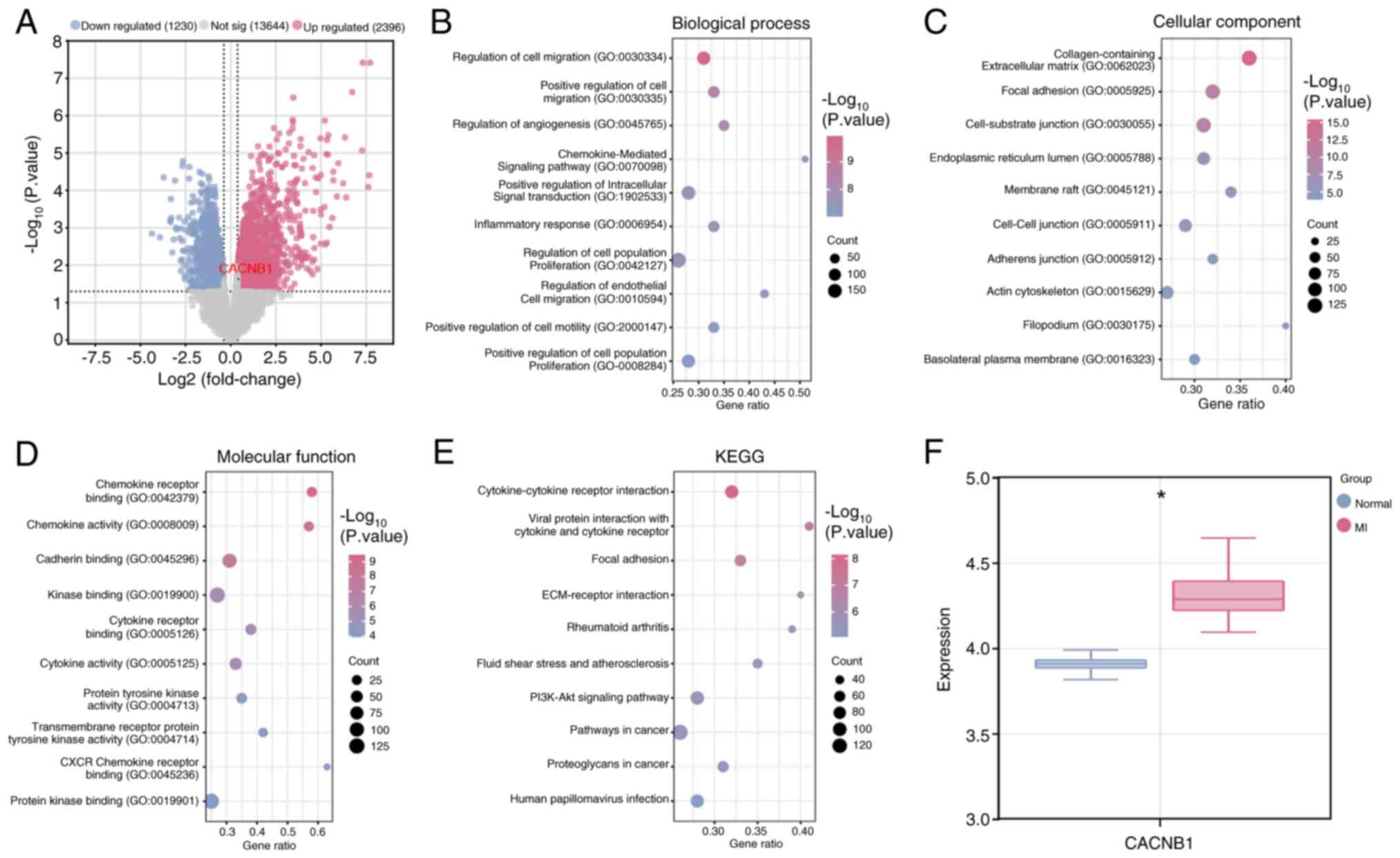
Figure 1

Differential expression and
functional enrichment analyses for hub gene identification in the
GSE19339 dataset. (A) Volcano plot displaying the differential
expression analysis results of the GSE19339 dataset. The x-axis
represents the log2 fold change in gene expression
between MI and normal samples. The y-axis indicates the statistical
significance of differential expression. Upregulated DEGs are
depicted in red, and downregulated DEGs are depicted in blue. Gene
ontology enrichment analysis of the function of DEGs based on (B)
biological process, (C) cellular component and (D) molecular
function. The abscissa is GeneRatio and the ordinate is an
enrichment term. The larger the dots, the more genes that are
enriched. (E) KEGG enrichment analysis predicted the pathways of
overlapping gene involvement. (F) Box plot showing the differential
expression of CACNB1 between MI and normal samples in the
GSE19339 dataset, *P<0.05 compared with the Normal group.
Statistical analysis of differential gene expression was performed
using an unpaired Student's t-test. DEGs, differentially expressed
genes; KEGG, Kyoto Encyclopedia of Genes and Genomes; MI,
myocardial infarction.

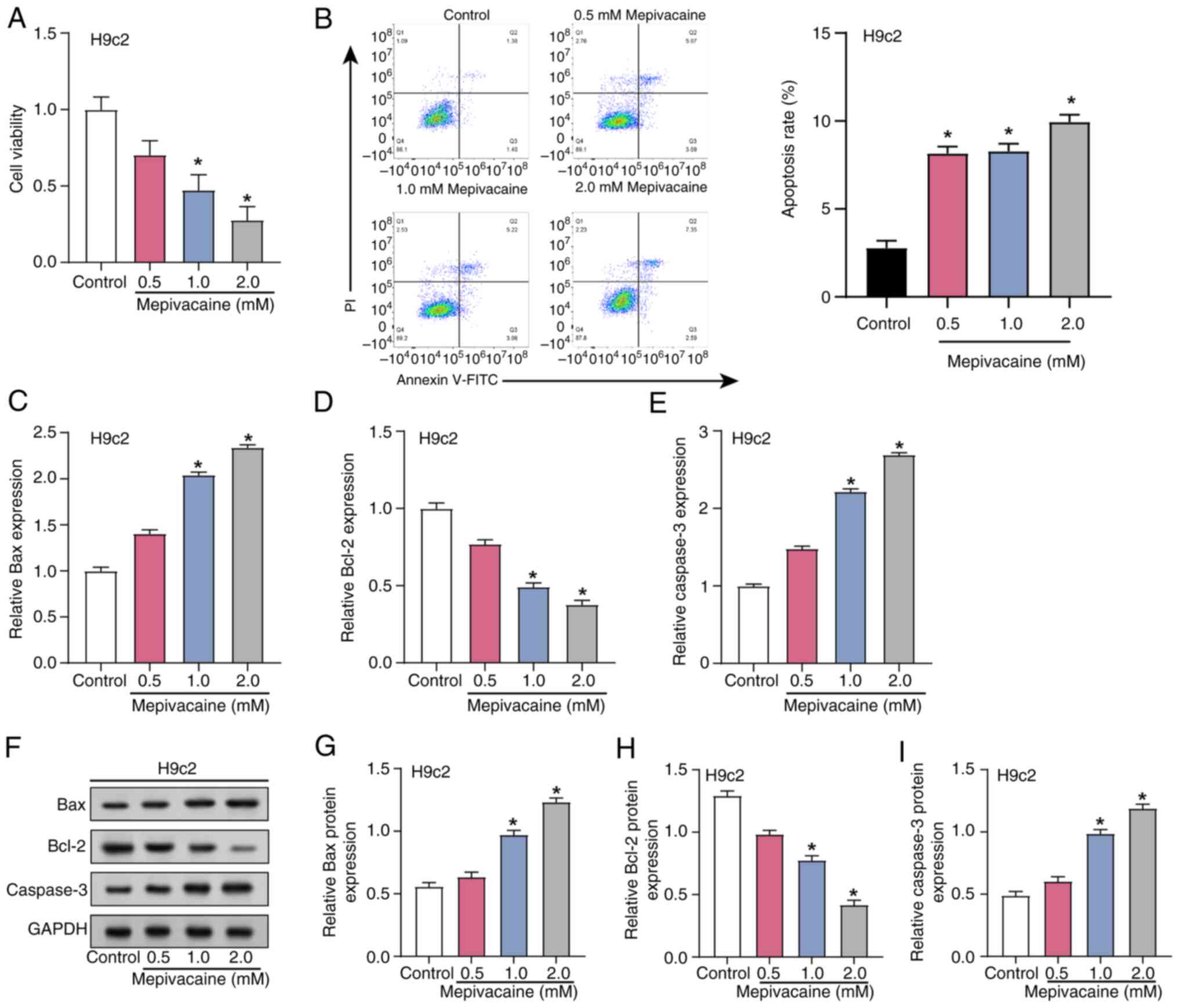
Figure 2

Mepivacaine induces activation of the
apoptosis pathway in H9c2 cells. (A) Determination of cell
viability in H9c2 cells treated with different concentrations (0.5,
1.0 and 2.0 mM) of mepivacaine using the CCK-8 assay. The x-axis
represents different treatment conditions and the y-axis represents
cell viability. (B) Analysis of apoptosis rate in H9c2 cells
treated with different concentrations (0.5, 1.0 and 2.0 mM) of
mepivacaine using flow cytometry. Reverse
transcription-quantitative pcr analysis of mRNA expression levels
of apoptotic factors (C) Bax, (D) Bcl-2 and (E) Caspase-3 in H9c2
cells treated with different concentrations of mepivacaine. (F)
Representative images of western blot analysis of protein
expression levels of (G) Bax, (H) Bcl-2 (I) and Caspase-3 in H9c2
cells treated with different concentrations of mepivacaine. Data
are presented as mean ± SD. Statistical significance was assessed
using one-way ANOVA followed by Tukey's post hoc test. *P<0.05
compared with the Control group.

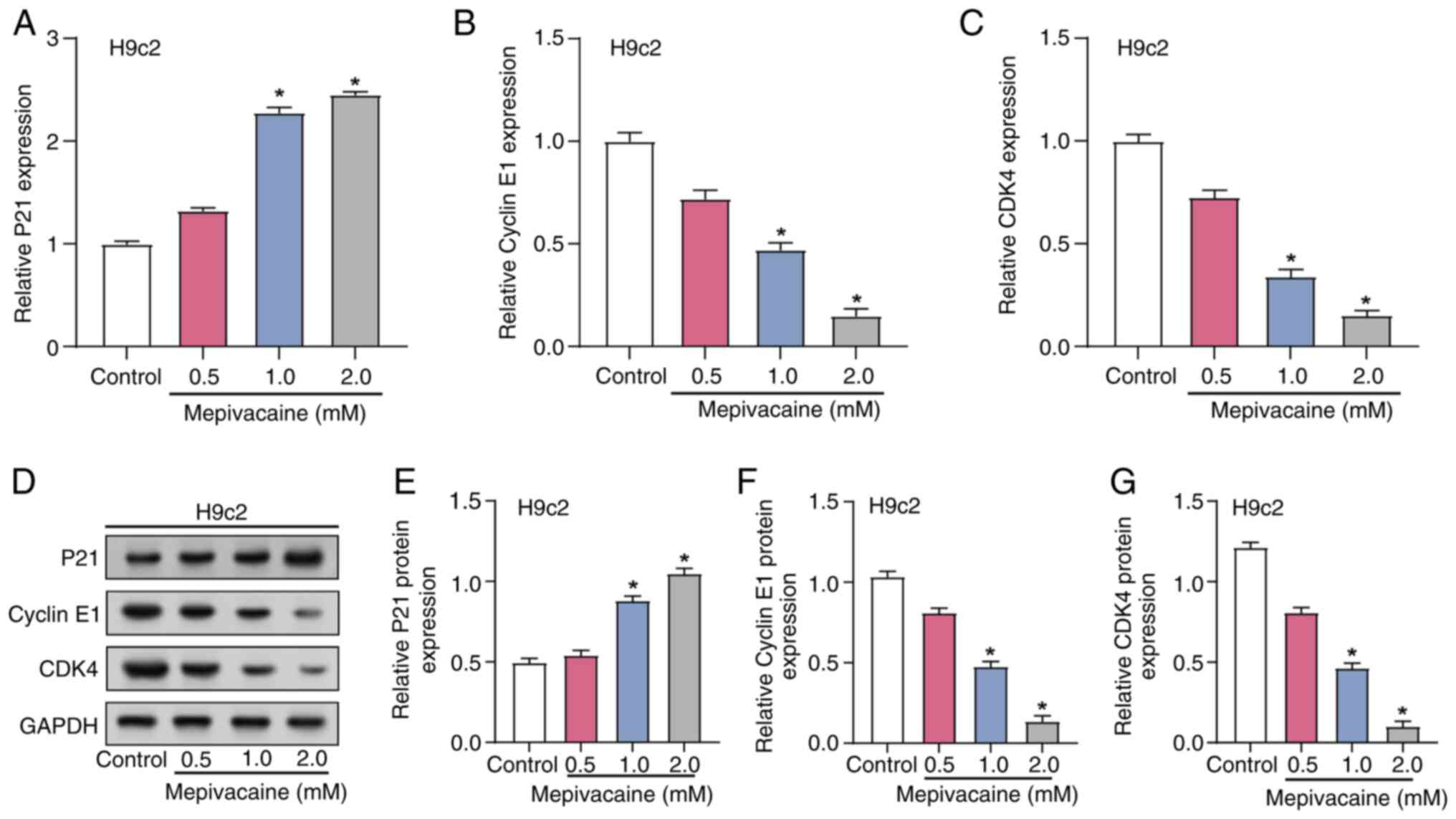
Figure 3

Impact of mepivacaine on the cell
cycle of H9c2 cells. Evaluation of mRNA expression levels of cell
cycle-related markers (A) P21, (B) Cyclin E1 and (C) CDK4 in H9c2
cells treated with different concentrations of mepivacaine using
reverse transcription-quantitative PCR. (D) Representative western
blotting images of protein expression levels of cell cycle-related
markers (E) P21, (F) Cyclin E1 and (G) CDK4 in H9c2 cells treated
with different concentrations of mepivacaine. Data are presented as
mean ± SD. Statistical significance was assessed using one-way
ANOVA followed by Tukey's post hoc test. *P<0.05 compared with
the Control group.

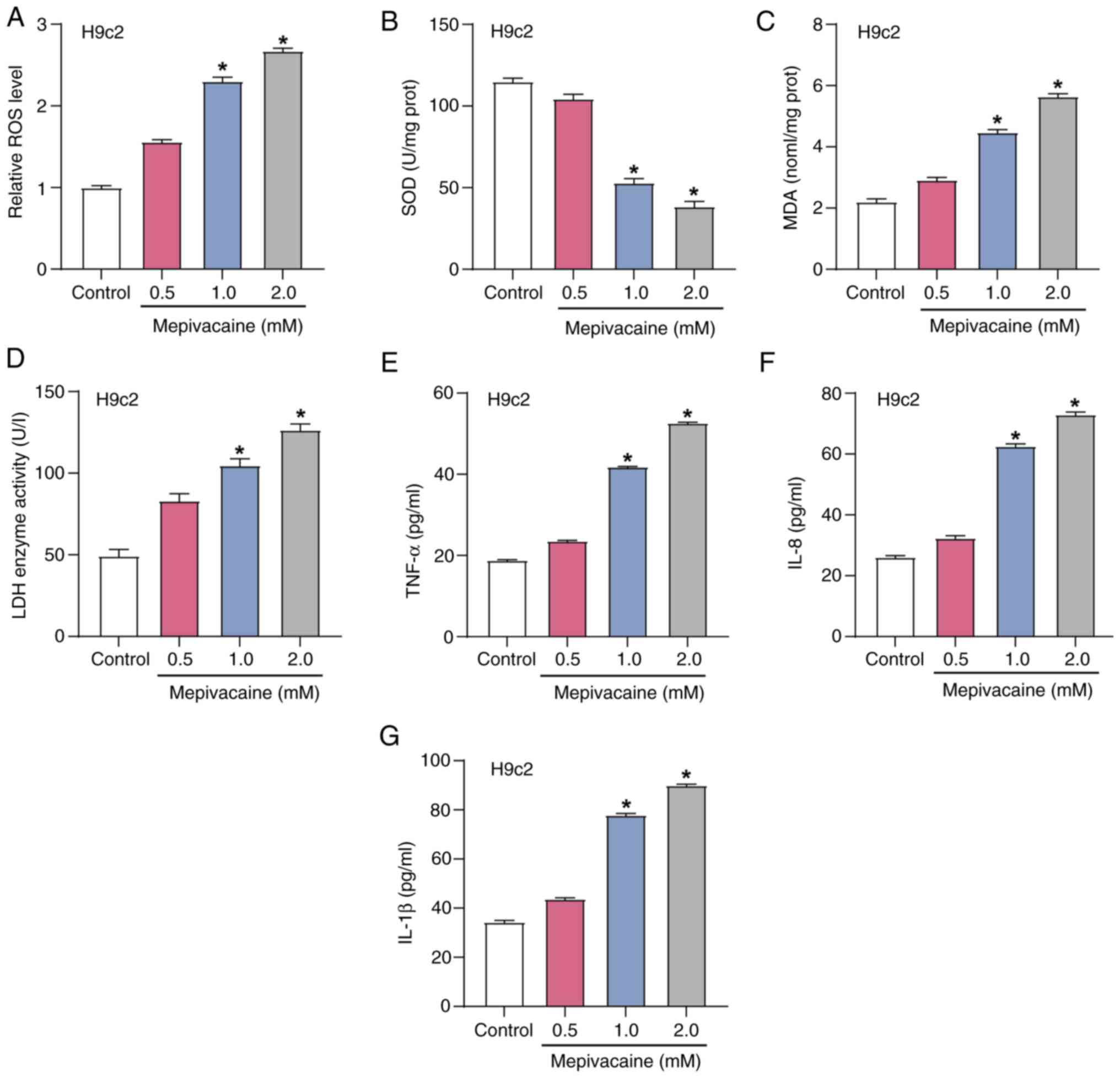
Figure 4

Mepivacaine induces oxidative stress
and inflammation in H9c2 cells. Measurement of (A) ROS, (B) SOD,
(C) MDA and (D) LDH levels in H9c2 cells treated with different
concentrations of mepivacaine using corresponding assay kits.
Assessment of the secretion levels of inflammatory cytokines (E)
TNF-α, (F) IL-8 and (G) IL-1β in H9c2 cells treated with different
concentrations of mepivacaine using ELISA. Data are presented as
mean ± SD. Statistical significance was assessed using one-way
ANOVA followed by Tukey's post hoc test. *P<0.05 compared with
the Control group. ROS, reactive oxygen species; SOD, superoxide
dismutase; MDA, malondialdehyde; LDH, lactate dehydrogenase; prot,
protein.

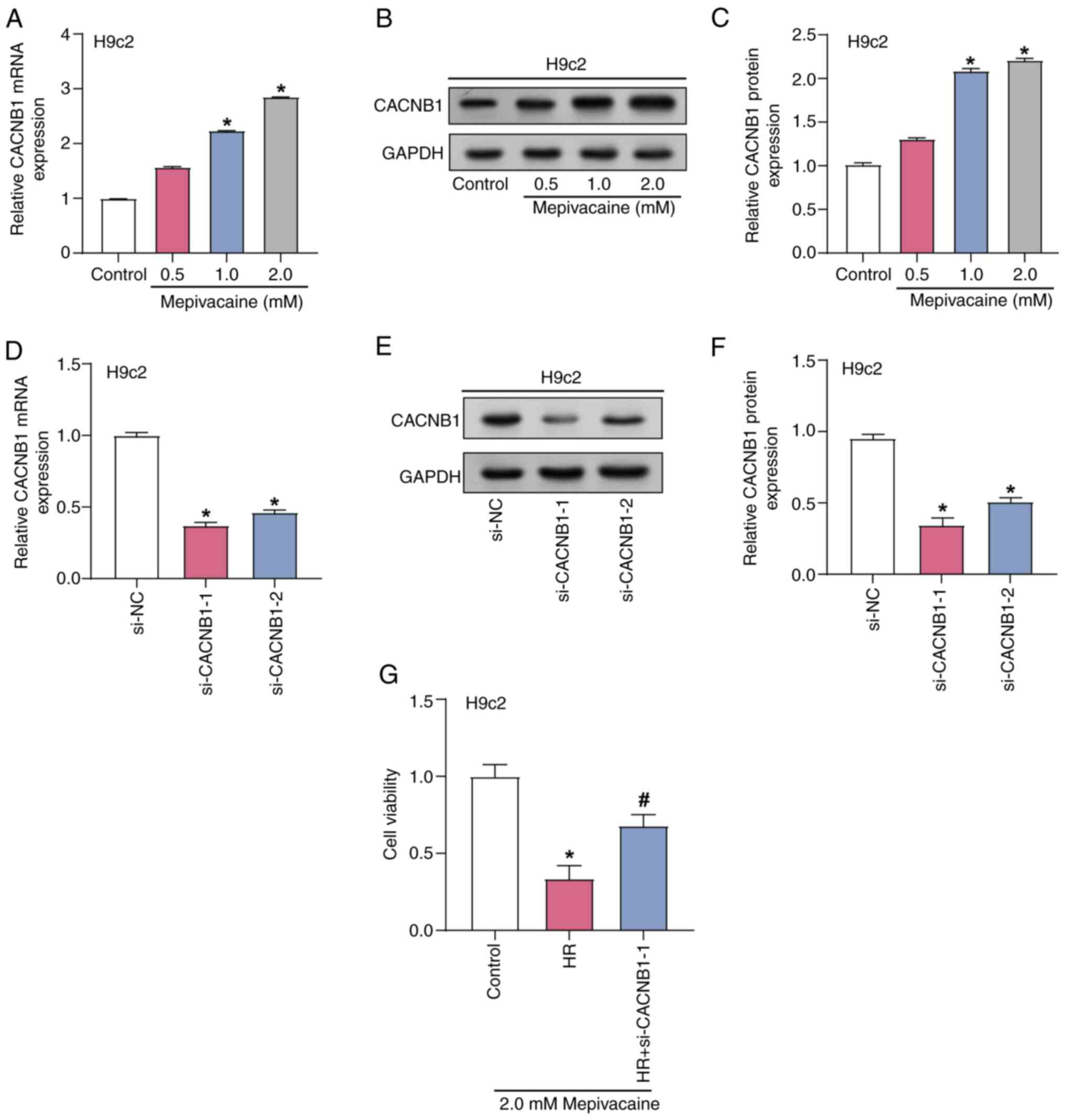
Figure 5

Impact of mepivacaine treatment and
CACNB1 knockdown on H9c2 cell viability. (A) mRNA expression
levels (B) representative western blotting images and (C) protein
expression levels of CACNB1 in H9c2 cells treated with
different concentrations of mepivacaine. (D) mRNA expression
levels, (E) representative western blotting images and (F) protein
expression levels of CACNB1 to assess the transfection
efficiency of CACNB1 knockdown plasmids. (G) The viability
of HR model H9c2 cells treated with 2 mM mepivacaine for 24 h,
combined with CACNB1 knockdown, was assessed using the Cell
Counting Kit-8 assay. Data are presented as mean ± SD. Statistical
significance was assessed using one-way ANOVA followed by Tukey's
post hoc test. *P<0.05 compared with the Control group,
#P<0.05 compared with the H/R group. HR,
hypoxia/reoxygenation; si, small interfering.

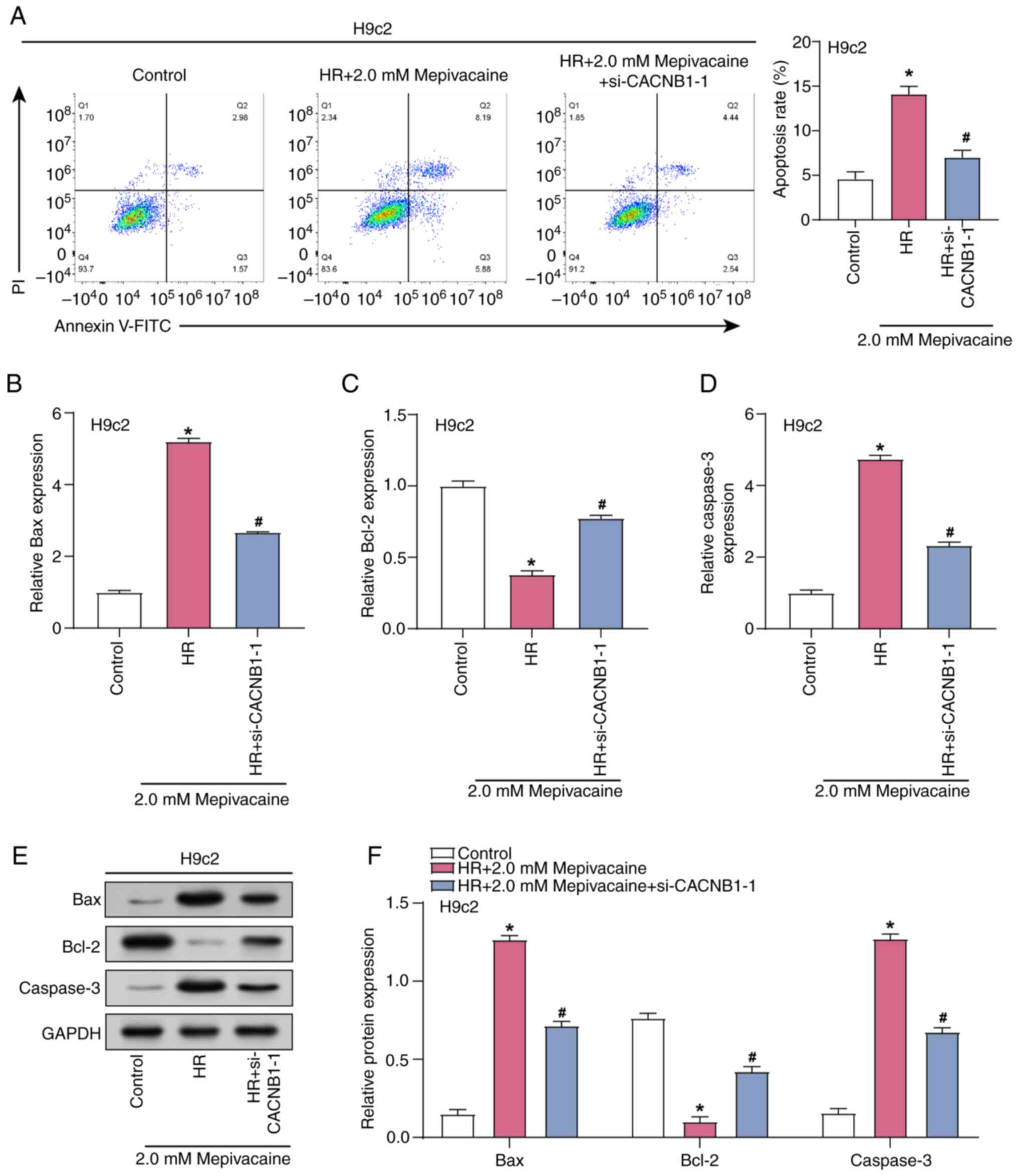
Figure 6

Effect of CACNB1 knockdown on
apoptosis in HR model H9c2 cells treated with mepivacaine. (A)
Assessment of apoptosis level in HR model H9c2 cells treated with 2
mM mepivacaine and CACNB1 knockdown using flow cytometry.
Evaluation of the mRNA expression levels of apoptotic proteins (B)
Bax, (C) Bcl-2 and (D) Caspase-3 in H/R model H9c2 cells treated
with 2 mM mepivacaine and CACNB1 knockdown. (E)
Representative western blotting images and (F) protein expression
of Bax, Bcl-1 and Caspase-1. Data are presented as mean ± SD.
Statistical significance was assessed using one-way ANOVA followed
by Tukey's post hoc test. *P<0.05 compared with the Control
group, #P<0.05 compared with the H/R + 2.0 mM
Mepivacaine group. HR, Hypoxia/Reoxygenation; si, small
interfering.

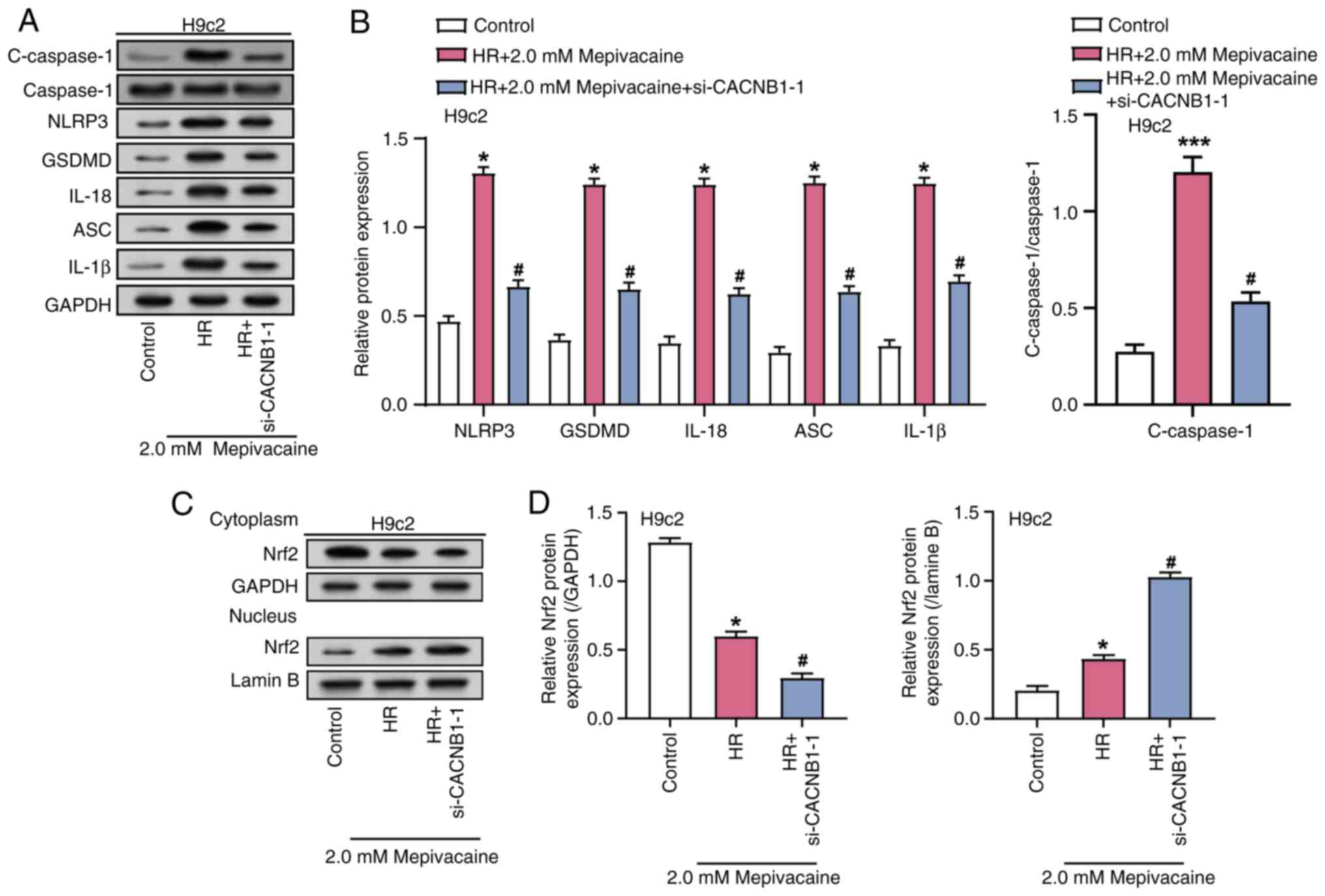
Figure 7

CACNB1 knockdown modulates the
expression of inflammatory mediators and Nrf2 nuclear
translocation. (A) Representative western blotting images and (B)
expression levels of inflammatory-related factors (NLRP3,
C-Caspase-1, GSDMD, IL-18, ASC and IL-1β) were evaluated by western
blot analysis upon combined treatment with mepivacaine and
CACNB1 knockdown. (C) Representative western blotting images
and (D) expression levels of cytoplasmic Nrf2 and nuclear Nrf2
proteins were assessed by western blot analysis. Data are presented
as mean ± SD. Statistical significance was assessed using one-way
ANOVA followed by Tukey's post hoc test. *P<0.05 and
***P<0.001 compared with the Control group,
#P<0.05 compared with the H/R + 2.0 mM Mepivacaine
group. HR, Hypoxia/Reoxygenation; si, small interfering; Nrf2,
nuclear factor erythroid 2-related factor 2; ASC,
apoptosis-associated speck-like protein containing a CARD (also
known as PYCARD).
View References

1 

Katari V, Kanajam LSP, Kokkiligadda S, Sharon T and Kantamaneni P: A review on causes of myocardial infarction and its management. World J Pharmaceutical Res. 12:511–529. 2023.

2 

Sagris M, Antonopoulos AS, Theofilis P, Oikonomou E, Siasos G, Tsalamandris S, Antoniades C, Brilakis ES, Kaski JC and Tousoulis D: Risk factors profile of young and older patients with myocardial infarction. Cardiovasc Res. 118:2281–2292. 2022. View Article : Google Scholar : PubMed/NCBI

3 

Khan IA, Karim HMR, Panda CK, Ahmed G and Nayak S: Atypical presentations of myocardial infarction: A systematic review of case reports. Cureus. 15:e354922023.PubMed/NCBI

4 

Camacho X, Nedkoff L, Wright FL, Nghiem N, Buajitti E, Goldacre R, Rosella LC, Seminog O, Tan EJ, Hayes A, et al: Relative contribution of trends in myocardial infarction event rates and case fatality to declines in mortality: An international comparative study of 1 95 million events in 80 4 million people in four countries. Lancet Public Health. 7:e229–e239. 2022. View Article : Google Scholar : PubMed/NCBI

5 

Fathima SN: An update on myocardial infarction. Curr Res Trends Med Sci Technol. 1:152021.

6 

Dos Santos CC, Matharoo AS, Cueva EP, Amin U, Ramos AAP, Mann NK, Maheen S, Butchireddy J, Falki VB, Itrat A, et al: The influence of sex, age, and race on coronary artery disease: A narrative review. Cureus. 15:e477992023.PubMed/NCBI

7 

Radu RI, Ben Gal T, Abdelhamid M, Antohi EL, Adamo M, Ambrosy AP, Geavlete O, Lopatin Y, Lyon A, Miro O, et al: Antithrombotic and anticoagulation therapies in cardiogenic shock: A critical review of the published literature. ESC Heart Fail. 8:4717–4736. 2021. View Article : Google Scholar : PubMed/NCBI

8 

Zangrillo A, Lomivorotov VV, Pasyuga VV, Belletti A, Gazivoda G, Monaco F, Nigro Neto C, Likhvantsev VV, Bradic N, Lozovskiy A, et al: Effect of volatile anesthetics on myocardial infarction after coronary artery surgery: A post hoc analysis of a randomized trial. J Cardiothorac Vasc Anesth. 36:2454–2462. 2022. View Article : Google Scholar : PubMed/NCBI

9 

Körner J, Albani S, Sudha Bhagavath Eswaran V, Roehl AB, Rossetti G and Lampert A: Sodium channels and local anesthetics-old friends with new perspectives. Front Pharmacol. 13:8370882022. View Article : Google Scholar : PubMed/NCBI

10 

Gitman M, Fettiplace MR, Weinberg GL, Neal JM and Barrington MJ: Local anesthetic systemic toxicity: A narrative literature review and clinical update on prevention, diagnosis, and management. Plast Reconstr Surg. 144:783–795. 2019. View Article : Google Scholar : PubMed/NCBI

11 

Dell'Olio F, Capodiferro S, Lorusso P, Limongelli L, Tempesta A, Massaro M, Grasso S and Favia G: Light conscious sedation in patients with previous acute myocardial infarction needing exodontia: An observational study. Cureus. 11:e65082019.PubMed/NCBI

12 

Mosqueira M, Aykut G and Fink RH: Mepivacaine reduces calcium transients in isolated murine ventricular cardiomyocytes. BMC Anesthesiol. 20:102020. View Article : Google Scholar : PubMed/NCBI

13 

de Groot-van der Mooren M, Quint S, Knobbe I, Cronie D and van Weissenbruch M: Severe cardiorespiratory and neurologic symptoms in a neonate due to mepivacaine intoxication. Case Rep Pediatr. 2019:40135642019.PubMed/NCBI

14 

Andrade A, Brennecke A, Mallat S, Brown J, Gomez-Rivadeneira J, Czepiel N and Londrigan L: Genetic associations between voltage-gated calcium channels and psychiatric disorders. Int J Mol Sci. 20:35372019. View Article : Google Scholar : PubMed/NCBI

15 

Gilbert G, Demydenko K, Dries E, Puertas RD, Jin X, Sipido K and Roderick HL: Calcium signaling in cardiomyocyte function. Cold Spring Harb Perspect Biol. 12:a0354282020. View Article : Google Scholar : PubMed/NCBI

16 

Shah K, Seeley S, Schulz C, Fisher J and Gururaja Rao S: Calcium channels in the heart: Disease states and drugs. Cells. 11:9432022. View Article : Google Scholar : PubMed/NCBI

17 

Erdogmus S, Concepcion AR, Yamashita M, Sidhu I, Tao AY, Li W, Rocha PP, Huang B, Garippa R, Lee B, et al: Cavβ1 regulates T cell expansion and apoptosis independently of voltage-gated Ca2+ channel function. Nat Commun. 13:20332022. View Article : Google Scholar : PubMed/NCBI

18 

Xuan L, Zhu Y, Liu Y, Yang H, Wang S, Li Q, Yang C, Jiao L, Zhang Y, Yang B and Sun L: Up-regulation of miR-195 contributes to cardiac hypertrophy-induced arrhythmia by targeting calcium and potassium channels. J Cell Mol Med. 24:7991–8005. 2020. View Article : Google Scholar : PubMed/NCBI

19 

Livak KJ and Schmittgen TD: Analysis of relative gene expression data using real-time quantitative PCR and the 2(−Delta Delta C(T)) method. Methods. 25:402–408. 2001. View Article : Google Scholar : PubMed/NCBI

20 

Lu Y, Zhang Y, Wang N, Pan Z, Gao X, Zhang F, Zhang Y, Shan H, Luo X, Bai Y, et al: MicroRNA-328 contributes to adverse electrical remodeling in atrial fibrillation. Circulation. 122:2378–2387. 2010. View Article : Google Scholar : PubMed/NCBI

21 

Couch LS, Fiedler J, Chick G, Clayton R, Dries E, Wienecke LM, Fu L, Fourre J, Pandey P, Derda AA, et al: Circulating microRNAs predispose to takotsubo syndrome following high-dose adrenaline exposure. Cardiovasc Res. 118:1758–1770. 2022. View Article : Google Scholar : PubMed/NCBI

22 

Scarparo HC, Maia RN, Filho ED, Soares E, Costa F, Fonteles C, Bezerra TP, Ribeiro TR and Romero NR: Plasma mepivacaine concentrations in patients undergoing third molar surgery. Aust Dent J. 61:446–454. 2016. View Article : Google Scholar : PubMed/NCBI

23 

Zhou Q and Zhang L: MicroRNA-183-5p protects human derived cell line SH-SY5Y cells from mepivacaine-induced injury. Bioengineered. 12:3177–3187. 2021. View Article : Google Scholar : PubMed/NCBI

24 

Cheng L, Zhang H, Wu F, Liu Z, Cheng Y and Wang C: Role of Nrf2 and its activators in cardiocerebral vascular disease. Oxid Med Cell Longev. 2020:46839432020. View Article : Google Scholar : PubMed/NCBI

25 

Zhao E, Xie H and Zhang Y: Predicting diagnostic gene biomarkers associated with immune infiltration in patients with acute myocardial infarction. Front Cardiovasc Med. 7:5868712020. View Article : Google Scholar : PubMed/NCBI

26 

Zhang Q, Wang L, Wang S, Cheng H, Xu L, Pei G, Wang Y, Fu C, Jiang Y, He C and Wei Q: Signaling pathways and targeted therapy for myocardial infarction. Signal Transduct Target Ther. 7:782022. View Article : Google Scholar : PubMed/NCBI

27 

Paolisso P, Foà A, Bergamaschi L, Donati F, Fabrizio M, Chiti C, Angeli F, Toniolo S, Stefanizzi A, Armillotta M, et al: Hyperglycemia, inflammatory response and infarct size in obstructive acute myocardial infarction and MINOCA. Cardiovasc Diabetol. 20:332021. View Article : Google Scholar : PubMed/NCBI

28 

Zhao X, Ren Y, Ren H, Wu Y, Liu X, Chen H and Ying C: The mechanism of myocardial fibrosis is ameliorated by myocardial infarction-associated transcript through the PI3K/Akt signaling pathway to relieve heart failure. J Int Med Res. Jul 18–2021. View Article : Google Scholar

29 

Burgos EG, García-García LL, Gómez-Serranillos MP and Oliver FG: Local Anesthetics. Adv Neuropharmacol. 351–388. 2020. View Article : Google Scholar

30 

Lottinger C: Local anesthetics in dentistry. Evidence-Based Oral Surgery. Springer; London: pp. 129–150. 2019

31 

Ozbay S, Ayan M and Karcioglu O: Local anesthetics, clinical uses, and toxicity: Recognition and management. Curr Pharm Des. 29:1414–1420. 2023. View Article : Google Scholar : PubMed/NCBI

32 

Aladağ N, Asoğlu R, Ozdemir M, Asoğlu E, Derin AR, Demir C and Demir H: Oxidants and antioxidants in myocardial infarction (MI): Investigation of ischemia modified albumin, malondialdehyde, superoxide dismutase and catalase in individuals diagnosed with ST elevated myocardial infarction (STEMI) and non-STEMI (NSTEMI). J Med Biochem. 40:2862021. View Article : Google Scholar : PubMed/NCBI

33 

Mitsis A, Kadoglou NP, Lambadiari V, Alexiou S, Theodoropoulos KC, Avraamides P and Kassimis G: Prognostic role of inflammatory cytokines and novel adipokines in acute myocardial infarction: An updated and comprehensive review. Cytokine. 153:1558482022. View Article : Google Scholar : PubMed/NCBI

34 

Zhang H and Dhalla NS: The role of pro-inflammatory cytokines in the Pathogenesis of Cardiovascular Disease. Int J Mol Sci. 25:10822024. View Article : Google Scholar : PubMed/NCBI

35 

Shao L, Shen Y, Ren C, Kobayashi S, Asahara T and Yang J: Inflammation in myocardial infarction: Roles of mesenchymal stem cells and their secretome. Cell Death Discov. 8:4522022. View Article : Google Scholar : PubMed/NCBI

36 

Tuluc P, Theiner T, Jacobo-Piqueras N and Geisler SM: Role of high Voltage-Gated Ca2+ Channel subunits in pancreatic β-cell insulin release. From structure to function. Cells. 10:20042021. View Article : Google Scholar : PubMed/NCBI

37 

Zhang S, Yan F, Luan F, Chai Y, Li N, Wang YW, Chen ZL, Xu DQ and Tang YP: The pathological mechanisms and potential therapeutic drugs for myocardial ischemia reperfusion injury. Phytomedicine. 129:1556492024. View Article : Google Scholar : PubMed/NCBI

38 

Zhang D, Wu H, Liu D, Li Y and Zhou G: Research progress on the mechanism and treatment of inflammatory response in myocardial Ischemia-reperfusion injury. Heart Surg Forum. 25:E462–E468. 2022. View Article : Google Scholar : PubMed/NCBI

39 

Algoet M, Janssens S, Himmelreich U, Gsell W, Pusovnik M, Van den Eynde J and Oosterlinck W: Myocardial ischemia-reperfusion injury and the influence of inflammation. Trends Cardiovasc Med. 33:357–366. 2023. View Article : Google Scholar : PubMed/NCBI

40 

Li YW, Liu Y, Luo SZ, Huang XJ, Shen Y, Wang WS and Lang ZC: The significance of calcium ions in cerebral ischemia-reperfusion injury: Mechanisms and intervention strategies. Front Mol Biosci. 12:15857582025. View Article : Google Scholar : PubMed/NCBI

41 

He J, Liu D, Zhao L, Zhou D, Rong J, Zhang L and Xia Z: Myocardial ischemia/reperfusion injury: Mechanisms of injury and implications for management. Exp Ther Med. 23:4302022. View Article : Google Scholar : PubMed/NCBI

42 

Trujillo-Rangel WÁ, García-Valdés L, Méndez-del Villar M, Castañeda-Arellano R, Totsuka-Sutto SE and García-Benavides L: Therapeutic targets for regulating oxidative damage induced by ischemia-reperfusion injury: A study from a pharmacological perspective. Oxid Med Cell Longev. 2022:86243182022. View Article : Google Scholar : PubMed/NCBI

43 

Vairamani K, Prasad V, Wang Y, Huang W, Chen Y, Medvedovic M, Lorenz JN and Shull GE: NBCe1 Na+-HCO3-cotransporter ablation causes reduced apoptosis following cardiac ischemia-reperfusion injury in vivo. World J Cardiol. 10:972018. View Article : Google Scholar : PubMed/NCBI

44 

Wang Y, Zhang X, Wen Y, Li S, Lu X, Xu R and Li C: Endoplasmic reticulum-mitochondria contacts: A potential therapy target for cardiovascular remodeling-associated diseases. Front Cell Dev Biol. 9:7749892021. View Article : Google Scholar : PubMed/NCBI

45 

Luan Y, Luan Y, Yuan R-X, Feng Q, Chen X and Yang Y: Structure and function of mitochondria-associated endoplasmic reticulum membranes (MAMs) and their role in cardiovascular diseases. Oxid Med Cell Longev. 2021:45788092021. View Article : Google Scholar : PubMed/NCBI

46 

Li W, Cao T, Luo C, Cai J, Zhou X, Xiao X and Liu S: Crosstalk between ER stress, NLRP3 inflammasome, and inflammation. Appl Microbiol Biotechnol. 104:6129–6140. 2020. View Article : Google Scholar : PubMed/NCBI

47 

Saha S, Buttari B, Panieri E, Profumo E and Saso L: An overview of Nrf2 signaling pathway and its role in inflammation. Molecules. 25:54742020. View Article : Google Scholar : PubMed/NCBI

48 

Wang L and Hauenstein AV: The NLRP3 inflammasome: Mechanism of action, role in disease and therapies. Mol Aspects Med. 76:1008892020. View Article : Google Scholar : PubMed/NCBI

49 

Tastan B, Arioz BI and Genc S: Targeting NLRP3 inflammasome with Nrf2 inducers in central nervous system disorders. Front Immunol. 13:8657722022. View Article : Google Scholar : PubMed/NCBI

50 

Nie Q, Zhang J, He B, Wang F, Sun M, Wang C, Sun W, Guo J, Wen J and Liu P: A novel mechanism of protection against isoproterenol-induced cardiac inflammation via regulation of the SIRT1/NRF2 signaling pathway with a natural SIRT1 agonist. Eur J Pharmacol. 886:1733982020. View Article : Google Scholar : PubMed/NCBI

51 

Mauro AG, Bonaventura A, Mezzaroma E, Quader M and Toldo S: NLRP3 inflammasome in acute myocardial infarction. J Cardiovasc Pharmacol. 74:175–187. 2019. View Article : Google Scholar : PubMed/NCBI

52 

Shen Y, Liu X, Shi J and Wu X: Involvement of Nrf2 in myocardial ischemia and reperfusion injury. Int J Biol Macromol. 125:496–502. 2019. View Article : Google Scholar : PubMed/NCBI

Related Articles

  • Abstract
  • View
  • Download
  • Twitter
Copy and paste a formatted citation
Spandidos Publications style
Shao Q, Zhang J and Wang H: <em>CACNB1</em> alleviates mepivacaine‑induced myocardial ischemia/reperfusion injury by promoting Nrf2 nuclear translocation. Mol Med Rep 33: 71, 2026.
APA
Shao, Q., Zhang, J., & Wang, H. (2026). <em>CACNB1</em> alleviates mepivacaine‑induced myocardial ischemia/reperfusion injury by promoting Nrf2 nuclear translocation. Molecular Medicine Reports, 33, 71. https://doi.org/10.3892/mmr.2025.13781
MLA
Shao, Q., Zhang, J., Wang, H."<em>CACNB1</em> alleviates mepivacaine‑induced myocardial ischemia/reperfusion injury by promoting Nrf2 nuclear translocation". Molecular Medicine Reports 33.2 (2026): 71.
Chicago
Shao, Q., Zhang, J., Wang, H."<em>CACNB1</em> alleviates mepivacaine‑induced myocardial ischemia/reperfusion injury by promoting Nrf2 nuclear translocation". Molecular Medicine Reports 33, no. 2 (2026): 71. https://doi.org/10.3892/mmr.2025.13781
Copy and paste a formatted citation
x
Spandidos Publications style
Shao Q, Zhang J and Wang H: <em>CACNB1</em> alleviates mepivacaine‑induced myocardial ischemia/reperfusion injury by promoting Nrf2 nuclear translocation. Mol Med Rep 33: 71, 2026.
APA
Shao, Q., Zhang, J., & Wang, H. (2026). <em>CACNB1</em> alleviates mepivacaine‑induced myocardial ischemia/reperfusion injury by promoting Nrf2 nuclear translocation. Molecular Medicine Reports, 33, 71. https://doi.org/10.3892/mmr.2025.13781
MLA
Shao, Q., Zhang, J., Wang, H."<em>CACNB1</em> alleviates mepivacaine‑induced myocardial ischemia/reperfusion injury by promoting Nrf2 nuclear translocation". Molecular Medicine Reports 33.2 (2026): 71.
Chicago
Shao, Q., Zhang, J., Wang, H."<em>CACNB1</em> alleviates mepivacaine‑induced myocardial ischemia/reperfusion injury by promoting Nrf2 nuclear translocation". Molecular Medicine Reports 33, no. 2 (2026): 71. https://doi.org/10.3892/mmr.2025.13781
Follow us
  • Twitter
  • LinkedIn
  • Facebook
About
  • Spandidos Publications
  • Careers
  • Cookie Policy
  • Privacy Policy
How can we help?
  • Help
  • Live Chat
  • Contact
  • Email to our Support Team