Spandidos Publications Logo
  • About
    • About Spandidos
    • Aims and Scopes
    • Abstracting and Indexing
    • Editorial Policies
    • Reprints and Permissions
    • Job Opportunities
    • Terms and Conditions
    • Contact
  • Journals
    • All Journals
    • Oncology Letters
      • Oncology Letters
      • Information for Authors
      • Editorial Policies
      • Editorial Board
      • Aims and Scope
      • Abstracting and Indexing
      • Bibliographic Information
      • Archive
    • International Journal of Oncology
      • International Journal of Oncology
      • Information for Authors
      • Editorial Policies
      • Editorial Board
      • Aims and Scope
      • Abstracting and Indexing
      • Bibliographic Information
      • Archive
    • Molecular and Clinical Oncology
      • Molecular and Clinical Oncology
      • Information for Authors
      • Editorial Policies
      • Editorial Board
      • Aims and Scope
      • Abstracting and Indexing
      • Bibliographic Information
      • Archive
    • Experimental and Therapeutic Medicine
      • Experimental and Therapeutic Medicine
      • Information for Authors
      • Editorial Policies
      • Editorial Board
      • Aims and Scope
      • Abstracting and Indexing
      • Bibliographic Information
      • Archive
    • International Journal of Molecular Medicine
      • International Journal of Molecular Medicine
      • Information for Authors
      • Editorial Policies
      • Editorial Board
      • Aims and Scope
      • Abstracting and Indexing
      • Bibliographic Information
      • Archive
    • Biomedical Reports
      • Biomedical Reports
      • Information for Authors
      • Editorial Policies
      • Editorial Board
      • Aims and Scope
      • Abstracting and Indexing
      • Bibliographic Information
      • Archive
    • Oncology Reports
      • Oncology Reports
      • Information for Authors
      • Editorial Policies
      • Editorial Board
      • Aims and Scope
      • Abstracting and Indexing
      • Bibliographic Information
      • Archive
    • Molecular Medicine Reports
      • Molecular Medicine Reports
      • Information for Authors
      • Editorial Policies
      • Editorial Board
      • Aims and Scope
      • Abstracting and Indexing
      • Bibliographic Information
      • Archive
    • World Academy of Sciences Journal
      • World Academy of Sciences Journal
      • Information for Authors
      • Editorial Policies
      • Editorial Board
      • Aims and Scope
      • Abstracting and Indexing
      • Bibliographic Information
      • Archive
    • International Journal of Functional Nutrition
      • International Journal of Functional Nutrition
      • Information for Authors
      • Editorial Policies
      • Editorial Board
      • Aims and Scope
      • Abstracting and Indexing
      • Bibliographic Information
      • Archive
    • International Journal of Epigenetics
      • International Journal of Epigenetics
      • Information for Authors
      • Editorial Policies
      • Editorial Board
      • Aims and Scope
      • Abstracting and Indexing
      • Bibliographic Information
      • Archive
    • Medicine International
      • Medicine International
      • Information for Authors
      • Editorial Policies
      • Editorial Board
      • Aims and Scope
      • Abstracting and Indexing
      • Bibliographic Information
      • Archive
  • Articles
  • Information
    • Information for Authors
    • Information for Reviewers
    • Information for Librarians
    • Information for Advertisers
    • Conferences
  • Language Editing
Spandidos Publications Logo
  • About
    • About Spandidos
    • Aims and Scopes
    • Abstracting and Indexing
    • Editorial Policies
    • Reprints and Permissions
    • Job Opportunities
    • Terms and Conditions
    • Contact
  • Journals
    • All Journals
    • Biomedical Reports
      • Information for Authors
      • Editorial Policies
      • Editorial Board
      • Aims and Scope
      • Abstracting and Indexing
      • Bibliographic Information
      • Archive
    • Experimental and Therapeutic Medicine
      • Information for Authors
      • Editorial Policies
      • Editorial Board
      • Aims and Scope
      • Abstracting and Indexing
      • Bibliographic Information
      • Archive
    • International Journal of Epigenetics
      • Information for Authors
      • Editorial Policies
      • Editorial Board
      • Aims and Scope
      • Abstracting and Indexing
      • Bibliographic Information
      • Archive
    • International Journal of Functional Nutrition
      • Information for Authors
      • Editorial Policies
      • Editorial Board
      • Aims and Scope
      • Abstracting and Indexing
      • Bibliographic Information
      • Archive
    • International Journal of Molecular Medicine
      • Information for Authors
      • Editorial Policies
      • Editorial Board
      • Aims and Scope
      • Abstracting and Indexing
      • Bibliographic Information
      • Archive
    • International Journal of Oncology
      • Information for Authors
      • Editorial Policies
      • Editorial Board
      • Aims and Scope
      • Abstracting and Indexing
      • Bibliographic Information
      • Archive
    • Medicine International
      • Information for Authors
      • Editorial Policies
      • Editorial Board
      • Aims and Scope
      • Abstracting and Indexing
      • Bibliographic Information
      • Archive
    • Molecular and Clinical Oncology
      • Information for Authors
      • Editorial Policies
      • Editorial Board
      • Aims and Scope
      • Abstracting and Indexing
      • Bibliographic Information
      • Archive
    • Molecular Medicine Reports
      • Information for Authors
      • Editorial Policies
      • Editorial Board
      • Aims and Scope
      • Abstracting and Indexing
      • Bibliographic Information
      • Archive
    • Oncology Letters
      • Information for Authors
      • Editorial Policies
      • Editorial Board
      • Aims and Scope
      • Abstracting and Indexing
      • Bibliographic Information
      • Archive
    • Oncology Reports
      • Information for Authors
      • Editorial Policies
      • Editorial Board
      • Aims and Scope
      • Abstracting and Indexing
      • Bibliographic Information
      • Archive
    • World Academy of Sciences Journal
      • Information for Authors
      • Editorial Policies
      • Editorial Board
      • Aims and Scope
      • Abstracting and Indexing
      • Bibliographic Information
      • Archive
  • Articles
  • Information
    • For Authors
    • For Reviewers
    • For Librarians
    • For Advertisers
    • Conferences
  • Language Editing
Login Register Submit
  • This site uses cookies
  • You can change your cookie settings at any time by following the instructions in our Cookie Policy. To find out more, you may read our Privacy Policy.

    I agree
Search articles by DOI, keyword, author or affiliation
Search
Advanced Search
presentation
Molecular Medicine Reports
Join Editorial Board Propose a Special Issue
Print ISSN: 1791-2997 Online ISSN: 1791-3004
Journal Cover
February-2026 Volume 33 Issue 2

Full Size Image

Sign up for eToc alerts
Recommend to Library

Journals

International Journal of Molecular Medicine

International Journal of Molecular Medicine

International Journal of Molecular Medicine is an international journal devoted to molecular mechanisms of human disease.

International Journal of Oncology

International Journal of Oncology

International Journal of Oncology is an international journal devoted to oncology research and cancer treatment.

Molecular Medicine Reports

Molecular Medicine Reports

Covers molecular medicine topics such as pharmacology, pathology, genetics, neuroscience, infectious diseases, molecular cardiology, and molecular surgery.

Oncology Reports

Oncology Reports

Oncology Reports is an international journal devoted to fundamental and applied research in Oncology.

Experimental and Therapeutic Medicine

Experimental and Therapeutic Medicine

Experimental and Therapeutic Medicine is an international journal devoted to laboratory and clinical medicine.

Oncology Letters

Oncology Letters

Oncology Letters is an international journal devoted to Experimental and Clinical Oncology.

Biomedical Reports

Biomedical Reports

Explores a wide range of biological and medical fields, including pharmacology, genetics, microbiology, neuroscience, and molecular cardiology.

Molecular and Clinical Oncology

Molecular and Clinical Oncology

International journal addressing all aspects of oncology research, from tumorigenesis and oncogenes to chemotherapy and metastasis.

World Academy of Sciences Journal

World Academy of Sciences Journal

Multidisciplinary open-access journal spanning biochemistry, genetics, neuroscience, environmental health, and synthetic biology.

International Journal of Functional Nutrition

International Journal of Functional Nutrition

Open-access journal combining biochemistry, pharmacology, immunology, and genetics to advance health through functional nutrition.

International Journal of Epigenetics

International Journal of Epigenetics

Publishes open-access research on using epigenetics to advance understanding and treatment of human disease.

Medicine International

Medicine International

An International Open Access Journal Devoted to General Medicine.

Journal Cover
February-2026 Volume 33 Issue 2

Full Size Image

Sign up for eToc alerts
Recommend to Library

  • Article
  • Citations
    • Cite This Article
    • Download Citation
    • Create Citation Alert
    • Remove Citation Alert
    • Cited By
  • Similar Articles
    • Related Articles (in Spandidos Publications)
    • Similar Articles (Google Scholar)
    • Similar Articles (PubMed)
  • Download PDF
  • Download XML
  • View XML
Article Open Access

ST3Gal1 modulates intestinal barrier function and impacts human ulcerative colitis

  • Authors:
    • Yin Tian
    • Yun Liu
    • Yangyang Shang
    • Lijian Ran
    • Li Liu
    • Rongquan Wang
    • Jun Ye
  • View Affiliations / Copyright

    Affiliations: Department of Gastroenterology, The People's Hospital of Yubei District of Chongqing City, Chongqing 401120, P.R. China, Institute of Gastroenterology of People's Liberation Army, Southwest Hospital, Army Medical University, Chongqing 400038, P.R. China
    Copyright: © Tian et al. This is an open access article distributed under the terms of Creative Commons Attribution License.
  • Article Number: 73
    |
    Published online on: December 18, 2025
       https://doi.org/10.3892/mmr.2025.13783
  • Expand metrics +
Metrics: Total Views: 0 (Spandidos Publications: | PMC Statistics: )
Metrics: Total PDF Downloads: 0 (Spandidos Publications: | PMC Statistics: )
Cited By (CrossRef): 0 citations Loading Articles...

This article is mentioned in:


Abstract

The pathogenesis of inflammatory bowel disease is associated with dysfunction of the intestinal mucosal barrier. Protein sialylation serves an important role in maintaining the integrity of this barrier. The present study investigated how α2,3‑linked sialylation catalyzed by protein ST3Gal1 affected intestinal barrier function and impacted the pathogenesis of human ulcerative colitis (UC). The present study employed Caco‑2, HT29‑MTX‑E12 and THP‑1 cells with distinct functionalities to establish an in vitro triple‑culture model. This model was utilized to simulate both healthy and inflamed states of the human intestine for investigating the impact of ST3Gal1‑mediated α2,3‑sialylation on the integrity of the intestinal barrier. The triple‑culture model was stably infected with adenoviral particles or lentiviral vectors to establish ST3Gal1 knockdown and overexpression, respectively, followed by isolation through incubation with 4 µg/ml puromycin. The functionality of the intestinal barrier was assessed via trans‑epithelial electrical resistance and FITC‑dextran permeability assays. ST3Gal1 expression was found to be associated with inflammation of the intestinal mucosa in patients with UC and a mouse model of dextran sulfate sodium‑induced colitis. Notably, suppressed expression of ST3Gal1 in the intestinal epithelial cell (IEC) monolayer enhanced the functionality of the intestinal barrier, whereas its overexpression caused intestinal barrier function deterioration. ST3Gal1 expression in the IEC monolayer altered the expression of intestinal mucus barrier‑associated mucin 2 (MUC2) and trefoil factor 3 (TFF3), goblet cell differentiation‑associated homeobox protein CDX‑2 (CDX2), inflammation‑associated phosphorylated (p)‑STAT3, and the inflammatory mediators IL‑1β, IL‑6 and IL‑8. Specifically, MUC2, TFF3 and CDX2 were positively associated with enhanced barrier integrity, whereas p‑STAT3, IL‑1β, IL‑6 and IL‑8 were negatively correlated with barrier function. Collectively, these results demonstrated a strong association between these factors and the regulation of intestinal barrier function. In conclusion, ST3Gal1‑catalyzed α2,3‑linkage formation in IECs may be closely associated with intestinal barrier function via its effect on the expression of barrier‑associated proteins and inflammatory mediators related to intestinal mucosa inflammation. 
View Figures

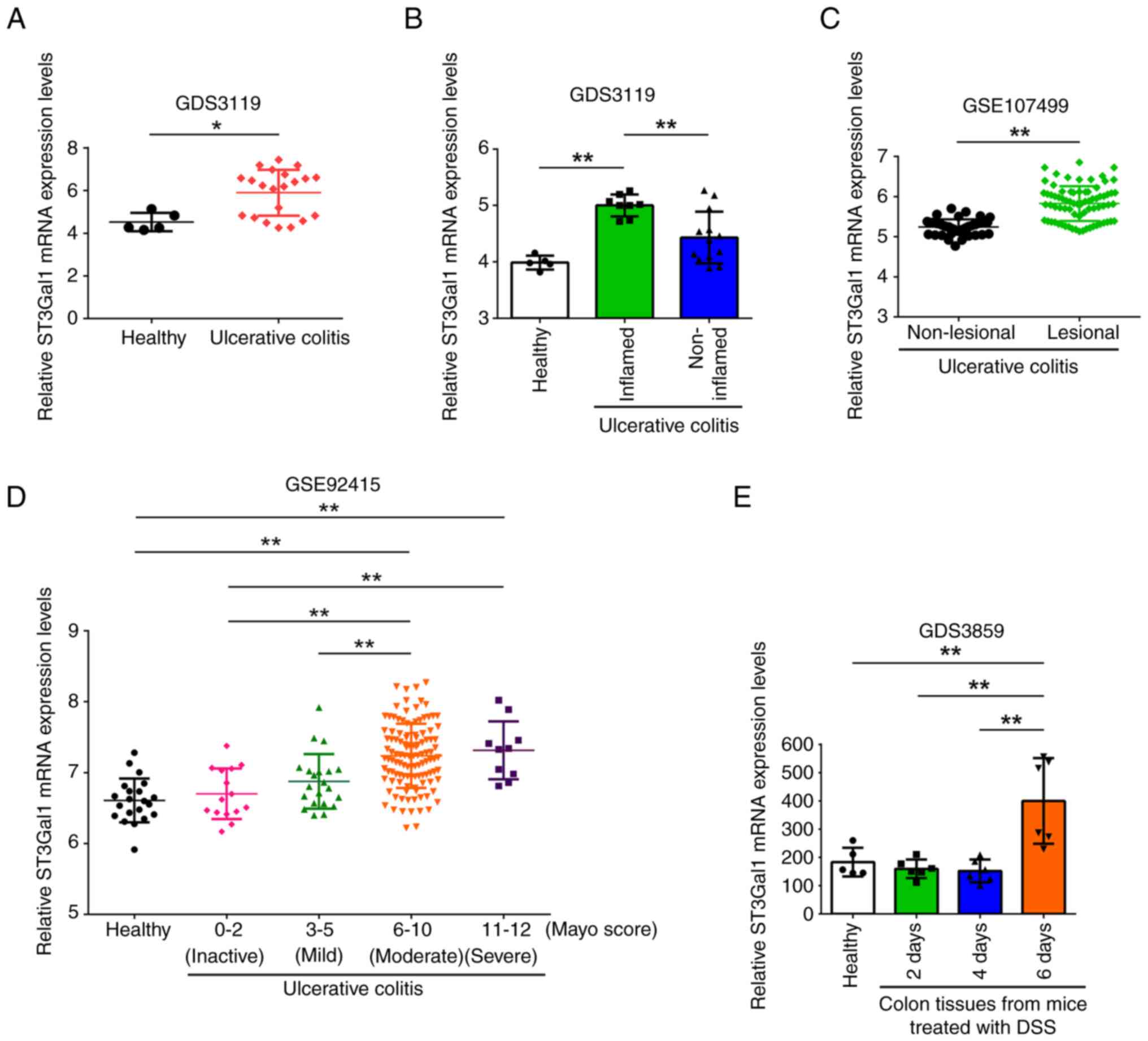
Figure 1

ST3Gal1 mRNA levels in intestinal
mucosa from patients with UC and a mouse DSS-induced colitis model
are associated with inflammatory states. (A) Comparison of ST3Gal1
mRNA levels between human normal colon mucosa from healthy controls
(n=5) and colonic mucosa from patients diagnosed with UC (n=21) in
the GDS3119 dataset from the GEO database. (B) ST3Gal1 mRNA levels
in human normal colonic tissues from healthy controls (n=5),
inflamed colonic tissues from patients with UC and visible
macroscopic inflammation (n=8), and non-inflamed colonic mucosal
tissues from patients with UC without macroscopic signs of
inflammation (n=13) in the GEO dataset GDS3119. (C) ST3Gal1 mRNA
levels in non-lesional mucosa (n=44) and lesional mucosa (n=75)
from different patients with UC, obtained from the GEO dataset
GSE107499. (D) ST3Gal1 mRNA levels in the normal mucosa (n=21) from
healthy controls and the inflamed mucosa (n=162) from patients with
UC with varying modified Mayo scores in the GEO dataset GSE92415.
(E) ST3Gal1 mRNA levels in colon tissues from mice treated with DSS
to induce colitis (independent, non-overlapping mice) divided into
four groups: Before DSS administration (n=5), and at 2, 4 and 6
days post-DSS treatment (n=6/group). Data were obtained from the
GEO dataset GDS3859. Data in A, C and D are presented as box and
whisker plots, whereas data in B and E are presented as the mean ±
SD. Statistical significance was determined using specific tests
for each subpart based on group comparisons: (A and C) Unpaired
t-test and (B, D and E) one-way analysis of variance followed by
Tukey's post-hoc test. *P<0.05 and **P<0.01. DSS, dextran
sulfate sodium; GEO, Gene Expression Omnibus; UC, ulcerative
colitis.

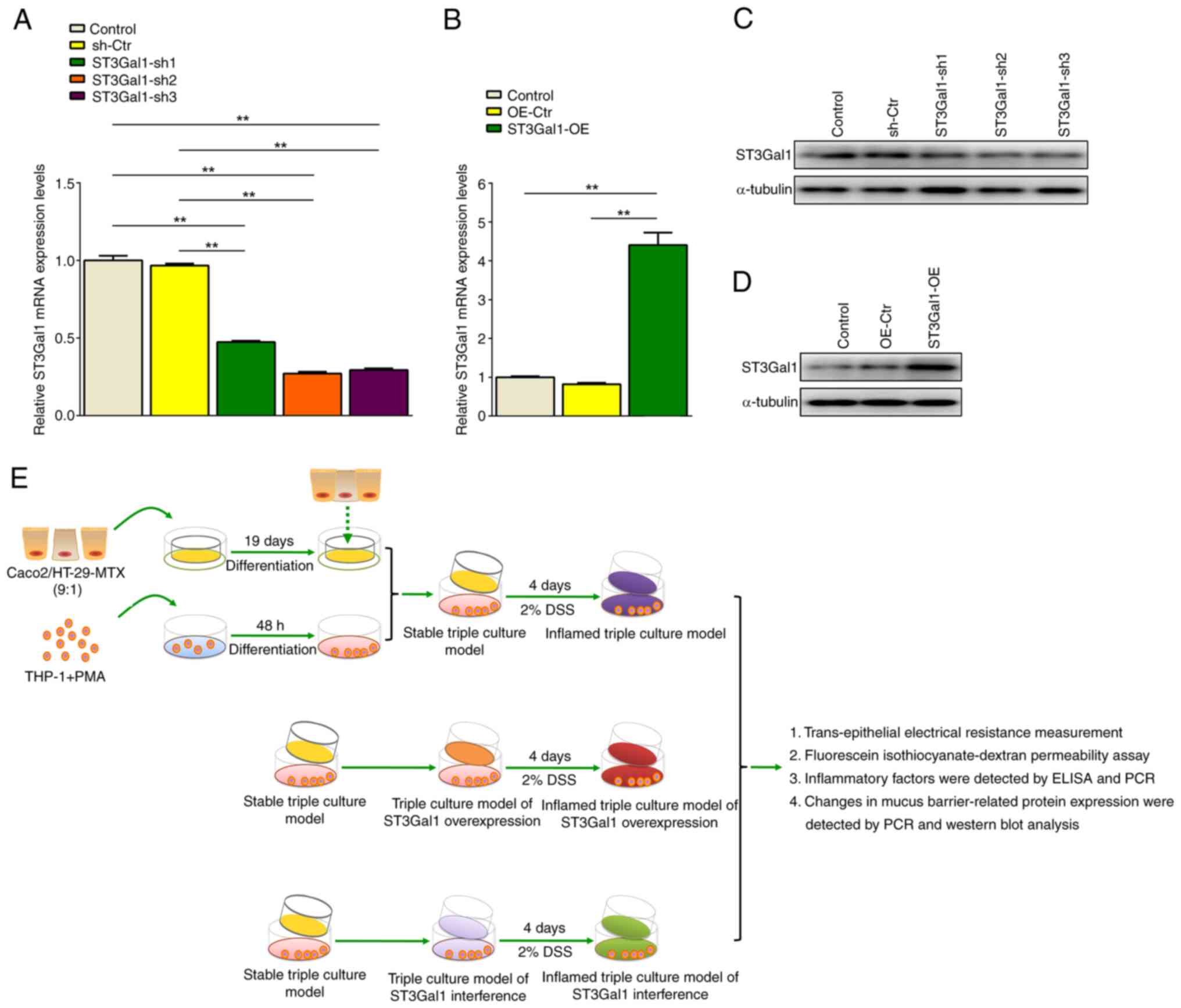
Figure 2

Establishment of ST3Gal1-interfered
IEC and ST3Gal1-overexpressed IEC models, and the schematic
representation of IEC monolayer grouping. (A) ST3Gal1 mRNA levels
in IEC, sh-Ctr/IEC and ST3Gal1-interfered IEC groups 1–3. (B)
ST3Gal1 mRNA levels in IEC, OE-Ctr/IEC and ST3Gal1-OE/IEC groups.
(C) ST3Gal1 protein levels in IEC, sh-Ctr/IEC and
ST3Gal1-interfered IEC groups. (D) ST3Gal1 protein levels in IEC,
OE-Ctr/IEC and ST3Gal1-OE/IEC groups. (E) Establishment of IEC
monolayers containing sh-Ctr, ST3Gal1-sh3, OE-Ctr and ST3Gal1-OE.
The stable triple culture models were treated with fresh complete
medium supplemented with 2% DSS for 4 days to obtain inflamed
models. Data are presented as the mean ± SD. Statistical
significance was assessed using one-way analysis of variance
followed by Tukey's post-hoc test. **P<0.01. IEC, intestinal
epithelial cell; sh, short hairpin; Ctr, control; OE,
overexpression; PMA, phorbol 12-myristate 13-acetate; DSS, dextran
sulfate sodium.

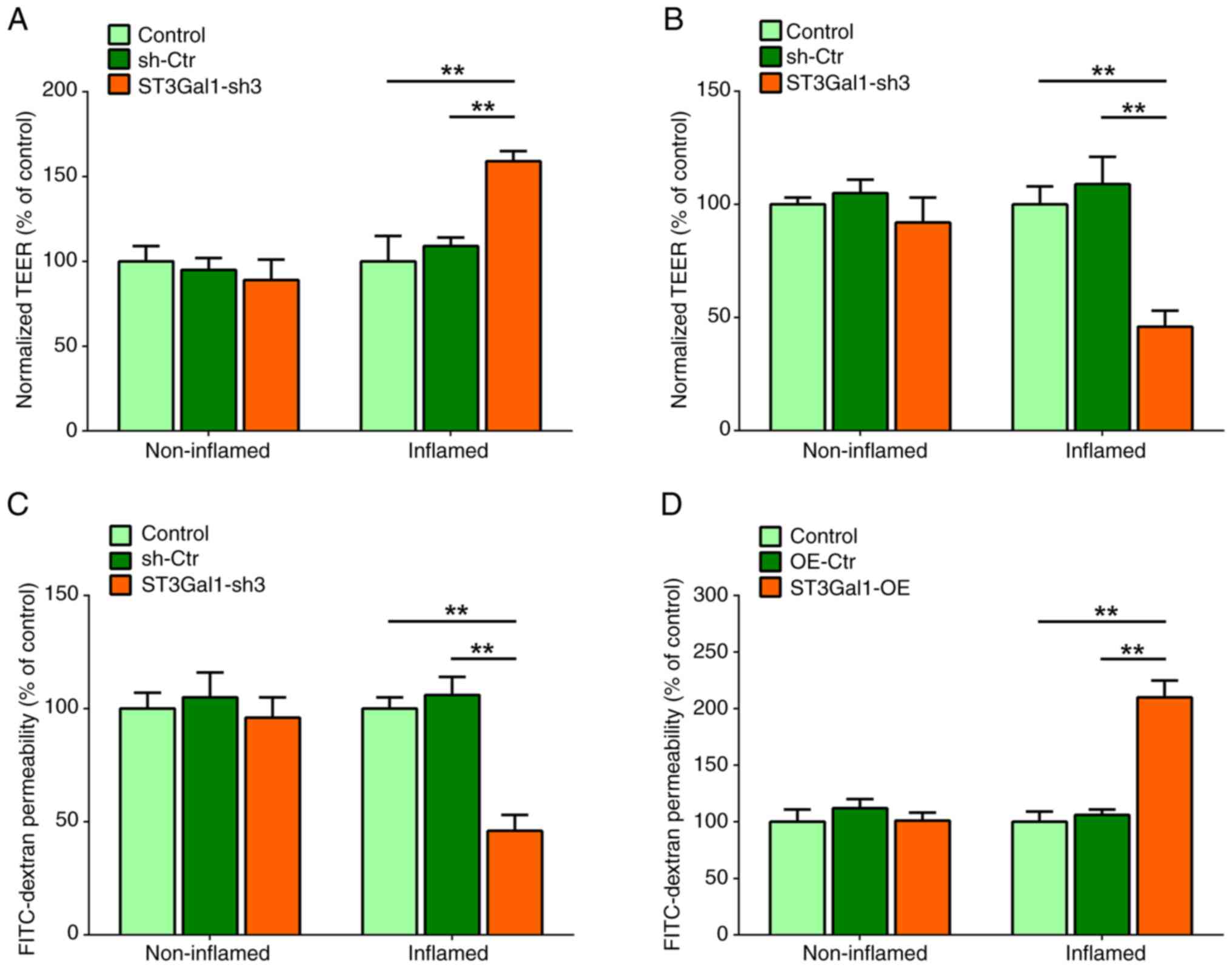
Figure 3

ST3Gal1 expression in triple culture
models modulates the epithelial barrier of the IEC monolayers. (A)
TEER levels in the IEC monolayers containing sh-Ctr/IEC or
ST3Gal1-sh3/IEC with 2% DSS stimulation (inflamed triple culture)
or without 2% DSS treatment (non-inflamed triple culture). (B) TEER
levels in the inflamed (DSS-treated) and non-inflamed IEC
monolayers containing OE-Ctr/IEC or ST3Gal1-OE/IEC. (C) Results of
the FITC-dextran permeability assay indicated that there was a
significant reduction in the inflamed IEC monolayer containing
ST3Gal1-sh3/IEC. (D) There was a significant increase in the
permeability of the inflamed IEC monolayer containing
ST3Gal1-OE/IEC. Data are presented as the mean ± SD. Statistical
significance was assessed using one-way analysis of variance
followed by Tukey's post-hoc test. **P<0.01. TEER,
trans-epithelial electrical resistance; IEC, intestinal epithelial
cell; sh, short hairpin; Ctr, control; OE, overexpression; DSS,
dextran sulfate sodium.

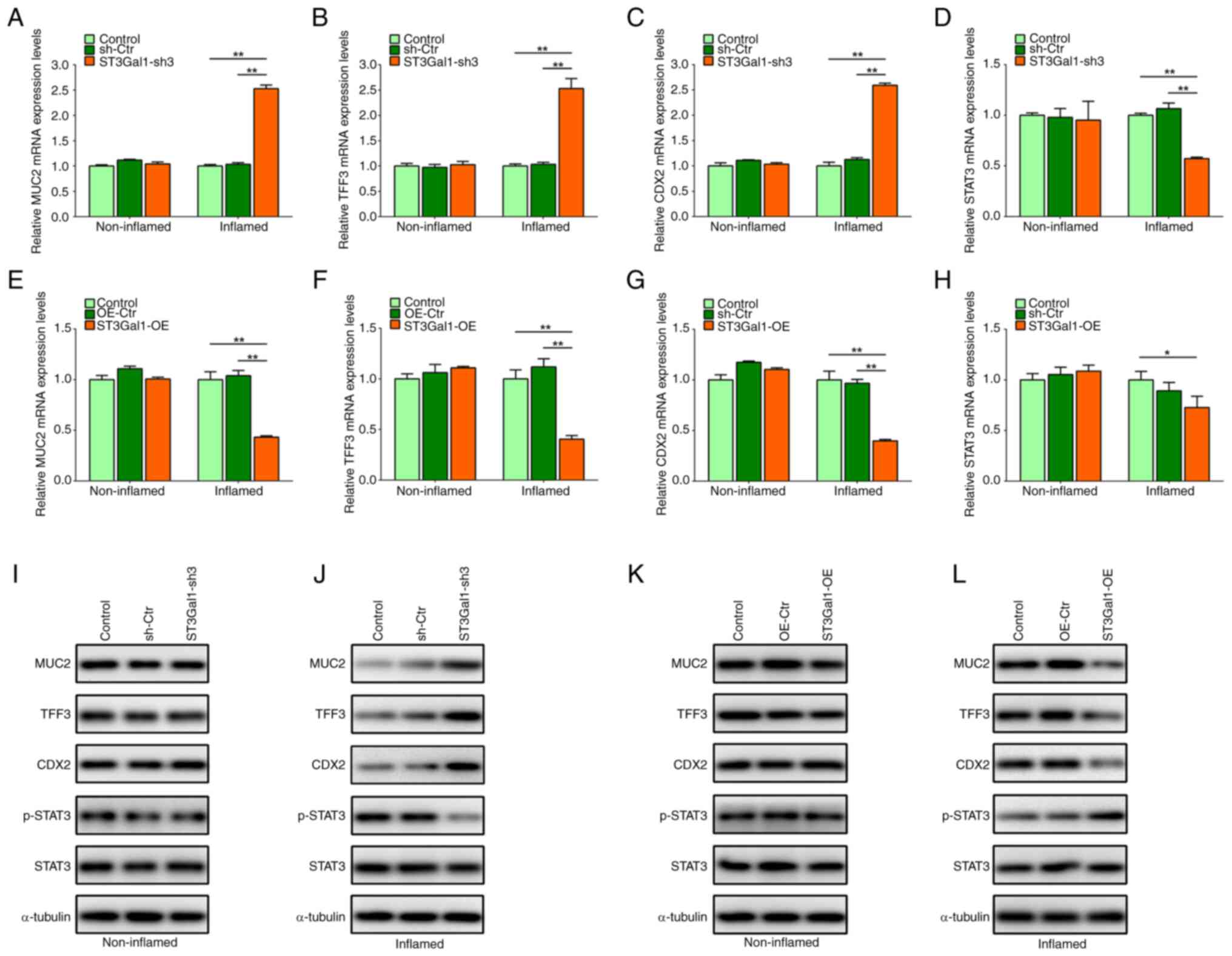
Figure 4

ST3Gal1 expression in inflamed IEC
monolayers alters MUC2, TFF3, CDX2, STAT3 and p-STAT3 expression.
ST3Gal1 knockdown in ST3Gal1-sh3/IEC significantly increased (A)
MUC2, (B) TFF3 and (C) CDX2, but significantly reduced (D) STAT3
mRNA levels in the inflamed IEC monolayer. ST3Gal1 OE in
ST3Gal1-OE/IEC significantly reduced (E) MUC2, (F) TFF3 and (G)
CDX2 mRNA levels in the inflamed IEC monolayer. (H) ST3Gal1 OE in
ST3Gal1-OE/IEC slightly decreased STAT3 mRNA levels in the inflamed
IEC monolayer. (I) Western blotting showed no changes in protein
expression in non-inflamed knockdown samples. (J) Western blotting
showed that MUC2, TFF3 and CDX2 protein levels were increased, and
p-STAT3 expression was decreased in the inflamed IEC monolayer
comprising ST3Gal1-sh3/IEC. (K) Western blotting showed no notable
changes in protein expression in non-inflamed OE samples. (L)
Western blotting showed that MUC2, TFF3 and CDX2 protein levels
were decreased, and p-STAT3 expression was increased in the
inflamed IEC monolayer comprising ST3Gal1-OE/IEC. Data are
presented as the mean ± SD. Statistical significance was assessed
using one-way analysis of variance followed by Tukey's post-hoc
test. *P<0.05 and **P<0.01. IEC, intestinal epithelial cell;
sh, short hairpin; Ctr, control; OE, overexpression; MUC2, mucin 2;
TFF3, trefoil factor 3; CDX2, homeobox protein CDX-2; p-,
phosphorylated.

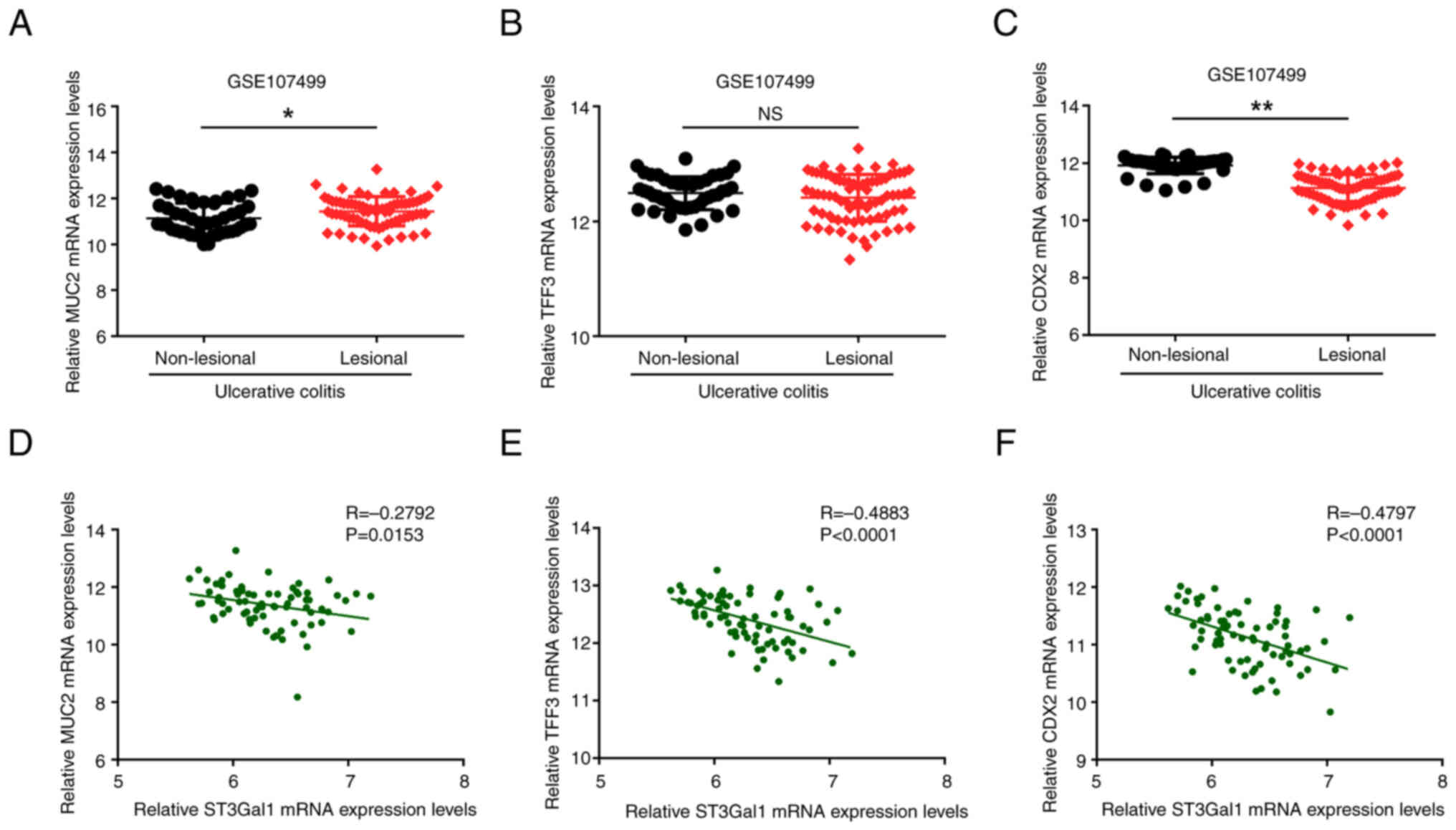
Figure 5

Comparison of (A) MUC2, (B) TFF3 and
(C) CDX2 mRNA levels between non-lesional mucosa (n=44) and
lesional mucosa (n=75) from distinct patients with ulcerative
colitis. Correlations between (D) MUC2, (E) TFF3 and (F) CDX2 mRNA
levels and ST3Gal1 expression. Data in A-C are presented as box and
whisker plots, and those in D-F as scatter plots. Statistical
significance for group comparisons in A-C was assessed using
unpaired t-test. Correlation analyses in D-F were performed using
Pearson's correlation coefficient. *P<0.05 and **P<0.01. Data
were obtained from the GSE107499 dataset from the Gene Expression
Omnibus database. *P<0.05 and **P<0.01. NS, not significant;
MUC2, mucin 2; TFF3, trefoil factor 3; CDX2, homeobox protein
CDX-2.

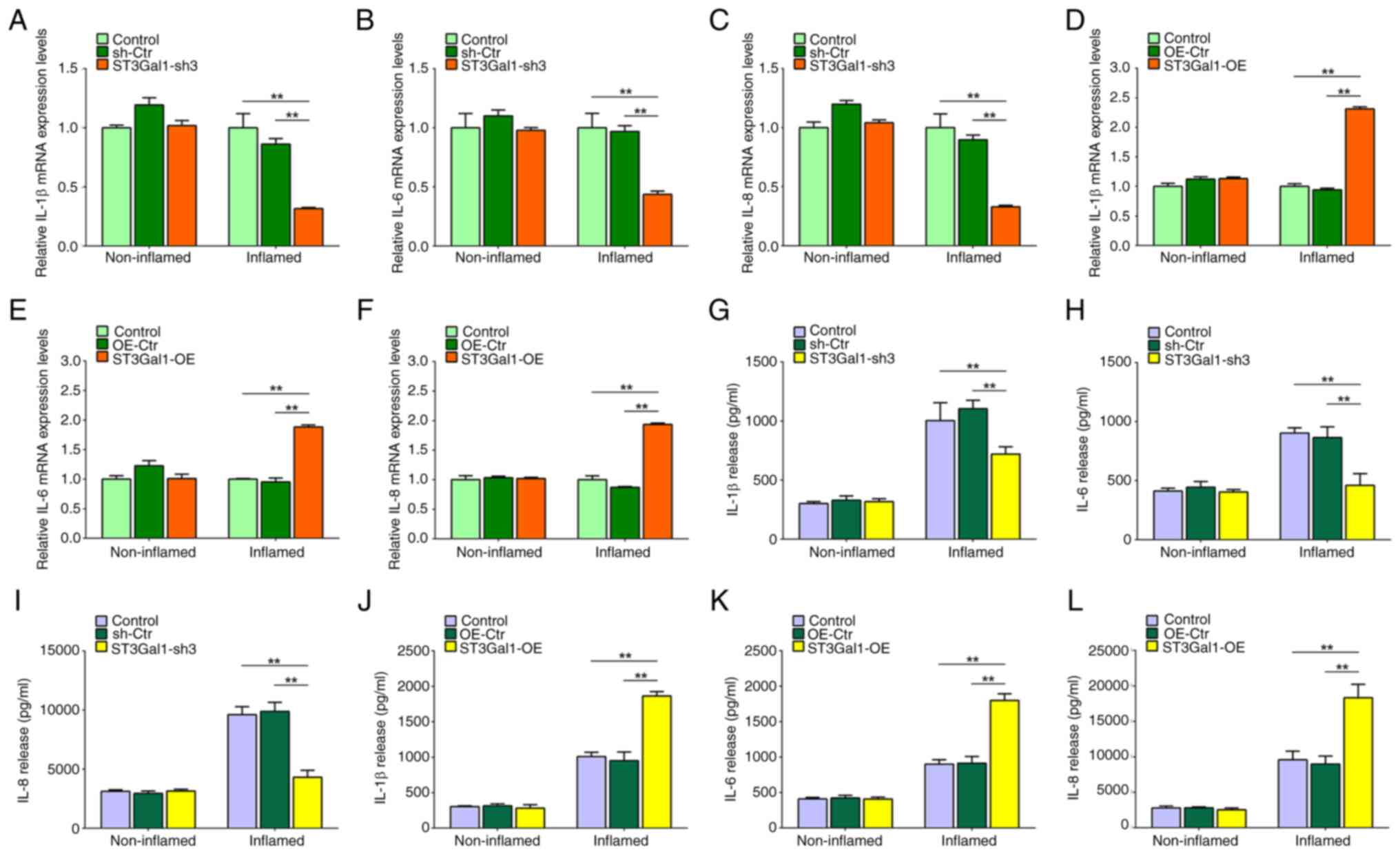
Figure 6

ST3Gal1 expression in the IEC
monolayer alters the levels of inflammatory mediators. ST3Gal1
knockdown in ST3Gal1-sh3/IEC significantly reduced the mRNA levels
of the inflammatory mediators (A) IL-1β, (B) IL-6 and (C) IL-8 from
the inflamed IEC monolayer supernatant. ST3Gal1 OE in
ST3Gal1-OE/IEC significantly increased the mRNA levels of the
inflammatory mediators (D) IL-1β, (E) IL-6 and (F) IL-8 in the
supernatant of the inflamed IEC monolayer. Protein levels of the
inflammatory mediators (G) IL-1β, (H) IL-6 and (I) IL-8 were
decreased in the supernatant of inflamed ST3Gal1-sh3/IEC. Protein
levels of the inflammatory mediators (J) IL-1β, (K) IL-6 and (L)
IL-8 were increased in the supernatant of inflamed ST3Gal1-OE/IEC.
Data are presented as the mean ± SD, and statistical significance
was assessed using one-way ANOVA followed by Tukey's post-hoc test.
**P<0.01. IEC, intestinal epithelial cell; sh, short hairpin;
Ctr, control; OE, overexpression.

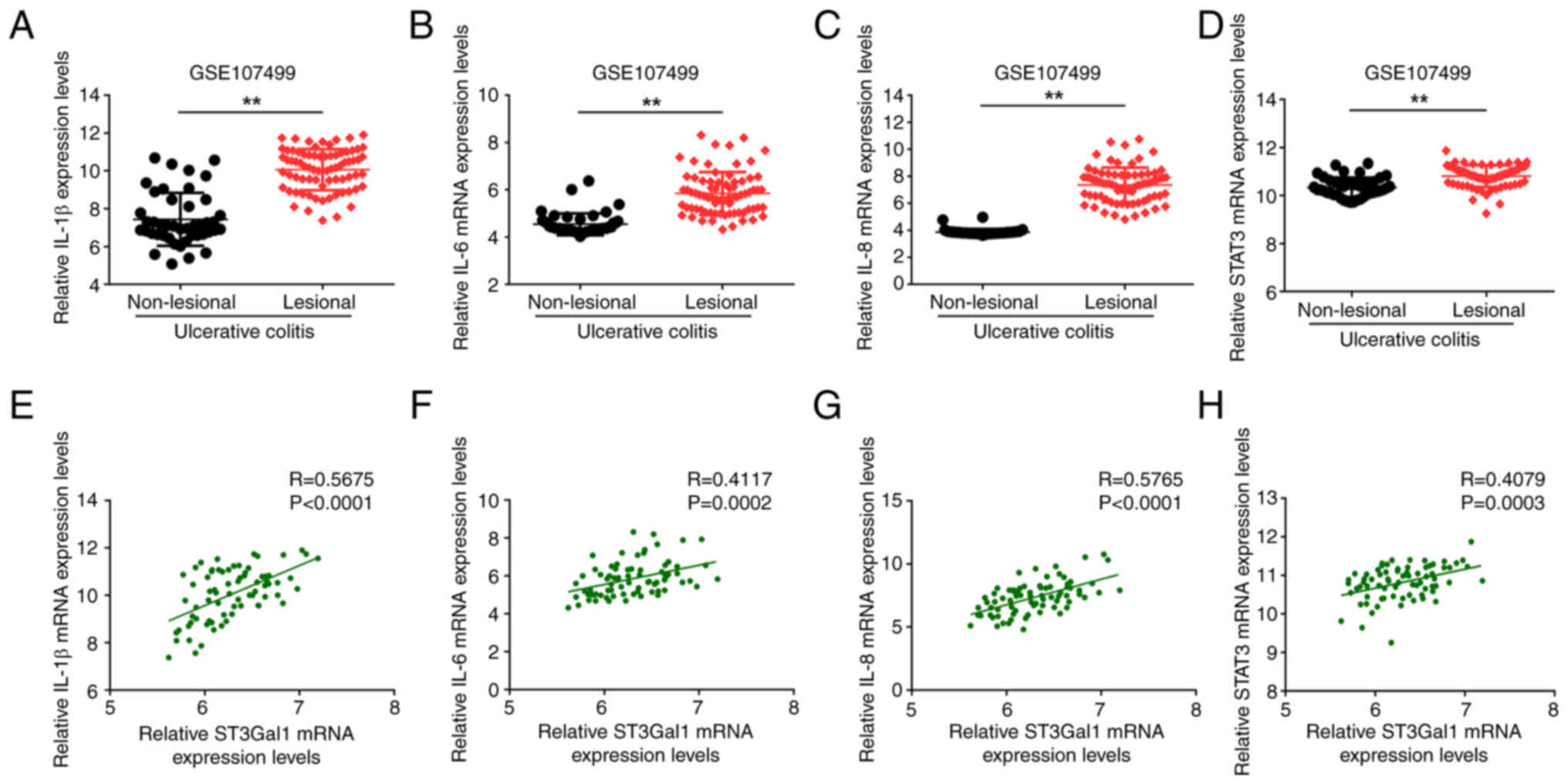
Figure 7

Comparison of the expression of
inflammatory mediators (A) IL-1β, (B) IL-6 and (C) IL-8, as well as
(D) STAT3 between non-lesional mucosa (n=44) and lesional mucosa
(n=75) from distinct patients with ulcerative colitis. Correlations
between (E) IL-1β, (F) IL-6, (G) IL-8 and (H) STAT3 mRNA levels and
ST3Gal1 expression. Data were obtained from the GSE107499 dataset
from the Gene Expression Omnibus database. Data in A-D are
presented as box and whisker plots, and those in E-H as scatter
plots. Statistical significance for group comparisons in A-D was
assessed using the unpaired t-test; correlation analyses in E-H
were performed via Pearson's correlation coefficient.
**P<0.01.
View References

1 

Furfaro F, Ragaini E, Peyrin-Biroulet L and Danese S: Novel therapies and approaches to inflammatory bowel disease (IBD). J Clin Med. 11:43742022. View Article : Google Scholar : PubMed/NCBI

2 

Selvakumar B and Samsudin R: Intestinal barrier dysfunction in inflammatory bowel disease: Pathophysiology to precision therapeutics. Inflamm Bowel Dis. 31:450–3464. 2025. View Article : Google Scholar

3 

Marincola Smith P, Choksi YA, Markham NO, Hanna DN, Zi J, Weaver CJ, Hamaamen JA, Lewis KB, Yang J, Liu Q, et al: Colon epithelial cell TGFβ signaling modulates the expression of tight junction proteins and barrier function in mice. Am J Physiol Gastrointest Liver Physiol. 320:G936–G957. 2021. View Article : Google Scholar : PubMed/NCBI

4 

Rader AG, Cloherty APM, Patel KS, Almandawi DDA, Perez-Vargas J, Wildenberg ME, Muncan V, Schreurs R, Jean F and Ribeiro CMS: Autophagy-enhancing strategies to promote intestinal viral resistance and mucosal barrier function in SARS-CoV-2 infection. Autophagy Rep. 4:25142322025. View Article : Google Scholar : PubMed/NCBI

5 

Wang R, Xie L, Jiang P, Hou Y, Li D and Wang W: Metformin may improve intestinal mucosal barrier function and help prevent and reverse colorectal cancer in mice. J Cancer. 16:3703–3711. 2025. View Article : Google Scholar : PubMed/NCBI

6 

Esmail S and Manolson MF: Advances in understanding N-glycosylation structure, function, and regulation in health and disease. Eur J Cell Biol. 100:1511862021. View Article : Google Scholar : PubMed/NCBI

7 

Montag N, Gousis P and Wittmann J: The emerging role of GlycoRNAs in immune regulation and recognition. Immunol Lett. 276:1070482025. View Article : Google Scholar : PubMed/NCBI

8 

Flynn RA, Pedram K, Malaker SA, Batista PJ, Smith BAH, Johnson AG, George BM, Majzoub K, Villalta PW, Carette JE, et al: Small RNAs are modified with N-glycans and displayed on the surface of living cells. Cell. 188:44702025. View Article : Google Scholar : PubMed/NCBI

9 

He M, Zhou X and Wang X: Glycosylation: Mechanisms, biological functions and clinical implications. Signal Transduct Target Ther. 9:1942024. View Article : Google Scholar : PubMed/NCBI

10 

Wang G, Yuan J, Luo J, Ocansey DKW, Zhang X, Qian H, Xu W and Mao F: Emerging role of protein modification in inflammatory bowel disease. J Zhejiang Univ Sci B. 23:173–188. 2022. View Article : Google Scholar : PubMed/NCBI

11 

Kudelka MR, Stowell SR, Cummings RD and Neish AS: Intestinal epithelial glycosylation in homeostasis and gut microbiota interactions in IBD. Nat Rev Gastroenterol Hepatol. 17:597–617. 2020. View Article : Google Scholar : PubMed/NCBI

12 

Yao Y, Kim G, Shafer S, Chen Z, Kubo S, Ji Y, Luo J, Yang W, Perner SP, Kanellopoulou C, et al: Mucus sialylation determines intestinal host-commensal homeostasis. Cell. 185:1172–1188.e28. 2022. View Article : Google Scholar : PubMed/NCBI

13 

Fan Q, Li M, Zhao W, Zhang K, Li M and Li W: Hyper α2,6-Sialylation promotes CD4+ T-Cell activation and induces the occurrence of ulcerative colitis. Adv Sci (Weinh). 10:e23026072023. View Article : Google Scholar : PubMed/NCBI

14 

Shu X, Li J, Chan UI, Su SM, Shi C, Zhang X, An T, Xu J, Mo L, Liu J, et al: BRCA1 insufficiency induces a hypersialylated acidic tumor microenvironment that promotes metastasis and immunotherapy resistance. Cancer Res. 83:2614–2633. 2023. View Article : Google Scholar : PubMed/NCBI

15 

Fan TC, Yeo HL, Hung TH, Chang NC, Tang YH, Yu J, Chen SH and Yu AL: ST3GAL1 regulates cancer cell migration through crosstalk between EGFR and neuropilin-1 signaling. J Biol Chem. 301:1083682025. View Article : Google Scholar : PubMed/NCBI

16 

Hong Y, Walling BL, Kim HR, Serratelli WS, Lozada JR, Sailer CJ, Amitrano AM, Lim K, Mongre RK, Kim KD, et al: ST3GAL1 and βII-spectrin pathways control CAR T cell migration to target tumors. Nat Immunol. 24:1007–1019. 2023. View Article : Google Scholar : PubMed/NCBI

17 

Tajadura-Ortega V, Gambardella G, Skinner A, Halim A, Van Coillie J, Schjoldager KTG, Beatson R, Graham R, Achkova D, Taylor-Papadimitriou J, et al: O-linked mucin-type glycosylation regulates the transcriptional programme downstream of EGFR. Glycobiology. 31:200–210. 2021. View Article : Google Scholar : PubMed/NCBI

18 

Zaro BW, Bateman LA and Pratt MR: Robust in-gel fluorescence detection of mucin-type O-linked glycosylation. Bioorg Med Chem Lett. 21:5062–5066. 2011. View Article : Google Scholar : PubMed/NCBI

19 

Zhang Y, Wang L, Ocansey DKW, Wang B, Wang L and Xu Z: Mucin-Type O-Glycans: Barrier, microbiota, and immune anchors in inflammatory bowel disease. J Inflamm Res. 14:5939–5953. 2021. View Article : Google Scholar : PubMed/NCBI

20 

Bergstrom K, Shan X, Casero D, Batushansky A, Lagishetty V, Jacobs JP, Hoover C, Kondo Y, Shao B, Gao L, et al: Proximal colon-derived O-glycosylated mucus encapsulates and modulates the microbiota. Science. 370:467–472. 2020. View Article : Google Scholar : PubMed/NCBI

21 

Zhao Z, Zheng W, Zhang L, Song W and Wang T: Sialyltransferase ST3GAL1 promotes malignant progression in glioma. Xi Bao Yu Fen Zi Mian Yi Xue Za Zhi. 41:308–317. 2025.(In Chinese). PubMed/NCBI

22 

Busch M, Kämpfer AAM and Schins RPF: An inverted in vitro triple culture model of the healthy and inflamed intestine: Adverse effects of polyethylene particles. Chemosphere. 284:1313452021. View Article : Google Scholar : PubMed/NCBI

23 

Busch M, Ramachandran H, Wahle T, Rossi A and Schins RPF: Investigating the role of the NLRP3 inflammasome pathway in acute intestinal inflammation: Use of THP-1 knockout cell lines in an advanced triple culture model. Front Immunol. 13:8980392022. View Article : Google Scholar : PubMed/NCBI

24 

Kämpfer AAM, Busch M, Büttner V, Bredeck G, Stahlmecke B, Hellack B, Masson I, Sofranko A, Albrecht C and Schins RPF: Model complexity as determining factor for in vitro nanosafety studies: Effects of silver and titanium dioxide nanomaterials in intestinal models. Small. 17:e20042232021. View Article : Google Scholar : PubMed/NCBI

25 

Aske KC and Waugh CA: Expanding the 3R principles: More rigour and transparency in research using animals. EMBO Rep. 18:1490–1492. 2017. View Article : Google Scholar : PubMed/NCBI

26 

Deng X, Shang L, Du M, Yuan L, Xiong L and Xie X: Mechanism underlying the significant role of the miR-4262/SIRT1 axis in children with inflammatory bowel disease. Exp Ther Med. 20:2227–2235. 2020.PubMed/NCBI

27 

Samak G, Chaudhry KK, Gangwar R, Narayanan D, Jaggar JH and Rao R: Calcium/Ask1/MKK7/JNK2/c-Src signalling cascade mediates disruption of intestinal epithelial tight junctions by dextran sulfate sodium. Biochem J. 465:503–515. 2015. View Article : Google Scholar : PubMed/NCBI

28 

Pan Q, Tian Y, Li X, Ye J, Liu Y, Song L, Yang Y, Zhu R, He Y, Chen L, et al: Enhanced membrane-tethered mucin 3 (MUC3) expression by a tetrameric branched peptide with a conserved TFLK motif inhibits bacteria adherence. J Biol Chem. 288:5407–5416. 2013. View Article : Google Scholar : PubMed/NCBI

29 

Livak KJ and Schmittgen TD: Analysis of relative gene expression data using real-time quantitative PCR and the 2(−Delta Delta C(T)) method. Methods. 25:402–408. 2001. View Article : Google Scholar : PubMed/NCBI

30 

Olsen J, Gerds TA, Seidelin JB, Csillag C, Bjerrum JT, Troelsen JT and Nielsen OH: Diagnosis of ulcerative colitis before onset of inflammation by multivariate modeling of genome-wide gene expression data. Inflamm Bowel Dis. 15:1032–1038. 2009. View Article : Google Scholar : PubMed/NCBI

31 

Sandborn WJ, Feagan BG, Marano C, Zhang H, Strauss R, Johanns J, Adedokun OJ, Guzzo C, Colombel JF, Reinisch W, et al: Subcutaneous golimumab induces clinical response and remission in patients with moderate-to-severe ulcerative colitis. Gastroenterology. 146:85–95. 2014. View Article : Google Scholar : PubMed/NCBI

32 

Fang K, Bruce M, Pattillo CB, Zhang S, Stone R II, Clifford J and Kevil CG: Temporal genomewide expression profiling of DSS colitis reveals novel inflammatory and angiogenesis genes similar to ulcerative colitis. Physiol Genomics. 43:43–56. 2011. View Article : Google Scholar : PubMed/NCBI

33 

Xu W, Guo Y, Huang Z, Zhao H, Zhou M, Huang Y, Wen D, Song J, Zhu Z, Sun M, et al: Small heat shock protein CRYAB inhibits intestinal mucosal inflammatory responses and protects barrier integrity through suppressing IKKβ activity. Mucosal Immunol. 12:1291–1303. 2019. View Article : Google Scholar : PubMed/NCBI

34 

Fan J, Huang S, Cao C, Jin X and Su Y: The roles of ST3Gal1-6 in cancer: Expression profiles and functional implications. Carbohydr Res. 559:1097402025. View Article : Google Scholar : PubMed/NCBI

35 

Ma X, Li M, Wang X, Qi G, Wei L and Zhang D: Sialylation in the gut: From mucosal protection to disease pathogenesis. Carbohydr Polym. 343:1224712024. View Article : Google Scholar : PubMed/NCBI

36 

Al Saoud R, Hamrouni A, Idris A, Mousa WK and Abu Izneid T: Recent advances in the development of sialyltransferase inhibitors to control cancer metastasis: A comprehensive review. Biomed Pharmacother. 165:1150912023. View Article : Google Scholar : PubMed/NCBI

37 

Perez S, Fu CW and Li WS: Sialyltransferase inhibitors for the treatment of cancer metastasis: Current challenges and future perspectives. Molecules. 26:56732021. View Article : Google Scholar : PubMed/NCBI

38 

Uslupehlivan M, Şener E and İzzetoğlu S: Computational analysis of the structure, glycosylation and CMP binding of human ST3GAL sialyltransferases. Carbohydr Res. 486:1078232019. View Article : Google Scholar : PubMed/NCBI

39 

Hatano K, Miyamoto Y, Nonomura N and Kaneda Y: Expression of gangliosides, GD1a, and sialyl paragloboside is regulated by NF-κB-dependent transcriptional control of α2,3-sialyltransferase I, II, and VI in human castration-resistant prostate cancer cells. Int J Cancer. 129:1838–1847. 2011. View Article : Google Scholar : PubMed/NCBI

40 

Kelm M, Quiros M, Azcutia V, Boerner K, Cummings RD, Nusrat A, Brazil JC and Parkos CA: Targeting epithelium-expressed sialyl Lewis glycans improves colonic mucosal wound healing and protects against colitis. JCI Insight. 5:e1358432020. View Article : Google Scholar : PubMed/NCBI

41 

Taniguchi M, Okumura R, Matsuzaki T, Nakatani A, Sakaki K, Okamoto S, Ishibashi A, Tani H, Horikiri M, Kobayashi N, et al: Sialylation shapes mucus architecture inhibiting bacterial invasion in the colon. Mucosal Immunol. 16:624–641. 2023. View Article : Google Scholar : PubMed/NCBI

42 

Zhao T, Liu S, Ma X, Shuai Y, He H, Guo T, Huang W, Wang Q, Liu S, Wang Z, et al: Lycium barbarum arabinogalactan alleviates intestinal mucosal damage in mice by restoring intestinal microbes and mucin O-glycans. Carbohydr Polym. 330:1218822024. View Article : Google Scholar : PubMed/NCBI

43 

Kotlarz D: Mucus sialylation maintains the peace in intestinal host microbe relations. Gastroenterology. 163:527–528. 2022. View Article : Google Scholar : PubMed/NCBI

44 

Sánchez-Martínez E, Garrido-Romero M and Moreno FJ: Functional role of ST6GALNAC1-mediated sialylation of mucins in preserving intestinal barrier integrity and ameliorating inflammation. Allergy. 77:3697–3698. 2022. View Article : Google Scholar : PubMed/NCBI

45 

Petit C, Rozières A, Boschetti G, Viret C, Faure M, Nancey S and Duclaux-Loras R: Advances in understanding intestinal homeostasis: Lessons from inflammatory bowel disease and monogenic intestinal disorder pathogenesis. Int J Mol Sci. 26:61332025. View Article : Google Scholar : PubMed/NCBI

46 

Mizoguchi A: Animal models of inflammatory bowel disease. Prog Mol Biol Transl Sci. 105:263–320. 2012. View Article : Google Scholar : PubMed/NCBI

47 

Le NPK, Altenburger MJ and Lamy E: Development of an Inflammation-triggered in vitro ‘Leaky Gut’ Model using Caco-2/HT29-MTX-E12 combined with Macrophage-like THP-1 cells or primary Human-derived macrophages. Int J Mol Sci. 24:74272023. View Article : Google Scholar : PubMed/NCBI

48 

Weber L, Kuck K, Jürgenliemk G, Heilmann J, Lipowicz B and Vissiennon C: Anti-Inflammatory and Barrier-stabilising effects of myrrh, coffee charcoal and chamomile flower Extract in a Co-Culture cell model of the intestinal mucosa. Biomolecules. 10:10332020. View Article : Google Scholar : PubMed/NCBI

49 

Ma L, Zhang X, Zhang C, Hou B and Zhao H: FOSL1 knockdown ameliorates DSS-induced inflammation and barrier damage in ulcerative colitis via MMP13 downregulation. Exp Ther Med. 24:5512022. View Article : Google Scholar : PubMed/NCBI

50 

Roselli M, Maruszak A, Grimaldi R, Harthoorn L and Finamore A: Galactooligosaccharide treatment alleviates DSS-induced colonic inflammation in Caco-2 cell model. Front Nutr. 9:8629742022. View Article : Google Scholar : PubMed/NCBI

51 

Wang Y, Wen R, Liu D, Zhang C, Wang ZA and Du Y: Exploring effects of chitosan oligosaccharides on the DSS-Induced intestinal barrier impairment in vitro and in vivo. Molecules. 26:21992021. View Article : Google Scholar : PubMed/NCBI

52 

De Cecco F, Franceschelli S, Panella V, Maggi MA, Bisti S, Bravo Nuevo A, D'Ardes D, Cipollone F and Speranza L: Biological response of treatment with saffron petal extract on Cytokine-induced oxidative stress and inflammation in the Caco-2/Human leukemia monocytic Co-Culture model. Antioxidants (Basel). 13:12572024. View Article : Google Scholar : PubMed/NCBI

53 

Yin S, Yang H, Tao Y, Wei S, Li L, Liu M and Li J: Artesunate ameliorates DSS-induced ulcerative colitis by protecting intestinal barrier and inhibiting inflammatory response. Inflammation. 43:765–776. 2020. View Article : Google Scholar : PubMed/NCBI

Related Articles

  • Abstract
  • View
  • Download
  • Twitter
Copy and paste a formatted citation
Spandidos Publications style
Tian Y, Liu Y, Shang Y, Ran L, Liu L, Wang R and Ye J: ST3Gal1 modulates intestinal barrier function and impacts human ulcerative colitis. Mol Med Rep 33: 73, 2026.
APA
Tian, Y., Liu, Y., Shang, Y., Ran, L., Liu, L., Wang, R., & Ye, J. (2026). ST3Gal1 modulates intestinal barrier function and impacts human ulcerative colitis. Molecular Medicine Reports, 33, 73. https://doi.org/10.3892/mmr.2025.13783
MLA
Tian, Y., Liu, Y., Shang, Y., Ran, L., Liu, L., Wang, R., Ye, J."ST3Gal1 modulates intestinal barrier function and impacts human ulcerative colitis". Molecular Medicine Reports 33.2 (2026): 73.
Chicago
Tian, Y., Liu, Y., Shang, Y., Ran, L., Liu, L., Wang, R., Ye, J."ST3Gal1 modulates intestinal barrier function and impacts human ulcerative colitis". Molecular Medicine Reports 33, no. 2 (2026): 73. https://doi.org/10.3892/mmr.2025.13783
Copy and paste a formatted citation
x
Spandidos Publications style
Tian Y, Liu Y, Shang Y, Ran L, Liu L, Wang R and Ye J: ST3Gal1 modulates intestinal barrier function and impacts human ulcerative colitis. Mol Med Rep 33: 73, 2026.
APA
Tian, Y., Liu, Y., Shang, Y., Ran, L., Liu, L., Wang, R., & Ye, J. (2026). ST3Gal1 modulates intestinal barrier function and impacts human ulcerative colitis. Molecular Medicine Reports, 33, 73. https://doi.org/10.3892/mmr.2025.13783
MLA
Tian, Y., Liu, Y., Shang, Y., Ran, L., Liu, L., Wang, R., Ye, J."ST3Gal1 modulates intestinal barrier function and impacts human ulcerative colitis". Molecular Medicine Reports 33.2 (2026): 73.
Chicago
Tian, Y., Liu, Y., Shang, Y., Ran, L., Liu, L., Wang, R., Ye, J."ST3Gal1 modulates intestinal barrier function and impacts human ulcerative colitis". Molecular Medicine Reports 33, no. 2 (2026): 73. https://doi.org/10.3892/mmr.2025.13783
Follow us
  • Twitter
  • LinkedIn
  • Facebook
About
  • Spandidos Publications
  • Careers
  • Cookie Policy
  • Privacy Policy
How can we help?
  • Help
  • Live Chat
  • Contact
  • Email to our Support Team