Spandidos Publications Logo
  • About
    • About Spandidos
    • Aims and Scopes
    • Abstracting and Indexing
    • Editorial Policies
    • Reprints and Permissions
    • Job Opportunities
    • Terms and Conditions
    • Contact
  • Journals
    • All Journals
    • Oncology Letters
      • Oncology Letters
      • Information for Authors
      • Editorial Policies
      • Editorial Board
      • Aims and Scope
      • Abstracting and Indexing
      • Bibliographic Information
      • Archive
    • International Journal of Oncology
      • International Journal of Oncology
      • Information for Authors
      • Editorial Policies
      • Editorial Board
      • Aims and Scope
      • Abstracting and Indexing
      • Bibliographic Information
      • Archive
    • Molecular and Clinical Oncology
      • Molecular and Clinical Oncology
      • Information for Authors
      • Editorial Policies
      • Editorial Board
      • Aims and Scope
      • Abstracting and Indexing
      • Bibliographic Information
      • Archive
    • Experimental and Therapeutic Medicine
      • Experimental and Therapeutic Medicine
      • Information for Authors
      • Editorial Policies
      • Editorial Board
      • Aims and Scope
      • Abstracting and Indexing
      • Bibliographic Information
      • Archive
    • International Journal of Molecular Medicine
      • International Journal of Molecular Medicine
      • Information for Authors
      • Editorial Policies
      • Editorial Board
      • Aims and Scope
      • Abstracting and Indexing
      • Bibliographic Information
      • Archive
    • Biomedical Reports
      • Biomedical Reports
      • Information for Authors
      • Editorial Policies
      • Editorial Board
      • Aims and Scope
      • Abstracting and Indexing
      • Bibliographic Information
      • Archive
    • Oncology Reports
      • Oncology Reports
      • Information for Authors
      • Editorial Policies
      • Editorial Board
      • Aims and Scope
      • Abstracting and Indexing
      • Bibliographic Information
      • Archive
    • Molecular Medicine Reports
      • Molecular Medicine Reports
      • Information for Authors
      • Editorial Policies
      • Editorial Board
      • Aims and Scope
      • Abstracting and Indexing
      • Bibliographic Information
      • Archive
    • World Academy of Sciences Journal
      • World Academy of Sciences Journal
      • Information for Authors
      • Editorial Policies
      • Editorial Board
      • Aims and Scope
      • Abstracting and Indexing
      • Bibliographic Information
      • Archive
    • International Journal of Functional Nutrition
      • International Journal of Functional Nutrition
      • Information for Authors
      • Editorial Policies
      • Editorial Board
      • Aims and Scope
      • Abstracting and Indexing
      • Bibliographic Information
      • Archive
    • International Journal of Epigenetics
      • International Journal of Epigenetics
      • Information for Authors
      • Editorial Policies
      • Editorial Board
      • Aims and Scope
      • Abstracting and Indexing
      • Bibliographic Information
      • Archive
    • Medicine International
      • Medicine International
      • Information for Authors
      • Editorial Policies
      • Editorial Board
      • Aims and Scope
      • Abstracting and Indexing
      • Bibliographic Information
      • Archive
  • Articles
  • Information
    • Information for Authors
    • Information for Reviewers
    • Information for Librarians
    • Information for Advertisers
    • Conferences
  • Language Editing
Spandidos Publications Logo
  • About
    • About Spandidos
    • Aims and Scopes
    • Abstracting and Indexing
    • Editorial Policies
    • Reprints and Permissions
    • Job Opportunities
    • Terms and Conditions
    • Contact
  • Journals
    • All Journals
    • Biomedical Reports
      • Information for Authors
      • Editorial Policies
      • Editorial Board
      • Aims and Scope
      • Abstracting and Indexing
      • Bibliographic Information
      • Archive
    • Experimental and Therapeutic Medicine
      • Information for Authors
      • Editorial Policies
      • Editorial Board
      • Aims and Scope
      • Abstracting and Indexing
      • Bibliographic Information
      • Archive
    • International Journal of Epigenetics
      • Information for Authors
      • Editorial Policies
      • Editorial Board
      • Aims and Scope
      • Abstracting and Indexing
      • Bibliographic Information
      • Archive
    • International Journal of Functional Nutrition
      • Information for Authors
      • Editorial Policies
      • Editorial Board
      • Aims and Scope
      • Abstracting and Indexing
      • Bibliographic Information
      • Archive
    • International Journal of Molecular Medicine
      • Information for Authors
      • Editorial Policies
      • Editorial Board
      • Aims and Scope
      • Abstracting and Indexing
      • Bibliographic Information
      • Archive
    • International Journal of Oncology
      • Information for Authors
      • Editorial Policies
      • Editorial Board
      • Aims and Scope
      • Abstracting and Indexing
      • Bibliographic Information
      • Archive
    • Medicine International
      • Information for Authors
      • Editorial Policies
      • Editorial Board
      • Aims and Scope
      • Abstracting and Indexing
      • Bibliographic Information
      • Archive
    • Molecular and Clinical Oncology
      • Information for Authors
      • Editorial Policies
      • Editorial Board
      • Aims and Scope
      • Abstracting and Indexing
      • Bibliographic Information
      • Archive
    • Molecular Medicine Reports
      • Information for Authors
      • Editorial Policies
      • Editorial Board
      • Aims and Scope
      • Abstracting and Indexing
      • Bibliographic Information
      • Archive
    • Oncology Letters
      • Information for Authors
      • Editorial Policies
      • Editorial Board
      • Aims and Scope
      • Abstracting and Indexing
      • Bibliographic Information
      • Archive
    • Oncology Reports
      • Information for Authors
      • Editorial Policies
      • Editorial Board
      • Aims and Scope
      • Abstracting and Indexing
      • Bibliographic Information
      • Archive
    • World Academy of Sciences Journal
      • Information for Authors
      • Editorial Policies
      • Editorial Board
      • Aims and Scope
      • Abstracting and Indexing
      • Bibliographic Information
      • Archive
  • Articles
  • Information
    • For Authors
    • For Reviewers
    • For Librarians
    • For Advertisers
    • Conferences
  • Language Editing
Login Register Submit
  • This site uses cookies
  • You can change your cookie settings at any time by following the instructions in our Cookie Policy. To find out more, you may read our Privacy Policy.

    I agree
Search articles by DOI, keyword, author or affiliation
Search
Advanced Search
presentation
Molecular Medicine Reports
Join Editorial Board Propose a Special Issue
Print ISSN: 1791-2997 Online ISSN: 1791-3004
Journal Cover
February-2026 Volume 33 Issue 2

Full Size Image

Sign up for eToc alerts
Recommend to Library

Journals

International Journal of Molecular Medicine

International Journal of Molecular Medicine

International Journal of Molecular Medicine is an international journal devoted to molecular mechanisms of human disease.

International Journal of Oncology

International Journal of Oncology

International Journal of Oncology is an international journal devoted to oncology research and cancer treatment.

Molecular Medicine Reports

Molecular Medicine Reports

Covers molecular medicine topics such as pharmacology, pathology, genetics, neuroscience, infectious diseases, molecular cardiology, and molecular surgery.

Oncology Reports

Oncology Reports

Oncology Reports is an international journal devoted to fundamental and applied research in Oncology.

Experimental and Therapeutic Medicine

Experimental and Therapeutic Medicine

Experimental and Therapeutic Medicine is an international journal devoted to laboratory and clinical medicine.

Oncology Letters

Oncology Letters

Oncology Letters is an international journal devoted to Experimental and Clinical Oncology.

Biomedical Reports

Biomedical Reports

Explores a wide range of biological and medical fields, including pharmacology, genetics, microbiology, neuroscience, and molecular cardiology.

Molecular and Clinical Oncology

Molecular and Clinical Oncology

International journal addressing all aspects of oncology research, from tumorigenesis and oncogenes to chemotherapy and metastasis.

World Academy of Sciences Journal

World Academy of Sciences Journal

Multidisciplinary open-access journal spanning biochemistry, genetics, neuroscience, environmental health, and synthetic biology.

International Journal of Functional Nutrition

International Journal of Functional Nutrition

Open-access journal combining biochemistry, pharmacology, immunology, and genetics to advance health through functional nutrition.

International Journal of Epigenetics

International Journal of Epigenetics

Publishes open-access research on using epigenetics to advance understanding and treatment of human disease.

Medicine International

Medicine International

An International Open Access Journal Devoted to General Medicine.

Journal Cover
February-2026 Volume 33 Issue 2

Full Size Image

Sign up for eToc alerts
Recommend to Library

  • Article
  • Citations
    • Cite This Article
    • Download Citation
    • Create Citation Alert
    • Remove Citation Alert
    • Cited By
  • Similar Articles
    • Related Articles (in Spandidos Publications)
    • Similar Articles (Google Scholar)
    • Similar Articles (PubMed)
  • Download PDF
  • Download XML
  • View XML

  • Supplementary Files
    • Supplementary_Data.pdf
Article Open Access

Melatonin induces autophagy in neuroblastoma by alleviating Pak2‑mediated endoplasmic reticulum stress

  • Authors:
    • Qian-Qi Qiu
    • Na Zhang
    • Ying-Yi Xu
    • Jing-Wen Qin
    • Gao-Feng Yu
    • Xing-Rong Song
  • View Affiliations / Copyright

    Affiliations: Department of Anesthesiology, The First Affiliated Hospital of Jinan University, Guangzhou, Guangdong 510632, P.R. China, Department of Anesthesiology, Guangzhou Women and Children's Medical Center, Guangzhou Medical University, Guangzhou, Guangdong 510632, P.R. China
    Copyright: © Qiu et al. This is an open access article distributed under the terms of Creative Commons Attribution License.
  • Article Number: 74
    |
    Published online on: December 22, 2025
       https://doi.org/10.3892/mmr.2025.13784
  • Expand metrics +
Metrics: Total Views: 0 (Spandidos Publications: | PMC Statistics: )
Metrics: Total PDF Downloads: 0 (Spandidos Publications: | PMC Statistics: )
Cited By (CrossRef): 0 citations Loading Articles...

This article is mentioned in:


Abstract

Neuroblastoma (NB), the most common extracranial solid tumor in children, remains challenging to treat due to limited therapeutic efficacy and poor prognosis. Emerging evidence highlights the critical roles of endoplasmic reticulum (ER) stress and autophagy in cancer progression. The present study investigated the therapeutic potential of melatonin in neuroblastoma and its underlying mechanisms. Using Neuro‑2a (N2a) cells, it demonstrated that melatonin alleviated ER stress by upregulating ER chaperones glucose‑regulated protein (GRP)78 and GRP94 and the pro‑apoptotic protein CHOP, while enhancing autophagic activity. Western blotting revealed increased LC3‑II/I ratios, elevated autophagy‑related protein 5 and Beclin1 levels, and reduced p62 expression, indicating autophagy induction. Immunofluorescence and transmission electron microscopy confirmed the dose‑dependent accumulation of autophagosomes. ER stress inhibitor 4‑phenylbutyric acid attenuated melatonin‑induced autophagy, linking ER stress relief to autophagic activation. Mechanistically, melatonin upregulated p21‑activated kinase 2 (Pak2), which suppressed mTOR phosphorylation and activated unc‑51‑like kinase 1, thereby modulating the AMP‑activated protein kinase (AMPK) pathway. Pak2 overexpression amplified melatonin's ER stress‑alleviating effects, whereas Pak2 knockdown or AMPK inhibition diminished its efficacy. These findings established that melatonin suppresses neuroblastoma growth by mitigating Pak2‑mediated ER stress to induce cytotoxic autophagy. The present study provided novel insights into melatonin as a promising therapeutic agent for neuroblastoma, warranting further exploration in preclinical models and clinical trials.
View Figures

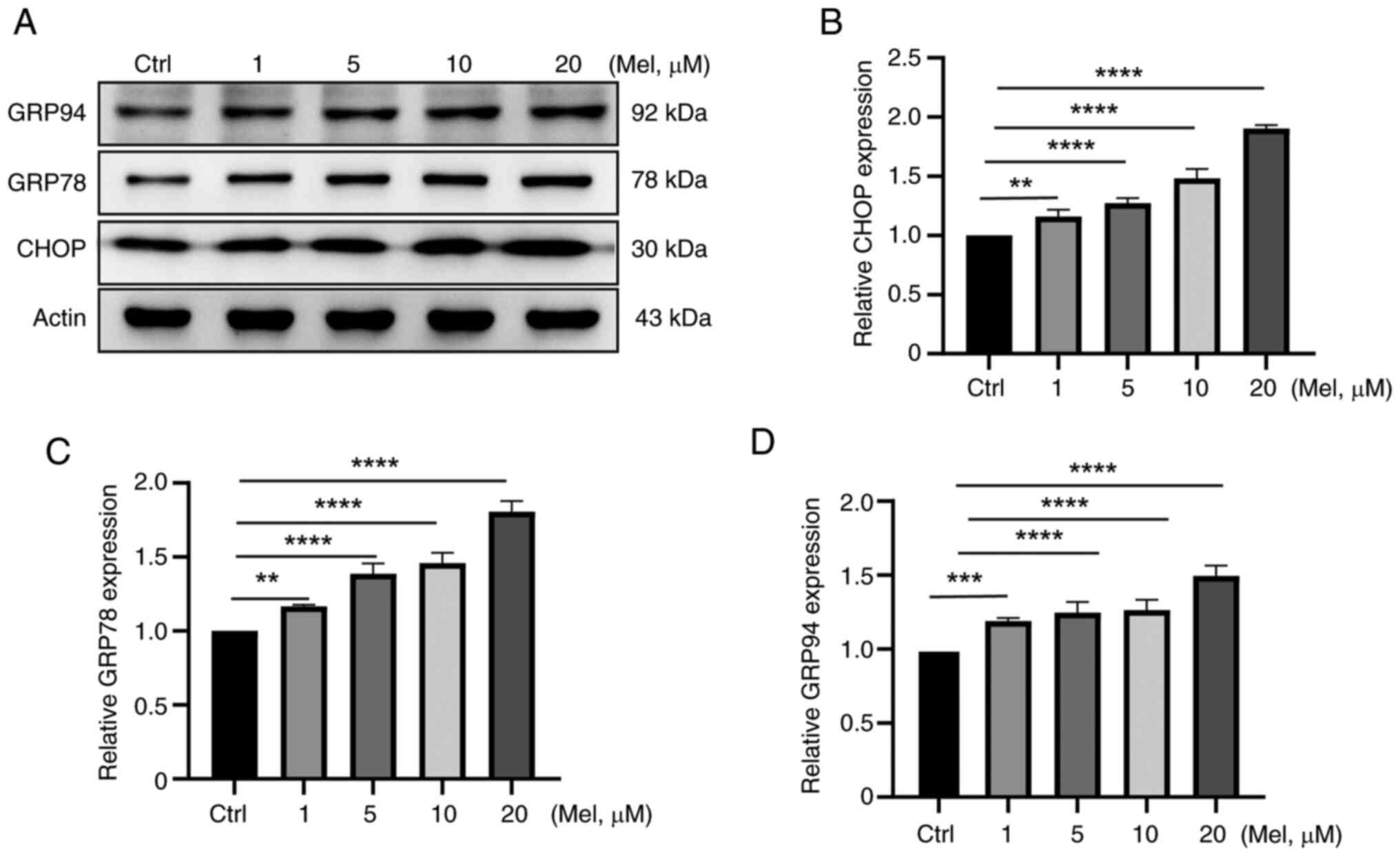
Figure 1

Melatonin reduces ER stress in N2a
neuroblastoma cells. N2a cells were treated with melatonin at 1, 5,
10, 20 µM concentrations for 48 h. (A) Western blotting detection
showed that the expression of (B) CHOP, (C) GRP78 and (D)
GRP94proteins increased. **P<0.01, ***P<0.001,
****P<0.0001, ns, not significant; ER, endoplasmic reticulum;
N2a, Neuro-2a; GRP, glucose-regulated protein; Mel, melatonin.

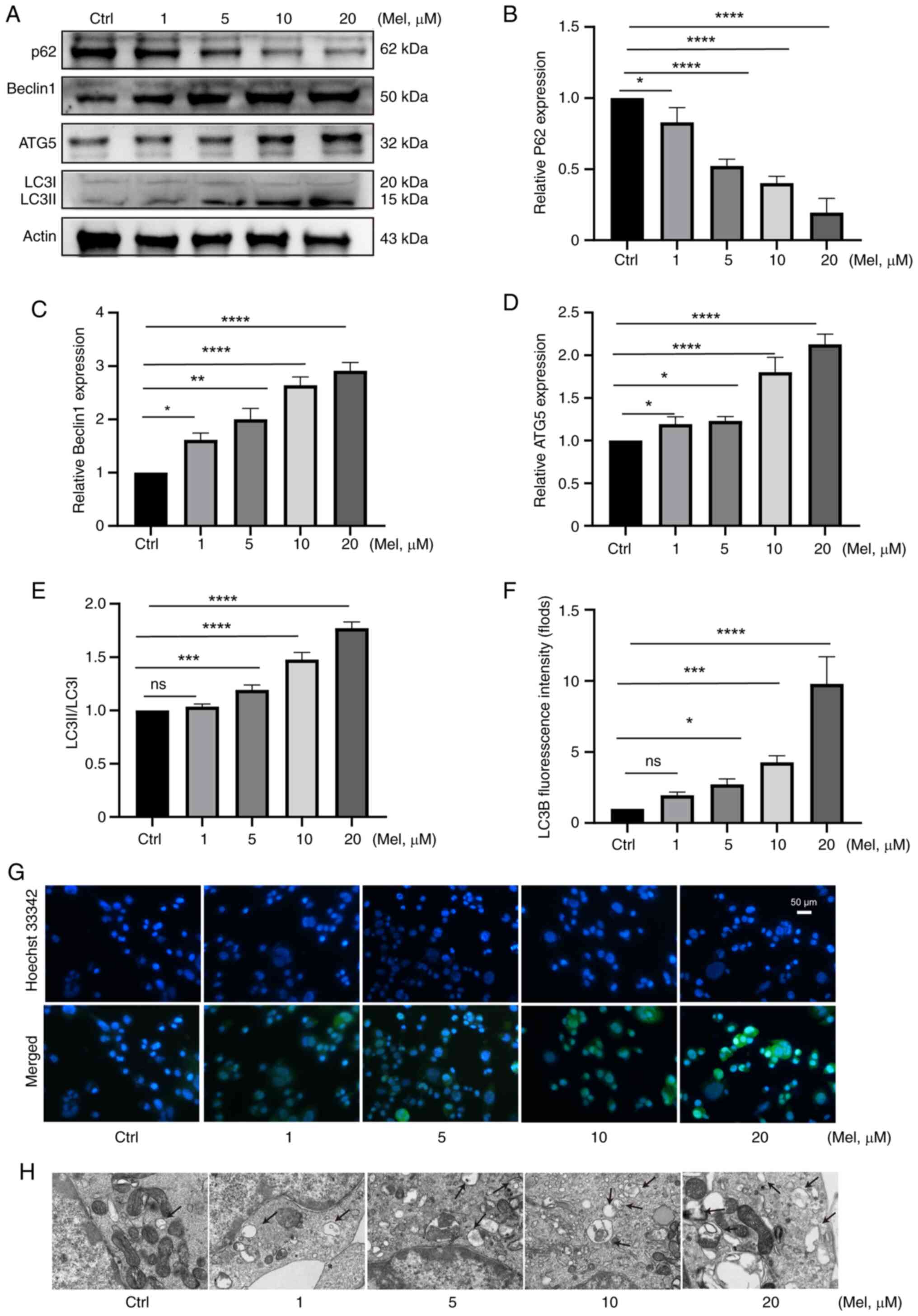
Figure 2

Melatonin can induce autophagy in N2a
neuroblastoma cells. N2a cells were treated with melatonin at 1, 5,
10, 20 µM concentrations for 48 h. (A) western blotting detection
showed (B) the expression of p62 protein decreased, (C) the
expression of Beclin1 proteins and (D) ATG5 increased and (E) the
ratio of protein LC3II/LC3I increased. (F and G) As the
concentration of melatonin increased, the intensity of LC3 staining
(green) gradually increased. (H) As the concentration of melatonin
increased, the number of autophagosomes gradually increased.
*P<0.05, **P<0.01, ***P<0.001, ****P<0.0001; ns, not
significant; N2a, Neuro-2a; ATG5, autophagy-related protein 5; Mel,
melatonin.

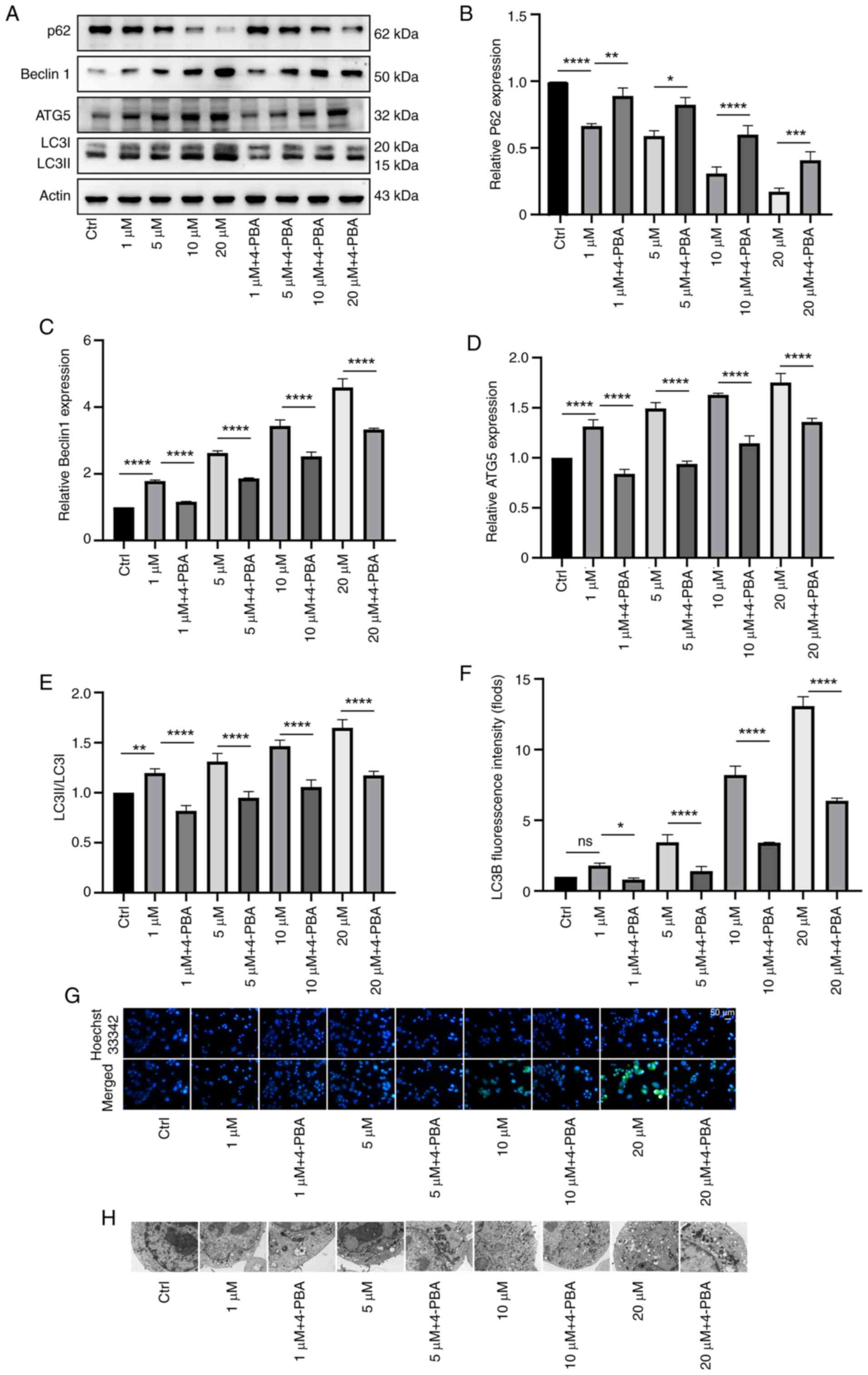
Figure 3

Effects of different concentrations
of melatonin on autophagy in N2a neuroblastoma cells via ER stress.
(A) N2a cells were treated with melatonin at 1, 5, 10 and 20 µM
concentration and with the ER stress inhibitor 4-PBA. (B) The
expression of p62 protein was inversely proportional to the
intensity of autophagy, its expression increases. Compared with the
group treated with the same concentration of melatonin, the
expression of autophagy-related proteins (C) ATG5, (D) Beclin1, (E)
LC3B in the group treated with 4-PBA was relatively reduced. (F and
G) Immunofluorescence of LC3B (green) revealed that autophagy was
weakened after treatment with 4-PBA, and the green fluorescence was
reduced compared with that of the same concentration of melatonin.
(H) Electron microscopy revealed that the number of vacuolar
autophagosomes after treatment with 4-PBA was reduced compared with
that after treatment with the same concentration of melatonin.
*P<0.05, **P<0.01, ***P<0.001, ****P<0.0001. N2a,
Neuro-2a; ER, endoplasmic reticulum; 4-PBA, 4-phenylbutyric acid;
ATG5, autophagy-related protein 5; Mel, melatonin.

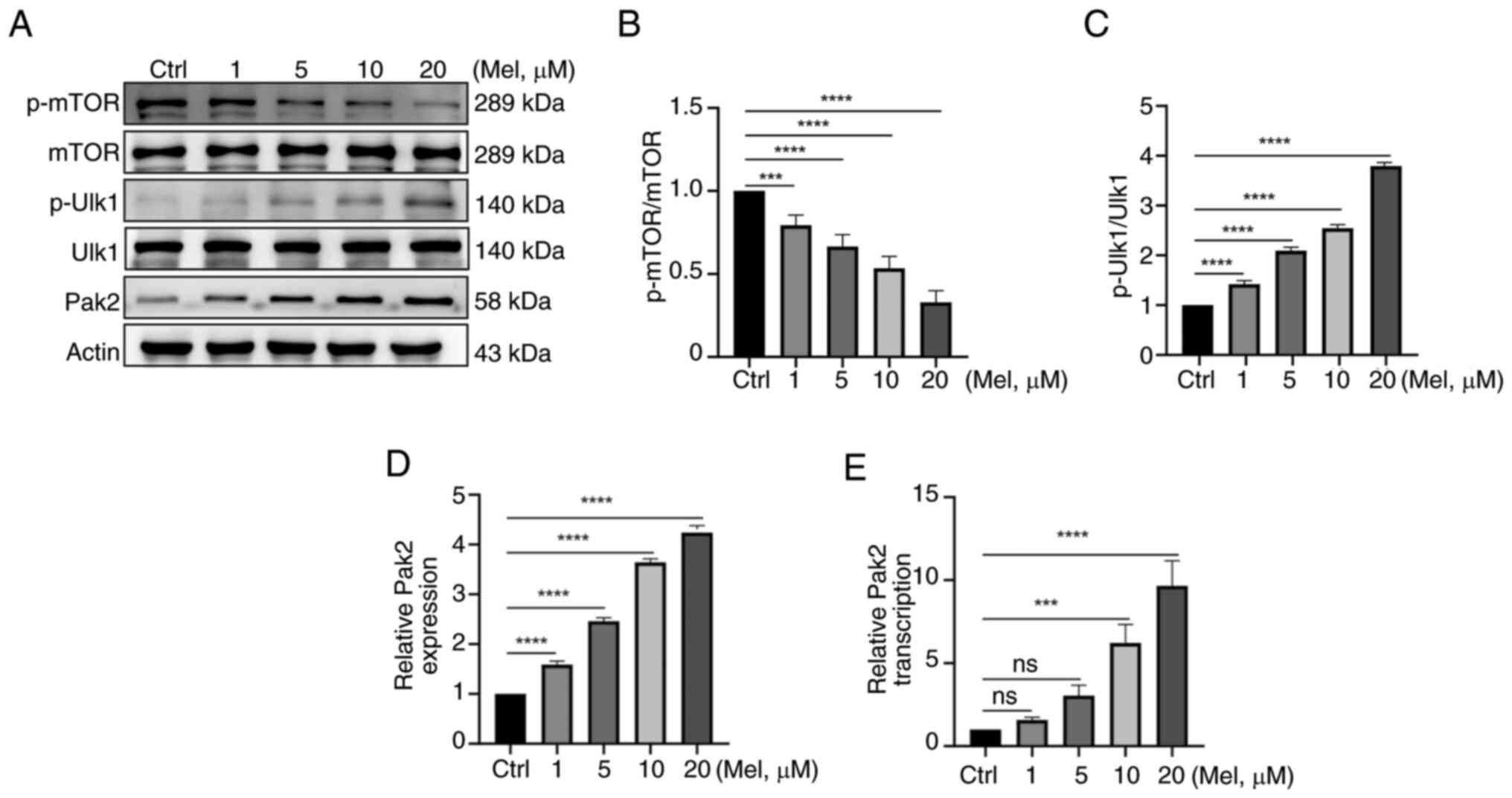
Figure 4

Melatonin regulates Pak2 expression
and detects the activation of the downstream AMPK signaling pathway
of Pak2. (A) Pak2 and AMPK signaling pathway was tested by western
blotting. The total protein of mTOR and ULK1 remained unchanged;
(B) however, the expression of phosphorylated protein of mTOR
decreased and (C) the expression of phosphorylated protein of ULK1
increased. This indicated that after melatonin treatment, the mTOR
activity in the AMPK signaling pathway is inhibited. (D) With the
increase of melatonin concentration (1, 5, 10 and 20 µM), the
expression of Pak2 protein gradually increased. (E) Quantitative
PCR was used to detect the ability to regulate Pak2 expression
increases with the enhancement of melatonin concentration.
***P<0.001, ****P<0.0001. ns, not significant; Pak2,
p21-activated kinase 2; AMPK, 5′-AMP-activated protein kinase;
ULK1, unc-51-like kinase 1; Mel, melatonin.

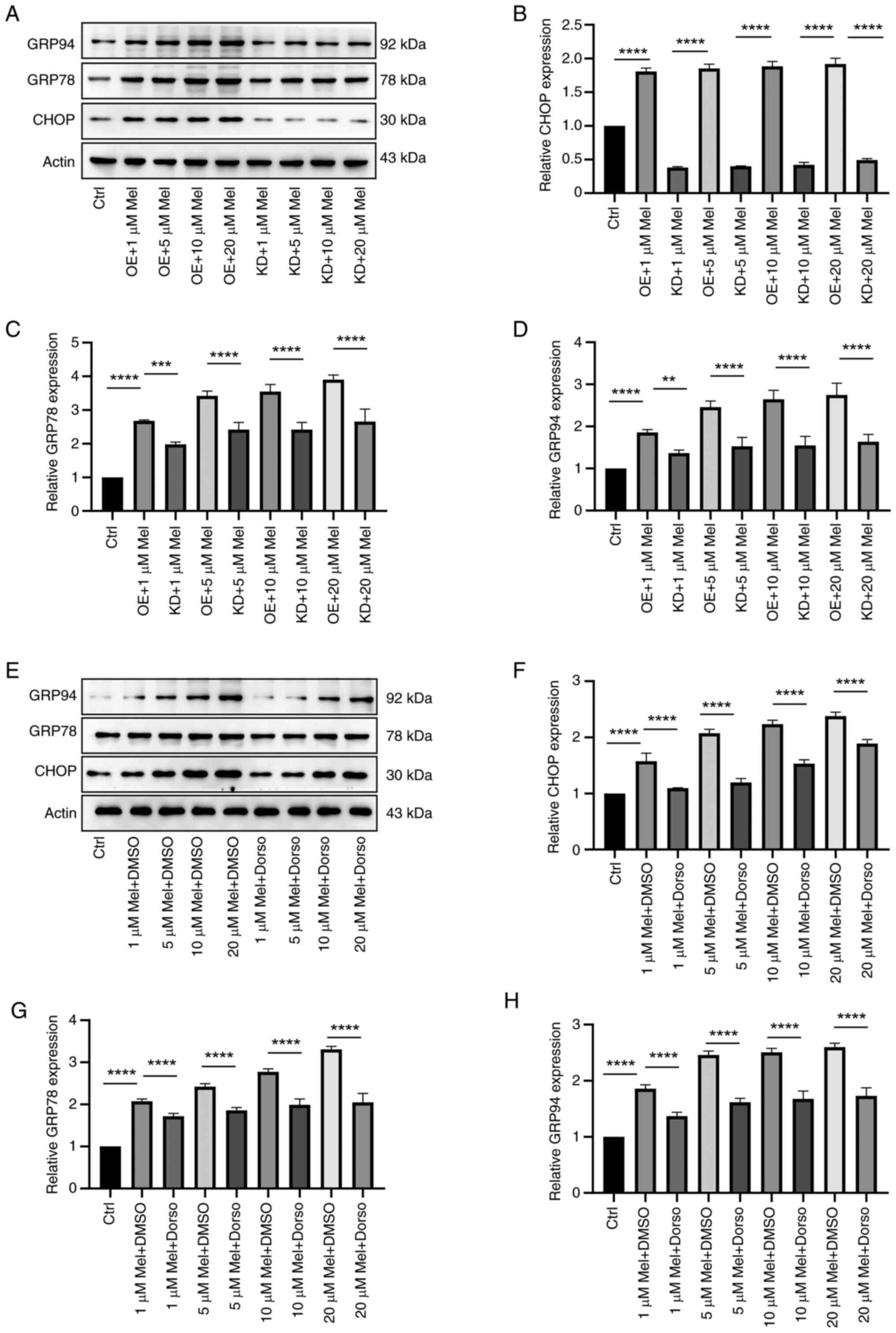
Figure 5

Effects of different concentrations
of melatonin on ER stress and autophagy in N2a neuroblastoma cells.
(A) The model of Pak2 overexpression and expression inhibition was
constructed, and western blotting was used to detect the effects of
different concentrations of melatonin on ER stress in neuroblastoma
cells. (B-D) The expression of GRP94, GRP78 and CHOP proteins
increased compared with the Pak2 overexpression and Pak2 inhibition
groups with the same concentration of melatonin. (E) For the groups
of AMPK signaling pathway inhibitors and DMSO solvent at the same
melatonin concentration, the protein levels of GRP94, GRP78 and
CHOP were detected via Western blot analysis. Compared with the
AMPK signaling pathway inhibitor and DMSO solvent groups with the
same concentration of melatonin, the expression of (F) CHOP, (G)
GRP78 and (H) GRP94 proteins was weakened (F-H). **P<0.01,
***P<0.001, ****P<0.0001. ER, endoplasmic reticulum; N2a,
Neuro-2a; Pak2, p21-activated kinase 2; GRP, glucose-regulated
protein; AMPK, 5′-AMP-activated protein kinase; Mel, melatonin; OE,
Pak2 overexpression; KD, Pak2 knockdown; Dorso, dorsomorphin; DMSO,
solvent control group.

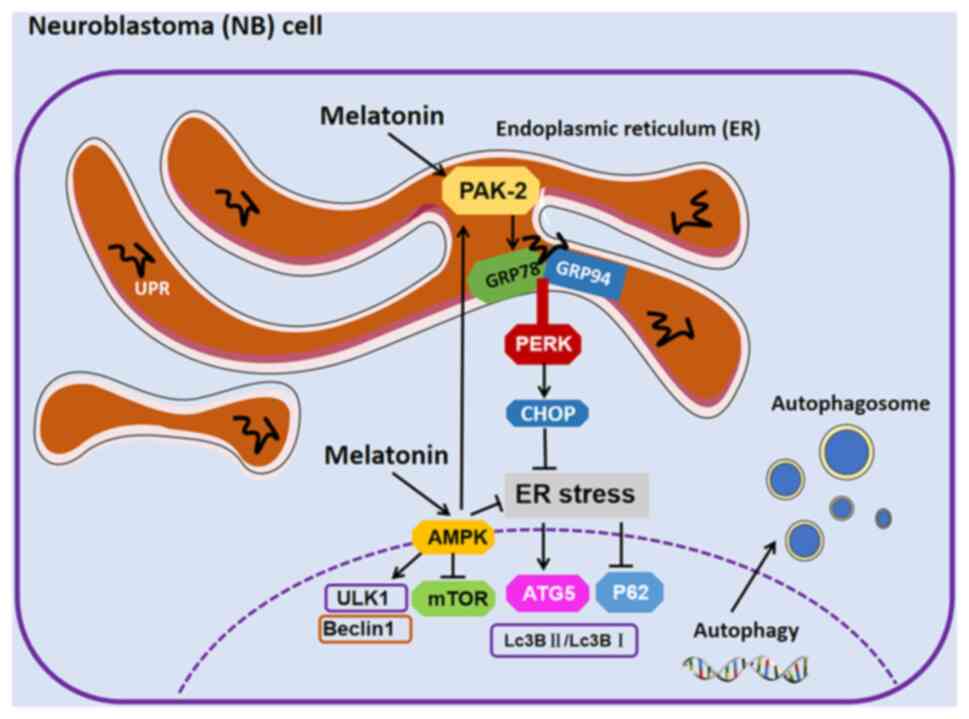
Figure 6

Overview diagram of the present
study. Melatonin induces autophagy in neuroblastoma by alleviating
Pak2-mediated ER stress. Pak2, p21-activated kinase 2; ER,
endoplasmic reticulum; GRP, glucose-regulated protein; AMPK,
5′-AMP-activated protein kinase.
View References

1 

Del Bufalo F, De Angelis B, Caruana I, Del Baldo G, De Ioris MA, Serra A, Mastronuzzi A, Cefalo MG, Pagliara D, Amicucci M, et al: GD2-CART01 for relapsed or refractory High-risk neuroblastoma. N Engl J Med. 388:1284–1295. 2023. View Article : Google Scholar : PubMed/NCBI

2 

Qiu B and Matthay KK: Advancing therapy for neuroblastoma. Nat Rev Clin Oncol. 19:515–533. 2022. View Article : Google Scholar : PubMed/NCBI

3 

Abbasi J: Mixed findings in pediatric neuroblastoma CAR-T therapy trial. JAMA. 325:1212021. View Article : Google Scholar

4 

Debnath J, Gammoh N and Ryan KM: Autophagy and autophagy-related pathways in cancer. Nat Rev Mol Cell Biol. 24:560–575. 2023. View Article : Google Scholar : PubMed/NCBI

5 

Xia H, Green DR and Zou W: Autophagy in tumour immunity and therapy. Nat Rev Cancer. 21:281–297. 2021. View Article : Google Scholar : PubMed/NCBI

6 

Bian Y, Li W, Kremer DM, Sajjakulnukit P, Li S, Crespo J, Nwosu ZC, Zhang L, Czerwonka A, Pawłowska A, et al: Cancer SLC43A2 alters T cell methionine metabolism and histone methylation. Nature. 585:277–282. 2020. View Article : Google Scholar : PubMed/NCBI

7 

Kim J, Kundu M, Viollet B and Guan KL: AMPK and mTOR regulate autophagy through direct phosphorylation of Ulk1. Nat Cell Biol. 13:132–141. 2011. View Article : Google Scholar : PubMed/NCBI

8 

Egan DF, Shackelford DB, Mihaylova MM, Gelino S, Kohnz RA, Mair W, Vasquez DS, Joshi A, Gwinn DM, Taylor R, et al: Phosphorylation of ULK1 (hATG1) by AMP-activated protein kinase connects energy sensing to mitophagy. Science. 331:456–461. 2011. View Article : Google Scholar : PubMed/NCBI

9 

Kim J, Kim YC, Fang C, Russell RC, Kim JH, Fan W, Liu R, Zhong Q and Guan KL: Differential regulation of distinct Vps34 complexes by AMPK in nutrient stress and autophagy. Cell. 152:290–303. 2013. View Article : Google Scholar : PubMed/NCBI

10 

Wang Y, Zhao W, Xiao Z, Guan G, Liu X and Zhuang M: A risk signature with four autophagy-related genes for predicting survival of glioblastoma multiforme. J Cell Mol Med. 24:3807–3821. 2020. View Article : Google Scholar : PubMed/NCBI

11 

Bishayee K, Habib K, Nazim UM, Kang J, Szabo A, Huh SO, Sadra A, et al: RNA binding protein HuD promotes autophagy and tumor stress survival by suppressing mTORC1 activity and augmenting ARL6IP1 levels. J Exp Clin Cancer Res. 41:182022. View Article : Google Scholar : PubMed/NCBI

12 

Ugun-Klusek A, Theodosi TS, Fitzgerald JC, Burté F, Ufer C, Boocock DJ, Yu-Wai-Man P, Bedford L and Billett EE: Monoamine oxidase-A promotes protective autophagy in human SH-SY5Y neuroblastoma cells through Bcl-2 phosphorylation. Redox Biol. 20:167–181. 2019. View Article : Google Scholar : PubMed/NCBI

13 

Marciniak SJ, Chambers JE and Ron D: Pharmacological targeting of endoplasmic reticulum stress in disease. Nat Rev Drug Discov. 21:115–140. 2022. View Article : Google Scholar : PubMed/NCBI

14 

Clarke HJ, Chambers JE, Liniker E and Marciniak SJ: Endoplasmic reticulum stress in malignancy. Cancer Cell. 25:563–573. 2014. View Article : Google Scholar : PubMed/NCBI

15 

Yang R, Ma S, Zhuo R, Xu L, Jia S, Yang P, Yao Y, Cao H, Ma L, Pan J and Wang J: Suppression of endoplasmic reticulum stress-dependent autophagy enhances cynaropicrin-induced apoptosis via attenuation of the P62/Keap1/Nrf2 pathways in neuroblastoma. Front Pharmacol. 13:9776222022. View Article : Google Scholar : PubMed/NCBI

16 

Celesia A, Morana O, Fiore T, Pellerito C, D'Anneo A, Lauricella M, Carlisi D, De Blasio A, Calvaruso G, Giuliano M and Emanuele S: ROS-Dependent ER stress and autophagy mediate the anti-tumor effects of tributyltin (IV) ferulate in colon cancer cells. Int J Mol Sci. 21:81352020. View Article : Google Scholar : PubMed/NCBI

17 

París-Coderch L, Soriano A, Jiménez C, Erazo T, Muñoz-Guardiola P, Masanas M, Antonelli R, Boloix A, Alfón J, Pérez-Montoyo H, et al: The antitumour drug ABTL0812 impairs neuroblastoma growth through endoplasmic reticulum stress-mediated autophagy and apoptosis. Cell Death Dis. 11:7732020. View Article : Google Scholar : PubMed/NCBI

18 

Ge W, Yan ZH, Wang L, Tan SJ, Liu J, Reiter RJ, Luo SM, Sun QY and Shen W: A hypothetical role for autophagy during the day/night rhythm-regulated melatonin synthesis in the rat pineal gland. J Pineal Res. 71:e127422021. View Article : Google Scholar : PubMed/NCBI

19 

Boga JA, Caballero B, Potes Y, Perez-Martinez Z, Reiter RJ, Vega-Naredo I and Coto-Montes A: Therapeutic potential of melatonin related to its role as an autophagy regulator: A review. J Pineal Res. 66:e125342029. View Article : Google Scholar : PubMed/NCBI

20 

Fernández A, Ordóñez R, Reiter RJ, González-Gallego J and Mauriz JL: Melatonin and endoplasmic reticulum stress: Relation to autophagy and apoptosis. J Pineal Res. 59:292–307. 2015. View Article : Google Scholar : PubMed/NCBI

21 

Zhang S, Tian W, Duan X, Zhang Q, Cao L, Liu C, Li G, Wang Z, Zhang J, Li J, et al: Melatonin attenuates diabetic cardiomyopathy by increasing autophagy of cardiomyocytes via regulation of VEGF-B/GRP78/PERK signaling pathway. Cardiovasc Diabetol. 23:192024. View Article : Google Scholar : PubMed/NCBI

22 

Zhang L, Liu K, Liu Z, Tao H, Fu X, Hou J, Jia G and Hou Y: In pre-clinical study fetal hypoxia caused autophagy and mitochondrial impairment in ovary granulosa cells mitigated by melatonin supplement. J Adv Res. 64:15–30. 2024. View Article : Google Scholar : PubMed/NCBI

23 

Xu S, Li L, Wu J, An S, Fang H, Han Y, Huang Q, Chen Z and Zeng Z: Melatonin attenuates sepsis-induced small-intestine injury by upregulating SIRT3-Mediated oxidative-stress inhibition, mitochondrial protection, and autophagy induction. Front Immunol. 12:6256272021. View Article : Google Scholar : PubMed/NCBI

24 

Livak KJ and Schmittgen TD: Analysis of relative gene expression data using real-time quantitative PCR and the 2(−Delta Delta C(T)) method. Methods. 25:402–408. 2002. View Article : Google Scholar

25 

De Almeida Chuffa LG, Seiva FRF, Silveira HS, Cesário RC, da Silva Tonon K, Simão VA, Zuccari DAPC and Reiter RJ: Melatonin regulates endoplasmic reticulum stress in diverse pathophysiological contexts: A comprehensive mechanistic review. J Cell Physiol. 239:e313832024. View Article : Google Scholar : PubMed/NCBI

26 

Lebeau PF, Wassef H, Byun JH, Platko K, Ason B, Jackson S, Dobroff J, Shetterly S, Richards WG, Al-Hashimi AA, et al: The loss-of-function PCSK9Q152H variant increases ER chaperones GRP78 and GRP94 and protects against liver injury. J Clin Invest. 131:e1286502021. View Article : Google Scholar : PubMed/NCBI

27 

Cubillos-Ruiz JR, Bettigole SE and Glimcher LH: Tumorigenic and immunosuppressive effects of endoplasmic reticulum stress in cancer. Cell. 168:692–706. 2017. View Article : Google Scholar : PubMed/NCBI

28 

Vargas JNS, Hamasaki M, Kawabata T, Youle RJ and Yoshimori T: The mechanisms and roles of selective autophagy in mammals. Nat Rev Mol Cell Biol. 24:167–185. 2023. View Article : Google Scholar : PubMed/NCBI

29 

Li M, Hao B, Zhang M, Reiter RJ, Lin S, Zheng T, Chen X, Ren Y, Yue L, Abay B, et al: Melatonin enhances radiofrequency-induced NK antitumor immunity, causing cancer metabolism reprogramming and inhibition of multiple pulmonary tumor development. Signal Transduct Target Ther. 6:3302021. View Article : Google Scholar : PubMed/NCBI

30 

Xing J, Xu H, Liu C, Wei Z, Wang Z, Zhao L and Ren L: Melatonin ameliorates endoplasmic reticulum stress in N2a neuroblastoma cell hypoxia-reoxygenation injury by activating the AMPK-Pak2 pathway. Cell Stress Chaperones. 24:621–633. 2019. View Article : Google Scholar : PubMed/NCBI

31 

Cos S, Verduga R, Fernández-Viadero C, Megías M and Crespo D: Effects of melatonin on the proliferation and differentiation of human neuroblastoma cells in culture. Neurosci Lett. 216:113–136. 1996. View Article : Google Scholar : PubMed/NCBI

32 

Lee WJ, Chen LC, Lin JH, Cheng TC, Kuo CC, Wu CH, Chang HW, Tu SH and Ho YS: Melatonin promotes neuroblastoma cell differentiation by activating hyaluronan synthase 3-induced mitophagy. Cancer Med. 8:4821–4835. 2019. View Article : Google Scholar : PubMed/NCBI

33 

García-Santos G, Antolín I, Herrera F, Martín V, Rodriguez-Blanco J, del Pilar Carrera M and Rodriguez C: Melatonin induces apoptosis in human neuroblastoma cancer cells. J Pineal Res. 41:130–135. 2006. View Article : Google Scholar : PubMed/NCBI

34 

Singrang N, Nopparat C, Panmanee J and Govitrapong P: Melatonin inhibits Hypoxia-induced Alzheimer's disease pathogenesis by regulating the amyloidogenic pathway in human neuroblastoma cells. Int J Mol Sci. 25:52252024. View Article : Google Scholar : PubMed/NCBI

35 

Chen X and Cubillos-Ruiz JR: Endoplasmic reticulum stress signals in the tumour and its microenvironment. Nat Rev Cancer. 21:71–88. 2021. View Article : Google Scholar : PubMed/NCBI

36 

Choi SI, Lee E, Akuzum B, Jeong JB, Maeng YS, Kim TI and Kim EK: Melatonin reduces endoplasmic reticulum stress and corneal dystrophy-associated TGFBIp through activation of endoplasmic reticulum-associated protein degradation. J Pineal Res. 632017.doi: 10.1111/jpi.12426.

37 

Qi Q, Feng L, Liu J, Xu D, Wang G and Pan X: Melatonin alleviates BPA-induced testicular apoptosis and endoplasmic reticulum stress. Front Biosci (Landmark Ed). 29:952024. View Article : Google Scholar : PubMed/NCBI

38 

Wang S, Bian W, Zhen J, Zhao L and Chen W: Melatonin-mediated Pak2 activation reduces cardiomyocyte death through suppressing hypoxia reoxygenation Injury-induced endoplasmic reticulum stress. J Cardiovasc Pharmacol. 74:20–29. 2019. View Article : Google Scholar : PubMed/NCBI

39 

Liu Z, Wang XY, Wang HW, Liu SL, Zhang C, Liu F, Guo Y and Gao FH: Autophagic degradation of CDK4 is responsible for G0/G1 cell cycle arrest in NVP-BEZ235-treated neuroblastoma. Cancer Biol Ther. 25:23855172024. View Article : Google Scholar : PubMed/NCBI

40 

Liu Z, Cecarini V, Cuccioloni M, Bonfili L, Gong C, Angeletti M and Eleuteri AM: Ginsenosides Rg1 and Rg2 activate autophagy and attenuate oxidative stress in neuroblastoma cells overexpressing Aβ(1–42). Antioxidants (Basel). 13:3102024. View Article : Google Scholar : PubMed/NCBI

41 

Binder P, Binder P, Wang S, Radu M, Zin M, Collins L, Khan S, Li Y, Sekeres K, Humphreys N, et al: Pak2 as a novel therapeutic target for cardioprotective endoplasmic reticulum stress response. Circ Res. 124:696–711. 2019. View Article : Google Scholar : PubMed/NCBI

Related Articles

  • Abstract
  • View
  • Download
  • Twitter
Copy and paste a formatted citation
Spandidos Publications style
Qiu Q, Zhang N, Xu Y, Qin J, Yu G and Song X: Melatonin induces autophagy in neuroblastoma by alleviating Pak2‑mediated endoplasmic reticulum stress. Mol Med Rep 33: 74, 2026.
APA
Qiu, Q., Zhang, N., Xu, Y., Qin, J., Yu, G., & Song, X. (2026). Melatonin induces autophagy in neuroblastoma by alleviating Pak2‑mediated endoplasmic reticulum stress. Molecular Medicine Reports, 33, 74. https://doi.org/10.3892/mmr.2025.13784
MLA
Qiu, Q., Zhang, N., Xu, Y., Qin, J., Yu, G., Song, X."Melatonin induces autophagy in neuroblastoma by alleviating Pak2‑mediated endoplasmic reticulum stress". Molecular Medicine Reports 33.2 (2026): 74.
Chicago
Qiu, Q., Zhang, N., Xu, Y., Qin, J., Yu, G., Song, X."Melatonin induces autophagy in neuroblastoma by alleviating Pak2‑mediated endoplasmic reticulum stress". Molecular Medicine Reports 33, no. 2 (2026): 74. https://doi.org/10.3892/mmr.2025.13784
Copy and paste a formatted citation
x
Spandidos Publications style
Qiu Q, Zhang N, Xu Y, Qin J, Yu G and Song X: Melatonin induces autophagy in neuroblastoma by alleviating Pak2‑mediated endoplasmic reticulum stress. Mol Med Rep 33: 74, 2026.
APA
Qiu, Q., Zhang, N., Xu, Y., Qin, J., Yu, G., & Song, X. (2026). Melatonin induces autophagy in neuroblastoma by alleviating Pak2‑mediated endoplasmic reticulum stress. Molecular Medicine Reports, 33, 74. https://doi.org/10.3892/mmr.2025.13784
MLA
Qiu, Q., Zhang, N., Xu, Y., Qin, J., Yu, G., Song, X."Melatonin induces autophagy in neuroblastoma by alleviating Pak2‑mediated endoplasmic reticulum stress". Molecular Medicine Reports 33.2 (2026): 74.
Chicago
Qiu, Q., Zhang, N., Xu, Y., Qin, J., Yu, G., Song, X."Melatonin induces autophagy in neuroblastoma by alleviating Pak2‑mediated endoplasmic reticulum stress". Molecular Medicine Reports 33, no. 2 (2026): 74. https://doi.org/10.3892/mmr.2025.13784
Follow us
  • Twitter
  • LinkedIn
  • Facebook
About
  • Spandidos Publications
  • Careers
  • Cookie Policy
  • Privacy Policy
How can we help?
  • Help
  • Live Chat
  • Contact
  • Email to our Support Team