Spandidos Publications Logo
  • About
    • About Spandidos
    • Aims and Scopes
    • Abstracting and Indexing
    • Editorial Policies
    • Reprints and Permissions
    • Job Opportunities
    • Terms and Conditions
    • Contact
  • Journals
    • All Journals
    • Oncology Letters
      • Oncology Letters
      • Information for Authors
      • Editorial Policies
      • Editorial Board
      • Aims and Scope
      • Abstracting and Indexing
      • Bibliographic Information
      • Archive
    • International Journal of Oncology
      • International Journal of Oncology
      • Information for Authors
      • Editorial Policies
      • Editorial Board
      • Aims and Scope
      • Abstracting and Indexing
      • Bibliographic Information
      • Archive
    • Molecular and Clinical Oncology
      • Molecular and Clinical Oncology
      • Information for Authors
      • Editorial Policies
      • Editorial Board
      • Aims and Scope
      • Abstracting and Indexing
      • Bibliographic Information
      • Archive
    • Experimental and Therapeutic Medicine
      • Experimental and Therapeutic Medicine
      • Information for Authors
      • Editorial Policies
      • Editorial Board
      • Aims and Scope
      • Abstracting and Indexing
      • Bibliographic Information
      • Archive
    • International Journal of Molecular Medicine
      • International Journal of Molecular Medicine
      • Information for Authors
      • Editorial Policies
      • Editorial Board
      • Aims and Scope
      • Abstracting and Indexing
      • Bibliographic Information
      • Archive
    • Biomedical Reports
      • Biomedical Reports
      • Information for Authors
      • Editorial Policies
      • Editorial Board
      • Aims and Scope
      • Abstracting and Indexing
      • Bibliographic Information
      • Archive
    • Oncology Reports
      • Oncology Reports
      • Information for Authors
      • Editorial Policies
      • Editorial Board
      • Aims and Scope
      • Abstracting and Indexing
      • Bibliographic Information
      • Archive
    • Molecular Medicine Reports
      • Molecular Medicine Reports
      • Information for Authors
      • Editorial Policies
      • Editorial Board
      • Aims and Scope
      • Abstracting and Indexing
      • Bibliographic Information
      • Archive
    • World Academy of Sciences Journal
      • World Academy of Sciences Journal
      • Information for Authors
      • Editorial Policies
      • Editorial Board
      • Aims and Scope
      • Abstracting and Indexing
      • Bibliographic Information
      • Archive
    • International Journal of Functional Nutrition
      • International Journal of Functional Nutrition
      • Information for Authors
      • Editorial Policies
      • Editorial Board
      • Aims and Scope
      • Abstracting and Indexing
      • Bibliographic Information
      • Archive
    • International Journal of Epigenetics
      • International Journal of Epigenetics
      • Information for Authors
      • Editorial Policies
      • Editorial Board
      • Aims and Scope
      • Abstracting and Indexing
      • Bibliographic Information
      • Archive
    • Medicine International
      • Medicine International
      • Information for Authors
      • Editorial Policies
      • Editorial Board
      • Aims and Scope
      • Abstracting and Indexing
      • Bibliographic Information
      • Archive
  • Articles
  • Information
    • Information for Authors
    • Information for Reviewers
    • Information for Librarians
    • Information for Advertisers
    • Conferences
  • Language Editing
Spandidos Publications Logo
  • About
    • About Spandidos
    • Aims and Scopes
    • Abstracting and Indexing
    • Editorial Policies
    • Reprints and Permissions
    • Job Opportunities
    • Terms and Conditions
    • Contact
  • Journals
    • All Journals
    • Biomedical Reports
      • Information for Authors
      • Editorial Policies
      • Editorial Board
      • Aims and Scope
      • Abstracting and Indexing
      • Bibliographic Information
      • Archive
    • Experimental and Therapeutic Medicine
      • Information for Authors
      • Editorial Policies
      • Editorial Board
      • Aims and Scope
      • Abstracting and Indexing
      • Bibliographic Information
      • Archive
    • International Journal of Epigenetics
      • Information for Authors
      • Editorial Policies
      • Editorial Board
      • Aims and Scope
      • Abstracting and Indexing
      • Bibliographic Information
      • Archive
    • International Journal of Functional Nutrition
      • Information for Authors
      • Editorial Policies
      • Editorial Board
      • Aims and Scope
      • Abstracting and Indexing
      • Bibliographic Information
      • Archive
    • International Journal of Molecular Medicine
      • Information for Authors
      • Editorial Policies
      • Editorial Board
      • Aims and Scope
      • Abstracting and Indexing
      • Bibliographic Information
      • Archive
    • International Journal of Oncology
      • Information for Authors
      • Editorial Policies
      • Editorial Board
      • Aims and Scope
      • Abstracting and Indexing
      • Bibliographic Information
      • Archive
    • Medicine International
      • Information for Authors
      • Editorial Policies
      • Editorial Board
      • Aims and Scope
      • Abstracting and Indexing
      • Bibliographic Information
      • Archive
    • Molecular and Clinical Oncology
      • Information for Authors
      • Editorial Policies
      • Editorial Board
      • Aims and Scope
      • Abstracting and Indexing
      • Bibliographic Information
      • Archive
    • Molecular Medicine Reports
      • Information for Authors
      • Editorial Policies
      • Editorial Board
      • Aims and Scope
      • Abstracting and Indexing
      • Bibliographic Information
      • Archive
    • Oncology Letters
      • Information for Authors
      • Editorial Policies
      • Editorial Board
      • Aims and Scope
      • Abstracting and Indexing
      • Bibliographic Information
      • Archive
    • Oncology Reports
      • Information for Authors
      • Editorial Policies
      • Editorial Board
      • Aims and Scope
      • Abstracting and Indexing
      • Bibliographic Information
      • Archive
    • World Academy of Sciences Journal
      • Information for Authors
      • Editorial Policies
      • Editorial Board
      • Aims and Scope
      • Abstracting and Indexing
      • Bibliographic Information
      • Archive
  • Articles
  • Information
    • For Authors
    • For Reviewers
    • For Librarians
    • For Advertisers
    • Conferences
  • Language Editing
Login Register Submit
  • This site uses cookies
  • You can change your cookie settings at any time by following the instructions in our Cookie Policy. To find out more, you may read our Privacy Policy.

    I agree
Search articles by DOI, keyword, author or affiliation
Search
Advanced Search
presentation
Molecular Medicine Reports
Join Editorial Board Propose a Special Issue
Print ISSN: 1791-2997 Online ISSN: 1791-3004
Journal Cover
March-2026 Volume 33 Issue 3

Full Size Image

Sign up for eToc alerts
Recommend to Library

Journals

International Journal of Molecular Medicine

International Journal of Molecular Medicine

International Journal of Molecular Medicine is an international journal devoted to molecular mechanisms of human disease.

International Journal of Oncology

International Journal of Oncology

International Journal of Oncology is an international journal devoted to oncology research and cancer treatment.

Molecular Medicine Reports

Molecular Medicine Reports

Covers molecular medicine topics such as pharmacology, pathology, genetics, neuroscience, infectious diseases, molecular cardiology, and molecular surgery.

Oncology Reports

Oncology Reports

Oncology Reports is an international journal devoted to fundamental and applied research in Oncology.

Experimental and Therapeutic Medicine

Experimental and Therapeutic Medicine

Experimental and Therapeutic Medicine is an international journal devoted to laboratory and clinical medicine.

Oncology Letters

Oncology Letters

Oncology Letters is an international journal devoted to Experimental and Clinical Oncology.

Biomedical Reports

Biomedical Reports

Explores a wide range of biological and medical fields, including pharmacology, genetics, microbiology, neuroscience, and molecular cardiology.

Molecular and Clinical Oncology

Molecular and Clinical Oncology

International journal addressing all aspects of oncology research, from tumorigenesis and oncogenes to chemotherapy and metastasis.

World Academy of Sciences Journal

World Academy of Sciences Journal

Multidisciplinary open-access journal spanning biochemistry, genetics, neuroscience, environmental health, and synthetic biology.

International Journal of Functional Nutrition

International Journal of Functional Nutrition

Open-access journal combining biochemistry, pharmacology, immunology, and genetics to advance health through functional nutrition.

International Journal of Epigenetics

International Journal of Epigenetics

Publishes open-access research on using epigenetics to advance understanding and treatment of human disease.

Medicine International

Medicine International

An International Open Access Journal Devoted to General Medicine.

Journal Cover
March-2026 Volume 33 Issue 3

Full Size Image

Sign up for eToc alerts
Recommend to Library

  • Article
  • Citations
    • Cite This Article
    • Download Citation
    • Create Citation Alert
    • Remove Citation Alert
    • Cited By
  • Similar Articles
    • Related Articles (in Spandidos Publications)
    • Similar Articles (Google Scholar)
    • Similar Articles (PubMed)
  • Download PDF
  • Download XML
  • View XML
Article Open Access

Preliminary exploration of the putative function of SF3A2 in clear cell renal cell carcinoma

  • Authors:
    • Ru Chen
    • Jie Xu
  • View Affiliations / Copyright

    Affiliations: Department of Urology, The First Hospital of Putian City, Putian, Fujian 351110, P.R. China
    Copyright: © Chen et al. This is an open access article distributed under the terms of Creative Commons Attribution License.
  • Article Number: 79
    |
    Published online on: January 5, 2026
       https://doi.org/10.3892/mmr.2026.13789
  • Expand metrics +
Metrics: Total Views: 0 (Spandidos Publications: | PMC Statistics: )
Metrics: Total PDF Downloads: 0 (Spandidos Publications: | PMC Statistics: )
Cited By (CrossRef): 0 citations Loading Articles...

This article is mentioned in:


Abstract

Splicing factor 3a subunit 2 (SF3A2) has been implicated in an increasing number of tumor types; however, at present, its role in clear cell renal cell carcinoma (ccRCC) has yet to be fully elucidated. Therefore, the aim of the present study was to preliminarily explore the putative function of SF3A2 in ccRCC. To meet this aim, SF3A2 expression in ccRCC tissues was analyzed using The Cancer Genome Atlas Kidney Renal Clear Cell Carcinoma dataset and conducted reverse transcription‑quantitative PCR, western blotting and immunohistochemical staining of ccRCC cell models to validate its functional roles. To evaluate the impact of SF3A2 expression on the proliferation, migration and invasion of ccRCC cells, Cell Counting Kit‑8 assays, colony formation assays, Transwell assays and an in vivo xenograft model were employed. Furthermore, western blot analysis was performed to explore which proteins may be involved in the underlying mechanisms of the effects of SF3A2 in ccRCC progression. SF3A2 was found to be markedly upregulated in ccRCC cells and tissues, and its high expression was associated with poor prognosis. The functional assays and in vivo experiments revealed that SF3A2 knockdown inhibited the proliferation, migration and invasion of the ccRCC cells, whereas its overexpression enhanced these processes. In terms of the underlying mechanism, SF3A2 was shown to promote ccRCC progression via activation of the AKT signaling pathway. In conclusion, the present study identified SF3A2 upregulation as a prognostic marker in ccRCC, which was associated with poor clinical outcomes and accelerated tumor progression. Mechanistically, SF3A2 exerted tumor‑promoting effects through the AKT signaling pathway. Taken together, these findings positioned SF3A2 as a dual‑functional biomarker with translational potential, facilitating prognostic stratification and presenting therapeutic targeting opportunities for ccRCC management.
View Figures

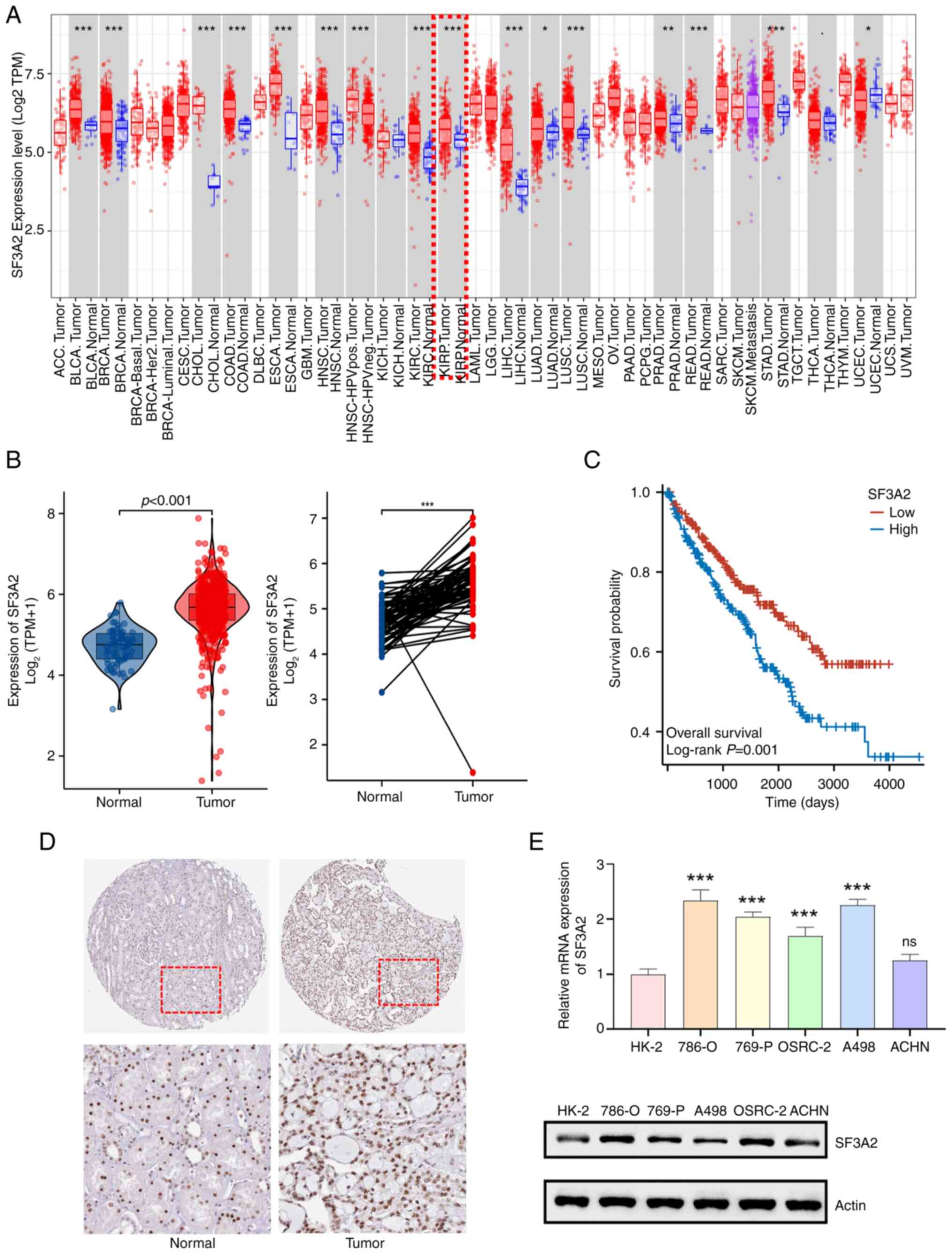
Figure 1

SF3A2 is highly expressed in ccRCC
and is associated with poorer prognosis. (A) Pan-cancer analysis of
SF3A2 mRNA expression (according to The Cancer Genome
Atlas/Genotype-Tissue Expression databases). ccRCC tissues
(indicated by the red box) exhibited significant upregulation
compared with normal tissues (*P<0.05, **P<0.01
***P<0.001; unpaired t-test). (B) Violin plot comparing SF3A2
mRNA levels in ccRCC tumor tissues vs. normal tissues (unpaired
t-test). Paired analysis confirmed increased SF3A2 expression in
ccRCC tumor tissues compared with matched normal tissues
(***P<0.001; paired t-test). (C) Kaplan-Meier overall survival
curves of patients from The Cancer Genome Atlas Kidney Renal Clear
Cell Carcinoma dataset stratified by SF3A2 expression (median
cut-off). Survival differences were evaluated using the log-rank
test. (D) Immunohistochemical staining, showing weak SF3A2
expression in normal kidney tissues and strong nuclear localization
of SF3A2 in ccRCC tumors. All images were captured at ×200
magnification. (E) Reverse transcription-quantitative PCR analysis
of SF3A2 expression in ccRCC cell lines (786-O, 769-P, OSRC-2, A498
and ACHN) compared with HK-2 normal cells, showing increased SF3A2
mRNA expression in four of the tested cell lines (***P<0.001; ns
in the ACHN cell line; one-way ANOVA). Western blot analysis
confirmed that SF3A2 protein was upregulated in 786-O and OSRC-2
cell lines compared to the HK-2 cell line. ccRCC, clear cell renal
cell carcinoma; ns, not significant; SF3A2, splicing factor 3a
subunit 2; TPM, transcripts per million.

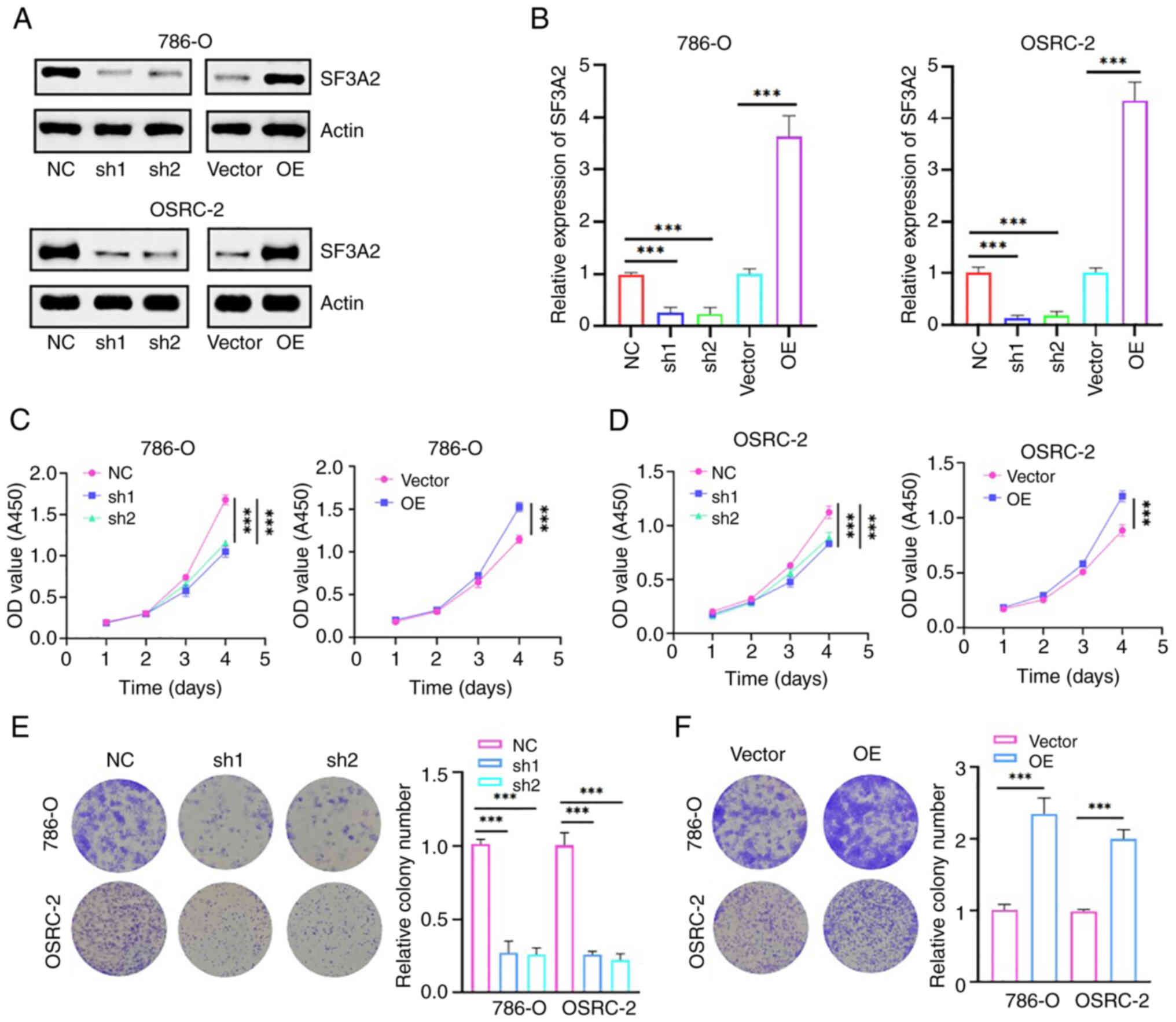
Figure 2

SF3A2 promotes the proliferation and
colony formation of renal cancer cells. (A) Western blot analysis
of SF3A2 modulation in 786-O and OSRC-2 cells is shown. Effective
knockdown (sh1/sh2) and overexpression of SF3A2 was demonstrated
compared with the controls (NC/Vector). (B) Reverse
transcription-quantitative PCR assays were performed, confirming
SF3A2 transcriptional regulation in 786-O/OSRC-2 cells
(***P<0.001; two-group comparisons were analyzed using unpaired
t-tests, and three-group comparisons were evaluated using one-way
ANOVA). (C) Cell Counting Kit-8 assay, demonstrating
SF3A2-dependent proliferation. (D) sh1/sh2-SF3A2 groups exhibited
suppressed proliferation, whereas the overexpression group
exhibited enhanced proliferation rates (***P<0.001; two-group
comparisons were analyzed using unpaired t-tests, and three-group
comparisons were evaluated using one-way ANOVA). (E) Colony
formation assay showed that SF3A2 expression regulated clonogenic
growth. sh-SF3A2 reduced colony formation. (F) OE promoted
clonogenicity (quantified as relative colony counts; ***P<0.001;
unpaired t-test). NC, negative control; OD, optical density; OE,
overexpression vector; SF3A2, splicing factor 3a subunit 2; sh,
short hairpin RNA.

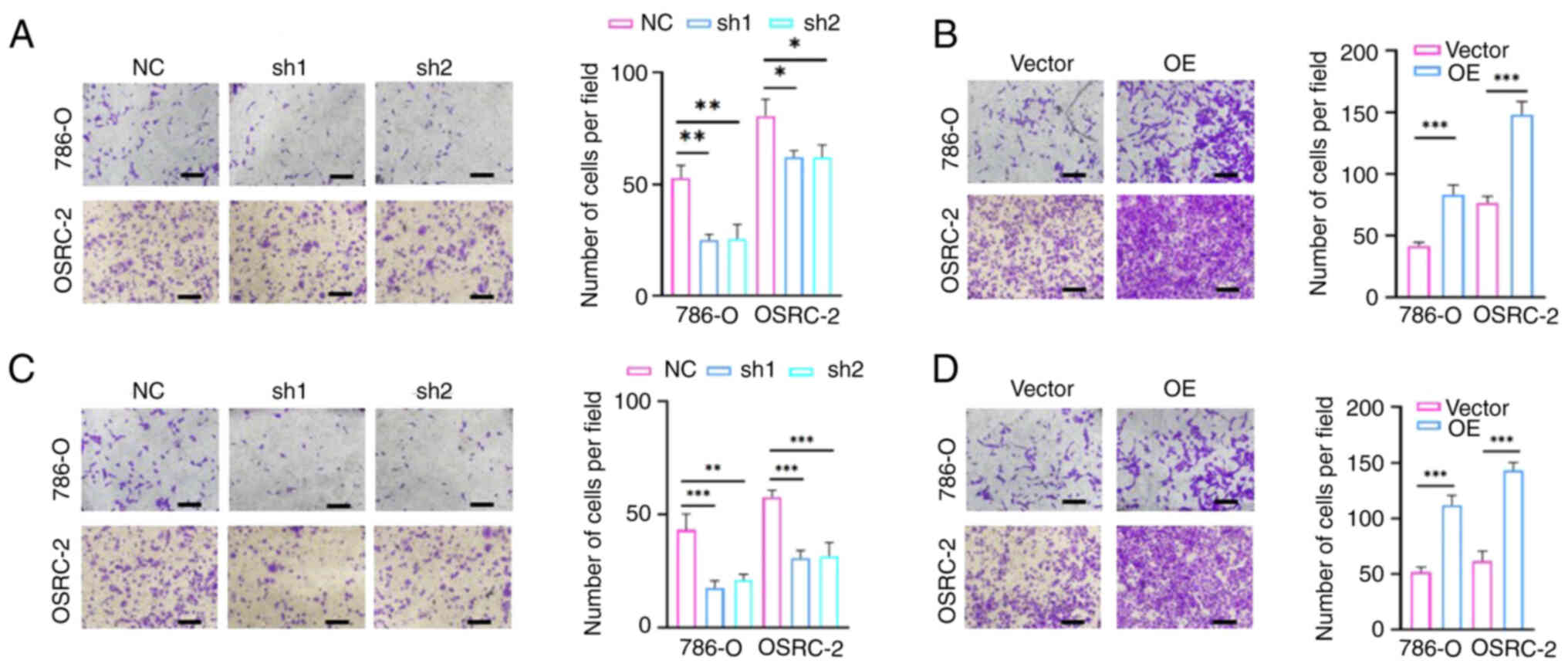
Figure 3

SF3A2 promotes the migration and
invasion of renal cancer cells (786-O and OSRC-2). (A) Transduction
with sh-SF3A2 (knockdown of SF3A2 expression) suppressed
786-O/OSRC-2 cell migration compared with that in the NC group
(**P<0.01; *P<0.05 and three-group comparisons were evaluated
using one-way ANOVA followed by Tukey's post hoc test).
Representative images and quantified Transwell results are shown.
(B) The SF3A2 overexpression group exhibited enhanced migration
compared with the Vector control (***P<0.001; unpaired t-test).
(C) The sh-SF3A2 groups exhibited attenuated invasion in both the
tested cell lines compared with the NC group. (D) Upregulation of
SF3A2 in the OE-SF3A2 group augmented the invasive potential of the
cells (***P<0.001; unpaired two-tailed Student's t-test). Data
are presented as the mean ± SD from three independent experiments.
Scale bar, 100 µm. NC, negative control; OE, overexpression; SF3A2,
splicing factor 3a subunit 2; sh, short hairpin RNA.

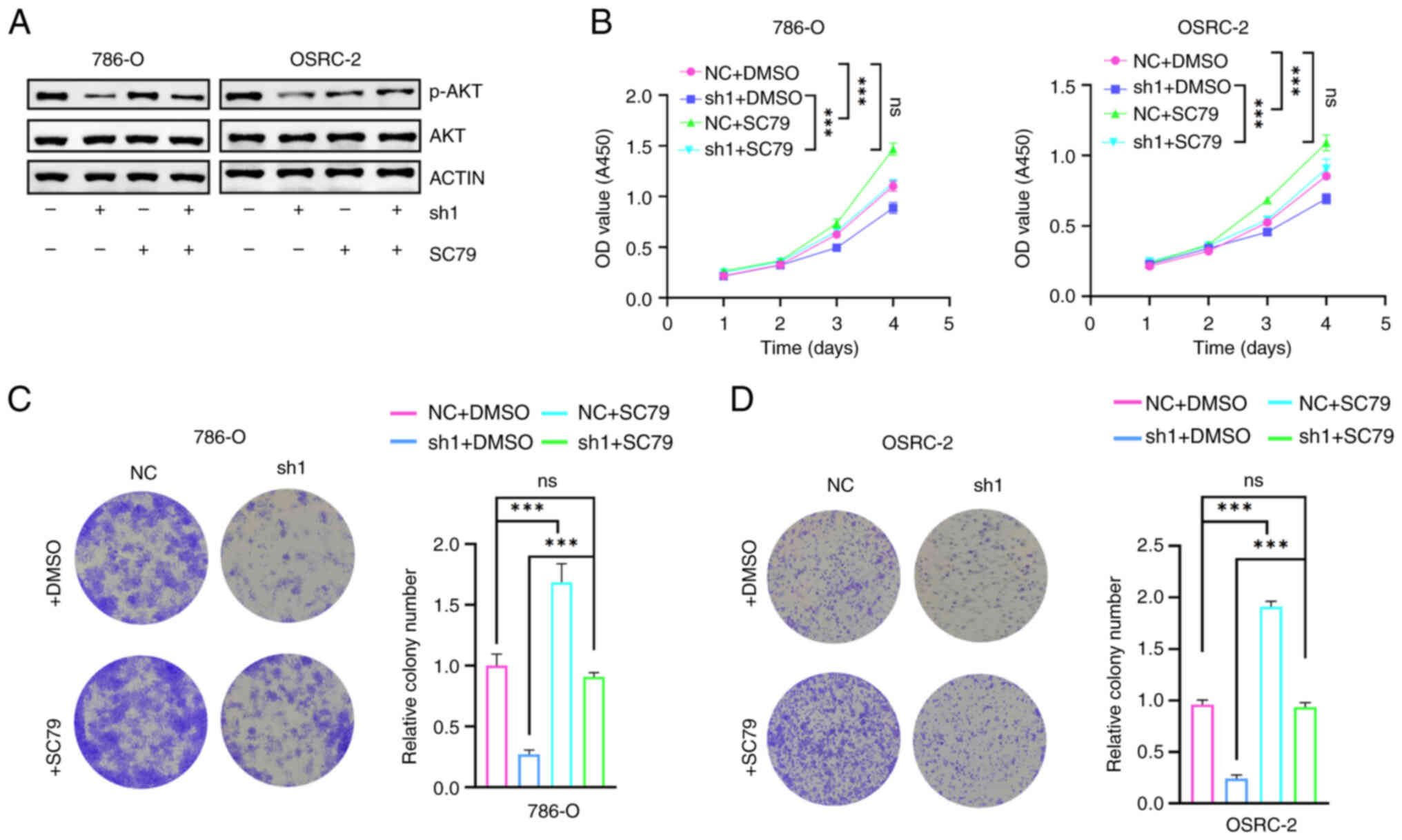
Figure 4

SF3A2 promotes the proliferation and
colony formation of renal cancer cells through activation of the
AKT pathway. (A) Western blot analysis of AKT signaling in
786-O/OSRC-2 cells. sh-SF3A2 transduction selectively reduced AKT
phosphorylation (p-AKT) without affecting total protein levels; by
contrast, SC79-mediated AKT activation reversed phosphorylation
deficits in the sh-SF3A2 cells. (B) sh-SF3A2 attenuated cellular
proliferation (as determined using a Cell Counting Kit-8 assay),
although this reduction in cell proliferation was reversed by the
AKT agonist SC79 (***P<0.001; statistical analysis was performed
at the endpoint using one-way ANOVA followed by Tukey's post hoc
test). Colony formation assays of (C) 786-O and (D) OSRC-2 cells.
The observed reductions in cell numbers induced by sh-SF3A2 were
reversed through AKT pathway activation (***P<0.001; one-way
ANOVA followed by Tukey's post hoc test). Representative colony
images are shown alongside quantification of the counted colonies.
Data are presented as the mean ± SD from three independent
experiments. NC, negative control; ns, not significant; OD, optical
density; p-, phosphorylated; A450, absorbance at 450 nm; SF3A2,
splicing factor 3a subunit 2; sh, short hairpin RNA.

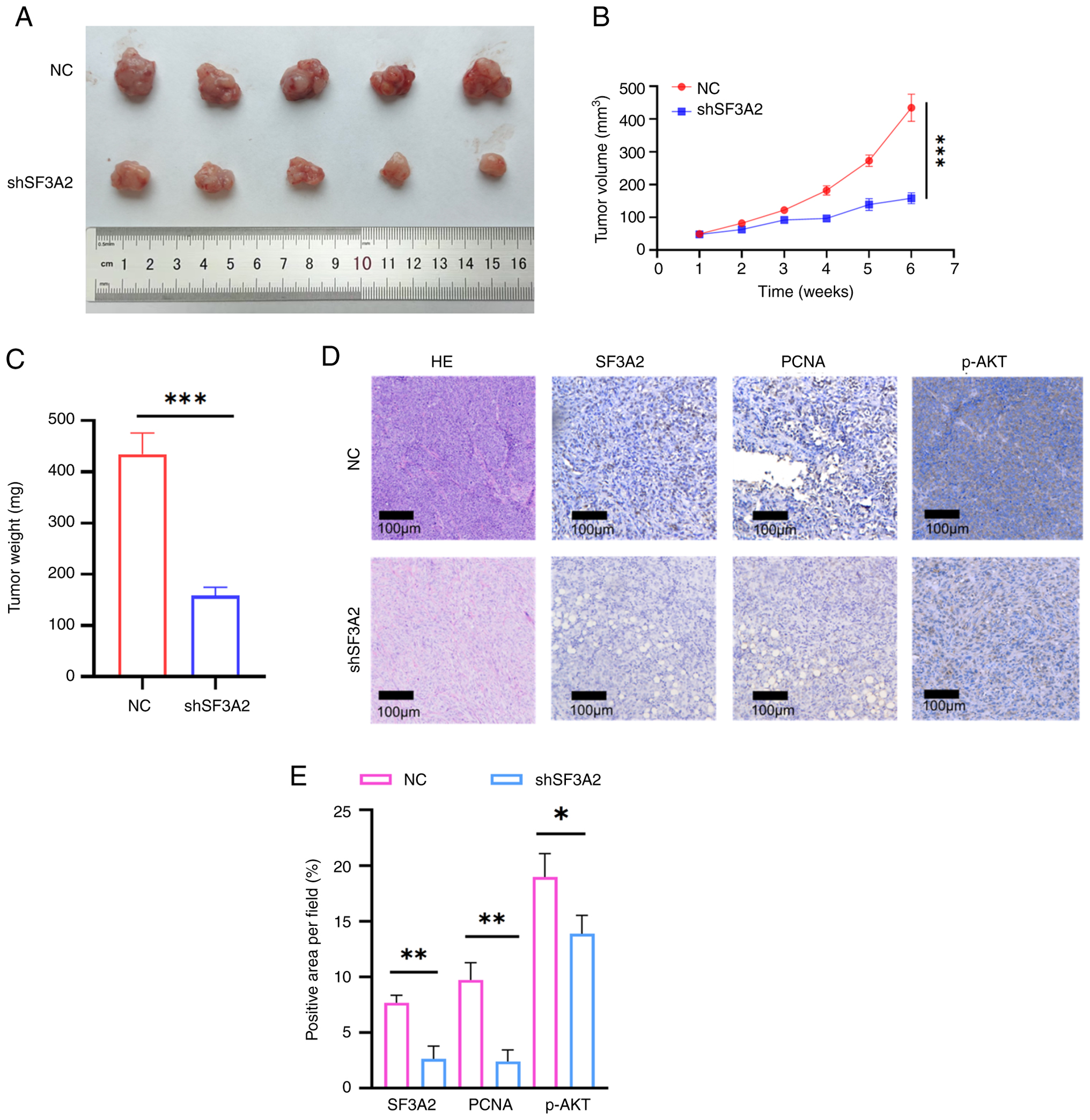
Figure 5

Knockdown of SF3A2 using sh-1
inhibits tumor growth in a xenograft model. (A) Representative
excised xenograft tumors from the NC and shSF3A2 groups, with a
ruler included as an external size reference. (B) Longitudinal
monitoring of tumor growth kinetics. sh-SF3A2 was found to
significantly attenuate tumor volume progression (***P<0.001;
unpaired t-test). (C) Endpoint tumor weight quantification,
demonstrating sh-SF3A2-dependent tumor suppression (***P<0.001;
unpaired t-test). (D) Representative H&E staining of tumor
sections, demonstrating the overall histological architecture.
Immunohistochemical staining of PCNA (as a proliferation marker)
and p-AKT (for signaling pathway activity) in xenograft tumors was
performed. PCNA-positive nuclei and cytoplasmic p-AKT staining were
found to be markedly reduced in the sh-SF3A2 group compared with
the NC group (scale bar, 100 µm). (E) Quantification of the
positive area per field (*P<0.05; **P<0.01; unpaired
two-tailed Student's t-test). NC, negative control; p-,
phosphorylated; PCNA, proliferating cell nuclear antigen; SF3A2,
splicing factor 3a subunit 2; sh, short hairpin RNA.
View References

1 

Rose TL and Kim WY: Renal cell carcinoma: A review. JAMA. 332:1001–1010. 2024. View Article : Google Scholar : PubMed/NCBI

2 

Barata P, Gulati S, Elliott A, Hammers HJ, Burgess E, Gartrell BA, Darabi S, Bilen MA, Basu A, Geynisman DM, et al: Renal cell carcinoma histologic subtypes exhibit distinct transcriptional profiles. J Clin Invest. 134:e1789152024. View Article : Google Scholar : PubMed/NCBI

3 

Young M, Jackson-Spence F, Beltran L, Day E, Suarez C, Bex A, Powles T and Szabados B: Renal cell carcinoma. Lancet. 404:476–491. 2024. View Article : Google Scholar : PubMed/NCBI

4 

Atkins MB and Tannir NM: Current and emerging therapies for first-line treatment of metastatic clear cell renal cell carcinoma. Cancer Treat Rev. 70:127–137. 2018. View Article : Google Scholar : PubMed/NCBI

5 

Powles T, Albiges L, Bex A, Comperat E, Grunwald V, Kanesvaran R, Kitamura H, McKay R, Porta C, Procopio G, et al: Renal cell carcinoma: ESMO clinical practice guideline for diagnosis, treatment and follow-up. Ann Oncol. 35:692–706. 2024. View Article : Google Scholar : PubMed/NCBI

6 

Bedke J, Ghanem YA, Albiges L, Bonn S, Campi R, Capitanio U, Dabestani S, Hora M, Klatte T, Kuusk T, et al: Updated European association of urology guidelines on the use of adjuvant immune checkpoint inhibitors and subsequent therapy for renal cell carcinoma. Eur Urol. 87:491–496. 2025. View Article : Google Scholar : PubMed/NCBI

7 

Marasco LE and Kornblihtt AR: The physiology of alternative splicing. Nat Rev Mol Cell Biol. 24:242–254. 2023. View Article : Google Scholar : PubMed/NCBI

8 

Bradley RK and Anczukow O: RNA splicing dysregulation and the hallmarks of cancer. Nat Rev Cancer. 23:135–155. 2023. View Article : Google Scholar : PubMed/NCBI

9 

Bian Z, Yang F, Xu P, Gao G, Yang C, Cao Y, Yao S, Wang X, Yin Y, Fei B and Huang Z: LINC01852 inhibits the tumorigenesis and chemoresistance in colorectal cancer by suppressing SRSF5-mediated alternative splicing of PKM. Mol Cancer. 23:232024. View Article : Google Scholar : PubMed/NCBI

10 

Meng K, Li Y, Yuan X, Shen HM, Hu LL, Liu D, Shi F, Zheng D, Shi X, Wen N, et al: The cryptic lncRNA-encoded microprotein TPM3P9 drives oncogenic RNA splicing and tumorigenesis. Signal Transduct Target Ther. 10:432025. View Article : Google Scholar : PubMed/NCBI

11 

Zhang X, Zhan X, Bian T, Yang F, Li P, Lu Y, Xing Z, Fan R, Zhang QC and Shi Y: Structural insights into branch site proofreading by human spliceosome. Nat Struct Mol Biol. 31:835–845. 2024. View Article : Google Scholar : PubMed/NCBI

12 

Huang Q, Yao Y, Wang Y, Li J, Chen J, Wu M, Guo C, Lou J, Yang W, Zhao L, et al: Ginsenoside Rb2 inhibits p300-mediated SF3A2 acetylation at lysine 10 to promote Fscn1 alternative splicing against myocardial ischemic/reperfusion injury. J Adv Res. 65:365–379. 2024. View Article : Google Scholar : PubMed/NCBI

13 

Frezza V, Chellini L, Riccioni V, Bonvissuto D, Palombo R and Paronetto MP: DHX9 helicase impacts on splicing decisions by modulating U2 snRNP recruitment in Ewing sarcoma cells. Nucleic Acids Res. 53:gkaf0682025. View Article : Google Scholar : PubMed/NCBI

14 

Deng L, Liao L, Zhang YL, Yang SY, Hu SY, Andriani L, Ling YX, Ma XY, Zhang FL, Shao ZM and Li DQ: SF3A2 promotes progression and cisplatin resistance in triple-negative breast cancer via alternative splicing of MKRN1. Sci Adv. 10:eadj40092024. View Article : Google Scholar : PubMed/NCBI

15 

Karlsson M, Zhang C, Mear L, Zhong W, Digre A, Katona B, Sjostedt E, Butler L, Odeberg J, Dusart P, et al: A single-cell type transcriptomics map of human tissues. Sci Adv. 7:eabh21692021. View Article : Google Scholar : PubMed/NCBI

16 

Livak KJ and Schmittgen TD: Analysis of relative gene expression data using real-time quantitative PCR and the 2(−Delta Delta C(T)) method. Methods. 25:402–408. 2001. View Article : Google Scholar : PubMed/NCBI

17 

Council N.R, . Guide for the Care and Use of Laboratory Animals. National Academies Press; Washington, DC: 2010, PubMed/NCBI

18 

Miao D, Wang Q, Shi J, Lv Q, Tan D, Zhao C, Xiong Z and Zhang X: N6-methyladenosine-modified DBT alleviates lipid accumulation and inhibits tumor progression in clear cell renal cell carcinoma through the ANXA2/YAP axis-regulated Hippo pathway. Cancer Commun (Lond). 43:480–502. 2023. View Article : Google Scholar : PubMed/NCBI

19 

Xu Y, Li L, Yang W, Zhang K, Zhang Z, Yu C, Qiu J, Cai L, Gong Y, Zhang Z, et al: TRAF2 promotes M2-polarized tumor-associated macrophage infiltration, angiogenesis and cancer progression by inhibiting autophagy in clear cell renal cell carcinoma. J Exp Clin Cancer Res. 42:1592023. View Article : Google Scholar : PubMed/NCBI

20 

Huang B, Ren J, Ma Q, Yang F, Pan X, Zhang Y, Liu Y, Wang C, Zhang D, Wei L, et al: A novel peptide PDHK1-241aa encoded by circPDHK1 promotes ccRCC progression via interacting with PPP1CA to inhibit AKT dephosphorylation and activate the AKT-mTOR signaling pathway. Mol Cancer. 23:342024. View Article : Google Scholar : PubMed/NCBI

21 

Pellacani C, Bucciarelli E, Renda F, Hayward D, Palena A, Chen J, Bonaccorsi S, Wakefield JG, Gatti M and Somma MP: Splicing factors Sf3A2 and Prp31 have direct roles in mitotic chromosome segregation. Elife. 7:e403252018. View Article : Google Scholar : PubMed/NCBI

22 

Sun W, Lu H, Cui S, Zhao S, Yu H, Song H, Ruan Q, Zhang Y, Chu Y and Dong S: NEDD4 ameliorates myocardial reperfusion injury by preventing macrophages pyroptosis. Cell Commun Signal. 21:292023. View Article : Google Scholar : PubMed/NCBI

23 

Hirokawa M, Morita H, Tajima T, Takahashi A, Ashikawa K, Miya F, Shigemizu D, Ozaki K, Sakata Y, Nakatani D, et al: A genome-wide association study identifies PLCL2 and AP3D1-DOT1L-SF3A2 as new susceptibility loci for myocardial infarction in Japanese. Eur J Hum Genet. 23:374–380. 2015. View Article : Google Scholar : PubMed/NCBI

24 

Wang Y, Ouyang Y, Cao X and Cai Q: Identifying hub genes for chemo-radiotherapy sensitivity in cervical cancer: A bi-dataset in silico analysis. Discov Oncol. 15:4342024. View Article : Google Scholar : PubMed/NCBI

25 

Long G and Li Z, Gao Y, Zhang X, Cheng X, Daniel IE, Zhang L, Wang D and Li Z: Ferroptosis-related alternative splicing signatures as potential biomarkers for predicting prognosis and therapy response in gastric cancer. Heliyon. 10:e343812024. View Article : Google Scholar : PubMed/NCBI

26 

Song M, Bode AM, Dong Z and Lee MH: AKT as a therapeutic target for cancer. Cancer Res. 79:1019–1031. 2019. View Article : Google Scholar : PubMed/NCBI

27 

Zhang HL, Hu BX, Ye ZP, Li ZL, Liu S, Zhong WQ, Du T, Yang D, Mai J, Li LC, et al: TRPML1 triggers ferroptosis defense and is a potential therapeutic target in AKT-hyperactivated cancer. Sci Transl Med. 16:eadk03302024. View Article : Google Scholar : PubMed/NCBI

28 

Martin F, Alcon C, Marin E, Morales-Sanchez P, Manzano-Munoz A, Diaz S, Garcia M, Samitier J, Lu A, Villanueva A, et al: Novel selective strategies targeting the BCL-2 family to enhance clinical efficacy in ALK-rearranged non-small cell lung cancer. Cell Death Dis. 16:1942025. View Article : Google Scholar : PubMed/NCBI

29 

Yu L, Wei J and Liu P: Attacking the PI3K/Akt/mTOR signaling pathway for targeted therapeutic treatment in human cancer. Semin Cancer Biol. 85:69–94. 2022. View Article : Google Scholar : PubMed/NCBI

30 

Yu W, Yin S, Tang H, Li H, Zhang Z and Yang K: PER2 interaction with HSP70 promotes cuproptosis in oral squamous carcinoma cells by decreasing AKT stability. Cell Death Dis. 16:1922025. View Article : Google Scholar : PubMed/NCBI

31 

Tian Y, Chen ZH, Wu P, Zhang D, Ma Y, Liu XF, Wang X, Ding D, Cao XC and Yu Y: MIR497HG-Derived miR-195 and miR-497 mediate tamoxifen resistance via PI3K/AKT signaling in breast cancer. Adv Sci (Weinh). 10:e22048192023. View Article : Google Scholar : PubMed/NCBI

32 

Li Y, Huang J, Wang J, Xia S, Ran H, Gao L, Feng C, Gui L, Zhou Z and Yuan J: Human umbilical cord-derived mesenchymal stem cell transplantation supplemented with curcumin improves the outcomes of ischemic stroke via AKT/GSK-3β/β-TrCP/Nrf2 axis. J Neuroinflammation. 20:492023. View Article : Google Scholar : PubMed/NCBI

33 

Liu J, Li SM, Tang YJ, Cao JL, Hou WS, Wang AQ, Wang C and Jin CH: Jaceosidin induces apoptosis and inhibits migration in AGS gastric cancer cells by regulating ROS-mediated signaling pathways. Redox Rep. 29:23133662024. View Article : Google Scholar : PubMed/NCBI

34 

Liu X, Song J, Zhang H, Liu X, Zuo F, Zhao Y, Zhao Y, Yin X, Guo X, Wu X, et al: Immune checkpoint HLA-E:CD94-NKG2A mediates evasion of circulating tumor cells from NK cell surveillance. Cancer Cell. 41:272–287. e92023. View Article : Google Scholar : PubMed/NCBI

35 

Jiang Q, Zheng N, Bu L, Zhang X, Zhang X, Wu Y, Su Y, Wang L, Zhang X, Ren S, et al: SPOP-mediated ubiquitination and degradation of PDK1 suppresses AKT kinase activity and oncogenic functions. Mol Cancer. 20:1002021. View Article : Google Scholar : PubMed/NCBI

36 

Zhang Z, Zhang Y and Zhang R: P4HA3 promotes clear cell renal cell carcinoma progression via the PI3K/AKT/GSK3β pathway. Med Oncol. 40:702023. View Article : Google Scholar : PubMed/NCBI

37 

Mao H, Zhao Y, Lei L, Hu Y, Zhu H, Wang R, Ni D, Liu J, Xu L, Xia H, et al: Selenoprotein S regulates tumorigenesis of clear cell renal cell carcinoma through AKT/GSK3β/NF-ĸB signaling pathway. Gene. 832:1465592022. View Article : Google Scholar : PubMed/NCBI

38 

Zhou Z, Li Y, Chai Y, Zhang Y and Yan P: Analysis of mRNA pentatricopeptide repeat domain 1 as a prospective oncogene in clear cell renal cell carcinoma that accelerates tumor cells proliferation and invasion via the Akt/GSK3β/β-catenin pathway. Discov Oncol. 16:222025. View Article : Google Scholar : PubMed/NCBI

39 

Sun Y, Zhu L, Liu P, Zhang H, Guo F and Jin X: ZDHHC2-Mediated AGK palmitoylation activates AKT-mTOR signaling to reduce sunitinib sensitivity in renal cell carcinoma. Cancer Res. 83:2034–2051. 2023. View Article : Google Scholar : PubMed/NCBI

40 

Liu W, Yan B, Yu H, Ren J, Peng M, Zhu L, Wang Y, Jin X and Yi L: OTUD1 stabilizes PTEN to inhibit the PI3K/AKT and TNF-alpha/NF-kappaB signaling pathways and sensitize ccRCC to TKIs. Int J Biol Sci. 18:1401–1414. 2022. View Article : Google Scholar : PubMed/NCBI

41 

Lv Z, Wang M, Hou H, Tang G, Xu H, Wang X, Li Y, Wang J and Liu M: FOXM1-regulated ZIC2 promotes the malignant phenotype of renal clear cell carcinoma by activating UBE2C/mTOR signaling pathway. Int J Biol Sci. 19:3293–3306. 2023. View Article : Google Scholar : PubMed/NCBI

Related Articles

  • Abstract
  • View
  • Download
  • Twitter
Copy and paste a formatted citation
Spandidos Publications style
Chen R and Xu J: Preliminary exploration of the putative function of SF3A2 in clear cell renal cell carcinoma. Mol Med Rep 33: 79, 2026.
APA
Chen, R., & Xu, J. (2026). Preliminary exploration of the putative function of SF3A2 in clear cell renal cell carcinoma. Molecular Medicine Reports, 33, 79. https://doi.org/10.3892/mmr.2026.13789
MLA
Chen, R., Xu, J."Preliminary exploration of the putative function of SF3A2 in clear cell renal cell carcinoma". Molecular Medicine Reports 33.3 (2026): 79.
Chicago
Chen, R., Xu, J."Preliminary exploration of the putative function of SF3A2 in clear cell renal cell carcinoma". Molecular Medicine Reports 33, no. 3 (2026): 79. https://doi.org/10.3892/mmr.2026.13789
Copy and paste a formatted citation
x
Spandidos Publications style
Chen R and Xu J: Preliminary exploration of the putative function of SF3A2 in clear cell renal cell carcinoma. Mol Med Rep 33: 79, 2026.
APA
Chen, R., & Xu, J. (2026). Preliminary exploration of the putative function of SF3A2 in clear cell renal cell carcinoma. Molecular Medicine Reports, 33, 79. https://doi.org/10.3892/mmr.2026.13789
MLA
Chen, R., Xu, J."Preliminary exploration of the putative function of SF3A2 in clear cell renal cell carcinoma". Molecular Medicine Reports 33.3 (2026): 79.
Chicago
Chen, R., Xu, J."Preliminary exploration of the putative function of SF3A2 in clear cell renal cell carcinoma". Molecular Medicine Reports 33, no. 3 (2026): 79. https://doi.org/10.3892/mmr.2026.13789
Follow us
  • Twitter
  • LinkedIn
  • Facebook
About
  • Spandidos Publications
  • Careers
  • Cookie Policy
  • Privacy Policy
How can we help?
  • Help
  • Live Chat
  • Contact
  • Email to our Support Team