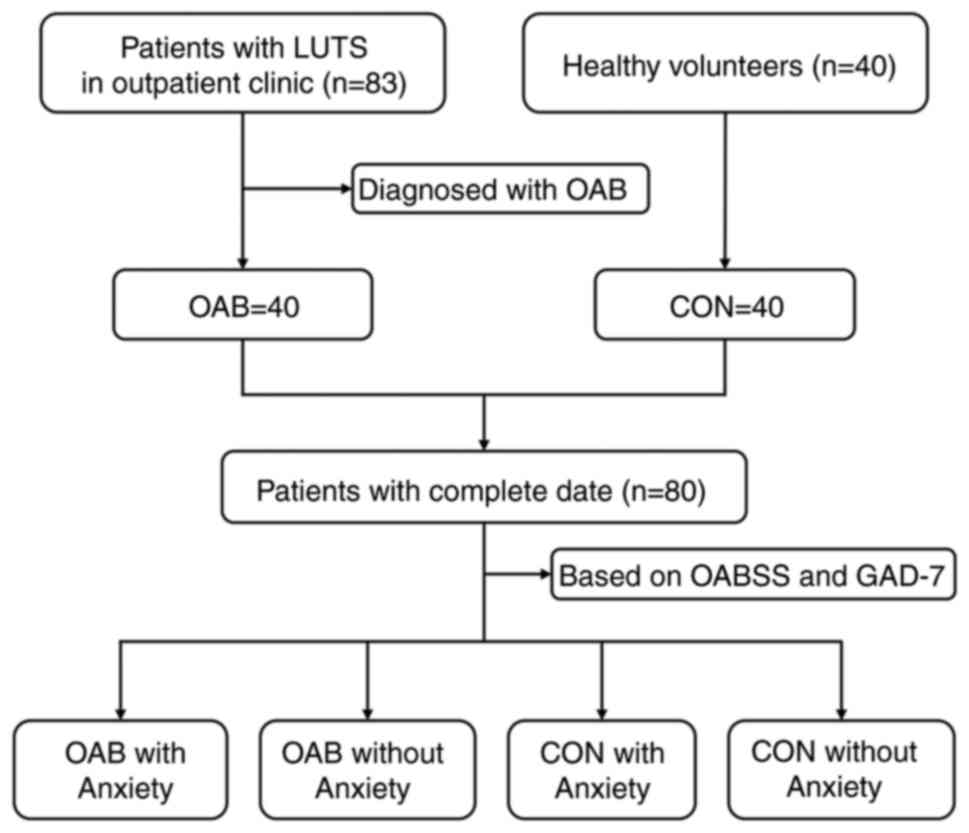
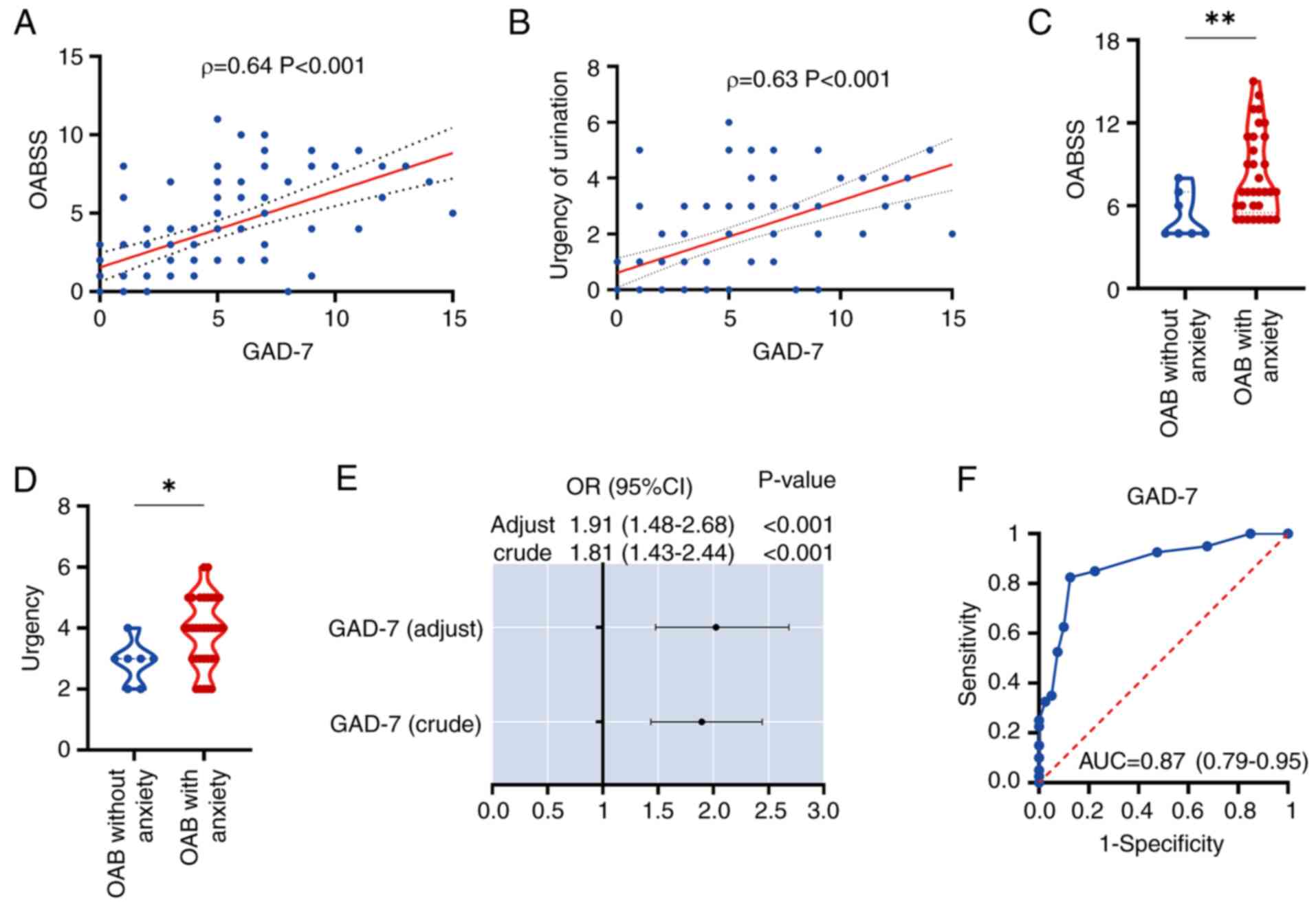
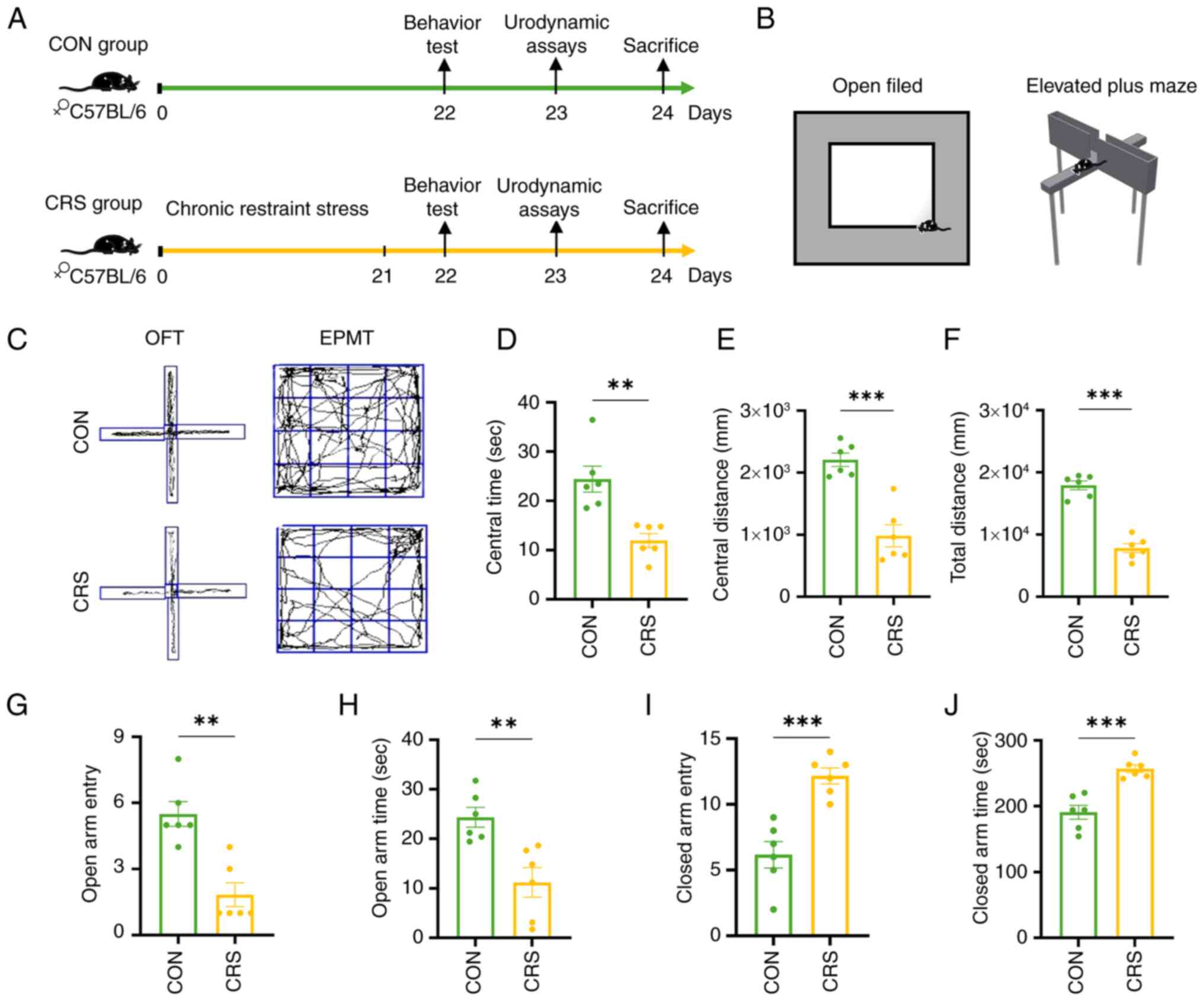
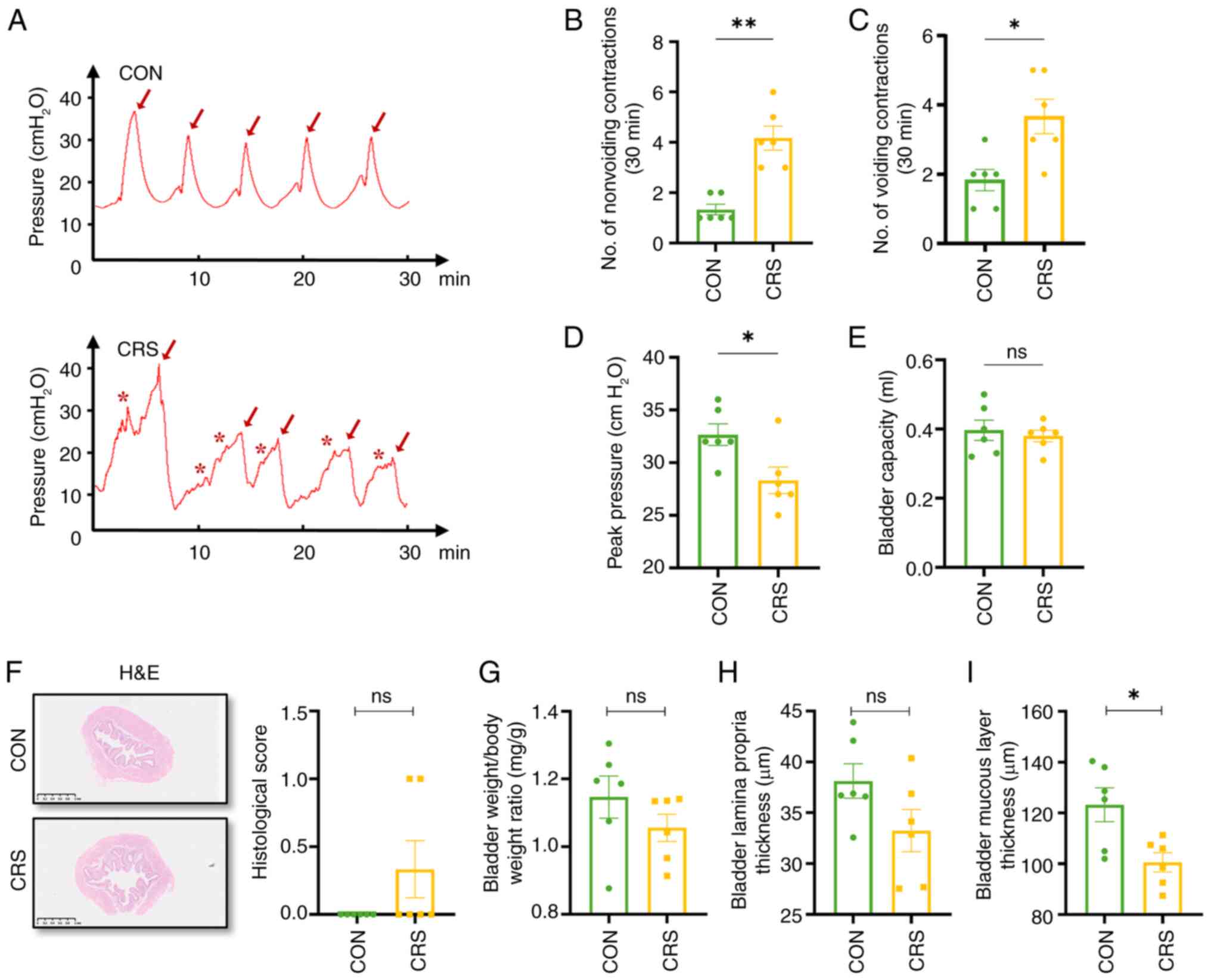
|
1
|
Nambiar AK, Arlandis S, Bø K,
Cobussen-Boekhorst H, Costantini E, de Heide M, Farag F, Groen J,
Karavitakis M, Lapitan MC, et al: European association of urology
guidelines on the diagnosis and management of female non-neurogenic
lower urinary tract symptoms. Part 1: Diagnostics, overactive
bladder, stress urinary incontinence, and mixed urinary
incontinence. Eur Urol. 82:49–59. 2022. View Article : Google Scholar : PubMed/NCBI
|
|
2
|
Peyronnet B, Mironska E, Chapple C,
Cardozo L, Oelke M, Dmochowski R, Amarenco G, Gamé X, Kirby R, Van
Der Aa F and Cornu JN: A comprehensive review of overactive bladder
pathophysiology: On the way to tailored treatment. Eur Urol.
75:988–1000. 2019. View Article : Google Scholar : PubMed/NCBI
|
|
3
|
Chen LC and Kuo HC: Current management of
refractory overactive bladder. Low Urin Tract Symptoms. 12:109–116.
2020. View Article : Google Scholar : PubMed/NCBI
|
|
4
|
Chow PM, Liu SP, Chuang YC, Lee KS, Yoo
TK, Liao L, Wang JY, Liu M, Sumarsono B and Jong JJ: The prevalence
and risk factors of nocturia in China, South Korea, and Taiwan:
Results from a cross-sectional, population-based study. World J
Urol. 36:1853–1862. 2018. View Article : Google Scholar : PubMed/NCBI
|
|
5
|
Huang S, Guo C, Tai S, Ding H, Mao D,
Huang J and Qian B: Prevalence of overactive bladder in Chinese
women: A systematic review and meta-analysis. PLoS One.
18:e02903962023. View Article : Google Scholar : PubMed/NCBI
|
|
6
|
Ninomiya S, Naito K, Nakanishi K and
Okayama H: Prevalence and risk factors of urinary incontinence and
overactive bladder in Japanese Women. Low Urin Tract Symptoms.
10:308–314. 2018. View Article : Google Scholar : PubMed/NCBI
|
|
7
|
Mckellar K, Bellin E, Schoenbaum E and
Abraham N: Prevalence, risk factors, and treatment for overactive
bladder in a racially diverse population. Urology. 126:70–75. 2019.
View Article : Google Scholar : PubMed/NCBI
|
|
8
|
Liu L: Exploring the association between
overactive bladder (OAB) and Cognitive decline: Mediation by
depression in elderly adults, a NHANES weighted analysis. Sci Rep.
15:36692025. View Article : Google Scholar : PubMed/NCBI
|
|
9
|
Van den Ende M, Apostolidis A, Sinha S,
Kheir GB, Mohamed-Ahmed R, Selai C, Abrams P and Vrijens D: Should
We Be treating affective symptoms, like anxiety and depression
which may be related to LUTD in patients with OAB? ICI-RS 2024.
Neurourol Urodyn. 44:661–667. 2025. View Article : Google Scholar : PubMed/NCBI
|
|
10
|
Akkoç Y, Bardak AN, Yıldız N, Özlü A,
Erhan B, Yürü B, Öztekin SNS, Türkoğlu MB, Paker N, Yumuşakhuylu Y,
et al: The relationship between severity of overactive bladder
symptoms and cognitive dysfunction, anxiety and depression in
female patients with multiple sclerosis. Mult Scler Relat Disord.
70:1044762023. View Article : Google Scholar : PubMed/NCBI
|
|
11
|
Zuluaga L, Caicedo JI, Mogollón MP,
Santander J, Bravo-Balado A, Trujillo CG, Diaz Ritter C, Rondón M
and Plata M: Anxiety and depression in association with lower
urinary tract symptoms: Results from the COBaLT study. World J
Urol. 41:1381–1388. 2023. View Article : Google Scholar : PubMed/NCBI
|
|
12
|
Sakakibara R, Ito T, Yamamoto T, Uchiyama
T, Yamanishi T, Kishi M, Tsuyusaki Y, Tateno F, Katsuragawa S and
Kuroki N: Depression, anxiety and the bladder. Low Urin Tract
Symptoms. 5:109–120. 2013. View Article : Google Scholar : PubMed/NCBI
|
|
13
|
Tanyeri MH, Buyukokuroglu ME, Tanyeri P,
Mutlu O, Ozturk A, Yavuz K and Kaya RK: Effects of mirabegron on
depression, anxiety, learning and memory in mice. An Acad Bras
Cienc. 93 (Suppl 4):e202106382021. View Article : Google Scholar : PubMed/NCBI
|
|
14
|
Bouayed J and Soulimani R: Evidence that
hydrogen peroxide, a component of oxidative stress, induces
high-anxiety-related behaviour in mice. Behav Brain Res.
359:292–297. 2019. View Article : Google Scholar : PubMed/NCBI
|
|
15
|
Showraki M, Showraki T and Brown K:
Generalized anxiety disorder: Revisited. Psychiatr Q. 91:905–914.
2020. View Article : Google Scholar : PubMed/NCBI
|
|
16
|
Sheng L, Yao X, Ye J, Wang Z, Chen Y, Li J
and Li M: Eriocitrin alleviates inflammation and oxidative stress
in subarachnoid hemorrhage by regulating DUSP14. Discov Med.
35:1134–1146. 2023. View Article : Google Scholar : PubMed/NCBI
|
|
17
|
Song J, Han K, Wang Y, Qu R, Liu Y, Wang
S, Wang Y, An Z, Li J, Wu H and Wu W: Microglial activation and
oxidative stress in PM2.5-induced neurodegenerative disorders.
Antioxidants (Basel). 11:14822022. View Article : Google Scholar : PubMed/NCBI
|
|
18
|
Wang Y, Tang Q, Duan P and Yang L:
Curcumin as a therapeutic agent for blocking NF-κB activation in
ulcerative colitis. Immunopharmacol Immunotoxicol. 40:476–482.
2018. View Article : Google Scholar : PubMed/NCBI
|
|
19
|
Bai R, Guo J, Ye XY, Xie Y and Xie T:
Oxidative stress: The core pathogenesis and mechanism of
Alzheimer's disease. Ageing Res Rev. 77:1016192022. View Article : Google Scholar : PubMed/NCBI
|
|
20
|
Sanabria-Castro A, Alape-Girón A,
Flores-Díaz M, Echeverri-McCandless A and Parajeles-Vindas A:
Oxidative stress involvement in the molecular pathogenesis and
progression of multiple sclerosis: A literature review. Rev
Neurosci. 35:355–371. 2024. View Article : Google Scholar : PubMed/NCBI
|
|
21
|
Toussaint A, Hüsing P, Gumz A, Wingenfeld
K, Härter M, Schramm E and Löwe B: Sensitivity to change and
minimal clinically important difference of the 7-item Generalized
Anxiety Disorder Questionnaire (GAD-7). J Affect Disord.
265:395–401. 2020. View Article : Google Scholar : PubMed/NCBI
|
|
22
|
National Research Council, . Committee for
the Update of the Guide for the Care and Use of Laboratory Animals:
Guide for the Care and Use of Laboratory Animals. 8th edition.
National Academies Press; Washington, DC: 2011
|
|
23
|
Campos AC, Fogaça MV, Aguiar DC and
Guimarães FS: Animal models of anxiety disorders and stress. Braz J
Psychiatry. 35 (Suppl 2):S101–S111. 2013. View Article : Google Scholar : PubMed/NCBI
|
|
24
|
Wang Q, Wu Q, Wang J, Chen Y, Zhang G,
Chen J, Zhao J and Wu P: Ketamine analog methoxetamine induced
inflammation and dysfunction of bladder in rats. Int J Mol Sci.
18:1172017. View Article : Google Scholar : PubMed/NCBI
|
|
25
|
Love MI, Huber W and Anders S: Moderated
estimation of fold change and dispersion for RNA-seq data with
DESeq2. Genome Biol. 15:5502014. View Article : Google Scholar : PubMed/NCBI
|
|
26
|
Yu G, Wang LG, Han Y and He QY:
clusterProfiler: An R package for comparing biological themes among
gene clusters. OMICS. 16:284–287. 2012. View Article : Google Scholar : PubMed/NCBI
|
|
27
|
Ashburner M, Ball CA, Blake JA, Botstein
D, Butler H, Cherry JM, Davis AP, Dolinski K, Dwight SS, Eppig JT,
et al: Gene Ontology: Tool for the unification of biology. The gene
ontology consortium. Nat Genet. 25:25–29. 2000. View Article : Google Scholar : PubMed/NCBI
|
|
28
|
Szklarczyk D, Franceschini A, Wyder S,
Forslund K, Heller D, Huerta-Cepas J, Simonovic M, Roth A, Santos
A, Tsafou KP, et al: STRING v10: Protein-protein interaction
networks, integrated over the tree of life. Nucleic Acids Res.
43:D447–D452. 2015. View Article : Google Scholar : PubMed/NCBI
|
|
29
|
Shannon P, Markiel A, Ozier O, Baliga NS,
Wang JT, Ramage D, Amin N, Schwikowski B and Ideker T: Cytoscape: A
software environment for integrated models of biomolecular
interaction networks. Genome Res. 13:2498–2504. 2003. View Article : Google Scholar : PubMed/NCBI
|
|
30
|
Livak KJ and Schmittgen TD: Analysis of
relative gene expression data using real-time quantitative PCR and
the 2(-Delta Delta C(T)) method. Methods. 25:402–408. 2001.
View Article : Google Scholar : PubMed/NCBI
|
|
31
|
Abrams P, Cardozo L, Fall M, Griffiths D,
Rosier P, Ulmsten U, Van Kerrebroeck P, Victor A and Wein A;
Standardisation Sub-Committee of the International Continence
Society, : The standardisation of terminology in lower urinary
tract function: Report from the standardisation sub-committee of
the International Continence Society. Urology. 61:37–49. 2003.
View Article : Google Scholar : PubMed/NCBI
|
|
32
|
Obaidul Islam M, Bacchetti T, Berrougui H,
Abdelouahed Khalil and Ferretti G: Effect of glycated HDL on
oxidative stress and cholesterol homeostasis in a human bladder
cancer cell line, J82. Exp Mol Pathol. 126:1047772022. View Article : Google Scholar : PubMed/NCBI
|
|
33
|
Chen J, Li Q, Hong Y, Zhou X, Yu C, Tian
X, Zhao J, Long C, Shen L, Wu S and Wei G: Inhibition of the NF-κB
signaling pathway alleviates pyroptosis in bladder epithelial cells
and neurogenic bladder fibrosis. Int J Mol Sci. 24:111602023.
View Article : Google Scholar : PubMed/NCBI
|
|
34
|
Fang T, Xiong J, Huang X, Fang X, Shen X,
Jiang Y and Lu H: Extracellular Hsp90 of Candida albicans
contributes to the virulence of the pathogen by activating the
NF-κB signaling pathway and inducing macrophage pyroptosis.
Microbiol Res. 290:1279642025. View Article : Google Scholar : PubMed/NCBI
|
|
35
|
Cheng HM, Xing M, Zhou YP, Zhang W, Liu Z,
Li L, Zheng Z, Ma Y, Li P, Liu X, et al: HSP90β promotes
osteoclastogenesis by dual-activation of cholesterol synthesis and
NF-κB signaling. Cell Death Differ. 30:673–686. 2023. View Article : Google Scholar : PubMed/NCBI
|
|
36
|
Knight S, Luft J, Nakagawa S and Katzman
WB: Comparisons of pelvic floor muscle performance, anxiety,
quality of life and life stress in women with dry overactive
bladder compared with asymptomatic women. BJU Int. 109:1685–1689.
2012. View Article : Google Scholar : PubMed/NCBI
|
|
37
|
Bou Kheir G, Verbakel I, Hervé F, Bauters
W, Abou Karam A, Holm-Larsen T, Van Laecke E and Everaert K: OAB
supraspinal control network, transition with age, and effect of
treatment: A systematic review. Neurourol Urodyn. 41:1224–1239.
2022. View Article : Google Scholar : PubMed/NCBI
|
|
38
|
Zhu J, Hu X, Dong X and Li L: Associations
between risk factors and overactive bladder: A Meta-analysis.
Female Pelvic Med Reconstr Surg. 25:238–246. 2019. View Article : Google Scholar : PubMed/NCBI
|
|
39
|
Zhong M and Wang Z: The Association
between anthropometric indices and overactive bladder (OAB): A
Cross-sectional study from the NHANES 2005–2018. Neurourol Urodyn.
44:345–359. 2025. View Article : Google Scholar : PubMed/NCBI
|
|
40
|
Karjalainen PK, Tolppanen A-M, Mattsson
NK, Wihersaari OAE, Jalkanen JT and Nieminen K: Pelvic organ
prolapse surgery and overactive bladder symptoms-a population-based
cohort (FINPOP). Int Urogynecol J. 33:95–105. 2022. View Article : Google Scholar : PubMed/NCBI
|
|
41
|
Palma T, Raimondi M, Souto S, Fozzatti C,
Palma P and Riccetto C: Prospective study of prevalence of
overactive bladder symptoms and child-bearing in women of
reproductive age. J Obstet Gynaecol. 39:1324–1329. 2013. View Article : Google Scholar : PubMed/NCBI
|
|
42
|
Lai HH, Rawal A, Shen B and Vetter J: The
relationship between anxiety and overactive bladder or urinary
incontinence symptoms in the clinical population. Urology.
98:50–57. 2016. View Article : Google Scholar : PubMed/NCBI
|
|
43
|
Melotti IGR, Juliato CRT, Tanaka M and
Riccetto CLZ: Severe depression and anxiety in women with
overactive bladder. Neurourol Urodyn. 37:223–228. 2018. View Article : Google Scholar : PubMed/NCBI
|
|
44
|
Mehr AA, Kreder KJ, Lutgendorf SK, Ten
Eyck P, Greimann ES and Bradley CS: Daily symptom associations for
urinary urgency and anxiety, depression and stress in women with
overactive bladder. Int Urogynecol J. 33:841–850. 2022. View Article : Google Scholar : PubMed/NCBI
|
|
45
|
Sezginer EK, Yilmaz-Oral D, Lokman U,
Nebioglu S, Aktan F and Gur S: Effects of varying degrees of
partial bladder outlet obstruction on urinary bladder function of
rats: A novel link to inflammation, oxidative stress and hypoxia.
Low Urin Tract Symptoms. 11:O193–O201. 2019.PubMed/NCBI
|
|
46
|
Dunton CL, Purves JT, Hughes FM and
Nagatomi J: BOO induces fibrosis and EMT in urothelial cells which
can be recapitulated in vitro through elevated storage and voiding
pressure cycles. Int Urol Nephrol. 53:2007–2018. 2021. View Article : Google Scholar : PubMed/NCBI
|
|
47
|
Niemczyk G, Fus L, Czarzasta K, Jesion A,
Radziszewski P, Gornicka B and Cudnoch-Jedrzejewska A: Expression
of toll-like receptors in the animal model of bladder outlet
obstruction. Biomed Res Int. 2020:66323592020. View Article : Google Scholar : PubMed/NCBI
|
|
48
|
Wishahi M, Hassan S, Kamal N, Badawy M and
Hafiz E: Is bladder outlet obstruction rat model to induce
overactive bladder (OAB) has similarity to human OAB? Research on
the events in smooth muscle, collagen, interstitial cell and
telocyte distribution. BMC Res Notes. 17:222024. View Article : Google Scholar : PubMed/NCBI
|
|
49
|
Kang YJ, Jin LH, Park CS, Shin HY, Yoon SM
and Lee T: Early sequential changes in bladder function after
partial bladder outlet obstruction in awake Sprague-Dawley rats:
Focus on the decompensated bladder. Korean J Urol. 52:835–841.
2011. View Article : Google Scholar : PubMed/NCBI
|
|
50
|
Shen JD, Chen SJ, Chen HY, Chiu KY, Chen
YH and Chen WC: Review of animal models to study urinary bladder
function. Biology (Basel). 10:13162021.PubMed/NCBI
|
|
51
|
Ye F, Dong MC, Xu CX, Jiang N, Chang Q,
Liu XM and Pan RL: Effects of different chronic restraint stress
periods on anxiety- and depression-like behaviors and
tryptophan-kynurenine metabolism along the brain-gut axis in
C57BL/6N mice. Eur J Pharmacol. 965:1763012024. View Article : Google Scholar : PubMed/NCBI
|
|
52
|
Brieger K, Schiavone S, Miller FJ and
Krause KH: Reactive oxygen species: From health to disease. Swiss
Med Wkly. 142:w136592012. View Article : Google Scholar : PubMed/NCBI
|
|
53
|
Rauf A, Khalil AA, Awadallah S, Khan SA,
Abu-Izneid T, Kamran M, Hemeg HA, Mubarak MS, Khalid A and
Wilairatana P: Reactive oxygen species in biological systems:
Pathways, associated diseases, and potential inhibitors-A review.
Food Sci Nutr. 12:675–693. 2024. View Article : Google Scholar : PubMed/NCBI
|
|
54
|
Wang P, Liu WC, Han C, Wang S, Bai MY and
Song CP: Reactive oxygen species: Multidimensional regulators of
plant adaptation to abiotic stress and development. J Integr Plant
Biol. 66:330–367. 2024. View Article : Google Scholar : PubMed/NCBI
|
|
55
|
Ahola S and Langer T: Ferroptosis in
mitochondrial cardiomyopathy. Trends Cell Biol. 34:150–160. 2024.
View Article : Google Scholar : PubMed/NCBI
|
|
56
|
Gohil D, Sarker AH and Roy R: Base
excision repair: Mechanisms and impact in biology, disease, and
medicine. Int J Mol Sci. 24:141862023. View Article : Google Scholar : PubMed/NCBI
|
|
57
|
Murphy MP, Bayir H, Belousov V, Chang CJ,
Davies KJA, Davies MJ, Dick TP, Finkel T, Forman HJ,
Janssen-Heininger Y, et al: Guidelines for measuring reactive
oxygen species and oxidative damage in cells and in vivo. Nat
Metab. 4:651–662. 2022. View Article : Google Scholar : PubMed/NCBI
|
|
58
|
Burtscher J, Niedermeier M, Hüfner K, van
den Burg E, Kopp M, Stoop R, Burtscher M, Gatterer H and Millet GP:
The interplay of hypoxic and mental stress: Implications for
anxiety and depressive disorders. Neurosci Biobehav Rev.
138:1047182022. View Article : Google Scholar : PubMed/NCBI
|
|
59
|
Martinez-Moral MP and Kannan K: Analysis
of 19 urinary biomarkers of oxidative stress, nitrative stress,
metabolic disorders, and inflammation using liquid
chromatography-tandem mass spectrometry. Anal Bioanal Chem.
414:2103–2116. 2022. View Article : Google Scholar : PubMed/NCBI
|
|
60
|
Chaudhary P, Janmeda P, Docea AO,
Yeskaliyeva B, Abdull Razis AF, Modu B, Calina D and Sharifi-Rad J:
Oxidative stress, free radicals and antioxidants: Potential
crosstalk in the pathophysiology of human diseases. Front Chem.
10:11581982023. View Article : Google Scholar : PubMed/NCBI
|
|
61
|
Wu YH, Chueh KS, Chuang SM, Long CY, Lu JH
and Juan YS: Bladder hyperactivity induced by oxidative stress and
bladder ischemia: A review of treatment strategies with
antioxidants. Int J Mol Sci. 22:60142021. View Article : Google Scholar : PubMed/NCBI
|
|
62
|
Xue J, Zhou Z, Zhu Z, Sun Q, Zhu Y and Wu
P: A high salt diet impairs the bladder epithelial barrier and
activates the NLRP3 and NF-κB signaling pathways to induce an
overactive bladder in vivo. Exp Ther Med. 28:3622024.
View Article : Google Scholar : PubMed/NCBI
|
|
63
|
Chen B, Piel WH, Gui L, Bruford E and
Monteiro A: The HSP90 family of genes in the human genome: Insights
into their divergence and evolution. Genomics. 86:627–637. 2005.
View Article : Google Scholar : PubMed/NCBI
|
|
64
|
Yang S, Nie T, She H, Tao K, Lu F, Hu Y,
Huang L, Zhu L, Feng D, He D, et al: Regulation of TFEB nuclear
localization by HSP90AA1 promotes autophagy and longevity.
Autophagy. 19:822–838. 2023. View Article : Google Scholar : PubMed/NCBI
|
|
65
|
Zuehlke AD, Beebe K, Neckers L and Prince
T: Regulation and function of the human HSP90AA1 gene. Gene.
570:8–16. 2015. View Article : Google Scholar : PubMed/NCBI
|
|
66
|
Sharma S and Kumar P: Dissecting the
functional significance of HSP90AB1 and other heat shock proteins
in countering glioblastomas and ependymomas using omics analysis
and drug prediction using virtual screening. Neuropeptides.
102:1023832023. View Article : Google Scholar : PubMed/NCBI
|
|
67
|
Huang X, Zhang W, Yang N, Zhang Y, Qin T,
Ruan H, Zhang Y, Tian C, Mo X, Tang W, et al: Identification of
HSP90B1 in pan-cancer hallmarks to aid development of a potential
therapeutic target. Mol Cancer. 23:192024. View Article : Google Scholar : PubMed/NCBI
|
|
68
|
Liu C, Zhao W, Su J, Chen X, Zhao F, Fan
J, Li X, Liu X, Zou L, Zhang M, et al: HSP90AA1 interacts with CSFV
NS5A protein and regulates CSFV replication via the JAK/STAT and
NF-κB signaling pathway. Front Immunol. 13:10318682022. View Article : Google Scholar : PubMed/NCBI
|
|
69
|
Liu H, Zhang Z, Huang Y, Wei W, Ning S, Li
J, Liang X, Liu K and Zhang L: Plasma HSP90AA1 predicts the risk of
breast cancer onset and distant metastasis. Front Cell Dev Biol.
9:6395962021. View Article : Google Scholar : PubMed/NCBI
|
|
70
|
Tang F, Li Y, Pan M, Wang Z, Lu T, Liu C,
Zhou X and Hu G: HSP90AA1 promotes lymphatic metastasis of
hypopharyngeal squamous cell carcinoma by regulating
epithelial-mesenchymal transition. Oncol Res. 31:787–803. 2023.
View Article : Google Scholar : PubMed/NCBI
|
|
71
|
Xiao X, Wang W, Li Y, Yang D, Li X, Shen
C, Liu Y, Ke X, Guo S and Guo Z: HSP90AA1-mediated autophagy
promotes drug resistance in osteosarcoma. J Exp Clin Cancer Res.
37:2012018. View Article : Google Scholar : PubMed/NCBI
|
|
72
|
Wei D, Tian X, Zhu L, Wang H and Sun C:
USP14 governs CYP2E1 to promote nonalcoholic fatty liver disease
through deubiquitination and stabilization of HSP90AA1. Cell Death
Dis. 14:5662023. View Article : Google Scholar : PubMed/NCBI
|
|
73
|
Li S, Zhou H, Liang Y, Yang Q, Zhang J,
Shen W and Lei L: Integrated analysis of transcriptome-wide
m6A methylation in a Cd-induced kidney injury rat model.
Ecotoxicol Environ Saf. 256:1149032023. View Article : Google Scholar : PubMed/NCBI
|
|
74
|
Pichler R, Diem G, Hackl H, Koutník J,
Mertens LS, D Andrea D, Pradere B, Soria F, Mari A, Laukhtina E, et
al: Intravesical BCG in bladder cancer induces innate immune
responses against SARS-CoV-2. Front Immunol. 14:12021572023.
View Article : Google Scholar : PubMed/NCBI
|