Spandidos Publications Logo
  • About
    • About Spandidos
    • Aims and Scopes
    • Abstracting and Indexing
    • Editorial Policies
    • Reprints and Permissions
    • Job Opportunities
    • Terms and Conditions
    • Contact
  • Journals
    • All Journals
    • Oncology Letters
      • Oncology Letters
      • Information for Authors
      • Editorial Policies
      • Editorial Board
      • Aims and Scope
      • Abstracting and Indexing
      • Bibliographic Information
      • Archive
    • International Journal of Oncology
      • International Journal of Oncology
      • Information for Authors
      • Editorial Policies
      • Editorial Board
      • Aims and Scope
      • Abstracting and Indexing
      • Bibliographic Information
      • Archive
    • Molecular and Clinical Oncology
      • Molecular and Clinical Oncology
      • Information for Authors
      • Editorial Policies
      • Editorial Board
      • Aims and Scope
      • Abstracting and Indexing
      • Bibliographic Information
      • Archive
    • Experimental and Therapeutic Medicine
      • Experimental and Therapeutic Medicine
      • Information for Authors
      • Editorial Policies
      • Editorial Board
      • Aims and Scope
      • Abstracting and Indexing
      • Bibliographic Information
      • Archive
    • International Journal of Molecular Medicine
      • International Journal of Molecular Medicine
      • Information for Authors
      • Editorial Policies
      • Editorial Board
      • Aims and Scope
      • Abstracting and Indexing
      • Bibliographic Information
      • Archive
    • Biomedical Reports
      • Biomedical Reports
      • Information for Authors
      • Editorial Policies
      • Editorial Board
      • Aims and Scope
      • Abstracting and Indexing
      • Bibliographic Information
      • Archive
    • Oncology Reports
      • Oncology Reports
      • Information for Authors
      • Editorial Policies
      • Editorial Board
      • Aims and Scope
      • Abstracting and Indexing
      • Bibliographic Information
      • Archive
    • Molecular Medicine Reports
      • Molecular Medicine Reports
      • Information for Authors
      • Editorial Policies
      • Editorial Board
      • Aims and Scope
      • Abstracting and Indexing
      • Bibliographic Information
      • Archive
    • World Academy of Sciences Journal
      • World Academy of Sciences Journal
      • Information for Authors
      • Editorial Policies
      • Editorial Board
      • Aims and Scope
      • Abstracting and Indexing
      • Bibliographic Information
      • Archive
    • International Journal of Functional Nutrition
      • International Journal of Functional Nutrition
      • Information for Authors
      • Editorial Policies
      • Editorial Board
      • Aims and Scope
      • Abstracting and Indexing
      • Bibliographic Information
      • Archive
    • International Journal of Epigenetics
      • International Journal of Epigenetics
      • Information for Authors
      • Editorial Policies
      • Editorial Board
      • Aims and Scope
      • Abstracting and Indexing
      • Bibliographic Information
      • Archive
    • Medicine International
      • Medicine International
      • Information for Authors
      • Editorial Policies
      • Editorial Board
      • Aims and Scope
      • Abstracting and Indexing
      • Bibliographic Information
      • Archive
  • Articles
  • Information
    • Information for Authors
    • Information for Reviewers
    • Information for Librarians
    • Information for Advertisers
    • Conferences
  • Language Editing
Spandidos Publications Logo
  • About
    • About Spandidos
    • Aims and Scopes
    • Abstracting and Indexing
    • Editorial Policies
    • Reprints and Permissions
    • Job Opportunities
    • Terms and Conditions
    • Contact
  • Journals
    • All Journals
    • Biomedical Reports
      • Information for Authors
      • Editorial Policies
      • Editorial Board
      • Aims and Scope
      • Abstracting and Indexing
      • Bibliographic Information
      • Archive
    • Experimental and Therapeutic Medicine
      • Information for Authors
      • Editorial Policies
      • Editorial Board
      • Aims and Scope
      • Abstracting and Indexing
      • Bibliographic Information
      • Archive
    • International Journal of Epigenetics
      • Information for Authors
      • Editorial Policies
      • Editorial Board
      • Aims and Scope
      • Abstracting and Indexing
      • Bibliographic Information
      • Archive
    • International Journal of Functional Nutrition
      • Information for Authors
      • Editorial Policies
      • Editorial Board
      • Aims and Scope
      • Abstracting and Indexing
      • Bibliographic Information
      • Archive
    • International Journal of Molecular Medicine
      • Information for Authors
      • Editorial Policies
      • Editorial Board
      • Aims and Scope
      • Abstracting and Indexing
      • Bibliographic Information
      • Archive
    • International Journal of Oncology
      • Information for Authors
      • Editorial Policies
      • Editorial Board
      • Aims and Scope
      • Abstracting and Indexing
      • Bibliographic Information
      • Archive
    • Medicine International
      • Information for Authors
      • Editorial Policies
      • Editorial Board
      • Aims and Scope
      • Abstracting and Indexing
      • Bibliographic Information
      • Archive
    • Molecular and Clinical Oncology
      • Information for Authors
      • Editorial Policies
      • Editorial Board
      • Aims and Scope
      • Abstracting and Indexing
      • Bibliographic Information
      • Archive
    • Molecular Medicine Reports
      • Information for Authors
      • Editorial Policies
      • Editorial Board
      • Aims and Scope
      • Abstracting and Indexing
      • Bibliographic Information
      • Archive
    • Oncology Letters
      • Information for Authors
      • Editorial Policies
      • Editorial Board
      • Aims and Scope
      • Abstracting and Indexing
      • Bibliographic Information
      • Archive
    • Oncology Reports
      • Information for Authors
      • Editorial Policies
      • Editorial Board
      • Aims and Scope
      • Abstracting and Indexing
      • Bibliographic Information
      • Archive
    • World Academy of Sciences Journal
      • Information for Authors
      • Editorial Policies
      • Editorial Board
      • Aims and Scope
      • Abstracting and Indexing
      • Bibliographic Information
      • Archive
  • Articles
  • Information
    • For Authors
    • For Reviewers
    • For Librarians
    • For Advertisers
    • Conferences
  • Language Editing
Login Register Submit
  • This site uses cookies
  • You can change your cookie settings at any time by following the instructions in our Cookie Policy. To find out more, you may read our Privacy Policy.

    I agree
Search articles by DOI, keyword, author or affiliation
Search
Advanced Search
presentation
Molecular Medicine Reports
Join Editorial Board Propose a Special Issue
Print ISSN: 1791-2997 Online ISSN: 1791-3004
Journal Cover
March-2026 Volume 33 Issue 3

Full Size Image

Sign up for eToc alerts
Recommend to Library

Journals

International Journal of Molecular Medicine

International Journal of Molecular Medicine

International Journal of Molecular Medicine is an international journal devoted to molecular mechanisms of human disease.

International Journal of Oncology

International Journal of Oncology

International Journal of Oncology is an international journal devoted to oncology research and cancer treatment.

Molecular Medicine Reports

Molecular Medicine Reports

Covers molecular medicine topics such as pharmacology, pathology, genetics, neuroscience, infectious diseases, molecular cardiology, and molecular surgery.

Oncology Reports

Oncology Reports

Oncology Reports is an international journal devoted to fundamental and applied research in Oncology.

Experimental and Therapeutic Medicine

Experimental and Therapeutic Medicine

Experimental and Therapeutic Medicine is an international journal devoted to laboratory and clinical medicine.

Oncology Letters

Oncology Letters

Oncology Letters is an international journal devoted to Experimental and Clinical Oncology.

Biomedical Reports

Biomedical Reports

Explores a wide range of biological and medical fields, including pharmacology, genetics, microbiology, neuroscience, and molecular cardiology.

Molecular and Clinical Oncology

Molecular and Clinical Oncology

International journal addressing all aspects of oncology research, from tumorigenesis and oncogenes to chemotherapy and metastasis.

World Academy of Sciences Journal

World Academy of Sciences Journal

Multidisciplinary open-access journal spanning biochemistry, genetics, neuroscience, environmental health, and synthetic biology.

International Journal of Functional Nutrition

International Journal of Functional Nutrition

Open-access journal combining biochemistry, pharmacology, immunology, and genetics to advance health through functional nutrition.

International Journal of Epigenetics

International Journal of Epigenetics

Publishes open-access research on using epigenetics to advance understanding and treatment of human disease.

Medicine International

Medicine International

An International Open Access Journal Devoted to General Medicine.

Journal Cover
March-2026 Volume 33 Issue 3

Full Size Image

Sign up for eToc alerts
Recommend to Library

  • Article
  • Citations
    • Cite This Article
    • Download Citation
    • Create Citation Alert
    • Remove Citation Alert
    • Cited By
  • Similar Articles
    • Related Articles (in Spandidos Publications)
    • Similar Articles (Google Scholar)
    • Similar Articles (PubMed)
  • Download PDF
  • Download XML
  • View XML
Article Open Access

HMGN2 induces pyroptosis in tumour cells by modulating the STT3B/PD‑L1/caspase‑1/GSDMD axis

  • Authors:
    • Wenwen Han
    • Hongli Chen
    • Bomiao Cui
    • Jiao Chen
    • Ping Zhang
    • Yun Feng
  • View Affiliations / Copyright

    Affiliations: State Key Laboratory of Oral Diseases and National Clinical Research Centre for Oral Diseases and West China Hospital of Stomatology, Sichuan University, Chengdu, Sichuan 610041, P.R. China
    Copyright: © Han et al. This is an open access article distributed under the terms of Creative Commons Attribution License.
  • Article Number: 97
    |
    Published online on: January 22, 2026
       https://doi.org/10.3892/mmr.2026.13807
  • Expand metrics +
Metrics: Total Views: 0 (Spandidos Publications: | PMC Statistics: )
Metrics: Total PDF Downloads: 0 (Spandidos Publications: | PMC Statistics: )
Cited By (CrossRef): 0 citations Loading Articles...

This article is mentioned in:


Abstract

High‑mobility group nucleosomal‑binding domain 2 (HMGN2) is an abundant conserved protein that acts as a non‑histone nuclear DNA‑binding protein. HMGN2 can be released by activated peripheral blood mononuclear cells, CD8+ T cells and γδ T cells, and can induce tumour cell apoptosis. In the present study, receptors of HMGN2 were detected on tumour cell membranes and the mechanism by which HMGN2 induces tumour cell apoptosis was examined. Flow cytometry was used to determine the degree of HMGN2‑induced apoptosis. To identify notable HMGN2 receptors on tumour cells, the present study used immunoprecipitation and mass spectrometry (IP/MS) to identify protein complexes. Western blotting and immunofluorescence were used to confirm interactions between HMGN2 and oligosaccharyltransferase subunit STT3B (STT3B), and to elucidate the downstream regulatory mechanism of HMGN2. The predictive tools ZDOCK and AlphaFold3 were used to determine the binding conformation of HMGN2 to STT3B. HMGN2 was shown to bind to the membrane and induce the apoptosis of CAL‑27 tumour cells. STT3B was identified via IP/MS as a receptor of HMGN2 on the CAL‑27 membrane and subsequently identified as an important receptor of HMGN2 via an anti‑STT3B blocking assay. ZDOCK and AlphaFold3 analyses revealed that HMGN2 and STT3B formed a stable protein docking model. After incubation with HMGN2, the expression of programmed cell death 1 ligand 1 (PD‑L1)/caspase‑1/gasdermin D (GSDMD) axis components was significantly increased, and PD‑L1 was translocated into the nucleus from the membrane of CAL‑27 cells. The results of the present study indicated that extracellular HMGN2 induced pyroptosis in tumour cells by modulating the STT3B/PD‑L1/caspase‑1/GSDMD axis.

View Figures

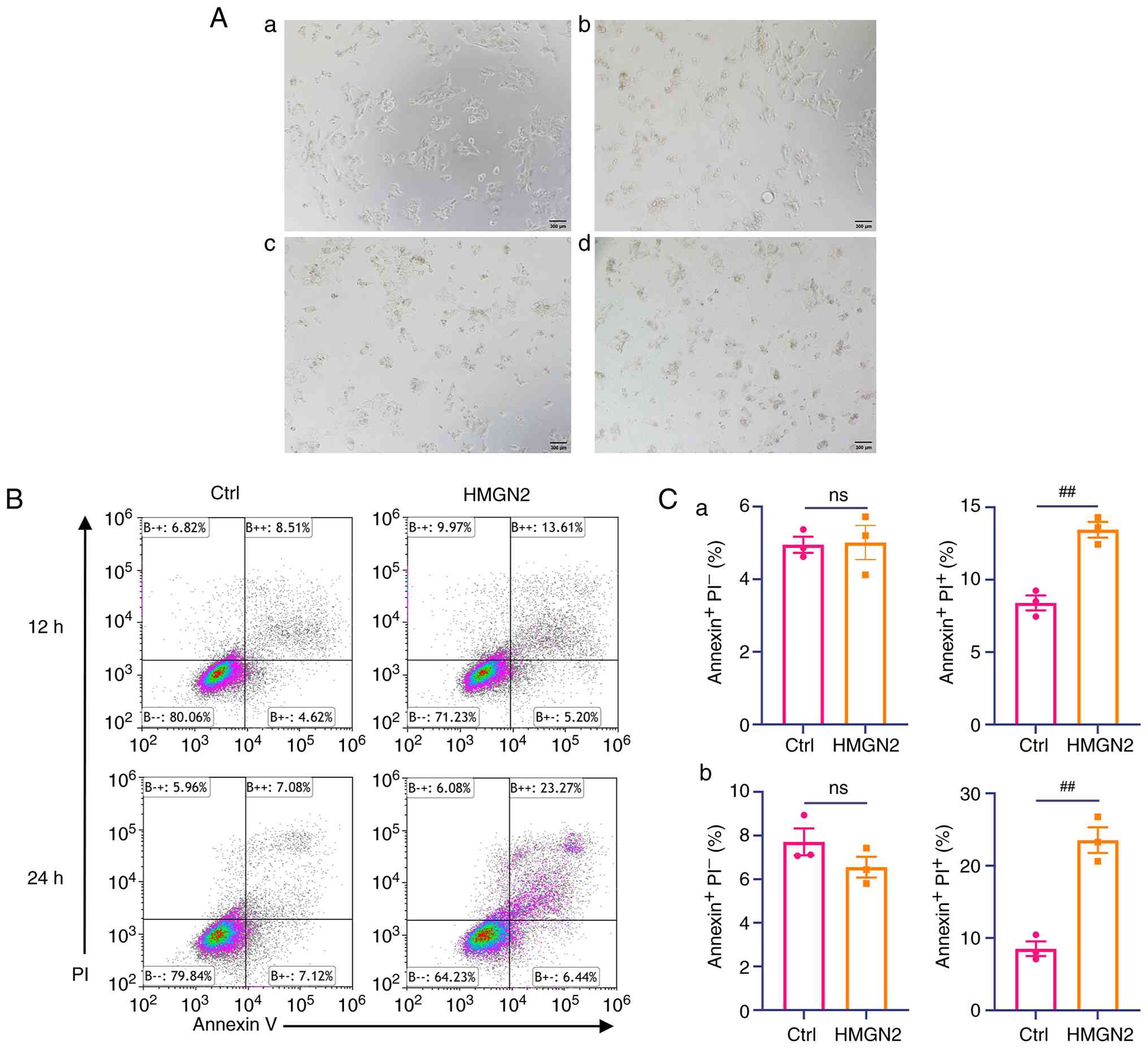
Figure 1

HMGN2 induces apoptosis in CAL-27
cells. (A) CAL-27 cells were observed under a bright-field
microscope after 24 h of incubation with (Aa) 0, (Ab) 5, (Ac) 10 or
(A-d) 20 µg/ml HMGN2. (B) Representative flow cytometry plots
showing apoptosis of CAL-27 cells following incubation with 20
µg/ml HMGN2. (C) Relative percentage of apoptotic CAL-27 cells
treated with HMGN2 for (Ca) 12 and (Cb) 24 h. The control group was
treated with PBS. Annexin+ PI− represents
cells in the early phase of apoptosis and Annexin+
PI+ represents cells in the last phase of apoptosis.
Scale bar, 300 µm. Data are presented as the mean ± SEM (n=3).
##P<0.01 vs. control. Ctrl, control; HMGN2,
high-mobility group nucleosomal-binding domain 2; ns, not
significant; PI, propidium iodide.

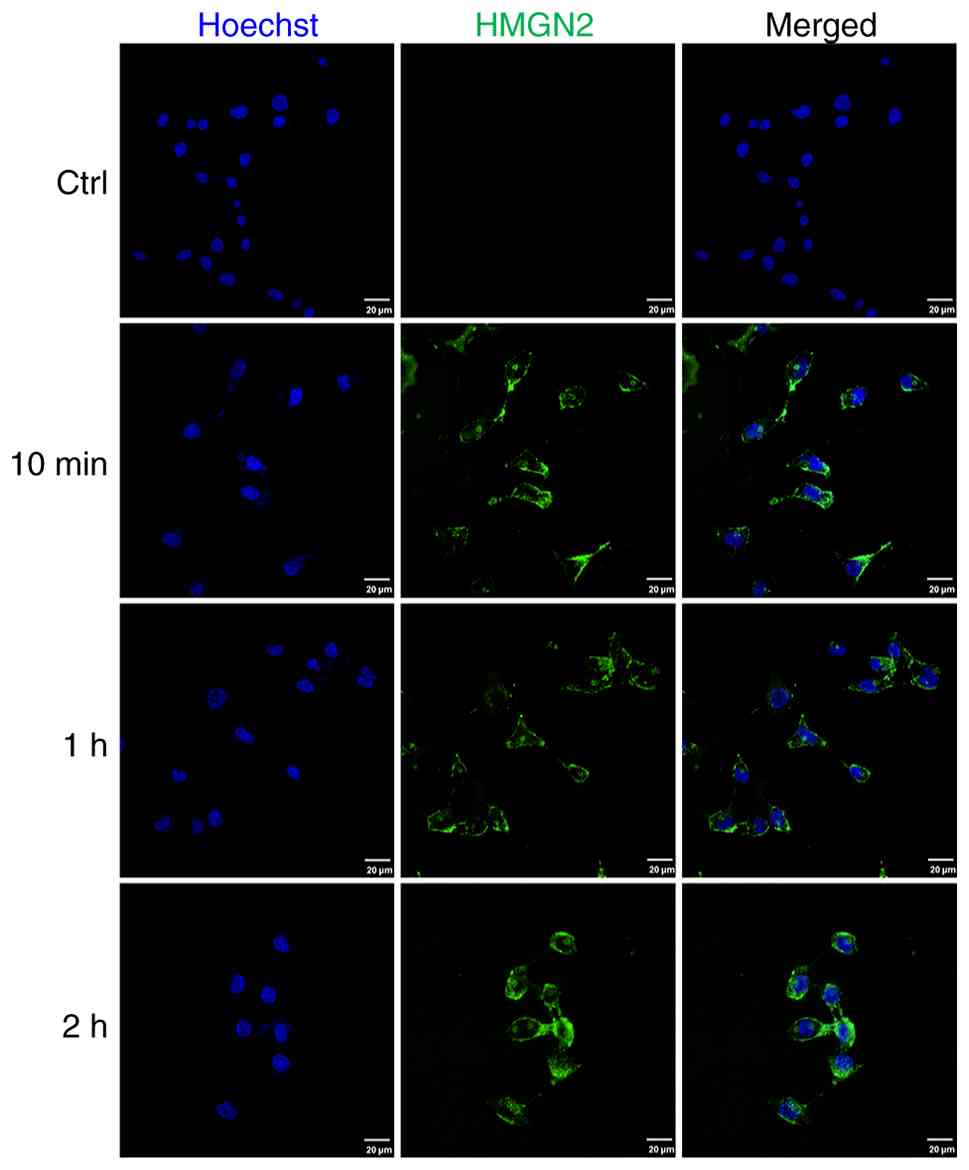
Figure 2

Microscopic imaging of CAL-27 cells
after incubation with FITC-labelled HMGN2. HMGN2 was translocated
into CAL-27 cells through binding to the cell membrane after
incubation with 20 µg/ml FITC-labelled HMGN2 for 10 min, 1 or 2 h.
Scale bar, 20 µm. Ctrl, control; HMGN2, high-mobility group
nucleosomal-binding domain 2.

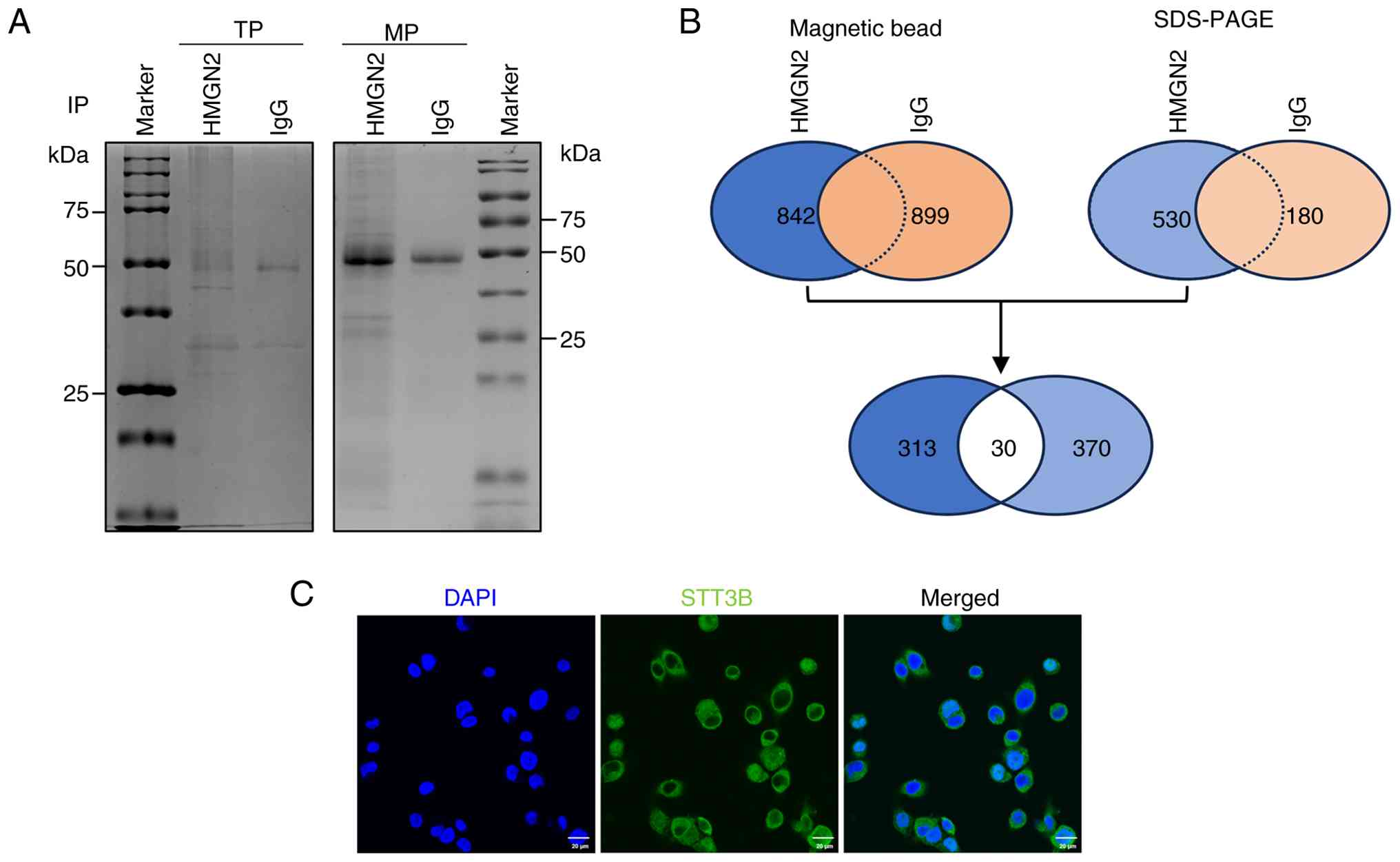
Figure 3

Predicted receptors of HMGN2
determined by IP/MS. (A) IP/MS analysis of HMGN2-associated
proteins. The bead-peptide eluate was resolved by SDS-PAGE and
Coomassie blue staining. (B) Numbers of proteins identified via
IP/MS from magnetic bead-bound antibody-protein complexes and via
SDS-PAGE gel separation. (C) Subcellular localization of STT3B in
CAL-27 cells. Scale bar, 10 µm. IP, immunoprecipitation; MS, mass
spectrometry; TP, total protein; MP, membrane protein; HMGN2,
high-mobility group nucleosomal-binding domain 2; STT3B,
oligosaccharyltransferase subunit STT3B.

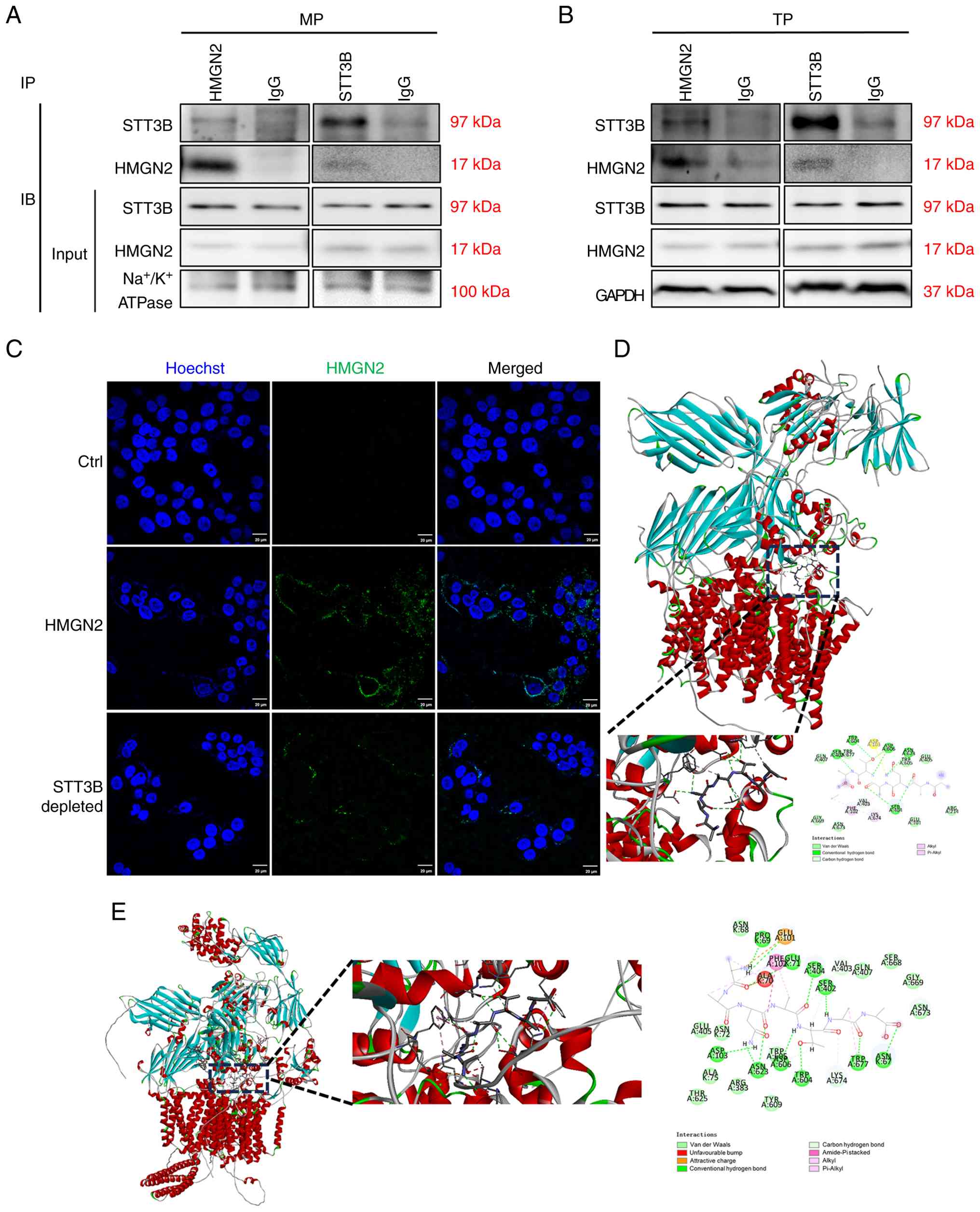
Figure 4

STT3B is an important receptor of
HMGN2 on CAL-27 cell membranes. (A and B) CAL-27 cells were
incubated with 20 µg/ml HMGN2 (experimental group) or with PBS
(control group). Co-IP was carried out using anti-HMGN2 or
anti-STT3B antibodies against (A) MP and (B) TP. Immunocomplexes
were subsequently detected by IB using anti-STT3B or anti-HMGN2
antibodies. (C) CAL-27 cells were observed under a fluorescence
microscope after depletion of STT3B using 10 µg/ml anti-STT3B
antibody. Scale bar, 20 µm. (D) Rigid protein-protein docking
prediction for the interaction between STT3B and HMGN2. (E)
Interaction structure of STT3B and HMGN2 simulated in AlphaFold3.
Ctrl, control; IB, immunoblotting; IP, immunoprecipitation; TP,
total protein; MP, membrane protein; STT3B,
oligosaccharyltransferase subunit STT3B; HMGN2, high-mobility group
nucleosomal-binding domain 2.

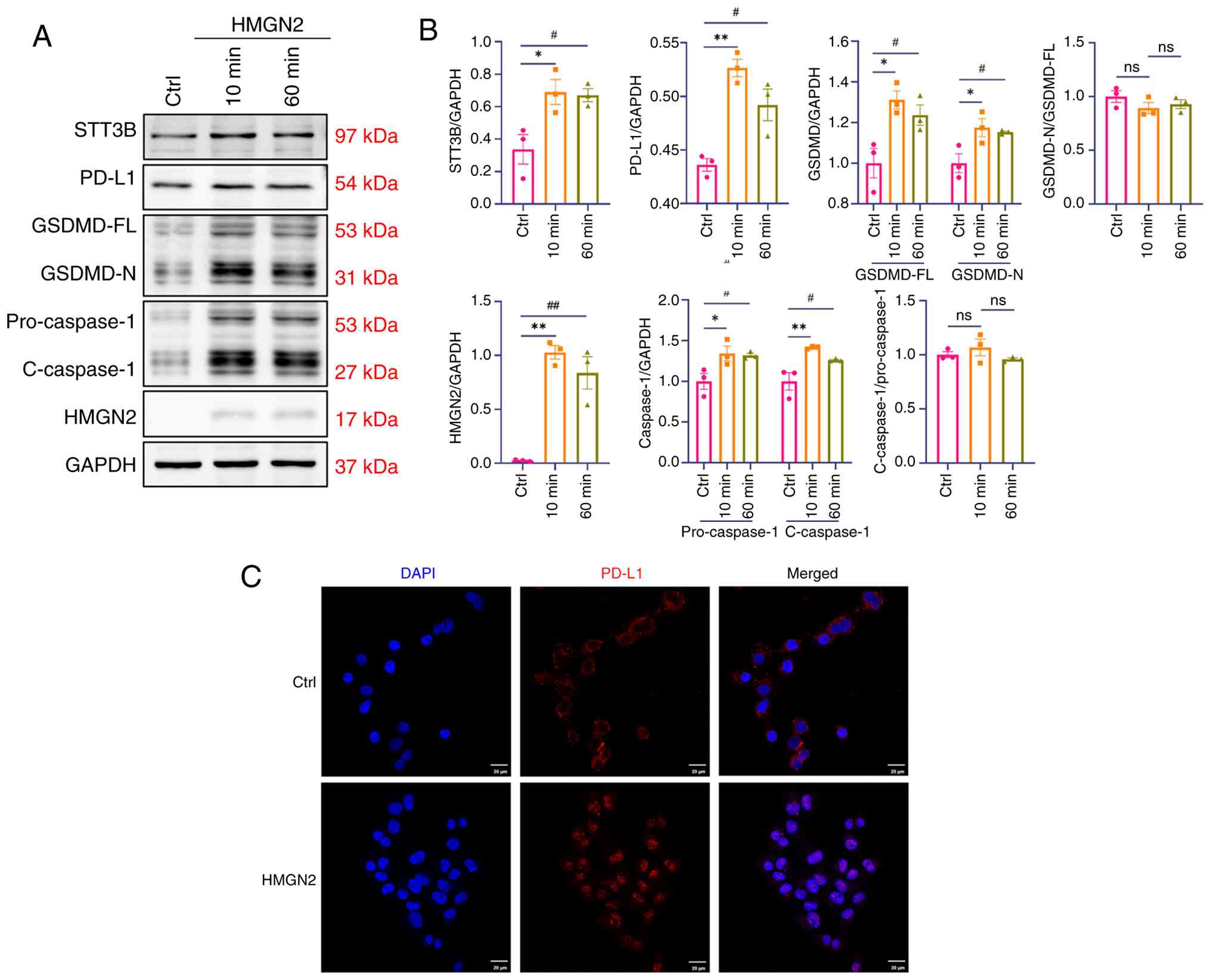
Figure 5

HMGN2 induces pyroptosis in CAL-27
cells through the PD-L1/caspase-1/GSDMD axis. (A) Representative
western blot analysis of the PD-L1/caspase-1/GSDMD axis, and the
HMGN2 and STT3B proteins in CAL-27 cells after incubation with 20
µg/ml HMGN2 for 10 or 60 min. The Ctrl group was treated with PBS.
(B) Semi-quantitative analyses of the PD-L1/caspase-1/GSDMD axis,
and the HMGN2 and STT3B proteins in CAL-27 cells (n=3). (C)
Representative images showing PD-L1 translocation in CAL-27 cells
treated with HMGN2. The Ctrl group was treated with PBS. Scale bar,
20 µm. Data are presented as the mean ± SEM. *P<0.05 and
**P<0.01; #P<0.05 and ##P<0.01.
Ctrl, control; ns, not significant; HMGN2, high-mobility group
nucleosomal-binding domain 2; PD-L1, programmed cell death 1 ligand
1; GSDMD-N, N-terminal domain of gasdermin D; GSDMD-FL, full-length
gasdermin D; STT3B, oligosaccharyltransferase subunit STT3B;
C-caspase-1, cleaved caspase-1.
View References

1 

Craig JM, Turner TH, Harrell JC and Clevenger CV: Prolactin drives a dynamic STAT5A/HDAC6/HMGN2 Cis-regulatory landscape exploitable in ER+ breast cancer. Endocrinology. 162:bqab0362021. View Article : Google Scholar : PubMed/NCBI

2 

He B, Zhu I, Postnikov Y, Furusawa T, Jenkins L, Nanduri R, Bustin M and Landsman D: Multiple epigenetic factors co-localize with HMGN proteins in A-compartment chromatin. Epigenetics Chromatin. 15:232022. View Article : Google Scholar : PubMed/NCBI

3 

Zhang S, Postnikov Y, Lobanov A, Furusawa T, Deng T and Bustin M: H3K27ac nucleosomes facilitate HMGN localization at regulatory sites to modulate chromatin binding of transcription factors. Commun Biol. 5:1592022. View Article : Google Scholar : PubMed/NCBI

4 

Eliason S, Su D, Pinho F, Sun Z, Zhang Z, Li X, Sweat M, Venugopalan SR, He B, Bustin M and Amendt BA: HMGN2 represses gene transcription via interaction with transcription factors Lef-1 and Pitx2 during amelogenesis. J Biol Chem. 298:1022952022. View Article : Google Scholar : PubMed/NCBI

5 

Su L, Hu A, Luo Y, Zhou W, Zhang P and Feng Y: HMGN2, a new anti-tumor effector molecule of CD8+ T cells. Mol Cancer. 13:1782014. View Article : Google Scholar : PubMed/NCBI

6 

Chen J, Fan Y, Cui B, Li X, Yu Y, Du Y, Chen Q, Feng Y and Zhang P: HMGN2: An antitumor effector molecule of γδT cells. J Immunother. 41:118–124. 2018. View Article : Google Scholar : PubMed/NCBI

7 

Xia A, Zhang Y, Xu J, Yin T and Lu XJ: T cell dysfunction in cancer immunity and immunotherapy. Front Immunol. 10:17192019. View Article : Google Scholar : PubMed/NCBI

8 

Mahaki H, Ravari H, Kazemzadeh G, Lotfian E, Daddost RA, Avan A, Manoochehri H, Sheykhhasan M, Mahmoudian RA and Tanzadehpanah H: Pro-inflammatory responses after peptide-based cancer immunotherapy. Heliyon. 10:e322492024. View Article : Google Scholar : PubMed/NCBI

9 

Najafi M, Farhood B and Mortezaee K: Contribution of regulatory T cells to cancer: A review. J Cell Physiol. 234:7983–7993. 2019. View Article : Google Scholar : PubMed/NCBI

10 

Li Q, Chen J, Li X, Cui B, Fan Y, Geng N, Chen Q, Zhang P and Feng Y: Increased expression of high-mobility group nucleosomal-binding domain 2 protein in various tumor cell lines. Oncol Lett. 15:4517–4522. 2018.PubMed/NCBI

11 

Fan B, Shi S, Shen X, Yang X, Liu N, Wu G, Guo X and Huang N: Effect of HMGN2 on proliferation and apoptosis of MCF-7 breast cancer cells. Oncol Lett. 17:1160–1166. 2019.PubMed/NCBI

12 

Breitling J and Aebi M: N-linked protein glycosylation in the endoplasmic reticulum. Cold Spring Harb Perspect Biol. 5:a0133592013. View Article : Google Scholar : PubMed/NCBI

13 

Hsu JM, Xia W, Hsu YH, Chan LC, Yu WH, Cha JH, Chen CT, Liao HW, Kuo CW, Khoo KH, et al: STT3-dependent PD-L1 accumulation on cancer stem cells promotes immune evasion. Nat Commun. 9:19082018. View Article : Google Scholar : PubMed/NCBI

14 

Sutton MS, Bucsan AN, Lehman CC, Kamath M, Pokkali S, Magnani DM, Seder R, Darrah PA and Roederer M: Antibody-mediated depletion of select leukocyte subsets in blood and tissue of nonhuman primates. Front Immunol. 15:13596792024. View Article : Google Scholar : PubMed/NCBI

15 

Chen Z, Kankala RK, Yang Z, Li W, Xie S, Li H, Chen AZ and Zou L: Antibody-based drug delivery systems for cancer therapy: Mechanisms, challenges, and prospects. Theranostics. 12:3719–3746. 2022. View Article : Google Scholar : PubMed/NCBI

16 

Abramson J, Adler J, Dunger J, Evans R, Green T, Pritzel A, Ronneberger O, Willmore L, Ballard AJ, Bambrick J, et al: Accurate structure prediction of biomolecular interactions with AlphaFold 3. Nature. 630:493–500. 2024. View Article : Google Scholar : PubMed/NCBI

17 

Xiong W, Gao Y, Wei W and Zhang J: Extracellular and nuclear PD-L1 in modulating cancer immunotherapy. Trends Cancer. 7:837–846. 2021. View Article : Google Scholar : PubMed/NCBI

18 

Hou J, Zhao R, Xia W, Chang CW, You Y, Hsu JM, Nie L, Chen Y, Wang YC, Liu C, et al: PD-L1-mediated gasdermin C expression switches apoptosis to pyroptosis in cancer cells and facilitates tumour necrosis. Nat Cell Biol. 22:1264–1275. 2020. View Article : Google Scholar : PubMed/NCBI

19 

Liu W, Peng J, Xiao M, Cai Y, Peng B, Zhang W, Li J, Kang F, Hong Q, Liang Q, et al: The implication of pyroptosis in cancer immunology: Current advances and prospects. Genes Dis. 10:2339–2350. 2022. View Article : Google Scholar : PubMed/NCBI

20 

Yang Z, Simovic MO, Edsall PR, Liu B, Cancio TS, Batchinsky AI, Cancio LC and Li Y: HMGB1 inhibition to ameliorate organ failure and increase survival in trauma. Biomolecules. 12:1012022. View Article : Google Scholar : PubMed/NCBI

21 

Tang D, Kang R, Xiao W, Zhang H, Lotze MT, Wang H and Xiao X: Quercetin prevents LPS-induced high-mobility group box 1 release and proinflammatory function. Am J Respir Cell Mol Biol. 41:651–660. 2009. View Article : Google Scholar : PubMed/NCBI

22 

Tang Y, Lv B, Wang H, Xiao X and Zuo X: PACAP inhibit the release and cytokine activity of HMGB1 and improve the survival during lethal endotoxemia. Int Immunopharmacol. 8:1646–1651. 2008. View Article : Google Scholar : PubMed/NCBI

23 

Czura CJ, Wang H and Tracey KJ: Dual roles for HMGB1: DNA binding and cytokine. J Endotoxin Res. 7:315–321. 2001. View Article : Google Scholar : PubMed/NCBI

24 

Wang S and Zhang Y: HMGB1 in inflammation and cancer. J Hematol Oncol. 13:1162020. View Article : Google Scholar : PubMed/NCBI

25 

Yanai H, Ban T, Wang Z, Choi MK, Kawamura T, Negishi H, Nakasato M, Lu Y, Hangai S, Koshiba R, et al: HMGB proteins function as universal sentinels for nucleic-acid-mediated innate immune responses. Nature. 462:99–103. 2009. View Article : Google Scholar : PubMed/NCBI

26 

De Martino M, Fusco A and Esposito F: HMGA and cancer: A review on patent literatures. Recent Pat Anticancer Drug Discov. 14:258–267. 2019. View Article : Google Scholar : PubMed/NCBI

27 

Meireles Da Costa N, Ribeiro Pinto LF, Nasciutti LE and Palumbo A Jr: The prominent role of HMGA proteins in the early management of gastrointestinal cancers. Biomed Res Int. 2019:20595162019. View Article : Google Scholar : PubMed/NCBI

28 

Nanduri R, Furusawa T and Bustin M: Biological functions of HMGN chromosomal proteins. Int J Mol Sci. 21:4492020. View Article : Google Scholar : PubMed/NCBI

29 

Rochman M, Postnikov Y, Correll S, Malicet C, Wincovitch S, Karpova TS, McNally JG, Wu X, Bubunenko NA, Grigoryev S and Bustin M: The interaction of NSBP1/HMGN5 with nucleosomes in euchromatin counteracts linker histone-mediated chromatin compaction and modulates transcription. Mol Cell. 35:642–656. 2009. View Article : Google Scholar : PubMed/NCBI

30 

Mou J, Huang M, Wang F, Xu X, Xie H, Lu H, Li M, Li Y, Kong W and Chen J: HMGN5 escorts oncogenic STAT3 signaling by regulating the chromatin landscape in breast cancer tumorigenesis. Mol Cancer Res. 20:1724–1738. 2022. View Article : Google Scholar : PubMed/NCBI

31 

Yao K, He L, Gan Y, Liu J, Tang J, Long Z and Tan J: HMGN5 promotes IL-6-induced epithelial-mesenchymal transition of bladder cancer by interacting with Hsp27. Aging (Albany NY). 12:7282–7298. 2020. View Article : Google Scholar : PubMed/NCBI

32 

He B, Deng T, Zhu I, Furusawa T, Zhang S, Tang W, Postnikov Y, Ambs S, Li CC, Livak F, et al: Binding of HMGN proteins to cell specific enhancers stabilizes cell identity. Nat Commun. 9:52402018. View Article : Google Scholar : PubMed/NCBI

33 

Nanduri R, Furusawa T, Lobanov A, He B, Xie C, Dadkhah K, Kelly MC, Gavrilova O, Gonzalez FJ and Bustin M: Epigenetic regulation of white adipose tissue plasticity and energy metabolism by nucleosome binding HMGN proteins. Nat Commun. 13:73032022. View Article : Google Scholar : PubMed/NCBI

34 

Morande PE, Borge M, Abreu C, Galletti J, Zanetti SR, Nannini P, Bezares RF, Pantano S, Dighiero G, Oppezzo P, et al: Surface localization of high-mobility group nucleosome-binding protein 2 on leukemic B cells from patients with chronic lymphocytic leukemia is related to secondary autoimmune hemolytic anemia. Leuk Lymphoma. 56:1115–1122. 2015. View Article : Google Scholar : PubMed/NCBI

35 

Wu Z, Huang Y, Yuan W, Wu X, Shi H, Lu M and Xu A: Expression, tumor immune infiltration, and prognostic impact of HMGs in gastric cancer. Front Oncol. 12:10569172022. View Article : Google Scholar : PubMed/NCBI

36 

Liang G, Xu E, Yang C, Zhang C, Sheng X and Zhou X: Nucleosome-binding protein HMGN2 exhibits antitumor activity in human SaO2 and U2-OS osteosarcoma cell lines. Oncol Rep. 33:1300–1306. 2015. View Article : Google Scholar : PubMed/NCBI

37 

Lin J, Cai Y, Wang Z, Ma Y, Pan J, Liu Y and Zhao Z: Novel biomarkers predict prognosis and drug-induced neuroendocrine differentiation in patients with prostate cancer. Front Endocrinol (Lausanne). 13:10059162023. View Article : Google Scholar : PubMed/NCBI

38 

Bin-Alee F, Arayataweegool A, Buranapraditkun S, Mahattanasakul P, Tangjaturonrasme N, Hirankarn N, Mutirangura A and Kitkumthorn N: Transcriptomic analysis of peripheral blood mononuclear cells in head and neck squamous cell carcinoma patients. Oral Diseases. 27:1394–1402. 2021. View Article : Google Scholar : PubMed/NCBI

39 

Yu B, Geng C, Wu Z, Zhang Z, Zhang A, Yang Z, Huang J, Xiong Y, Yang H and Chen Z: A CIC-related-epigenetic factors-based model associated with prediction, the tumor microenvironment and drug sensitivity in osteosarcoma. Sci Rep. 14:13082024. View Article : Google Scholar : PubMed/NCBI

40 

Antony F, Deantonio C, Cotella D, Soluri MF, Tarasiuk O, Raspagliesi F, Adorni F, Piazza S, Ciani Y, Santoro C, et al: High-throughput assessment of the antibody profile in ovarian cancer ascitic fluids. Oncoimmunology. 8:e16148562019. View Article : Google Scholar : PubMed/NCBI

41 

Hu A, Dong X, Liu X, Zhang P, Zhang Y, Su N, Chen Q and Feng Y: Nucleosome-binding protein HMGN2 exhibits antitumor activity in oral squamous cell carcinoma. Oncol Lett. 7:115–120. 2014. View Article : Google Scholar : PubMed/NCBI

42 

Li H, Wu X, Bu D, Wang L, Xu X, Wang Y, Liu Y and Zhu P: Recombinant jurkat cells (HMGN2-T cells) secrete cytokines and inhibit the growth of tumor cells. J Mol Histol. 53:741–751. 2022. View Article : Google Scholar : PubMed/NCBI

43 

Sun Z, Ma X, Zhao C, Fan L, Yin S and Hu H: Delta-tocotrienol disrupts PD-L1 glycosylation and reverses PD-L1-mediated immune suppression. Biomed Pharmacother. 170:1160782024. View Article : Google Scholar : PubMed/NCBI

44 

Xu S, Wang H, Zhu Y, Han Y, Liu L, Zhang X, Hu J, Zhang W, Duan S, Deng J, et al: Stabilization of EREG via STT3B-mediated N-glycosylation is critical for PDL1 upregulation and immune evasion in head and neck squamous cell carcinoma. Int J Oral Sci. 16:472024. View Article : Google Scholar : PubMed/NCBI

45 

Blasco MT and Gomis RR: PD-L1 controls cancer pyroptosis. Nat Cell Biol. 22:1157–1159. 2020. View Article : Google Scholar : PubMed/NCBI

46 

Anderson MJ, den Hartigh AB and Fink SL: Molecular mechanisms of pyroptosis. Methods Mol Biol. 2641:1–16. 2023. View Article : Google Scholar : PubMed/NCBI

47 

Shi J, Gao W and Shao F: Pyroptosis: Gasdermin-mediated programmed necrotic cell death. Trends Biochem Sci. 42:245–254. 2017. View Article : Google Scholar : PubMed/NCBI

48 

Li Y and Jiang Q: Uncoupled pyroptosis and IL-1β secretion downstream of inflammasome signaling. Front Immunol. 14:11283582023. View Article : Google Scholar : PubMed/NCBI

49 

Zuo Y, Chen L, Gu H, He X, Ye Z, Wang Z, Shao Q and Xue C: GSDMD-mediated pyroptosis: A critical mechanism of diabetic nephropathy. Expert Rev Mol Med. 23:e232021. View Article : Google Scholar : PubMed/NCBI

50 

Huang Y, Wang S, Huang F, Zhang Q, Qin B, Liao L, Wang M, Wan H, Yan W, Chen D, et al: c-FLIP regulates pyroptosis in retinal neurons following oxygen-glucose deprivation/recovery via a GSDMD-mediated pathway. Ann Anat. 235:1516722021. View Article : Google Scholar : PubMed/NCBI

51 

Chen Y, Long T, Chen J, Wei H, Meng J, Kang M, Wang J, Zhang X, Xu Q, Zhang C and Xiong K: WTAP participates in neuronal damage by protein translation of NLRP3 in an m6A-YTHDF1-dependent manner after traumatic brain injury. Int J Surg. 110:5396–5408. 2024. View Article : Google Scholar : PubMed/NCBI

52 

Xi G, Gao J, Wan B, Zhan P, Xu W, Lv T and Song Y: GSDMD is required for effector CD8+ T cell responses to lung cancer cells. Int Immunopharmacol. 74:1057132019. View Article : Google Scholar : PubMed/NCBI

53 

Yan H, Luo B, Wu X, Guan F, Yu X, Zhao L, Ke X, Wu J and Yuan J: Cisplatin induces pyroptosis via activation of MEG3/NLRP3/caspase-1/GSDMD pathway in Triple-negative breast cancer. Int J Biol Sci. 17:2606–2621. 2021. View Article : Google Scholar : PubMed/NCBI

54 

Liu Y, Fang Y, Chen X, Wang Z, Liang X, Zhang T, Liu M, Zhou N, Lv J, Tang K, et al: Gasdermin E-mediated target cell pyroptosis by CAR T cells triggers cytokine release syndrome. Sci Immunol. 5:eaax79692020. View Article : Google Scholar : PubMed/NCBI

Related Articles

  • Abstract
  • View
  • Download
  • Twitter
Copy and paste a formatted citation
Spandidos Publications style
Han W, Chen H, Cui B, Chen J, Zhang P and Feng Y: <p>HMGN2 induces pyroptosis in tumour cells by modulating the STT3B/PD‑L1/caspase‑1/GSDMD axis</p>. Mol Med Rep 33: 97, 2026.
APA
Han, W., Chen, H., Cui, B., Chen, J., Zhang, P., & Feng, Y. (2026). <p>HMGN2 induces pyroptosis in tumour cells by modulating the STT3B/PD‑L1/caspase‑1/GSDMD axis</p>. Molecular Medicine Reports, 33, 97. https://doi.org/10.3892/mmr.2026.13807
MLA
Han, W., Chen, H., Cui, B., Chen, J., Zhang, P., Feng, Y."<p>HMGN2 induces pyroptosis in tumour cells by modulating the STT3B/PD‑L1/caspase‑1/GSDMD axis</p>". Molecular Medicine Reports 33.3 (2026): 97.
Chicago
Han, W., Chen, H., Cui, B., Chen, J., Zhang, P., Feng, Y."<p>HMGN2 induces pyroptosis in tumour cells by modulating the STT3B/PD‑L1/caspase‑1/GSDMD axis</p>". Molecular Medicine Reports 33, no. 3 (2026): 97. https://doi.org/10.3892/mmr.2026.13807
Copy and paste a formatted citation
x
Spandidos Publications style
Han W, Chen H, Cui B, Chen J, Zhang P and Feng Y: <p>HMGN2 induces pyroptosis in tumour cells by modulating the STT3B/PD‑L1/caspase‑1/GSDMD axis</p>. Mol Med Rep 33: 97, 2026.
APA
Han, W., Chen, H., Cui, B., Chen, J., Zhang, P., & Feng, Y. (2026). <p>HMGN2 induces pyroptosis in tumour cells by modulating the STT3B/PD‑L1/caspase‑1/GSDMD axis</p>. Molecular Medicine Reports, 33, 97. https://doi.org/10.3892/mmr.2026.13807
MLA
Han, W., Chen, H., Cui, B., Chen, J., Zhang, P., Feng, Y."<p>HMGN2 induces pyroptosis in tumour cells by modulating the STT3B/PD‑L1/caspase‑1/GSDMD axis</p>". Molecular Medicine Reports 33.3 (2026): 97.
Chicago
Han, W., Chen, H., Cui, B., Chen, J., Zhang, P., Feng, Y."<p>HMGN2 induces pyroptosis in tumour cells by modulating the STT3B/PD‑L1/caspase‑1/GSDMD axis</p>". Molecular Medicine Reports 33, no. 3 (2026): 97. https://doi.org/10.3892/mmr.2026.13807
Follow us
  • Twitter
  • LinkedIn
  • Facebook
About
  • Spandidos Publications
  • Careers
  • Cookie Policy
  • Privacy Policy
How can we help?
  • Help
  • Live Chat
  • Contact
  • Email to our Support Team