Spandidos Publications Logo
  • About
    • About Spandidos
    • Aims and Scopes
    • Abstracting and Indexing
    • Editorial Policies
    • Reprints and Permissions
    • Job Opportunities
    • Terms and Conditions
    • Contact
  • Journals
    • All Journals
    • Oncology Letters
      • Oncology Letters
      • Information for Authors
      • Editorial Policies
      • Editorial Board
      • Aims and Scope
      • Abstracting and Indexing
      • Bibliographic Information
      • Archive
    • International Journal of Oncology
      • International Journal of Oncology
      • Information for Authors
      • Editorial Policies
      • Editorial Board
      • Aims and Scope
      • Abstracting and Indexing
      • Bibliographic Information
      • Archive
    • Molecular and Clinical Oncology
      • Molecular and Clinical Oncology
      • Information for Authors
      • Editorial Policies
      • Editorial Board
      • Aims and Scope
      • Abstracting and Indexing
      • Bibliographic Information
      • Archive
    • Experimental and Therapeutic Medicine
      • Experimental and Therapeutic Medicine
      • Information for Authors
      • Editorial Policies
      • Editorial Board
      • Aims and Scope
      • Abstracting and Indexing
      • Bibliographic Information
      • Archive
    • International Journal of Molecular Medicine
      • International Journal of Molecular Medicine
      • Information for Authors
      • Editorial Policies
      • Editorial Board
      • Aims and Scope
      • Abstracting and Indexing
      • Bibliographic Information
      • Archive
    • Biomedical Reports
      • Biomedical Reports
      • Information for Authors
      • Editorial Policies
      • Editorial Board
      • Aims and Scope
      • Abstracting and Indexing
      • Bibliographic Information
      • Archive
    • Oncology Reports
      • Oncology Reports
      • Information for Authors
      • Editorial Policies
      • Editorial Board
      • Aims and Scope
      • Abstracting and Indexing
      • Bibliographic Information
      • Archive
    • Molecular Medicine Reports
      • Molecular Medicine Reports
      • Information for Authors
      • Editorial Policies
      • Editorial Board
      • Aims and Scope
      • Abstracting and Indexing
      • Bibliographic Information
      • Archive
    • World Academy of Sciences Journal
      • World Academy of Sciences Journal
      • Information for Authors
      • Editorial Policies
      • Editorial Board
      • Aims and Scope
      • Abstracting and Indexing
      • Bibliographic Information
      • Archive
    • International Journal of Functional Nutrition
      • International Journal of Functional Nutrition
      • Information for Authors
      • Editorial Policies
      • Editorial Board
      • Aims and Scope
      • Abstracting and Indexing
      • Bibliographic Information
      • Archive
    • International Journal of Epigenetics
      • International Journal of Epigenetics
      • Information for Authors
      • Editorial Policies
      • Editorial Board
      • Aims and Scope
      • Abstracting and Indexing
      • Bibliographic Information
      • Archive
    • Medicine International
      • Medicine International
      • Information for Authors
      • Editorial Policies
      • Editorial Board
      • Aims and Scope
      • Abstracting and Indexing
      • Bibliographic Information
      • Archive
  • Articles
  • Information
    • Information for Authors
    • Information for Reviewers
    • Information for Librarians
    • Information for Advertisers
    • Conferences
  • Language Editing
Spandidos Publications Logo
  • About
    • About Spandidos
    • Aims and Scopes
    • Abstracting and Indexing
    • Editorial Policies
    • Reprints and Permissions
    • Job Opportunities
    • Terms and Conditions
    • Contact
  • Journals
    • All Journals
    • Biomedical Reports
      • Information for Authors
      • Editorial Policies
      • Editorial Board
      • Aims and Scope
      • Abstracting and Indexing
      • Bibliographic Information
      • Archive
    • Experimental and Therapeutic Medicine
      • Information for Authors
      • Editorial Policies
      • Editorial Board
      • Aims and Scope
      • Abstracting and Indexing
      • Bibliographic Information
      • Archive
    • International Journal of Epigenetics
      • Information for Authors
      • Editorial Policies
      • Editorial Board
      • Aims and Scope
      • Abstracting and Indexing
      • Bibliographic Information
      • Archive
    • International Journal of Functional Nutrition
      • Information for Authors
      • Editorial Policies
      • Editorial Board
      • Aims and Scope
      • Abstracting and Indexing
      • Bibliographic Information
      • Archive
    • International Journal of Molecular Medicine
      • Information for Authors
      • Editorial Policies
      • Editorial Board
      • Aims and Scope
      • Abstracting and Indexing
      • Bibliographic Information
      • Archive
    • International Journal of Oncology
      • Information for Authors
      • Editorial Policies
      • Editorial Board
      • Aims and Scope
      • Abstracting and Indexing
      • Bibliographic Information
      • Archive
    • Medicine International
      • Information for Authors
      • Editorial Policies
      • Editorial Board
      • Aims and Scope
      • Abstracting and Indexing
      • Bibliographic Information
      • Archive
    • Molecular and Clinical Oncology
      • Information for Authors
      • Editorial Policies
      • Editorial Board
      • Aims and Scope
      • Abstracting and Indexing
      • Bibliographic Information
      • Archive
    • Molecular Medicine Reports
      • Information for Authors
      • Editorial Policies
      • Editorial Board
      • Aims and Scope
      • Abstracting and Indexing
      • Bibliographic Information
      • Archive
    • Oncology Letters
      • Information for Authors
      • Editorial Policies
      • Editorial Board
      • Aims and Scope
      • Abstracting and Indexing
      • Bibliographic Information
      • Archive
    • Oncology Reports
      • Information for Authors
      • Editorial Policies
      • Editorial Board
      • Aims and Scope
      • Abstracting and Indexing
      • Bibliographic Information
      • Archive
    • World Academy of Sciences Journal
      • Information for Authors
      • Editorial Policies
      • Editorial Board
      • Aims and Scope
      • Abstracting and Indexing
      • Bibliographic Information
      • Archive
  • Articles
  • Information
    • For Authors
    • For Reviewers
    • For Librarians
    • For Advertisers
    • Conferences
  • Language Editing
Login Register Submit
  • This site uses cookies
  • You can change your cookie settings at any time by following the instructions in our Cookie Policy. To find out more, you may read our Privacy Policy.

    I agree
Search articles by DOI, keyword, author or affiliation
Search
Advanced Search
presentation
Molecular Medicine Reports
Join Editorial Board Propose a Special Issue
Print ISSN: 1791-2997 Online ISSN: 1791-3004
Journal Cover
April-2026 Volume 33 Issue 4

Full Size Image

Sign up for eToc alerts
Recommend to Library

Journals

International Journal of Molecular Medicine

International Journal of Molecular Medicine

International Journal of Molecular Medicine is an international journal devoted to molecular mechanisms of human disease.

International Journal of Oncology

International Journal of Oncology

International Journal of Oncology is an international journal devoted to oncology research and cancer treatment.

Molecular Medicine Reports

Molecular Medicine Reports

Covers molecular medicine topics such as pharmacology, pathology, genetics, neuroscience, infectious diseases, molecular cardiology, and molecular surgery.

Oncology Reports

Oncology Reports

Oncology Reports is an international journal devoted to fundamental and applied research in Oncology.

Experimental and Therapeutic Medicine

Experimental and Therapeutic Medicine

Experimental and Therapeutic Medicine is an international journal devoted to laboratory and clinical medicine.

Oncology Letters

Oncology Letters

Oncology Letters is an international journal devoted to Experimental and Clinical Oncology.

Biomedical Reports

Biomedical Reports

Explores a wide range of biological and medical fields, including pharmacology, genetics, microbiology, neuroscience, and molecular cardiology.

Molecular and Clinical Oncology

Molecular and Clinical Oncology

International journal addressing all aspects of oncology research, from tumorigenesis and oncogenes to chemotherapy and metastasis.

World Academy of Sciences Journal

World Academy of Sciences Journal

Multidisciplinary open-access journal spanning biochemistry, genetics, neuroscience, environmental health, and synthetic biology.

International Journal of Functional Nutrition

International Journal of Functional Nutrition

Open-access journal combining biochemistry, pharmacology, immunology, and genetics to advance health through functional nutrition.

International Journal of Epigenetics

International Journal of Epigenetics

Publishes open-access research on using epigenetics to advance understanding and treatment of human disease.

Medicine International

Medicine International

An International Open Access Journal Devoted to General Medicine.

Journal Cover
April-2026 Volume 33 Issue 4

Full Size Image

Sign up for eToc alerts
Recommend to Library

  • Article
  • Citations
    • Cite This Article
    • Download Citation
    • Create Citation Alert
    • Remove Citation Alert
    • Cited By
  • Similar Articles
    • Related Articles (in Spandidos Publications)
    • Similar Articles (Google Scholar)
    • Similar Articles (PubMed)
  • Download PDF
  • Download XML
  • View XML

  • Supplementary Files
    • Supplementary_Data.pdf
Article Open Access

N6‑methyladenosine reader insulin‑like growth factor 2 mRNA‑binding protein 2 promotes abnormal proliferation of colonic epithelial cells in type 2 diabetes mellitus by regulating midkine

  • Authors:
    • Jieyao Li
    • Qingsheng Xie
    • Jihao Xu
  • View Affiliations / Copyright

    Affiliations: Department of Gastroenterology, Sun Yat‑sen Memorial Hospital, Sun Yat‑sen University, Guangzhou, Guangdong 510000, P.R. China, Guangdong Provincial Key Laboratory of Malignant Tumor Epigenetics and Gene Regulation, Sun Yat‑Sen Memorial Hospital, Sun Yat‑sen University, Guangzhou, Guangdong 510000, P.R. China
    Copyright: © Li et al. This is an open access article distributed under the terms of Creative Commons Attribution License.
  • Article Number: 108
    |
    Published online on: February 4, 2026
       https://doi.org/10.3892/mmr.2026.13818
  • Expand metrics +
Metrics: Total Views: 0 (Spandidos Publications: | PMC Statistics: )
Metrics: Total PDF Downloads: 0 (Spandidos Publications: | PMC Statistics: )
Cited By (CrossRef): 0 citations Loading Articles...

This article is mentioned in:


Abstract

The present study aimed to elucidate abnormal proliferation of colonic epithelial cells in type 2 diabetes mellitus (T2DM), a potential early step in colonic carcinoma development. Analysis of normal adjacent colonic epithelium obtained from colonic carcinoma surgeries showed an increased proliferative index among patients with T2DM. In vitro, high‑glucose medium mimicking diabetic conditions enhanced the proliferation of NCM460 cells, a normal human colon mucosal epithelial cell line. To identify dysregulated N6‑methyladenosine modifiers, the present study analyzed RNA sequencing datasets from the GEO database and identified an upregulated expression of insulin‑like growth factor 2 mRNA binding protein 2 (IGF2BP2) in the colonic epithelium of patients with T2DM, which was subsequently confirmed in the clinical samples and in vitro. IGF2BP2 knockdown inhibited the high glucose‑induced proliferation. Further bioinformatic evidence suggested midkine (MDK) as a potential target of IGF2BP2. MDK upregulation was confirmed in colonic epithelium under T2DM conditions, and its knockdown also inhibited high glucose‑induced proliferation. Overexpression of MDK partially prevented the anti‑proliferative effect of IGF2BP2 knockdown. Mechanistically, IGF2BP2 knockdown reduced MDK mRNA stability. RNA immunoprecipitation confirmed that IGF2BP2 bound to MDK mRNA, and this binding was significantly diminished upon mutation of the top three predicted N6‑methyladenosine modification sites in MDK. These findings suggested that the IGF2BP2/MDK axis contributed to abnormal colonic epithelial proliferation under T2DM conditions and may represent a potential therapeutic target to reduce carcinoma risk in patients with diabetes.
View Figures

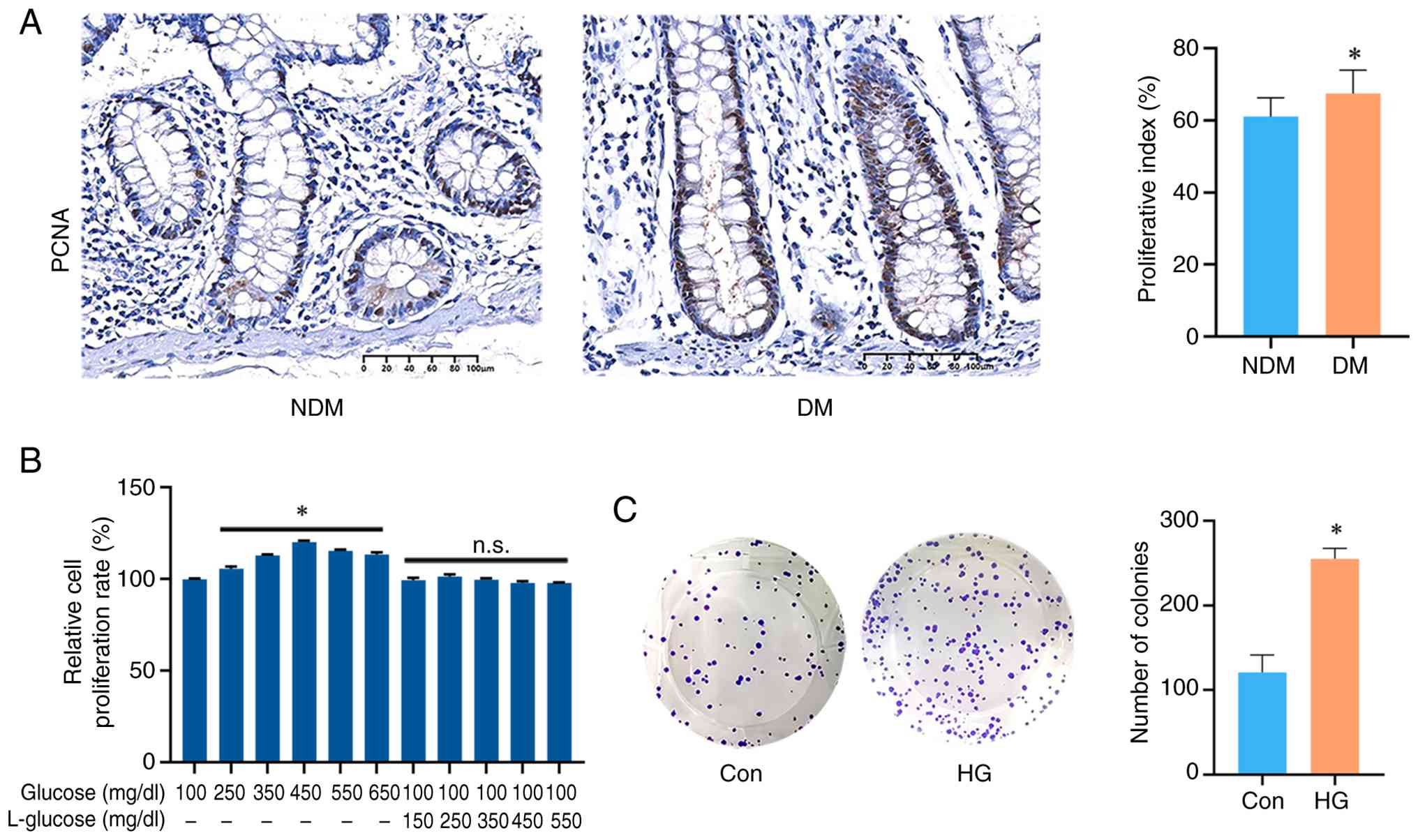
Figure 1

Increased proliferation of colonic
epithelium under type 2 diabetes mellitus conditions. (A)
Representative immunohistochemical staining of PCNA and the
proliferative index in colonic epithelium from patients in the NDM
and DM groups (scale bar, 100 µm; *P<0.01). (B) Viability of
NCM460 cells cultured in media containing different glucose
concentrations assessed by Cell Counting Kit-8 assay (*P<0.01
vs. 100 mg/dl glucose; n.s. vs. 100 mg/dl glucose). (C)
Representative images and quantification of colony formation assay
of NCM460 cells (*P<0.01). DM, diabetes mellitus; NDM,
non-diabetes mellitus; n.s., not significant; PCNA, proliferating
cell nuclear antigen; Con, control group; HG, high glucose.

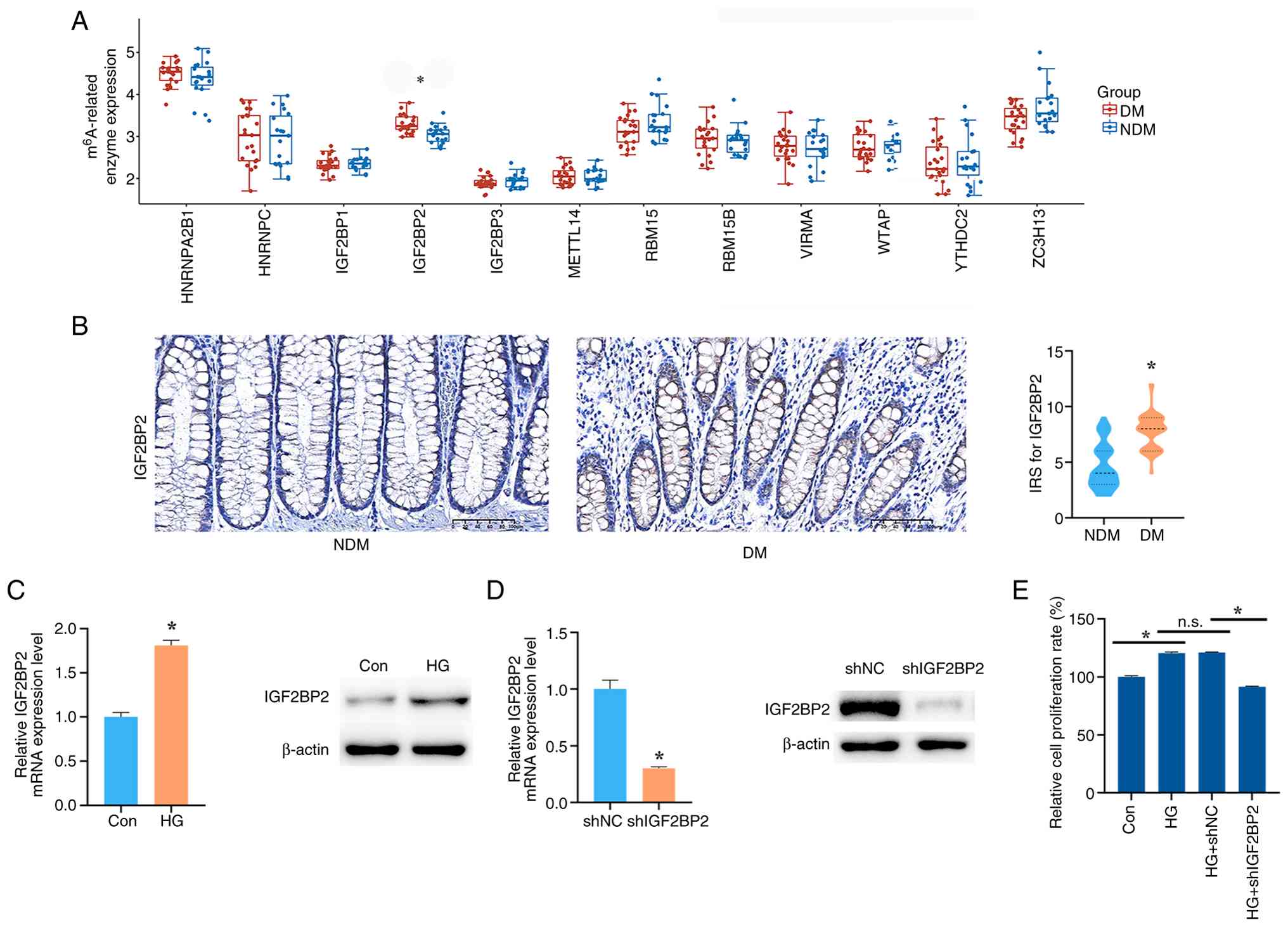
Figure 2

IGF2BP2 knockdown decreases
proliferation of colonic epithelium under diabetic conditions. (A)
Expression of m6A-related enzymes in colonic epithelium
of DM and NDM patients based on RNA sequencing data (GSE115313;
*P<0.01). (B) Representative immunohistochemical staining and
IRS analysis of IGF2BP2 expression in colonic epithelium from NDM
and DM patients (scale bar, 100 µm; *P<0.01). (C) IGF2BP2
expression in NCM460 cells under control and HG conditions
(*P<0.01). (D) IGF2BP2 knockdown efficiency in NCM460 cells
under baseline conditions by short hairpin RNA (*P<0.01). (E)
The effect of IGF2BP2 knockdown on viability of NCM460 cells under
HG conditions measured by Cell Counting Kit-8 assay (*P<0.01).
DM, diabetes mellitus; NDM, non-diabetes mellitus; n.s., not
significant; IRS, immunoreactive score; Con, control group; HG,
high glucose; IGF2BP2, insulin-like growth factor 2 mRNA binding
protein 2; shNC, short hairpin RNA negative control; shIGF2BP2,
short hairpin RNA targeting IGF2BP2; HNRNPA2B1, heterogeneous
nuclear ribonucleoproteins A2/B1; HNRNPC, heterogeneous nuclear
ribonucleoproteins C1/C2; IGF2BP1, insulin-like growth factor 2
mRNA-binding protein 1; IGF2BP3, insulin-like growth factor 2
mRNA-binding protein 3; METTL14, methyltransferase-like protein 14;
RBM15, RNA-binding protein 15; RBM15B, putative RNA-binding protein
15B; VIRMA, protein virilizer homolog; WTAP, pre-mRNA-splicing
regulator WTAP; YTHDC2, 3′-5′ RNA helicase YTHDC2; ZC3H13, zinc
finger CCCH domain-containing protein 13.

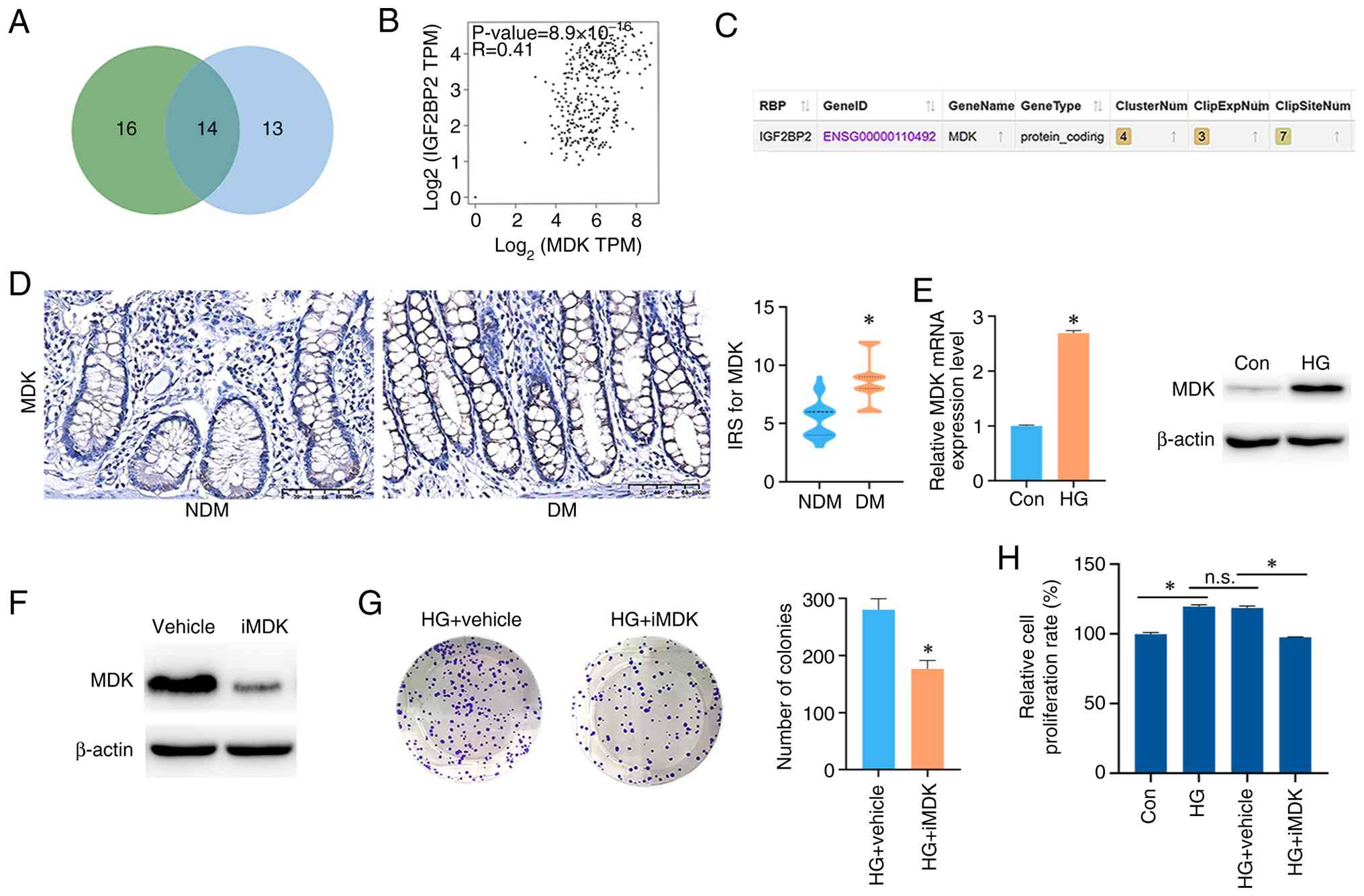
Figure 3

MDK knockdown decreases proliferation
of colonic epithelium under diabetic conditions. (A) Venn diagram
of candidate genes, where green represents genes predicted to
interact with IGF2BP2 and blue represents genes positively
correlated with IGF2BP2 expression. (B) Correlation between MDK and
IGF2BP2 expressions in colonic epithelium analyzed by the Gene
Expression Profiling Interactive Analysis database. (C) Predicted
interaction between MDK and IGF2BP2 using the StarBase database.
(D) Representative immunohistochemical staining and IRS analysis of
MDK expression in colonic epithelium from patients in the NDM and
DM groups (scale bar, 100 µm; *P<0.01). (E) MDK expressions in
NCM460 cells under Con and HG conditions (*P<0.01). (F)
Validation of MDK inhibition by iMDK under baseline conditions. (G
and H) Effects of iMDK on proliferation and viability of NCM460
cells under HG conditions, assessed by (G) colony formation and (H)
Cell Counting Kit-8 assay (*P<0.01). MDK, midkine; iMDK,
inhibitor of MDK; n.s., not significant; DM, diabetes mellitus;
NDM, non-diabetes mellitus; Con, control group; HG, high glucose;
IRS, immunoreactive score; IGF2BP2, insulin-like growth factor 2
mRNA binding protein 2.

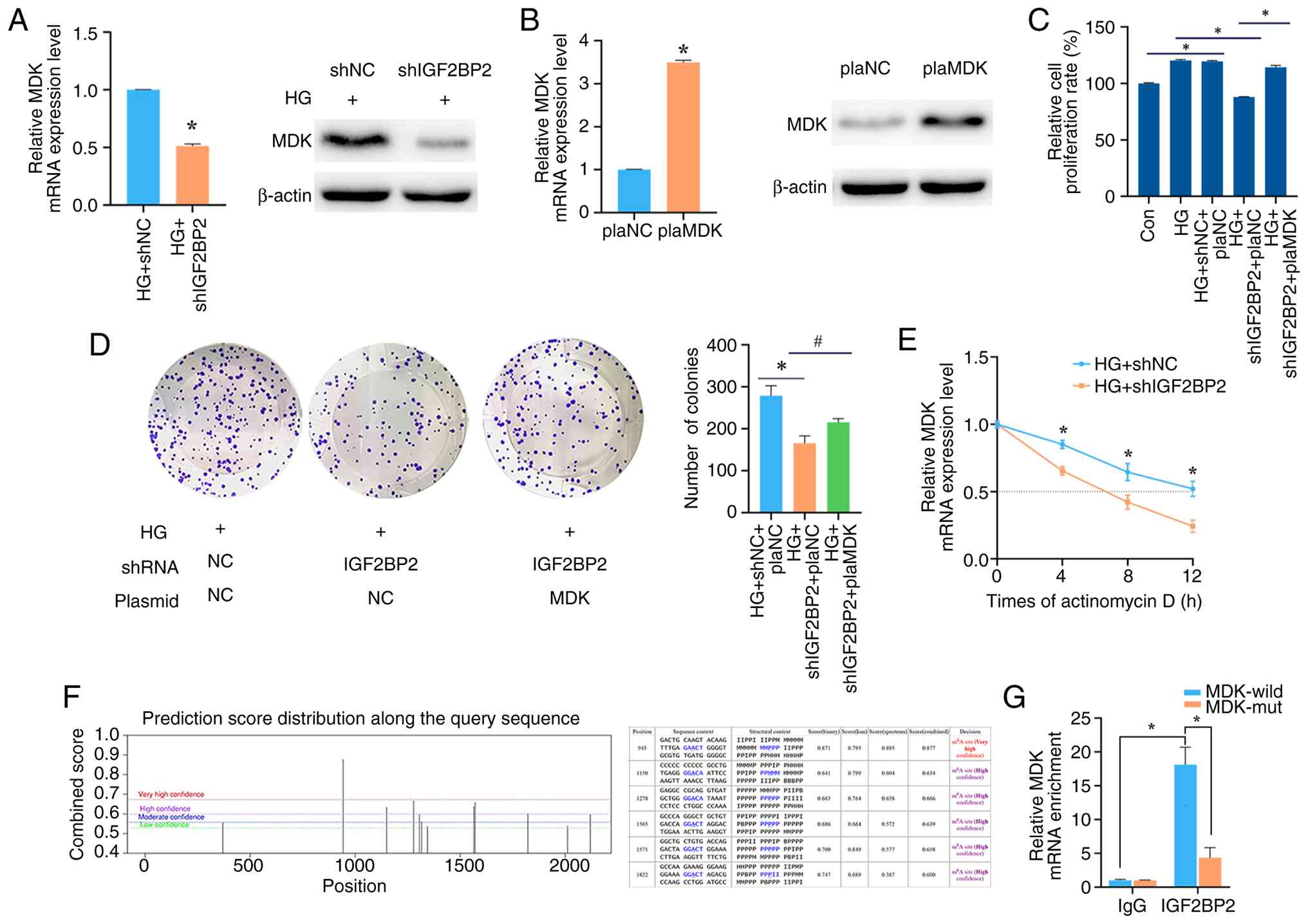
Figure 4

IGF2BP2 promotes proliferation of
colonic epithelial cells by targeting MDK in an
m6A-dependent manner. (A) MDK mRNA and protein
expression following IGF2BP2 knockdown under HG conditions
(*P<0.01). (B) Validation of MDK overexpression by plasmid
transfection under baseline conditions (*P<0.01). (C and D)
Effects of IGF2BP2 knockdown and MDK rescue on viability and
proliferation of NCM460 cells under HG conditions, assessed by (C)
Cell Counting Kit-8 and (D) colony formation assay (*P<0.01;
#P<0.05). (E) MDK mRNA stability measured by reverse
transcription-quantitative PCR following IGF2BP2 knockdown under HG
conditions (*P<0.01). (F) Predicted m6A sites in MDK
using the sequence-based RNA adenosine methylation site predictor
prediction tool. (G) RNA immunoprecipitation assay showing
enrichment of wild-type vs. mutant MDK mRNA by anti-IGF2BP2
antibody (*P<0.01). IGF2BP2, insulin-like growth factor 2 mRNA
binding protein 2; NC, negative control; shRNA, short hairpin RNA;
shNC, short hairpin RNA negative control; shIGF2BP2, short hairpin
RNA targeting IGF2BP2; MDK, midkine; HG, high glucose; plaNC,
negative control overexpression plasmid; plaMDK, MDK overexpression
plasmid; MDK-wild, wild-type MDK mRNA; MDK-mut, mutant MDK
mRNA.
View References

1 

NCD Risk Factor Collaboration (NCD-RisC), . Worldwide trends in diabetes prevalence and treatment from 1990 to 2022: A pooled analysis of 1108 population-representative studies with 141 million participants. Lancet. 404:2077–2093. 2024. View Article : Google Scholar : PubMed/NCBI

2 

Zhang YY, Li YJ, Xue CD, Li S, Gao ZN and Qin KR: Effects of T2DM on cancer progression: pivotal precipitating factors and underlying mechanisms. Front Endocrinol (Lausanne). 15:13960222024. View Article : Google Scholar : PubMed/NCBI

3 

Vekic J, Zeljkovic A, Stefanovic A, Giglio RV, Ciaccio M and Rizzo M: Diabetes and colorectal cancer risk: A new look at molecular mechanisms and potential role of novel antidiabetic agents. Int J Mol Sci. 22:124092021. View Article : Google Scholar : PubMed/NCBI

4 

Gharib E and Robichaud GA: From crypts to cancer: A holistic perspective on colorectal carcinogenesis and therapeutic strategies. Int J Mol Sci. 25:94632024. View Article : Google Scholar : PubMed/NCBI

5 

Wang SY, Li JY, Xu JH, Xia ZS, Cheng D, Zhong W, Lai Y, Yu T and Chen QK: Butyrate suppresses abnormal proliferation in colonic epithelial cells under diabetic state by targeting HMGB1. J Pharmacol Sci. 139:266–274. 2019. View Article : Google Scholar : PubMed/NCBI

6 

Jiang X, Liu B, Nie Z, Duan L, Xiong Q, Jin Z, Yang C and Chen Y: The role of m6A modification in the biological functions and diseases. Signal Transduct Target Ther. 6:742021. View Article : Google Scholar : PubMed/NCBI

7 

Yang Y, Hsu PJ, Chen YS and Yang YG: Dynamic transcriptomic m6A decoration: Writers, erasers, readers and functions in RNA metabolism. Cell Res. 28:616–624. 2018. View Article : Google Scholar : PubMed/NCBI

8 

Chen T, Ye W, Gao S, Li Y, Luan J, Lv X and Wang S: Emerging importance of m6A modification in liver cancer and its potential therapeutic role. Biochim Biophys Acta Rev Cancer. 1880:1892992025. View Article : Google Scholar : PubMed/NCBI

9 

Liu S, Liu M, Li Y and Song Q: N6-methyladenosine-dependent signaling in colorectal cancer: Functions and clinical potential. Crit Rev Oncol Hematol. 198:1043602024. View Article : Google Scholar : PubMed/NCBI

10 

Cheng C, Yu F, Yuan G and Jia J: Update on N6-methyladenosine methylation in obesity-related diseases. Obesity (Silver Spring). 32:240–251. 2024. View Article : Google Scholar : PubMed/NCBI

11 

Luo J, Xu T and Sun K: N6-Methyladenosine RNA modification in inflammation: Roles, mechanisms, and applications. Front Cell Dev Biol. 9:6707112021. View Article : Google Scholar : PubMed/NCBI

12 

Ren Y, Li Z, Li J, Liang R, Wang Z, Bai Y, Yang Y, Tang Q, Fu Y, Zhang X, et al: m6 A mRNA methylation: Biological features, mechanisms, and therapeutic potentials in type 2 diabetes mellitus. Obes Rev. 24:e136392023. View Article : Google Scholar : PubMed/NCBI

13 

Del Puerto-Nevado L, Minguez P, Corton M, Solanes-Casado S, Prieto I, Mas S, Sanz AB, Gonzalez-Alonso P, Villaverde C, Portal-Nuñez S, et al: Molecular evidence of field cancerization initiated by diabetes in colon cancer patients. Mol Oncol. 13:857–872. 2019. View Article : Google Scholar : PubMed/NCBI

14 

Tang Z, Li C, Kang B, Gao G, Li C and Zhang Z: GEPIA: A web server for cancer and normal gene expression profiling and interactive analyses. Nucleic Acids Res. 45:W98–W102. 2017. View Article : Google Scholar : PubMed/NCBI

15 

Li JH, Liu S, Zhou H, Qu LH and Yang JH: starBase v2.0: Decoding miRNA-ceRNA, miRNA-ncRNA and protein-RNA interaction networks from large-scale CLIP-Seq data. Nucleic Acids Res. 42:D92–D97. 2014. View Article : Google Scholar : PubMed/NCBI

16 

Fan R, Cui C, Kang B, Chang Z, Wang G and Cui Q: A combined deep learning framework for mammalian m6A site prediction. Cell Genom. 4:1006972024. View Article : Google Scholar : PubMed/NCBI

17 

American Diabetes Association Professional Practice Committee for Diabetes, . 2. diagnosis and classification of diabetes: Standards of care in diabetes-2026. Diabetes Care. 49:S27–S49. 2026. View Article : Google Scholar : PubMed/NCBI

18 

Koo CL, Kok LF, Lee MY, Wu TS, Cheng YW, Hsu JD, Ruan A, Chao KC and Han CP: Scoring mechanisms of p16INK4a immunohistochemistry based on either independent nucleic stain or mixed cytoplasmic with nucleic expression can significantly signal to distinguish between endocervical and endometrial adenocarcinomas in a tissue microarray study. J Transl Med. 7:252009. View Article : Google Scholar : PubMed/NCBI

19 

Livak KJ and Schmittgen TD: Analysis of relative gene expression data using real-time quantitative PCR and the 2(−Delta Delta C(T)) method. Methods. 25:402–408. 2001. View Article : Google Scholar : PubMed/NCBI

20 

Zhang Z, Xie Z, Lin J, Sun Z, Li Z, Yu W, Zeng Y, Ye G, Li J, Ye F, et al: The m6A methyltransferase METTL16 negatively regulates MCP1 expression in mesenchymal stem cells during monocyte recruitment. JCI Insight. 8:e1624362023. View Article : Google Scholar : PubMed/NCBI

21 

Weiser MR: AJCC 8th edition: Colorectal cancer. Ann Surg Oncol. 25:1454–1455. 2018. View Article : Google Scholar : PubMed/NCBI

22 

Li H, Li C, Zhang B and Jiang H: Lactoferrin suppresses the progression of colon cancer under hyperglycemia by targeting WTAP/m6A/NT5DC3/HKDC1 axis. J Transl Med. 21:1562023. View Article : Google Scholar : PubMed/NCBI

23 

Wu D, Hu D, Chen H, Shi G, Fetahu IS, Wu F, Rabidou K, Fang R, Tan L, Xu S, et al: Glucose-regulated phosphorylation of TET2 by AMPK reveals a pathway linking diabetes to cancer. Nature. 559:637–641. 2018. View Article : Google Scholar : PubMed/NCBI

24 

Liu S, Liao S, He J, Zhou Y and He Q: IGF2BP2: An m6A reader that affects cellular function and disease progression. Cell Mol Biol Lett. 30:432025. View Article : Google Scholar : PubMed/NCBI

25 

Kemper M, Hentschel W, Grass JK, Stüben BO, Konczalla L, Rawnaq T, Ghadban T, Izbicki JR and Reeh M: Serum Midkine is a clinical significant biomarker for colorectal cancer and associated with poor survival. Cancer Med. 9:2010–2018. 2020. View Article : Google Scholar : PubMed/NCBI

26 

Albai O, Frandes M, Timar B, Paun DL, Roman D and Timar R: Long-term risk of malignant neoplastic disorders in type 2 diabetes mellitus patients with metabolic syndrome. Diabetes Metab Syndr Obes. 13:1317–1326. 2020. View Article : Google Scholar : PubMed/NCBI

27 

Prieto I, Del Puerto-Nevado L, Gonzalez N, Portal-Nuñez S, Zazo S, Corton M, Minguez P, Gomez-Guerrero C, Arce JM, Sanz AB, et al: Colon cancer modulation by a diabetic environment: A single institutional experience. PLoS One. 12:e01723002017. View Article : Google Scholar : PubMed/NCBI

28 

Del Puerto-Nevado L, Santiago-Hernandez A, Solanes-Casado S, Gonzalez N, Ricote M, Corton M, Prieto I, Mas S, Sanz AB, Aguilera O, et al: Diabetes-mediated promotion of colon mucosa carcinogenesis is associated with mitochondrial dysfunction. Mol Oncol. 13:1887–1897. 2019. View Article : Google Scholar : PubMed/NCBI

29 

Chen C, Fu Q, Wang L, Tanaka S and Imajo M: Establishment of a novel mouse model of colorectal cancer by orthotopic transplantation. BMC Cancer. 25:4052025. View Article : Google Scholar : PubMed/NCBI

30 

Li JY, Yu T, Xia ZS, Chen GC, Yuan YH, Zhong W, Zhao LN and Chen QK: Enhanced proliferation in colorectal epithelium of patients with type 2 diabetes correlates with beta-catenin accumulation. J Diabetes Complications. 28:689–697. 2014. View Article : Google Scholar : PubMed/NCBI

31 

Vasconcelos-Dos-Santos A, Loponte HF, Mantuano NR, Oliveira IA, de Paula IF, Teixeira LK, de-Freitas-Junior JC, Gondim KC, Heise N, Mohana-Borges R, et al: Hyperglycemia exacerbates colon cancer malignancy through hexosamine biosynthetic pathway. Oncogenesis. 6:e3062017. View Article : Google Scholar : PubMed/NCBI

32 

Wei B, Zeng M, Yang J, Li S, Zhang J, Ding N and Jiang Z: N6-Methyladenosine RNA modification: A potential regulator of stem cell proliferation and differentiation. Front Cell Dev Biol. 10:8352052022. View Article : Google Scholar : PubMed/NCBI

33 

Shi R, Zhao R, Shen Y, Wei S, Zhang T, Zhang J, Shu W, Cheng S, Teng H and Wang H: IGF2BP2-modified circular RNA circCHD7 promotes endometrial cancer progression via stabilizing PDGFRB and activating JAK/STAT signaling pathway. Cancer Gene Ther. 31:1221–1236. 2024. View Article : Google Scholar : PubMed/NCBI

34 

Yi J, Peng F, Zhao J and Gong X: METTL3/IGF2BP2 axis affects the progression of colorectal cancer by regulating m6A modification of STAG3. Sci Rep. 13:172922023. View Article : Google Scholar : PubMed/NCBI

35 

Kessler SM, Laggai S, Barghash A, Schultheiss CS, Lederer E, Artl M, Helms V, Haybaeck J and Kiemer AK: IMP2/p62 induces genomic instability and an aggressive hepatocellular carcinoma phenotype. Cell Death Dis. 6:e18942015. View Article : Google Scholar : PubMed/NCBI

36 

Wang J, Chen L and Qiang P: The role of IGF2BP2, an m6A reader gene, in human metabolic diseases and cancers. Cancer Cell Int. 21:992021. View Article : Google Scholar : PubMed/NCBI

37 

Liu S, Liao S, He J, Zhou Y and He Q: IGF2BP2: An m6A reader that affects cellular function and disease progression. Cell Mol Biol Lett. 30:432025. View Article : Google Scholar : PubMed/NCBI

38 

Aller EJ, Nair HB, Vadlamudi RK and Viswanadhapalli S: Significance of midkine signaling in women's cancers: Novel biomarker and therapeutic target. Int J Mol Sci. 26:48092025. View Article : Google Scholar : PubMed/NCBI

39 

Yuan F, Wang Y, Yuan L, Tang T, Ye L, Li Y, Dai X and Cheng H: EGFRvIII-positive glioblastoma contributes to immune escape and malignant progression via the c-Fos-MDK-LRP1 axis. Cell Death Dis. 16:4532025. View Article : Google Scholar : PubMed/NCBI

40 

Munter D, de Faria FW, Richter M, Aranda-Pardos I, Hotfilder M, Walter C, Paga E, Inserte C, Albert TK, Roy R, et al: Multiomic analysis uncovers a continuous spectrum of differentiation and Wnt-MDK-driven immune evasion in hepatoblastoma. J Hepatol. 83:367–382. 2025. View Article : Google Scholar : PubMed/NCBI

41 

Hashimoto M, Kojima Y, Sakamoto T, Ozato Y, Nakano Y, Abe T, Hosoda K, Saito H, Higuchi S, Hisamatsu Y, et al: Spatial and single-cell colocalisation analysis reveals MDK-mediated immunosuppressive environment with regulatory T cells in colorectal carcinogenesis. EBioMedicine. 103:1051022024. View Article : Google Scholar : PubMed/NCBI

42 

Zou D, Xin X, Xu Y, Xu H and Xu T: A cross-sectional study on the association between physical activity and the risk of colon cancer based on NHANES 2007–2018. Sci Rep. 15:32972025. View Article : Google Scholar : PubMed/NCBI

43 

Cao J, Yan W, Ma X, Huang H and Yan H: Insulin-like growth factor 2 mRNA-binding protein 2-a potential link between type 2 diabetes mellitus and cancer. J Clin Endocrinol Metab. 106:2807–2818. 2021. View Article : Google Scholar : PubMed/NCBI

44 

Sun H, Shu J, Tang J, Li Y, Qiu J, Ding Z, Xuan B, Chen M, Gan C, Lin J, et al: GLP-1 receptor agonists alleviate colonic inflammation by modulating intestinal microbiota and the function of group 3 innate lymphoid cells. Immunology. 172:451–468. 2024. View Article : Google Scholar : PubMed/NCBI

45 

Wang R, Xie L, Jiang P, Hou Y, Li D and Wang W: Metformin may improve intestinal mucosal barrier function and help prevent and reverse colorectal cancer in mice. J Cancer. 16:3703–3711. 2025. View Article : Google Scholar : PubMed/NCBI

46 

Juarez-Vazquez CI, Gurrola-Diaz CM, Vargas-Guerrero B, Domínguez-Rosales JA, Rodriguez-Ortiz JF, Barros-Núñez P, Flores-Martínez SE, Sánchez-Corona J and Rosales-Reynoso MA: Insulin glargine affects the expression of Igf-1r, Insr, and Igf-1 genes in colon and liver of diabetic rats. Iran J Basic Med Sci. 21:489–494. 2018.PubMed/NCBI

47 

Yildirim B, Kulak K and Bilir A: Midkine: A cancer biomarker candidate and innovative therapeutic approaches. Eur J Breast Health. 20:167–177. 2024. View Article : Google Scholar : PubMed/NCBI

Related Articles

  • Abstract
  • View
  • Download
  • Twitter
Copy and paste a formatted citation
Spandidos Publications style
Li J, Xie Q and Xu J: N<sup>6</sup>‑methyladenosine reader insulin‑like growth factor 2 mRNA‑binding protein 2 promotes abnormal proliferation of colonic epithelial cells in type 2 diabetes mellitus by regulating midkine. Mol Med Rep 33: 108, 2026.
APA
Li, J., Xie, Q., & Xu, J. (2026). N<sup>6</sup>‑methyladenosine reader insulin‑like growth factor 2 mRNA‑binding protein 2 promotes abnormal proliferation of colonic epithelial cells in type 2 diabetes mellitus by regulating midkine. Molecular Medicine Reports, 33, 108. https://doi.org/10.3892/mmr.2026.13818
MLA
Li, J., Xie, Q., Xu, J."N<sup>6</sup>‑methyladenosine reader insulin‑like growth factor 2 mRNA‑binding protein 2 promotes abnormal proliferation of colonic epithelial cells in type 2 diabetes mellitus by regulating midkine". Molecular Medicine Reports 33.4 (2026): 108.
Chicago
Li, J., Xie, Q., Xu, J."N<sup>6</sup>‑methyladenosine reader insulin‑like growth factor 2 mRNA‑binding protein 2 promotes abnormal proliferation of colonic epithelial cells in type 2 diabetes mellitus by regulating midkine". Molecular Medicine Reports 33, no. 4 (2026): 108. https://doi.org/10.3892/mmr.2026.13818
Copy and paste a formatted citation
x
Spandidos Publications style
Li J, Xie Q and Xu J: N<sup>6</sup>‑methyladenosine reader insulin‑like growth factor 2 mRNA‑binding protein 2 promotes abnormal proliferation of colonic epithelial cells in type 2 diabetes mellitus by regulating midkine. Mol Med Rep 33: 108, 2026.
APA
Li, J., Xie, Q., & Xu, J. (2026). N<sup>6</sup>‑methyladenosine reader insulin‑like growth factor 2 mRNA‑binding protein 2 promotes abnormal proliferation of colonic epithelial cells in type 2 diabetes mellitus by regulating midkine. Molecular Medicine Reports, 33, 108. https://doi.org/10.3892/mmr.2026.13818
MLA
Li, J., Xie, Q., Xu, J."N<sup>6</sup>‑methyladenosine reader insulin‑like growth factor 2 mRNA‑binding protein 2 promotes abnormal proliferation of colonic epithelial cells in type 2 diabetes mellitus by regulating midkine". Molecular Medicine Reports 33.4 (2026): 108.
Chicago
Li, J., Xie, Q., Xu, J."N<sup>6</sup>‑methyladenosine reader insulin‑like growth factor 2 mRNA‑binding protein 2 promotes abnormal proliferation of colonic epithelial cells in type 2 diabetes mellitus by regulating midkine". Molecular Medicine Reports 33, no. 4 (2026): 108. https://doi.org/10.3892/mmr.2026.13818
Follow us
  • Twitter
  • LinkedIn
  • Facebook
About
  • Spandidos Publications
  • Careers
  • Cookie Policy
  • Privacy Policy
How can we help?
  • Help
  • Live Chat
  • Contact
  • Email to our Support Team