Spandidos Publications Logo
  • About
    • About Spandidos
    • Aims and Scopes
    • Abstracting and Indexing
    • Editorial Policies
    • Reprints and Permissions
    • Job Opportunities
    • Terms and Conditions
    • Contact
  • Journals
    • All Journals
    • Oncology Letters
      • Oncology Letters
      • Information for Authors
      • Editorial Policies
      • Editorial Board
      • Aims and Scope
      • Abstracting and Indexing
      • Bibliographic Information
      • Archive
    • International Journal of Oncology
      • International Journal of Oncology
      • Information for Authors
      • Editorial Policies
      • Editorial Board
      • Aims and Scope
      • Abstracting and Indexing
      • Bibliographic Information
      • Archive
    • Molecular and Clinical Oncology
      • Molecular and Clinical Oncology
      • Information for Authors
      • Editorial Policies
      • Editorial Board
      • Aims and Scope
      • Abstracting and Indexing
      • Bibliographic Information
      • Archive
    • Experimental and Therapeutic Medicine
      • Experimental and Therapeutic Medicine
      • Information for Authors
      • Editorial Policies
      • Editorial Board
      • Aims and Scope
      • Abstracting and Indexing
      • Bibliographic Information
      • Archive
    • International Journal of Molecular Medicine
      • International Journal of Molecular Medicine
      • Information for Authors
      • Editorial Policies
      • Editorial Board
      • Aims and Scope
      • Abstracting and Indexing
      • Bibliographic Information
      • Archive
    • Biomedical Reports
      • Biomedical Reports
      • Information for Authors
      • Editorial Policies
      • Editorial Board
      • Aims and Scope
      • Abstracting and Indexing
      • Bibliographic Information
      • Archive
    • Oncology Reports
      • Oncology Reports
      • Information for Authors
      • Editorial Policies
      • Editorial Board
      • Aims and Scope
      • Abstracting and Indexing
      • Bibliographic Information
      • Archive
    • Molecular Medicine Reports
      • Molecular Medicine Reports
      • Information for Authors
      • Editorial Policies
      • Editorial Board
      • Aims and Scope
      • Abstracting and Indexing
      • Bibliographic Information
      • Archive
    • World Academy of Sciences Journal
      • World Academy of Sciences Journal
      • Information for Authors
      • Editorial Policies
      • Editorial Board
      • Aims and Scope
      • Abstracting and Indexing
      • Bibliographic Information
      • Archive
    • International Journal of Functional Nutrition
      • International Journal of Functional Nutrition
      • Information for Authors
      • Editorial Policies
      • Editorial Board
      • Aims and Scope
      • Abstracting and Indexing
      • Bibliographic Information
      • Archive
    • International Journal of Epigenetics
      • International Journal of Epigenetics
      • Information for Authors
      • Editorial Policies
      • Editorial Board
      • Aims and Scope
      • Abstracting and Indexing
      • Bibliographic Information
      • Archive
    • Medicine International
      • Medicine International
      • Information for Authors
      • Editorial Policies
      • Editorial Board
      • Aims and Scope
      • Abstracting and Indexing
      • Bibliographic Information
      • Archive
  • Articles
  • Information
    • Information for Authors
    • Information for Reviewers
    • Information for Librarians
    • Information for Advertisers
    • Conferences
  • Language Editing
Spandidos Publications Logo
  • About
    • About Spandidos
    • Aims and Scopes
    • Abstracting and Indexing
    • Editorial Policies
    • Reprints and Permissions
    • Job Opportunities
    • Terms and Conditions
    • Contact
  • Journals
    • All Journals
    • Biomedical Reports
      • Information for Authors
      • Editorial Policies
      • Editorial Board
      • Aims and Scope
      • Abstracting and Indexing
      • Bibliographic Information
      • Archive
    • Experimental and Therapeutic Medicine
      • Information for Authors
      • Editorial Policies
      • Editorial Board
      • Aims and Scope
      • Abstracting and Indexing
      • Bibliographic Information
      • Archive
    • International Journal of Epigenetics
      • Information for Authors
      • Editorial Policies
      • Editorial Board
      • Aims and Scope
      • Abstracting and Indexing
      • Bibliographic Information
      • Archive
    • International Journal of Functional Nutrition
      • Information for Authors
      • Editorial Policies
      • Editorial Board
      • Aims and Scope
      • Abstracting and Indexing
      • Bibliographic Information
      • Archive
    • International Journal of Molecular Medicine
      • Information for Authors
      • Editorial Policies
      • Editorial Board
      • Aims and Scope
      • Abstracting and Indexing
      • Bibliographic Information
      • Archive
    • International Journal of Oncology
      • Information for Authors
      • Editorial Policies
      • Editorial Board
      • Aims and Scope
      • Abstracting and Indexing
      • Bibliographic Information
      • Archive
    • Medicine International
      • Information for Authors
      • Editorial Policies
      • Editorial Board
      • Aims and Scope
      • Abstracting and Indexing
      • Bibliographic Information
      • Archive
    • Molecular and Clinical Oncology
      • Information for Authors
      • Editorial Policies
      • Editorial Board
      • Aims and Scope
      • Abstracting and Indexing
      • Bibliographic Information
      • Archive
    • Molecular Medicine Reports
      • Information for Authors
      • Editorial Policies
      • Editorial Board
      • Aims and Scope
      • Abstracting and Indexing
      • Bibliographic Information
      • Archive
    • Oncology Letters
      • Information for Authors
      • Editorial Policies
      • Editorial Board
      • Aims and Scope
      • Abstracting and Indexing
      • Bibliographic Information
      • Archive
    • Oncology Reports
      • Information for Authors
      • Editorial Policies
      • Editorial Board
      • Aims and Scope
      • Abstracting and Indexing
      • Bibliographic Information
      • Archive
    • World Academy of Sciences Journal
      • Information for Authors
      • Editorial Policies
      • Editorial Board
      • Aims and Scope
      • Abstracting and Indexing
      • Bibliographic Information
      • Archive
  • Articles
  • Information
    • For Authors
    • For Reviewers
    • For Librarians
    • For Advertisers
    • Conferences
  • Language Editing
Login Register Submit
  • This site uses cookies
  • You can change your cookie settings at any time by following the instructions in our Cookie Policy. To find out more, you may read our Privacy Policy.

    I agree
Search articles by DOI, keyword, author or affiliation
Search
Advanced Search
presentation
Molecular Medicine Reports
Join Editorial Board Propose a Special Issue
Print ISSN: 1791-2997 Online ISSN: 1791-3004
Journal Cover
April-2026 Volume 33 Issue 4

Full Size Image

Sign up for eToc alerts
Recommend to Library

Journals

International Journal of Molecular Medicine

International Journal of Molecular Medicine

International Journal of Molecular Medicine is an international journal devoted to molecular mechanisms of human disease.

International Journal of Oncology

International Journal of Oncology

International Journal of Oncology is an international journal devoted to oncology research and cancer treatment.

Molecular Medicine Reports

Molecular Medicine Reports

Covers molecular medicine topics such as pharmacology, pathology, genetics, neuroscience, infectious diseases, molecular cardiology, and molecular surgery.

Oncology Reports

Oncology Reports

Oncology Reports is an international journal devoted to fundamental and applied research in Oncology.

Experimental and Therapeutic Medicine

Experimental and Therapeutic Medicine

Experimental and Therapeutic Medicine is an international journal devoted to laboratory and clinical medicine.

Oncology Letters

Oncology Letters

Oncology Letters is an international journal devoted to Experimental and Clinical Oncology.

Biomedical Reports

Biomedical Reports

Explores a wide range of biological and medical fields, including pharmacology, genetics, microbiology, neuroscience, and molecular cardiology.

Molecular and Clinical Oncology

Molecular and Clinical Oncology

International journal addressing all aspects of oncology research, from tumorigenesis and oncogenes to chemotherapy and metastasis.

World Academy of Sciences Journal

World Academy of Sciences Journal

Multidisciplinary open-access journal spanning biochemistry, genetics, neuroscience, environmental health, and synthetic biology.

International Journal of Functional Nutrition

International Journal of Functional Nutrition

Open-access journal combining biochemistry, pharmacology, immunology, and genetics to advance health through functional nutrition.

International Journal of Epigenetics

International Journal of Epigenetics

Publishes open-access research on using epigenetics to advance understanding and treatment of human disease.

Medicine International

Medicine International

An International Open Access Journal Devoted to General Medicine.

Journal Cover
April-2026 Volume 33 Issue 4

Full Size Image

Sign up for eToc alerts
Recommend to Library

  • Article
  • Citations
    • Cite This Article
    • Download Citation
    • Create Citation Alert
    • Remove Citation Alert
    • Cited By
  • Similar Articles
    • Related Articles (in Spandidos Publications)
    • Similar Articles (Google Scholar)
    • Similar Articles (PubMed)
  • Download PDF
  • Download XML
  • View XML

  • Supplementary Files
    • Supplementary_Data1.pdf
    • Supplementary_Data2.pdf
Article Open Access

ULK1 activates NCOA4‑mediated ferritinophagy via the Beclin1/VPS34 complex in cardiomyocyte hypertrophy

  • Authors:
    • Qianhui Zhang
    • Meitian Zhang
    • Yongsheng Liu
    • Pilong Shi
    • Hanping Qi
    • Man Jiang
    • Yonggang Cao
    • Hongli Sun
  • View Affiliations / Copyright

    Affiliations: Department of Pharmacology, Harbin Medical University, Daqing, Heilongjiang 163319, P.R. China
    Copyright: © Zhang et al. This is an open access article distributed under the terms of Creative Commons Attribution License.
  • Article Number: 116
    |
    Published online on: February 12, 2026
       https://doi.org/10.3892/mmr.2026.13826
  • Expand metrics +
Metrics: Total Views: 0 (Spandidos Publications: | PMC Statistics: )
Metrics: Total PDF Downloads: 0 (Spandidos Publications: | PMC Statistics: )
Cited By (CrossRef): 0 citations Loading Articles...

This article is mentioned in:


Abstract

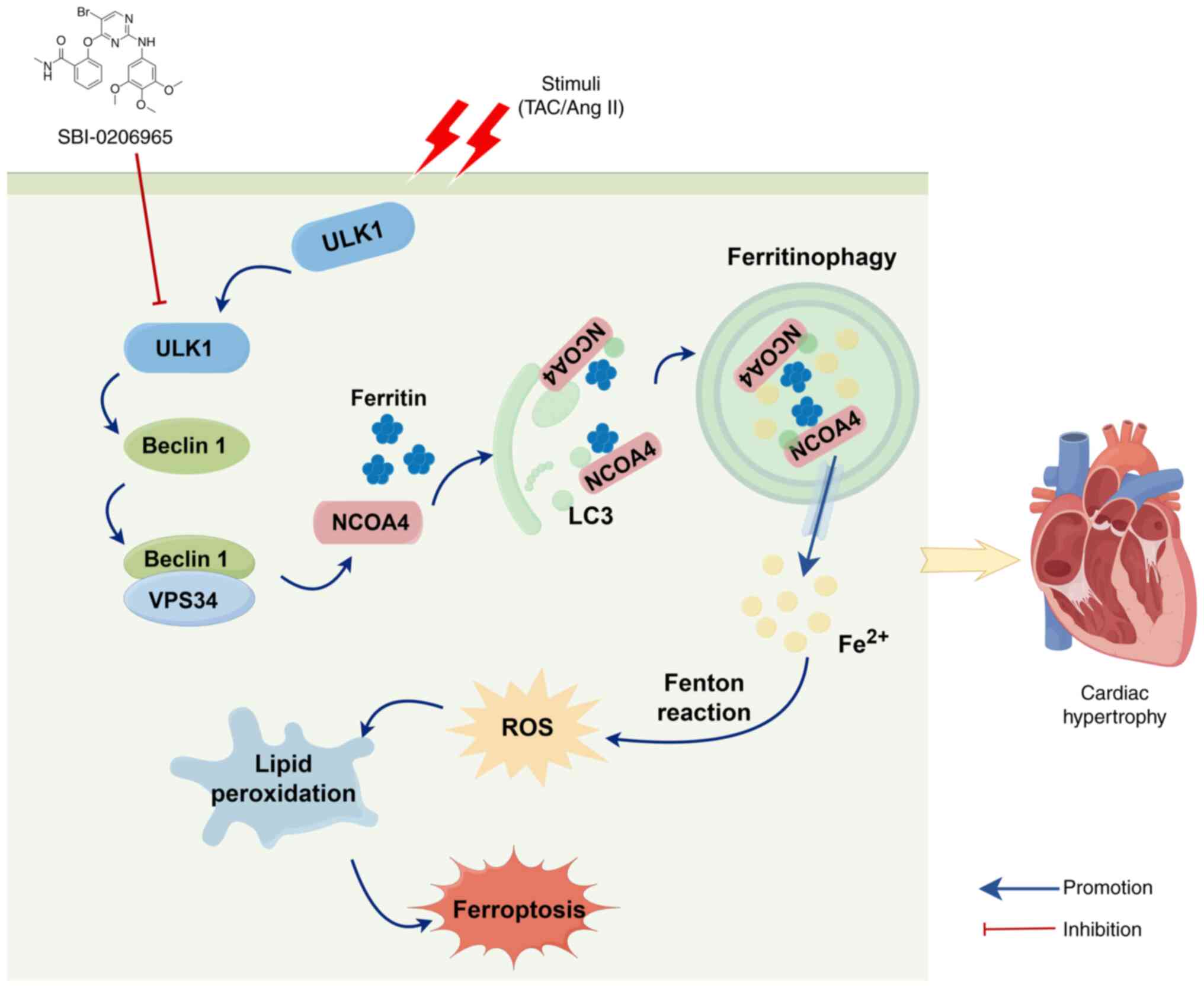
Cardiac hypertrophy is associated with ferroptosis. Serine/threonine protein kinase ULK1 (ULK1) acts as a key activator of autophagy; however, its exact function in the non‑autophagy pathway remains to be fully elucidated. The present study aimed to decipher the role and mechanisms of ULK1 in ferroptosis and cardiomyocyte hypertrophy. Cell survival, lipid peroxidation, iron metabolism and prostaglandin endoperoxide synthase 2 (Ptgs2) mRNA expression were analyzed to investigate the role of ferroptosis in ULK1‑silenced or ULK1‑overexpressing HL‑1 cells. Immunofluorescence staining, western blot analysis and monomeric red fluorescent protein‑green fluorescent protein‑microtubule‑associated protein 1 light chain 3 puncta formation assays were performed to demonstrate the regulatory effect of ULK1 on autophagy and ferritinophagy‑related proteins. Ferritinophagy activation was assessed in cardiomyocytes using immunofluorescence of nuclear receptor coactivator 4 (NCOA4) and microtubule‑associated protein 1 light chain 3‑II colocalization. ULK1 expression was found to be elevated in both transverse aortic constriction‑induced hypertrophic cardiac tissues and angiotensin II‑treated cardiomyocytes. ULK1 knockdown markedly suppressed cardiomyocyte ferroptosis, whereas ULK1 overexpression facilitated ferroptosis in HL‑1 cells. Meanwhile, the ferroptosis inhibitor ferrostatin‑1 reduced iron accumulation, lipid peroxidation and Ptgs2 mRNA expression. Notably, the autophagy inhibitor 3‑methyladenine mitigated ULK1‑induced ferroptosis. Mechanistically, ULK1‑activated NCOA4‑mediated ferritinophagy was found to be dependent on the Beclin1/PI3K catalytic subunit type 3 complex. Finally, the ULK1 inhibitor SBI‑0206965 ameliorated ferroptosis in cardiomyocytes in vitro. For the first time, to the best of our knowledge, the present study demonstrated that ULK1 modulates NCOA4‑mediated ferritinophagy and ferroptosis in HL‑1 cells. The findings of the present study provide a novel insight into the progression of cardiomyocyte hypertrophy.
View Figures

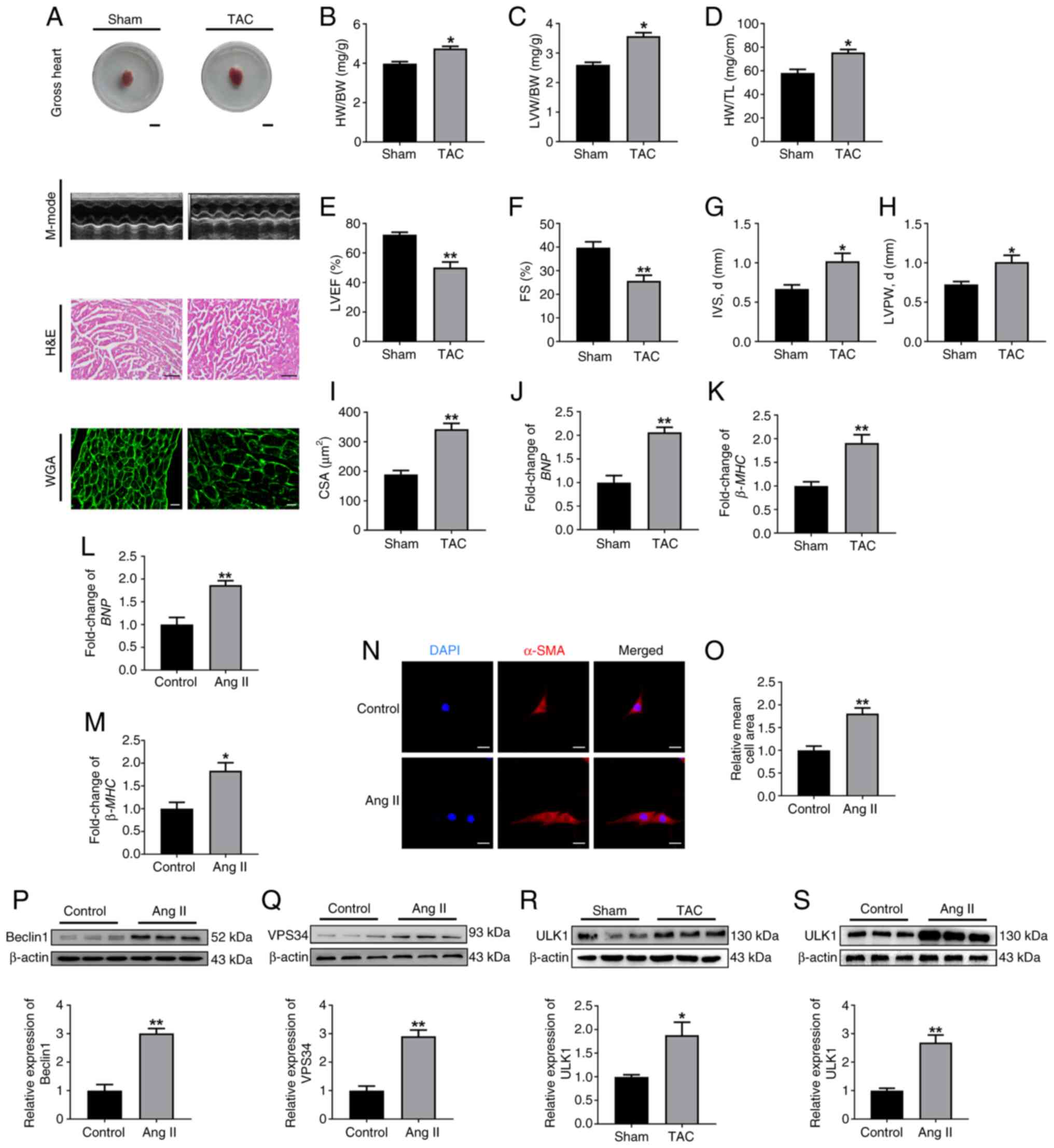
Figure 1

ULK1 expression is elevated in
hypertrophic cardiac tissues and cardiomyocytes. (A) C57BL/6J mice
at 8-weeks-old were subjected to sham or TAC surgery.
Representative whole heart images (scale bar, 0.5 cm), M-mode
echocardiography, H&E staining (scale bar, 100 µm) and WGA
staining (scale bar, 50 µm) of heart tissue. Assessment of (B)
HW/BW, (C) LVW/BW and (D) HW/TL (n=6). Statistical graphs for (E)
LVEF (%), (F) FS (%), (G) IVS, d (mm) and (H) LVPW, d (mm) (n=6).
(I) Cardiomyocyte cross-sectional area acquired from WGA staining.
Cells were measured from different microscopic fields of 6 samples
in each group. The mRNA levels of (J) BNP and (K)
β-MHC in the hearts from sham or TAC-surgery mice (n=6). The
mRNA levels of (L) BNP and (M) β-MHC in HL-1 cells
treated with Ang II (n=3). (N) Stained cells and (O) quantification
of cell surface area of HL-1 cells treated with Ang II. Scale bar,
50 µm (n=3). Western blot analysis and summarized data
demonstrating (P) Beclin1 and (Q) VPS34 protein expression in HL-1
cells treated with Ang II (n=3). (R) Western blot analysis and
summarized data demonstrating ULK1 protein levels in the hearts
obtained after sham or TAC surgery (n=6). (S) Western blot analysis
and summarized data demonstrating ULK1 protein levels in the
cardiomyocytes stimulated with Ang II (n=6). All data are presented
as mean ± SEM. *P<0.05 and **P<0.01 vs. sham or
control group. ULK1, serine/threonine protein kinase ULK1; TAC,
transverse aortic constriction; HW, heart weight; BW, body weight;
LVW, left ventricular weight; TL, tibia length; LVEF, left
ventricular ejection fraction; FS, fractional shortening; d,
diastole; IVS, interventricular septal thickness; LVPW, left
ventricular posterior wall thickness; CSA, cross-sectional area;
BNP, brain natriuretic peptide; β-MHC, β-myosin heavy
chain; α-SMA, α smooth muscle actin; Ang II, angiotensin II; VPS34,
PI3K catalytic subunit type 3; WGA, wheat germ agglutinin.

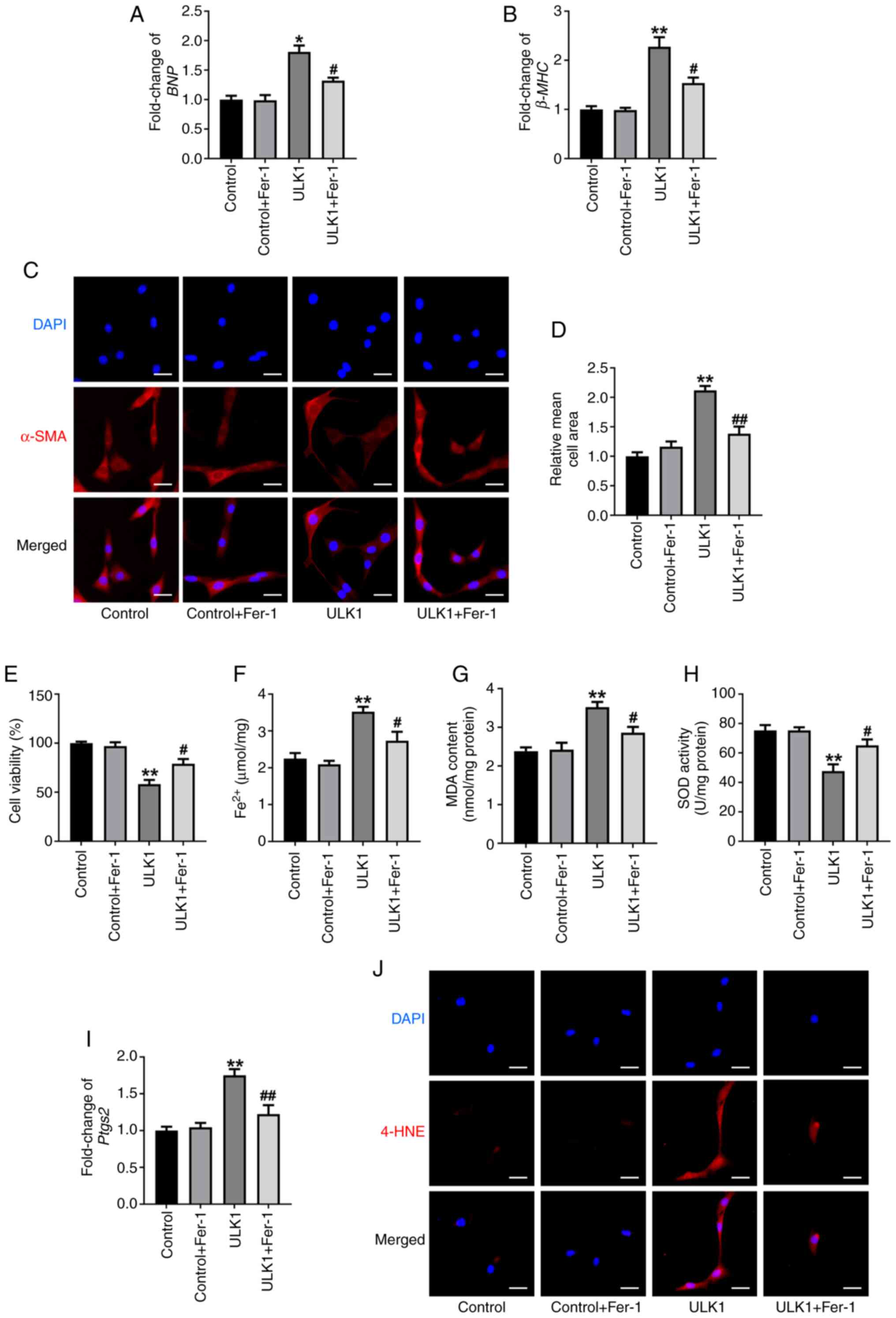
Figure 2

Fer-1 reverses ferroptosis in
ULK1-overexpressing cells. The mRNA levels of (A) BNP and
(B) β-MHC in HL-1 cells. (C) Images of stained cells and (D)
quantification of cell surface area under the indicated
experimental group. Scale bar, 50 µm. (E) Cell viability of HL-1
cells was assessed using a Cell Counting Kit-8 assay. The levels of
(F) Fe2+, (G) MDA and (H) SOD were determined in the
indicated experimental group. (I) The mRNA levels of Ptgs2.
(J) Immunofluorescence staining for 4-HNE. Scale bar, 50 µm. All
data are presented as mean ± SEM. n=3. *P<0.05 and **P<0.01
vs. control group; #P<0.05 and ##P<0.01
vs. ULK1 group. ULK1, serine/threonine protein kinase ULK1; Fer-1,
ferrostatin-1; BNP, brain natriuretic peptide; β-MHC,
β-myosin heavy chain; α-SMA, α smooth muscle actin; MDA,
malondialdehyde; SOD, superoxide dismutase; Ptgs2,
prostaglandin endoperoxide synthase 2; 4-HNE, 4-hydroxynonenal.

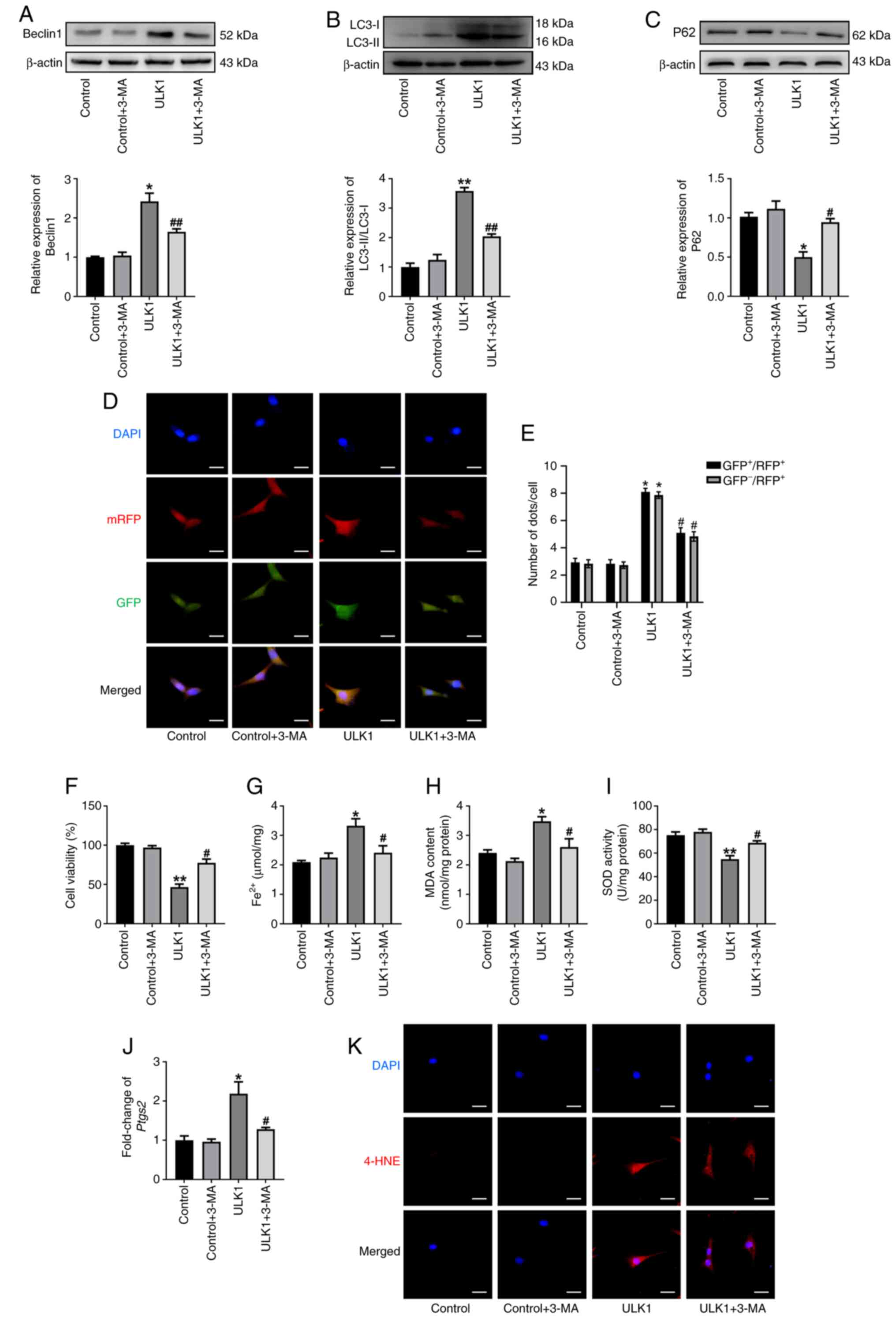
Figure 3

Autophagy activation is required for
ULK1-induced ferroptosis in HL-1 cells. Western blot analysis and
summarized data demonstrating (A) Beclin1, (B) LC3-II and (C) p62
protein levels in HL-1 cells treated with 3-MA. (D) HL-1 cells were
infected with mRFP-GFP-LC3-labeled adenoviruses and the formation
of autophagosomes (yellow) and autolysosomes (red) were observed in
indicated group. Scale bar, 50 µm. (E) Red and yellow dots/cell in
indicated group. (F) Cell viability of HL-1 cells was detected
using a Cell Counting Kit-8 assay in the 3-MA group. The contents
of (G) Fe2+, (H) MDA and (I) SOD were determined in 3-MA
group. (J) The mRNA level of Ptgs2. (K) Immunofluorescence
staining for 4-HNE in 3-MA group. Scale bar, 50 µm. All data are
presented as mean ± SEM. n=3. *P<0.05 and **P<0.01 vs.
control group; #P<0.05 and ##P<0.01 vs.
ULK1 group. ULK1, serine/threonine protein kinase ULK1; 3-MA,
3-methyladenine; LC3, microtubule-associated protein 1 light chain
3; mRFP, monomeric red fluorescent protein; MDA, malondialdehyde;
SOD, superoxide dismutase; Ptgs2, prostaglandin endoperoxide
synthase 2; 4-HNE, 4-hydroxynonenal.

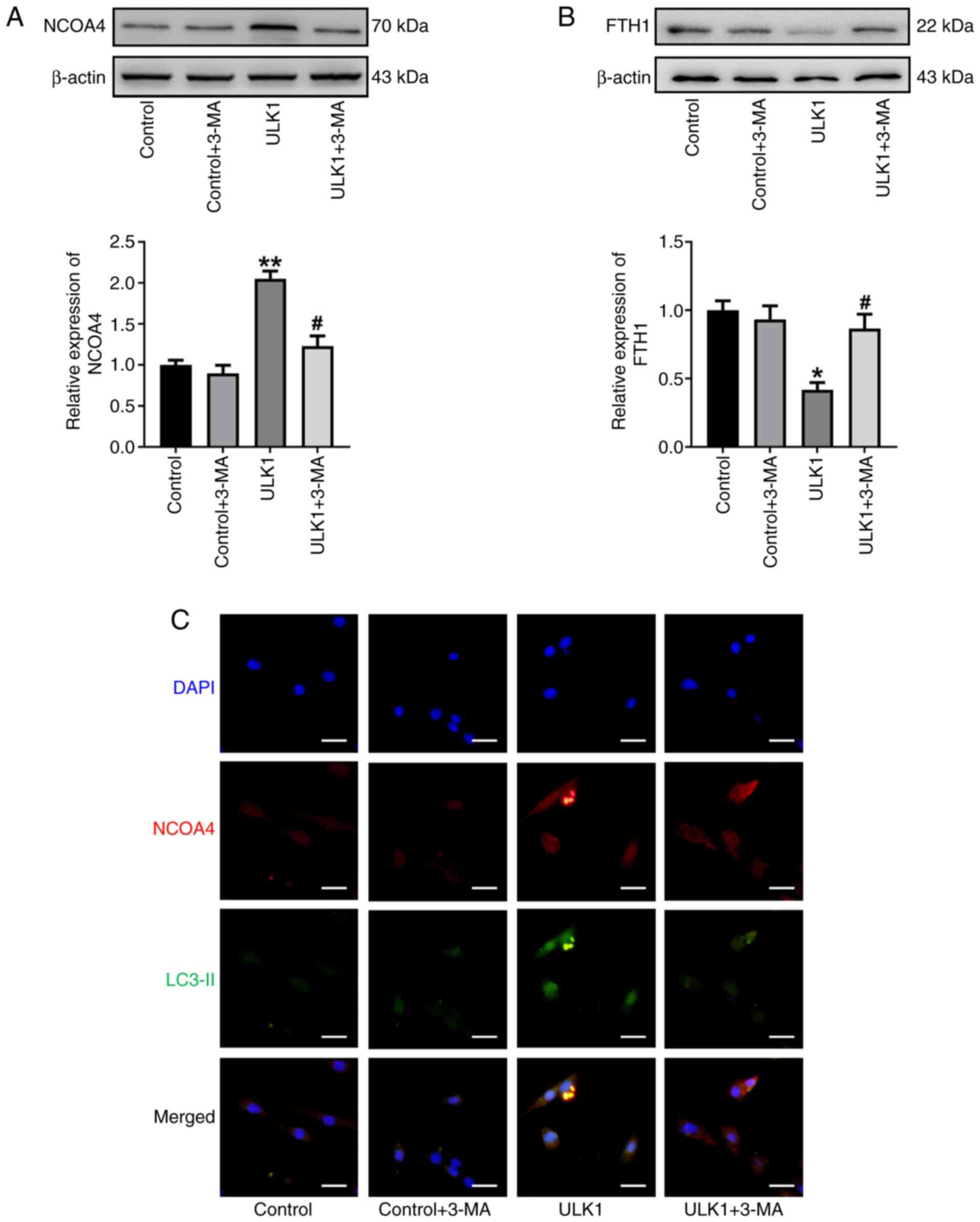
Figure 4

Autophagy inhibition significantly
reduces NCOA4-mediated ferritinophagy induced by ULK1 exposure.
Western blot analysis and summarized data demonstrating (A) NCOA4
and (B) FTH1 protein levels in 3-MA group. (C) The colocalization
of NCOA4 (red) and LC3-II (green) in HL-1 cells was determined by
immunofluorescence in 3-MA group. Scale bar, 50 µm. All data are
presented as mean ± SEM. n=3. *P<0.05 and **P<0.01 vs.
control group; #P<0.05 vs. ULK1 group. ULK1,
serine/threonine protein kinase ULK1; NCOA4, nuclear receptor
coactivator 4; FTH1, ferritin heavy chain 1; 3-MA, 3-methyladenine;
LC3, microtubule-associated protein 1 light chain 3.

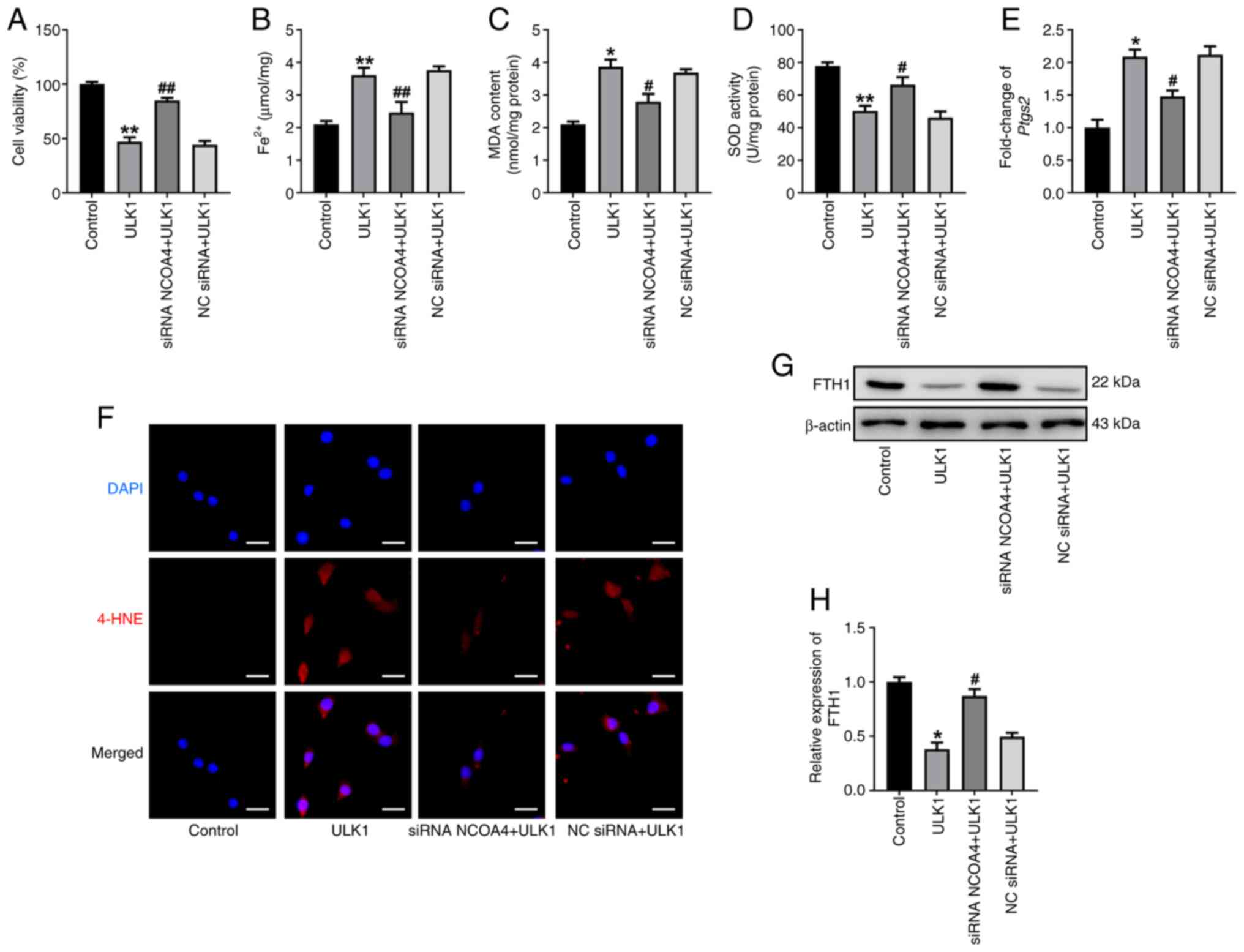
Figure 5

NCOA4 knockdown alleviates
ULK1-induced ferroptosis events. (A) Cell viability of HL-1 cells
was assessed using a Cell Counting Kit-8 assay in indicated group.
The levels of (B) Fe2+, (C) MDA and (D) SOD were
determined in each indicated group. (E) The mRNA levels of
Ptgs2. (F) Immunofluorescence staining for 4-HNE in
indicated group. Scale bar, 50 µm. (G) Western blot analysis and
(H) summarized data demonstrating FTH1 protein levels in the
indicated groups. All data are presented as mean ± SEM. n=3.
*P<0.05 and **P<0.01 vs. control group; #P<0.05
and ##P<0.01 vs. ULK1 group. ULK1, serine/threonine
protein kinase ULK1; NCOA4, nuclear receptor coactivator 4; MDA,
malondialdehyde; SOD, superoxide dismutase; siRNA, small
interfering RNA; NC, negative control; Ptgs2, prostaglandin
endoperoxide synthase 2; 4-HNE, 4-hydroxynonenal; FTH1, ferritin
heavy chain 1.

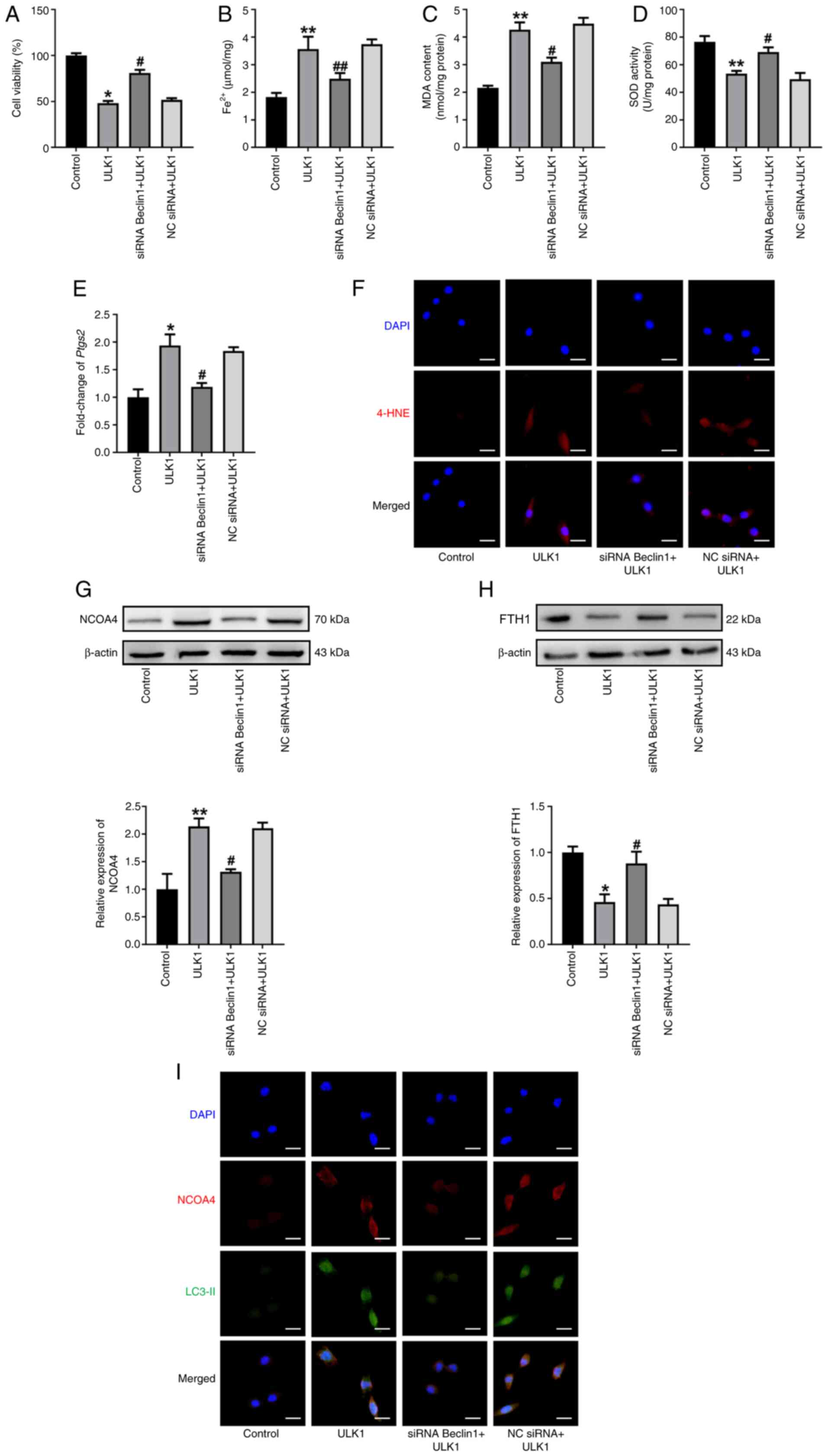
Figure 6

ULK1 activates ferritinophagy
dependent on Beclin1/VPS34 complex. (A) Cell viability of HL-1
cells was assessed using a Cell Counting Kit-8 assay in the
indicated groups. The levels of (B) Fe2+, (C) MDA and
(D) SOD were determined. (E) The mRNA levels of Ptgs2. (F)
Immunofluorescence staining for 4-HNE in indicated groups. Scale
bar, 50 µm. Western blot analysis and summarized data demonstrating
(G) NCOA4 and (H) FTH1 protein levels in indicated group. (I) The
colocalization of NCOA4 (red) and LC3-II (green) in HL-1 cells was
determined using immunofluorescence staining. Scale bar, 50 µm. All
data are presented as mean ± SEM. n=3. *P<0.05 and **P<0.01
vs. control group; #P<0.05 and ##P<0.01
vs. ULK1 group. ULK1, serine/threonine protein kinase ULK1; VPS34,
PI3K catalytic subunit type 3; siRNA, small interfering RNA; NC,
negative control; MDA, malondialdehyde; SOD, superoxide dismutase;
Ptgs2, prostaglandin endoperoxide synthase 2; 4-HNE,
4-hydroxynonenal; FTH1, ferritin heavy chain 1; NCOA4, nuclear
receptor coactivator 4; LC3, microtubule-associated protein 1 light
chain 3.

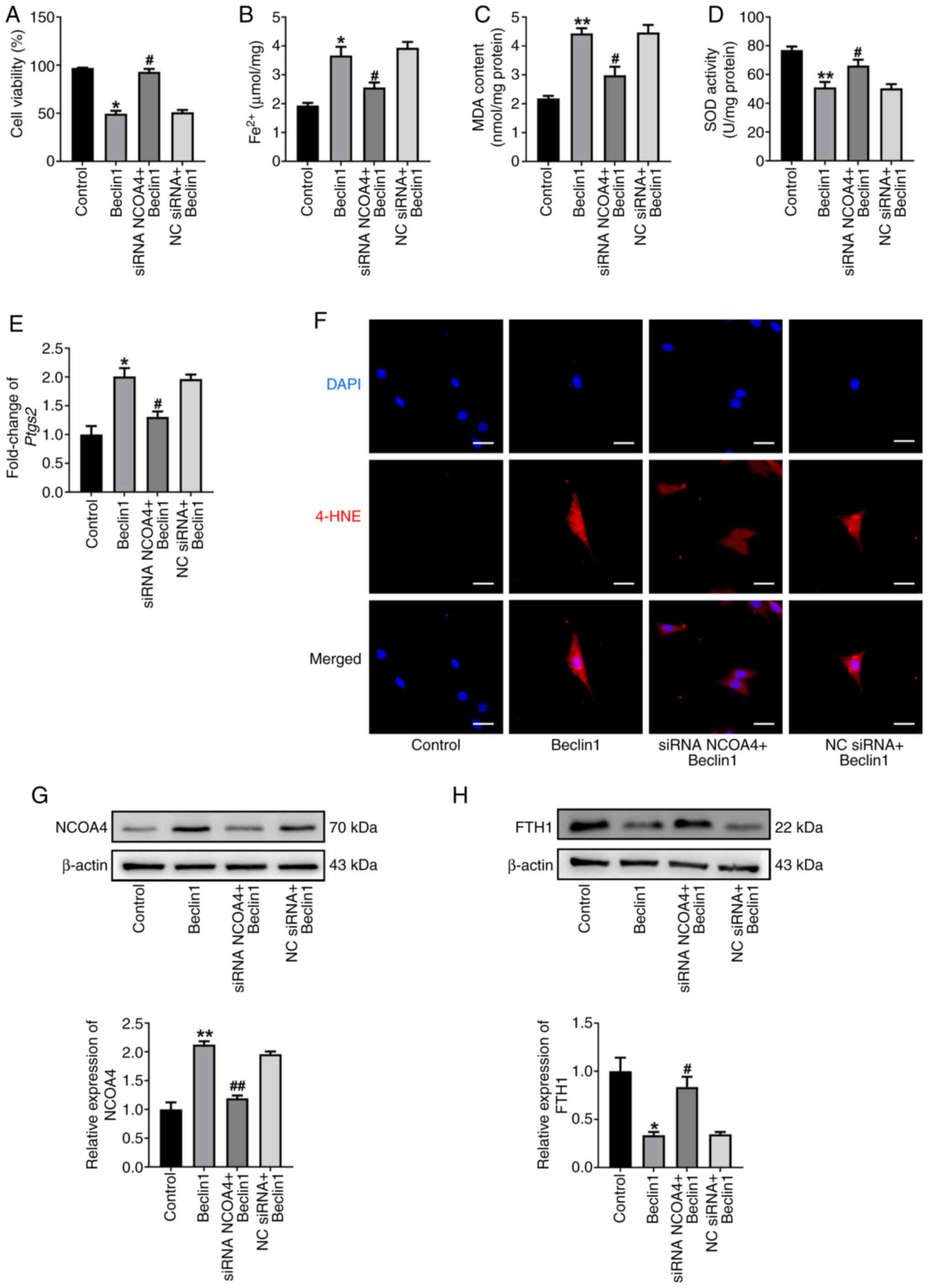
Figure 7

Beclin1/VPS34 complex is associated
with NCOA4-mediated ferritinophagy. (A) Cell viability of HL-1
cells was assessed using a Cell Counting Kit-8 assay. The levels of
(B) Fe2+, (C) MDA and (D) SOD were determined. (E) The
mRNA levels of Ptgs2. (F) Immunofluorescence staining for
4-HNE in indicated group. Scale bar, 50 µm. Western blot analysis
and summarized data demonstrating (G) NCOA4 and (H) FTH1 protein
levels in the indicated groups. All data are presented as mean ±
SEM. n=3. *P<0.05 and **P<0.01 vs. control group;
#P<0.05 and ##P<0.01 vs. Beclin1 group.
VPS34, PI3K catalytic subunit type 3; NCOA4, nuclear receptor
coactivator 4; siRNA, small interfering RNA; NC, negative control;
MDA, malondialdehyde; SOD, superoxide dismutase; Ptgs2,
prostaglandin endoperoxide synthase 2; 4-HNE, 4-hydroxynonenal;
FTH1, ferritin heavy chain 1.

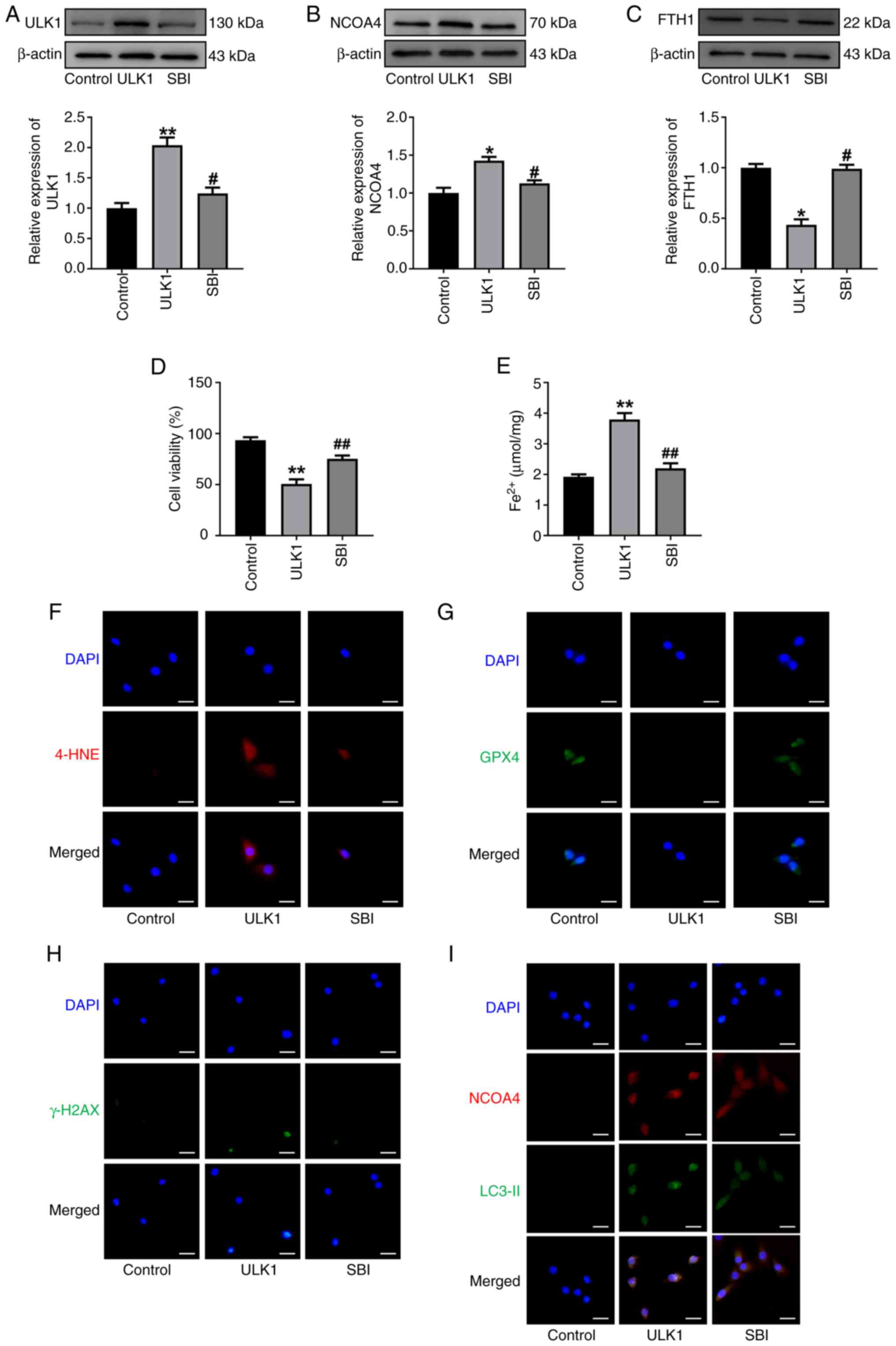
Figure 8

Administration of SBI-0206965
ameliorates ferritinophagy in ULK1-overexpressing cells. Western
blot analysis and summarized data demonstrating (A) ULK1, (B) NCOA4
and (C) FTH1 protein levels in HL-1 cells treated with SBI-0206965.
(D) Cell viability of HL-1 cells was assessed using a Cell Counting
Kit-8 assay. (E) The levels of Fe2+. (F)
Immunofluorescence staining for 4-HNE. Scale bar, 50 µm. (G)
Immunofluorescence staining for GPX4. Scale bar, 50 µm. (H)
Immunofluorescence staining for γ-H2AX. Scale bar, 50 µm. (I) The
colocalization of NCOA4 (red) and LC3-II (green) in HL-1 cells was
determined by immunofluorescence staining in the indicated groups.
Scale bar, 50 µm. All data are presented as mean ± SEM. n=3.
*P<0.05 and **P<0.01 vs. control group; #P<0.05
and ##P<0.01 vs. ULK1 group. ULK1, serine/threonine
protein kinase ULK1; NCOA4, nuclear receptor coactivator 4; SBI,
SBI-0206965; FTH1, ferritin heavy chain 1; 4-HNE, 4-hydroxynonenal;
GPX4, glutathione peroxidase 4; LC3, microtubule-associated protein
1 light chain 3.

Figure 9

Mechanisms of ULK1 activating
NCOA4-mediated ferritinophagy via Beclin1/VPS34 complex in
cardiomyocyte hypertrophy. This figure was created using Figdraw
(www.figdraw.com). ULK1, serine/threonine protein
kinase ULK1; NCOA4, nuclear receptor coactivator 4; VPS34, PI3K
catalytic subunit type 3; LC3, microtubule-associated protein 1
light chain 3; TAC, transverse aortic constriction; Ang II,
angiotensin II; ROS, reactive oxygen species.
View References

1 

Martin SS, Aday AW, Allen NB, Almarzooq ZI, Anderson CAM, Arora P, Avery CL, Baker-Smith CM, Bansal N, Beaton AZ, et al: 2025 Heart disease and stroke statistics: A report of US and global data from the American heart association. Circulation. 151:e41–e660. 2025. View Article : Google Scholar : PubMed/NCBI

2 

Dev S and Babitt JL: Overview of iron metabolism in health and disease. Hemodial Int. 21:S6–S20. 2017. View Article : Google Scholar

3 

Chen X, Yu C, Kang R and Tang D: Iron metabolism in ferroptosis. Front Cell Devel Biol. 8:5902262020. View Article : Google Scholar

4 

Wu R, Wyatt E, Chawla K, Tran M, Ghanefar M, Laakso M, Epting CL and Ardehali H: Hexokinase II knockdown results in exaggerated cardiac hypertrophy via increased ROS production. EMBO Mol Med. 4:633–646. 2012. View Article : Google Scholar : PubMed/NCBI

5 

Fan K, Huang W, Qi H, Song C, He C, Liu Y, Zhang Q, Wang L and Sun H: The Egr-1/miR-15a-5p/GPX4 axis regulates ferroptosis in acute myocardial infarction. Eur J Pharmacol. 909:1744032021. View Article : Google Scholar

6 

Zhang Q, Song C, Zhang M, Song C, He C, Liu Y, Zhang Q, Wang L and Sun H: Super-enhancer-driven lncRNA Snhg7 aggravates cardiac hypertrophy via Tbx5/GLS2/ferroptosis axis. Eur J Pharmacol. 953:1758222023. View Article : Google Scholar

7 

Ichimiya T, Yamakawa T, Hirano T, Yokoyama Y, Hayashi Y, Hirayama D, Wagatsuma K, Itoi T and Nakase H: Autophagy and autophagy-related diseases: A review. Int J Mol Sci. 21:89742020. View Article : Google Scholar

8 

Russell RC, Tian Y, Yuan H, Park HW, Chang YY, Kim J, Kim H, Neufeld TP, Dillin A and Guan KL: ULK1 induces autophagy by phosphorylating Beclin-1 and activating VPS34 lipid kinase. Nat Cell Biol. 15:741–750. 2013. View Article : Google Scholar

9 

Lin MG and Hurley JH: Structure and function of the ULK1 complex in autophagy. Curr Opin Cell Biol. 39:61–68. 2016. View Article : Google Scholar

10 

Pierzynowska K, Rintz E, Gaffke L and Węgrzyn G: Ferroptosis and its modulation by autophagy in light of the pathogenesis of lysosomal storage diseases. Cells. 10:3652021. View Article : Google Scholar : PubMed/NCBI

11 

Santana-Codina N and Mancias JD: The role of NCOA4-mediated ferritinophagy in health and disease. Pharmaceuticals (Basel). 11:1142018. View Article : Google Scholar : PubMed/NCBI

12 

Qin X, Zhang J, Wang B, Xu G, Yang X, Zou Z and Yu C: Ferritinophagy is involved in the zinc oxide nanoparticles-induced ferroptosis of vascular endothelial cells. Autophagy. 17:4266–4285. 2021. View Article : Google Scholar : PubMed/NCBI

13 

Nakao Y, Aono J, Hamaguchi M, Takahashi K, Sakaue T, Inoue K, Ikeda S and Yamaguchi O: O-ring-induced transverse aortic constriction (OTAC) is a new simple method to develop cardiac hypertrophy and heart failure in mice. Sci Rep. 12:852022. View Article : Google Scholar : PubMed/NCBI

14 

Merino D, Gil A, Gómez J, Ruiz L, Llano M, García R, Hurlé MA and Nistal JF: Experimental modelling of cardiac pressure overload hypertrophy: Modified technique for precise, reproducible, safe and easy aortic arch banding-debanding in mice. Sci Rep. 8:31672018. View Article : Google Scholar : PubMed/NCBI

15 

Livak KJ and Schmittgen TD: Analysis of relative gene expression data using real-time quantitative PCR and the 2(−Delta Delta C(T)) method. Methods. 25:402–408. 2001. View Article : Google Scholar : PubMed/NCBI

16 

Martinez VR, Martins Lima A, Stergiopulos N, Velez Rueda JO, Islas MS, Griera M, Calleros L, Rodriguez Puyol M, Jaquenod de Giusti C, Portiansky EL, et al: Effect of the structural modification of candesartan with zinc on hypertension and left ventricular hypertrophy. Eur J Pharmacol. 946:1756542023. View Article : Google Scholar

17 

Wu D, Tang X, Ding L, Cui J, Wang P, Du X, Yin J, Wang W, Chen Y and Zhang T: Candesartan attenuates hypertension-associated pathophysiological alterations in the gut. Biomed Pharmacother. 116:1090402019. View Article : Google Scholar : PubMed/NCBI

18 

Mahmoud DM, Ali MRA, Aldosari BN, Zaki RM, Afzal O, Tulbah AS, Naguib DM, Zanaty MI, Attia ME, Abo El-Ela FI and Fouad AG: Functional candesartan loaded lipid nanoparticles for the control of diabetes-associated stroke: In vitro and in vivo studies. Int J Pharm X. 7:1002272024.PubMed/NCBI

19 

Lebeche D, Zhao Bin K and Hajjar R: Candesartan abrogates G protein-coupled receptors agonist-induced MAPK activation and cardiac myocyte hypertrophy. J Renin-Angiotensin-Aldosterone Syst. 2:S154–S161. 2001. View Article : Google Scholar

20 

Shang L and Wang X: AMPK and mTOR coordinate the regulation of Ulk1 and mammalian autophagy initiation. Autophagy. 7:924–926. 2011. View Article : Google Scholar : PubMed/NCBI

21 

Endale HT, Tesfaye W and Mengstie TA: ROS induced lipid peroxidation and their role in ferroptosis. Fron Cell Dev Biol. 11:12260442023. View Article : Google Scholar

22 

Kang R and Tang D: Autophagy and ferroptosis-What's the connection? Curr Pathobiol Rep. 5:153–159. 2017. View Article : Google Scholar : PubMed/NCBI

23 

Santana-Codina N, Gikandi A and Mancias JD: The role of NCOA4-mediated ferritinophagy in ferroptosis. Adv Exp Med Biol. 1301:41–57. 2021. View Article : Google Scholar

24 

Goodwin JM, Dowdle WE, DeJesus R, Wang Z, Bergman P, Kobylarz M, Lindeman A, Xavier RJ, McAllister G, Nyfeler B, et al: Autophagy-independent lysosomal targeting regulated by ULK1/2-FIP200 and ATG9. Cell Rep. 20:2341–2356. 2017. View Article : Google Scholar : PubMed/NCBI

25 

Ahwazi D, Neopane K, Markby GR, Kopietz F, Ovens AJ, Dall M, Hassing AS, Gräsle P, Alshuweishi Y, Treebak JT, et al: Investigation of the specificity and mechanism of action of the ULK1/AMPK inhibitor SBI-0206965. Biochem J. 478:2977–2997. 2021. View Article : Google Scholar : PubMed/NCBI

26 

Caturano A, Vetrano E, Galiero R, Salvatore T, Docimo G, Epifani R, Alfano M, Sardu C, Marfella R, Rinaldi L, et al: Cardiac hypertrophy: From pathophysiological mechanisms to heart failure development. Rev Cardiovasc Med. 23:1652022. View Article : Google Scholar : PubMed/NCBI

27 

Chukwuma Sr D: Exploring the complex interplay in the regulation of cardiac pathophysiological functions by protein kinases and phosphatases. MOJ Biol Med. 6:165–170. 2021. View Article : Google Scholar

28 

Song C, Qi H, Liu Y, Chen Y, Shi P, Zhang S, Ren J, Wang L, Cao Y and Sun H: Inhibition of lncRNA Gm15834 attenuates autophagy-mediated myocardial hypertrophy via the miR-30b-3p/ULK1 axis in mice. Mol Ther. 29:1120–1137. 2021. View Article : Google Scholar : PubMed/NCBI

29 

Fatima S, Zhou H, Chen Y and Liu Q: Role of ferroptosis in the pathogenesis of heart disease. Front Physiol. 15:14506562024. View Article : Google Scholar

30 

Zhang K, Tian XM, Li W and Hao LY: Ferroptosis in cardiac hypertrophy and heart failure. Biomed Pharmacother. 168:1157652023. View Article : Google Scholar : PubMed/NCBI

31 

Zhang Y, Xin L, Xiang M, Shang C, Wang Y, Wang Y, Cui X and Lu Y: The molecular mechanisms of ferroptosis and its role in cardiovascular disease. Biomed Pharmacother. 145:1124232022. View Article : Google Scholar : PubMed/NCBI

32 

Ma TL, Chen JX, Zhu P, Zhang CB, Zhou Y and Duan JX: Focus on ferroptosis regulation: Exploring novel mechanisms and applications of ferroptosis regulator. Life Sci. 307:1208682022. View Article : Google Scholar

33 

Mancias JD, Wang X, Gygi SP, Harper JW and Kimmelman AC: Quantitative proteomics identifies NCOA4 as the cargo receptor mediating ferritinophagy. Nature. 509:105–109. 2014. View Article : Google Scholar : PubMed/NCBI

34 

Qin Y, Qiao Y, Wang D, Tang C and Yan G: Ferritinophagy and ferroptosis in cardiovascular disease: Mechanisms and potential applications. Biomed Pharmacother. 141:1118722021. View Article : Google Scholar : PubMed/NCBI

35 

Ito J, Omiya S, Rusu MC, Ueda H, Murakawa T, Tanada Y, Abe H, Nakahara K, Asahi M, Taneike M, et al: Iron derived from autophagy-mediated ferritin degradation induces cardiomyocyte death and heart failure in mice. Elife. 10:e621742021. View Article : Google Scholar : PubMed/NCBI

36 

Tang M, Huang Z, Luo X, Liu M, Wang L, Qi Z, Huang S, Zhong J, Chen JX, Li L, et al: Ferritinophagy activation and sideroflexin1-dependent mitochondria iron overload is involved in apelin-13-induced cardiomyocytes hypertrophy. Free Radic Biol Med. 134:445–457. 2019. View Article : Google Scholar : PubMed/NCBI

37 

Fan Z, Cai L, Wang S, Wang J and Chen B: Baicalin prevents myocardial ischemia/reperfusion injury through inhibiting ACSL4 mediated ferroptosis. Front Pharmacol. 12:6289882021. View Article : Google Scholar

38 

Ktistakis NT and Tooze SA: Digesting the expanding mechanisms of autophagy. Trends Cell Biol. 26:624–635. 2016. View Article : Google Scholar

39 

Hama Y, Fujioka Y, Yamamoto H, Mizushima N and Noda NN: The triad interaction of ULK1, ATG13, and FIP200 is required for ULK complex formation and autophagy. Elife. 13:RP1015312025. View Article : Google Scholar : PubMed/NCBI

40 

Wirth M, Joachim J and Tooze SA: Autophagosome formation-the role of ULK1 and Beclin1-PI3KC3 complexes in setting the stage. Semin Cancer Biol. 23:301–309. 2013. View Article : Google Scholar

41 

Pareek G and Kundu M: Physiological functions of ULK1/2. J Mol Biol. 436:1684722024. View Article : Google Scholar

42 

Jia M, Yue X, Sun W, Zhou Q, Chang C, Gong W, Feng J, Li X, Zhan R, Mo K, et al: ULK1-mediated metabolic reprogramming regulates Vps34 lipid kinase activity by its lactylation. Sci Adv. 9:eadg49932023. View Article : Google Scholar : PubMed/NCBI

43 

Yan K, Hou T, Zhu L, Ci X and Peng L: PM2.5 inhibits system Xc- activity to induce ferroptosis by activating the AMPK-Beclin1 pathway in acute lung injury. Ecotoxicol Environ Saf. 245:1140832022. View Article : Google Scholar : PubMed/NCBI

44 

Li RL, Wu SS, Wu Y, Wang XX, Chen HY, Xin JJ, Li H, Lan J, Xue KY, Li X, et al: Irisin alleviates pressure overload-induced cardiac hypertrophy by inducing protective autophagy via mTOR-independent activation of the AMPK-ULK1 pathway. J Mol Cell Cardiol. 121:242–255. 2018. View Article : Google Scholar

Related Articles

  • Abstract
  • View
  • Download
  • Twitter
Copy and paste a formatted citation
Spandidos Publications style
Zhang Q, Zhang M, Liu Y, Shi P, Qi H, Jiang M, Cao Y and Sun H: ULK1 activates NCOA4‑mediated ferritinophagy via the Beclin1/VPS34 complex in cardiomyocyte hypertrophy. Mol Med Rep 33: 116, 2026.
APA
Zhang, Q., Zhang, M., Liu, Y., Shi, P., Qi, H., Jiang, M. ... Sun, H. (2026). ULK1 activates NCOA4‑mediated ferritinophagy via the Beclin1/VPS34 complex in cardiomyocyte hypertrophy. Molecular Medicine Reports, 33, 116. https://doi.org/10.3892/mmr.2026.13826
MLA
Zhang, Q., Zhang, M., Liu, Y., Shi, P., Qi, H., Jiang, M., Cao, Y., Sun, H."ULK1 activates NCOA4‑mediated ferritinophagy via the Beclin1/VPS34 complex in cardiomyocyte hypertrophy". Molecular Medicine Reports 33.4 (2026): 116.
Chicago
Zhang, Q., Zhang, M., Liu, Y., Shi, P., Qi, H., Jiang, M., Cao, Y., Sun, H."ULK1 activates NCOA4‑mediated ferritinophagy via the Beclin1/VPS34 complex in cardiomyocyte hypertrophy". Molecular Medicine Reports 33, no. 4 (2026): 116. https://doi.org/10.3892/mmr.2026.13826
Copy and paste a formatted citation
x
Spandidos Publications style
Zhang Q, Zhang M, Liu Y, Shi P, Qi H, Jiang M, Cao Y and Sun H: ULK1 activates NCOA4‑mediated ferritinophagy via the Beclin1/VPS34 complex in cardiomyocyte hypertrophy. Mol Med Rep 33: 116, 2026.
APA
Zhang, Q., Zhang, M., Liu, Y., Shi, P., Qi, H., Jiang, M. ... Sun, H. (2026). ULK1 activates NCOA4‑mediated ferritinophagy via the Beclin1/VPS34 complex in cardiomyocyte hypertrophy. Molecular Medicine Reports, 33, 116. https://doi.org/10.3892/mmr.2026.13826
MLA
Zhang, Q., Zhang, M., Liu, Y., Shi, P., Qi, H., Jiang, M., Cao, Y., Sun, H."ULK1 activates NCOA4‑mediated ferritinophagy via the Beclin1/VPS34 complex in cardiomyocyte hypertrophy". Molecular Medicine Reports 33.4 (2026): 116.
Chicago
Zhang, Q., Zhang, M., Liu, Y., Shi, P., Qi, H., Jiang, M., Cao, Y., Sun, H."ULK1 activates NCOA4‑mediated ferritinophagy via the Beclin1/VPS34 complex in cardiomyocyte hypertrophy". Molecular Medicine Reports 33, no. 4 (2026): 116. https://doi.org/10.3892/mmr.2026.13826
Follow us
  • Twitter
  • LinkedIn
  • Facebook
About
  • Spandidos Publications
  • Careers
  • Cookie Policy
  • Privacy Policy
How can we help?
  • Help
  • Live Chat
  • Contact
  • Email to our Support Team