Spandidos Publications Logo
  • About
    • About Spandidos
    • Aims and Scopes
    • Abstracting and Indexing
    • Editorial Policies
    • Reprints and Permissions
    • Job Opportunities
    • Terms and Conditions
    • Contact
  • Journals
    • All Journals
    • Oncology Letters
      • Oncology Letters
      • Information for Authors
      • Editorial Policies
      • Editorial Board
      • Aims and Scope
      • Abstracting and Indexing
      • Bibliographic Information
      • Archive
    • International Journal of Oncology
      • International Journal of Oncology
      • Information for Authors
      • Editorial Policies
      • Editorial Board
      • Aims and Scope
      • Abstracting and Indexing
      • Bibliographic Information
      • Archive
    • Molecular and Clinical Oncology
      • Molecular and Clinical Oncology
      • Information for Authors
      • Editorial Policies
      • Editorial Board
      • Aims and Scope
      • Abstracting and Indexing
      • Bibliographic Information
      • Archive
    • Experimental and Therapeutic Medicine
      • Experimental and Therapeutic Medicine
      • Information for Authors
      • Editorial Policies
      • Editorial Board
      • Aims and Scope
      • Abstracting and Indexing
      • Bibliographic Information
      • Archive
    • International Journal of Molecular Medicine
      • International Journal of Molecular Medicine
      • Information for Authors
      • Editorial Policies
      • Editorial Board
      • Aims and Scope
      • Abstracting and Indexing
      • Bibliographic Information
      • Archive
    • Biomedical Reports
      • Biomedical Reports
      • Information for Authors
      • Editorial Policies
      • Editorial Board
      • Aims and Scope
      • Abstracting and Indexing
      • Bibliographic Information
      • Archive
    • Oncology Reports
      • Oncology Reports
      • Information for Authors
      • Editorial Policies
      • Editorial Board
      • Aims and Scope
      • Abstracting and Indexing
      • Bibliographic Information
      • Archive
    • Molecular Medicine Reports
      • Molecular Medicine Reports
      • Information for Authors
      • Editorial Policies
      • Editorial Board
      • Aims and Scope
      • Abstracting and Indexing
      • Bibliographic Information
      • Archive
    • World Academy of Sciences Journal
      • World Academy of Sciences Journal
      • Information for Authors
      • Editorial Policies
      • Editorial Board
      • Aims and Scope
      • Abstracting and Indexing
      • Bibliographic Information
      • Archive
    • International Journal of Functional Nutrition
      • International Journal of Functional Nutrition
      • Information for Authors
      • Editorial Policies
      • Editorial Board
      • Aims and Scope
      • Abstracting and Indexing
      • Bibliographic Information
      • Archive
    • International Journal of Epigenetics
      • International Journal of Epigenetics
      • Information for Authors
      • Editorial Policies
      • Editorial Board
      • Aims and Scope
      • Abstracting and Indexing
      • Bibliographic Information
      • Archive
    • Medicine International
      • Medicine International
      • Information for Authors
      • Editorial Policies
      • Editorial Board
      • Aims and Scope
      • Abstracting and Indexing
      • Bibliographic Information
      • Archive
  • Articles
  • Information
    • Information for Authors
    • Information for Reviewers
    • Information for Librarians
    • Information for Advertisers
    • Conferences
  • Language Editing
Spandidos Publications Logo
  • About
    • About Spandidos
    • Aims and Scopes
    • Abstracting and Indexing
    • Editorial Policies
    • Reprints and Permissions
    • Job Opportunities
    • Terms and Conditions
    • Contact
  • Journals
    • All Journals
    • Biomedical Reports
      • Information for Authors
      • Editorial Policies
      • Editorial Board
      • Aims and Scope
      • Abstracting and Indexing
      • Bibliographic Information
      • Archive
    • Experimental and Therapeutic Medicine
      • Information for Authors
      • Editorial Policies
      • Editorial Board
      • Aims and Scope
      • Abstracting and Indexing
      • Bibliographic Information
      • Archive
    • International Journal of Epigenetics
      • Information for Authors
      • Editorial Policies
      • Editorial Board
      • Aims and Scope
      • Abstracting and Indexing
      • Bibliographic Information
      • Archive
    • International Journal of Functional Nutrition
      • Information for Authors
      • Editorial Policies
      • Editorial Board
      • Aims and Scope
      • Abstracting and Indexing
      • Bibliographic Information
      • Archive
    • International Journal of Molecular Medicine
      • Information for Authors
      • Editorial Policies
      • Editorial Board
      • Aims and Scope
      • Abstracting and Indexing
      • Bibliographic Information
      • Archive
    • International Journal of Oncology
      • Information for Authors
      • Editorial Policies
      • Editorial Board
      • Aims and Scope
      • Abstracting and Indexing
      • Bibliographic Information
      • Archive
    • Medicine International
      • Information for Authors
      • Editorial Policies
      • Editorial Board
      • Aims and Scope
      • Abstracting and Indexing
      • Bibliographic Information
      • Archive
    • Molecular and Clinical Oncology
      • Information for Authors
      • Editorial Policies
      • Editorial Board
      • Aims and Scope
      • Abstracting and Indexing
      • Bibliographic Information
      • Archive
    • Molecular Medicine Reports
      • Information for Authors
      • Editorial Policies
      • Editorial Board
      • Aims and Scope
      • Abstracting and Indexing
      • Bibliographic Information
      • Archive
    • Oncology Letters
      • Information for Authors
      • Editorial Policies
      • Editorial Board
      • Aims and Scope
      • Abstracting and Indexing
      • Bibliographic Information
      • Archive
    • Oncology Reports
      • Information for Authors
      • Editorial Policies
      • Editorial Board
      • Aims and Scope
      • Abstracting and Indexing
      • Bibliographic Information
      • Archive
    • World Academy of Sciences Journal
      • Information for Authors
      • Editorial Policies
      • Editorial Board
      • Aims and Scope
      • Abstracting and Indexing
      • Bibliographic Information
      • Archive
  • Articles
  • Information
    • For Authors
    • For Reviewers
    • For Librarians
    • For Advertisers
    • Conferences
  • Language Editing
Login Register Submit
  • This site uses cookies
  • You can change your cookie settings at any time by following the instructions in our Cookie Policy. To find out more, you may read our Privacy Policy.

    I agree
Search articles by DOI, keyword, author or affiliation
Search
Advanced Search
presentation
Molecular Medicine Reports
Join Editorial Board Propose a Special Issue
Print ISSN: 1791-2997 Online ISSN: 1791-3004
Journal Cover
April-2026 Volume 33 Issue 4

Full Size Image

Sign up for eToc alerts
Recommend to Library

Journals

International Journal of Molecular Medicine

International Journal of Molecular Medicine

International Journal of Molecular Medicine is an international journal devoted to molecular mechanisms of human disease.

International Journal of Oncology

International Journal of Oncology

International Journal of Oncology is an international journal devoted to oncology research and cancer treatment.

Molecular Medicine Reports

Molecular Medicine Reports

Covers molecular medicine topics such as pharmacology, pathology, genetics, neuroscience, infectious diseases, molecular cardiology, and molecular surgery.

Oncology Reports

Oncology Reports

Oncology Reports is an international journal devoted to fundamental and applied research in Oncology.

Experimental and Therapeutic Medicine

Experimental and Therapeutic Medicine

Experimental and Therapeutic Medicine is an international journal devoted to laboratory and clinical medicine.

Oncology Letters

Oncology Letters

Oncology Letters is an international journal devoted to Experimental and Clinical Oncology.

Biomedical Reports

Biomedical Reports

Explores a wide range of biological and medical fields, including pharmacology, genetics, microbiology, neuroscience, and molecular cardiology.

Molecular and Clinical Oncology

Molecular and Clinical Oncology

International journal addressing all aspects of oncology research, from tumorigenesis and oncogenes to chemotherapy and metastasis.

World Academy of Sciences Journal

World Academy of Sciences Journal

Multidisciplinary open-access journal spanning biochemistry, genetics, neuroscience, environmental health, and synthetic biology.

International Journal of Functional Nutrition

International Journal of Functional Nutrition

Open-access journal combining biochemistry, pharmacology, immunology, and genetics to advance health through functional nutrition.

International Journal of Epigenetics

International Journal of Epigenetics

Publishes open-access research on using epigenetics to advance understanding and treatment of human disease.

Medicine International

Medicine International

An International Open Access Journal Devoted to General Medicine.

Journal Cover
April-2026 Volume 33 Issue 4

Full Size Image

Sign up for eToc alerts
Recommend to Library

  • Article
  • Citations
    • Cite This Article
    • Download Citation
    • Create Citation Alert
    • Remove Citation Alert
    • Cited By
  • Similar Articles
    • Related Articles (in Spandidos Publications)
    • Similar Articles (Google Scholar)
    • Similar Articles (PubMed)
  • Download PDF
  • Download XML
  • View XML

  • Supplementary Files
    • Supplementary_Data.pdf
Article Open Access

STAT1 accelerates cutaneous melanoma progression through TUBB4A expression regulation

  • Authors:
    • Rongxin Zhao
    • Kexin Fang
    • Xiaofei Zhang
    • Hongchao Li
  • View Affiliations / Copyright

    Affiliations: Department of Dermatology, Pudong New Area People's Hospital, Shanghai 201200; P.R. China, Department of Dermatology, 921st Hospital of Joint Logistics Support Force People's Liberation Army of China, The Second Affiliated Hospital of Hunan Normal University, Changsha, Hunan 410073, P.R. China, Shanghai Xinmei Medical Beauty Outpatient Department, Shanghai 200031, P.R. China, Department of Head and Neck Surgery, The Second Hospital of Zhuzhou City, Zhuzhou, Hunan 412000, P.R. China
    Copyright: © Zhao et al. This is an open access article distributed under the terms of Creative Commons Attribution License.
  • Article Number: 118
    |
    Published online on: February 13, 2026
       https://doi.org/10.3892/mmr.2026.13828
  • Expand metrics +
Metrics: Total Views: 0 (Spandidos Publications: | PMC Statistics: )
Metrics: Total PDF Downloads: 0 (Spandidos Publications: | PMC Statistics: )
Cited By (CrossRef): 0 citations Loading Articles...

This article is mentioned in:


Abstract

The present research explored the contributions of signal transducer and activator of transcription 1 (STAT1) and tubulin β4A (TUBB4A) in melanoma pathogenesis, focusing on their roles in modulating cellular proliferation, motility and apoptotic pathways. The goal of the study was to establish foundational evidence of the role of these proteins in melanoma for the development of precision therapeutic interventions. Gene silencing approaches were utilized to suppress STAT1 expression, while TUBB4A overexpression was achieved both in vitro and in a murine xenograft model. Cellular proliferation was evaluated via Cell Counting Kit‑8 and colony formation assay, whereas migration capacity was assessed using Transwell migration assays. Apoptotic activity was quantified by flow cytometry using Annexin V‑FITC and PI staining. Western blot analysis was performed to measure the protein expression levels of STAT1 and TUBB4A. STAT1 downregulation led to impaired proliferation and motility in A375 and RPMI‑7951 melanoma cell lines, concomitant with increased apoptotic rates. These phenotypic changes were partially reversed following TUBB4A overexpression. In vivo experiments demonstrated significantly smaller tumor volumes in STAT1 knockdown xenografts, although TUBB4A overexpression partially restored neoplastic growth. STAT1 drove melanoma progression by upregulating TUBB4A, which acted as a downstream signaling mediator. The ability of TUBB4A to counteract STAT1 inhibition effects suggested that targeting this regulatory axis represents a potential therapeutic strategy. The findings of the present study contributed novel mechanistic insights that may facilitate the development of innovative melanoma treatment modalities.
View Figures

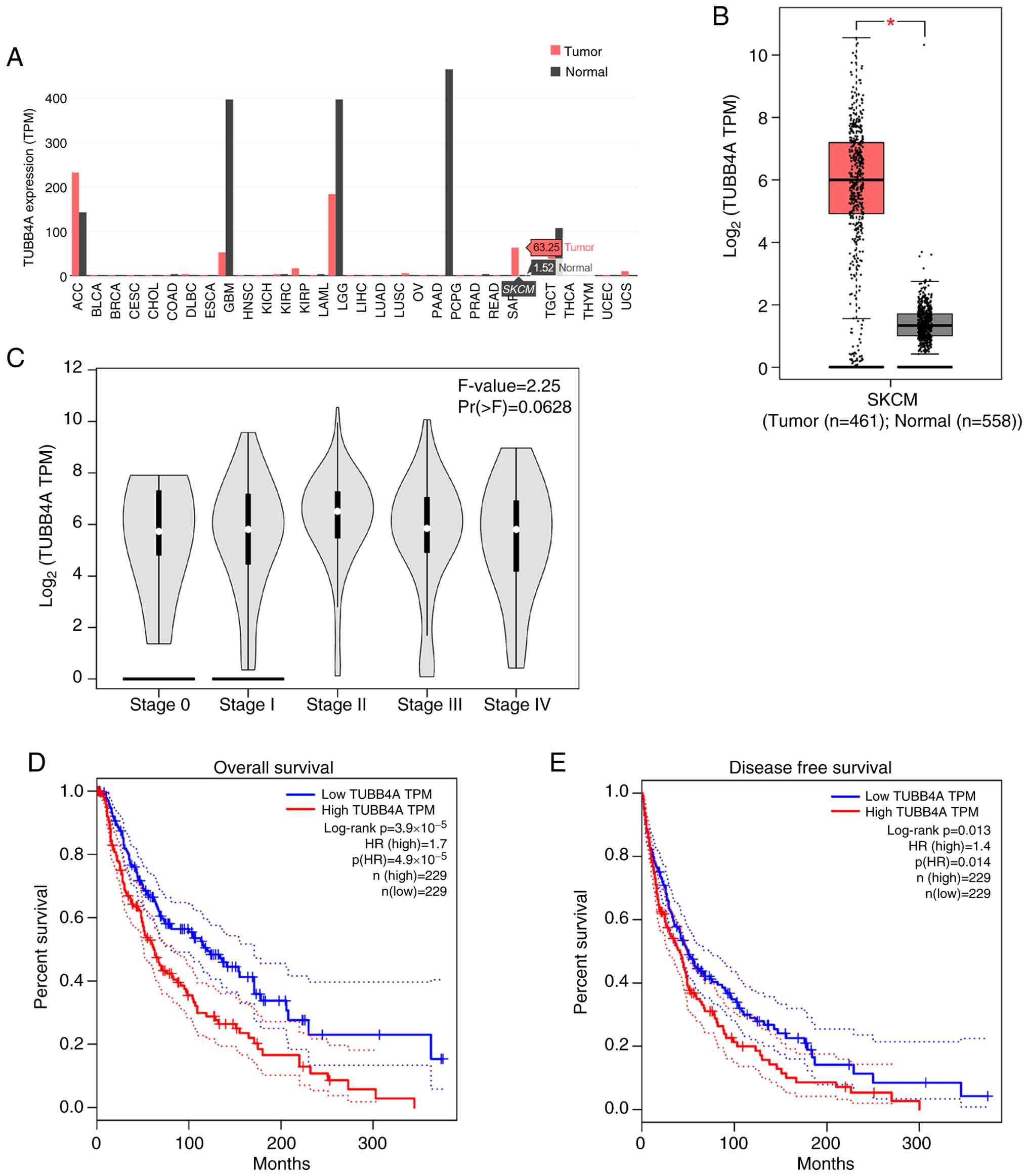
Figure 1

Bioinformatic analysis demonstrates
elevated TUBB4A expression in melanoma, correlating with poor
prognosis. (A) Data from the Gene Expression Profiling Interactive
Analysis 2 database revealed that TUBB4A was markedly altered
across various cancers, with a marked upregulation in SKCM. (B)
Further comparison of TUBB4A expression in melanoma tissues vs.
control tissues highlighted a significant increase in TUBB4A levels
in melanoma samples. (C) Analysis of TUBB4A expression across
different melanoma stages revealed no significant variation in
expression levels. Kaplan-Meier survival analysis measuring TUBB4A
expression against (D) overall survival and (E) disease-free
survival showed that high TUBB4A expression was significantly
associated with poorer overall survival and disease-free survival
outcomes, compared with patients demonstrating low TUBB4A
expression. *P<0.05. SKCM, skin cutaneous melanoma; TUBB4A,
tubulin β4A; TPM, transcripts per million; HR, hazard ratio.

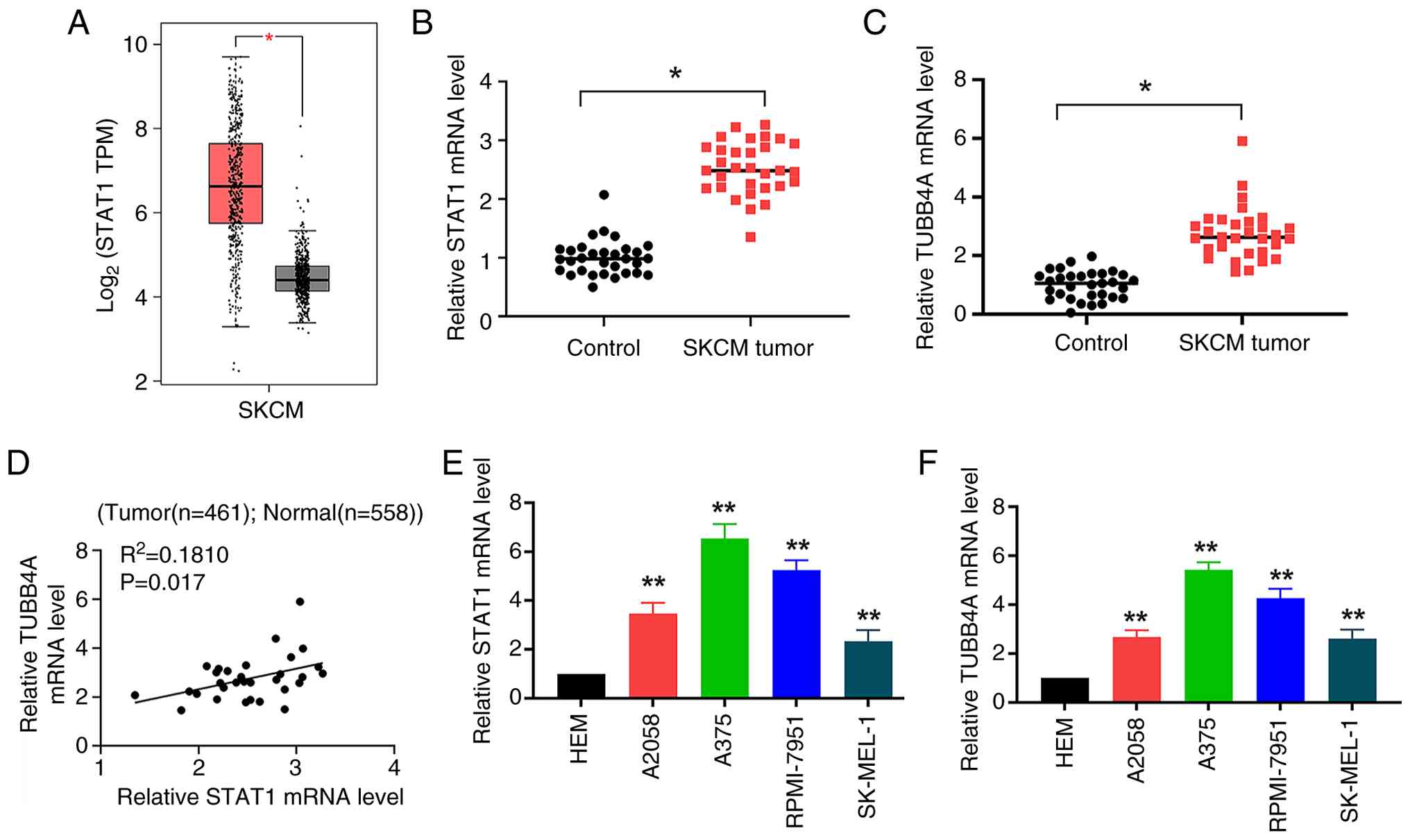
Figure 2

STAT1 and TUBB4A expression levels
are significantly correlated and upregulated in melanoma. (A)
Analysis of data in the Gene Expression Profiling Interactive
Analysis 2 database revealed a significant elevation of STAT1
expression in melanoma tissues. Quantification of (B) STAT1 and (C)
TUBB4A mRNA levels in 31 paired melanoma and normal tissue samples
from patients with SKCM demonstrated a significant upregulation of
both STAT1 and TUBB4A expression in melanoma tissues. (D)
Correlation analysis of STAT1 and TUBB4A mRNA levels in melanoma
samples showed a significant positive correlation. Comparative
analysis of (E) STAT1 and (F) TUBB4A mRNA expression in normal HEM
and melanoma cell lines revealed significantly higher expression in
the melanoma cell lines. *P<0.05 between groups; **P<0.01
compared with HEM cells. HEM, human epidermal melanocytes; STAT1,
signal transducer and activator of transcription 1; TUBB4A, tubulin
β4A; TPM, transcripts per million; SKCM, skin cutaneous
melanoma.

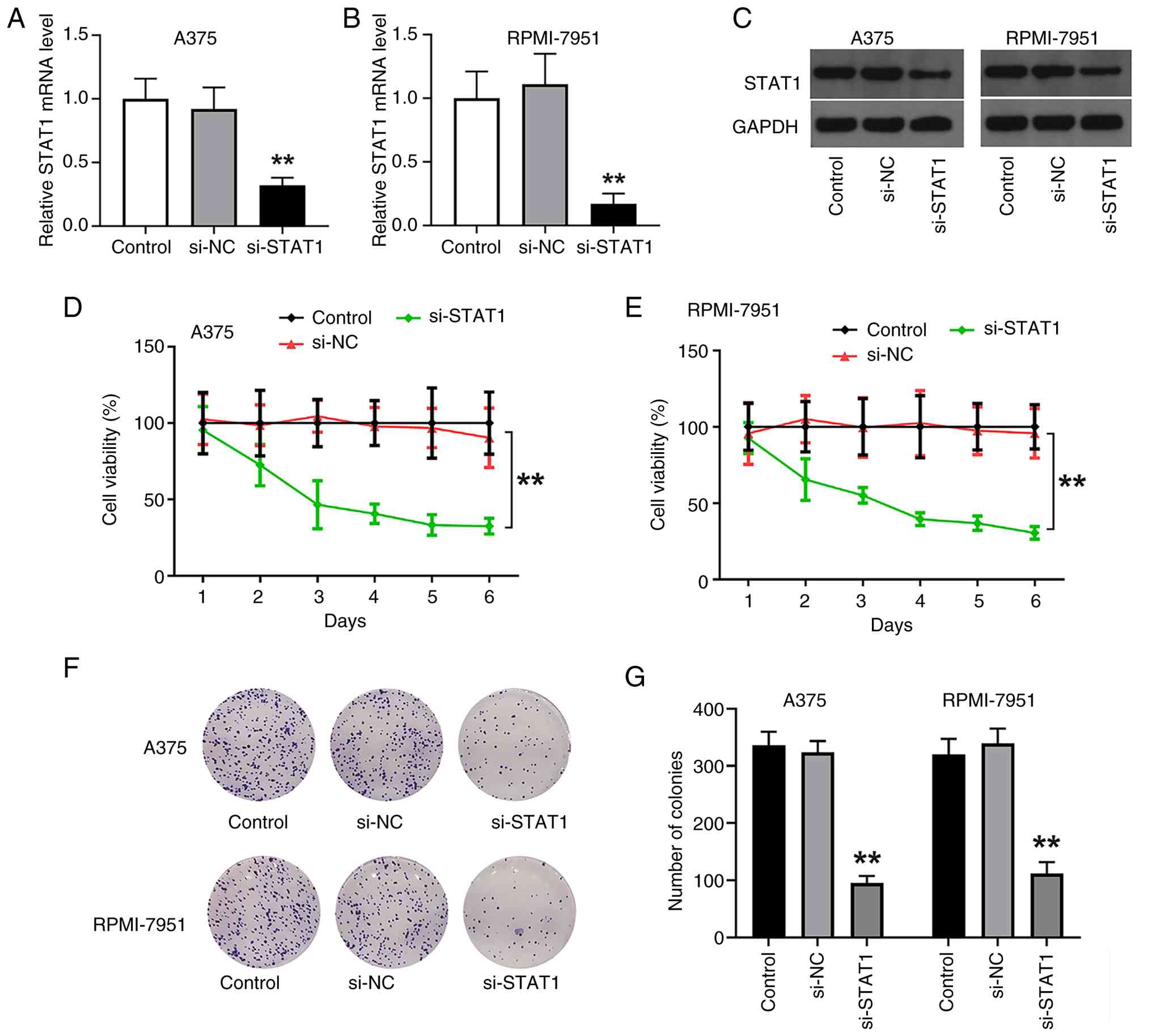
Figure 3

STAT1 knockdown significantly reduces
melanoma cell viability and proliferation. STAT1 mRNA expression
was analyzed in (A) A375 and (B) RPMI-7951 melanoma cells
post-STAT1 knockdown using siRNA. (C) Western blotting was used to
assess STAT1 protein levels in melanoma cell lines following
siRNA-mediated knockdown. Cell viability was evaluated after STAT1
knockdown in (D) A375 and (E) RPMI-7951 cells using Cell Counting
Kit-8 assays. (F) Colony formation assays were performed to assess
the proliferative capacity of cells after STAT1 knockdown. (G)
Quantification of colony formation assay results. **P<0.01 vs.
si-NC group. siRNA, small interfering RNA; STAT1, signal transducer
and activator of transcription 1; si-STAT1, siRNA targeting STAT1;
si-NC, negative control siRNA.

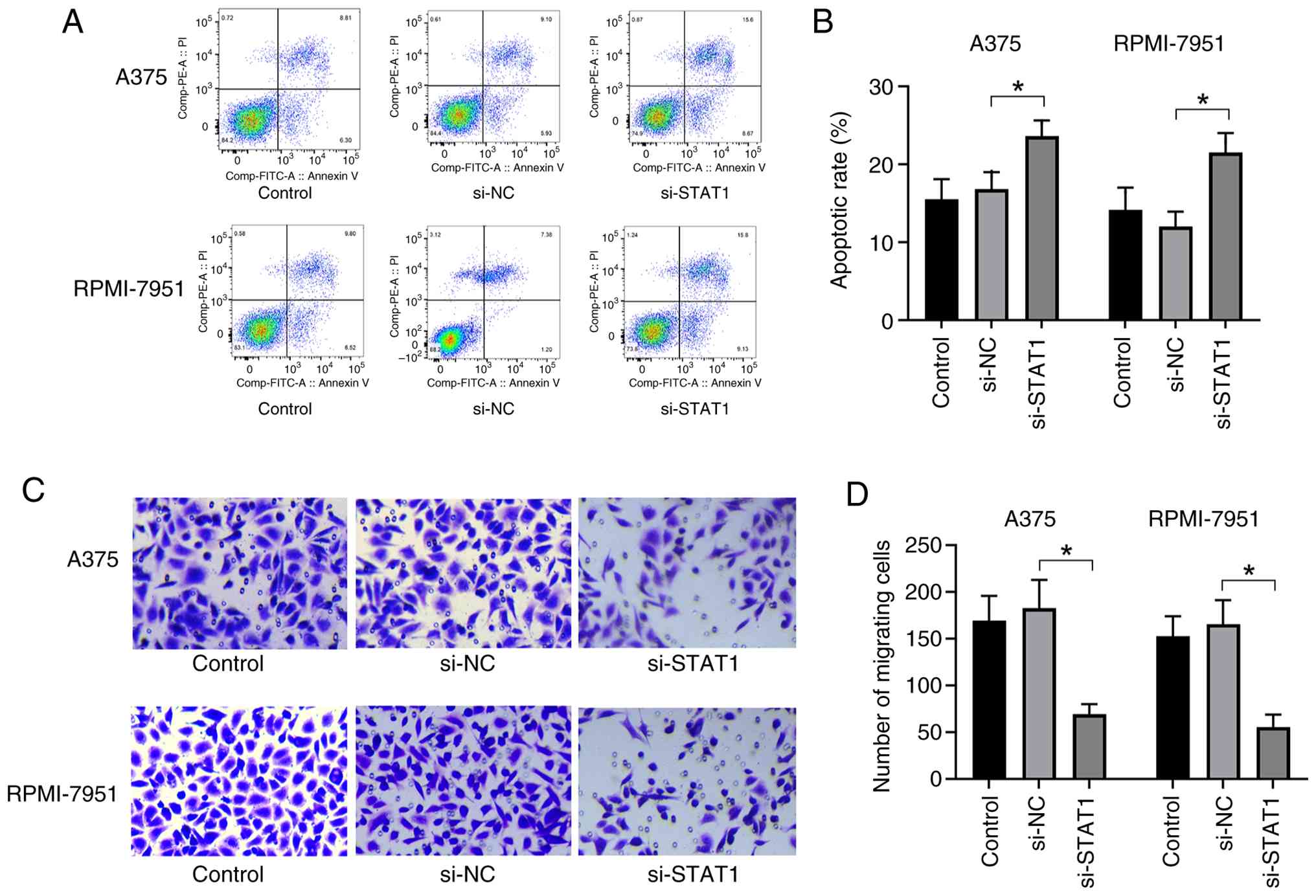
Figure 4

STAT1 knockdown significantly
promotes melanoma cell apoptosis and inhibits migration. (A and B)
Apoptosis was assessed and quantified in A375 and RPMI-7951 cells
following STAT1 knockdown using flow cytometry. (C) Transwell
migration assays were conducted to evaluate cell migration
following STAT1 knockdown. Magnification, ×200. (D) Quantification
of migration capacity in A375 and RPMI-7951 cells following STAT1
knockdown. *P<0.05 vs. si-NC. STAT1, signal transducer and
activator of transcription 1; si-STAT1, small interfering RNA
targeting STAT1; si-NC, negative control small interfering RNA.

Figure 5

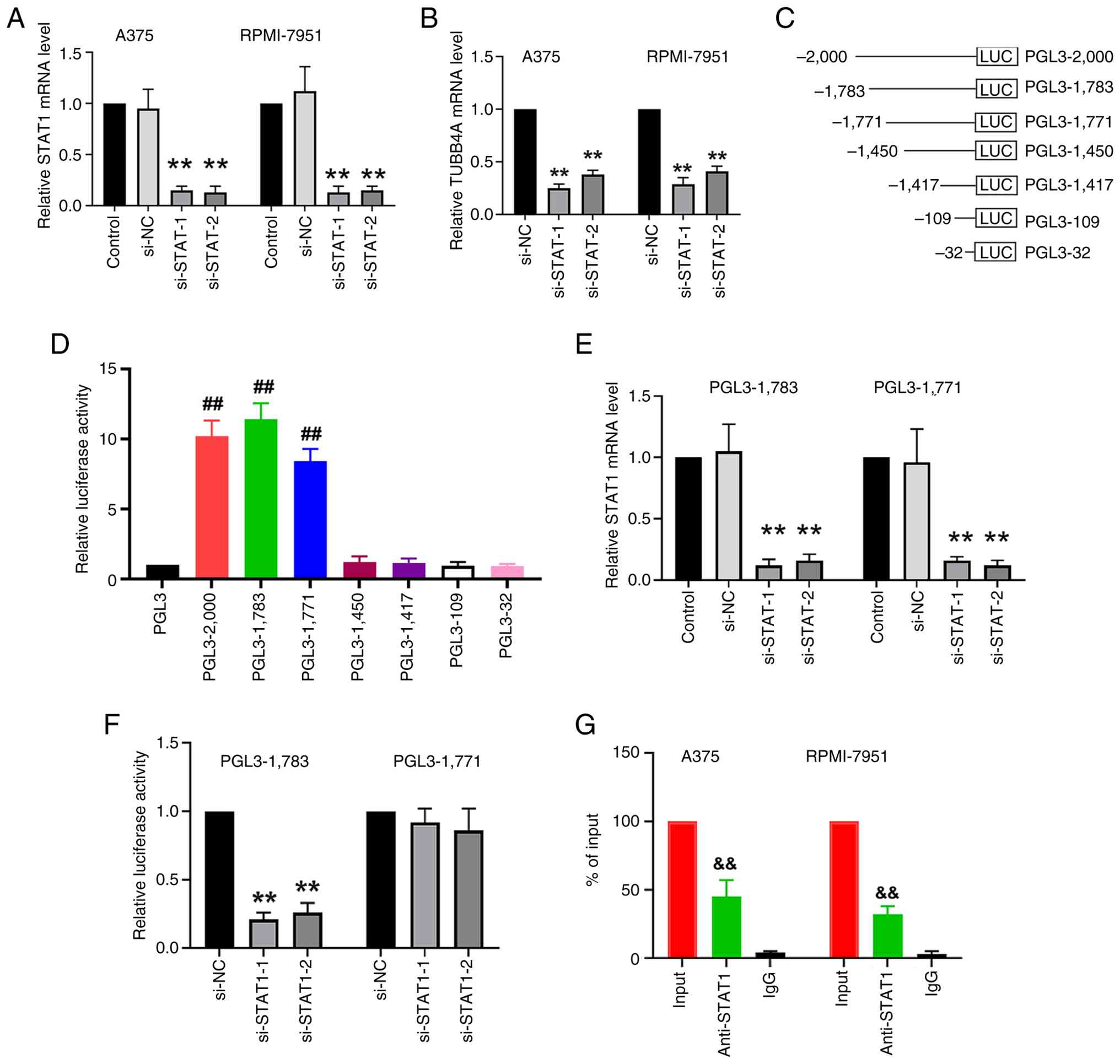
STAT1 regulates TUBB4A expression at
the transcription level. (A) STAT1 mRNA levels were measured in
A375 and RPMI-7951 cells after STAT1 knockdown via transfection
with different siRNA sequences. (B) TUBB4A mRNA levels were
measured in A375 and RPMI-7951 cells after STAT1 knockdown via
transfection with different siRNA sequences. (C) Specific fragments
of the TUBB4A promoter region were cloned into the luciferase
reporter plasmids upstream of the firefly luciferase gene. (D)
Transcriptional activity of various TUBB4A promoter fragments was
analyzed by luciferase reporter assay in 293T cells, with the
−1,783 and −1,771 fragments exhibiting the highest activity. (E)
STAT1 siRNA-mediated knockdown significantly reduced STAT1 mRNA
levels in A375 cells. (F) STAT1 knockdown significantly reduced the
luciferase activity of the −1,783 fragment of the TUBB4A promoter,
but not the −1,771 fragment. (G) Chromatin immunoprecipitation
assays were performed in A375 and RPMI-7951 cells targeting the
−1,783 binding site in the TUBB4A promoter region. Quantitative PCR
provided evidence of STAT1 binding to this region. Genomic DNA
input was set to 100%. **P<0.01 vs. si-NC;
##P<0.01 vs. PGL3; &&P<0.01 vs.
IgG. STAT1, signal transducer and activator of transcription 1;
siRNA, small interfering RNA; si-NC, negative control siRNA;
si-STAT1, siRNA targeting STAT1; si-STAT1-1, siRNA targeting STAT1
sequence 1; si-STAT1-2, siRNA targeting STAT1 sequence 2; TUBB4A,
tubulin β4A; PGL3, promoter-gluc luciferase 3; LUC, firefly
luciferase gene.

Figure 6

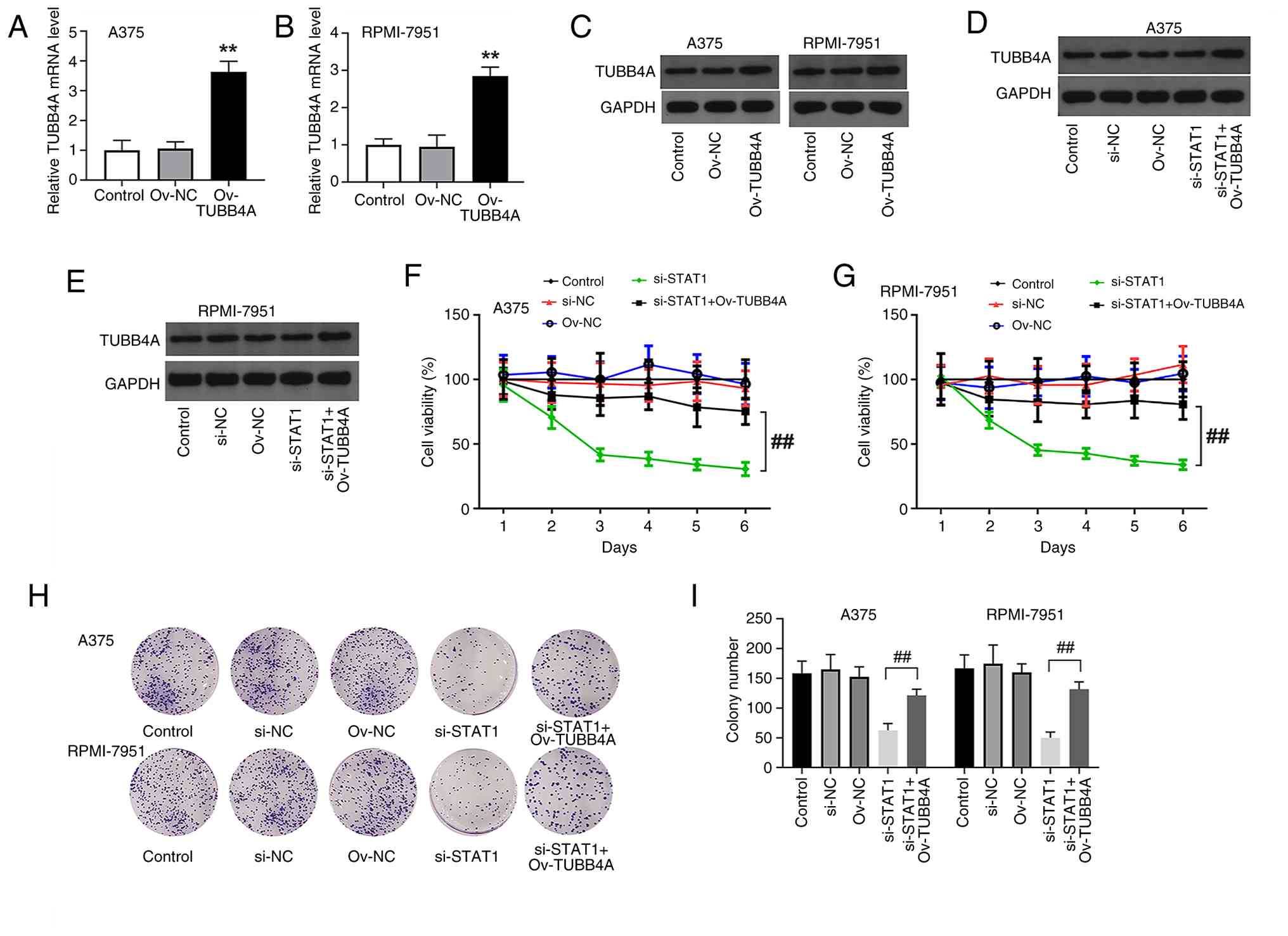
TUBB4A overexpression mitigates the
effects of STAT1 knockdown on cell viability and proliferation.
TUBB4A mRNA levels were measured in (A) A375 and (B) RPMI-7951
cells following TUBB4A overexpression mediated by a lentiviral
vector. (C) TUBB4A protein expression was analyzed after its
overexpression. Combined STAT1 knockdown and TUBB4A overexpression
transfections were performed, followed by a western blot analysis
of TUBB4A protein levels in (D) A375 and (E) RPMI-7951 cells. Cell
viability was assessed via Cell Counting Kit-8 assays following
combined STAT1 knockdown and TUBB4A overexpression in (F) A375 and
(G) RPMI-7951 cells. (H) Colony formation assays were performed to
assess the proliferative capacity of cells after STAT1 knockdown
and TUBB4A overexpression. (I) Quantification of colony formation
assay results. **P<0.01 vs. Ov-NC; ##P<0.01 vs.
si-STAT1. TUBB4A, tubulin β4A; STAT1, signal transducer and
activator of transcription 1; si-NC, negative control small
interfering RNA; si-STAT1, small interfering RNA targeting STAT1;
Ov-NC, negative control lentiviral overexpression vector;
Ov-TUBB4A, lentiviral vector for TUBB4A overexpression.

Figure 7

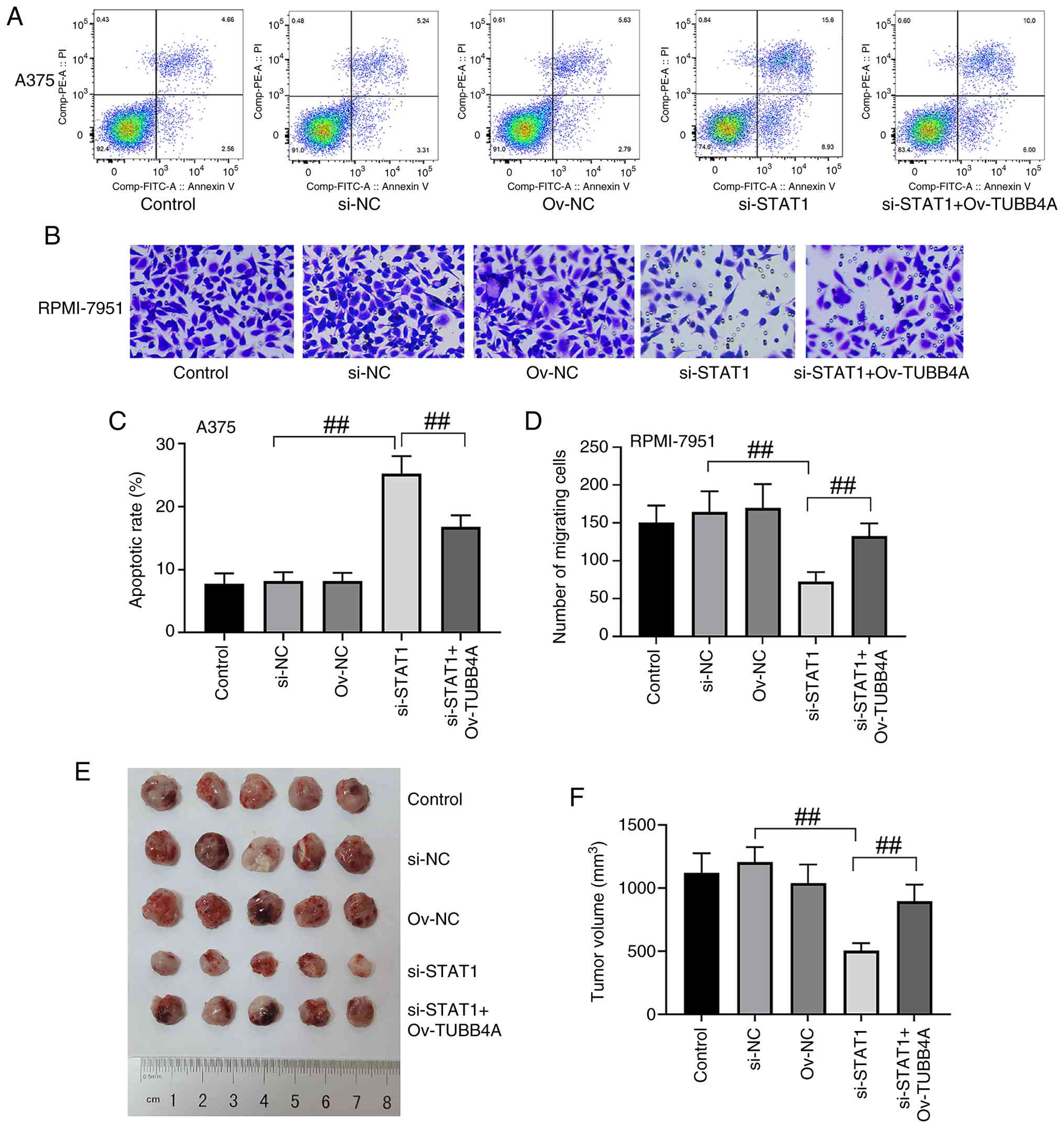
TUBB4A overexpression reverses the
effects of STAT1 knockdown on apoptosis, migration and tumor
growth. (A-D) Apoptosis and migration were evaluated in A375 and
RPMI-7951 cells following STAT1 knockdown and TUBB4A
overexpression. Magnification, ×200. (E) Representative images of
isolated xenograft tumors in mice. Tumor volumes were measured in
nude mice injected subcutaneously with 2×10⁶ A375 cells
that had been subject to STAT1 knockdown and TUBB4A overexpression.
(F) Quantification of mouse tumor volumes showed that STAT1
knockdown significantly suppressed tumor growth, whereas TUBB4A
overexpression reversed this inhibitory effect.
##P<0.01 vs. si-STAT1. TUBB4A, tubulin β4A; si-NC,
negative control small interfering RNA; Ov-TUBB4A, lentiviral
vector for TUBB4A overexpression.
View References

1 

Liu M, Wu M, Liu X, Zhou J, Lan Y, Zhang H, Zhang X, Leng L, Zheng H and Li J: Assessing the quality of care for skin malignant melanoma on a global, regional, and national scale: A systematic analysis of the global burden of disease study from 1990 to 2019. Arch Dermatol Res. 315:2893–2904. 2023. View Article : Google Scholar : PubMed/NCBI

2 

Arnold M, Singh D, Laversanne M, Vignat J, Vaccarella S, Meheus F, Cust AE, de Vries E, Whiteman DC and Bray F: Global burden of cutaneous melanoma in 2020 and projections to 2040. JAMA Dermatol. 158:495–503. 2022. View Article : Google Scholar : PubMed/NCBI

3 

Sarapultsev A, Gusev E, Komelkova M, Utepova I, Luo S and Hu D: JAK-STAT signaling in inflammation and stress-related diseases: Implications for therapeutic interventions. Mol Biomed. 4:402023. View Article : Google Scholar : PubMed/NCBI

4 

Xue C, Yao Q, Gu X, Shi Q, Yuan X, Chu Q, Bao Z, Lu J and Li L: Evolving cognition of the JAK-STAT signaling pathway: autoimmune disorders and cancer. Signal Transduct Target Ther. 8:2042023. View Article : Google Scholar : PubMed/NCBI

5 

Wang W, Lopez McDonald MC, Kim C, Ma M, Pan ZT, Kaufmann C and Frank DA: The complementary roles of STAT3 and STAT1 in cancer biology: Insights into tumor pathogenesis and therapeutic strategies. Front Immunol. 14:12658182023. View Article : Google Scholar : PubMed/NCBI

6 

Huang L, Chen J, Zhao Y, Gu L, Shao X, Li J, Xu Y, Liu Z and Xu Q: Key candidate genes of STAT1 and CXCL10 in melanoma identified by integrated bioinformatical analysis. IUBMB Life. 71:1634–1644. 2019. View Article : Google Scholar : PubMed/NCBI

7 

Isacescu E, Chiroi P, Zanoaga O, Nutu A, Budisan L, Pirlog R, Atanasov AG and Berindan-Neagoe I: Melanoma cellular signaling transduction pathways targeted by polyphenols action mechanisms. Antioxidants (Basel). 12:4072023. View Article : Google Scholar : PubMed/NCBI

8 

Gao S, Wang S, Zhao Z, Zhang C, Liu Z, Ye P, Xu Z, Yi B, Jiao K, Naik GA, et al: TUBB4A interacts with MYH9 to protect the nucleus during cell migration and promotes prostate cancer via GSK3β/β-catenin signalling. Nat Commun. 13:27922022. View Article : Google Scholar : PubMed/NCBI

9 

Kanakkanthara A and Miller JH: βIII tubulin overexpression in cancer: Causes, consequences, and potential therapies. Biochim Biophys Acta Rev Cancer. 1876:1886072021. View Article : Google Scholar : PubMed/NCBI

10 

Novikov NM, Zolotaryova SY, Gautreau AM and Denisov EV: Mutational drivers of cancer cell migration and invasion. Br J Cancer. 124:102–114. 2021. View Article : Google Scholar : PubMed/NCBI

11 

Thomas SJ, Snowden JA, Zeidler MP and Danson SJ: The role of JAK/STAT signalling in the pathogenesis, prognosis and treatment of solid tumours. Br J Cancer. 113:365–371. 2015. View Article : Google Scholar : PubMed/NCBI

12 

Hu X, Li J, Fu M, Zhao X and Wang W: The JAK/STAT signaling pathway: From bench to clinic. Signal Transduct Target Ther. 6:4022021. View Article : Google Scholar : PubMed/NCBI

13 

Hu Q, Bian Q, Rong D, Wang L, Song J, Huang HS, Zeng J, Mei J and Wang PY: JAK/STAT pathway: Extracellular signals, diseases, immunity, and therapeutic regimens. Front Bioeng Biotechnol. 11:11107652023. View Article : Google Scholar : PubMed/NCBI

14 

Gandalovicova A, Šůchová AM, Čermák V, Merta L, Rösel D and Brábek J: Sustained inflammatory signalling through Stat1/Stat2/IRF9 is associated with amoeboid phenotype of melanoma cells. Cancers (Basel). 12:24502020. View Article : Google Scholar : PubMed/NCBI

15 

Osborn JL and Greer SF: Metastatic melanoma cells evade immune detection by silencing STAT1. Int J Mol Sci. 16:4343–4361. 2015. View Article : Google Scholar : PubMed/NCBI

16 

Wang W, Lopez McDonald MC, Hariprasad R, Hamilton T and Frank DA: Oncogenic STAT transcription factors as targets for cancer therapy: Innovative strategies and clinical translation. Cancers (Basel). 16:13872024. View Article : Google Scholar : PubMed/NCBI

17 

Prutsch N, He S, Berezovskaya A, Durbin AD, Dharia NV, Maher KA, Matthews JD, Hare L, Turner SD, Stegmaier K, et al: STAT3 couples activated tyrosine kinase signaling to the oncogenic core transcriptional regulatory circuitry of anaplastic large cell lymphoma. Cell Rep Med. 5:1014722024. View Article : Google Scholar : PubMed/NCBI

18 

Fu XQ, Liu B, Wang YP, Li JK, Zhu PL, Li T, Tse KW, Chou JY, Yin CL, Bai JX, et al: Activation of STAT3 is a key event in TLR4 signaling-mediated melanoma progression. Cell Death Dis. 11:2462020. View Article : Google Scholar : PubMed/NCBI

19 

Kortylewski M, Jove R and Yu H: Targeting STAT3 affects melanoma on multiple fronts. Cancer Metastasis Rev. 24:315–327. 2005. View Article : Google Scholar : PubMed/NCBI

20 

Chen J, Kholina E, Szyk A, Fedorov VA, Kovalenko I, Gudimchuk N and Roll-Mecak A: α-tubulin tail modifications regulate microtubule stability through selective effector recruitment, not changes in intrinsic polymer dynamics. Dev Cell. 56:2016–2028.ed. 2021. View Article : Google Scholar : PubMed/NCBI

21 

Fu G, Yan S, Khoo CJ, Chao VC, Liu Z, Mukhi M, Hervas R, Li XD and Ti SC: Integrated regulation of tubulin tyrosination and microtubule stability by human alpha-tubulin isotypes. Cell Rep. 42:1126532023. View Article : Google Scholar : PubMed/NCBI

22 

Garcin C and Straube A: Microtubules in cell migration. Essays Biochem. 63:509–520. 2019. View Article : Google Scholar : PubMed/NCBI

23 

Nami B and Wang Z: Genetics and expression profile of the tubulin gene superfamily in breast cancer subtypes and its relation to taxane resistance. Cancers (Basel). 10:2742018. View Article : Google Scholar : PubMed/NCBI

24 

Song JX, Wang Y, Hua ZP, Huang Y, Hu LF, Tian MR, Qiu L, Liu H and Zhang J: FATS inhibits the Wnt pathway and induces apoptosis through degradation of MYH9 and enhances sensitivity to paclitaxel in breast cancer. Cell Death Dis. 15:8352024. View Article : Google Scholar : PubMed/NCBI

25 

Wagstaff W, Mwamba RN, Grullon K, Armstrong M, Zhao P, Hendren-Santiago B, Qin KH, Li AJ, Hu DA, Youssef A, et al: Melanoma: Molecular genetics, metastasis, targeted therapies, immunotherapies, and therapeutic resistance. Genes Dis. 9:1608–1623. 2022. View Article : Google Scholar : PubMed/NCBI

26 

Marconcini R, Pezzicoli G, Stucci LS, Sergi MC, Lospalluti L, Porta C and Tucci M: Combination of immunotherapy and other targeted therapies in advanced cutaneous melanoma. Hum Vaccin Immunother. 18:19803152022. View Article : Google Scholar : PubMed/NCBI

27 

Livak KJ and Schmittgen TD: Analysis of relative gene expression data using real-time quantitative PCR and the 2(−Delta Delta C(T)) method. Methods. 25:402–408. 2001. View Article : Google Scholar : PubMed/NCBI

28 

Papageorgiou C, Apalla Z, Manoli SM, Lallas K, Vakirlis E and Lallas A: Melanoma: Staging and follow-up. Dermatol Pract Concept. 11 (Suppl):e2021162S2021. View Article : Google Scholar : PubMed/NCBI

29 

Tolomeo M, Cavalli A and Cascio A: STAT1 and its crucial role in the control of viral infections. Int J Mol Sci. 23:40952022. View Article : Google Scholar : PubMed/NCBI

30 

Niu M, Yi M, Dong B, Luo S and Wu K: Upregulation of STAT1-CCL5 axis is a biomarker of colon cancer and promotes the proliferation of colon cancer cells. Ann Transl Med. 8:9512020. View Article : Google Scholar : PubMed/NCBI

31 

Li X, Wang F, Xu X, Zhang J and Xu G: The dual role of STAT1 in ovarian cancer: Insight into molecular mechanisms and application potentials. Front Cell Dev Biol. 9:6365952021. View Article : Google Scholar : PubMed/NCBI

32 

Cerezo M, Guemiri R, Druillennec S, Girault I, Malka-Mahieu H, Shen S, Allard D, Martineau S, Welsch C, Agoussi S, et al: Translational control of tumor immune escape via the eIF4F-STAT1-PD-L1 axis in melanoma. Nat Med. 24:1877–1886. 2018. View Article : Google Scholar : PubMed/NCBI

33 

Zhang J, Tan GL, Jiang M, Wang TS, Liu GH, Xiong SS and Qing X: Effects of SENP1-induced deSUMOylation of STAT1 on proliferation and invasion in nasopharyngeal carcinoma. Cell Signal. 101:1105302023. View Article : Google Scholar : PubMed/NCBI

34 

Wong GS, Lee JS, Park YY, Klein-Szanto AJ, Waldron TJ, Cukierman E, Herlyn M, Gimotty P, Nakagawa H and Rustgi AK: Periostin cooperates with mutant p53 to mediate invasion through the induction of STAT1 signaling in the esophageal tumor microenvironment. Oncogenesis. 2:e592013. View Article : Google Scholar : PubMed/NCBI

35 

Huang J, Ding Z, Luo Q and Xu W: Cancer cell-derived exosomes promote cell proliferation and inhibit cell apoptosis of both normal lung fibroblasts and non-small cell lung cancer cell through delivering alpha-smooth muscle actin. Am J Transl Res. 11:1711–1723. 2019.PubMed/NCBI

36 

Xu J, Li Y and Hu H: Effects of lycopene on ovarian cancer cell line SKOV3 in vitro: Suppressed proliferation and enhanced apoptosis. Mol Cell Probes. 46:1014192019. View Article : Google Scholar : PubMed/NCBI

37 

Ji Y, Yu M, Qi Z, Cui D, Xin G, Wang B, Jia W and Chang L: Study on apoptosis effect of human breast cancer cell MCF-7 induced by lycorine hydrochloride via death receptor pathway. Saudi Pharm J. 25:633–637. 2017. View Article : Google Scholar : PubMed/NCBI

38 

Xu G, Zhang Y, Li N, Zhang JB and Xu R: LncRNA CCHE1 in the proliferation and apoptosis of gastric cancer cells. Eur Rev Med Pharmacol Sci. 22:2631–2637. 2018.PubMed/NCBI

39 

Tanaka A, Zhou Y, Ogawa M, Shia J, Klimstra DS, Wang JY and Roehrl MH: STAT1 as a potential prognosis marker for poor outcomes of early stage colorectal cancer with microsatellite instability. PLoS One. 15:e02292522020. View Article : Google Scholar : PubMed/NCBI

40 

Nivarthi H, Gordziel C, Themanns M, Kramer N, Eberl M, Rabe B, Schlederer M, Rose-John S, Knosel T, Kenner L, et al: The ratio of STAT1 to STAT3 expression is a determinant of colorectal cancer growth. Oncotarget. 7:51096–51106. 2016. View Article : Google Scholar : PubMed/NCBI

41 

Legrier ME, Bièche I, Gaston J, Beurdeley A, Yvonnet V, Déas O, Thuleau A, Château-Joubert S, Servely JL, Vacher S, et al: Activation of IFN/STAT1 signalling predicts response to chemotherapy in oestrogen receptor-negative breast cancer. Br J Cancer. 114:177–187. 2016. View Article : Google Scholar : PubMed/NCBI

42 

Wong GL, Manore SG, Doheny DL and Lo HW: STAT family of transcription factors in breast cancer: Pathogenesis and therapeutic opportunities and challenges. Semin Cancer Biol. 86:84–106. 2022. View Article : Google Scholar : PubMed/NCBI

43 

Wudtiwai B, Makeudom A, Krisanaprakornkit S, Pothacharoen P and Kongtawelert P: Anticancer activities of hesperidin via suppression of up-regulated programmed death-ligand 1 expression in oral cancer cells. Molecules. 6:53452021. View Article : Google Scholar

44 

Okita R, Shimizu K, Nojima Y, Saisho S and Nakata M: Tofacitinib overcomes an IFNγ-induced decrease in NK cell-mediated cytotoxicity via the regulation of immune-related molecules in LC-2/ad. Thorac Cancer. 12:775–782. 2021. View Article : Google Scholar : PubMed/NCBI

45 

Breitenecker K, Homolya M, Luca AC, Lang V, Trenk C, Petroczi G, Mohrherr J, Horvath J, Moritsch S, Haas L, et al: Down-regulation of A20 promotes immune escape of lung adenocarcinomas. Sci Transl Med. 13:eabc39112021. View Article : Google Scholar : PubMed/NCBI

46 

Yang J, Wang X, Huang B, Liu R, Xiong H, Ye F, Zeng C, Fu X and Li L: An IFNγ/STAT1/JMJD3 axis 2021induces ZEB1 expression and promotes aggressiveness in lung adenocarcinoma. Mol Cancer Res. 19:1234–1246. 2021. View Article : Google Scholar : PubMed/NCBI

47 

Hashimoto K, Nishimura S, Ito T, Kakinoki R and Akagi M: Immunohistochemical expression and clinicopathological assessment of PD-1, PD-L1, NY-ESO-1, and MAGE-A4 expression in highly aggressive soft tissue sarcomas. Eur J Histochem. 66:33932022. View Article : Google Scholar : PubMed/NCBI

48 

Sase S, Almad AA, Boecker CA, Guedes-Dias P, Li JJ, Takanohashi A, Patel A, McCaffrey T, Patel H, Sirdeshpande D, et al: TUBB4A mutations result in both glial and neuronal degeneration in an H-ABC leukodystrophy mouse model. Elife. 9:e529862020. View Article : Google Scholar : PubMed/NCBI

49 

Sobierajska K, Ciszewski WM, Wawro ME, Wieczorek-Szukala K, Boncela J, Papiewska-Pajak I, Niewiarowska J and Kowalska MA: TUBB4B downregulation is critical for increasing migration of metastatic colon cancer cells. Cells. 8:8102019. View Article : Google Scholar : PubMed/NCBI

50 

Vemu A, Atherton J, Spector JO, Moores CA and Roll-Mecak A: Tubulin isoform composition tunes microtubule dynamics. Mol Biol Cell. 28:3564–3572. 2017. View Article : Google Scholar : PubMed/NCBI

51 

Du W and Elemento O: Cancer systems biology: Embracing complexity to develop better anticancer therapeutic strategies. Oncogene. 34:3215–3225. 2015. View Article : Google Scholar : PubMed/NCBI

52 

Afrang N and Honardoost M: Cell cycle regulatory markers in melanoma: New strategies in diagnosis and treatment. Med J Islam Repub Iran. 33:962019.PubMed/NCBI

53 

Becker TM, Boyd SC, Mijatov B, Gowrishankar K, Snoyman S, Pupo GM, Scolyer RA, Mann GJ, Kefford RF, Zhang XD and Rizos H: Mutant B-RAF-Mcl-1 survival signaling depends on the STAT3 transcription factor. Oncogene. 33:1158–1166. 2014. View Article : Google Scholar : PubMed/NCBI

54 

Picco ME, Castro MV, Quezada MJ, Barbero G, Villanueva MB, Fernández NB, Kim H and Lopez-Bergami P: STAT3 enhances the constitutive activity of AGC kinases in melanoma by transactivating PDK1. Cell Biosci. 9:32019. View Article : Google Scholar : PubMed/NCBI

55 

Regis G, Pensa S, Boselli D, Novelli F and Poli V: Ups and downs: The STAT1:STAT3 seesaw of Interferon and gp130 receptor signalling. Semin Cell Dev Biol. 19:351–359. 2008. View Article : Google Scholar : PubMed/NCBI

56 

Kortylewski M, Komyod W, Kauffmann ME, Bosserhoff A, Heinrich PC and Behrmann I: Interferon-gamma-mediated growth regulation of melanoma cells: Involvement of STAT1-dependent and STAT1-independent signals. J Invest Dermatol. 122:414–422. 2004. View Article : Google Scholar : PubMed/NCBI

Related Articles

  • Abstract
  • View
  • Download
  • Twitter
Copy and paste a formatted citation
Spandidos Publications style
Zhao R, Fang K, Zhang X and Li H: STAT1 accelerates cutaneous melanoma progression through TUBB4A expression regulation. Mol Med Rep 33: 118, 2026.
APA
Zhao, R., Fang, K., Zhang, X., & Li, H. (2026). STAT1 accelerates cutaneous melanoma progression through TUBB4A expression regulation. Molecular Medicine Reports, 33, 118. https://doi.org/10.3892/mmr.2026.13828
MLA
Zhao, R., Fang, K., Zhang, X., Li, H."STAT1 accelerates cutaneous melanoma progression through TUBB4A expression regulation". Molecular Medicine Reports 33.4 (2026): 118.
Chicago
Zhao, R., Fang, K., Zhang, X., Li, H."STAT1 accelerates cutaneous melanoma progression through TUBB4A expression regulation". Molecular Medicine Reports 33, no. 4 (2026): 118. https://doi.org/10.3892/mmr.2026.13828
Copy and paste a formatted citation
x
Spandidos Publications style
Zhao R, Fang K, Zhang X and Li H: STAT1 accelerates cutaneous melanoma progression through TUBB4A expression regulation. Mol Med Rep 33: 118, 2026.
APA
Zhao, R., Fang, K., Zhang, X., & Li, H. (2026). STAT1 accelerates cutaneous melanoma progression through TUBB4A expression regulation. Molecular Medicine Reports, 33, 118. https://doi.org/10.3892/mmr.2026.13828
MLA
Zhao, R., Fang, K., Zhang, X., Li, H."STAT1 accelerates cutaneous melanoma progression through TUBB4A expression regulation". Molecular Medicine Reports 33.4 (2026): 118.
Chicago
Zhao, R., Fang, K., Zhang, X., Li, H."STAT1 accelerates cutaneous melanoma progression through TUBB4A expression regulation". Molecular Medicine Reports 33, no. 4 (2026): 118. https://doi.org/10.3892/mmr.2026.13828
Follow us
  • Twitter
  • LinkedIn
  • Facebook
About
  • Spandidos Publications
  • Careers
  • Cookie Policy
  • Privacy Policy
How can we help?
  • Help
  • Live Chat
  • Contact
  • Email to our Support Team