Spandidos Publications Logo
  • About
    • About Spandidos
    • Aims and Scopes
    • Abstracting and Indexing
    • Editorial Policies
    • Reprints and Permissions
    • Job Opportunities
    • Terms and Conditions
    • Contact
  • Journals
    • All Journals
    • Oncology Letters
      • Oncology Letters
      • Information for Authors
      • Editorial Policies
      • Editorial Board
      • Aims and Scope
      • Abstracting and Indexing
      • Bibliographic Information
      • Archive
    • International Journal of Oncology
      • International Journal of Oncology
      • Information for Authors
      • Editorial Policies
      • Editorial Board
      • Aims and Scope
      • Abstracting and Indexing
      • Bibliographic Information
      • Archive
    • Molecular and Clinical Oncology
      • Molecular and Clinical Oncology
      • Information for Authors
      • Editorial Policies
      • Editorial Board
      • Aims and Scope
      • Abstracting and Indexing
      • Bibliographic Information
      • Archive
    • Experimental and Therapeutic Medicine
      • Experimental and Therapeutic Medicine
      • Information for Authors
      • Editorial Policies
      • Editorial Board
      • Aims and Scope
      • Abstracting and Indexing
      • Bibliographic Information
      • Archive
    • International Journal of Molecular Medicine
      • International Journal of Molecular Medicine
      • Information for Authors
      • Editorial Policies
      • Editorial Board
      • Aims and Scope
      • Abstracting and Indexing
      • Bibliographic Information
      • Archive
    • Biomedical Reports
      • Biomedical Reports
      • Information for Authors
      • Editorial Policies
      • Editorial Board
      • Aims and Scope
      • Abstracting and Indexing
      • Bibliographic Information
      • Archive
    • Oncology Reports
      • Oncology Reports
      • Information for Authors
      • Editorial Policies
      • Editorial Board
      • Aims and Scope
      • Abstracting and Indexing
      • Bibliographic Information
      • Archive
    • Molecular Medicine Reports
      • Molecular Medicine Reports
      • Information for Authors
      • Editorial Policies
      • Editorial Board
      • Aims and Scope
      • Abstracting and Indexing
      • Bibliographic Information
      • Archive
    • World Academy of Sciences Journal
      • World Academy of Sciences Journal
      • Information for Authors
      • Editorial Policies
      • Editorial Board
      • Aims and Scope
      • Abstracting and Indexing
      • Bibliographic Information
      • Archive
    • International Journal of Functional Nutrition
      • International Journal of Functional Nutrition
      • Information for Authors
      • Editorial Policies
      • Editorial Board
      • Aims and Scope
      • Abstracting and Indexing
      • Bibliographic Information
      • Archive
    • International Journal of Epigenetics
      • International Journal of Epigenetics
      • Information for Authors
      • Editorial Policies
      • Editorial Board
      • Aims and Scope
      • Abstracting and Indexing
      • Bibliographic Information
      • Archive
    • Medicine International
      • Medicine International
      • Information for Authors
      • Editorial Policies
      • Editorial Board
      • Aims and Scope
      • Abstracting and Indexing
      • Bibliographic Information
      • Archive
  • Articles
  • Information
    • Information for Authors
    • Information for Reviewers
    • Information for Librarians
    • Information for Advertisers
    • Conferences
  • Language Editing
Spandidos Publications Logo
  • About
    • About Spandidos
    • Aims and Scopes
    • Abstracting and Indexing
    • Editorial Policies
    • Reprints and Permissions
    • Job Opportunities
    • Terms and Conditions
    • Contact
  • Journals
    • All Journals
    • Biomedical Reports
      • Information for Authors
      • Editorial Policies
      • Editorial Board
      • Aims and Scope
      • Abstracting and Indexing
      • Bibliographic Information
      • Archive
    • Experimental and Therapeutic Medicine
      • Information for Authors
      • Editorial Policies
      • Editorial Board
      • Aims and Scope
      • Abstracting and Indexing
      • Bibliographic Information
      • Archive
    • International Journal of Epigenetics
      • Information for Authors
      • Editorial Policies
      • Editorial Board
      • Aims and Scope
      • Abstracting and Indexing
      • Bibliographic Information
      • Archive
    • International Journal of Functional Nutrition
      • Information for Authors
      • Editorial Policies
      • Editorial Board
      • Aims and Scope
      • Abstracting and Indexing
      • Bibliographic Information
      • Archive
    • International Journal of Molecular Medicine
      • Information for Authors
      • Editorial Policies
      • Editorial Board
      • Aims and Scope
      • Abstracting and Indexing
      • Bibliographic Information
      • Archive
    • International Journal of Oncology
      • Information for Authors
      • Editorial Policies
      • Editorial Board
      • Aims and Scope
      • Abstracting and Indexing
      • Bibliographic Information
      • Archive
    • Medicine International
      • Information for Authors
      • Editorial Policies
      • Editorial Board
      • Aims and Scope
      • Abstracting and Indexing
      • Bibliographic Information
      • Archive
    • Molecular and Clinical Oncology
      • Information for Authors
      • Editorial Policies
      • Editorial Board
      • Aims and Scope
      • Abstracting and Indexing
      • Bibliographic Information
      • Archive
    • Molecular Medicine Reports
      • Information for Authors
      • Editorial Policies
      • Editorial Board
      • Aims and Scope
      • Abstracting and Indexing
      • Bibliographic Information
      • Archive
    • Oncology Letters
      • Information for Authors
      • Editorial Policies
      • Editorial Board
      • Aims and Scope
      • Abstracting and Indexing
      • Bibliographic Information
      • Archive
    • Oncology Reports
      • Information for Authors
      • Editorial Policies
      • Editorial Board
      • Aims and Scope
      • Abstracting and Indexing
      • Bibliographic Information
      • Archive
    • World Academy of Sciences Journal
      • Information for Authors
      • Editorial Policies
      • Editorial Board
      • Aims and Scope
      • Abstracting and Indexing
      • Bibliographic Information
      • Archive
  • Articles
  • Information
    • For Authors
    • For Reviewers
    • For Librarians
    • For Advertisers
    • Conferences
  • Language Editing
Login Register Submit
  • This site uses cookies
  • You can change your cookie settings at any time by following the instructions in our Cookie Policy. To find out more, you may read our Privacy Policy.

    I agree
Search articles by DOI, keyword, author or affiliation
Search
Advanced Search
presentation
Molecular Medicine Reports
Join Editorial Board Propose a Special Issue
Print ISSN: 1791-2997 Online ISSN: 1791-3004
Journal Cover
July-2026 Volume 34 Issue 1

Full Size Image

Sign up for eToc alerts
Recommend to Library

Journals

International Journal of Molecular Medicine

International Journal of Molecular Medicine

International Journal of Molecular Medicine is an international journal devoted to molecular mechanisms of human disease.

International Journal of Oncology

International Journal of Oncology

International Journal of Oncology is an international journal devoted to oncology research and cancer treatment.

Molecular Medicine Reports

Molecular Medicine Reports

Covers molecular medicine topics such as pharmacology, pathology, genetics, neuroscience, infectious diseases, molecular cardiology, and molecular surgery.

Oncology Reports

Oncology Reports

Oncology Reports is an international journal devoted to fundamental and applied research in Oncology.

Experimental and Therapeutic Medicine

Experimental and Therapeutic Medicine

Experimental and Therapeutic Medicine is an international journal devoted to laboratory and clinical medicine.

Oncology Letters

Oncology Letters

Oncology Letters is an international journal devoted to Experimental and Clinical Oncology.

Biomedical Reports

Biomedical Reports

Explores a wide range of biological and medical fields, including pharmacology, genetics, microbiology, neuroscience, and molecular cardiology.

Molecular and Clinical Oncology

Molecular and Clinical Oncology

International journal addressing all aspects of oncology research, from tumorigenesis and oncogenes to chemotherapy and metastasis.

World Academy of Sciences Journal

World Academy of Sciences Journal

Multidisciplinary open-access journal spanning biochemistry, genetics, neuroscience, environmental health, and synthetic biology.

International Journal of Functional Nutrition

International Journal of Functional Nutrition

Open-access journal combining biochemistry, pharmacology, immunology, and genetics to advance health through functional nutrition.

International Journal of Epigenetics

International Journal of Epigenetics

Publishes open-access research on using epigenetics to advance understanding and treatment of human disease.

Medicine International

Medicine International

An International Open Access Journal Devoted to General Medicine.

Journal Cover
July-2026 Volume 34 Issue 1

Full Size Image

Sign up for eToc alerts
Recommend to Library

  • Article
  • Citations
    • Cite This Article
    • Download Citation
    • Create Citation Alert
    • Remove Citation Alert
    • Cited By
  • Similar Articles
    • Related Articles (in Spandidos Publications)
    • Similar Articles (Google Scholar)
    • Similar Articles (PubMed)
  • Download PDF
  • Download XML
  • View XML

  • Supplementary Files
    • Supplementary_Data1.pdf
    • Supplementary_Data2.pdf
Article Open Access

FOSL2 drives transcriptional activation of super‑enhancer-regulated DYNC1H1 to promote hypoxia‑induced oral squamous cell carcinoma progression

  • Authors:
    • Linyu Jin
    • Jing Zhang
    • Wenjing Wang
    • Nan Zhang
    • Yang Liu
    • Alin Tian
    • Weiwei Yin
    • Yongle Qiu
  • View Affiliations / Copyright

    Affiliations: Department of Stomatology, The Fourth Hospital of Hebei Medical University, Shijiazhuang, Hebei 050000, P.R. China, Department of Medical Periodical Press, The Fourth Hospital of Hebei Medical University, Shijiazhuang, Hebei 050000, P.R. China, Department of Stomatology, The Second Hospital of Shijiazhuang, Shijiazhuang, Hebei 050000, P.R. China, Department of Stomatology, Children's Hospital of Hebei Province, Shijiazhuang, Hebei 050000, P.R. China
    Copyright: © Jin et al. This is an open access article distributed under the terms of Creative Commons Attribution License.
  • Article Number: 209
    |
    Published online on: May 25, 2026
       https://doi.org/10.3892/mmr.2026.13919
  • Expand metrics +
Metrics: Total Views: 0 (Spandidos Publications: | PMC Statistics: )
Metrics: Total PDF Downloads: 0 (Spandidos Publications: | PMC Statistics: )
Cited By (CrossRef): 0 citations Loading Articles...

This article is mentioned in:


Abstract

Hypoxia is a hallmark of oral squamous cell carcinoma (OSCC) and plays a critical role in driving tumor progression. However, the mechanisms by which OSCC cells respond to hypoxic signaling to promote malignant phenotypes remain unclear. The present study aimed to identify the key regulatory factors governing hypoxic adaptation in OSCC. Based on bulk RNA‑sequencing (RNA‑seq) data from The Cancer Genome Atlas (TCGA) database, hypoxia was identified as a prognostic risk factor for OSCC. Hierarchical clustering revealed ‘glycolysis’ and ‘hypoxia’ as the most strongly associated cancer hallmarks. Using single‑cell RNA‑seq data from the Gene Expression Omnibus (GEO) database, 104 hypoxia‑ and glycolysis‑associated genes were identified. Integration of bulk RNA‑seq data from TCGA and GEO databases enabled the development of an optimized prognostic model [stepwise Cox (backward) + elastic network (α=0.8)] through machine learning and highlighted four core genes: Heparan sulfate proteoglycan 2, immunoglobulin superfamily member 3, dihydrouridine synthase 1‑like and dynein cytoplasmic 1 heavy chain 1 (DYNC1H1). Further analysis of chromatin immunoprecipitation sequencing data from GEO database identified DYNC1H1 as the sole super‑enhancer (SE)‑regulated gene among these candidates, characterized by hypoxia‑responsive upregulation. DYNC1H1 knockdown significantly abrogated hypoxia‑induced proliferation, invasion, glucose uptake and lactate production in OSCC cells. Hypoxia‑responsive transcription factor FOS‑like 2 (FOSL2) activated DYNC1H1 transcription by binding to enhancer regions. Functional validation established that the FOSL2/DYNC1H1 axis was a pivotal regulatory hub for hypoxia‑driven malignant phenotypes in OSCC. Overall, DYNC1H1 is an SE‑regulated hypoxia‑responsive gene that undergoes transcriptional activation via FOSL2‑specific binding to typical enhancer and SE regions. The FOSL2/DYNC1H1 axis drives the hypoxia‑induced malignant progression of OSCC. The present study therefore establishes a novel target for precision therapies targeting the hypoxic tumor microenvironment in OSCC.
View Figures

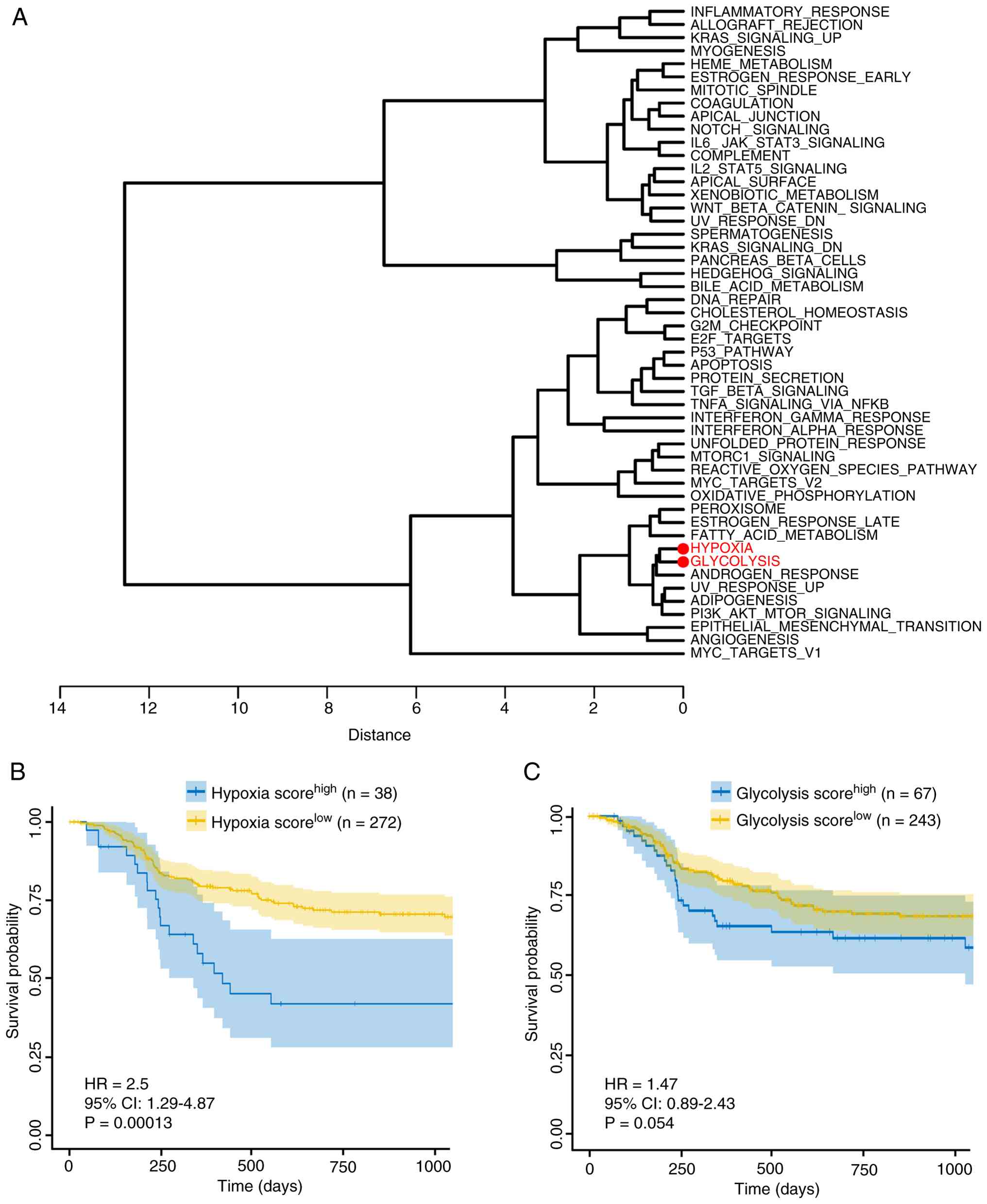
Figure 1

Hypoxia as a risk factor for RFS in
OSCC. (A) A hierarchical clustering dendrogram for 50
cancer-related hallmark gene sets. Data were derived from the
TCGA-OSCC cohort. (B) Relationship between hypoxia scores and RFS
in patients with OSCC. (C) Relationship between glycolysis scores
and RFS in patients with OSCC. Patients were stratified into high-
and low-score groups based on the optimal cutoff value of the
hypoxia or glycolysis scores. Data were derived from the TCGA-OSCC
cohort. HR, hazard ratio; CI, confidence interval; OSCC, oral
squamous cell carcinoma; RFS, recurrence-free survival.

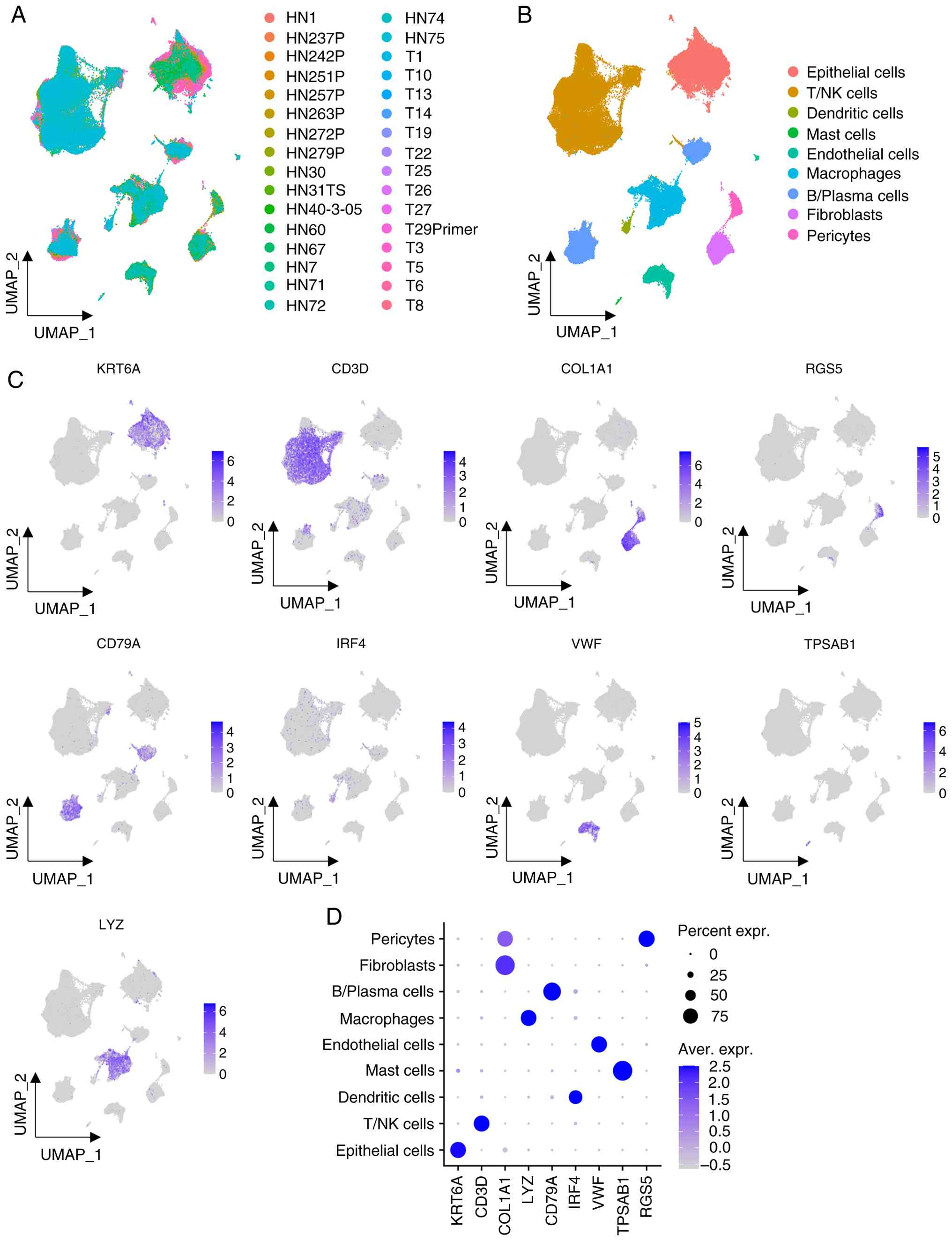
Figure 2

Single-cell transcriptomic analysis
revealing OSCC heterogeneity. Single cell RNA-sequencing data from
OSCC samples were integrated using publicly available Gene
Expression Omnibus datasets (GSE173468, GSE188737 and GSE234933).
(A) UMAP plots of single-cell transcriptomic profiles from 32 OSCC
samples. (B) Single-cell transcriptomic profiles of OSCC were
annotated into nine distinct cell clusters. (C) UMAP visualization
depicting the expression patterns of marker genes corresponding to
the nine cell clusters. (D) Dot plots for marker gene expression.
OSCC, oral squamous cell carcinoma; UMAP, Uniform Manifold
Approximation and Projection; NK, natural killer; Expr.,
expression; Aver., average.

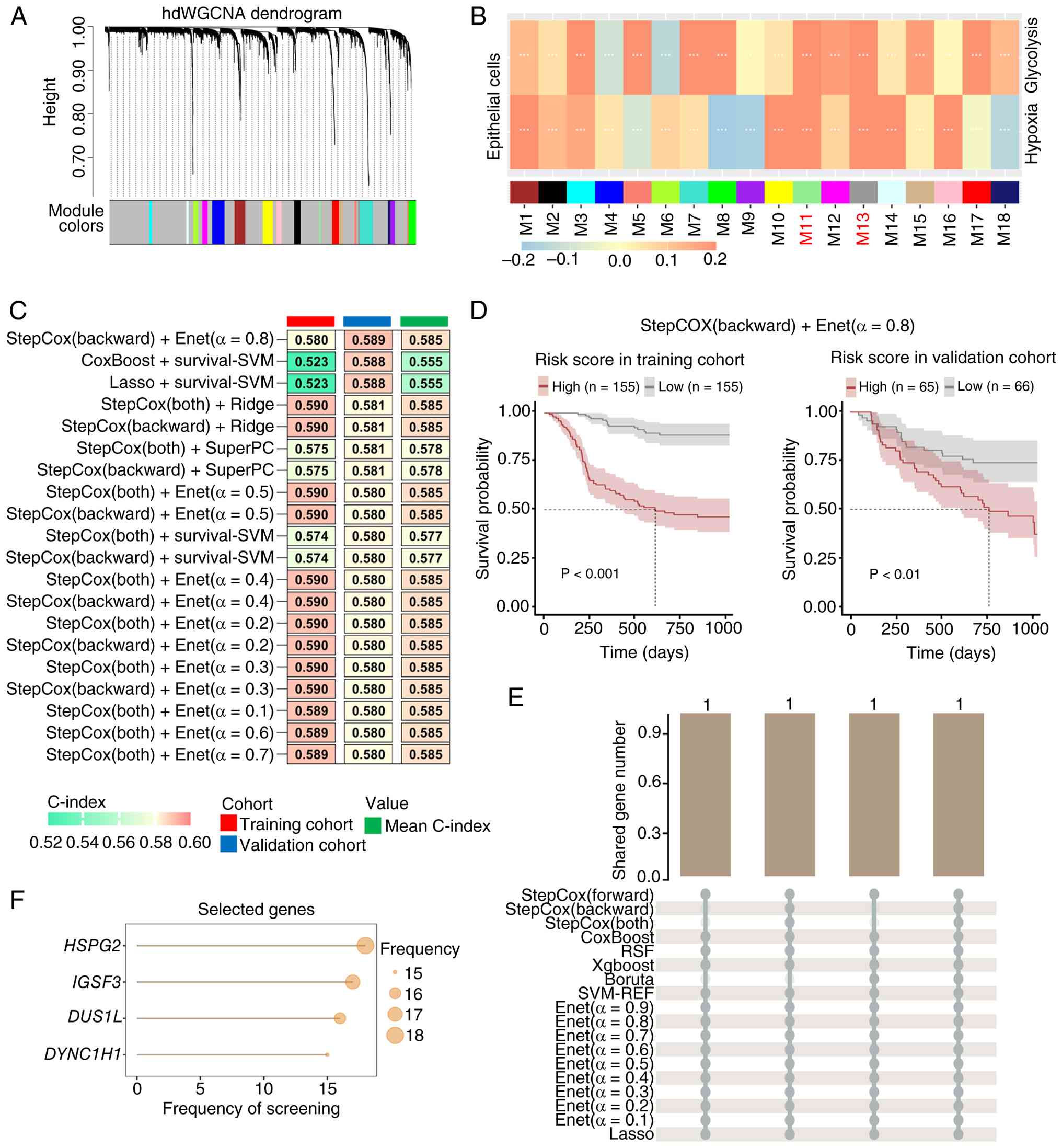
Figure 3

HSPG2, IGSF3, DUS1L and
DYNC1H1 are identified as critical hypoxia- and
glycolysis-associated genes. (A) hdWGCNA for co-expression network
construction, with the soft threshold power set at 12. scRNA-seq
data from OSCC samples were integrated using publicly available GEO
datasets (GSE173468, GSE188737 and GSE234933). (B) Spearman's
correlation analysis between module eigengenes and
hypoxia/glycolysis scores, where ***P<0.001. scRNA-seq data from
OSCC samples were integrated using publicly available GEO datasets
(GSE173468, GSE188737 and GSE234933). (C) Heatmap displaying the
top 20 machine learning combined models ranked by descending
concordance index in the validation cohort. Training cohort:
TCGA-OSCC cohort (n=310); validation cohort: The GSE65858 dataset
(n=131). (D) Association between risk scores and recurrence-free
survival in patients with OSCC. Risk scores were calculated using
the ‘StepCox (backward) + Enet (α=0.8)’ combined model. Patients
were stratified into high- and low-risk groups according to the
median risk score. Training cohort: TCGA-OSCC cohort (n=310);
validation cohort: The GSE65858 dataset (n=131). (E) Number of
genes in the intersection of core genes screened by different
machine learning algorithms. (F) Selection frequency of core genes
across different machine learning algorithms. OSCC, oral squamous
cell carcinoma; hdWGCNA, high-dimensional weighted gene
co-expression network analysis; TCGA, The Cancer Genome Atlas;
StepCox, stepwise Cox; Enet, elastic network; RSF, random survival
forests; XgBoost, extreme gradient boosting; SVM-REF, support
vector machine recursive feature elimination; Lasso, least absolute
shrinkage and selection operator; scRNA-seq, single cell
RNA-sequencing; GEO, Gene Expression Omnibus; HSPG2, heparan
sulfate proteoglycan 2; IGSF3, immunoglobulin superfamily member 3;
DUS1L, dihydrouridine synthase 1 like; DYNC1H1, dynein cytoplasmic
1 heavy chain 1.

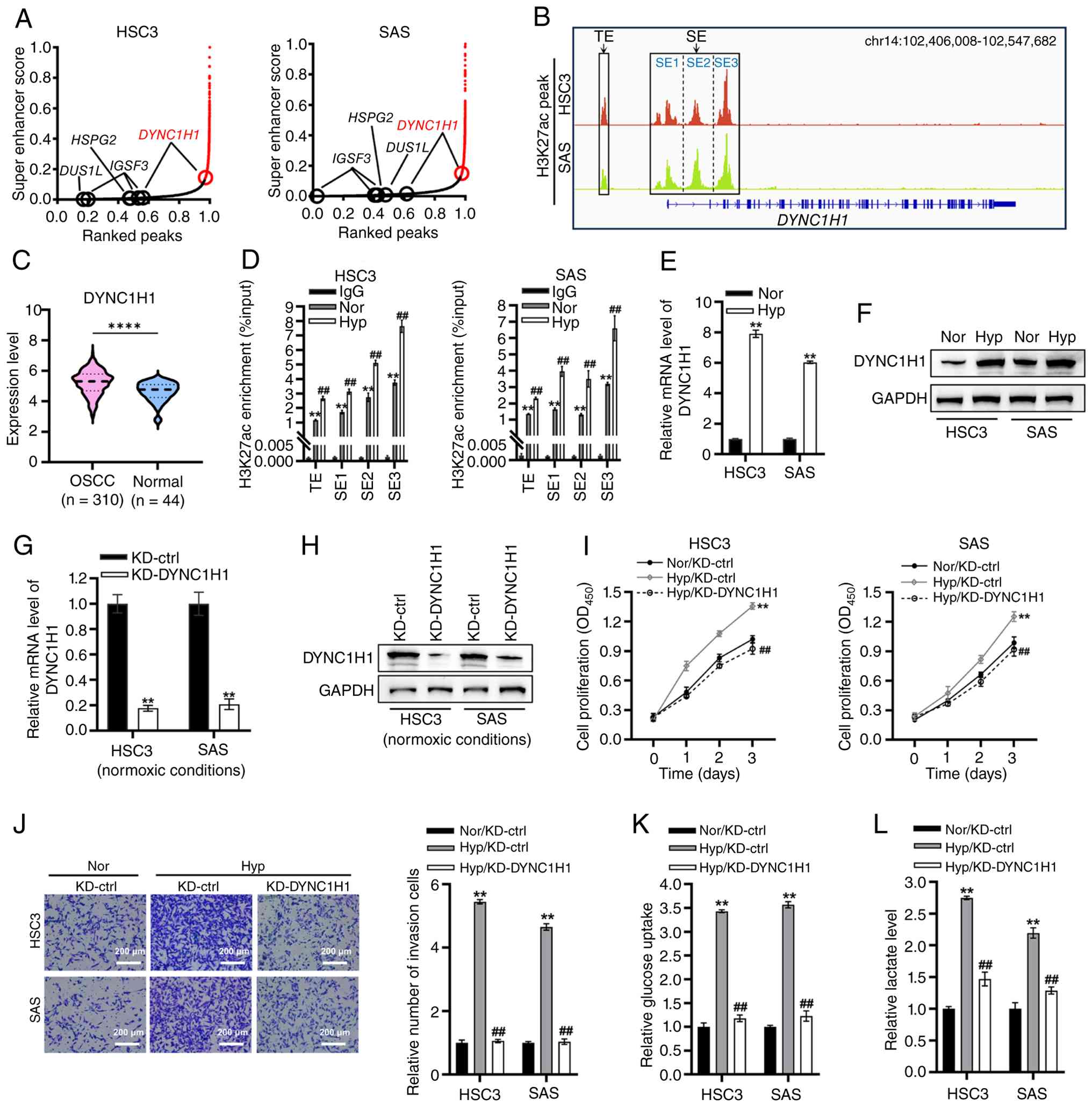
Figure 4

DYNC1H1 is identified as a
hypoxia-responsive SE-regulated gene and its KD is attenuated in
hypoxia-induced oncogenic phenotypes in OSCC. (A) SE scores were
calculated based on H3K27ac ChIP-sequencing data for HSC3 and SAS
cells. Data were derived from the GSE205455 dataset. Points with
curve slopes >1 (red) represent SE; points with slopes ≥1
(black) represent TE. (B) Visualization of H3K27ac peaks at the
DYNC1H1 locus in HSC3 and SAS cells. Data were derived from
the GSE205455 dataset. (C) Differential expression analysis of
DYNC1H1 in OSCC tissues (n=310) vs. normal control tissues (n=44).
Data were downloaded from The Cancer Genome Atlas-OSCC cohort.
****P<0.0001. (D) H3K27ac enrichment at the TE and SE regions of
DYNC1H1 was quantified using ChIP-qPCR. **P<0.01 vs. IgG
and ##P<0.01 vs. Nor. (E) mRNA and (F) protein levels
of DYNC1H1 in HSC3 and SAS cells were measured using RT-qPCR and
western blot analysis, respectively. **P<0.01 vs. Nor. DYNC1H1
KD efficiency was assessed using (G) RT-qPCR and (H) western blot
analysis. **P<0.01 vs. KD-ctrl. (I) CCK-8 assay was conducted to
assess the proliferation of HSC3 and SAS cells. **P<0.01 vs.
Nor/KD-ctrl and ##P<0.01 vs. Hyp/KD-ctrl. (J)
Transwell assays were performed to assess the invasion of HSC3 and
SAS cells. Scale bar, 200 µm. **P<0.01 vs. Nor/KD-ctrl and
##P<0.01 vs. Hyp/KD-ctrl. Quantification of (K)
glucose uptake and (L) lactate production in HSC3 and SAS cells.
**P<0.01 vs. Nor/KD-ctrl and ##P<0.01 vs.
Hyp/KD-ctrl. DYNC1H1, dynein cytoplasmic 1 heavy chain 1; TE,
typical enhancer; SE, super-enhancer; OSCC, oral squamous cell
carcinoma; ChIP, chromatin immunoprecipitation; qPCR, quantitative
PCR; CCK-8, Cell Counting Kit-8; chr, chromosome; H3K27ac,
histone-3 lysine-27 acetylation; Nor, normoxic conditions; Hyp,
hypoxic conditions; KD, knockdown; KD-ctrl, knockdown control.

Figure 5

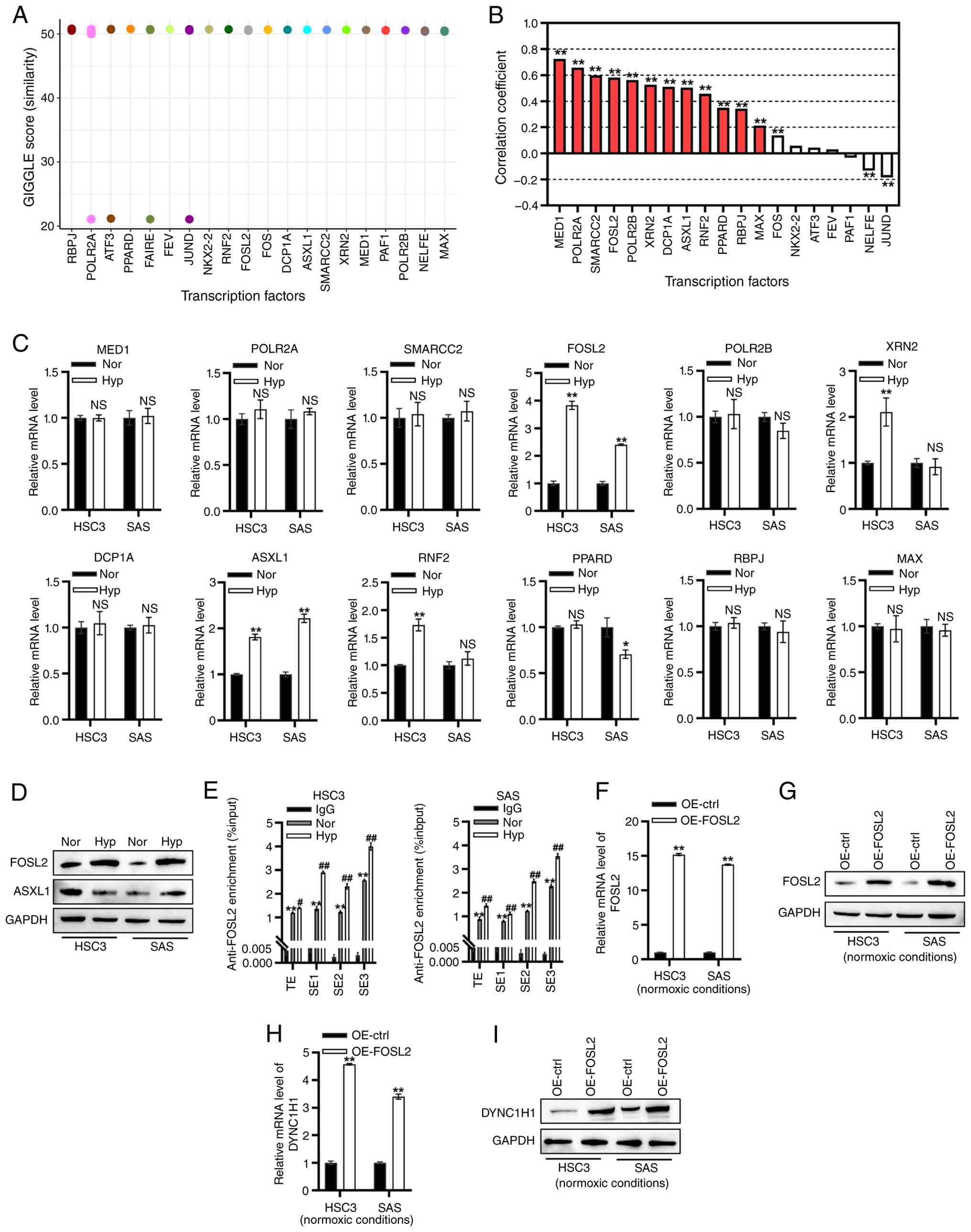
FOSL2 was characterized as a
hypoxia-responsive transcription factor that activates
DYNC1H1 transcription through binding to TE and SE regions.
(A) Transcription factor prediction for DYNC1H1 using the
Toolkit for Cistrome Data Browser (http://dbtoolkit.cistrome.org). (B) Spearman's
correlation between predicted transcription factors and
DYNC1H1 expression. Data were derived from The Cancer Genome
Atlas-oral squamous cell carcinoma cohort. A significant positive
correlation was defined as a correlation coefficient r>0.2 and
P<0.05. **P<0.01 vs. DYNC1H1 expression. (C) qPCR analysis of
MED1, POLR2A, SMARCC2, FOSL2, POLR2B, XRN2, DCP1A, ASXL1, RNF2,
PPARD, RBPJ and MAX transcription in HSC3 and SAS cells. *P<0.05
and **P<0.01 vs. Nor. (D) Western blot analysis of FOSL2 and
ASXL1 protein levels in HSC3 and SAS cells. (E) Chromatin
Immunoprecipitation-qPCR quantification of anti-FOSL2 enrichment at
DYNC1H1 TE and SE regions in HSC3 and SAS cells. **P<0.01
vs. IgG, ##P<0.01 and #P<0.05 vs. Nor.
(F) FOSL2 OE efficiency was assessed using qPCR. **P<0.01 vs.
OE-ctrl. (G) FOSL2 OE efficiency was assessed using western blot.
(H) Effect of FOSL2 OE on DYNC1H1 mRNA and (I) DYNC1H1 protein
levels in HSC3 and SAS cells under normoxic conditions. **P<0.01
vs. OE-ctrl. DYNC1H1, dynein cytoplasmic 1 heavy chain 1; qPCR,
quantitative PCR; TE, typical enhancer; SE, super-enhancer; OE,
overexpression; Nor, normoxic conditions; Hyp, hypoxic conditions;
ctrl, control; FOSL2, FOS-like 2; NS, non-significant.

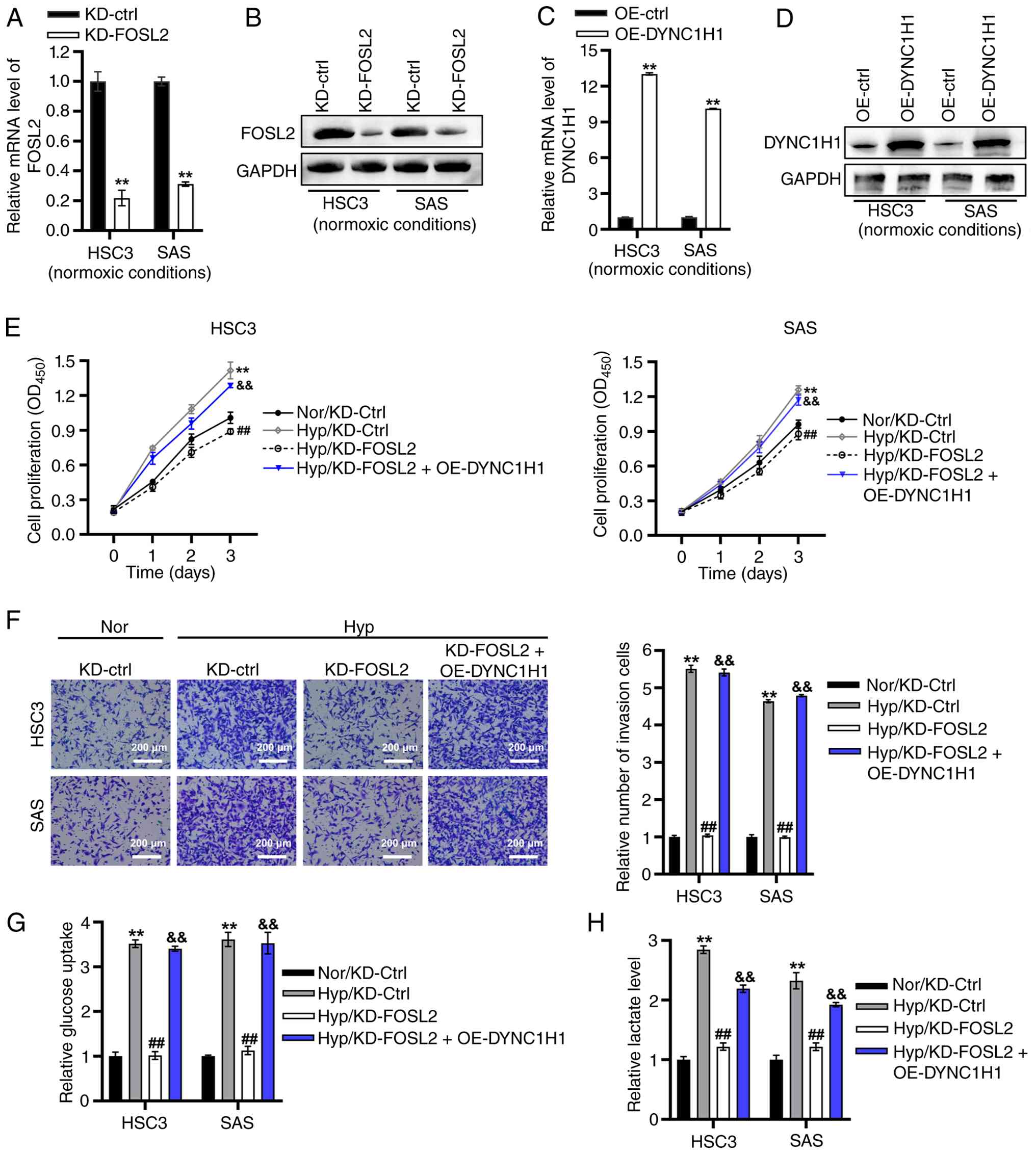
Figure 6

FOSL2/DYNC1H1 axis drives
hypoxia-induced proliferation, invasion, glucose uptake and lactate
production in oral squamous cell carcinoma cells. FOSL2 KD
efficiency was assessed using (A) qPCR and (B) western blotting.
**P<0.01 vs. KD-ctrl. (C) DYNC1H1 OE efficiency was assessed
using qPCR and (D) western blotting. **P<0.01 vs. OE-ctrl. (E)
Cell proliferation was analyzed using a Cell Counting Kit-8 assay.
**P<0.01 vs. Nor/KD-ctrl, ##P<0.01 vs. Hyp/KD-ctrl
and &&P<0.01 vs. Hyp/KD-FOSL2. (F) Cell
invasion was measured using a Transwell assay. Scale bar, 200 µm.
**P<0.01 vs. Nor/KD-ctrl; ##P<0.01 vs.
Hyp/KD-ctrl; &&P<0.01 vs. Hyp/KD-FOSL2. (G)
Relative glucose uptake and (H) lactate production in HSC3 and SAS
cells. **P<0.01 vs. Nor/KD-ctrl, ##P<0.01 vs.
Hyp/KD-ctrl and &&P<0.01 vs. Hyp/KD-FOSL2.
DYNC1H1, dynein cytoplasmic 1 heavy chain 1; qPCR, quantitative
PCR; OD, optical density; KD, knockdown; OE, overexpression; Nor,
normoxic conditions; Hyp, hypoxic conditions; ctrl, control; FOSL2,
FOS-like 2.
View References

1 

Hu S, Lu H, Xie W, Wang D, Shan Z, Xing X, Wang XM, Fang J, Dong W, Dai W, et al: TDO2+ myofibroblasts mediate immune suppression in malignant transformation of squamous cell carcinoma. J Clin Invest. 132:e1576492022. View Article : Google Scholar : PubMed/NCBI

2 

Leemans CR, Braakhuis BJ and Brakenhoff RH: The molecular biology of head and neck cancer. Nat Rev Cancer. 11:9–22. 2011. View Article : Google Scholar : PubMed/NCBI

3 

Sequeira I, Neves JF, Carrero D, Peng Q, Palasz N, Liakath-Ali K, Lord GM, Morgan PR, Lombardi G and Watt FM: Immunomodulatory role of Keratin 76 in oral and gastric cancer. Nat Commun. 9:34372018. View Article : Google Scholar : PubMed/NCBI

4 

Pouyssegur J, Dayan F and Mazure NM: Hypoxia signalling in cancer and approaches to enforce tumour regression. Nature. 441:437–443. 2006. View Article : Google Scholar : PubMed/NCBI

5 

Chen Z, Han F, Du Y, Shi H and Zhou W: Hypoxic microenvironment in cancer: Molecular mechanisms and therapeutic interventions. Signal Transduct Target Ther. 8:702023. View Article : Google Scholar : PubMed/NCBI

6 

Bhandari V, Hoey C, Liu LY, Lalonde E, Ray J, Livingstone J, Lesurf R, Shiah YJ, Vujcic T, Huang X, et al: Molecular landmarks of tumor hypoxia across cancer types. Nat Genet. 51:308–318. 2019. View Article : Google Scholar : PubMed/NCBI

7 

Abu El Maaty MA, Terzic J, Keime C, Rovito D, Lutzing R, Yanushko D, Parisotto M, Grelet E, Namer IJ, Lindner V, et al: Hypoxia-mediated stabilization of HIF1A in prostatic intraepithelial neoplasia promotes cell plasticity and malignant progression. Sci Adv. 8:eabo22952022. View Article : Google Scholar : PubMed/NCBI

8 

Beasley NJ, Leek R, Alam M, Turley H, Cox GJ, Gatter K, Millard P, Fuggle S and Harris AL: Hypoxia-inducible factors HIF-1alpha and HIF-2alpha in head and neck cancer: Relationship to tumor biology and treatment outcome in surgically resected patients. Cancer Res. 62:2493–2497. 2002.PubMed/NCBI

9 

Duan Y, Zhou M, Ye B, Yue K, Qiao F, Wang Y, Lai Q, Wu Y, Cao J, Wu Y, et al: Hypoxia-induced miR-5100 promotes exosome-mediated activation of cancer-associated fibroblasts and metastasis of head and neck squamous cell carcinoma. Cell Death Dis. 15:2152024. View Article : Google Scholar : PubMed/NCBI

10 

Bao MH and Wong CC: Hypoxia, metabolic reprogramming, and drug resistance in liver cancer. Cells. 10:17152021. View Article : Google Scholar : PubMed/NCBI

11 

Yang R, Chen H, Xing L, Wang B, Hu M, Ou X, Chen H, Deng Y, Liu D, Jiang R and Chen J: Hypoxia-induced circWSB1 promotes breast cancer progression through destabilizing p53 by interacting with USP10. Mol Cancer. 21:882022. View Article : Google Scholar : PubMed/NCBI

12 

Rey-Keim S and Schito L: Origins and molecular effects of hypoxia in cancer. Semin Cancer Biol. 106–107. 166–178. 2024.PubMed/NCBI

13 

Jing X, Yang F, Shao C, Wei K, Xie M, Shen H and Shu Y: Role of hypoxia in cancer therapy by regulating the tumor microenvironment. Mol Cancer. 18:1572019. View Article : Google Scholar : PubMed/NCBI

14 

Ong CT and Corces VG: Enhancer function: New insights into the regulation of tissue-specific gene expression. Nat Rev Genet. 12:283–293. 2011. View Article : Google Scholar : PubMed/NCBI

15 

Zabidi MA, Arnold CD, Schernhuber K, Pagani M, Rath M, Frank O and Stark A: Enhancer-core-promoter specificity separates developmental and housekeeping gene regulation. Nature. 518:556–559. 2015. View Article : Google Scholar : PubMed/NCBI

16 

Wang M, Chen Q, Wang S, Xie H, Liu J, Huang R, Xiang Y, Jiang Y, Tian D and Bian E: Super-enhancers complexes zoom in transcription in cancer. J Exp Clin Cancer Res. 42:1832023. View Article : Google Scholar : PubMed/NCBI

17 

Jiang Y, Jiang YY and Lin DC: Super-enhancer-mediated core regulatory circuitry in human cancer. Comput Struct Biotechnol J. 19:2790–2795. 2021. View Article : Google Scholar : PubMed/NCBI

18 

Jiang YY, Lin DC, Mayakonda A, Hazawa M, Ding LW, Chien WW, Xu L, Chen Y, Xiao JF, Senapedis W, et al: Targeting super-enhancer-associated oncogenes in oesophageal squamous cell carcinoma. Gut. 66:1358–1368. 2017. View Article : Google Scholar : PubMed/NCBI

19 

Tang F, Yang Z, Tan Y and Li Y: Super-enhancer function and its application in cancer targeted therapy. NPJ Precis Oncol. 4:22020. View Article : Google Scholar : PubMed/NCBI

20 

Gao Q, Yang L, Lu M, Jin R, Ye H and Ma T: The artificial intelligence and machine learning in lung cancer immunotherapy. J Hematol Oncol. 16:552023. View Article : Google Scholar : PubMed/NCBI

21 

Swanson K, Wu E, Zhang A, Alizadeh AA and Zou J: From patterns to patients: Advances in clinical machine learning for cancer diagnosis, prognosis, and treatment. Cell. 186:1772–1791. 2022. View Article : Google Scholar : PubMed/NCBI

22 

Kourou K, Exarchos TP, Exarchos KP, Karamouzis MV and Fotiadis DI: Machine learning applications in cancer prognosis and prediction. Comput Struct Biotechnol J. 13:8–17. 2014. View Article : Google Scholar : PubMed/NCBI

23 

Boehm KM, Khosravi P, Vanguri R, Gao J and Shah SP: Harnessing multimodal data integration to advance precision oncology. Nat Rev Cancer. 22:114–126. 2022. View Article : Google Scholar : PubMed/NCBI

24 

Issa NT, Stathias V, Schürer S and Dakshanamurthy S: Machine and deep learning approaches for cancer drug repurposing. Semin Cancer Biol. 68:132–142. 2021. View Article : Google Scholar : PubMed/NCBI

25 

Liu H, Zhang W, Zhang Y, Adegboro AA, Fasoranti DO, Dai L, Pan Z, Liu H, Xiong Y, Li W, et al: Mime: A flexible machine-learning framework to construct and visualize models for clinical characteristics prediction and feature selection. Comput Struct Biotechnol J. 23:2798–2810. 2024. View Article : Google Scholar : PubMed/NCBI

26 

Chu Y, Dai E, Li Y, Han G, Pei G, Ingram DR, Thakkar K, Qin JJ, Dang M, Le X, et al: Pan-cancer T cell atlas links a cellular stress response state to immunotherapy resistance. Nat Med. 29:1550–1562. 2023. View Article : Google Scholar : PubMed/NCBI

27 

Quah HS, Cao EY, Suteja L, Li CH, Leong HS, Chong FT, Gupta S, Arcinas C, Ouyang JF, Ang V, et al: Single cell analysis in head and neck cancer reveals potential immune evasion mechanisms during early metastasis. Nat Commun. 14:16802023. View Article : Google Scholar : PubMed/NCBI

28 

Bill R, Wirapati P, Messemaker M, Roh W, Zitti B, Duval F, Kiss M, Park JC, Saal TM, Hoelzl J, et al: CXCL9:SPP1 macrophage polarity identifies a network of cellular programs that control human cancers. Science. 381:515–524. 2023. View Article : Google Scholar : PubMed/NCBI

29 

Wichmann G, Rosolowski M, Krohn K, Kreuz M, Boehm A, Reiche A, Scharrer U, Halama D, Bertolini J, Bauer U, et al: The role of HPV RNA transcription, immune response-related gene expression and disruptive TP53 mutations in diagnostic and prognostic profiling of head and neck cancer. Int J Cancer. 137:2846–2457. 2015. View Article : Google Scholar : PubMed/NCBI

30 

Saito T, Asai S, Tanaka N, Nohata N, Minemura C, Koma A, Kikkawa N, Kasamatsu A, Hanazawa T, Uzawa K and Seki N: Genome-Wide super-enhancer-based analysis: Identification of prognostic genes in oral squamous cell carcinoma. Int J Mol Sci. 23:91542022. View Article : Google Scholar : PubMed/NCBI

31 

Livak KJ and Schmittgen TD: Analysis of relative gene expression data using real-time quantitative PCR and the 2(−Delta Delta C(T)) Method. Methods. 25:402–408. 2001. View Article : Google Scholar : PubMed/NCBI

32 

Meng X, Lou QY, Yang WY, Wang YR, Chen R, Wang L, Xu T and Zhang L: The role of non-coding RNAs in drug resistance of oral squamous cell carcinoma and therapeutic potential. Cancer Commun (Lond). 41:981–1006. 2021. View Article : Google Scholar : PubMed/NCBI

33 

Wu Q, You L, Nepovimova E, Heger Z, Wu W, Kuca K and Adam V: Hypoxia-inducible factors: Master regulators of hypoxic tumor immune escape. J Hematol Oncol. 15:772022. View Article : Google Scholar : PubMed/NCBI

34 

Nasri D, Manwar R, Kaushik A, Er EE and Avanaki K: Photoacoustic imaging for investigating tumor hypoxia: A strategic assessment. Theranostics. 13:3346–3367. 2023. View Article : Google Scholar : PubMed/NCBI

35 

Balamurugan K: HIF-1 at the crossroads of hypoxia, inflammation, and cancer. Int J Cancer. 138:1058–1066. 2016. View Article : Google Scholar : PubMed/NCBI

36 

Kopecka J, Salaroglio IC, Perez-Ruiz E, Sarmento-Ribeiro AB, Saponara S, De Las Rivas J and Riganti C: Hypoxia as a driver of resistance to immunotherapy. Drug Resist Updat. 59:1007872021. View Article : Google Scholar : PubMed/NCBI

37 

Roma-Rodrigues C, Mendes R, Baptista PV and Fernandes AR: Targeting tumor microenvironment for cancer therapy. Int J Mol Sci. 20:8402019. View Article : Google Scholar : PubMed/NCBI

38 

Wang W, Han Y, Jo HA, Lee J and Song YS: Non-coding RNAs shuttled via exosomes reshape the hypoxic tumor microenvironment. J Hematol Oncol. 13:672020. View Article : Google Scholar : PubMed/NCBI

39 

Mao XG, Xue XY, Lv R, Ji A, Shi TY, Chen XY, Jiang XF and Zhang X: CEBPD is a master transcriptional factor for hypoxia regulated proteins in glioblastoma and augments hypoxia induced invasion through extracellular matrix-integrin mediated EGFR/PI3K pathway. Cell Death Dis. 14:2692023. View Article : Google Scholar : PubMed/NCBI

40 

Ma S, Zhao Y, Lee WC, Ong LT, Lee PL, Jiang Z, Oguz G, Niu Z, Liu M, Goh JY, et al: Hypoxia induces HIF1α-dependent epigenetic vulnerability in triple negative breast cancer to confer immune effector dysfunction and resistance to anti-PD-1 immunotherapy. Nat Commun. 13:41182022. View Article : Google Scholar : PubMed/NCBI

41 

Kim S, Park S, Moon EH, Kim GJ and Choi J: Hypoxia disrupt tight junctions and promote metastasis of oral squamous cell carcinoma via loss of par3. Cancer Cell Int. 23:792023. View Article : Google Scholar : PubMed/NCBI

42 

Abe Y, Mukudai Y, Kurihara M, Houri A, Chikuda J, Yaso A, Kato K, Shimane T and Shirota T: Tumor protein D52 is upregulated in oral squamous carcinoma cells under hypoxia in a hypoxia-inducible-factor-independent manner and is involved in cell death resistance. Cell Biosci. 11:1222021. View Article : Google Scholar : PubMed/NCBI

43 

Schito L and Semenza GL: Hypoxia-inducible factors: Master regulators of cancer progression. Trends Cancer. 2:758–770. 2016. View Article : Google Scholar : PubMed/NCBI

44 

Lin YT and Wu KJ: Epigenetic regulation of epithelial-mesenchymal transition: Focusing on hypoxia and TGF-beta signaling. J Biomed Sci. 27:392020. View Article : Google Scholar : PubMed/NCBI

45 

Calo E and Wysocka J: Modification of enhancer chromatin: What, how, and why? Mol Cell. 49:825–837. 2013. View Article : Google Scholar : PubMed/NCBI

46 

Driskell OJ, Mironov A, Allan VJ and Woodman PG: Dynein is required for receptor sorting and the morphogenesis of early endosomes. Nat Cell Biol. 9:113–120. 2007. View Article : Google Scholar : PubMed/NCBI

47 

Merdes A, Ramyar K, Vechio JD and Cleveland DW: A complex of NuMA and cytoplasmic dynein is essential for mitotic spindle assembly. Cell. 87:447–458. 1996. View Article : Google Scholar : PubMed/NCBI

48 

Roossien DH, Miller KE and Gallo G: Ciliobrevins as tools for studying dynein motor function. Front Cell Neurosci. 9:2522015. View Article : Google Scholar : PubMed/NCBI

49 

Ramos RL, De Heredia MMB, Zhang Y, Stout RF, Tindi JO, Wu L, Schwartz GJ, Botbol YM, Sidoli S, Poojari A, et al: Patient-specific mutation of Dync1h1 in mice causes brain and behavioral deficits. Neurobiol Dis. 199:1065942024. View Article : Google Scholar : PubMed/NCBI

50 

Pan H, Chai W, Liu X, Yu T, Sun L and Yan M: DYNC1H1 regulates NSCLC cell growth and metastasis by IFN-gamma-JAK-STAT signaling and is associated with an aberrant immune response. Exp Cell Res. 409:1128972021. View Article : Google Scholar : PubMed/NCBI

51 

Ling L, Wen Y, Chen H, Xiong Y, Liu X, Chen J, Liu T and Zhang B: miR-134-3p driven by anisomycin impairs ovarian cancer stem cell activity through inhibiting GPR137 expression. J Cancer. 14:3404–3415. 2023. View Article : Google Scholar : PubMed/NCBI

52 

Palaniappan A, Ramar K and Ramalingam S: Computational identification of novel stage-specific biomarkers in colorectal cancer progression. PLoS One. 11:e01566652016. View Article : Google Scholar : PubMed/NCBI

53 

Wu ZH, Zhou T and Sun HY: DNA methylation-based diagnostic and prognostic biomarkers of nasopharyngeal carcinoma patients. Medicine (Baltimore). 99:e206822020. View Article : Google Scholar : PubMed/NCBI

54 

Zheng Z, Wan Q, Liu J, Zhu H, Chu X and Du Q: Evidence for dynein and astral microtubule-mediated cortical release and transport of Gαi/LGN/NuMA complex in mitotic cells. Mol Biol Cell. 24:901–913. 2013. View Article : Google Scholar : PubMed/NCBI

55 

Gazon H, Barbeau B, Mesnard JM and Peloponese JM Jr: Hijacking of the AP-1 signaling pathway during development of ATL. Front Microbiol. 8:26862018. View Article : Google Scholar : PubMed/NCBI

56 

Carthy JM, Sundqvist A, Heldin A, van Dam H, Kletsas D, Heldin CH and Moustakas A: Tamoxifen inhibits TGF-β-mediated activation of myofibroblasts by blocking non-smad signaling through ERK1/2. J Cell Physiol. 230:3084–3092. 2015. View Article : Google Scholar : PubMed/NCBI

57 

Rampioni Vinciguerra GL, Capece M, Scafetta G, Rentsch S, Vecchione A, Lovat F and Croce CM: Role of Fra-2 in cancer. Cell Death Differ. 31:136–149. 2024. View Article : Google Scholar : PubMed/NCBI

58 

Wu L, Wu W, Zhang J, Zhao Z, Li L, Zhu M, Wu M, Wu F, Zhou F, Du Y, et al: Natural coevolution of tumor and immunoenvironment in glioblastoma. Cancer Discov. 12:2820–2837. 2022. View Article : Google Scholar : PubMed/NCBI

59 

Gupta S, Kumar P, Kaur H, Sharma N, Saluja D, Bharti AC and Das BC: Selective participation of c-Jun with Fra-2/c-Fos promotes aggressive tumor phenotypes and poor prognosis in tongue cancer. Sci Rep. 5:168112015. View Article : Google Scholar : PubMed/NCBI

Related Articles

  • Abstract
  • View
  • Download
  • Twitter
Copy and paste a formatted citation
Spandidos Publications style
Jin L, Zhang J, Wang W, Zhang N, Liu Y, Tian A, Yin W and Qiu Y: FOSL2 drives transcriptional activation of super‑enhancer-regulated <em>DYNC1H1</em> to promote hypoxia‑induced oral squamous cell carcinoma progression. Mol Med Rep 34: 209, 2026.
APA
Jin, L., Zhang, J., Wang, W., Zhang, N., Liu, Y., Tian, A. ... Qiu, Y. (2026). FOSL2 drives transcriptional activation of super‑enhancer-regulated <em>DYNC1H1</em> to promote hypoxia‑induced oral squamous cell carcinoma progression. Molecular Medicine Reports, 34, 209. https://doi.org/10.3892/mmr.2026.13919
MLA
Jin, L., Zhang, J., Wang, W., Zhang, N., Liu, Y., Tian, A., Yin, W., Qiu, Y."FOSL2 drives transcriptional activation of super‑enhancer-regulated <em>DYNC1H1</em> to promote hypoxia‑induced oral squamous cell carcinoma progression". Molecular Medicine Reports 34.1 (2026): 209.
Chicago
Jin, L., Zhang, J., Wang, W., Zhang, N., Liu, Y., Tian, A., Yin, W., Qiu, Y."FOSL2 drives transcriptional activation of super‑enhancer-regulated <em>DYNC1H1</em> to promote hypoxia‑induced oral squamous cell carcinoma progression". Molecular Medicine Reports 34, no. 1 (2026): 209. https://doi.org/10.3892/mmr.2026.13919
Copy and paste a formatted citation
x
Spandidos Publications style
Jin L, Zhang J, Wang W, Zhang N, Liu Y, Tian A, Yin W and Qiu Y: FOSL2 drives transcriptional activation of super‑enhancer-regulated <em>DYNC1H1</em> to promote hypoxia‑induced oral squamous cell carcinoma progression. Mol Med Rep 34: 209, 2026.
APA
Jin, L., Zhang, J., Wang, W., Zhang, N., Liu, Y., Tian, A. ... Qiu, Y. (2026). FOSL2 drives transcriptional activation of super‑enhancer-regulated <em>DYNC1H1</em> to promote hypoxia‑induced oral squamous cell carcinoma progression. Molecular Medicine Reports, 34, 209. https://doi.org/10.3892/mmr.2026.13919
MLA
Jin, L., Zhang, J., Wang, W., Zhang, N., Liu, Y., Tian, A., Yin, W., Qiu, Y."FOSL2 drives transcriptional activation of super‑enhancer-regulated <em>DYNC1H1</em> to promote hypoxia‑induced oral squamous cell carcinoma progression". Molecular Medicine Reports 34.1 (2026): 209.
Chicago
Jin, L., Zhang, J., Wang, W., Zhang, N., Liu, Y., Tian, A., Yin, W., Qiu, Y."FOSL2 drives transcriptional activation of super‑enhancer-regulated <em>DYNC1H1</em> to promote hypoxia‑induced oral squamous cell carcinoma progression". Molecular Medicine Reports 34, no. 1 (2026): 209. https://doi.org/10.3892/mmr.2026.13919
Follow us
  • Twitter
  • LinkedIn
  • Facebook
About
  • Spandidos Publications
  • Careers
  • Cookie Policy
  • Privacy Policy
How can we help?
  • Help
  • Live Chat
  • Contact
  • Email to our Support Team