Spandidos Publications Logo
  • About
    • About Spandidos
    • Aims and Scopes
    • Abstracting and Indexing
    • Editorial Policies
    • Reprints and Permissions
    • Job Opportunities
    • Terms and Conditions
    • Contact
  • Journals
    • All Journals
    • Oncology Letters
      • Oncology Letters
      • Information for Authors
      • Editorial Policies
      • Editorial Board
      • Aims and Scope
      • Abstracting and Indexing
      • Bibliographic Information
      • Archive
    • International Journal of Oncology
      • International Journal of Oncology
      • Information for Authors
      • Editorial Policies
      • Editorial Board
      • Aims and Scope
      • Abstracting and Indexing
      • Bibliographic Information
      • Archive
    • Molecular and Clinical Oncology
      • Molecular and Clinical Oncology
      • Information for Authors
      • Editorial Policies
      • Editorial Board
      • Aims and Scope
      • Abstracting and Indexing
      • Bibliographic Information
      • Archive
    • Experimental and Therapeutic Medicine
      • Experimental and Therapeutic Medicine
      • Information for Authors
      • Editorial Policies
      • Editorial Board
      • Aims and Scope
      • Abstracting and Indexing
      • Bibliographic Information
      • Archive
    • International Journal of Molecular Medicine
      • International Journal of Molecular Medicine
      • Information for Authors
      • Editorial Policies
      • Editorial Board
      • Aims and Scope
      • Abstracting and Indexing
      • Bibliographic Information
      • Archive
    • Biomedical Reports
      • Biomedical Reports
      • Information for Authors
      • Editorial Policies
      • Editorial Board
      • Aims and Scope
      • Abstracting and Indexing
      • Bibliographic Information
      • Archive
    • Oncology Reports
      • Oncology Reports
      • Information for Authors
      • Editorial Policies
      • Editorial Board
      • Aims and Scope
      • Abstracting and Indexing
      • Bibliographic Information
      • Archive
    • Molecular Medicine Reports
      • Molecular Medicine Reports
      • Information for Authors
      • Editorial Policies
      • Editorial Board
      • Aims and Scope
      • Abstracting and Indexing
      • Bibliographic Information
      • Archive
    • World Academy of Sciences Journal
      • World Academy of Sciences Journal
      • Information for Authors
      • Editorial Policies
      • Editorial Board
      • Aims and Scope
      • Abstracting and Indexing
      • Bibliographic Information
      • Archive
    • International Journal of Functional Nutrition
      • International Journal of Functional Nutrition
      • Information for Authors
      • Editorial Policies
      • Editorial Board
      • Aims and Scope
      • Abstracting and Indexing
      • Bibliographic Information
      • Archive
    • International Journal of Epigenetics
      • International Journal of Epigenetics
      • Information for Authors
      • Editorial Policies
      • Editorial Board
      • Aims and Scope
      • Abstracting and Indexing
      • Bibliographic Information
      • Archive
    • Medicine International
      • Medicine International
      • Information for Authors
      • Editorial Policies
      • Editorial Board
      • Aims and Scope
      • Abstracting and Indexing
      • Bibliographic Information
      • Archive
  • Articles
  • Information
    • Information for Authors
    • Information for Reviewers
    • Information for Librarians
    • Information for Advertisers
    • Conferences
  • Language Editing
Spandidos Publications Logo
  • About
    • About Spandidos
    • Aims and Scopes
    • Abstracting and Indexing
    • Editorial Policies
    • Reprints and Permissions
    • Job Opportunities
    • Terms and Conditions
    • Contact
  • Journals
    • All Journals
    • Biomedical Reports
      • Information for Authors
      • Editorial Policies
      • Editorial Board
      • Aims and Scope
      • Abstracting and Indexing
      • Bibliographic Information
      • Archive
    • Experimental and Therapeutic Medicine
      • Information for Authors
      • Editorial Policies
      • Editorial Board
      • Aims and Scope
      • Abstracting and Indexing
      • Bibliographic Information
      • Archive
    • International Journal of Epigenetics
      • Information for Authors
      • Editorial Policies
      • Editorial Board
      • Aims and Scope
      • Abstracting and Indexing
      • Bibliographic Information
      • Archive
    • International Journal of Functional Nutrition
      • Information for Authors
      • Editorial Policies
      • Editorial Board
      • Aims and Scope
      • Abstracting and Indexing
      • Bibliographic Information
      • Archive
    • International Journal of Molecular Medicine
      • Information for Authors
      • Editorial Policies
      • Editorial Board
      • Aims and Scope
      • Abstracting and Indexing
      • Bibliographic Information
      • Archive
    • International Journal of Oncology
      • Information for Authors
      • Editorial Policies
      • Editorial Board
      • Aims and Scope
      • Abstracting and Indexing
      • Bibliographic Information
      • Archive
    • Medicine International
      • Information for Authors
      • Editorial Policies
      • Editorial Board
      • Aims and Scope
      • Abstracting and Indexing
      • Bibliographic Information
      • Archive
    • Molecular and Clinical Oncology
      • Information for Authors
      • Editorial Policies
      • Editorial Board
      • Aims and Scope
      • Abstracting and Indexing
      • Bibliographic Information
      • Archive
    • Molecular Medicine Reports
      • Information for Authors
      • Editorial Policies
      • Editorial Board
      • Aims and Scope
      • Abstracting and Indexing
      • Bibliographic Information
      • Archive
    • Oncology Letters
      • Information for Authors
      • Editorial Policies
      • Editorial Board
      • Aims and Scope
      • Abstracting and Indexing
      • Bibliographic Information
      • Archive
    • Oncology Reports
      • Information for Authors
      • Editorial Policies
      • Editorial Board
      • Aims and Scope
      • Abstracting and Indexing
      • Bibliographic Information
      • Archive
    • World Academy of Sciences Journal
      • Information for Authors
      • Editorial Policies
      • Editorial Board
      • Aims and Scope
      • Abstracting and Indexing
      • Bibliographic Information
      • Archive
  • Articles
  • Information
    • For Authors
    • For Reviewers
    • For Librarians
    • For Advertisers
    • Conferences
  • Language Editing
Login Register Submit
  • This site uses cookies
  • You can change your cookie settings at any time by following the instructions in our Cookie Policy. To find out more, you may read our Privacy Policy.

    I agree
Search articles by DOI, keyword, author or affiliation
Search
Advanced Search
presentation
Molecular Medicine Reports
Join Editorial Board Propose a Special Issue
Print ISSN: 1791-2997 Online ISSN: 1791-3004
Journal Cover
September-2026 Volume 34 Issue 3

Full Size Image

Sign up for eToc alerts
Recommend to Library

Journals

International Journal of Molecular Medicine

International Journal of Molecular Medicine

International Journal of Molecular Medicine is an international journal devoted to molecular mechanisms of human disease.

International Journal of Oncology

International Journal of Oncology

International Journal of Oncology is an international journal devoted to oncology research and cancer treatment.

Molecular Medicine Reports

Molecular Medicine Reports

Covers molecular medicine topics such as pharmacology, pathology, genetics, neuroscience, infectious diseases, molecular cardiology, and molecular surgery.

Oncology Reports

Oncology Reports

Oncology Reports is an international journal devoted to fundamental and applied research in Oncology.

Experimental and Therapeutic Medicine

Experimental and Therapeutic Medicine

Experimental and Therapeutic Medicine is an international journal devoted to laboratory and clinical medicine.

Oncology Letters

Oncology Letters

Oncology Letters is an international journal devoted to Experimental and Clinical Oncology.

Biomedical Reports

Biomedical Reports

Explores a wide range of biological and medical fields, including pharmacology, genetics, microbiology, neuroscience, and molecular cardiology.

Molecular and Clinical Oncology

Molecular and Clinical Oncology

International journal addressing all aspects of oncology research, from tumorigenesis and oncogenes to chemotherapy and metastasis.

World Academy of Sciences Journal

World Academy of Sciences Journal

Multidisciplinary open-access journal spanning biochemistry, genetics, neuroscience, environmental health, and synthetic biology.

International Journal of Functional Nutrition

International Journal of Functional Nutrition

Open-access journal combining biochemistry, pharmacology, immunology, and genetics to advance health through functional nutrition.

International Journal of Epigenetics

International Journal of Epigenetics

Publishes open-access research on using epigenetics to advance understanding and treatment of human disease.

Medicine International

Medicine International

An International Open Access Journal Devoted to General Medicine.

Journal Cover
September-2026 Volume 34 Issue 3

Full Size Image

Sign up for eToc alerts
Recommend to Library

  • Article
  • Citations
    • Cite This Article
    • Download Citation
    • Create Citation Alert
    • Remove Citation Alert
    • Cited By
  • Similar Articles
    • Related Articles (in Spandidos Publications)
    • Similar Articles (Google Scholar)
    • Similar Articles (PubMed)
  • Download PDF
  • Download XML
  • View XML

  • Supplementary Files
    • Supplementary_Data1.pdf
    • Supplementary_Data2.xlsx
Article Open Access

Sedanolide alleviates LPS‑induced depressive‑like behaviors by modulating the C3a/C3aR signaling axis and microglial glycolysis

  • Authors:
    • Shaocong Lu
    • Fangla Luo
    • Niqi Chen
    • Gongde Shi
    • Yeru Chen
  • View Affiliations / Copyright

    Affiliations: Department of Anesthesiology, Sir Run Run Shaw Hospital, School of Medicine, Zhejiang University, Hangzhou, Zhejiang 310016, P.R. China
    Copyright: © Lu et al. This is an open access article distributed under the terms of Creative Commons Attribution License.
  • Article Number: 257
    |
    Published online on: July 16, 2026
       https://doi.org/10.3892/mmr.2026.13967
  • Expand metrics +
Metrics: Total Views: 0 (Spandidos Publications: | PMC Statistics: )
Metrics: Total PDF Downloads: 0 (Spandidos Publications: | PMC Statistics: )
Cited By (CrossRef): 0 citations Loading Articles...

This article is mentioned in:


Abstract

A total of ~30% of patients with depression do not respond to pharmacological treatment. Sedanolide (SD) is a compound derived from Chinese medicinal herbs and has structural features associated with anti‑inflammatory activity. However, its effect on depressive disorders remains unclear. The present study aimed to examine the therapeutic effects of SD in lipopolysaccharide (LPS)‑induced depressive disorder and to investigate the underlying mechanisms. An LPS‑induced male mouse model of depressive‑like behavior was used to evaluate the therapeutic effect and underlying mechanisms of SD. The mRNA levels of pro‑inflammatory cytokines and the activation state of microglia in the medial prefrontal cortex (mPFC) were assessed. In addition, high‑throughput RNA sequencing was performed as an unbiased transcriptomic screen to identify differentially expressed genes. Western blotting and ELISA assays were then used to validate the expression and activation levels of key candidate molecules within the identified pathways. BV‑2 cell line was utilized to assess the aerobic glycolysis in vitro by metabolic extracellular flux analysis. Finally, the selective C3aR antagonist SB290157 was administered to determine whether the effects of SD depended on the downstream C3a/C3aR signaling cascade. SD treatment significantly increased the sucrose preference and reduced immobility time in both the tail suspension test and the forced swimming test in LPS‑treated mice. Mechanistically, SD attenuated LPS‑induced neuroinflammation and microglial activation in the mPFC. High‑throughput RNA sequencing identified C3 and matrix metalloproteinase‑9 as key transcriptional targets potentially involved in the effects of SD. Crucially, both in vitro and in vivo ELISA assays revealed that SD directly suppressed complement C3 activation by inhibiting its proteolytic cleavage into the active C3a fragments. Furthermore, SD reduced abnormal microglial aerobic glycolysis and restored mitochondrial respiration in vitro. By contrast, pharmacological inhibition of C3aR completely abolished protective effects of SD on behavioral despair, anhedonia, neuroinflammation and metabolic reprogramming. These findings indicate that SD alleviates depressive‑like behaviors. The C3a/C3aR signaling axis appears to play a critical role in mediating its anti‑inflammatory and anti‑glycolytic effects.
View Figures

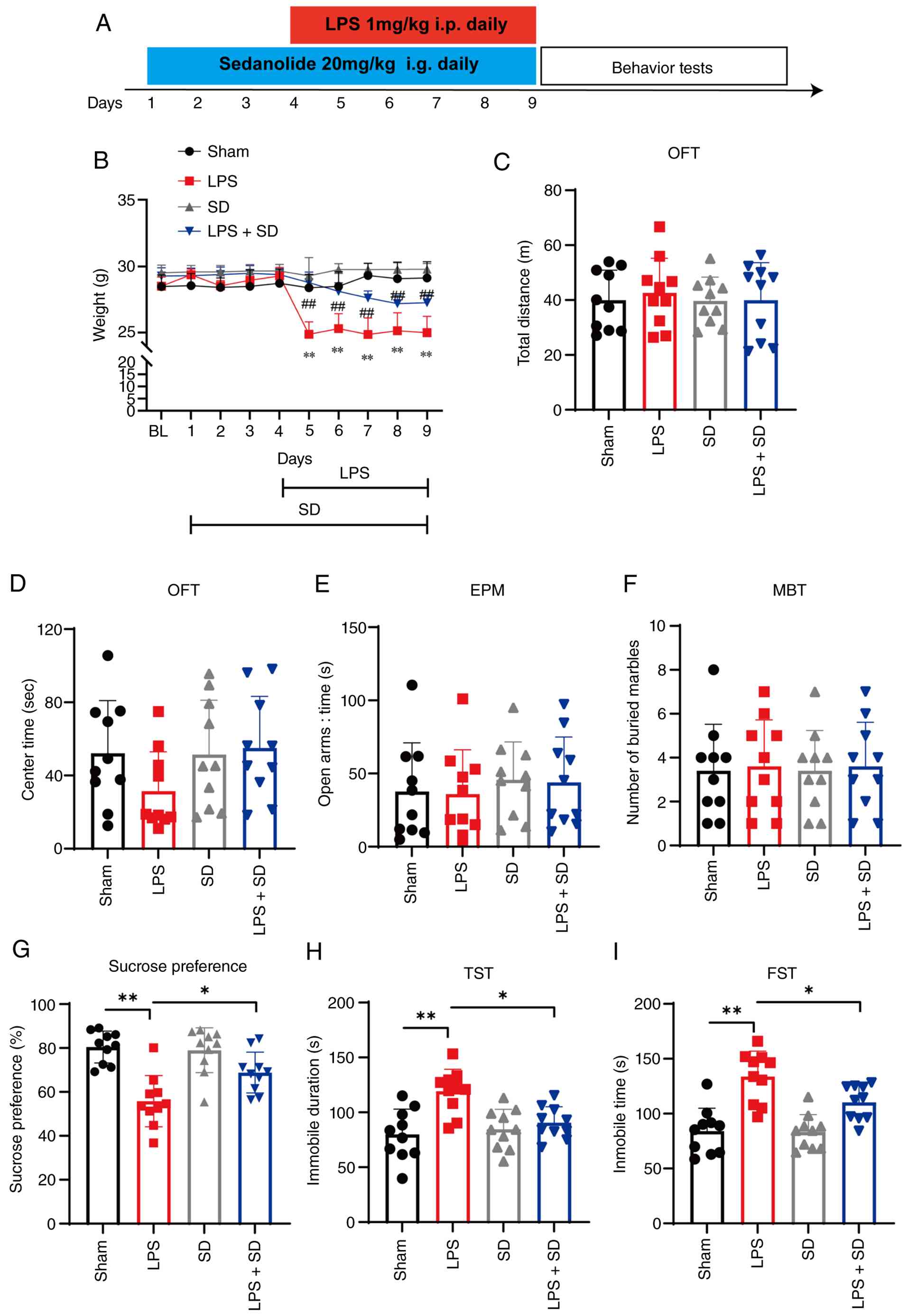
Figure 1

SD alleviates LPS-induced depressive
disorder. (A) Schematic diagram of the experimental protocol. (B)
Body weight of the LPS mice after SD treatment. Two-way ANOVA and
Tukey's multiple comparisons test (n=10 mice per group). (C) Total
distance traveled of all the mice in the OFT. Ordinary one-way
ANOVA and Tukey's multiple comparisons test (n=10 mice per group).
Sham vs. LPS: P=0.9549; sham vs. SD: P>0.9999; LPS vs. LPS + SD:
P=0.9561. (D) The stay time in the central area of the OFT.
Ordinary one-way ANOVA and Tukey's multiple comparisons test (n=10
mice per group). Sham vs. LPS: P=0.3386; Sham vs. SD P>0.9999;
LPS vs. LPS + SD: P=0.2311. (E) The stay time in the open arms in
the EPM. Ordinary one-way ANOVA and Tukey's multiple comparisons
test (n=10 mice per group). Sham vs. LPS, P=0.9992; sham vs. SD,
P=0.9338; LPS vs. LPS + SD, P=0.9363. (F) The number of buried
marbles in the MBT. Ordinary one-way ANOVA and Tukey's multiple
comparisons test (n=10 mice per group). Sham vs. LPS, P=0.9961;
sham vs. SD, P>0.9999; LPS vs. LPS + SD, P>0.9999. (G) The
sucrose preference in the sucrose preference test. Ordinary one-way
ANOVA and Tukey's multiple comparisons test (n=10 mice per group).
Sham vs. LPS, P<0.0001; sham vs. SD, P=0.9864; LPS vs. LPS + SD,
P<0.0001. (H) The immobile time in the TST. Ordinary one-way
ANOVA and Tukey's multiple comparisons test (n=10 mice per group).
Sham vs. LPS, P=0.0003; sham vs. SD, P=0.9458; LPS vs. LPS + SD,
P=0.0102. (I) The immobile time in the FST. Ordinary one-way ANOVA
and Tukey's multiple comparisons test (n=10 mice per group). Sham
vs. LPS, P<0.0001; sham vs. SD P=0.9998; LPS vs. LPS + SD,
P=0.0452. Data are presented as the mean ± SEM (n=10). *P<0.05
and **P<0.01. Sham vs. LPS: **P<0.01; LPS vs LPS + SD:
##P<0.01 in the (B). SD, sedanolide; LPS,
lipopolysaccharide; OFT, open field test; EPM, elevated plus maze;
FST, forced swimming test; MBT, marble burying test.

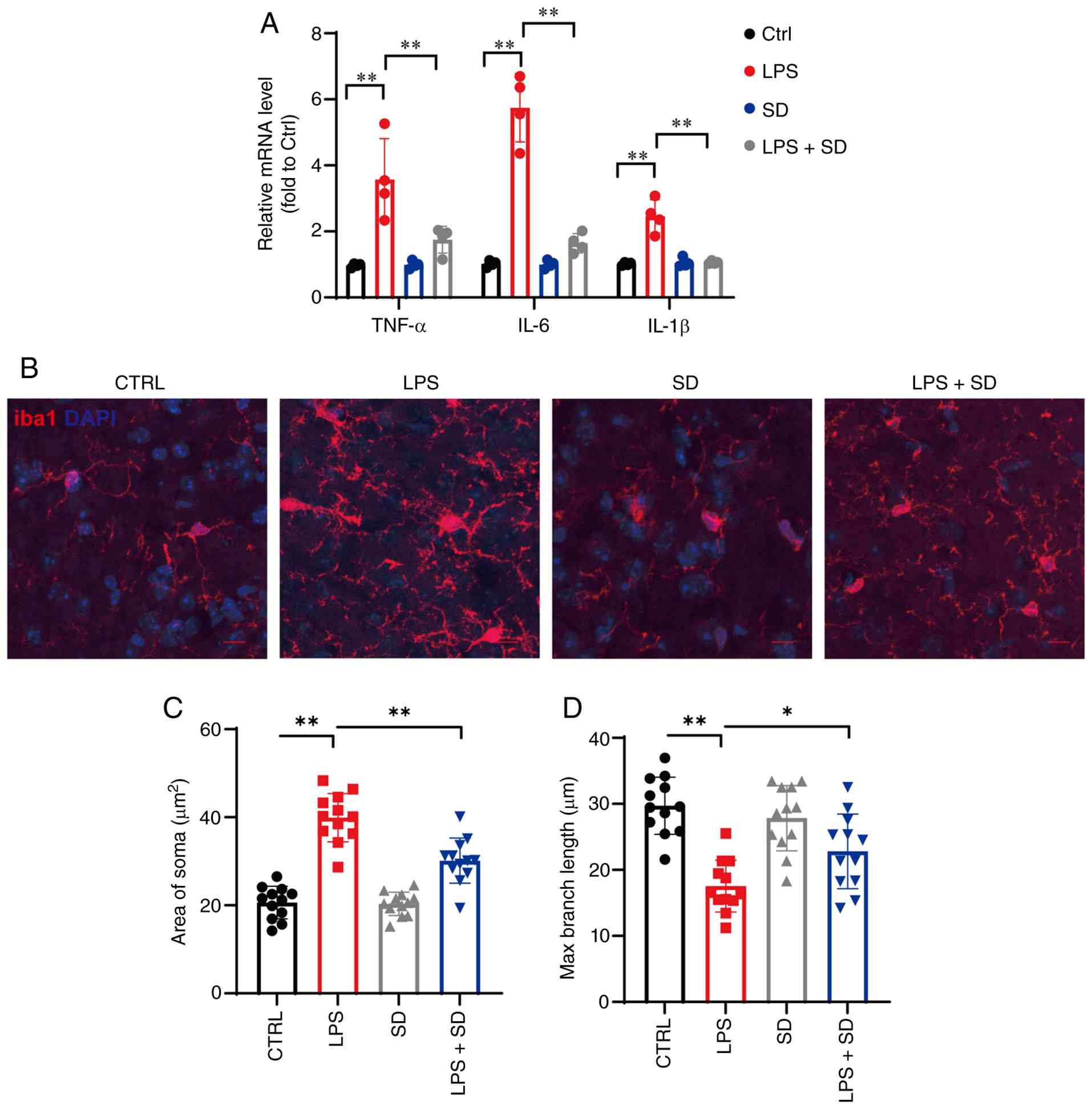
Figure 2

SD releases LPS-induced inflammatory
responses. (A) The mRNA levels of TNFα, IL-6 and IL-1β after SD
treatment in LPS mice. Two-way ANOVA and Tukey's multiple
comparisons test (n=4 mice per group). Ctrl vs. LPS: TNF-a,
P<0.0001; IL-6, P<0.0001; IL-1β, P=0.0018; LPS vs. LPS + SD:
TNF-a, P<0.0001; IL-6, P<0.0001; IL-1β, P=0.0026. (B)
Representative images of immunofluorescence of Iba1 (red). DAPI
staining represents for nuclear staining (Blue). Sholl analysis of
microglia, (C) Analysis of the area of the soma of microglia.
Ordinary one-way ANOVA and Tukey's multiple comparisons test (n=3)
mice per group. CTRL vs. LPS, P<0.0001; LPS vs. LPS + SD,
P<0.0001. (D) Analysis of the max branch length of microglia.
Ordinary one-way ANOVA and Tukey's multiple comparisons test (n=3
mice per group): CTRL vs. LPS, P<0.0001; LPS vs. LPS + SD,
P=0.0452. More than 30 images were analyzed for each group. Data
are expressed as the mean ± SEM. *P<0.5 and **P<0.01. SD,
sedanolide; LPS, lipopolysaccharide.

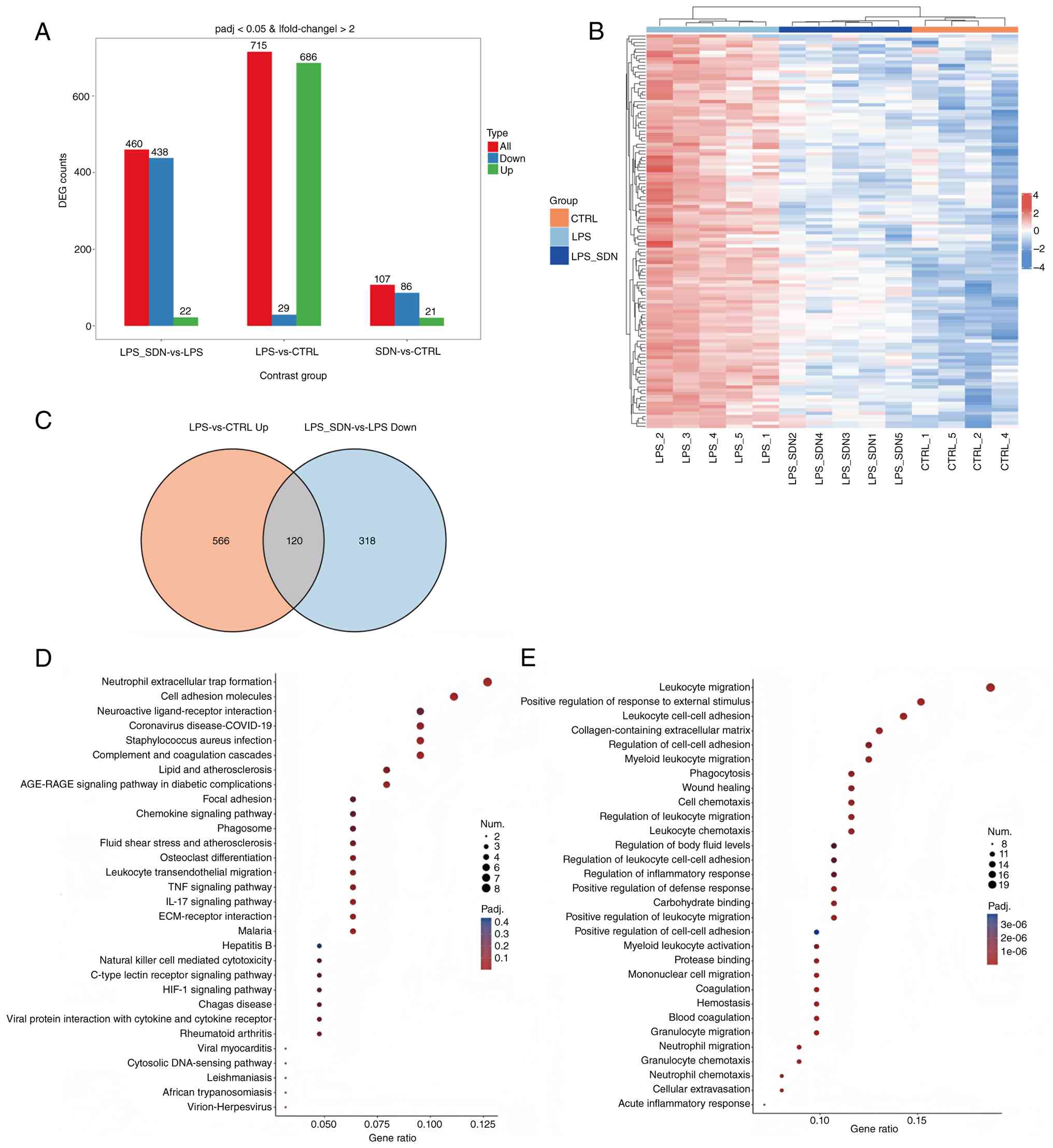
Figure 3

RNA sequencing analysis in the medial
prefrontal cortex of LPS-injected mice treated with SDN. (A) The
counts of the DEGs correspond to different comparison groups. (B)
Heatmap analysis for DEGs correspondingly to different comparison
groups. (C) The Venn graph for the upregulation genes in the LPS
group vs. the Ctrl group and downregulation genes in the LPS + SDN
group vs. LPS group. (D) The Kyoto Encyclopedia of Genes and
Genomes analysis for the inner gene of the Venn graph. (E) The Gene
Ontology analysis for the inner gene of the Venn graph. LPS,
lipopolysaccharide; SDN, sedanolide; DEGs, differentially expressed
genes.

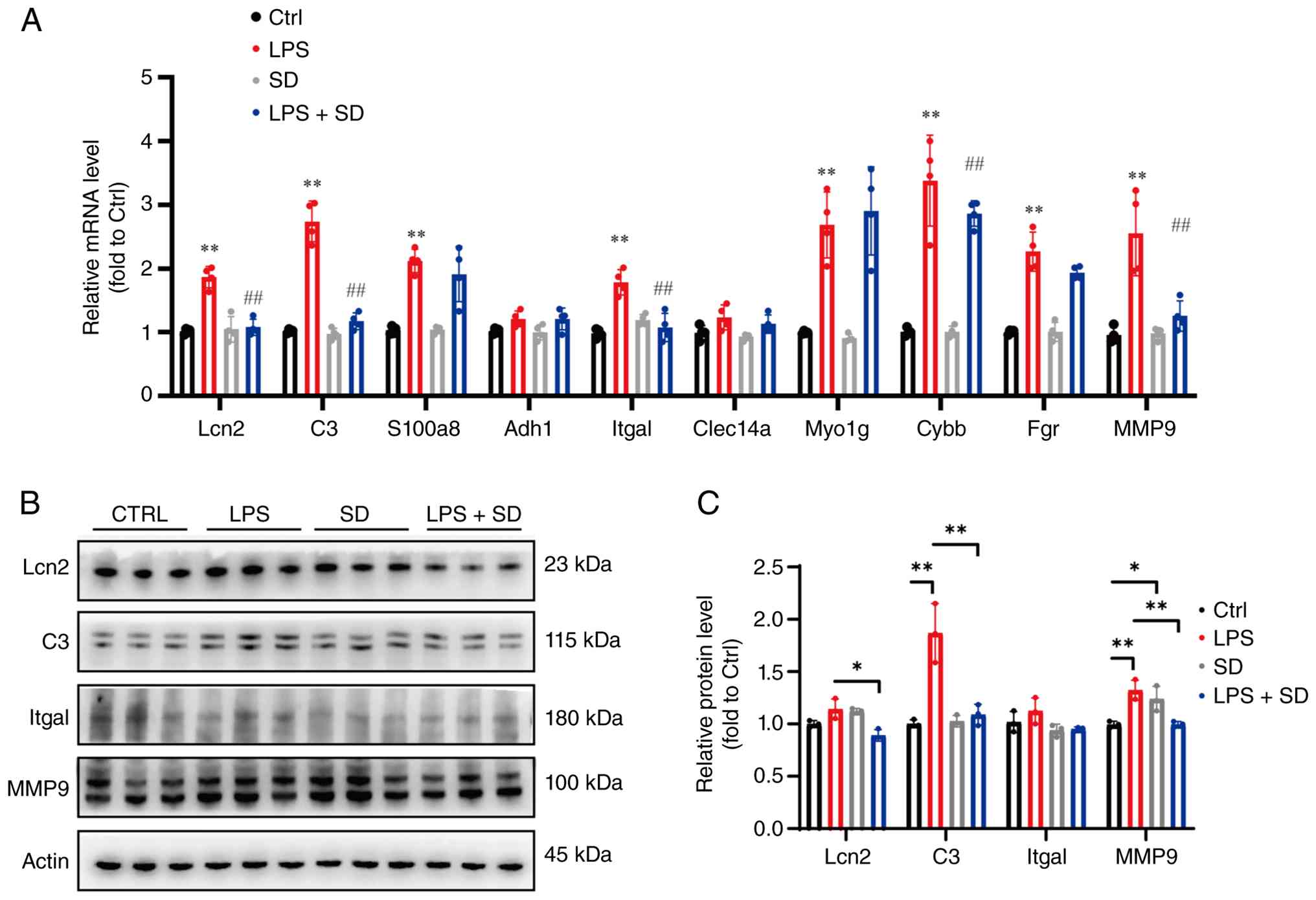
Figure 4

Validation of the RNA-Seq analysis in
medial prefrontal cortex. (A) The mRNA levels of the top 10
differentially expressed genes in the inner genes. Two-way ANOVA
and Tukey's multiple comparisons test (n=4 mice per group). Ctrl
vs. LPS: **P<0.01; LCN2, P<0.0001; C3, P<0.0001; s100a8,
P<0.0001; Adh1, P=0.7158; Itgal, P=0.0001; Clec14a, P=0.5539;
Myo1g, P<0.0001; Cybb, P<0.0001; Fgr, P<0.0001; and MMP9,
P<0.0001. LPS vs. LPS + SD: ##P<0.01; LCN2,
P=0.0002; C3, P<0.0001; s100a8, P=0.6557; Adh1, P>0.9999;
Itgal, P=0.0009; Clec14a, P=0.9403; Myo1g, P=0.6125; Cybb,
P=0.0267; Fgr, P=0.2757; MMP9, P<0.0001. (B) Representative
bands of western blotting for Lcn2, C3, Itgal and MMP9 in mice
after LPS and SD treatment. (C) Quantitative analysis of the
relative expression of Lcn2, C3, Itgal and MMP9. Two-way ANOVA and
Tukey's multiple comparisons test (n=3 mice per group). Ctrl vs.
LPS: LCN2, P=0.3075; C3, P<0.0001; Itgal, P=0.5615; and MMP9,
P=0.0015. LPS vs. LPS + SD: LCN2, P=0.0197; C3, P<0.0001; Itgal,
P=0.1562; and MMP9, P=0.0016. Data are expressed as the mean ± SEM.
*P<0.05 and **P<0.01. SD, sedanolide; LPS,
lipopolysaccharide.

Figure 5

Effect of SD on Complement C3 and
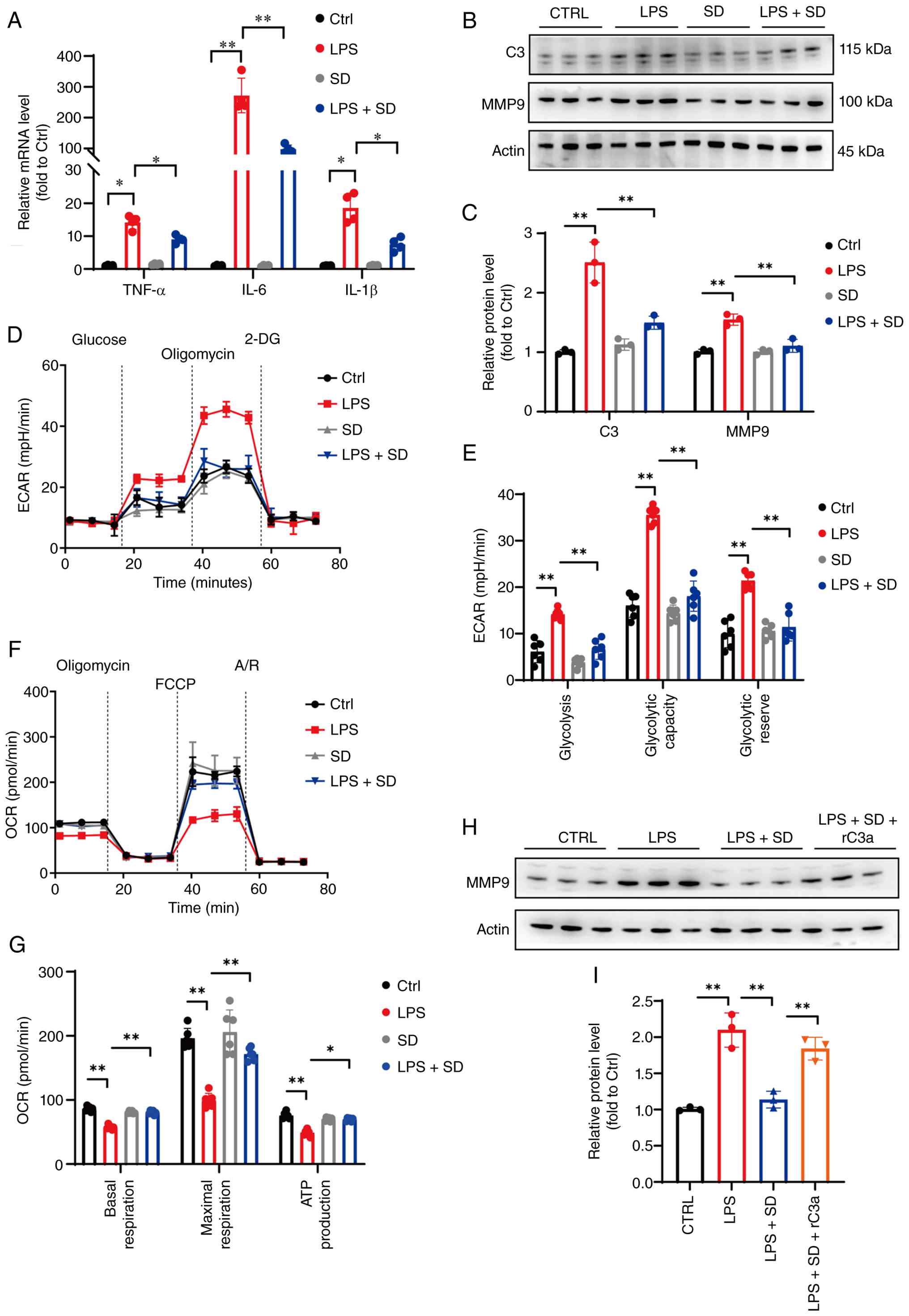
aerobic glycolysis in the LPS-induced BV2 cell lines. (A) The mRNA
levels of TNFα, IL-6 and IL-1β after LPS and SD treatment in BV-2
cell lines. Two-way ANOVA and Tukey's multiple comparisons test.
Ctrl vs. LPS: TNF-a, P=0.021; IL-6, P<0.0001; and IL-1β,
P=0.045. LPS vs. LPS + SD: TNF-a, P=0.036; IL-6, P<0.0001 and
IL-1β, P=0.042. (B) Representative bands of western blot for C3 and
MMP9 in BV2 cell lines after LPS and SD treatment. (C) Quantitative
analysis of the relative expression of C3 and MMP9 (n=3). Two-way
ANOVA and Tukey's multiple comparisons test, Ctrl vs. LPS: C3,
P<0.0001; MMP9, P=0.0013. LPS vs. LPS + SD: C3, P<0.0001;
MMP9, P=0.0071. (D and E) The experimental program of the ECAR of
BV-2 measured by Seahorse XFe96 Extracellular Flux Analyzer.
Two-way ANOVA and Tukey's multiple comparisons test (n=6 dishes),
Ctrl vs LPS: Glycolysis, P<0.0001; glycolytic capacity,
P<0.0001; GR, P<0.0001. LPS vs. LPS + SD: Glycolysis,
P<0.0001; glycolytic capacity, P<0.0001; GR, P<0.0001. (F
and G) OCR of BV-2 measured by Seahorse XFe96 Extracellular Flux
Analyzer. Ctrl vs LPS: Basal respiration, P=0.0006; maximal
respiration, P<0.0001; ATP production, P=0.017. LPS vs. LPS +
SD: Basal respiration, P=0.0085; maximal respiration, P<0.0001;
ATP production, P=0.0231. (H) Representative bands of western
blotting for MMP9 in Bv2 cell lines after administration of
exogenous active C3a ligand and SD treatment in the LPS challenge.
(I) Quantitative analysis of the relative expression of MMP9 (n=3).
Ordinary one-way ANOVA and Tukey's multiple comparisons test, Ctrl
vs. LPS: P=0.0001. LPS vs. LPS + SD: P=0.0003. LPS + SD vs. LPS +
SD + rC3a: P=0.0023. Data are expressed as the mean ± SEM.
*P<0.5 and **P<0.01. SD, sedanolide; LPS, lipopolysaccharide;
ECAR, extracellular acidification rate; OCR, oxygen consumption
rate; GR, glycolytic reserve; MMP9, matrix metalloproteinase 9.

Figure 6

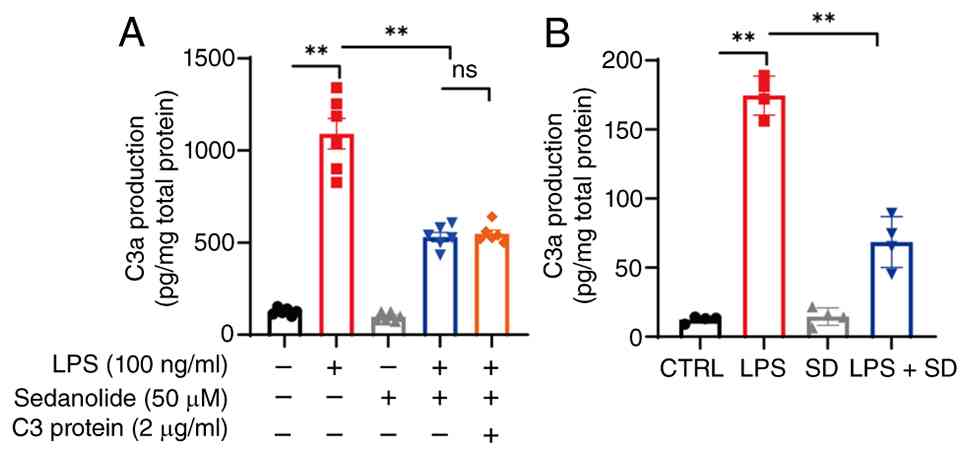
Suppressive effects of SD on C3
activation and C3a generation. (A) C3a level in BV2 cell lines
after administration of recombinant full-length mouse C3 protein
and SD treatment in the LPS challenge by ELISA assay. Ordinary
one-way ANOVA and Tukey's multiple comparisons test (n=6): CTRL vs.
LPS, P<0.0001; LPS vs. LPS + SD, P<0.0001; LPS + SD vs.
LPS+SD + C3 protein, P=0.9983. (B) The active C3a level in the
medial prefrontal cortex tissues after LPS and SD treatment by
ELISA assay. Ordinary one-way ANOVA and Tukey's multiple
comparisons test (n=4): CTRL vs. LPS, P<0.0001; LPS vs. LPS +
SD, P<0.0001. Data are expressed as the mean ± SEM. **P<0.01.
LPS, lipopolysaccharide; SD, sedanolide; ns, not significant.

Figure 7

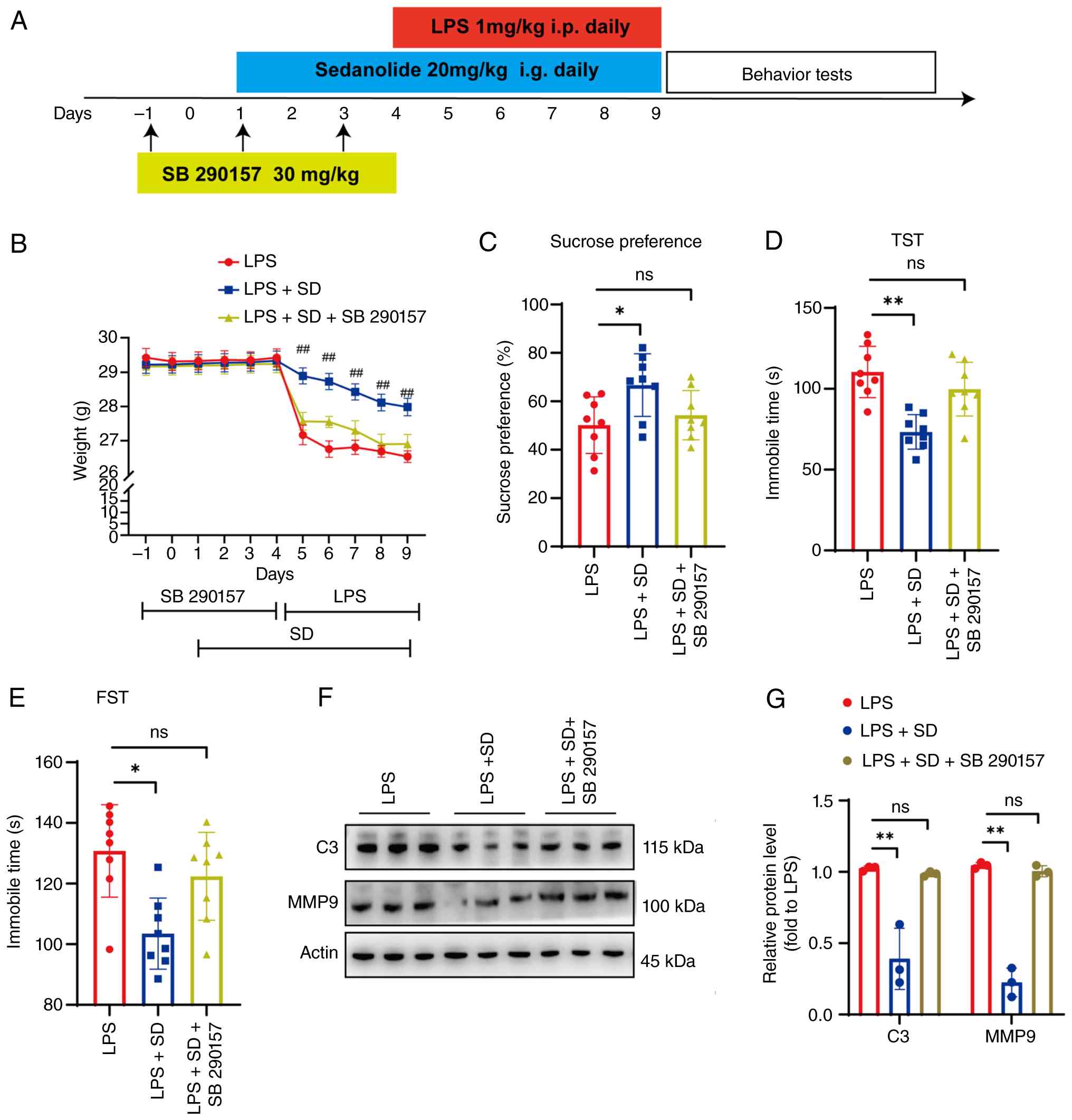
SD fails to restore LPS-induced
depressive disorder in the injection of a C3a receptor inhibitor.
(A) Schematic diagram of the experimental protocol. (B) Body weight
of the LPS mice after SD and SB 290157 treatment. Two-way ANOVA and
Tukey's multiple comparisons test, LPS vs. LPS + SD: 5,
P<0.0001; 6, P<0.0001; 7, P<0.0001; 8, P=0.0002; 9,
P=0.0002. (C) The sucrose preference in the sucrose preference
test. Ordinary one-way ANOVA and Tukey's multiple comparisons test
(n=8 mice per group). LPS vs. LPS + SD, P=0.0257; LPS + SD vs. LPS
+ SD + SB 290157, P=0.7655. (D) The immobile time in the TST.
Ordinary one-way ANOVA and Tukey's multiple comparisons test (n=8
mice per group): LPS vs. LPS + SD, P=0.0001; LPS + SD vs. LPS + SD
+ SB 290157, P=0.3311. (E) The immobile time in the FST. Ordinary
one-way ANOVA and Tukey's multiple comparisons test (n=8 mice per
group). LPS vs. LPS + SD, P=0.0022; LPS + SD vs. LPS+SD+SB 290157,
P=0.4642. (F) Representative bands of western blotting for C3 and
MMP9 in LPS mice after SD and SB 290157 treatment. (G) Quantitative
analysis of the relative expression of C3 and MMP9. Two-way ANOVA
and Tukey's multiple comparisons test (n=3 mice per group), LPS vs.
LPS + SD: C3, P<0.0001; MMP9, P<0.0001. LPS + SD vs. LPS + SD
+ SB 290157: C3, P=0.8865; MMP9, P=0.8728. Data are presented as
the mean ± SEM. *P<0.5 and **P<0.01. LPS vs. LPS + SD:
##P<0.01. LPS, lipopolysaccharide; SD, sedanolide;
TST, tail suspension test; FST, forced swimming test; ns, not
significant.

Figure 8

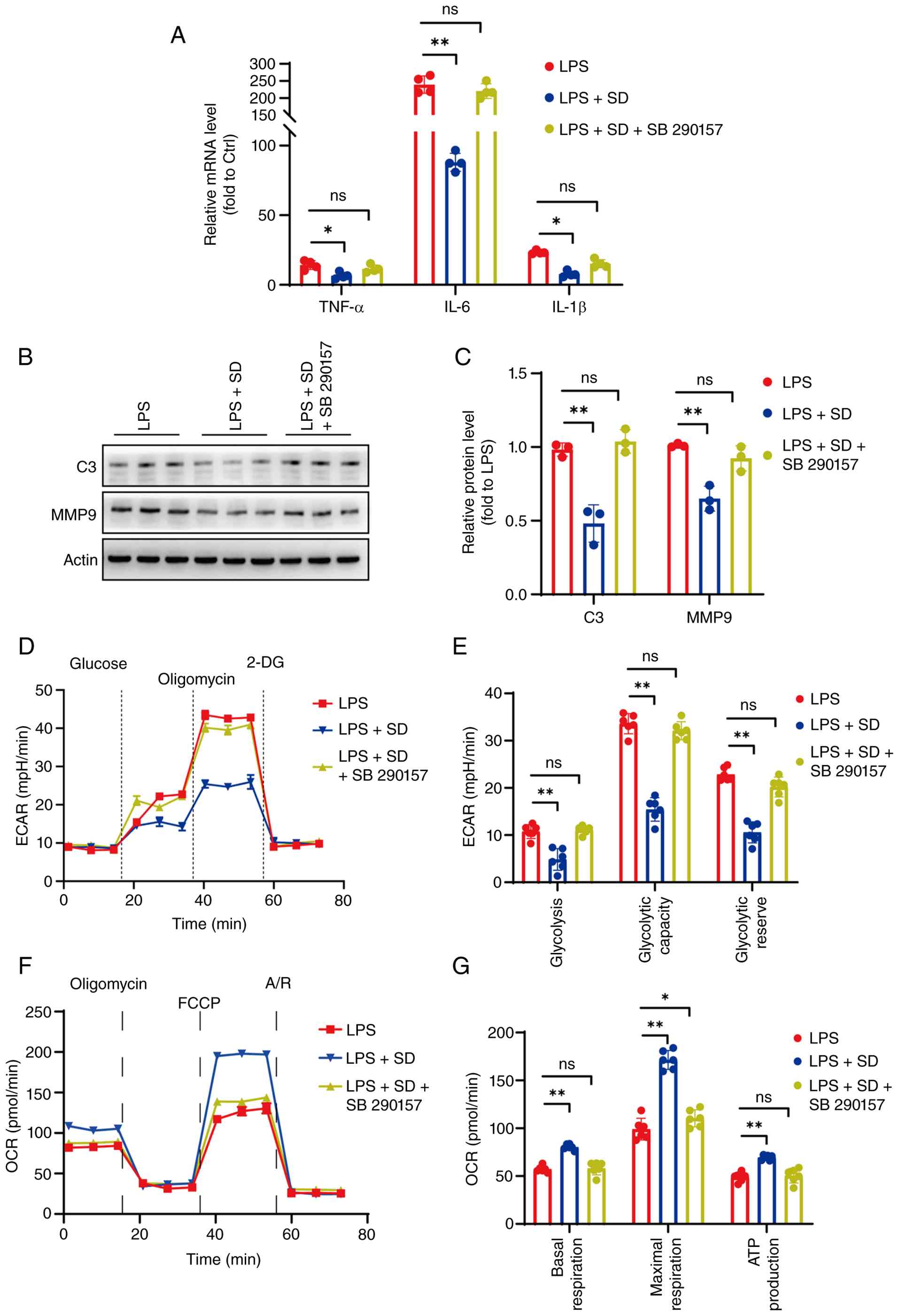
SD partly fails to restore
inflammation and aerobic glycolysis in BV-2 cell lines after C3aR
inhibitor treatment. (A) The mRNA levels of TNFα, IL-6 and IL-1β
after SD and SB 290157 treatment in LPS-induced BV-2 cell lines.
Two-way ANOVA and Tukey's multiple comparisons test, LPS vs. LPS +
SD: TNF-a, P=0.034; IL-6, P<0.0001; and IL-1β, P=0.041. LPS + SD
vs. LPS + SD + SB 290157: TNF-a, P=0.9388; IL-6, P=0.0736; and
IL-1β, P=0.5727. (B) Representative bands of western blot for C3
and MMP9 after SD and SB 290157 treatment in LPS-induced BV-2 cell
lines. (C) Quantitative analysis of the relative expression of C3
and MMP9 (n=3). Two-way ANOVA and Tukey's multiple comparisons
test, LPS vs. LPS + SD: C3, P<0.0001; MMP9, P=0.0004. LPS + SD
vs. LPS + SD + SB 290157: C3, P=0.6908; MMP9, P=0.4098. (D and E)
The experimental program of the ECAR of BV-2 was measured by
Seahorse XFe96 Extracellular Flux Analyzer. Two-way ANOVA and
Tukey's multiple comparisons test (n=6 dishes), LPS vs. LPS + SD:
Glycolysis, P<0.0001; glycolytic capacity, P<0.0001; GR,
P<0.0001. LPS + SD vs. LPS + SD + SB 290157: Glycolysis,
P=0.9526; glycolytic capacity, P=0.3825; GR, P=0.0556. (F and G)
OCR of BV-2 measured by Seahorse XFe96 Extracellular Flux Analyzer.
LPS vs. LPS + SD: Basal respiration, P=0.0006; Maximal respiration,
P<0.0001; ATP production, P=0.017. LPS + SD vs. LPS + SD + SB
290157: Basal respiration, P=0.9748; Maximal respiration, P=0.0233;
ATP production, P=0.9301. Data are expressed as the mean ± SEM.
*P<0.5 and **P<0.01. LPS, lipopolysaccharide; SD, sedanolide;
ECAR, extracellular acidification rate; OCR, oxygen consumption
rate; GR, glycolytic reserve; ns, not significant.
View References

1 

Mathers CD and Loncar D: Projections of global mortality and burden of disease from 2002 to 2030. PLoS Med. 3:e4422006. View Article : Google Scholar : PubMed/NCBI

2 

Smith RS: The macrophage theory of depression. Med Hypotheses. 35:298–306. 1991. View Article : Google Scholar : PubMed/NCBI

3 

Ge C, Chen W, Zhang L, Ai Y, Zou Y and Peng Q: Chemogenetic activation of the HPC-mPFC pathway improves cognitive dysfunction in lipopolysaccharide -induced brain injury. Theranostics. 13:2946–2961. 2023. View Article : Google Scholar : PubMed/NCBI

4 

Rezaei S, Prévot TD, Vieira E and Sibille E: LPS-induced inflammation reduces GABAergic interneuron markers and brain-derived neurotrophic factor in mouse prefrontal cortex and hippocampus. Brain Behav Immun Health. 38:1007612024. View Article : Google Scholar : PubMed/NCBI

5 

Maziz MNH, Chakravarthi S, Aung T, Htoo PM, Shwe WH, Gupalo S, Udayah MW, Singh H, Kabir MS, Thangarajan R and Kodali M: Microglia-mediated neuroinflammation through phosphatidylinositol 3-kinase signaling causes cognitive dysfunction. Int J Mol Sci. 26:72122025. View Article : Google Scholar : PubMed/NCBI

6 

Arioz BI, Tastan B, Tarakcioglu E, Tufekci KU, Olcum M, Ersoy N, Bagriyanik A, Genc K and Genc S: Melatonin attenuates LPS-induced acute depressive-like behaviors and microglial NLRP3 inflammasome activation through the SIRT1/Nrf2 pathway. Front Immunol. 10:15112019. View Article : Google Scholar : PubMed/NCBI

7 

Korol' SA: Complement system. Fiziol Zh. 23:408–416. 1977.(In Ukrainian). PubMed/NCBI

8 

Stephan AH, Barres BA and Stevens B: The complement system: An unexpected role in synaptic pruning during development and disease. Annu Rev Neurosci. 35:369–389. 2012. View Article : Google Scholar : PubMed/NCBI

9 

Zhou R, Chen SH, Zhao Z, Tu D, Song S, Wang Y, Wang Q, Feng J and Hong JS: Complement C3 enhances LPS-elicited neuroinflammation and neurodegeneration via the Mac1/NOX2 pathway. Mol Neurobiol. 60:5167–5183. 2023. View Article : Google Scholar : PubMed/NCBI

10 

Kolev M, Le Friec G and Kemper C: Complement-tapping into new sites and effector systems. Nat Rev Immunol. 14:811–820. 2014. View Article : Google Scholar : PubMed/NCBI

11 

Hess C and Kemper C: Complement-mediated regulation of meta-bolism and basic cellular processes. Immunity. 45:240–254. 2016. View Article : Google Scholar : PubMed/NCBI

12 

Gedam M, Comerota MM, Propson NE, Chen T, Jin F, Wang MC and Zheng H: Complement C3aR depletion reverses HIF-1α-induced metabolic impairment and enhances microglial response to Aβ pathology. J Clin Invest. 133:e1675012023. View Article : Google Scholar : PubMed/NCBI

13 

Sun XP, Shi Z, Pan RL, Qin C, Zhang YL, Li YH, Qu LN, Li TF and Liu XM: Antidepressant-like effects and mechanism of action of SYG in depression model in rats. Neuro Endocrinol Lett. 35:129–136. 2014.PubMed/NCBI

14 

Wei Q, Yang J, Li L, Su Y and Wang A: Novel phthalide dimers from the aerial parts of Ligusticum sinense Oliv cv. Chaxiong. Fitoterapia. 137:1041742019. View Article : Google Scholar : PubMed/NCBI

15 

Chen Y, Cheng Q, Lv S, Kang Z and Zeng S: Advances in the phytochemistry and pharmacology of plant-derived phthalides. Heliyon. 9:e229572023. View Article : Google Scholar : PubMed/NCBI

16 

Ling J, Deng W, Zhang J and Yang F: The protective effect of Chuanxiong Oil on focal cerebral reperfusion injury in rat. Pharmacol Clin Chin Mat Med. 24:39–41. 2008.(In Chinese).

17 

Fan Y, Wang J, Jian J, Wen Y, Li J, Tian H, Crommen J, Bi W, Zhang T and Jiang Z: High-throughput discovery of highly selective reversible hMAO-B inhibitors based on at-line nanofractionation. Acta Pharm Sin B. 14:1772–1786. 2024. View Article : Google Scholar : PubMed/NCBI

18 

Li S, Zhuge A, Chen H, Han S, Shen J, Wang K, Xia J, Xia H, Jiang S, Wu Y and Li L: Sedanolide alleviates DSS-induced colitis by modulating the intestinal FXR-SMPD3 pathway in mice. J Adv Res. 69:413–426. 2025. View Article : Google Scholar : PubMed/NCBI

19 

Singh P and Mohanty B: Mechanisms of repetitive LPS exposure-induced toxicity in murine model via toll-like receptor 4 mediated NF-κB/NLRP3/COX-2 signalling: An in vivo and in silico analysis. Food Chem Toxicol. 206:1157852025. View Article : Google Scholar : PubMed/NCBI

20 

Wang X, Weng G, Gao Y, Wang Y and Zhang C: Quercetin ameliorates chronic restraint stress- and LPS-induced anxiety-like behaviors by modulating neuroinflammation in the lateral hypothalamus. Psychopharmacology (Berl). 242:2063–2076. 2025. View Article : Google Scholar : PubMed/NCBI

21 

Hu Q, Cai H, Ke X, Wang H, Zheng D, Chen Y, Wang Y and Chen G: The lateral septum partakes the regulation of propofol-induced anxiety-like behavior. Eur J Pharmacol. 977:1767562024. View Article : Google Scholar : PubMed/NCBI

22 

Chen Y, Zheng D, Wang H, Zhang S, Zhou Y, Ke X and Chen G: Lipocalin 2 in the paraventricular thalamic nucleus contributes to DSS-induced depressive-like behaviors. Neurosci Bull. 39:1263–1277. 2023. View Article : Google Scholar : PubMed/NCBI

23 

Livak KJ and Schmittgen TD: Analysis of relative gene expression data using real-time quantitative PCR and the 2(−Delta Delta C(T)) method. Methods. 25:402–408. 2001. View Article : Google Scholar : PubMed/NCBI

24 

Song S, Zhao W, Ji Y, Huang Q, Li Y, Chen S, Yang J and Jin X: SHANK2 protein contributes to sevoflurane-induced developmental neurotoxicity and cognitive dysfunction in C57BL/6 male mice. Anesthesiol Perioper Sci. 1:22023. View Article : Google Scholar

25 

Zheng XZ, Yu HY, Chen YR and Fang JS: Aucubin mitigates the elevation of microglial aerobic glycolysis and inflammation in diabetic neuropathic pain via aldose reductase. World J Diabetes. 16:1039152025. View Article : Google Scholar : PubMed/NCBI

26 

Li S, Liu H, Lv P, Yao Y, Peng L, Xia T, Yan C, Ma Z, Chen ZP, Zhao C and Gu X: Microglia mediate memory dysfunction via excitatory synaptic elimination in a fracture surgery mouse model. J Neuroinflammation. 21:2272024. View Article : Google Scholar : PubMed/NCBI

27 

Hu Y, Mai W, Chen L, Cao K, Zhang B, Zhang Z, Liu Y, Lou H, Duan S and Gao Z: mTOR-mediated metabolic reprogramming shapes distinct microglia functions in response to lipopolysaccharide and ATP. Glia. 68:1031–1045. 2020. View Article : Google Scholar : PubMed/NCBI

28 

Kim D, Langmead B and Salzberg SL: HISAT: A fast spliced aligner with low memory requirements. Nat Methods. 12:357–360. 2015. View Article : Google Scholar : PubMed/NCBI

29 

Pertea M, Pertea GM, Antonescu CM, Chang TC, Mendell JT and Salzberg SL: StringTie enables improved reconstruction of a transcriptome from RNA-seq reads. Nat Biotechnol. 33:290–295. 2015. View Article : Google Scholar : PubMed/NCBI

30 

Li B and Dewey CN: RSEM: Accurate transcript quantification from RNA-Seq data with or without a reference genome. BMC Bioinformatics. 12:3232011. View Article : Google Scholar : PubMed/NCBI

31 

Love MI, Huber W and Anders S: Moderated estimation of fold change and dispersion for RNA-seq data with DESeq2. Genome Biol. 15:5502014. View Article : Google Scholar : PubMed/NCBI

32 

Wang L, Feng Z, Wang X, Wang X and Zhang X: DEGseq: An R package for identifying differentially expressed genes from RNA-seq data. Bioinformatics. 26:136–138. 2010. View Article : Google Scholar : PubMed/NCBI

33 

Li Y, Kong E, Ding R, Chu R, Lu J, Deng M, Hua T, Yang M, Wang H, Chen D, et al: Hyperglycemia-induced Sirt3 downregulation increases microglial aerobic glycolysis and inflammation in diabetic neuropathic pain pathogenesis. CNS Neurosci Ther. 30:e149132024. View Article : Google Scholar : PubMed/NCBI

34 

Xie Q, Zhang X, Zhao S, Chen S, Liu M, Zhu C, Zhao Y, Gui Y and Ma R: Sedanolide: A review on its chemical compounds, mechanisms and functions. Fitoterapia. 185:1067322025. View Article : Google Scholar : PubMed/NCBI

35 

Tabei Y, Abe H, Suzuki S, Takeda N, Arai JI and Nakajima Y: Sedanolide activates KEAP1-NRF2 pathway and ameliorates hydrogen peroxide-induced apoptotic cell death. Int J Mol Sci. 24:165322023. View Article : Google Scholar : PubMed/NCBI

36 

Ma N, Fan S, Li X, et al: Screening of anti-inflammatory substances of Chuanxiong Rhizoma and analysis of its mechanism. Chin J Exp Tradit Med Formulae. 24:140–146. 2018.(In Chinese).

37 

Gedam M and Zheng H: Complement C3aR signaling: Immune and metabolic modulation and its impact on Alzheimer's disease. Eur J Immunol. 54:e23508152024. View Article : Google Scholar : PubMed/NCBI

38 

Yan H, Zhang JL, Leung KT, Lo KW, Yu J, To KF and Kang W: An update of G-protein-coupled receptor signaling and its deregulation in gastric carcinogenesis. Cancers (Basel). 15:7362023. View Article : Google Scholar : PubMed/NCBI

39 

Rothwarf DM and Karin M: The NF-kappa B activation pathway: A paradigm in information transfer from membrane to nucleus. Sci STKE. 1999:RE11999. View Article : Google Scholar : PubMed/NCBI

40 

Wang Y, Jiao L, Qiang C, Chen C, Shen Z, Ding F, Lv L, Zhu T, Lu Y and Cui X: The role of matrix metalloproteinase 9 in fibrosis diseases and its molecular mechanisms. Biomed Pharmacother. 171:1161162024. View Article : Google Scholar : PubMed/NCBI

41 

Li X, Zhou R, Peng H, Peng J, Li Q and Mei M: Microglia PKM2 mediates neuroinflammation and neuron loss in mice epilepsy through the astrocyte C3-neuron C3R signaling pathway. Brain Sci. 13:2622023. View Article : Google Scholar : PubMed/NCBI

Related Articles

  • Abstract
  • View
  • Download
  • Twitter
Copy and paste a formatted citation
Spandidos Publications style
Lu S, Luo F, Chen N, Shi G and Chen Y: Sedanolide alleviates LPS‑induced depressive‑like behaviors by modulating the C3a/C3aR signaling axis and microglial glycolysis. Mol Med Rep 34: 257, 2026.
APA
Lu, S., Luo, F., Chen, N., Shi, G., & Chen, Y. (2026). Sedanolide alleviates LPS‑induced depressive‑like behaviors by modulating the C3a/C3aR signaling axis and microglial glycolysis. Molecular Medicine Reports, 34, 257. https://doi.org/10.3892/mmr.2026.13967
MLA
Lu, S., Luo, F., Chen, N., Shi, G., Chen, Y."Sedanolide alleviates LPS‑induced depressive‑like behaviors by modulating the C3a/C3aR signaling axis and microglial glycolysis". Molecular Medicine Reports 34.3 (2026): 257.
Chicago
Lu, S., Luo, F., Chen, N., Shi, G., Chen, Y."Sedanolide alleviates LPS‑induced depressive‑like behaviors by modulating the C3a/C3aR signaling axis and microglial glycolysis". Molecular Medicine Reports 34, no. 3 (2026): 257. https://doi.org/10.3892/mmr.2026.13967
Copy and paste a formatted citation
x
Spandidos Publications style
Lu S, Luo F, Chen N, Shi G and Chen Y: Sedanolide alleviates LPS‑induced depressive‑like behaviors by modulating the C3a/C3aR signaling axis and microglial glycolysis. Mol Med Rep 34: 257, 2026.
APA
Lu, S., Luo, F., Chen, N., Shi, G., & Chen, Y. (2026). Sedanolide alleviates LPS‑induced depressive‑like behaviors by modulating the C3a/C3aR signaling axis and microglial glycolysis. Molecular Medicine Reports, 34, 257. https://doi.org/10.3892/mmr.2026.13967
MLA
Lu, S., Luo, F., Chen, N., Shi, G., Chen, Y."Sedanolide alleviates LPS‑induced depressive‑like behaviors by modulating the C3a/C3aR signaling axis and microglial glycolysis". Molecular Medicine Reports 34.3 (2026): 257.
Chicago
Lu, S., Luo, F., Chen, N., Shi, G., Chen, Y."Sedanolide alleviates LPS‑induced depressive‑like behaviors by modulating the C3a/C3aR signaling axis and microglial glycolysis". Molecular Medicine Reports 34, no. 3 (2026): 257. https://doi.org/10.3892/mmr.2026.13967
Follow us
  • Twitter
  • LinkedIn
  • Facebook
About
  • Spandidos Publications
  • Careers
  • Cookie Policy
  • Privacy Policy
How can we help?
  • Help
  • Live Chat
  • Contact
  • Email to our Support Team