Parkinson's disease (PD) is a progressive
neurodegenerative disorder that affects a marked number of
patients, with data indicating that the prevalence of PD among
individuals aged 65 years and older is >2% (1). China harbors a particularly high
proportion of patients with PD, with projections indicating that by
2030 the country will account for two-thirds of the global PD
population (2). A global
epidemiological analysis revealed that, since the start of the 21st
century, the annual prevalence growth rate has been notably higher
than that of the preceding century (an annualized growth of 16.32%
from 2004 to 2023), with prevalence reaching a peak between 2010
and 2023, at 3.81/1,000 individuals (3). PD severely diminishes the quality of
life for patients and imposes a substantial economic burden on
healthcare and public health systems. Finding effective, safe and
feasible treatment options represents an urgent medical challenge
needs to be addressed.
PD is typically diagnosed using the UK Brain Bank
criteria, which demonstrates a sensitivity of >80%.
Alternatively, the 2015 Movement Disorders Society criteria
introduced the concept of preclinical stage and achieved an
accuracy rate of 92.6%. Prospective studies indicate that these
criteria are >98% specific in all cases (4–6). At
present, it is generally considered that standardized
neuropathological testing markers (such as bodily fluid biomarkers)
are not yet clinically applicable. Early diagnosis of PD remains a
major clinical challenge for two key reasons. First, mainstream
clinical diagnostic criteria exhibit poor reliability and
consistency owing to interference from multiple external
confounding factors, resulting in high rates of misdiagnosis and
missed diagnosis (7). Second, no
universal gold standard has been established for disease-specific
biomarkers, and strict control of biochemical testing conditions
remains challenging. Accordingly, developing high-sensitivity
multi-level biomolecular detection approaches for PD diagnosis may
effectively lower misdiagnosis rates and minimize the bias caused
by the subjective judgments of researchers relying on early
clinical symptoms. Technological advances and the emergence of
multi-source data have accelerated the development of multimodal
fusion, a sophisticated approach that integrates structural and
functional information to enable multidimensional comprehensive
characterization of PD. This approach supports the formulation of
more accurate personalized diagnostic and therapeutic regimens.
Recently, Wang et al (8)
proposed the Spatial-temporal Dual-pathway Network with Multi-scale
Feature Fusion method. This model yielded a diagnostic accuracy of
0.926 on public datasets and 0.858 on private datasets, confirming
its notable performance for PD diagnosis improvement (9).
A review of prior clinical cases indicates that the
hallmark clinical manifestations of PD center on motor function
impairments, including bradykinesia, resting tremor, gait and
balance disturbances (10).
Olfactory dysfunction is recognized as an early biomarker of PD and
is among the earliest non-motor symptoms of the disease (11). During the early disease stage,
patients frequently exhibit a spectrum of non-motor symptoms, such
as constipation, nausea, urinary dysfunction, sleep disturbances,
depression, anxiety and hyposmia (12). Furthermore, patients in both
motor-predominant and neuropsychiatric symptom-predominant subtypes
displayed more notable motor deficits, anxiety and depressive
symptoms at baseline. Such phenotypic characteristics may signal
autonomic neuropathy-mediated non-motor symptoms (13). The Movement Disorder Society Task
Force attributes the onset of the ‘prodromal phase’ to alterations
in the nondopaminergic nervous system, which constitutes a distinct
clinical stage preceding the persistent injury and loss of
dopaminergic neurons in the substantia nigra pars compacta (SNPC)
(6). Via single-molecule optical
imaging, prominent disparities in the size and abundance of
α-synuclein (α-Syn) aggregates were detected in tissue samples
collected from patients with PD vs. healthy control participants
(14). This pathological
progression evidence is vital for clarifying the underlying
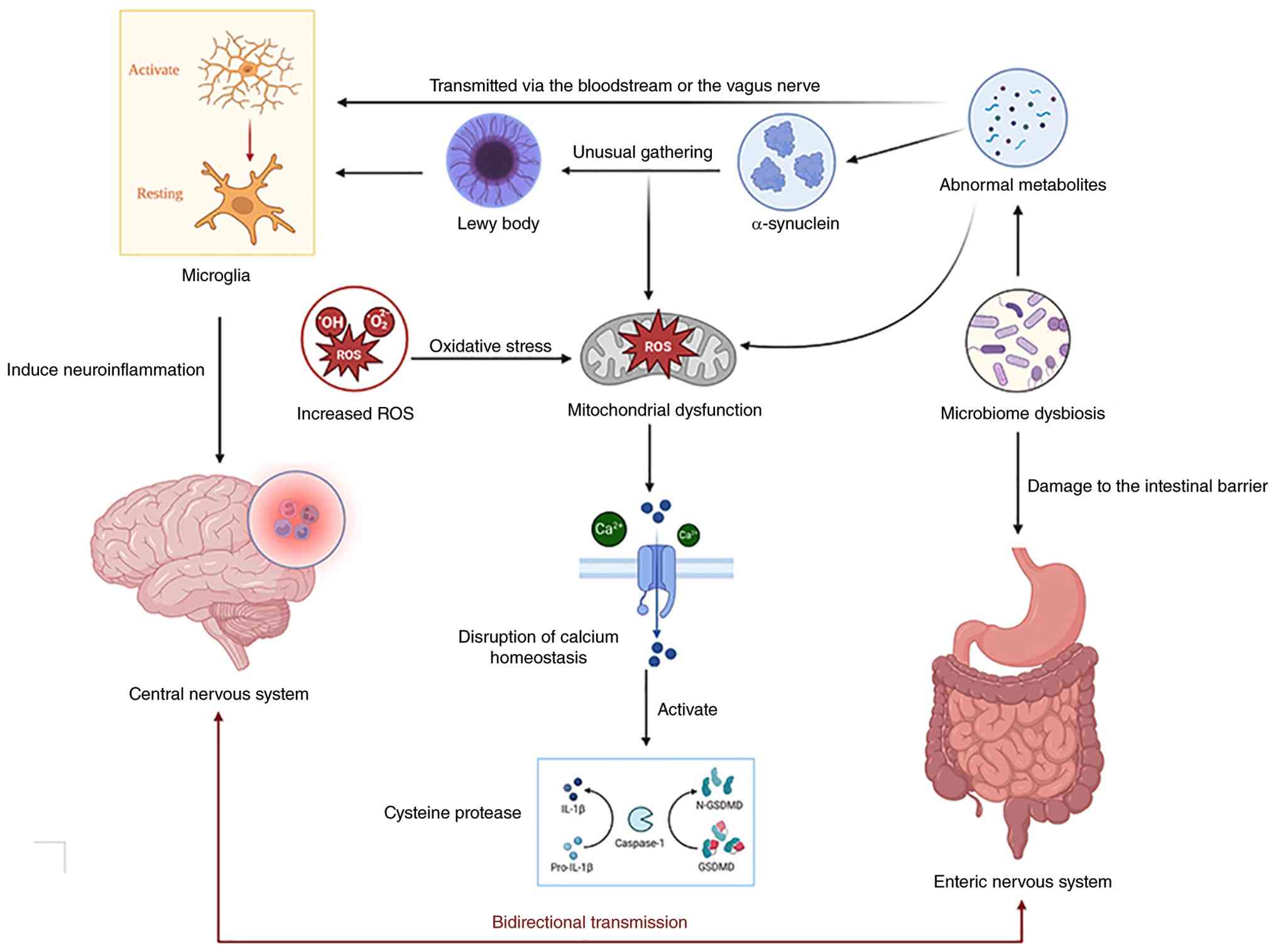
pathogenesis of PD. Given that PD pathogenesis involves multi-level
interactive mechanisms (Fig. 1),
the existing experimental data remain insufficient to fully
decipher its fundamental etiology.
By the time patients develop motor symptoms, 50–70%
of dopaminergic neurons within the SNPC already present with
dysfunction or complete loss of activity (15–17).
Kim et al (18)
demonstrated that intestinal injection of pathological α-syn in
mice triggers its retrograde transport along the vagus nerve to the
brainstem solitary tract nucleus, ultimately reaching the SNPC.
These findings validate the gut-to-brain propagating pathway of
α-Syn pathology and substantiate the pathogenic hypothesis of
idiopathic PD. Accordingly, timely identification, diagnosis and
intervention during the prodromal phase marked by non-motor
symptoms may delay or even halt PD disease progression.
The emergence of these non-motor manifestations is
associated with alterations in the composition of gastrointestinal
(GI) microbiota and their derived metabolites in patients with PD.
Tremlett et al (19)
theorized that GI dysfunction plays a pivotal role in the onset and
progression of neurodegenerative diseases and is tightly linked to
disease onset risk, recurrence and progression. A growing body of
preclinical studies demonstrates that the gut microbiota (GM)
participates in gut-brain signaling via multiple mechanisms, among
which endocrine and neurosecretory pathways exert dominant effects.
In such gut-brain axis crosstalk, the central nervous system (CNS)
can further modulate gut microbial composition and activities
through the autonomic nervous system (ANS). Researchers have
proposed the microbiota-gut-brain axis (MGBA) as a theoretical
extension based on the aforementioned biological mechanisms
(20). This framework highlights
the bidirectional communication network connecting the enteric
nervous system (ENS) within the GI tract and CNS. Dysbiosis of GM
and its metabolites facilitate PD pathogenesis by modulating
neuroinflammation, intestinal barrier integrity and
neurotransmitter functions along this signaling pathway.
Novel PD therapeutic strategies targeting the
gut-brain axis have emerged and undergone continuous optimization
and innovation, with promising application prospects (21,22).
The present review aimed to summarize MGBA-related PD mechanisms,
lays a solid theoretical basis and offers critical insights for
drug development, and aims to systematically elaborate the MGBA-PD
association to facilitate the discovery of more efficacious PD
treatment regimens.
The human GI is a complex and dynamic ecosystem that
houses >100 trillion microorganisms, including bacteria, fungi,
protozoa and viruses (23). The
biological importance and research potential of these microbial
communities have been well established and validated from multiple
perspectives (24–26). Liu et al (27) identified that shifts in GM
composition regulate neurotransmitter synthesis and secretion. For
instance, these alterations trigger protein aggregation and further
induce neurological dysfunction. Additionally, in neurodegenerative
diseases including PD, GM modulates gut-brain crosstalk via
multiple pathways, including immune pathways, the vagus nerve and
the circulatory system (28). This
finding indirectly supports the multi-pathogenic mechanisms of PD.
Hence, GM exerts an indispensable effect on maintaining basic
physiological functions and bodily health.
Nevertheless, diverse factors affect the
composition, abundance and physiological functions of intestinal
bacterial genera. These factors include age, diet, genetic
background, physiological status, lifestyle and environmental
exposure. GI function is not controlled by a single independent
system. Instead, GI activities are coordinately modulated by three
core systems: i) CNS; ii) ANS; and iii) ENS. The crosstalk among
these three systems is critical for regulating and sustaining
normal GI functions (29).
The ENS is a complex semi-autonomous neural network
widely distributed along the digestive tract, consisting of the
submucosal and myenteric plexuses in the esophagus, stomach, small
intestine and colon (30). The ENS
can function independently of the CNS and comprises >26 subtypes
of intestinal neuron, including motor neurons, interneurons and
primary afferent neurons; these neurons mediate the well-documented
gut-gut reflex (31).
Additionally, the communication process is facilitated by the ANS
and the hypothalamic-pituitary-adrenal axis, thereby linking the
peripheral gut to the CNS (32).
As a core physiological network, the gut-brain axis
connects behavioral, cognitive and emotional activities with GI
functions via the interplay of neurotransmitters, hormones and
neural signals (33). The vagus
nerve, a major mixed cranial nerve, serves as the primary
communication conduit between the gut and the brain. It mediates
direct gut-brain crosstalk and builds an elaborate regulatory
network to facilitate signal transmission and functional
coordination (34). The GM
modulates host physiological functions via this network through
direct and indirect signaling pathways, including chemical
mediators, immune responses and neural circuits (35). Abnormal alterations or ecological
dysregulation of GM composition have been demonstrated to induce a
range of conditions, including PD, Alzheimer's disease, anxiety,
depression and autism. Alterations on these signaling pathways, and
fluctuations in GM are concomitant with the progression of
neurodegenerative diseases (36,37).
For instance, GM-derived tryptophanase and aminotransferase act
synergistically to metabolize tryptophan into indole and its
derivatives, including indole-3-acetaldehyde, indole-3-acetic acid
and indole-3-lactic acid. Bacterial genera such as Escherichia
coli, Bacteroides spp., Bifidobacterium and Clostridium
play notable roles in this conversion process (38). These substances can be absorbed
into the bloodstream via the aryl hydrocarbon receptor (AHR) and
subsequently mediate various cellular physiological activities.
Among these, tryptophan metabolites have been shown to protect
intestinal barrier function via AHR. Therefore, modulating indole
levels may improve the prognosis of CNS disorders and restore
functional dysregulation of the MGBA (39,40).
To further elucidate interactions among microbial
communities, researchers have adopted computational approaches to
assess their biosynthetic potential. These efforts help simulate
molecular crosstalk within and across microbial populations
(41). Multimodal omics
approaches, encompassing genomics, transcriptomics and epigenomics,
facilitate the acquisition and analysis of disease-specific data,
thereby unraveling intricate biological regulatory networks
(42). Using multimodal omics
approaches, Hensen and Thiele (43) profiled PD-related metabolites and
reconstructed whole-body metabolic models using gut metagenomic
datasets. The aforementioned study screened six blood metabolites
with the most notable discrepancies compared with the control group
and identified key microbial species that mediate such metabolic
alterations (Table I). This
technology provides a novel and effective computational tool for
investigating the correlation between GM and PD-related metabolic
markers, offering theoretical insights for the development of novel
therapies and interventions targeting the gut-brain axis.
The contribution of these GM to metabolic processes
is likely to be influenced by shifts in their relative abundance
(44). Accumulating clinical and
pathological evidence reveals that patients with PD commonly
present with altered GM composition and metabolic activity, which
serve as critical contributors to GI dysfunction (45). Qian et al (46) comprehensively analyzed the
composition of the GM in Chinese patients with PD. The results
demonstrated that patients with PD had markedly higher GM richness
and diversity than healthy controls Notable disparities were
detected in five bacterial genera, including Klebsiella.
Moreover, most identified genera were positively associated with
disease duration, while Bacteroides and
Corynebacterium were negatively associated with an
equivalent dose of levodopa. Collectively, these findings indicate
that gut metabolic alterations in PD are induced not by a single
microbial strain, but rather by the synergistic effects of multiple
microbial species.
A meta-analysis integrating large-scale machine
learning tools and metagenomic data on PD-related microbiome
characteristics reveals that alterations in specific microbial
pathways trigger intestinal disorders and facilitate the
transmission of pathogenic molecules via the gut-brain axis
(47). Intestinal permeability
changes mainly stem from GM dysbiosis or impaired intestinal
barrier integrity. For instance, intestinal bacteria such as
Clostridium scindens are capable of converting primary bile
acids into secondary bile acids, namely deoxycholic acid and
lithocholic acid, which can disrupt tight junction proteins
(48). Microbial metabolites and
endotoxins represented by lipopolysaccharide (LPS) can enter the
bloodstream and trigger the release of inflammatory mediators
within the intestinal tract. This process elevates the risk of PD
in individuals with pre-existing inflammatory disorders such as
inflammatory bowel disease and also increases susceptibility to
inflammatory diseases of the CNS (49). Furthermore, metabolic byproducts
derived from pathogenic bacteria can enter the brain directly via
the circulation and induce neuroinflammation. Specifically, these
metabolites activate resident immune cells in the CNS, particularly
microglia, disrupting blood-brain barrier (BBB) integrity (36). In addition, damage to the nervous
system itself may consequently induce systemic inflammation,
resulting in fluctuations in the microecological balance of the gut
(50). It is imperative to
acknowledge the importance of systemic inflammation, triggered by
ecological imbalance, in exacerbating oxidative stress within the
CNS. Given that microbial metabolites exert regulatory effects on
astrocyte function, Zhang et al (51) proposed the microbiota-astrocyte
axis to elucidate its regulatory role in cognitive impairment
during the progression of neurodegenerative disorders. This novel
axis is expected to provide a promising target for future PD
therapeutic interventions.
Short-chain fatty acids (SCFAs) are major
metabolites generated by GM during dietary fiber fermentation. They
are notably linked to host metabolism, immune modulation and
intestinal epithelial integrity (52). GM dysbiosis reduces the abundance
of SCFAs, represented by butyrate, thereby increasing BBB
permeability and aggravating neuroinflammatory responses (53). Collectively, GM modulate PD
progression by altering circulating microbial metabolites. SCFAs
have several well-established potent neuroprotective properties,
including exertion of anti-inflammatory effects, improvement of
mitochondrial function, preservation of BBB integrity and
regulation of neurotransmitter signaling (54). Accordingly, SCFA-based therapies
offer great potential for treating PD and other neurodegenerative
diseases.
The intestinal barrier serves as a core structure
maintaining intestinal internal homeostasis, which can be divided
into mechanical and biological barriers. The mechanical barrier
mainly consists of the mucus layer and monolayer intestinal
epithelial cells connected via tight junctions, whereas the
biological barrier comprises GM and its dynamic interactions with
the host (55). In combination,
these two barriers modulate nutrient absorption and block
pathogenic invasion, indicating a tight association between intact
barrier function and host physical health (56). Metabolites derived from GM,
including SCFAs, indole derivatives and bile acids, maintain
intestinal barrier integrity by modulating tight junction protein
expression, mucus secretion and epithelial repair (57). Furthermore, mucin, a major
component of the mucus layer, is required for sustaining epithelial
barrier function. As a key regulatory molecule, it interacts with
microbes and host cells to dynamically modulate intestinal barrier
permeability. Aberrant mucin expression initiates a cascade of
pathological events, including impaired intestinal barrier
function, GM dysbiosis and increased intestinal permeability, which
collectively facilitate the occurrence of various GI disorders
(58,59).
ENS plays a notable role in regulating the function
of the intestinal epithelial barrier. The intestinal barrier
functions as an integrated system rather than an isolated
structure. Its surface is lined with an intricate network of
intestinal neurons and glial cells, collectively forming a
‘neuro-epithelial barrier’ (60).
This structure plays a role in isolating internal and external
environments and maintaining intestinal homeostasis. For example,
impaired intestinal barrier integrity and elevated intestinal
permeability permit harmful metabolites (such as LPS), to cross the
barrier and infiltrate the ENS. Upon ascending to the CNS, these
toxins disrupt BBB homeostasis, compromise the physiological
functions of astrocytes and microglia, trigger dopaminergic
neuronal apoptosis and provoke neuroinflammation (61,62).
This process is associated with the pathogenesis of
neurodegenerative diseases (such as PD, Alzheimer's disease and
multiple sclerosis) (63,64), indicating that intestinal barrier
dysfunction and GM dysbiosis are key mechanisms driving the onset
and progression of PD (65,66).
Notably, indole exerts adverse impacts on the intestinal barrier
under certain conditions (67).
Emerging evidence indicates that beneficial indole metabolites
preserve intestinal barrier integrity and the BBB, whereas toxic
indole derivatives trigger α-Syn aggregation and neuronal loss.
Dysregulation of these indole species promotes the pathogenesis of
PD (68). This bidirectional dual
effect highlights the necessity of maintaining a delicate
intestinal chemical balance for disease prevention and improved
prognosis.
α-Syn is a presynaptic neuronal protein that exists
in dynamic equilibrium between soluble and membrane-bound forms.
Under certain pathological conditions, α-Syn undergoes misfolding,
oligomerization and fibrillation, generating toxic species that
propagate across brain regions. In addition, pathogenic α-Syn can
spread to the CNS via the vagus nerve in a prion-like manner,
exacerbating neurodegeneration in interconnected neural circuits
(69–71). α-Syn is also a key constituent of
Lewy bodies, which are cytoplasmic inclusions located in the
substantia nigra and serve as an early pathological hallmark of PD.
They trigger neuroinflammation and oxidative stress through
microglial activation, thereby increasing the risk of PD onset
(72,73). In PD mouse models, GM depletion
mitigates motor dysfunction and abnormal α-Syn aggregation relative
to conventional mice with intact GM (74). Accumulating evidence has indicated
that GM-derived SCFAs can modulate α-Syn aggregation. Furthermore,
SCFAs are involved in inflammatory and immune responses, and are
capable of regulating disease progression as well as protein
neurotoxicity (75). Consequently,
restoring GI physiological homeostasis holds potential for
suppressing PD pathological progression.
Pathological studies have revealed α-Syn aggregates
in the myenteric plexus of all patients with PD. Numerous
differentially expressed genes were found in the intestinal
myenteric plexus of patients vs. healthy controls. Upregulated
genes including LAMP1 and TUBB2A are chiefly enriched in pathways
mediating neuroepithelial differentiation and axonal development
(76). These findings suggest that
α-Syn deposition may trigger active neural regeneration in the gut.
Balsamo et al (77)
demonstrated that intestinal α-syn aggregation is linked to
dopamine biosynthesis in enteroendocrine cells. Following vagotomy,
the brain burden of α-Syn aggregates is notably reduced. This study
further validated that the vagus nerve serves as the critical
anatomical pathway mediating the gut-to-brain propagation of α-Syn
aggregates. In addition, the overexpression of Lewy neurons and
Lewy bodies in the CNS is associated with BBB dysfunction (78); however, it is difficult to clarify
the temporal sequence between BBB impairment and α-Syn aggregation.
This can be attributed to inherent discrepancies between in
vivo and postmortem detection approaches, as well as
region-specific heterogeneity in BBB integrity across individual
brains. Such inconsistencies may obscure subtle pathological
alterations when whole-brain tissue is analyzed.
The staging and diagnosis of neurodegenerative
diseases primarily rely on liquid biopsy, which requires biomarkers
released into body fluids to exhibit high specificity and
sensitivity (80,81). Currently, numerous methodologies
have been utilized to detect pathological α-Syn in biological
fluids and tissues (Fig. 2)
(79). Over the years, techniques
with enhanced sensitivity and specificity for detecting
synuclein-related biomarkers in living patients have emerged. The
Seed Amplification Assay (SAA) represents a robust diagnostic
approach that exploits the prion-like properties of misfolded
proteins for in vitro signal amplification. As one of the
most transformative tools in α-Syn research, SAA has driven a
paradigm shift in the biological diagnosis of PD (82–85).
Among these, detection in skin and cerebrospinal fluid exhibits the
highest sensitivity, at 0.92 and 0.90, respectively (86). Concurrently, monitoring changes in
pro-inflammatory biomarkers (such as IL-1β, IL-6, IL-10, TNF-α and
RANTES) in cerebrospinal fluid or blood, along with alterations in
GM characteristics (87), plays a
role in facilitating the early diagnosis of PD and enabling
continuous monitoring of disease progression. However, due to
factors such as inter-individual biological heterogeneity and the
complexity of detection technologies, existing evidence does not
support the use of the qualitative and quantitative results of
these biomarkers as a reliable basis for distinguishing patient
populations from healthy individuals (88).
High-sensitivity C-reactive protein and soluble
TNF-receptors can also be utilized as potential peripheral
biomarkers in instances where there is an absence of accurate and
reliable biomarkers for early diagnosis based on GM associations
(89). Sequencing and multimodal
omics approaches are continually evolving. Liu et al
(90) systematically summarized
gut metagenomic profiles of neurodegenerative diseases by
integrating bioinformatics analyses and wet-lab experiments.
High-throughput sequencing further uncovered the complex
bidirectional crosstalk between the CNS and ENS (90). Qian et al (91) identified 25 potential genetic
biomarkers from macrogenomic species to distinguish PD from non-PD
populations using bioinformatic analyses and quantitative
polymerase chain reaction methods.
Sleep disorders rank among the most prevalent
non-motor complications of PD, emerging across the entire disease
spectrum, including in the prodromal phase prior to motor symptom
onset, the active stage and the advanced stage. Clinical studies
show that 80–90% of patients with PD are affected by such
conditions, including rapid eye movement sleep behavior disorder
(RBD), circadian clock dysfunction, obstructive sleep apnea,
insomnia and nightmares (92–94).
As neurodegenerative diseases advance, the incidence of these sleep
disorders rises accordingly. Circadian clock dysfunction is
ubiquitous in patients with PD, as they aggravate motor and
non-motor symptoms and potentially drive disease progression
(95). Studies have identified
abnormal α-Syn pathway activity in patients with RBD, along with
inflammation and mitochondrial dysfunction (96). Additionally, RBD affects disease
severity and progression and is notably associated with impaired
cognitive function and autonomic dysfunction, as well as cortical
atrophy (97,98). A randomized controlled trial (RCT)
showed a higher prevalence of α-Syn in patients with early-to
mid-stage PD and RBD (84%) and in patients with RBD and undiagnosed
PD (79%), compared with patients with PD without RBD (54%)
(99). This phenomenon may stem
from the transmission of α-Syn through the peripheral nervous
system, which leads to the hypothesis that there is a correlation
between RBD and changes in intestinal flora. At present, multiple
effective symptomatic treatments have been established. Strategies
including improving sleep quality, ensuring adequate sleep and
maintaining regular sleep patterns help to preserve long-term brain
health. Hence, patients with RBD will be a focus in neuroprotective
treatment trials (100). In
summary, current evidence validates RBD as a markedly specific
prodromal biomarker for PD and underscores its central role in
α-Syn-targeted therapeutic strategies (101).
The pipeline for developing new medical therapies
and drugs for PD is well-established. Nevertheless, further
progress is required in the testing of treatments that slow disease
progression in later stages (102). Exercise plays a marked role in
managing PD (103) and combining
personalized rehabilitation approaches with routine medical
treatment can lead to safer and more effective therapeutic outcomes
(104). In a recent review, Festa
et al (105) proposed
therapeutic interventions targeting oligodendrocytes to restore
their neurofunctional capacity. Meanwhile, de Bie et al
(106) updated evidence-based
medical recommendations for treating motor fluctuations in PD. This
analysis included 102 studies on improving motor symptoms in
patients with PD. The studies examined pharmacological treatments
such as levodopa in sustained-release and immediate-release
formulations, prucalopride in sustained-release and
immediate-release formulations, and interventions such as
continuous enteral levodopa infusion and bilateral globus pallidus
deep brain stimulation (106).
The strengths of this assessment lie in its adoption of new
methodology, including the Cochrane risk-of-bias tool and the
updated GRADE system. These approaches help clinicians and patients
to select personalized treatment strategies and provide researchers
with insights for developing novel interventions in the future.
A growing number of novel adjunctive therapeutic
strategies with proven efficacy in modulating the microbiome are
being explored in clinical research. The present review introduces
several extensively studied approaches that have progressed,
including pharmacological methods such as probiotics, prebiotics
and synbiotics, and non-pharmacological methods such as dietary
interventions, fecal microbiota transplantation (FMT) and vagus
nerve stimulation (VNS) (107).
Over the years, researchers have focused on the role
of prebiotics in regulating intestinal flora. Prebiotics are
dietary ingredients that are not digested or absorbed by the body,
yet selectively stimulate the growth or activity of beneficial
bacteria (such as Lactobacillus spp. and
Bifidobacterium spp.) in the intestinal tract, thereby
positively affecting host health (108). The predominant categories of
prebiotics include fructans (encompassing inulin and
oligofructans), oligogalactans, glucose-derived oligosaccharides
(such as polydextrose) and pectic oligosaccharides (109). These compounds occur naturally in
numerous food products, such as garlic, onion, chicory, asparagus,
artichoke, tomato, wheat, barley and rye (110). These bacteria have been
demonstrated to improve bowel habits, inhibit the growth of
pathogens and improve intestinal barrier function (111). In a mouse model with α-Syn
overexpression, a high-fiber prebiotic diet ameliorated motor
deficits, attenuated α-Syn aggregation in the substantia nigra and
regulated microglial function (112). In a murine model of chronic PD,
five weeks of oral treatment with polymannuronic acid prebiotic
plus the probiotic Lacticaseibacillus rhamnosus protected
dopaminergic neurons from injury (113). These findings indicate that
prebiotics exert moderate neuroprotective effects.
It is hypothesized that prebiotics are both safe and
effective in treating constipation. In a RCT, 74 patients with PD
were allocated to the following three groups: i) Standard diet; ii)
resistant starch supplementation; and iii) high-fiber diet.
Multi-omics analyses of fecal metagenomes and metabolites were
conducted to evaluate short-term (13 weeks) and long-term (>13
weeks) effects. The results demonstrated that resistant starch
supplementation raised the abundance of SCFA-producing
Faecalibacterium and triggered favorable alterations in
fecal metabolites (including butyrate, tryptophan metabolites and
bile acid). Long-term intervention further remodeled the GM,
regulated inflammation and ameliorated PD symptoms (114).
To conclude, preclinical and clinical investigations
share consistent research trends yet vary in the strength of
evidence. Prebiotic supplementation consistently improves motor
performance, alleviates neuroinflammation and preserves
dopaminergic neurons in animal models, with systematic reviews
reporting positive results in >96% of these studies (117). By contrast, evidence from human
trials is limited, and follow-up periods are insufficient to assess
long-term safety and sustained efficacy. Furthermore, while animal
studies can assess multiple ‘gold standard’ neuroprotective
endpoints, RCTs can only make indirect inferences based on the
Movement Disorder Society-Unified Parkinson's Disease Rating Scale
(MDS-UPDRS), fecal metabolites and quality-of-life questionnaires.
These findings highlight the need in this field for larger-sample
RCTs, standardized intervention protocols and longer-term follow-up
studies to confirm efficacy, elucidate mechanisms and bridge the
translation gap. Given the considerable therapeutic potential of
prebiotics in GI disorders, future studies should focus on
identifying the specific microorganisms that utilize distinct
prebiotics as nutritional substrates and the mechanisms by which
these supply pathways are influenced by factors such as microbial
interactions, sex, age, dietary habits and other variations.
Probiotics are live microorganisms that exert
health-promoting effects in the host, forming the foundation for
the research and development of live biotherapeutic products and
prebiotics. Unlike prebiotics, probiotics do not merely supply
nutrients, they introduce viable microorganisms directly into the
host (118). Probiotics can
colonize the human gut and other bodily sites, and secrete a
variety of bioactive substances, including GABA, serotonin,
tryptophan, dopamine and acetylcholine. These metabolites help
maintain local microbiota homeostasis and suppress the
proliferation of pathogenic bacteria (119). Lactobacillus and
Bifidobacterium, the most widely applied and well-documented
probiotic genera, have been shown to regulate the progression of
neurodegenerative diseases by modulating the GM (120,121). The therapeutic and preventive
effects of probiotic supplementation are achieved through multiple
mechanisms. For example, the two aforementioned genera can
upregulate tight junction protein expression, promote mucus
secretion and block the adhesion of pathogenic microorganisms,
thereby reinforcing intestinal barrier function (122).
A RCT enrolled 105 patients with PD-related
constipation, who were randomized into the following three groups:
i) Traditional Chinese medicine (Liuwei'anxiao capsules) group; ii)
single-probiotic treatment group; and iii) combined therapy group.
The combination therapy yielded a higher overall response rate for
constipation relief compared with the other two groups.
Additionally, the relative abundances of core beneficial genera,
including Bifidobacterium, Megamonas and Roseburia,
were restored (127). Similarly,
a 12-week randomized controlled pilot study was conducted in
patients with PD receiving a probiotic supplement consisting of
Bacillus licheniformis, Bifidobacterium longum, Lactobacillus
acidophilus and Enterococcus faecalis. The results
revealed that the probiotic intervention notably reduced the UPDRS
scores and alleviated symptoms of RBD in patients with PD (128). Moreover, research has found that
probiotics can enhance levodopa absorption and alleviate motor and
cognitive symptoms, including anxiety, depression and memory
problems (129). Collectively,
probiotic supplementation exerts extensive protective and
beneficial effects on human health. Accumulating evidence has
demonstrated that regular intake of fermented dairy products
contributes to maintaining optimal mental health in daily life
(130,131).
To further elucidate the clinical implications of
probiotic-based therapy in PD, Danika and Supital (132) conducted the first specialized
meta-analysis evaluating the motor-improving effects of probiotic
interventions. Pooled analysis revealed that probiotic
supplementation confers notable benefits on motor function in
patients with PD vs. placebo controls, with all included studies
demonstrating consistent positive therapeutic trends. Notably,
probiotic treatment exhibited a favorable safety profile.
Specifically, adverse events were sparse and mild, mainly
manifesting as temporary GI discomfort, and no severe
treatment-related complications were observed. These dual
advantages of efficacy and safety provide a solid translational
basis for probiotics as a long-term adjunctive management approach
for PD. Despite these promising findings, multiple limitations and
research gaps persist in current evidence. Considerable
heterogeneity exists among available RCTs in terms of probiotic
strains, dosages and intervention schedules, while small sample
sizes and the absence of probiotic characteristic-based subgroup
analyses further restrict generalizability. Future research should
prioritize standardization of probiotic strains, dosages and
experimental protocols to enhance cross-trial comparability.
Additionally, integration metagenomic and metabolomic profiling to
guide microbiota-based stratified intervention may promote
precision probiotic medicine for PD treatment.
Antibiotics are a class of chemicals used to inhibit
or kill bacteria, primarily to combat infections. Antibiotics
exhibit immunomodulatory, neuroprotective, anti-amyloidogenic and
antioxidant properties (133–135). Their regulatory effect on
microbiota is double-edged, as they can trigger dysbiosis, which is
associated with the onset of various neurodegenerative diseases and
psychiatric conditions, including schizophrenia and depression
(136). When harnessed as a
therapeutic approach, antibiotics may confer protection against
neurological disorders, including neurodegenerative diseases
(137,138). Next-generation sequencing and
metagenomic technologies are widely used to analyze the GM in
patients with PD. Research has shown that changes in GM abundance
resulting from antibiotic use can directly or indirectly influence
the MGBA (139,140). For instance, ceftriaxone,
doxycycline derivatives and clorobiocin can directly interact with
α-Syn, suppressing misfolding and aggregation (141–143). In a preclinical study, Wu et
al (144) used antibiotic
treatment to deplete the GM, reducing Dubosiella abundance
and branched-chain amino acid levels, ultimately reversing PD
progression and reducing the spread of α-Syn pathology.
Ceftriaxone, a third-generation broad-spectrum
cephalosporin, exerts anti-neuroinflammatory and antioxidant
activities. Its neuroprotective effects have been validated in
multiple PD models established with MPTP and LPS. It suppresses
ferroptosis and the activation of microglia and astrocytes, thereby
alleviating neuronal damage indirectly (145–147). Similarly, minocycline (a
second-generation semisynthetic tetracycline antibiotic) not only
effectively crosses the BBB, but also possesses antibacterial,
anti-apoptotic, anti-inflammatory and antioxidant properties.
Furthermore, it can improve memory impairment by inhibiting
microglia activation and neuroinflammation, thereby preserving
synaptic function (148,149). Recent research indicates that
minocycline nanocarriers can cross the BBB effectively, enabling PD
with cognitive impairment (150).
As another second-generation tetracycline antibiotic, doxycycline
exhibits superior BBB permeability and a favorable clinical safety
profile, and studies have shown that it ameliorates PD-related
neuropathological alterations by suppressing neurodegeneration,
neuroinflammation, oxidative stress and endoplasmic reticulum
stress (151,152).
There is a wide variety of available antibiotics,
and therefore exploring additional options with similar functions
would be beneficial to mitigate the risks associated with relying
on a single antibiotic. Cui et al (153) found that vancomycin pretreatment
had multiple effects, including reducing astrocytes and microglia
numbers in the SNPC, increasing fecal SCFAs levels and the
abundance of Akkermansia and Blautia, improving motor
symptoms and decreasing dopamine turnover. In addition, rifampin
and rifaximin also have neuroprotective effects, but they were not
discussed in detail (154,155).
These findings provide new insights into the effects
of various antibiotics and their respective impacts on the GM of
PD. However, when multiple antibiotics are present, their
interactions (such as synergistic or antagonistic effects) and the
cumulative burden of adverse side effects should not be overlooked.
For instance, short-term treatment with a composite antibiotic
disrupted GM in rats and markedly reduced SCFAs levels. While α-Syn
expression in the colonic ENS remained unchanged, and it was
substantially downregulated in the olfactory bulb of the forebrain
(156). Accordingly, cautious use
of broad-spectrum antibiotics is strongly recommended.
It is worth noting that extensive, prolonged human
antibiotic use erodes drug effectiveness and exacerbates the global
antimicrobial resistance crisis (157). Additionally, conventional
antibiotics often fail to target pathogens selectively,
indiscriminately disturbing a substantial portion of the GM and
reshaping the intestinal microbial landscape. In other words, CNS
effects on the GM persist even after depletion of bacteria using
broad-spectrum antibiotics (158). While antibiotic exposure can be
associated with neurocognitive and mood disturbances in some
individuals, accumulating clinical trial evidence supports the
potential benefits of antibiotics in certain neurodegenerative
contexts, suggesting that they could become a promising alternative
strategy against PD (159,160).
It is hypothesized that dietary intervention, as a
non-pharmacological approach, may exert a therapeutic effect on PD
by influencing GM structure and host metabolism. Hegelmaier et
al (161) conducted a 14-day
dietary intervention on 16 patients with PD and collected stool
samples before and after treatment. Compared with the healthy
controls, the patients showed an increase in the abundance of
anti-inflammatory GM following dietary intervention, and notable
clinical improvements were observed. Levodopa is widely
acknowledged as the gold standard for symptomatic PD treatment, but
the present review does not detail its pharmacological effects. In
addition, the mechanism underlying the impact of dietary protein on
levodopa bioavailability has yet to be investigated thoroughly.
However, it has been shown that high-protein diets can compete with
levodopa for intestinal absorption and for transport across the
BBB, thereby reducing its effectiveness (162–164). Furthermore, there is evidence
that levodopa efficacy may be enhanced when co-administered with a
low-protein diet (165).
Consequently, patients on levodopa or related therapies should
follow a low-protein diet. To optimize efficacy, a defined interval
between protein intake and medication administration is
recommended. This helps to avoid interference with absorption and
metabolism, preserving efficacy and reducing adverse effects.
Cruciferous vegetables and their phytochemicals are
potential neuroprotective agents. Sulforaphane, a key component of
cruciferous vegetables, can improve motor symptoms and behaviors in
PD by mitigating dopaminergic neuron damage and via
anti-inflammatory and antioxidant actions. Multiple preclinical
studies and clinical trials have demonstrated that glucosinolates
possess neuroprotective effects (166–168). Another key phytochemical,
indole-3-carbinol, has been verified to suppress α-Syn expression
in preclinical PD rat models, thereby improving neurological
function (169). Consequently,
regular consumption of cruciferous vegetables (including Brussel
sprouts, cabbage, cauliflower, kale and turnips) may help prevent
or mitigate neurodegenerative diseases.
Owing to its abundant dietary fiber, the
Mediterranean diet exerts beneficial modulatory effects on the GM
(170). A 6-month RCT enrolled 72
patients with PD receiving standard therapy plus SCFAs and/or
prebiotic 2′-fucosyllactose. All intervention groups showed notable
motor improvements and reduced levodopa requirements, concurrent
with improved intestinal barrier function (171). This finding provides some of the
most direct evidence to support dietary fiber intervention as an
effective strategy for optimizing clinical outcomes in PD. By
contrast, Western diets, high in red meat, saturated fat and
cholesterol, may exert detrimental impacts on the gut-brain axis
(172). A case-control study
directly linked Western dietary patterns with increased PD risk
(173). Furthermore, nutritional
supplements such as coenzyme Q10, lycopene and resveratrol have
been shown to target pathological mechanisms, including α-Syn
misfolding and neuroinflammation (174). This suggests that these
supplements may have therapeutic potential and could improve the
quality of life of patients.
Strategic and healthy dietary modification
represents a promising interventional approach. Specifically,
selective refinement of dietary ingredients exerts multifaceted
regulatory effects on the pathogenesis and progression of
neurodegenerative diseases. Further mechanistic investigations are
essential to fill the existing research gaps and provide solid data
to support the development of targeted and potent dietary
intervention protocols.
FMT, also termed fecal transplantation or fecal
bacteriotherapy, is a strategy with potential for reconstructing
the GM. It involves transferring a liquid filtrate from processed
feces of a healthy donor into the gut of the recipient to treat
disease (175). This intervention
aims to restore a healthy intestinal microbiota by reconstituting
microbial diversity. Research has shown that FMT substantially
impacts non-GI symptoms associated with neurological disorders,
including constipation, in PD (176,177). Most researchers attribute these
effects to mechanisms such as alterations in neurotransmitter
metabolites, vagal signaling and immune activation (178).
Preclinical studies show that FMT can reduce nigral
inflammation and protect dopaminergic neurons (179). For example, Sun et al
(180) demonstrated in an animal
study that FMT from healthy donors into MPTP-induced PD mice
elevated striatal neurotransmitters, reduced neuroinflammation and
improved motor performance. By contrast, healthy mice receiving
fecal microbiota from patients with PD showed reduced striatal
neurotransmitter levels and worsened motor function. Another
preclinical study found that FMT from patients with PD to PD mice
aggravated α-Syn overexpression and worsened α-Syn-related motor
dysfunction (181). In a clinical
trial, Cheng et al (182)
conducted a RCT involving 56 patients with PD; among the 27
patients which completed the trial, no serious adverse events
occurred. Compared with the placebo, FMT recipients showed notable
autonomic function improvements. Collectively, this trial supported
the feasibility and potential of oral FMT to aid substantia nigra
restoration and accelerate GM reconstruction in PD.
Notably, findings from the foregoing preclinical
animal investigations have failed to yield consistent outcomes when
translated into human clinical trials. One large-scale multicenter
RCT performed in Finland confirmed the favorable safety profile of
FMT; nevertheless, no statistically significant intergroup
differences in MDS-UPDRS Part III scores were observed between the
FMT and placebo arms at the 12-month follow-up (183). Although the aforementioned study
by Cheng et al (182)
observed an improvement in the total UPDRS score, no significant
difference was observed in the motor subscale. In a RCT Phase II
study of 46 patients with PD conducted by Beckers et al
(184), FMT treatment yielded a
3.1-point greater improvement in MDS-UPDRS Part III scores compared
with the placebo group. The marginal improvements in objective
motor scores observed in human trials are in contrast to the 40–50%
enhancement in motor function post-FMT in animal models, as
documented by Sampson et al (181). This discrepancy highlights
prominent species-specific variations in the therapeutic efficacy
of FMT.
There are several issues regarding FMT that require
attention: i) This intervention requires large sample sizes in
clinical trials to establish its feasibility, and it may face
challenges such as poor patient compliance and dropouts; ii) the
optimal timing, dosage and frequency of transplantation remain
undefined; and iii) strict adherence to ethical and regulatory
standards is imperative, which is reflected in the guidance
principles of the US FDA guidelines. Therefore, further clinical
trials are recommended to evaluate the long-term efficacy and
safety of this treatment regimen.
The vagus nerve, the tenth cranial nerve, serves as
the primary trunk of the parasympathetic nervous system. Along its
descending pathway from the brain to the gut, it transmits
digestive signals that regulate gastric acid secretion, GI motility
and the release of digestive enzymes. In its ascending pathway from
the gut to the brain, it continuously relays information, such as
nutritional status, hormone levels, inflammatory signals and GM
metabolites, back to the brain in real time.
Due to the extensive innervation of the vagus
nerve, VNS is considered an effective treatment for various
emotional disorders and clinical conditions. For example, it is
currently approved by the US FDA for treating depression and
epilepsy (186–189). Clinical studies have found that
patients who have undergone total vagotomy of the trunk are at
reduced risk of developing PD (190). Yang et al (191) performed unilateral intrastriatal
infusion of intestinal and vagus nerve lysates from patients with
PD into the striatum of rats. This intervention provokes
dopaminergic neuronal degeneration and deposition across several
brain regions such as the striatum and substantia nigra, initiating
a prion-like pathological cascade. Injecting epigallocatechin
gallate-loaded neuron-targeted nanoparticle/temperature-sensitive
hydrogel into the cervical vagus nerve of mice has been shown to
effectively degrade intracellular α-Syn, thereby slowing the
progression of PD (192).
Furthermore, Li et al (193) found that activation of the vagus
nerve and its downstream α7nAChR-JAK2/STAT3 signaling cascade
markedly mitigates inflammatory responses, implying that VNS exerts
regulatory effects on neuroinflammation in PD via these molecular
targets.
Extensive preclinical studies corroborate the
central contribution of the vagus nerve to PD pathogenesis and
highlight the therapeutic prospect of vagus-targeted interventions.
However, a meta-analysis pooling six large-scale clinical trials
encompassing 176 patients with PD revealed that non-invasive VNS
yields small-to-moderate improvements in gait and motor function.
Notably, verbal fluency, sleep-related disorders and fatigue are
negatively affected while on medication (194). A separate meta-analysis
comprising 156 patients with PD further demonstrated that although
percutaneous VNS improved stride length, walking velocity and
UPDRS-III motor ratings, effect sizes varied substantially across
all outcomes (195). Similarly, a
clinical study of multiple-dose transcutaneous cervical VNS also
suggested that VNS has minimal effects on gait and cognition
(196).
This marked discrepancy in effect sizes can be
ascribed to divergent depths of mechanistic investigations between
preclinical animal models and human clinical research. Preclinical
animal experiments adopt standardized stimulation protocols and
modeling approaches alongside invasive VNS delivery. By contrast,
human trials feature pronounced variability in stimulation
locations, stimulus frequencies and outcome assessment instruments,
which contributes to substantial heterogeneity across treatment
effect sizes. Furthermore, existing acute or subacute PD animal
models fail to faithfully recapitulate the protracted 20–30-year
chronic neurodegenerative progression observed in human patients;
confounding pharmaceutical interventions administered to human
participants may obscure or diminish the standalone therapeutic
benefits of VNS.
Collectively, VNS represents a promising adjunct
therapeutic strategy for PD with substantial research potential,
and non-invasive VNS confers superior safety profiles relative to
its invasive counterpart (197).
Nevertheless, the optimal stimulation parameters, targeted symptom
selection and patient stratification criteria for non-invasive VNS
remain to be defined via large-scale, standardized clinical trials.
In addition, exploring the mechanisms by which vagal nerve subtype
heterogeneity and targeting-site variation modulate experimental
outcomes will help elucidate the retrograde propagation mechanism
of α-Syn and inform the rational design of disease-modifying
therapies.
In summary, the global incidence of PD continues to
rise annually, leading to a growing patient population that imposes
substantial psychological and socioeconomic burdens on individuals
and their families. Increasing research attention has been directed
toward the non-motor symptoms of PD. As a core signaling hub of the
gut-brain axis, GM modulates disease progression through multiple
pathological mechanisms. Compositional and metabolic alterations in
GM can serve as promising novel biomarkers, enabling early and
accurate clinical diagnosis of PD. Emerging microbiota-modulating
strategies are being developed for the prevention and treatment of
PD. These strategies encompass prebiotics, probiotics, antibiotics,
dietary interventions, FMT and VNS. Nevertheless, these
interventions still have certain limitations and require further
clinical trials to validate their efficacy and safety. The present
study systematically reviewed the association between the MGBA and
PD, providing innovative insights into PD pathogenesis and
therapeutic development. Future research should integrate basic
research with clinical translation by leveraging advanced
biosensing, genomics and metabolomics technologies, in combination
with diversified intervention strategies. Such integrated
approaches are expected to accelerate the advancement of
personalized treatment and early intervention systems for PD.
Not applicable.
The present review was supported by the Sichuan Science and
Technology Program (grant no. 2022NSFSC0793) and Opening Fund of
NHC Key Laboratory of Chronobiology (Sichuan University) (grant no.
NHCC-2023-04).
Not applicable.
YMe wrote the manuscript and prepared the figures.
YMe and QL conceived and designed the review. YMe participated in
literature screening, data extraction, quality evaluation of
included studies and validation of integrated conclusions. HZ, XZ,
XM, SL, YX, YMa, QY, JP and JL performed the literature review,
including screening publications, extracting literature data,
assessing study quality and validating the synthesized conclusions.
XL and JC directed the project and critically revised the
manuscript. All authors read and approved the final version of the
manuscript and take accountability for all aspects of this work.
Data authentication not applicable.
Not applicable.
Not applicable.
The authors declare that they have no competing
interests.
|
1
|
Sun X, Yang S, He Z, Wang L and He J:
Integrated network pharmacology and transcriptomics to explore the
mechanism of compound Dihuang granule (CDG) protects dopaminergic
neurons by regulating the Nrf2/HMOX1 pathway in the
6-OHDA/MPP+-induced of Parkinson's disease. Chin Med.
19:1702024. View Article : Google Scholar : PubMed/NCBI
|
|
2
|
Lim SY, Tan AH, Ahmad-Annuar A, Klein C,
Tan LCS, Rosales RL, Bhidayasiri R, Wu YR, Shang HF, Evans AH, et
al: Parkinson's disease in the western pacific region. Lancet
Neurol. 18:865–879. 2019. View Article : Google Scholar : PubMed/NCBI
|
|
3
|
Zhu J, Cui Y, Zhang J, Yan R, Su D, Zhao
D, Wang A and Feng T: Temporal trends in the prevalence of
Parkinson's disease from 1980 to 2023: A systematic review and
meta-analysis. Lancet Healthy Longev. 5:e464–e479. 2024. View Article : Google Scholar : PubMed/NCBI
|
|
4
|
Postuma RB, Poewe W, Litvan I, Lewis S,
Lang AE, Halliday G, Goetz CG, Chan P, Slow E, Seppi K, et al:
Validation of the MDS clinical diagnostic criteria for Parkinson's
disease. Mov Disord. 33:1601–1608. 2018. View Article : Google Scholar : PubMed/NCBI
|
|
5
|
Postuma RB, Berg D, Stern M, Poewe W,
Olanow CW, Oertel W, Obeso J, Marek K, Litvan I, Lang AE, et al:
MDS clinical diagnostic criteria for Parkinson's disease. Mov
Disord. 30:1591–1601. 2015. View Article : Google Scholar : PubMed/NCBI
|
|
6
|
Marini K, Seppi K, Tschiderer L, Kiechl S,
Stockner H, Willeit P, Willeit J, Djamshidian A, Rungger G, Poewe W
and Mahlknecht P: Application of the updated movement disorder
society criteria for prodromal Parkinson's disease to a
population-based 10-year study. Mov Disord. 36:1464–1466. 2021.
View Article : Google Scholar : PubMed/NCBI
|
|
7
|
Ben-Shlomo Y, Darweesh S, Llibre-Guerra J,
Marras C, San Luciano M and Tanner C: The epidemiology of
Parkinson's disease. Lancet. 403:283–292. 2024. View Article : Google Scholar : PubMed/NCBI
|
|
8
|
Wang Y, Yue H, Kuang H and Wang J: SDMFF:
Spatial-temporal dual-pathway network with multi-scale feature
fusion for Parkinson's disease diagnosis. Tang J, Lai X, Cai Z,
Peng W and Wei Y: Bioinformatics Research and Applications. ISBRA
2025. Lecture Notes in Computer Science. Vol. 15756. Springer;
Singapore: pp. 98–109. 2026
|
|
9
|
Shi D, Wu S, Zhuang C, Mao Y, Wang Q, Zhai
H, Zhao N, Yan G and Wu R: Multimodal data fusion reveals
functional and neurochemical correlates of Parkinson's disease.
Neurobiol Dis. 197:1065272024. View Article : Google Scholar : PubMed/NCBI
|
|
10
|
Tarakad A: Motor features of Parkinson's
disease. Neurol Clin. 43:279–289. 2025. View Article : Google Scholar : PubMed/NCBI
|
|
11
|
Gu Y, Zhang J, Zhao X, Nie W, Xu X, Liu M
and Zhang X: Olfactory dysfunction and its related molecular
mechanisms in Parkinson's disease. Neural Regen Res. 19:583–590.
2024. View Article : Google Scholar : PubMed/NCBI
|
|
12
|
Mammen JR, Adams JL, Mangrum R, Xiao Y,
Barbosa W, Tyo M, Redmond C, Carter C, Cifelli K, Cifelli R, et al:
Systematic review and consensus conceptual model of meaningful
symptoms and functional impacts in early Parkinson's disease. NPJ
Parkinsons Dis. 11:652025. View Article : Google Scholar : PubMed/NCBI
|
|
13
|
Passaretti M, Veréb D, Mijalkov M, Chang
YW, Zhao H, Zufiria-Gerbolés B, Sun J, Volpe G, Rivera N, Bologna M
and Pereira JB: Clinical progression and genetic pathways in
body-first and brain-first Parkinson's disease. Mol Neurodegener.
20:742025. View Article : Google Scholar : PubMed/NCBI
|
|
14
|
Kouli A, Camacho M, Allinson K and
Williams-Gray CH: Neuroinflammation and protein pathology in
Parkinson's disease dementia. Acta Neuropathol Commun. 8:2112020.
View Article : Google Scholar : PubMed/NCBI
|
|
15
|
Andica C and Kamagata K: Neural plasticity
in Parkinson's disease: A neuroimaging perspective. Neural Regen
Res. 19:1203–1205. 2024. View Article : Google Scholar : PubMed/NCBI
|
|
16
|
Iarkov A, Barreto GE, Grizzell JA and
Echeverria V: Strategies for the treatment of Parkinson's disease:
Beyond dopamine. Front Aging Neurosci. 12:42020. View Article : Google Scholar : PubMed/NCBI
|
|
17
|
Vidyadhara DJ, Lee JE and Chandra SS: Role
of the endolysosomal system in Parkinson's disease. J Neurochem.
150:487–506. 2019. View Article : Google Scholar : PubMed/NCBI
|
|
18
|
Kim S, Kwon SH, Kam TI, Panicker N,
Karuppagounder SS, Lee S, Lee JH, Kim WR, Kook M, Foss CA, et al:
Transneuronal propagation of pathologic α-synuclein from the gut to
the brain models Parkinson's disease. Neuron. 103:627–641.e7. 2019.
View Article : Google Scholar : PubMed/NCBI
|
|
19
|
Tremlett H, Bauer KC, Appel-Cresswell S,
Finlay BB and Waubant E: The gut microbiome in human neurological
disease: A review. Ann Neurol. 81:369–382. 2017. View Article : Google Scholar : PubMed/NCBI
|
|
20
|
Mayer EA, Tillisch K and Gupta A:
Gut/brain axis and the microbiota. J Clin Invest. 125:926–938.
2015. View Article : Google Scholar : PubMed/NCBI
|
|
21
|
Ran Z, Mu BR, Wang DM, Huang X, Ma QH and
Lu MH: Parkinson's Disease and the microbiota-gut-brain axis:
Metabolites, mechanisms, and innovative therapeutic strategies
targeting the gut microbiota. Mol Neurobiol. 62:5273–5296. 2025.
View Article : Google Scholar : PubMed/NCBI
|
|
22
|
Ratajczyk K, Kaczorowska E, Wyka K,
Tarasiuk-Zawadzka A, Fichna J and Gajos A: Gut-brain signaling in
Parkinson's disease: A narrative review. Int J Mol Sci.
27:35312026. View Article : Google Scholar : PubMed/NCBI
|
|
23
|
Lynch SV and Pedersen O: The human
intestinal microbiome in health and disease. N Engl J Med.
375:2369–2379. 2016. View Article : Google Scholar : PubMed/NCBI
|
|
24
|
Zuo T: Pushing the frontier of gut
microbiome health cross-kingdom and cross-organ. Nat Rev
Gastroenterol Hepatol. 23:112–114. 2026. View Article : Google Scholar : PubMed/NCBI
|
|
25
|
Reddy LB and Saier MH Jr: Microbiome:
Friend or friendly foe. Microb Physiol. 35:102–114. 2025.
View Article : Google Scholar
|
|
26
|
Jyoti Dey P: Mechanisms and implications
of the gut microbial modulation of intestinal metabolic processes.
NPJ Metab Health Dis. 3:242025. View Article : Google Scholar : PubMed/NCBI
|
|
27
|
Liu S, Gao J, Zhu M, Liu K and Zhang HL:
Gut microbiota and dysbiosis in Alzheimer's disease: Implications
for pathogenesis and treatment. Mol Neurobiol. 57:5026–5043. 2020.
View Article : Google Scholar : PubMed/NCBI
|
|
28
|
Ma YY, Li X, Yu JT and Wang YJ:
Therapeutics for neurodegenerative diseases by targeting the gut
microbiome: From bench to bedside. Transl Neurodegener. 13:122024.
View Article : Google Scholar : PubMed/NCBI
|
|
29
|
Tillisch K and Labus JS: Advances in
imaging the brain-gut axis: Functional gastrointestinal disorders.
Gastroenterology. 140:407–411.e1. 2011. View Article : Google Scholar : PubMed/NCBI
|
|
30
|
Wang X, Zhang W, Wang H, Zhao Y, Wang P,
Wang R, Sun Y, Ren F and Li Y: Dietary modulation of the enteric
nervous system: From molecular mechanisms to therapeutic
applications. Nutrients. 17:35192025. View Article : Google Scholar : PubMed/NCBI
|
|
31
|
Furness JB, Marklund U, Czapla BJ,
Bornstein JC and Han MN: Functional characterization and
classification of enteric neurons, and regional differences in
neural control of digestive functions. Auton Neurosci.
265:1034122026. View Article : Google Scholar : PubMed/NCBI
|
|
32
|
Furness JB: The enteric nervous system and
neurogastroenterology. Nat Rev Gastroenterol Hepatol. 9:286–294.
2012. View Article : Google Scholar : PubMed/NCBI
|
|
33
|
Mandal R, Paul T and Debnath R:
Understanding the gut-brain axis with methodological challenges and
transitional barriers in neurophysiology. Int J Nutr Pharmacol
Neurol Dis. 16:312026. View Article : Google Scholar
|
|
34
|
Browning KN, Travagli RA and Pellegrini C:
Central control of gastrointestinal functions in health and
disease. Physiol Rev. 106:971–1020. 2026. View Article : Google Scholar : PubMed/NCBI
|
|
35
|
Morais LH, Schreiber HL IV and Mazmanian
SK: The gut microbiota-brain axis in behaviour and brain disorders.
Nat Rev Microbiol. 19:241–255. 2021. View Article : Google Scholar : PubMed/NCBI
|
|
36
|
Ashique S, Mohanto S, Ahmed MG, Mishra N,
Garg A, Chellappan DK, Omara T, Iqbal S and Kahwa I: RETRACTED:
Gut-brain axis: A cutting-edge approach to target neurological
disorders and potential synbiotic application. Heliyon.
10:e340922024. View Article : Google Scholar : PubMed/NCBI
|
|
37
|
Zhou Y, Chen Y, He H, Peng M, Zeng M and
Sun H: The role of the indoles in microbiota-gut-brain axis and
potential therapeutic targets: A focus on human neurological and
neuropsychiatric diseases. Neuropharmacology. 239:1096902023.
View Article : Google Scholar : PubMed/NCBI
|
|
38
|
Dong F and Perdew GH: The aryl hydrocarbon
receptor as a mediator of host-microbiota interplay. Gut Microbes.
12:18598122020. View Article : Google Scholar : PubMed/NCBI
|
|
39
|
Scott SA, Fu J and Chang PV: Microbial
tryptophan metabolites regulate gut barrier function via the aryl
hydrocarbon receptor. Proc Natl Acad Sci USA. 117:19376–19387.
2020. View Article : Google Scholar : PubMed/NCBI
|
|
40
|
Wei GZ, Martin KA, Xing PY, Agrawal R,
Whiley L, Wood TK, Hejndorf S, Ng YZ, Low JZY, Rossant J, et al:
Tryptophan-metabolizing gut microbes regulate adult neurogenesis
via the aryl hydrocarbon receptor. Proc Natl Acad Sci USA.
118:e20210911182021. View Article : Google Scholar : PubMed/NCBI
|
|
41
|
Zulfiqar M, Singh V, Steinbeck C and
Sorokina M: Review on computer-assisted biosynthetic capacities
elucidation to assess metabolic interactions and communication
within microbial communities. Crit Rev Microbiol. 50:1053–1092.
2024. View Article : Google Scholar : PubMed/NCBI
|
|
42
|
Ji Q, Jiang X, Wang M, Xin Z, Zhang W, Qu
J and Liu GH: Multimodal omics approaches to aging and age-related
diseases. Phenomics. 4:56–71. 2024. View Article : Google Scholar : PubMed/NCBI
|
|
43
|
Hensen T and Thiele I: Metabolic modeling
links gut microbiota to metabolic markers of Parkinson's disease.
Gut Microbes. 17:25541952025. View Article : Google Scholar : PubMed/NCBI
|
|
44
|
Ning L, Zhou YL, Sun H, Zhang Y, Shen C,
Wang Z, Xuan B, Zhao Y, Ma Y, Yan Y, et al: Microbiome and
metabolome features in inflammatory bowel disease via multi-omics
integration analyses across cohorts. Nat Commun. 14:71352023.
View Article : Google Scholar : PubMed/NCBI
|
|
45
|
Sasso JM, Ammar RM, Tenchov R, Lemmel S,
Kelber O, Grieswelle M and Zhou QA: Gut microbiome-brain alliance:
A landscape view into mental and gastrointestinal health and
disorders. ACS Chem Neurosci. 14:1717–1763. 2023. View Article : Google Scholar : PubMed/NCBI
|
|
46
|
Qian Y, Yang X, Xu S, Wu C, Song Y, Qin N,
Chen SD and Xiao Q: Alteration of the fecal microbiota in Chinese
patients with Parkinson's disease. Brain Behav Immun. 70:194–202.
2018. View Article : Google Scholar : PubMed/NCBI
|
|
47
|
Romano S, Wirbel J, Ansorge R, Schudoma C,
Ducarmon QR, Narbad A and Zeller G: Machine learning-based
meta-analysis reveals gut microbiome alterations associated with
Parkinson's disease. Nat Commun. 16:42272025. View Article : Google Scholar : PubMed/NCBI
|
|
48
|
Palmela I, Correia L, Silva RFM, Sasaki H,
Kim KS, Brites D and Brito MA: Hydrophilic bile acids protect human
blood-brain barrier endothelial cells from disruption by
unconjugated bilirubin: An in vitro study. Front Neurosci.
9:802015. View Article : Google Scholar : PubMed/NCBI
|
|
49
|
Krueger ME, Boles JS, Simon ZD, Alvarez
SD, McFarland NR, Okun MS, Zimmermann EM, Forsmark CE and Tansey
MG: Comparative analysis of Parkinson's and inflammatory bowel
disease gut microbiomes reveals shared butyrate-producing bacteria
depletion. NPJ Parkinsons Dis. 11:502025. View Article : Google Scholar : PubMed/NCBI
|
|
50
|
Shakoor MU, Tareen FK, Rehman Z, Saghir
KA, Ashraf W, Anjum SMM, Ahmad T, Alqahtani F and Imran I:
Probiotics by modulating gut-brain axis together with brivaracetam
mitigate seizure progression, behavioral incongruities, and
prevented neurodegeneration in pentylenetetrazole-kindled mice. CNS
Neurosci Ther. 30:e700782024. View Article : Google Scholar : PubMed/NCBI
|
|
51
|
Zhang L, Wei J, Liu X, Li D, Pang X, Chen
F, Cao H and Lei P: Gut microbiota-astrocyte axis: New insights
into age-related cognitive decline. Neural Regen Res. 20:990–1008.
2025. View Article : Google Scholar : PubMed/NCBI
|
|
52
|
Quinn-Bohmann N, Wilmanski T, Sarmiento
KR, Levy L, Lampe JW, Gurry T, Rappaport N, Ostrem EM, Venturelli
OS, Diener C and Gibbons SM: Microbial community-scale metabolic
modelling predicts personalized short-chain fatty acid production
profiles in the human gut. Nat Microbiol. 9:1700–1712. 2024.
View Article : Google Scholar : PubMed/NCBI
|
|
53
|
Fock E and Parnova R: Mechanisms of
blood-brain barrier protection by microbiota-derived short-chain
fatty acids. Cells. 12:6572023. View Article : Google Scholar : PubMed/NCBI
|
|
54
|
Ravi A, Umapathy S and Pan I: Short-chain
fatty acids as a therapeutic strategy in Parkinson's disease:
Implications for neurodegeneration. Cell Mol Neurobiol. 45:902025.
View Article : Google Scholar : PubMed/NCBI
|
|
55
|
Zhang Y, Liu Y, Liang X, Wen Y, Zhao J, He
Y, Xie Q and Xie C: Intestinal barrier in chronic gut and liver
diseases: Pathogenesis and therapeutic targets. Acta Pharm Sin B.
15:5515–5536. 2025. View Article : Google Scholar : PubMed/NCBI
|
|
56
|
Pellegrini C, Fornai M, D'Antongiovanni V,
Antonioli L, Bernardini N and Derkinderen P: The intestinal barrier
in disorders of the central nervous system. Lancet Gastroenterol
Hepatol. 8:66–80. 2023. View Article : Google Scholar : PubMed/NCBI
|
|
57
|
Sun N, Liu W, Li J, Zhang D, Liu X, Liu J
and Hu H: Composition, function, and detection methods of the
intestinal barrier. J Nutr Biochem. 149:1101792026. View Article : Google Scholar : PubMed/NCBI
|
|
58
|
Li Y, Pan J, Liu H and Liu C: Intestinal
mucin glycosylation: Structural regulation, homeostasis maintenance
and disease association. Biomolecules. 15:15522025. View Article : Google Scholar : PubMed/NCBI
|
|
59
|
Breugelmans T, Oosterlinck B, Arras W,
Ceuleers H, De Man J, Hold GL, De Winter BY and Smet A: The role of
mucins in gastrointestinal barrier function during health and
disease. Lancet Gastroenterol Hepatol. 7:455–471. 2022. View Article : Google Scholar : PubMed/NCBI
|
|
60
|
Yang C, Lan X, Zhong H, Geng J and Wang W:
Enteric nervous system in microbiota-associated gut inflammation.
Front Immunol. 17:17357272026. View Article : Google Scholar : PubMed/NCBI
|
|
61
|
Wasiak J and Gawlik-Kotelnicka O:
Intestinal permeability and its significance in psychiatric
disorders-A narrative review and future perspectives. Behav Brain
Res. 448:1144592023. View Article : Google Scholar : PubMed/NCBI
|
|
62
|
Kalyan M, Tousif AH, Sonali S, Vichitra C,
Sunanda T, Praveenraj SS, Ray B, Gorantla VR, Rungratanawanich W,
Mahalakshmi AM, et al: Role of endogenous lipopolysaccharides in
neurological disorders. Cells. 11:40382022. View Article : Google Scholar : PubMed/NCBI
|
|
63
|
Kearns R: Gut-brain axis and
neuroinflammation: The role of gut permeability and the kynurenine
pathway in neurological disorders. Cell Mol Neurobiol. 44:642024.
View Article : Google Scholar : PubMed/NCBI
|
|
64
|
Azimzadeh M, Ababzadeh S, Kahaki AG,
Babaei SMH, Seyedebrahimi R and Farsani ME: The gut-brain axis in
neurodegeneration: Mechanistic links between dysbiosis and
neuropathology. Iran J Pathol. 21:507–522. 2026.PubMed/NCBI
|
|
65
|
Fang X, Liu S, Muhammad B, Zheng M, Ge X,
Xu Y, Kan S, Zhang Y, Yu Y, Zheng K, et al: Gut microbiota
dysbiosis contributes to α-synuclein-related pathology associated
with C/EBPβ/AEP signaling activation in a mouse model of
Parkinson's disease. Neural Regen Res. 19:2081–2088. 2024.
View Article : Google Scholar : PubMed/NCBI
|
|
66
|
Liang Y, Zhao Y, Fasano A and Su CW: Gut
permeability and microbiota in Parkinson's disease: Mechanistic
insights and experimental therapeutic strategies. Int J Mol Sci.
26:95932025. View Article : Google Scholar : PubMed/NCBI
|
|
67
|
Mimori S, Kawada K, Saito R, Takahashi M,
Mizoi K, Okuma Y, Hosokawa M and Kanzaki T: Indole-3-propionic acid
has chemical chaperone activity and suppresses endoplasmic
reticulum stress-induced neuronal cell death. Biochem Biophys Res
Commun. 517:623–628. 2019. View Article : Google Scholar : PubMed/NCBI
|
|
68
|
Meng S: The role of indole metabolites
derived from gut microbiota in Parkinson's disease: A comprehensive
review. Brain Res Bull. 237:1117752026. View Article : Google Scholar : PubMed/NCBI
|
|
69
|
Chen M and Mor DE: Gut-to-brain
α-synuclein transmission in Parkinson's disease: Evidence for
prion-like mechanisms. Int J Mol Sci. 24:72052023. View Article : Google Scholar : PubMed/NCBI
|
|
70
|
Nordengen K and Morland C: From synaptic
physiology to synaptic pathology: The enigma of α-synuclein. Int J
Mol Sci. 25:9862024. View Article : Google Scholar : PubMed/NCBI
|
|
71
|
Pitton Rissardo J, McGarry A, Shi Y,
Fornari Caprara AL and Kannarkat GT: Alpha-synuclein neurobiology
in Parkinson's disease: A comprehensive review of its role,
mechanisms, and therapeutic perspectives. Brain Sci. 15:12602025.
View Article : Google Scholar : PubMed/NCBI
|
|
72
|
Sharma M and Burré J: α-Synuclein in
synaptic function and dysfunction. Trends Neurosci. 46:153–166.
2023. View Article : Google Scholar : PubMed/NCBI
|
|
73
|
Shamoto-Nagai M, Hisaka S, Naoi M and
Maruyama W: Modification of α-synuclein by lipid peroxidation
products derived from polyunsaturated fatty acids promotes toxic
oligomerization: Its relevance to Parkinson disease. J Clin Biochem
Nutr. 62:207–212. 2018. View Article : Google Scholar : PubMed/NCBI
|
|
74
|
Erny D and Prinz M: Microbiology: Gut
microbes augment neurodegeneration. Nature. 544:304–305. 2017.
View Article : Google Scholar : PubMed/NCBI
|
|
75
|
Kalyanaraman B, Cheng G and Hardy G: Gut
microbiome, short-chain fatty acids, alpha-synuclein,
neuroinflammation, and ROS/RNS: Relevance to Parkinson's disease
and therapeutic implications. Redox Biol. 71:1030922024. View Article : Google Scholar : PubMed/NCBI
|
|
76
|
Shin C, Ruhno KE, Shin JH, Hwang S, Go JR,
Kang M and Kim HJ, Moon JH and Kim HJ: Spatial transcriptome
analysis of myenteric plexus and intestinal epithelium of colon in
patients with Parkinson's disease. Acta Neuropathol Commun.
13:1462025. View Article : Google Scholar : PubMed/NCBI
|
|
77
|
Balsamo JM, Yan Y, Thai D, Cologna SM and
Bess EN: Multiomic analysis reveals molecular pathways associated
with intestinal aggregation of α-synuclein. bioRxiv [Preprint].
2025.08.27.672706. 2025.
|
|
78
|
Lau K, Kotzur R and Richter F: Blood-brain
barrier alterations and their impact on Parkinson's disease
pathogenesis and therapy. Transl Neurodegener. 13:372024.
View Article : Google Scholar : PubMed/NCBI
|
|
79
|
Höglinger GU, Adler CH, Berg D, Klein C,
Outeiro TF, Poewe W, Postuma R, Stoessl AJ and Lang AE: A
biological classification of Parkinson's disease: The SynNeurGe
research diagnostic criteria. Lancet Neurol. 23:191–204. 2024.
View Article : Google Scholar : PubMed/NCBI
|
|
80
|
Rissardo JP and Fornari Caprara AL:
Alpha-synuclein seed amplification assays in Parkinson's disease: A
systematic review and network meta-analysis. Clin Pract.
15:1072025. View Article : Google Scholar : PubMed/NCBI
|
|
81
|
Dasari M and Medapati RV: Cerebrospinal
fluid biomarkers for diagnosis of Parkinson's disease: A systematic
review. Cureus. 17:e793862025.PubMed/NCBI
|
|
82
|
McWilliam OH, Bsoul R, Lund EL, Waldemar
G, Hasselbalch SG, Simonsen AH, Bruun M, von Buchwald C, Aanæs K,
Pedersen CK, et al: α-Synuclein seed amplification assay in Lewy
body dementia versus Alzheimer's disease. Alzheimers Dement (Amst).
17:e702032025. View Article : Google Scholar : PubMed/NCBI
|
|
83
|
Giannakis A, Pechlivani L, Sioka C,
Alexiou G, Konitsiotis S and Kyritsis AP: Seed amplification assay
for α-synuclein: Diagnostic applications in synucleinopathies. Int
J Mol Sci. 26:78172025. View Article : Google Scholar : PubMed/NCBI
|
|
84
|
Concha-Marambio L, Pritzkow S, Shahnawaz
M, Farris CM and Soto C: Seed amplification assay for the detection
of pathologic alpha-synuclein aggregates in cerebrospinal fluid.
Nat Protoc. 18:1179–1196. 2023. View Article : Google Scholar : PubMed/NCBI
|
|
85
|
Orrú CD, Vaughan DP, Vijiaratnam N, Real
R, Martinez-Carrasco A, Fumi R, Jensen MT, Hodgson M, Girges C,
Gil-Martinez AL, et al: Diagnostic and prognostic value of
α-synuclein seed amplification assay kinetic measures in
Parkinson's disease: A longitudinal cohort study. Lancet Neurol.
24:580–590. 2025. View Article : Google Scholar : PubMed/NCBI
|
|
86
|
Yoo D, Bang JI, Ahn C, Nyaga VN, Kim YE,
Kang MJ and Ahn TB: Diagnostic value of α-synuclein seeding
amplification assays in α-synucleinopathies: A systematic review
and meta-analysis. Parkinsonism Relat Disord. 104:99–109. 2022.
View Article : Google Scholar : PubMed/NCBI
|
|
87
|
Hampel H, Goetzl EJ, Kapogiannis D, Lista
S and Vergallo A: Biomarker-drug and liquid biopsy co-development
for disease staging and targeted therapy: Cornerstones for
Alzheimer's precision medicine and pharmacology. Front Pharmacol.
10:3102019. View Article : Google Scholar : PubMed/NCBI
|
|
88
|
Schulz I, Kruse N, Gera RG, Kremer T,
Cedarbaum J, Barbour R, Zago W, Schade S, Otte B, Bartl M, et al:
Systematic assessment of 10 biomarker candidates focusing on
α-synuclein-related disorders. Mov Disord. 36:2874–2887. 2021.
View Article : Google Scholar : PubMed/NCBI
|
|
89
|
Liu TW, Chen CM and Chang KH: Biomarker of
neuroinflammation in Parkinson's disease. Int J Mol Sci.
23:41482022. View Article : Google Scholar : PubMed/NCBI
|
|
90
|
Liu X, Liu Y, Liu J, Zhang H, Shan C, Guo
Y, Gong X, Cui M, Li X and Tang M: Correlation between the gut
microbiome and neurodegenerative diseases: A review of metagenomics
evidence. Neural Regen Res. 19:833–845. 2024. View Article : Google Scholar : PubMed/NCBI
|
|
91
|
Qian Y, Yang X, Xu S, Huang P, Li B, Du J,
He Y, Su B, Xu LM, Wang L, et al: Gut metagenomics-derived genes as
potential biomarkers of Parkinson's disease. Brain. 143:2474–2489.
2020. View Article : Google Scholar : PubMed/NCBI
|
|
92
|
Maggi G, Vitale C, Cerciello F and
Santangelo G: Sleep and wakefulness disturbances in Parkinson's
disease: A meta-analysis on the prevalence and clinical aspects of
REM sleep behaviour disorder, excessive daytime sleepiness and
insomnia. Sleep Med Rev. 68:1017592023. View Article : Google Scholar : PubMed/NCBI
|
|
93
|
Iranzo A, Cochen De Cock V, Fantini ML,
Pérez-Carbonell L and Trotti LM: Sleep and sleep disorders in
people with Parkinson's disease. Lancet Neurol. 23:925–937. 2024.
View Article : Google Scholar : PubMed/NCBI
|
|
94
|
Cardenas-Saenz O, Macias-Ortiz FG,
Becerra-Aguiar NN, Sainz-Del Real SMLA, Orozco-Puga P,
Camacho-Ordoñez A and Rodriguez-Violante MJ: Unraveling the link
between sleep disturbances and Parkinson's disease: A narrative
review. Acta Neurol Taiwan. 34:196–209. 2025. View Article : Google Scholar : PubMed/NCBI
|
|
95
|
Yalçin M, Grande V, Outeiro TF and Relógio
A: Circadian clock dysfunction in Parkinson's disease: Mechanisms,
consequences, and therapeutic strategy. NPJ Parkinsons Dis.
11:2132025. View Article : Google Scholar : PubMed/NCBI
|
|
96
|
Neilson LE, Khattab YI and Lim MM: REM
Sleep behavior disorder as a prodromal synucleinopathy: Updates on
clinical and laboratory biomarkers, and implications for
neuroprotective trials. Curr Neurol Neurosci Rep. 25:732025.
View Article : Google Scholar : PubMed/NCBI
|
|
97
|
Yoon EJ and Monchi O: Probable REM sleep
behavior disorder is associated with longitudinal cortical thinning
in Parkinson's disease. NPJ Parkinsons Dis. 7:192021. View Article : Google Scholar : PubMed/NCBI
|
|
98
|
Al-qahtani Z, Alasmre LAA, Alasmre HAA,
Alshahrani AA, Ghabrah RM, Alhebshi RAA and Garah BMB: The impact
of sleep disorders on nonmotor symptoms in patients with
Parkinson's disease; a systematic review. Int J Med Dev.
9:2919–2926. 2025.
|
|
99
|
Doppler K, Mammadova S, Kuzkina A, Reetz
K, Michels J, Hermann W, Sommerauer M, Volkmann J, Oertel WH,
Janzen A and Sommer C: Association between probable REM sleep
behavior disorder and increased dermal alpha-synuclein deposition
in Parkinson's disease. Parkinsonism Relat Disord. 99:58–61. 2022.
View Article : Google Scholar : PubMed/NCBI
|
|
100
|
Anderson KN, Keogh MJ and Gosse L: Sleep
disturbance in Parkinson's disease: Consequences for the brain and
disease progression-A narrative review. Nat Sci Sleep.
17:1521–1537. 2025. View Article : Google Scholar : PubMed/NCBI
|
|
101
|
Stefani A, Antelmi E, Arnaldi D, Arnulf I,
During E, Högl B, Hu MMT, Iranzo A, Luke R, Peever J, et al: From
mechanisms to future therapy: A synopsis of isolated REM sleep
behavior disorder as early synuclein-related disease. Mol
Neurodegener. 20:192025. View Article : Google Scholar : PubMed/NCBI
|
|
102
|
McFarthing K, Buff S, Rafaloff G, Pitzer
K, Fiske B, Navangul A, Beissert K, Pilcicka A, Fuest R, Wyse RK
and Stott SRW: Parkinson's disease drug therapies in the clinical
trial pipeline: 2024 update. J Parkinsons Dis. 14:899–912. 2024.
View Article : Google Scholar : PubMed/NCBI
|
|
103
|
Marsili L, Bologna M, Chen LY and Espay
AJ: Treatment of motor symptoms of Parkinson's disease. Neurol
Clin. 43:341–363. 2025. View Article : Google Scholar : PubMed/NCBI
|
|
104
|
Langeskov-Christensen M, Franzén E,
Grøndahl Hvid L and Dalgas U: Exercise as medicine in Parkinson's
disease. J Neurol Neurosurg Psychiatry. 95:1077–1088. 2024.
View Article : Google Scholar : PubMed/NCBI
|
|
105
|
Festa LK, Grinspan JB and Jordan-Sciutto
KL: White matter injury across neurodegenerative disease. Trends
Neurosci. 47:47–57. 2024. View Article : Google Scholar : PubMed/NCBI
|
|
106
|
de Bie RMA, Katzenschlager R, Swinnen
BEKS, Peball M, Lim SY, Mestre TA, Perez Lloret S, Coelho M, Aquino
C, Tan AH, et al: Update on treatments for Parkinson's disease
motor fluctuations-an international parkinson and movement disorder
society evidence-based medicine review. Mov Disord. 40:776–794.
2025. View Article : Google Scholar : PubMed/NCBI
|
|
107
|
Huang J, Gong C and Zhou A: Modulation of
gut microbiota: A novel approach to enhancing the effects of immune
checkpoint inhibitors. Ther Adv Med Oncol.
15:175883592312048542023. View Article : Google Scholar : PubMed/NCBI
|
|
108
|
Yoo S, Jung SC, Kwak K and Kim JS: The
role of prebiotics in modulating gut microbiota: Implications for
human health. Int J Mol Sci. 25:48342024. View Article : Google Scholar : PubMed/NCBI
|
|
109
|
Rau S, Gregg A, Yaceczko S and Limketkai
B: Prebiotics and probiotics for gastrointestinal disorders.
Nutrients. 16:7782024. View Article : Google Scholar : PubMed/NCBI
|
|
110
|
Deng S, Pei C, Cai K, Huang W, Xiao X,
Zhang X, Liang R, Chen Y, Xie Z, Li P and Liao Q: Lactobacillus
acidophilus and its metabolite ursodeoxycholic acid ameliorate
ulcerative colitis by promoting Treg differentiation and inhibiting
M1 macrophage polarization. Front Microbiol. 15:13029982024.
View Article : Google Scholar : PubMed/NCBI
|
|
111
|
Kennedy JM, De Silva A, Walton GE and
Gibson GR: A review on the use of prebiotics in ulcerative colitis.
Trends Microbiol. 32:507–515. 2024. View Article : Google Scholar : PubMed/NCBI
|
|
112
|
Abdel-Haq R, Schlachetzki JCM, Boktor JC,
Cantu-Jungles TM, Thron T, Zhang M, Bostick JW, Khazaei T,
Chilakala S, Morais LH, et al: A prebiotic diet modulates
microglial states and motor deficits in α-synuclein overexpressing
mice. Elife. 11:e814532022. View Article : Google Scholar : PubMed/NCBI
|
|
113
|
Liu X, Du ZR, Wang X, Sun XR, Zhao Q, Zhao
F, Wong WT, Wong KH and Dong XL: Polymannuronic acid prebiotic plus
Lacticaseibacillus rhamnosus GG probiotic as a novel
synbiotic promoted their separate neuroprotection against
Parkinson's disease. Food Res Int. 155:1110672022. View Article : Google Scholar : PubMed/NCBI
|
|
114
|
Petrov VA, Schade S, Laczny CC, Hällqvist
J, May P, Jäger C, Aho VTE, Hickl O, Halder R, Lang E, et al:
Resistant starch improves Parkinson's disease symptoms through
restructuring of the gut microbiome and modulating inflammation.
Brain Behav Immun. 132:1062172026. View Article : Google Scholar : PubMed/NCBI
|
|
115
|
Perez-Pardo P, de Jong EM, Broersen LM,
van Wijk N, Attali A, Garssen J and Kraneveld AD: Promising effects
of neurorestorative diets on motor, cognitive, and gastrointestinal
dysfunction after symptom development in a mouse model of
Parkinson's disease. Front Aging Neurosci. 9:572017. View Article : Google Scholar : PubMed/NCBI
|
|
116
|
Kumar D, Bishnoi M, Kondepudi KK and
Sharma SS: Gut microbiota-based interventions for Parkinson's
disease: Neuroprotective mechanisms and current perspective.
Probiot Antimicrob Proteins. 17:2438–2460. 2025. View Article : Google Scholar : PubMed/NCBI
|
|
117
|
Panaitescu PȘ, Răzniceanu V,
Mocrei-Rebrean ȘM, Neculicioiu VS, Dragoș HM, Costache C and Filip
GA: The effect of gut microbiota-targeted interventions on
neuroinflammation and motor function in Parkinson's disease animal
models-a systematic review. Curr Issues Mol Biol. 46:3946–3974.
2024. View Article : Google Scholar : PubMed/NCBI
|
|
118
|
Poluektova EU, Stavrovskaya A, Pavlova A,
Yunes R, Marsova M, Koshenko T, Illarioshkin S and Danilenko V: Gut
microbiome as a source of probiotic drugs for Parkinson's disease.
Int J Mol Sci. 26:92902025. View Article : Google Scholar : PubMed/NCBI
|
|
119
|
Kim N, Yun M, Oh YJ and Choi HJ:
Mind-altering with the gut: Modulation of the gut-brain axis with
probiotics. J Microbiol. 56:172–182. 2018. View Article : Google Scholar : PubMed/NCBI
|
|
120
|
Zuo S, Wang H, Zhao Q, Tang J, Wang M,
Zhang Y, Sang M, Tian J and Wang P: High levels of
Bifidobacteriaceae are associated with the pathogenesis of
Parkinson's disease. Front Integr Neurosci. 16:10546272022.
View Article : Google Scholar : PubMed/NCBI
|
|
121
|
Anderson RC: Can probiotics mitigate
age-related neuroinflammation leading to improved cognitive
outcomes? Front Nutr. 9:10120762022. View Article : Google Scholar : PubMed/NCBI
|
|
122
|
Liu Q, Yu Z, Tian F, Zhao J, Zhang H, Zhai
Q and Chen W: Surface components and metabolites of probiotics for
regulation of intestinal epithelial barrier. Microb Cell Fact.
19:232020. View Article : Google Scholar : PubMed/NCBI
|
|
123
|
Moiseyenko A, Antonello G, Schonhoff AM,
Boktor JC, Long K, Dirks B, Oguienko AD, Winnett AV, Simpson P,
Daeizadeh D, et al: Faecalibacterium prausnitzii, depleted
in the Parkinson's disease microbiome, improves motor deficits in
α-synuclein overexpressing mice. NPJ Parkinsons Dis. 12:942026.
View Article : Google Scholar : PubMed/NCBI
|
|
124
|
Hsieh TH, Kuo CW, Hsieh KH, Shieh MJ, Peng
CW, Chen YC, Chang YL, Huang YZ, Chen CC, Chang PK, et al:
Probiotics alleviate the progressive deterioration of motor
functions in a mouse model of Parkinson's disease. Brain Sci.
10:2062020. View Article : Google Scholar : PubMed/NCBI
|
|
125
|
Zhao X, Zhou J, Liang W, Sheng Q, Lu L,
Chen T, Chen J, Tan K and Lv Z: Probiotics mixture reinforces
barrier function to ameliorate necrotizing enterocolitis by
regulating PXR-JNK pathway. Cell Biosci. 11:202021. View Article : Google Scholar : PubMed/NCBI
|
|
126
|
Yang L, Guo T, Wei Y, Zhang Z, Sun Y, Yan
N, Ding S, Jiang L and Liu H: Lactobacillus acidophilus
exerts neuroprotective effects in MPTP mice: Potential links to the
gut microbiota and GLP-1. Physiol Behav. 307:1152292026. View Article : Google Scholar : PubMed/NCBI
|
|
127
|
Lin M, Li S, Lin J, Wan J, Xu T, Qi X, Wei
J, Li J, Chen T and Tu H: The adjunct use of Bifidobacterium
animalis subsp. lactis BAMA-B06/BAu-B0111 improves the therapeutic
efficacy of Liuwei'anxiao Capsule in alleviating constipation in
Parkinson's Disease: A randomized controlled study. J
Ethnopharmacol. 367:1216942026. View Article : Google Scholar : PubMed/NCBI
|
|
128
|
Du Y, Wang L, Cui Y, Xu X, Zhang M, Li Y,
Gao T, Gao D, Sheng Z, Wang S and Tuo H: Effect of probiotics
supplementation on REM sleep behavior disorder and motor symptoms
in Parkinson's disease: A pilot study. CNS Neurosci Ther.
31:e705412025. View Article : Google Scholar : PubMed/NCBI
|
|
129
|
van Kessel SP and El Aidy S: Contributions
of gut bacteria and diet to drug pharmacokinetics in the treatment
of Parkinson's disease. Front Neurol. 10:10872019. View Article : Google Scholar : PubMed/NCBI
|
|
130
|
Marx W, Suo C, Dissanayaka T, Maleki S,
Nguyen L, Travica N, Mohebbi M, Lotfaliany M, Yucel M, McGuinness
AJ, et al: Effects of a probiotic fermented dairy product on
hippocampal metabolites, structure and function: An 8-week
randomised, placebo-controlled trial in healthy women. Gut.
75:511–520. 2025. View Article : Google Scholar
|
|
131
|
Luo Y, Li Z, Gu L and Zhang K: Fermented
dairy foods consumption and depressive symptoms: A meta-analysis of
cohort studies. PLoS One. 18:e02813462023. View Article : Google Scholar : PubMed/NCBI
|
|
132
|
Danika A and Supital AP: The role of
probiotics in improving motor function in Parkinson's disease:
Evidence from a systematic review and meta-analysis. Int J Med Sci
Health Res. 16:1–19. 2025. View Article : Google Scholar
|
|
133
|
Priya M and de Carvalho LPS:
Circumnavigating antibiotic mechanisms of action and resistance
research. Biochemistry. 65:249–262. 2026. View Article : Google Scholar : PubMed/NCBI
|
|
134
|
Chinnathambi S, Rangappa N and Malik S:
Antimicrobial peptides inhibit Tau aggregation and modulates its
pathology. Adv Protein Chem Struct Biol. 149:375–394. 2026.
View Article : Google Scholar : PubMed/NCBI
|
|
135
|
Behera P, Rangappa N, Chandrashekar M,
Mishra A, Chinnathambi S and Mishra M: The multifaceted role of
antimicrobial peptides in neurodegeneration: Insights from
Drosophila and beyond. Adv Protein Chem Struct Biol. 149:419–444.
2026. View Article : Google Scholar : PubMed/NCBI
|
|
136
|
Wei J, Liu C, Qin D, Ren F, Duan J, Chen T
and Wu A: Targeting inflammation and gut microbiota with
antibacterial therapy: Implications for central nervous system
health. Ageing Res Rev. 102:1025442024. View Article : Google Scholar : PubMed/NCBI
|
|
137
|
Sorboni SG, Moghaddam HS,
Jafarzadeh-Esfehani R and Soleimanpour S: A comprehensive review on
the role of the gut microbiome in human neurological disorders.
Clin Microbiol Rev. 35:e00338202022. View Article : Google Scholar : PubMed/NCBI
|
|
138
|
Teng M, Ma R, Liu S, Zhang G, Zou J and Fu
Q: Bacterial infection hypothesis-based therapies for Alzheimer's
disease. Chem Eng J. 524:1695352025. View Article : Google Scholar
|
|
139
|
Nuzum ND, Szymlek-Gay EA, Loke S, Dawson
SL, Teo WP, Hendy AM, Loughman A and Macpherson H: Differences in
the gut microbiome across typical ageing and in Parkinson's
disease. Neuropharmacology. 235:1095662023. View Article : Google Scholar : PubMed/NCBI
|
|
140
|
Zhang Y, Mo C, He X, Xiao Q and Yang X:
Gut microbial community of patients with Parkinson's disease
analyzed using metagenome-assembled genomes. Neural Regen Res.
21:3815–3823. 2026. View Article : Google Scholar : PubMed/NCBI
|
|
141
|
Ruzza P, Siligardi G, Hussain R, Marchiani
A, Islami M, Bubacco L, Delogu G, Fabbri D, Dettori MA, Sechi M, et
al: Ceftriaxone blocks the polymerization of α-synuclein and exerts
neuroprotective effects in vitro. ACS Chem Neurosci. 5:30–38. 2014.
View Article : Google Scholar : PubMed/NCBI
|
|
142
|
Teran MDM, Tomas-Grau RH, Soliz-Santander
ES, Guayán ML, Budeguer Isa V, Luna Mercado A, Avila CL,
Sosa-Padilla B, Cruz H, Ciss I, et al: DDOX expands the repertoire
of tetracyclines for Parkinson's disease by preventing the cellular
uptake and intracellular impact of α-synuclein preformed fibrils.
Sci Rep. 15:377692025. View Article : Google Scholar : PubMed/NCBI
|
|
143
|
Fu M, Wang Q, Gao L, Yuan X and Wang J:
Antimicrobial drugs for Parkinson's disease: Existing therapeutic
strategies and novel drugs exploration. Ageing Res Rev.
99:1023872024. View Article : Google Scholar : PubMed/NCBI
|
|
144
|
Wu J, Li CS, Huang WY, Zhou SY, Zhao LP,
Li T, Li MA, Zhang MX, Qiao CM, Zhao WJ, et al: Gut microbiota
promote the propagation of pathologic α-syn from gut to brain in a
gut-originated mouse model of Parkinson's disease. Brain Behav
Immun. 128:152–169. 2025. View Article : Google Scholar : PubMed/NCBI
|
|
145
|
Shi X, Sun Y, Hosseini S, Chen F, Cordes
T, Michaelsen-Preusse K and Korte M: Ceftriaxone attenuates Poly
I:C-induced neuroinflammation in vitro by modulating glutamate
transport, synaptic integrity, and immunometabolic reprogramming.
Front Cell Neurosci. 19:16843982025. View Article : Google Scholar : PubMed/NCBI
|
|
146
|
Zhi H, Wang X, Chen Y, Cai Z, Li J and Guo
D: Ceftriaxone affects ferroptosis and alleviates glial cell
activation in Parkinson's disease. Int J Mol Med. 55:852025.
View Article : Google Scholar : PubMed/NCBI
|
|
147
|
Hakimizadeh E, Kaeidi A, Taghipour Z,
Mehrzadi S, Allahtavakoli M, Shamsizadeh A, Bazmandegan G,
Hassanshahi J, Aflatoonian MR and Fatemi I: Ceftriaxone improves
senile neurocognition damages induced by D-galactose in mice. Iran
J Basic Med Sci. 23:368–375. 2020.PubMed/NCBI
|
|
148
|
Zong T, Li N, Han F, Liu J, Deng M, Li V,
Zhang M, Zhou Y and Yu M: Microglial depletion rescues spatial
memory impairment caused by LPS administration in adult mice.
PeerJ. 12:e185522024. View Article : Google Scholar : PubMed/NCBI
|
|
149
|
Kraus RL, Pasieczny R, Lariosa-Willingham
K, Turner MS, Jiang A and Trauger JW: Antioxidant properties of
minocycline: Neuroprotection in an oxidative stress assay and
direct radical-scavenging activity. J Neurochem. 94:819–827. 2005.
View Article : Google Scholar : PubMed/NCBI
|
|
150
|
Cheng G, Liu Z, Yan Z, Wu J, Li Z, Gao S,
Zheng C, Guo S, Pan Y, Chen X, et al: Minocycline nanoplatform
penetrates the BBB and enables the targeted treatment of
Parkinson's disease with cognitive impairment. J Control Release.
377:591–605. 2025. View Article : Google Scholar : PubMed/NCBI
|
|
151
|
Balducci C and Forloni G: Doxycycline for
Alzheimer's disease: Fighting β-amyloid oligomers and
neuroinflammation. Front Pharmacol. 10:7382019. View Article : Google Scholar : PubMed/NCBI
|
|
152
|
Ali NH, Al-Kuraishy HM, Hussain NR,
Al-Gareeb AI, Albuhadily AK, Waheeb TS and Batiha GES: Repurposing
of doxycycline as a novel therapeutic avenue for management of
Parkinson's disease. Inflammopharmacology. 34:3193–3207. 2026.
View Article : Google Scholar : PubMed/NCBI
|
|
153
|
Cui C, Hong H, Shi Y, Zhou Y, Qiao CM,
Zhao WJ, Zhao LP, Wu J, Quan W, Niu GY, et al: Vancomycin
pretreatment on MPTP-induced Parkinson's disease mice exerts
neuroprotection by suppressing inflammation both in brain and gut.
J Neuroimmune Pharmacol. 18:72–89. 2023. View Article : Google Scholar : PubMed/NCBI
|
|
154
|
Bi W, Zhu L, Jing X, Zeng Z, Liang Y, Xu
A, Liu J, Xiao S, Yang L, Shi Q, et al: Rifampicin improves
neuronal apoptosis in LPS-stimulated co-cultured BV2 cells through
inhibition of the TLR-4 pathway. Mol Med Rep. 10:1793–1799. 2014.
View Article : Google Scholar : PubMed/NCBI
|
|
155
|
Sahoo SS, Paidesetty SK, Sahu PK,
Pattanaik S and Dandela R: Therapeutic innovation through drug
repurposing: A multidimensional approach toward treating
Parkinson's disease. Bioorg Chem. 166:1091292025. View Article : Google Scholar : PubMed/NCBI
|
|
156
|
Singh Y, Trautwein C, Romani J, Salker MS,
Neckel PH, Fraccaroli I, Abeditashi M, Woerner N, Admard J,
Dhariwal A, et al: Overexpression of human alpha-synuclein leads to
dysregulated microbiome/metabolites with ageing in a rat model of
Parkinson disease. Mol Neurodegener. 18:442023. View Article : Google Scholar : PubMed/NCBI
|
|
157
|
Halawa EM, Fadel M, Al-Rabia MW, Behairy
A, Nouh NA, Abdo M, Olga R, Fericean L, Atwa AM, El-Nablaway M and
Abdeen A: Antibiotic action and resistance: Updated review of
mechanisms, spread, influencing factors, and alternative approaches
for combating resistance. Front Pharmacol. 14:13052942024.
View Article : Google Scholar : PubMed/NCBI
|
|
158
|
Duan H, Yu L, Tian F, Zhai Q, Fan L and
Chen W: Antibiotic-induced gut dysbiosis and barrier disruption and
the potential protective strategies. Crit Rev Food Sci Nutr.
62:1427–1452. 2022. View Article : Google Scholar : PubMed/NCBI
|
|
159
|
Green JE, Wrobel A, Todd E, Marx W, Berk
M, Lotfaliany M, Castle D, Cryan JF, Athan E, Hair C, et al: Early
antibiotic exposure and risk of psychiatric and neurocognitive
outcomes: Systematic review and meta-analysis. Br J Psychiatry.
226:171–183. 2025. View Article : Google Scholar : PubMed/NCBI
|
|
160
|
Socała K, Doboszewska U, Szopa A, Serefko
A, Włodarczyk M, Zielińska A, Poleszak E, Fichna J and Wlaź P: The
role of microbiota-gut-brain axis in neuropsychiatric and
neurological disorders. Pharmacol Res. 172:1058402021. View Article : Google Scholar : PubMed/NCBI
|
|
161
|
Hegelmaier T, Lebbing M, Duscha A, Tomaske
L, Tönges L, Holm JB, Bjørn Nielsen H, Gatermann SG, Przuntek H and
Haghikia A: Interventional influence of the intestinal microbiome
through dietary intervention and bowel cleansing might improve
motor symptoms in Parkinson's disease. Cells. 9:3762020. View Article : Google Scholar : PubMed/NCBI
|
|
162
|
Leta V, Klingelhoefer L, Longardner K,
Campagnolo M, Levent HÇ, Aureli F, Metta V, Bhidayasiri R,
Chung-Faye G, Falup-Pecurariu C, et al: Gastrointestinal barriers
to levodopa transport and absorption in Parkinson's disease. Eur J
Neurol. 30:1465–1480. 2023. View Article : Google Scholar : PubMed/NCBI
|
|
163
|
Caccia C: Pharmaco-EEG and brain mapping:
Theory, applications and validation. J Psychopharmacol. 12:8–16.
2014.
|
|
164
|
Dinan K and Dinan T: Antibiotics and
mental health: The good, the bad and the ugly. J Intern Med.
292:858–869. 2022. View Article : Google Scholar : PubMed/NCBI
|
|
165
|
Olanow CW, Obeso JA and Stocchi F:
Continuous dopamine-receptor treatment of Parkinson's disease:
Scientific rationale and clinical implications. Lancet Neurol.
5:677–687. 2006. View Article : Google Scholar : PubMed/NCBI
|
|
166
|
Kakarla R, Karuturi P, Siakabinga Q, Kasi
Viswanath M, Dumala N, Guntupalli C, Nalluri BN, Venkateswarlu K,
Prasanna VS, Gutti G, et al: Current understanding and future
directions of cruciferous vegetables and their phytochemicals to
combat neurological diseases. Phytother Res. 38:1381–1399. 2024.
View Article : Google Scholar : PubMed/NCBI
|
|
167
|
Bessetti RN and Litwa KA: Broccoli for the
brain: A review of the neuroprotective mechanisms of sulforaphane.
Front Cell Neurosci. 19:16013662025. View Article : Google Scholar : PubMed/NCBI
|
|
168
|
Saito A, Ishikawa S, Yang K, Sawa A and
Ishizuka K: Sulforaphane as a potential therapeutic agent: A
comprehensive analysis of clinical trials and mechanistic insights.
J Nutr Sci. 14:e652025. View Article : Google Scholar : PubMed/NCBI
|
|
169
|
Mohamad KA, El-Naga RN and Wahdan SA:
Neuroprotective effects of indole-3-carbinol on the rotenone rat
model of Parkinson's disease: Impact of the SIRT1-AMPK signaling
pathway. Toxicol Appl Pharmacol. 435:1158532022. View Article : Google Scholar : PubMed/NCBI
|
|
170
|
Kurowska A, Ziemichód W, Herbet M and
Piątkowska-Chmiel I: The role of diet as a modulator of the
inflammatory process in the neurological diseases. Nutrients.
15:14362023. View Article : Google Scholar : PubMed/NCBI
|
|
171
|
Hegelmaier T, Duscha A, Desel C, Fuchs S,
Shapira M, Amidror S, Shan Q, Stangl GI, Hirche F, Kempa S, et al:
Supplementation with short-chain fatty acids and a prebiotic
improves clinical outcome in Parkinson's disease: A randomized
double-blind prospective study. Sci Rep. 16:3152025. View Article : Google Scholar : PubMed/NCBI
|
|
172
|
Koch S, Laabs BH, Kasten M, Vollstedt EJ,
Becktepe J, Brüggemann N, Franke A, Krämer UM, Kuhlenbäumer G, Lieb
W, et al: Validity and prognostic value of a polygenic risk score
for Parkinson's disease. Genes (Basel). 12:18592021. View Article : Google Scholar : PubMed/NCBI
|
|
173
|
Shokri-Mashhadi N, Ghiasvand R, Feizi A,
Ebrahimi-Monfared M, Vahid F and Banijamali A: Association between
major dietary patterns and Parkinson's disease risk: A case-control
study. Neurol Sci. 45:2003–2010. 2024. View Article : Google Scholar : PubMed/NCBI
|
|
174
|
Sharma R, Bhate L, Agrawal Y and Aspatwar
A: Advanced nutraceutical approaches to Parkinson's disease:
Bridging nutrition and neuroprotection. Nutr Neurosci.
28:1134–1150. 2025. View Article : Google Scholar : PubMed/NCBI
|
|
175
|
Zhang F, Cui B, He X, Nie Y, Wu K and Fan
D; FMT-standardisation Study Group, : Microbiota transplantation:
Concept, methodology and strategy for its modernization. Protein
Cell. 9:462–473. 2018. View Article : Google Scholar : PubMed/NCBI
|
|
176
|
Nabil Y, Helal MM, Qutob IA, Dawoud AIA,
Allam S, Haddad R, Manasrah GM, AlEdani EM, Sleibi W, Faris A, et
al: Efficacy and safety of fecal microbiota transplantation in the
management of parkinson's disease: A systematic review. BMC Neurol.
25:2912025. View Article : Google Scholar : PubMed/NCBI
|
|
177
|
Chen K, Sun L, Liu Y and Chen R: Safety
and efficacy of fecal microbiota transplantation in the treatment
of Parkinson's disease: A systematic review of clinical trials.
Front Neurosci. 19:16399112025. View Article : Google Scholar : PubMed/NCBI
|
|
178
|
Yang D, Zhao D, Ali Shah SZ, Wu W, Lai M,
Zhang X, Li J, Guan Z, Zhao H, Li W, et al: The role of the gut
microbiota in the pathogenesis of Parkinson's disease. Front
Neurol. 10:11552019. View Article : Google Scholar : PubMed/NCBI
|
|
179
|
Zhang T, Wang T, Chen X, Zhao Z and Chen
Z: Gut microbiota relieves inflammation in the substantia nigra of
chronic Parkinson's disease by protecting the function of dopamine
neurons. Exp Ther Med. 23:522022. View Article : Google Scholar : PubMed/NCBI
|
|
180
|
Sun MF, Zhu YL, Zhou ZL, Jia XB, Xu YD,
Yang Q, Cui C and Shen YQ: Neuroprotective effects of fecal
microbiota transplantation on MPTP-induced Parkinson's disease
mice: Gut microbiota, glial reaction and TLR4/TNF-α signaling
pathway. Brain Behav Immun. 70:48–60. 2018. View Article : Google Scholar : PubMed/NCBI
|
|
181
|
Sampson TR, Debelius JW, Thron T, Janssen
S, Shastri GG, Ilhan ZE, Challis C, Schretter CE, Rocha S,
Gradinaru V, et al: Gut microbiota regulate motor deficits and
neuroinflammation in a model of Parkinson's disease. Cell.
167:1469–1480.e12. 2016. View Article : Google Scholar : PubMed/NCBI
|
|
182
|
Cheng Y, Tan G, Zhu Q, Wang C, Ruan G,
Ying S, Qie J, Hu X, Xiao Z, Xu F, et al: Efficacy of fecal
microbiota transplantation in patients with Parkinson's disease:
Clinical trial results from a randomized, placebo-controlled
design. Gut Microbes. 15:22842472023. View Article : Google Scholar : PubMed/NCBI
|
|
183
|
Scheperjans F, Levo R, Bosch B, Lääperi M,
Pereira PAB, Smolander OP, Aho VTE, Vetkas N, Toivio L, Kainulainen
V, et al: Fecal microbiota transplantation for treatment of
Parkinson disease: A randomized clinical Trial. JAMA Neurol.
81:925–938. 2024. View Article : Google Scholar : PubMed/NCBI
|
|
184
|
Beckers M, Coburn B, Kalia LV and Bloem
BR: A randomized controlled trial of fecal microbiota
transplantation for Parkinson's disease: Getting it right, if not
PARFECT. J Parkinsons Dis. 14:913–915. 2024. View Article : Google Scholar : PubMed/NCBI
|
|
185
|
Wang J, Xue L, Zhang M, Shen P, Zhao W,
Tong Q, Wu S, Dai W, Yang X and Wang H: Colonoscopic fecal
microbiota transplantation for mild-to-moderate Parkinson's
disease: A randomized controlled trial. Brain Behav Immun.
130:1060862025. View Article : Google Scholar : PubMed/NCBI
|
|
186
|
Guo B, Zhang M, Hao W, Wang Y, Zhang T and
Liu C: Neuroinflammation mechanisms of neuromodulation therapies
for anxiety and depression. Transl Psychiatry. 13:52023. View Article : Google Scholar : PubMed/NCBI
|
|
187
|
Yap JYY, Keatch C, Lambert E, Woods W,
Stoddart PR and Kameneva T: Critical review of transcutaneous vagus
nerve stimulation: Challenges for translation to clinical practice.
Front Neurosci. 14:2842020. View Article : Google Scholar : PubMed/NCBI
|
|
188
|
Butt MF, Albusoda A, Farmer AD and Aziz Q:
The anatomical basis for transcutaneous auricular vagus nerve
stimulation. J Anat. 236:588–611. 2020. View Article : Google Scholar : PubMed/NCBI
|
|
189
|
Gouveia FV, Warsi NM, Suresh H, Matin R
and Ibrahim GM: Neurostimulation treatments for epilepsy: Deep
brain stimulation, responsive neurostimulation and vagus nerve
stimulation. Neurotherapeutics. 21:e003082024. View Article : Google Scholar : PubMed/NCBI
|
|
190
|
Svensson E, Horváth-Puhó E, Thomsen RW,
Djurhuus JC, Pedersen L, Borghammer P and Sørensen HT: Vagotomy and
subsequent risk of Parkinson's disease. Ann Neurol. 78:522–529.
2015. View Article : Google Scholar : PubMed/NCBI
|
|
191
|
Yang Z, Wang Y, Wei M, Li S, Jia C, Cheng
C, Al-Nusaif M, Zhang J, Liu C and Le W: Intrastriatal injection of
Parkinson's disease intestine and vagus lysates initiates
α-synucleinopathy in rat brain. Cell Death Dis. 14:42023.
View Article : Google Scholar : PubMed/NCBI
|
|
192
|
Huang L, Hu B, Zhang Z, Sun Y, Huang J,
Zhang C, Zhou W and Tu H: Cervical vagus nerve as a checkpoint to
block the gut-brain transmission of α-synuclein for early
Parkinson's disease. Chem Eng J. 516:1640312025. View Article : Google Scholar
|
|
193
|
Li ZH, Yang WM, Huang Q, Shi GX, Liu CZ
and Zhang YQ: Acupuncture activates vagus nerve-macrophage axis and
improves cardiac electrophysiology and inflammatory response in
rats with atrial fibrillation via α7nAChR-JAK2/STAT3 pathway. J
Integr Med. 23:398–414. 2025. View Article : Google Scholar : PubMed/NCBI
|
|
194
|
Shan J, Li Z, Ji M, Zhang M, Zhang C, Zhu
Y and Feng Z: Transcutaneous vagus nerve stimulation for
Parkinson's disease: A systematic review and meta-analysis. Front
Aging Neurosci. 16:14981762025. View Article : Google Scholar : PubMed/NCBI
|
|
195
|
Pitton Rissardo J and Fornari Caprara AL:
Transcutaneous vagus nerve stimulation for gait and motor function
in Parkinson's disease: A systematic review and meta-analysis of
randomized controlled trials. Mov Disord. 40 (Suppl
1):S5192025.
|
|
196
|
Sigurdsson HP, Hunter H, Alcock L, Maughan
EE, Bramley H, Brown P, Palermo G, Baker MR, Taylor JP, Rochester L
and Yarnall AJ: Feasibility, safety and efficacy of multi-dose
vagus nerve stimulation in Parkinson's disease: A double-blind,
randomised sham-controlled proof-of-concept study. J Neurol.
272:6842025. View Article : Google Scholar : PubMed/NCBI
|
|
197
|
Proietti F, Ottaviani MM, Burchi E,
Vivacqua G, Anzini G, Ricciuti RA, Capone F, Macefield VG, Di
Lazzaro V and Marano M: Vagus nerve stimulation in movement
disorders, from principles to a systematic review of evidence. Mov
Disord. 40:2559–2577. 2025. View Article : Google Scholar : PubMed/NCBI
|