Spandidos Publications Logo
  • About
    • About Spandidos
    • Aims and Scopes
    • Abstracting and Indexing
    • Editorial Policies
    • Reprints and Permissions
    • Job Opportunities
    • Terms and Conditions
    • Contact
  • Journals
    • All Journals
    • Oncology Letters
      • Oncology Letters
      • Information for Authors
      • Editorial Policies
      • Editorial Board
      • Aims and Scope
      • Abstracting and Indexing
      • Bibliographic Information
      • Archive
    • International Journal of Oncology
      • International Journal of Oncology
      • Information for Authors
      • Editorial Policies
      • Editorial Board
      • Aims and Scope
      • Abstracting and Indexing
      • Bibliographic Information
      • Archive
    • Molecular and Clinical Oncology
      • Molecular and Clinical Oncology
      • Information for Authors
      • Editorial Policies
      • Editorial Board
      • Aims and Scope
      • Abstracting and Indexing
      • Bibliographic Information
      • Archive
    • Experimental and Therapeutic Medicine
      • Experimental and Therapeutic Medicine
      • Information for Authors
      • Editorial Policies
      • Editorial Board
      • Aims and Scope
      • Abstracting and Indexing
      • Bibliographic Information
      • Archive
    • International Journal of Molecular Medicine
      • International Journal of Molecular Medicine
      • Information for Authors
      • Editorial Policies
      • Editorial Board
      • Aims and Scope
      • Abstracting and Indexing
      • Bibliographic Information
      • Archive
    • Biomedical Reports
      • Biomedical Reports
      • Information for Authors
      • Editorial Policies
      • Editorial Board
      • Aims and Scope
      • Abstracting and Indexing
      • Bibliographic Information
      • Archive
    • Oncology Reports
      • Oncology Reports
      • Information for Authors
      • Editorial Policies
      • Editorial Board
      • Aims and Scope
      • Abstracting and Indexing
      • Bibliographic Information
      • Archive
    • Molecular Medicine Reports
      • Molecular Medicine Reports
      • Information for Authors
      • Editorial Policies
      • Editorial Board
      • Aims and Scope
      • Abstracting and Indexing
      • Bibliographic Information
      • Archive
    • World Academy of Sciences Journal
      • World Academy of Sciences Journal
      • Information for Authors
      • Editorial Policies
      • Editorial Board
      • Aims and Scope
      • Abstracting and Indexing
      • Bibliographic Information
      • Archive
    • International Journal of Functional Nutrition
      • International Journal of Functional Nutrition
      • Information for Authors
      • Editorial Policies
      • Editorial Board
      • Aims and Scope
      • Abstracting and Indexing
      • Bibliographic Information
      • Archive
    • International Journal of Epigenetics
      • International Journal of Epigenetics
      • Information for Authors
      • Editorial Policies
      • Editorial Board
      • Aims and Scope
      • Abstracting and Indexing
      • Bibliographic Information
      • Archive
    • Medicine International
      • Medicine International
      • Information for Authors
      • Editorial Policies
      • Editorial Board
      • Aims and Scope
      • Abstracting and Indexing
      • Bibliographic Information
      • Archive
  • Articles
  • Information
    • Information for Authors
    • Information for Reviewers
    • Information for Librarians
    • Information for Advertisers
    • Conferences
  • Language Editing
Spandidos Publications Logo
  • About
    • About Spandidos
    • Aims and Scopes
    • Abstracting and Indexing
    • Editorial Policies
    • Reprints and Permissions
    • Job Opportunities
    • Terms and Conditions
    • Contact
  • Journals
    • All Journals
    • Biomedical Reports
      • Information for Authors
      • Editorial Policies
      • Editorial Board
      • Aims and Scope
      • Abstracting and Indexing
      • Bibliographic Information
      • Archive
    • Experimental and Therapeutic Medicine
      • Information for Authors
      • Editorial Policies
      • Editorial Board
      • Aims and Scope
      • Abstracting and Indexing
      • Bibliographic Information
      • Archive
    • International Journal of Epigenetics
      • Information for Authors
      • Editorial Policies
      • Editorial Board
      • Aims and Scope
      • Abstracting and Indexing
      • Bibliographic Information
      • Archive
    • International Journal of Functional Nutrition
      • Information for Authors
      • Editorial Policies
      • Editorial Board
      • Aims and Scope
      • Abstracting and Indexing
      • Bibliographic Information
      • Archive
    • International Journal of Molecular Medicine
      • Information for Authors
      • Editorial Policies
      • Editorial Board
      • Aims and Scope
      • Abstracting and Indexing
      • Bibliographic Information
      • Archive
    • International Journal of Oncology
      • Information for Authors
      • Editorial Policies
      • Editorial Board
      • Aims and Scope
      • Abstracting and Indexing
      • Bibliographic Information
      • Archive
    • Medicine International
      • Information for Authors
      • Editorial Policies
      • Editorial Board
      • Aims and Scope
      • Abstracting and Indexing
      • Bibliographic Information
      • Archive
    • Molecular and Clinical Oncology
      • Information for Authors
      • Editorial Policies
      • Editorial Board
      • Aims and Scope
      • Abstracting and Indexing
      • Bibliographic Information
      • Archive
    • Molecular Medicine Reports
      • Information for Authors
      • Editorial Policies
      • Editorial Board
      • Aims and Scope
      • Abstracting and Indexing
      • Bibliographic Information
      • Archive
    • Oncology Letters
      • Information for Authors
      • Editorial Policies
      • Editorial Board
      • Aims and Scope
      • Abstracting and Indexing
      • Bibliographic Information
      • Archive
    • Oncology Reports
      • Information for Authors
      • Editorial Policies
      • Editorial Board
      • Aims and Scope
      • Abstracting and Indexing
      • Bibliographic Information
      • Archive
    • World Academy of Sciences Journal
      • Information for Authors
      • Editorial Policies
      • Editorial Board
      • Aims and Scope
      • Abstracting and Indexing
      • Bibliographic Information
      • Archive
  • Articles
  • Information
    • For Authors
    • For Reviewers
    • For Librarians
    • For Advertisers
    • Conferences
  • Language Editing
Login Register Submit
  • This site uses cookies
  • You can change your cookie settings at any time by following the instructions in our Cookie Policy. To find out more, you may read our Privacy Policy.

    I agree
Search articles by DOI, keyword, author or affiliation
Search
Advanced Search
presentation
Molecular Medicine Reports
Join Editorial Board Propose a Special Issue
Print ISSN: 1791-2997 Online ISSN: 1791-3004
Journal Cover
November-2026 Volume 34 Issue 5

Full Size Image

Sign up for eToc alerts
Recommend to Library

Journals

International Journal of Molecular Medicine

International Journal of Molecular Medicine

International Journal of Molecular Medicine is an international journal devoted to molecular mechanisms of human disease.

International Journal of Oncology

International Journal of Oncology

International Journal of Oncology is an international journal devoted to oncology research and cancer treatment.

Molecular Medicine Reports

Molecular Medicine Reports

Covers molecular medicine topics such as pharmacology, pathology, genetics, neuroscience, infectious diseases, molecular cardiology, and molecular surgery.

Oncology Reports

Oncology Reports

Oncology Reports is an international journal devoted to fundamental and applied research in Oncology.

Experimental and Therapeutic Medicine

Experimental and Therapeutic Medicine

Experimental and Therapeutic Medicine is an international journal devoted to laboratory and clinical medicine.

Oncology Letters

Oncology Letters

Oncology Letters is an international journal devoted to Experimental and Clinical Oncology.

Biomedical Reports

Biomedical Reports

Explores a wide range of biological and medical fields, including pharmacology, genetics, microbiology, neuroscience, and molecular cardiology.

Molecular and Clinical Oncology

Molecular and Clinical Oncology

International journal addressing all aspects of oncology research, from tumorigenesis and oncogenes to chemotherapy and metastasis.

World Academy of Sciences Journal

World Academy of Sciences Journal

Multidisciplinary open-access journal spanning biochemistry, genetics, neuroscience, environmental health, and synthetic biology.

International Journal of Functional Nutrition

International Journal of Functional Nutrition

Open-access journal combining biochemistry, pharmacology, immunology, and genetics to advance health through functional nutrition.

International Journal of Epigenetics

International Journal of Epigenetics

Publishes open-access research on using epigenetics to advance understanding and treatment of human disease.

Medicine International

Medicine International

An International Open Access Journal Devoted to General Medicine.

Journal Cover
November-2026 Volume 34 Issue 5

Full Size Image

Sign up for eToc alerts
Recommend to Library

  • Article
  • Citations
    • Cite This Article
    • Download Citation
    • Create Citation Alert
    • Remove Citation Alert
    • Cited By
  • Similar Articles
    • Related Articles (in Spandidos Publications)
    • Similar Articles (Google Scholar)
    • Similar Articles (PubMed)
  • Download PDF
  • Download XML
  • View XML

  • Supplementary Files
    • Supplementary_Data.pdf
Article Open Access

Therapeutic effects of exosome‑based hyperin delivery in a cyclophosphamide‑induced mouse model of diminished ovarian reserve

  • Authors:
    • Yi Ying
    • Yue Wu
    • Ji Zhou
    • Yaming Wang
    • Hongtao Yin
    • Gang Lu
    • Ruolang Pan
    • Liangzhong Lv
  • View Affiliations / Copyright

    Affiliations: Department of Traditional Chinese Medicine, Xianju People's Hospital, Hangzhou Medical College, Taizhou, Zhejiang 317300, P.R. China, Center for Clinical Pharmacy, Cancer Center, Department of Pharmacy, Zhejiang Provincial People's Hospital (Affiliated People's Hospital), Hangzhou Medical College, Hangzhou, Zhejiang 310014, P.R. China, Department of Gynecology, Xianju People's Hospital, Hangzhou Medical College, Taizhou, Zhejiang 317300, P.R. China, Department of Psychology and Human Development, Institute of Education, University College London, London, WC1E 6BT, UK, Key Laboratory of Cell‑Based Drug and Applied Technology Development in Zhejiang Province, Institute for Cell‑Based Drug Development of Zhejiang Province, S‑Evans Biosciences, Hangzhou, Zhejiang 311122, P.R. China
    Copyright: © Ying et al. This is an open access article distributed under the terms of Creative Commons Attribution License.
  • Article Number: 311
    |
    Published online on: September 15, 2026
       https://doi.org/10.3892/mmr.2026.14021
  • Expand metrics +
Metrics: Total Views: 0 (Spandidos Publications: | PMC Statistics: )
Metrics: Total PDF Downloads: 0 (Spandidos Publications: | PMC Statistics: )
Cited By (CrossRef): 0 citations Loading Articles...

This article is mentioned in:


Abstract

The development of more effective and affordable strategies for the treatment of diminished ovarian reserve (DOR) is of notable importance due to its increasing prevalence in young patients and the limited efficacy of current clinical interventions in restoring fertility. The present study investigated the efficacy of umbilical cord‑derived mesenchymal stem cell (UCMSC)‑derived exosome‑based hyperin delivery in ameliorating cyclophosphamide (CP)‑induced DOR in mice, and elucidated the potential underlying mechanisms of resulting therapeutic benefits. Exosomes were isolated from UCMSCs and encapsulated with hyperin using ultrasonication. The DOR mouse model itself was established via treatment with CP; these model mice were then treated with hyperin, UCMSC‑exosome controls or hyperin‑encapsulated UCMSC‑exosomes. After treatment, body weight, estrous cycles and general health were monitored. Ovarian tissues were evaluated histologically, and serum levels of anti‑Müllerian hormone, follicle‑stimulating hormone and estradiol were measured via enzyme‑linked immunosorbent assay. Ovarian expression of the autophagy markers LC3 II, Beclin‑1 and P62 was analyzed via western blotting. CP treatment led to a notable deterioration in general health, body weight and ovarian function, as evidenced by altered estrous cycles and reduced follicle counts. Treatment with hyperin‑loaded UCMSC‑exosomes resulted in improvements in body weight, the restoration of estrous cycles. Notably, compared with the model group, mice treated with hyperin‑loaded UCMSC‑exosomes demonstrated increased primordial follicle counts and decreased atretic follicle counts. Treatment with hyperin‑loaded UCMSC‑exosomes modulated autophagic activity within the ovaries, with reduced LC3‑Ⅱ and beclin‑1 levels and increased P62 levels following treatment with hyperin‑loaded UCMSC‑derived exosomes. UCMSC‑derived exosomes loaded with hyperin effectively mitigated the adverse effects of CP on ovarian function, potentially via the modulation of autophagic processes. These findings supported the therapeutic potential of engineered exosomes for treating DOR, highlighting a novel approach for fertility preservation and reproductive medicine. 
View Figures

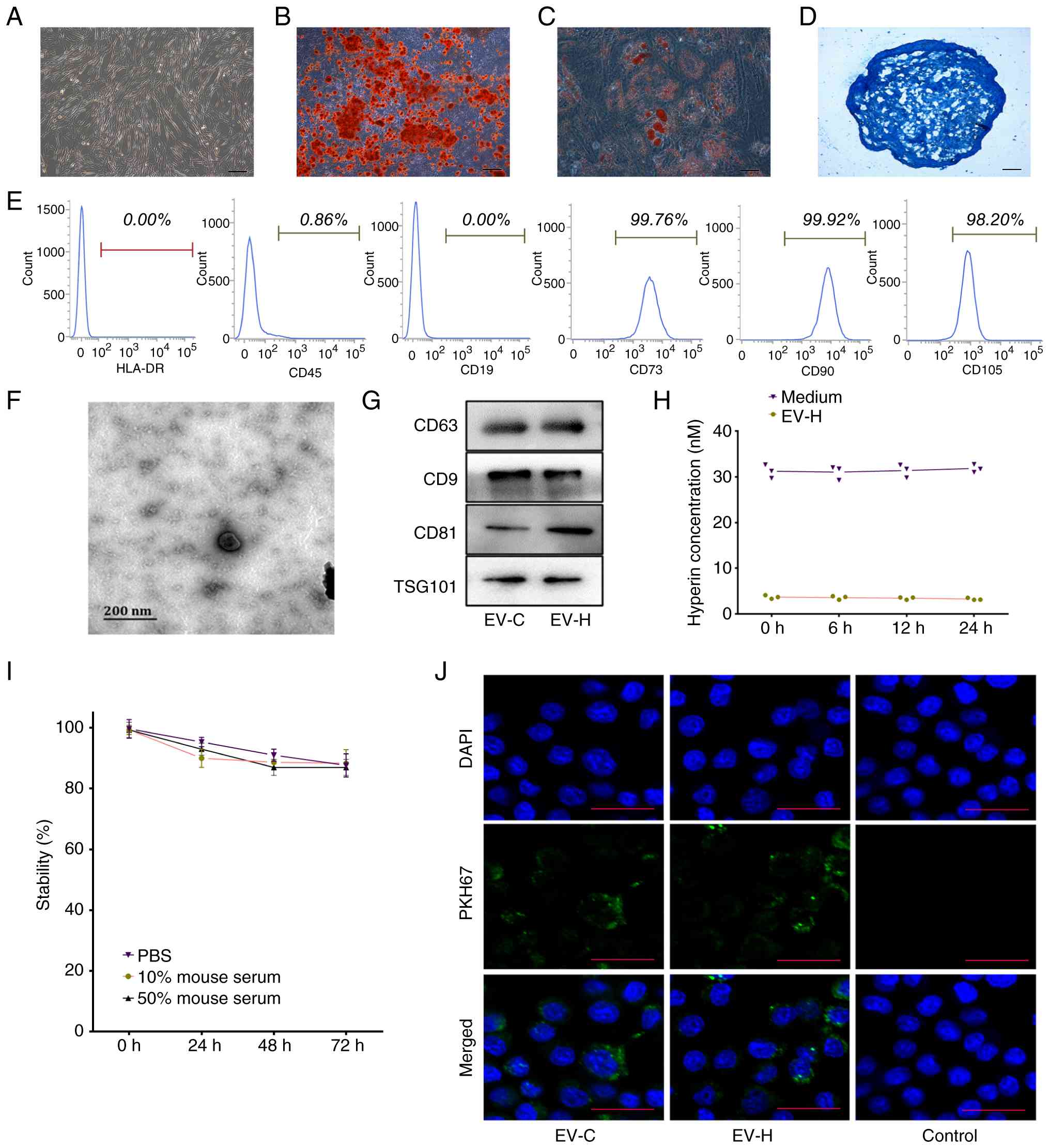
Figure 1

UCMSC-derived exosomes achieve
effective hyperin drug delivery. (A) The morphology of UCMSCs in
passage 5 reached 90% confluence (scale bar, 50 µm). Then, the
culture medium was replaced with a specific lineage induction
medium. Representative inverted light microscopic images showing
cells 2–3 weeks post-lineage induction after staining with (B)
Alizarin Red S, (C) Oil Red O and (D) Alcian blue (scale bar, 50
µm). (E) Flow cytometry results indicated that UCMSCs were positive
for CD73, CD90 and CD105 and negative for CD19, HLA-DR and CD45.
(F) Representative transmission electron microscopy image of
hyperin-loaded exosomes (scale bar, 200 nm). (G) Western blot
assays revealed the positive expression of typical exosome markers
in UCMSC-derived exosomes. (H) Analysis of drug-loading capacity of
UCMSC-derived exosomes indicated that the exosomal loading rate of
hyperin was ~10% and remained stable within 24 h. (I) Analysis of
stability of hyperin-loaded exosomes in PBS, 10 and 50% mouse
serum. (J) Fluorescence microscopy was used to analyze the uptake
of PKH67-labeled exosomes (green signals) in KGN cells,
demonstrating that hyperin drug loading did not affect cellular
internalization (scale bar, 50 µm). EV-C, control extracellular
vesicle; EV-H, hyperin-loaded exosomes.

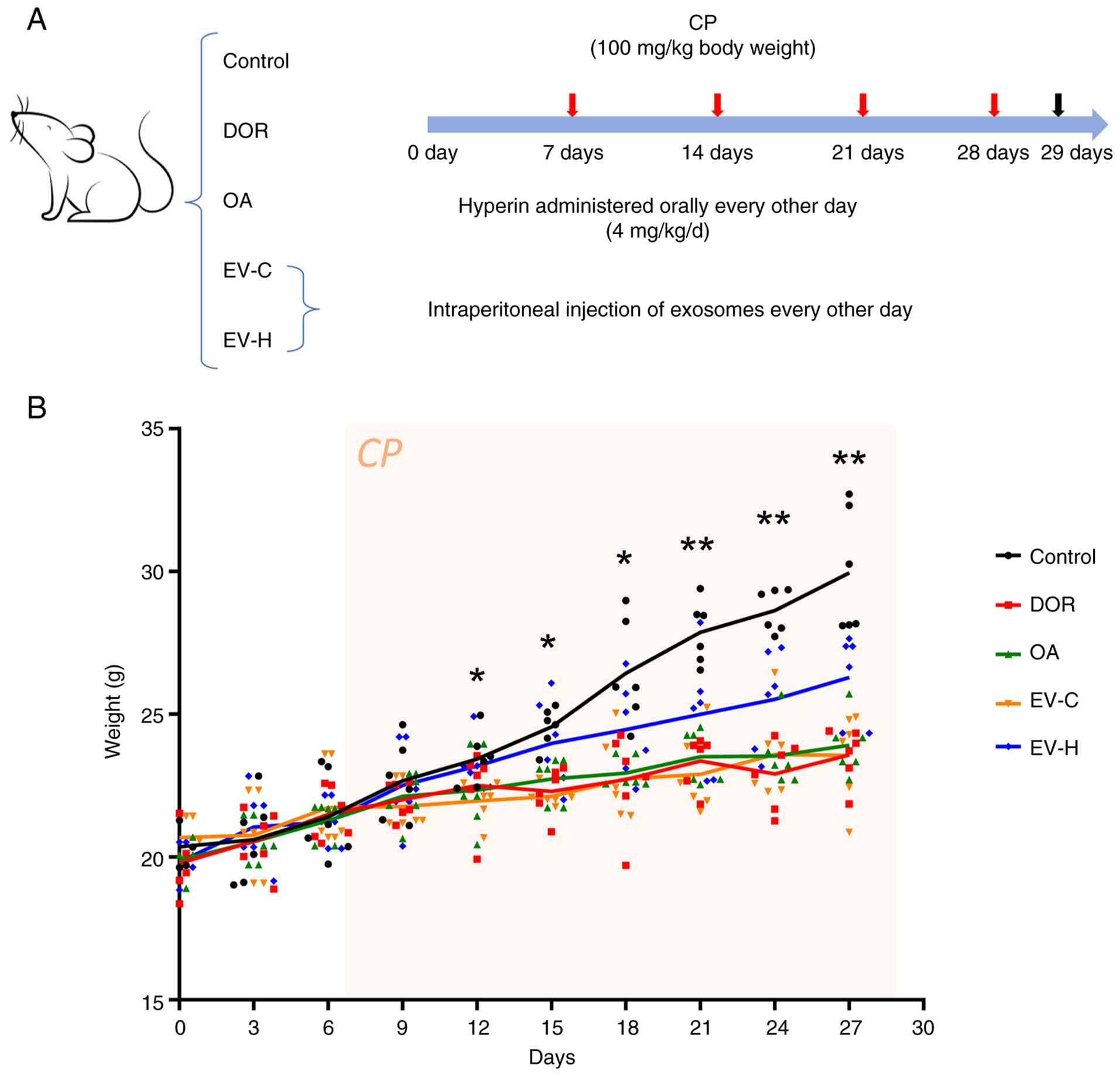
Figure 2

Evaluation of the therapeutic effect
of hyperin on a CP-induced DOR mouse model. (A) Experimental
schematic flow diagram, showing how mice were randomly assigned to
five treatment groups: Control, DOR, OA, EV-C and EV-H groups.
Therapeutic administration of hyperin was initiated on day 1 and
performed once every other day. On day 7, a weekly dose of CP was
administered to mice all groups except the control group via
intraperitoneal injection to induce DOR-like pathology (red arrow).
Mice were systematically monitored and a subset of mice were
sacrificed on day 29 (black arrow). (B) Body weights of mice across
the five treatment groups were recorded longitudinally at
designated time points throughout the 4-week experimental period.
*P<0.05 and **P<0.01, vs control. DOR, diminished ovarian
reserve; CP, cyclophosphamide; OA, oral administration; EV-C,
control extracellular vesicle; EV-H, hyperin-loaded exosomes.

Figure 3

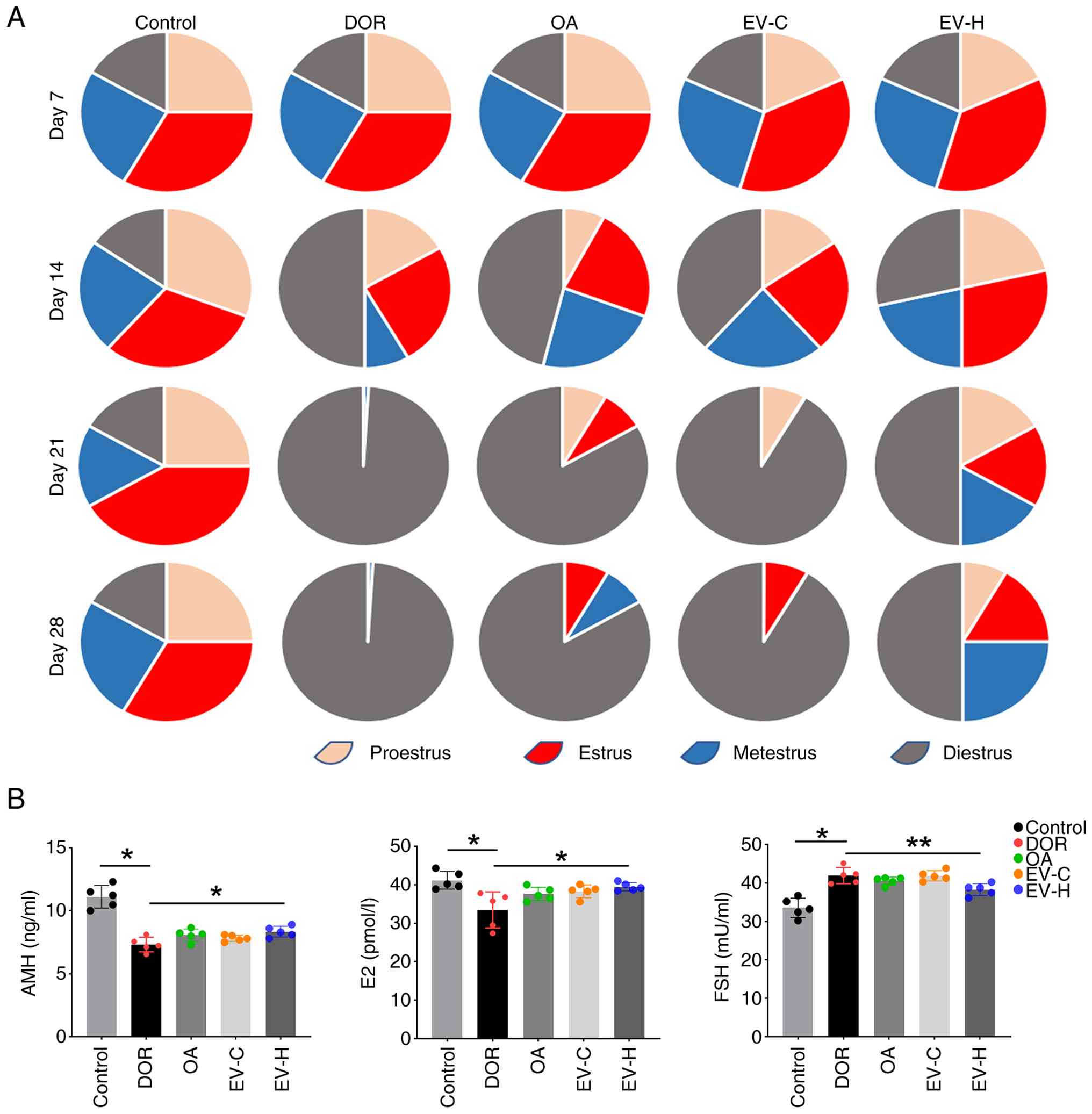
Detection of estrous cycle changes
and sex hormone levels in mice of each group. (A) As the experiment
progressed, changes in the proportion of mice in each stage of the
estrous cycle were recorded across treatment groups. (B) By day 29,
a subset of mice in each group were sacrificed. Hormone levels in
the serum of each group of mice were detected and evaluated.
*P<0.05 and **P<0.01. DOR, diminished ovarian reserve; OA,
oral administration; EV-C, control extracellular vesicle; EV-H,
hyperin-loaded exosomes; AMH, anti-Müllerian hormone; E2,
estradiol; FSH, follicle-stimulating hormone.

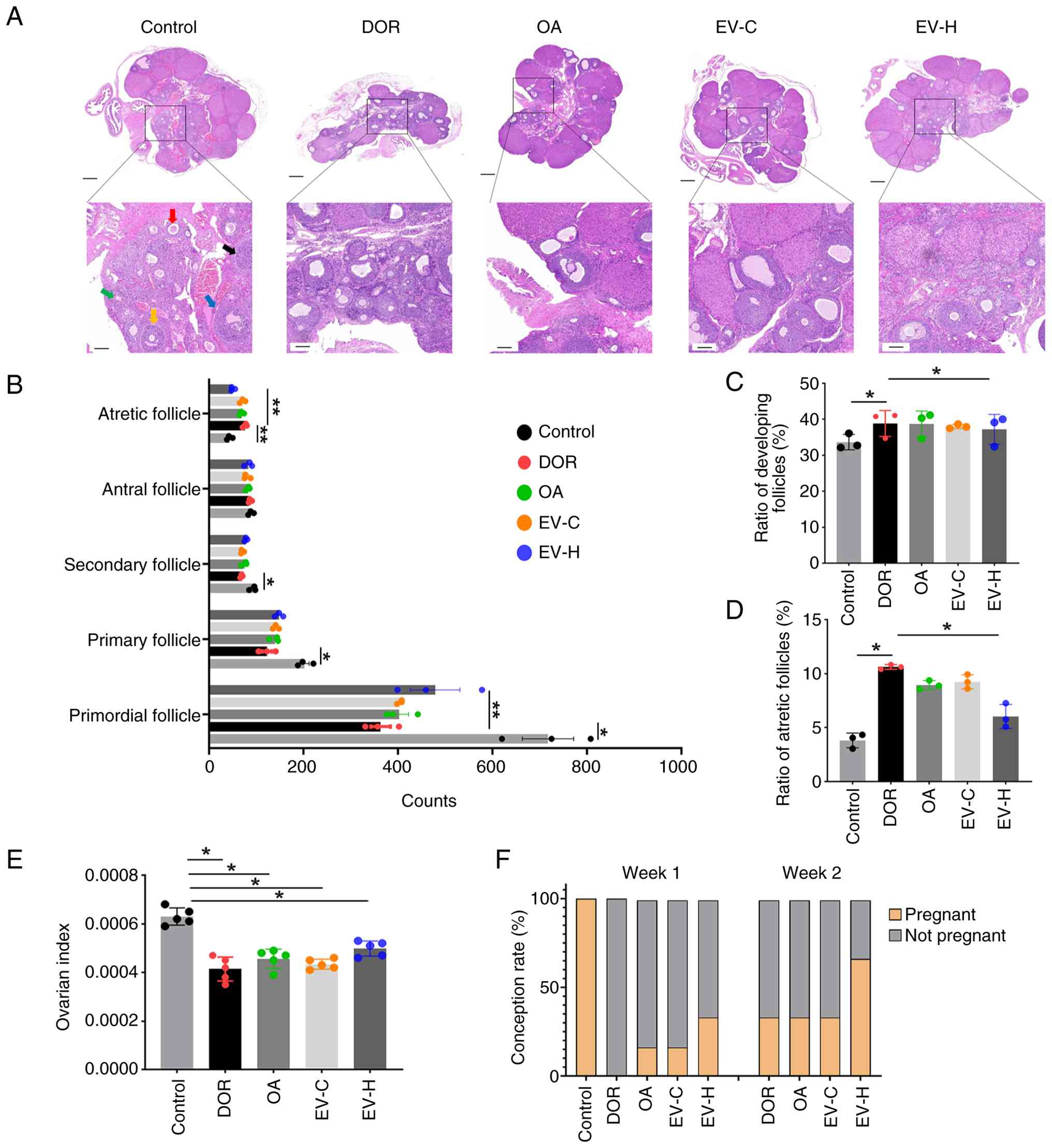
Figure 4

Delivery of hyperin via exosomes
attenuates symptoms of cyclophosphamide-induced DOR in mice. (A)
Representative images of hematoxylin and eosin staining of ovaries
from mice in each treatment group (scale bar, 500 and 100 µm).
Black arrow, atretic follicle, blue arrow indicated antral
follicle, yellow arrow indicated secondary follicle, red arrow
indicated primary follicle, and green arrow indicated primordial
follicle. (B) Number of follicles of different grades in mice in
each treatment group. (C) The proportion of developing follicles in
each group. (D) The proportion of atretic follicles in each group.
(E) Ovarian index of mice in each group. n=5. (F) Comparison of
conception time of mice in each group. n=6. *P<0.05 and
**P<0.01. DOR, diminished ovarian reserve; OA, oral
administration; EV-C, control extracellular vesicle; EV-H,
hyperin-loaded exosomes.

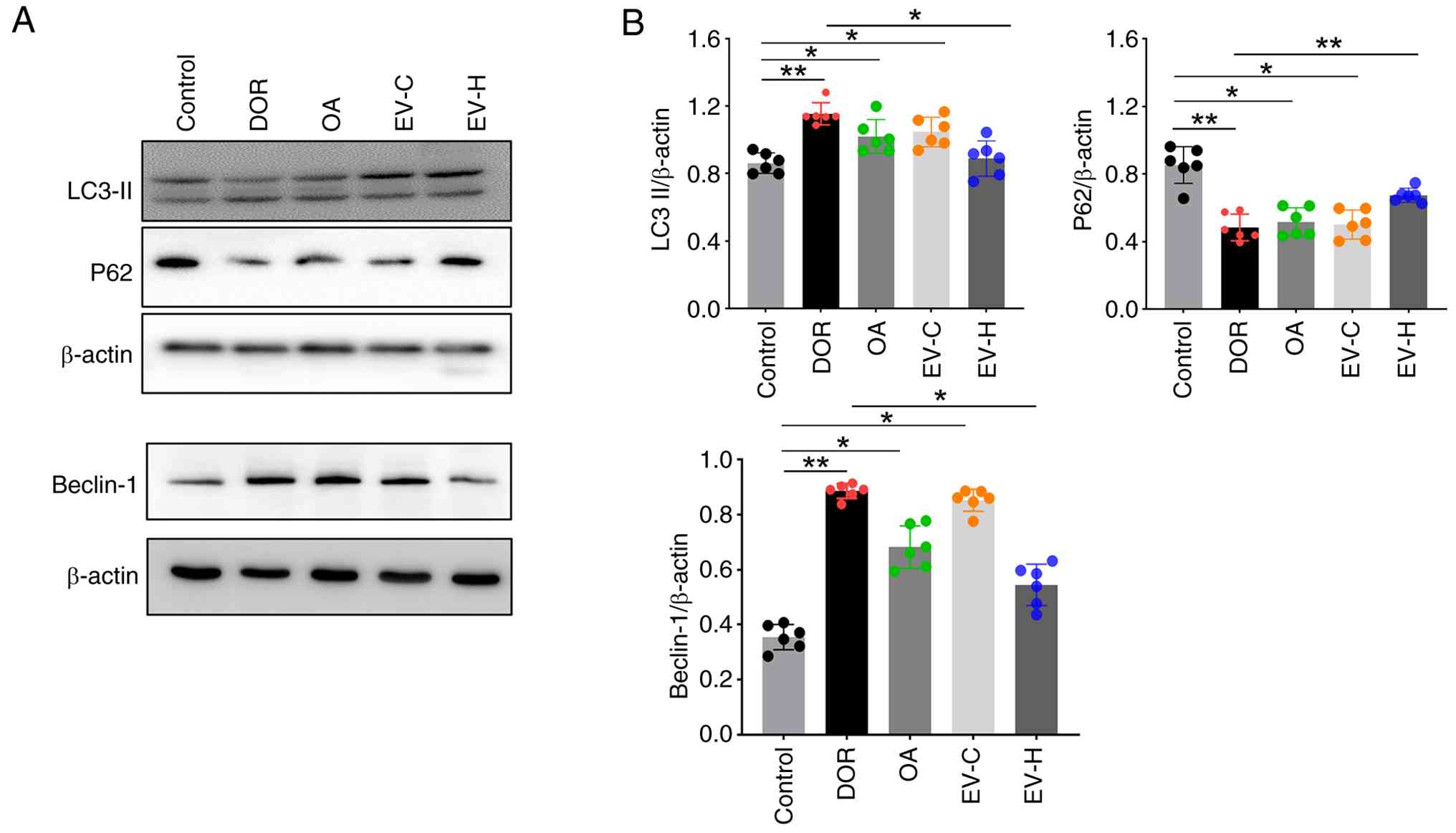
Figure 5

Expression of LC3-II, beclin-1 and
P62 proteins in the ovaries of mice in each group. (A) Western blot
assays were conducted to evaluate LC3-II, beclin-1 and P62 protein
levels across treatment groups, and (B) grayscale values were
semi-quantitative analyzed using ImageJ. β-actin was used as an
internal reference. *P<0.05 and **P<0.01. DOR, diminished
ovarian reserve; OA, oral administration; EV-C, control
extracellular vesicle; EV-H, hyperin-loaded exosomes.

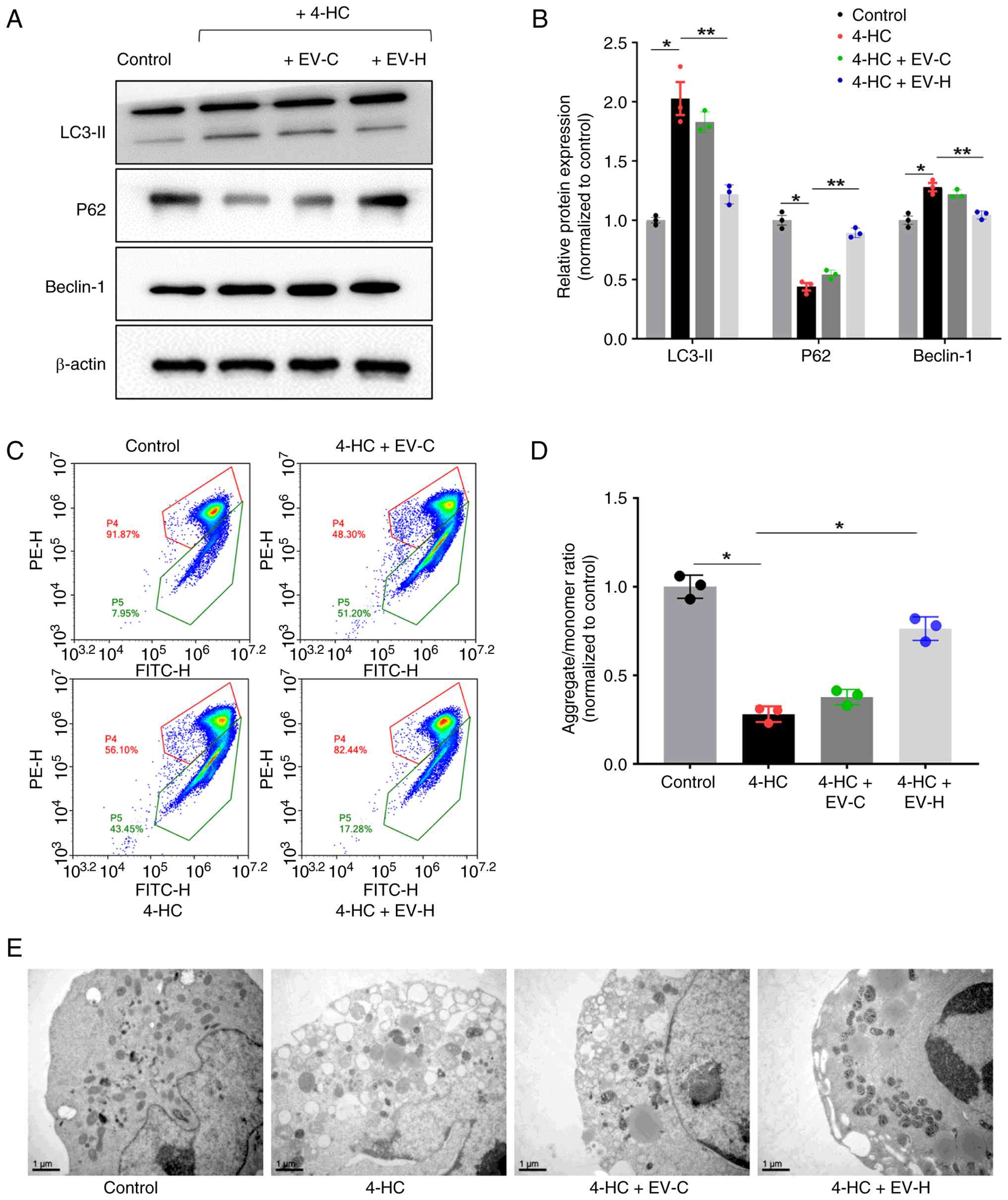
Figure 6

Exosome-based hyperin delivery
inhibited 4-HC-induced autophagy in KGN cells. KGN cells were
pre-treated with or without EV-C or EV-H for 48 h and then exposed
to 10 µM 4-HC for 24 h. (A) Protein levels of autophagy markers,
such as LC3-II, P62 and beclin-1, were detected by western blotting
and (B) semi-quantitatively analyzed using ImageJ. Mitochondrial
membrane potential was also assessed in different treatment groups
via JC-10 staining followed by (C) flow cytometry and (D)
microplate reader analysis. (E) Representative transmission
electron microscopy images for detecting mitophagic vacuoles in KGN
cells as signs of autophagy (scale bar, 1 µm). *P<0.05 and
**P<0.01. 4-HC, 4-hydroperoxycyclophosphamide; EV-C, control
extracellular vesicle; EV-H, hyperin-loaded exosome.
View References

1 

Broekmans FJ, Soules MR and Fauser BC: Ovarian aging: Mechanisms and clinical consequences. Endocr Rev. 30:465–493. 2009. View Article : Google Scholar : PubMed/NCBI

2 

Park SU, Walsh L and Berkowitz KM: Mechanisms of ovarian aging. Reproduction. 162:R19–R33. 2021. View Article : Google Scholar : PubMed/NCBI

3 

Chon SJ, Umair Z and Yoon MS: Premature ovarian insufficiency: Past, present, and future. Front Cell Dev Biol. 9:6728902021. View Article : Google Scholar : PubMed/NCBI

4 

Scantamburlo VM, Linsingen RV, Centa LJR, Toso KFD, Scaraboto D, Araujo Júnior E and Kulak Junior J: Association between decreased ovarian reserve and poor oocyte quality. Obstet Gynecol Sci. 64:532–539. 2021. View Article : Google Scholar : PubMed/NCBI

5 

Yao LN, Lin WQ, Jiang N, Li C, Cao HF, Li H and Qian JH: Comparative study of assisted reproductive outcomes between young patients with occult premature ovarian insufficiency and advanced-age patients. J Int Med Res. 48:3000605209346562020. View Article : Google Scholar : PubMed/NCBI

6 

Abrahami N, Izhaki I and Younis JS: Do young women with unexplained infertility show manifestations of decreased ovarian reserve? J Assist Reprod Genet. 36:1143–1152. 2019. View Article : Google Scholar : PubMed/NCBI

7 

Liu T, Li Q, Wang S, Chen C and Zheng J: Transplantation of ovarian granulosa-like cells derived from human induced pluripotent stem cells for the treatment of murine premature ovarian failure. Mol Med Rep. 13:5053–5058. 2016. View Article : Google Scholar : PubMed/NCBI

8 

Xie Z, Li Y, Chen Z, Cao Q, Zhang C, Fei Y, Li K and Guan Y: Effects of Bushen Huoxue method for female with decreased ovarian reserve: A protocol for systematic review and meta-analysis. Medicine (Baltimore). 99:e229572020. View Article : Google Scholar : PubMed/NCBI

9 

Lv Z, Lv Z, Song L, Zhang Q and Zhu S: Role of lncRNAs in the pathogenic mechanism of human decreased ovarian reserve. Front Genet. 14:10560612023. View Article : Google Scholar : PubMed/NCBI

10 

Fusco F, Paciolla M, Chen E, Li X, Genesio R, Conti A, Jones J, Poeta L, Lioi MB, Ursini MV and Miano MG: Genetic and molecular analysis of a new unbalanced X;18 rearrangement: Localization of the diminished ovarian reserve disease locus in the distal Xq POF1 region. Hum Reprod. 26:3186–3196. 2011. View Article : Google Scholar : PubMed/NCBI

11 

Ferder IC, Espeche LD, Bruque CD, Parborell F, Tesone M and Dain L: Expression and characterisation of Fmr1 splice variants during folliculogenesis in the rat. Reprod Fertil Dev. 34:1034–1042. 2022. View Article : Google Scholar : PubMed/NCBI

12 

Paulini F and Melo EO: The role of oocyte-secreted factors GDF9 and BMP15 in follicular development and oogenesis. Reprod Domest Anim. 46:354–361. 2011. View Article : Google Scholar : PubMed/NCBI

13 

Wu W, Han J, Cao R, Zhang J, Li B, Liu Z, Liu K, Li Q, Pan Z, Chen J and Liu H: Sequence and regulation of the porcine FSHR gene promoter. Anim Reprod Sci. 154:95–104. 2015. View Article : Google Scholar : PubMed/NCBI

14 

Gogola J, Hoffmann M and Ptak A: Persistent endocrine-disrupting chemicals found in human follicular fluid stimulate the proliferation of granulosa tumor spheroids via GPR30 and IGF1R but not via the classic estrogen receptors. Chemosphere. 217:100–110. 2019. View Article : Google Scholar : PubMed/NCBI

15 

Henes M, Froeschlin J, Taran FA, Brucker S, Rall KK, Xenitidis T, Igney-Oertel A, Lawrenz B and Henes JC: Ovarian reserve alterations in premenopausal women with chronic inflammatory rheumatic diseases: Impact of rheumatoid arthritis, Behcet's disease and spondyloarthritis on anti-Mullerian hormone levels. Rheumatology (Oxford). 54:1709–1712. 2015. View Article : Google Scholar : PubMed/NCBI

16 

Chen J, Wu S, Wang M, Zhang H and Cui M: A review of autoimmunity and immune profiles in patients with primary ovarian insufficiency. Medicine (Baltimore). 101:e325002022. View Article : Google Scholar : PubMed/NCBI

17 

Kim Y, Lee E, Song JY, Kim Y and Lee S: Association between environmental pollutants and the FSH/AMH ratio as a marker of ovarian reserve. Environ Anal Health Toxicol. 37:e2022029–0. 2022. View Article : Google Scholar : PubMed/NCBI

18 

Osmanlioglu S, Berker B, Aslan B, Şükür YE, Özmen B, Sönmezer M, Atabekoğlu CS and Aytaç R: Presence of endometrioma does not impair embryo quality and assisted reproductive technology (ART) cycle outcome in diminished ovarian reserve (DOR) patients. Reprod Sci. 30:1540–1547. 2023. View Article : Google Scholar : PubMed/NCBI

19 

Vigneswaran K and Hamoda H: Hormone replacement therapy-Current recommendations. Best Pract Res Clin Obstet Gynaecol. 81:8–21. 2022. View Article : Google Scholar : PubMed/NCBI

20 

Gonda KJ, Domar AD, Gleicher N and Marrs RP: Insights from clinical experience in treating IVF poor responders. Reprod Biomed Online. 36:12–19. 2018. View Article : Google Scholar : PubMed/NCBI

21 

Monteiro CS, Scheffer BB, Carvalho RF and Scheffer JB: The impact of dehydroepiandrosterone in poor ovarian responders on assisted reproduction technology treatment. JBRA Assist Reprod. 23:414–417. 2019.PubMed/NCBI

22 

Pellicer N, Cozzolino M, Diaz-Garcia C, Galliano D, Cobo A, Pellicer A and Herraiz S: Ovarian rescue in women with premature ovarian insufficiency: Facts and fiction. Reprod Biomed Online. 46:543–565. 2023. View Article : Google Scholar : PubMed/NCBI

23 

Chen H, Liu C, Zhu S, Li S, Zhang Q, Song L and Liang X: The therapeutic effect of stem cells on Chemotherapy-Induced premature ovarian failure. Curr Mol Med. 21:376–384. 2021. View Article : Google Scholar : PubMed/NCBI

24 

Wu JJ, Zhang J, Xia CY, Ding K, Li XX, Pan XG, Xu JK, He J and Zhang WK: Hypericin: A natural anthraquinone as promising therapeutic agent. Phytomedicine. 111:1546542023. View Article : Google Scholar : PubMed/NCBI

25 

Wang X, Fan G, Wei F, Bu Y and Huang W: Hyperoside protects rat ovarian granulosa cells against hydrogen peroxide-induced injury by sonic hedgehog signaling pathway. Chem Biol Interact. 310:1087592019. View Article : Google Scholar : PubMed/NCBI

26 

Zhu F, Gao J, Zeng F, Lai Y, Ruan X and Deng G: Hyperoside protects against cyclophosphamide induced ovarian damage and reduced fertility by suppressing HIF-1alpha/BNIP3-mediated autophagy. Biomed Pharmacother. 156:1137432022. View Article : Google Scholar : PubMed/NCBI

27 

You F, Cao J, Cheng L, Liu X and Zeng L: Hyperin alleviates Triptolide-induced ovarian granulosa cell injury by regulating AKT/TSC1/mTORC1 signaling. Evid Based Complement Alternat Med. 2021:93992612021. View Article : Google Scholar : PubMed/NCBI

28 

Pan W, Gu L, Yang H, Xu C, Yang Z, Lu Q, Shi Y, Zhang L, Shao J, Chen Y, et al: Repeat-dose toxicity study of human umbilical cord mesenchymal stem cells in cynomolgus monkeys by intravenous and subcutaneous injection. Front Cell Dev Biol. 11:12737232023. View Article : Google Scholar : PubMed/NCBI

29 

Dominici M, Le Blanc K, Mueller I, Slaper-Cortenbach I, Marini F, Krause D, Deans R, Keating A, Prockop DJ and Horwitz E: Minimal criteria for defining multipotent mesenchymal stromal cells. The International Society for Cellular Therapy position statement. Cytotherapy. 8:315–317. 2006. View Article : Google Scholar : PubMed/NCBI

30 

Council NR: Guide for the Care and Use of Laboratory Animals: Eighth Edition. Washington, DC: The National Academies Press; 2011

31 

Huang C, Song K, Ma W, Ding J, Chen Z and Zhang M: Immunomodulatory mechanism of Bushen Huoxue Recipe alleviates cyclophosphamide-induced diminished ovarian reserve in mouse model. J Ethnopharmacol. 208:44–56. 2017. View Article : Google Scholar : PubMed/NCBI

32 

Byers SL, Wiles MV, Dunn SL and Taft RA: Mouse estrous cycle identification tool and images. PLoS One. 7:e355382012. View Article : Google Scholar : PubMed/NCBI

33 

Ajayi AF and Akhigbe RE: Staging of the estrous cycle and induction of estrus in experimental rodents: An update. Fertil Res Pract. 6:52020. View Article : Google Scholar : PubMed/NCBI

34 

Chen Q, Chen Q, Song Y, Xiang Y, Li Q, Sang Y, Zhang L, Bai L and Zhu Y: Downregulation of homeobox A1 in human granulosa cells is involved in diminished ovarian reserve through promoting cell apoptosis and mitochondrial dysfunction. Mol Cell Endocrinol. 580:1120842024. View Article : Google Scholar : PubMed/NCBI

35 

Cedars MI: Managing poor ovarian response in the patient with diminished ovarian reserve. Fertil Steril. 117:655–656. 2022. View Article : Google Scholar : PubMed/NCBI

36 

Wierman ME and Kiseljak-Vassiliades K: Should dehydroepiandrosterone be administered to Women? J Clin Endocrinol Metab. 107:1679–1685. 2022. View Article : Google Scholar : PubMed/NCBI

37 

Somigliana E, Li Piani L, Paffoni A, Salmeri N, Orsi M, Benaglia L, Vercellini P and Vigano' P: Endometriosis and IVF treatment outcomes: Unpacking the process. Reprod Biol Endocrinol. 21:1072023. View Article : Google Scholar : PubMed/NCBI

38 

Zhang C and Xu X: Advancement in the treatment of diminished ovarian reserve by traditional Chinese and Western medicine. Exp Ther Med. 11:1173–1176. 2016. View Article : Google Scholar : PubMed/NCBI

39 

Buigues A, Marchante M, Herraiz S and Pellicer A: Diminished ovarian reserve Chemotherapy-induced mouse model: A tool for the preclinical assessment of new therapies for ovarian damage. Reprod Sci. 27:1609–1619. 2020. View Article : Google Scholar : PubMed/NCBI

40 

He R, Fan Q, Li Y, Zhu Q, Hu D, Du J, Xing Y, Li H, Liang X and Yang Y: Identification of common and specific genes involved in mouse models of Age-related and Cyclophosphamide-Induced diminished ovarian reserve. Reprod Sci. 30:1965–1978. 2023. View Article : Google Scholar : PubMed/NCBI

41 

Bunnewell SJ, Honess ER, Karia AM, Keay SD, Al Wattar BH and Quenby S: Diminished ovarian reserve in recurrent pregnancy loss: A systematic review and meta-analysis. Fertil Steril. 113:818–827.e3. 2020. View Article : Google Scholar : PubMed/NCBI

42 

Kučera M, Štěpán Ml J and Štelcl M: Possibilities and real meaning of assessment of ovarian reserve. Ceska Gynekol. 83:307–311. 2018.PubMed/NCBI

43 

Chhabra V, Meenakshi S, Maity S, Saini D, Saini M, Murti K and Kumar N: Impact of fluoride exposure on reproductive health: Insights into molecular mechanisms and health implications. Reprod Toxicol. 135:1089072025. View Article : Google Scholar : PubMed/NCBI

44 

Nazeerulla F, Banerjee I, Paul MK, Bisht B, Basu D, Bhutia SK and Mukhopadhyay S: Autophagy as an architect of embryogenesis: Understanding the new mechanisms, emerging paradigms, and future directions. Life Sci. 391:1242772026. View Article : Google Scholar : PubMed/NCBI

45 

Debnath J, Gammoh N and Ryan KM: Autophagy and autophagy-related pathways in cancer. Nat Rev Mol Cell Biol. 24:560–575. 2023. View Article : Google Scholar : PubMed/NCBI

46 

Kawano M, McKey J, Batchvarov IS and Capel B: Granulosa cell death is a significant contributor to DNA-damaging chemotherapy-induced ovarian insufficiencydagger. Biol Reprod. 112:906–915. 2025. View Article : Google Scholar : PubMed/NCBI

47 

Zhu F, Hu C, Huang S, Cao X, Li X, Song Y, Chen M and Xiao J: Qilin Pills protect against diminished ovarian reserve by suppressing pathological overactivation of PINK1/Parkin-mediated mitophagy in granulosa cells. J Ethnopharmacol. 369:1218622026. View Article : Google Scholar : PubMed/NCBI

48 

Chen L, Zeng L, Pan S, Zu L, Pan H and Fan L: β-sitosterol in Yijing Hugui decoction prevents cyclophosphamide-induced premature ovarian insufficiency via the AKT1/Nrf2 pathway. Cytotechnology. 77:762025. View Article : Google Scholar : PubMed/NCBI

49 

Kalluri R and LeBleu VS: The biology, function, and biomedical applications of exosomes. Science. 367:eaau69772020. View Article : Google Scholar : PubMed/NCBI

50 

Kimiz-Gebologlu I and Oncel SS: Exosomes: Large-scale production, isolation, drug loading efficiency, and biodistribution and uptake. J Control Release. 347:533–543. 2022. View Article : Google Scholar : PubMed/NCBI

51 

Liang Y, Duan L, Lu J and Xia J: Engineering exosomes for targeted drug delivery. Theranostics. 11:3183–3195. 2021. View Article : Google Scholar : PubMed/NCBI

52 

Zhou Q, Tang H, Wang Y, Hua Y, Ouyang X and Li L: Hyperoside mitigates PCOS-associated adipogenesis and insulin resistance by regulating NCOA2-mediated PPAR-gamma ubiquitination and degradation. Life Sci. 364:1234172025. View Article : Google Scholar : PubMed/NCBI

Related Articles

  • Abstract
  • View
  • Download
  • Twitter
Copy and paste a formatted citation
Spandidos Publications style
Ying Y, Wu Y, Zhou J, Wang Y, Yin H, Lu G, Pan R and Lv L: Therapeutic effects of exosome‑based hyperin delivery in a cyclophosphamide‑induced mouse model of diminished ovarian reserve. Mol Med Rep 34: 311, 2026.
APA
Ying, Y., Wu, Y., Zhou, J., Wang, Y., Yin, H., Lu, G. ... Lv, L. (2026). Therapeutic effects of exosome‑based hyperin delivery in a cyclophosphamide‑induced mouse model of diminished ovarian reserve. Molecular Medicine Reports, 34, 311. https://doi.org/10.3892/mmr.2026.14021
MLA
Ying, Y., Wu, Y., Zhou, J., Wang, Y., Yin, H., Lu, G., Pan, R., Lv, L."Therapeutic effects of exosome‑based hyperin delivery in a cyclophosphamide‑induced mouse model of diminished ovarian reserve". Molecular Medicine Reports 34.5 (2026): 311.
Chicago
Ying, Y., Wu, Y., Zhou, J., Wang, Y., Yin, H., Lu, G., Pan, R., Lv, L."Therapeutic effects of exosome‑based hyperin delivery in a cyclophosphamide‑induced mouse model of diminished ovarian reserve". Molecular Medicine Reports 34, no. 5 (2026): 311. https://doi.org/10.3892/mmr.2026.14021
Copy and paste a formatted citation
x
Spandidos Publications style
Ying Y, Wu Y, Zhou J, Wang Y, Yin H, Lu G, Pan R and Lv L: Therapeutic effects of exosome‑based hyperin delivery in a cyclophosphamide‑induced mouse model of diminished ovarian reserve. Mol Med Rep 34: 311, 2026.
APA
Ying, Y., Wu, Y., Zhou, J., Wang, Y., Yin, H., Lu, G. ... Lv, L. (2026). Therapeutic effects of exosome‑based hyperin delivery in a cyclophosphamide‑induced mouse model of diminished ovarian reserve. Molecular Medicine Reports, 34, 311. https://doi.org/10.3892/mmr.2026.14021
MLA
Ying, Y., Wu, Y., Zhou, J., Wang, Y., Yin, H., Lu, G., Pan, R., Lv, L."Therapeutic effects of exosome‑based hyperin delivery in a cyclophosphamide‑induced mouse model of diminished ovarian reserve". Molecular Medicine Reports 34.5 (2026): 311.
Chicago
Ying, Y., Wu, Y., Zhou, J., Wang, Y., Yin, H., Lu, G., Pan, R., Lv, L."Therapeutic effects of exosome‑based hyperin delivery in a cyclophosphamide‑induced mouse model of diminished ovarian reserve". Molecular Medicine Reports 34, no. 5 (2026): 311. https://doi.org/10.3892/mmr.2026.14021
Follow us
  • Twitter
  • LinkedIn
  • Facebook
About
  • Spandidos Publications
  • Careers
  • Cookie Policy
  • Privacy Policy
How can we help?
  • Help
  • Live Chat
  • Contact
  • Email to our Support Team