Spandidos Publications Logo
  • About
    • About Spandidos
    • Aims and Scopes
    • Abstracting and Indexing
    • Editorial Policies
    • Reprints and Permissions
    • Job Opportunities
    • Terms and Conditions
    • Contact
  • Journals
    • All Journals
    • Oncology Letters
      • Oncology Letters
      • Information for Authors
      • Editorial Policies
      • Editorial Board
      • Aims and Scope
      • Abstracting and Indexing
      • Bibliographic Information
      • Archive
    • International Journal of Oncology
      • International Journal of Oncology
      • Information for Authors
      • Editorial Policies
      • Editorial Board
      • Aims and Scope
      • Abstracting and Indexing
      • Bibliographic Information
      • Archive
    • Molecular and Clinical Oncology
      • Molecular and Clinical Oncology
      • Information for Authors
      • Editorial Policies
      • Editorial Board
      • Aims and Scope
      • Abstracting and Indexing
      • Bibliographic Information
      • Archive
    • Experimental and Therapeutic Medicine
      • Experimental and Therapeutic Medicine
      • Information for Authors
      • Editorial Policies
      • Editorial Board
      • Aims and Scope
      • Abstracting and Indexing
      • Bibliographic Information
      • Archive
    • International Journal of Molecular Medicine
      • International Journal of Molecular Medicine
      • Information for Authors
      • Editorial Policies
      • Editorial Board
      • Aims and Scope
      • Abstracting and Indexing
      • Bibliographic Information
      • Archive
    • Biomedical Reports
      • Biomedical Reports
      • Information for Authors
      • Editorial Policies
      • Editorial Board
      • Aims and Scope
      • Abstracting and Indexing
      • Bibliographic Information
      • Archive
    • Oncology Reports
      • Oncology Reports
      • Information for Authors
      • Editorial Policies
      • Editorial Board
      • Aims and Scope
      • Abstracting and Indexing
      • Bibliographic Information
      • Archive
    • Molecular Medicine Reports
      • Molecular Medicine Reports
      • Information for Authors
      • Editorial Policies
      • Editorial Board
      • Aims and Scope
      • Abstracting and Indexing
      • Bibliographic Information
      • Archive
    • World Academy of Sciences Journal
      • World Academy of Sciences Journal
      • Information for Authors
      • Editorial Policies
      • Editorial Board
      • Aims and Scope
      • Abstracting and Indexing
      • Bibliographic Information
      • Archive
    • International Journal of Functional Nutrition
      • International Journal of Functional Nutrition
      • Information for Authors
      • Editorial Policies
      • Editorial Board
      • Aims and Scope
      • Abstracting and Indexing
      • Bibliographic Information
      • Archive
    • International Journal of Epigenetics
      • International Journal of Epigenetics
      • Information for Authors
      • Editorial Policies
      • Editorial Board
      • Aims and Scope
      • Abstracting and Indexing
      • Bibliographic Information
      • Archive
    • Medicine International
      • Medicine International
      • Information for Authors
      • Editorial Policies
      • Editorial Board
      • Aims and Scope
      • Abstracting and Indexing
      • Bibliographic Information
      • Archive
  • Articles
  • Information
    • Information for Authors
    • Information for Reviewers
    • Information for Librarians
    • Information for Advertisers
    • Conferences
  • Language Editing
Spandidos Publications Logo
  • About
    • About Spandidos
    • Aims and Scopes
    • Abstracting and Indexing
    • Editorial Policies
    • Reprints and Permissions
    • Job Opportunities
    • Terms and Conditions
    • Contact
  • Journals
    • All Journals
    • Biomedical Reports
      • Information for Authors
      • Editorial Policies
      • Editorial Board
      • Aims and Scope
      • Abstracting and Indexing
      • Bibliographic Information
      • Archive
    • Experimental and Therapeutic Medicine
      • Information for Authors
      • Editorial Policies
      • Editorial Board
      • Aims and Scope
      • Abstracting and Indexing
      • Bibliographic Information
      • Archive
    • International Journal of Epigenetics
      • Information for Authors
      • Editorial Policies
      • Editorial Board
      • Aims and Scope
      • Abstracting and Indexing
      • Bibliographic Information
      • Archive
    • International Journal of Functional Nutrition
      • Information for Authors
      • Editorial Policies
      • Editorial Board
      • Aims and Scope
      • Abstracting and Indexing
      • Bibliographic Information
      • Archive
    • International Journal of Molecular Medicine
      • Information for Authors
      • Editorial Policies
      • Editorial Board
      • Aims and Scope
      • Abstracting and Indexing
      • Bibliographic Information
      • Archive
    • International Journal of Oncology
      • Information for Authors
      • Editorial Policies
      • Editorial Board
      • Aims and Scope
      • Abstracting and Indexing
      • Bibliographic Information
      • Archive
    • Medicine International
      • Information for Authors
      • Editorial Policies
      • Editorial Board
      • Aims and Scope
      • Abstracting and Indexing
      • Bibliographic Information
      • Archive
    • Molecular and Clinical Oncology
      • Information for Authors
      • Editorial Policies
      • Editorial Board
      • Aims and Scope
      • Abstracting and Indexing
      • Bibliographic Information
      • Archive
    • Molecular Medicine Reports
      • Information for Authors
      • Editorial Policies
      • Editorial Board
      • Aims and Scope
      • Abstracting and Indexing
      • Bibliographic Information
      • Archive
    • Oncology Letters
      • Information for Authors
      • Editorial Policies
      • Editorial Board
      • Aims and Scope
      • Abstracting and Indexing
      • Bibliographic Information
      • Archive
    • Oncology Reports
      • Information for Authors
      • Editorial Policies
      • Editorial Board
      • Aims and Scope
      • Abstracting and Indexing
      • Bibliographic Information
      • Archive
    • World Academy of Sciences Journal
      • Information for Authors
      • Editorial Policies
      • Editorial Board
      • Aims and Scope
      • Abstracting and Indexing
      • Bibliographic Information
      • Archive
  • Articles
  • Information
    • For Authors
    • For Reviewers
    • For Librarians
    • For Advertisers
    • Conferences
  • Language Editing
Login Register Submit
  • This site uses cookies
  • You can change your cookie settings at any time by following the instructions in our Cookie Policy. To find out more, you may read our Privacy Policy.

    I agree
Search articles by DOI, keyword, author or affiliation
Search
Advanced Search
presentation
Oncology Letters
Join Editorial Board Propose a Special Issue
Print ISSN: 1792-1074 Online ISSN: 1792-1082
Journal Cover
February 2012 Volume 3 Issue 2

Full Size Image

Sign up for eToc alerts
Recommend to Library

Journals

International Journal of Molecular Medicine

International Journal of Molecular Medicine

International Journal of Molecular Medicine is an international journal devoted to molecular mechanisms of human disease.

International Journal of Oncology

International Journal of Oncology

International Journal of Oncology is an international journal devoted to oncology research and cancer treatment.

Molecular Medicine Reports

Molecular Medicine Reports

Covers molecular medicine topics such as pharmacology, pathology, genetics, neuroscience, infectious diseases, molecular cardiology, and molecular surgery.

Oncology Reports

Oncology Reports

Oncology Reports is an international journal devoted to fundamental and applied research in Oncology.

Experimental and Therapeutic Medicine

Experimental and Therapeutic Medicine

Experimental and Therapeutic Medicine is an international journal devoted to laboratory and clinical medicine.

Oncology Letters

Oncology Letters

Oncology Letters is an international journal devoted to Experimental and Clinical Oncology.

Biomedical Reports

Biomedical Reports

Explores a wide range of biological and medical fields, including pharmacology, genetics, microbiology, neuroscience, and molecular cardiology.

Molecular and Clinical Oncology

Molecular and Clinical Oncology

International journal addressing all aspects of oncology research, from tumorigenesis and oncogenes to chemotherapy and metastasis.

World Academy of Sciences Journal

World Academy of Sciences Journal

Multidisciplinary open-access journal spanning biochemistry, genetics, neuroscience, environmental health, and synthetic biology.

International Journal of Functional Nutrition

International Journal of Functional Nutrition

Open-access journal combining biochemistry, pharmacology, immunology, and genetics to advance health through functional nutrition.

International Journal of Epigenetics

International Journal of Epigenetics

Publishes open-access research on using epigenetics to advance understanding and treatment of human disease.

Medicine International

Medicine International

An International Open Access Journal Devoted to General Medicine.

Journal Cover
February 2012 Volume 3 Issue 2

Full Size Image

Sign up for eToc alerts
Recommend to Library

  • Article
  • Citations
    • Cite This Article
    • Download Citation
    • Create Citation Alert
    • Remove Citation Alert
    • Cited By
  • Similar Articles
    • Related Articles (in Spandidos Publications)
    • Similar Articles (Google Scholar)
    • Similar Articles (PubMed)
  • Download PDF
  • Download XML
  • View XML
Article

Good response to leucovorin and fluorouracil plus oxaliplatin and cetuximab therapy in a patient with metastatic ascending colon cancer harboring a KRAS p.G13D mutation

  • Authors:
    • Takumi Ochiai
    • Kazuhiko Nishimura
    • Tomoo Watanabe
    • Masayuki Kitajima
    • Akinori Nakatani
    • Takashi Inou
    • Marie Washio
    • Naoki Sakuyama
    • Tsuyoshi Sato
    • Kenji Kishine
    • Takanori Ochi
    • Satoshi Ookubo
    • Shunji Futagawa
    • Hideki Orikasa
    • Satomi Mashiko
    • Isao Nagaoka
  • View Affiliations / Copyright

    Affiliations: Department of Surgery, Tobu Chiiki Hospital, Tokyo Metropolitan Health and Medical Treatment Corporation, Tokyo 125-8512, Japan, Department of Pathology, Tobu Chiiki Hospital, Tokyo Metropolitan Health and Medical Treatment Corporation, Tokyo 125-8512, Japan, Department of Pharmacy, Tobu Chiiki Hospital, Tokyo Metropolitan Health and Medical Treatment Corporation, Tokyo 125-8512, Japan, Department of Host Defense and Biochemical Research, Juntendo University School of Medicine, Tokyo 113-8421, Japan
  • Pages: 269-272
    |
    Published online on: November 30, 2011
       https://doi.org/10.3892/ol.2011.503
  • Expand metrics +
Metrics: Total Views: 0 (Spandidos Publications: | PMC Statistics: )
Metrics: Total PDF Downloads: 0 (Spandidos Publications: | PMC Statistics: )
Cited By (CrossRef): 0 citations Loading Articles...

This article is mentioned in:


Abstract

The effectiveness of cetuximab (Cmab) against KRAS p.G13D mutant-type tumors has been reported. In this study, we report a case of metastatic ascending colon cancer harboring a KRAS p.G13D mutation in a 65-year‑old female. Considering the absence of symptoms and the post‑operative risk of respiratory system complications due to multiple lung metastases, particularly at the entrance to the left main bronchus, anticancer drug therapy was selected as first-line therapy. With informed consent, FOLFOX4 [folinic acid (FOL), fluorouracil (F) plus oxaliplatin (OX)] + Cmab therapy was administered as preoperative chemotherapy. A good preoperative response was obtained to the chemotherapy, with a metastatic lesion disappearing from the entrance to the left main bronchus. Subsequent resection was performed successfully with no post‑operative complications. Although a histopathological examination of the resected tissue specimen revealed residual cancer cells, it also showed the marked efficacy of the chemotherapy regimen used. In this study, we describe a case of metastatic ascending colon cancer harboring a KRAS p.G13D mutation in which the patient responded well to first‑line therapy with FOLFOX4 + Cmab.

Introduction

Cetuximab (Cmab), a monoclonal antibody that specifically binds to and inhibits the activity of human epidermal growth factor receptor (EGFR), is used as a molecularly targeted anticancer agent. The antitumor activities of Cmab are believed to be confined to wild-type KRAS tumors, and indications for its use are therefore limited to such cases. Recently, however, a number of studies have reported Cmab to also be effective against KRAS p.G13D mutant-type tumors (1–3). We recently encountered a case of metastatic ascending colon cancer harboring a KRAS p.G13D mutation that responded well to FOLFOX4 [folinic acid (FOL), fluorouracil (F) plus oxaliplatin (OX)] + Cmab therapy, which we present in this study.

Case report

The patient was a 65-year-old female. Chest X-rays performed at another hospital as part of an annual health checkup revealed granular shadows in both lung fields. The patient was therefore referred to our Department of Respiratory Medicine in November 2010, and a detailed, whole-body examination was performed.

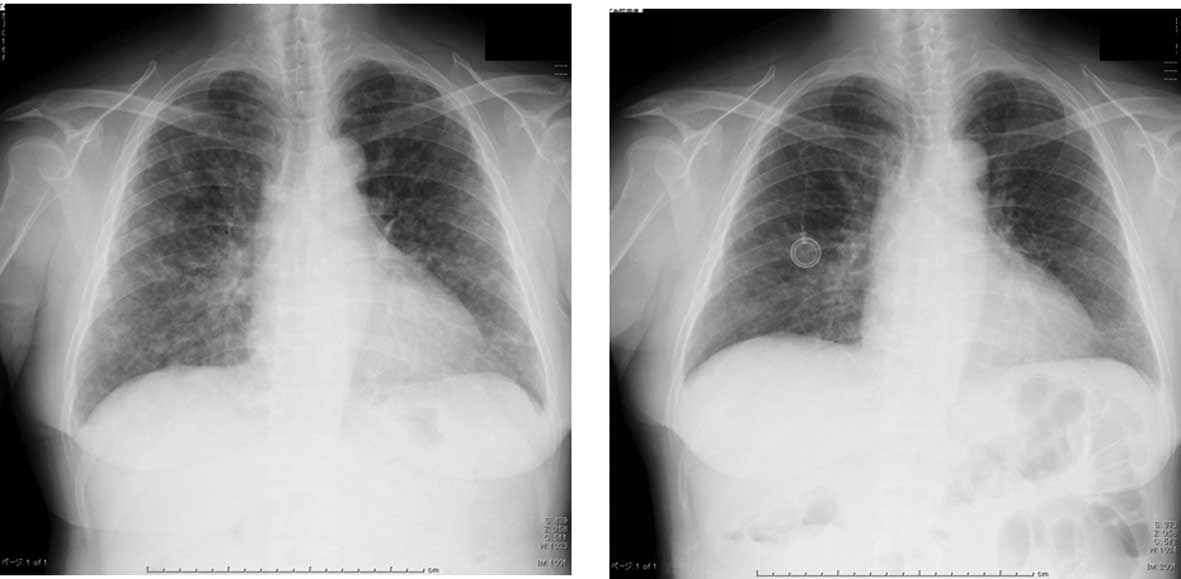
A chest X-ray confirmed numerous granular shadows in both lung fields (Fig. 1A).

Figure 1

Chest X-ray showing (A) numerous granular shadows in both lung fields prior to chemotherapy. (B) Disappearance or size reduction in some granular shadows was observed following chemotherapy.

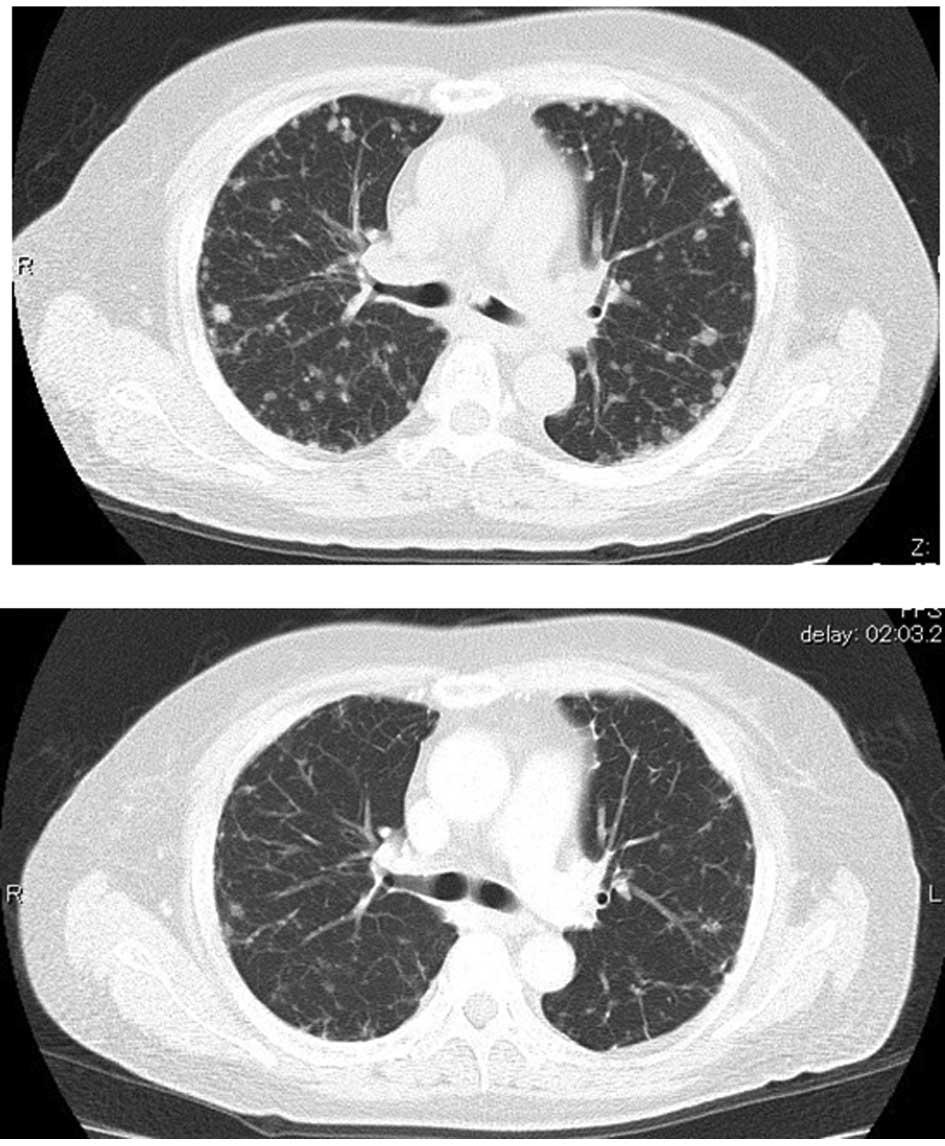
Computed tomography of the thorax revealed numerous nodular lesions in both lung fields and a nodular lesion at the entrance to the left main bronchus (Fig. 2A).

Figure 2

Thorax CT revealed (A) numerous nodular lesions in both lung fields; a nodular lesion was observed at the entrance to the left main bronchus prior to chemotherapy. (B) Disappearance or size reduction in some granular lesions was observed following chemotherapy. The nodular lesion observed at the entrance to the left main bronchus disappeared after chemotherapy.

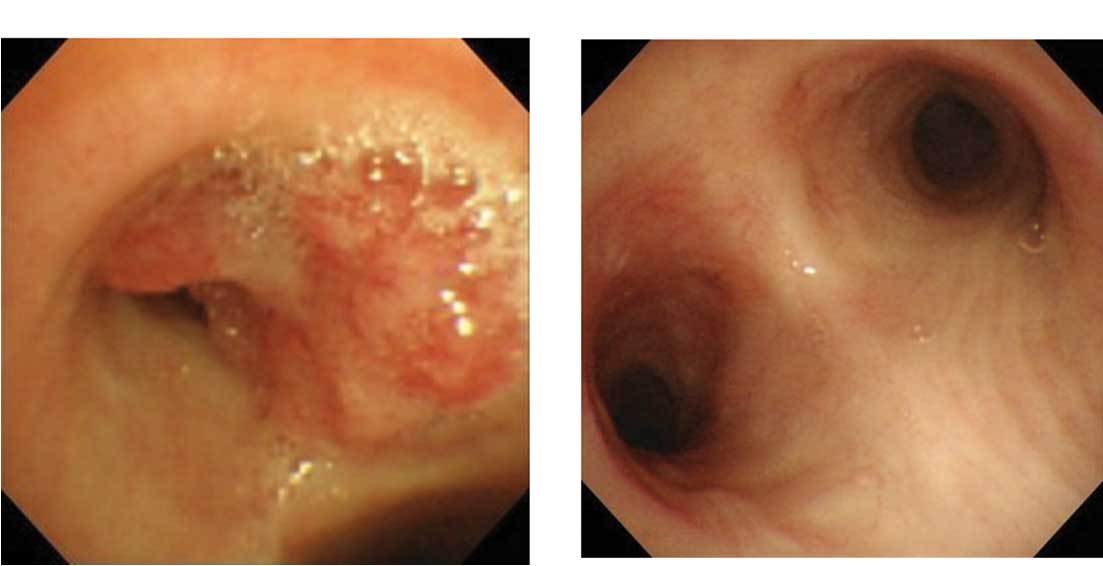
Bronchoscopy revealed a polypoid mass at the entrance to the left main bronchus. The biopsy specimen was pathologically rated as adenocarcinoma, suggesting metastasis of colorectal tubular adenocarcinoma (Fig. 3A).

Figure 3

(A) Bronchoscopy shows a polypoid mass at the entrance to the left main bronchus prior to chemotherapy. (B) Only mild redness is visible; no tumorous lesion was observed following chemotherapy.

Colonoscopy revealed a tumorous lesion in the lumen of the ascending colon (Fig. 4A). The biopsy specimen was pathologically rated as a moderately differentiated tubular adenocarcinoma.

Figure 4

(A) Colonoscopy shows a tumorous lesion in lumen of the ascending colon before chemotherapy. (B) The lesion had disappeared. Converging mucosal folds accompanied by redness following chemotherapy are shown.

Based on these findings, ascending colon cancer with multiple lung metastases was diagnosed and the patient was referred to the Department of Surgery, where surgical resection of the primary cancer was initially considered. However, considering the absence of symptoms at the time of referral and the post-operative risk of respiratory complications, anticancer drug therapy was selected as first-line therapy, and FOLFOX4 was started in mid-December. Four days after the first session of FOLFOX4 therapy, the patient was urgently hospitalized for severe nausea. Treatment with aprepitant alleviated these symptoms, allowing the patient to be discharged from the hospital on the fourth hospital day. Later, a KRAS test revealed a KRAS p.G13D mutation. Therefore, with informed consent, FOLFOX4 therapy was combined with weekly Cmab early in January 2011. The response to chemotherapy was evaluated following 2 sessions of FOLFOX therapy and 2 subsequent sessions of FOLFOX4 + Cmab therapy.

A chest X-ray revealed the presence of numerous granular shadows in both lung fields. There was, however, disappearance or reduction in size of certain granular shadows compared with the previous X-ray (Fig. 1B).

A thoracic CT scan revealed the continued presence of numerous nodular lesions in both lung fields. There was, however, disappearance or reduction in size of certain granular shadows compared with the previous CT scan. The nodular lesion observed at the entrance to the left main bronchus prior to treatment had disappeared (Fig. 2B).

Bronchoscopy revealed only mild redness and no tumorous lesion in the left main bronchus (Fig. 3B).

Colonoscopy revealed that the tumorous lesion in the lumen of the ascending colon had disappeared. Converging mucosal folds accompanied by redness were, however, noted in this area (Fig. 4B), yielding a pathological rating of granulation in the colonic mucosa.

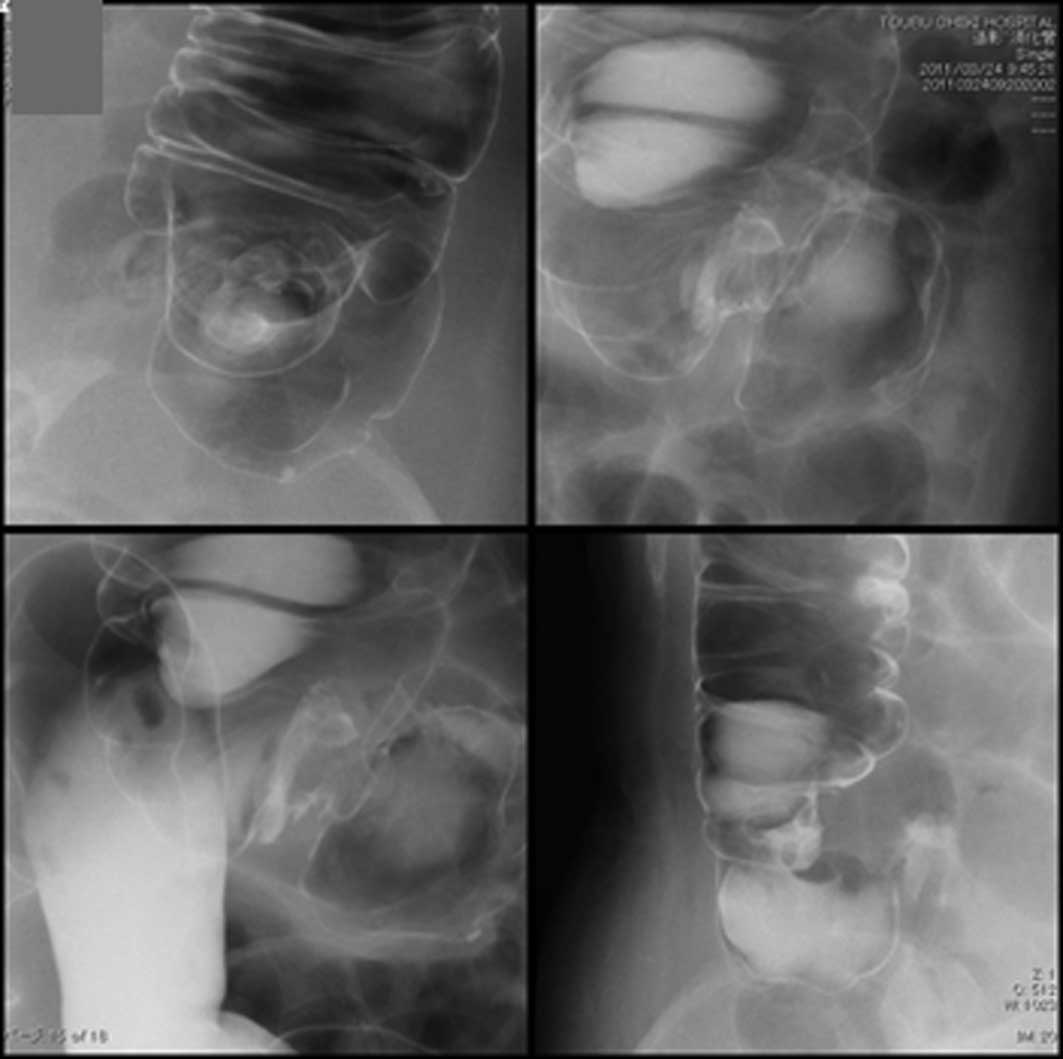
A barium enema revealed irregularities in a section of the wall of the ascending colon (Fig. 5).

Figure 5

Barium enema shows partial wall irregularities in the ascending colon following chemotherapy.

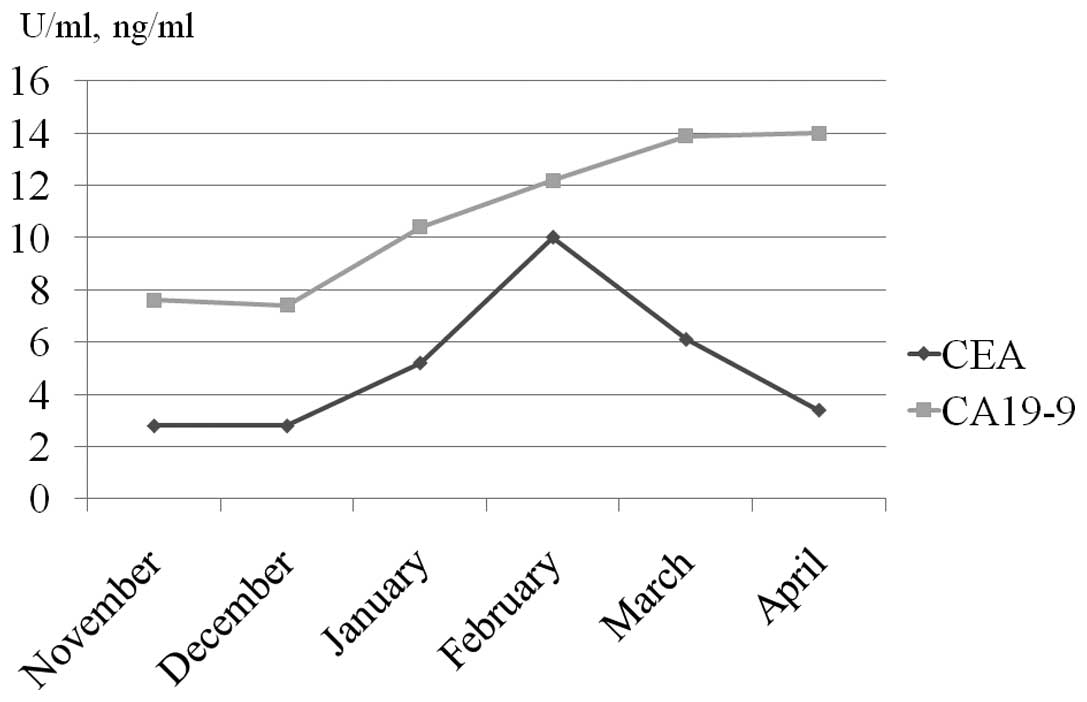
Changes in tumor marker levels are shown in Fig. 6. Carcinoembryonic antigens, which had shown a transient increase, had returned to normal levels.

Figure 6

Changes in tumor marker levels.

These findings suggest that the patient responded well to FOLFOX4 + Cmab therapy, with the focus of metastasis in the left main bronchus (a lesion of high concern at the start of treatment) disappearing. Therefore, right hemicolectomy was performed in mid-April 2011 following 2 sessions of FOLFOX4 therapy and 4 subsequent sessions of FOLFOX4 + Cmab therapy.

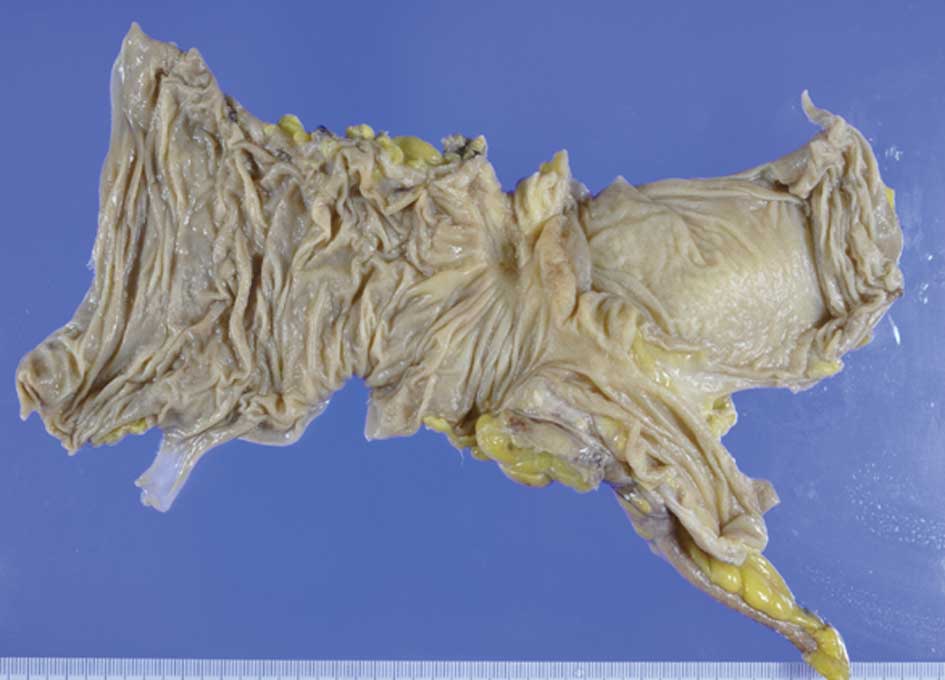
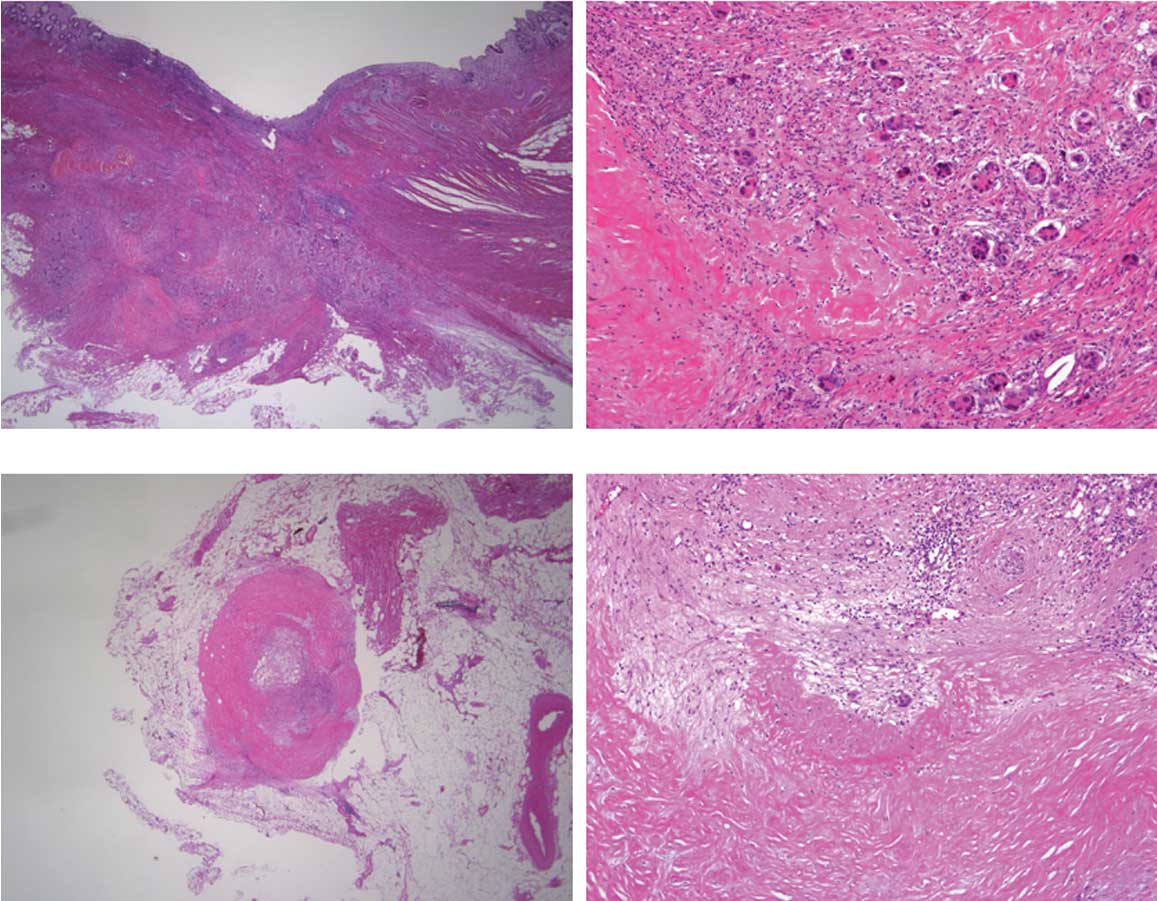
The resected specimen was found to harbor an ulcerative lesion accompanied by converging folds (Fig. 7). Histopathological examination revealed a tubular adenocarcinoma with marked degeneration and fibrosis, indicating the effect of chemotherapy in the primary tumor (pT3N1). However, viable cancer cells were also observed (Fig. 8A and B). Residual cancer cells with marked degeneration and fibrosis were noted in the lymph nodes (Fig. 8C and D).

Figure 7

Ulcerative lesion accompanied by converging folds is shown in the resected specimen following chemotherapy.

Figure 8

Tubular adenocarcinoma with marked degeneration and fibrosis due to chemotherapy in the primary tumor is shown [H&E (A) ×1.25, (B) ×10]. Residual cancer cells with marked degeneration and fibrosis due to chemotherapy in lymph nodes is shown [H&E (C) ×1.25, (D) ×10].

No postoperative complications occurred and the patient was discharged from the hospital on the 16th hospital day. The patient is currently being managed as an outpatient (mFOLFOX6 + Cmab, biweekly).

Discussion

EGFR is found in a number of locations, including the lungs, skin and gastrointestinal epithelium, is involved in the proliferation, invasion and metastasis of cancer cells. Additionally, its excessive expression is associated with poor prognosis in patients with various types of cancer, including colorectal cancer (4). Cetuximab, a human/mouse chimerized monoclonal antibody (a type of IgG1), specifically binds to EGFR, inhibiting EGFR-mediated signal transduction in cancer cells. A molecularly targeted drug, Cmab exhibits antitumor activity through induction of apoptosis (5). The KRAS gene, an oncogene located on the short arm of chromosome 12, encodes p21, a protein with GTPase activity that is capable of binding to GTP and GDP. Cetuximab is believed to exert no antitumor activities in cancer cells harboring a KRAS gene mutation due to the constitutive activation of RAS located downstream of EGFR. Cetuximab has, therefore, been reported to manifest antitumor activities against wild-type KRAS tumors (6), and its use in the treatment of patients with wild-type KRAS tumors is recommended in Japan. KRAS gene mutations were observed in 37.6% of all colorectal cancer patients (7), and mutations of codons 12 or 13 (exon 2 region) account for 94% of all KRAS gene mutations (8). Wild-type codon 13 is known to be GGC (glycine: G), and its known mutants include GAC (aspartic acid: D), TGC (cysteine: C) and CGC (arginine: R). Aspartic acid mutation (p.G13D) has been reported to account for approximately 94% of all codon 13 mutations and to occupy approximately 21% of all KRAS gene mutations (8). Recent reports that Cmab also exerts antitumor activities against KRAS p.G13D mutant-type cases have receved much attention (1,3). KRAS p.G13D mutations, which are often observed in females and in the right half of the colon, have a reported incidence of 7.7% in Japan (7).

In Japan, Cmab was previously used in combination with FOLFIRI [folinic acid (FOL), fluorouracil (F) plus irinotecan (IRI)] as second-line therapy and in combination with irinotecan or in single-drug administration as third-line therapy. However, its use as a first-line drug or in combination with FOLFOX has been permitted since 2010. In the present case, resection of the primary cancer was considered initially. However, taking into account the absence of symptoms arising from the primary cancer and potential respiratory complications arising from surgical intervention, such as postoperative atelectasis caused by metastatic obstruction of the left main bronchus, first-line anticancer drug therapy was finally selected. Therefore, with informed consent, the patient was treated with FOLFOX4 + Cmab therapy, although the tumor was a KRAS p.G13D-mutant type. Response was evaluated following 2 sessions of FOLFOX4 therapy and 2 sessions of FOLFOX4 + Cmab therapy. The results revealed the disappearance of metastatic foci from the left main bronchus, size reduction in multiple lung metastases and normalization of tumor marker levels. Therefore, anticancer drug therapy was continued and surgery was carried out following 2 sessions of FOLFOX4 therapy and 4 sessions of FOLFOX4 + Cmab therapy. Although subsequent histopathological examination of the resected tissue specimen revealed residual cancer cells, it also showed the marked efficacy of the chemotherapy regimen used. We believe that these results validated the decision to select anticancer drug therapy as the first-line therapy in this case.

Resection of the primary cancer is often possible, even when metastases are present, as in the present case. In Japan, resection of the primary cancer is often performed at the beginning of treatment, and the foci of metastasis are subsequently treated with anticancer drugs. This is followed, if possible, by resection of the metastatic foci. By contrast, in Western countries, a number of reports have shown that treatment often commences with drug therapy using FOLFOX/FOLFIRI + molecularly targeted drugs, followed by resection of the primary cancer. The foci of metastasis are then treated with anticancer drugs followed by surgical resection where possible (9–11). Each of these therapeutic strategies has advantages and disadvantages. However, performing resection of the primary cancer first in cases presenting with symptoms, such as stenosis and bleeding, attributable to the resectable primary cancer is preferred.

The clinical response rate to treatment with FOLFOX/FOLFIRI + molecularly targeted drugs is between 70 and 80% (12–14). First-line therapy with FOLFOX/FOLFIRI + molecularly targeted drugs should allow more appropriate selection of treatment (including conversion therapy) and lead to better prognoses in symptom-free cases. We believe that FOLFOX/FOLFIRI + molecularly targeted drug therapy is likely to become widely accepted in Japan as a first-line therapy in advanced colorectal cancer patients with metastasis.

In conclusion, in this study, we presented a case of metastatic ascending colon cancer harboring a KRAS p.G13D mutation in which the patient responded well to first-line therapy with FOLFOX4 + Cmab.

Acknowledgements

The authors thank Associate Professor Jeremy Williams, Tokyo Dental College, for his assistance with the English of the manuscript.

References

1 

De Roock W, Jonker DJ, Di Nicolantonio F, et al: Association of KRAS p. G13D mutation with outcome in patients with chemotherapy-refractory metastatic colorectal cancer treated with cetuximab. JAMA. 304:1812–1820. 2010.PubMed/NCBI

2 

Bando H, Yoshino T, Shinozaki E, et al: Clinical outcome in patients with metastatic colorectal cancer harboring KRAS p. G13D mutation treated with cetuximab. J Clin Oncol. 29:4482011.

3 

Tejpar S, Bokemeyer C, Celik I, et al: Influence of KRAS G13D mutations on outcome in patients with metastatic colorectal cancer (mCRC) treated with first-line chemotherapy with or without cetuximab. J Clin Oncol. 29:35112011.

4 

Mayer A, Takimoto M, Fritz E, et al: The prognostic significance of proliferating cell nuclear antigen, epidermal growth factor receptor, and mdr gene expression in colorectal cancer. Cancer. 71:2454–2460. 1993. View Article : Google Scholar : PubMed/NCBI

5 

Mendelsohn J and Baselga J: Status of epidermal growth factor receptor antagonists in the biology and treatment of cancer. J Clin Oncol. 21:2787–2799. 2003. View Article : Google Scholar : PubMed/NCBI

6 

Van Cutsem E, Nowacki M, Lang I, et al: Randomized phase III study of irinotecan and 5-FU/FA with or without cetuximab in the first-line treatment of patients with metastatic colorectal cancer (mCRC): The CRYSTAL trial. J Clin Oncol. 25:40002007.PubMed/NCBI

7 

Yoshino T, Watanabe T, Yamazaki K, et al: Japan Study Group of KRAS Mutation in Colorectal Cancer: Clinicopathological features in metastatic colorectal cancer patients with KRAS wild type compared with codon 12 and codon 13 mutant: Results from a multicenter, cross-sectional study by the Japan study group of KRAS mutation in colorectal cancer. J Clin Oncol. 29:4072011.

8 

Brink M, De Goeij AF, Weijenberg MP, et al: K-ras oncogene mutations in sporadic colorectal cancer in The Netherlands Cohort Study. Carcinogenesis. 24:703–710. 2003. View Article : Google Scholar : PubMed/NCBI

9 

Sarela AI, Guthrie JA, Seymour MT, et al: Non-operative management of the primary tumor in patients with incurable stage IV colorectal cancer. Br J Surg. 88:1352–1356. 2001. View Article : Google Scholar : PubMed/NCBI

10 

Muratore A, Zorzi D, Bouzari H, et al: Asymptomatic colorectal cancer with un-resectable liver metastasis: immediate colorectal resection or up-front systemic chemotherapy? Ann Surg Oncol. 14:766–770. 2006. View Article : Google Scholar

11 

Mentha G, Majno PE, Andres A, et al: Neoadjuvant chemotherapy and resection of advanced synchronous liver metastasis before treatment of the colorectal primary. Br J Surg. 93:872–878. 2006. View Article : Google Scholar

12 

Van Cutsem E, Köhne CH, Láng I, et al: Cetuximab plus irinotecan, fluorouracil, and leucovorin as first-line treatment for metastatic colorectal cancer: updated analysis of overall survival according to tumorKRAS and BRAF mutation status. J Clin Oncol. 33:50912010.PubMed/NCBI

13 

Bokemeyer C, Bondarenko I, Hartmann JT, et al: Efficacy according to biomarker status of cetuximab plus FOLFOX-4 as first-line treatment for metastatic colorectal cancer: the OPUS study. Ann Oncol. doi: 10.1093.annonc.mdq632. 2011. View Article : Google Scholar : PubMed/NCBI

14 

Van Cutsem E, Lang I, D’Haens G, et al: KRAS status and efficacy in the Crystal study: 1st line treatment for patients with metastatic colorectal cancer receiving FOLFIRI with or without cetuximab. Ann Oncol. 19:7102008.

Related Articles

  • Abstract
  • View
  • Download
  • Twitter
Copy and paste a formatted citation
Spandidos Publications style
Ochiai T, Nishimura K, Watanabe T, Kitajima M, Nakatani A, Inou T, Washio M, Sakuyama N, Sato T, Kishine K, Kishine K, et al: Good response to leucovorin and fluorouracil plus oxaliplatin and cetuximab therapy in a patient with metastatic ascending colon cancer harboring a KRAS p.G13D mutation. Oncol Lett 3: 269-272, 2012.
APA
Ochiai, T., Nishimura, K., Watanabe, T., Kitajima, M., Nakatani, A., Inou, T. ... Nagaoka, I. (2012). Good response to leucovorin and fluorouracil plus oxaliplatin and cetuximab therapy in a patient with metastatic ascending colon cancer harboring a KRAS p.G13D mutation. Oncology Letters, 3, 269-272. https://doi.org/10.3892/ol.2011.503
MLA
Ochiai, T., Nishimura, K., Watanabe, T., Kitajima, M., Nakatani, A., Inou, T., Washio, M., Sakuyama, N., Sato, T., Kishine, K., Ochi, T., Ookubo, S., Futagawa, S., Orikasa, H., Mashiko, S., Nagaoka, I."Good response to leucovorin and fluorouracil plus oxaliplatin and cetuximab therapy in a patient with metastatic ascending colon cancer harboring a KRAS p.G13D mutation". Oncology Letters 3.2 (2012): 269-272.
Chicago
Ochiai, T., Nishimura, K., Watanabe, T., Kitajima, M., Nakatani, A., Inou, T., Washio, M., Sakuyama, N., Sato, T., Kishine, K., Ochi, T., Ookubo, S., Futagawa, S., Orikasa, H., Mashiko, S., Nagaoka, I."Good response to leucovorin and fluorouracil plus oxaliplatin and cetuximab therapy in a patient with metastatic ascending colon cancer harboring a KRAS p.G13D mutation". Oncology Letters 3, no. 2 (2012): 269-272. https://doi.org/10.3892/ol.2011.503
Copy and paste a formatted citation
x
Spandidos Publications style
Ochiai T, Nishimura K, Watanabe T, Kitajima M, Nakatani A, Inou T, Washio M, Sakuyama N, Sato T, Kishine K, Kishine K, et al: Good response to leucovorin and fluorouracil plus oxaliplatin and cetuximab therapy in a patient with metastatic ascending colon cancer harboring a KRAS p.G13D mutation. Oncol Lett 3: 269-272, 2012.
APA
Ochiai, T., Nishimura, K., Watanabe, T., Kitajima, M., Nakatani, A., Inou, T. ... Nagaoka, I. (2012). Good response to leucovorin and fluorouracil plus oxaliplatin and cetuximab therapy in a patient with metastatic ascending colon cancer harboring a KRAS p.G13D mutation. Oncology Letters, 3, 269-272. https://doi.org/10.3892/ol.2011.503
MLA
Ochiai, T., Nishimura, K., Watanabe, T., Kitajima, M., Nakatani, A., Inou, T., Washio, M., Sakuyama, N., Sato, T., Kishine, K., Ochi, T., Ookubo, S., Futagawa, S., Orikasa, H., Mashiko, S., Nagaoka, I."Good response to leucovorin and fluorouracil plus oxaliplatin and cetuximab therapy in a patient with metastatic ascending colon cancer harboring a KRAS p.G13D mutation". Oncology Letters 3.2 (2012): 269-272.
Chicago
Ochiai, T., Nishimura, K., Watanabe, T., Kitajima, M., Nakatani, A., Inou, T., Washio, M., Sakuyama, N., Sato, T., Kishine, K., Ochi, T., Ookubo, S., Futagawa, S., Orikasa, H., Mashiko, S., Nagaoka, I."Good response to leucovorin and fluorouracil plus oxaliplatin and cetuximab therapy in a patient with metastatic ascending colon cancer harboring a KRAS p.G13D mutation". Oncology Letters 3, no. 2 (2012): 269-272. https://doi.org/10.3892/ol.2011.503
Follow us
  • Twitter
  • LinkedIn
  • Facebook
About
  • Spandidos Publications
  • Careers
  • Cookie Policy
  • Privacy Policy
How can we help?
  • Help
  • Live Chat
  • Contact
  • Email to our Support Team