Spandidos Publications Logo
  • About
    • About Spandidos
    • Aims and Scopes
    • Abstracting and Indexing
    • Editorial Policies
    • Reprints and Permissions
    • Job Opportunities
    • Terms and Conditions
    • Contact
  • Journals
    • All Journals
    • Oncology Letters
      • Oncology Letters
      • Information for Authors
      • Editorial Policies
      • Editorial Board
      • Aims and Scope
      • Abstracting and Indexing
      • Bibliographic Information
      • Archive
    • International Journal of Oncology
      • International Journal of Oncology
      • Information for Authors
      • Editorial Policies
      • Editorial Board
      • Aims and Scope
      • Abstracting and Indexing
      • Bibliographic Information
      • Archive
    • Molecular and Clinical Oncology
      • Molecular and Clinical Oncology
      • Information for Authors
      • Editorial Policies
      • Editorial Board
      • Aims and Scope
      • Abstracting and Indexing
      • Bibliographic Information
      • Archive
    • Experimental and Therapeutic Medicine
      • Experimental and Therapeutic Medicine
      • Information for Authors
      • Editorial Policies
      • Editorial Board
      • Aims and Scope
      • Abstracting and Indexing
      • Bibliographic Information
      • Archive
    • International Journal of Molecular Medicine
      • International Journal of Molecular Medicine
      • Information for Authors
      • Editorial Policies
      • Editorial Board
      • Aims and Scope
      • Abstracting and Indexing
      • Bibliographic Information
      • Archive
    • Biomedical Reports
      • Biomedical Reports
      • Information for Authors
      • Editorial Policies
      • Editorial Board
      • Aims and Scope
      • Abstracting and Indexing
      • Bibliographic Information
      • Archive
    • Oncology Reports
      • Oncology Reports
      • Information for Authors
      • Editorial Policies
      • Editorial Board
      • Aims and Scope
      • Abstracting and Indexing
      • Bibliographic Information
      • Archive
    • Molecular Medicine Reports
      • Molecular Medicine Reports
      • Information for Authors
      • Editorial Policies
      • Editorial Board
      • Aims and Scope
      • Abstracting and Indexing
      • Bibliographic Information
      • Archive
    • World Academy of Sciences Journal
      • World Academy of Sciences Journal
      • Information for Authors
      • Editorial Policies
      • Editorial Board
      • Aims and Scope
      • Abstracting and Indexing
      • Bibliographic Information
      • Archive
    • International Journal of Functional Nutrition
      • International Journal of Functional Nutrition
      • Information for Authors
      • Editorial Policies
      • Editorial Board
      • Aims and Scope
      • Abstracting and Indexing
      • Bibliographic Information
      • Archive
    • International Journal of Epigenetics
      • International Journal of Epigenetics
      • Information for Authors
      • Editorial Policies
      • Editorial Board
      • Aims and Scope
      • Abstracting and Indexing
      • Bibliographic Information
      • Archive
    • Medicine International
      • Medicine International
      • Information for Authors
      • Editorial Policies
      • Editorial Board
      • Aims and Scope
      • Abstracting and Indexing
      • Bibliographic Information
      • Archive
  • Articles
  • Information
    • Information for Authors
    • Information for Reviewers
    • Information for Librarians
    • Information for Advertisers
    • Conferences
  • Language Editing
Spandidos Publications Logo
  • About
    • About Spandidos
    • Aims and Scopes
    • Abstracting and Indexing
    • Editorial Policies
    • Reprints and Permissions
    • Job Opportunities
    • Terms and Conditions
    • Contact
  • Journals
    • All Journals
    • Biomedical Reports
      • Information for Authors
      • Editorial Policies
      • Editorial Board
      • Aims and Scope
      • Abstracting and Indexing
      • Bibliographic Information
      • Archive
    • Experimental and Therapeutic Medicine
      • Information for Authors
      • Editorial Policies
      • Editorial Board
      • Aims and Scope
      • Abstracting and Indexing
      • Bibliographic Information
      • Archive
    • International Journal of Epigenetics
      • Information for Authors
      • Editorial Policies
      • Editorial Board
      • Aims and Scope
      • Abstracting and Indexing
      • Bibliographic Information
      • Archive
    • International Journal of Functional Nutrition
      • Information for Authors
      • Editorial Policies
      • Editorial Board
      • Aims and Scope
      • Abstracting and Indexing
      • Bibliographic Information
      • Archive
    • International Journal of Molecular Medicine
      • Information for Authors
      • Editorial Policies
      • Editorial Board
      • Aims and Scope
      • Abstracting and Indexing
      • Bibliographic Information
      • Archive
    • International Journal of Oncology
      • Information for Authors
      • Editorial Policies
      • Editorial Board
      • Aims and Scope
      • Abstracting and Indexing
      • Bibliographic Information
      • Archive
    • Medicine International
      • Information for Authors
      • Editorial Policies
      • Editorial Board
      • Aims and Scope
      • Abstracting and Indexing
      • Bibliographic Information
      • Archive
    • Molecular and Clinical Oncology
      • Information for Authors
      • Editorial Policies
      • Editorial Board
      • Aims and Scope
      • Abstracting and Indexing
      • Bibliographic Information
      • Archive
    • Molecular Medicine Reports
      • Information for Authors
      • Editorial Policies
      • Editorial Board
      • Aims and Scope
      • Abstracting and Indexing
      • Bibliographic Information
      • Archive
    • Oncology Letters
      • Information for Authors
      • Editorial Policies
      • Editorial Board
      • Aims and Scope
      • Abstracting and Indexing
      • Bibliographic Information
      • Archive
    • Oncology Reports
      • Information for Authors
      • Editorial Policies
      • Editorial Board
      • Aims and Scope
      • Abstracting and Indexing
      • Bibliographic Information
      • Archive
    • World Academy of Sciences Journal
      • Information for Authors
      • Editorial Policies
      • Editorial Board
      • Aims and Scope
      • Abstracting and Indexing
      • Bibliographic Information
      • Archive
  • Articles
  • Information
    • For Authors
    • For Reviewers
    • For Librarians
    • For Advertisers
    • Conferences
  • Language Editing
Login Register Submit
  • This site uses cookies
  • You can change your cookie settings at any time by following the instructions in our Cookie Policy. To find out more, you may read our Privacy Policy.

    I agree
Search articles by DOI, keyword, author or affiliation
Search
Advanced Search
presentation
Oncology Letters
Join Editorial Board Propose a Special Issue
Print ISSN: 1792-1074 Online ISSN: 1792-1082
Journal Cover
May 2012 Volume 3 Issue 5

Full Size Image

Sign up for eToc alerts
Recommend to Library

Journals

International Journal of Molecular Medicine

International Journal of Molecular Medicine

International Journal of Molecular Medicine is an international journal devoted to molecular mechanisms of human disease.

International Journal of Oncology

International Journal of Oncology

International Journal of Oncology is an international journal devoted to oncology research and cancer treatment.

Molecular Medicine Reports

Molecular Medicine Reports

Covers molecular medicine topics such as pharmacology, pathology, genetics, neuroscience, infectious diseases, molecular cardiology, and molecular surgery.

Oncology Reports

Oncology Reports

Oncology Reports is an international journal devoted to fundamental and applied research in Oncology.

Experimental and Therapeutic Medicine

Experimental and Therapeutic Medicine

Experimental and Therapeutic Medicine is an international journal devoted to laboratory and clinical medicine.

Oncology Letters

Oncology Letters

Oncology Letters is an international journal devoted to Experimental and Clinical Oncology.

Biomedical Reports

Biomedical Reports

Explores a wide range of biological and medical fields, including pharmacology, genetics, microbiology, neuroscience, and molecular cardiology.

Molecular and Clinical Oncology

Molecular and Clinical Oncology

International journal addressing all aspects of oncology research, from tumorigenesis and oncogenes to chemotherapy and metastasis.

World Academy of Sciences Journal

World Academy of Sciences Journal

Multidisciplinary open-access journal spanning biochemistry, genetics, neuroscience, environmental health, and synthetic biology.

International Journal of Functional Nutrition

International Journal of Functional Nutrition

Open-access journal combining biochemistry, pharmacology, immunology, and genetics to advance health through functional nutrition.

International Journal of Epigenetics

International Journal of Epigenetics

Publishes open-access research on using epigenetics to advance understanding and treatment of human disease.

Medicine International

Medicine International

An International Open Access Journal Devoted to General Medicine.

Journal Cover
May 2012 Volume 3 Issue 5

Full Size Image

Sign up for eToc alerts
Recommend to Library

  • Article
  • Citations
    • Cite This Article
    • Download Citation
    • Create Citation Alert
    • Remove Citation Alert
    • Cited By
  • Similar Articles
    • Related Articles (in Spandidos Publications)
    • Similar Articles (Google Scholar)
    • Similar Articles (PubMed)
  • Download PDF
  • Download XML
  • View XML
Article

Meningeal tumor: A rare extrahepatic association in patients with polycystic liver disease enrolled for liver transplantation

  • Authors:
    • Alexandre Bakonyi Neto
    • Marco Antonio Zanini
    • Amanda Pinter Cavalheiro da Silva
    • Camila Winckler
    • Rodrigo Mattos dos Santos
    • Marcelo Lopes Furtado
  • View Affiliations / Copyright

    Affiliations: Department of Surgery, Division of Gastrointestinal Transplant, Botucatu Faculty of Medicine, UNESP, Botucatu, SP, Brazil, Department of Neurosurgery, Botucatu Faculty of Medicine, UNESP, Botucatu, SP, Brazil, Department of Urology, Botucatu Faculty of Medicine, UNESP, Botucatu, SP, Brazil
  • Pages: 1007-1010
    |
    Published online on: February 10, 2012
       https://doi.org/10.3892/ol.2012.605
  • Expand metrics +
Metrics: Total Views: 0 (Spandidos Publications: | PMC Statistics: )
Metrics: Total PDF Downloads: 0 (Spandidos Publications: | PMC Statistics: )
Cited By (CrossRef): 0 citations Loading Articles...

This article is mentioned in:


Abstract

In the present study, we described a rare association of polycystic liver disease (PCLD) with intracranial meningiomas in patients included on a liver transplant list, focusing on the diagnosis, treatment and possible association with any genetic alterations. Two female patients, aged 39 and 49 years were included on a liver transplant list due to extensive PCLD, with symptoms related to an abdominal compartmental syndrome. Screening for extrahepatic manifestation revealed a right frontal meningioma in the first patient, and a parietal posterior calcified meningioma in the second patient, measuring 1 and 7x3x2 cm in diameter, respectively. Following tumor removal, the histological pattern was compatible with fibrous and transitional meningioma, respectively. Cytogenetic studies conducted following surgery did not reveal any changes in metaphase chromosomes. The postoperative follow-up for the two patients was uneventful, without complications, with the patients remaining on a liver transplant waiting list. We conclude that screening for extrahepatic manifestations of PCLD is mandatory, as certain lesions require treatment prior to liver transplantation. The lack of a genetic or familial association between these two cases show they are likely to have occurred by chance, rather than representing a previously unrecognized association between polycystic liver disease and cranial meningioma.

Introduction

Intracranial manifestations correlated with autosomal dominant polycystic kidney disease (ADPKD), including intraparenchymal hemorrhage and aneurysm formation, have been widely described (1), as has an increased incidence of intracranial arachnoid cysts (1,2). Hepatic cysts are relatively common in patients with ADPKD (3,4), increasing with advancing age, female gender, pregnancy and degree of renal lesions, which affect the course of polycystic liver disease (PCLD) (5). The majority of patients with multiple liver cysts are asymptomatic, recognized only after routine ultrasound investigation. However, the most common clinical patterns include abdominal pain, dyspnea and early satiety related to a compartmental syndrome. In the present study, we described a rare association of PCLD with intracranial meningiomas in patients included on a liver transplant waiting list, focusing on the diagnosis, possible association with any chromosomal alteration and mandatory treatment of those lesions prior to transplantation.

Case reports

Two female patients, 39 and 49 years of age, were referred for evaluation for extensive abdominal tumors, with symptoms related to a compartmental syndrome, which included dyspnea, abdominal pain and early satiety. The two patients provided informed consent, and the study was approved by the ethics committee of Sao Paulo State University.

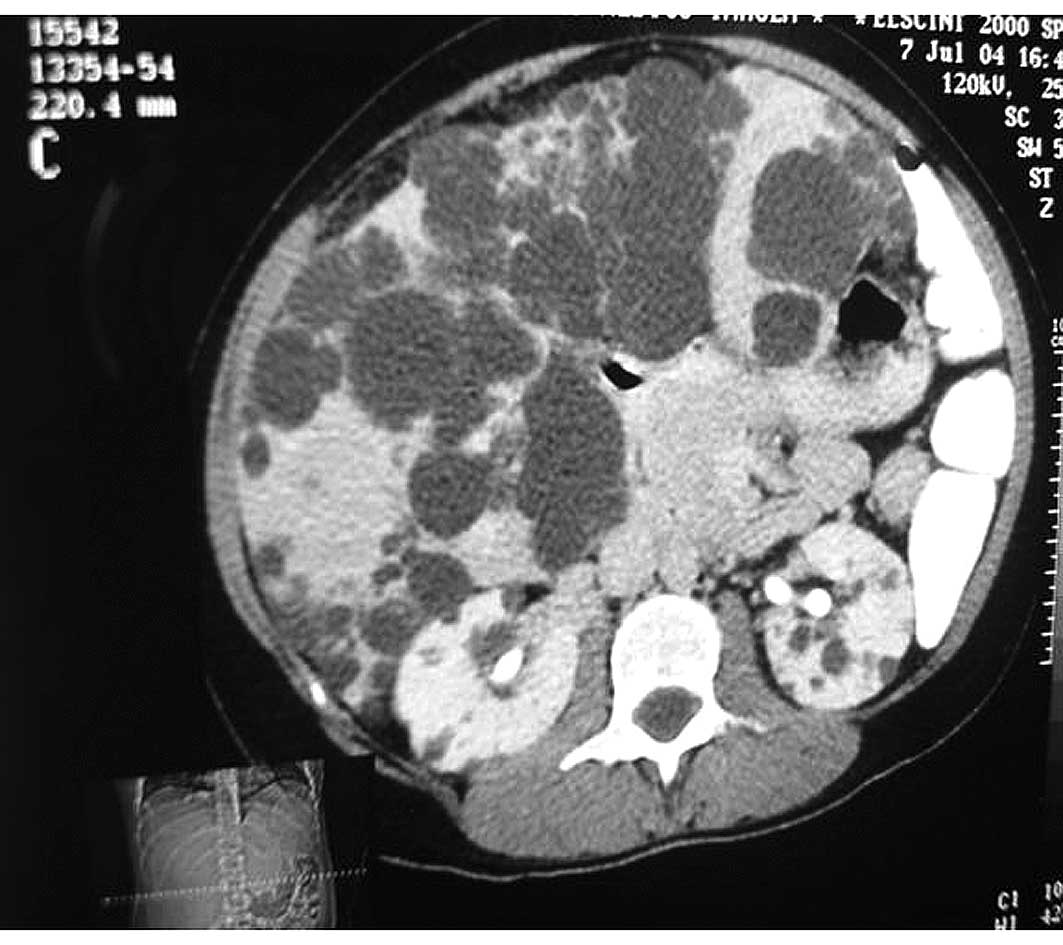
Clinical investigation included an abdominal ultrasound and further computer tomography (CT), which revealed an extensive liver involvement by cyst lesions, without kidney involvement (Fig. 1). The mean cyst diameters of the largest liver cysts were 10±5 cm, located deeply in the liver parenchyma and the small ones, superficially.

Figure 1

CT scan with an extensive polycystic liver disease. CT, computer tomography.

Abnormal physical findings were similar in the two patients, and included right upper quadrant pain and abdominal distension.

Laboratorial data were collected and included creatinine, urea nitrogen, aspartate aminotransferase (AST), alanine aminotransferase (ALT), alkaline phosphatase (ALP), γ-glutamyl transferase (GGT), total bilirubin, RNI and prothrombin time, which were relatively stable and without significant abnormalities for the two patients. The same blood type, AB, was identified.

The main reasons for including the two patients on a liver transplant waiting list were the great liver size, which reached the lower abdominal quadrant, with diaphragmatic and inferior vena cava compression, leading to edema of the legs.

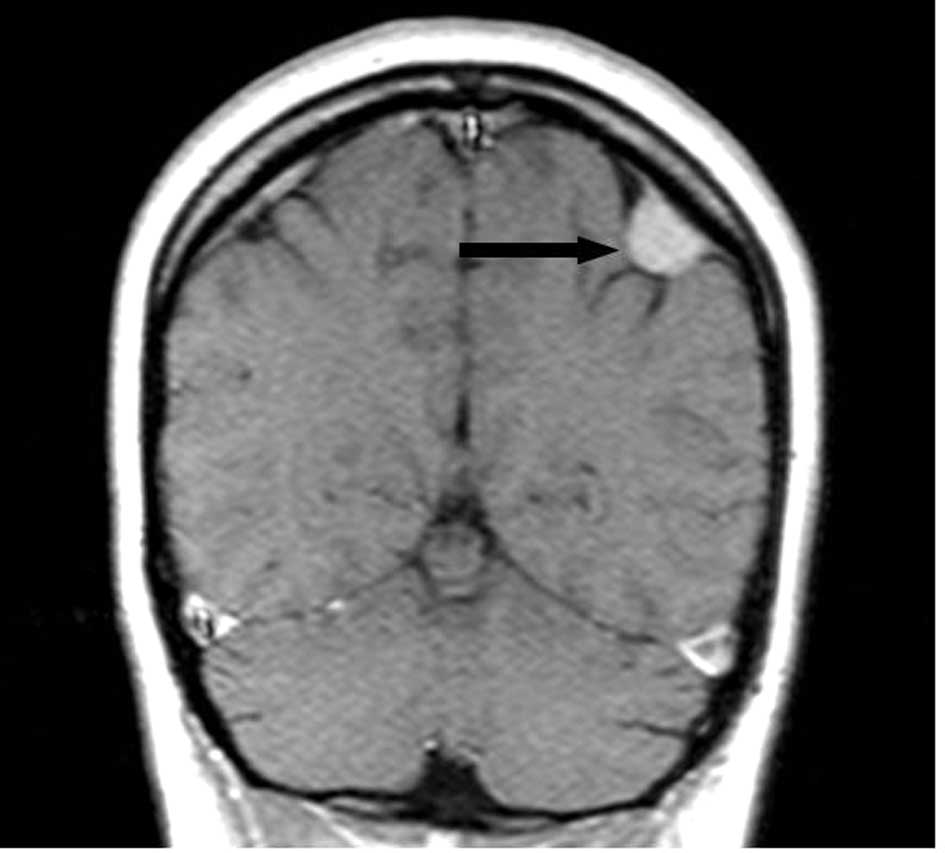
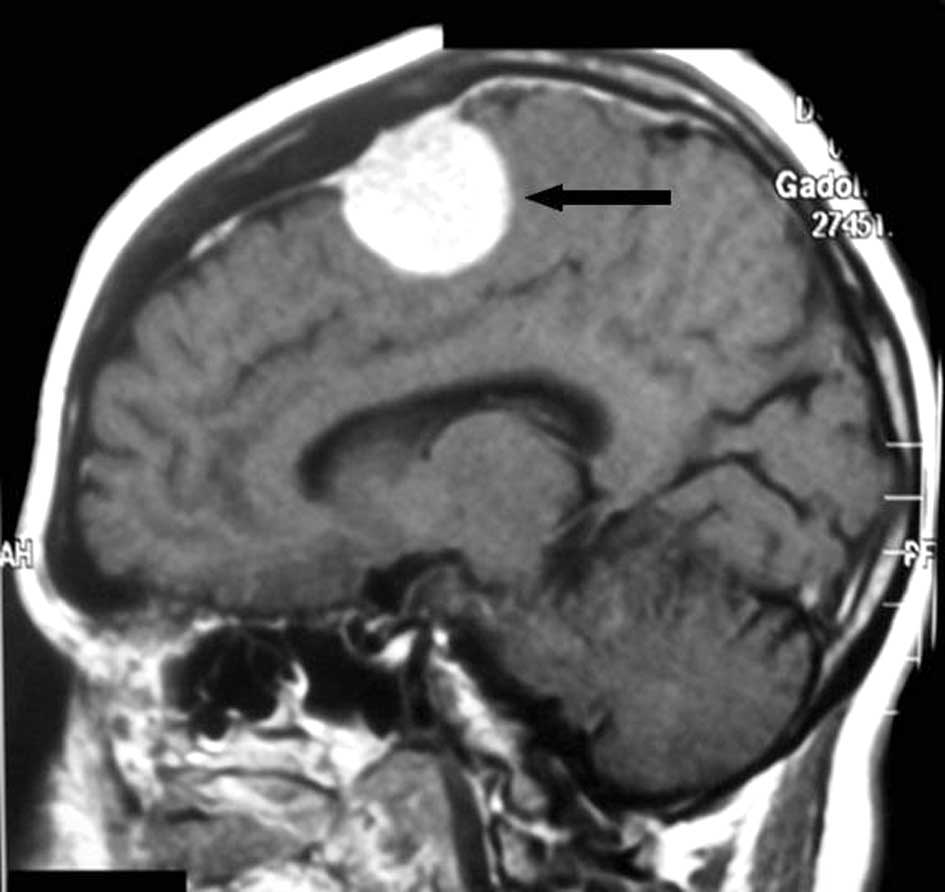
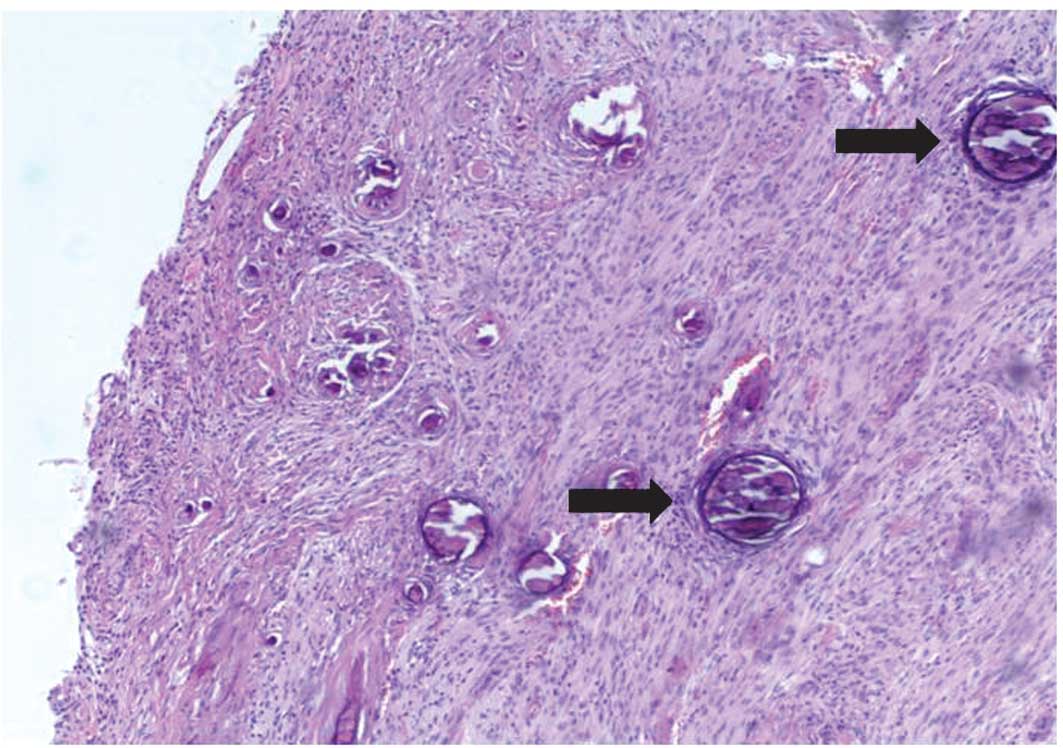
Screening for extrahepatic manifestation was performed using magnetic resonance imaging (MRI), which revealed the presence of a right frontal meningioma in the first patient (Fig. 2), and a parietal posterior calcified meningioma, plus the presence of osteoma and encephalic calcification, in the second patient (Fig. 3), each measuring 1 and 7×3×2 cm in diameter, respectively. The patients were submitted to a craniotomy for tumor removal, with histological patterns compatible with fibrous meningioma in the first patient, and transitional meningioma in the second patient, both with psammomatous bodies (Fig. 4). These histological features lead to a classification of Grade I according to World Health Organization (WHO) criteria. The postoperative course was uneventful, with the patients still awaiting a liver transplant.

Figure 2

MRI with a right frontal meningioma. MRI, magnetic resonance imaging.

Figure 3

MRI with a parietal posterior calcified meningioma plus the presence of an osteoma and encephalic calcification. MRI, magnetic resonance imaging.

Figure 4

Meningioma. Black arrow, psammomatosous bodies.

Post-operative conventional cytogenetic studies

Cells were obtained from the two patients and cultivated for 24 or 48 h in MarrowMAXTM Bone Marrow Medium (Gibco; Invitrogen, Brazil) with 10% fetal calf serum without stimulation. The cells were then harvested using conventional techniques. The GTG banding analysis was performed according to Scheres (6). Metaphase chromosomes were analyzed using an Olympus BX61 microscope connected to BandView 4.5 software (Applied Spectral Imaging, Israel). Chromosomes were identified and classified according to the International System of Human Cytogenetic Nomenclature guidelines (7). The analysis of twenty metaphases for each patient did not reveal any cytogenetic changes.

Discussion

The symptoms of isolated PCLD are specifically correlated with the extension of liver involvement (8), with the possibility of life-threatening complications and a poor quality of life.

No exact epidemiological data are currently available regarding the incidence of PCLD in any population. However, PCLD, without ADPKD, is a rare condition with a prevalence of 0.05 or 0.13% in two autopsy series.

When associated with ADPKD, the prevalence reported was 16% in one study and 93% in another (9,10). In these cases, a relevant genetic defect was linked to the polycystic kidney disease 1 (PKD1) locus on chromosome 16 (the main locus responsible for the disease) (12) and PKD2 locus on chromosome 4. No evidence of further locus heterogeneity was described (11).

In a study conducted by Pirson et al (12) of a family with PCLD not associated with kidney cysts and transmitted through three generations, linkage to mutations of the genetic markers of PKD1 and PKD2 were excluded. One report concluded that isolated PCLD exists as a genetic disease, distinct from ADPKD1 and ADPKD2.

A third gene, protein kinase C substrate 80K-H (PRKCSH), accounts for a comparatively rare, isolated form of autosomal dominant PCLD, which displays no kidney involvement (4). Waanders et al (13) concluded that 16% of patients with PCLD were found to have either PRKCSH or SEC63 mutations.

In a study of 20 individuals with PCLD, Yang et al (14) reported that the PRKCSH gene was not a major genetic cause, and that there may be at least another locus responsible for the disease in Taiwanese patients. Through analysis of eight Finnish families with PCLD, Tahvanainen et al (15) concluded that, in most families, PCLD is linked to a locus on chromosome 19p13.2-13.1; however, the disease is genetically heterogeneous with at least one more locus, which remains to be found.

Associated morbidities were notably less frequent in patients with PCLD when comparing individuals with PCLD linked to ADPKD16, and included mitral valve prolapse, diverticuli, brain aneurisms and intracranial arachnoid cysts (17).

Intracranial lesions in association with polycystic diseases are typically incidental findings in routine investigations, while symptomatic lesions may include headaches, seizure or focal neurological deficits (18). However, the association of rare, developmental, solid tumors in meningeal membrane (meningiomas) with PCLD has yet to be reported.

The treatment of PCLD aims to symptomatically relieve symptoms related to cysts, and includes conservative approaches such as cyst decompression, liver resections or liver transplantation. The main reason for the consideration of liver transplantation in our patients was the large liver volumes, leading to an abdominal compartmental syndrome.

The meningeal tumors were treated prior to liver transplantation for obvious reasons, since the tumor measurement following resection was 7×3×2 cm in our second patient.

Meningiomas are mostly benign tumors, classified as Grade I, originating from the arachnoid cap cells and represent 13–26% of all intracranial tumors (19). They are more common in older age individuals and in females. The role of hormones has yet to beclarified, with a five-year survival of more than 80% in typical meningiomas, but is poorer in atypical presentations. Papillary and haemangiopericytic morphology, large tumors, high mitotic index, absence of progesterone receptors, deletion and loss of heterozygosis are all poor prognostic factors. Complete surgical excision is the standard treatment. Radiotherapy may be used in the clinical practice in atypical Grade II and malignant Grade III or recurrent meningiomas (20).

The histological characterization of fibrous and transitional meningiomas in the patients we studied lead to a classification of Grade I according to WHO criteria (19).

The postoperative follow-up for the two patients was uneventful, without complications, with the patients remaining on the liver transplant waiting list.

Bearing in mind that the polymorphism is a feature of extrahepatic lesions in PCLD, and is either associated, or not, to ADPKD, improved awareness is mandatory in order to determine the best approach for the treatment of these patients. The lack of a genetic or familial association between these two cases shows they are likely to have occurred by chance rather than represent a previously unrecognized association between polycystic liver disease and cranial meningioma.

The analysis of a large patient cohort may provide us with more detailed information and a better understanding of the genetic background of such occurrences.

At present, a more prudent course toward the identification of PCLD remains a combination of refinement of the genetic interval and continued gene identification based on the genomic sequence of the region, with emphasis placed on the understanding of liver cyst pathogenesis, which may lead to non-surgical therapy for patients affected with symptomatic liver disease (21).

Acknowledgements

All authors contributed to the study design and approved the final version of the manuscript.

References

1 

Schivink WI, Huston J, Torres VE and Marsh WR: Intracranial cysts in autosomal dominant polycystic kidney disease. J Neurosurg. 83:1004–1007. 1995. View Article : Google Scholar : PubMed/NCBI

2 

Romao EA, Moyses Neto M, Teixeira SR, Muglia VF, Vieira OM and Dantas M: Renal and extrarenal manifestations of autosomal dominant polycystic kidney disease. Braz J Med Biol Res. 39:533–538. 2006. View Article : Google Scholar : PubMed/NCBI

3 

Masyuk T and LaRusso N: Polycystic liver disease: new insights into disease pathogenesis. Hepatology. 43:906–908. 2006. View Article : Google Scholar : PubMed/NCBI

4 

Everson GT, Taylor MRG and Doctor RB: Polycystic disease of the liver. Hepatology. 40:774–782. 2004. View Article : Google Scholar : PubMed/NCBI

5 

Portmann BC and Roberts EA: Developmental abnormalities and liver disease in childhood. MacSweens Pathology of the Liver. Burt AD, Portmann BC and Ferrell LD: Churchill Livingstone Elsevier; China: pp. 174–176. 2007

6 

Scheres JM: Identification of two robertsonian translocations with a giemsa banding technique. Hum Genet. 15:253–256. 1972. View Article : Google Scholar : PubMed/NCBI

7 

Mitelman F: ISCN: An International System for Human Cytogenetic Nomenclature. Karger; Basel: pp. 72005

8 

Shrestha R, Martina JA, Kerkhof R, et al: Postmenopausal estrogen therapy selectively stimulates hepatic enlargement in women with autosomal dominant polycystic kidney disease. Hepatology. 26:1282–1286. 1997.

9 

Karhunen PJ and Tenhu M: Adult polycystic liver and kidney diseases are separate entities. Clin Genet. 30:29–37. 1986. View Article : Google Scholar : PubMed/NCBI

10 

Kwok MK and Lewin KJ: Massive hepatomegaly in adult polycystic liver disease. Am J Surg Pathol. 12:321–324. 1988. View Article : Google Scholar : PubMed/NCBI

11 

Peters DJM, Spruit L, Saris JJ, Ravine D, Sandkuijl LA, Fossdal R, Boersma J, et al: Chromosome 4 localization of a second gene for autosomal dominant polycystic kidney disease. Nat Genet. 5:359–362. 1993. View Article : Google Scholar : PubMed/NCBI

12 

Pirson Y, Lannoy N, Peters D, Geubel A, Gogot JF, Breuning M and Dumoulin CV: Isolated polycystic liver disease as a distinct genetic disease, unlinked to polycystic kidney disease 1 and polycystic disease 2. Hepatology. 23:249–252. 1996. View Article : Google Scholar : PubMed/NCBI

13 

Waanders E, Morsche RH, Man RA, Jansen JB and Drenth JP: Extensive mutational analysis of PRKCSH and SEC63 broadens the spectrum of polycystic liver disease. Hum Mutat. 27:830–836. 2006. View Article : Google Scholar : PubMed/NCBI

14 

Yang AM, Shi SC, Chu CH, Wang TE and Yang WS: PRKCSH genetic mutation was not found in taiwanese patients with polycystic liver disease. Dig Dis Sci. 24:1–15. 2009.

15 

Tahvanainen P, Tahvanainen E, Reijonen H, Halme L, Kaariainen H and Hockerstedt K: Polycystic liver disease is genetically heterogeneous: clinical and linkage studies in eight Finnish families. J Hepatology. 38:39–43. 2003. View Article : Google Scholar : PubMed/NCBI

16 

Hoevenaren IA, Wester R, Schrier RW, MacFann K, Doctor RB, Drenth JP and Everson GT: Polycystic liver: clinical characteristics of patients with isolated polycystic liver disease compared with patients with polycystic liver and autosomal dominant polycystic kidney disease. Liver Int. 28:264–270. 2008. View Article : Google Scholar

17 

Leung GKT and Fan YW: Chronic subdural haematoma and arachnoid cyst in autosomal dominant polycystic kidney disease (ADPKD). J Clin Neurosci. 12:817–819. 2005. View Article : Google Scholar : PubMed/NCBI

18 

Galassi E, Tognetti F, Gaist G, Fagioli L and Frank G: CT scan and metrizamide CT cisternography in arachnoid cysts of the middle cranial fossa: classification and pathophysiological aspects. Surg neurol. 17:363–369. 1982. View Article : Google Scholar : PubMed/NCBI

19 

Louis DN, Scheithauer BW, Budka H, Van Deimling A and Kepes JJ: Meningiomas. Pathology and Genetics Tumours of the Nervous System, WHO Classification of Tumours. Kleihues P and Cavenee WK: Iaro press; Lyon: pp. 176–184. 2000

20 

Marosi C, Hassler M, Roessler K, et al: Meningioma. Crit Rev Oncol Hematol. 67:153–171. 2008. View Article : Google Scholar

21 

Reynolds DM, Falk CT, Li A, King BF, Kamath PS, Huston J, et al: Identification of a locus for autosomal dominant polycystic liver disease, on chromosome 19p13.2–13.1. Am J Hum Genet. 67:1598–1604. 2000.PubMed/NCBI

Related Articles

  • Abstract
  • View
  • Download
  • Twitter
Copy and paste a formatted citation
Spandidos Publications style
Bakonyi Neto A, Zanini MA, Cavalheiro da Silva AP, Winckler C, Mattos dos Santos R and Lopes Furtado M: Meningeal tumor: A rare extrahepatic association in patients with polycystic liver disease enrolled for liver transplantation. Oncol Lett 3: 1007-1010, 2012.
APA
Bakonyi Neto, A., Zanini, M.A., Cavalheiro da Silva, A.P., Winckler, C., Mattos dos Santos, R., & Lopes Furtado, M. (2012). Meningeal tumor: A rare extrahepatic association in patients with polycystic liver disease enrolled for liver transplantation. Oncology Letters, 3, 1007-1010. https://doi.org/10.3892/ol.2012.605
MLA
Bakonyi Neto, A., Zanini, M. A., Cavalheiro da Silva, A. P., Winckler, C., Mattos dos Santos, R., Lopes Furtado, M."Meningeal tumor: A rare extrahepatic association in patients with polycystic liver disease enrolled for liver transplantation". Oncology Letters 3.5 (2012): 1007-1010.
Chicago
Bakonyi Neto, A., Zanini, M. A., Cavalheiro da Silva, A. P., Winckler, C., Mattos dos Santos, R., Lopes Furtado, M."Meningeal tumor: A rare extrahepatic association in patients with polycystic liver disease enrolled for liver transplantation". Oncology Letters 3, no. 5 (2012): 1007-1010. https://doi.org/10.3892/ol.2012.605
Copy and paste a formatted citation
x
Spandidos Publications style
Bakonyi Neto A, Zanini MA, Cavalheiro da Silva AP, Winckler C, Mattos dos Santos R and Lopes Furtado M: Meningeal tumor: A rare extrahepatic association in patients with polycystic liver disease enrolled for liver transplantation. Oncol Lett 3: 1007-1010, 2012.
APA
Bakonyi Neto, A., Zanini, M.A., Cavalheiro da Silva, A.P., Winckler, C., Mattos dos Santos, R., & Lopes Furtado, M. (2012). Meningeal tumor: A rare extrahepatic association in patients with polycystic liver disease enrolled for liver transplantation. Oncology Letters, 3, 1007-1010. https://doi.org/10.3892/ol.2012.605
MLA
Bakonyi Neto, A., Zanini, M. A., Cavalheiro da Silva, A. P., Winckler, C., Mattos dos Santos, R., Lopes Furtado, M."Meningeal tumor: A rare extrahepatic association in patients with polycystic liver disease enrolled for liver transplantation". Oncology Letters 3.5 (2012): 1007-1010.
Chicago
Bakonyi Neto, A., Zanini, M. A., Cavalheiro da Silva, A. P., Winckler, C., Mattos dos Santos, R., Lopes Furtado, M."Meningeal tumor: A rare extrahepatic association in patients with polycystic liver disease enrolled for liver transplantation". Oncology Letters 3, no. 5 (2012): 1007-1010. https://doi.org/10.3892/ol.2012.605
Follow us
  • Twitter
  • LinkedIn
  • Facebook
About
  • Spandidos Publications
  • Careers
  • Cookie Policy
  • Privacy Policy
How can we help?
  • Help
  • Live Chat
  • Contact
  • Email to our Support Team