Spandidos Publications Logo
  • About
    • About Spandidos
    • Aims and Scopes
    • Abstracting and Indexing
    • Editorial Policies
    • Reprints and Permissions
    • Job Opportunities
    • Terms and Conditions
    • Contact
  • Journals
    • All Journals
    • Oncology Letters
      • Oncology Letters
      • Information for Authors
      • Editorial Policies
      • Editorial Board
      • Aims and Scope
      • Abstracting and Indexing
      • Bibliographic Information
      • Archive
    • International Journal of Oncology
      • International Journal of Oncology
      • Information for Authors
      • Editorial Policies
      • Editorial Board
      • Aims and Scope
      • Abstracting and Indexing
      • Bibliographic Information
      • Archive
    • Molecular and Clinical Oncology
      • Molecular and Clinical Oncology
      • Information for Authors
      • Editorial Policies
      • Editorial Board
      • Aims and Scope
      • Abstracting and Indexing
      • Bibliographic Information
      • Archive
    • Experimental and Therapeutic Medicine
      • Experimental and Therapeutic Medicine
      • Information for Authors
      • Editorial Policies
      • Editorial Board
      • Aims and Scope
      • Abstracting and Indexing
      • Bibliographic Information
      • Archive
    • International Journal of Molecular Medicine
      • International Journal of Molecular Medicine
      • Information for Authors
      • Editorial Policies
      • Editorial Board
      • Aims and Scope
      • Abstracting and Indexing
      • Bibliographic Information
      • Archive
    • Biomedical Reports
      • Biomedical Reports
      • Information for Authors
      • Editorial Policies
      • Editorial Board
      • Aims and Scope
      • Abstracting and Indexing
      • Bibliographic Information
      • Archive
    • Oncology Reports
      • Oncology Reports
      • Information for Authors
      • Editorial Policies
      • Editorial Board
      • Aims and Scope
      • Abstracting and Indexing
      • Bibliographic Information
      • Archive
    • Molecular Medicine Reports
      • Molecular Medicine Reports
      • Information for Authors
      • Editorial Policies
      • Editorial Board
      • Aims and Scope
      • Abstracting and Indexing
      • Bibliographic Information
      • Archive
    • World Academy of Sciences Journal
      • World Academy of Sciences Journal
      • Information for Authors
      • Editorial Policies
      • Editorial Board
      • Aims and Scope
      • Abstracting and Indexing
      • Bibliographic Information
      • Archive
    • International Journal of Functional Nutrition
      • International Journal of Functional Nutrition
      • Information for Authors
      • Editorial Policies
      • Editorial Board
      • Aims and Scope
      • Abstracting and Indexing
      • Bibliographic Information
      • Archive
    • International Journal of Epigenetics
      • International Journal of Epigenetics
      • Information for Authors
      • Editorial Policies
      • Editorial Board
      • Aims and Scope
      • Abstracting and Indexing
      • Bibliographic Information
      • Archive
    • Medicine International
      • Medicine International
      • Information for Authors
      • Editorial Policies
      • Editorial Board
      • Aims and Scope
      • Abstracting and Indexing
      • Bibliographic Information
      • Archive
  • Articles
  • Information
    • Information for Authors
    • Information for Reviewers
    • Information for Librarians
    • Information for Advertisers
    • Conferences
  • Language Editing
Spandidos Publications Logo
  • About
    • About Spandidos
    • Aims and Scopes
    • Abstracting and Indexing
    • Editorial Policies
    • Reprints and Permissions
    • Job Opportunities
    • Terms and Conditions
    • Contact
  • Journals
    • All Journals
    • Biomedical Reports
      • Information for Authors
      • Editorial Policies
      • Editorial Board
      • Aims and Scope
      • Abstracting and Indexing
      • Bibliographic Information
      • Archive
    • Experimental and Therapeutic Medicine
      • Information for Authors
      • Editorial Policies
      • Editorial Board
      • Aims and Scope
      • Abstracting and Indexing
      • Bibliographic Information
      • Archive
    • International Journal of Epigenetics
      • Information for Authors
      • Editorial Policies
      • Editorial Board
      • Aims and Scope
      • Abstracting and Indexing
      • Bibliographic Information
      • Archive
    • International Journal of Functional Nutrition
      • Information for Authors
      • Editorial Policies
      • Editorial Board
      • Aims and Scope
      • Abstracting and Indexing
      • Bibliographic Information
      • Archive
    • International Journal of Molecular Medicine
      • Information for Authors
      • Editorial Policies
      • Editorial Board
      • Aims and Scope
      • Abstracting and Indexing
      • Bibliographic Information
      • Archive
    • International Journal of Oncology
      • Information for Authors
      • Editorial Policies
      • Editorial Board
      • Aims and Scope
      • Abstracting and Indexing
      • Bibliographic Information
      • Archive
    • Medicine International
      • Information for Authors
      • Editorial Policies
      • Editorial Board
      • Aims and Scope
      • Abstracting and Indexing
      • Bibliographic Information
      • Archive
    • Molecular and Clinical Oncology
      • Information for Authors
      • Editorial Policies
      • Editorial Board
      • Aims and Scope
      • Abstracting and Indexing
      • Bibliographic Information
      • Archive
    • Molecular Medicine Reports
      • Information for Authors
      • Editorial Policies
      • Editorial Board
      • Aims and Scope
      • Abstracting and Indexing
      • Bibliographic Information
      • Archive
    • Oncology Letters
      • Information for Authors
      • Editorial Policies
      • Editorial Board
      • Aims and Scope
      • Abstracting and Indexing
      • Bibliographic Information
      • Archive
    • Oncology Reports
      • Information for Authors
      • Editorial Policies
      • Editorial Board
      • Aims and Scope
      • Abstracting and Indexing
      • Bibliographic Information
      • Archive
    • World Academy of Sciences Journal
      • Information for Authors
      • Editorial Policies
      • Editorial Board
      • Aims and Scope
      • Abstracting and Indexing
      • Bibliographic Information
      • Archive
  • Articles
  • Information
    • For Authors
    • For Reviewers
    • For Librarians
    • For Advertisers
    • Conferences
  • Language Editing
Login Register Submit
  • This site uses cookies
  • You can change your cookie settings at any time by following the instructions in our Cookie Policy. To find out more, you may read our Privacy Policy.

    I agree
Search articles by DOI, keyword, author or affiliation
Search
Advanced Search
presentation
Oncology Letters
Join Editorial Board Propose a Special Issue
Print ISSN: 1792-1074 Online ISSN: 1792-1082
Journal Cover
October 2012 Volume 4 Issue 4

Full Size Image

Sign up for eToc alerts
Recommend to Library

Journals

International Journal of Molecular Medicine

International Journal of Molecular Medicine

International Journal of Molecular Medicine is an international journal devoted to molecular mechanisms of human disease.

International Journal of Oncology

International Journal of Oncology

International Journal of Oncology is an international journal devoted to oncology research and cancer treatment.

Molecular Medicine Reports

Molecular Medicine Reports

Covers molecular medicine topics such as pharmacology, pathology, genetics, neuroscience, infectious diseases, molecular cardiology, and molecular surgery.

Oncology Reports

Oncology Reports

Oncology Reports is an international journal devoted to fundamental and applied research in Oncology.

Experimental and Therapeutic Medicine

Experimental and Therapeutic Medicine

Experimental and Therapeutic Medicine is an international journal devoted to laboratory and clinical medicine.

Oncology Letters

Oncology Letters

Oncology Letters is an international journal devoted to Experimental and Clinical Oncology.

Biomedical Reports

Biomedical Reports

Explores a wide range of biological and medical fields, including pharmacology, genetics, microbiology, neuroscience, and molecular cardiology.

Molecular and Clinical Oncology

Molecular and Clinical Oncology

International journal addressing all aspects of oncology research, from tumorigenesis and oncogenes to chemotherapy and metastasis.

World Academy of Sciences Journal

World Academy of Sciences Journal

Multidisciplinary open-access journal spanning biochemistry, genetics, neuroscience, environmental health, and synthetic biology.

International Journal of Functional Nutrition

International Journal of Functional Nutrition

Open-access journal combining biochemistry, pharmacology, immunology, and genetics to advance health through functional nutrition.

International Journal of Epigenetics

International Journal of Epigenetics

Publishes open-access research on using epigenetics to advance understanding and treatment of human disease.

Medicine International

Medicine International

An International Open Access Journal Devoted to General Medicine.

Journal Cover
October 2012 Volume 4 Issue 4

Full Size Image

Sign up for eToc alerts
Recommend to Library

  • Article
  • Citations
    • Cite This Article
    • Download Citation
    • Create Citation Alert
    • Remove Citation Alert
    • Cited By
  • Similar Articles
    • Related Articles (in Spandidos Publications)
    • Similar Articles (Google Scholar)
    • Similar Articles (PubMed)
  • Download PDF
  • Download XML
  • View XML
Article

Increased plasma microRNA and CD133/CK18‑positive cancer cells in the pleural fluid of a pancreatic cancer patient with liver and pleural metastases and correlation with chemoresistance

  • Authors:
    • Chuanli Ren
    • Hui Chen
    • Chongxu Han
    • Daxin Wang
    • Deyuan Fu
  • View Affiliations / Copyright

    Affiliations: Medical Laboratory, Northern Jiangsu People's Hospital and Clinical Medical College of Yangzhou University, Yangzhou 225001, P.R China, Geriatric Medicine Department, Northern Jiangsu People's Hospital and Clinical Medical College of Yangzhou University, Yangzhou 225001, P.R China, Research Centre of Biomedical Engineering, Northern Jiangsu People's Hospital and Clinical Medical College of Yangzhou University, Yangzhou 225001, P.R China, General Surgery Department, Northern Jiangsu People's Hospital and Clinical Medical College of Yangzhou University, Yangzhou 225001, P.R China
  • Pages: 691-694
    |
    Published online on: July 13, 2012
       https://doi.org/10.3892/ol.2012.798
  • Expand metrics +
Metrics: Total Views: 0 (Spandidos Publications: | PMC Statistics: )
Metrics: Total PDF Downloads: 0 (Spandidos Publications: | PMC Statistics: )
Cited By (CrossRef): 0 citations Loading Articles...

This article is mentioned in:


Abstract

We report a case of notably increased plasma levels of microRNA (miR)‑21, miR‑25, miR‑103 and miR‑151 in a pancreatic cancer patient with liver and pleural metastases. CD45‑coated immunomagnetic beads detected an enrichment of malignant cancer cells in the pleural fluid, and CD133+CK18+ cancer cells were identified. Using computer tomography (CT) combined with cancer cells stained in the pleural fluid, a previously healthy 60‑year‑old male was diagnosed with pancreatic cancer with multiple liver tumor metastases. Cancer antigen 19‑9 (CA19‑9), alkaline phosphatase (ALP) and γ‑glutamate‑transpeptidase (γ‑GT) were notably increased in the serum, and carcinoembryonic antigen (CEA) was increased in the pleural fluid. The patient succumbed to the disease three months following standard chemotherapy. The increased levels of plasma miR‑21, miR‑25, miR‑103 and miR‑151, as well as the identification of CD133+CK18+ cells in the pleural fluid of a pancreatic cancer patient with liver metastases, may regulate the molecular mechanisms involved in chemoresistance. The patient was insensitive to chemotherapy and succumbed 3 months later. Full elucidation of the molecular and pathological features of pancreatic cancer may be a novel strategy for diagnosis and tailored therapy.

Introduction

Pancreatic cancer is a highly aggressive malignancy with extremely poor prognosis that is considered to be partly due to the chemotherapy-resistant characteristics of specific pancreatic cancer cell subgroups. CD133 and CXCR4 are potential markers of pancreatic cancer stem cells (CSCs), which form tumor tissues and promote tumor progression and metastasis (1). It has been suggested that microRNAs (miRs) are critical regulators of tumor progression and drug resistance in pancreatic cancer cells (2). Low miR-21 expression in tumor tissues has been associated with beneficial adjuvant treatment in pancreatic cancer cases, and it has been revealed that anti-miR-21 increases anticancer drug activity in vitro (3).

We used the methods described in our previous study (4) to enrich rare cells from the pleural fluid and to analyze the expression of the CSC marker CD133, and the epithelial marker, cytokeratin 18 (CK18). The plasma levels of miR-21, miR-25, miR-103, miR-151 and cancer antigen 19-9 (CA19-9) in the serum, and the clinical pathological parameters of the patients, were also studied. Following therapy, the condition of the patient was monitored until mortality.

Materials and methods

Enrichment of cancer cells from pleural effusion

The patient, who provided informed consent, was enrolled using institutional review board-approved protocols. Pleural effusion (10 ml) was collected from the patient into acid citrate dextrose venous collection tubes (Becton Dickinson, Franklin Lakes, NJ, USA) and transferred into a 50-ml centrifuge tube. Malignant cancer cells were enriched from the pleural fluid using CD45-coated immunomagnetic beads (Cyttel Biosciences, Beijing, China) following the method described in our previous study (4). The cell pellet was then transferred onto glass slides for further analysis.

Immunofluorescence (IF) staining

Double IF staining was conducted using 100 μl anti-CK18-FITC (green) and anti-CD133-PE (red; Miltenyi Biotec, Bergisch Gladbach, Germany). The cell pellet was transferred onto glass slides and incubated with the labeled primary antibodies (1:100 dilution in 2% BSA) for 60 min at room temperature. The nuclei were counterstained with DAPI and a blinded review of three-color fluorescence images by three examiners (magnification, ×400) confirmed the identity of CD133+CK18+cells.

Plasma RNA isolation

Total RNA from the plasma of the pancreatic cancer patient and from the age- and gender-matched healthy donors was isolated using TRIzol for RNA (Invitrogen, Carlsbad, CA, USA) according to the manufacturer’s instructions. Circulating miRNA was isolated using a mirVana PARIS kit (Applied Biosystems, Foster City, CA, USA) according to the manufacturer’s instructions. RNA concentration was determined using a NanoDrop ND-1000 spectrophotometer (Thermo Scientific, Worcester, MA, USA) on a denaturing 15% polyacrylamide gel.

Quantitative reverse transcriptase polymerase chain reaction (qRT-PCR)

miR-16, miR-21, miR-103 and miR-151 were quantified in triplicate by qRT-PCR using TaqMan MicroRNA Assay kits (Applied Biosystems). A total of 2.5 μl synthetic C. elegans miRNA, cel-miR-39 (2×10⁻³ pmol/μl synthetic RNA oligonucleotides; Qiagen, Hilden, Germany), was applied to each sample as an internal control. The method used for the identification of miR-16, miR-21, miR-103 and miR-151 in the plasma was described previously (5). The relative abundance of the miRNAs was determined using the following equation: Relative miRNA abundance = −ΔΔCt = −[(Sample Cttarget − Sample Ctcell-miR-39) − (Control Cttarget − Control Ctcell-miR-39)].

Case report

A 60 year-old male was admitted to the Northern Jiangsu People’s Hospital and Clinical Medical College of Yangzhou University (Yangzhou, China) having suffered symptoms of abdominal distention and anorexia for one month. The patient had been healthy and had no history of malignant or other common diseases. The patient did not smoke, but had been addicted to alcohol for 20 years with a 250 g average daily intake of alcohol. Serum alkaline phosphatase (ALP), γ-glutamate-transpeptidase (γ-GT) and CA19-9 levels were 195 U/l, 291 U/l and 1200 U/ml, respectively; all of which are significantly elevated compared with normal levels.

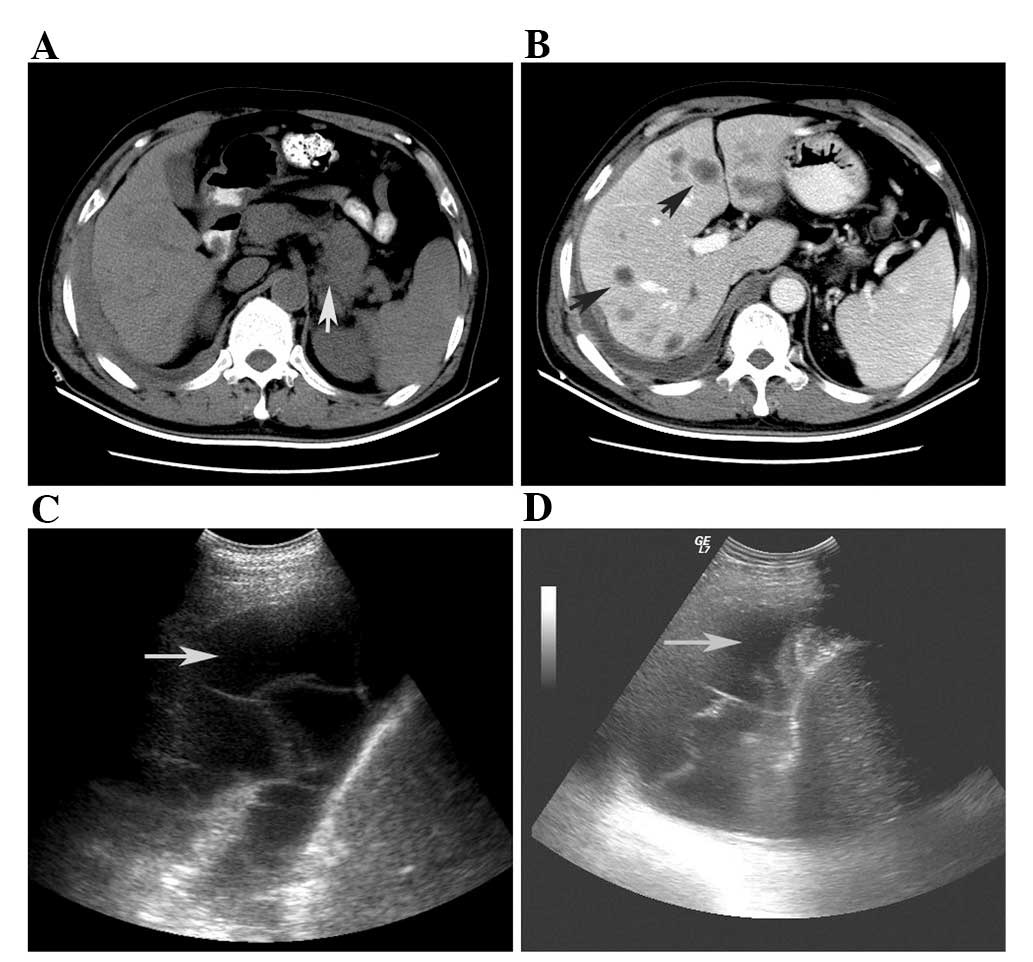
Abdominal ultrasonographic diagnosis indicated pleural effusion in the right chest (Fig. 1C and D). The features of the pleural fluid are shown in Table I. A total of 50 malignant cancer cells/ml were identified in the pleural fluid, while carcinoembryonic antigen (CEA) was elevated to 103.9 U/l. The 43x48 mm mass in the body-tail of the pancreas was detected using computer tomography (CT; Fig. 1A). A different nodus size was detected at low density in the liver. The maximum diameter of the metastatic tumor was ∼20 mm (Fig. 1B). The patient was administered chemotherapy with one cycle of gemcitabine and oxaliplatin combined with abdominal cavity perfusion and gemcitabine. However, the patient was insensitive to the systemic therapy and succumbed to liver metastasis and other complications 3 months later.

Figure 1.

(A) CT scan of the primary tumor in the pancreas. An axial image of the abdomen identified a mass in the body-tail of the pancreas of 43x48 mm (arrow). (B) CT detection of multiple tumor metastases in the liver (arrows). (C and D) Abdominal ultrasonographic detection of pleural fluid in the right chest. CT, computer tomography.

Table I.

Laboratory data of pleural effusion from the pancreatic cancer patient with liver and pleural metastasis.

Table I.

Laboratory data of pleural effusion from the pancreatic cancer patient with liver and pleural metastasis.

VariableControlResultClinical significance
ColorColorlessYellowAbnormal
TraitClearMuddyAbnormal
Pleural chylous testNegativeNegativeNormal
Acid-fast stainingNegativeNegativeNormal
Cell counting (number/l)Negative 0.5x10⁹Normal
Total protein (g/dl)6.0–8.04.4Decreased
Lactate dehydrogenase (U/l)106–246211Normal
Adenosine deaminase (U/l)0–2513Normal
CEA (U/l)<5103Tumor metastasis
Cancer cell staining (/ml)Negative30Malignant diseases diagnosis
CD133+CK18− cellsNegativePositiveMaybe CSCs
CD133+CK18+ cellsNegativePositiveMaybe CSCs
CK18+CD133− cellsNegativePositiveMalignant epithelial cells

[i] CEA, carcinoembryonic antigen; CSCs, cancer stem cells.

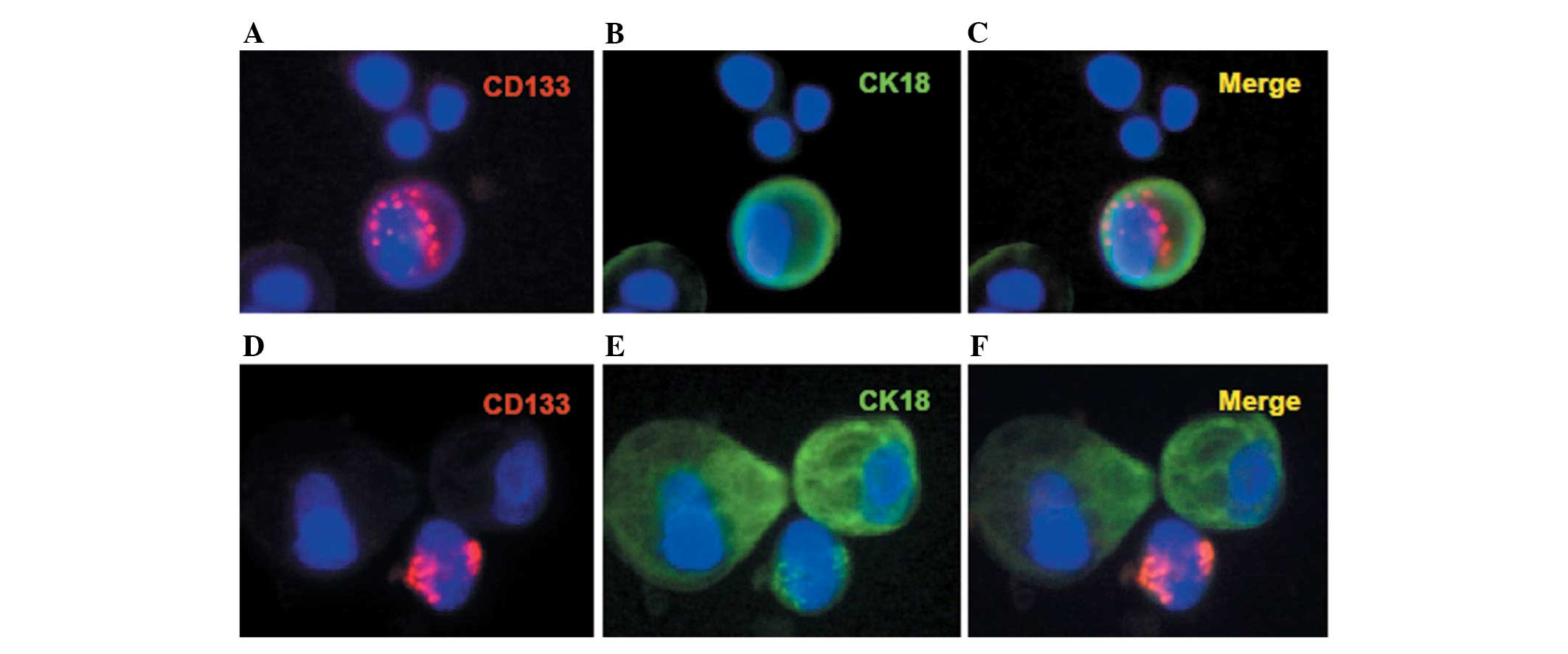
The plasma miR-21, miR-25, miR-103 and miR-151 levels were notably increased in the serum of this patient, being 8.3, 2.0, 6.8 and 4.4-times higher compared with that of the average from five age- and gender-matched healthy controls, respectively (Table II). Moreover, malignant cancer cells in the pleural fluid were enriched by CD45-coated immuno-magnetic beads. The number of cancer cells in the pleural fluid was enumerated as 30/ml using Wright-Giemsa stain. CD133+CK18+, CD133+CK18− and CK18+CD133− cancer cells were detected in the pleural fluid of the patient (Table I; Fig. 2).

Figure 2.

Detection of rare CD133+CK18+, CD133+CK18− and CK18+CD133− cells in pleural effusion enriched by anti-CD45 antibody coated beads using immunofluorescence staining. (C) Merged image of (A) CD133+ cells and (B) CK18+ cells, identifiying CD133+CK18+ cells. (F) Merged image of (D) CD133+ cells and (E) CK18+ cells, identifying cells singly stained for CD133+CK18− or CK18+CD133−.

Table II.

Circulating miRNA-21, miRNA-25, miRNA-103 and miRNA-151 levels in the pancreatic cancer patient and in five age- and gender-matched healthy donors.

Table II.

Circulating miRNA-21, miRNA-25, miRNA-103 and miRNA-151 levels in the pancreatic cancer patient and in five age- and gender-matched healthy donors.

SamplemiR-21miR-25miR-103miR-151
Pancreatic cancer (n=1) (pmol/μl) 2.5×10⁻⁴ 0.24×10⁻⁴ 0.34×10⁻⁴ 0.71×10⁻⁴
Healthy control (n=5) (pmol/μl) 0.3×10⁻⁴ 0.12×10⁻⁴ 0.05×10⁻⁴ 0.16×10⁻⁴
Multiple of increase compared with healthy control8.32.06.84.4

Discussion

Although the only potentially curative treatment for pancreatic ductal adenocarcinoma is surgical resection, the vast majority of patients are diagnosed at stages that are too advanced to undergo curative surgery. Therefore, biomarkers for early detection and new therapeutic strategies are urgently required.

Pancreatic cancer has unique miRNA expression patterns, which are different from those of other cancers, and enable the differentiation of normal pancreatic tissue from benign inflammatory pancreatic tissue (6). Overexpression of miR-21 in tumors is markedly associated with liver metastasis of pancreatic cancer (7). In this patient, the plasma levels of miR-21 were 8.3 times higher than those of the age- and gender-matched healthy controls. The levels of the other three miRNAs examined, miR-25, miR-103 and miR-151, were also 2.0, 6.8 and 4.4 times higher compared with those of the healthy controls, respectively (Table II). In this study, multiple liver metastases and pleural fluid in the right chest were detected by CT and ultrasonographic examination (Fig. 1). Furthermore, increased serum CA19-9, ALP and γ-GT levels indicated malignant disease and liver metastasis. As this patient was not fit for surgery, the diagnosis of pancreatic cancer by pathology was not acquired. However, the diagnosis could be confirmed by clinical symptoms, imaging diagnosis and laboratory examinations.

We employed a method using CD45-coated immunomagnetic beads to enrich cancer cells from pleural blood (4,8). A total of 30 cancer cells/ml pleural effusion were enriched and detected (Table I). CD133+CK18+ double positive cells as well as CD133+CK18− and CK18+CD133− single positive cells, were detected in the pleural fluid of this patient. Our results support the recent findings from the Stanger research group, which identified that circulating pancreatic cells maintained a mesenchymal phenotype, exhibited stem cell properties and seeded the liver in animal models of pancreatic cancer (9).

As CKs are markers of epithelial cells or epithelial originated tumors, they are often used to judge whether cells in serous effusions are derived from epithelial cells (10). The detection of CK18+ cells in the pleural fluid implied that these cells may have originated from epithelial tumor cells. The different states of CD133+ cancer cells in the pleural fluid may reflect the heterogeneity of these malignant cancer cells. It has been revealed that CD133 expression in pancreatic cancer was exclusively tumorigenic and highly resistant to standard gemcitabine chemotherapy (1,11). Cyclopamine is an effective method of reversing gemcitabine resistance in pancreatic cancer with high levels of cancer stem cell markers (11). A small number of cancers have CD133-expressing cells in pleural effusion, which may imply resistance to standard chemotherapy. Since the patient was admitted to hospital with multiple liver metastasis and pleural effusion, alleviative chemotherapy with gemcitabine and oxaliplatin combined with abdominal cavity perfusion chemotherapy and gemcitabine was administered. However, the patient was insensitive to the chemotherapy and succumbed to liver metastasis and other complications three months later. The patient may have benefited from treatment with cyclopamine or other targeted therapies. The most highly increased miRNA level in the plasma of this patient was that of miR-21. Downregulation of miR-21 results in an increased sensitivity of these cells to gemcitabine (3,12–14). Measurement of plasma miR-21 levels and serum CA19-9 may be helpful for early detection of pancreatic cancer (5).

To the best of our knowledge, this is the first study of CD133+ cancer cells in the pleural effusion of a pancreatic cancer patient with liver metastasis. Detection of CD133+ cancer cells in the pleural effusion of this patient may imply the chemoresistance and cancer stem feature of these cells, which may provide physicians with significant information for tailored treatment and evaluating prognosis. In addition, the plasma miR-21, miR-25, miR-103 and miR-151 levels were also increased compared with the healthy controls. This molecular feature of the patient is consistent with the clinical pathological parameters. Full elucidation of the molecular and pathological features of pancreatic cancer may be a novel strategy for tailored therapy.

Acknowledgements

This study was supported by the National Natural Science Foundation of China (No. 81172508), the Foundation of the Health Department Program of Jiangsu Province (No. 200970) and the Foundation of the Social Development of Jiangsu Province (No. SBE201270298). We thank Dr Pin Lin and Dr Xingxiang Xu for excellent experimental assistance.

References

1. 

PC HermannSL HuberT HerrlerDistinct populations of cancer stem cells determine tumor growth and metastatic activity in human pancreatic cancerCell Stem Cell1313323200710.1016/j.stem.2007.06.00218371365

2. 

Z WangY LiA AhmadPancreatic cancer: understanding and overcoming chemoresistanceNat Rev Gastroenterol Hepatol82733201110.1038/nrgastro.2010.18821102532

3. 

JB StokesSJ AdairJK Slack-DavisInhibition of focal adhesion kinase by PF-562,271 inhibits the growth and metastasis of pancreatic cancer concomitant with altering the tumor micro-environmentMol Cancer Ther1021352145201110.1158/1535-7163.MCT-11-026121903606

4. 

C RenC HanJ ZhangDetection of apoptotic circulating tumor cells in advanced pancreatic cancer following 5-fluorouracil chemotherapyCancer Biol Ther12700706201110.4161/cbt.12.8.1596021811100

5. 

J LiuJ GaoY DuCombination of plasma microRNAs with serum CA19-9 for early detection of pancreatic cancerInt J Cancer131683691201110.1002/ijc.2642221913185

6. 

JY ParkJ HelmD CoppolaD KimM MalafaSJ KimMicroRNAs in pancreatic ductal adenocarcinomaWorld J Gastroenterol17817827201110.3748/wjg.v17.i7.81721412491

7. 

C RoldoE MissiagliaJP HaganMicroRNA expression abnormalities in pancreatic endocrine and acinar tumors are associated with distinctive pathologic features and clinical behaviorJ Clin Oncol2446774684200610.1200/JCO.2005.05.519416966691

8. 

C RenP HeJ ZhangZ ZhengY QianX ZhaoMalignant characteristics of circulating tumor cells and corresponding primary tumor in a patient with esophageal squamous cell carcinoma before and after surgeryCancer Biol Ther11633638201110.4161/cbt.11.7.1495021307656

9. 

AD RhimET MirekNM AielloEMT and dissemination precede pancreatic tumor formationCell148349361201210.1016/j.cell.2011.11.02522265420

10. 

V AscoliS TaccognaCC ScalzoF NardiUtility of cytokeratin 20 in identifying the origin of metastatic carcinomas in effusionsDiagn Cytopathol12303308199510.1002/dc.28401204047656755

11. 

J YaoY AnJS WieCyclopamine reverts acquired chemoresistance and down-regulates cancer stem cell markers in pancreatic cancer cell linesSwiss Med Wkly141w13208201121630164

12. 

E GiovannettiN FunelGJ PetersMicroRNA-21 in pancreatic cancer: correlation with clinical outcome and pharmacologic aspects underlying its role in the modulation of gemcitabine activityCancer Res7045284538201010.1158/0008-5472.CAN-09-446720460539

13. 

S AliA AhmadS BanerjeeGemcitabine sensitivity can be induced in pancreatic cancer cells through modulation of miR-200 and miR-21 expression by curcumin or its analogue CDFCancer Res7036063617201010.1158/0008-5472.CAN-09-459820388782

14. 

T MoriyamaK OhuchidaK MizumotoMicroRNA-21 modulates biological functions of pancreatic cancer cells including their proliferation, invasion, and chemoresistanceMol Cancer Ther810671074200910.1158/1535-7163.MCT-08-0592

Related Articles

  • Abstract
  • View
  • Download
  • Twitter
Copy and paste a formatted citation
Spandidos Publications style
Ren C, Chen H, Han C, Wang D and Fu D: Increased plasma microRNA and CD133/CK18‑positive cancer cells in the pleural fluid of a pancreatic cancer patient with liver and pleural metastases and correlation with chemoresistance. Oncol Lett 4: 691-694, 2012.
APA
Ren, C., Chen, H., Han, C., Wang, D., & Fu, D. (2012). Increased plasma microRNA and CD133/CK18‑positive cancer cells in the pleural fluid of a pancreatic cancer patient with liver and pleural metastases and correlation with chemoresistance. Oncology Letters, 4, 691-694. https://doi.org/10.3892/ol.2012.798
MLA
Ren, C., Chen, H., Han, C., Wang, D., Fu, D."Increased plasma microRNA and CD133/CK18‑positive cancer cells in the pleural fluid of a pancreatic cancer patient with liver and pleural metastases and correlation with chemoresistance". Oncology Letters 4.4 (2012): 691-694.
Chicago
Ren, C., Chen, H., Han, C., Wang, D., Fu, D."Increased plasma microRNA and CD133/CK18‑positive cancer cells in the pleural fluid of a pancreatic cancer patient with liver and pleural metastases and correlation with chemoresistance". Oncology Letters 4, no. 4 (2012): 691-694. https://doi.org/10.3892/ol.2012.798
Copy and paste a formatted citation
x
Spandidos Publications style
Ren C, Chen H, Han C, Wang D and Fu D: Increased plasma microRNA and CD133/CK18‑positive cancer cells in the pleural fluid of a pancreatic cancer patient with liver and pleural metastases and correlation with chemoresistance. Oncol Lett 4: 691-694, 2012.
APA
Ren, C., Chen, H., Han, C., Wang, D., & Fu, D. (2012). Increased plasma microRNA and CD133/CK18‑positive cancer cells in the pleural fluid of a pancreatic cancer patient with liver and pleural metastases and correlation with chemoresistance. Oncology Letters, 4, 691-694. https://doi.org/10.3892/ol.2012.798
MLA
Ren, C., Chen, H., Han, C., Wang, D., Fu, D."Increased plasma microRNA and CD133/CK18‑positive cancer cells in the pleural fluid of a pancreatic cancer patient with liver and pleural metastases and correlation with chemoresistance". Oncology Letters 4.4 (2012): 691-694.
Chicago
Ren, C., Chen, H., Han, C., Wang, D., Fu, D."Increased plasma microRNA and CD133/CK18‑positive cancer cells in the pleural fluid of a pancreatic cancer patient with liver and pleural metastases and correlation with chemoresistance". Oncology Letters 4, no. 4 (2012): 691-694. https://doi.org/10.3892/ol.2012.798
Follow us
  • Twitter
  • LinkedIn
  • Facebook
About
  • Spandidos Publications
  • Careers
  • Cookie Policy
  • Privacy Policy
How can we help?
  • Help
  • Live Chat
  • Contact
  • Email to our Support Team