Spandidos Publications Logo
  • About
    • About Spandidos
    • Aims and Scopes
    • Abstracting and Indexing
    • Editorial Policies
    • Reprints and Permissions
    • Job Opportunities
    • Terms and Conditions
    • Contact
  • Journals
    • All Journals
    • Oncology Letters
      • Oncology Letters
      • Information for Authors
      • Editorial Policies
      • Editorial Board
      • Aims and Scope
      • Abstracting and Indexing
      • Bibliographic Information
      • Archive
    • International Journal of Oncology
      • International Journal of Oncology
      • Information for Authors
      • Editorial Policies
      • Editorial Board
      • Aims and Scope
      • Abstracting and Indexing
      • Bibliographic Information
      • Archive
    • Molecular and Clinical Oncology
      • Molecular and Clinical Oncology
      • Information for Authors
      • Editorial Policies
      • Editorial Board
      • Aims and Scope
      • Abstracting and Indexing
      • Bibliographic Information
      • Archive
    • Experimental and Therapeutic Medicine
      • Experimental and Therapeutic Medicine
      • Information for Authors
      • Editorial Policies
      • Editorial Board
      • Aims and Scope
      • Abstracting and Indexing
      • Bibliographic Information
      • Archive
    • International Journal of Molecular Medicine
      • International Journal of Molecular Medicine
      • Information for Authors
      • Editorial Policies
      • Editorial Board
      • Aims and Scope
      • Abstracting and Indexing
      • Bibliographic Information
      • Archive
    • Biomedical Reports
      • Biomedical Reports
      • Information for Authors
      • Editorial Policies
      • Editorial Board
      • Aims and Scope
      • Abstracting and Indexing
      • Bibliographic Information
      • Archive
    • Oncology Reports
      • Oncology Reports
      • Information for Authors
      • Editorial Policies
      • Editorial Board
      • Aims and Scope
      • Abstracting and Indexing
      • Bibliographic Information
      • Archive
    • Molecular Medicine Reports
      • Molecular Medicine Reports
      • Information for Authors
      • Editorial Policies
      • Editorial Board
      • Aims and Scope
      • Abstracting and Indexing
      • Bibliographic Information
      • Archive
    • World Academy of Sciences Journal
      • World Academy of Sciences Journal
      • Information for Authors
      • Editorial Policies
      • Editorial Board
      • Aims and Scope
      • Abstracting and Indexing
      • Bibliographic Information
      • Archive
    • International Journal of Functional Nutrition
      • International Journal of Functional Nutrition
      • Information for Authors
      • Editorial Policies
      • Editorial Board
      • Aims and Scope
      • Abstracting and Indexing
      • Bibliographic Information
      • Archive
    • International Journal of Epigenetics
      • International Journal of Epigenetics
      • Information for Authors
      • Editorial Policies
      • Editorial Board
      • Aims and Scope
      • Abstracting and Indexing
      • Bibliographic Information
      • Archive
    • Medicine International
      • Medicine International
      • Information for Authors
      • Editorial Policies
      • Editorial Board
      • Aims and Scope
      • Abstracting and Indexing
      • Bibliographic Information
      • Archive
  • Articles
  • Information
    • Information for Authors
    • Information for Reviewers
    • Information for Librarians
    • Information for Advertisers
    • Conferences
  • Language Editing
Spandidos Publications Logo
  • About
    • About Spandidos
    • Aims and Scopes
    • Abstracting and Indexing
    • Editorial Policies
    • Reprints and Permissions
    • Job Opportunities
    • Terms and Conditions
    • Contact
  • Journals
    • All Journals
    • Biomedical Reports
      • Information for Authors
      • Editorial Policies
      • Editorial Board
      • Aims and Scope
      • Abstracting and Indexing
      • Bibliographic Information
      • Archive
    • Experimental and Therapeutic Medicine
      • Information for Authors
      • Editorial Policies
      • Editorial Board
      • Aims and Scope
      • Abstracting and Indexing
      • Bibliographic Information
      • Archive
    • International Journal of Epigenetics
      • Information for Authors
      • Editorial Policies
      • Editorial Board
      • Aims and Scope
      • Abstracting and Indexing
      • Bibliographic Information
      • Archive
    • International Journal of Functional Nutrition
      • Information for Authors
      • Editorial Policies
      • Editorial Board
      • Aims and Scope
      • Abstracting and Indexing
      • Bibliographic Information
      • Archive
    • International Journal of Molecular Medicine
      • Information for Authors
      • Editorial Policies
      • Editorial Board
      • Aims and Scope
      • Abstracting and Indexing
      • Bibliographic Information
      • Archive
    • International Journal of Oncology
      • Information for Authors
      • Editorial Policies
      • Editorial Board
      • Aims and Scope
      • Abstracting and Indexing
      • Bibliographic Information
      • Archive
    • Medicine International
      • Information for Authors
      • Editorial Policies
      • Editorial Board
      • Aims and Scope
      • Abstracting and Indexing
      • Bibliographic Information
      • Archive
    • Molecular and Clinical Oncology
      • Information for Authors
      • Editorial Policies
      • Editorial Board
      • Aims and Scope
      • Abstracting and Indexing
      • Bibliographic Information
      • Archive
    • Molecular Medicine Reports
      • Information for Authors
      • Editorial Policies
      • Editorial Board
      • Aims and Scope
      • Abstracting and Indexing
      • Bibliographic Information
      • Archive
    • Oncology Letters
      • Information for Authors
      • Editorial Policies
      • Editorial Board
      • Aims and Scope
      • Abstracting and Indexing
      • Bibliographic Information
      • Archive
    • Oncology Reports
      • Information for Authors
      • Editorial Policies
      • Editorial Board
      • Aims and Scope
      • Abstracting and Indexing
      • Bibliographic Information
      • Archive
    • World Academy of Sciences Journal
      • Information for Authors
      • Editorial Policies
      • Editorial Board
      • Aims and Scope
      • Abstracting and Indexing
      • Bibliographic Information
      • Archive
  • Articles
  • Information
    • For Authors
    • For Reviewers
    • For Librarians
    • For Advertisers
    • Conferences
  • Language Editing
Login Register Submit
  • This site uses cookies
  • You can change your cookie settings at any time by following the instructions in our Cookie Policy. To find out more, you may read our Privacy Policy.

    I agree
Search articles by DOI, keyword, author or affiliation
Search
Advanced Search
presentation
Oncology Letters
Join Editorial Board Propose a Special Issue
Print ISSN: 1792-1074 Online ISSN: 1792-1082
Journal Cover
May 2013 Volume 5 Issue 5

Full Size Image

Sign up for eToc alerts
Recommend to Library

Journals

International Journal of Molecular Medicine

International Journal of Molecular Medicine

International Journal of Molecular Medicine is an international journal devoted to molecular mechanisms of human disease.

International Journal of Oncology

International Journal of Oncology

International Journal of Oncology is an international journal devoted to oncology research and cancer treatment.

Molecular Medicine Reports

Molecular Medicine Reports

Covers molecular medicine topics such as pharmacology, pathology, genetics, neuroscience, infectious diseases, molecular cardiology, and molecular surgery.

Oncology Reports

Oncology Reports

Oncology Reports is an international journal devoted to fundamental and applied research in Oncology.

Experimental and Therapeutic Medicine

Experimental and Therapeutic Medicine

Experimental and Therapeutic Medicine is an international journal devoted to laboratory and clinical medicine.

Oncology Letters

Oncology Letters

Oncology Letters is an international journal devoted to Experimental and Clinical Oncology.

Biomedical Reports

Biomedical Reports

Explores a wide range of biological and medical fields, including pharmacology, genetics, microbiology, neuroscience, and molecular cardiology.

Molecular and Clinical Oncology

Molecular and Clinical Oncology

International journal addressing all aspects of oncology research, from tumorigenesis and oncogenes to chemotherapy and metastasis.

World Academy of Sciences Journal

World Academy of Sciences Journal

Multidisciplinary open-access journal spanning biochemistry, genetics, neuroscience, environmental health, and synthetic biology.

International Journal of Functional Nutrition

International Journal of Functional Nutrition

Open-access journal combining biochemistry, pharmacology, immunology, and genetics to advance health through functional nutrition.

International Journal of Epigenetics

International Journal of Epigenetics

Publishes open-access research on using epigenetics to advance understanding and treatment of human disease.

Medicine International

Medicine International

An International Open Access Journal Devoted to General Medicine.

Journal Cover
May 2013 Volume 5 Issue 5

Full Size Image

Sign up for eToc alerts
Recommend to Library

  • Article
  • Citations
    • Cite This Article
    • Download Citation
    • Create Citation Alert
    • Remove Citation Alert
    • Cited By
  • Similar Articles
    • Related Articles (in Spandidos Publications)
    • Similar Articles (Google Scholar)
    • Similar Articles (PubMed)
  • Download PDF
  • Download XML
  • View XML
Case Report

Autologous immune enhancement therapy against an advanced epithelioid sarcoma: A case report

  • Authors:
    • Kananathan Ratnavelu
    • Baskar Subramani
    • Chithra Ramanathan Pullai
    • Kohila Krishnan
    • Sheela Devi Sugadan
    • Manjunath Sadananda Rao
    • Abhi Veerakumarasivam
    • Xuewen Deng
    • Terunuma Hiroshi
  • View Affiliations / Copyright

    Affiliations: Nilai Cancer Institute (NCI) Hospital, Nilai 71800, Malaysia, Acharya Nagarjuna University, Andhra Pradesh 522510, India, Nichi-Asia Life Science Sdn. Bhd., Petaling Jaya 47810, Malaysia, Medical Genetics Laboratory, Faculty of Medicine and Health Sciences, Universiti Putra Malaysia, Serdang 43400, Selangor Darul Ehsan, Malaysia, Nichi-In Centre for Regenerative Medicine, Chennai 600026, India, UPM-MAKNA Cancer Research Laboratory, Institute of Bioscience, Universiti Putra Malaysia, Serdang, 43400, Selangor Darul Ehsan, Malaysia, Perdana University Graduate School of Medicine, Perdana University, Serdang 43400, Selangor Darul Ehsan, Malaysia, Biotherapy Institute of Japan, Tokyo 135-0051, Japan
  • Pages: 1457-1460
    |
    Published online on: March 12, 2013
       https://doi.org/10.3892/ol.2013.1247
  • Expand metrics +
Metrics: Total Views: 0 (Spandidos Publications: | PMC Statistics: )
Metrics: Total PDF Downloads: 0 (Spandidos Publications: | PMC Statistics: )
Cited By (CrossRef): 0 citations Loading Articles...

This article is mentioned in:


Abstract

Rare types of cancer are often not effectively treated by approaches such as chemotherapy and radiotherapy, although their side-effects persist. Immunotherapy has been gaining attention worldwide with growing examples of its anticancer activity demonstrated in vivo. This case report describes a 35‑year‑old male who suffered from advanced epithelioid sarcoma and underwent 18 cycles of chemotherapy without any significant response, who suffered adverse effects that caused lung collapse. A notable response was observed following the administration of autologous immune enhancement therapy (AIET), which involves a process of isolation, activation and expansion of natural killer (NK) and T cells, which were obtained from the patient's own (autologous) peripheral blood. With the present data and the response of the patient to AIET, it may be proposed that AIET is beneficial for patients suffering from advanced epithelioid sarcoma without producing adverse effects.

Introduction

Soft tissue sarcomas are a common type of sarcoma and account for >3,560 mortalities each year. In 2007, the incidence of soft tisue sarcomas in the United States was estimated to be 9,220 (1). However, the incidence of this heterogeneous group of mesenchymal extraskeletal malignancies, which usually occur in the extremities, trunk, retroperitoneum or head and neck, is relatively low (2–4). It is believed that the dose of radiation therapy used to treat cancer exerts a major effect on the incidence (5,6), along with other risk factors, including exposure to certain chemicals, herbicides, such as phenoxyacetic acids, and wood preservatives containing chlorophenols (7,8). The median survival rate depends on the histology subtype (3) and age at onset of the disease and is ∼1 year, with only 10% of cases surviving for up to 5 years (2). The standard treatment modalities are reported to have a minimal impact on the prognosis of the patients (2,9,10). Surgery supplemented with radiotherapy is feasible and reliable for localized diseases (11), but patients have a 50% chance of developing metastases (12). In these instancs, metastasectomy is usually attempted. In cases of inoperable recurrent disease, palliative treatment is administered, while for the metastatic form of the disease, systemic chemotherapy is usually prescribed to control disease progression and thus improve the survival rate of the patients (13–15). In order to improve the current treatment modalities, novel approaches to prevent or treat the disease are required urgently. It has been shown that the NK cells of sarcoma patients are as potent as the NK cells of healthy controls in the lysing of the tumor cells (16,17). There is an increasing amount of evidence available concerning the involvement of the immune system and how it may be manipulated in various ways to recognize and kill tumors. The effector activity of NK and T cells in reacting against the cancer antigens has been demonstrated (18), with favorable responses being observed in various tumors (19). In concordance with previous results showing the positive response of sarcomas to immunotherapy (20,21), the present study reports our experiences using in vitro cultured autologous NK and T cells to treat a 35-year-old male diagnosed with sarcoma in 2010.

Case report

A 35-year-old Chinese male patient with a 1-year history of left arm swelling from unknown causes was investigated in February 2010. Written informed patient consent was obtained from the patient. Histological investigation on multiple biopsies revealed tumor tissue composed of nodular proliferation that was predominantly eosinophilic, with a few spindle cells and large areas of central necrosis and hemorrhage. The epithelial cells exhibited abundant eosinophilic cytoplasm with large vesicular nuclei and prominent cell nuclei. No vascular invasion was observed and the patient had a multifocal disease that extended along the span of the left arm in addition to the disease in the left axillaries, left clavicular and right upper planar region. Immunohistochemical analysis revealed positivity for cytokeratin (CK), EMA, vimentin and CD34, but was negative for S100, desmin, smooth muscle actin (SMA), melanin, CD68 and HMB45. The results were consistent between the left forearm and left arm epithelioid sarcoma. The patient sought advice from the sarcoma team at the Peter MacCallum Cancer Institute (East Melbourne, Australia), who advised that the patient undergo neoadjuvant chemotherapy with ifosfamide and Adriamycin. After 6 cycles, positron emission tomography scan images showed a partial response in the soft tissue density of the left upper extremity and axilla. Computed tomography scanning showed a reduction in the size of the planar base mass. After much deliberation, the patient opted to undergo autologous immune enhancement therapy (AIET).

As a therapeutic alternative, the patient received 7 infusions of AIET. The patient initially underwent an induction phase, receiving 6 harvestings of peripheral blood every 2 weeks. After a 5 month follow-up, the patient volunteered for consecutive AIET infusions. Peripheral blood (60 ml) was collected from the patient each time and peripheral blood mononuclear cells (PBMCs) were isolated from the blood as per the protocol described by Terunuma et al(22). Isolated PBMCs were seeded onto anti-CD3 and anti-CD16-coated flasks and incubated overnight at 39°C with 5% CO2. The cultures were then incubated at 37°C and maintained for 14–16 days with routine media nourishment using the patient’s own plasma separated from the peripheral blood. Interleukin-2 was added as a supplement during the NK and T cell seeding. After an optimal expansion to the desired cell population, cells were harvested by centrifugation and washed three times using phosphate-buffered saline. The retrieved cell number was measured using the Trypan blue dye exclusion test and the cells were then re-suspended in 100–200 ml of normal saline with human albumin for intravenous infusion.

Discussion

Using the adopted method for the expansion of NK and T cells, it was determined that the average expansion of the cell population, from initial cell counts of 3.3×10⁶ NK cells and 19.3×10⁶ T cells, to final cell counts of 18.8×10⁸ and 17.6×10⁸ cells, respectively, was possible without using allogenic cells as a feeder layer to ensure the safety of the cells being infused. Thus, cell number expansions of >100-fold was achieved using the present method. Throughout the whole process, the rate of expansion was monitored and the cell density was manipulated according to the in vitro culture conditions. Table I shows the initial and final NK and T cell counts.

Table I

Initial and final cell number of NK and T cells.

Table I

Initial and final cell number of NK and T cells.

No. of infusionsCell number (million)
Initial culture
Final culture
NK cellsT cellsNK cellsT cells
14.625.81,5841,818.2
20.85.21,4961,496
31.310.05602,132
44.224.23,070644
55.833.74,721644
63.119.51,2241,336
73.116.71,9174,230

[i] NK, natural killer.

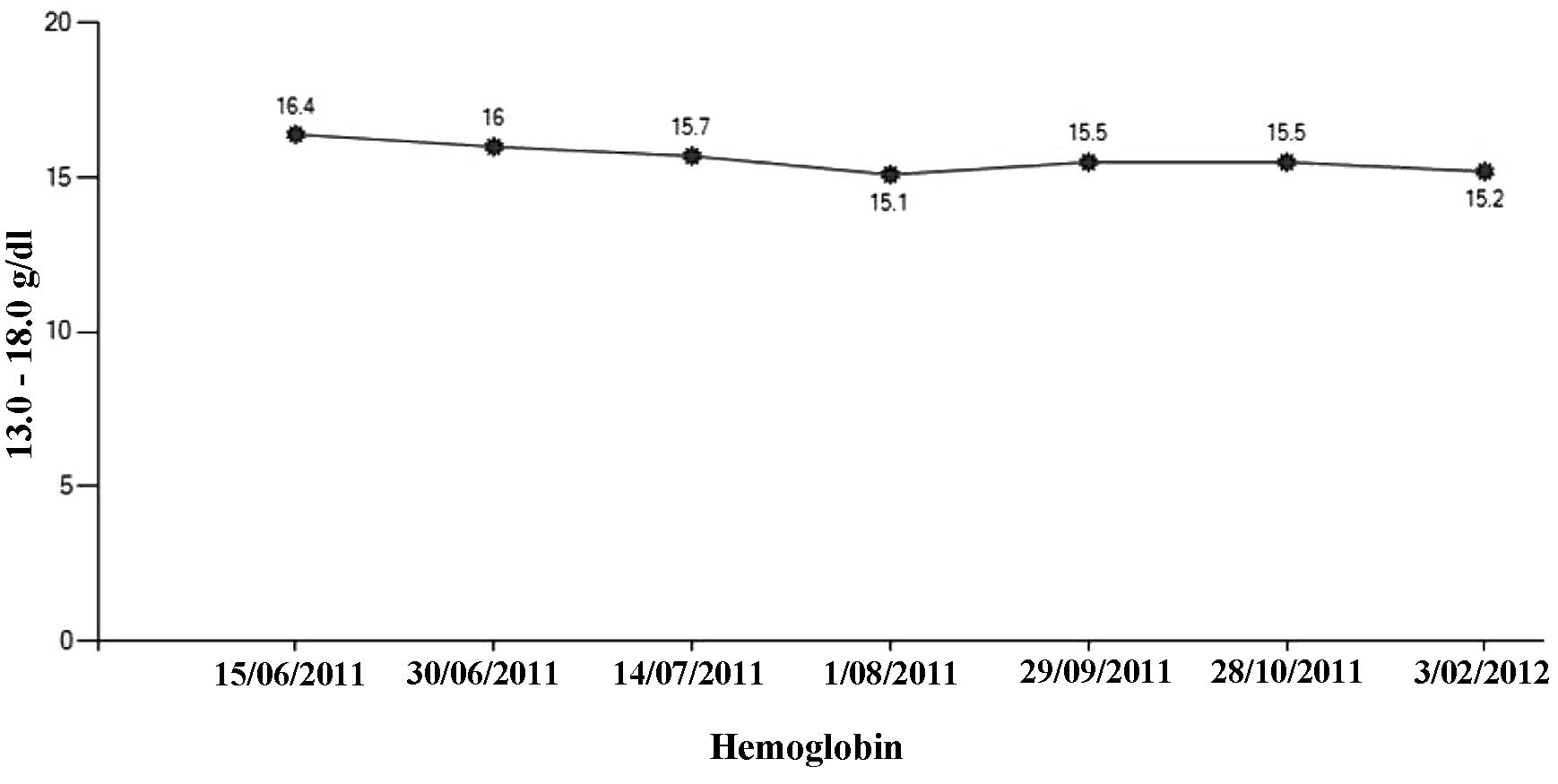
It was noticeable in the expanded cell number, the large anticancer immune cell population (NK and T cells) in the cell suspension reacted actively against the tumor cells in vivo. The patient responded well to AIET and clear skin improvement was observed following each infusion. The patient’s chest radiography remained stable, therefore the tumor did not metastisize to the lungs. Significantly, the administered in vitro expanded cells did not exhibit any adverse reactions in the patient, as has been shown in numerous other studies (23). The patient opted to undergo a 3-month break and during the tail-end of this period, worsening of the skin lesion was observed. The patient decided to restart the therapy and after one infusion, and marked improvement was noted. Although the lesions persist, the fact that the patient has surpassed the anticipated survival duration is encouraging. However, certain secondary immune responses, such as wound healing, were observed. After three infusions of AIET, one of the largest tumor areas on the forearm (4×2 cm) stopped bleeding and growth of new tissue was visible, along with the recovery of smaller wounds, and during the course of the AIET, the hemoglobin level, which is believed to decrease depending on the disease severity and progression, remained stable. Fig. 1 shows the analysis of the results concerning hemoglobin levels between June 2011 and February 2012. The patient’s overall survival is at present 25 months and the patient has not received chemotherapy since August 2010. These promising results obtained with the current therapeutic approach may be an effective immunotherapeutic strategy for managing difficult tumors, such as soft tissue sarcomas (24), which were the first tumors studied for antitumor immunity (25).

Figure 1

Stable hemoglobin level during the course of AIET from June 2011 to February 2012. AIET, autologous immune enhancement therapy.

In conclusion, the present case study demonstrates the efficacy of immunotherapy for a rare type of cancer that otherwise had no options for therapeutic approaches that may provide a favorable outcome in the patient. In vitro expanded NK and T cells were are able to respond via their anticancer activity under in vivo conditions without producing adverse reactions in the patient. With repeated administration of AIET, the prognosis of the patient improved as well as thei quality of life of the patient. The patient acheived stable disease without any side-effects. Therefore, the present study also demonstrates the safety and efficacy of AIET, although a larger study is required for more extensive analysis.

References

1 

Demetri GD, Baker LH, Benjamin RS, et al: Soft tissue sarcoma. J Natl Compr Canc Netw. 5:364–399. 2007.PubMed/NCBI

2 

Pedrazzoli P, Secondino S, Perfetti V, Comoli P and Montagna D: Immunotherapeutic Intervention against Sarcomas. J Cancer. 2:350–356. 2011. View Article : Google Scholar : PubMed/NCBI

3 

Ferrari A, Miceli R, Casanova M, et al: The symptom interval in children and adolescents with soft tissue sarcomas. Cancer. 116:177–183. 2010.PubMed/NCBI

4 

Cormier JN and Pollock RE: Soft tissue sarcomas. CA Cancer J Clin. 54:94–109. 2004. View Article : Google Scholar

5 

Brady MS, Gaynor JJ and Brennan MF: Radiation-associated sarcoma of bone and soft tissue. Arch Surg. 127:1379–1385. 1992. View Article : Google Scholar : PubMed/NCBI

6 

Zahm SH and Fraumeni JF Jr: The epidemiology of soft tissue sarcoma. Semin Oncol. 24:504–514. 1997.PubMed/NCBI

7 

Hardell L and Sandström A: Case-control study: soft-tissue sarcomas and exposure to phenoxyacetic acids or chlorophenols. Br J Cancer. 39:711–717. 1979. View Article : Google Scholar : PubMed/NCBI

8 

Smith AH, Pearce NE, Fisher DO, Giles HJ, Teague CA and Howard JK: Soft tissue sarcoma and exposure to phenoxyherbicides and chlorophenols in New Zealand. J Natl Cancer Inst. 73:1111–1117. 1984.PubMed/NCBI

9 

Mori K, Rédini F, Gouin F, Cherrier B and Heymann D: Osteosarcoma: current status of immunotherapy and future trends (Review). Oncol Rep. 15:693–700. 2006.PubMed/NCBI

10 

Wolf PS, Flum DR, Tanas MR, Rubin BP and Mann GN: Epithelioid sarcoma: the University of Washington experience. Am J Surg. 196:407–412. 2008. View Article : Google Scholar

11 

Gough NJ, Smith C, Ross JR, Riley J and Judson I: Symptom burden, survival and palliative care in advanced soft tissue sarcoma. Sarcoma. 2011:3251892011. View Article : Google Scholar : PubMed/NCBI

12 

Coindre JM, Terrier P, Guillou L, et al: Predictive value of grade for metastasis development in the main histologic types of adult soft tissue sarcomas: a study of 1240 patients from the French Federation of Cancer Centers Sarcoma Group. Cancer. 91:1914–1926. 2001. View Article : Google Scholar

13 

Sinha S and Peach AH: Diagnosis and management of soft tissue sarcoma. BMJ. 341:c71702010. View Article : Google Scholar : PubMed/NCBI

14 

Grimer R, Judson I, Peake D and Seddon B: Guidelines for the management of soft tissue sarcomas. Sarcoma. 2010:5061822010.PubMed/NCBI

15 

Clark MA, Fisher C, Judson I and Thomas JM: Soft-tissue sarcomas in adults. N Engl J Med. 353:701–711. 2005. View Article : Google Scholar : PubMed/NCBI

16 

Buddingh EP, Schilham MW, Ruslan SE, et al: Chemotherapy-resistant osteosarcoma is highly susceptible to IL-15-activated allogeneic and autologous NK cells. Cancer Immunol Immunother. 60:575–586. 2011. View Article : Google Scholar : PubMed/NCBI

17 

Cho D and Campana D: Expansion and activation of natural killer cells for cancer immunotherapy. Korean J Lab Med. 29:89–96. 2009. View Article : Google Scholar : PubMed/NCBI

18 

Matar P, Alaniz L, Rozados V, et al: Immunotherapy for liver tumors: present status and future prospects. J Biomed Sci. 16:302009. View Article : Google Scholar : PubMed/NCBI

19 

Manjunath SR, Ramanan G, Dedeepiya VD, et al: Autologous immune enhancement therapy in recurrent ovarian cancer with metastases: a case report. Case Rep Oncol. 5:114–118. 2012. View Article : Google Scholar : PubMed/NCBI

20 

Maki RG: Soft tissue sarcoma as a model disease to examine cancer immunotherapy. Curr Opin Oncol. 13:270–274. 2001. View Article : Google Scholar : PubMed/NCBI

21 

Maki RG: Future directions for immunotherapeutic intervention against sarcomas. Curr Opin Oncol. 18:363–368. 2006. View Article : Google Scholar : PubMed/NCBI

22 

Takada M, Terunuma H, Deng X, et al: Refractory lung metastasis from breast cancer treated with multidisciplinary therapy including an immunological approach. Breast Cancer. 18:64–67. 2011. View Article : Google Scholar : PubMed/NCBI

23 

Montagna D, Turin I, Schiavo R, et al: Feasibility and safety of adoptive immunotherapy with ex vivo-generated autologous, cytotoxic T lymphocytes in patients with solid tumor. Cytotherapy. 14:80–90. 2012. View Article : Google Scholar : PubMed/NCBI

24 

Valle AA and Kraybill WG: Management of soft tissue sarcomas of the extremity in adults. J Surg Oncol. 63:271–279. 1996. View Article : Google Scholar : PubMed/NCBI

25 

Francescutti V and Skitzki JJ: Sarcomas and the immune system: implications for therapeutic strategies. Surg Oncol Clin N Am. 21:341–355. 2012. View Article : Google Scholar : PubMed/NCBI

Related Articles

  • Abstract
  • View
  • Download
  • Twitter
Copy and paste a formatted citation
Spandidos Publications style
Ratnavelu K, Subramani B, Pullai CR, Krishnan K, Sugadan SD, Rao MS, Veerakumarasivam A, Deng X and Hiroshi T: Autologous immune enhancement therapy against an advanced epithelioid sarcoma: A case report. Oncol Lett 5: 1457-1460, 2013.
APA
Ratnavelu, K., Subramani, B., Pullai, C.R., Krishnan, K., Sugadan, S.D., Rao, M.S. ... Hiroshi, T. (2013). Autologous immune enhancement therapy against an advanced epithelioid sarcoma: A case report. Oncology Letters, 5, 1457-1460. https://doi.org/10.3892/ol.2013.1247
MLA
Ratnavelu, K., Subramani, B., Pullai, C. R., Krishnan, K., Sugadan, S. D., Rao, M. S., Veerakumarasivam, A., Deng, X., Hiroshi, T."Autologous immune enhancement therapy against an advanced epithelioid sarcoma: A case report". Oncology Letters 5.5 (2013): 1457-1460.
Chicago
Ratnavelu, K., Subramani, B., Pullai, C. R., Krishnan, K., Sugadan, S. D., Rao, M. S., Veerakumarasivam, A., Deng, X., Hiroshi, T."Autologous immune enhancement therapy against an advanced epithelioid sarcoma: A case report". Oncology Letters 5, no. 5 (2013): 1457-1460. https://doi.org/10.3892/ol.2013.1247
Copy and paste a formatted citation
x
Spandidos Publications style
Ratnavelu K, Subramani B, Pullai CR, Krishnan K, Sugadan SD, Rao MS, Veerakumarasivam A, Deng X and Hiroshi T: Autologous immune enhancement therapy against an advanced epithelioid sarcoma: A case report. Oncol Lett 5: 1457-1460, 2013.
APA
Ratnavelu, K., Subramani, B., Pullai, C.R., Krishnan, K., Sugadan, S.D., Rao, M.S. ... Hiroshi, T. (2013). Autologous immune enhancement therapy against an advanced epithelioid sarcoma: A case report. Oncology Letters, 5, 1457-1460. https://doi.org/10.3892/ol.2013.1247
MLA
Ratnavelu, K., Subramani, B., Pullai, C. R., Krishnan, K., Sugadan, S. D., Rao, M. S., Veerakumarasivam, A., Deng, X., Hiroshi, T."Autologous immune enhancement therapy against an advanced epithelioid sarcoma: A case report". Oncology Letters 5.5 (2013): 1457-1460.
Chicago
Ratnavelu, K., Subramani, B., Pullai, C. R., Krishnan, K., Sugadan, S. D., Rao, M. S., Veerakumarasivam, A., Deng, X., Hiroshi, T."Autologous immune enhancement therapy against an advanced epithelioid sarcoma: A case report". Oncology Letters 5, no. 5 (2013): 1457-1460. https://doi.org/10.3892/ol.2013.1247
Follow us
  • Twitter
  • LinkedIn
  • Facebook
About
  • Spandidos Publications
  • Careers
  • Cookie Policy
  • Privacy Policy
How can we help?
  • Help
  • Live Chat
  • Contact
  • Email to our Support Team