Spandidos Publications Logo
  • About
    • About Spandidos
    • Aims and Scopes
    • Abstracting and Indexing
    • Editorial Policies
    • Reprints and Permissions
    • Job Opportunities
    • Terms and Conditions
    • Contact
  • Journals
    • All Journals
    • Oncology Letters
      • Oncology Letters
      • Information for Authors
      • Editorial Policies
      • Editorial Board
      • Aims and Scope
      • Abstracting and Indexing
      • Bibliographic Information
      • Archive
    • International Journal of Oncology
      • International Journal of Oncology
      • Information for Authors
      • Editorial Policies
      • Editorial Board
      • Aims and Scope
      • Abstracting and Indexing
      • Bibliographic Information
      • Archive
    • Molecular and Clinical Oncology
      • Molecular and Clinical Oncology
      • Information for Authors
      • Editorial Policies
      • Editorial Board
      • Aims and Scope
      • Abstracting and Indexing
      • Bibliographic Information
      • Archive
    • Experimental and Therapeutic Medicine
      • Experimental and Therapeutic Medicine
      • Information for Authors
      • Editorial Policies
      • Editorial Board
      • Aims and Scope
      • Abstracting and Indexing
      • Bibliographic Information
      • Archive
    • International Journal of Molecular Medicine
      • International Journal of Molecular Medicine
      • Information for Authors
      • Editorial Policies
      • Editorial Board
      • Aims and Scope
      • Abstracting and Indexing
      • Bibliographic Information
      • Archive
    • Biomedical Reports
      • Biomedical Reports
      • Information for Authors
      • Editorial Policies
      • Editorial Board
      • Aims and Scope
      • Abstracting and Indexing
      • Bibliographic Information
      • Archive
    • Oncology Reports
      • Oncology Reports
      • Information for Authors
      • Editorial Policies
      • Editorial Board
      • Aims and Scope
      • Abstracting and Indexing
      • Bibliographic Information
      • Archive
    • Molecular Medicine Reports
      • Molecular Medicine Reports
      • Information for Authors
      • Editorial Policies
      • Editorial Board
      • Aims and Scope
      • Abstracting and Indexing
      • Bibliographic Information
      • Archive
    • World Academy of Sciences Journal
      • World Academy of Sciences Journal
      • Information for Authors
      • Editorial Policies
      • Editorial Board
      • Aims and Scope
      • Abstracting and Indexing
      • Bibliographic Information
      • Archive
    • International Journal of Functional Nutrition
      • International Journal of Functional Nutrition
      • Information for Authors
      • Editorial Policies
      • Editorial Board
      • Aims and Scope
      • Abstracting and Indexing
      • Bibliographic Information
      • Archive
    • International Journal of Epigenetics
      • International Journal of Epigenetics
      • Information for Authors
      • Editorial Policies
      • Editorial Board
      • Aims and Scope
      • Abstracting and Indexing
      • Bibliographic Information
      • Archive
    • Medicine International
      • Medicine International
      • Information for Authors
      • Editorial Policies
      • Editorial Board
      • Aims and Scope
      • Abstracting and Indexing
      • Bibliographic Information
      • Archive
  • Articles
  • Information
    • Information for Authors
    • Information for Reviewers
    • Information for Librarians
    • Information for Advertisers
    • Conferences
  • Language Editing
Spandidos Publications Logo
  • About
    • About Spandidos
    • Aims and Scopes
    • Abstracting and Indexing
    • Editorial Policies
    • Reprints and Permissions
    • Job Opportunities
    • Terms and Conditions
    • Contact
  • Journals
    • All Journals
    • Biomedical Reports
      • Information for Authors
      • Editorial Policies
      • Editorial Board
      • Aims and Scope
      • Abstracting and Indexing
      • Bibliographic Information
      • Archive
    • Experimental and Therapeutic Medicine
      • Information for Authors
      • Editorial Policies
      • Editorial Board
      • Aims and Scope
      • Abstracting and Indexing
      • Bibliographic Information
      • Archive
    • International Journal of Epigenetics
      • Information for Authors
      • Editorial Policies
      • Editorial Board
      • Aims and Scope
      • Abstracting and Indexing
      • Bibliographic Information
      • Archive
    • International Journal of Functional Nutrition
      • Information for Authors
      • Editorial Policies
      • Editorial Board
      • Aims and Scope
      • Abstracting and Indexing
      • Bibliographic Information
      • Archive
    • International Journal of Molecular Medicine
      • Information for Authors
      • Editorial Policies
      • Editorial Board
      • Aims and Scope
      • Abstracting and Indexing
      • Bibliographic Information
      • Archive
    • International Journal of Oncology
      • Information for Authors
      • Editorial Policies
      • Editorial Board
      • Aims and Scope
      • Abstracting and Indexing
      • Bibliographic Information
      • Archive
    • Medicine International
      • Information for Authors
      • Editorial Policies
      • Editorial Board
      • Aims and Scope
      • Abstracting and Indexing
      • Bibliographic Information
      • Archive
    • Molecular and Clinical Oncology
      • Information for Authors
      • Editorial Policies
      • Editorial Board
      • Aims and Scope
      • Abstracting and Indexing
      • Bibliographic Information
      • Archive
    • Molecular Medicine Reports
      • Information for Authors
      • Editorial Policies
      • Editorial Board
      • Aims and Scope
      • Abstracting and Indexing
      • Bibliographic Information
      • Archive
    • Oncology Letters
      • Information for Authors
      • Editorial Policies
      • Editorial Board
      • Aims and Scope
      • Abstracting and Indexing
      • Bibliographic Information
      • Archive
    • Oncology Reports
      • Information for Authors
      • Editorial Policies
      • Editorial Board
      • Aims and Scope
      • Abstracting and Indexing
      • Bibliographic Information
      • Archive
    • World Academy of Sciences Journal
      • Information for Authors
      • Editorial Policies
      • Editorial Board
      • Aims and Scope
      • Abstracting and Indexing
      • Bibliographic Information
      • Archive
  • Articles
  • Information
    • For Authors
    • For Reviewers
    • For Librarians
    • For Advertisers
    • Conferences
  • Language Editing
Login Register Submit
  • This site uses cookies
  • You can change your cookie settings at any time by following the instructions in our Cookie Policy. To find out more, you may read our Privacy Policy.

    I agree
Search articles by DOI, keyword, author or affiliation
Search
Advanced Search
presentation
Oncology Letters
Join Editorial Board Propose a Special Issue
Print ISSN: 1792-1074 Online ISSN: 1792-1082
Journal Cover
June 2013 Volume 5 Issue 6

Full Size Image

Sign up for eToc alerts
Recommend to Library

Journals

International Journal of Molecular Medicine

International Journal of Molecular Medicine

International Journal of Molecular Medicine is an international journal devoted to molecular mechanisms of human disease.

International Journal of Oncology

International Journal of Oncology

International Journal of Oncology is an international journal devoted to oncology research and cancer treatment.

Molecular Medicine Reports

Molecular Medicine Reports

Covers molecular medicine topics such as pharmacology, pathology, genetics, neuroscience, infectious diseases, molecular cardiology, and molecular surgery.

Oncology Reports

Oncology Reports

Oncology Reports is an international journal devoted to fundamental and applied research in Oncology.

Experimental and Therapeutic Medicine

Experimental and Therapeutic Medicine

Experimental and Therapeutic Medicine is an international journal devoted to laboratory and clinical medicine.

Oncology Letters

Oncology Letters

Oncology Letters is an international journal devoted to Experimental and Clinical Oncology.

Biomedical Reports

Biomedical Reports

Explores a wide range of biological and medical fields, including pharmacology, genetics, microbiology, neuroscience, and molecular cardiology.

Molecular and Clinical Oncology

Molecular and Clinical Oncology

International journal addressing all aspects of oncology research, from tumorigenesis and oncogenes to chemotherapy and metastasis.

World Academy of Sciences Journal

World Academy of Sciences Journal

Multidisciplinary open-access journal spanning biochemistry, genetics, neuroscience, environmental health, and synthetic biology.

International Journal of Functional Nutrition

International Journal of Functional Nutrition

Open-access journal combining biochemistry, pharmacology, immunology, and genetics to advance health through functional nutrition.

International Journal of Epigenetics

International Journal of Epigenetics

Publishes open-access research on using epigenetics to advance understanding and treatment of human disease.

Medicine International

Medicine International

An International Open Access Journal Devoted to General Medicine.

Journal Cover
June 2013 Volume 5 Issue 6

Full Size Image

Sign up for eToc alerts
Recommend to Library

  • Article
  • Citations
    • Cite This Article
    • Download Citation
    • Create Citation Alert
    • Remove Citation Alert
    • Cited By
  • Similar Articles
    • Related Articles (in Spandidos Publications)
    • Similar Articles (Google Scholar)
    • Similar Articles (PubMed)
  • Download PDF
  • Download XML
  • View XML
Article

Male breast cancer arising in ectopic axillary breast tissue: A diagnostic dilemma

  • Authors:
    • Yangchun Xie
    • Jin Huang
    • Desheng Xiao
    • Meizuo Zhong
  • View Affiliations / Copyright

    Affiliations: Department of Oncology, Central South University Xiangya Hospital, Changsha, Hunan 410008, P.R. China, Department of Pathology, Central South University Xiangya Hospital, Changsha, Hunan 410008, P.R. China
  • Pages: 1931-1934
    |
    Published online on: April 11, 2013
       https://doi.org/10.3892/ol.2013.1300
  • Expand metrics +
Metrics: Total Views: 0 (Spandidos Publications: | PMC Statistics: )
Metrics: Total PDF Downloads: 0 (Spandidos Publications: | PMC Statistics: )
Cited By (CrossRef): 0 citations Loading Articles...

This article is mentioned in:


Abstract

Male breast cancer arising in ectopic axillary breast tissue is a rare occurrence and few cases have been reported in the literature. Due to its rarity, male axillary breast cancer is easy to misdiagnose. As for adenocarcinoma in the axilla, it is difficult to identify whether the origin is the mammary tissue or the skin appendages, particularly in cases where there is a poor differentiation. The present study reports the case of a male patient with a right axillary lesion that had been present for 6 months. A histological evaluation revealed the features of a poorly-differentiated adenocarcinoma with regards to the pathological report. The patient was diagnosed with a metastatic adenocarcinoma with unknown primary origin. However, following 4 cycles of intensive chemotherapy, the patient experienced bone metastasis while the local lesion was in partial remission. Further immunohistochemistry confirmed its mammary origin. There is limited literature relating to male ectopic axillary breast cancer, and a high probability of misdiagnosis of this disease.

Introduction

Male breast cancer is of rare occurrence compared to female equivalent. The peak age of incidence for males is 71 years, while for females it is 52 years (1). Although rare, male breast cancer usually has the same common presentation as female breast cancer. However, male breast cancer arising in ectopic axillary breast tissue is an extremely rare malignant neoplasm that has a high incidence of misdiagnosis. Due to the atypical location, a correct diagnosis is often reached during the later stages of cancer. The number of previous studies on male axillary ectopic breast cancer is extremely low and we have found only one relevant case report (2). In the current study, a rare case of male breast cancer arising in ectopic axillary breast tissue is presented, highlighting specific issues with the diagnosis and treatment of this pathology. Written informed consent was obtained from the patient.

Case report

Clinical presentation and diagnosis

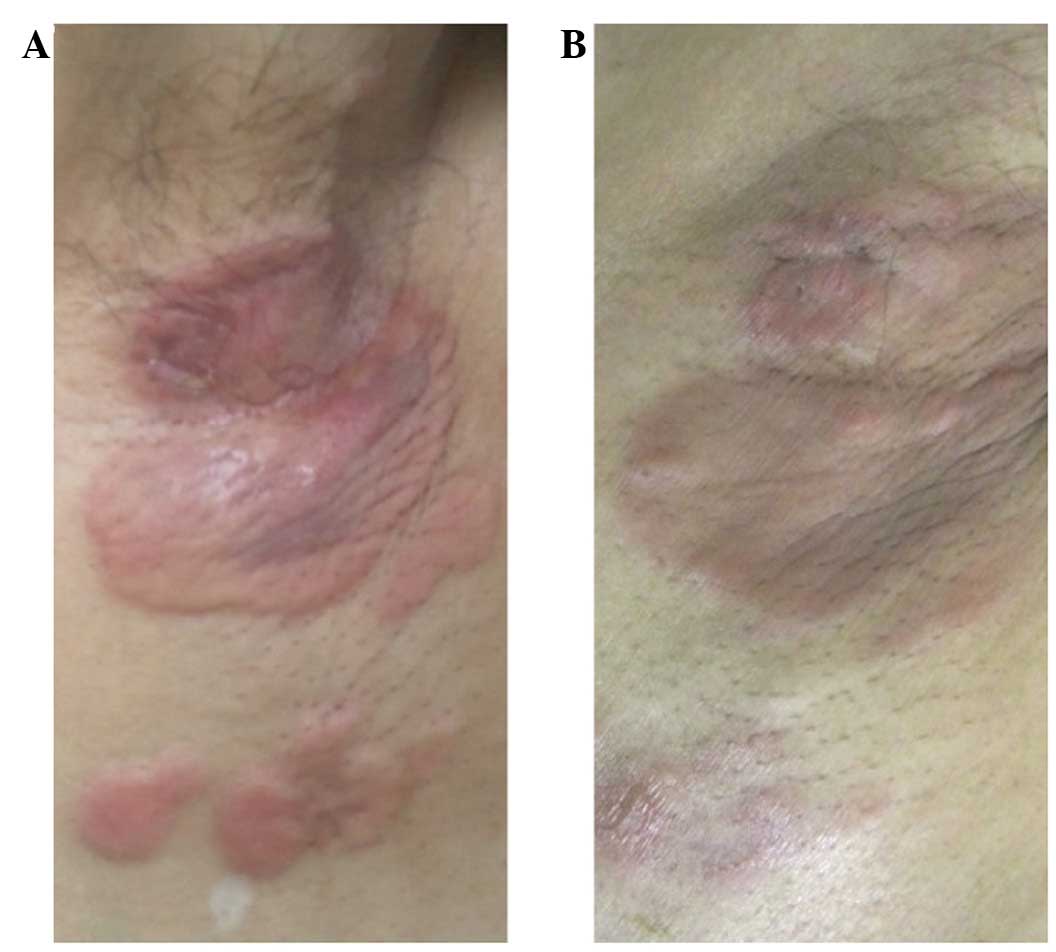
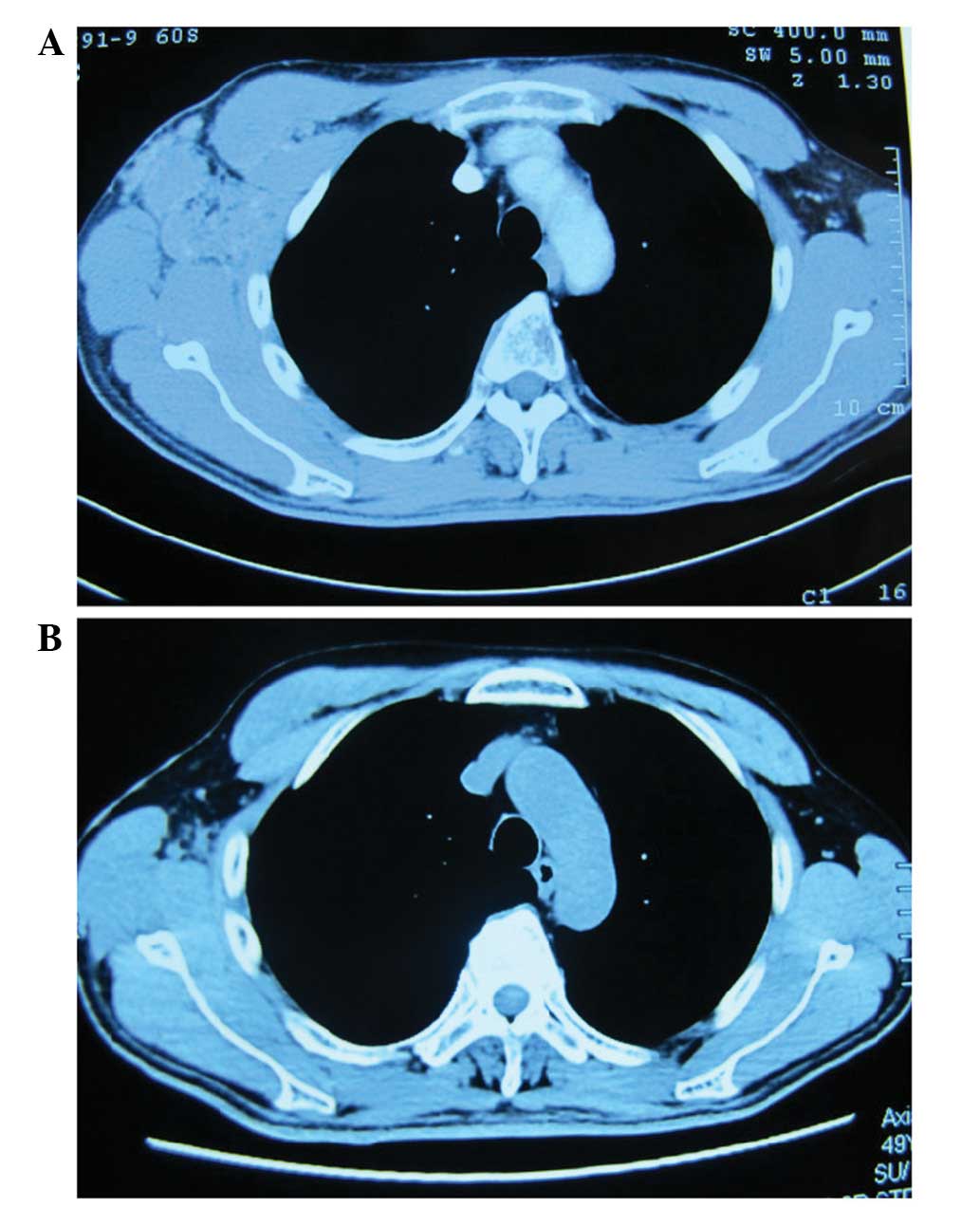
A 51-year-old Chinese male presented with a right axillary superficial mass that had been present for 6 months. The lesion was slow growing and asymptomatic. A physical examination revealed a seemingly healthy male with multiple areas of erythema and several swollen lymph nodes in the right axilla. No mass was palpable inside either breast. The skin lesion was of an irregular shape and size, with maximum dimensions of ∼6×4 cm. With the exception of a reddish appearance, there was no ulceration, swelling, pain or fever of the skin (Fig. 1A). The physical examination also revealed firm, non-tender, enlarged lymph nodes in the right axilla. No cervical, supraclavicular or contralateral axillary swollen lymph nodes were observed. Notably, the patient underwent a right axillary lesion biopsy prior to admission and the pathology report revealed a poorly-differentiated adenocarcinoma. The immunohistochemistry analysis found that the tissue sample was positive for CK-7 and CK-Pan and negative for gross cystic disease fluid protein 15 (GCDFP-15), mammaglobin, the estrogen and progesterone receptors and S-100 protein, indicating that the deformed cells were of epithelial origin. To exclude a metastatic adenocarcinoma, a series of analyses were performed. A C-12 laboratory study demonstrated that the carcinoembryonic antigen (CEA) levels were high at 73.47 ng/ml (normal level, <5 ng/ml). A computed tomography scan of the thorax (Fig. 2) revealed a 5.6×4.1-cm mass in the right axilla, with enlarged adjacent lymph nodes, while the contralateral axilla was normal. The results of a gastrointestinal endoscopy were normal. In addition, the patient underwent positron emission tomography-computed tomography in which the right axilla was observed to exhibit an increase in 18F-fludeoxyglucose (18F-FDG) uptake. Based on the clinicopathological and ancillary test results, the patient was diagnosed with a metastatic adenocarcinoma of unknown primary origin.

Figure 1

(A) Pre- and (B) post-therapeutic appearance of the right axillary lesion.

Figure 2

Computed tomography image of the complete right axillary neoplasm with surrounding tissues (A) prior to and (B) following therapy. The images reveal that the tumor reduced in size following 4 cycles of chemotherapy with paclitaxel and cisplatin.

Treatment and clinical course

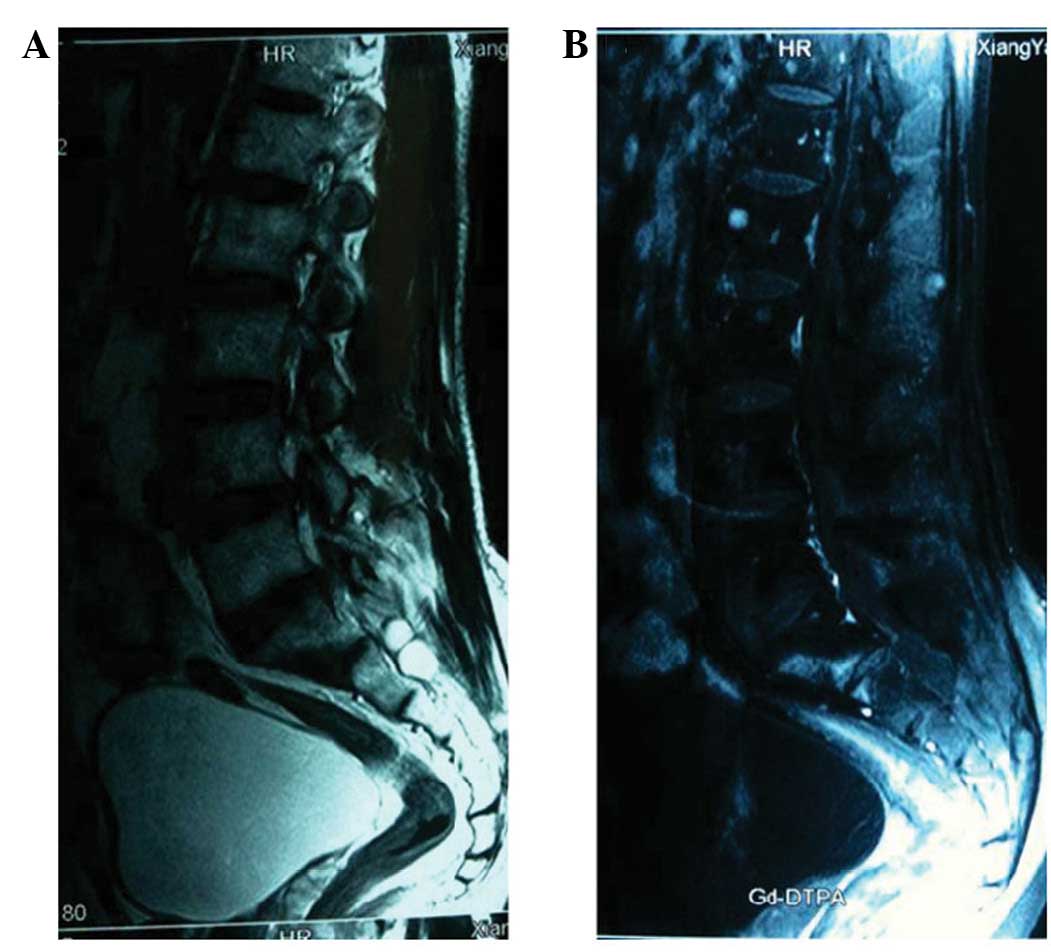
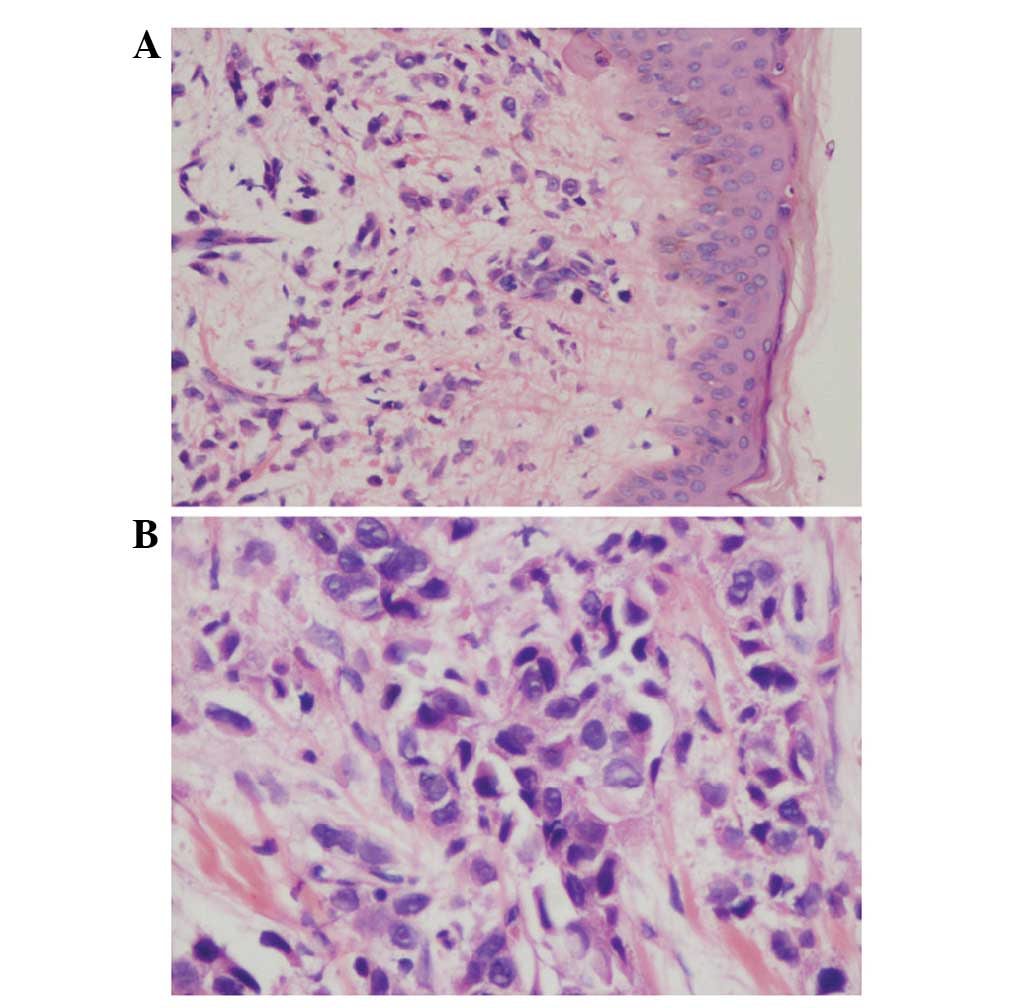
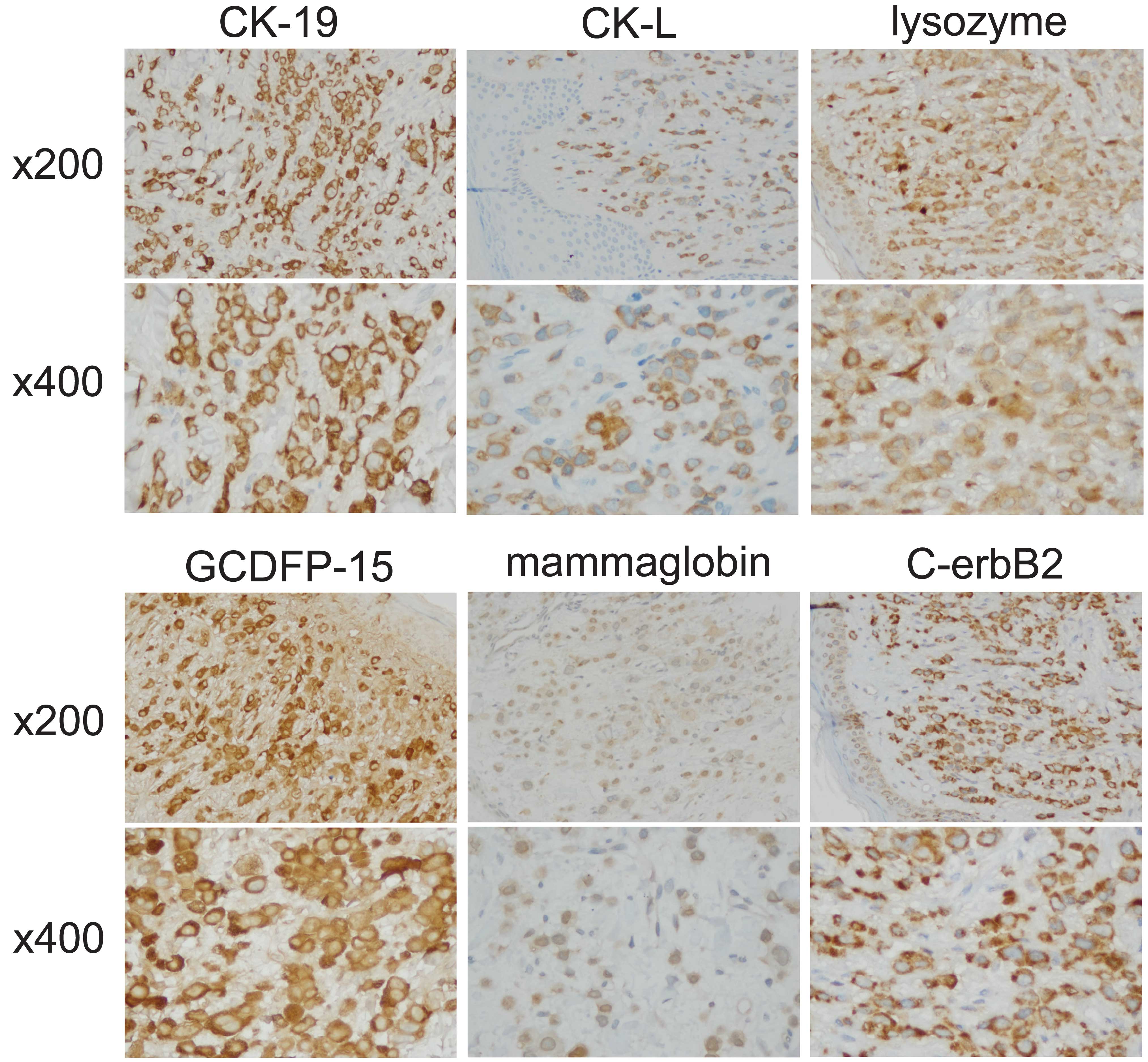
The patient received chemotherapy cycles of paclitaxel (175 mg/m2) and cisplatin (75 mg/m2) every 21 days. After four cycles, the patient was referred to the Central South University Xiangya Hospital (Changsha, Hunan, China) with new lesions (Fig. 1B) and distant metastasis, as shown by MRI (Fig. 3). Progression within a short time may have been indicative of an initial misdiagnosis or tumor resistance to the therapy. As a consequence, an additional biopsy was performed. The pathological report once again diagnosed a poorly-differentiated adenocarcinoma involving subcutaneous tissue (Fig. 4). Macroscopically, no tumor nests were found and no crypt-like structures were identified in the background. The specimen consisted of skin and subcutaneous tissue. An immunohistochemistry analysis revealed that the dissected tissue was positive for CK-19, CK-L, lysozyme, GCDFP-15, mammaglobin and C-erbB2 (Fig. 5). The overexpression of C-erbB2 markedly indicated that a breast adenocarcinoma could not yet be ruled out. The immunohistochemical analysis of melan-A, HMB45, TG, CT, PSA, PSAP, P504S, TTF-1, napsin, myogenin, actin, HHF35, CDX-2, P63 and vimentin was also performed (results not shown) and the specimen was observed to be negative for these markers. This eliminated melanoma, thyroid gland, prostate, lung, muscle, intestine and squamous epithelium origins, respectively. A diagnosis of carcinoma arising in the ectopic breast tissue of the axilla was then made. A follow-up of this case was not performed due to personal reasons given by the patient, however, the case has been discussed here as it is important for aiding in the improvement of clinical performance, including forming a diagnosis and the pathological analysis.

Figure 3

(A) MRI and (B) contrast-enhanced MRI revealing osteogenic bone metastases in the spine.

Figure 4

Images of HE staining of histological sections of the lesion from the right axillary at (A) ×200 and (B) ×400 magnification. The majority of the small tumor cells are ovoid- and polygon-shaped, the cytoplasms are stained with basophilic blue and have no or few vacuoles, the cell nuclei are round or ovoid and the chromatin is unevenly distributed.

Figure 5

Expression of CK-19, CK-L, lysozyme, GCDFO-15, mammaglobin and C-erbB2 in the excisional specimen of the right axilla. Positive signals (in brown) were detected on the membrane of tumor cells (magnification, ×200 and ×400 as indicated).

Discussion

Male breast cancer is extremely rare compared with female breast cancer. Ectopic breast tissue has been identified in a number of regions, including in the vulva (3), anal polyps (4), axilla (5,6) and axillary lymph nodes (7), affecting up to 6% of the general population and occurring more frequently in females and the axillary region (8). Thus, the occurrence of male axillary breast cancer is extremely uncommon and to the best of our knowledge, only one case of male axillary breast cancer has been reported (2). The presentation of male axillary breast cancer may have a wide differential diagnosis and, in particular, metastatic carcinoma from the breast or other origins must be considered, as well as the diagnosis of a primary origin (9). For the current patient presenting with adenocarcinoma arising from axilla, the first step of the differential diagnosis was to determine whether the mass was a primary lesion of a metastatic epithelial neoplasm from the breast, the gastrointestinal tract, the lung or the prostate. Primary carcinoma arising in the axilla may be difficult to differentiate from metastatic carcinoma of any type of origin and from carcinoma arising in heterotopic axillary breast tissue, as ectopic breast tissue is located in the subcutaneous tissue and deep dermis of the skin, where it often integrates with normal skin appendages (10). Since the axillary region has abundant sweat and sebaceous glands, diagnoses of cutaneous adnexal malignancies must be differentiated between. In this instance, a differential diagnosis is difficult as these two entities are often morphologically indistinguishable. In the present case this was particularly apparent as the adenocarcinoma was poorly-differentiated, making morphological distinction extremely difficult. Therefore, in the present case, immunohistochemical analysis was performed to generate a reliable diagnosis. A previous study reported that accessory breast carcinoma is diagnosed in the same manner as anatomical breast carcinoma using a physical examination and ancillary tests, followed by a pathological diagnosis via fine needle aspiration cytology, gross excision or any other type of biopsy (11). To the best of our knowledge, a panel of immunohistochemical markers, including the estrogen and progesterone receptors and C-erbB2, are more useful in the pathological diagnosis of mammary carcinoma. In addition, GCDPF-15 and mammaglobin represent significant immunomarkers of breast cancer. Lewis et al(12) found that mammaglobin is a more sensitive, but less specific, marker of breast cancer compared with GCDPF-15, as mammaglobin is not only expressed in breast carcinoma tissue but also in benign breast epithelium, while normal breast tissue does not express GCDPF-15. In addition, mammaglobin-A has previously been used for the non-invasive, in vivo detection of cancerous cells in mouse breast cancer with metastatic axillary lymph nodes and has shown a high resolution and specificity, indicating a potential for future translation into the provision of clinical guidance (13). Serra et al(14) reported that lysozyme-positive male breast cancer has an unfavorable outcome.

In the present case report, immunohistochemistry was used to generate a diagnosis of male breast cancer arising in the ectopic axillary breast tissues and to fully exclude other types of origin and common presentations of breast cancer metastasis to the axilla.

References

1 

Zygogianni AG, Kyrgias G, Gennatas C, et al: Male breast carcinoma: epidemiology, risk factors and current therapeutic approaches. Asian Pac J Cancer Prev. 13:15–19. 2012. View Article : Google Scholar : PubMed/NCBI

2 

Schneider S and Sariego J: Male breast cancer presenting as an axillary mass: a case report and literature review. South Med J. 102:736–737. 2009. View Article : Google Scholar : PubMed/NCBI

3 

Dordević M, Jovanović B, Mitrović S and Dordević G: Ectopic mammary tissue in vulva. Vojnosanit Pregl. 65:407–409. 2008.PubMed/NCBI

4 

Chan NG, Penswick JL, Labelle E and Driman D: Ectopic breast tissue presenting as an anal polyp. Can J Surg. 50:E23–E24. 2007.PubMed/NCBI

5 

Evans DM and Guyton DP: Carcinoma of the axillary breast. J Surg Oncol. 59:190–195. 1995. View Article : Google Scholar : PubMed/NCBI

6 

Ahmed M, Aurangzeb, Pervez A, et al: Primary carcinoma of ectopic breast tissue in axilla. J Coll Physicians Surg Pak. 22:726–727. 2012.PubMed/NCBI

7 

Kadowaki M, Nagashima T, Sakata H, et al: Ectopic breast tissue in axillary lymph node. Breast Cancer. 14:425–428. 2007. View Article : Google Scholar : PubMed/NCBI

8 

Loukas M, Clarke P and Tubbs RS: Accessory breasts: a historical and current perspective. Am Surg. 73:525–528. 2007.PubMed/NCBI

9 

Nihon-Yanagi Y, Ueda T, Kameda N and Okazumi S: A case of ectopic breast cancer with a literature review. Surg Oncol. 20:35–42. 2011. View Article : Google Scholar : PubMed/NCBI

10 

Sanguinetti A, Ragusa M, Calzolari F, et al: Invasive ductal carcinoma arising in ectopic breast tissue of the axilla. Case report and review of the literature. G Chir. 31:383–386. 2010.PubMed/NCBI

11 

Roorda AK, Hansen JP, Rider JA, et al: Ectopic breast cancer: special treatment considerations in the postmenopausal patient. Breast J. 8:286–289. 2002. View Article : Google Scholar : PubMed/NCBI

12 

Lewis GH, Subhawong AP, Nassar H, et al: Relationship between molecular subtype of invasive breast carcinoma and expression of gross cystic disease fluid protein 15 and mammaglobin. Am J Clin Pathol. 135:587–591. 2011. View Article : Google Scholar : PubMed/NCBI

13 

Tafreshi NK, Enkemann SA, Bui MM, et al: A mammaglobin-A targeting agent for noninvasive detection of breast cancer metastasis in lymph nodes. Cancer Res. 71:1050–1059. 2011. View Article : Google Scholar : PubMed/NCBI

14 

Serra C, Vizoso F, Alonso L, et al: Expression and prognostic significance of lysozyme in male breast cancer. Breast Cancer Res. 4:R162002. View Article : Google Scholar : PubMed/NCBI

Related Articles

  • Abstract
  • View
  • Download
  • Twitter
Copy and paste a formatted citation
Spandidos Publications style
Xie Y, Huang J, Xiao D and Zhong M: Male breast cancer arising in ectopic axillary breast tissue: A diagnostic dilemma. Oncol Lett 5: 1931-1934, 2013.
APA
Xie, Y., Huang, J., Xiao, D., & Zhong, M. (2013). Male breast cancer arising in ectopic axillary breast tissue: A diagnostic dilemma. Oncology Letters, 5, 1931-1934. https://doi.org/10.3892/ol.2013.1300
MLA
Xie, Y., Huang, J., Xiao, D., Zhong, M."Male breast cancer arising in ectopic axillary breast tissue: A diagnostic dilemma". Oncology Letters 5.6 (2013): 1931-1934.
Chicago
Xie, Y., Huang, J., Xiao, D., Zhong, M."Male breast cancer arising in ectopic axillary breast tissue: A diagnostic dilemma". Oncology Letters 5, no. 6 (2013): 1931-1934. https://doi.org/10.3892/ol.2013.1300
Copy and paste a formatted citation
x
Spandidos Publications style
Xie Y, Huang J, Xiao D and Zhong M: Male breast cancer arising in ectopic axillary breast tissue: A diagnostic dilemma. Oncol Lett 5: 1931-1934, 2013.
APA
Xie, Y., Huang, J., Xiao, D., & Zhong, M. (2013). Male breast cancer arising in ectopic axillary breast tissue: A diagnostic dilemma. Oncology Letters, 5, 1931-1934. https://doi.org/10.3892/ol.2013.1300
MLA
Xie, Y., Huang, J., Xiao, D., Zhong, M."Male breast cancer arising in ectopic axillary breast tissue: A diagnostic dilemma". Oncology Letters 5.6 (2013): 1931-1934.
Chicago
Xie, Y., Huang, J., Xiao, D., Zhong, M."Male breast cancer arising in ectopic axillary breast tissue: A diagnostic dilemma". Oncology Letters 5, no. 6 (2013): 1931-1934. https://doi.org/10.3892/ol.2013.1300
Follow us
  • Twitter
  • LinkedIn
  • Facebook
About
  • Spandidos Publications
  • Careers
  • Cookie Policy
  • Privacy Policy
How can we help?
  • Help
  • Live Chat
  • Contact
  • Email to our Support Team