Spandidos Publications Logo
  • About
    • About Spandidos
    • Aims and Scopes
    • Abstracting and Indexing
    • Editorial Policies
    • Reprints and Permissions
    • Job Opportunities
    • Terms and Conditions
    • Contact
  • Journals
    • All Journals
    • Oncology Letters
      • Oncology Letters
      • Information for Authors
      • Editorial Policies
      • Editorial Board
      • Aims and Scope
      • Abstracting and Indexing
      • Bibliographic Information
      • Archive
    • International Journal of Oncology
      • International Journal of Oncology
      • Information for Authors
      • Editorial Policies
      • Editorial Board
      • Aims and Scope
      • Abstracting and Indexing
      • Bibliographic Information
      • Archive
    • Molecular and Clinical Oncology
      • Molecular and Clinical Oncology
      • Information for Authors
      • Editorial Policies
      • Editorial Board
      • Aims and Scope
      • Abstracting and Indexing
      • Bibliographic Information
      • Archive
    • Experimental and Therapeutic Medicine
      • Experimental and Therapeutic Medicine
      • Information for Authors
      • Editorial Policies
      • Editorial Board
      • Aims and Scope
      • Abstracting and Indexing
      • Bibliographic Information
      • Archive
    • International Journal of Molecular Medicine
      • International Journal of Molecular Medicine
      • Information for Authors
      • Editorial Policies
      • Editorial Board
      • Aims and Scope
      • Abstracting and Indexing
      • Bibliographic Information
      • Archive
    • Biomedical Reports
      • Biomedical Reports
      • Information for Authors
      • Editorial Policies
      • Editorial Board
      • Aims and Scope
      • Abstracting and Indexing
      • Bibliographic Information
      • Archive
    • Oncology Reports
      • Oncology Reports
      • Information for Authors
      • Editorial Policies
      • Editorial Board
      • Aims and Scope
      • Abstracting and Indexing
      • Bibliographic Information
      • Archive
    • Molecular Medicine Reports
      • Molecular Medicine Reports
      • Information for Authors
      • Editorial Policies
      • Editorial Board
      • Aims and Scope
      • Abstracting and Indexing
      • Bibliographic Information
      • Archive
    • World Academy of Sciences Journal
      • World Academy of Sciences Journal
      • Information for Authors
      • Editorial Policies
      • Editorial Board
      • Aims and Scope
      • Abstracting and Indexing
      • Bibliographic Information
      • Archive
    • International Journal of Functional Nutrition
      • International Journal of Functional Nutrition
      • Information for Authors
      • Editorial Policies
      • Editorial Board
      • Aims and Scope
      • Abstracting and Indexing
      • Bibliographic Information
      • Archive
    • International Journal of Epigenetics
      • International Journal of Epigenetics
      • Information for Authors
      • Editorial Policies
      • Editorial Board
      • Aims and Scope
      • Abstracting and Indexing
      • Bibliographic Information
      • Archive
    • Medicine International
      • Medicine International
      • Information for Authors
      • Editorial Policies
      • Editorial Board
      • Aims and Scope
      • Abstracting and Indexing
      • Bibliographic Information
      • Archive
  • Articles
  • Information
    • Information for Authors
    • Information for Reviewers
    • Information for Librarians
    • Information for Advertisers
    • Conferences
  • Language Editing
Spandidos Publications Logo
  • About
    • About Spandidos
    • Aims and Scopes
    • Abstracting and Indexing
    • Editorial Policies
    • Reprints and Permissions
    • Job Opportunities
    • Terms and Conditions
    • Contact
  • Journals
    • All Journals
    • Biomedical Reports
      • Information for Authors
      • Editorial Policies
      • Editorial Board
      • Aims and Scope
      • Abstracting and Indexing
      • Bibliographic Information
      • Archive
    • Experimental and Therapeutic Medicine
      • Information for Authors
      • Editorial Policies
      • Editorial Board
      • Aims and Scope
      • Abstracting and Indexing
      • Bibliographic Information
      • Archive
    • International Journal of Epigenetics
      • Information for Authors
      • Editorial Policies
      • Editorial Board
      • Aims and Scope
      • Abstracting and Indexing
      • Bibliographic Information
      • Archive
    • International Journal of Functional Nutrition
      • Information for Authors
      • Editorial Policies
      • Editorial Board
      • Aims and Scope
      • Abstracting and Indexing
      • Bibliographic Information
      • Archive
    • International Journal of Molecular Medicine
      • Information for Authors
      • Editorial Policies
      • Editorial Board
      • Aims and Scope
      • Abstracting and Indexing
      • Bibliographic Information
      • Archive
    • International Journal of Oncology
      • Information for Authors
      • Editorial Policies
      • Editorial Board
      • Aims and Scope
      • Abstracting and Indexing
      • Bibliographic Information
      • Archive
    • Medicine International
      • Information for Authors
      • Editorial Policies
      • Editorial Board
      • Aims and Scope
      • Abstracting and Indexing
      • Bibliographic Information
      • Archive
    • Molecular and Clinical Oncology
      • Information for Authors
      • Editorial Policies
      • Editorial Board
      • Aims and Scope
      • Abstracting and Indexing
      • Bibliographic Information
      • Archive
    • Molecular Medicine Reports
      • Information for Authors
      • Editorial Policies
      • Editorial Board
      • Aims and Scope
      • Abstracting and Indexing
      • Bibliographic Information
      • Archive
    • Oncology Letters
      • Information for Authors
      • Editorial Policies
      • Editorial Board
      • Aims and Scope
      • Abstracting and Indexing
      • Bibliographic Information
      • Archive
    • Oncology Reports
      • Information for Authors
      • Editorial Policies
      • Editorial Board
      • Aims and Scope
      • Abstracting and Indexing
      • Bibliographic Information
      • Archive
    • World Academy of Sciences Journal
      • Information for Authors
      • Editorial Policies
      • Editorial Board
      • Aims and Scope
      • Abstracting and Indexing
      • Bibliographic Information
      • Archive
  • Articles
  • Information
    • For Authors
    • For Reviewers
    • For Librarians
    • For Advertisers
    • Conferences
  • Language Editing
Login Register Submit
  • This site uses cookies
  • You can change your cookie settings at any time by following the instructions in our Cookie Policy. To find out more, you may read our Privacy Policy.

    I agree
Search articles by DOI, keyword, author or affiliation
Search
Advanced Search
presentation
Oncology Letters
Join Editorial Board Propose a Special Issue
Print ISSN: 1792-1074 Online ISSN: 1792-1082
Journal Cover
July 2013 Volume 6 Issue 1

Full Size Image

Sign up for eToc alerts
Recommend to Library

Journals

International Journal of Molecular Medicine

International Journal of Molecular Medicine

International Journal of Molecular Medicine is an international journal devoted to molecular mechanisms of human disease.

International Journal of Oncology

International Journal of Oncology

International Journal of Oncology is an international journal devoted to oncology research and cancer treatment.

Molecular Medicine Reports

Molecular Medicine Reports

Covers molecular medicine topics such as pharmacology, pathology, genetics, neuroscience, infectious diseases, molecular cardiology, and molecular surgery.

Oncology Reports

Oncology Reports

Oncology Reports is an international journal devoted to fundamental and applied research in Oncology.

Experimental and Therapeutic Medicine

Experimental and Therapeutic Medicine

Experimental and Therapeutic Medicine is an international journal devoted to laboratory and clinical medicine.

Oncology Letters

Oncology Letters

Oncology Letters is an international journal devoted to Experimental and Clinical Oncology.

Biomedical Reports

Biomedical Reports

Explores a wide range of biological and medical fields, including pharmacology, genetics, microbiology, neuroscience, and molecular cardiology.

Molecular and Clinical Oncology

Molecular and Clinical Oncology

International journal addressing all aspects of oncology research, from tumorigenesis and oncogenes to chemotherapy and metastasis.

World Academy of Sciences Journal

World Academy of Sciences Journal

Multidisciplinary open-access journal spanning biochemistry, genetics, neuroscience, environmental health, and synthetic biology.

International Journal of Functional Nutrition

International Journal of Functional Nutrition

Open-access journal combining biochemistry, pharmacology, immunology, and genetics to advance health through functional nutrition.

International Journal of Epigenetics

International Journal of Epigenetics

Publishes open-access research on using epigenetics to advance understanding and treatment of human disease.

Medicine International

Medicine International

An International Open Access Journal Devoted to General Medicine.

Journal Cover
July 2013 Volume 6 Issue 1

Full Size Image

Sign up for eToc alerts
Recommend to Library

  • Article
  • Citations
    • Cite This Article
    • Download Citation
    • Create Citation Alert
    • Remove Citation Alert
    • Cited By
  • Similar Articles
    • Related Articles (in Spandidos Publications)
    • Similar Articles (Google Scholar)
    • Similar Articles (PubMed)
  • Download PDF
  • Download XML
  • View XML
Article

Proteomic analysis of protein expression profiles during hyperthermia‑induced apoptosis in Tca8113 cells

  • Authors:
    • Wen Jiang
    • Li Bian
    • Ning Wang
    • Yongwen He
  • View Affiliations / Copyright

    Affiliations: Department of Dental Research, The Affiliated Stomatological Hospital of Kunming Medical University, Kunming, Yunnan 650031, P.R. China, Department of Pathology, The First Affiliated Hospital of Kunming Medical University, Kunming, Yunnan 650032, P.R. China
  • Pages: 135-143
    |
    Published online on: May 20, 2013
       https://doi.org/10.3892/ol.2013.1354
  • Expand metrics +
Metrics: Total Views: 0 (Spandidos Publications: | PMC Statistics: )
Metrics: Total PDF Downloads: 0 (Spandidos Publications: | PMC Statistics: )
Cited By (CrossRef): 0 citations Loading Articles...

This article is mentioned in:


Abstract

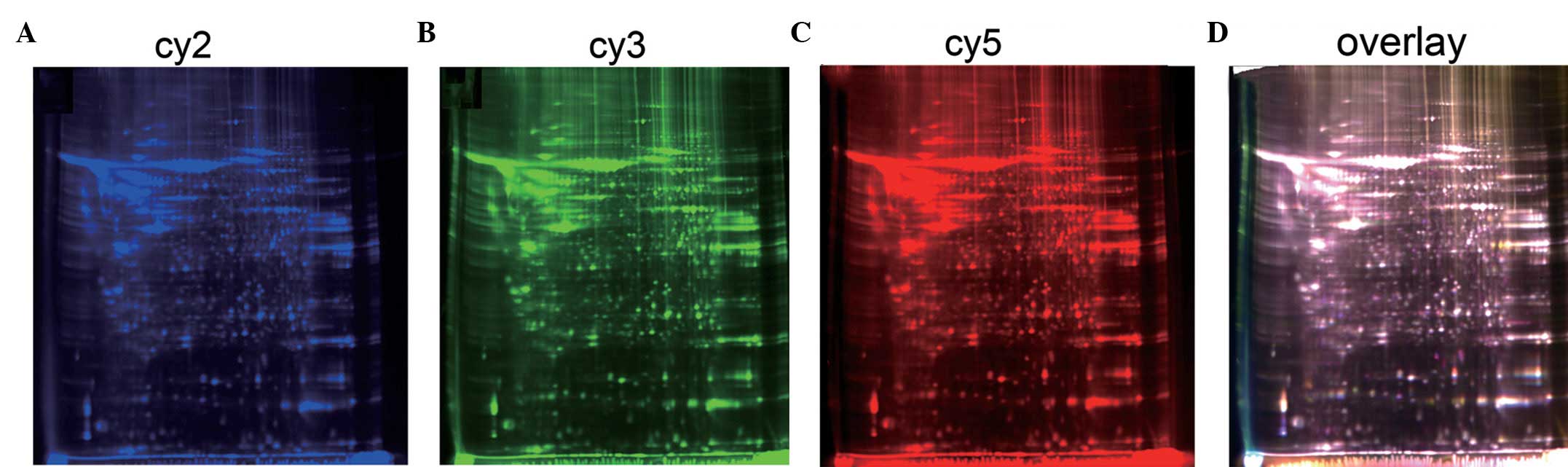
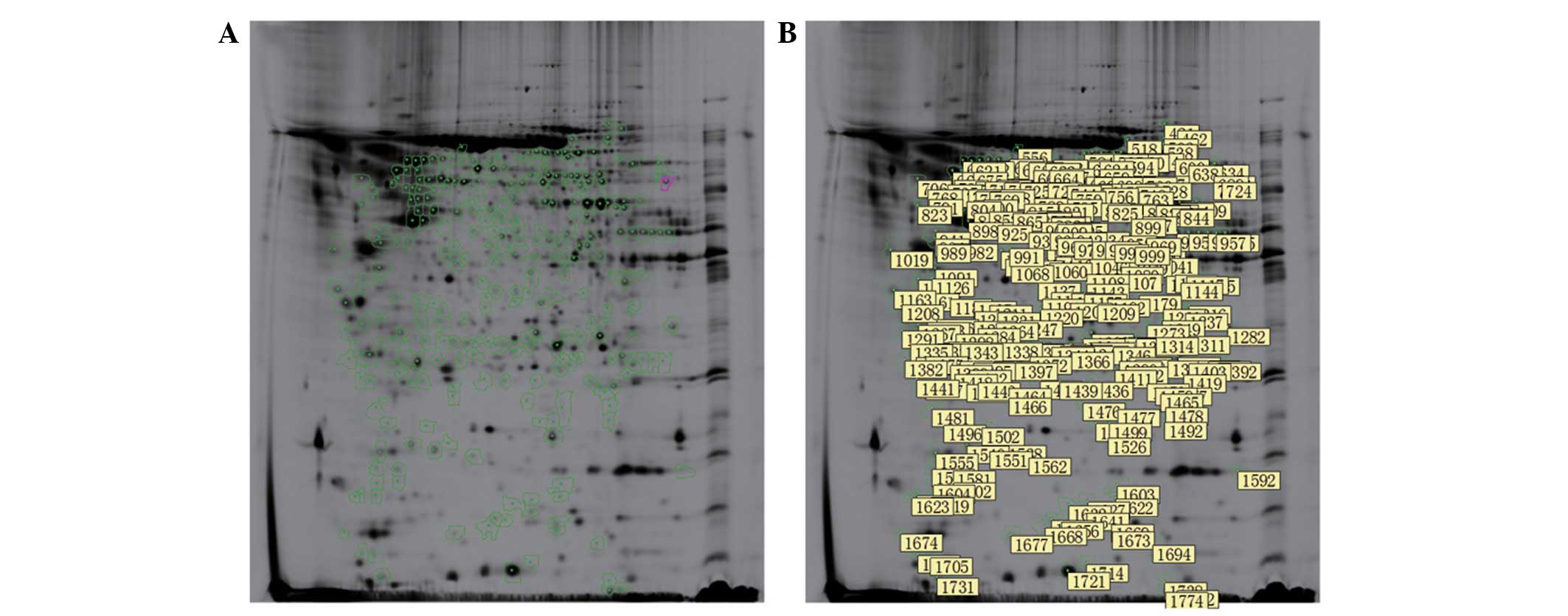
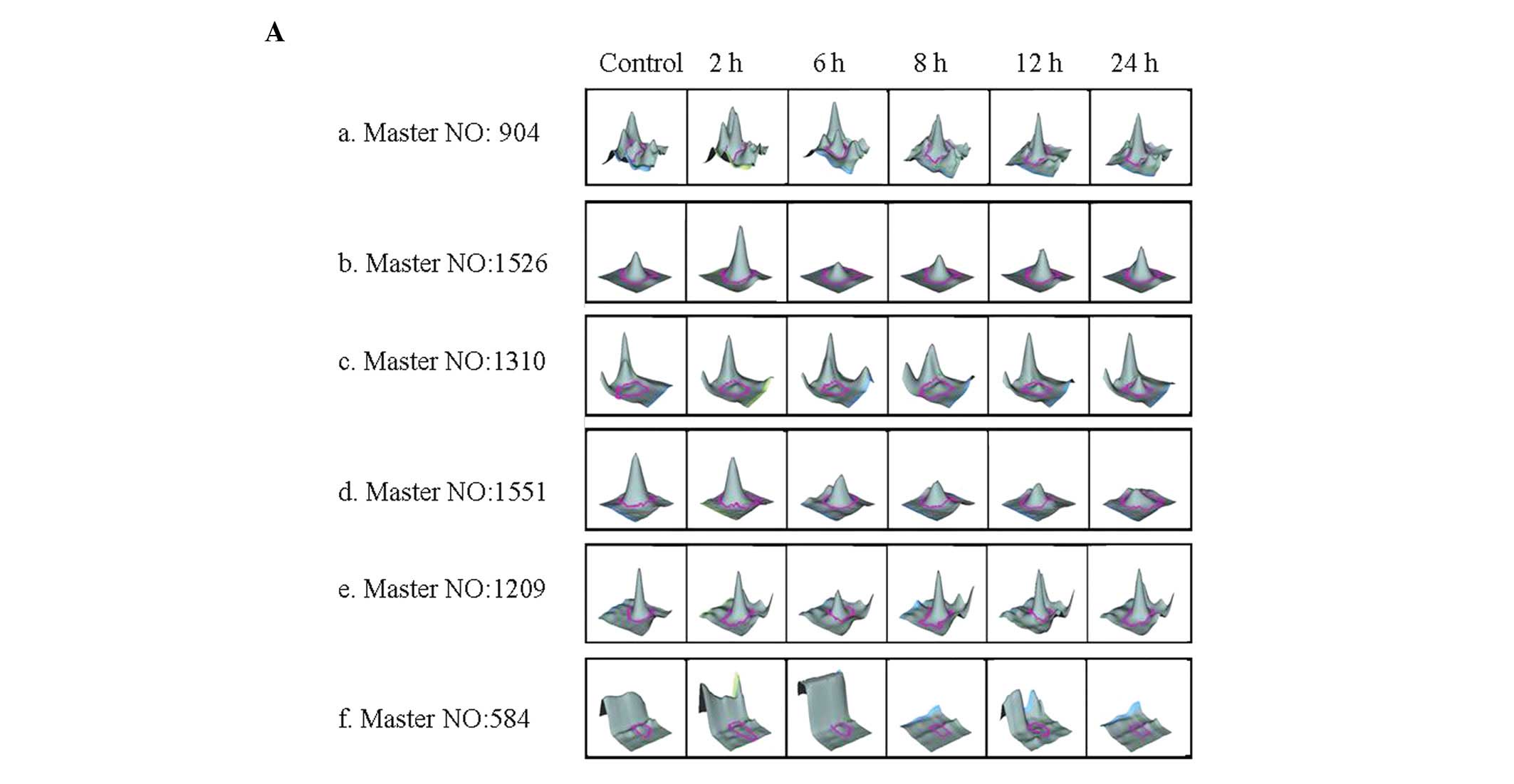
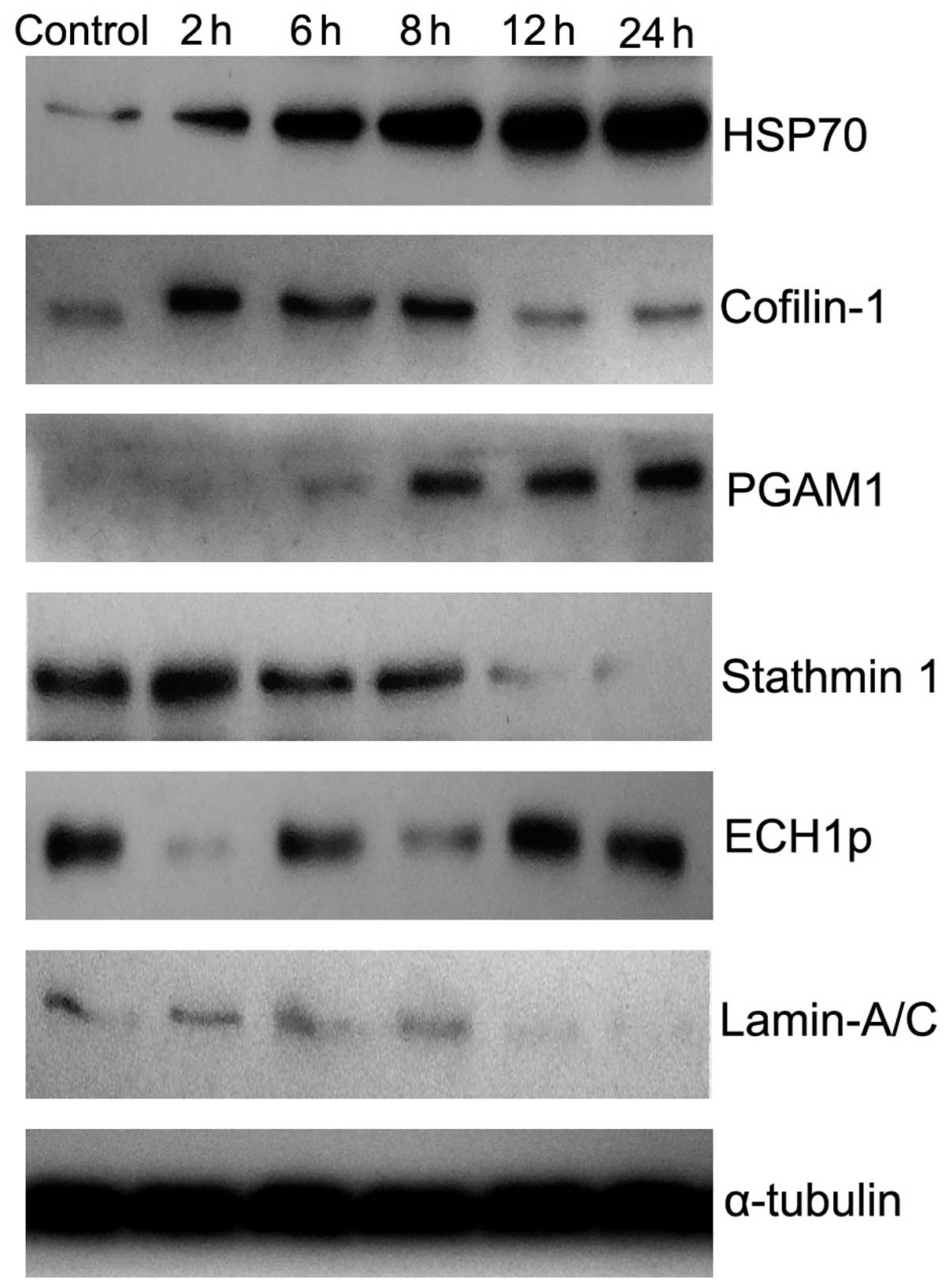
The aim of the present study was to explore protein expression profiles during cancer cell apoptosis induced by hyperthermia. A hyperthermia‑induced apoptosis model was established using a Tca8113 cell line derived from a human tongue squamous cell carcinoma, which underwent fluorescent differential display two‑dimensional (2D) gel electrophoresis at 2, 6, 8, 12 and 24 h following the induction of hyperthermia. Proteins were identified by mass spectrometry analysis. Expression changes in the proteins were detected by western blot analysis. A total of 107 proteins were detected that exhibited different expression levels in the hyperthermia‑treated cells compared with the controls, and 57 of these proteins were identified. Expression changes in the representative proteins were further verified by western blot analysis. These 57 proteins were identified according to the following functional groups: energy metabolism‑related enzymes, cytoskeleton‑related proteins, chaperones, transcription factors, protein synthesis‑related proteins and cell division‑ and proliferation‑related proteins. These groups included 44 upregulated and 13 downregulated proteins. Among the 44 upregulated proteins, 27 were upregulated continuously, eight were upregulated at an early time‑point and nine were upregulated at a middle to late time‑point. Among the 13 downregulated proteins, five were downregulated continuously, six were downregulated at an early time‑point and two were downregulated at a middle to late time‑point. These results indicate that hyperthermia‑induced Tca8113 cell apoptosis is controlled by multiple factors, which include time and regulatory proteins.
View Figures

Figure 1

Figure 2

Figure 3

Figure 4

View References

1. 

Hildebrandt B and Wust P: The biologic rationale of hyperthermia. Cancer Treat Res. 134:171–184. 2007.PubMed/NCBI

2. 

van der Zee J: Heating the patient: a promising approach? Ann Oncol. 13:1173–1184. 2002.PubMed/NCBI

3. 

Yonezawa M, Otsuka T, Matsui N, et al: Hyperthermia induces apoptosis in malignant fibrous histiocytoma cells in vitro. Int J Cancer. 66:347–351. 1996. View Article : Google Scholar : PubMed/NCBI

4. 

Dewhirst MW, Vujaskovic Z, Jones E and Thrall D: Re-setting the biologic rationale for thermal therapy. Int J Hyperthermia. 21:779–790. 2005. View Article : Google Scholar : PubMed/NCBI

5. 

Basile A, Biziato D, Sherbet GV, Comi P and Cajone F: Hyperthermia inhibits cell proliferation and induces apoptosis: relative signaling status of P53, S100A4, and Notch in heat sensitive and resistant cell lines. J Cell Biochem. 103:212–220. 2008. View Article : Google Scholar : PubMed/NCBI

6. 

Milleron RS and Bratton SB: ‘Heated’ debates in apoptosis. Cell Mol Life Sci. 64:2329–2333. 2007.

7. 

Harmon BV, Takano YS, Winterford CM and Gobé GC: The role of apoptosis in the response of cells and tumours to mild hyperthermia. Int J Radiat Biol. 59:489–501. 1991. View Article : Google Scholar : PubMed/NCBI

8. 

Moriyama-Gonda N, Igawa M, Shiina H, Urakami S, Shigeno K and Terashima M: Modulation of heat-induced cell death in PC-3 prostate cancer cells by the antioxidant inhibitor diethyldithiocarbamate. BJU Int. 90:317–325. 2002. View Article : Google Scholar

9. 

Shelton SN, Dillard CD and Robertson JD: Activation of caspase-9, but not caspase-2 or caspase-8, is essential for heat-induced apoptosis in Jurkat cells. J Biol Chem. 285:40525–40533. 2010. View Article : Google Scholar : PubMed/NCBI

10. 

Yoo J, Kim HR and Lee YJ: Hyperthermia enhances tumour necrosis factor-related apoptosis-inducing ligand (TRAIL)-induced apoptosis in human cancer cells. Int J Hyperthermia. 22:713–728. 2006. View Article : Google Scholar

11. 

Moulin M, Dumontet C and Arrigo AP: Sensitization of chronic lymphocytic leukemia cells to TRAIL-induced apoptosis by hyperthermia. Cancer Lett. 250:117–127. 2007. View Article : Google Scholar : PubMed/NCBI

12. 

Tran S, Meinander A, Holmström T, et al: Heat stress down-regulates FLIP and sensitizes cells to Fas receptor-mediated apoptosis. Cell Death Differ. 10:1137–1147. 2003. View Article : Google Scholar : PubMed/NCBI

13. 

Zhao QL, Fujiwara Y and Kondo T: Mechanism of cell death induction by nitroxide and hyperthermia. Free Radic Biol Med. 40:1131–1143. 2006. View Article : Google Scholar : PubMed/NCBI

14. 

Katschinski DM, Boos K, Schindler SG and Fandrey J: Pivotal role of reactive oxygen species as intracellular mediators of hyperthermia-induced apoptosis. J Biol Chem. 275:21094–21098. 2000. View Article : Google Scholar : PubMed/NCBI

15. 

Ahmed K, Zhao QL, Matsuya Y, et al: Enhancement of macrosphelide-induced apoptosis by mild hyperthermia. Int J Hyperthermia. 23:353–361. 2007. View Article : Google Scholar : PubMed/NCBI

16. 

Hashimoto T, Shibata M, Ito Y, Nakao KI, Sasaki S and Otsuki Y: Elevated levels of intracellular Ca2+ and apoptosis in human lung cancer cells given heat-shock. Int J Hyperthermia. 19:178–192. 2003.

17. 

Klostergaard J, Leroux ME, Auzenne E, et al: Hyperthermia engages the intrinsic apoptotic pathway by enhancing upstream caspase activation to overcome apoptotic resistance in MCF-7 breast adenocarcinoma cells. J Cell Biochem. 98:356–369. 2006. View Article : Google Scholar

18. 

Pagliari LJ, Kuwana T, Bonzon C, et al: The multidomain proapoptotic molecules Bax and Bak are directly activated by heat. Proc Natl Acad Sci USA. 102:17975–17980. 2005. View Article : Google Scholar : PubMed/NCBI

19. 

Shellman YG, Howe WR, Miller LA, et al: Hyperthermia induces endoplasmic reticulum-mediated apoptosis in melanoma and non-melanoma skin cancer cells. J Invest Dermatol. 128:949–956. 2008. View Article : Google Scholar : PubMed/NCBI

20. 

Bonzon C, Bouchier-Hayes L, Pagliari LJ, Green DR and Newmeyer DD: Caspase-2-induced apoptosis requires bid cleavage: a physiological role for bid in heat shock-induced death. Mol Biol Cell. 17:2150–2157. 2006. View Article : Google Scholar : PubMed/NCBI

21. 

Beere HM: Death versus survival: functional interaction between the apoptotic and stress-inducible heat shock protein pathways. J Clin Invest. 115:2633–2639. 2005. View Article : Google Scholar : PubMed/NCBI

22. 

Banerjee Mustafi S, Chakraborty PK, Dey RS and Raha S: Heat stress upregulates chaperone heat shock protein 70 and antioxidant manganese superoxide dismutase through reactive oxygen species (ROS), p38MAPK, and Akt. Cell Stress Chaperones. 14:579–589. 2009.

23. 

Shackley DC, Haylett A, Whitehurst C, et al: Comparison of the cellular molecular stress responses after treatments used in bladder cancer. BJU Int. 90:924–932. 2002. View Article : Google Scholar : PubMed/NCBI

24. 

Li GC and Calderwood SK: Hyperthermia classic article commentary: ‘Re-induction of hsp70 synthesis: an assay for thermotolerance’ by Gloria C. Li and Johnson Y. Mak, International Journal of Hyperthermia 1989;5:389–403. Int J Hyperthermia. 25:258–261. 2009.

25. 

Watanabe N, Tsuji N, Akiyama S, et al: Induction of heat shock protein 72 synthesis by endogenous tumor necrosis factor via enhancement of the heat shock element-binding activity of heat shock factor 1. Eur J Immunol. 27:2830–2834. 1997. View Article : Google Scholar : PubMed/NCBI

26. 

Strasser A and Anderson RL: Bcl-2 and thermotolerance cooperate in cell survival. Cell Growth Differ. 6:799–805. 1995.PubMed/NCBI

27. 

Stankiewicz AR, Livingstone AM, Mohseni N and Mosser DD: Regulation of heat-induced apoptosis by Mcl-1 degradation and its inhibition by Hsp70. Cell Death Differ. 16:638–647. 2009. View Article : Google Scholar : PubMed/NCBI

28. 

Jiang W, Bian L, Ma LJ, Tang RZ, Xun S and He YW: Hyperthermia-induced apoptosis in Tca8113 cells is inhibited by heat shock protein 27 through blocking phospholipid scramblase 3 phosphorylation. Int J Hyperthermia. 26:523–537. 2010. View Article : Google Scholar : PubMed/NCBI

29. 

Tannu NS and Hemby SE: Two-dimensional fluorescence difference gel electrophoresis for comparative proteomics profiling. Nat Protoc. 1:1732–1742. 2006. View Article : Google Scholar : PubMed/NCBI

30. 

Hara MR, Agrawal N, Kim SF, et al: S-nitrosylated GAPDH initiates apoptotic cell death by nuclear translocation following Siah1 binding. Nat Cell Biol. 7:665–674. 2005. View Article : Google Scholar : PubMed/NCBI

31. 

Steták A, Veress R, Ovádi J, Csermely P, Kéri G and Ullrich A: Nuclear translocation of the tumor marker pyruvate kinase M2 induces programmed cell death. Cancer Res. 67:1602–1608. 2007.PubMed/NCBI

32. 

Goodwin BL, Solomonson LP and Eichler DC: Argininosuccinate synthase expression is required to maintain nitric oxide production and cell viability in aortic endothelial cells. J Biol Chem. 279:18353–18360. 2004. View Article : Google Scholar : PubMed/NCBI

33. 

Ren F, Wu H, Lei Y, et al: Quantitative proteomics identification of phosphoglycerate mutase 1 as a novel therapeutic target in hepatocellular carcinoma. Mol Cancer. 9:812010. View Article : Google Scholar : PubMed/NCBI

34. 

Lee KW, Lee DJ, Lee JY, Kang DH, Kwon J and Kang SW: Peroxiredoxin II restrains DNA damage-induced death in cancer cells by positively regulating JNK-dependent DNA repair. J Biol Chem. 286:8394–8404. 2011. View Article : Google Scholar : PubMed/NCBI

35. 

Park JJ, Chang HW, Jeong EJ, et al: Peroxiredoxin IV protects cells from radiation-induced apoptosis in head-and-neck squamous cell carcinoma. Int J Radiat Oncol Biol Phys. 73:1196–1202. 2009. View Article : Google Scholar : PubMed/NCBI

36. 

Lundkvist A, Reichenbach A, Betsholtz C, Carmeliet P, Wolburg H and Pekny M: Under stress, the absence of intermediate filaments from Müller cells in the retina has structural and functional consequences. J Cell Sci. 117:3481–3488. 2004.PubMed/NCBI

37. 

Lau AT and Chiu JF: The possible role of cytokeratin 8 in cadmium-induced adaptation and carcinogenesis. Cancer Res. 67:2107–2113. 2007. View Article : Google Scholar : PubMed/NCBI

38. 

Bhat KM and Setaluri V: Microtubule-associated proteins as targets in cancer chemotherapy. Clin Cancer Res. 13:2849–2854. 2007. View Article : Google Scholar : PubMed/NCBI

39. 

Prasad S, Soldatenkov Va, Srinivasarao G and Dritschilo A: Intermediate filament proteins during carcinogenesis and apoptosis (Review). Int J Oncol. 14:563–570. 1999.PubMed/NCBI

40. 

Rana S, Maples PB, Senzer N and Nemunaitis J: Stathmin 1: a novel therapeutic target for anticancer activity. Expert Rev Anticancer Ther. 8:1461–1470. 2008. View Article : Google Scholar : PubMed/NCBI

41. 

Kouzu Y, Uzawa K, Koike H, et al: Overexpression of stathmin in oral squamous-cell carcinoma: correlation with tumour progression and poor prognosis. Br J Cancer. 94:717–723. 2006.PubMed/NCBI

42. 

Nakamura K, Zhang X, Kuramitsu Y, et al: Analysis on heat stress-induced hyperphosphorylation of stathmin at serine 37 in Jurkat cells by means of two-dimensional gel electrophoresis and tandem mass spectrometry. J Chromatogr A. 1106:181–189. 2006. View Article : Google Scholar : PubMed/NCBI

43. 

Cajone F and Sherbet GV: Stathmin is involved in S100A4-mediated regulation of cell cycle progression. Clin Exp Metastasis. 17:865–871. 1999. View Article : Google Scholar : PubMed/NCBI

44. 

Rabenhorst U, Beinoraviciute-Kellner R, Brezniceanu ML, et al: Overexpression of the far upstream element binding protein 1 in hepatocellular carcinoma is required for tumor growth. Hepatology. 50:1121–1129. 2009. View Article : Google Scholar : PubMed/NCBI

45. 

Rauch J, O’Neill E, Mack B, et al: Heterogeneous nuclear ribonucleoprotein H blocks MST2-mediated apoptosis in cancer cells by regulating A-Raf transcription. Cancer Res. 70:1679–1688. 2010. View Article : Google Scholar : PubMed/NCBI

46. 

Li AL, Li HY, Jin BF, et al: A novel eIF5A complex functions as a regulator of p53 and p53-dependent apoptosis. J Biol Chem. 279:49251–49258. 2004. View Article : Google Scholar : PubMed/NCBI

47. 

Izquierdo JM: Fas splicing regulation during early apoptosis is linked to caspase-mediated cleavage of U2AF65. Mol Biol Cell. 19:3299–3307. 2008. View Article : Google Scholar : PubMed/NCBI

48. 

Zhu B, Zhai J, Zhu H and Kyprianou N: Prohibitin regulates TGF-beta induced apoptosis as a downstream effector of Smad-dependent and -independent signaling. Prostate. 70:17–26. 2010. View Article : Google Scholar : PubMed/NCBI

49. 

Wang S, Nath N, Adlam M and Chellappan S: Prohibitin, a potential tumor suppressor, interacts with RB and regulates E2F function. Oncogene. 18:3501–3510. 1999. View Article : Google Scholar : PubMed/NCBI

Related Articles

  • Abstract
  • View
  • Download
  • Twitter
Copy and paste a formatted citation
Spandidos Publications style
Jiang W, Bian L, Wang N and He Y: Proteomic analysis of protein expression profiles during hyperthermia‑induced apoptosis in Tca8113 cells. Oncol Lett 6: 135-143, 2013.
APA
Jiang, W., Bian, L., Wang, N., & He, Y. (2013). Proteomic analysis of protein expression profiles during hyperthermia‑induced apoptosis in Tca8113 cells. Oncology Letters, 6, 135-143. https://doi.org/10.3892/ol.2013.1354
MLA
Jiang, W., Bian, L., Wang, N., He, Y."Proteomic analysis of protein expression profiles during hyperthermia‑induced apoptosis in Tca8113 cells". Oncology Letters 6.1 (2013): 135-143.
Chicago
Jiang, W., Bian, L., Wang, N., He, Y."Proteomic analysis of protein expression profiles during hyperthermia‑induced apoptosis in Tca8113 cells". Oncology Letters 6, no. 1 (2013): 135-143. https://doi.org/10.3892/ol.2013.1354
Copy and paste a formatted citation
x
Spandidos Publications style
Jiang W, Bian L, Wang N and He Y: Proteomic analysis of protein expression profiles during hyperthermia‑induced apoptosis in Tca8113 cells. Oncol Lett 6: 135-143, 2013.
APA
Jiang, W., Bian, L., Wang, N., & He, Y. (2013). Proteomic analysis of protein expression profiles during hyperthermia‑induced apoptosis in Tca8113 cells. Oncology Letters, 6, 135-143. https://doi.org/10.3892/ol.2013.1354
MLA
Jiang, W., Bian, L., Wang, N., He, Y."Proteomic analysis of protein expression profiles during hyperthermia‑induced apoptosis in Tca8113 cells". Oncology Letters 6.1 (2013): 135-143.
Chicago
Jiang, W., Bian, L., Wang, N., He, Y."Proteomic analysis of protein expression profiles during hyperthermia‑induced apoptosis in Tca8113 cells". Oncology Letters 6, no. 1 (2013): 135-143. https://doi.org/10.3892/ol.2013.1354
Follow us
  • Twitter
  • LinkedIn
  • Facebook
About
  • Spandidos Publications
  • Careers
  • Cookie Policy
  • Privacy Policy
How can we help?
  • Help
  • Live Chat
  • Contact
  • Email to our Support Team